To the Editor:
Melanoma is the most common malignant neoplasm of the foot and ankle. Melanoma at this site has been reported to have a poorer prognosis than melanoma occurring at other sites [
1]. Melanomas may arise on any part of the skin. They occur on the lower extremity in approximately 30% of cases [
1]. It is estimated that 1 of every 105 people born in the United States in 1990 will experience malignant melanoma at some point in his or her lifetime [
2]. Malignant melanoma of the nail bed is rare, accounting for 1% to 3% of all cases of melanoma. Subungual melanoma is often mistaken for benign conditions such as subungual hematoma, chronic paronychia, onychomycosis, glomus tumor, and pyogenic granuloma [
3].
The nail plate may alter many of the typical features of any given lesion. Therefore, all subungual lesions should undergo biopsy and be sent for pathologic evaluation. Plantar and subungual lesions combined represent one-third of all melanomas of the foot and make up two-thirds of all misdiagnosed melanomas [
4]. The clinical characteristics of melanoma are asymmetry, irregular borders, and nonuniform coloration that ranges from black to brown, tan, red, blue, white, or none [
1].
Case Report
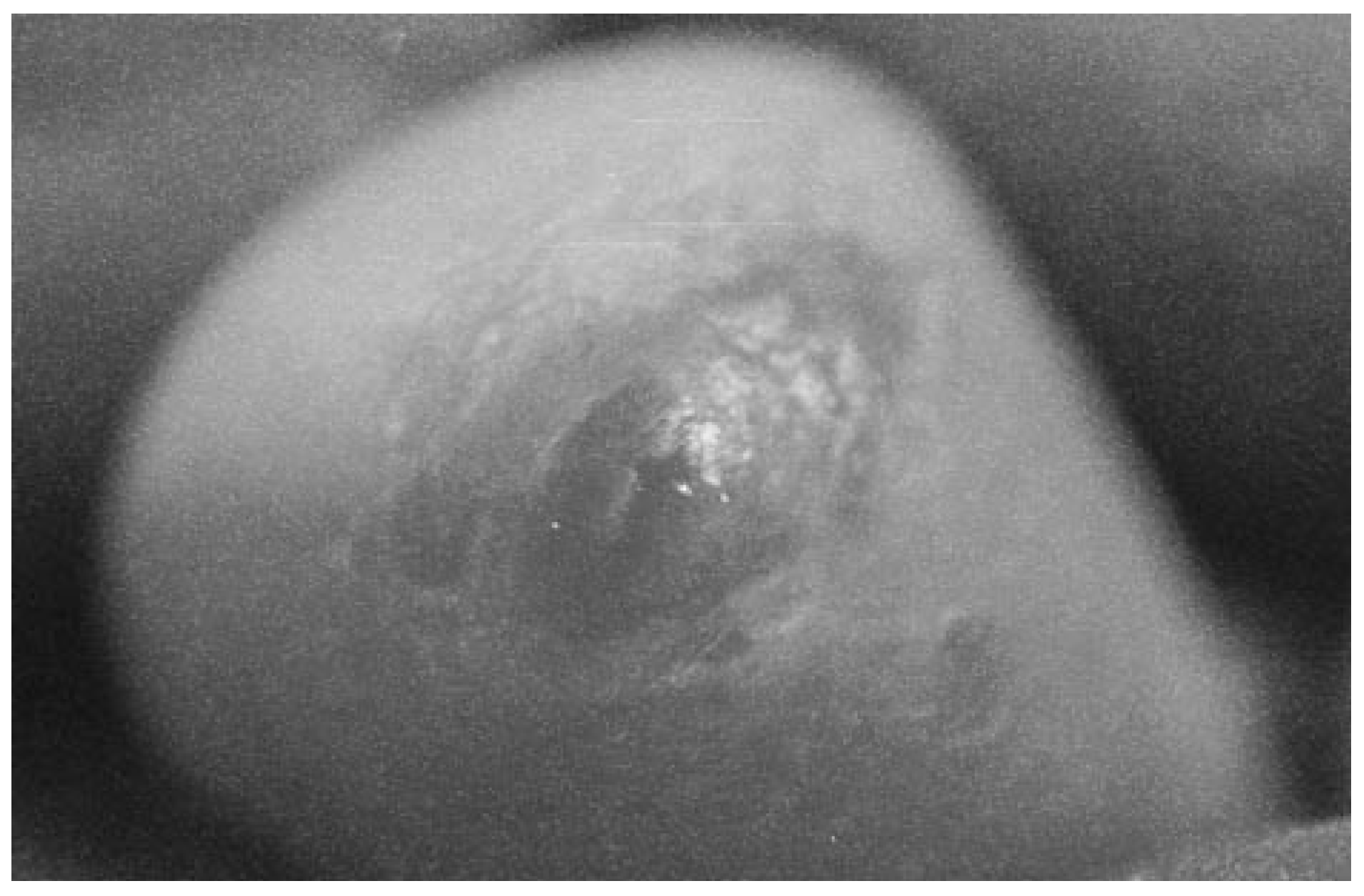
A 66-year-old woman presented to the office of one of the authors (J.J.N.) with the chief complaint of pain in the second digit of the left foot. The patient described the pain as a soreness associated with a skin lesion of the nail bed. The lesion was approximately 1 × 1 cm with a 0.25-cm reddish vesicular central area. Its borders were irregular. The lesion was pink, and petechiae were present. The perilesional skin had a macerated appearance at the time of presentation (
Fig. 1). The patient reported that the lesion had been present for several years. It had an insidious onset and a progressive course, with pain present for the past 2 to 3 months. The patient also stated that wearing shoes exacerbated the condition. She had tried self-prescribed treatments of vinegar soaks, Epsom salt soaks, and antifungal and antibiotic creams, all without relief of symptoms.
The patient was taking bisoprolol fumarate and hydrochlorothiazide. She denied any drug allergies. Her surgical history included back and knee surgery, tonsillectomy and adenoidectomy, bilateral bunionectomies, left fifth arthroplasty, and left ankle arthroscopy. Her medical history was significant for hypertension and varicosities. A review of systems was unremarkable. Her lower-extremity evaluation was unremarkable, as were her radiographs and laboratory findings.
The patient was brought to the operating room and placed in the supine position. The operative limb was prepared and draped in the usual aseptic manner. Following adequate intravenous sedation, the operative site was infiltrated with approximately 2 mL of 1% lidocaine without epinephrine in a digital block fashion. A pie-shaped wedge was taken from the distal left second digit, excising the lesion and nail bed in toto. The wound was copiously irrigated with saline and closed with 4-0 nylon suture in a simple interrupted technique.
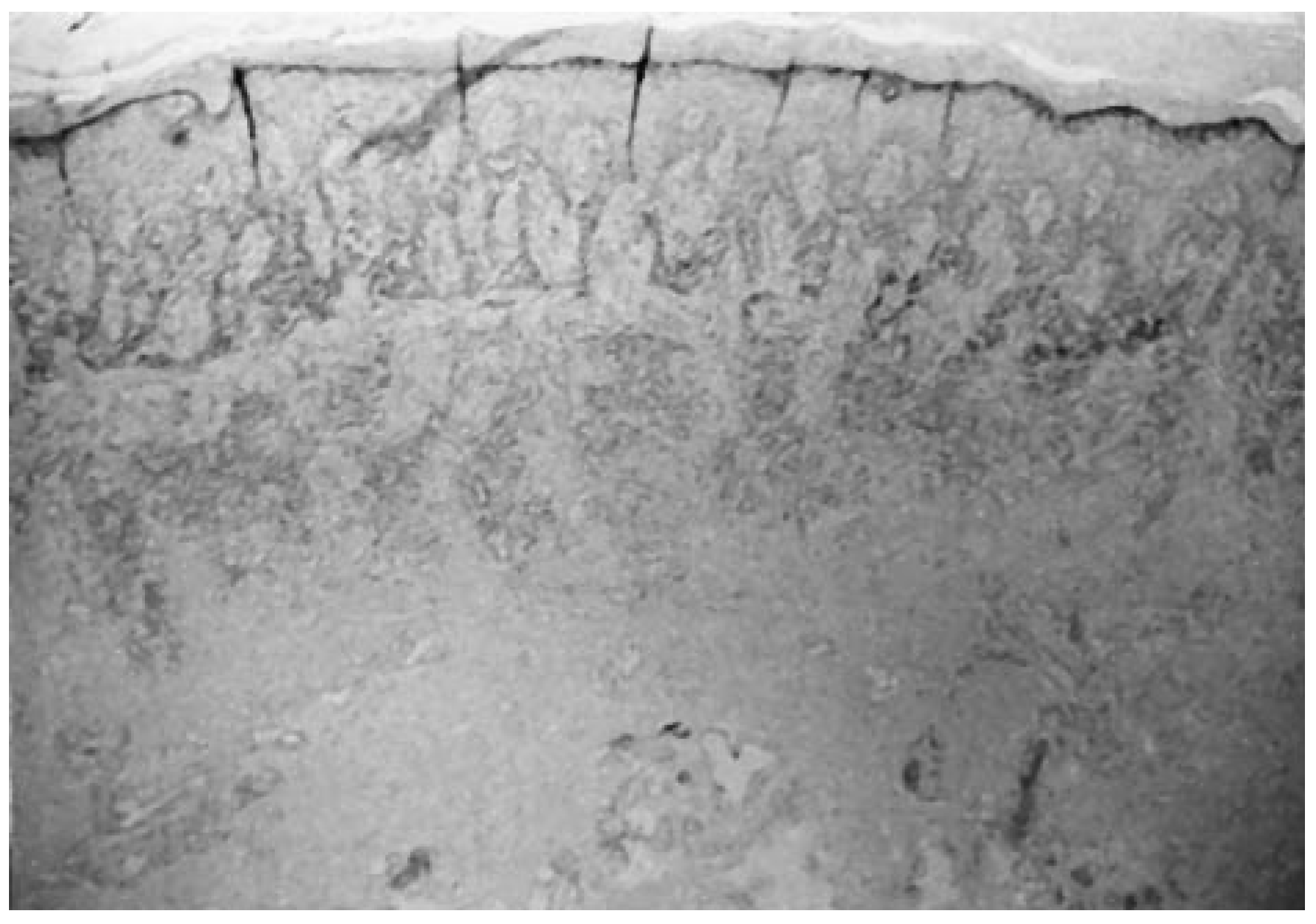
The gross description contained in the pathology report was consistent with the clinical evaluation, with analysis revealing an ovoid, moderately firm grayish fragment with a maximum size of 1.5 × 0.8 × 0.5 cm. Microscopic evaluation revealed marked hyperkeratosis and parakeratosis (
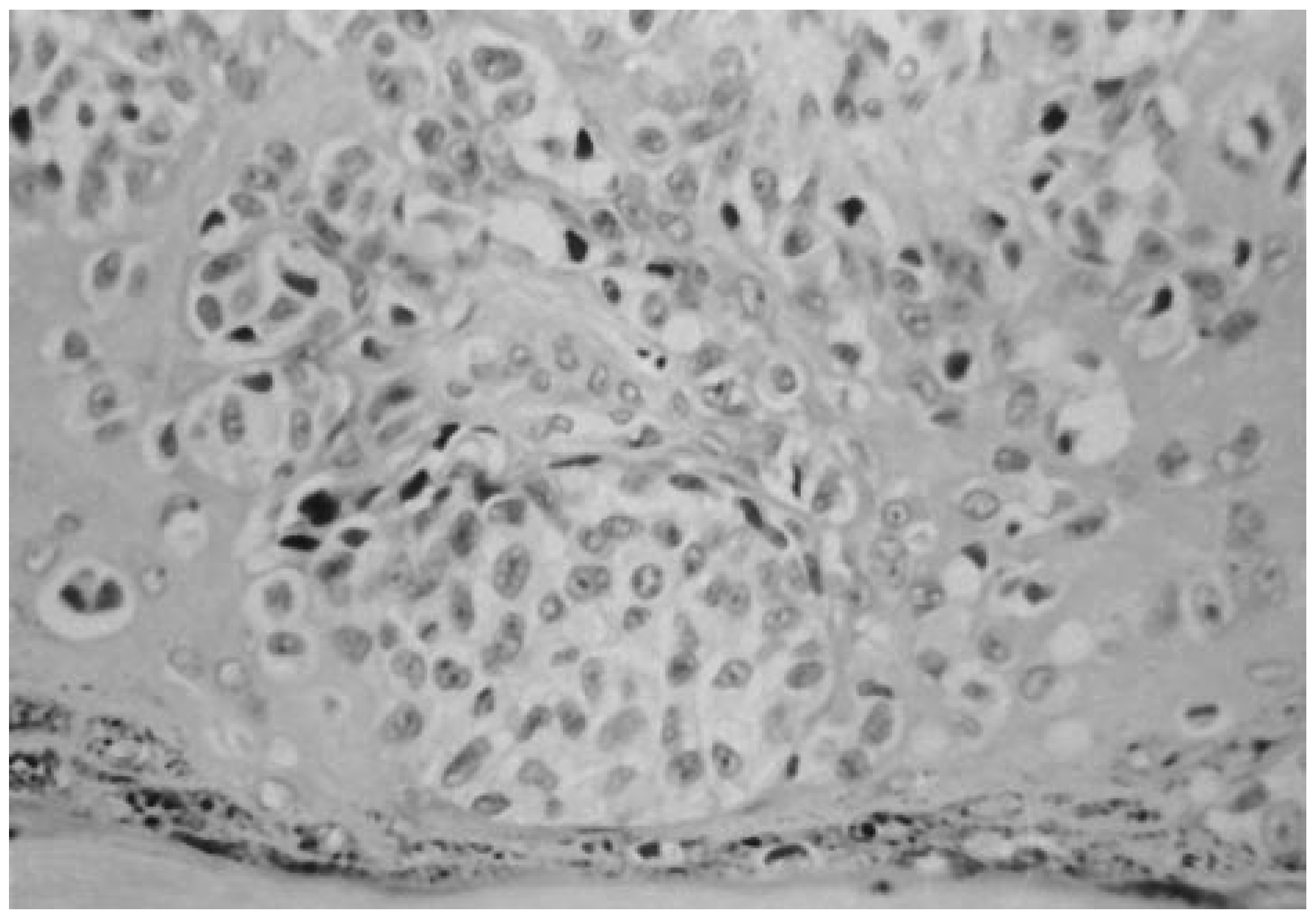
Fig. 2). The tumor extended to all surgical margins and consisted of nests of cells showing clear to light basophilic cytoplasm and large nuclei with prominent eosinophilic nucleoli. There was mild-to-moderate pleomorphism, with few mitotic figures present. There was a mild infiltrate, and lymphocytes were noted. In some areas the epidermis was atrophic with focal areas of hyalinized necrosis. In the rest of the epithelium there were scattered tumor cells in the epidermis and basal layers (
Fig. 3). There were also nests of tumor cells in the keratin layers; some cells showed brown granular pigmentation suggestive of melanin. Because the lesion extended to the deep margin, full depth could not be determined. The diagnosis was malignant melanoma extending to all margins of the biopsied tissue, with metastasis likely owing to the depth of the lesion. The lesion was classified as a level IV lesion according to Clark’s staging system, indicating invasion of subcutaneous tissue.
The patient returned to the hospital 4 days after the biopsy for a left second digit amputation at the level of the metatarsophalangeal joint and elective regional lymph node biopsy, as well as computed tomography of the brain, lungs, and abdomen.
The pathology report indicated that no tumor cells were found in the regional lymph nodes. As expected, residual tumor was found at the original surgical site. However, no tumor cells were detected at the level of digital amputation. Computed tomography of the brain, liver, and abdomen was also negative for pathology. The patient was referred to an oncologist, and was dispensed an orthodigital device constructed of silicone to prevent formation of a hallux abducto valgus deformity.
Discussion
When lesions occur subungually, the presence of the nail plate severely impedes diagnosis by altering the appearance of the lesion. The lesion in this case appeared clinically as a subungual squamous cell carcinoma. The authors believed that all of the tumor was removed on the initial excisional biopsy. The importance of pathologic evaluation cannot be overemphasized, as the condition in this case was much more serious than originally thought. The two most commonly employed histologic staging systems for malignant melanoma are Clark’s and Breslow’s classifications. Breslow’s classification is based on the thickness of the lesion as measured by an ocular micrometer. Clark’s classification is based on the level of invasion of the lesion. Following is a comparison of the two systems: Clark’s level I indicates epidermal invasion only; Clark’s level II indicates invasion of papillary dermis (Breslow’s: less than 0.75 mm); Clark’s level III indicates invasion of the juncture of papillary and reticular dermis (Breslow’s: 0.76 to 1.5 mm); Clark’s level IV indicates invasion of subcutaneous tissue (Breslow’s: 1.5 to 4 mm) [
1,
2,
4].
Following the histologic diagnosis of malignant melanoma, the treatment of choice is digital amputation [
1,
2,
3,
5]. This method is chosen in order to achieve proper margins. It is recommended that lesions less than 1 mm thick (by Breslow’s microstaging) be excised with a 1-cm margin, whereas a 2-cm margin is recommended for lesions 1 to 4 mm thick [
5]. Fullthickness excisional biopsies should be performed on any suspicious lesions of the feet. Shave biopsies are contraindicated because they prevent an adequate assessment of melanoma depth. For subungual lesions, the nail plate should first be removed. The biopsy incision should be oriented longitudinally, and the excised nail plate should be examined histologically along with the underlying nail bed [
5].
In this case, elective regional lymph node biopsy was considered because 46% of patients with melanoma develop nodal metastasis within 1 year [
5]. Palpably enlarged lymph nodes in a regional lymph node basin (in this case, the inguinal basin) almost always calls for therapeutic lymphadenopathy. Whether to perform elective lymph node biopsy for lesions confined to the papillary dermis is controversial [
2]. The single most important prognostic indicator is the thickness of the lesion [
1,
2]. Bennett et al [
4] reported that only 57% of patients with melanoma of the foot were free of disease at 53 months, with a survival rate of 86% at 5 years and 17% at 10 years. Finley et al [
3] found a 5-year survival rate of 27%. They recommended follow-up visits every 3 months for 2 years, then every 6 months for the next 3 years, and yearly thereafter.