Next Article in Journal
Total Contact Casts and Removable Cast Walkers. Mitigation of Plantar Heel Pressure
Previous Article in Journal
Problems and Management of the Rearfoot in Neuromuscular Disease. A Report of Ten Cases
 
 
Journal of the American Podiatric Medical Association is published by MDPI from Volume 116 Issue 1 (2026). Previous articles were published by another publisher in Open Access under a CC-BY (or CC-BY-NC-ND) licence, and they are hosted by MDPI on mdpi.com as a courtesy and upon agreement with American Podiatric Medical Association.
Case Report

Calcaneal Gait. Etiology and Clinical Presentation

by
Ellen Sobel
and
Aaron Glockenberg
Division of Orthopedic Sciences, New York College of Podiatric Medicine, NY 10035, USA
J. Am. Podiatr. Med. Assoc. 1999, 89(1), 39-49; https://doi.org/10.7547/87507315-89-1-39
Published: 1 January 1999

Abstract

Equinus deformities are common in neuromuscular and trauma patients. In contrast, calcaneal gait disorders tend to be overlooked, and few reports characterize and review calcaneal gait problems and disabilities. In the past 3 years, the authors treated 17 patients with calcaneal gait. Six of these cases are reviewed; in addition, the general clinical characteristics of the patient with calcaneal gait pattern are described.

Drop foot and equinus gait conditions are commonly encountered in patients who have had stroke [1,2,3,4], brain and spinal cord injuries [5,6,7,8,9,10,11], peripheral nerve injuries [12,13], and cerebral palsy [14,15,16,17,18,19,20,21,22,23,24]. In contrast, calcaneal gait problems tend to be overlooked and have been infrequently reported in the literature [25]. The patient with calcaneal gait generally has full dorsiflexion muscle power, but diminished or absent plantarflexion. Normally, there should be 10° to 20° of passive ankle dorsiflexion and 50° of passive plantarflexion past the neutral position [26]. The calcaneus foot may be in a dorsiflexed attitude at rest and may have excessive passive dorsiflexion as high as 40° past the resting position and reduced or absent passive plantarflexion [25]. Calcaneal gait consists of a shuffling apropulsive crouch gait with an excessive amount of time spent on the rearfoot during the gait cycle. Chronic and severe pain, ulcerations, and long periods of disability result from excessive pressure on the rearfoot during gait [25]. Calcaneal gait most commonly results from trauma, but it may be associated with the conditions discussed below.

Case Reports

Case 1: Neuropathic Heel Ulcer in Spina Bifida

A 32-year-old man with L5 spina bifida presented with a 3-year history of chronic osteomyelitis of the right heel. The patient’s medical history included myelomeningocele, which was surgically closed at birth, with a residual L5 level. Reconstruction of the bladder permitted the patient to conduct his own bladder care with self-catheterizations. Recurrent urinary tract infections were treated with oxybutynin chloride. An unspecified surgical procedure was performed on the patient’s left foot during infancy, and a tendo Achillis lengthening was performed on his right foot when he was 8 years old.
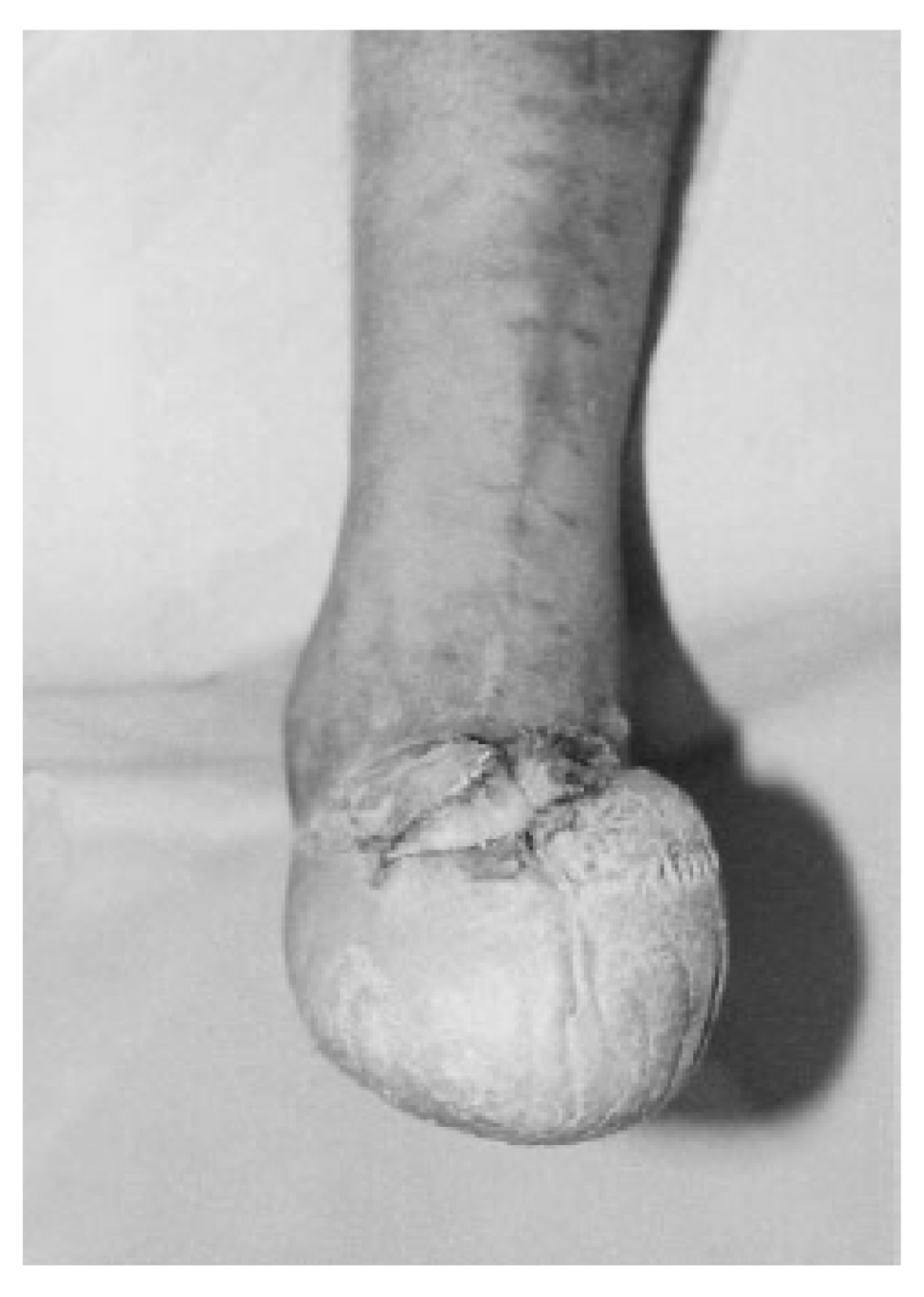
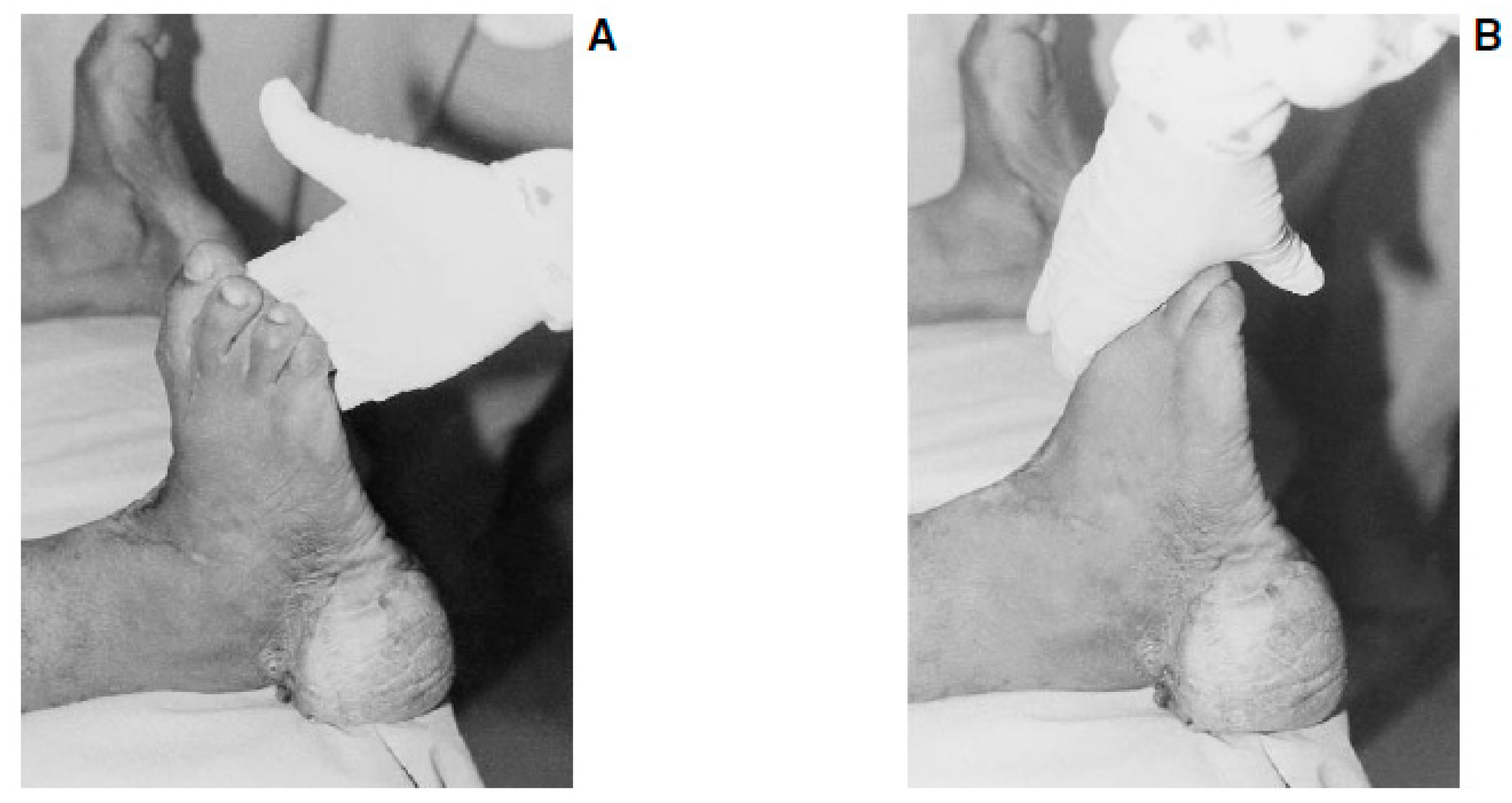
Physical examination revealed a 5-foot, 160-pound male with a well-healed scar over the sacrum. The right calcaneus region was swollen to enormous proportions (Figure 1) with a heel pad largely out of proportion to the rest of the foot (Figure 2). A 6-cm–long curvilinear deep fissure with abundant callus on the edges of the fissure was found on the posterior heel (Figure 3). No fluid was expressible from the crack, and healthy pink tissue was visible in the depth of the wound. A vertical scar was present along the posterior leg. The patient did not have pain in this area. Sensation was markedly decreased on the lateral aspect of the foot bilaterally. Muscle power for the hamstrings, quadriceps, and iliopsoas were full strength. The posture of the foot was markedly calcaneal (Figure 4 A and B). Tibialis anterior motor strength was 5/5. Gastrocnemius and soleus motor strength was 0/5. Extensor hallucis longus motor strength was 0/5. Despite gross deformity, the foot was plantigrade upon weightbearing, and the patient was a community ambulator and wore regular nonprescription shoes without braces.
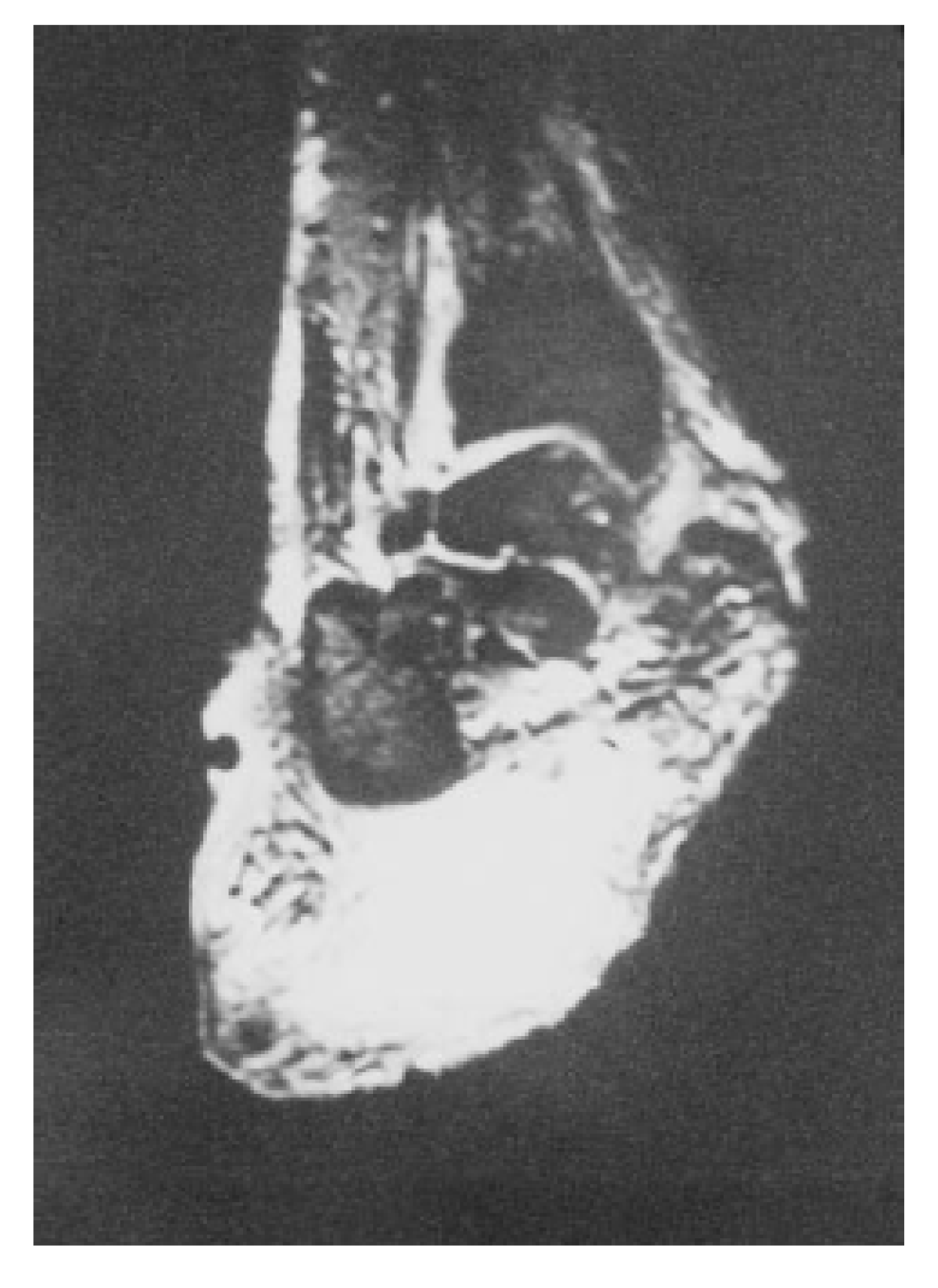
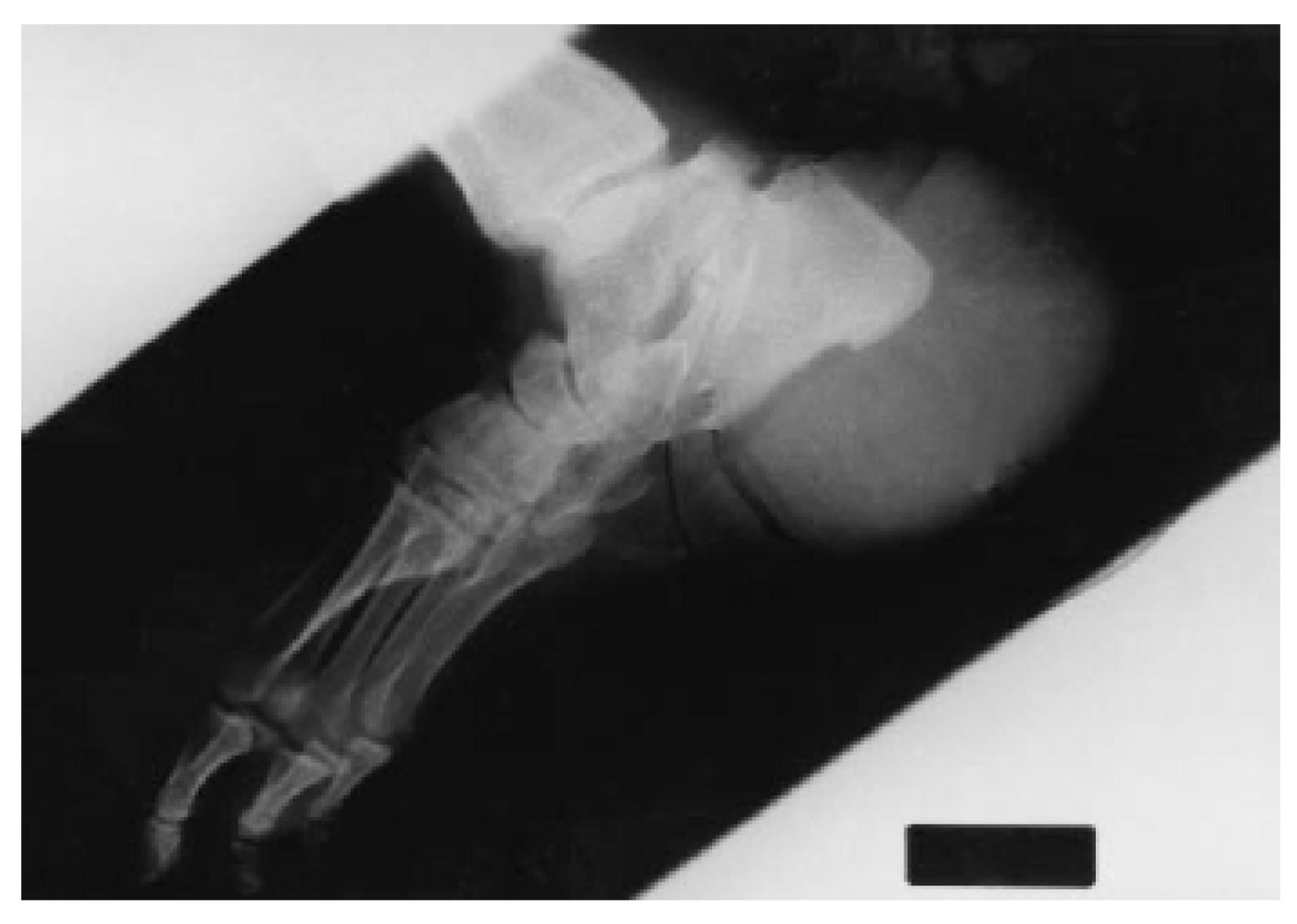
Lateral radiographs showed marked soft-tissue swelling with deformity of the subtalar joint and calcaneus (Figure 5). Magnetic resonance imaging revealed a large soft-tissue mass suggestive of abscess with possible bony involvement of the calcaneus and secondary osteomyelitis (Figure 6). The diagnosis was chronic heel ulceration secondary to L5 spina bifida with calcaneal gait. Treatment options included viscoelastic heels, custom-molded shoes, total contact ankle-foot orthoses, and molded chukka boot with soft liner.

Case 2: Neuropathic Heel Ulcer in Cauda Equina

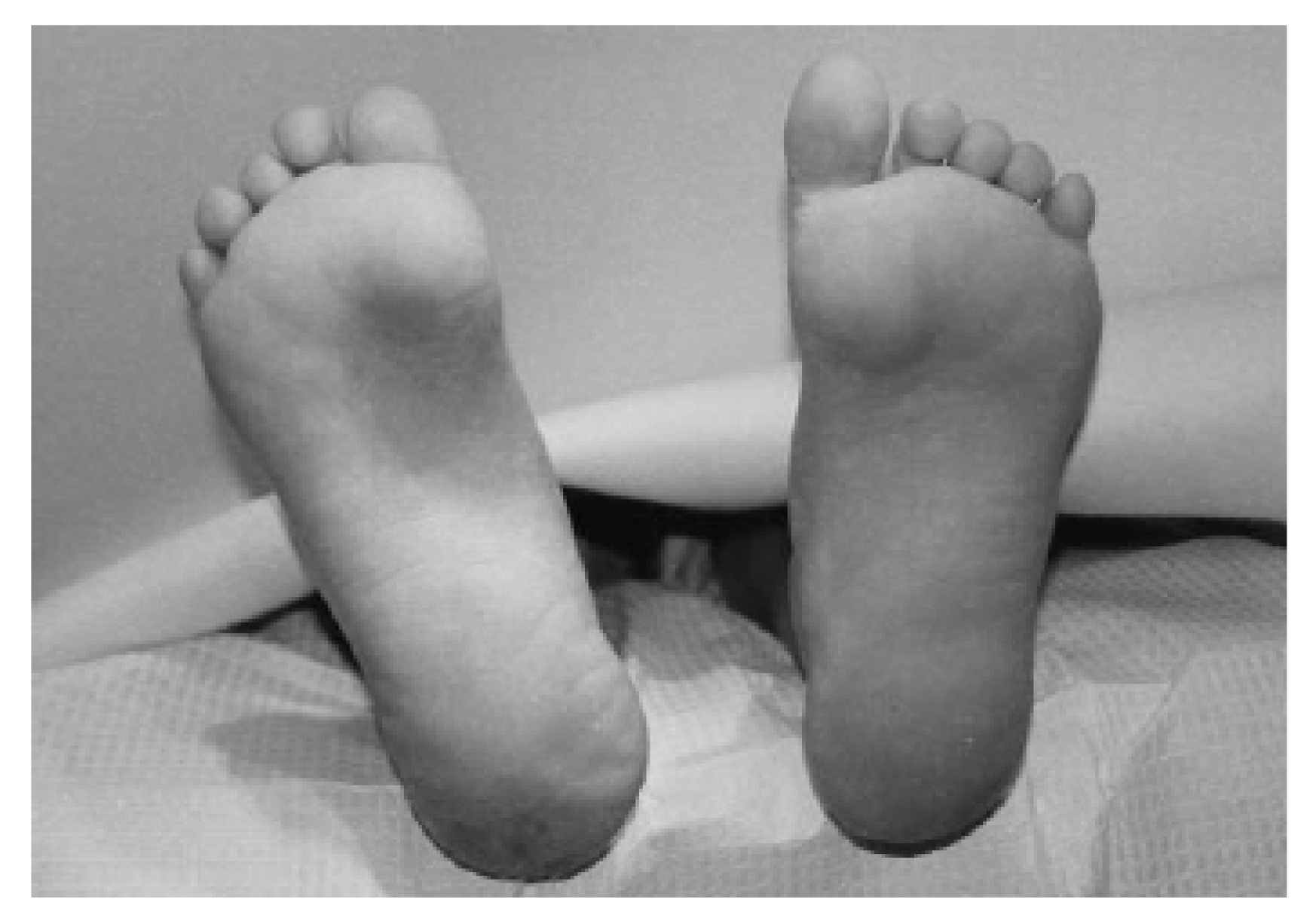
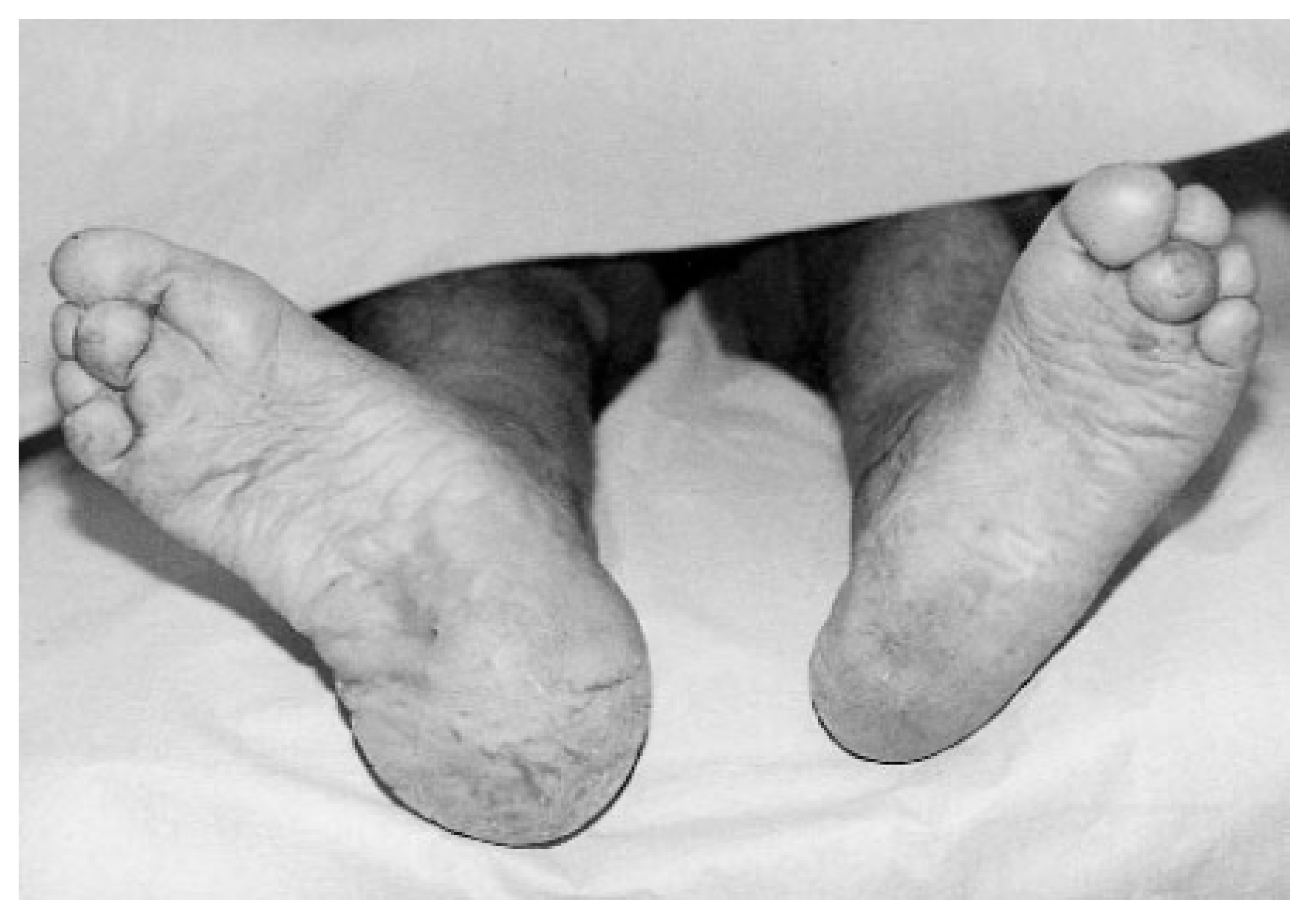
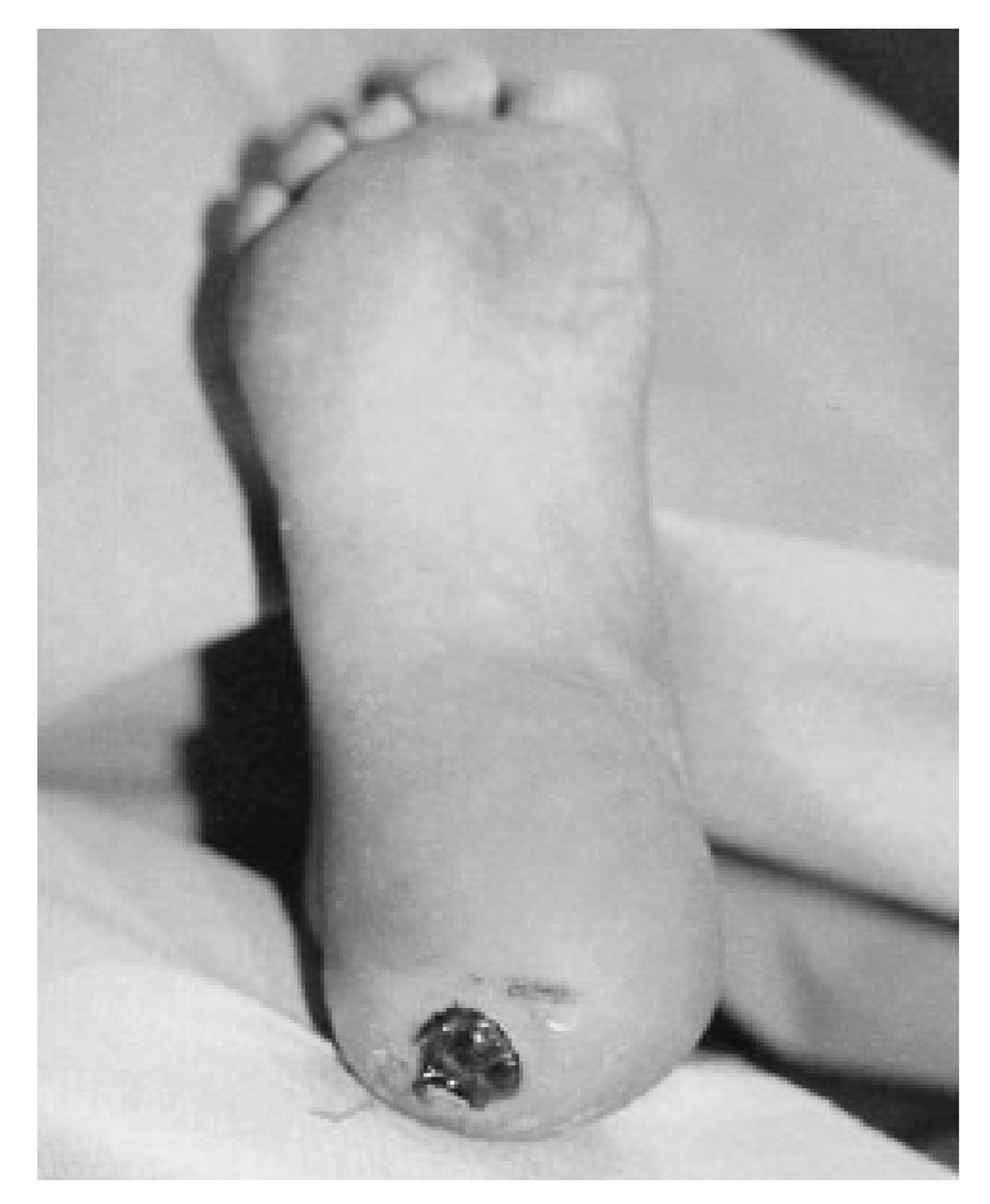
A 27-year-old pregnant woman presented with a 1-year history of a right heel ulcer. Five years previously, the patient fractured her third lumbar vertebra in a motor-vehicle accident that left her with residual plantarflexion weakness and calcaneal gait. Physical examination revealed a 2-cm–diameter heel ulcer (Figure 7) and a grossly enlarged right heel. There was loss of sensation to the buttock, posterior thigh and leg, and dorsal and plantar surfaces of the right foot. Deep tendon reflexes were diminished bilaterally. The right foot had full dorsiflexor muscle strength and weakened plantarflexor muscles. A calcaneal gait pattern was observed with the patient able to walk on her heels but not on her toes. Neuropathy combined with the stress of pregnancy and the calcaneal gait pattern produced the ulcer. Rest, local wound care, and dispersion foot orthoses resulted in complete resolution of the ulcer shortly after she gave birth (Figure 8).

Case 3: Neuropathic Calcaneal Avulsion Fracture

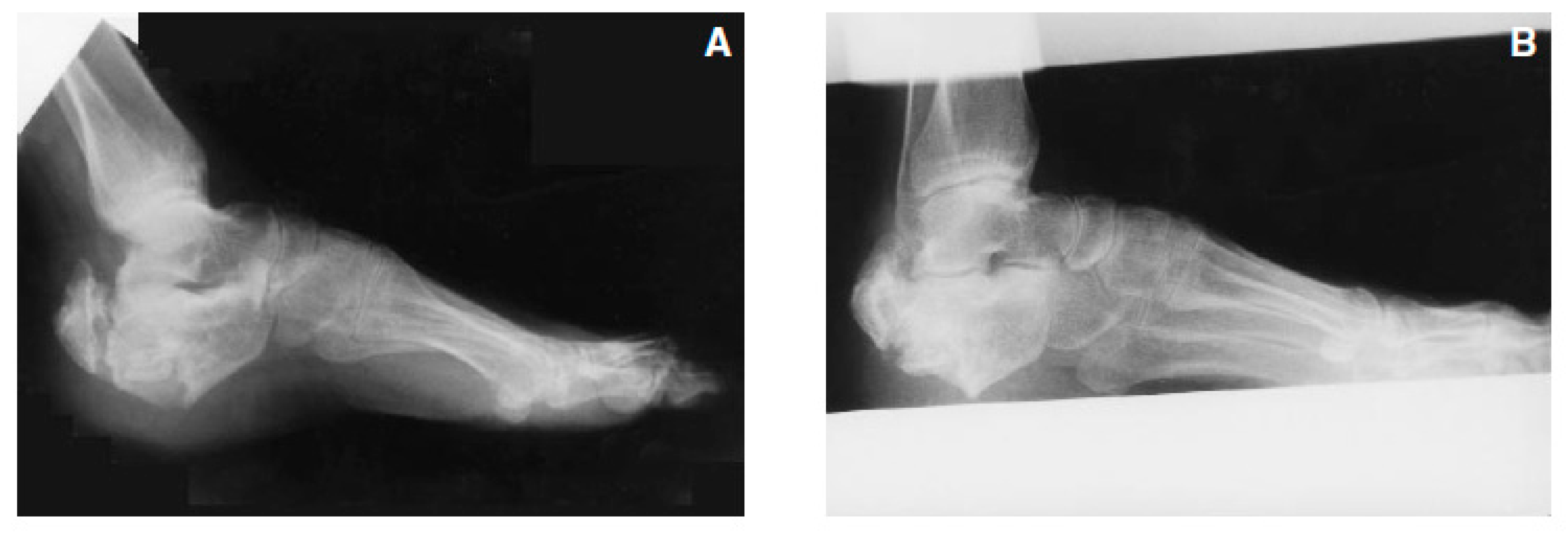
A 56-year-old woman presented with a 1-year history of left foot pain and left calcaneal fracture. The patient first noted a painless swelling in the posterior aspect of her left foot. There was no history of trauma. She presented to a hospital where she was diagnosed with cellulitis. Oral antibiotics were prescribed and she was placed in a hard cast for 1 month. After the cast was removed, the foot was still swollen and ecchymotic. Radiographs revealed a posterior calcaneal process fracture (Figure 9 A and B). The patient was placed in a cast for 3 months.
Medical history revealed that because of back pain and weakness, the patient had undergone a back operation at age 27 that resulted in paralysis 2 to 3 months after surgery. Once she recovered from the surgery, she did well for several years until 1 year before presentation when her left foot began to hurt. There were no difficulties with urination or defecation.
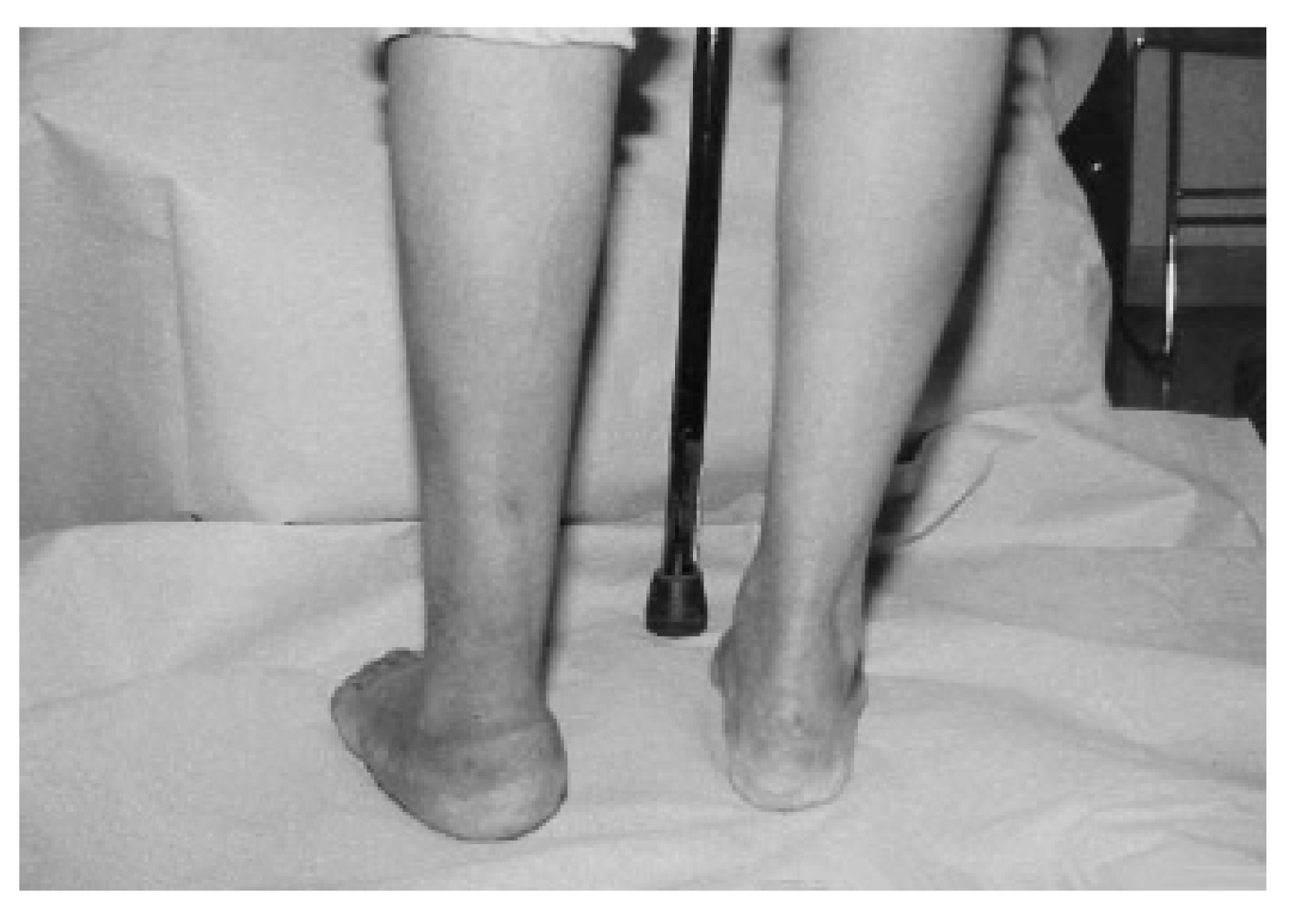
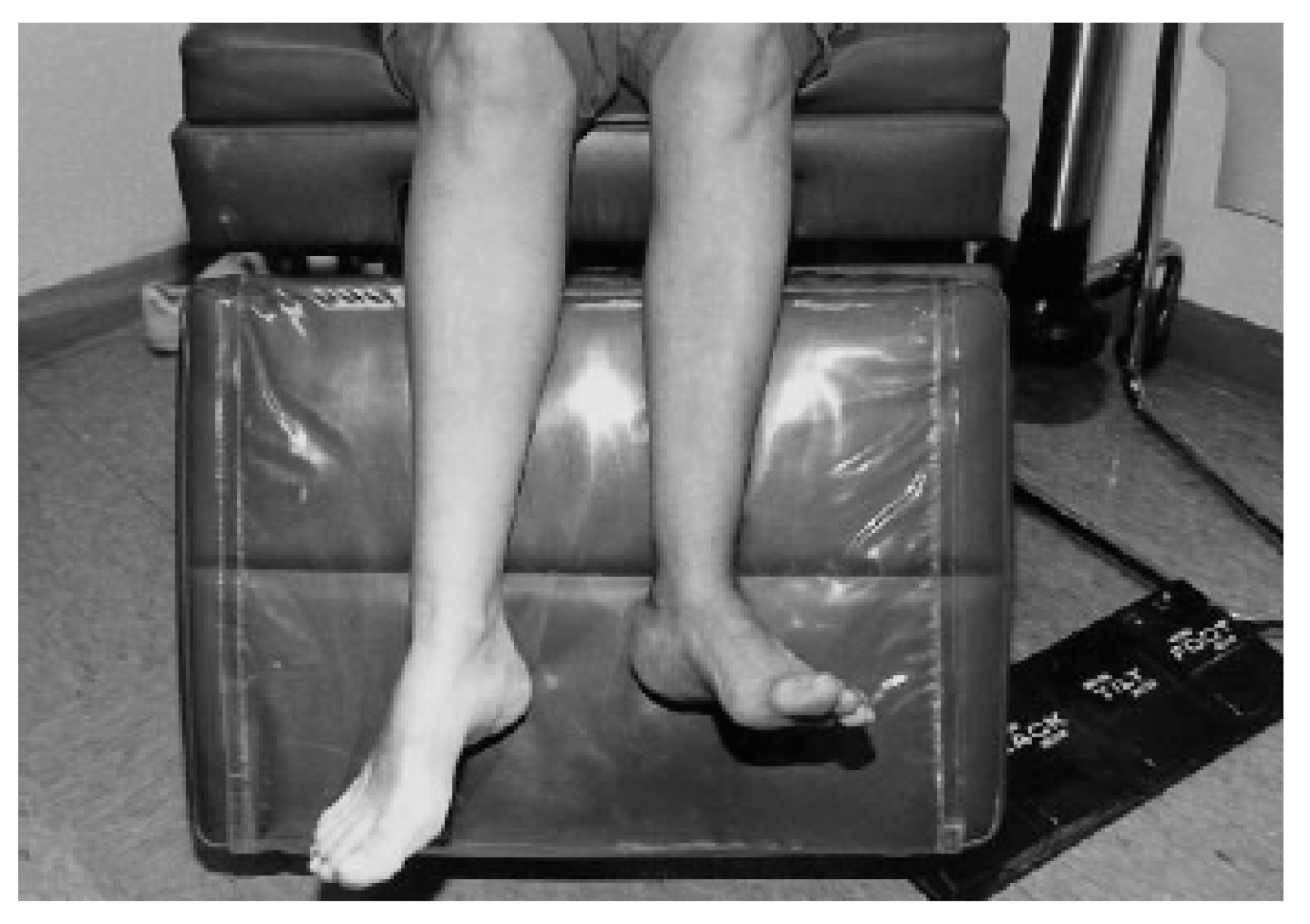
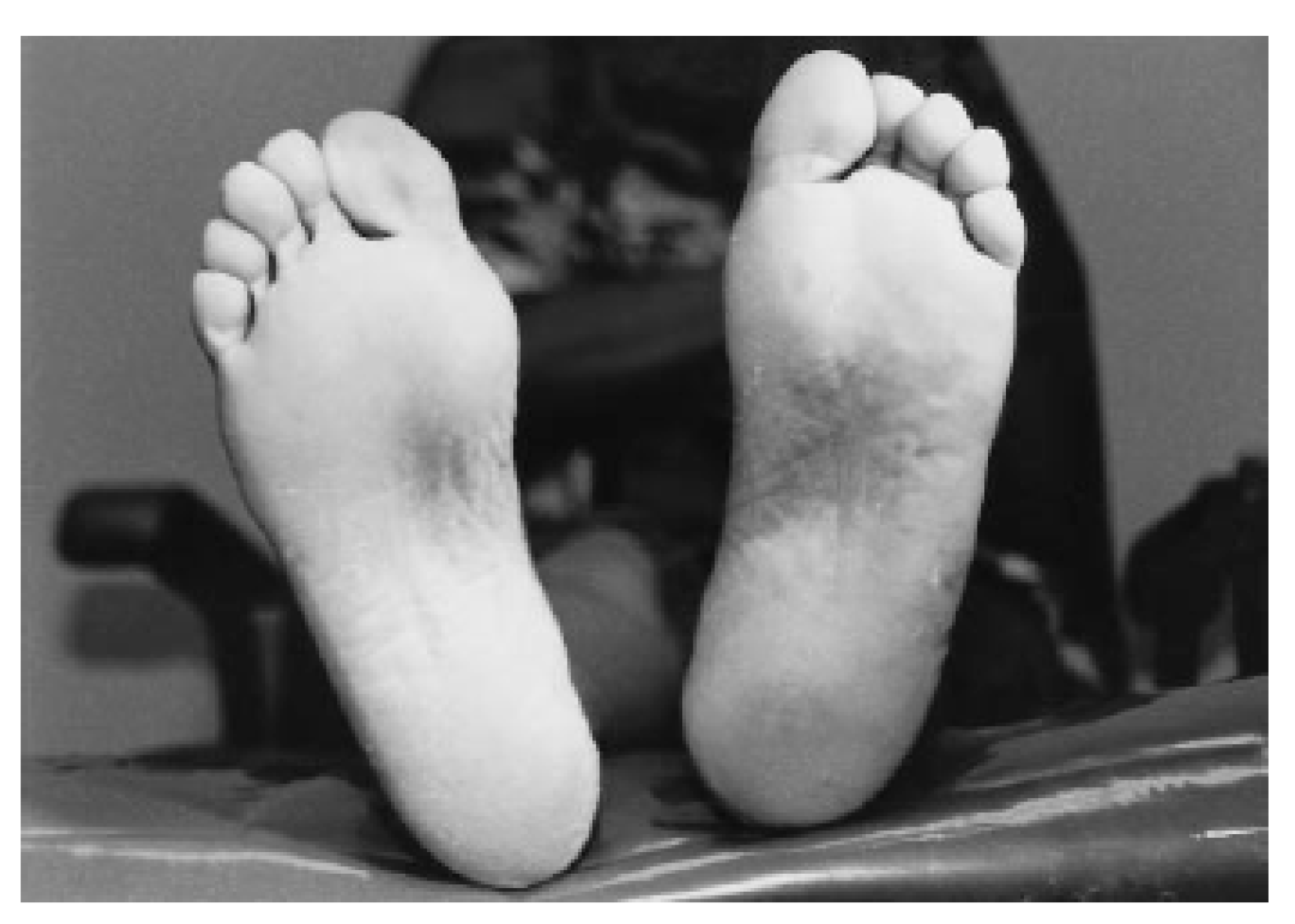
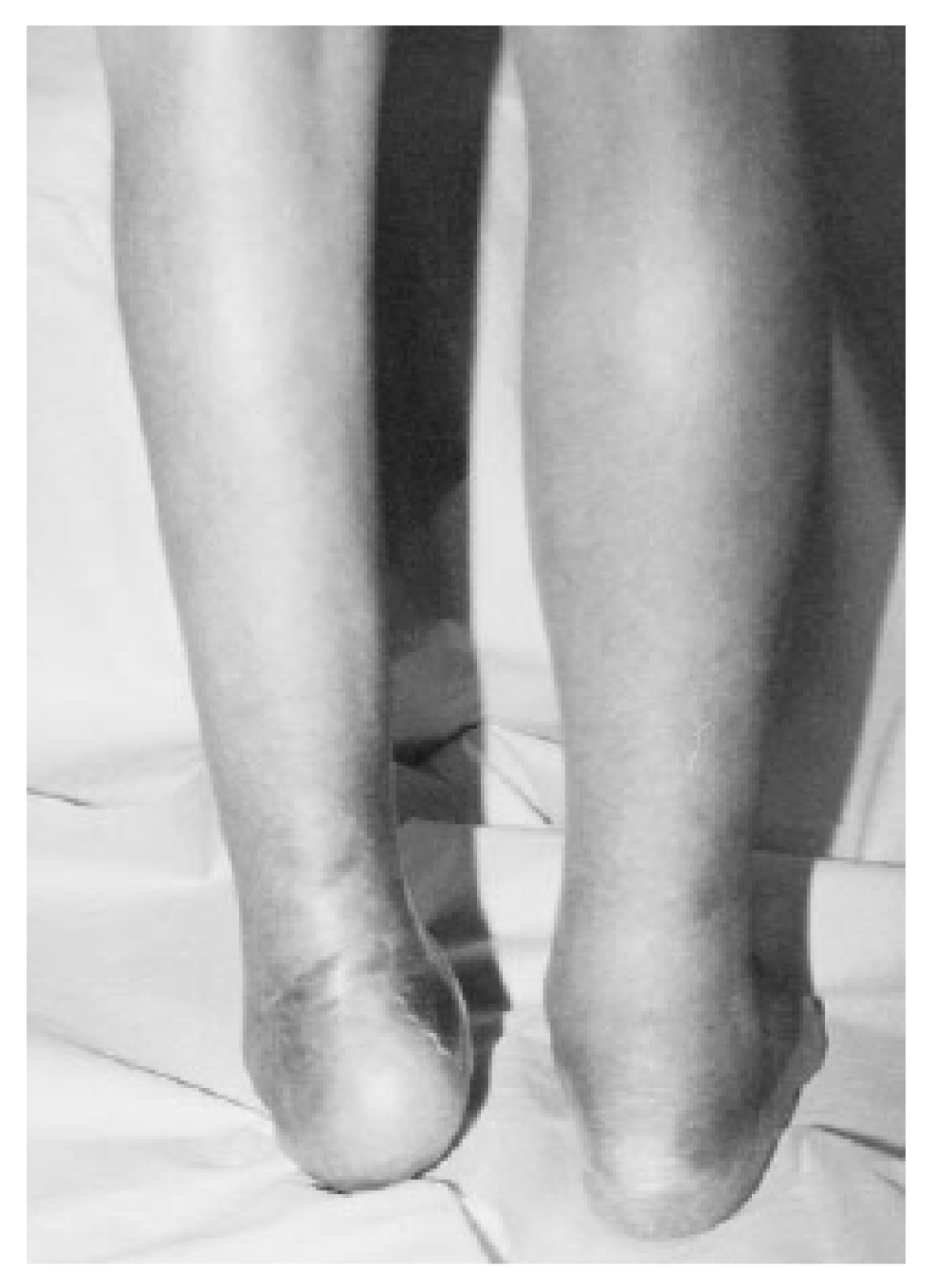
Examination revealed an enlarged left heel in the weightbearing position (Figure 10) and when viewed plantarly (Figure 11). When the patient was sitting, her left foot was in a calcaneus attitude as compared with her right foot (Figure 12). Her left calf had a 3/4-inch atrophy compared with her right calf, and there was muscle weakness in plantarflexion, inversion, and eversion. However, there were active dorsiflexion and active muscle power of the flexor hallucis longus and flexor digitorum longus. The left foot was in a cavus attitude with passive dorsiflexion to 10° and plantarflexion to the neutral position. The right foot was in a pes planus attitude with passive dorsiflexion to 10° and plantarflexion to 20°. The patient walked with a cane. Sensation in the entire left foot was completely absent to just above the malleoli, and deep tendon reflexes were absent bilaterally. The diagnosis was a neuropathic displaced calcaneal tuberosity avulsion fracture. The patient was treated with soft dressing immobilization, an Equalizer Walking Brace,® (Alimed, Inc, Dedham, MA.) and physical therapy, but she continued to have severe pain even during rest.

Case 4: Charcot’s Foot with Calcaneus Deformity

A 77-year-old man presented with a chronic ulceration and Charcot’s arthropathy of the left foot. The patient reported a history of syphilis and gonorrhea at the age of 18 while he was living in the Dominican Republic, but no diabetes mellitus. The automatic reagin test was reactive with a 1:4 dilution ratio and the fluorescent treponemal antibody absorption test was nonreactive, which meant that the patient had never had active syphilis. He also had a history of alcoholism and suffered a ruptured right middle cerebral artery aneurysm that left him with a mild left hemiparesis. Twenty years ago, he received a series of corticosteroid injections for swelling in both legs, which he reported as being diagnosed as circulatory problems. Swelling subsided in the right leg but remained in the left. Subsequently, he developed neuropathic osteoarthropathy and ulceration in the left foot.
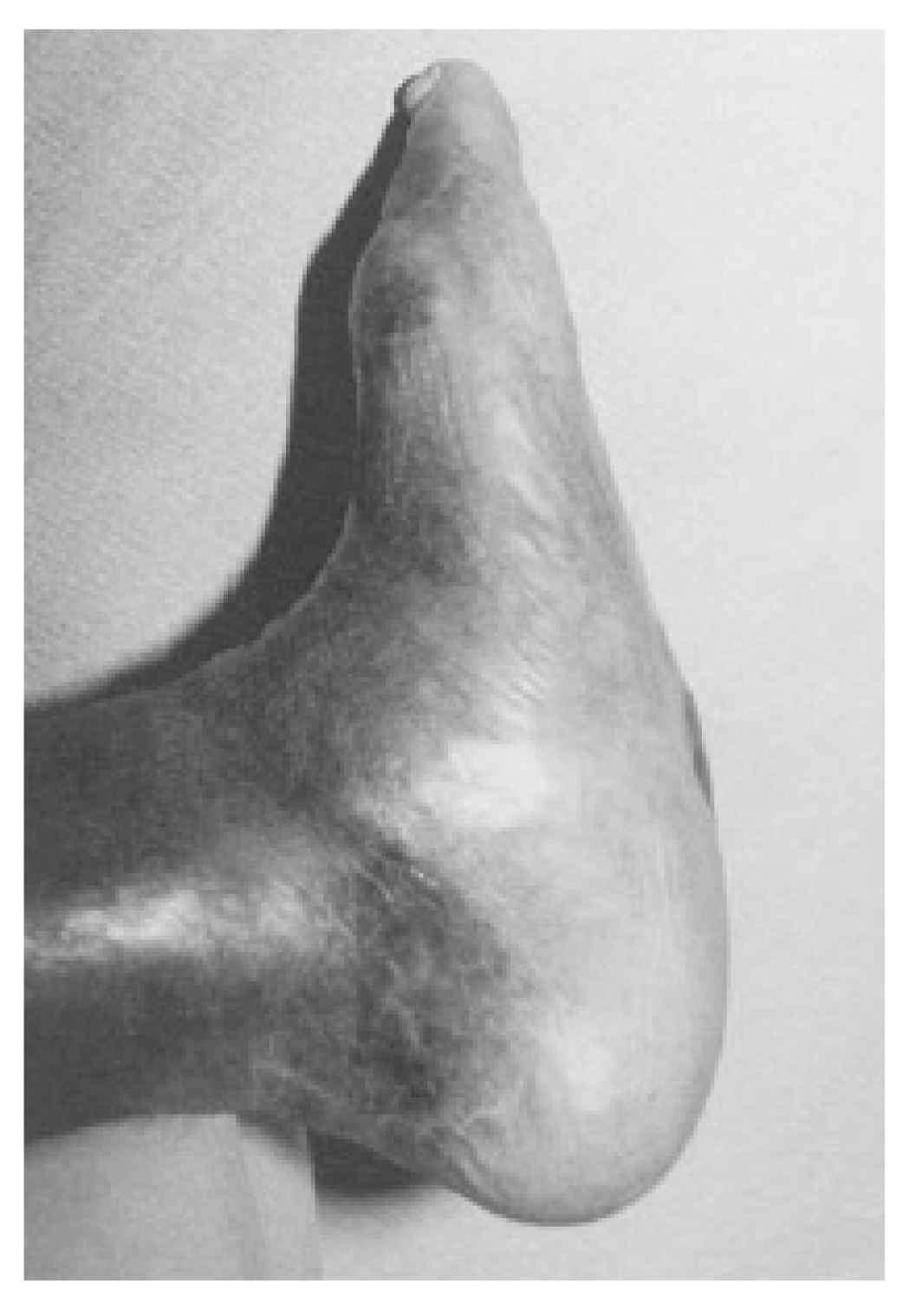
Physical examination revealed a left Charcot’s foot with rigid rocker-bottom deformity in a calcaneus attitude (Figure 13) with a healed ulcer on the left plantar aspect with 2 × 3–cm split-thickness graft. The left heel was enlarged and in a fixed varus position with no range of motion at the ankle or subtalar joint (Figure 14). When not bearing weight, the left foot appeared in a calcaneus position, making his left leg appear several inches shorter than the contralateral side even though it was only ½ inch shorter (Figure 15). There was decreased sensation below the midcalf on the dorsum and plantar aspects of the left foot. Patellar and Achilles tendon reflexes were present.
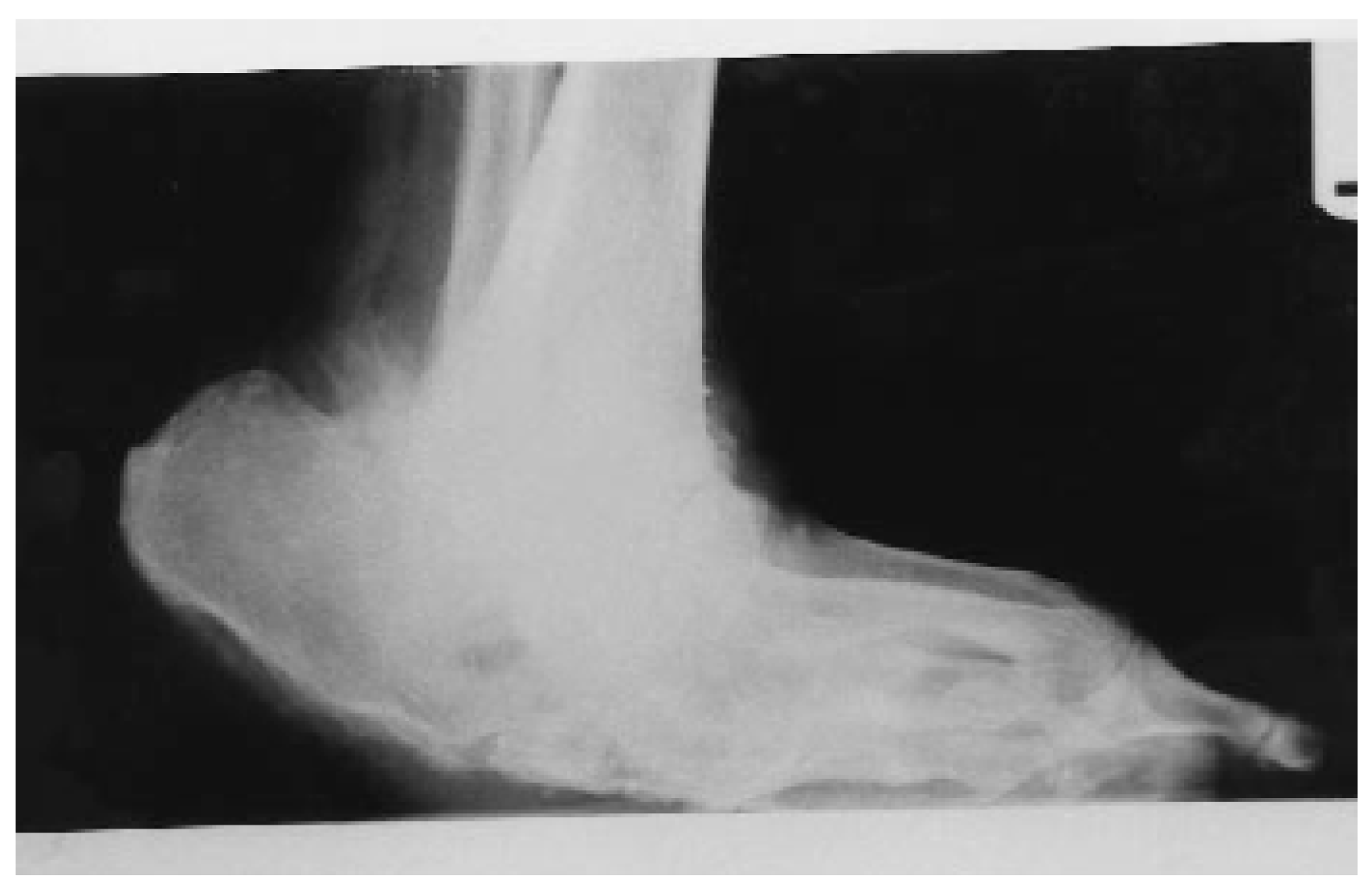
Radiographs showed disorganization of the tarsal bones with subluxation of the navicular over the talus (Figure 16). There was extensive articular destruction, fragmentation, and sclerosis of the tarsal bones, and new bone formation appeared on the plantar surface, consistent with a neuropathic osteoarthropathy (Charcot’s foot). Complete obliteration of the ankle mortise as well as the tarsometatarsal joints was present. In 98% of people who have had syphilis, the fluorescent treponemal antibody absorption test remains positive for life despite adequate therapy [27]. Although Charcot’s joint is a sequela of tertiary syphilis, given the massive amount of antibiotics that this patient had had over the years and the nonreactive fluorescent treponemal antibody absorption test, he most likely did not have tertiary syphilis. The diagnosis was Charcot’s foot from unknown causes.

Case 5: Calcaneus Foot as a Result of Severe Trauma in Infancy

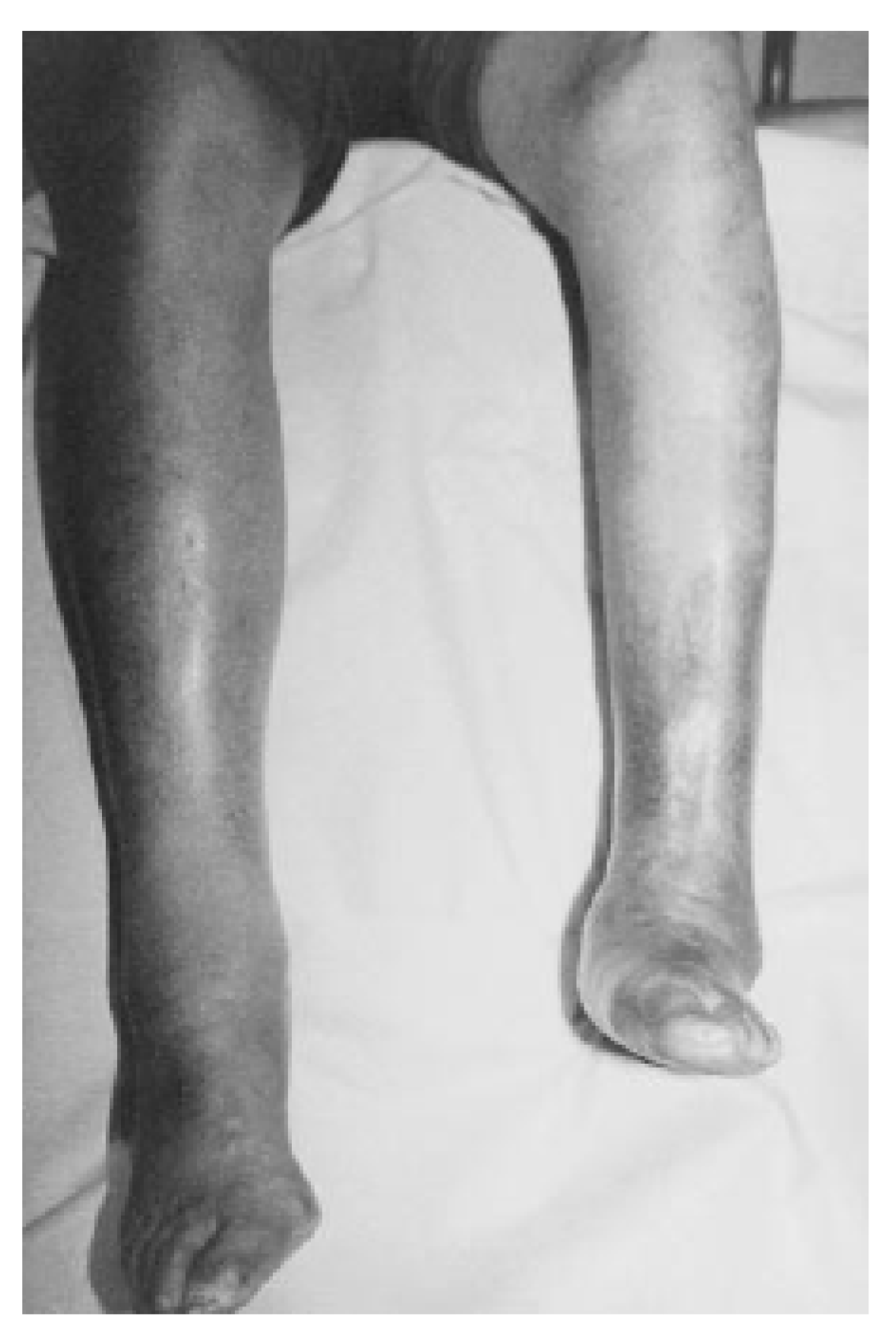
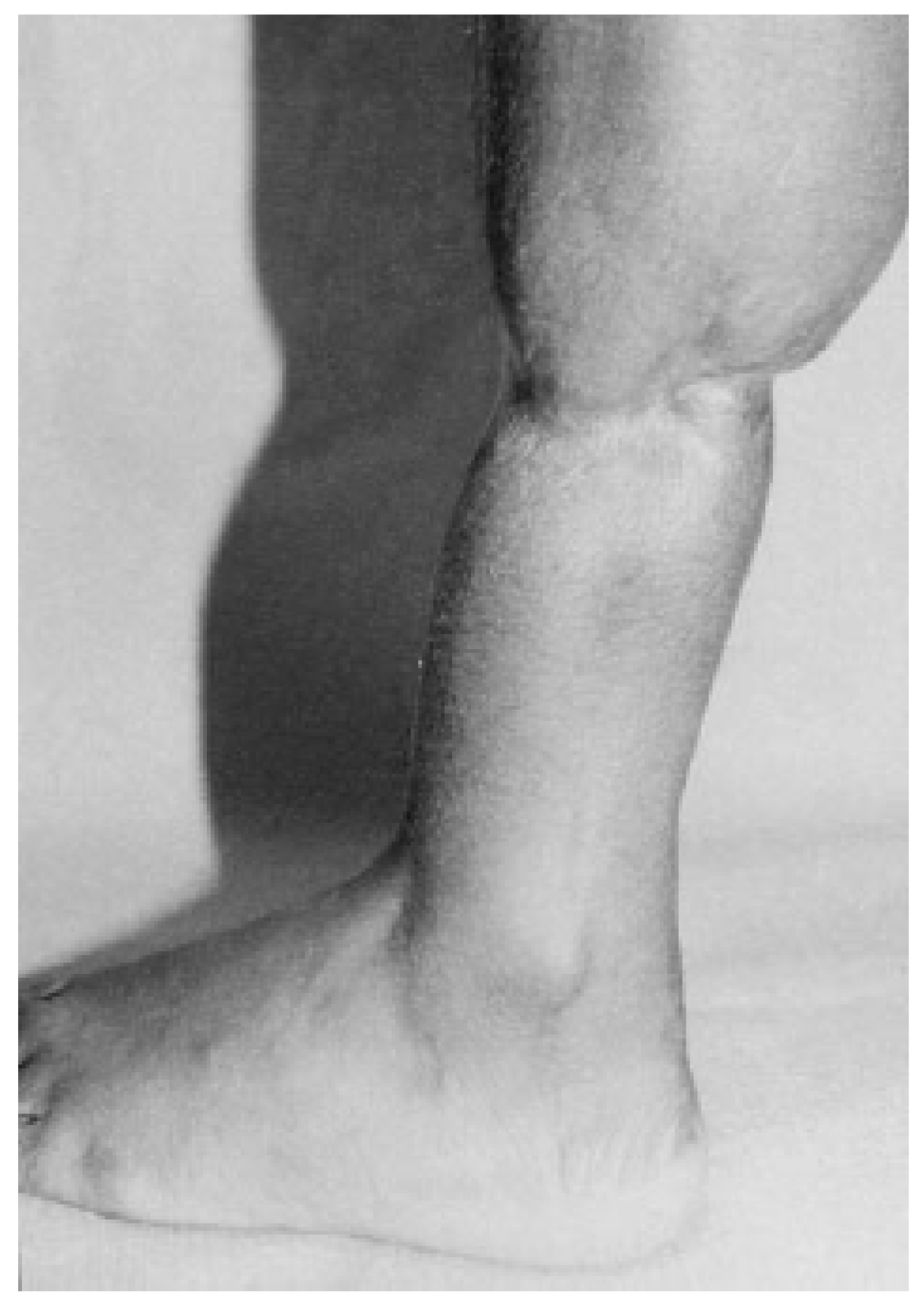
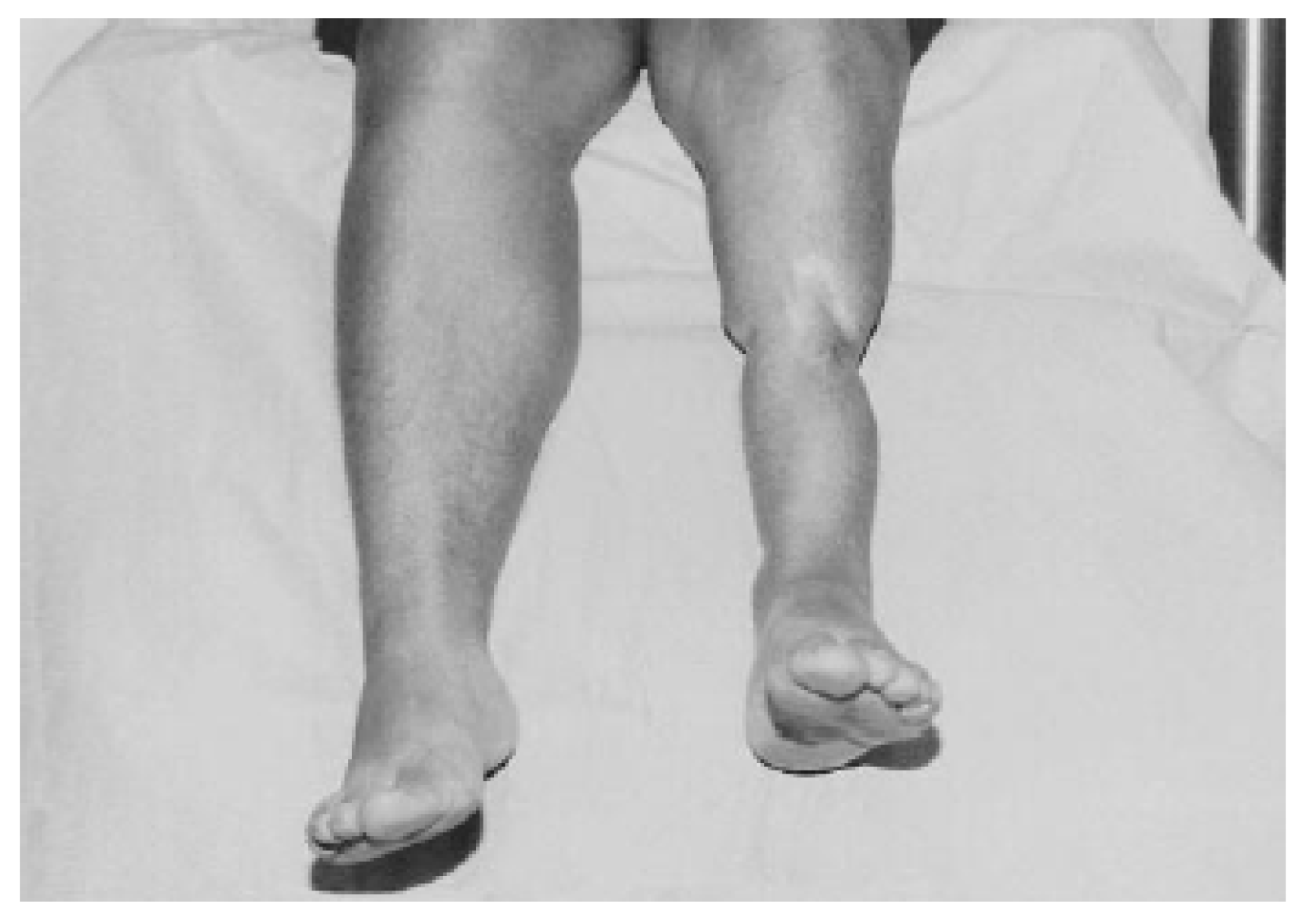
A 36-year-old woman presented with chronic pain and swelling of a grossly deformed left limb (Figure 17). When she was an infant, her left foot got caught in a mattress and a metal spring from the mattress stuck inside her leg. Surgery was performed and a cast was placed on her leg. According to the patient’s grandmother, the cast was left in place for 1½ years. Her leg appeared deformed when the cast was removed. During childhood and adolescence, she had pain and difficulty walking, bending, and lifting. Physical examination revealed a grossly deformed left lower extremity (Figure 17) with the left leg in the calcaneus position (Figure 18). The left ankle joint and subtalar joint were rigid. Muscle power was markedly reduced for the left lower limb. The diagnosis was nerve damage as a sequela to severe childhood trauma.

Case 6: Intra-articular Talonavicular Fracture

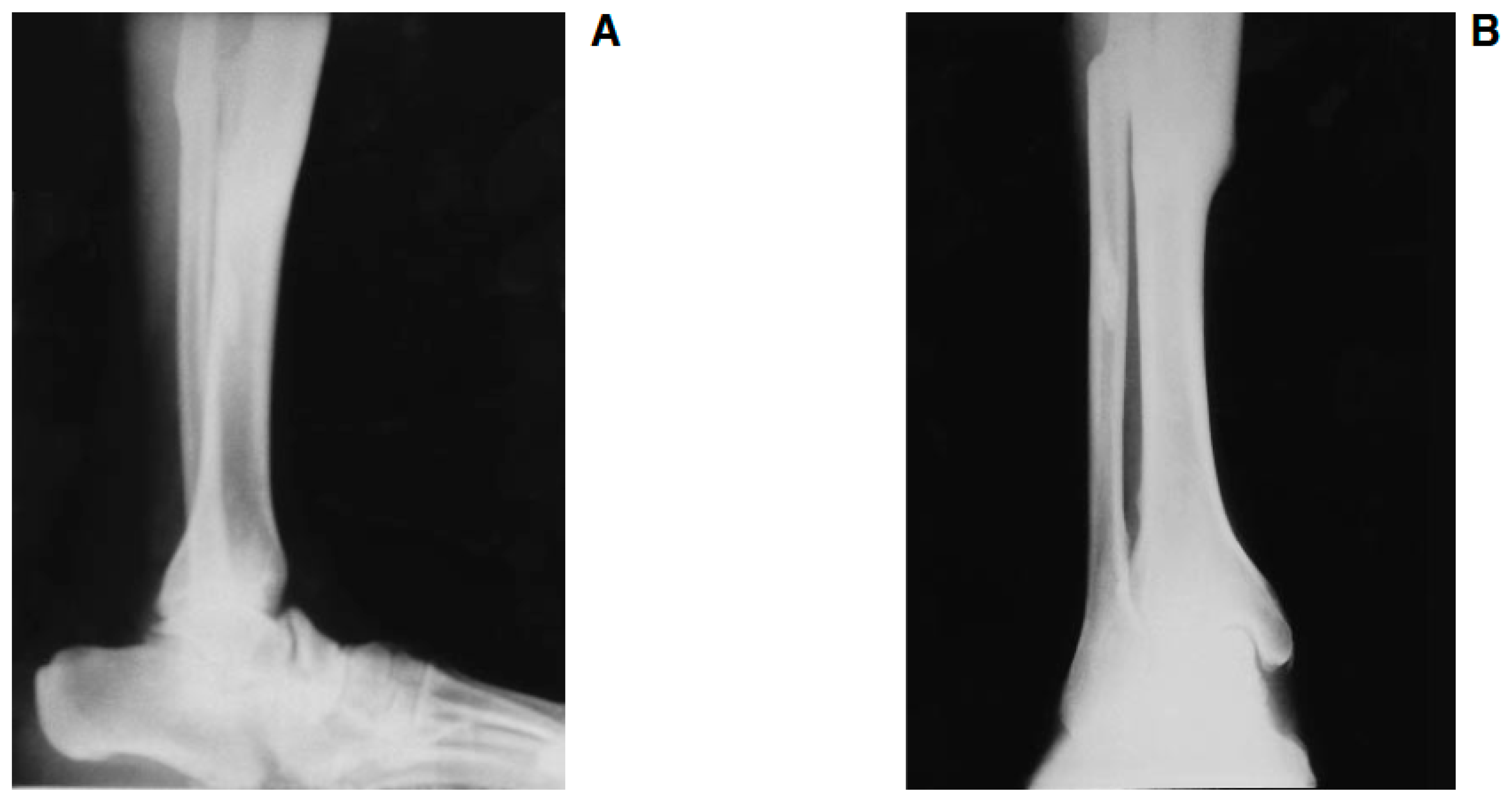
A 58-year-old man presented with a painful right ankle. His surgical history revealed a laminectomy performed during the 1970s. Clinically, the right foot was in a valgus attitude. The right ankle could be passively dorsiflexed to 20°, but could be plantarflexed only to the neutral position. Muscle power, however, was full for all leg muscles. Radiographs revealed a previous intra-articular talonavicular fracture with arthritis of the subtalar joint and midtarsal joint and malunion of an old tibial and fibular midshaft fracture and rocker-bottom foot (Figure 19 A and B). Although the patient had a rocker-bottom foot type with calcaneal gait, his foot was plantigrade and he was able to walk with relatively minor difficulty except for the ankle pain. The painful ankle was treated successfully with an ankle brace and physical therapy.

Discussion

Seventeen patients with problems attributed to calcaneal gait disorders have been seen during the last 3 years (Table 1). The most frequent presenting complaint was heel pain; ankle pain was almost as common. The most frequent cause of calcaneal gait was trauma, which included fractures of the calcaneus— sometimes associated with factures of the talus, navicular, and fibula—as well as rupture of the Achilles tendon. Neuromuscular disorders, including spina bifida and cauda equina, resulted in differential weakness of the gastrocsoleus muscle group with heel ulcer as the chief presenting complaint in both cases.
All of these patients had characteristic features of calcaneal gait. When the patient is in the sitting position with legs dangling, the foot does not assume a normal relaxed position of about 20º plantarflexed, but appears in a dorsiflexed attitude with the foot pointing upward. The foot is in a fixed dorsiflexed attitude, yet may be dorsiflexed further a full 10° to 20° or more past the abnormal calcaneus position. Passive plantarflexion may be absent entirely or be present only to the neutral position. Muscle power is generally reduced for plantarflexors, but remains active for dorsiflexors. When viewed posteriorly, the heel is enlarged, owing either to calcaneal fracture or to splaying of the fat pad. From the plantar aspect, the rearfoot is relatively increased in width with a reduced width of the forefoot. The opposite pattern, an enlarged forefoot and a narrow heel, is seen in the equinus foot.
Plantarflexion weakness in calcaneal gait results in a failure to perform active propulsion in the walking cycle. Patients have difficulty climbing stairs and cannot stand on their toes. Posterior stability is lost, and these patients have to run to keep up with their center of gravity. Their gait is inefficient and apropulsive with an excessive amount of time spent on the posterior aspect of the foot, resulting in increased stress in the rearfoot. The increased pressure and the added time spent on the rearfoot during the gait cycle lead to heel and ankle pain and heel ulcerations.
The first two patients in this article had neuropathic arthropathy. Each had a calcaneal gait pattern that resulted in heel ulcers. The patient in Case 1 had L5 spina bifida, which frequently causes a calcaneus foot type [28]. The level of the last functioning root is used to describe the level of paraplegia in patients with spina bifida [29]. For example, the patient in this article had L5 spina bifida, meaning that L5 is the last working root. The muscles innervated by the L5 nerve root are normal, but all nerves below the L5 level are weak. The L5 nerve root innervates tibialis anterior and the long toe extensors, which are strong in the patient in Case 1, providing good dorsiflexion; however, the posterior muscle group, which is innervated by S1 and S2 spinal root, is weak. Plantarflexion muscle power is weakened compared with the anterior muscle group, and calcaneal gait results. Although 89% to 95% of patients with low lumbar and high sacral level spina bifida are community ambulators,30, 31 the patient described here had significant ambulation problems. Surgical reconstruction of the foot with closure of the ulcer fissure was considered but was rejected because of poor skin and distal pedal circulation as well as general medical problems.
The patient described in Case 2 suffered a heel ulcer with calcaneal gait as a result of cauda equina syndrome [25]. Weak plantarflexors with calcaneal gait have been described as the sole defect in lower lumbar spinal cord injuries,32 lumbar vertebrate fracture with cauda equina,25 and lumbar disc herniation [33]. The drop foot equinus condition, however, is far more common after a person sustains these injuries [5,7,9,10,11].
The patient described in Case 3 had a displaced calcaneal avulsion fracture that caused plantarflexion weakness and calcaneal gait. Elevation or upward displacement of the avulsed calcaneal tuberosity usually results in slackness or effective lengthening of the Achilles tendon, leading to marked calf muscle weakness and reduction in the ability to plantarflex the foot [34,35,36,37]. The greater the displacement of the avulsed fracture, the greater the functional loss [37]. Patients walk with a flatfooted, antalgic calcaneal gait35, 38 and have difficulty climbing stairs and standing on tiptoe [37]. Patients with avulsion fractures present with a grossly swollen heel and complain of pain in the heel and calf.
The displaced calcaneal avulsion fracture accounted for this patient’s plantarflexion weakness, but not for the severe pain, which was present all the time, including during rest and at night. Even with complete loss of triceps surae function, a patient can walk with a functional gait [39]. Avulsion fractures are caused by a violent contraction of the Achilles tendon, a violent pull by the Achilles tendon with the foot in a fixed position,38, 40 or a fall that causes the patient’s heel to strike a hard surface with the triceps surae tensed [41].
These are severe traumatic injuries. The patient described here was not aware of trauma to her foot because of her severe neuropathy [34]. She had no sensation in her entire left foot to above the malleoli; she said she was “so numb that I cannot feel hot water.” Prior cast immobilization probably led to some degree of osteoporosis that was a contributory factor to fracture. Usually, with calcaneal extra-articular and intraarticular fractures, the body fragment rotates clockwise, thus shortening the origin to insertion of the Achilles tendon. The end result is weakening of ankle plantarflexion with an associated calcaneal gait.
The patient described in Case 4 had a Charcot’s foot that resulted in calcaneal gait with rocker-bottom foot. The rocker-bottom foot type caused excessive pressure under the midfoot, resulting in recurrent midfoot ulceration. Three of the patients listed in Table 1 had a diagnosis of partial or total rupture of the Achilles tendon, which is the direct cause of plantarflexion weakness and calcaneal gait pattern. Although not discussed in detail in this article, these are often incapacitating injuries that must be surgically repaired and rehabilitated for several months. The patient in Case 5 had a grossly deformed left lower limb; her calcaneus foot type was part of a much larger problem.

Summary

Seventeen patients with calcaneal gait disorders have been reviewed here. These patients most frequently complained of heel and ankle pain. Ulcerations of the heel were present in two patients described in this article, and four patients were neuropathic. Any condition that weakens the plantarflexors differentially— whether directly, by lengthening the Achilles tendon, or by reducing the origin to insertion of the gastrocsoleus muscle group—will result in calcaneal gait. For example, a calcaneal fracture with the body fragment rotating clockwise results in shortening of the origin to insertion of the Achilles tendon. A displaced calcaneal avulsion fracture causes elevation or upward displacement of the avulsed calcaneal tuberosity, resulting in slackness or effective lengthening of the Achilles tendon. Over-corrective surgical lengthening of the Achilles tendon is a common cause of calcaneal gait in patients with cerebral palsy. Rupture of the Achilles tendon results in complete absence of gastrocsoleus muscle power. Neuromuscular diseases, such as low-level spina bifida, affect the posterior muscle group because they are innervated by lower lumbar nerve roots.
The patient with calcaneal gait generally has full dorsiflexion muscle power, but diminished or absent plantarflexion. The calcaneus foot may be in a dorsiflexed attitude at rest, yet still exhibit passive dorsiflexion as high as 40° past the resting position and reduced or absent passive plantarflexion. Calcaneal gait consists of a shuffling, apropulsive crouch gait with an excessive amount of time spent on the rearfoot during the gait cycle. Chronic and severe pain, ulcerations, and long periods of disability result from excessive pressure on the rearfoot during gait.

Acknowledgments

Mr. Edwin Vazquez for his photography and patience.

References

  1. JAIVIN JS, BISHOP JO, BRALY WG, ET AL: Management of acquired adult dropfoot. Foot Ankle 13: 98, 1992.
  2. LAWRENCE SJ, BOTTE MJ: Management of the adult, spastic, equinovarus foot deformity. Foot Ankle Int 15: 340, 1994.
  3. PERRY J, WATERS RL, PERRIN T: Electromyographic analysis of equinovarus following stroke. Clin Orthop 141: 47, 1978.
  4. ROPER BA, WILLIAMS A, KING JB: The surgical treatment of equinovarus deformity in adults with spasticity. J Bone Joint Surg Br 60: 533, 1978.
  5. CONWAY JE, CROFFORD TW, TERRY AF, ET AL: Cauda equina syndrome occurring nine years after a gunshot injury to the spine. J Bone Joint Surg Am 75: 760, 1993.
  6. FORESE L, WOOTTEN M, KADABA MP, ET AL: Surgical management of equinovarus deformity in the adult with head injury. Orthop Rev 22: 1001, 1993.
  7. KAUFER H, HAYES JT: Lumbar fracture-dislocation. J Bone Joint Surg Am 48: 712, 1966.
  8. KEENAN MA, CREIGHTON J, GARLAND DE, ET AL: Surgical correction of spastic equinovarus deformity in the adult head trauma patient. Foot Ankle 5: 35, 1984.
  9. OHRY A, AZARIA M, ZEILIG G: Long term follow up of patients with cauda equina syndrome due to intraspinal lipoma. Paraplegia 30: 366, 1992.
  10. SADEH IK, ILLIS LS, FARD AR, ET AL: Reversible motor and sensory neurophysiological abnormalities in cauda equina claudication. J Neurol Neurosurg Psychiatry 57: 1252, 1994.
  11. SCHNEIDER RC, KAHN EA: Chronic neurological sequellae of acute trauma to the spine and spinal cord. J Bone Joint Surg Am 41: 457, 1959.
  12. LEGEYT MT, AMBROSE J: Nontraumatic compression of the common peroneal nerve: a case report and review of the literature. Am J Orthop 27: 521, 1998.
  13. SOBEL E, HUANG EY, WIETING CB: Drop foot as a complication of acupuncture injury and intragluteal injection. JAPMA 87: 52, 1997.
  14. BANKS HH: Equinus and cerebral palsy: its management. Foot Ankle 4: 149, 1983.
  15. BANKS HH, GREEN WT: The correction of equinus deformity in cerebral palsy. J Bone Joint Surg Am 40: 1359, 1958.
  16. GIORGINI TL, GIORGINI RJ, COHEN-SOBEL E: Treatment of spastic equinus by heel cord advancement. Lower Extremity 2: 41, 1995.
  17. GRANT AD, FELDMAN R, LEHMAN WB: Equinus deformity in cerebral palsy: a retrospective analysis of treatment and function in 39 cases. J Pediatr Orthop 5: 678, 1985.
  18. JAVORS JR, KLAAREN HE: The Vulpius procedure for correction of equinus deformity in cerebral palsy. J Pediatr Orthop 7: 191, 1987.
  19. LEE CL, BLECK EE: Surgical correction of equinus deformity in cerebral palsy. Dev Med Child Neurol 22: 287, 1980.
  20. OLNEY BW, WILLIAMS PF, MENELAUS MB: Treatment of spastic equinus by aponeurosis lengthening. J Pediatr Orthop 8: 422, 1988.
  21. PIERROT AH, MURPHY OB: Heel cord advancement: a new approach to the spastic equinus deformity. Orthop Clin North Am 5: 117, 1988.
  22. SHARRARD WJ, BERNSTEIN S: Equinus deformity in cerebral palsy: a comparison between elongation of the tendo calcaneus and gastrocnemius recession. J Bone Joint Surg Br 54: 272, 1972.
  23. STRECKER WB, VIA MW, OLIVER SK, ET AL: Heel cord advancement for treatment of equinus deformity in cerebral palsy. J Pediatr Orthop 10: 105, 1990.
  24. THROOP FB, DEROSA GP, REECH C, ET AL: Correction of equinus in cerebral palsy by the Murphy procedure of tendo-calcaneus advancement: a preliminary communication. Dev Med Child Neurol 17: 182, 1975.
  25. WARD K, SOBEL E, KOSINSKI MA: Cauda equina syndrome resulting in late sequela of calcaneal gait and neuropathic heel ulcer. JAPMA 87: 60, 1997.
  26. AMERICAN ACADEMY OF ORTHOPAEDIC SURGEONS: Joint Motion: Method of Measuring and Recording, Chicago, AAOS, 1965.
  27. SPARLING PF: "Syphilis," in Cecil Essentials of Medicine, ed by J Bennet, L Smith, J Wyngarrden, p 1767, WB Saunders, Philadelphia, 1992.
  28. BEATY JH, CANALE ST: Current concepts review: orthopaedic aspects of myelomeningocele. J Bone Joint Surg Am 72: 626, 1990.
  29. RANG M: "Neuromuscular Disease," in The Art & Practice of Pediatric Orthopedics, ed by D Wenger, M Rang, p 534, Raven Press, New York, 1991.
  30. STILLWELL A, MENELAUS MB: Walking ability in mature patients with spina bifida. J Pediatr Orthop 3: 184, 1983.
  31. SELBER P, DIAS D: Sacral-level myelomeningocele: long-term outcome in adults. J Pediatr Orthop 18: 423, 1998.
  32. STAUFFER ES: Orthotics for spinal cord injuries. Clin Orthop 102: 92, 1974.
  33. KOSTUIK JP, HARRINGTON I, ALEXANDER D, ET AL: Cauda equina syndrome and lumbar disc herniation. J Bone Joint Surg Am 68: 386, 1986.
  34. BIEHL WC, MORGAN JM, WAGNER FW, ET AL: Neuropathic calcaneal tuberosity avulsion fractures. Clin Orthop 296: 8, 1993.
  35. LOWY M: Avulsion fractures of the calcaneus. J Bone Joint Surg Br 51: 494, 1969.
  36. MCLAUGHLIN HL: Treatment of late complications after os calcis fractures. Clin Orthop 30: 111, 1963.
  37. PROTHEROE K: Avusion fractures of the calcaneus. J Bone Joint Surg Br 51: 118, 1969.
  38. PARKES JC II: Injuries of the hindfoot. Clin Orthop 122: 28, 1977.
  39. MURRAY MP, GUTEN GN, SEPIC SB, ET AL: Function of the triceps surae during gait. J Bone Joint Surg Am 60: 473, 1978.
  40. O'CONNELL F, MITAL MA, ROWE CR: Evaluation of modern management of fractures of the os calcis. Clin Orthop 83: 214, 1972.
  41. LYNGSTADAAS S: Treatment of avulsion fractures of the tuber calcanei. Acta Chir Scand 137: 579, 1971.
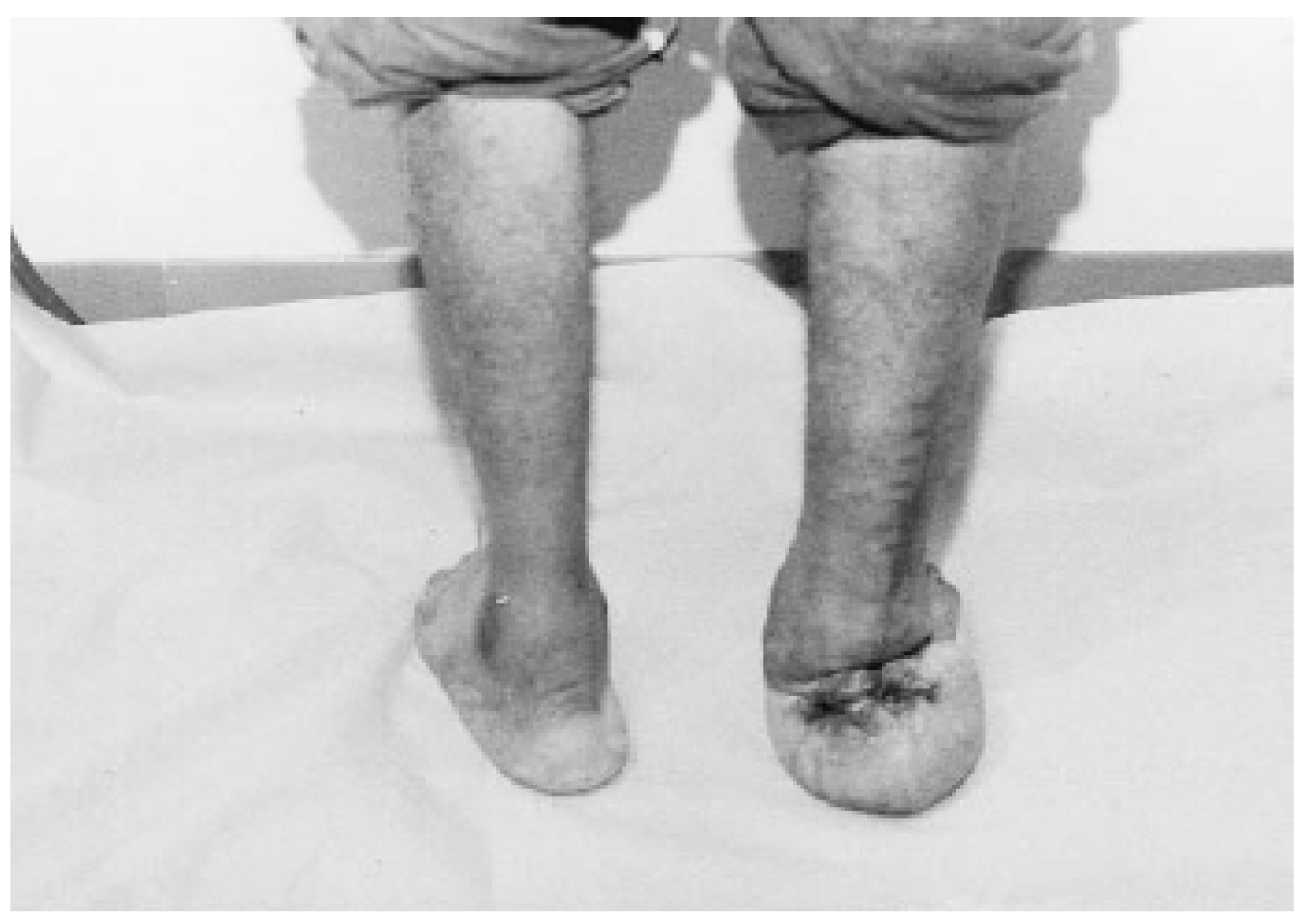
Figure 1. Deformed and grossly enlarged right heel with vertical scar down the leg resulting from tendo Achillis lengthening surgery performed at age 8.
Japma 89 00039 g001
Figure 2. Huge right heel pad.
Japma 89 00039 g002
Figure 3. Close-up posterior view of right heel shows curvilinear deep fissure about 6 cm long with abundant heaped callus on the edges of the fissure.
Japma 89 00039 g003
Figure 4. A, Right foot in dorsiflexed attitude with passive dorsiflexion about 30° past the neutral position. B, When passively plantarflexed, the right foot does not even get to the neutral ankle position.
Japma 89 00039 g004
Figure 5. Lateral radiograph of the right foot shows the deformed calcaneus and massive soft-tissue swelling.
Japma 89 00039 g005
Figure 6. Magnetic resonance imaging coronal view shows large soft-tissue mass that is suggestive of abscess.
Japma 89 00039 g006
Figure 7. Right heel ulcer.
Japma 89 00039 g007
Figure 8. Plantar aspect of both feet shows that the right foot has a wider heel and a narrower forefoot than the left foot.
Japma 89 00039 g008
Figure 9. A, Calcaneal tuberosity avulsion fracture. This x-ray was taken 4 months after the patient started having heel pain. B, Lateral radiograph taken at the time of examination, about 1 year after the x-ray in Fig. 9A, shows that the posterior calcaneal tuberosity healed in a superiorly displaced position, leaving the patient with residual plantarflexion weakness.
Japma 89 00039 g009
Figure 10. Posterior view of patient weightbearing shows grossly enlarged left heel.
Japma 89 00039 g010
Figure 11. Patient seated with legs dangling from chair shows left foot making a 90° angle with the leg compared with the normal position of the right foot, which is plantarflexed to the leg.
Japma 89 00039 g011
Figure 12. Feet viewed from the plantar aspect show deformed left foot, which has the characteristic calcaneal gait features of a relatively wide heel and narrow forefoot as compared with the normal right foot.
Japma 89 00039 g012
Figure 13. Rigid left rocker-bottom Charcot’s foot in calcaneus attitude.
Japma 89 00039 g013
Figure 14. Patient standing, viewed from posterior aspect, shows enlarged left heel in varus position. Although the left limb is thinner and shorter than the contralateral limb, the left heel is still enlarged compared with the normal right heel.
Japma 89 00039 g014
Figure 15. View of patient in sitting position with legs dangling shows left foot pointing upward compared with the opposite side.
Japma 89 00039 g015
Figure 16. Lateral radiograph shows disorganization of tarsal bones with obliteration of subtalar and ankle joints, as seen in Charcot’s foot.
Japma 89 00039 g016
Figure 17. Grossly deformed left lower limb.
Japma 89 00039 g017
Figure 18. Patient in sitting position with left foot pointing upward compared with the normal right side.
Japma 89 00039 g018
Figure 19. A, Lateral radiograph of right foot and ankle shows intra-articular talonavicular fracture with rockerbottom foot type and old tibial and fibular midshaft fractures. B, Anteroposterior view of right ankle.
Japma 89 00039 g019
Table 1. Diagnoses for Patients with Calcaneal Gait.
Japma 89 00039 i001