Next Article in Journal
Calcaneal Gait. Etiology and Clinical Presentation
Previous Article in Journal
Infectious Causes of Heel Pain
 
 
Journal of the American Podiatric Medical Association is published by MDPI from Volume 116 Issue 1 (2026). Previous articles were published by another publisher in Open Access under a CC-BY (or CC-BY-NC-ND) licence, and they are hosted by MDPI on mdpi.com as a courtesy and upon agreement with American Podiatric Medical Association.
Article

Problems and Management of the Rearfoot in Neuromuscular Disease. A Report of Ten Cases

by
Ellen Sobel
and
Renato J. Giorgini
Division of Orthopedic Sciences, New York College of Podiatric Medicine, New York, USA
J. Am. Podiatr. Med. Assoc. 1999, 89(1), 24-38; https://doi.org/10.7547/87507315-89-1-24
Published: 1 January 1999

Abstract

Neuromuscular disease commonly affects the rearfoot as equinus, equinovarus, and equinovalgus deformity. Spastic hemiplegia caused by stroke, head injury, and cerebral palsy results in equinovarus deformity of the rearfoot. Spastic diplegia, most frequently caused by cerebral palsy, results in equinovalgus rearfoot deformity. Problems in ambulation, footwear, and bracing, as well as their orthopedic management, in patients with neuromuscular disease are discussed in a case-report format.

The rearfoot is commonly involved in neuromuscular disease as drop foot, equinus, and, to a lesser extent, calcaneus deformities [13]. Lower motor-neuron damage may occur from such diverse conditions as poliomyelitis, lumbosacral nerve trauma, spina bifida, isolated peripheral nerve injury, or diabetes mellitus, all resulting in drop foot with flaccid paralysis [4,5]. Disruption of upper motor-neuron inhibitory pathways leads to spasticity and weakness. Spasticity results in muscle imbalance, which produces rearfoot deformities, such as equinus, equinovarus, and equinovalgus. These deformities lead to rigid and fixed contractures that may preclude a plantigrade foot and standing position. Walking—even wearing shoes—becomes difficult. Although any upper motor-neuron disease or injury can result in spasticity, the most common causes are cerebrovascular accidents, cerebral palsy, traumatic brain injury, and spinal cord injury. Rearfoot problems in neuromuscular diseases are discussed in a case-report format, grouped under the major neuromuscular disease categories: stroke, cerebral palsy, and spinal cord disorders. Difficulties experienced by patients with these conditions are reviewed, and possible solutions are presented for the problems these patients most frequently encounter in ambulation, bracing, footwear, and surgery.

Rearfoot Deformity in Stroke

The patient who has had a cerebrovascular accident generally presents with spastic hemiplegia, circumductory gait, and equinovarus foot type. The equinus posturing at heel strike often results in compensatory hyperextension at the knee and increased flexion at the hip by midstance [6]. These patients have characteristic rearfoot deformities with bracing and shoe problems, as the following three cases illustrate.

Case 1

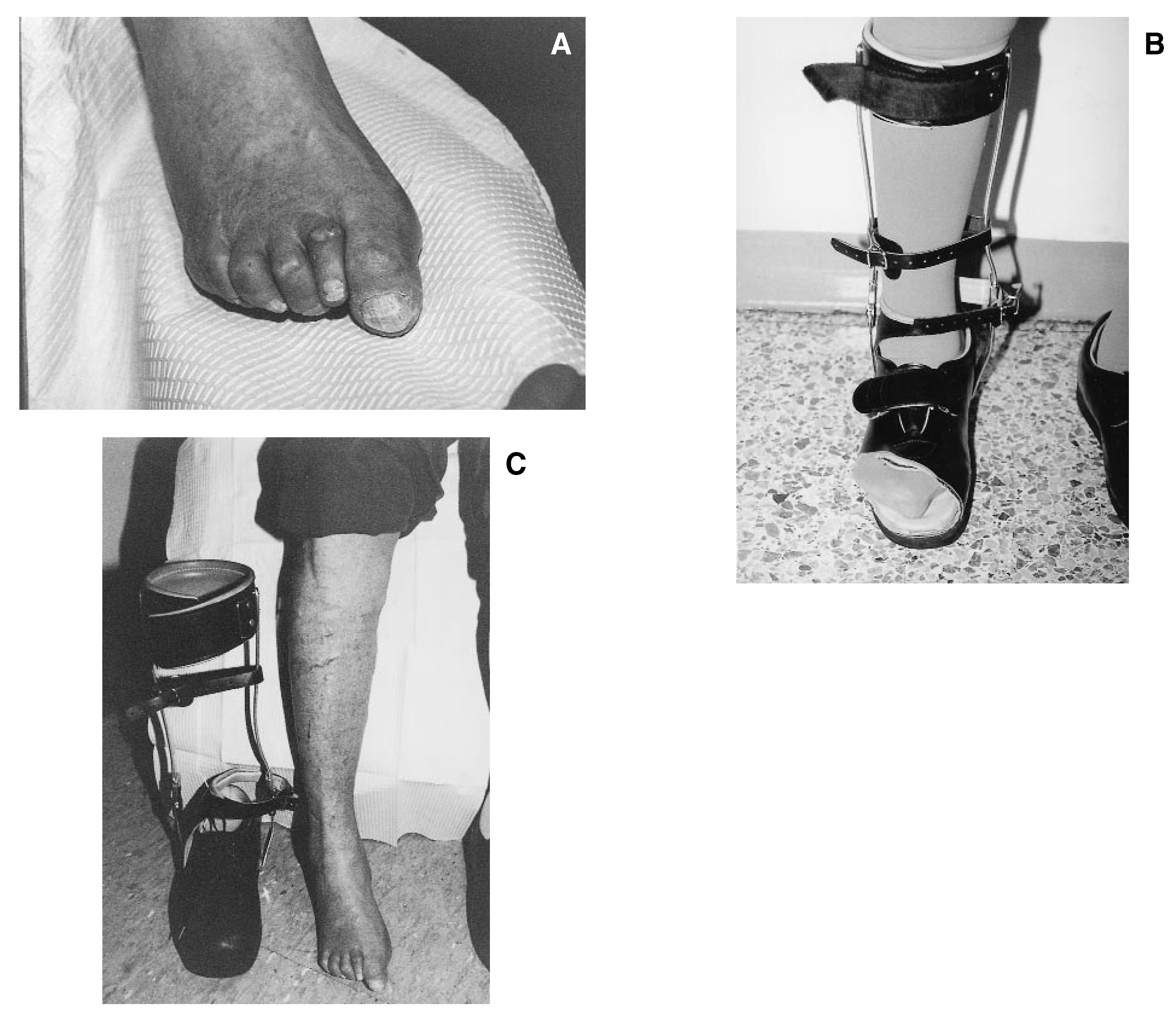
A 90-year-old woman with a 19-year history of cerebrovascular accident on the left side presented with rigid contracted digits on the right foot (Figure 1A). A double-upright ankle-foot orthosis with double T-straps stabilized the equinovarus rearfoot (Figure 1B). However, the orthopedic shoe could not accommodate the patient's toes. The hammered hallux caused chronic plantar ulcerations at the distal tip of the hallux. A new brace with a molded shoe was ordered; the patient was able to wear the brace without having to cut the toe box of the shoe (Figure 1C).

Case 2

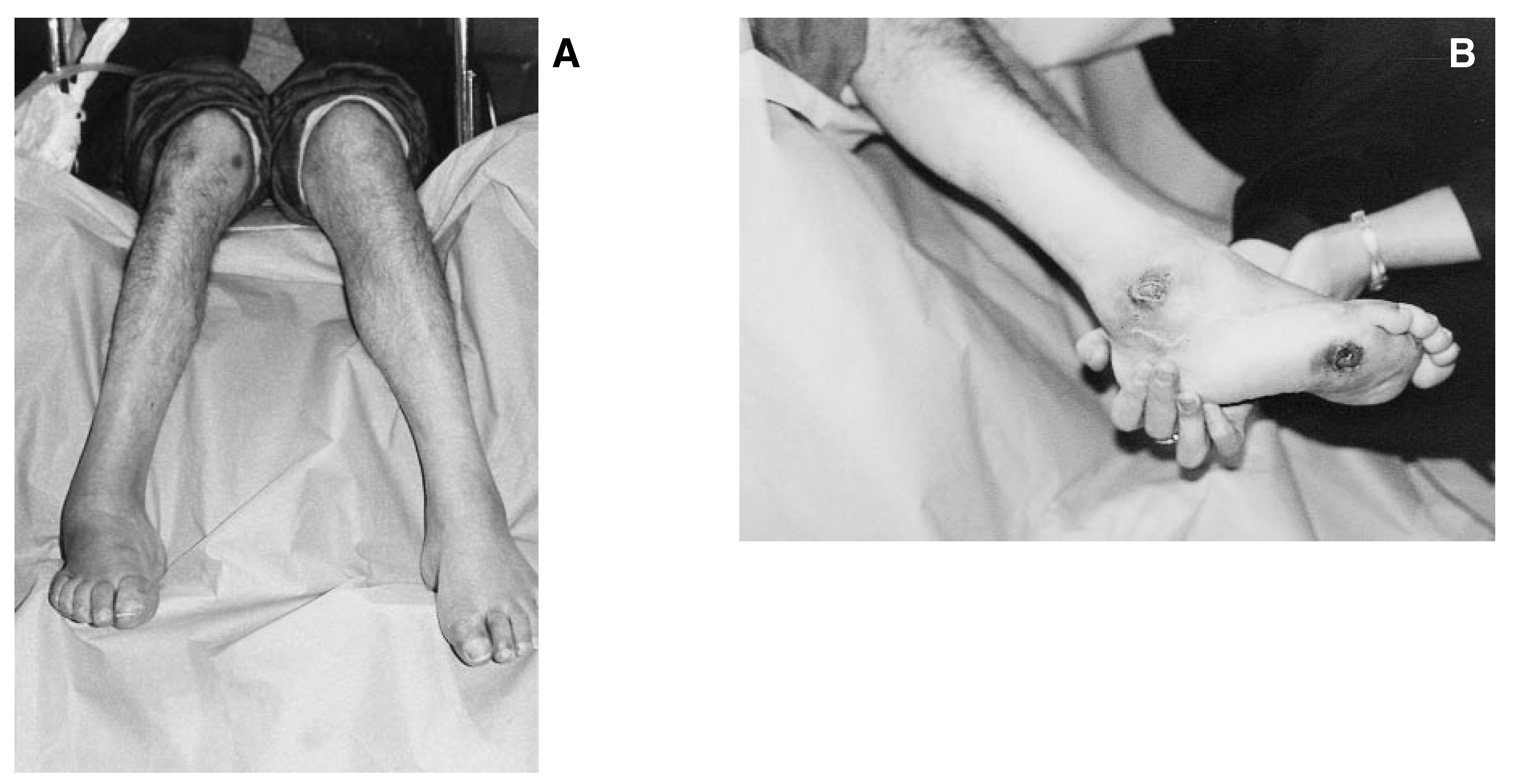
A 36-year-old woman with left spastic hemiplegia sustained a cerebrovascular accident at the age of 29, a month after giving birth to her second child. She presented for a new ankle-foot orthosis for the left foot and leg. The previous brace caused blisters on the lateral plantar aspect of her foot. Examination revealed a markedly deformed left equinovarus foot (Figure 2A) in a rigid plantarflexed position (Figure 2B). Her gait demonstrated severe lateral instability. She was able to take only a few steps without the support of a brace and cane. The following were values for the left side: patellar tendon reflex, 3+/5; left calf, 3 inches thinner than the right calf; muscle power reduced to one fifth for the anterior tibial and peroneal muscles; and gastrocsoleus and posterior tibial muscles reduced to four fifths of muscle strength. She stood with the left knee in recurvatum and valgum to compensate for the equinus ankle position.
The patient's equinovarus foot and unstable gait were managed with a semirigid ankle-foot orthosis that was worn with a high-top sneaker and supported by a cane (Figure 2C). A lateral flange on the calf shell of the brace helped control the varus deformity. However, the patient found the brace painful to wear. A second brace was constructed with a heel lift to accommodate the equinus deformity (Figure 2D). She was unable to tolerate the new brace and continued to wear the original orthosis. The patient was referred for surgical correction, but she did not want surgery.

Case 3

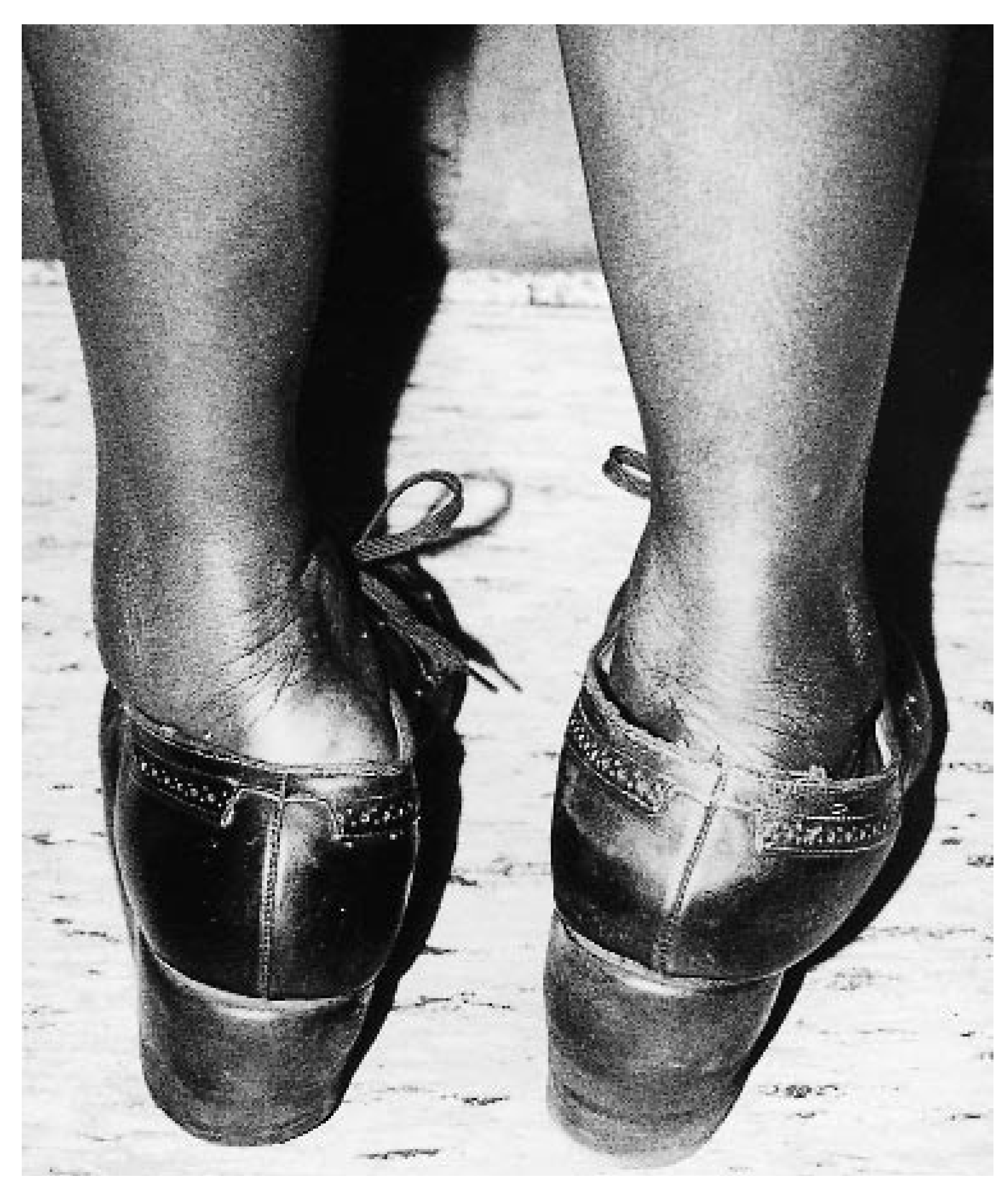
A 67-year-old woman had difficulty wearing shoes after a cerebrovascular accident 12 years earlier that resulted in left spastic hemiplegia with a rigid equinovarus foot. Her medical history included polio at age 3, which had affected her left side and resulted in a 1-inch shortening of the leg. Bilateral knee replacements were performed for osteoarthritis. Her left foot was in a rigid ankle equinus position of 40°. She walked with a cane. Despite the patient's complex medical and surgical history, the varus rearfoot was the main problem: because of the severity of the deformity and economic difficulties, the patient never found shoes that fit her well (Figure 3).

Pathomechanics of Equinovarus Foot in the Stroke Patient

The equinovarus foot type in the three patients in these case reports is the most common deformity of the lower extremity following stroke [610]. It is caused by overfiring of the triceps surae, flexor hallucis longus, and flexor digitorum longus muscles, in conjunction with weakness and insufficiency of the dorsiflexor muscles [2,1114]. The varus component is caused by spasticity of the tibialis anterior, flexor hallucis longus, flexor digitorum longus, soleus, and, less commonly, the tibialis posterior muscles [7]. The tibialis posterior muscle seems to be much less involved in stroke patients and more of a factor in the varus deformity in cerebral palsy [2]. Both the tibialis anterior [6] and the soleus muscles [13] have been reported to be the main deforming varus forces. The tibialis anterior muscle fires continuously throughout the gait cycle in the stroke patient. The soleus muscle, inserting on the medial aspect of the calcaneus, elicits both equinus and varus [13]. The peroneal muscles, especially the peroneus brevis, are functionally paralyzed and therefore play a passive role in hemiplegic foot posturing [12]. A varus foot during the stance phase of gait produces a disabling gait defect, resulting in an unstable foot during weightbearing [11].
Most stroke patients who demonstrate varus deformity during the swing phase of gait will flatten the foot into eversion just after foot contact with the floor [15]. Once the foot is inverted, the flexor hallucis longus and flexor digitorum longus muscles cause clawtoe or curly toe deformity of the hallux and/or lesser toes [13,16]. Digital contractures were the main podiatric problem for the patient in Case 1 of this article.

Considerations in the Management of Stroke Patients

All three stroke patients in the case reports in this article were ambulatory, but suffered pain and instability. Two thirds to three fourths of stroke patients recover enough lower-limb function to walk [15]; typically, however, the gait is unstable and unsafe [17]. There is an 8% incidence of hip fracture in hemiplegic patients because of falling [18]. Inadequate dorsiflexion of the foot with varus deformity that disappears at foot contact with the floor is the most common motor loss in hemiparesis [15]. Treatment for isolated anterior group muscle weakness is the posterior leaf spring orthosis. If the plantarflexor muscles are also weak, or if there is significant spasticity, a semirigid or solid ankle-foot orthosis becomes necessary (Figure 2 C and D) [19]. A rigid ankle-foot orthosis has been shown to prevent triceps surae clonus during gait in stroke patients [12]. Although the plastic orthosis is the most commonly used ankle-foot orthosis for the stroke patient, some podiatric physicians consider the metal double-upright ankle-foot orthosis the best orthosis because of its versatility and strength (Figure 1 B and C) [7,11,13].
Simple off-the-shelf ankle supports have been found to benefit stroke patients. In one study, stroke patients using an Air-Stirrup® (Aircast, Summit, NJ.) brace had improved calcaneal stability and toe clearance during the swing phase of gait and increased step length on the paretic side as compared with patients not using a brace [20]. Many stroke patients develop hyperextension of the knee to compensate for equinus deformity of the ankle (the patient in Case 2). An orthosis set in 5° to 10° of ankle dorsiflexion will produce a flexion moment at the knee, therefore controlling genu recurvatum and increasing toe pickup as well. However, since a slightly hyperextended leg will lock the knee, providing stability in stance for weak quadriceps muscles, there must be adequate quadriceps strength before this option is used.
Patients with extreme varus deformities are difficult to treat and present a major problem with footwear (the patient in Case 3). A lateral T-strap attached to a double-upright metal ankle-foot orthosis will pull the foot medially out of the varus attitude (the patient in Case 1). A plastic orthosis with a lateral calf flange exerts medial force on the leg (the patient in Case 2).

Rearfoot Deformity in Cerebral Palsy

The most common foot deformity in cerebral palsy is spastic equinus of the rearfoot and ankle [2131] caused by unbalanced action of the extensor and flexor muscles with premature or prolonged activity of either the gastrocnemius or the soleus muscle [32]. Hemiplegia typically produces equinovarus deformity, and diplegia generally results in equinovalgus deformity. Four cerebral palsy patients, two children and two adults, are described to illustrate these cerebral palsy-related deformities.

Case 4

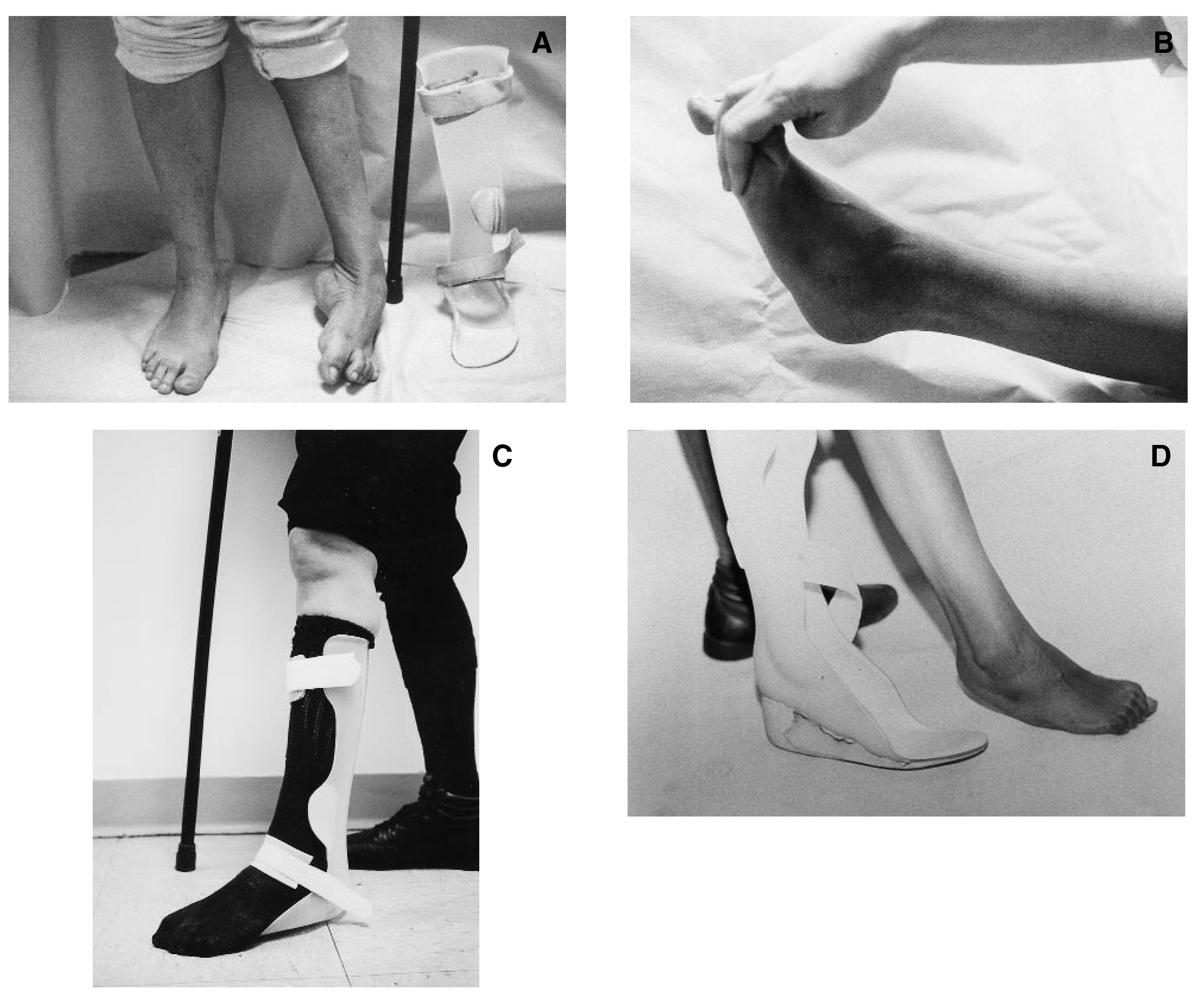
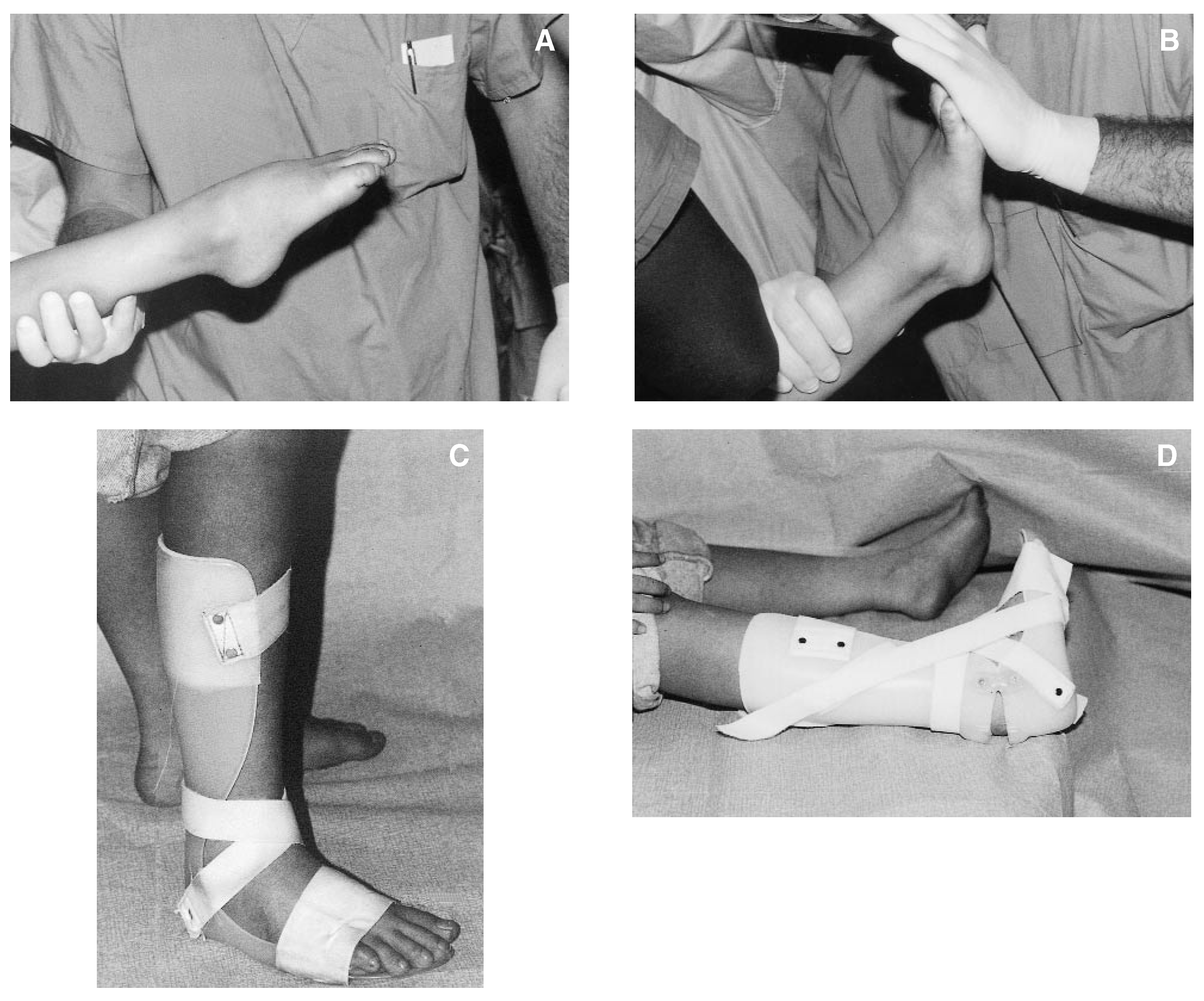
A 9-year-old boy who had had infantile encephalopathy at the age of 6 months presented with unilateral toe-walking. He began walking at 18 months and toe-walked on his right side for the next 8 years. Examination revealed semirigid equinus (Figure 4A) reducible to 30° of plantarflexion during passive dorsiflexion (Figure 4B). The operative procedure consisted of percutaneous tendo Achillis lengthening of the right foot with plantar release and split tibialis anterior tendon transfer. An ankle-foot orthosis was worn during the day (Figure 4C) and a tone-reducing splint at night for 6 months postoperatively (Figure 4D).

Case 5

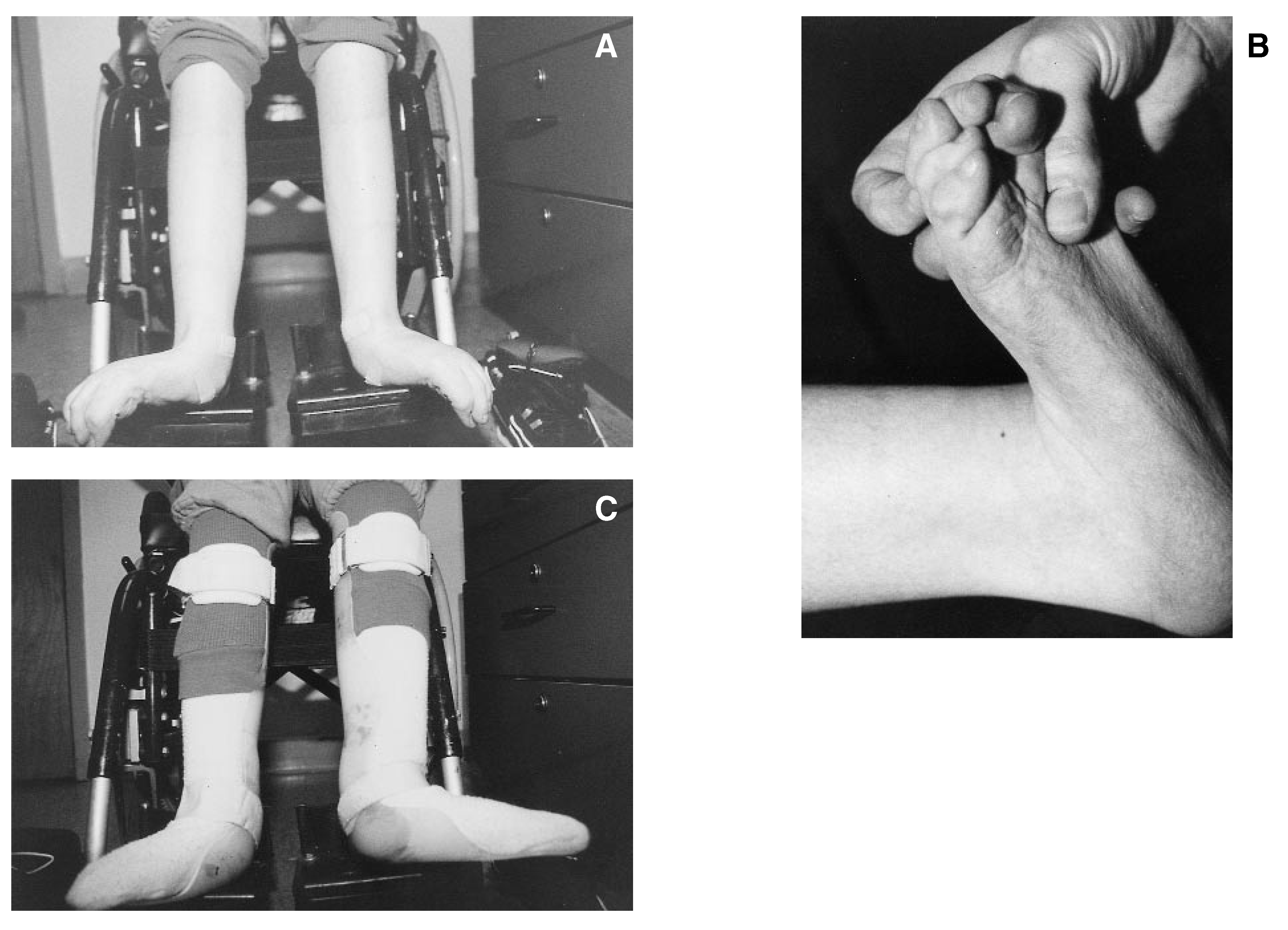
A 14-year-old girl with a previous diagnosis of atonic athetoid cerebral palsy periodically presented for new ankle-foot orthoses. Examination revealed bilateral collapsing pes planovalgus foot type (Figure 5A). The motor system showed mildly reduced tone in all extremities, which manifested in the rearfoot as severe calcaneovalgus deformity (Figure 5B). The limbs moved against resistance. Sensory testing showed no gross abnormality. Deep tendon reflexes were diminished and the plantar response was normal. During ambulation, she demonstrated bilateral genu valgum, with severe pronation and pes planus of both feet (Figure 5A). The joints of the lower extremity demonstrated ligamentous laxity with valgus ankle instability (Figure 5B). Bilateral ankle-foot orthoses provided some stability for gait and placement of her feet in a wheelchair (Figure 5C). With the orthoses, she was able to walk with the aid of a walker.

Considerations in the Management of Cerebral Palsy in Children

As a result of infantile encephalopathy, the child in Case 4 had acquired cerebral palsy with spastic hemiplegia and equinovarus foot type. Equinovarus is present in 10% of cerebral palsy patients [21] and is most common in children who have spastic hemiplegia [33]. Spastic equinovarus is usually caused by hypertonicity of the posterior tibial muscle in association with weakness of the peroneal muscles and tightness of the heel cord [2,3335]. Varus deformity caused by an overactive tibialis anterior muscle is more frequently associated with acquired cerebral palsy [36]. The split tibialis anterior tendon transfer and the lengthening of the tendo Achillis were effective in weakening the spastic tibialis anterior and contracted Achilles tendon.
Conservative therapy is begun in children with cerebral palsy prior to age 3 [37]. Passive mobilization of the rearfoot into maximum dorsiflexion and strengthening with active resistance are performed several times daily. The foot and ankle are maintained in proper positioning with prolonged continuous passive muscle stretching in well-padded splints, bivalved casts, or molded ankle-foot orthoses. Shortleg tone-reducing casts have been used to reduce spasticity and initiate weightbearing activities [38].
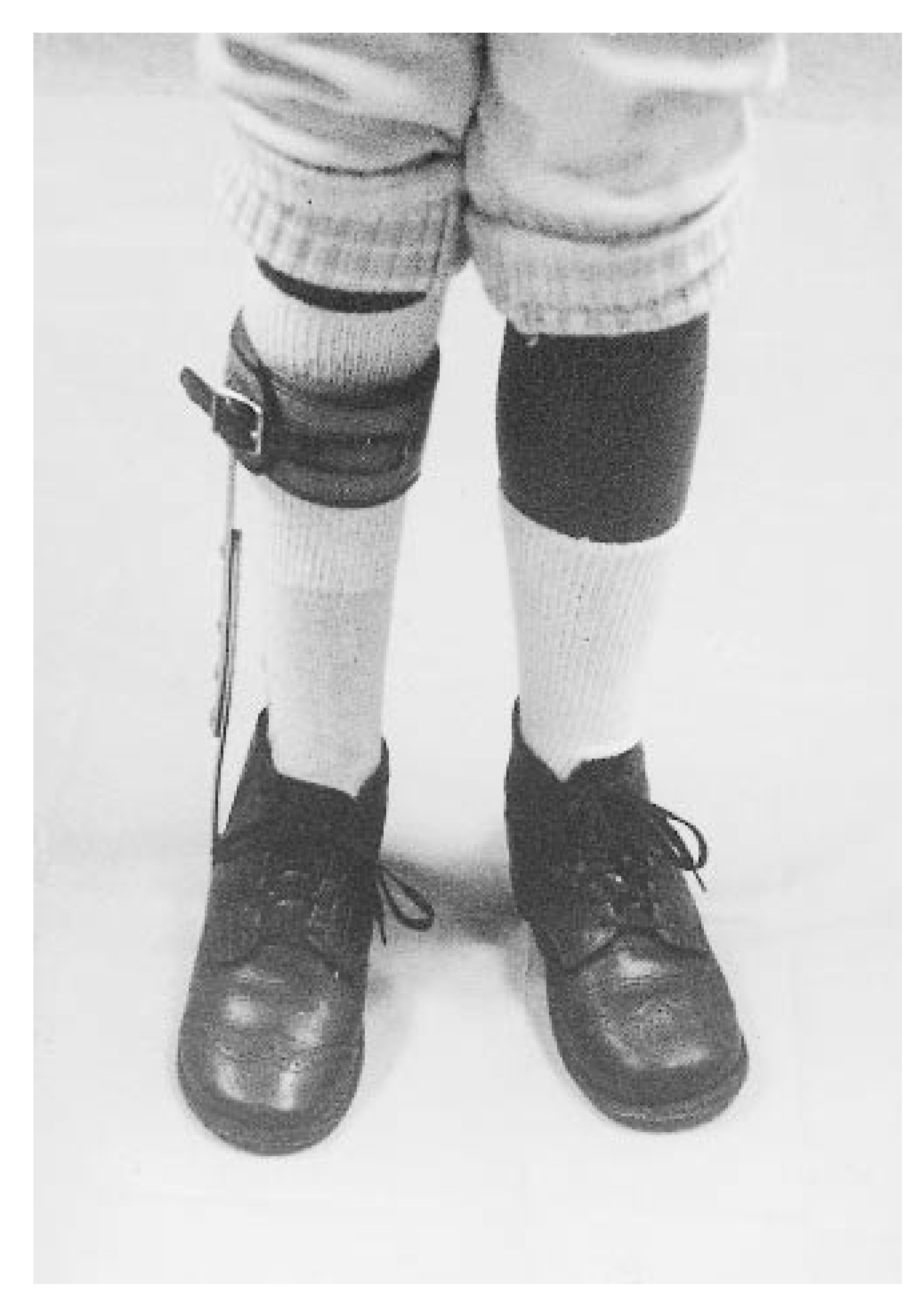
Bracing is one of the most common treatments for the child with spastic cerebral palsy. The single-upright metal Phelps’ brace was one of the earliest braces used for treating these children (Figure 6) [39]. The molded polypropylene ankle-foot orthosis, frequently with a tone-reducing articulated ankle (Figure 4C), is often used to treat childhood foot and ankle spastic conditions [4045]. This type of orthosis may also be worn as a night splint (Figure 4D). The child in Case 4 had a nonarticulated ankle-foot orthosis for day use and an articulated ankle-foot orthosis for use as a night splint (Figure 4 C and D). The orthosis improves standing balance by inhibiting extensor tone [40]. Other tone-reducing features of the orthosis are a toe hyperextension plate, tendon pressure over the insertion of the gastrocsoleus, and spastic inhibitor bars [44]. The posterior leaf spring orthosis is another simple ankle-foot orthosis used to treat children with cerebral palsy [45].
Although only 10% of stroke patients with spastic equinus are candidates for surgery [6,46], surgical correction of spastic equinus in children with cerebral palsy is common and improves function, once shortening of the tendo Achillis prevents ankle dorsiflexion to the neutral position [25,4752]. Elongation of the tendo Achillis or recession of the gastrocnemius muscle reduces plantarflexion muscle power one to two grades [47], sufficiently weakening the strong gastrocnemius and soleus muscles to improve balance with the weaker and less active antagonist muscles [25,47]. One study showed that antagonist function improved more than 200% 14 months postoperatively when spasticity in the agonist was reduced by tendon lengthening [53].
A vigorous postoperative regimen is generally followed. Night splinting is recommended after surgery for correction of equinus contracture for a 6-month period until completion of growth [21,25,50,52,5460]. An ankle-foot orthosis has been used in the postoperative regimen if it was thought that this would improve the patient’s gait or in patients without active ankle dorsiflexion [52,61,62]. Physical therapy develops balanced muscles [50,52]. Passive daily heel-cord stretches are begun 3 months postoperatively [63].
Of patients with cerebral palsy, 1% have the flaccid or atonic athetoid variety [33,43], which presents with severe calcaneus deformity (the patient in Case 5). Calcaneus deformity with cerebral palsy is usually a result of excessive lengthening of the Achilles tendon.49 In the calcaneus gait, the heel strikes the floor first, but the gastrocsoleus muscle fails to prevent forward acceleration of the tibia. This leads to a collapsing forward progression in gait [64].

Case 6

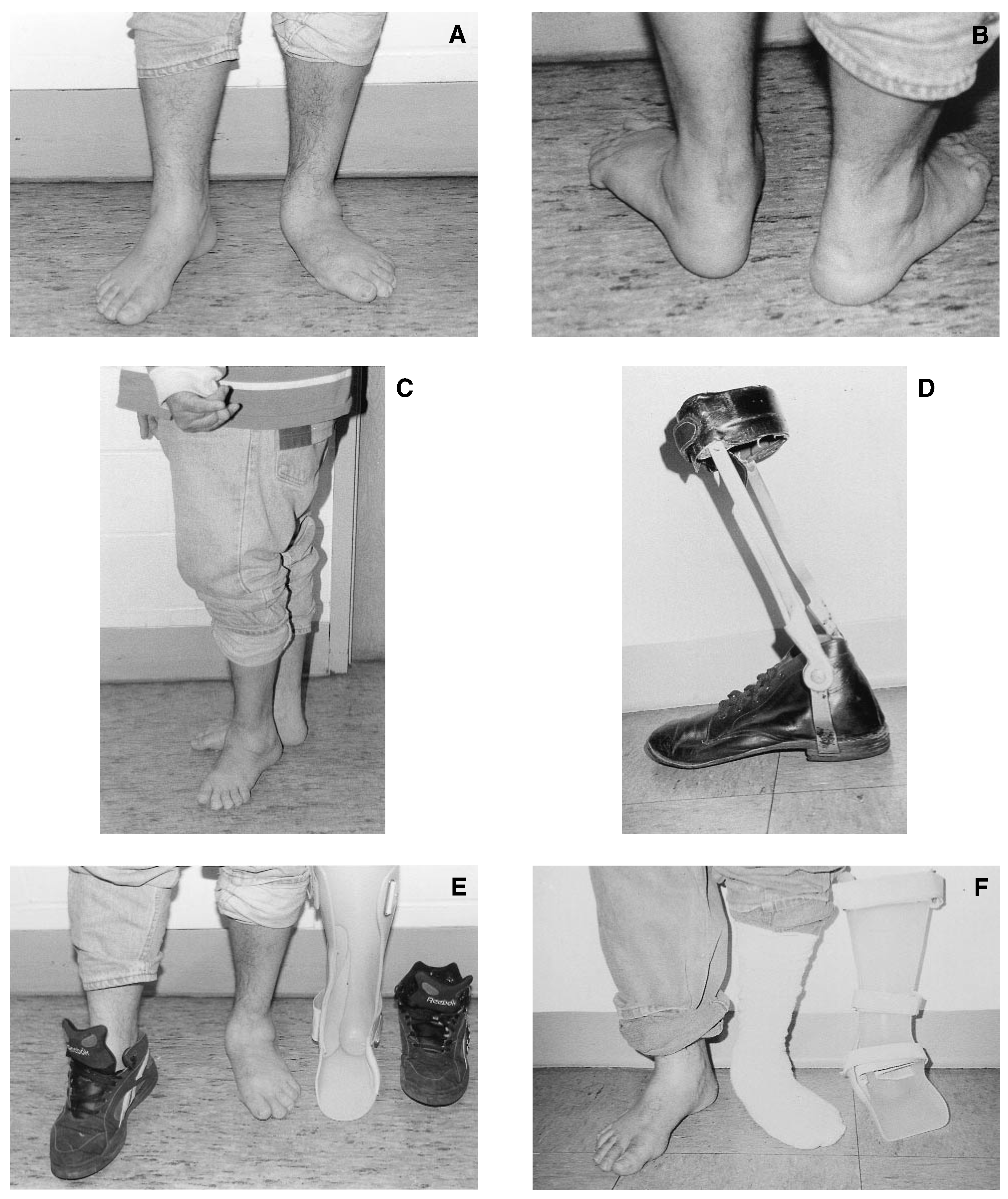
A 29-year-old man presented with unsteady gait and a deformed left foot (Figure 7A). At the age of 18 months, he sustained a high fever with encephalopathy. He was hospitalized and in a coma for several days. When he regained consciousness, his left side was paralyzed. He began to walk at age 2½ and toe-walked on his left side for several years. Surgery to lengthen the Achilles tendon was performed at the age of 8 (Figure 7B).
Physical examination revealed a man with left spastic hemiplegia (Figure 7C) and rigid equinovalgus left foot (Figure 7A). The left side demonstrated hypertonic patellar reflexes. Dorsiflexor muscle power was reduced one grade and the ankle was in a fixed position of 20° of plantarflexion. He was able to walk barefoot with his left heel never touching the ground. He presented with a worn-out spring-loaded metal ankle-foot orthosis (Figure 7D). A new plastic solid ankle-foot orthosis was prescribed (Figure 7E). Although the patient was able to don the brace and wear it in a high-top sneaker, the rigidity of the brace caused significant pain, which he was unable to tolerate. A new, lightweight, semirigid ankle-foot orthosis with a slightly abducted foot plate worked well for this patient (Figure 7F). He wore it constantly and could not walk without it.

Case 7

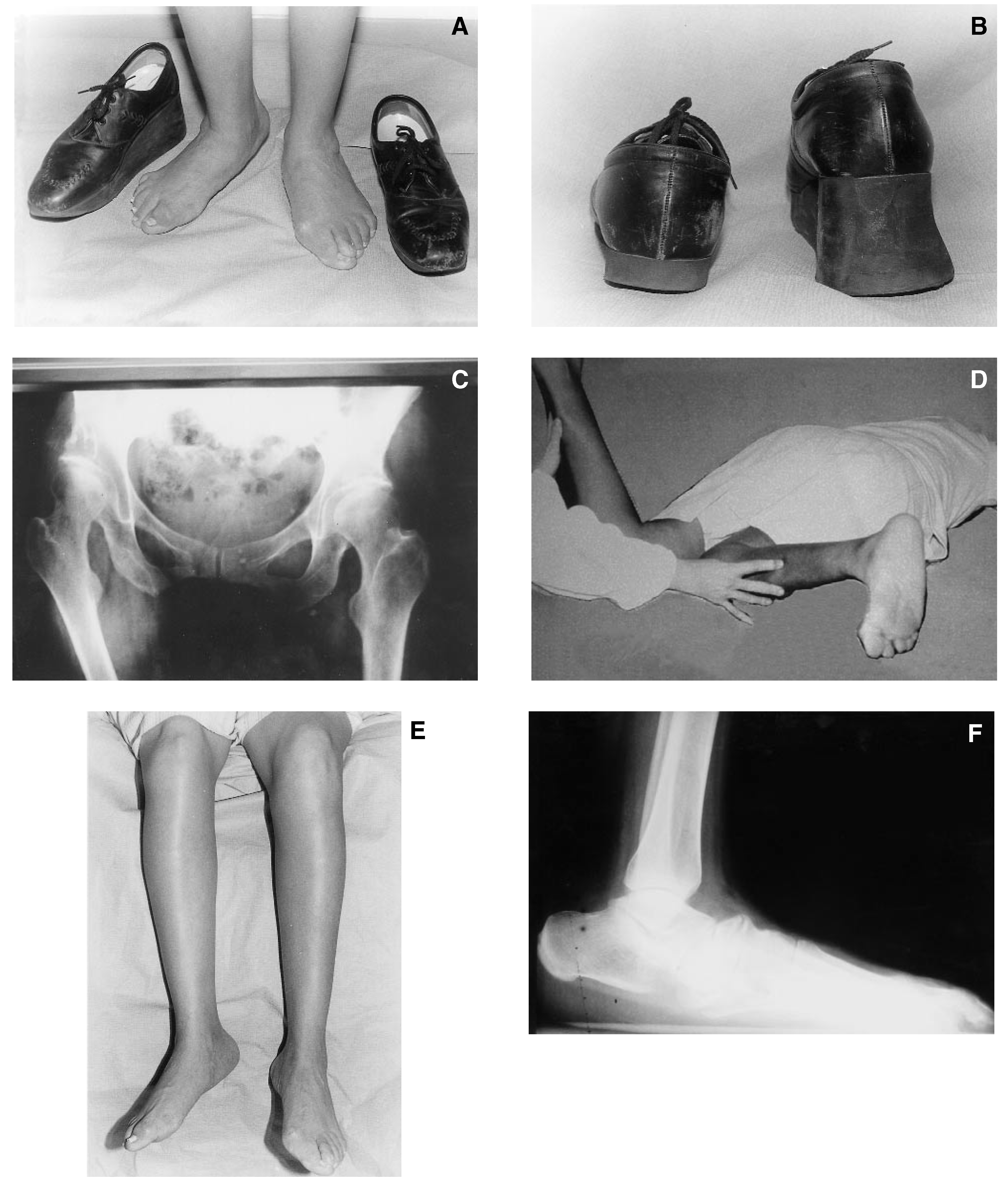
A 49-year-old woman with cerebral palsy presented with an equinovalgus right foot and a right limb that was 2½ inches shorter than her left limb (Figure 8 A and B). She presented for a prescription for a pair of custom-molded shoes to accommodate the shorter limb. Her medical history revealed a dislocated right hip that had been surgically corrected at age 3 (Figure 8C). Developmental history revealed that the patient was born prematurely at 7 months to an alcoholic mother and had weighed 3 pounds, 2 ounces, at birth. She first walked at age 18 months and wore braces from age 5 to 16. She discarded them because of their appearance.
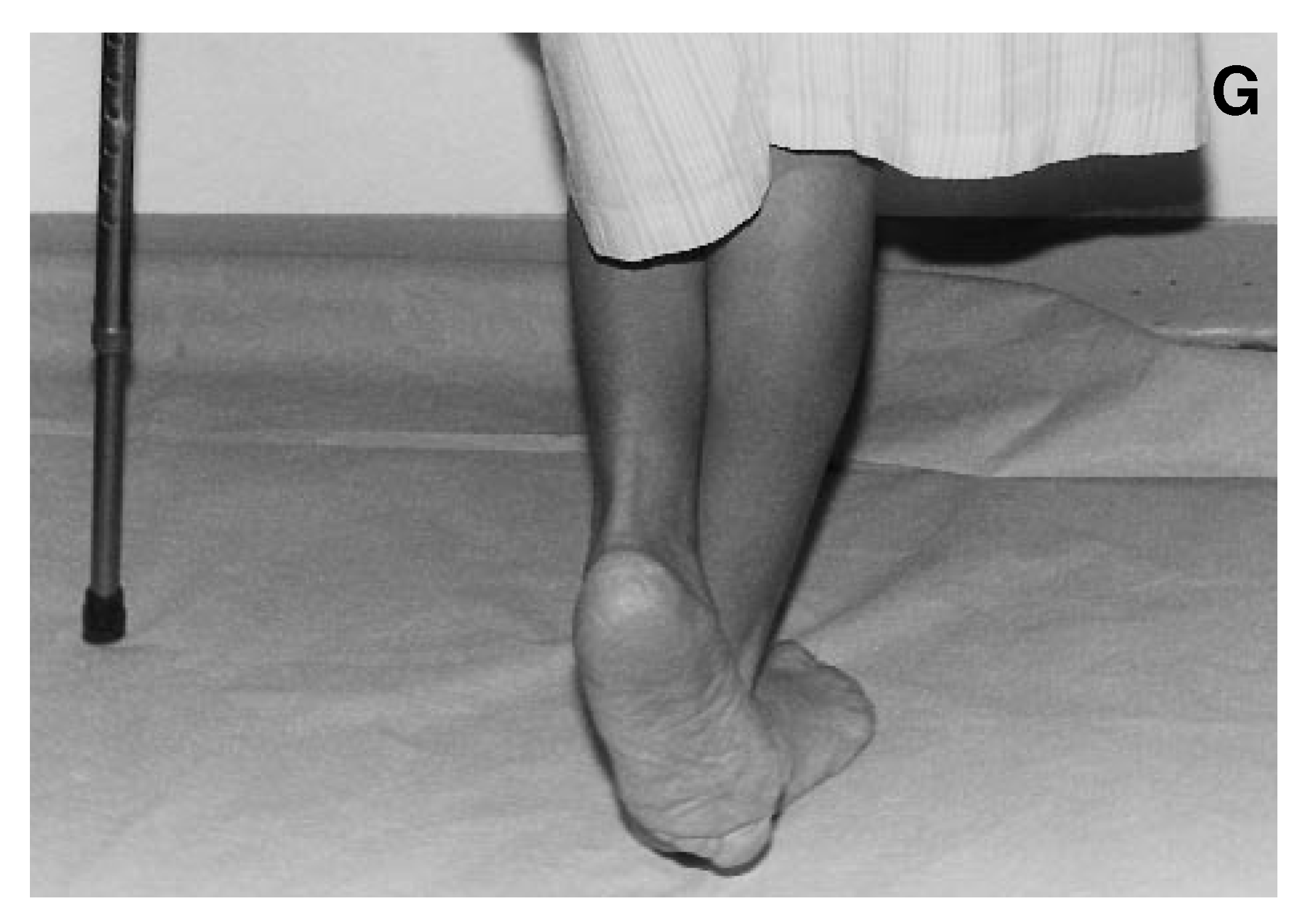
The patient stood and walked with her right foot in an abducted position. Musculoskeletal examination showed an internally rotated right hip (Figure 8D) and externally rotated right leg (Figure 8E). The lateral foot x-ray showed the equinus position of the right foot (Figure 8F). Her gait was unstable and she was unable to balance on one foot (Figure 8G). She received a prescription for molded shoes with a 2-inch lift on the right side.

Pathomechanics of Equinovalgus Foot in Cerebral Palsy

Two adult cerebral palsy patients, one with hemiplegia and the other with diplegia, had equinovalgus rearfoot (the patients in Cases 7 and 8). Spastic diplegia with an equinovalgus foot type is the most common presentation in cerebral palsy [21,65,66]. Rearfoot valgus is a result of the equinus condition. The tight Achilles tendon bowstrings laterally from the tibia to the calcaneus, forcing the calcaneus into a valgus attitude. The calcaneus is displaced posterolaterally in relation to the talus. With loss of support from the calcaneus, the talus may subluxate into a vertical position. The midfoot collapses into relative dorsiflexion, and a rocker-bottom deformity results [35].
Valgus is caused by inactivity of the tibialis posterior muscle [65] or overactivity of the peroneal muscles [32]; this leads to muscle imbalance between the tibialis posterior and the relatively stronger (spastic) peroneal muscles, thereby causing the valgus foot type. In time, adaptive shortening of the gastrocnemius and soleus muscles in conjunction with contraction of the posterior capsule of the ankle and subtalar joint and thickening of the neck of the talus will create a fixed equinus deformity [29]. A fixed equinus deformity of 30° or more cannot be braced.

Considerations in the Management of Cerebral Palsy in Adults

The patient in Case 7 experienced the typical bracing problems of the equinovalgus foot. Patients with this foot type can be stabilized with an ankle-foot orthosis, but if the deformity is rigid, they frequently have difficulties with a plastic orthosis. The patient in Case 8 had spastic diplegia with a dislocated right hip. Her right leg was 2 inches shorter than the left. A discrepancy in leg length is not common in children with cerebral palsy [67], and its presence in this case was attributed to damage to the growth plate from surgery to the dislocated right hip.
The patient in Case 7 had excessive anteversion of the right hip, which was demonstrated by the almost 90° internal hip rotation (Figure 8D). Excessive femoral anteversion resulted in compensatory external tibial torsion (Figure 8E) and caused her to walk with an abducted right foot. Increased femoral anteversion is universal in the diplegic or quadriplegic child and is caused by delayed weightbearing and persistent muscle imbalance about the hips [68]. The persistence of femoral anteversion and adaptation to hip medial rotation leads to compensatory external tibial torsion beyond the mean of 23° [69] and to severe pes valgus [36,68,69]. External tibial torsion can mimic or contribute to valgus deformities [35].
Although the patient had a successful hip operation as a child, she was not able to balance on one limb on the operated side (Figure 8G). Trunk sway is common in patients with cerebral palsy and can be explained by deficient equilibrium. The shift due to poor balance when standing on one limb should not be confused with a positive Trendelenburg's sign, which is due to flaccid paralysis of the gluteus medius muscle. In patients with cerebral palsy, standing balance is poor and the righting reactions are deficient; if there are no protective righting or stepping responses, the whole body falls toward the affected side [68].

Rearfoot Deformity in Spinal Cord Disorders

Spinal cord injury and paralysis are most commonly caused by motor-vehicle accidents, gunshot wounds, falls, and sports injuries [35]. Trauma to the spinal cord that results in incomplete lesions usually allows the patient to retain a mixture of motor and sensory function [3]. Complete lesions are characterized by a lack of motor and sensory function below the level of injury. Weakness, diminished deep tendon reflexes, pain, and sensory disturbances may originate in the cauda equina nerve roots (L2 through L5 and S1). The following three cases illustrate spinal cord injuries and diseases involving the rearfoot.

Case 8

A 23-year-old man presented with a 2-year history of a knife injury to the spinal cord that had resulted in an incomplete L4 cauda equina lesion. The patient had a left drop foot with almost no voluntary dorsiflexion, muscle power and a complete loss of sensation. Although the right foot had full muscle power, the patient was prescribed bilateral solid ankle-foot orthoses. The plastic ankle-foot orthosis that is prescribed for an insensate pes planovalgus foot type caused ulcerations over the medial malleolus (Figure 9).

Case 9

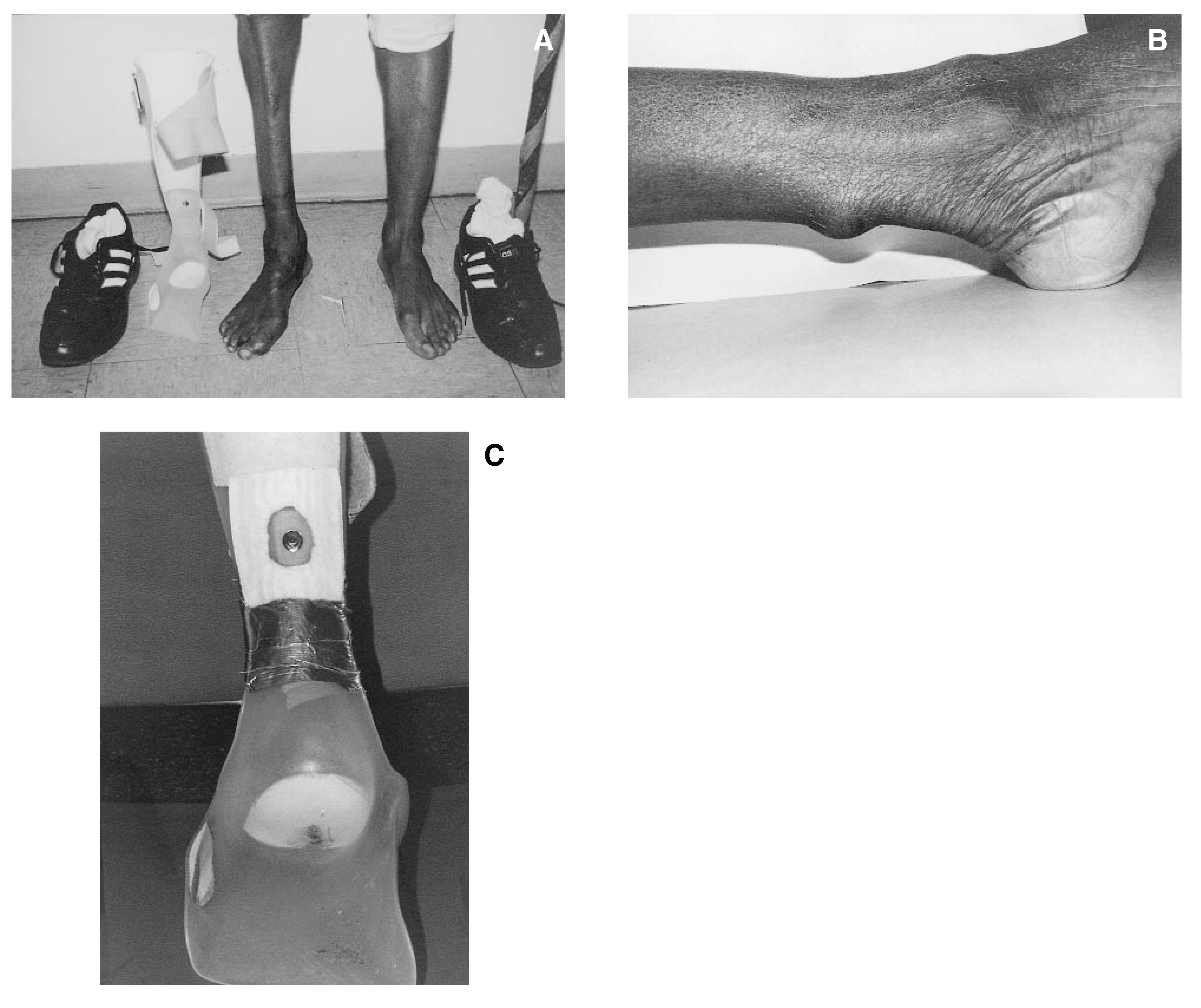
A 42-year-old man had sustained a gunshot wound to the spinal cord in the L4, L5, and cervical region 18 years prior to presentation; the wound resulted in right drop foot. He complained of painful hyperkeratotic lesions under the first metatarsal and multiple heloma durum on the distal aspect of the second digit, with pain radiating up and down the right leg. He requested a new ankle-foot orthosis. Physical examination of the right foot and leg revealed right calf girth reduced 4 cm, diminished dorsiflexion (3/5), and diminished plantarflexion (4/5). He was able to walk barefoot, demonstrating a steppage gait. The callosities were debrided and a new ankle-foot orthosis was prescribed (Figure 10A). One year later, the patient presented with a large lump on the posterior aspect of his right leg (Figure 10B). The brace was found to have a metal part that was rubbing the patient's leg and causing the lesion (Figure 10C). The brace was padded with a ¼-inch layer of felt that the patient wore while waiting for a newly prescribed orthosis.

Case 10

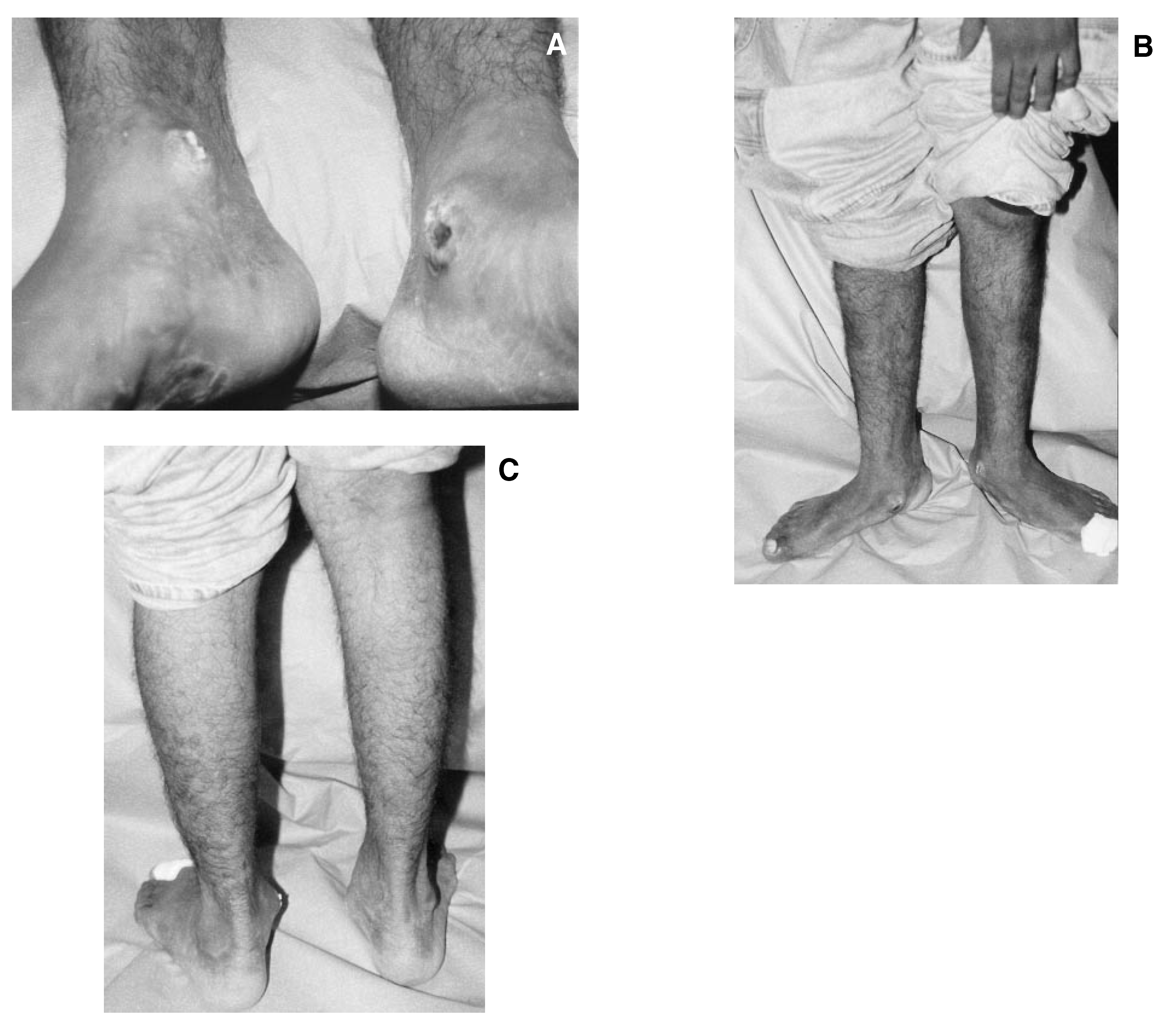
A 49-year-old man had contracted polio at age 3, which resulted in a shortened right leg. Surgical removal of a prostate cancer metastatic lesion in the L3 spinal cord level 6 months before presentation resulted in paralysis of both legs and the consequent need to use a wheelchair most of the time. The right leg was in a fixed equinovarus position (Figure 11A). Ulcers developed on the right lateral malleolus and the plantar aspect of the fifth metatarsal head from the pressure of a plastic ankle-foot orthosis (Figure 11B).

Considerations in the Orthotic Management of Spinal Cord Disorders

The three patients presented here were all relatively young men with varying degrees of paralysis and diminished sensitivity. Each patient demonstrated a degree of insensitivity that resulted in pressure lesions and ulcers when using a plastic brace. In general, patients who are insensate should not be prescribed a plastic orthosis. Insensate patients who do wear a plastic brace must be monitored for skin breakdown. Lesions and ulcerations over the lateral malleolus are most common because most patients have an equinovarus foot type with bony prominence over the lateral malleolus, as did the patient in Case 10. However, ulcerations over the medial malleolus occur in patients with severe pes planovalgus with protruding medial malleolus, as demonstrated by the patient in Case 8. At the first sign of skin irritation, the patient's brace should be changed to a double-upright ankle-foot orthosis [70,71].

Acknowledgments

Mr. Edwin Vasquez for his photography.

References

  1. JAIVIN JS, BISHOP JO, BRALY WG, ET AL: Management of acquired adult dropfoot. Foot Ankle 13: 98, 1992.
  2. LAWRENCE SJ, BOTTE MJ: Management of the adult, spastic, equinovarus foot deformity. Foot Ankle Int 15: 340, 1994.
  3. WARD K, SOBEL E, KOSINSKI MA: Cauda equina syndrome resulting in late sequela of calcaneal gait and neuropathic heel ulcer. JAPMA 87: 60, 1997.
  4. BOWKER JH: Neurological aspects of prosthetic/orthotic practice. J Prosthet Orthot 5: 40, 1993.
  5. SOBEL E, HUANG EY, WIETING CB: Drop foot as a complication of acupuncture injury and intragluteal injection. JAPMA 87: 52, 1997.
  6. WATERS RL, BOTTE MJ, JORDAN C, ET AL: Symposium: rehabilitation of stroke patients—the role of the orthopaedic surgeon. Contemp Orthop 20: 311, 1990.
  7. BOTTE MJ, WATERS RL, KEENAN MA, ET AL: Approaches to senior care #3: orthopaedic management of the stroke patient. part II: treating deformities of the upper and lower extremities. Orthop Rev 17: 891, 1988.
  8. FORESE L, WOOTTEN M, KADABA MP, ET AL: Surgical management of equinovarus deformity in the adult with head injury. Orthop Rev 22: 1001, 1993.
  9. HARKLESS LB, BEMBO GP: Stroke and its manifestations in the foot. Clin Podiatr Med Surg 11: 635, 1994.
  10. PARZIALE JR, AKELMAN E, HERZ DA: Spasticity: pathophysiology and management. Orthopedics 16: 801, 1993.
  11. WATERS RL, MONTGOMERY J: Lower extremity management of hemiparesis. Clin Orthop 102: 133, 1974.
  12. PERRY J, WATERS RL, PERRIN T: Electromyographic analysis of equinovarus following stroke. Clin Orthop 141: 47, 1978.
  13. WATERS RL, PERRY J, GARLAND DE: Surgical correction of gait abnormalities following stroke. Clin Orthop 131: 111, 1978.
  14. KEENAN MA, CREIGHTON J, GARLAND DE, ET AL: Surgical correction of spastic equinovarus deformity in the adult head trauma patient. Foot Ankle 5: 35, 1984.
  15. MCCOLLOUGH NC: The orthopedic surgeon in the treatment of stroke. Orthop Clin 9: 305, 1978.
  16. KEENAN MA, GORAI AP, SMITH CW, ET AL: Intrinsic toe flexion deformity following correction of spastic equinovarus deformity in adults. Foot Ankle 7: 333, 1987.
  17. ROPER BA, WILLIAMS A, KING JB: The surgical treatment of equinovarus deformity in adults with spasticity. J Bone Joint Surg Br 60: 533, 1978.
  18. TREANOR WJ: Potential reversibility of the hemiplegic posture. Am J Cardiol 7: 37, 1961.
  19. REIFER H, SOBEL E: Contrasts in clinical presentation and genetic transmission of myotonic dystrophy. JAPMA 88: 313, 1998.
  20. BURDETT RG, BORELLO-FRANCE D, BLATCHLY C, ET AL: Gait comparison of subjects with hemiplegia walking unbraced, with ankle-foot orthosis, and with Air-Stirrup brace. Phys Ther 68: 1197, 1988.
  21. BANKS HH: The management of spastic deformities of the foot and ankle. Clin Orthop 122: 70, 1977.
  22. CHENG JC, SO WS: Percutaneous elongation of the Achilles tendon in children with cerebral palsy. Int Orthop 17: 162, 1993.
  23. DOWNEY MS, MCGLAMRY ED: Anterior advancement of the tendo Achillis. JAPMA 77: 117, 1987.
  24. FERNANDEZ-PALAZZI F, MEDINA JR, MARCAN N: Transfer of half the calcaneal tendon to the dorsum of the foot for paralytic equinus deformity. Int Orthop 12: 57, 1988.
  25. GAINES RW, FORD TB: A systematic approach to the amount of Achilles tendon lengthening in cerebral palsy. J Pediatr Orthop 4: 448, 1984.
  26. HIROSHIMA K, HAMADA S, SHIMIZU N, ET AL: Anterior transfer of the long toe flexors for the treatment of spastic equinovarus and equinus foot in cerebral palsy. J Pediatr Orthop 8: 164, 1988.
  27. OLNEY BW, WILLIAMS PF, MENELAUS MB: Treatment of spastic equinus by aponeurosis lengthening. J Pediatr Orthop 8: 422, 1988.
  28. PIERROT AH, MURPHY OB: Heel cord advancement: a new approach to the spastic equinus deformity. Orthop Clin North Am 5: 117, 1988.
  29. POLLOCK GA: Surgical treatment of cerebral palsy. J Bone Joint Surg Br 44: 68, 1962.
  30. STRECKER WB, VIA MW, OLIVER SK, ET AL: Heel cord advancement for treatment of equinus deformity in cerebral palsy. J Pediatr Orthop 10: 105, 1990.
  31. THROOP FB, DEROSA GP, REECH C, ET AL: Correction of equinus in cerebral palsy by the Murphy procedure of tendo-calcaneus advancement: a preliminary communication. Dev Med Child Neurol 17: 182, 1975.
  32. HOFFER MM, PERRY J: Pathodynamics of gait alterations in cerebral palsy and the significance of kinetic electromyography in evaluating foot and ankle problems. Foot Ankle 4: 128, 1983.
  33. RENSHAW TS, GREEN NE, GRIFFIN PP, ET AL: Cerebral palsy: orthopaedic management. Instr Course Lect 45: 475, 1996.
  34. MILLER G, HSU J, HOFFER M: Posterior tibial tendon transfer. J Pediatr Orthop 2: 363, 1982.
  35. LUTTER LD, MIZEL MS, PFEFFER GB: “Neuromuscular Disease,” in Orthopaedic Knowledge Update Foot and Ankle, p 101, American Academy of Orthopaedic Surgeons, Rosemont, IL, 1994.
  36. ROOT L: Varus and valgus foot in cerebral palsy and its management. Foot Ankle 4: 174, 1984.
  37. TACHDJIAN MO: “The Neuromuscular System,” in Pediatric Orthopedics, 2nd Ed, Vol 3, p 1601, WB Saunders, Philadelphia, 1990.
  38. SUSSMAN MD, CUSICK B: Tone-reducing casts as an adjunct to physical therapy of patients with cerebral palsy. Johns Hopkins Med J 145: 112, 1970.
  39. PHELPS WM: Braces: lower extremity. cerebral palsies. Instr Course Lect 10: 303, 1953.
  40. ROSENTHAL RK: The use of orthotics in foot and ankle problems in cerebral palsy. Foot Ankle 4: 195, 1983.
  41. SHAMP JK: Neurophysiologic orthotic designs in the treatment of central nervous system disorders. J Prosthet Orthot 2: 14, 1989.
  42. HYLTON NM: Postural and functional impact of dynamic AFO’s and FO’s in a pediatric population. J Prosthet Orthot 2: 40, 1989.
  43. WESTIN GW, DYE S: Conservative management of cerebral palsy in the growing child. Foot Ankle 4: 160, 1983.
  44. LOHMAN M, GOLDSTEIN H: Alternative strategies in tone-reducing AFO design. J Prosthet Orthot 5: 21, 1993.
  45. OUNPU S, BELL KJ, DAVIS RB, ET AL: An evaluation of the posterior leaf spring orthosis using joint kinematics and kinetics. J Pediatr Orthop 16: 378, 1996.
  46. JORDAN C: Current status of functional lower extremity surgery in adult spastic patients. Clin Orthop 233: 102, 1988.
  47. SHARRARD WJ, BERNSTEIN S: Equinus deformity in cerebral palsy: a comparison between elongation of the tendo calcaneus and gastrocnemius recession. J Bone Joint Surg Br 54: 272, 1972.
  48. BLECK EE: Management of the lower extremities in children who have cerebral palsy. J Bone Joint Surg Am 72: 140, 1990.
  49. BANKS HH: Equinus and cerebral palsy—its management. Foot Ankle 4: 149, 1983.
  50. BANKS HH, GREEN WT: The correction of equinus deformity in cerebral palsy. J Bone Joint Surg Am 40: 1359, 1958.
  51. GIORGINI TL, GIORGINI RJ, COHEN-SOBEL E: Treatment of spastic equinus by heel cord advancement. Lower Extremity 2: 41, 1995.
  52. GRANT AD, FELDMAN R, LEHMAN WB: Equinus deformity in cerebral palsy: a retrospective analysis of treatment and function in 39 cases. J Pediatr Orthop 5: 678, 1985.
  53. REIMERS J: Functional changes in the antagonists after lengthening the agonists in cerebral palsy. Clin Orthop 253: 30, 1990.
  54. RATTEY TE, LEAHEY L, HYNDMAN J, ET AL: Recurrence after Achilles tendon lengthening in cerebral palsy. J Pediatr Orthop 13: 184, 1993.
  55. GRAHAM HK, FIXSEN JA: Lengthening of the calcaneal tendon in spastic hemiplegia by the white slide technique. J Bone Joint Surg Br 70: 472, 1988.
  56. SMITH SJ: “Pediatric Spastic Equinus Deformity,” in Reconstructive Surgery of the Foot and Leg: Update ’94, ed by CA Camasta, NS Vickers, JA Ruch, p 21, The Podiatry Institute, Tucker, GA, 1994.
  57. FEYEN J, LIBBRACHT P, FABRY G: Adductor myotomy, hamstring lengthening and Achilles tendon lengthening in cerebral palsy. Acta Orthop Belg 50: 180, 1984.
  58. GRABE RP, THOMPSON P: Lengthening of the Achilles tendon in cerebral paresis. S Afr Med J 56: 993, 1979.
  59. GREENE WT, MCDERMOTT LJ: Operative treatment of cerebral palsy of spastic type. JAMA 118: 434, 1941.
  60. STRAYER LM: Recession of the gastrocnemius. J Bone Joint Surg Am 32: 671, 1950.
  61. LEE CL, BLECK EE: Surgical correction of equinus deformity in cerebral palsy. Dev Med Child Neurol 22: 287, 1980.
  62. JAVORS JR, KLAAREN HE: The Vulpius procedure for correction of equinus deformity in cerebral palsy. J Pediatr Orthop 7: 191, 1987.
  63. CONRAD JA, FROST HM: Evaluation of subcutaneous heel-cord lengthening. Clin Orthop 64: 121, 1969.
  64. KASSER JR, MACEWEN GD: Examination of the cerebral palsy patient with foot and ankle problems. Foot Ankle 4: 135, 1983.
  65. BENNETT GC, RANG M, JONES D: Varus and valgus deformities of the foot in cerebral palsy. Dev Med Child Neurol 24: 499, 1982.
  66. JONES ET, KNAPP R: Assessment and management of the lower extremity in cerebral palsy. Orthop Clin North Am 18: 725, 1987.
  67. DORMANS JP: Orthopedic management of children with cerebral palsy. Pediatr Clin North Am 40: 645, 1993.
  68. BLECK EE: The hip in cerebral palsy. Orthop Clin North Am 11: 79, 1980.
  69. ROOT L: Treatment of hip problems in cerebral palsy. Instr Course Lect 36: 237, 1987.
  70. RUBIN G, COHEN E: Prostheses and orthoses for the foot and ankle. Clin Podiatr Med Surg 5: 695, 1988.
  71. RUBIN G, COHEN E, RZONCA EC: “Prostheses and Orthoses for the Foot and Ankle,” in The High Risk Foot in Diabetes Mellitus, ed by RG Frykberg, p 463, Churchill Livingstone, New York, 1991.
Figure 1. A, Digital contractures in a 90-year-old stroke patient. B, The double-upright ankle-foot orthosis required the patient’s shoe to be cut open to accommodate the hammered hallux. C, An ankle-foot orthosis with molded shoe with high toe box accommodates digital contractures. A lateral ankle strap controls varus rearfoot.
Japma 89 00024 g001
Figure 2. A, Severe left foot equinovarus in a woman with a 7-year history of cerebrovascular accident on the right side with subsequent left spastic hemiplegia. A plastic ankle-foot orthosis with a lateral flange controls varus rearfoot. B, 45° rigid ankle equinus. C, Patient wearing the brace shown in A. Notice genu recurvatum and the cane. D, A second brace was fabricated with a heel lift to accommodate equinus.
Japma 89 00024 g002
Figure 3. Left varus heel in a 67-year-old woman with a history of polio and stroke.
Japma 89 00024 g003
Figure 4. A, Semirigid ankle equinus in a 9-year-old boy. This child had postnatal cerebral palsy at age 6 months, which resulted in right spastic equinovarus deformity. B, The equinus was reducible to 45° of plantarflexion. C, Ankle-foot orthosis with tone-reducing figure-of-eight ankle strap and forefoot strap that was worn postoperatively. D, Tone-reducing articulated ankle-foot orthosis with stirrup that was worn for 6 months postoperatively.
Japma 89 00024 g004
Figure 5. A, Collapsing pes planovalgus deformity in a 14-year-old girl with atonic athetoid cerebral palsy. Notice bandages that were worn over the medial malleolus and talus. B, Severe calcaneovalgus with hypotonicity and ligamentous laxity. C, Child in wheelchair with bilateral ankle-foot orthoses. Note the excessive lateral tibial rotation.
Japma 89 00024 g005
Figure 6. Phelps’ brace.
Japma 89 00024 g006
Figure 7. A, Severe left equinovalgus foot in a 29-year-old man. There is gross asymmetry between the right and left feet. B, Scar on posterior left ankle is from surgery lengthening the Achilles tendon at age 8. C, Left spastic hemiplegia. Note the contracted fingers. D, The metal upright of the double-upright ankle-foot orthosis leans forward because the brace is spring loaded to assist dorsiflexion during the swing phase of gait. E, A new molded plastic, solid ankle-foot orthosis was not tolerated by the patient. F, A second molded plastic ankle-foot orthosis was light in weight and had an abducted foot plate.
Japma 89 00024 g007
Figure 8. A, Limb-length discrepancy in a 49-year-old woman with cerebral palsy. Note the heel lift on the right shoe. B, The high heel lift was necessary to accommodate this patient. C, An x-ray taken at the time of her first presentation shows a well-corrected right hip. The residual coxa valga is caused by lack of weightbearing in the dislocated hip. D, Examination of hip rotation revealed right hip with nearly 90° of internal rotation. E, Right lateral tibial torsion. The right thigh is in marked internal rotation caused by femoral anteversion, and the leg is externally rotated in an attempt to compensate for the proximal deformity. F, Lateral radiograph shows equinus of right foot. G, Patient is unable to perform unilateral limb standing.
Japma 89 00024 g008aJapma 89 00024 g008b
Figure 9. A, Ulcer on the left medial malleolus of a 23-year-old man who sustained a knife injury to the spinal cord 2 years previously. The patient had a loss of dorsiflexion muscle power and sensation to the left foot. B, Standing view shows pes planovalgus foot type with wide angle of gait. C, Rear view shows valgus rearfoot with prominent medial malleolus.
Japma 89 00024 g009
Figure 10. A, A 42-year-old man with a gunshot wound to the L4/L5 spinal cord region was prescribed a new ankle-foot orthosis for right drop foot. B, Large fibroma on the posterior aspect of the right leg. C, Examination of the brace revealed that a metal part at the level of the leg lesion had been rubbing against his leg, causing the fibroma. The brace was padded, as shown, while the patient waited for the new orthosis.
Japma 89 00024 g010
Figure 11. A, Equinovarus foot type in a 49-year-old man with a history of polio and metastatic tumor of the spinal cord. B, Ulcers over the lateral malleolus and the fifth metatarsal head were from pressure of the plastic brace.
Japma 89 00024 g011