The chemical matricectomy is a commonly used procedure for the permanent removal of ingrown toenails. Typically, the procedure is performed to treat either an ingrown toenail with paronychia or one that is chronically painful. Multiple studies [
1,
2,
3,
4,
5,
6,
7] have shown the superiority of the chemical matricectomy over the surgical matricectomy. Advantages of the chemical matricectomy include less postoperative pain and a lower recurrence rate. The principal disadvantages of the chemical matricectomy include prolonged healing time and the extended period of postoperative drainage [
7].
The postoperative dressing used in the chemical matricectomy varies among clinicians. Topical ointments and solutions that are routinely used include otic Cortisporin (
® Burroughs Wellcome/Glaxo Wellcome, Inc, Research Triangle Park, NC.) (polymyxin B–neomycin–hydrocortisone), sulfadiazine silver, and Neosporin (
® Warner-Lambert, Morris Plains, NJ.) (polymyxin B–bacitracin–neomycin) powder or cream [
7,
8]. Foot soaks are a common part of the postoperative regimen, with physician preference dictating what, when, and how they are used. Soaking agents include normal saline, Burow’s solution, Epsom salts, povidoneiodine solution and water, and vinegar and water [
7]. Healing rates are quite variable, with drainage periods of 2 to 8 weeks reported and various interpretations of what constitutes a “healed” wound [
1,
6,
9,
10,
11,
12]. Serous drainage is a normal part of healing in the chemical matricectomy, and the extent of drainage is associated with healing time [
11,
12,
13]. Extended periods of postoperative drainage increase the chance of infection and decrease patient satisfaction. With a shorter period of postoperative care, the chemical matricectomy would be an even more effective procedure.
The present study was designed to test the hypothesis that the addition of a collagen-alginate dressing in the postoperative management of chemical matricectomies will shorten healing time and increase patient satisfaction.
Materials and Methods
Twenty consecutive patients who presented to the podiatry clinic at Luke Air Force Base in Phoenix, Arizona, with a chief complaint of infected or chronic ingrown toenails were selected to participate in this prospective, single-center, controlled study. Patients were excluded because of arterial insufficiency if they failed to demonstrate palpable pedal pulses or had a history of peripheral vascular disease; patients were also excluded if they were unable or unwilling to commit to an 8-week follow-up treatment plan. After the authors obtained informed consent, all patients underwent identical surgical procedure protocol. The patients were randomized into two postoperative management groups: a control group and an experimental group.
To maintain consistency, all procedures were performed by one of two clinicians (C.C.V. or B.R.). After administration of local anesthetic to the involved digit, the foot was prepared with a povidone-iodine paint and a digital tourniquet was applied for local hemostasis. Using sterile technique, the involved nail border or total nail plate was freed from soft-tissue attachments and removed as indicated by the procedure. A curet was used to debride the remaining softtissue debris and expose the nail matrix. A chemical matricectomy utilizing 10% sodium hydroxide as described by Travers and Ammon [
10] was then performed. A cotton pellet held in a hemostat was used to apply the sodium hydroxide to the nail matrix area until the capillaries of the nail bed began to coagulate. The area was then irrigated with 5% acetic acid to neutralize the chemical. At this point, patients in the treatment group had a small piece of FIBRACOL (
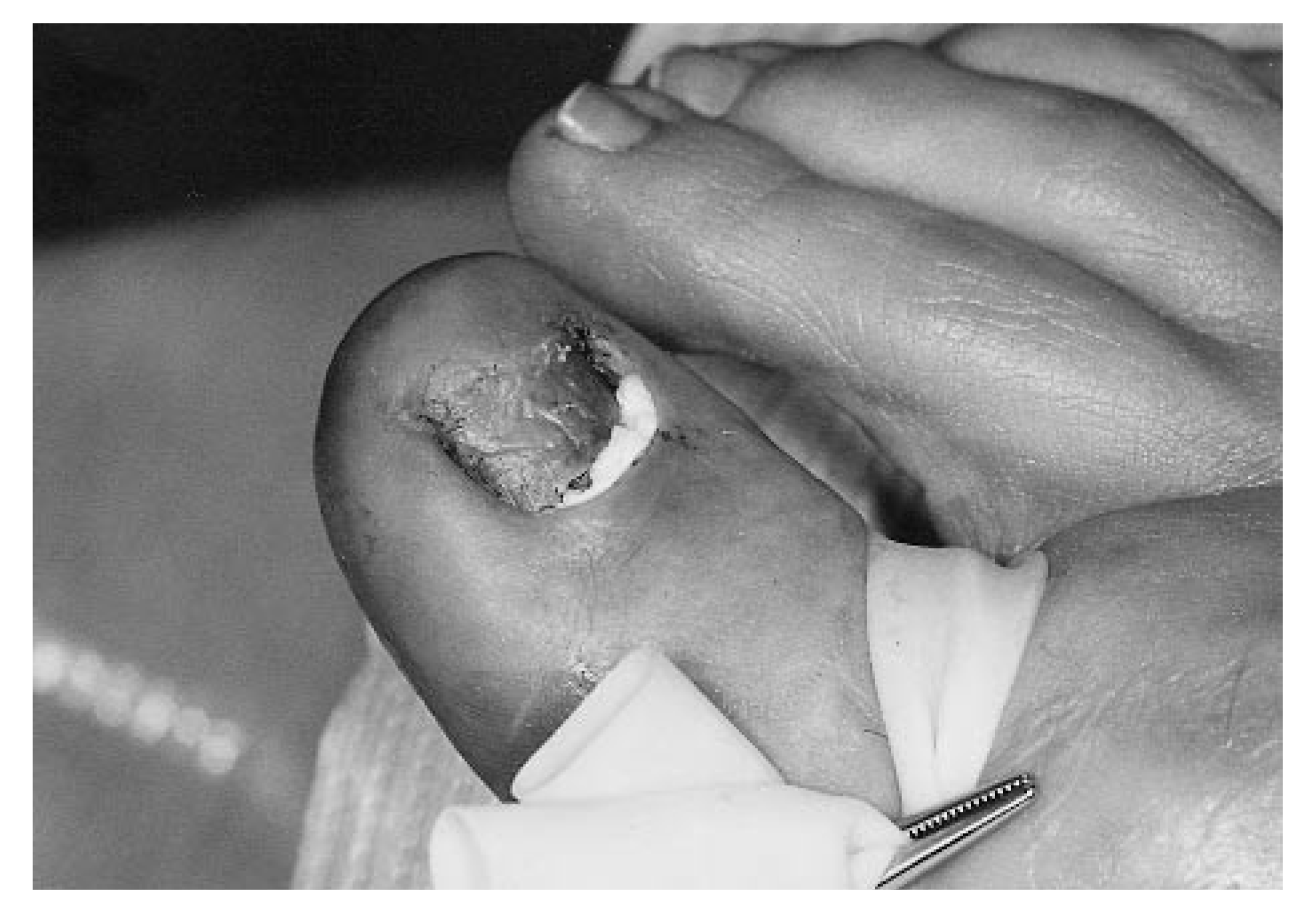
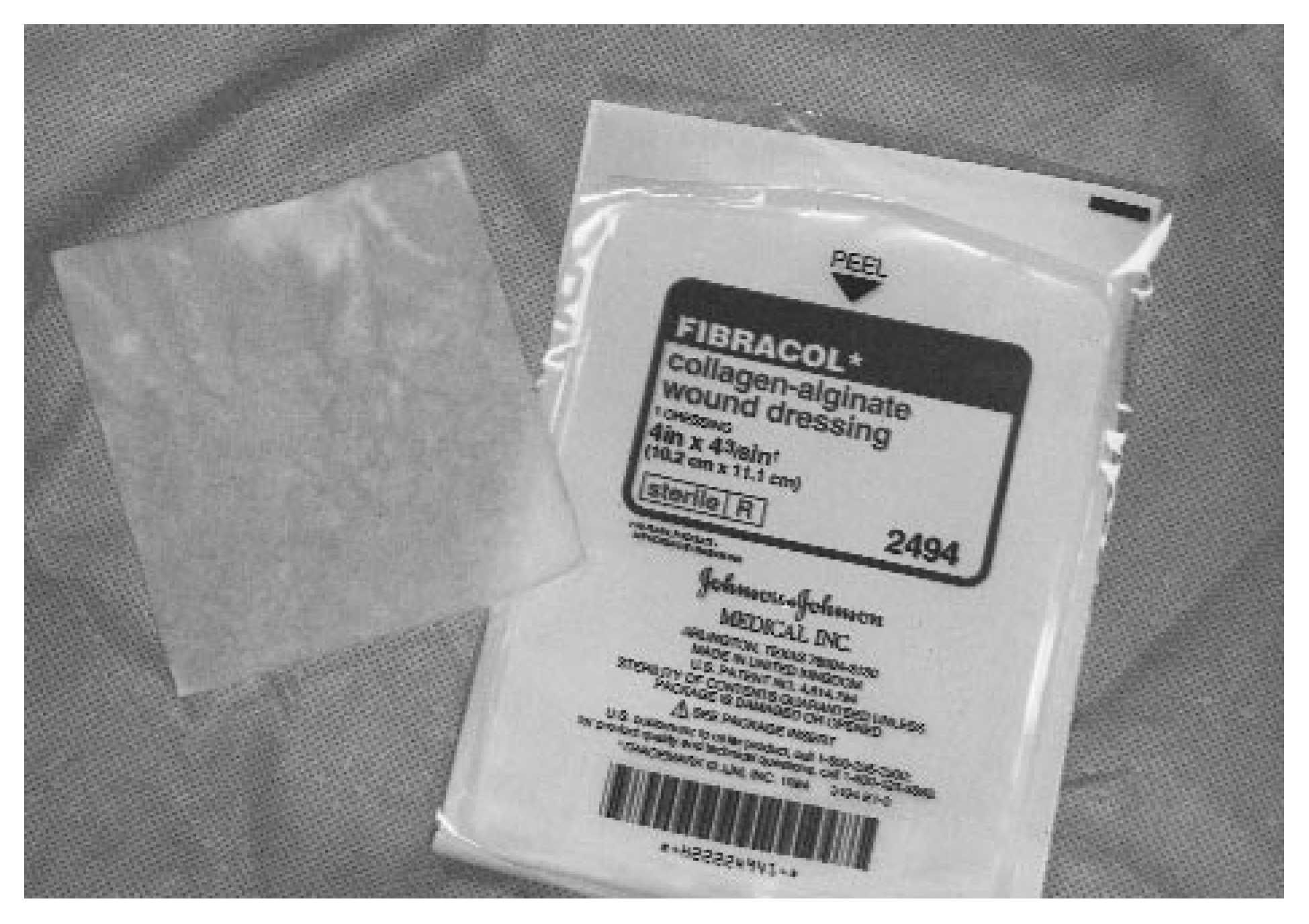
® Johnson & Johnson Medical, Inc, Arlington, TX.) collagen-alginate wound dressing applied directly to the exposed area of nail matrix, cuticle tissue, and nail bed (Figs. 1 and 2). The control group received no additional wound dressing. Surgical wounds of the test dressing group were dressed with a thin layer of sulfadiazine silver cream over the FIBRACOL dressing and covered with a sterile compressive gauze bandage. The control group was also dressed with sulfadiazine silver cream and a sterile compressive gauze bandage. All patients were given the following instructions both orally and in writing: Soak the surgical site in a diluted salt solution, clean the nail border with a cotton-tipped applicator, apply one drop of otic Cortisporin solution to the nail bed, and cover with a bandage. This protocol was to be followed twice daily beginning the following day. Patients in the treatment group were given cut sections of the collagen-alginate test dressing to apply to the exposed nail bed at every dressing change.
Figure 1.
Intraoperative view of FIBRACOL dressing application to nail bed and eponychium.
Figure 1.
Intraoperative view of FIBRACOL dressing application to nail bed and eponychium.
Figure 2.
FIBRACOL collagen-alginate wound dressing.
Figure 2.
FIBRACOL collagen-alginate wound dressing.
All patients were seen weekly until healing occurred or an 8-week end point was reached. Documentation at each patient visit recorded drainage, erythema, edema, pain, and history of patient compliance. Healing was defined as the absence of drainage, erythema, edema, and pain at the wound site. Clinicians involved in the postoperative course were not blinded to the experimental status of the patient. An exit interview was conducted with each patient to assess patient satisfaction with outcome and postoperative treatment protocol. The nine patients in the collagen-alginate treatment group were asked specifically for their subjective evaluation of this new wound dressing used in their care. Patients were also asked to rank their treatment as poor, average, good, or excellent and whether they would choose to repeat the same protocol if they had the same procedure again.
Results
Twenty patients were enrolled in this study; one was not available for follow-up and was excluded from analysis. Of the 19 patients observed, 9 (3 males and 6 females) were included in the collagen-alginate treatment group. In this treatment group, 10 separate procedures were performed: 5 partial matricectomies and 5 total matricectomies. The average age of patients in this group was 42 years (range, 12 to 79 years). Ten additional patients (5 males and 5 females) were assigned to the control group. In this group, 13 separate procedures were performed: 9 partial matricectomies and 4 total matricectomies. The average age of patients in this group was 40 years (range, 12 to 63 years).
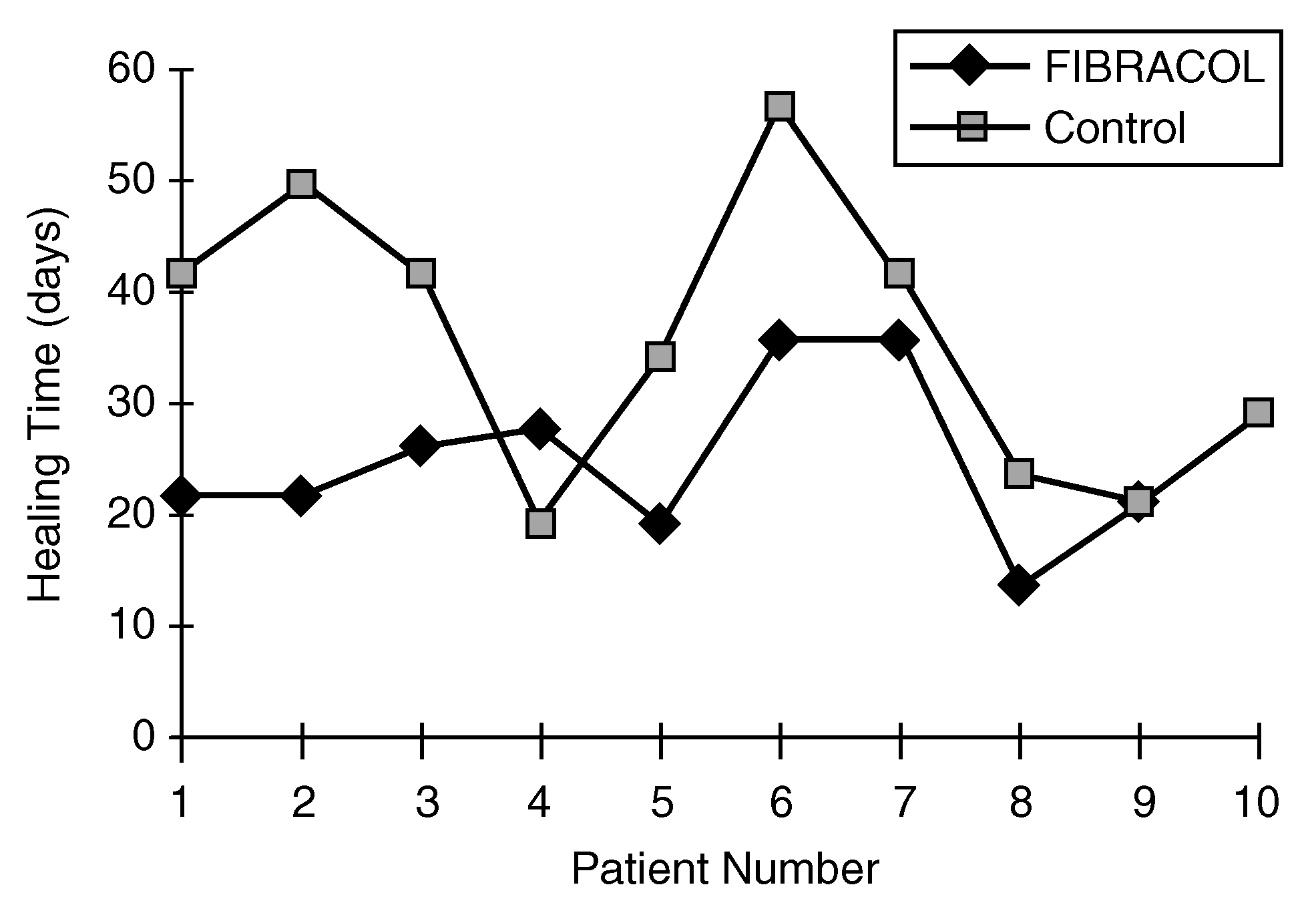
In the collagen-alginate treatment group, the average healing time was 24.4 days, with a range of 14 to 35 days; the median healing time was 26 days. In the control group, the average healing time was 35.8 days, with a range of 19 to 56 days; the median healing time was 42 days. As determined by t-test for comparison of independent groups, the difference between the treatment and control means was statistically significant at the .05 level (t = 2.35; df = 17; P = .03). One of the control-group patients reached the 8-week end point without fully satisfying the definition of “healed.” None of the 19 patients in the two groups experienced postoperative infection.
All patients in the collagen-alginate treatment group indicated a subjective evaluation of “excellent” when describing FIBRACOL’s role in their postoperative treatment protocol. Patients reported compliance with the collagen-alginate test dressing regimen and, when asked, indicated that, if possible, they would choose to repeat the same protocol if they had the same procedure again.
Discussion
Advancements in wound healing have concentrated on the influence of local factors in reepithelialization. Postoperative healing of the chemical matricectomy is no exception to this rule. In 1965, Cooper [
14] stated that the “overriding factor in determining the healing time [in matricectomies] lies in the medication used in dressing the wound.” Cooper found that chymotrypsin ointment in phenol matricectomies led to shorter healing times than Neo Polycin (
® Pitman Moore, Indianapolis, IN.) (neomycin–polymyxin B sulfate–bacitracin zinc; discontinued in 1986), Meti-Derm (
® Schering Corp, Kenilworth, NJ.) (prednisolone–neomycin sulfate; discontinued in 1979) with neomycin, Elase (
® Fujisawa USA, Inc, Deerfield, IL.) (fibrinolysin and desoxyribonuclease), and Furacin (
® Roberts Pharmaceutical Corp, Eatontown, NJ.) (nitrofurazone). A study [
11] of dextronomer suggests that these hydrophilic beads composed of crosslinked dextran are an effective adjunct in the management of phenol matricectomies. Several different methods of postoperative treatment are used for chemical matricectomies, with varying degrees of success.
Several local factors influence the viability of a wound. Wounds kept moist will reepithelialize more rapidly, as desiccation retards epithelial cell migration and prolongs wound healing [
15]. Cross-linkages between adjacent collagen fibers are essential in wound healing and increasing tensile strength [
15]. Collagen composite dressings have been used before in various wound types with some success. A flexible nylon mesh coated with purified type I cross-linked collagen peptides has been beneficial in the management of thermal burns [
16] FIBRACOL dressing, composed of 90% collagen and 10% alginate, is the first reported collagen-alginate composite that has been shown to safely assist with granulation and epithelialization, to absorb exudate, and to decrease wound size in diabetic foot and venous stasis ulcers [
17,
18]. The dressing is soft, absorbent, and conformable, and is marketed for wounds with moderate to heavy exudate [
19]. In the presence of wound fluid, the dressing forms a gel, provides a moist wound environment, and allows exudate transmission without maceration. FIBRACOL dressing is versatile as a primary wound dressing because it can be cut to the exact size of the wound and can be used in combination with most secondary dressings. Owing to its propensity for increasing epithelialization and absorbing exudate, a collagen-alginate dressing is a logical choice in the postoperative management of chemical matricectomies.
This clinical trial is the first study to demonstrate the use of a collagen-alginate dressing in the postoperative management of chemical matricectomies. The same attributes of collagen-alginate dressings that assist wound healing in ulcers apply to healing in chemical matricectomies. The results of the current study suggest that the addition of this dressing significantly shortens healing time (Fig. 3). The authors suggest that this reduction in healing time is due to the dressing’s promotion of protein matrix deposition, stimulation of epithelialization, and increased absorption of exudate. It is possible that the more rapid healing observed is due to better wound care in the study group. Increased draining time in chemical matricectomies is exacerbated by the failure of patients to clean the wound bed underneath the eponychium. Although all patients were instructed to clean under the eponychium, the application of the collagen-alginate test dressing in the nail grooves and under the eponychium may have led to more vigorous cleansing of the wound area.
The authors found that patients had a very positive perception of this collagen-alginate test dressing. All of the patients involved with the treatment protocol rated the collagen-alginate test dressing “excellent” and stated that they would not hesitate to use the product again. The malleable nature, ease of use, hemostasis, and absorbency of this dressing made it very “user-friendly.” FIBRACOL dressing is easily removed from the wound during dressing changes, and any material left behind is slowly metabolized by the body. Although the collagen-alginate dressing is biodegradable over extended periods of time, incomplete removal of the product may lead to prolonged inflammation, blockage of drainage with subsequent sepsis, and foreign-body reactions.
This study has some limitations. First, a larger sample size would have improved the statistical validity of the conclusions. The authors’ results provide preliminary data and encourage further investigation into the use of this collagen-alginate wound dressing in the management of this common procedure. Second, any differences in technique between the two surgeons performing the matricectomies may have influenced the outcome. Finally, all patients were seen at weekly intervals postoperatively. A narrower follow-up protocol (ie, visits less than 1 week apart) may have changed the range of days to healing slightly in either direction.
Summary
A clinical trial was performed to evaluate the addition of a collagen-alginate wound dressing to the postoperative management of chemical matricectomies. The FIBRACOL collagen-alginate dressing was found to be an effective adjunct in the postoperative treatment protocol, shortening healing time and increasing patient satisfaction with this common procedure.
Figure 3.
Time to healing (days) for each patient in the control group (n = 10) and the collagen-alginate treatment group (n = 9).
Figure 3.
Time to healing (days) for each patient in the control group (n = 10) and the collagen-alginate treatment group (n = 9).