To the Editor:
Because ulcerations are the most frequently occurring chronic wounds of the lower extremity, the podiatric physician can play an important role in the evaluation and implementation of new ulcer-healing technologies [
1]. The cause of many lower limb ulcers encountered by podiatric physicians is likely to be venous disease. In a recent Australian study, the prevalence of chronic ulceration of the leg was found to be 1.1 per 1,000 population; venous insufficiency was determined to be the sole cause or a contributory factor in 67% of these ulcers [
2].
Venous ulcers are most prevalent in older patients; approximately 10 per 1,000 patients 80 years of age and older have chronic ulceration associated with venous disease [
2]. Thus, the likelihood of encountering patients with venous ulcers will increase as the population ages.
Venous ulcers are frequently chronic, recurrent, and difficult to treat. Many types of treatments have been used in attempts to heal these ulcers, including various compressive devices, dressings, and topical medications [
3]. A recent review of the literature indicates that a combination of a dressing with a compression bandage, as provided by the Unna boot, is the most effective treatment currently available for these ulcers [
4]. Although compression therapy is an important component of treatment, one study revealed that only 14% of ulcerated limbs were treated by appropriate compression [
5,
6]. The low proportion of patients effectively treated by compression therapy may stem from incorrect application of the therapy or decreased patient compliance owing to the large time and labor commitment that the treatment requires. Autologous skin grafting also promotes healing of ulcers, but it is an invasive, expensive, surgical procedure requiring inducing anesthesia and the removal of skin from a donor site [
8,
9]. In most states, such surgical procedures are outside the scope of practice of podiatric physicians [
10]. An effective, inexpensive, easily used therapy for venous ulcers is needed.
Experience With Human Skin Equivalent
While at the California College of Podiatric Medicine in San Francisco, the author participated in a large, multicenter study examining Apligraf
® (Organogenesis, Canton, MA.) human skin equivalent, a cultured human allograft, to promote wound repair in venous ulcers [
11]. This material was previously shown to be effective in healing acute surgical wounds and is currently being assessed in other wounds such as diabetic and pressure ulcers and burns [
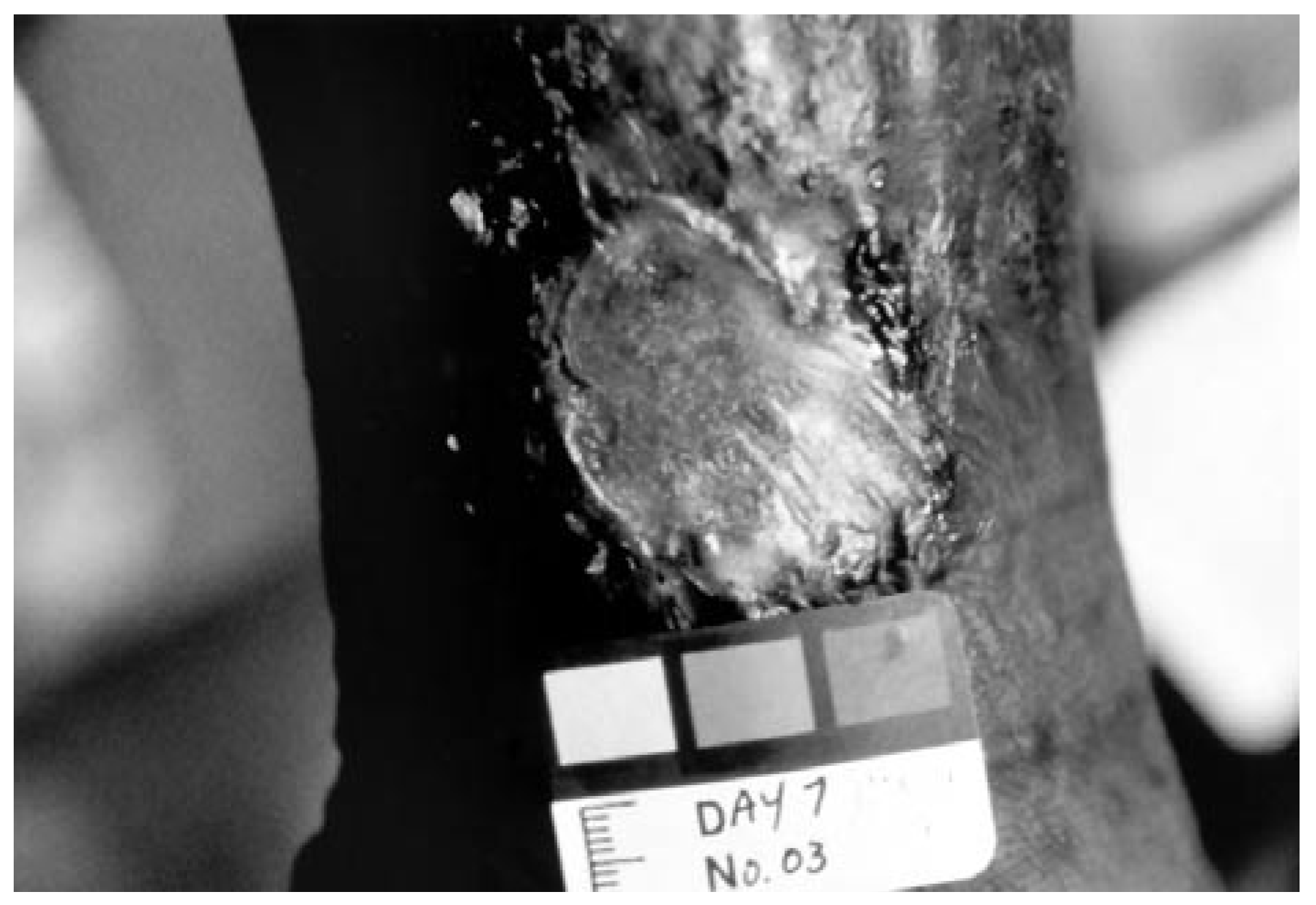
12]. Human skin equivalent, which consists of living dermal and epidermal layers grown from human neonatal foreskin cells, resembles human skin on both gross and histologic levels (
Figure 1). Because the skin material is nonimmunogenic, it can be safely grafted in humans with no signs of immunologic sensitization. The material is expanded in culture from cells derived from a single donor and is routinely tested to establish that it is free of adventitious pathogens such as the human immunodeficiency virus [
12].
Human skin equivalent was found to be easy to apply in an outpatient setting. The allograft was simply placed on the wound and then trimmed with scissors to fit. It was then covered by a nonadherent primary dressing followed by a secondary nonocclusive dressing (cotton gauze) folded as a bolster and a selfadherent elastic wrap to hold it in place.11 The proportion of patients with wound closure by 6 months was 61.4%
versus 44.3% for compression therapy (P = 0.012) [
11]. More rapid healing was also observed in the human skin equivalent group compared with that in the compression therapy group. The median time to wound closure was 57 days for human skin equivalent-treated patients
versus 181 days for compression therapy-treated patients (P = 0.0066) [
11].
Adverse event occurrences were similar between the human skin equivalent and compression therapy groups. Human skin equivalent therapy did not result in any problematic side effects. No laboratory or clinical evidence of allograft rejection was observed (V. Falanga, MD, unpublished data, February 1997).
The quality of wound healing provided by human skin equivalent was high; the resulting tissue appeared to be more resilient than that observed following compression therapy [
11].
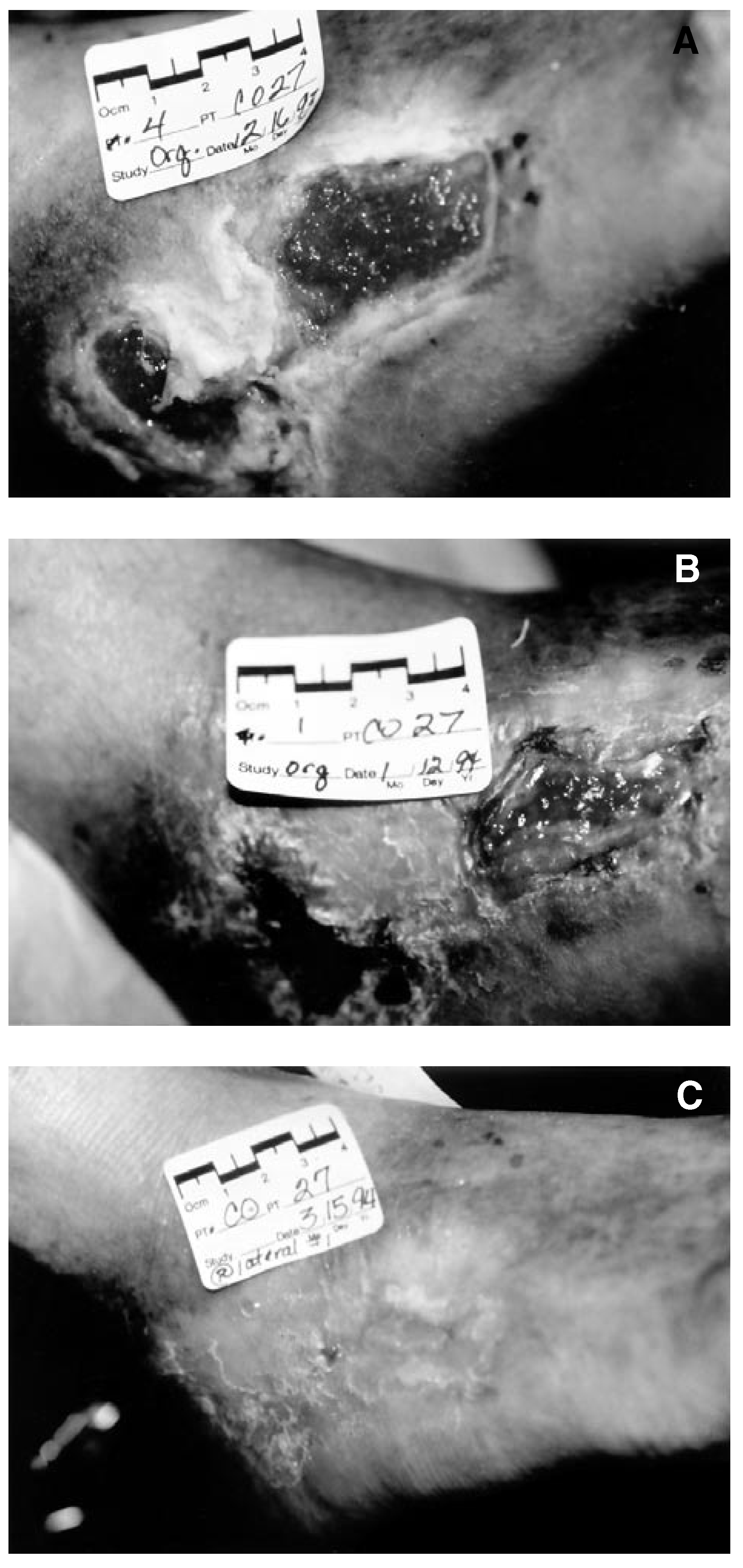
Figure 2 shows a characteristic venous ulcer wound before the application of human skin equivalent and after human skin equivalent-mediated healing. Patients were generally pleased with the appearance of the material, and many expressed great satisfaction in seeing their wounds closed for the first time in years.
In addition to the favorable clinical attributes of human skin equivalent, it may be more cost-effective than compression therapy alone when ease of application, efficacy, and reduction in the number of visits required with this agent are taken into account. A recent study of leg-ulcer management methods determined that the greatest economic savings were realized by methods that most improved healing [
13]. Since human skin equivalent has been shown to be more effective than the Unna boot, which is currently the most effective therapy for venous ulcers, it may become an important, cost-effective treatment for this condition.
Summary
In the author’s clinical experience in rating venous ulcers, human skin equivalent has been efficacious, safe, cost-effective, and easy to use. This innovation is likely to become an important therapeutic tool for podiatric physicians who treat venous ulcers. Leg ulcers are a large economic burden to society, both in direct and total costs, including patient time lost from work for labor- and time-intensive therapies [
14]. The cost-containing measures of the managed care environment encourage treatment of venous ulcers in an outpatient center. Because human skin equivalent can be applied in such a setting, podiatric physicians will be able to treat venous ulcers routinely without referring patients to more costly settings such as hospitals or surgical centers. Because human skin equivalent is an effective alternative to standard venous ulcer therapies, this agent, which is currently under review by the Food and Drug Administration, should provide a viable treatment that may reduce the total costs associated with venous ulcer care.