Angioleiomyoma is a benign soft tissue tumor that arises from the smooth muscle layer of blood vessels. In 1854, Rudolf Virchow, a German pathologist, was the first to describe leiomyoma [
1]. This tumor is found in the subcutaneous tissue and is often associated with pain. Angioleiomyoma usually presents as a freely movable, well encapsulated solitary growth. This tumor has a predilection for middle-aged females and is usually found in the legs and feet [
2].
Etiology
No definitive etiologic factors have been found as to the pathogenesis of angioleiomyoma; however, several theories have been proposed. These theories include venous stasis induced by trauma, hormonal changes, and pregnancy [
2]. Heredity is also a possible etiologic factor with one study reporting an autosomal dominant inheritance pattern [
3]. Sweeney and Keating [
2] found that angioleiomyomas occurred ten times more frequently than in an East African population
versus a Caucasian population in the same temperate zone. Although there are many theories, there has not been a definitive etiology discovered.
Epidemiology
Angioleiomyomas are approximately twice as prevalent in women as men. Hachisuga et al. [
4] studied 562 cases of angioleiomyomas and found a ratio 1.7 to 1, female to male. When pedal occurrences were considered, 29 of the 47 cases were found to occur in women [
4]. In addition, Katenkamp et al found a similar female-to-male ratio. In their study, 19 of the pedal angioleiomyomas occurred in females as opposed to 12 in males [
1].
Angioleiomyomas are usually found to affect a particular age group. These tumors have a predilection for the middle-aged population. Hachisuga et al reported that 67% of the cases occurred during the fourth, fifth, and sixth decades. In addition, Habershaw et al1 reviewed 33 cases involving angioleiomyomas and found that the mean age of onset was at 46 years of age. Angioleiomyomas have a tendency to occur in the extremities, especially the leg and foot. Hachisuga et al. [
4] found that 67% of the 562 cases occurred on the extremities while 49% were found exclusively on the legs and feet.
Histology
Angioleiomyomas can be subdivided into three subtypes: capillary, venous, and cavernous. In the study by Hachisuga et al, capillary angioleiomyoma accounted for 66% of the cases. Capillary tumors demonstrated uniform smooth muscle cells surrounding numerous capillary-sized vessels. Venous angioleiomyoma, which accounted for 23% of the cases, had denser and more muscular vascular channels when compared with capillary angioleiomyoma. The third subtype, cavernous angioleiomyoma, had a characteristically dilated vascular channel with a thin muscular layer. Cavernous angioleiomyomas accounted for 11% of the cases of Hachisuga et al [
4].
Clinical Presentation
Angioleiomyomas most commonly present as solitary growths that are freely movable, glistening, subcutaneous nodules. In the study by Hachisuga et al. [
4], 78% of angioleiomyomas were less than 2 cm in diameter while in the study by Hasegawa et al. [
5], of 50 angioleiomyomas, 86% were less than 2 cm in diameter. Pain is usually associated with these tumors [
4,
6]. The pain has been described as radiating, sharp, and often exacerbated by touch. Exposure to cold can also increase the painful symptoms [
6].
Differential Diagnosis
The differential diagnosis may include ganglionic cyst, fibroma, neurofibroma, gouty tophus, glomus tumor, lipoma, hemangioma, foreign-body granuloma, and leiomyosarcoma. Leiomyosarcomas do not cause pain and are typically not encapsulated.[
7,
8]. Since angioleiomyomas are similar in clinical appearance, familiar to other types of neoplasms, the clinical diagnosis is often difficult to make. Thus, histopathologic examination is required for a definitive diagnosis of angioleiomyoma.
Treatment
Few treatment options are available for the angioleiomyoma. Surgical excision is primarily recommended when the lesion is painful. The prognosis following surgical excision is excellent and the recurrence rate is low [
9]. In the event that the mass does recur, the possibility of leiomyosarcoma should be suspected. It has been reported that leiomyosarcomas recur in approximately 60% of the cases following surgical excision [
10]. Some of the other treatment options included electrocoagulation, radiation, and chemical cautery; however, surgical excision remains the treatment of choice [
11].
Case 1
A 48-year-old female presented with a chief complaint of a painful lesion on the anterior medial aspect of her left ankle. The mass had been present for 3 years, and it progressively became larger in size. The mass was creating radiating pain up her leg. Her medical history and general physical health were unremarkable. X-rays revealed a partially calcified mass on the medial aspect of the distal tibia. Physical examination revealed a freely movable subcutaneous nodular mass. No transillumination was evident through the mass. Aspiration of the mass was attempted, but no aspirate was obtained. At this time, surgical excision and histopathologic examination of the mass were recommended. The operative procedure was performed under intravenous sedation and local anesthesia with the use of a pneumatic ankle tourniquet. A 4-cm linear skin incision was made on the anteromedial aspect of the ankle. Sharp and blunt dissection were used to dissect to the level of the mass. The mass appeared yellow-tan in color, firm, and not invading or incorporating surrounding tissues or structures. The mass was then isolated from the structures and excised
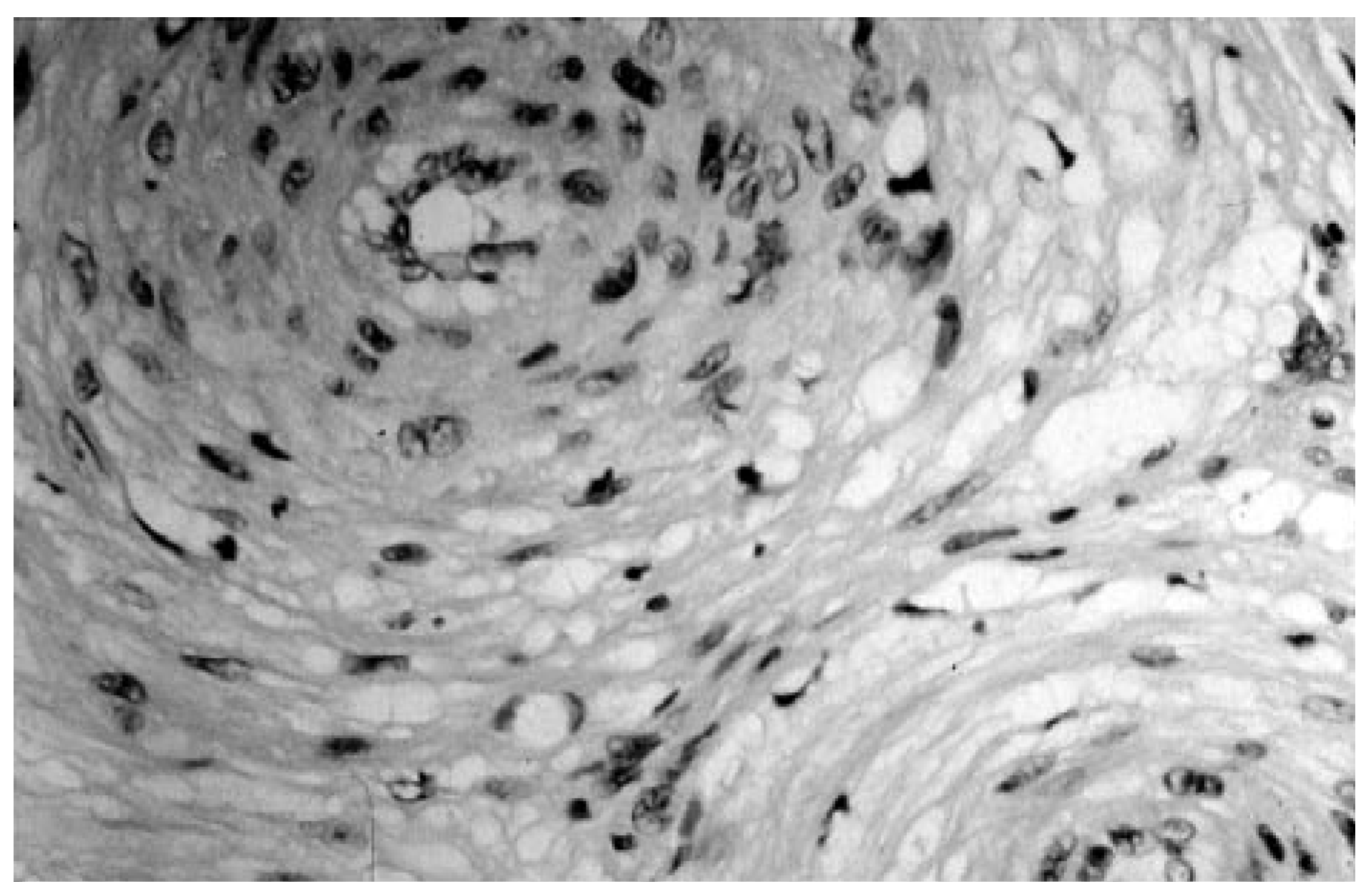
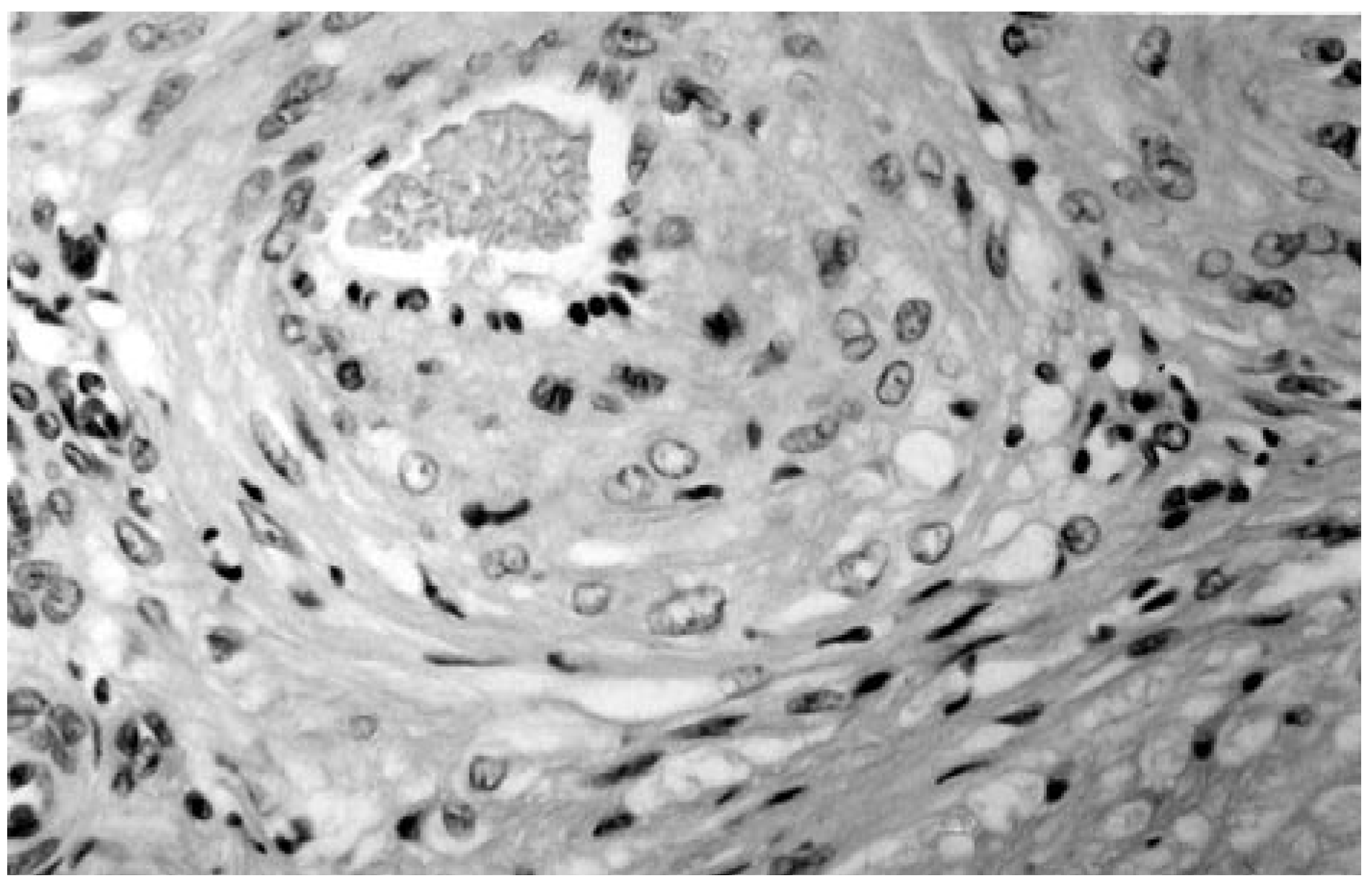
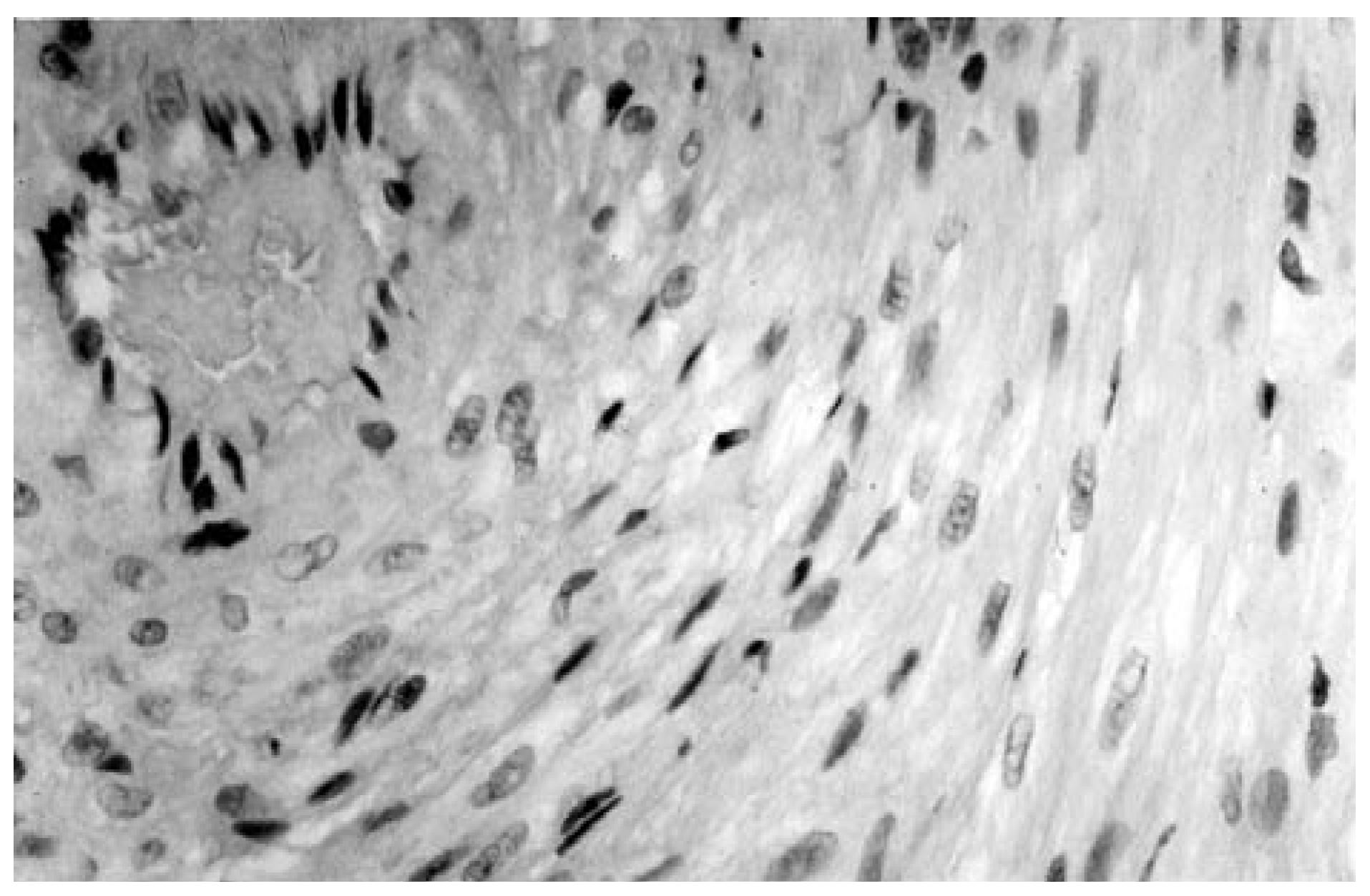
in toto. The lesion was approximately 2 cm in diameter. The specimen was sent to pathology for both gross and microscopic examination. The surgical site was then copiously irrigated with sterile saline. The incision site was closed in anatomic fashion and a sterile dry compressive dressing was applied. The postoperative course included suture removal in 1 week, at which time the patient returned to normal shoes and activities. No postoperative complications were noted. Microscopic examination revealed a neoplasm composed of interlacing bundles of eosinophilic smooth muscle. Interspersed within the nodule were scattered thickwalled blood vascular spaces resembling venous structures. The muscle fibers composing the wall of these vascular structures merged completely with the intervascular muscle bundles. There was no appreciable atypia or mitotic figures noted. A diagnosis of angioleiomyoma of venous type was made (
Figure 1 and
Figure 2).
Case 2
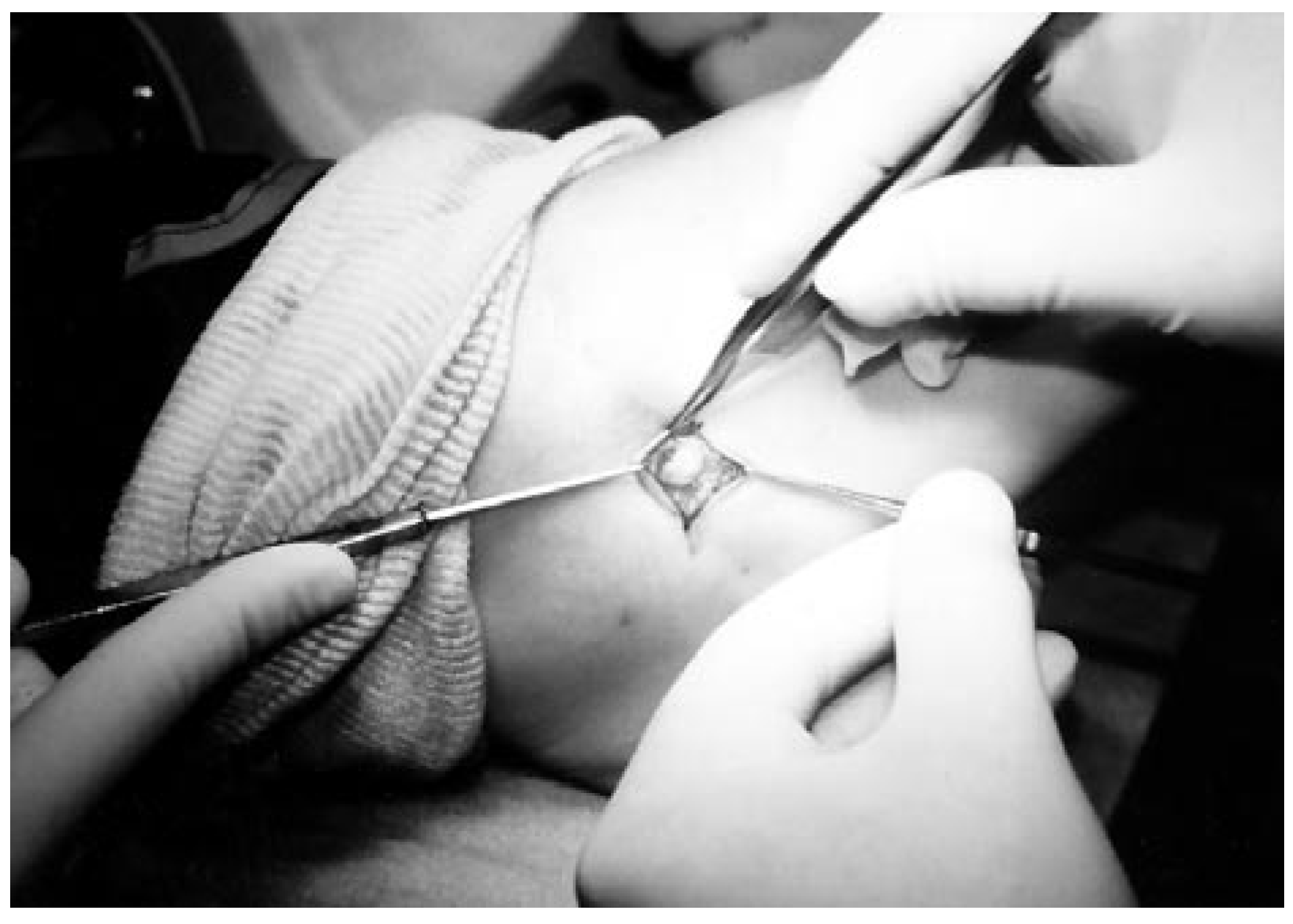
A 47-year-old female presented with a chief complaint of painful mass on the lateral side of the right foot. The mass had been present for more than 10 years. Over the last several months, the lesion became larger and more painful. The lower extremity history and physical examination were unremarkable. X-ray findings were negative for any osseous involvement. The lesion was freely movable subcutaneously and painful upon palpation with tingling sensations radiating distally. The mass did transilluminate. The lesion appeared partially fluid filled with a solid center. Aspiration of the mass was attempted, but no aspirate was obtained. At this time, surgical excision and histopathologic examination were recommended. The operative procedure was performed under intravenous sedation and local anesthesia with the use of a pneumatic ankle tourniquet. A 3-cm linear skin incision was made on the anterior inferior aspect of the lateral malleolus. Sharp and blunt dissection were used to dissect to the level of the mass. The mass was isolated from the surrounding tissue and excised
in toto (
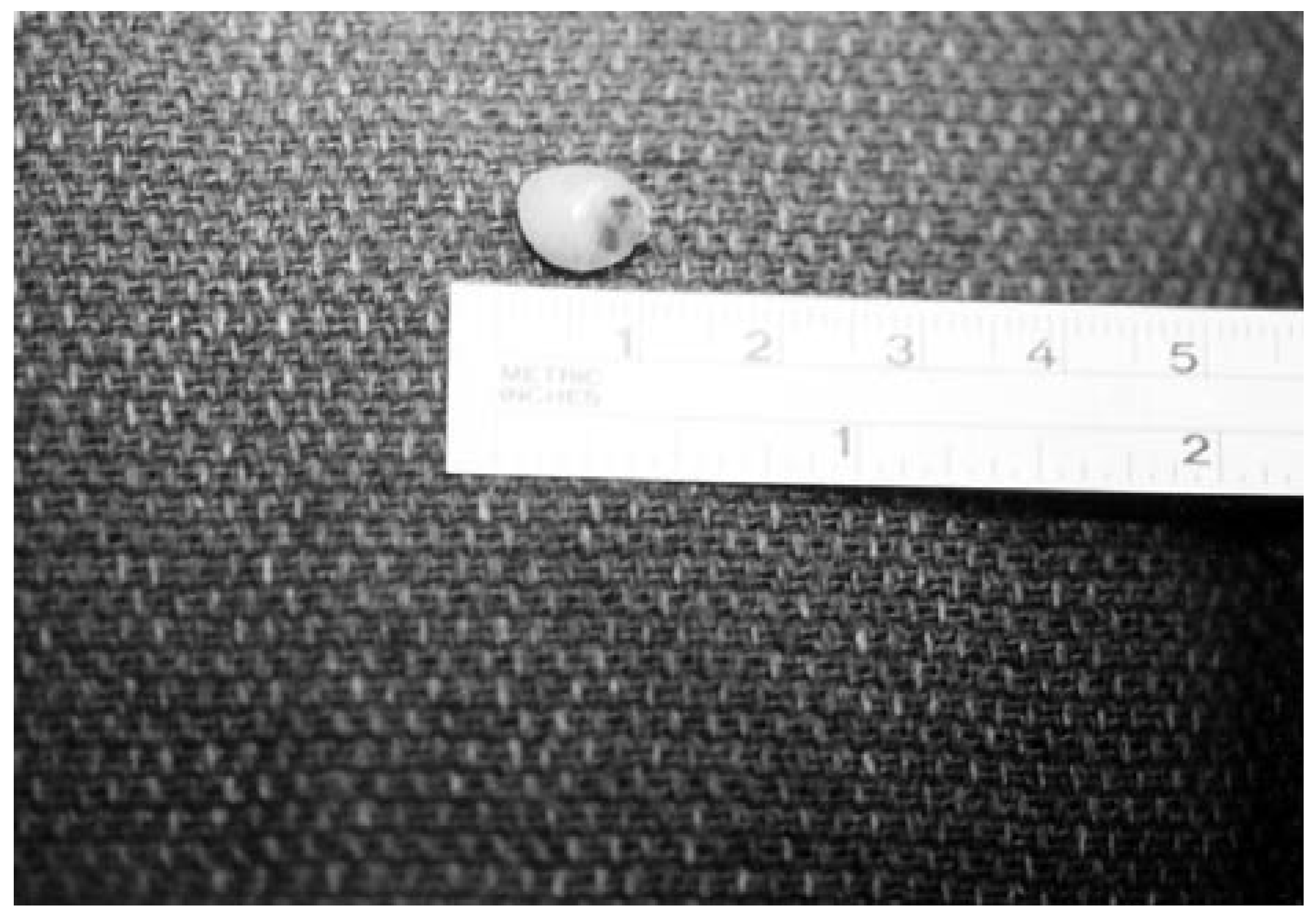
Figure 3). The lesion measured approximately 2 cm in diameter. The mass was firm, white, and glistening with several small vessels coursing into and extending from the mass itself (
Figure 4). The mass was sent for both gross and microscopic examination. The surgical site was then copiously irrigated with sterile saline. The incision site was closed in layers and a sterile dry compressive dressing was applied. The postoperative course included suture removal after 1 week, and the patient returned to normal shoes and activities. No postoperative complications were noted. Microscopic examination was indistinguishable from that seen in Case 1 (
Figure 5).