Next Article in Journal
Teaching Diabetic Foot Care Effectively
Previous Article in Journal
Team Approach Toward Lower Extremity Amputation Prevention In Diabetes
 
 
Journal of the American Podiatric Medical Association is published by MDPI from Volume 116 Issue 1 (2026). Previous articles were published by another publisher in Open Access under a CC-BY (or CC-BY-NC-ND) licence, and they are hosted by MDPI on mdpi.com as a courtesy and upon agreement with American Podiatric Medical Association.
Article

Screening Techniques to Identify The Diabetic Patient at Risk of Ulceration

by
Louis R. Simeone
1,2 and
Aristidis Veves
3,4
1
Department of Surgery, Harvard Medical School, Boston
2
Division of Podiatry, Beth Israel Deaconess Medical Center, Boston
3
Instructor in Medicine, Harvard Medical School, Boston
4
Deaconess–Joslin Foot Center, Beth Israel Deaconess Medical Center, One Deaconess Rd, Boston, MA 02215
J. Am. Podiatr. Med. Assoc. 1997, 87(7), 313-317; https://doi.org/10.7547/87507315-87-7-313
Published: 1 July 1997

Abstract

Foot problems are common in diabetic patients, with neuropathy and peripheral vascular disease being the main causative factors. Identification of high-risk feet can be accomplished by using basic clinical skills and simple equipment. Limb amputation is the most preventable of the long-term diabetes complications and a multidisciplinary approach can achieve a dramatic reduction of major limb amputations.

Elliot Joslin, MD, in his landmark paper, “The Menace of Diabetic Gangrene,” published in the New England Journal of Medicine in 1934, did not underestimate the reality or the destructive capability of diabetic foot manifestations. He eloquently wrote, “It has been forced upon me that diabetic gangrene is not heaven sent but earth born.” [1] In the US today, approximately 50% of all nontraumatic lower extremity amputations occur in people with diabetes [2]. His vision was an ominous portent to say the least, but not without hope. Limb amputation is not an inevitable fact of diabetes if patient education and prevention are used. Podiatric physicians can share in Joslin’s optimism of more than a half century ago because the feared end points of the insensate diabetic foot, mainly neuropathic foot ulceration and amputation, are indeed preventable through screening and surveillance. If the practitioner conducts a complete history and clinical examination, and uses discretion in selecting feasible and reliable quantitative sensory testing, the morbidity associated with pedal ulceration can be reduced.

Etiopathogenesis of Diabetic Foot Ulceration

Prevention of a disease process requires a keen understanding of its etiology. The etiology of diabetic foot ulceration is multifactorial with the primary factors contributing to ulceration being peripheral neuropathy and peripheral vascular disease. Secondary factors include limited joint mobility, neuropathic osteoarthropathy (Charcot foot), and a depressed immune response to infection [3].
Chronic sensorimotor neuropathy accounts for reduced or absent reflexes, intrinsic muscle atrophy resulting in musculoskeletal deformity (hammer toes, bunions, prominent metatarsal heads), and sensory loss in a stocking and glove distribution. The insensate foot cannot detect painful stimuli, and is more likely to have abnormally high foot pressures because of structural deformity. This predisposes the extremity to injury, such as a puncture wound or subsequent plantar ulceration [4,5,6,7].
Autonomic neuropathy is responsible for the decrease or absence of sweating in the lower extremity and arteriovenous shunting resulting in distention of dorsal veins in the foot. The presence of anhidrotic skin leads to cracking, fissuring, and, coupled with abnormally high foot pressures, hyperkeratotic skin or callus which is at risk of skin breakdown and possible ulceration [8].
Along with peripheral neuropathy, peripheral vascular disease is a primary causative factor contributing to foot ulceration. The etiology of ischemia in the diabetic foot is, as in nondiabetics, atherosclerotic occlusive disease of the macrocirculation. With diabetes, there is a much greater propensity for occlusive lesions to develop in the distal popliteal and tibial arteries [9]. Peripheral vascular insufficiency lowers the viability of skin, which reduces the pressure threshold at which ischemia and tissue breakdown occur. In the majority of patients with diabetes, both neuropathic and vascular factors are involved in the development of foot ulceration. However, in the face of adequate blood supply, neuropathy takes precedence in the pathogenesis of foot ulceration.
Secondary etiopathogenic factors of diabetic foot ulceration play a lesser role overall, but should not be overlooked. Limited joint mobility, caused by nonenzymatic glycosylation of collagen, contributes to the development of high foot pressures and possible ulceration by not permitting adequate compensatory redistribution of high loads [10]. Charcot joint disease disrupts structural integrity (dislocation, rocker-bottom deformity), causing increased plantar midfoot pressures and eventual ulceration [11]. Finally, diabetes is associated with impaired neutrophil function, which leads to a depressed immune response. The inability to aggressively fight infection allows necrosis to persist within an ulcerative site and prevent healing [12].

Qualitative Screening — History and Clinical Examination

History

A complete and organized history identifying risk factors for foot ulceration is indispensable when screening the patient with diabetes. The practitioner should begin his or her investigation by recording the diabetes type, duration, and treatment regimen. A history of previous foot ulceration or amputation should be elicited and documented because of its strong predictive value in forecasting further foot problems [13]. Long-term diabetic complications that are associated with foot problems (retinopathy, nephropathy) and a social history regarding smoking, alcohol consumption, and living situation should also be recorded. Furthermore, the type of shoes the patient is wearing and the patient’s knowledge base about the causes and prevention of foot problems need to be addressed. A patient with poor knowledge about foot care is at high risk for foot ulceration (Table 1) [14].

Symptomatology

The interview should also expose neuropathic symptoms such as the presence or absence of lancinating, aching or burning pain, muscular cramps usually with nocturnal exacerbation, numbness, abnormal cold or hot sensation, and irritation of the legs and feet caused by bedclothes or sheets. All need to be documented. The interviewer should be aware that the absence of symptoms does not mean the patient is not at risk of ulceration. Symptoms related to peripheral vascular disease such as the presence of claudication and ischemic pain should also be recorded.

Clinical Examination

The patient’s history will not always tell the physician the whole story. The insidious nature of diabetic neuropathy and foot ulceration elevates the clinical examination to critical importance because a foot ulceration may be the first sign of neuropathy without neuropathic symptoms. Information from both the history and clinical examination must be correlated to effectively screen the patient.
The clinical examination should contain a neurologic and vascular assessment, an evaluation of osseous foot structure and limited joint mobility, and a dermatologic examination (Table 2).

Neurologic Examination

The most common clinical signs of neurologic deficit are impaired or absent sensation to pain, light touch, cold, hot, and vibration, along with reduced or absent ankle and knee reflexes. The examiner needs only four simple tools: a pin to assess pain perception, a cotton ball for light touch, a 128 Hz tuning fork for evaluation of vibratory sensation, and cold perception by immersing the tuning fork in cold water then applying to the skin, and a neurologic hammer to assess ankle and knee reflexes. The level at which these functions are absent or reduced should be documented.

Vascular Examination

Peripheral vascular disease, the second major risk factor for ulceration, is important for the examiner to recognize. Ischemic changes clinically manifest as atrophic skin (waxy appearance), hair loss, cool lower leg and foot, increased capillary filling time, and diminished or absent pedal pulses. Dorsalis pedis and posterior tibial pulses should be palpated or assessed with Doppler every visit without exception.

Osseous Foot Structure and Limited Joint Mobility

The examiner should appreciate any digital deformities (bunion, claw toes, hammer toes), intrinsic muscle atrophy, arch morphology, equinus, prominent metatarsal heads, and other palpable bony prominences. Furthermore, the presence of clinical and radiographic Charcot joint changes should be documented. Limited joint mobility clinically manifests as Dupuytren’s contractures, diabetic hand syndrome resulting in the inability to fully oppose the fingers and palms (positive prayer sign), and decreased subtalar or ankle range of motion [15,16].

Dermatologic Examination

The dermatologic examination should assess areas of dry skin, callus formation, macerated interdigital skin, ulcerations, necrobiosis lipoidica, diabetic dermopathy, bullae, dystrophic onychomycotic nails, and tinea pedis. Evaluation of an existing ulceration should include information about its site, size, depth, surrounding soft tissue, and bone or joint structure involvement. This can be facilitated by the use of a classification system, ie, Wagner. This classification is widely accepted and improves communication between medical disciplines [17].

Quantitative Sensory Testing as a Screening Tool

The diagnosis of peripheral neuropathy has been facilitated with the development of quantitative sensory testing. This testing modality, while quantifying the minimal stimulus perceived by the patient, does not exclusively evaluate the function of the peripheral nerves. Quantitative sensory testing depends on the integrity of the whole nerve pathway including the higher brain center. In actuality, this is a form of psychophysical testing as it relies on the patient’s cooperation to obtain reliable results. However, despite this limitation, quantitative sensory testing can be very helpful in identifying the diabetic patient at risk of pedal ulceration [18]. Two simple, reliable, costeffective, quantitative sensory testing techniques, namely, the use of Semmes-Weinstein monofilaments and vibration perception threshold, can be easily implemented in practice as a screening tool.

Semmes-Weinstein Monofilaments

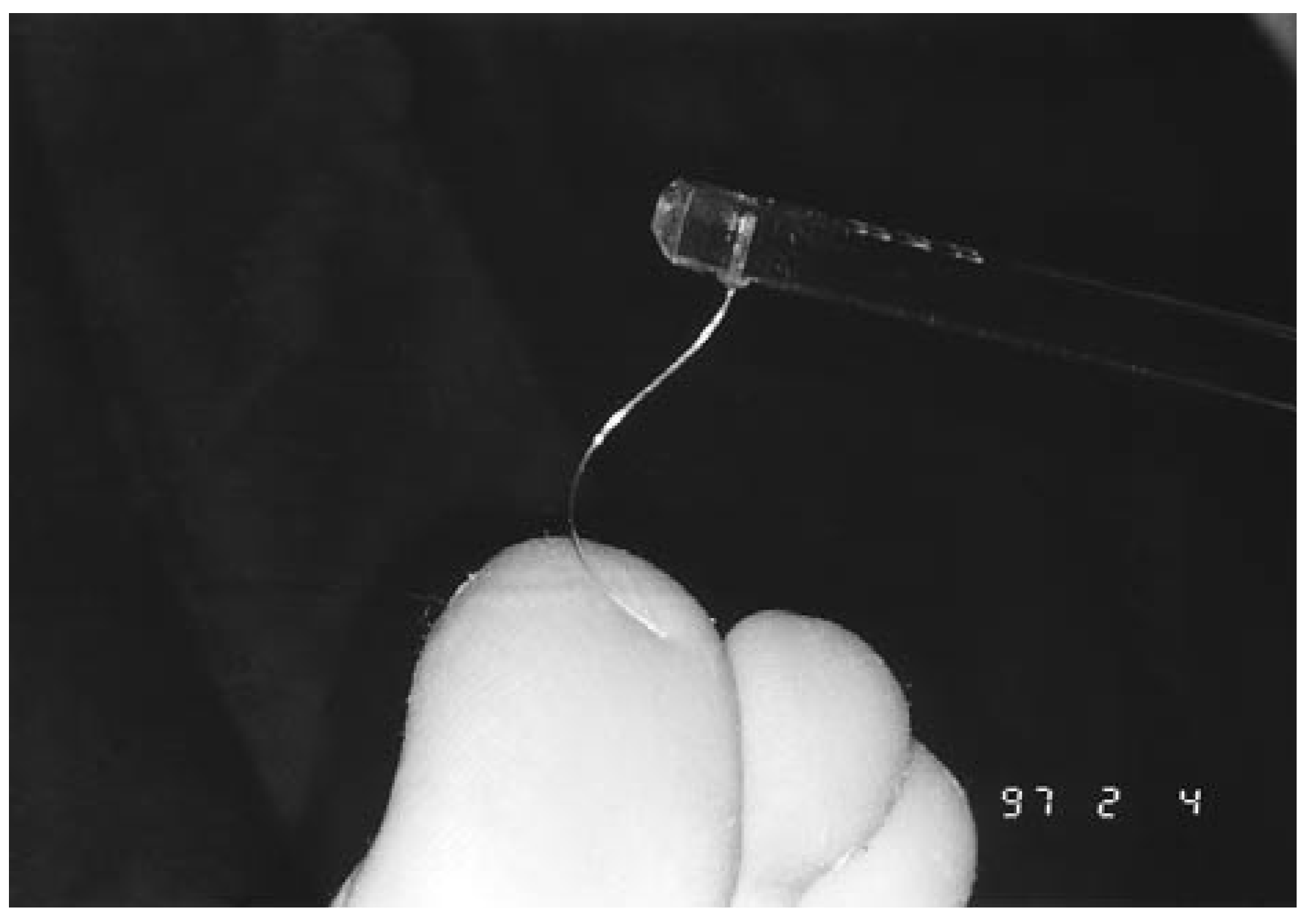
Cutaneous perception threshold determination using Semmes-Weinstein monofilaments is an ideal screening tool that it is inexpensive, easily learned, and not time consuming. Sets of three or six monofilaments of progressively increasing diameter are available for clinical use. Each monofilament is approximately the size of a pen and fits easily in the clinician’s pocket for office and bedside examinations. The patient is shown the instrument to reduce anxiety and then instructed to close his or her eyes. The Semmes-Weinstein monofilament is placed on the skin surface and when a force is applied to the monofilament, allowing it to buckle against the skin surface, a defined pressure (which is dependent on the diameter of the monofilament) is acting on the skin (Fig. 1). Myelinated sensory fibers that respond to pressure are stimulated by the monofilaments and the patient is asked to inform the examiner when the stimulus is felt. The smallest diameter monofilament perceived by the patient is considered the cutaneous threshold.
When using the monofilaments for screening purposes, all the examiner needs is the 5.07 (10 g) mono-filament. Studies in patients with Hansen’s disease performed by Birke and Sims [19] have strongly suggested that patients who are unable to feel a pressure of 10 g have inadequate protective sensation. More recent work by Kumar et al [20] has shown that the monofilaments are reliable and highly sensitive in screening diabetic patients at risk of ulceration. This technique is most applicable to office screening.

Vibration Perception Threshold

The second quantitative sensory test with office application is the use of vibration perception threshold. The device is inexpensive and portable, and the test is technically simple requiring only 2 or 3 min to perform. Vibratory sensation is transmitted through the large myelinated (A-β) fibers and seems to be adversely affected early in the pathogenesis of diabetic peripheral neuropathy. Devices currently used to determine vibratory perception threshold measurements are the Vibrameter (Somedic, Stockholm), the Vibratron II (Phisitemp, Clifton, NJ), and the Biothesiometer (Bio-Medical Instrument Co, Newbury, OH), which is the most commonly used device.
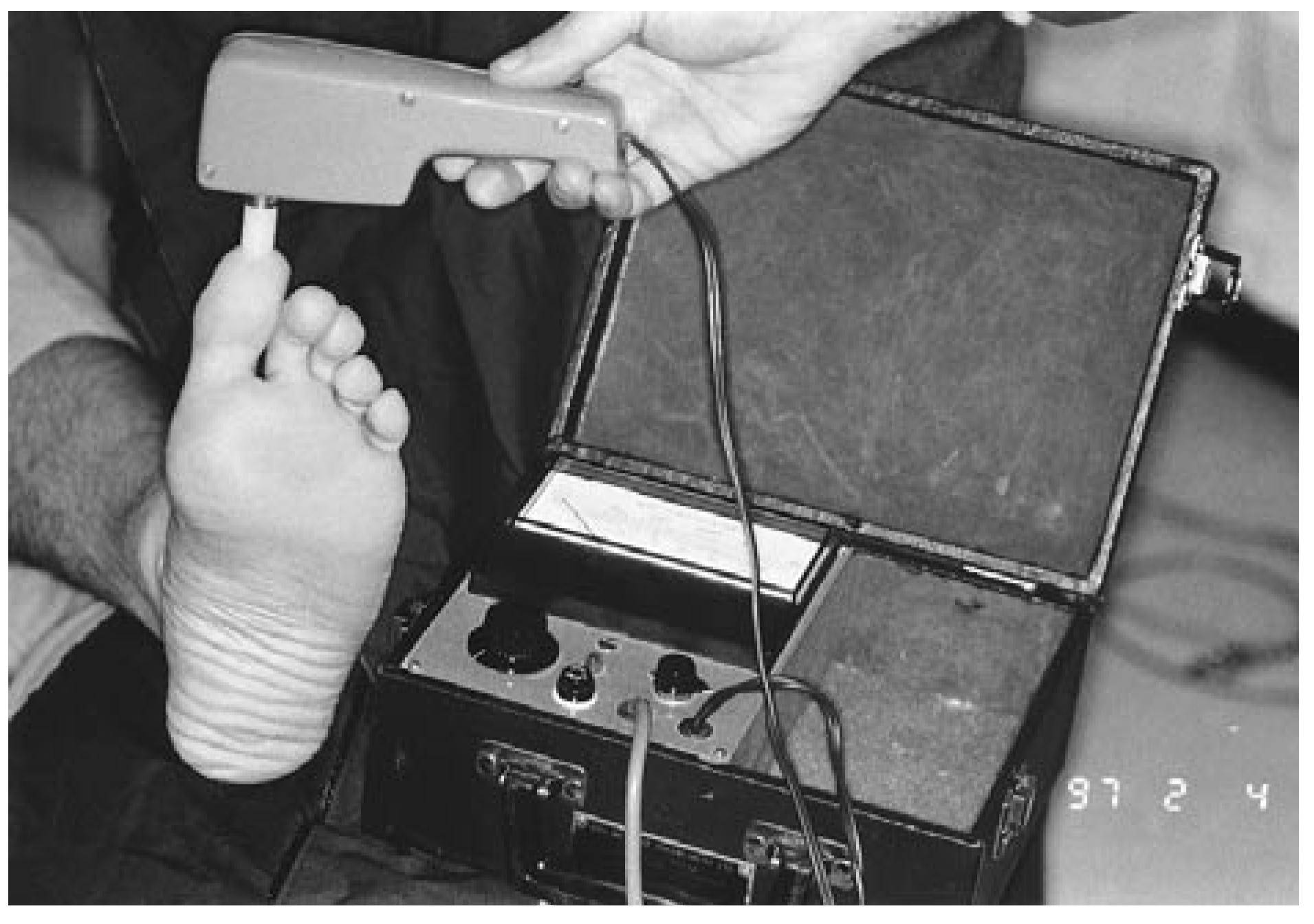
The Biothesiometer is a handheld unit with a stylus that vibrates proportionally to the applied voltage (instrument voltage range 0 to 50 V, which can be manually controlled). The technique involves placing the handheld vibrating stylus in a vertical position firmly against the skin at the distal aspect of the hallux or medial malleolus (Fig. 2). The weight of the unit itself should provide firm skin contact and no additional pressure should be applied. The patients are familiarized with the sensation of vibration by turning the amplitude to maximum and then tested by gradually increasing the amplitude from minimum to maximum and are requested to inform the examiner as soon as they become aware of the sensation. Three recordings should be performed.
The psychophysical nature of vibratory pressure threshold measurement allows for variability when measuring two symmetrical parts of the body in both healthy and diabetic subjects. Therefore, even for screening purposes, more than one site should be tested [21]. The vibratory pressure threshold also increases with age, and age-related normal values should be used when interpreting the data [22]. Despite the aforementioned limitations, in a large prospective study, Young et al [23] displayed the value of vibratory pressure threshold as an effective predictor of the foot at risk of ulceration in patients with diabetes. Patients with a vibration perception threshold of greater than 25 V should be considered at high risk for developing foot ulceration and should receive preventative treatment.

Conclusion

The patient with diabetes can find solace in that appropriate education and screening can reduce the incidence of lower extremity amputation. The clinician can effectively screen and manage the diabetic patient at risk of ulceration by using the discussed screening techniques and working closely with other medical specialties. A multidisciplinary approach in the setting of a diabetic foot clinic is effective in reducing unnecessary amputation, but the fact remains that diabetic foot screening is the responsibility of all members of the health care team [24]. Any member, at any given time, may be required to identify the diabetic patient at risk of foot ulceration using basic history taking and clinical skills in conjunction with simple quantitative sensory testing. Once the patient is identified, then appropriate surveillance by a select member of the health care team to facilitate treatment can be instituted.

References

  1. JOSLIN EP: The menace of diabetic gangrene. N Engl J Med 211: 16, 1934.
  2. AMERICAN DIABETES ASSOCIATION: Diabetes 1996 Vital Statistics, American Diabetes Association, Alexandria, VA, 1996.
  3. MURRAY HJ, BOULTON AJM: The pathophysiology of diabetic foot ulceration. Clin Podiatr Med Surg 12: 1, 1995.
  4. BOULTON AJM: The diabetic foot: neuropathic aetiology? Diabet Med 7: 852, 1990.
  5. YOUNG MJ, VEVES A, BOULTON AJM: The diabetic foot. Diabetes Metab Rev 9: 109, 1993.
  6. BOULTON AJM, HARDISTY C, BELLS R, ET AL: Dynamic foot pressures and studies as diagnostic and management aids in diabetic neuropathy. Diabetes Care 6: 26, 1993.
  7. VEVES A, MURRAY HJ, YOUNG MJ, ET AL: The risk of foot ulceration in diabetic patients with high foot pressures: a prospective study. Diabetologia 35: 660, 1992.
  8. YOUNG MJ, CAVANAUGH PR, THOMAS G, ET AL: The effect of callus removal on dynamic plantar foot pressures in diabetic patients. Diabet Med 9: 55, 1992.
  9. LOGERFO FW, COFFMAN JD: Vascular and microvascular disease of the foot in diabetes. N Engl J Med 311: 1615, 1984.
  10. FERNANDO DJS, MASSON EA, VEVES A, ET AL: Limited joint mobility: relationship to abnormal foot pressures and diabetic foot ulceration. Diabetes Care 14: 8, 1991.
  11. FRYKBERG RG, SANDERS LJ: “Diabetic Neuropathic Osteoarthropathy: The Charcot Foot,” in The High Risk Foot in Diabetes Mellitus, ed by RG Frykberg, Churchill Livingstone, New York, 1991.
  12. WILSON RM: Neutophil function in diabetes. Diabet Med 6: 509, 1986.
  13. MURRAY HJ, YOUNG MJ, HOLLIS S, ET AL: The association between callus formation, high pressures and neuropathy in diabetic foot ulceration. Diabet Med 13: 979, 1996.
  14. REIBER GE, PECORARO RE, KOEPSELL TD: Risk factors for amputation in patients with diabetes mellitus: a case control study. Ann Intern Med 117: 97, 1992.
  15. GAVIN LA, STRESS RM, GOLDSTONE J: Prevention and treatment of foot problems in diabetes mellitus: a comprehensive program. West J Med 158: 47, 1993.
  16. KROOP SF, SIMON LS: “Joint and Bone Manifestations in Diabetes Mellitus,” in Joslin’s Diabetes Mellitus, 13th Ed, ed by CR Kahn, G Weir, Lea & Febiger, Philadelphia, 1994.
  17. WAGNER FW: A classification and treatment program for diabetic, neuropathic, and dysvascular foot problems. American Academy of Orthopedic Surgeons: Instr Course Lect, Vol 28, CV Mosby, St Louis, 1979.
  18. Consensus statement 1988 report and recommendations of the San Antonio conference on diabetic neuropathy. Diabetes 37: 1000, 1988.
  19. BIRKE JA, SIMS DS: Plantar sensory threshold in ulcerative foot. Lepr Rev 57: 261, 1986.
  20. KUMAR S, FERNANDO DJS, VEVES A, ET AL: Semmes-Weinstein monofilaments: a simple, effective and inexpensive screening device for identifying diabetic patients at risk of foot ulceration. Diabetes Res Clin Pract 13: 63, 1991.
  21. DONOGHUE VM, GIURINI JM, ROSENBLUM BI, ET AL: Variability in function measurements of three sensory foot nerves in neuropathic diabetic patients. Diabetes Res Clin Pract 29: 37, 1995.
  22. WILES PG, PEARCE SM, RICE PJS, ET AL: Vibration perception threshold: influence of age, height, sex, and smoking and calculation of accurate centile values. Diabet Med 8: 157, 1991.
  23. YOUNG MJ, BREDDY JL, VEVES A, ET AL: The prediction of diabetic foot ulceration using vibration thresholds: a prospective study. Diabetes Care 17: 557, 1994.
  24. THOMSON FJ, VEVES A, ASHE H, ET AL: A team approach to diabetic footcare: the Manchester experience. Foot 1: 75, 1991.
Figure 1. Testing using 5.07 Semmes-Weinstein monofilament. Force is applied until the monofilament is buckled. Patients unable to perceive this pressure are considered at high risk for foot ulceration.
Japma 87 00313 g001
Figure 2. The vibration perception threshold measurement using the Biothesiometer. Care should be taken so that the stylus is kept in a vertical position, and no additional pressure is supplied on the measured site. The voltage is increased from 0 to 50 V and as the threshold is determined, the lower voltage at which the vibration is perceived is recorded. The mean of three measurements is the vibration perception threshold.
Japma 87 00313 g002
Table 1. Historical Highlights When Screening Patients With Diabetes.
Japma 87 00313 i001
Table 2. Highlights of the Clinical Examination When Screening the Patient With Diabetes.
Japma 87 00313 i002