Next Article in Journal
Screening Techniques to Identify The Diabetic Patient at Risk of Ulceration
Previous Article in Journal
Diabetic Foot Update 1996
 
 
Journal of the American Podiatric Medical Association is published by MDPI from Volume 116 Issue 1 (2026). Previous articles were published by another publisher in Open Access under a CC-BY (or CC-BY-NC-ND) licence, and they are hosted by MDPI on mdpi.com as a courtesy and upon agreement with American Podiatric Medical Association.
Article

Team Approach Toward Lower Extremity Amputation Prevention In Diabetes

by
Robert G. Frykberg
Clinical Instructor in Surgery, Harvard Medical School, Beth Israel Deaconess Medical Center, Boston
J. Am. Podiatr. Med. Assoc. 1997, 87(7), 305-312; https://doi.org/10.7547/87507315-87-7-305
Published: 1 July 1997

Abstract

Through a discussion of the etiology and pathology of diabetic foot lesions with particular emphasis on ulceration and osteoarthropathy, the author will develop a plan for treatment and prevention using a multidisciplinary approach to such problems. Underlying risk factors including neuropathy, ischemia, infection, and, especially high pressures must be evaluated and appropriately ameliorated in order to promote resolution and avoidance of recidivism. Accordingly, conservative management with pressure-relieving devices, topical therapies, and prophylactic surgery on structural deformities plays an integral part in the overall podiatric management of the high-risk foot in diabetes mellitus.

Studies from the literature on the diabetic foot have indicated that a significant reduction in the incidence of ulceration, infection, and lower extremity amputation can be realized through the institution of an organized foot care service in community and major academic medical centers. The role of the podiatric physician in the care, treatment, and prevention of foot lesions in the patient with diabetes therefore assumes a critical position in such a scheme. Aside from providing regular examinations, foot care, and treatment for ulcerations, the podiatric physician often serves in a gatekeeper capacity whereby other specialists in the multidisciplinary foot service are regularly consulted as problems arise. Acute problems are more efficiently managed and coordinated, thereby reducing lengths of hospital stay, morbidity, and loss of limb.
Foot disorders such as ulceration, infection, and gangrene are leading causes of hospitalization for patients with diabetes in the US and abroad [1,2,3,4]. It is estimated that approximately 15% of all patients with diabetes will develop a foot or leg ulcer at some time during the course of their disease, many of which will require subsequent hospitalization [5]. Amputation, too often the result of neglected foot lesions, was reported in 1983 by Most and Sinnock [6] to occur at an age-adjusted rate 15 times higher in diabetic patients than in nondiabetic patients. In fact, at least 45% of all nontraumatic lower extremity amputations occurred in these patients with an overall estimated rate of 59.7 per 10,000 diabetic individuals. In diabetic persons aged 65 years or older, the age-specific rate of lower extremity amputation climbed to 101.4 per 10,000. Clearly, the rates of amputation increase with advancing age and duration of diabetes [5,6,7].
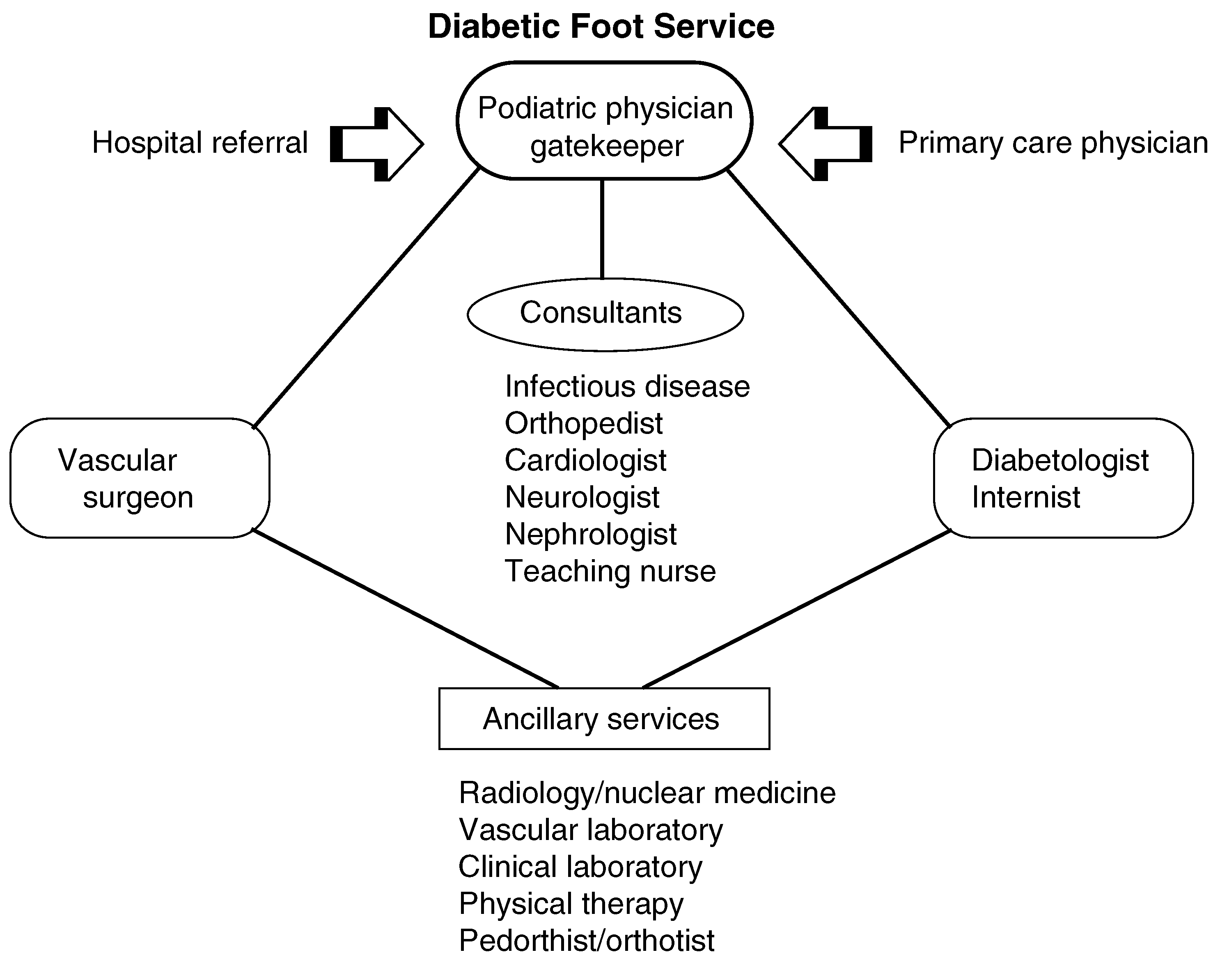
More recent data from the US Public Health Service and the American Diabetes Association indicate that lower extremity amputation is one of the most prevalent complications of diabetes mellitus, totaling between 50,000 and 56,000 cases per year with a rate of 7.0 to 8.2 per 1,000 diabetic patients [8,9,10]. Among blacks with diabetes, the rate of amputation is 1.5 to 2.5 times higher than whites with diabetes [11]. In certain Hispanic and Native American populations, the rates are even higher [7,9,12,13,14]. Tragically, the 3-year survival rate after one major lower extremity amputation is only 50%, while the 5-year survival rate is only approximately 40% [11,14]. In addition, 50% of those patients undergoing an lower extremity amputation of one limb will develop a serious contralateral lesion within 2 years, thereby placing the fate of the second limb in jeopardy as well [15]. In concert with the estimated direct medical care costs of amputations in the US well in excess of $500 million per year, these facts signify the magnitude of diabetic foot disease and, even more importantly, the necessity for prevention [7]. In fact, it is estimated that at least 50% of amputations within the diabetic population can be prevented through proper foot care, patient education, aggressive treatment of early lesions, arterial revascularization as needed, and a reduction in risk factors for amputation in patients who are identified to be at high risk for developing foot ulcerations [7,8,16]. Because of the multifaceted nature of this problem, these goals and objectives have been shown to be best managed through a coordinated multidisciplinary approach [2,3,4,7,17,18,19]. The organization of such a diabetic foot service should include all members of the health care team dedicated to maintaining the overall well-being of patients with diabetes and, specifically, with preserving the integrity of their lower extremities. One such paradigm as proposed by the author encompasses the primary services of a diabetologist or internist, vascular surgeon, and podiatrist gatekeeper with a second tier of all appropriate consultants and ancillary services (Fig. 1) [19]. This model provides for a timely coordination of all dedicated services that are called upon concurrently or as needed depending on each patient’s requirements.

Etiology of Diabetic Foot Ulceration

The most characteristic of all diabetic foot lesions is the ulceration, often termed as a mal perforans ulcer. In 1818, Mott [20] provided a description of the neuropathic ulcer that is as relevant today as it was then.
The peculiarity of it consists, in a remarkable horny hardness of the thick cuticle of the bottom of the foot, and in its being more or less of a round form… it does not appear to affect any particular age or constitution. Very little pain either precedes or accompanies it. A great degree of insensibility may be said to form one of the characters of this ulcer.
Although an ulcer is certainly not specific to the diabetic foot, multiple factors involving intrinsic complications of diabetes mellitus in concert with a variety of extrinsic forces or risk factors place the patient with diabetes at particularly high risk for foot ulceration [2,3,4,7,21,22]. Although the triad of peripheral neuropathy, peripheral arterial disease, and susceptibility to infection are the undisputed primary predisposing risk factors in this regard, ulceration rarely develops without some type of antecedent injury or minor trauma to the foot. The injury may even be quite trivial in some instances, but when repeated many times throughout the course of the day or when sustained for long periods, skin or subcutaneous injury will result. Once the soft tissue envelope has been violated by a penetrating injury, blister, abrasion, or pressure necrosis, bacterial invasion will commence. The outcome of this injury will then be determined by the patient’s level of activity, metabolic status, ability to sense the injury, circulatory status, and the treatment provided [2].
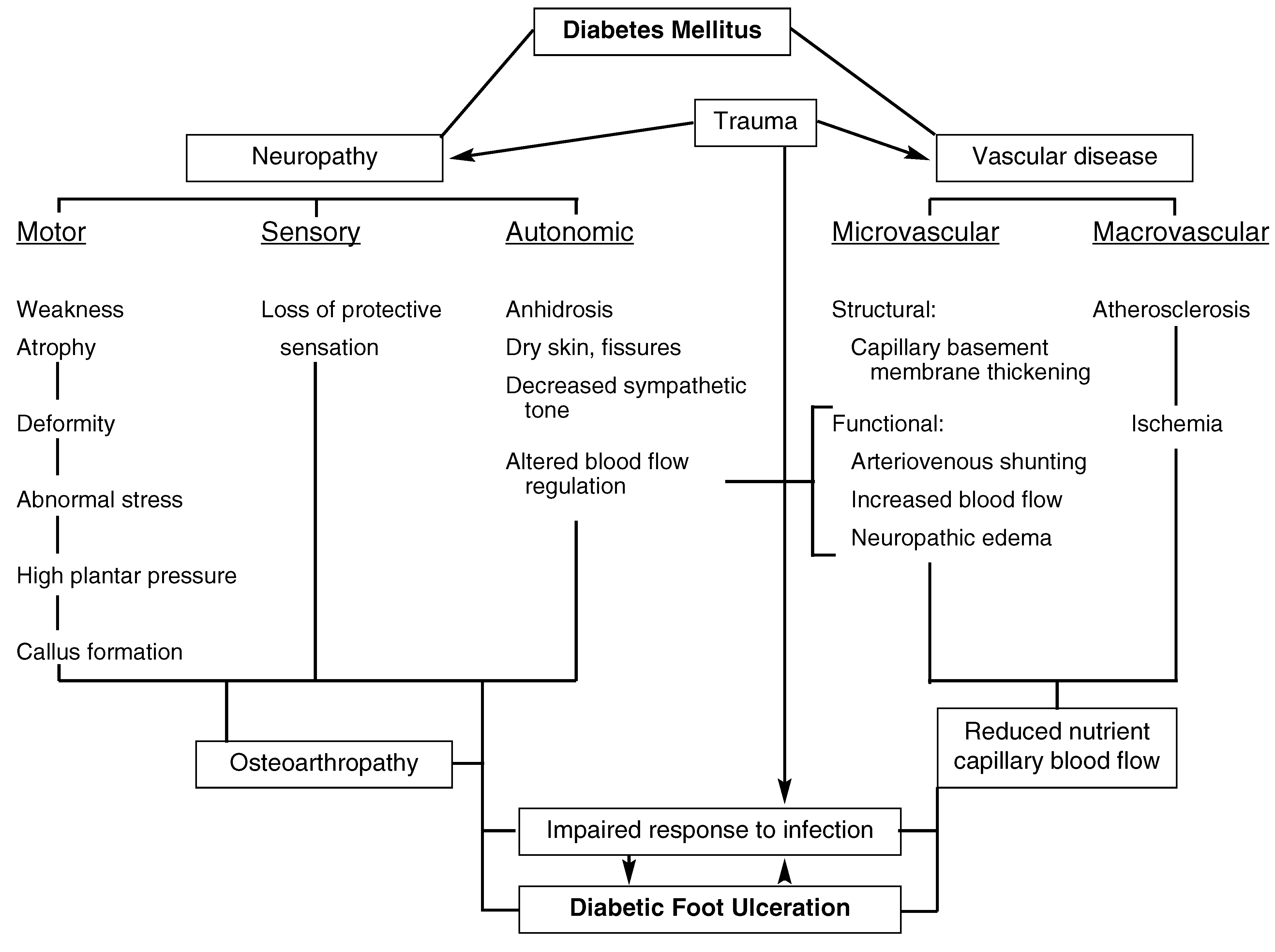
Aside from the major risk factors neuropathy, ischemia, infection, and trauma (abnormal stress), multiple other contributory factors might predispose the patient with diabetes to develop foot lesions (Table 1) [2,21,23,24]. Intrinsic risk factors include those metabolic or biologic characteristics may or may not be causally related to diabetes but nevertheless contribute to the etiology of ulceration. Such factors include neuropathy, ischemia, age, weight, duration of diabetes, nephropathy, decreased visual acuity, limited joint mobility, and structural deformity (ie, Charcot deformity). Abnormal biomechanical function often results from these complications of diabetes and predispose the foot to injury [25]. Extrinsic factors include not only trauma (mechanical, thermal, or chemical) or abnormal stress (pressure), but cigarette smoking, occupational hazards, social considerations (ie, living alone), and lack of foot care education. Figure 2 illustrates the interactions between the major contributory risk factors and trauma in the pathogenesis of diabetic foot ulceration.
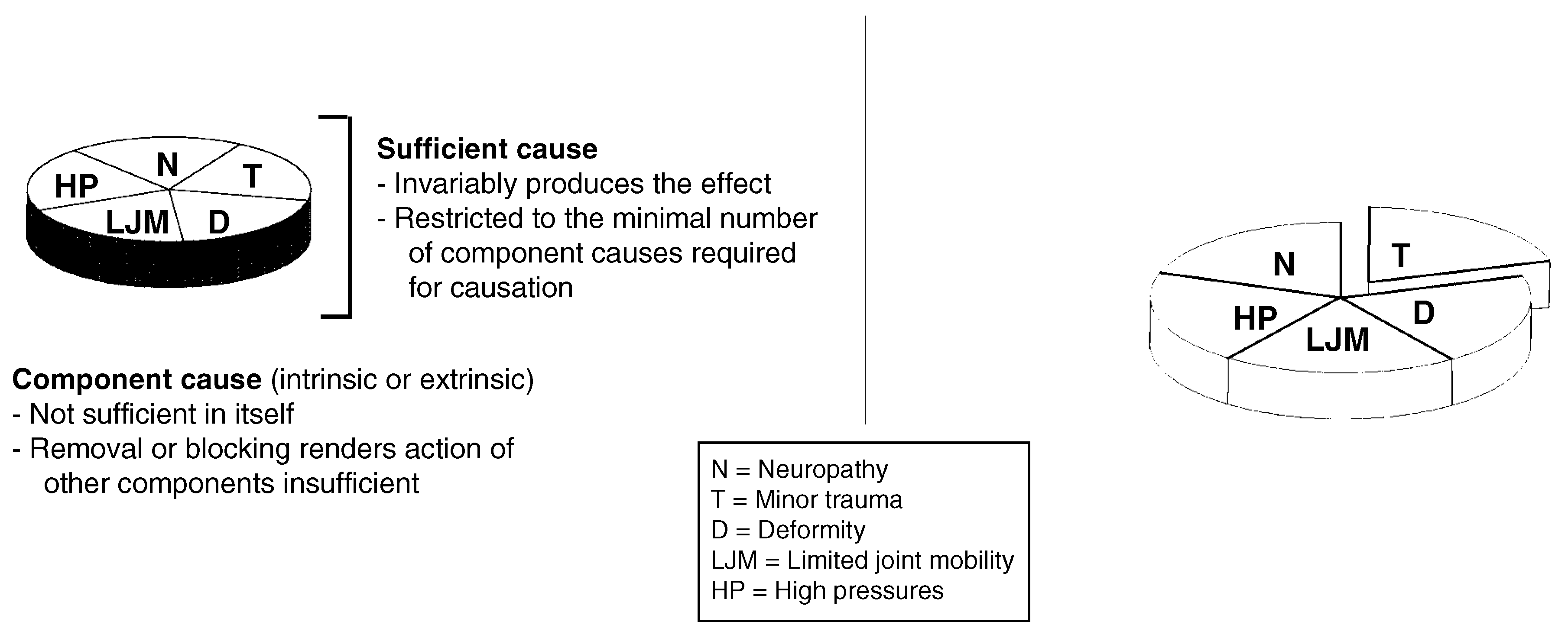
In 1990, Pecoraro et al [26] determined the causal pathways responsible for lower extremity amputations in a series of consecutive male patients with diabetes. Using the model established by Rothman [27], the causal sequence was defined by both component and sufficient causes. Component causes are risk factors that are essential components, but not independently sufficient, in the causal sequence to cause the outcome of interest (amputation or ulceration). When a component cause is removed or blocked from the specific causal chain, the other components will be rendered insufficient to produce the outcome. A sufficient cause is a causal pathway to disease containing a complete set of minimal conditions or events (component causes) that inevitably produce the outcome or disease. Accordingly, there can be a number of sufficient causes with various combinations of component causes that produce the same outcome. Pecoraro et al found that the particular triad of minor injury, cutaneous ulceration, and woundhealing failure accounted for 72% of the amputations, often in combination with gangrene and infection. A pivotal triggering event was identifiable in 86% of the cases that led to the sequence of events completing the causal chain to amputation. Most of the pivotal events were minor trauma that caused ulceration, and most could have been prevented. Although this study modeled the causal chain(s) to amputation, the “causal pie” theory of disease causation can be appropriately applied to component and sufficient causes for ulceration (Fig. 3). This conceptual model not only illustrates the summary effect of various etiologic components and pathways to ulceration, but also demonstrates the preventive effect of removing one of the component causes. Specifically, if minor trauma can be removed from the sequence through proper footwear, patient education, and regular podiatric care, it is certainly probable that initial and recurrent ulcerations can often be prevented [3,4,28]. Since foot ulcers have been consistently implicated as significant risk factors for amputation, these simple preventive measures assume a critical role in attaining the goal of a 50% reduction in the rate of lower extremity amputation [11,16,18,28,29,30,31,32,33,34].

Prevention

From the foregoing it is clear that prevention of ulceration is indeed the key to limb preservation, and that regular podiatric intervention as part of a multidisciplinary approach to the diabetic foot is a major component in the overall management of high-risk patients. This has been amply shown by Edmonds et al [4] who reported that 86% of neuropathic ulcers and 72% of ischemic ulcers healed through this comprehensive approach. Those patients who wore appropriate footwear as recommended experienced one third the relapse rate of ulceration as compared with those who wore their usual shoes. Notably, there was a 58% reduction in the number of annual amputations once the specialized foot clinic had been established. The Manchester program also recognizes the importance of regular podiatric intervention in providing prophylactic foot care, pressure reduction, and ulcer care [3]. While achieving healing in 81% of their ulcer cases, they note a 42% reduction in amputation since the initiation of the multidisciplinary clinic. Larsson et al [35] reported a 75% decrease in the incidence of major amputation in a defined Swedish population following the implementation of a multidisciplinary program dedicated to the prevention and treatment of diabetic foot ulcers. Although there was only a small increase in the total number of minor amputations, their proportion almost doubled with the concomitant decrease in major amputations. In the US, a dramatic reduction in yearly amputations was reported from the Winnebago Indian Health Service Hospital [36]. After the implementation of a podiatric medical service to provide comprehensive foot care to this high-risk population, a 100% reduction in amputation rate was achieved within 1 year. Averaging 16 lower limb amputations annually before the program, no limbs had been reported lost in the initial 2 years since its establishment. At the Deaconess Hospital in Boston, significant reductions in lower extremity amputation and length of hospital stay have taken place since integrating podiatric services and local procedures into the limb-salvage strategy for ischemic diabetic foot ulcers and infections [17].
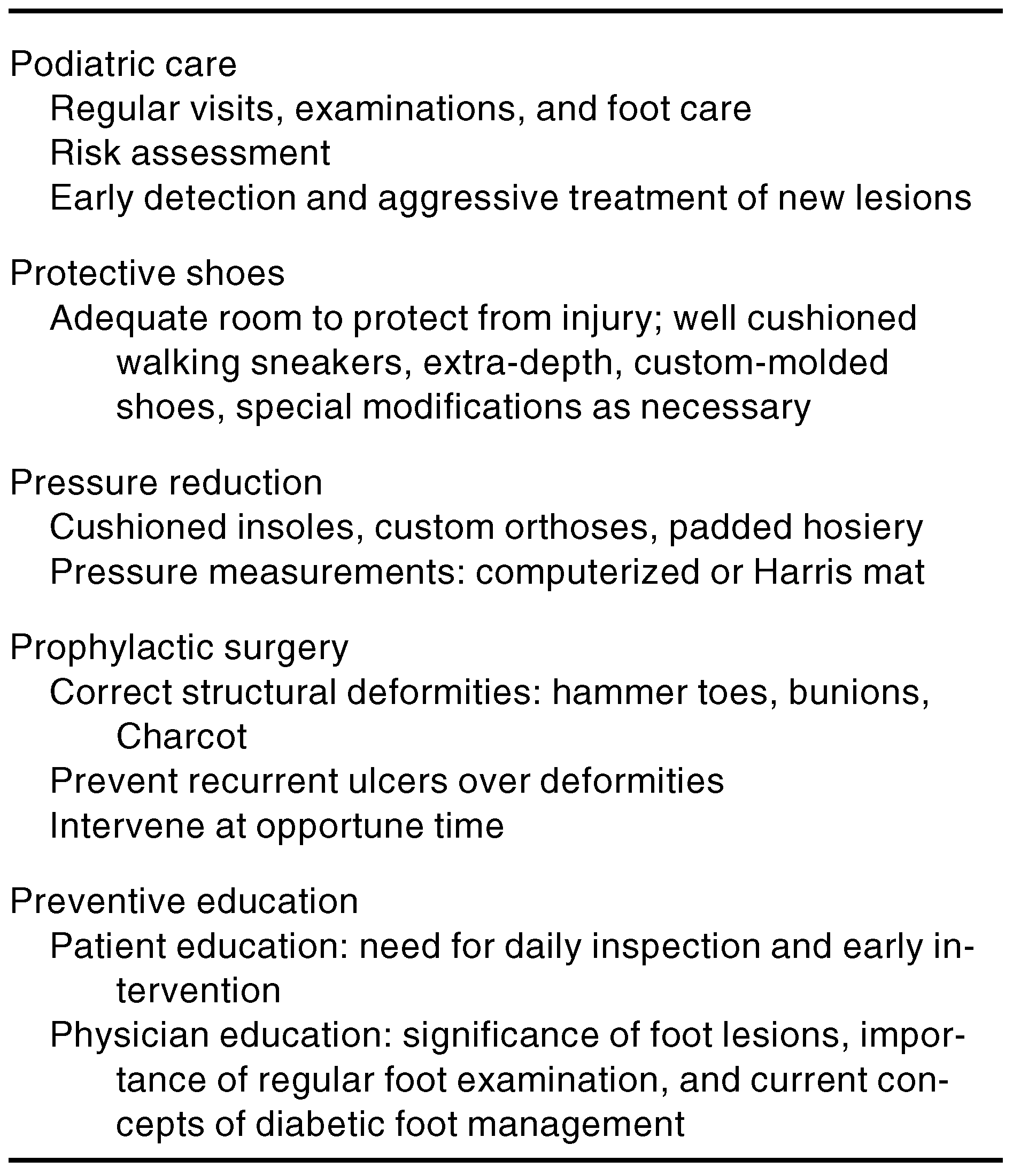
The podiatric physician should serve in a capacity wherein he or she not only participates in the management of active foot ulcerations, but also plays a central role in the prevention of new or recurrent lesions. In this regard, there are five primary areas of prevention in which the podiatric physician can assist the patient and foot care team alike: podiatric care, protective footwear, pressure reduction, prophylactic surgery, and preventive education (Table 2).
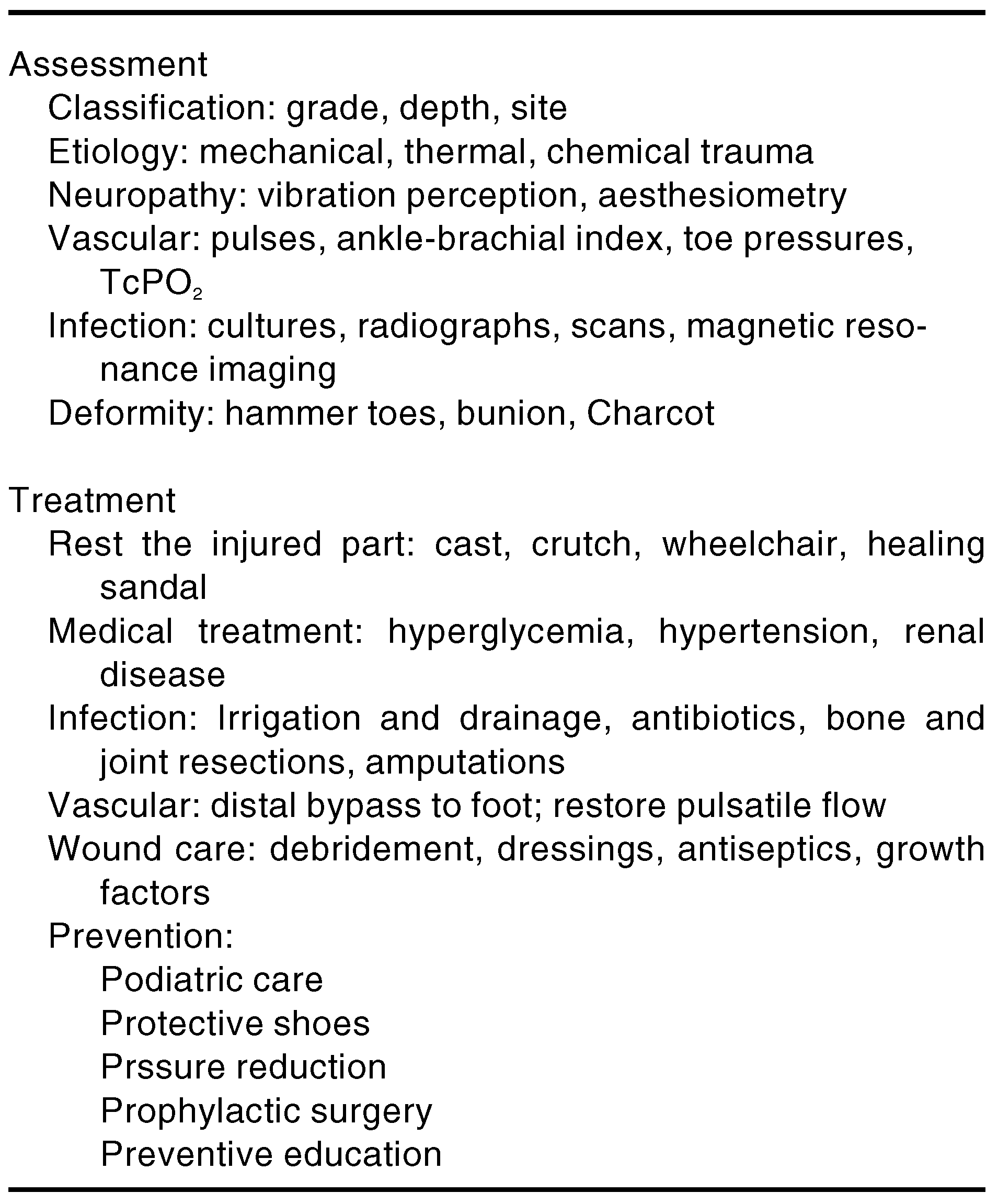
Podiatric care encompasses the initial evaluation, risk assessment, diabetic foot care, and periodic examinations as determined by the patient’s risk status and clinical findings [2,37]. The risk status is categorized according to the presence of neuropathy, ischemia, and structural deformity (Table 3). The highest risk category is given to those patients with a combination of these factors, prior history of ulceration, or with a Charcot deformity. Armstrong et al [38] and associates from the University of Texas have proposed another risk classification system based on these same parameters and offer treatment protocols for each level. Patients should be routinely seen by the podiatric physician every 2 months to provide foot care and facilitate periodic foot examinations [39,40]. Not only can ulcers be prevented by this care, but new lesions can be detected at an early stage and prompt, aggressive treatment can be administered according to standard protocols (Table 4) [2,3,4,18,34,39]. Emergent cases must always be seen promptly by the podiatric physician who can then serve as the gatekeeper to the other component members of the multidisciplinary team. Mills et al [41] have demonstrated the necessity for prompt treatment and appropriate referral as a means to avoid unnecessary limb loss in the diabetic patient.
Protective footwear is an essential element of prevention since much of the minor trauma leading to foot ulceration and amputation is a result of improperly fitting shoes [28]. The podiatric physician should assist in proper footwear selection and fitting as required by the shape of the foot and the degree of structural deformity present [42]. Walking or athletic shoes will often suffice; however, extra-depth or custom-made shoes will be required, especially if neuropathic foot deformities are present [2,3,18,34,37]. Uccioli et al [43] reported on a year-long clinical trial in which previously ulcerated diabetic patients who were randomized to the use of specially designed shoes had significantly fewer ulcer relapses than patients who continued to wear their customary shoes. In a recent observational study, however, patients who wore what were thought to be protective shoes did not have a reduction in risk for subsequent ulceration [44]. This implies a problem with the perception of what constitutes a proper shoe and proper fit. The pedorthist or orthotist will therefore be of invaluable help in proper shoe fitting, in the special modification of shoes, or when interim “healing sandals” are required for healing foot lesions [2,37,42].
Pressure reduction of abnormal plantar stress can be achieved through the use of cushioned footwear, padded hosiery, and appropriate insoles or orthoses, often fabricated from Plastazote (BXL Plastics Ltd, ERP Division, Croydon, England) [2,18,37,42,45,46,47,48]. This is a critical element in the prevention of plantar ulcerations and can be facilitated by pressure assessment using a Harris mat, pedobarography, or other computerized gait-analysis systems [2,18,23,28,34,45,46]. A recent study using the F-Scan (Tekscan, Boston) insole system documented the reductions in plantar pressures within appropriate shoes of diabetic patients as compared with barefoot walking outside of shoes [45]. This same group also found that pressure reductions afforded by padded hosiery and cushioned footwear could be sustained for 6 months [48]. In-shoe pressure measurements of this type are also useful for documenting efficacy of orthotic treatment under areas of high pressure. Rigid, cork, and Plastazote orthoses have each been found effective in off-loading the metatarsal head region, but do so at the cost of increasing pressures under the midfoot [49,50]. Longitudinal studies are required to assess long-term reductions in plantar pressures and concomitant reductions in foot ulceration. Although in-depth and custom-made shoes are frequently recommended for preventive footwear therapy, running shoes have also been found effective in reducing plantar pressures by as much as 40% in the metatarsal head region [46]. When significant deformity is present, however, off-the-shelf running shoes may not be suitable and custom-made or customized extra-depth shoes with protective inserts should be recommended for adequate pressure relief [42].
Prophylactic surgery on the diabetic foot was once considered ill-advised because of misconceptions regarding “small vessel disease” and the true nature of foot lesions in the patient with diabetes [2,51]. Now, however, selective correction of structural deformities that predispose the high-risk foot to ulceration is considered an important element in reducing plantar pressures, external shoe pressure, and associated skin lesions that result from walking on bony prominences, hammer toes, hallux valgus, or Charcot deformities [3,18,37,51]. In addition to preventing recurrent ulcerations, reconstructive podiatric surgery is often necessary to resolve recalcitrant ulcers not responding to conservative treatment. Care must be taken, however, to intervene at an optimal time and only when arterial insufficiency is not present or has been previously corrected [52]. These foot-sparing procedures can preserve the weightbearing function of the foot in which amputation might have been recommended [18].
Preventive education is of paramount importance in preventing most foot lesions caused by external precipitating factors and those caused by improper self-treatment or neglect. The diabetes educator or nurse specialist will be of inestimable value in teaching and reinforcing proper diabetes management and self foot care practices to the patient. The podiatric physician also assumes this responsibility in every contact with the patient for periodic foot care. Patients must be made aware of proper hygiene and the value of daily inspection combined with prompt treatment of new lesions [34,37,39]. Both shoes and stockings must be removed during every medical encounter to ensure continuous evaluation of both feet. In this regard, physician education is equally important, since studies have shown that not all health care providers are fully cognizant of important risk factors nor the importance of periodic examination and foot care [7,32]. As shown by Litzelman et al [53], education of providers is effective in reinforcing proper diabetes management and foot care practices, resulting in fewer adverse lower extremity outcomes within a 12-month period. Foot care programs emphasizing preventive education can therefore reduce the incidence of foot ulceration and amputation through a modification of self-care practices, appropriate evaluation of risk factors, and the formulation of treatment protocols aimed at early intervention, limb preservation, and the prevention of new lesions [7,18,32,35,53].

Conclusion

Foot ulcerations, infections, gangrene, and lower extremity amputation are major causes of disability to the patient with diabetes mellitus, often resulting in significant morbidity, extensive periods of hospitalization, and mortality. Although not all such lesions can be prevented, it is indeed possible to effect dramatic reductions in their incidence through appropriate management and prevention protocols.
A multidisciplinary team approach to diabetic foot disorders has been consistently demonstrated as the optimal method to achieve favorable rates of limb salvage in this high-risk population. The podiatric physician should play an integral role in this scheme, often serving in a primary care capacity between the patient and other services, while complementing and augmenting the skills of the other foot-service team members. The talents of numerous specialists committed to preserving the extremities of patients with diabetes should therefore be brought together in a cohesive unit that can not only provide efficient coordination of services for the acutely infected or ischemic patient, but also which can provide ongoing outpatient management focused on prevention, education, and early intervention. The goal of a 40% to 50% reduction in diabetic limb amputations by the year 2000 is certainly attainable if caregivers can embrace these principles and incorporate them into daily patient management routines.

References

  1. GIBBONS GW, ELIOPOULOS GM: “Infection of the Diabetic Foot,” in Management of Diabetic Foot Problems, 2nd Ed, ed by GP Kozak, DR Campbell, RG Frykberg, et al, WB Saunders, Philadelphia, 1995.
  2. FRYKBERG RG: “Diabetic Foot Ulcerations,” in The High Risk Foot in Diabetes Mellitus, ed by RG Frykberg, Churchill Livingstone, New York, 1991.
  3. THOMSON FJ, VEVES A, ASHE H, ET AL: A team approach to diabetic foot care: the Manchester experience. Foot 2: 75, 1991.
  4. EDMONDS ME, BLUNDELL MP, MORRIS ME, ET AL: Improved survival of the diabetic foot: the role of a specialised foot clinic. Q J Med 232: 763, 1986.
  5. PALUMBO PJ, MELTON LJ: “Peripheral Vascular Disease and Diabetes,” in Diabetes in America, data compiled 1984 (NIH publ. no. 85-1468), US Government Printing Office, Washington, DC, 1985.
  6. MOST RS, SINNOCK P: The epidemiology of lower extremity amputations in diabetic individuals. Diabetes Care 6: 87, 1983.
  7. BILD DE, SELBY JV, SINNOCK P, ET AL: Lower extremity amputation in people with diabetes: epidemiology and prevention. Diabetes Care 12: 24, 1989.
  8. US DEPARTMENT OF HEALTH AND HUMAN SERVICES, PUBLIC HEALTH SERVICE: Diabetes and Chronic Disabling Conditions: Healthy People 2000: National Health Promotion and Disease Prevention Objectives: 442, US Government Printing Office, DHHS publ. no. PHS 91-50212, Washington, DC, 1991.
  9. US DEPARTMENT OF HEALTH AND HUMAN SERVICES: Diabetes Surveillance, 1993, Centers for Disease Control, Atlanta, 1993.
  10. AMERICAN DIABETES ASSOCIATION: Direct and Indirect Costs of Diabetes in the United States 1992, American Diabetes Association, Alexandria, VA, 1993.
  11. AMERICAN DIABETES ASSOCIATION: Diabetes 1996 Vital Statistics, American Diabetes Association, Alexandria, VA, 1996.
  12. LAVERY LA, ASHRY HR, VAN HOUTUM W, ET AL: Variation in the incidence and proportion of diabetes-related amputations in minorities. Diabetes Care 19: 48, 1996.
  13. NELSON RG, GOHDES DM, EVERHART JE, ET AL: Lower extremity amputations in NIDDM: 12-yr follow-up study in Pima Indians. Diabetes Care 11: 8, 1988.
  14. LEE JS, LU M, LEE VS, ET AL: Lower-extremity amputation: incidence, risk factors, and mortality in the Oklahoma Indian Diabetes Study. Diabetes 42: 876, 1993.
  15. GOLDNER MG: The fate of the second leg in the diabetic amputee. Diabetes 9: 100, 1960.
  16. DIVISION OF DIABETES TRANSLATION, DEPARTMENT OF HEALTH AND HUMAN SERVICES: The Prevention and Treatment of Five Complications of Diabetes: A Guide for Primary Care Practitioners, Centers for Disease Control, Atlanta, 1991.
  17. GIBBONS GW, MARCACCIO EJ, BURGESS AM, ET AL: Improved quality of diabetic foot care, 1984 vs 1990; reduced length of stay and costs, insufficient reimbursement. Arch Surg 128: 576, 1993.
  18. CAPUTO GM, CAVANAGH PR, ULBRECHT JS, ET AL: Assessment and management of foot disease in patients with diabetes. N Engl J Med 331: 854, 1994.
  19. FRYKBERG RG: “Podiatrist’s Role in the Care and Treatment of the Diabetic Foot,” in Diabetes 1994, ed by S Baba, T Kaneko, Elsevier Science BV, Amsterdam, 1995.
  20. MOTT V: A case of circular callous ulcer in the bottom of the foot. Med Surg Register 129, 1818.
  21. BOULTON AJM: The diabetic foot. Med Clin North Am 72: 1513, 1988.
  22. DELBRIDGE L, APPLEBERG M, REEVE TS: Factors associated with the development of foot lesions in the diabetic. Surgery 93: 78, 1983.
  23. DELBRIDGE L, CTERTEKO G, FOWLER C, ET AL: The aetiology of diabetic neuropathic ulceration of the foot. Br J Surg 72: 1, 1985.
  24. BOULTON AJM: The pathogenesis of diabetic foot problems: an overview. Diabet Med 13: S12, 1996.
  25. FRYKBERG RG: Biomechanical considerations of the diabetic foot. Lower Extremity 2: 207, 1995.
  26. PECORARO RE, REIBER G, BURGESS EM: Pathways to diabetic limb amputation; basis for prevention. Diabetes Care 13: 513, 1990.
  27. ROTHMAN KJ: Modern Epidemiology, Little, Brown, Boston, 1986.
  28. APELQVIST J, LARSSON J, AGARDH C-D: The influence of external precipitating factors and peripheral neuropathy on the development and outcome of diabetic foot ulcers. J Diabetes Complications 4: 21, 1990.
  29. REIBER GE, PECORARO R, KOEPSELL TD: Risk factors for amputation in patients with diabetes mellitus. Ann Intern Med 117: 97, 1992.
  30. MOSS SE, KLEIN R, KLEIN BE: The prevalence and incidence of lower extremity amputation in a diabetic population. Arch Int Med 152: 610, 1992.
  31. APELQVIST J, LARSSON J, AGARDH C-D: Long-term prognosis for diabetic patients with foot ulcers. J Int Med 233: 485, 1993.
  32. DEL AGUILA MA, REIBER GE, KOEPSELL TD: How does provider and patient awareness of high-risk status for lower-extremity amputation influence foot-care practice? Diabetes Care 9: 1050, 1994.
  33. REIBER GE, BOYKO EJ, SMITH DG: “Lower Extremity Foot Ulcers and Amputations in Diabetes,” in Diabetes in America, 2nd Ed, ed by MI Harris, C Cowie, MP Stern, NIH Publication No. 95-1468, 1995.
  34. AMERICAN DIABETES ASSOCIATION: Diabetic Foot Care, American Diabetes Association, Alexandria, VA, 1990.
  35. LARSSON J, APELQVIST J, AGARDH C-D, ET AL: Decreasing incidence of major amputation in diabetic patients: a consequence of a multidisciplinary foot care team approach? Diabet Med 12: 770, 1995.
  36. LEVY LA, UNG KV: Unusual prevalence of diabetes mellitus among Native Americans and the podiatric medical implications. Lower Extremity 1: 3, 1994.
  37. FRYKBERG RG: “Podiatric Problems in Diabetes,” in Management of Diabetic Foot Problems, 2nd Ed, ed by GP Kozak, DR Campbell, RG Frykberg, et al, WB Saunders, Philadelphia, 1995.
  38. ARMSTRONG DG, LAVERY LA, HARKLESS LB: Treatmentbased classification system for assessment and care of diabetic feet. JAPMA 86: 311, 1996.
  39. AMERICAN DIABETES ASSOCIATION: Foot care in patients with diabetes mellitus: position statement. Diabetes Care 20 (S1): S31, 1997.
  40. DE HEUS-VAN PUTTEN MA, SCHAPER NC, BAKKER K: The clinical examination of the diabetic foot in daily practise. Diabet Med 13: S55, 1996.
  41. MILLS JL, BECKETT WC, TAYLOR SM: The diabetic foot: consequences of delayed treatment and referral. South Med J 84: 970, 1991.
  42. COLEMAN WC: “Footwear Considerations,” in The High Risk Foot in Diabetes Mellitus, ed by RG Frykberg, Churchill Livingstone, New York, 1991.
  43. UCCIOLI L, FAGLIA E, MONTICONE G, ET AL: Manufactured shoes in the prevention of diabetic foot ulcers. Diabetes Care 18: 1376, 1995.
  44. LITZELMAN DK, MARRIOTT DJ, VINICOR F: The role of footwear in the prevention of foot lesions in patients with non-insulin dependent diabetes: conventional wisdom or evidence-based practice? Diabetes Care 20: 156, 1997.
  45. SARNOW MR, VEVES A, GIURINI JM, ET AL: In-shoe foot pressure measurements in diabetic patients with at-risk feet and in healthy subjects. Diabetes Care 17: 1002, 1994.
  46. PERRY JE, ULBRECHT JS, DERR JA, ET AL: The use of running shoes to reduce plantar pressures in patients who have diabetes. J Bone Joint Surg 77A: 1819, 1995.
  47. CHANTELAU E, HAAGE P: An audit of cushioned diabetic footwear: relation to patient compliance. Diabet Med 11: 114, 1994.
  48. DONAGHUE VM, SARNOW MR, GIURINI JM, ET AL: Longitudinal in-shoe foot pressure relief achieved by specially designed footwear in high risk diabetic patients. Diabetes Res Clin Pract 31: 109, 1996.
  49. ALBERT S, RINOIE C: Effect of custom orthotics on plantar pressure distribution in the pronated diabetic foot. JAPMA 33: 598, 1994.
  50. BROWN M, RUDICEL S, ESQUENAZI A: Measurement of dynamic pressures at the shoe-foot interface during normal walking with various foot orthoses using the FSCAN system. Foot Ankle Int 17: 152, 1996.
  51. FRYKBERG RG, GIURINI J, HABERSHAW G, ET AL: “Prophylactic Surgery in the Diabetic Foot,” in Medical and Surgical Management of the Diabetic Foot, ed by SJ Kominsky, Mosby Year Book, St Louis, 1994.
  52. ROSENBLUM BI, POMPOSELLI FB, GIURINI JM, ET AL: Maximizing foot salvage by a combined approach to foot ischemia and neuropathic ulceration in patients with diabetes. Diabetes Care 17: 983, 1994.
  53. LITZELMAN DK, SLEMENDA CW, LANGEFELD CD, ET AL: Reduction of lower extremity clinical abnormalities in patients with non-insulin dependent diabetes mellitus: a randomized, controlled trial. Ann Intern Med 119: 36, 1993.
Figure 1. Paradigm for multidisciplinary diabetic foot service.
Japma 87 00305 g001
Figure 2. Interactions between major contributory risk factors for diabetic foot ulceration.
Japma 87 00305 g002
Figure 3. A, “Causal pie” theory of ulcer causation composed of component causes that act in concert to produce a sufficient cause for ulceration. Modified from: Pecoraro RE, Reiber G, Burgess EM: Pathways to diabetic limb amputation: basis for prevention. Diabetes Care 13: 513, 1990. Reprinted with permission. B, Removing one component cause has the effect of preventing a completed causal pathway and no ulceration develops.
Japma 87 00305 g003
Table 1. Risk Factors for Diabetic Foot Ulceration 
Japma 87 00305 i001
Table 2. Areas of Prevention 
Japma 87 00305 i002
Table 3. Risk Status Classification 
Japma 87 00305 i003
Table 4. Assessment and Treatment Objectives for Foot Ulcerations 
Japma 87 00305 i004