Diabetes is the single most common contributing cause of lower extremity amputations in the US [
1]. Amputations are associated with an increased risk of death and additional amputation within 3 to 5 years, and a substantial financial cost to society, the patients themselves, and their families [
2,
3,
4] During this period, approximately half of amputees will require an amputation of the contralateral extremity and 30% to 50% will die. There are approximately 120,000 nontraumatic amputations per year of which 53% to 83% are performed on patients with diabetes [
1]. The direct cost of amputations has been conservatively estimated to be approximately 1.6 billion dollars per year without consideration for physicians’ fees, prosthetic devices, or rehabilitation costs [
5].
Many of the amputations that occur every year among patients with diabetes can be prevented. There are a number of descriptive studies from the US and Great Britain that report the effectiveness of multispecialty prevention programs to reduce lower extremity pathology in patients with diabetes. For instance, the incidence of amputations has been reduced by as much as 85% in such programs [
6,
7,
8]. One of the mainstays of preventive care programs involves the use of viscoelastic therapeutic insoles to accommodate high-pressure areas on the sole of the foot to reduce the risk of ulceration. These devices represent a relatively inexpensive intervention strategy that can make a substantial impact on the prevalence of pathology [
6,
7,
8,
9,
10]. Viscoelastic inserts are commonly used as an artificial shock absorber in high-risk diabetics to prevent the development of neuropathic foot ulcerations by decreasing pressure on the sole of the foot. This simple, but effective, aspect of diabetic foot morbidity prevention has been neglected in the past, because of its relatively low technologic aspects and unglamorous, yet significant, contribution to amputation prevention. Congressional legislation has recently provided funding for high-risk Medicare recipients with diabetes to receive one pair of therapeutic shoes and three pairs of insoles each year. The decision to provide three pairs of insoles seems to be completely arbitrary, since no objective data exist to characterize material failure parameters in insoles. Physicians, insurance providers, and patients would be well served if more specific information were available about the effectiveness and durability of specific insole materials to reduce highpressure areas and prevent foot wounds in high-risk patients. Even if these materials required frequent replacement, the cost of the insoles for 100 high-risk patients could be absorbed by preventing a single hospitalization.
Unfortunately, there is very little scientific information available to guide physicians, podiatric physicians, and pedorthists in the selection of appropriate insole materials. Likewise, there are no data concerning the durability of these materials or information to suggest when insoles should be replaced. Many of the clinical decisions made about insoles and the selection of insole materials are based solely on intuition, availability, and cost. It would be preferable if the selection of an insole would be based on pressures measured on the bottom of the foot, patient activity levels, and insole service-life expectancy. Cost could then be evaluated in relationship to clinical effectiveness and the frequency of replacement.
Little information currently exists to help make decisions about insole material selection. The development of a laboratory methodology to characterize insole materials and simulate patient activity until materials fail, that is correlated with clinical parameters, would allow existing viscoelastic materials to be evaluated quickly and inexpensively. Selecting the most effective material for therapeutic insoles and replacing the insoles before they wear out would provide a substantial benefit to patients with diabetes at risk for amputation, private and public health insurance carriers, and physicians. The longterm end result should be a substantial reduction in foot ulcerations and lower extremity amputations.
The objective of the authors’ research activities in this area is to develop a novel methodology to characterize mechanical properties of viscoelastic materials commonly used in the construction of accommodative insoles for high-risk patients with diabetes to prevent foot ulcerations. Based on their experiments, the authors’ overall hypothesis is that both dynamic foot pressure and compressive stiffness of the insole initially decrease, and that, with repetitive wear, the pressure and stiffness begin to increase and eventually reach a level of potentially damaging high pressures. Furthermore, there is a strong and predictable correlation between clinical and mechanical results.
Materials and Methods
The authors measured dynamic foot pressures and contact time measurements and mechanical properties of viscoelastic insole materials as they changed with use in eight diabetic volunteers for 12 weeks. Fourteen volunteers were initially enrolled; six volunteers failed to complete the study. Two types of insoles were evaluated by measuring changes in pressure on the bottom of the foot over time and then correlating these pressure changes to alterations in the compressive stiffness (Young’s modulus) of the insole. Eight patients with diabetes were provided insoles made of PPT® (AliMed, Dedham, MA) and Pelite® (Fillauer, Jackson, TN). Pelite was used in the left shoe and PPT in the right. Both insoles were made from bilaminar material constructed with a 3.2-mm top layer of the study material that was placed in contact with the foot and a 3.2-mm bottom layer from medium density Plastazote® (BXL Plastics Ltd, ERP Division, Croydon, England). Both types of insoles were used concurrently. The insoles were cut out of a flat sheet of bilaminar material provided by the manufacturer without any additional modifications.
Gait Analysis (in Vivo Pressure) and Mechanical Testing
The novel approach used in this project, consisting of in vivo gait analysis and in vitro bioengineering measurements, was applied on each of two types of insoles worn by eight volunteers. Gait analysis, performed every 3 weeks, provided temporal changes in salient parameters of the pressure profile experienced at the bottom of the feet of each volunteer. Bioengineering evaluation included mechanical testing, also at 3-week intervals.
At the start of the experiment, a baseline gait force versus time measurement was taken for each person for 40 steps. This was done by using the Novel® (Novel Electronics, Inc, Munich, Germany) Pedar System, which is a device that can measure dynamic forces on the bottom of the foot during gait. This system can measure the force versus time profile during a single step and then calculate the peak pressure and the pressure-time integral. The peak pressure is the maximum force measured divided by the area of applied load and the pressuretime integral is the area under the pressure versus time graph. The area under this graph is the amount of energy applied to the insole. The point of maximum pressure on both feet was measured, identified, and recorded for all patients and then the corresponding location was marked on the insole. This area of highest pressure was the point of mechanical testing throughout the study. To obtain a baseline Young’s modulus of the insole material, the Automated Stress-relaxation Creep Indentor was used to perform a creep test. These two measurements, gait pressure and compressive stiffness of the insole, were taken at 0-, 3-, 6-, 9-, and 12-week intervals. The number of steps taken daily by the patients were also recorded by use of a digital pedometer.
Dynamic plantar pressures were evaluated with the Pedar in-shoe pressure analysis system, a high resolution, computerized insole sensor system [
11,
12]. This system is used to record and evaluate dynamic and static real time pressure distribution both on flat and curved surfaces. This system quantifies forces, pressures, and contact time variables on the sole of the foot inside the subject’s footwear. The insole sensor is a 2-mm thick, flexible instrument that is able to fit snugly along the contour of the foot to measure the foot-insole interface. It transmits data to a computer through a 10-m cable. The sensors in the insole operate on the principle of capacitance. Capacitive measurements allow shear forces to be compensated elastically and do not change the characteristics of the capacitance sensor. The matrix configuration of the sensors provides for identification of each sensor for calibration. The insoles are calibrated following the manufacturer’s protocol, which describes the use of a rubber bladder that is filled with compressed air at several discrete levels of pressure. The air bladder configuration provides a known level of pressure on the insoles in order to verify that insole readings are accurate before clinical use. Each insole, which has 85 sensors, exhibits resolution of approximately 0.5 sensors/cm
2. The measurement frequency for this system is 50 Hz and data are collected in an infinite loop. The last 1,000 pressure frames are stored automatically when the measurement is stopped. The Novel software calculates the center of force path for each gait cycle, the path of maximum pressure from heel strike to toe-off in each gait cycle, and groundcontact time as a percentage of foot contact time throughout each gait cycle. Maximum foot forces and pressures can be calculated in specific foot regions by creating specific mask areas.
Each subject was evaluated on the same walking surface with the same style and brand of footwear and with the same style and brand of socks to eliminate these additional variables. For each patient visit, data were collected while the patients wore the footwear with and without the insoles to evaluate deterioration of footwear as a contributing factor. A repeat measures design was used to quantify dynamic foot characteristics. To minimize abnormal readings from starting and stopping forces, eight midgait steps were evaluated for each of five gait trials.
From each gait lab evaluation, 40 steps were analyzed. The independent variables that were considered from the gait studies are the relative amount of plantar pressure, contact time, and pressure-time integral for the first metatarsal head.
The Automated Stress-relaxation Creep Indenter system was used to measure the creep responses of the bilaminar insoles [
13]. Creep is defined as temporal changes in deformation of a viscoelastic material in response to a constant load. The Automated Stressrelaxation Creep Indenter is a closed-loop, computercontrolled device that allows for the precise application of a step load and then accurately measures the corresponding deformation [
13]. The insole specimen was mounted onto a six-degree-of-freedom positioning assembly and held fixed in such a way that the point of interest on the surface of the material is perpendicular to the testing tip. Each specimen was loaded with a solid, flat indenter tip measuring 2 mm in diameter. During the experiment, a constant force was applied and deformation of the material was measured.
The creep test was initiated by applying a 1.96 × 10⁻²N tare load on the insole surface until displacement equilibrium was reached. Displacement equilibrium occurred when the change in surface deformation was less than 1 × 10⁻⁷mm/sec. After tare equilibrium, the creep experiment continued by loading the specimen with a 9.81 × 10⁻²N load until displacement equilibrium was again obtained. After creep equilibrium, the specimen was unloaded and allowed to recover. The maximum displacement, indenter tip radius, load applied, and insole thickness were used as variables in the Boussinesq-Papkovitch equation. This equation was used to calculate the Young’s modulus of the insole: E = P (1-υ2)/2a wo, where E is the Young’s modulus (MPa), P is the load applied (N), -υ is the Poisson’s ratio (in this case, a constant, 0.3), a is the radius of the loading tip (mm), and wo is the maximum indentation (mm).
In addition to gait studies, each volunteer maintained a daily activity log with mileage estimates from pedometer recordings. Each subject was provided with a pedometer to wear at all times during the period that they were using the study insole and footwear. Pedometers were calibrated for the stride length of each subject. Subjects were taken to the university’s 400-m athletic track where the pedometer was calibrated and its accuracy verified from known path distances. The authors evaluated the weekly activity level of all subjects from their daily activity logs.
Results
There were significant differences in the compressive stiffness of the two insoles as well as the rate of change throughout the testing period (
Figure 1,
Figure 2,
Figure 3,
Figure 4,
Figure 5,
Figure 6 and
Figure 7). As seen in
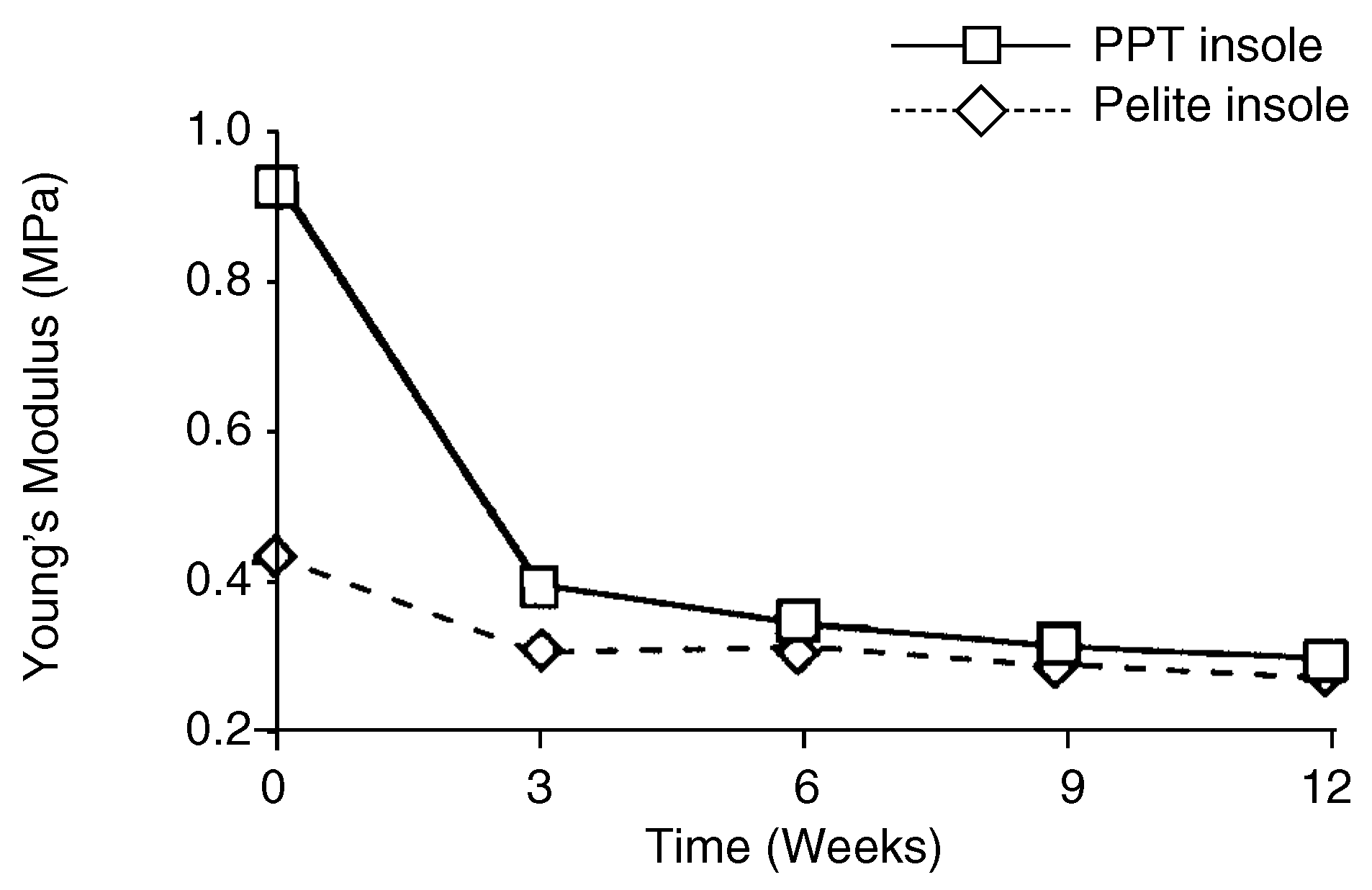
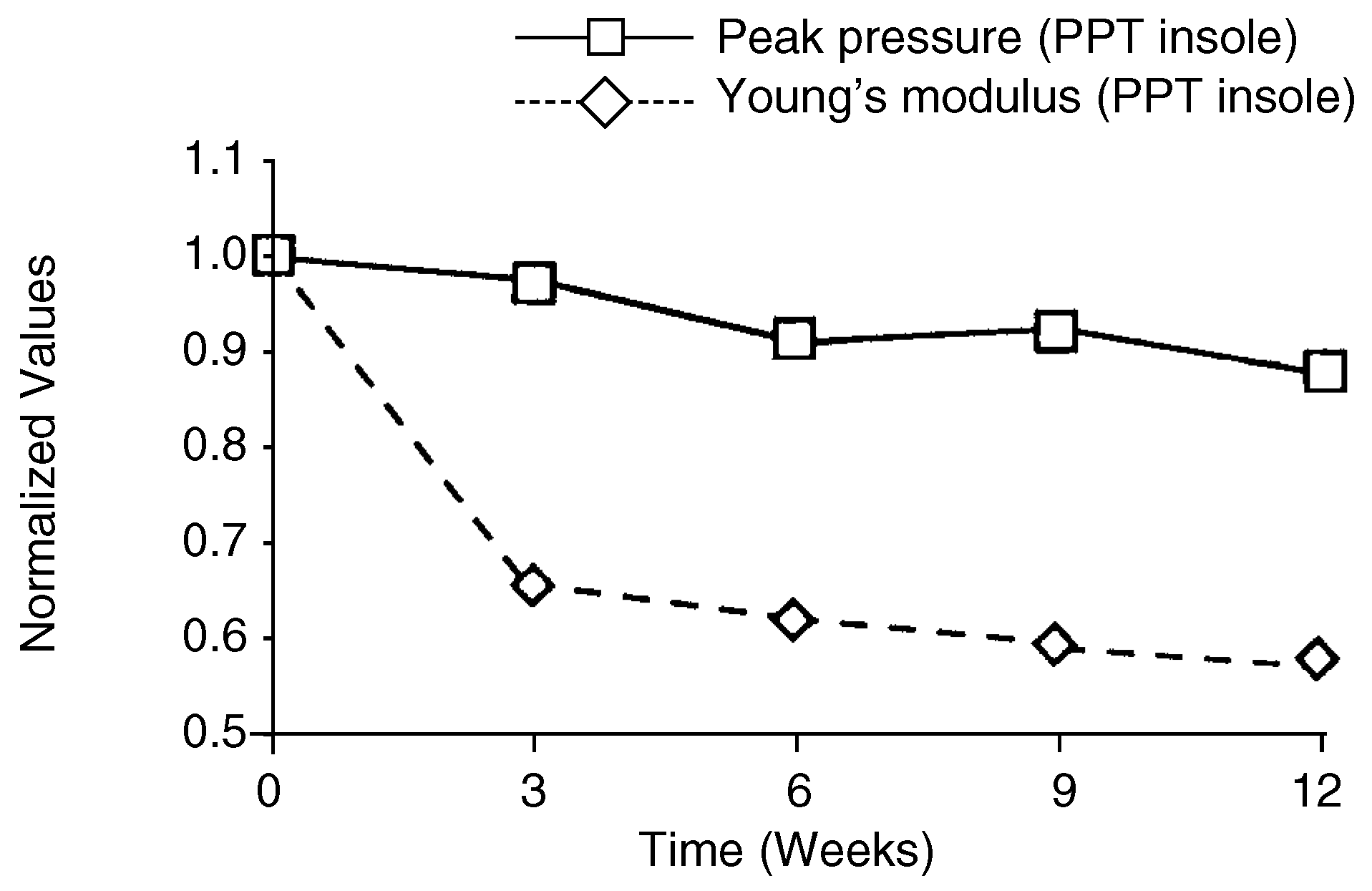
Figure 1, the PPT insole had a compressive stiffness 125% greater than the Pelite insole at time 0, but after 12 weeks of use, the insoles were essentially the same. To relate the gait values to the Young’s modulus, both measurements were normalized with the baseline values.
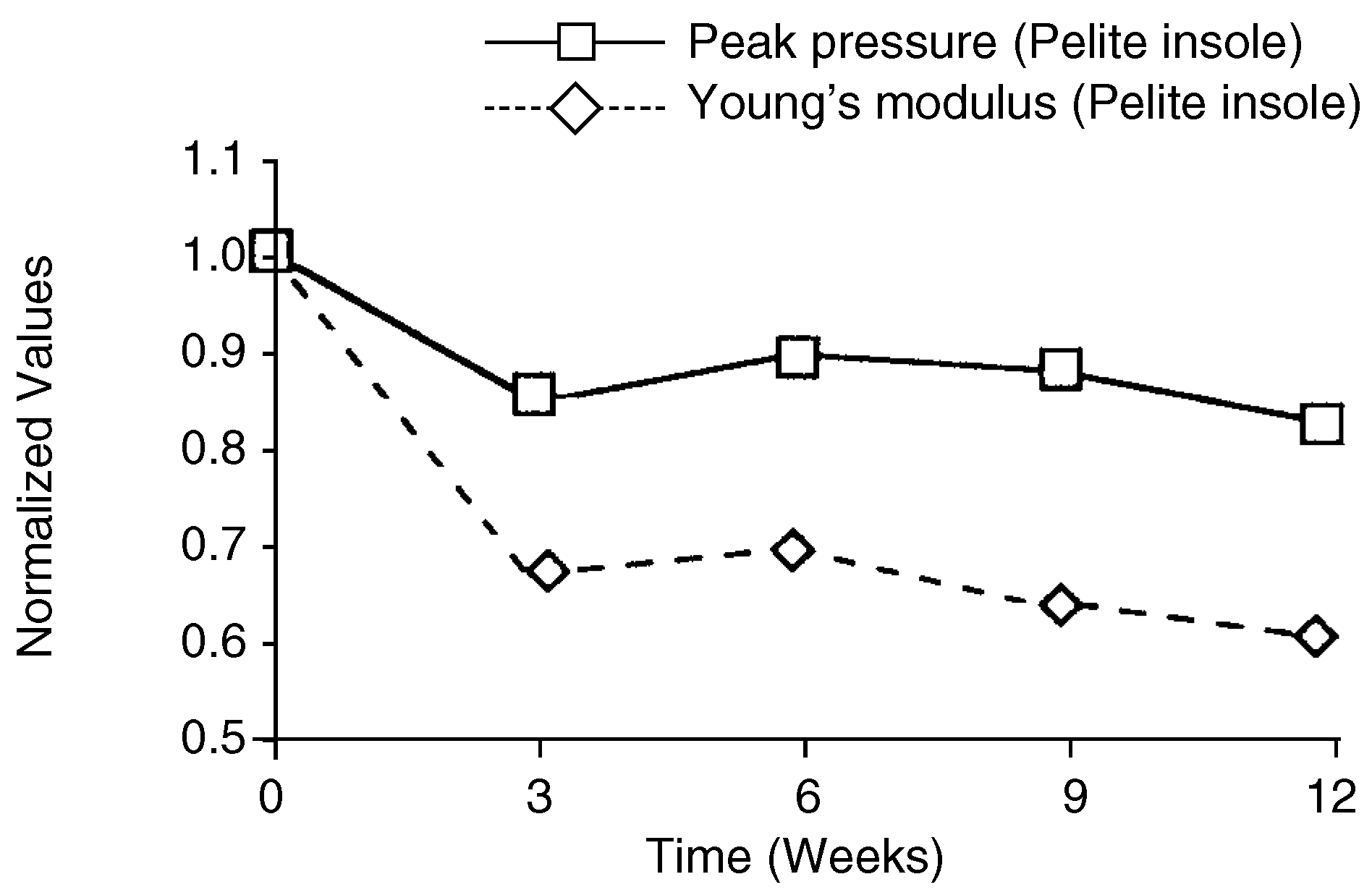
Figure 2 and
Figure 4 show comparisons between the peak pressures and the Young’s modulus for the Pelite and PPT insoles throughout the 12-week experimental period. A strong relationship was observed between the two measurements, such that a drop in the measured pressure corresponds to a drop in the Young’s modulus. The same can be seen in
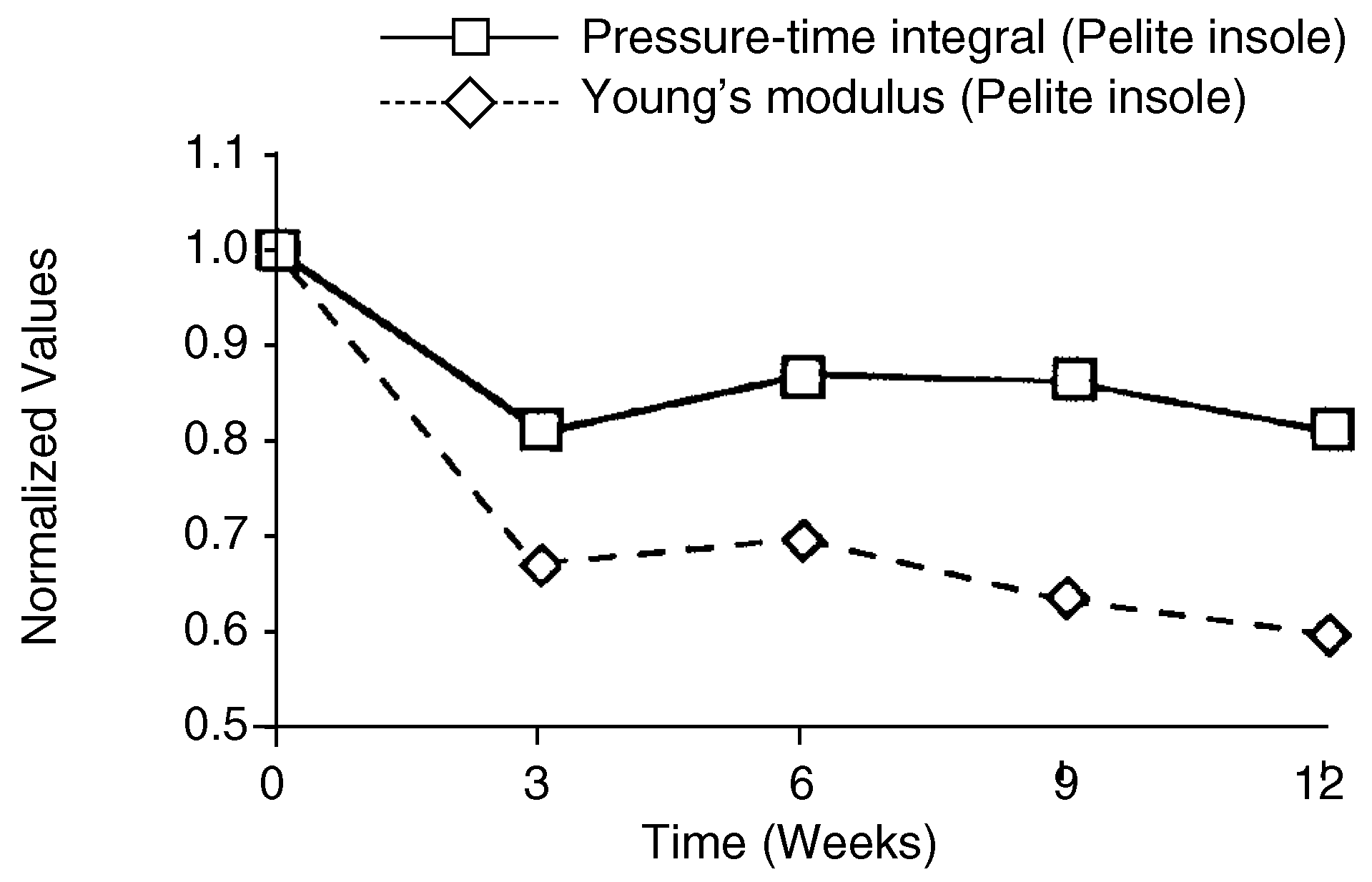
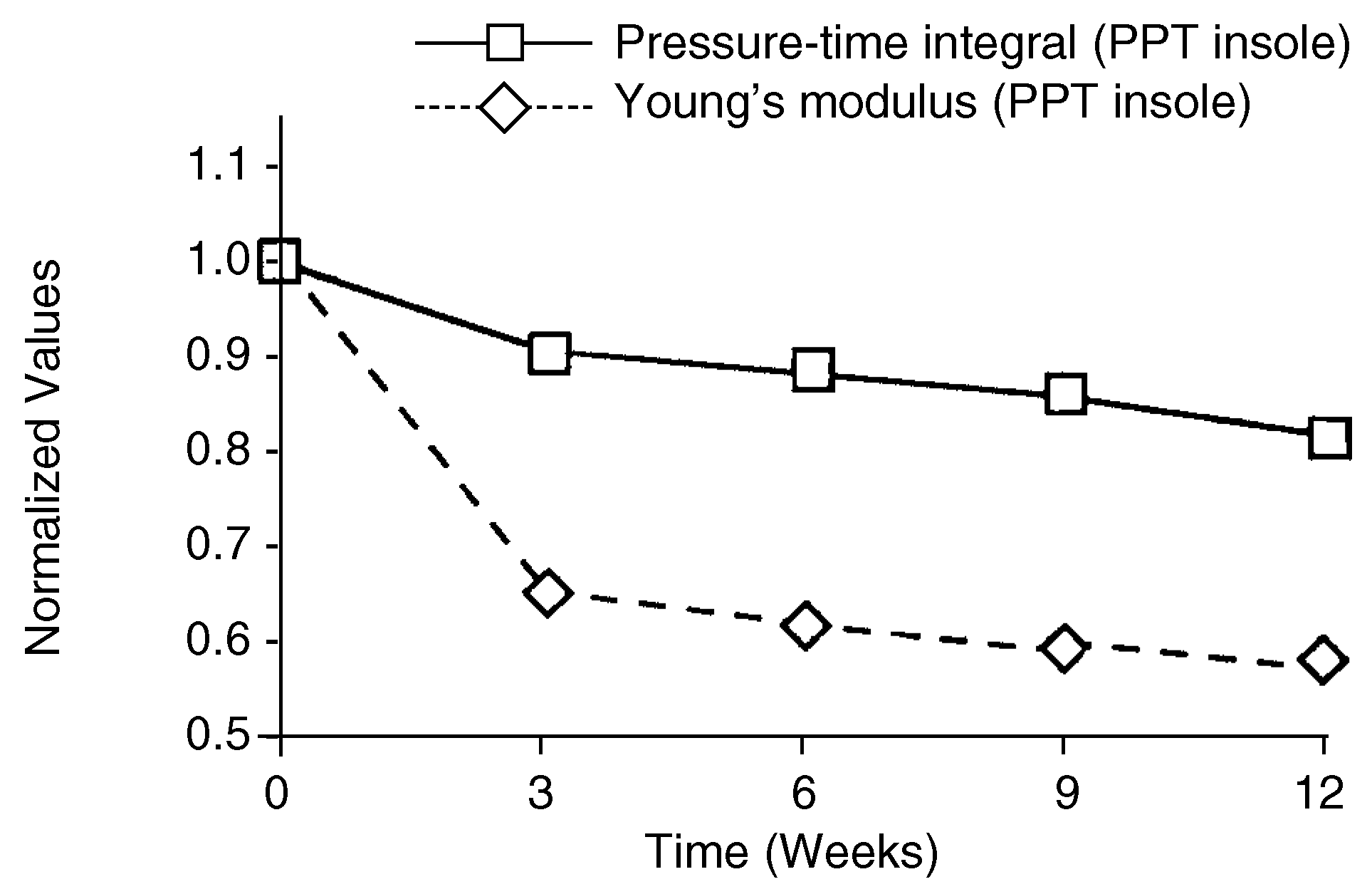
Figure 3 and
Figure 5, which illustrate the pressure-time integral and the Young’s modulus, respectively, for the Pelite and PPT insoles during the same 12-week period. A more direct method of comparison is shown in
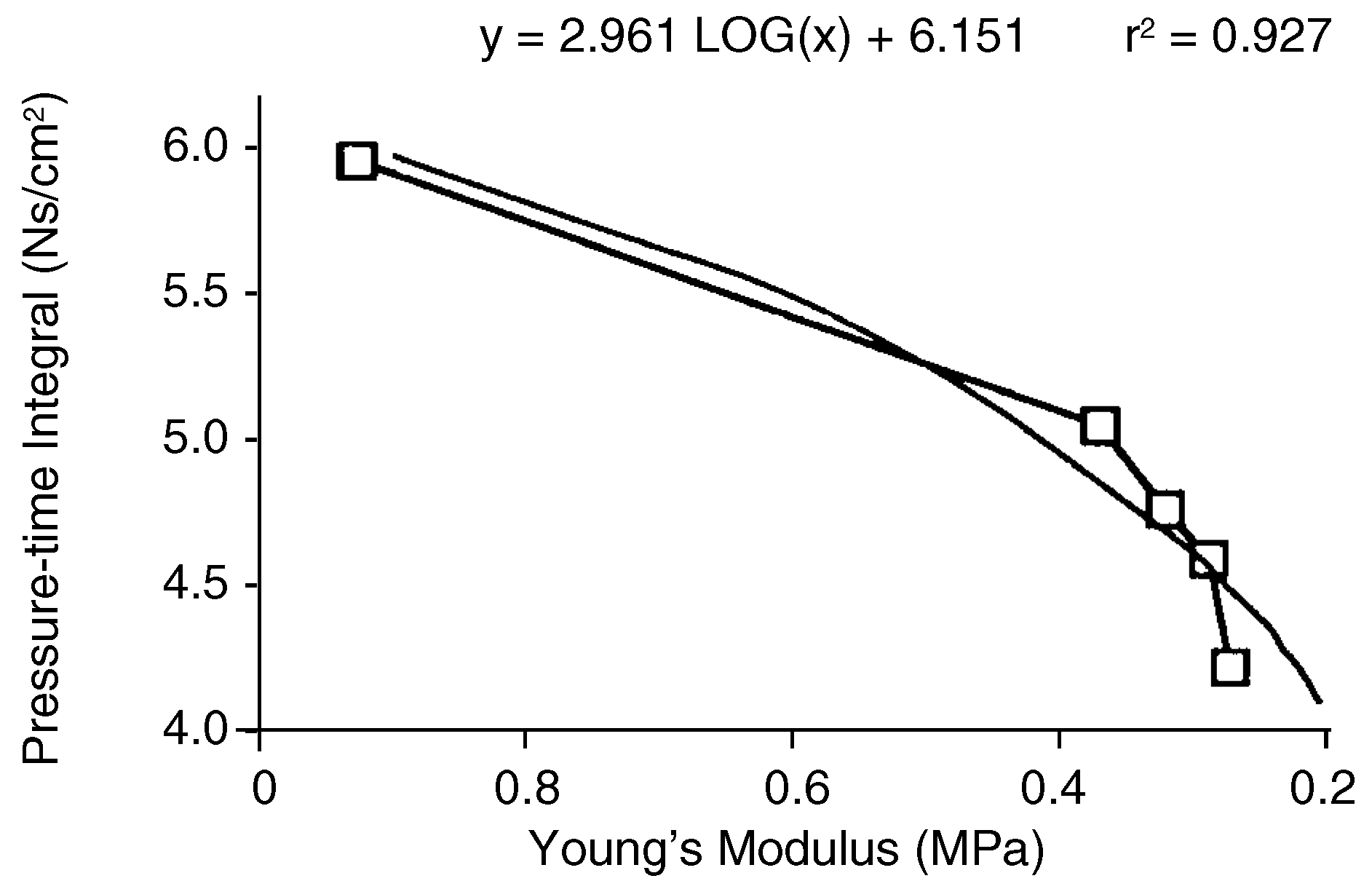
Figure 6, which is a plot of actual values for the pressure-time integral
versus the Young’s modulus. A logarithmic correlation (r
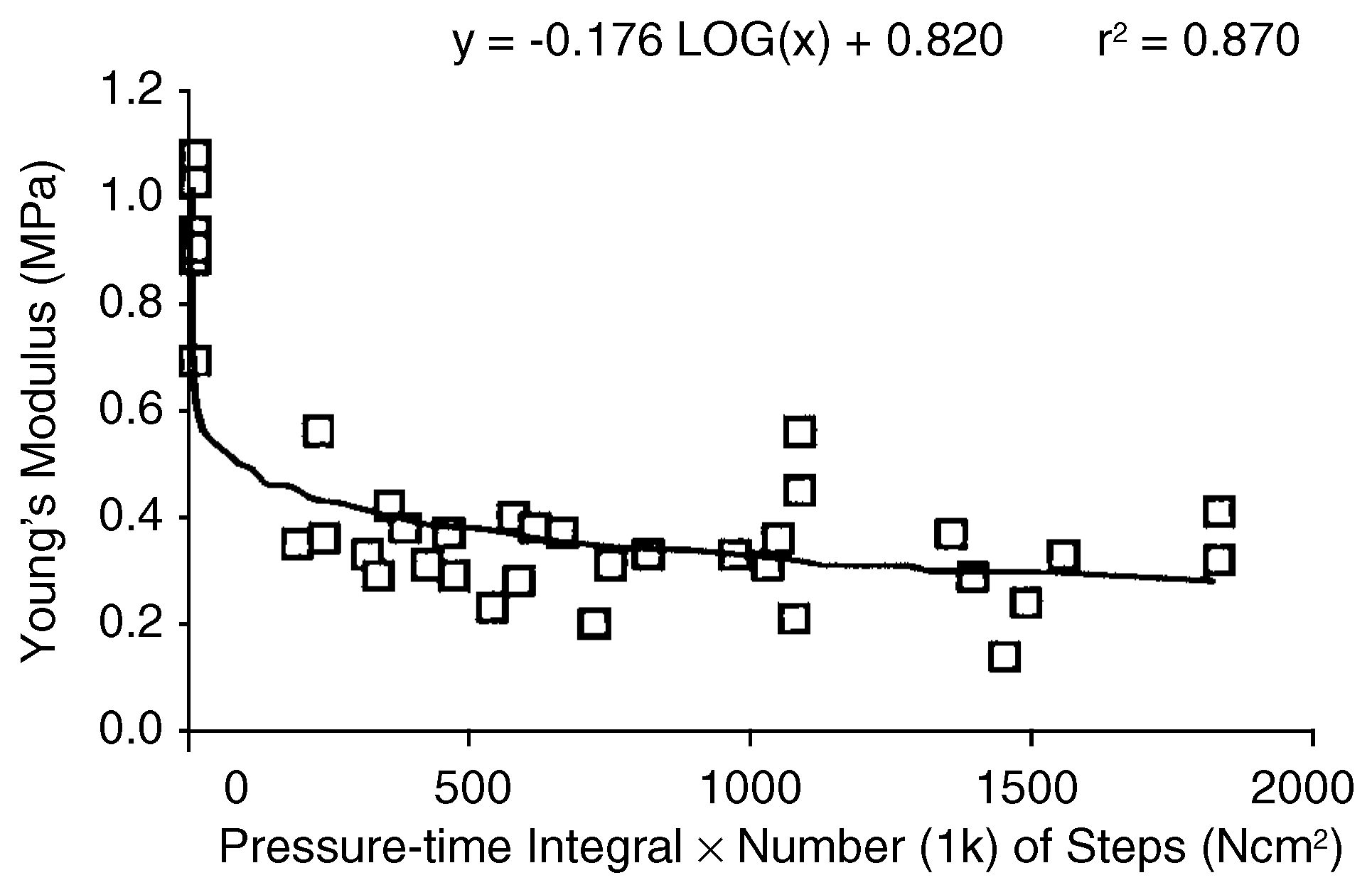
2 = 0.927) exists between the two measurements. Since the pressure-time integral is the amount of energy delivered to the insole during one step, it is possible to sum up the total amount of energy applied to the insole. This energy is calculated by multiplying the number of steps taken by the average value of the pressure-time integral. This is illustrated in
Figure 7, which shows the relationship between the Young’s modulus of the PPT insole and the running-sum of the applied energy. A curve fit shows that the drop in Young’s modulus is a logarithmic function of the amount of energy applied with a correlation of r
2 = 0.870.
Discussion
Neither test material “failed” during the 12-week period of testing. Both average peak pressure and pressure-time integral continued to decrease. Likewise, the stiffness of each material continued to decrease. The largest change for both materials was observed after the first 3 weeks of use, probably because of some form of preconditioning of the viscoelastic materials. Interestingly, a strong correlation between clinical (eg, pressure-time integral) and mechanical (compressive modulus) results was demonstrated. Such a finding has significant ramifications insofar as evaluation of viscoelastic insoles is concerned. It is conceivable that a quick, inexpensive biomechanical test, which is based on creep or stress relaxation responses, can be established to evaluate indirectly pressure distributions on patients’ feet.
The overall hypothesis of this study is that both dynamic foot pressure and compressive stiffness of the insole will initially decrease, and that with repetitive wear, the pressure and stiffness will begin to increase and eventually reach a level of potentially damaging high pressures. The first component of this overall hypothesis has been established. The second part needs to be further studied and elucidated in subsequent studies. Scanning electron microscopic examinations of insole materials must also be correlated with the materials’ intrinsic biomechanical properties.
Additional tests need to include evaluation of microscopic surface changes of the insole materials, and their viscoelastic behavior under dynamic loading. The insole surface, and any microscopic variations in it, can be probed using a scanning electron microscope. The top surface and the cross-sections of the insoles will be analyzed for changes in porosity, microstructure, and accumulation of microdamage. Changes in any of these parameters are likely to cause changes in the viscoelastic properties of the test materials. The viscoelastic behavior of the material can be evaluated using a dynamic mechanical analyzer. The storage and loss moduli will be measured under these conditions. These properties are indicative of the viscoelastic nature of the material and its ability to dissipate energy. The tests can be performed separately on both the test materials and the underlying Plastazote.
Additional testing should include fatigue evaluations. Fatigue is a form of failure that occurs in a structure that has been subjected to a dynamic and fluctuating stress. Under these circumstances, it is possible for failure to occur at stress levels much lower than the tensile or compressive static strength of the structure. The term “fatigue” is used because this type of failure normally occurs after a lengthy period of repeated stress or strain cycles. The stress applied may be axial, flexural, or torsional. The fatigue life of a material is the number of cycles to cause failure at a specific stress or strain level. If the stress amplitude is decreased, the number of cycles to failure will increase, or if stress is increased, the cycles will decrease. A plot of this stress versus number of cycles is known as the S-n curve.
Environmental factors, such as temperature fluctuations, may also affect the fatigue behavior of materials. To quantify fatigue characteristics of insoles, an insole simulator (fatigue-tester device) can be constructed by modifying an existing fatigue device that was used in a previous study in which the authors examined biodegradable polymers under cyclic loading [
14]. The modified fatigue test apparatus will be designed to duplicate, as nearly as possible, service conditions of an insole material. Because of forces that would occur from walking, it has been postulated that a shear-compressive fatigue test is the most relevant when testing insole materials [
15]. Furthermore, the insole simulator should replicate other
in vivo conditions, such as similar loading profiles, temperatures, and humidity, that would occur in a shoe. The change in the Young’s modulus of the insole will be compared with the number of cycles and amount of stress applied. Chamber temperature and humidity can also be controlled.
Conclusion
The authors have been establishing a new bioengineering protocol, based on gait analysis, viscoelastic characterizations, and biomaterial analyses, to study temporal variations in the structure-function relationships of insole materials. This novel methodology will allow the development of a rational platform for guiding physicians in prescribing insoles. There was a very strong correlation between the in vivo gait parameter measurements and in vitro material studies.
After validation of this novel methodology with other viscoelastic materials, it will be possible to develop an instrument that can be used by podiatric physicians and pedorthists to evaluate viscoelastic materials in their offices in order to determine if insole materials and other prosthetic materials have “failed.” In addition, an expansion of this technology could provide an inexpensive unit that patients can use at home to make the same determinations. The instrument could be used by high-risk diabetics and high-performance athletes to determine when viscoelastic materials need to be replaced.