Multiple hereditary osteochondromatosis is an autosomal dominant inherited disorder of enchondral bone growth in which cartilage-capped exostoses appear during the period of bone growth and continue to grow until epiphyseal fusion occurs [
1,
2]. It is the most common systemic hereditary disorder of skeletal development and mainly affects the long bones, the pelvis, scapulae, and ribs [
1,
2,
3,
4,
5]. The forearm, ankle, and knee are the most common sites of deformity with ankle deformities present in approximately 50% of affected individuals [
1,
6]. The bone containing the tumor is often abnormally wide at the level of the osteochondroma because of failure of normal tubulation [
6]. The most common associated deformities include short stature caused by limb undergrowth with normal trunk length, and bowing of the forearm with ulnar deviation of the wrist as a result of shortening of the ulna [
6]. Valgus deformity of the ankle and knee is caused by shortening of the fibula [
4]. Fifty percent are moderately to severely handicapped [
2,
4]. Less common deformities include anisomelia, scoliosis, coxa valga, metacarpal and metatarsophalangeal shortening, and asymmetry of the pelvic and pectoral girdles [
6]. Malignant degeneration to chondrosarcoma is estimated to occur in approximately 1% percent of patients with multiple hereditary osteochondromatosis and has a greater potential in large exostoses of the axial skeleton such as lesions in the pelvis, proximal humerus, and scapula [
1,
6].
Patients with multiple hereditary osteochondromatosis may present with a deformed ankle that is associated with pain and reduced range of ankle joint motion. The diagnosis is made by the observation of bony exostoses that are present at several sites, most commonly the knee and the ankle and corresponding osteochondromas on radiograph. Biopsies should not be performed on lesions that are asymptomatic for diagnostic purposes since the clinical and radiographic presentation is characteristic [
1].
Case 1
A 66-year-old male presented with heel pain bilaterally that had been present for the past 3 months. His medical history was positive for noninsulin-dependent diabetes mellitus for which the patient was taking 5 mg of Micronase (Upjohn Company, Kalamazoo, MI). The surgical history included appendectomy. Although the patient did not initially relate a family history of multiple hereditary osteochondromatosis, after the authors observed several exostoses during the examination, further questioning elicited a history of lesions on a knee of his mother and on the back of a maternal cousin.
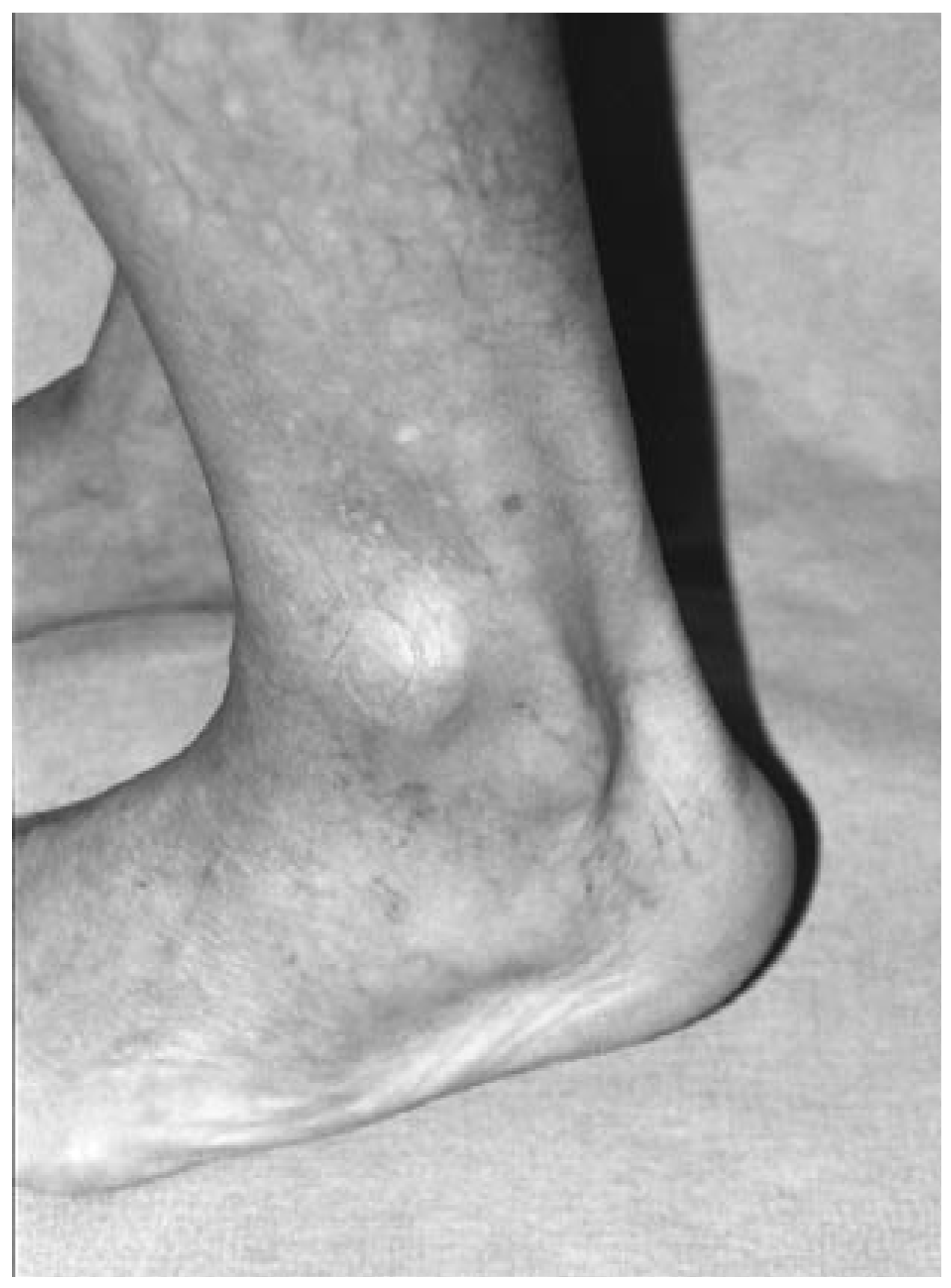
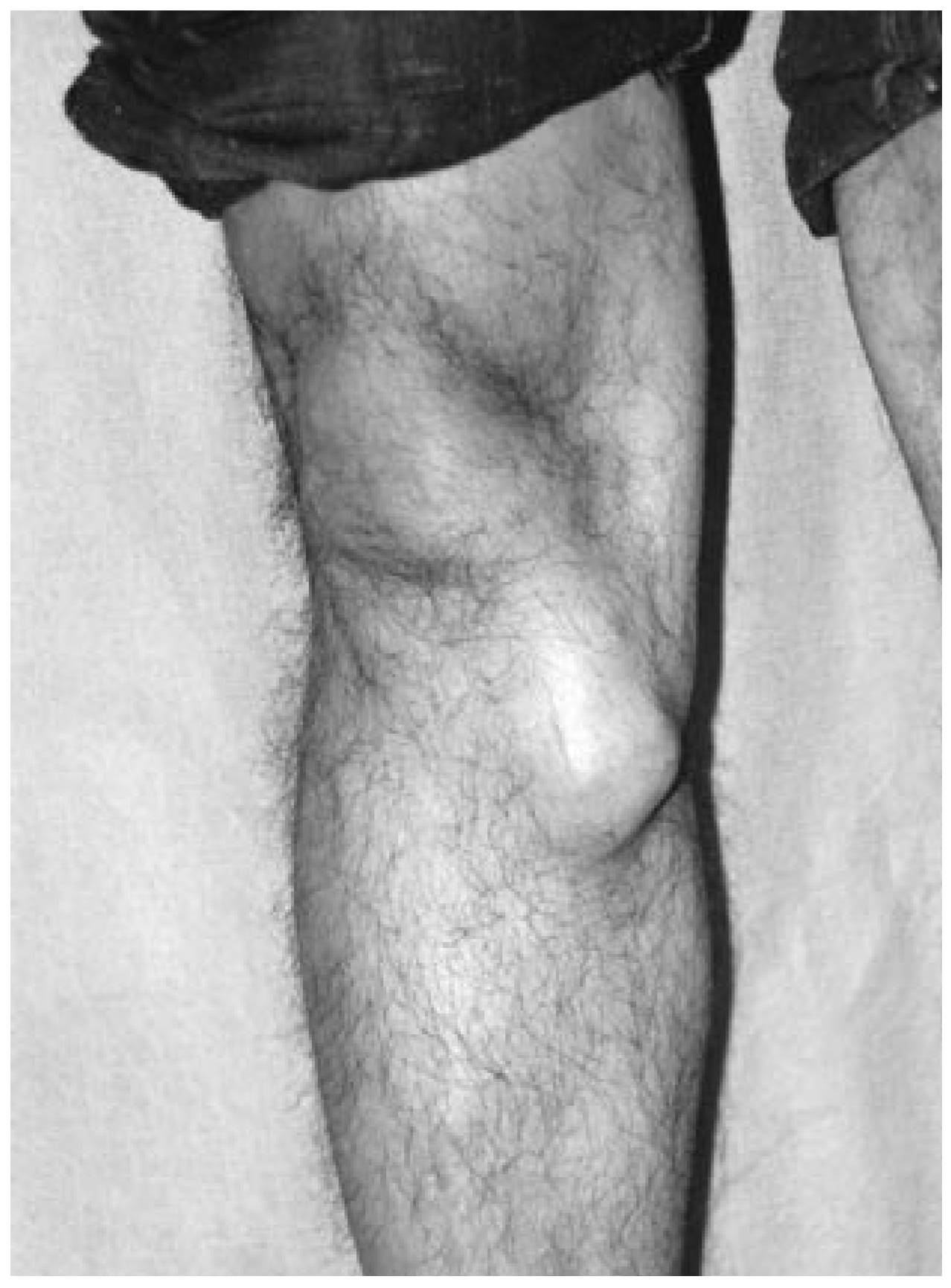
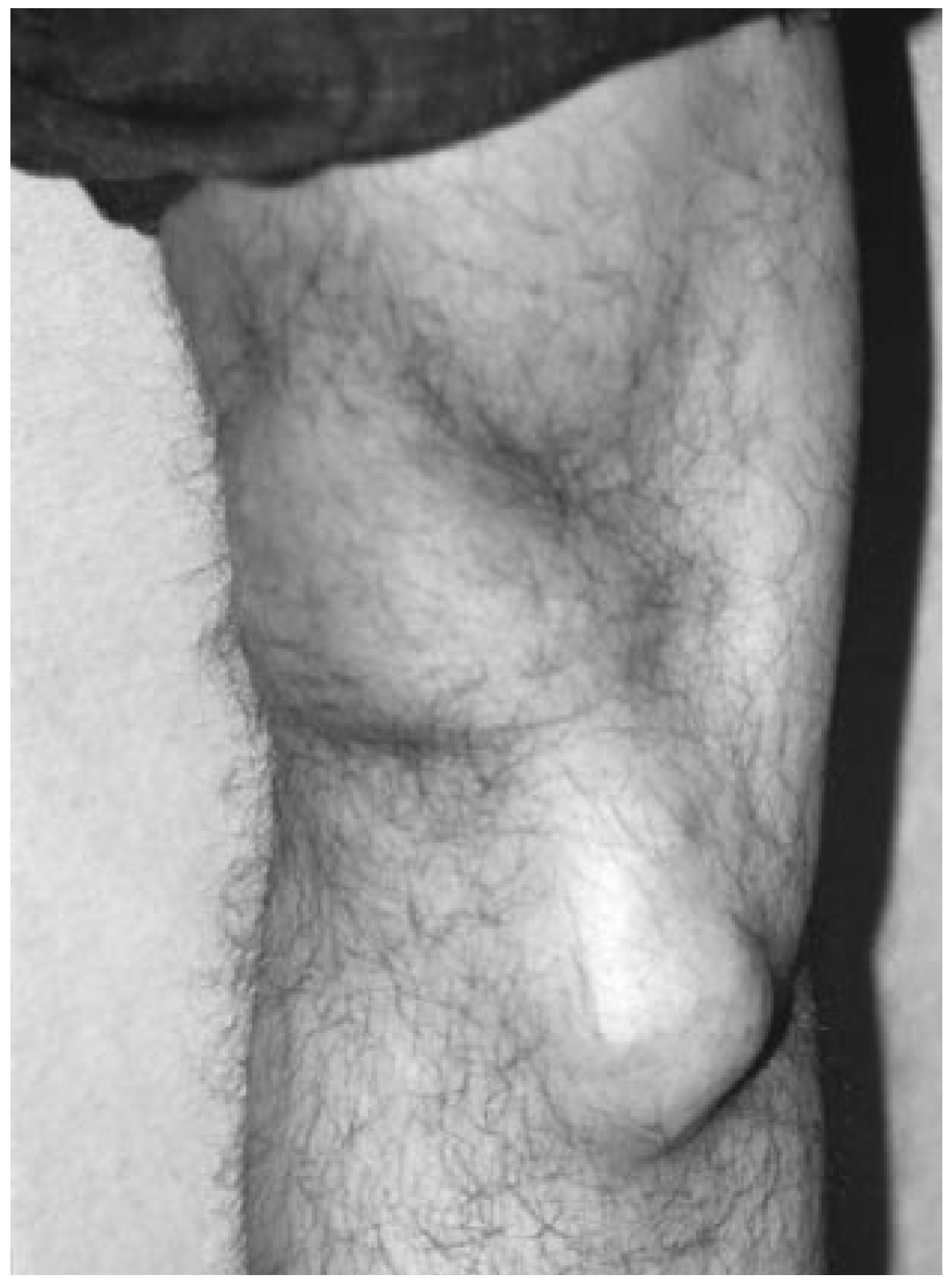
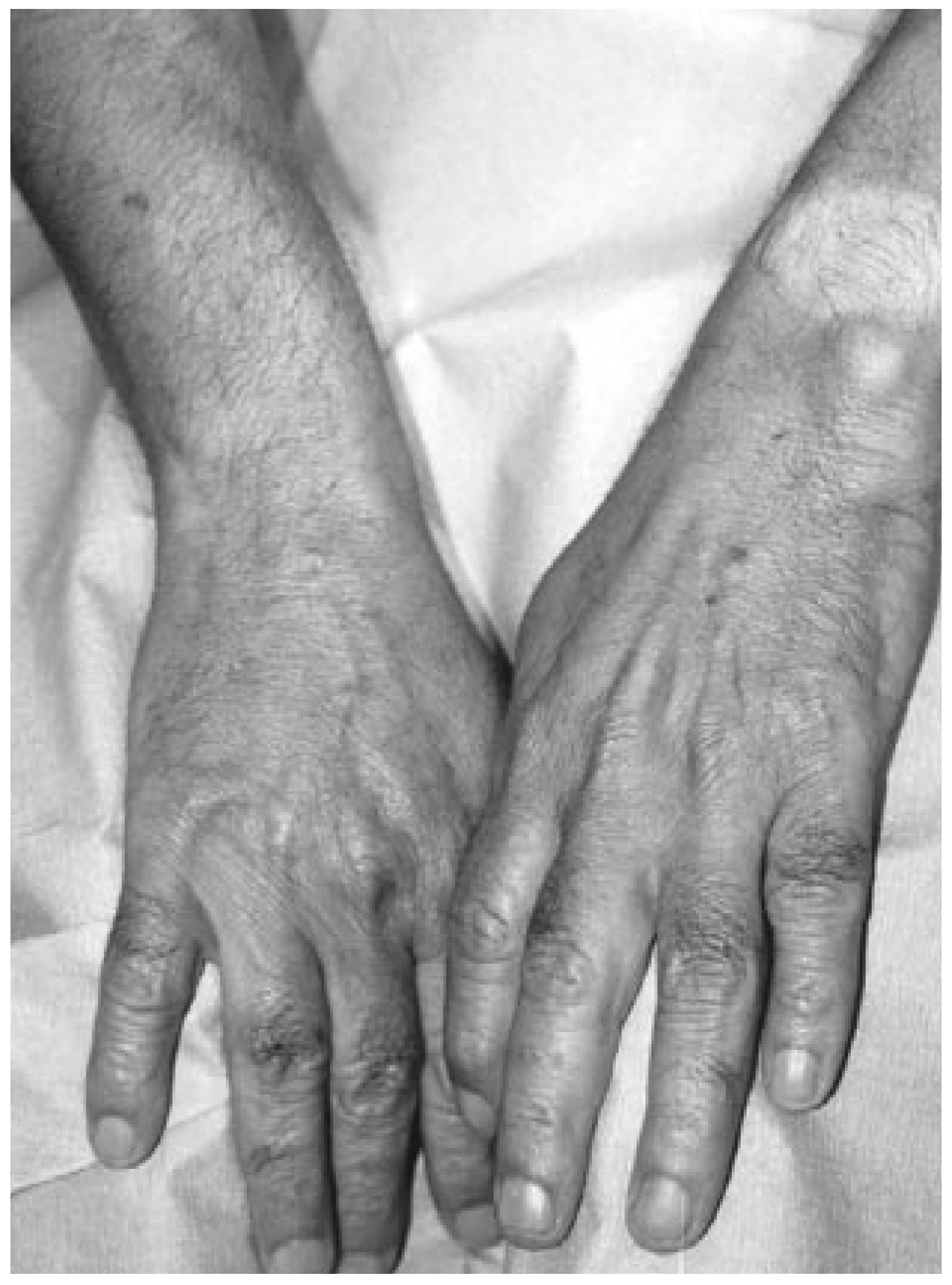
Physical examination revealed exostoses present on the lateral aspect of the left ankle, the right knee, the inner medial aspect of the left tibia, and the ulnar side of the left wrist (
Figure 1,
Figure 2,
Figure 3 and
Figure 4). Genu valgum was not present (
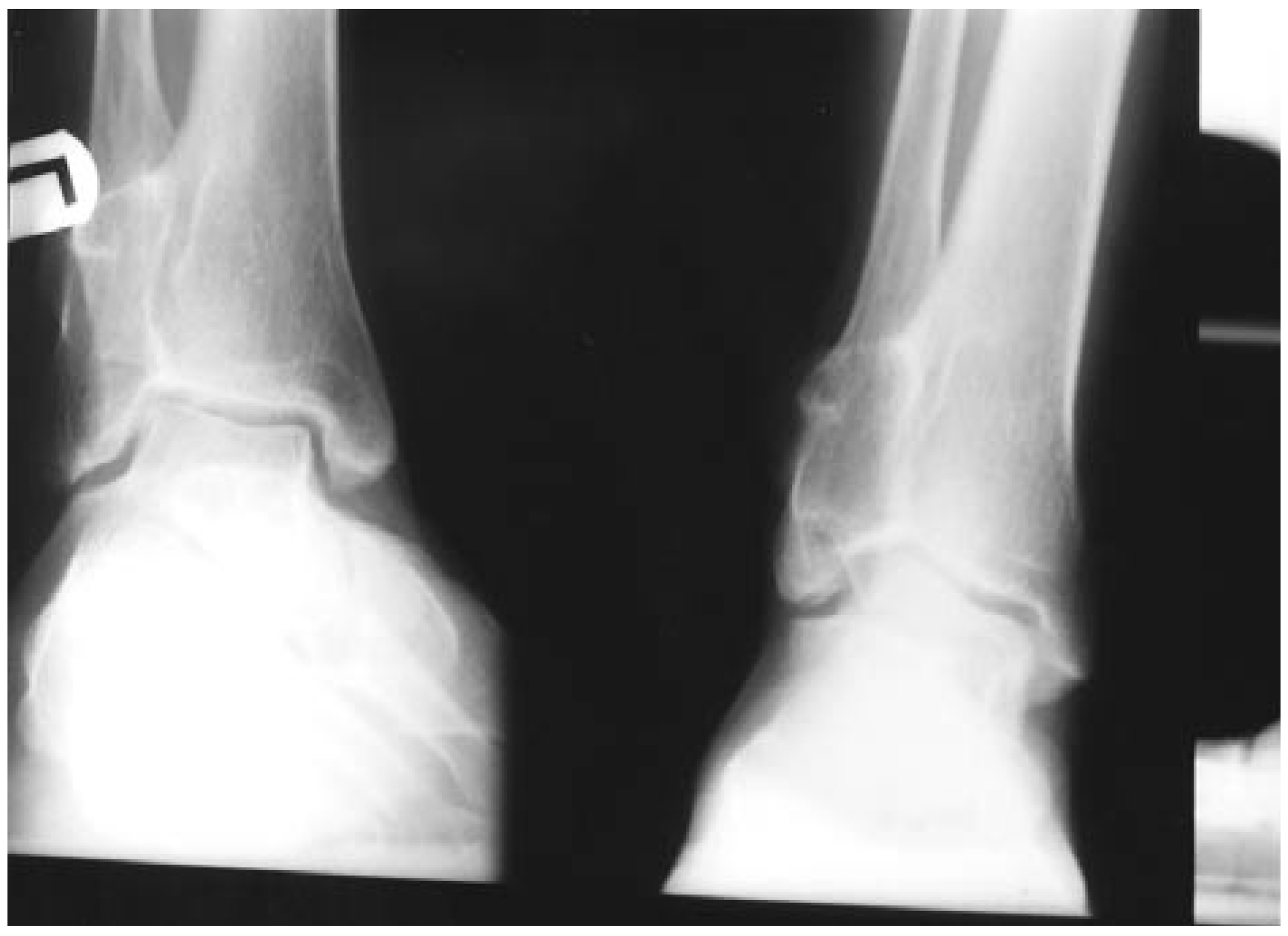
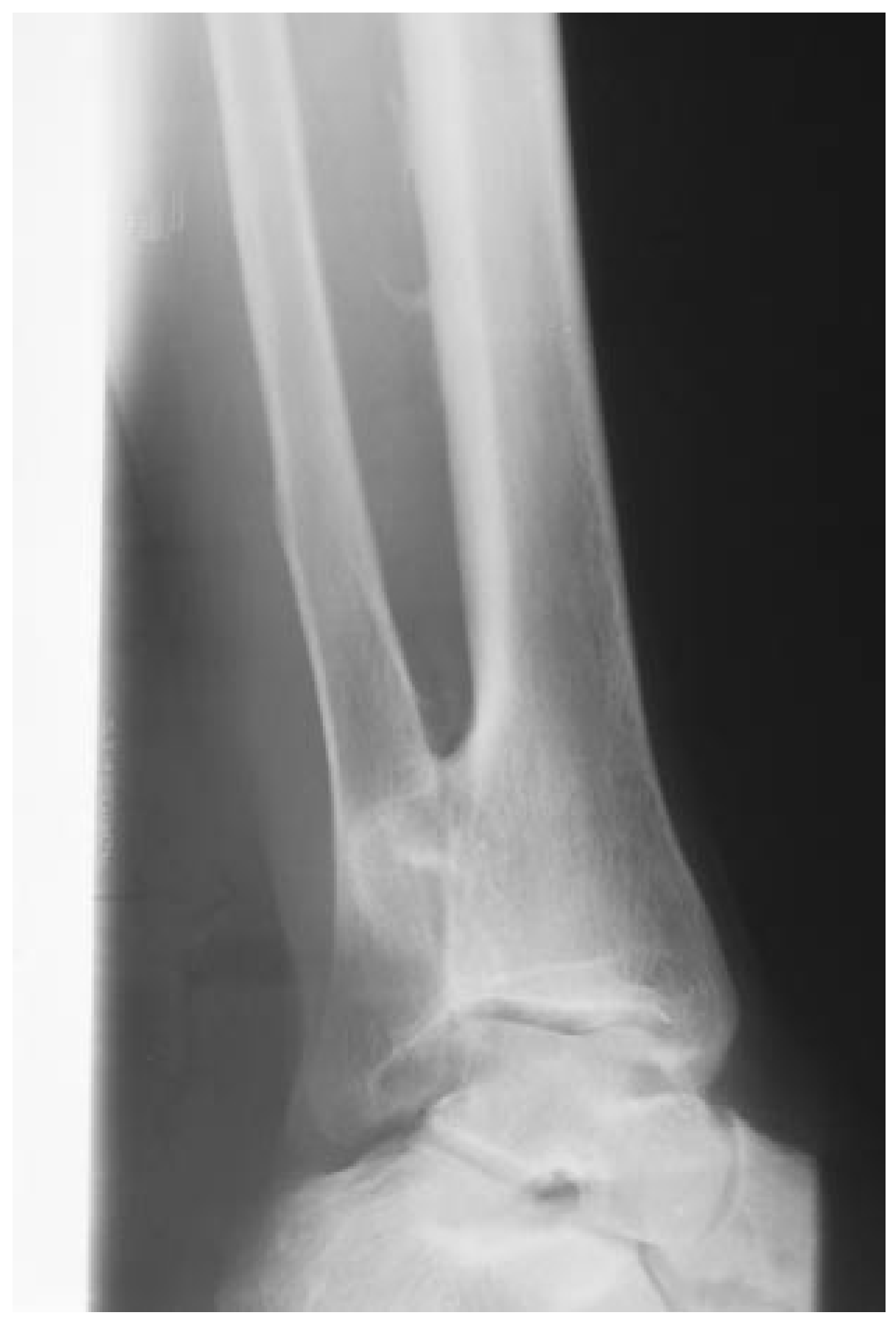
Figure 2). Range of motion was reduced for the left ankle and subtalar joint but normal for all other joints of the lower extremities. The patient had no loss of muscle power or atrophy. Radiographs of the left ankle showed a large osteochondroma at the distal lateral aspect of the tibia with tibiotalar valgus of 15° as measured by the tibiotalar angle (
Figure 5) [
7]. Tibiofibular synostosis was present distally (
Figure 6). The patient was treated symptomatically and was lost for follow-up care.
Case 2
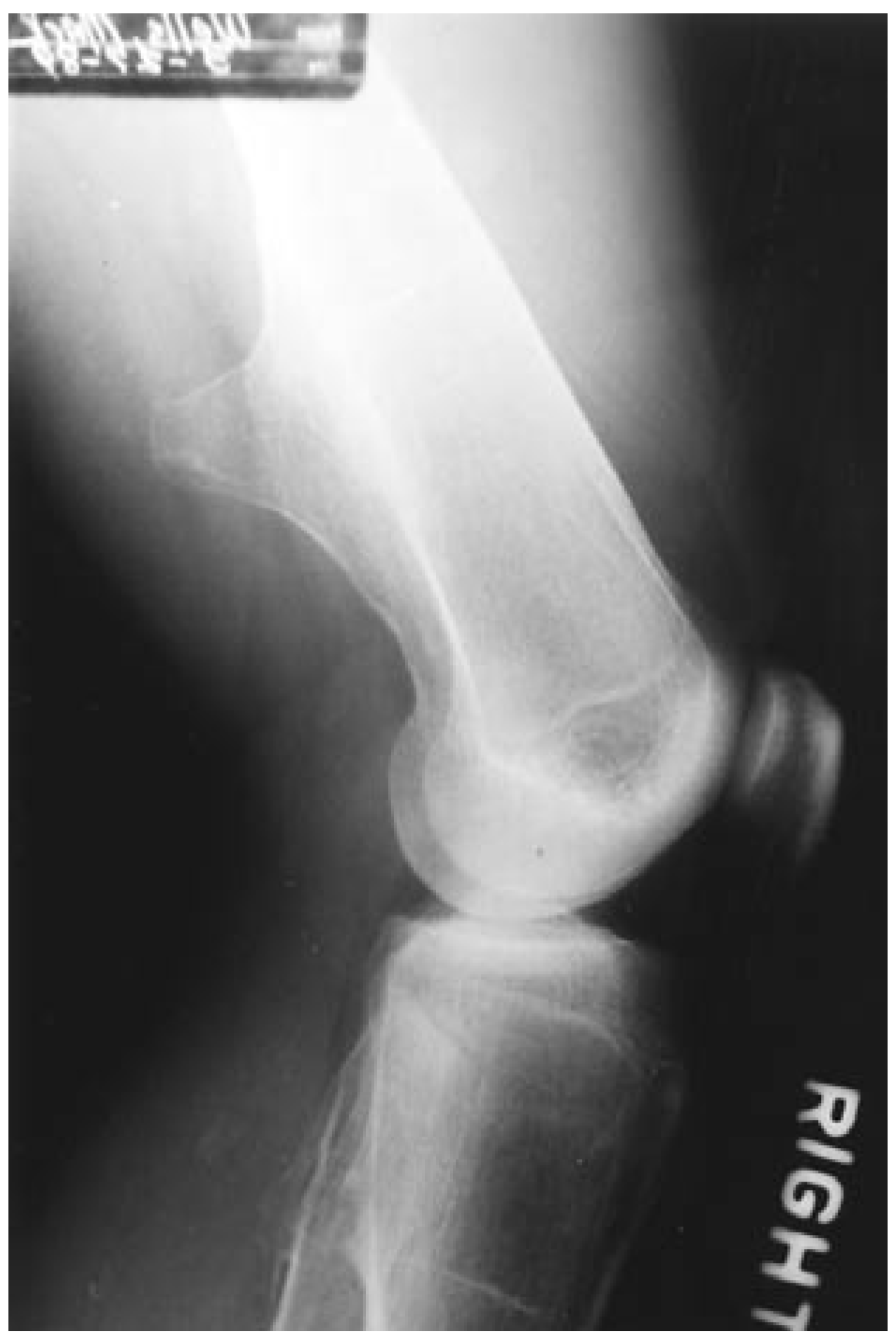
A 23-year-old male with a history of multiple osteochondromatosis was concerned about pain and fatigue in his feet and ankles when standing for long periods. Family history on the paternal side was strongly positive for systemic osteochondromatosis with the grandfather, father, sister, brother, and four cousins being affected, with the grandfather being the most severely affected according to the patient. His father had died as a result of conversion to chondrosarcoma that originated in the pelvic bones. Surgical excision of a lesion in the right knee region to alleviate pain was performed when the patient was 8 years old. Physical examination revealed bony exostoses present at the left knee. His right wrist appeared deformed as a result of a large osteochondroma in that location. Radiographs of the right knee revealed a large osteochondroma present at the distal aspect of the femur (
Figure 7). Serial x-rays were done annually to detect malignant transformation.
Discussion
Two patients have been presented with multiple hereditary osteochondromatosis. The first patient presented with bilateral heel pain. The multiple exostoses were discovered on examination and radiographs. The second patient related a history of multiple hereditary osteochondromatosis. Although both patients were affected moderately with no gait abnormality or functional impairment, the patient in Case 2 required surgery as a child to remove an osteochondroma at the knee, and his father died of malignant transformation to chondrosarcoma.
Both patients had ankle deformity which is characteristic of multiple hereditary osteochondromatosis. Ankle deformity, present in 50% of patients with multiple hereditary osteochondromatosis, is the second most frequent serious orthopedic problem of multiple hereditary osteochondromata (after ulnar deviation of the wrist) and is the only deformity that tends to be present bilaterally and symetrically [
5,
7,
8].
Osteochondromata of the distal fibula or distal tibia is generally associated with ankle valgus and tibiofibular synostosis. The valgus inclination of the ankle mortise is caused by an epiphyseal growth disturbance that results in a reduction of growth of the fibula [
9]. The patient in Case 1 had 15° of ankle valgus measured radiographically, which was asymptomatic and is generally considered to be well tolerated up to approximately 12°. However, the presentation of bilateral heel pain in this patient may have been a result of the structural tibiotalar valgus.
The radiographs of the patient in Case 1 showed tibiofibular synostosis, which is another common manifestation of hereditary osteochondromatosis and has been reported to occur in up to 25% of patients with multiple hereditary osteochondromatosis [
4]. It develops after long-standing apposition of osteochondromata but rarely causes symptoms or functional impairment [
9].
Patients with hereditary multiple osteochondromatosis should be treated symptomatically. Surgical removal of osteochondromata is considered only when the lesion is extremely large, painful, and interfering with function. Most importantly, patients should be informed if they are not already cognizant of the small malignant potential of the disease and be alert to watch for exostoses that have recently changed significantly in size or have suddenly become painful.