The incidence of skeletal metastases varies from 6% to 85% depending on the primary tumor and the method of evaluation [
1]. It is uncommon for any cancer to metastasize to the hands or feet [
2]. When considering metastatic foot lesions, subdiaphragmatic neoplasms such as gastrointestinal, vesical, renal, and uterine malignancies metastasize more frequently to the foot [
3]. Metastatic lesions in the foot and ankle have no pronounced predilection for specific bones. However, from 59 reported cases, Sundberg et al [
4] reported the most common site for metastases in the foot to be the calcaneus (14 out of 59), followed by multiple site location (12 out of 59), metatarsals (20 out of 59), and the talus (four out of 59).
Mean survival of acrometastasis (metastasis to the hands and feet) has been reported by Healey et al [
5] to be 14.7 months and Hattrup et al [
6] to be 12.3 months. No specific report has isolated the mean survival rates with patients with metastatic lesions identified in the foot.
Uterine metastatic lesions have been reported to be the most uncommon. There are fewer than 100 previously reported cases. This report reiterates the challenges of diagnosis and treatment associated with metastatic lesions to the foot.
Case Report
A 55-year-old female was referred to the podiatry department for evaluation of right ankle pain, after being evaluated by several other doctors for the same problem. She said that she had had chronic ankle pain for approximately 10 months. Initially, the pain was around the entire ankle. For the last 2 months, the pain became more focused in the posterior aspect of the ankle. The patient related that 2 months before, she had rolled over in bed and felt a pop in the ankle area. She could not be more specific about the location of the injury. She had been nonweightbearing with crutch assistance for 2 months in duration because of unremitting pain. Her pertinent medical history included a hysterectomy 18 months ago secondary to endometrial carcinoma. No radiation or chemotherapy was necessary.
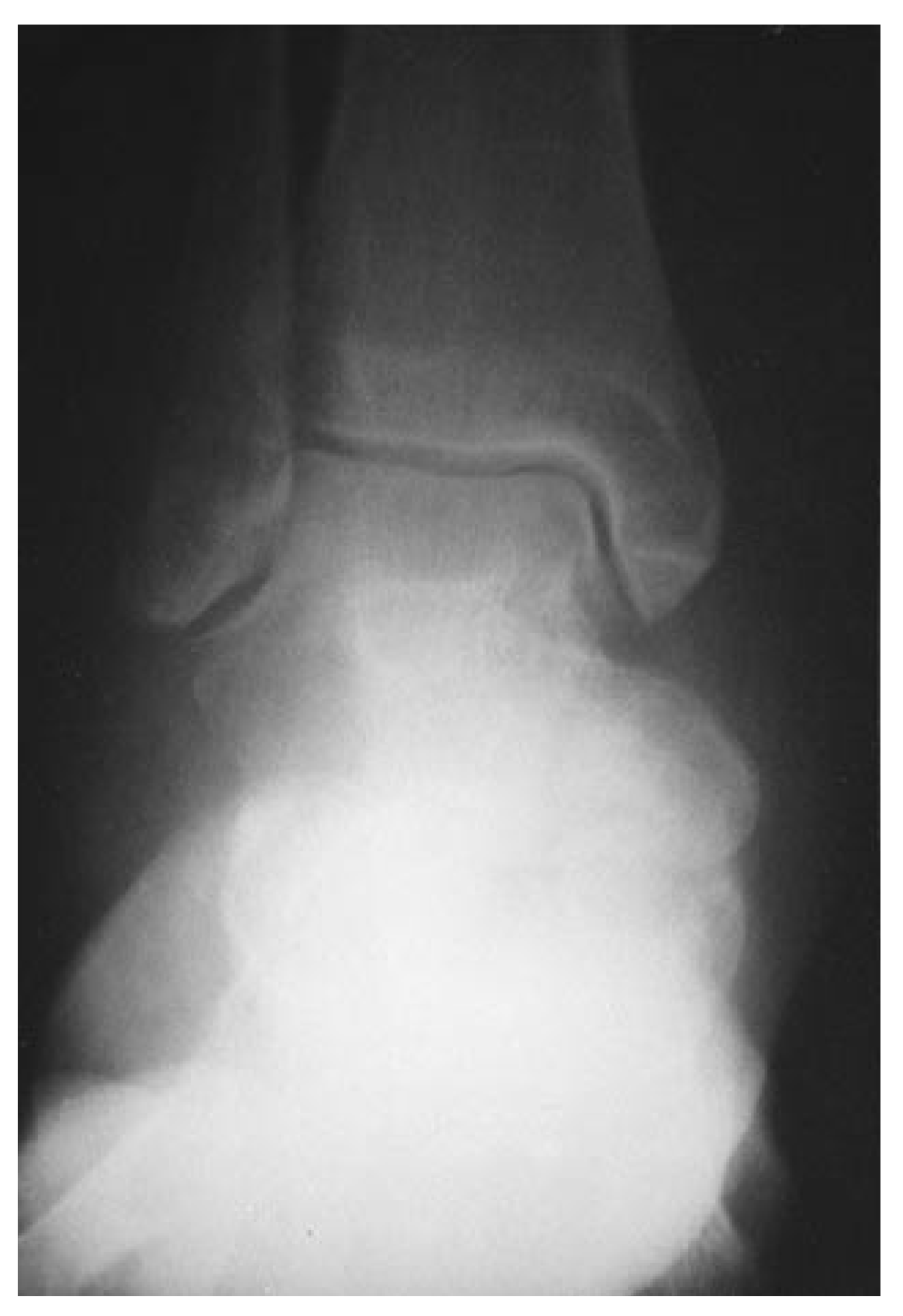
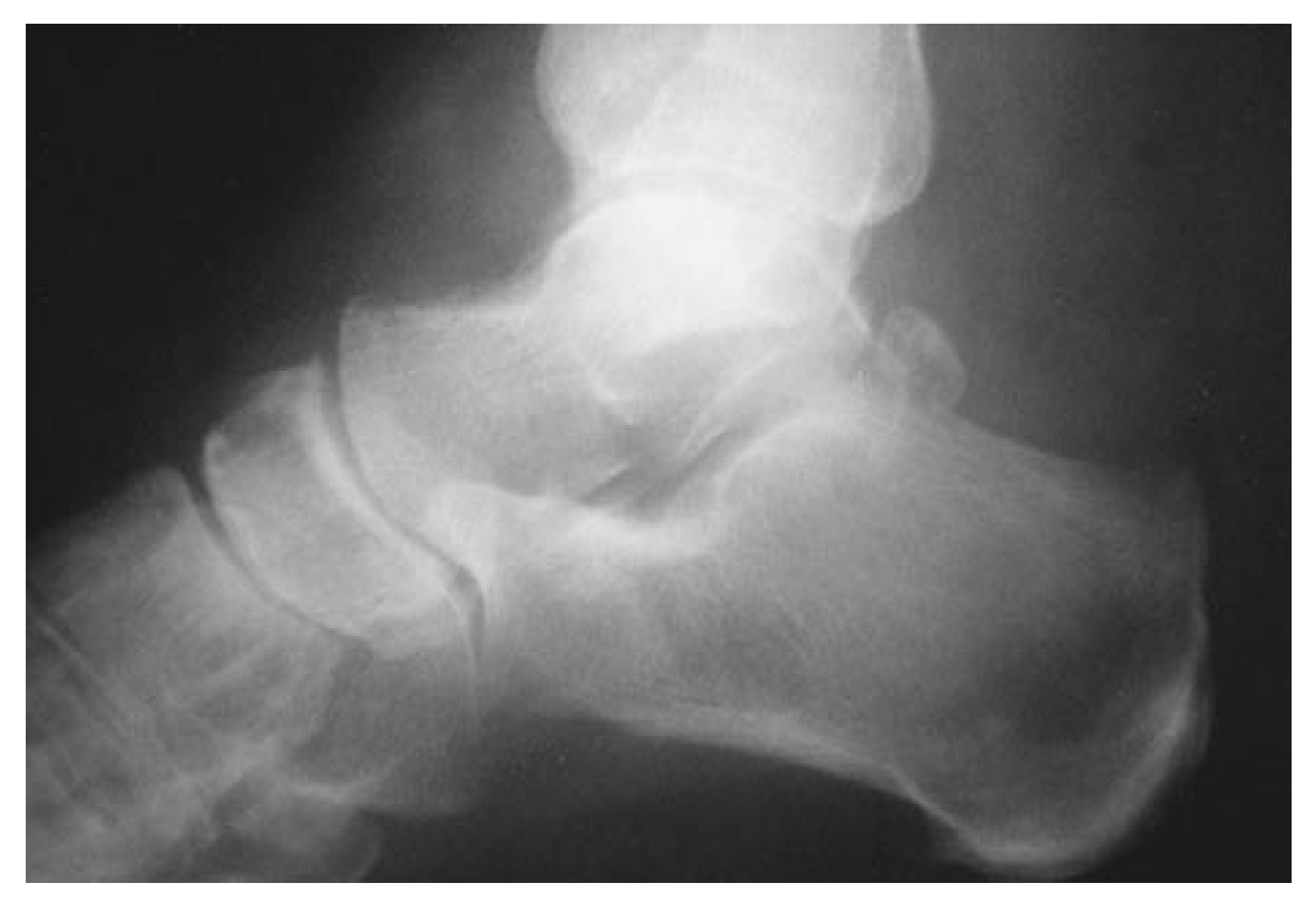
On clinical examination, +4 pitting edema was noted about the right ankle. Pain was elicited on direct palpation to the posterior aspect of the ankle and along the course of the posterior tendons beneath the medial malleolus. Severe pain was produced with resisted plantarflexion of the hallux. Radiographic examination revealed diffuse edema about the right ankle with noted ankle effusion. Bone density was slightly decreased. An os trigonum was also seen. The ossicle appeared to be well corticated and did not represent an acute fracture (
Figure 1 and
Figure 2).
Because no other etiology of pain was isolated, 6 weeks later, the patient underwent surgery for removal of the os trigonum of the right foot after conservative therapies provided no relief of symptoms. Intraoperatively, immediately beneath the subcutaneous tissue layer, a large, beefy red mass was encountered, measuring approximately 5 to 7 cm in diameter.
At this point, a considerable increase of hemorrhagic fluid was found, appearing almost purulent in nature, with a grainy consistency. The calcaneus appeared to be the source of the hemorrhage. The os trigonum was found, loosely adhered by ligamentous connections to the adjacent capsule. The ossicle freely moved in and out through a 2-cm cortical cavity on the superior surface of the calcaneus. The accessory bone was excised and further exploration showed a thin cortex.
Further probing revealed loss of the medial wall of the calcaneus. The medial wall of the calcaneus could not be palpated. At this point, 2 ml of hemorrhagic fluid was aspirated from the calcaneus and sent for a Gram’s stain, culture, and cytologic examination. The multiple fragments of bone were removed as the os trigonum was also removed for a biopsy analysis. The wound was packed open.
The Gram’s stain revealed no organisms with rare polymorphonuclear leukocytes. No growth was noted on the culture in 48 hr. The pathologic analysis of the bone specimens showed loss of marrow elements with hemorrhage into the bone and adjacent soft tissue. Atypical cells, which may have been synovial in origin, were noted but not considered malignant. Foamy histiocytes were present with cartilage proliferation. Hemorrhagic cytology revealed cell atypia of uncertain origin with inflammatory cells and abundant histiocytes. The pathologic diagnosis at this time was “degeneration and inflammation, not otherwise classified.”
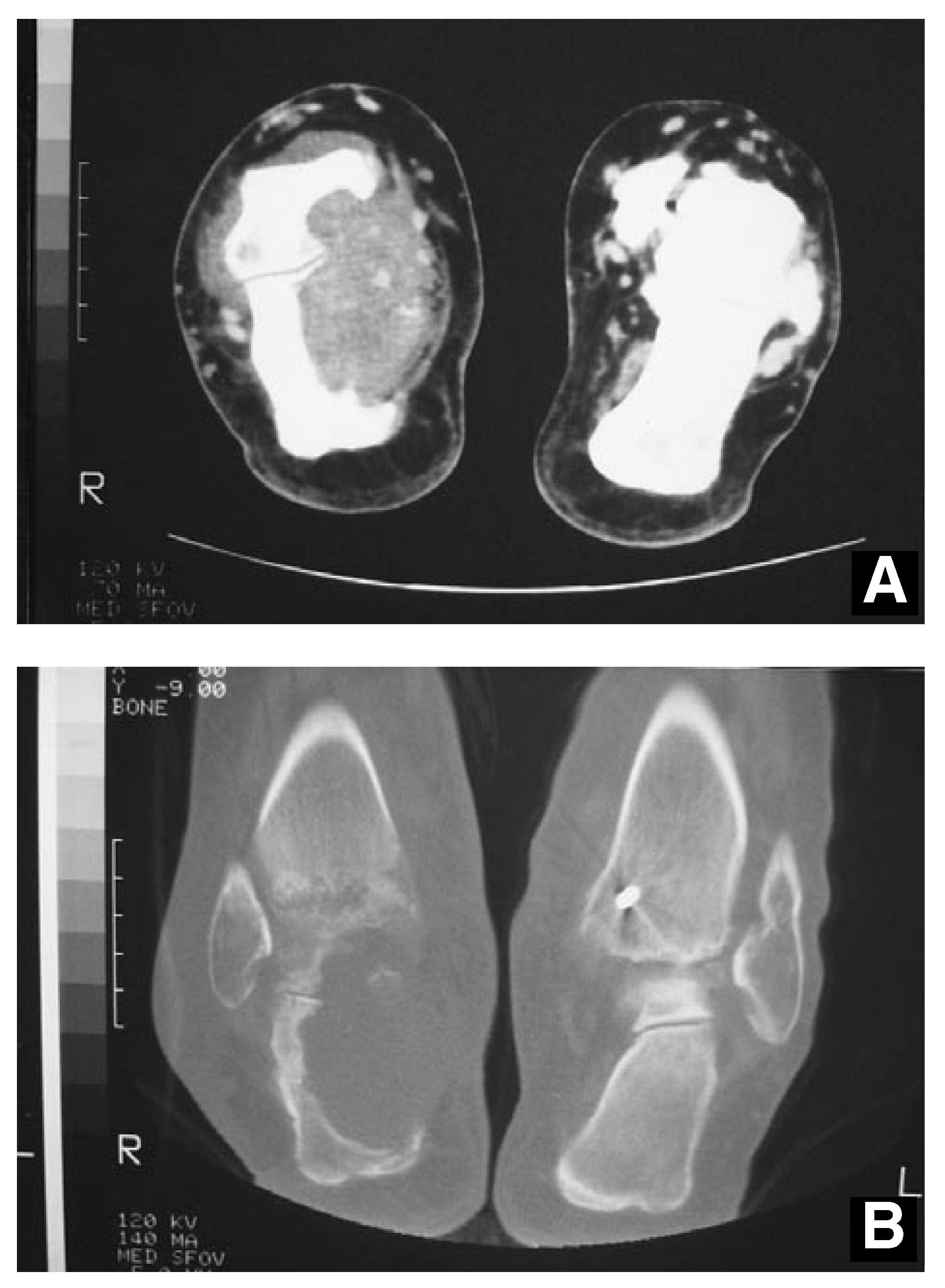
Subsequently, because of intraoperative findings, a computed tomography scan was performed. This revealed a large, soft tissue mass arising within the right calcaneus and extending contiguously across the subtalar joint to involve the medial aspect of the talus (
Figure 3). Extensive bony destruction was found medially on both the talus and calcaneus. Impression at this time included a large differerential diagnosis. Further biopsy was suggested and performed, which resulted in the diagnosis of metastatic adenocarcinoma of the right ankle.
The patient underwent further studies showing multiple metastases to the lungs. Internal fixation was performed on the right ankle after resection of the tumorous mass. Irradiation was then performed. Computed tomography scans taken after irradiation therapy showed no changes in size or destruction pattern. The patient died 3 years later from widespread metastases.
Discussion
The diagnosis of metastatic carcinoma to the foot can be missed initially secondary to lack of cortical disruptions or definitive destructive lesions seen on routine radiographs. In patients who have a positive history of malignant tumor, there must be a high index of suspicion for possible metastatic lesions. It is thus imperative that other diagnostic modalities be considered. Technetium bone scans and conventional or computed tomography can help elucidate the clinical picture.
This case report concurs with other reported cases of metastatic lesions to the foot. It has been noted that prolonged survival is possible, but not the expected course.