Combining the qualities of the infant motion picture industry with the new science of medical roentgenology resulted in the field of roentgen cinematography. One of the early researchers, Jarre [
1] described roentgen cinematography in 1933 as “an interesting and fascinating scientific experiment.” Jarre [
2] wrote of its great potential as a diagnostic tool for gastrointestinal cancers and cardiovascular diseases. Unfortunately, technical difficulties involving lack of film brightness and extensive exposure to both the patient and radiologist made widespread use impractical.
Today, modern fluoroscopy has a sensitive camera that records at 25 frames/sec as opposed to 4 frames/sec in 1950. In addition, a brighter image effected by improvements in intensifying screens and pulsed exposure, as opposed to continuous radiation, has resulted in increased safety to both the patient and operator [
3,
4].
The C-arm fluoroscope has found great use during operations because it can be placed in any number of positions relative to the part being studied. The operator only has to push a foot pedal to produce quality x-ray images [
5].
From a technical standpoint, “the x-ray beam, having passed through the patient, is absorbed by a layer of caesium iodide phosphor in the image intensifier. This produces light that is detected by electrons within the glass enclosed vacuum. The light is then electronically amplified and is emitted by the image intensifier by another light-emitting phosphor. A television camera converts the light intensity into an electric current with formation of a video image that is displayed on a television monitor [
6].”
As a diagnostic tool, fluoroscopy has had extensive usage in contrast (barium) studies in orthopedic medicine. It has been used to direct the placement of the barium dye in knee joint arthrograms, angiogram studies where arterial blockage makes dye implantation difficult, and venography studies [
7,
8,
9,
10].
Historically, the most typical use of fluoroscopy in orthopedic medicine has been in setting fractures. Direct visualization of the process makes it possible to reduce displaced and multipartite fractures without the inherent dangers of “open” reduction [
11].
In podiatric surgery, the fluoroscope has been used successfully in minimal incision heel spur surgery and in the detection and excision of foreign bodies. Large gauge hypodermic needles of various diameters and lengths have been used to identify underlying anatomical structures, thus reducing the need for extensive exploration of surrounding tissues [
5,
12].
Foot fluoroscopy in conjunction with arthrography has been used to evaluate congenital clubfoot deformities. This technique allows the assessment of radiologically difficult-to-evaluate joints. Knowledge of joint surfaces makes the selection of more appropriate surgical procedures possible [
13].
All of these diagnostic and clinical studies have focused on the qualitative nature of fluoroscopy. Cholewicki et al [
14] used videofluoroscopy to quantitatively assess the angular motion among lumbar vertebrae. External markers were placed on the skin overlying the ribs, pelvis, and the spinous processes from L1 to L5. Biomechanical assessment of intervertebral motion was carried out by digitalization of the video image in conjunction with the use of a 1-cm copper wire grid system that was used to correct for optical distortions [
14].
Review of the literature shows that the only foot fluoroscopy study was performed in 1975 by Green et al [
15]. Four subjects with various biomechanical pathologies were asked to stand on a platform (incorporated into a fluoroscopic unit) and internally rotate their leg from a position of full external rotation [
15].
Because of the limited number of subjects, the authors were unable to draw definitive biomechanical conclusions, but believed that “this mode of research may be the way to document scientifically those biomechanical concepts basic to our practice [
15].” Certainly, one of these basic biomechanical concepts involves frontal plane subtalar joint motion.
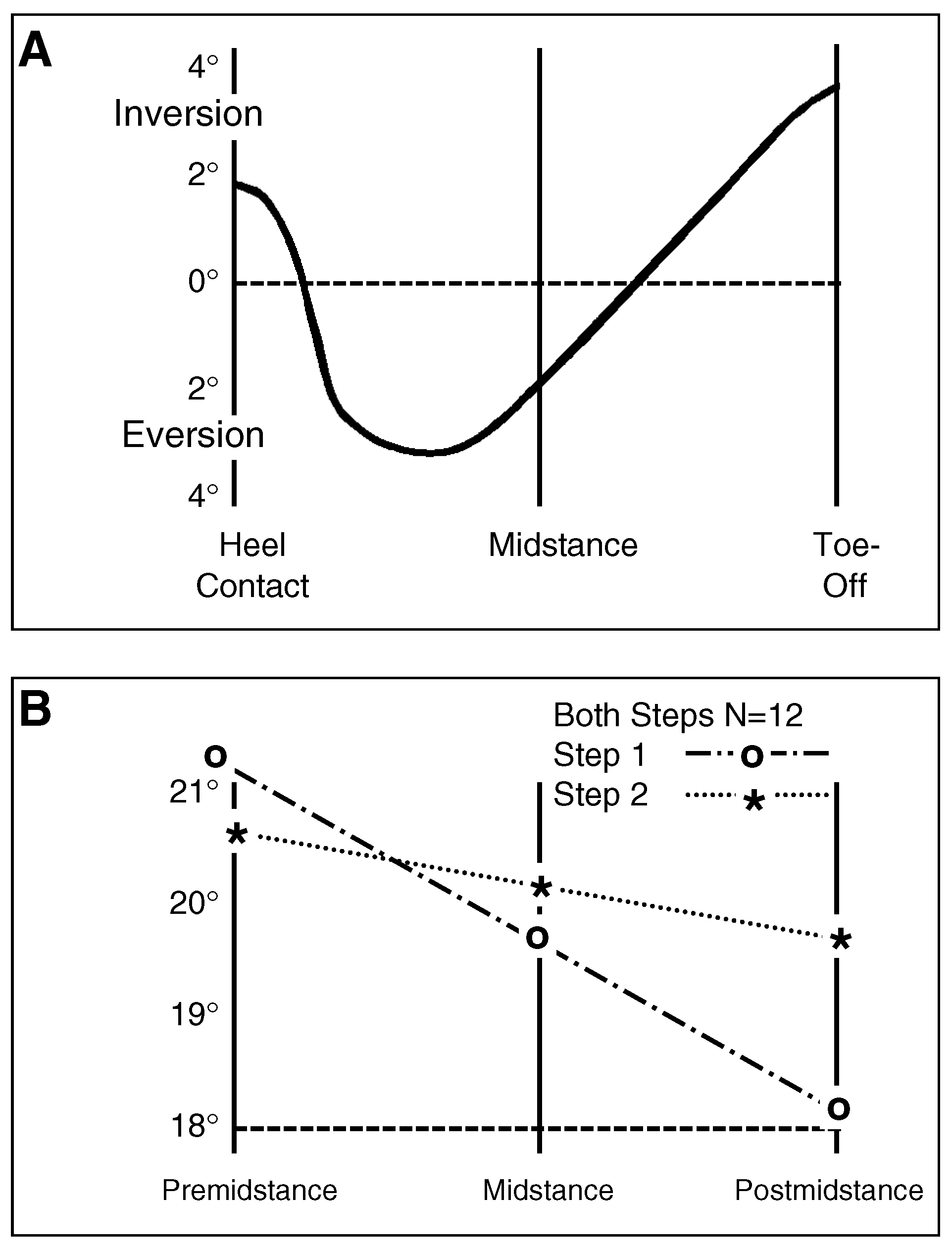
The earliest and most quoted gait study was performed by Wright et al [
16] in 1964. Electronic sensors were placed in a mobile cast-shoe in such a way as not to interfere with normal joint motion. Wearing this apparatus, subjects walked over a copper-covered platform. These classic electrically generated paper tracings have resulted in much of what is known about frontal subtalar joint motion (
Figure 1) [
16].
In a 30-subject study in 1992, McPoil and Cornwall [
17] used a two-dimensional video analysis system to determine both the amount of subtalar joint motion and its occurrence during the stance phase of the gait cycle.
The aim of this study is to assess ambulatory subtalar joint motion by evaluating the calcaneal pitch (calcaneal inclination angle) taken at midstance, three frames before and three frames after midstance, using videofluoroscopy.
Methods
Sixty female subjects underwent videofluoroscopy of their walking gait [
18].
Special Problems
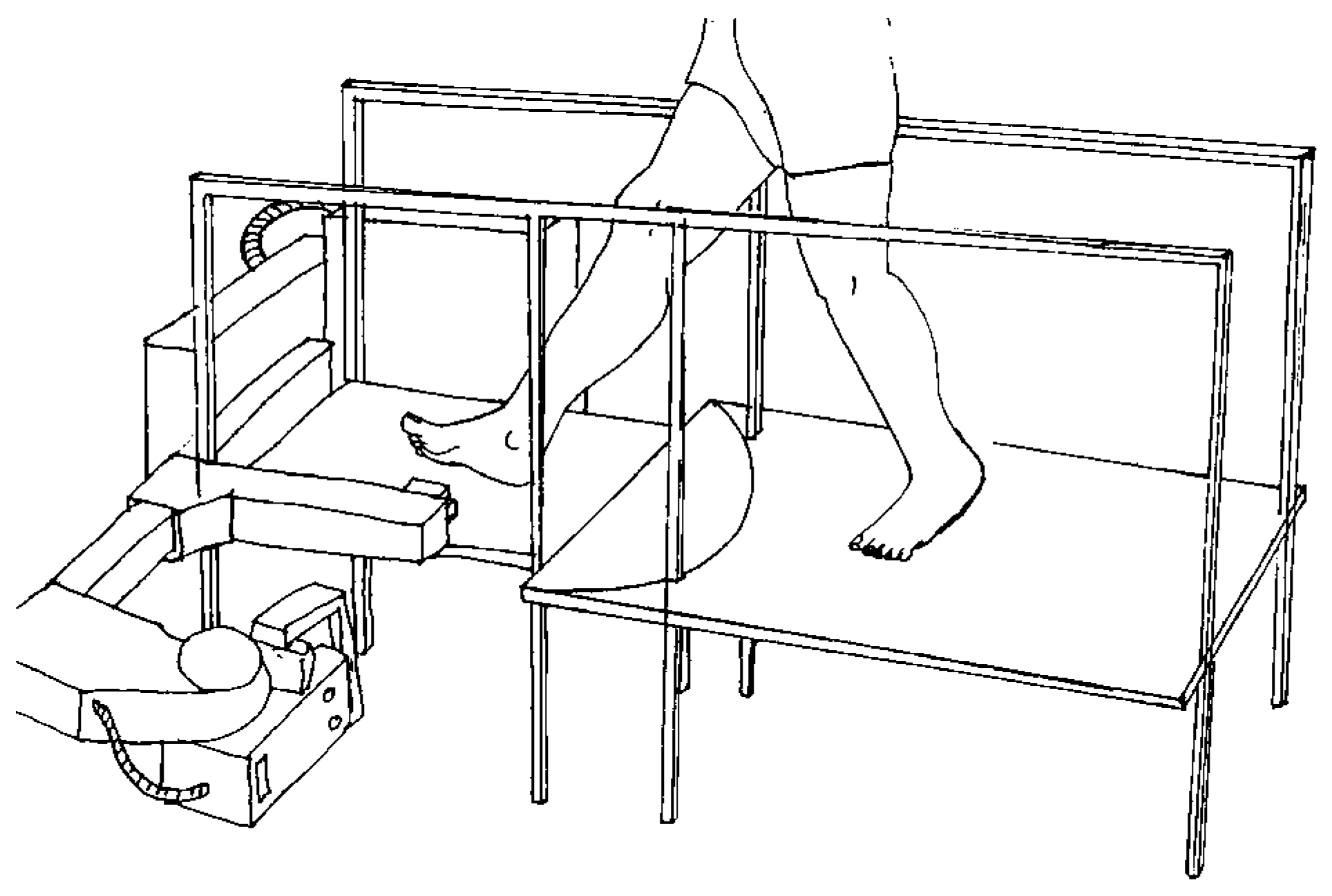
For the purpose of this study, specific alterations had to be made to the gait platform. First, the “angle iron” support of the study apparatus interfered with visualization of the plantar calcaneus. This simply required filing down the metal in the 9-inch foot contact zone (
Figure 2).
Second, incomplete plantar calcaneal visualization also occurred when the apparent “level” reading of the x-ray table compared with the image intensifier was incorrect. This required that a simple, right angle finder be used at the start of each session.
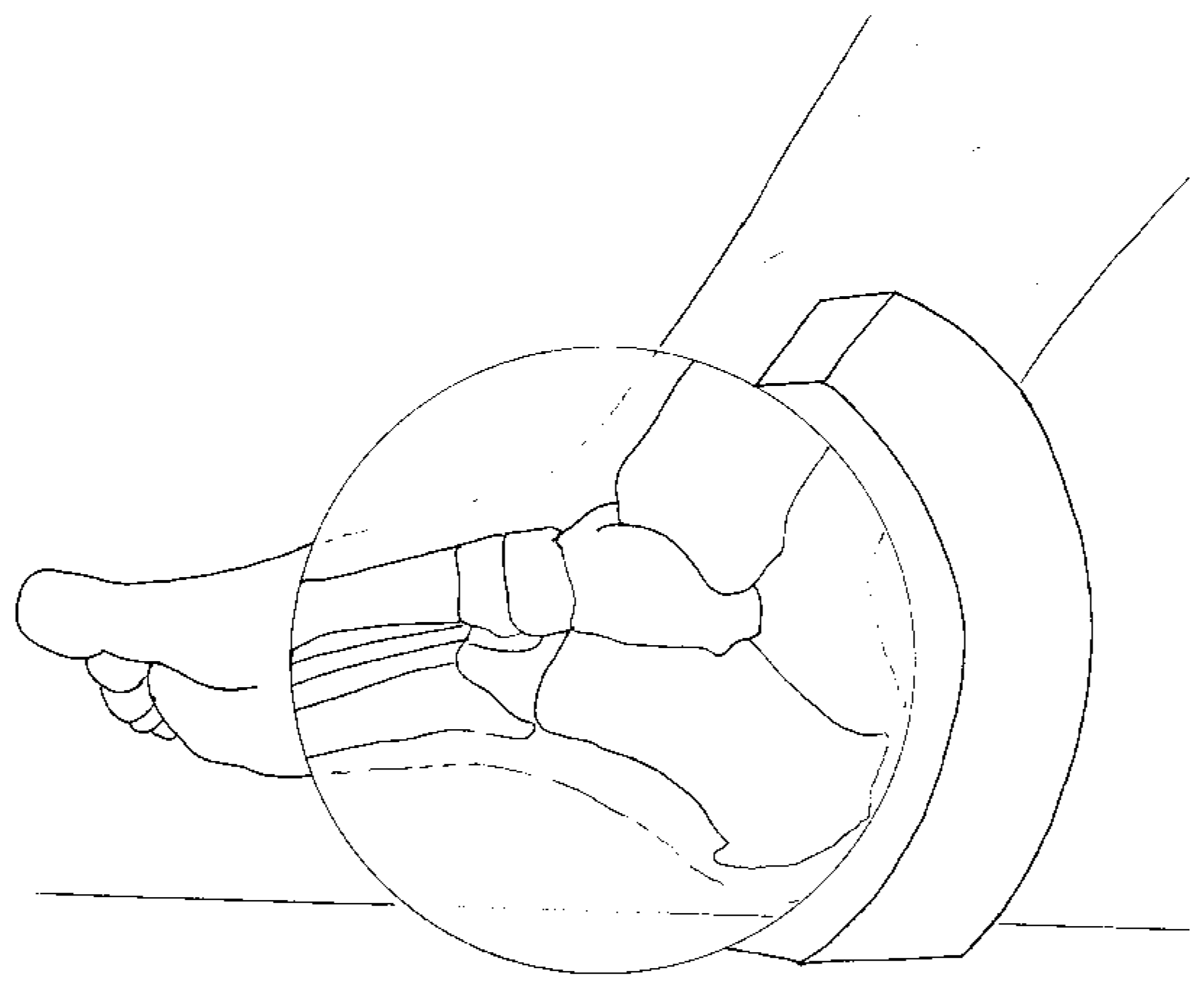
Many unusable trials resulted when much time elapsed between the instant the power button was pushed to the instant the foot entered the field. This resulted in the equivalent of a photographic flash in the image intensifier. Much of this was overcome when a filter was placed on the superior and proximal aspect of the film head, coinciding with the area where the foot first entered the field (
Figure 3). Conversely, when the foot entered the field too early, the entire gait cycle was not recorded. Replacing the original fluoroscopic receiver with a high grade receiver resulted in a sharper study image.
The inability to visualize the cortical edge of a bone in motion (film contrast) resulted in a number of unusable studies. In future studies, a high resolution video capture board could be used to overcome this problem.
The most common reason for unusable studies was the arbitary use of the third frame after midstance. If heel lift had occurred by this frame, the foot could not be considered as being “in” the midstance period. This problem could be overcome by measuring the calcaneal pitch on a frame-by-frame basis using programs similar to those written for forensic animation (personal communication, Ian Hutson, Queensland University of Technology, Arts Department).
Last, a 12-inch fluoroscopic head, as opposed to the 9-inch head that the authors used, would result in the ability to biomechanically assess the entire foot in subjects with smaller than average feet.
An average 20-min preparation was necessary for most subjects to be able to hit the target area on at least one of the two videofluoroscoped trials. Attempting to develop consistent velocity by the use of a metronome has been disputed and subsequently was not used in this study [
19].
The readable trials were assessed in the following manner: using a single-frame, shuttle-advance video cassette recorder, the midstance position of the fluoroscope image was defined by the shadow of the swing limb passing over the image of the stance limb [
20]. This video image was transferred to a personal computer using VideoView
® (VideoView, Austin, TX.) frame capture board. Previous repeatability studies involving angular measurements showed a between-observer correlation of 0.995 and a between-subject correlation of 0.996 [
18].
Twenty-seven usable gait cycle studies were obtained. Although the previously described flair was occasionally responsible, most unusable studies resulted when the heel was no longer on the ground in the three frames post-midstance segment.
All three calcaneal pitch angles (midstance, three frames prior to midstance, and three frames after midstance) were measured using the methodology described by Perlman et al [
18].
Results
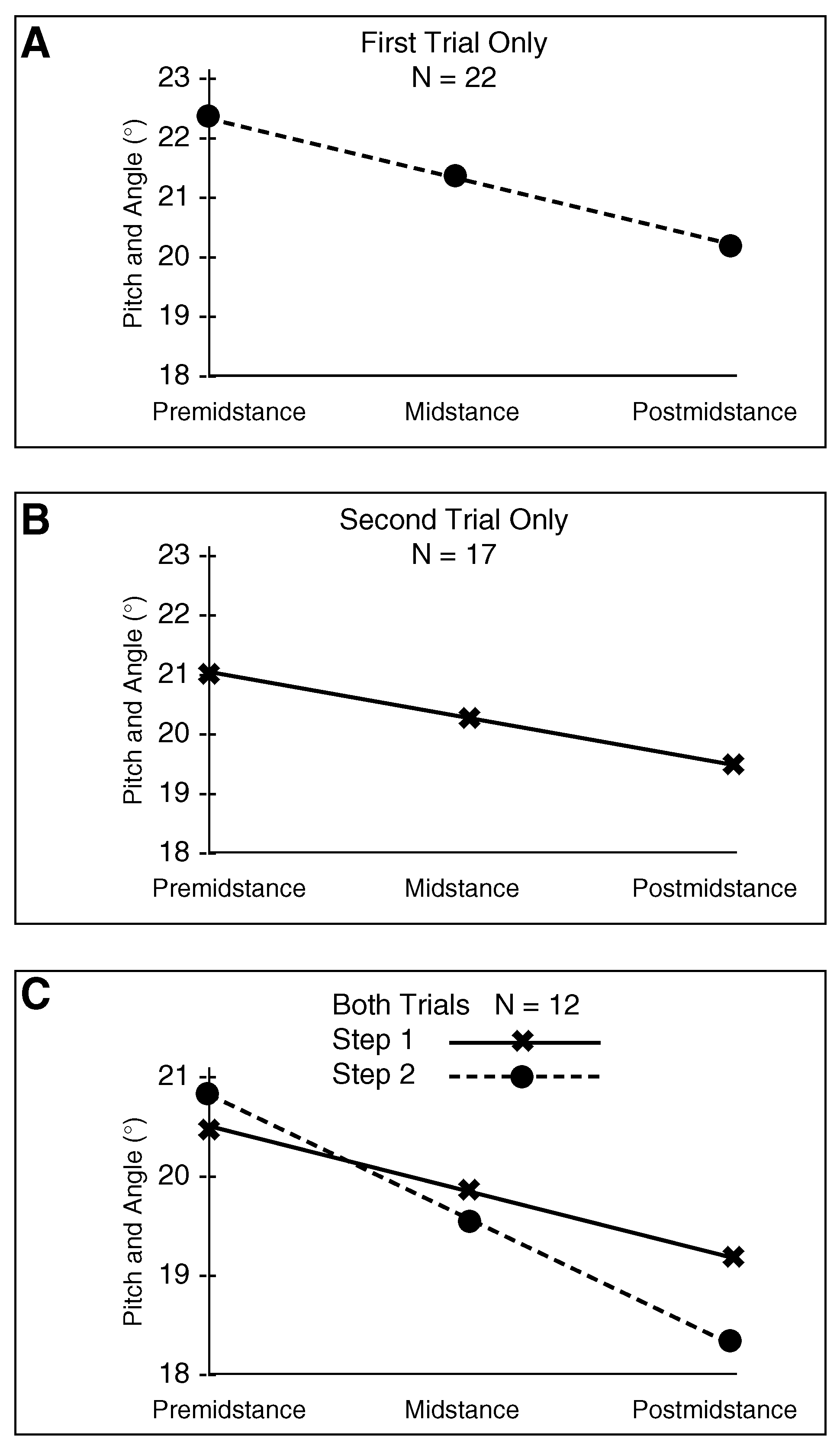
The three mean calcaneal inclination angles that occurred in gait cycles of the three subgroups within the study are shown in
Figure 4. The first subgroup are those subjects for whom all three measurements (midstance, three frames prior to midstance and three frames after midstance) could be made on the first trial (
Figure 4A). The second subgroup were those subjects for whom all three measurements could be made on the second trial (
Figure 4B). The last group represents those subjects for whom the three measurements could be made for both trials (
Figure 4C).
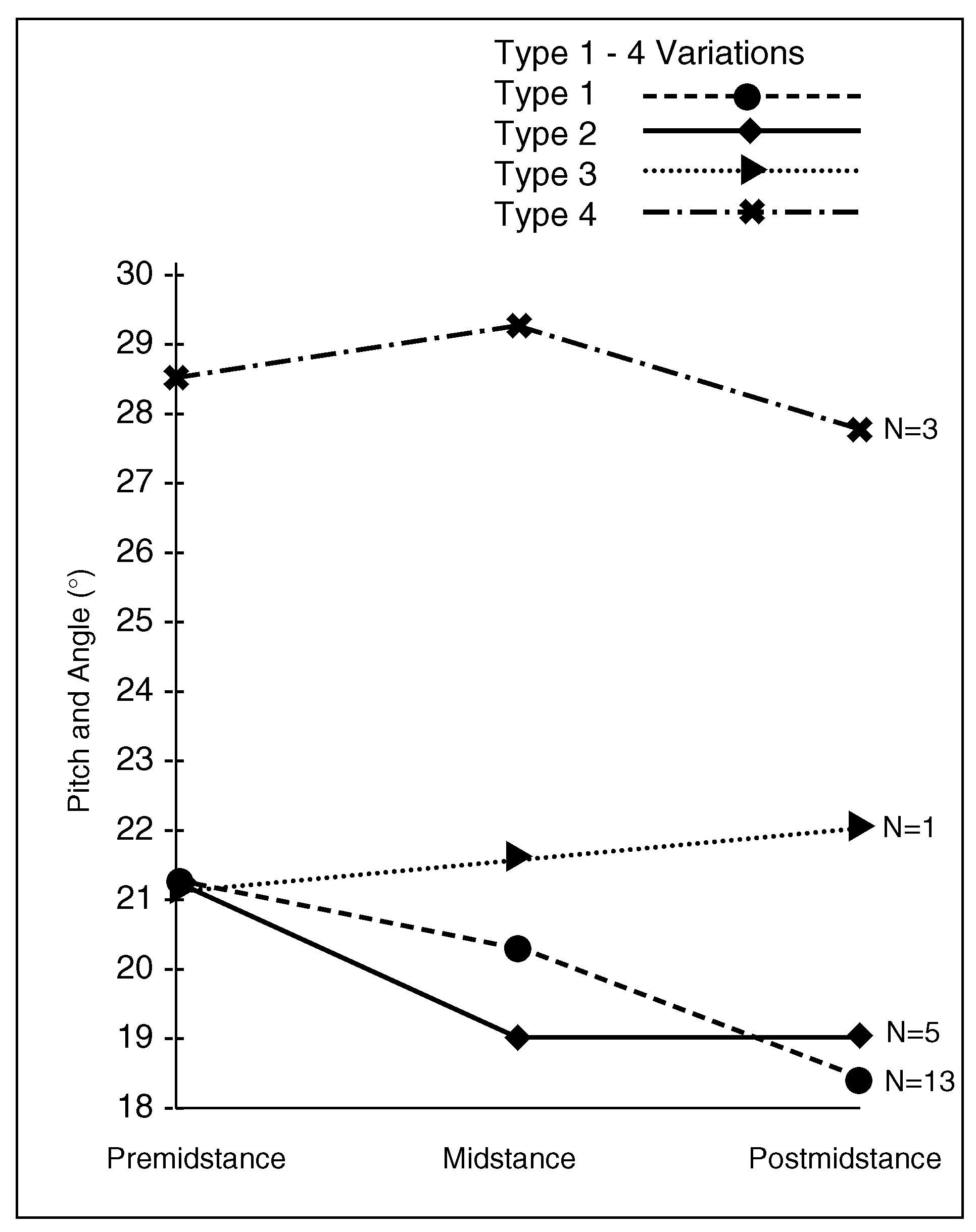
In reviewing the first-trial subgroup, four types emerged: 1) steady decrease (pronation), 2) decrease (pronation) followed by little change postmidstance, 3) steady increase (supination), and 4) increase (supination) followed by decrease (pronation). Most subjects fell within the first two types (
Figure 5).
Discussion
Some consistency of the slopes can be seen across the three study subgroups despite there being only two trials. Reliability studies involving pressure analysis suggest the need for three trials and proper warm-up. However, the extra radiation made a third trial ethically unacceptable (Tuck KG, Westerman E, Barker G, et al: “Measurement of Variability in Foot Load/Time Distribution During Repeated Step Cycles Using a Musgrave Footprint System.” Monash University, Clayton, Victoria, Australia. Abstract) [
21,
22].
The graphs of the mean calcaneal inclination angles of the three subgroups illustrate a pattern of continued lowering of the calcaneal pitch from heel contact to midstance (
Figure 4). Reduction of the calcaneal pitch correlates with findings of frontal plane calcaneal eversion and pronation as seen in the landmark forceplate study by Wright et al [
16]. The continued reduction of calcaneal pitch from midstance to toe-off is consistent with what McPoil and Cornwall [
17] (video analysis) refer to as the “late pronator.”
The mean stance phase values obtained vary significantly from the description by Root el al [
23] of the gait cycle being a “rapid eversion at heel contact, followed by progressive inversion starting at midstance until lift-off.”
Closer assessment of the largest (first trial only) subgroup reveals four subtypes (
Figure 5). The emerging patterns of continuing pronation postmidstance (type 1), pronated position maintained postmidstance (type 2), continued supination from a pronated position (type 3), and mild supination prior to midstance followed by pronation postmidstance (type 4), are not unfamiliar clinical gait patterns.
Given these findings, the ability to measure the calcaneal inclination angle through each frame of the videofluoroscopic gait cycle would be invaluable. Further, there would be an overwhelming desire to link fluoroscopic findings to a subject’s biomechanics in a clinically based study.
Summary
Videofluoroscopy will never replace the diagnostic capability of x-ray. Use of a small fluoroscopic head and a limited number of trials had a constraining effect on this study.
As a research tool, videofluoroscopy provides for an indirect measure of subtalar joint range of motion without the difficulties of surgical application of bone markers or the lack of repeatability of skin markers [
19,
24].
Future studies should include a larger film fluoroscopic head to allow visualization of the entire foot, computer software to provide frame-by-frame assessment of angular relationships, and a biomechanically repeatable examination. This type of study design would answer many of the profession’s biomechanical and surgical questions.