The supernumerary sesamoid bone of the hallucal interphalangeal joint is often the cause of painful hyperkeratotic lesions on the plantar aspect of this joint. The surgical removal of the hallucal interphalangeal joint sesamoid, alone or in conjunction with a plantar condylectomy, usually provides relief of any symptomatology associated with an interphalangeal sesamoid of the great toe. In cases of severe hallux limitus or hallux rigidus, it may be necessary to perform additional procedures to correct this deformity, especially when excessive dorsiflexion is seen at the interphalangeal joint as compensation for the loss of motion at the metatarsophalangeal joint.
Anatomy of the Hallux Interphalangeal Joint
Limited literature provides an in-depth description of the structure and function of the hallux interphalangeal joint [
1,
2,
3,
4,
5,
6,
7,
8]. An extensive review of the literature describes the hallux interphalangeal joint as a simple hinge joint permitting motion primarily in the sagittal plane. The anatomy of the interphalangeal joint of the hallux is similar to those of the hand and lesser toes. Normal hallux interphalangeal joint range of motion consists of 0° active extension and 35° active plantarflexion. Passive motion should show only a trace amount of dorsiflexion and approximately 90° plantarflexion.
The extensor hallucis longus tendon crosses the interphalangeal joint of the hallux dorsally and inserts into the distal phalanx. The joint capsule completely surrounds the interphalangeal joint and is strengthened medially and laterally by two collateral ligaments and plantarly by a thickening of the capsule called the plantar accessory ligament or the flexor plate. The flexor hallucis longus tendon crosses the interphalangeal joint plantarly and inserts into the distal phalanx.
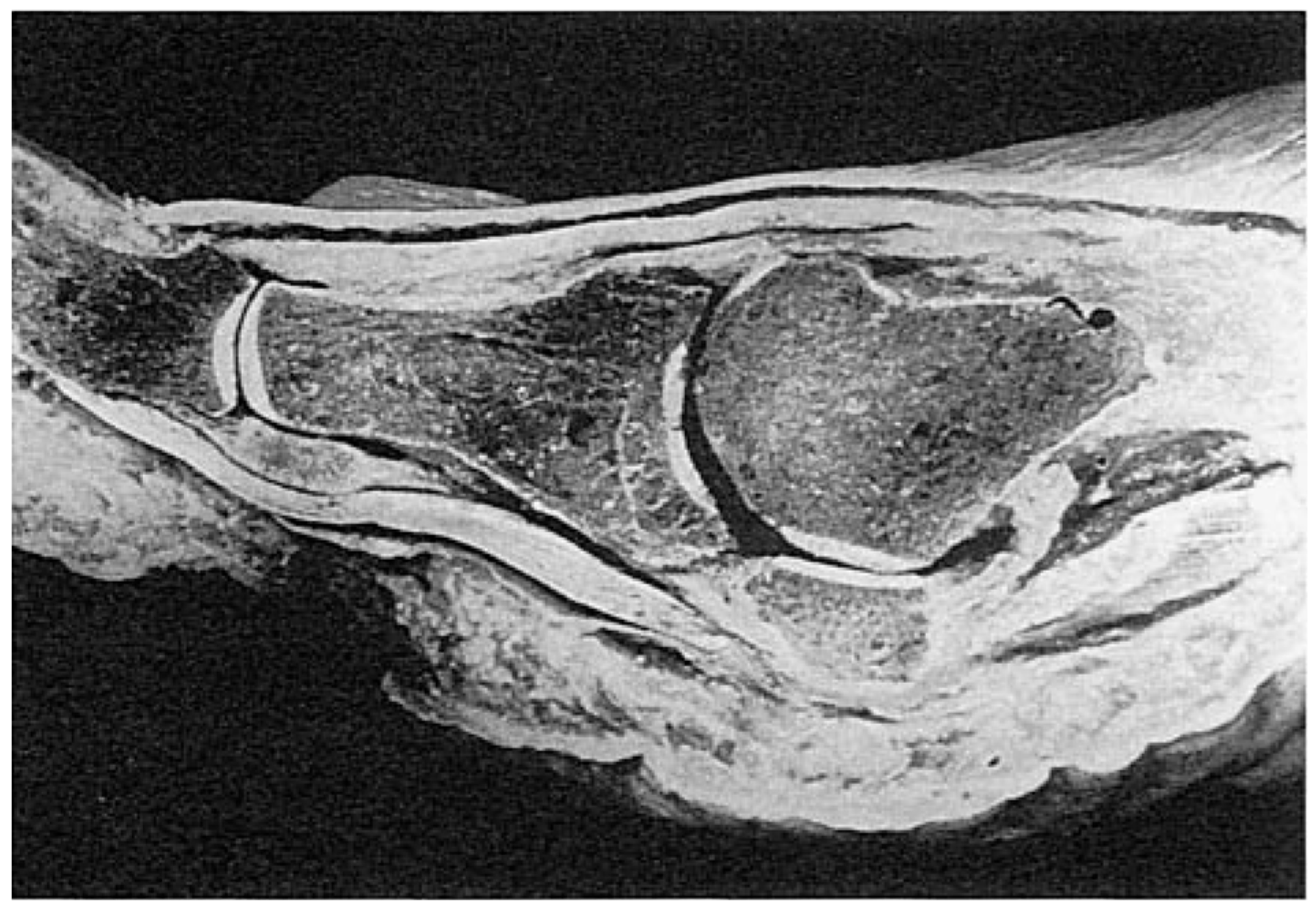
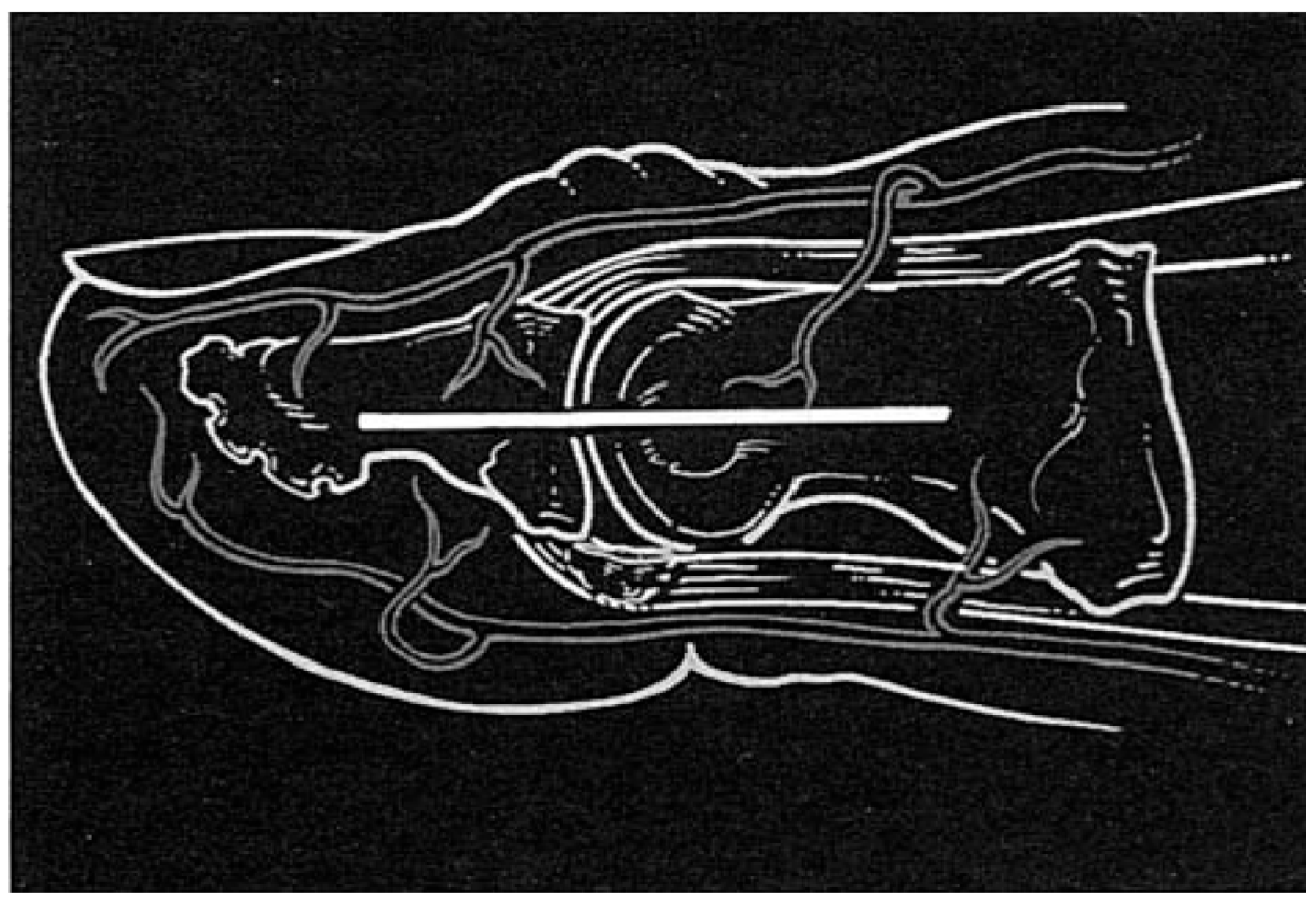
A variation of the anatomy of the hallux interphalangeal joint includes the presence of an interphalangeal sesamoid (Fig. 1). In 1948, Trolle [
9] sectioned 508 embryo feet and found the sesamoid, located on the plantar medial surface of the joint, present in 56% of the embryo feet. Yasuda et al [
10] found that the sesamoid bone was identified in 95.5% of 144 feet of 73 adult Japanese cadavers. Yanklowitz and Jaworek [
11] found the sesamoid in 43.5% of 690 subjects randomly chosen by radiographic assessment. All subjects were 12 years of age or older. The female-to-male ratio was calculated to be 2.5 to 1.0. The size of the sesamoid at its maximum width ranged from 0.05 to 1.0 cm on radiographic evaluation.
Figure 1.
Cross-section of a cadaver section showing interphalangeal joint sesamoid bone superior to the flexor hallucis longus tendon and plantar to the joint itself.
Figure 1.
Cross-section of a cadaver section showing interphalangeal joint sesamoid bone superior to the flexor hallucis longus tendon and plantar to the joint itself.
When an interphalangeal joint sesamoid is present, the precise structural location of the interphalangeal joint sesamoid has elicited controversy and debate. Miller and Love [
12] indicated that the interphalangeal joint sesamoid was located in the plantar ligament, suggesting that the structure should not be referred to as a sesamoid, but as a cartilaginous nodule. In the authors’ experience, the distinction of a plantar ligament separate from the flexor hallucis longus tendon at the plantar aspect of the interphalangeal joint is not easily distinguished.
McCarthy et al [
1], based on the sectioning of four cadaveric specimens with the interphalangeal joint sesamoid present, identified its location within an accessory tendon previously unnamed. They described this tendon as a separate structural entity deep to the tendon of the flexor hallucis longus tendon. McCarthy et al [
1] have named this structure the flexor hallucis capsularis interphalangeal tendon. However, it is generally accepted, based on clinical experience, that the hallux interphalangeal joint sesamoid is most commonly found superior to or within the flexor hallucis longus tendon.
Clinical and Radiographic Presentation
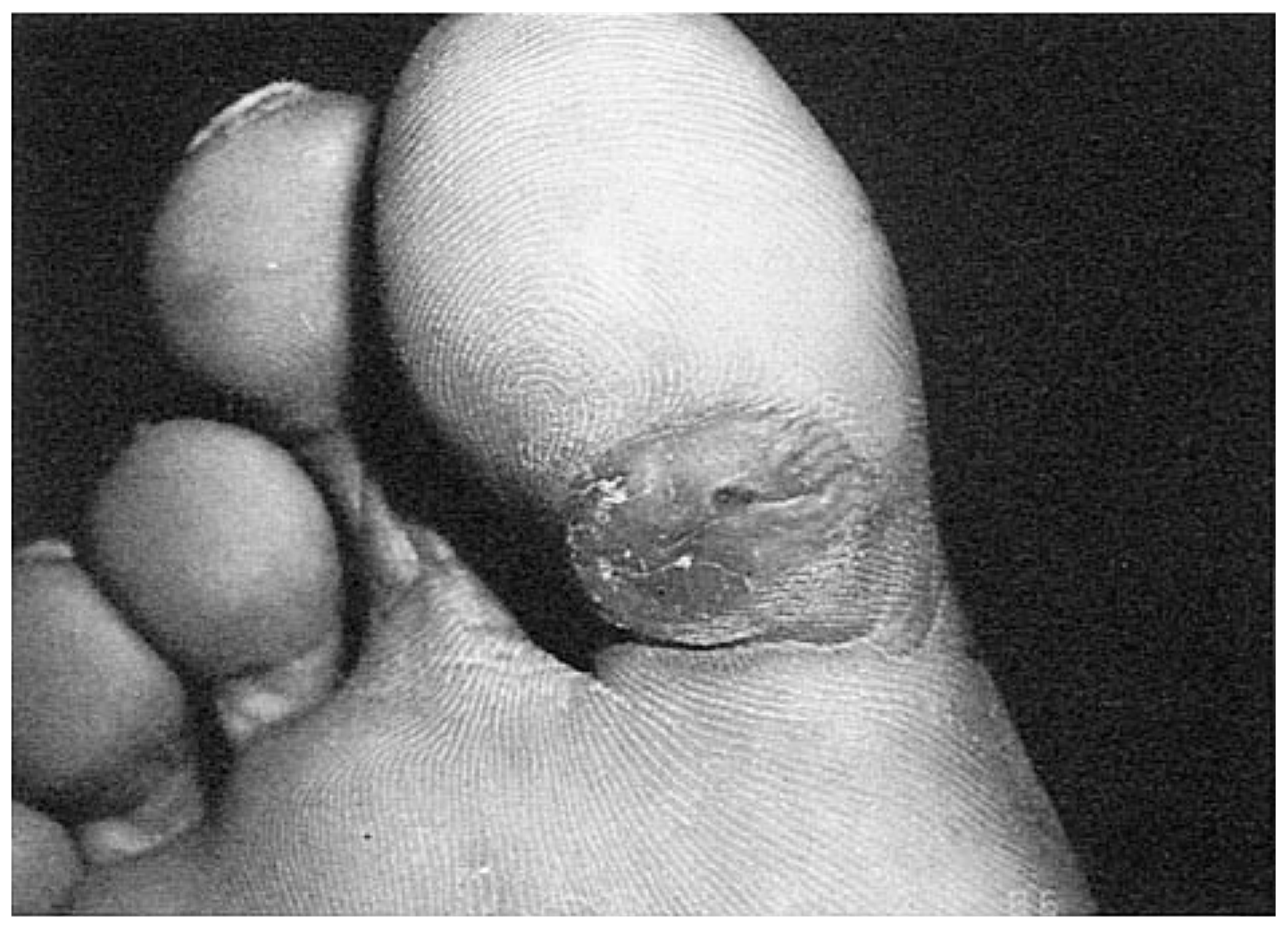
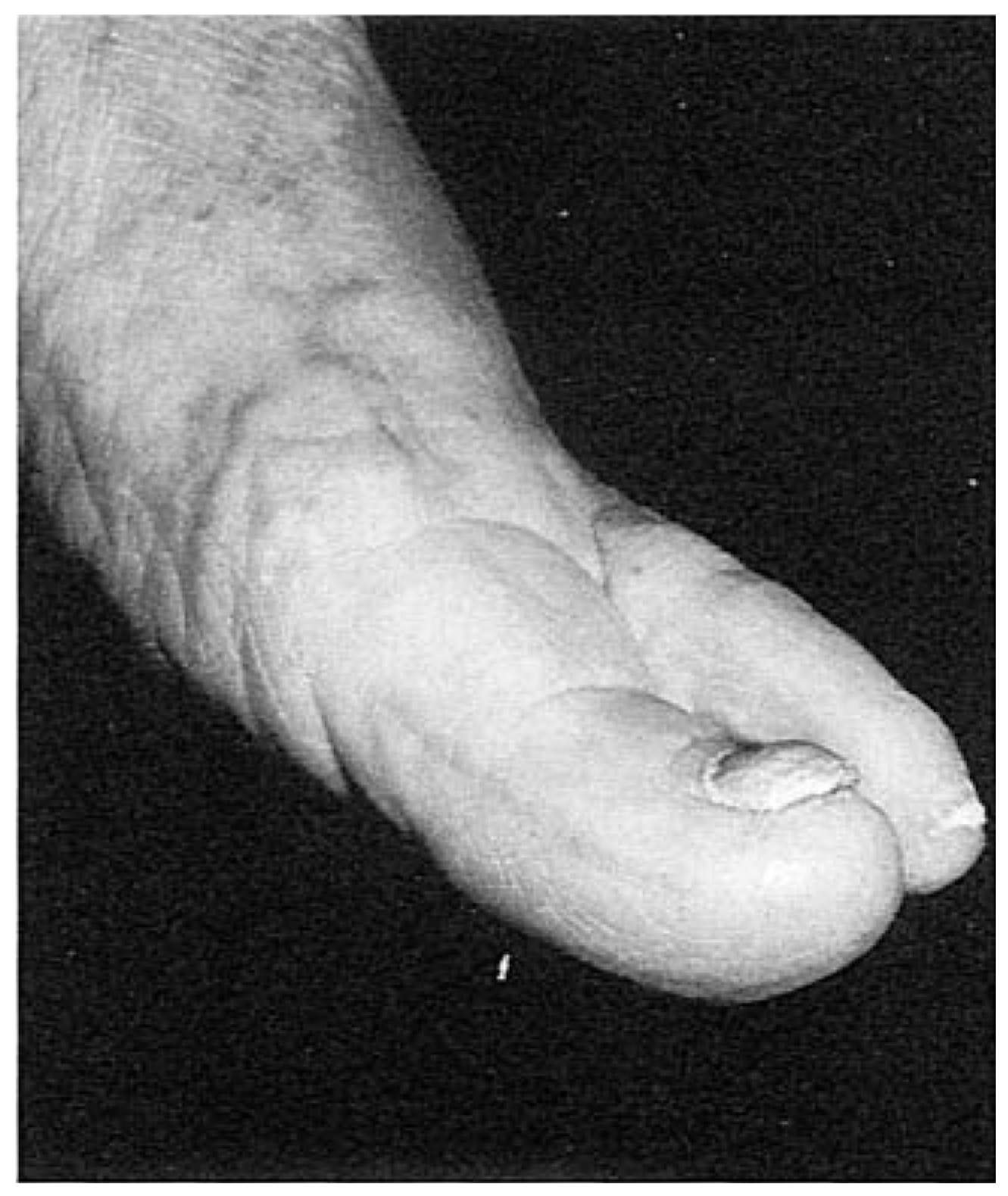
Clinical presentation typically includes a painful, nucleated, or diffuse hyperkeratotic lesion at the plantar or plantar medial aspect of the interphalangeal joint of the hallux. The lesion is commonly found as an isolated problem (Fig. 2). Attributed to the presence of an interphalangeal joint sesamoid, the lesion may be associated with other deformities or biomechanical abnormalities.
Figure 2.
Typical lesion on the plantar aspect of the hallux caused by large accessory sesamoid bone.
Figure 2.
Typical lesion on the plantar aspect of the hallux caused by large accessory sesamoid bone.
Jahss [
13] has suggested that most cases appear to be related to forefoot pronation with or without hallux valgus in conjunction with medial rotation of the hallux. The authors have suggested that the presence of hallux limitus or hallux rigidus may be a contributing factor as evidenced by hyperextension of the hallux interphalangeal joint in addition to the presence of an interphalangeal joint sesamoid. In such cases, the hyperextension (dorsiflexion) deformity at the interphalangeal joint may be symptomatic and further aggravate the lesion plantar to the interphalangeal joint sesamoid. Hypertrophy of the condyles of the plantar aspect of the proximal phalangeal head has also been suggested as an etiology to the calluses on the plantar aspect in the absence of an interphalangeal joint sesamoid. In this case, it is recommended that an ostectomy be performed, with or without the presence of a sesamoid. [
14]
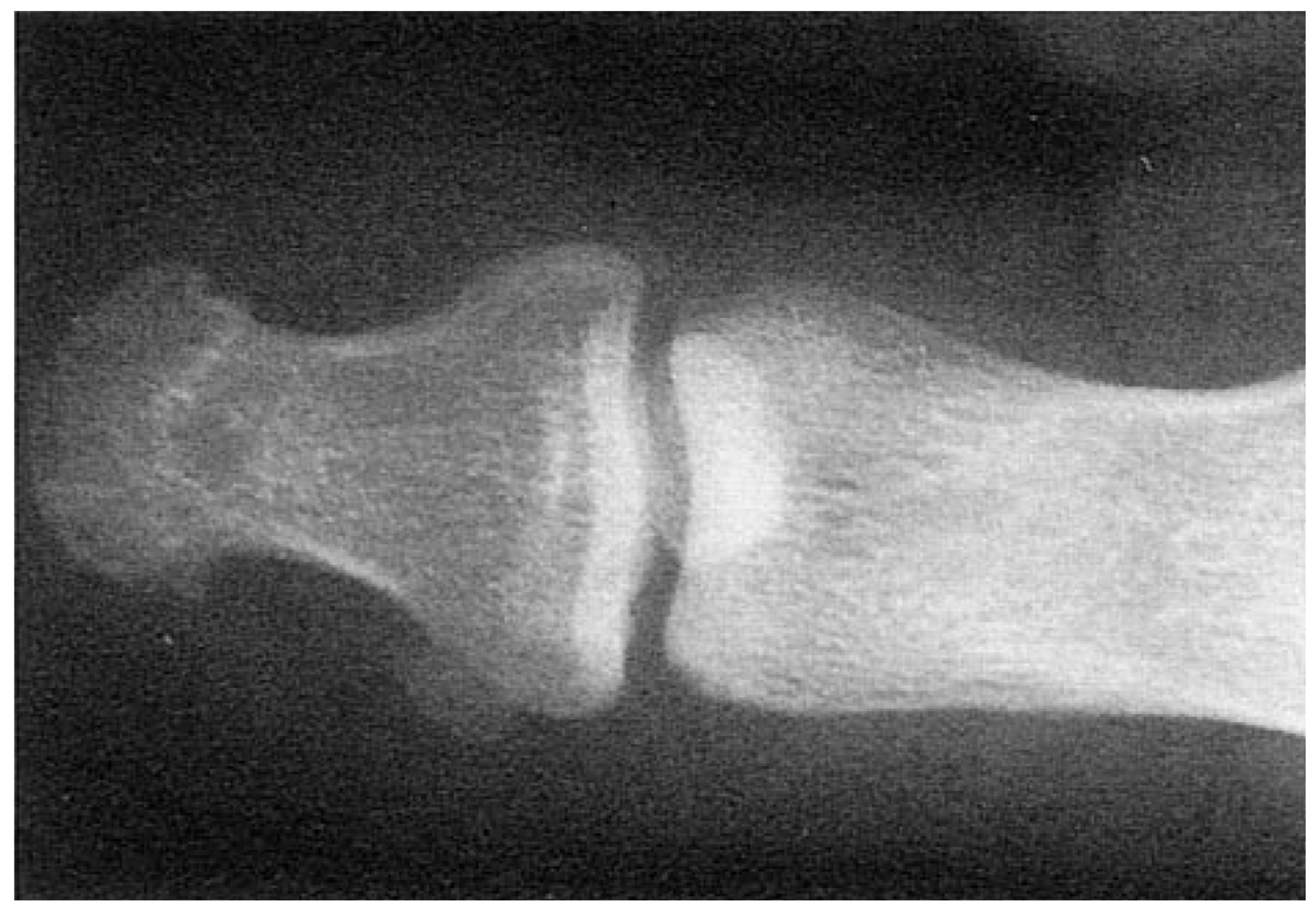
The authors recommend radiographic evaluation consisting of a lateral view with the hallux in a raised or lowered position to avoid overlap of the lesser digits, in addition to dorsoplantar and medial oblique views. These views will readily identify the sesamoid bone beneath the interphalangeal joint (Fig. 3). An extensive radiographic study by Burman and Lapidus [
15] of 1,000 radiographs showed an incidence of 13% radiographic identifications of the hallux interphalangeal sesamoid bone. They indicated that the sesamoid may not be ossified and suggested that if the sesamoid were fibrous or cartilaginous in nature, its visualization would be difficult. Later, Masaki [
16] reported a frequency of 56.3%, based on 958 radiographs reviewed, to have an interphalangeal sesamoid bone.
Figure 3.
Dorsoplantar radiograph of the great toe showing a well defined sesamoid bone at the interphalangeal joint.
Figure 3.
Dorsoplantar radiograph of the great toe showing a well defined sesamoid bone at the interphalangeal joint.
Historical Review of Procedures
Many approaches to the surgical excision of the hallucal interphalangeal sesamoid have been reported and attempted [
1,
2,
12,
13,
14,
17,
18,
19]. The authors have provided a rationale including potential advantages of their incisional approaches. In some cases, there has only been a limited number of cases reported with each approach, and no follow-up studies have been reported in the literature [
1,
2,
12,
14,
17]. Other authors have found unsuccessful outcomes. Sharon [
2] has found, using the Moeller approach, an increased incidence of painful scar formation at the plantar aspect of the hallux.
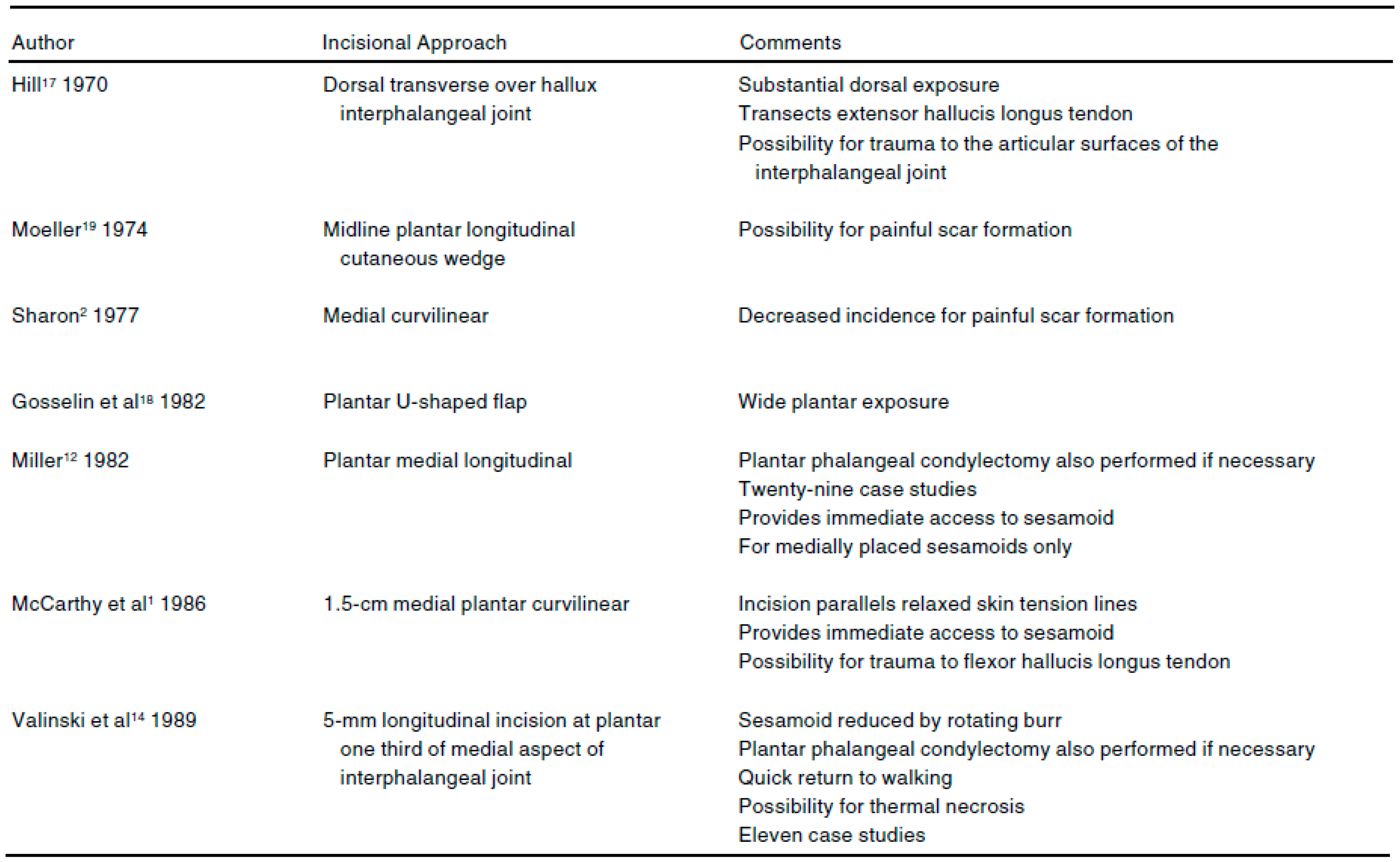
Other approaches have included a dorsal transverse, plantar longitudinal linear, plantar medial, medial curvilinear, medial longitudinal linear, and the plantar U-shaped incision. Each offers advantages and possible complications. A description of several authors’ procedures is presented in
Table 1.
Table 1.
Hallucal Interphalageal Procedures.
Table 1.
Hallucal Interphalageal Procedures.
Any surgical approach should take into careful consideration the principles of relaxed skin tension lines to minimize postoperative scar formation and provide predictable, excellent visualization of the flexor tendon, the sesamoid bone itself, and the osseous structures on the plantar aspect of the interphalangeal joint. This gives the surgeon an opportunity to inspect the entire joint visually, remove the sesamoid bone, and perform any additional osseous procedures of the interphalangeal joint, based on intraoperative findings. In addition, the placement of any incision should avoid potential vascular compromise or damage to the neurovascular structures, particularly the plantar medial nerve, artery, and vein.
Surgical Management
The authors recommend three basic approaches for surgical excision of the hallux interphalangeal sesamoid: medial, plantar, or dorsal. The decision to use a particular approach is based on the deformity, cosmetic concerns, and whether additional procedures to correct for other first ray deformities are to be performed. Each technique offers certain advantages and disadvantages that should be given careful consideration.
Plantar Approach
The plantar incisional approach is also an excellent technique for excision of the interphalangeal joint sesamoid bone. Although frequently avoided by most surgeons, this approach can produce a fine line, nonpainful scar when properly performed.
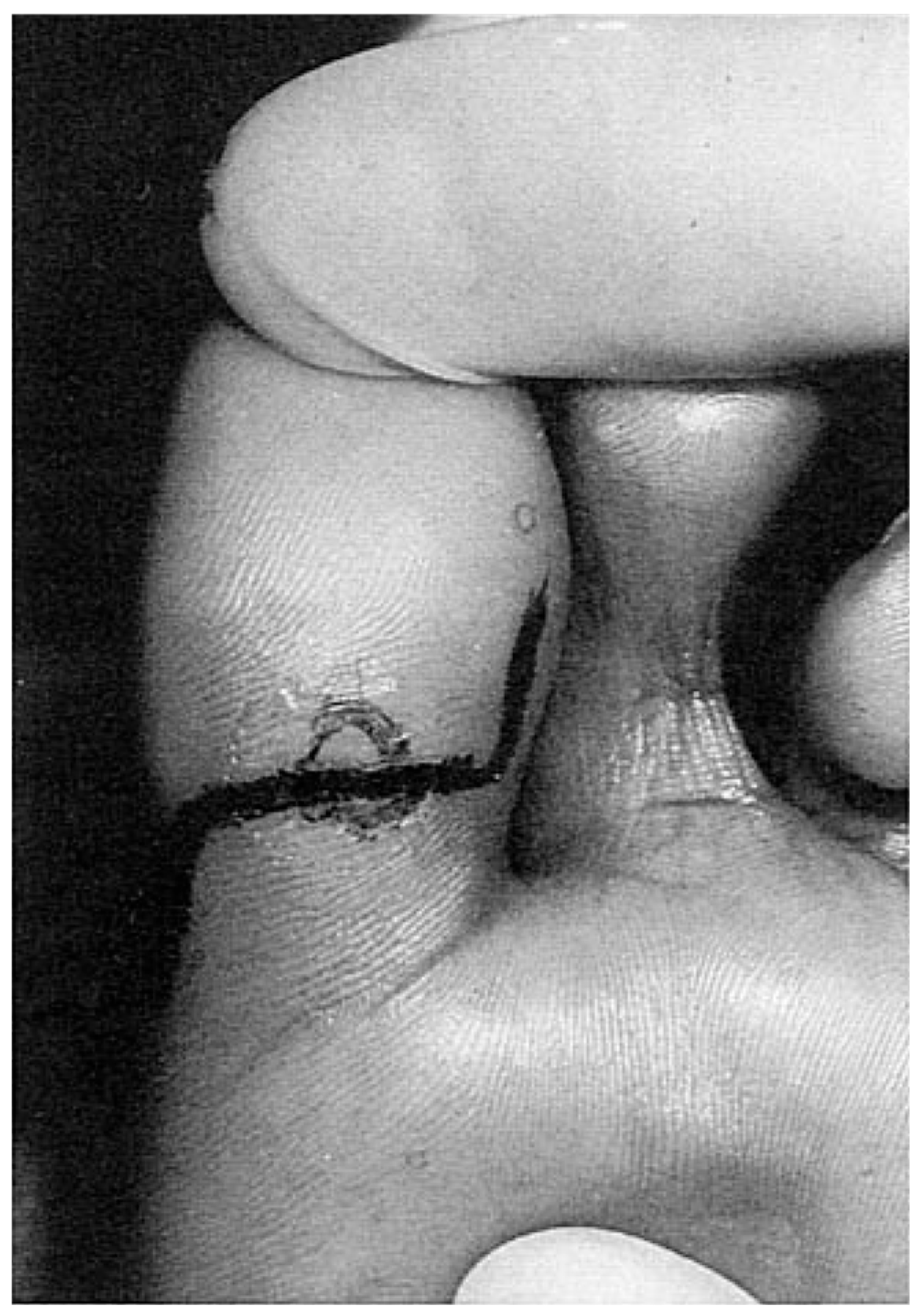
A transverse incision is made directly within the most obvious skin crease determined by plantarflexion of the great toe. If adequate exposure is not readily attained through the transverse incisional approach, the incision may be extended both distally and proximally at opposite ends (Fig. 6). This will result in two flaps; one is reflected distally and the other proximally.
Figure 6.
Plantar transverse incisional approach extended both distally and proximally at opposite ends.
Figure 6.
Plantar transverse incisional approach extended both distally and proximally at opposite ends.
Care must be taken to avoid damage to the plantar medial and plantar lateral neurovascular bundles that run adjacent to the longitudinal arms of the incision. A longitudinal incisional approach on the plantar aspect of the great toe is not recommended and may produce a painful scar contracture.
Dissection is carried down to the level of the flexor tendon. The skin flaps are retracted proximally and distally, taking care to preserve the attachments of the subcutaneous tissues to the dermis to prevent postoperative skin sloughing or necrosis.
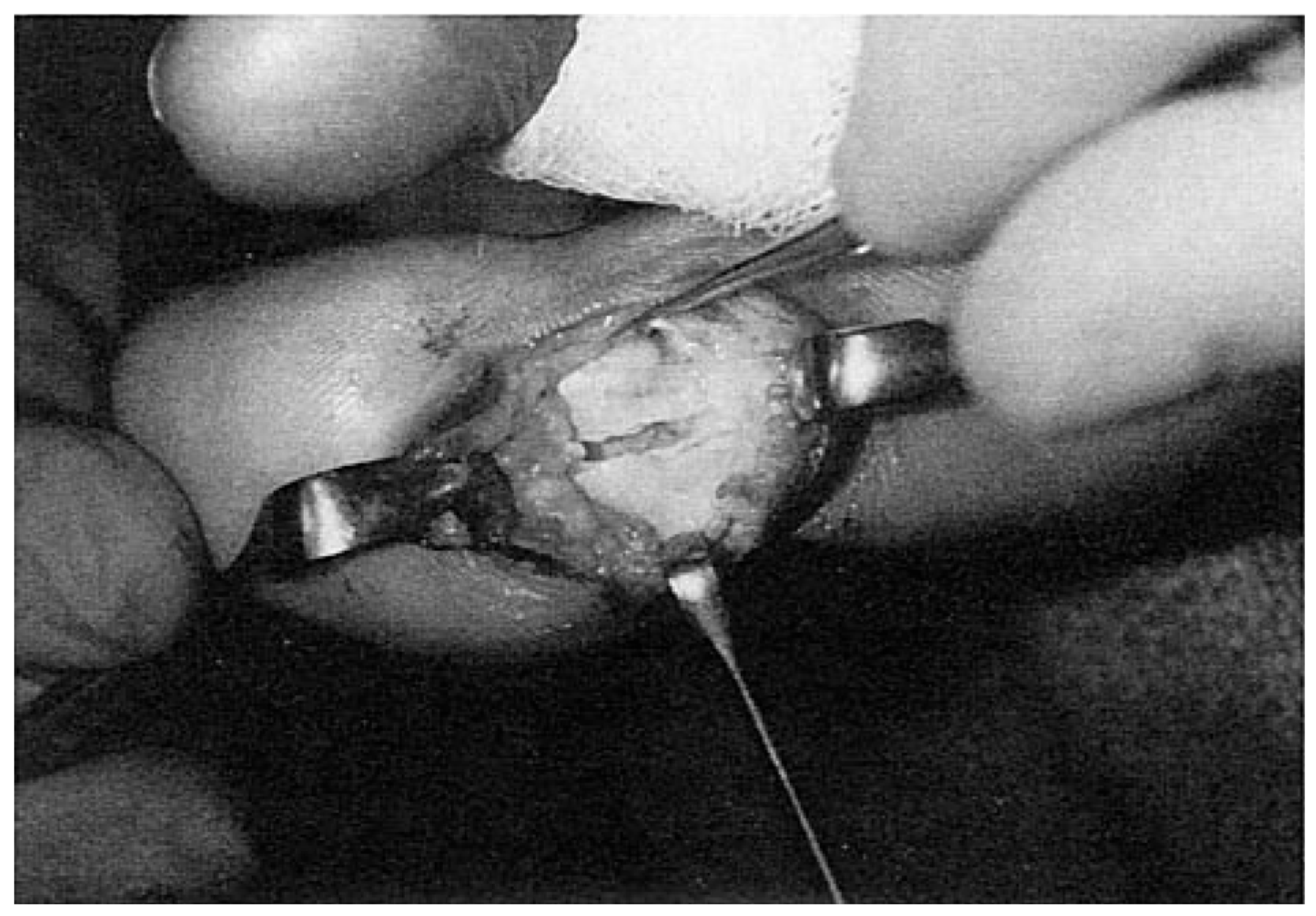
The flexor tendon and interphalangeal joint are then identified and the sesamoid bone easily palpated. The flexor hallucis longus tendon may be transected either transversely or, more commonly, split in a longitudinal manner, to provide adequate exposure and visualization of the sesamoid bone and to allow for complete excision (Fig. 7A).
Figure 7A.
Transverse incisional approach, plantar aspect of the interphalangeal joint with the flexor hallucis longus split in a longitudinal manner and retracted medially and laterally. This provides easy access to the large sesamoid bone.
Figure 7A.
Transverse incisional approach, plantar aspect of the interphalangeal joint with the flexor hallucis longus split in a longitudinal manner and retracted medially and laterally. This provides easy access to the large sesamoid bone.
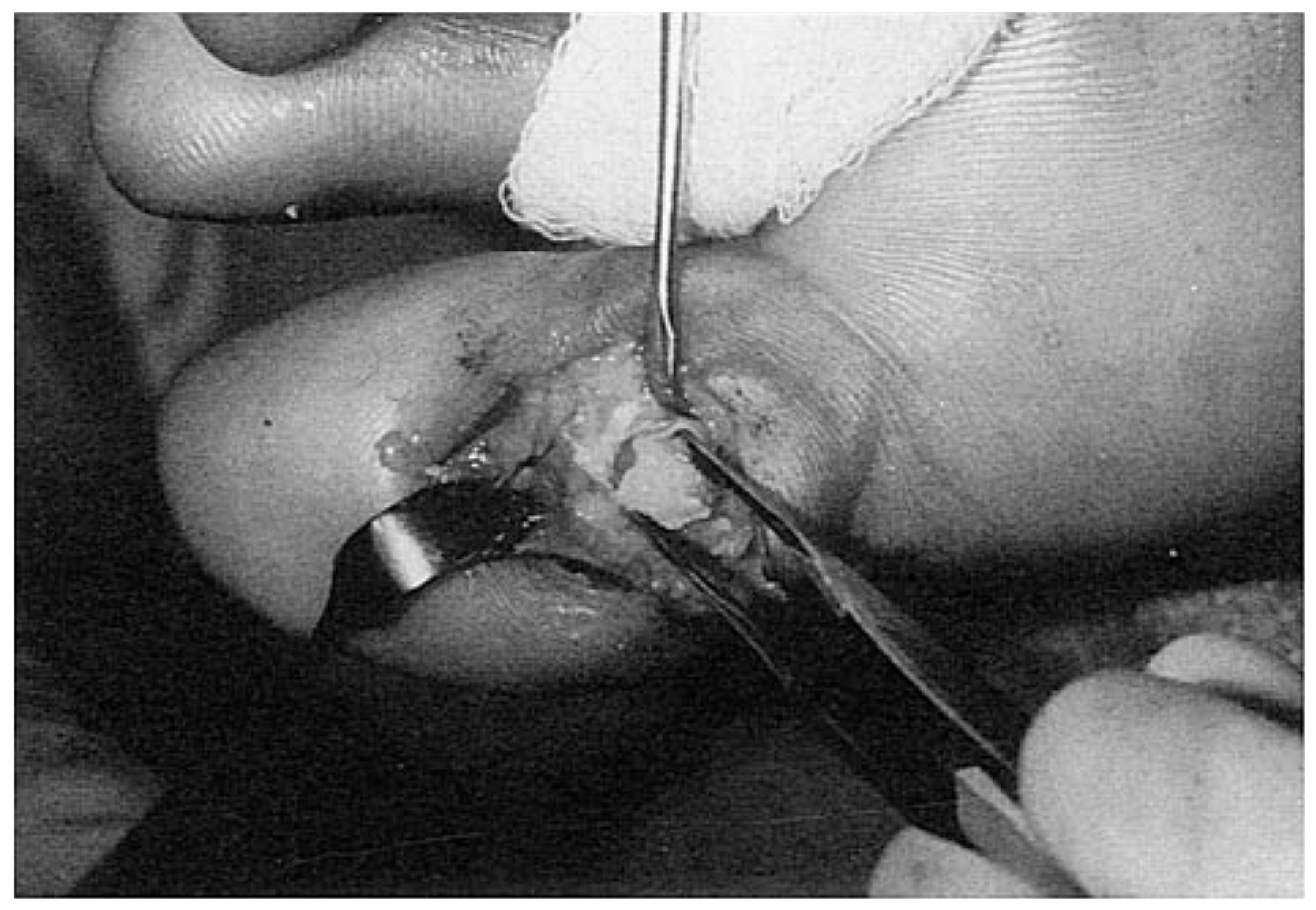
The sesamoid bone is then meticulously excised in toto (Fig. 7B). Hypertrophic portions of bone from either the base of the distal phalanx or head of the proximal phalanx can be removed at this time and the bone remodeled with a small power burr. If desired, the joint can be inspected from the plantar approach.
Figure 7B.
Complete excision of the interphalangeal joint sesamoid through a plantar transverse approach.
Figure 7B.
Complete excision of the interphalangeal joint sesamoid through a plantar transverse approach.
The wound is then irrigated with normal sterile saline. The long flexor tendon is carefully reapproximated with 3-0 synthetic absorbable suture by method of choice. The subcutaneous tissue and skin are then reapproximately with sutures and methods of choice.
Dorsal Approach
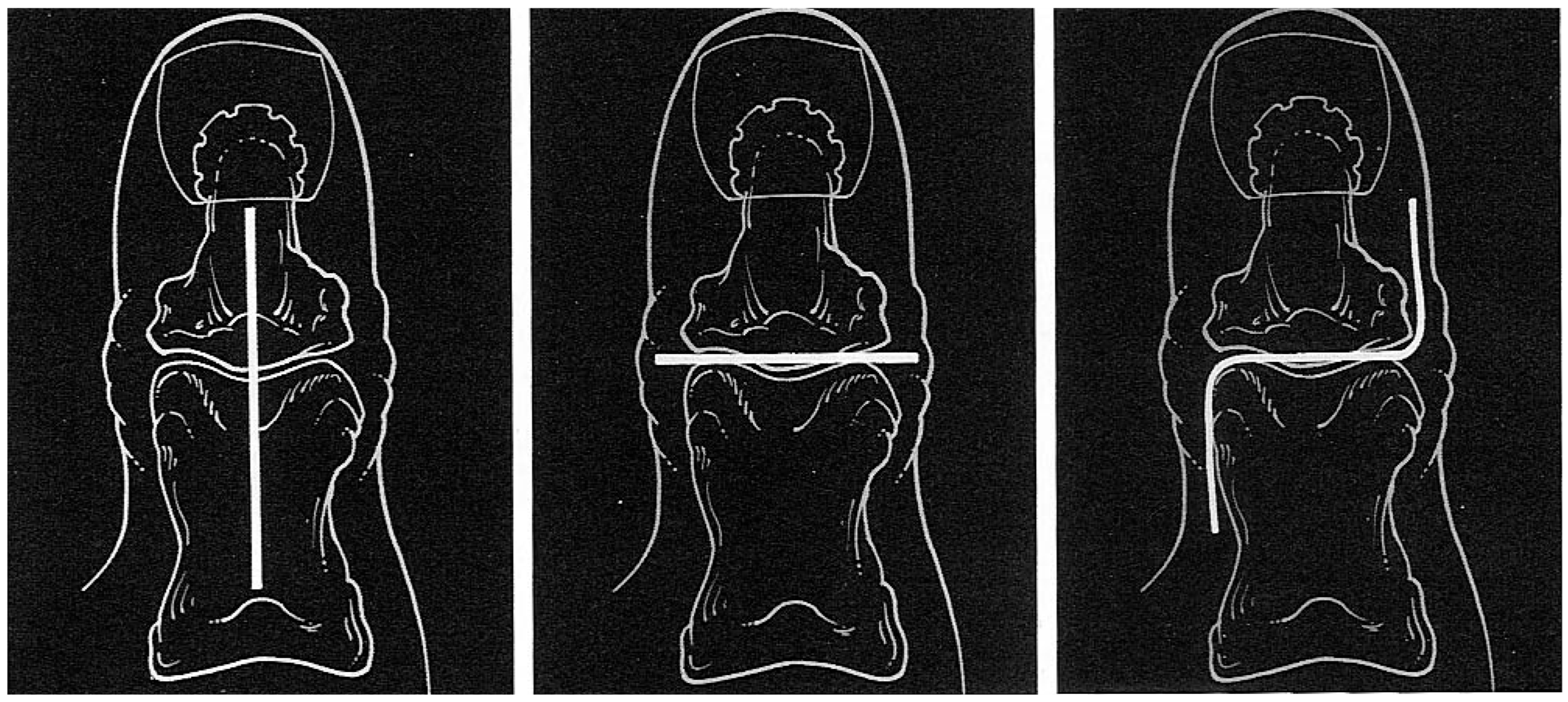
The dorsal approach can be performed different ways: longitudinal - centered over the interphalangeal joint; transverse - following the relaxed skin tension lines; or curvilinear - as described for the plantar approach (Figs. 8A-C). Each provides adequate exposure of the entire interphalangeal joint.
Figure 8.
A, Dorsal longitudinal incisional approach. B, Dorsal transverse incisional approach. C, Dorsal curvilinear incisional approach.
Figure 8.
A, Dorsal longitudinal incisional approach. B, Dorsal transverse incisional approach. C, Dorsal curvilinear incisional approach.
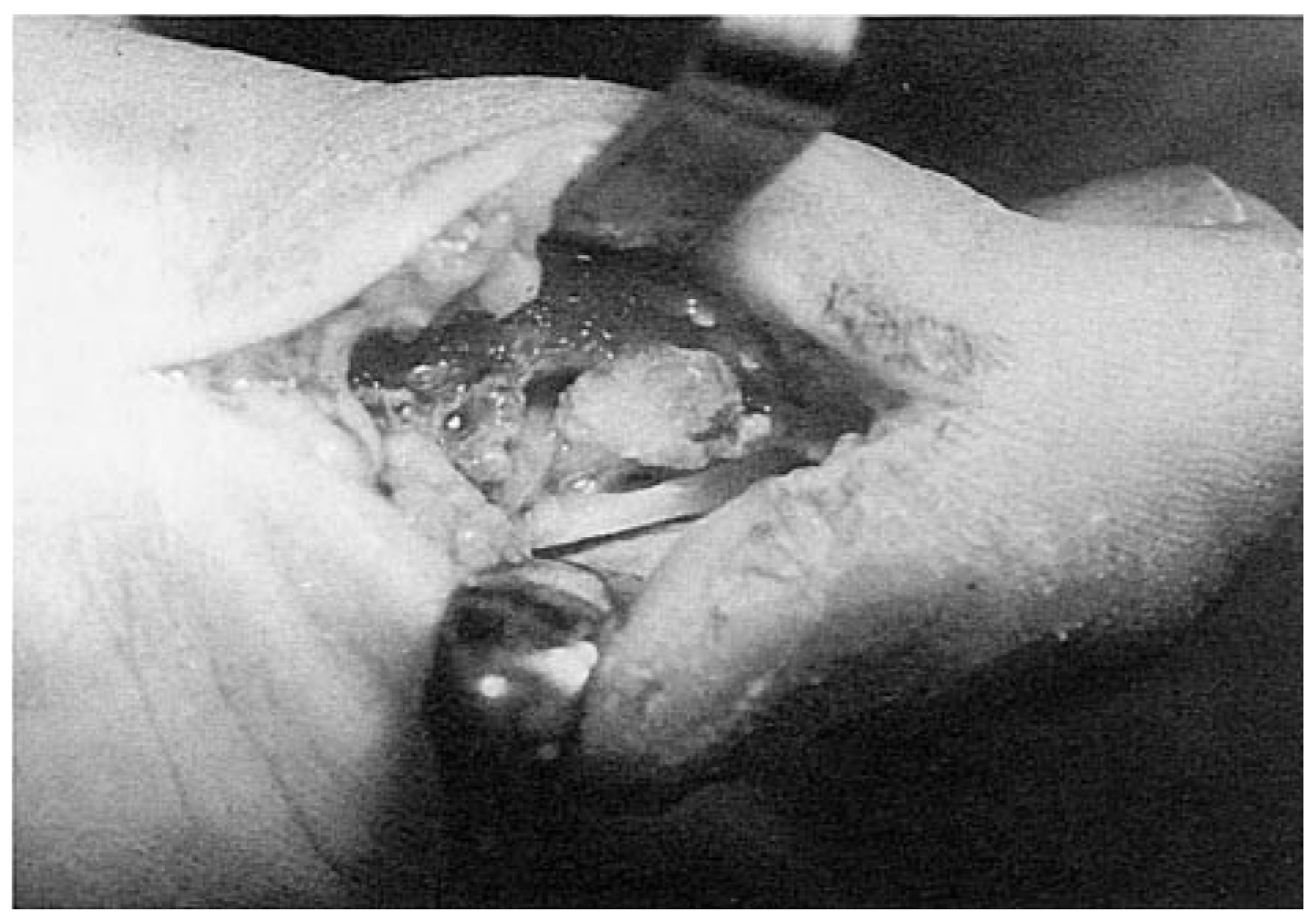
This approach is advantageous for those individuals who have a severely painful lesion or painful scar on the plantar aspect of the great toe. A transverse tenotomy and capsulotomy of the interphalangeal joint with release of both the medial and lateral collateral ligaments are required to provide complete exposure of the sesamoid bone. The hallux is then maximally plantarflexed, providing exposure to the superior aspect of the sesamoid bone. The superior surface will appear to have a cartilaginous cap similar to normal articular cartilage as it frequently articulates with the plantar side of the head of the proximal phalanx (Fig. 9).
Figure 9.
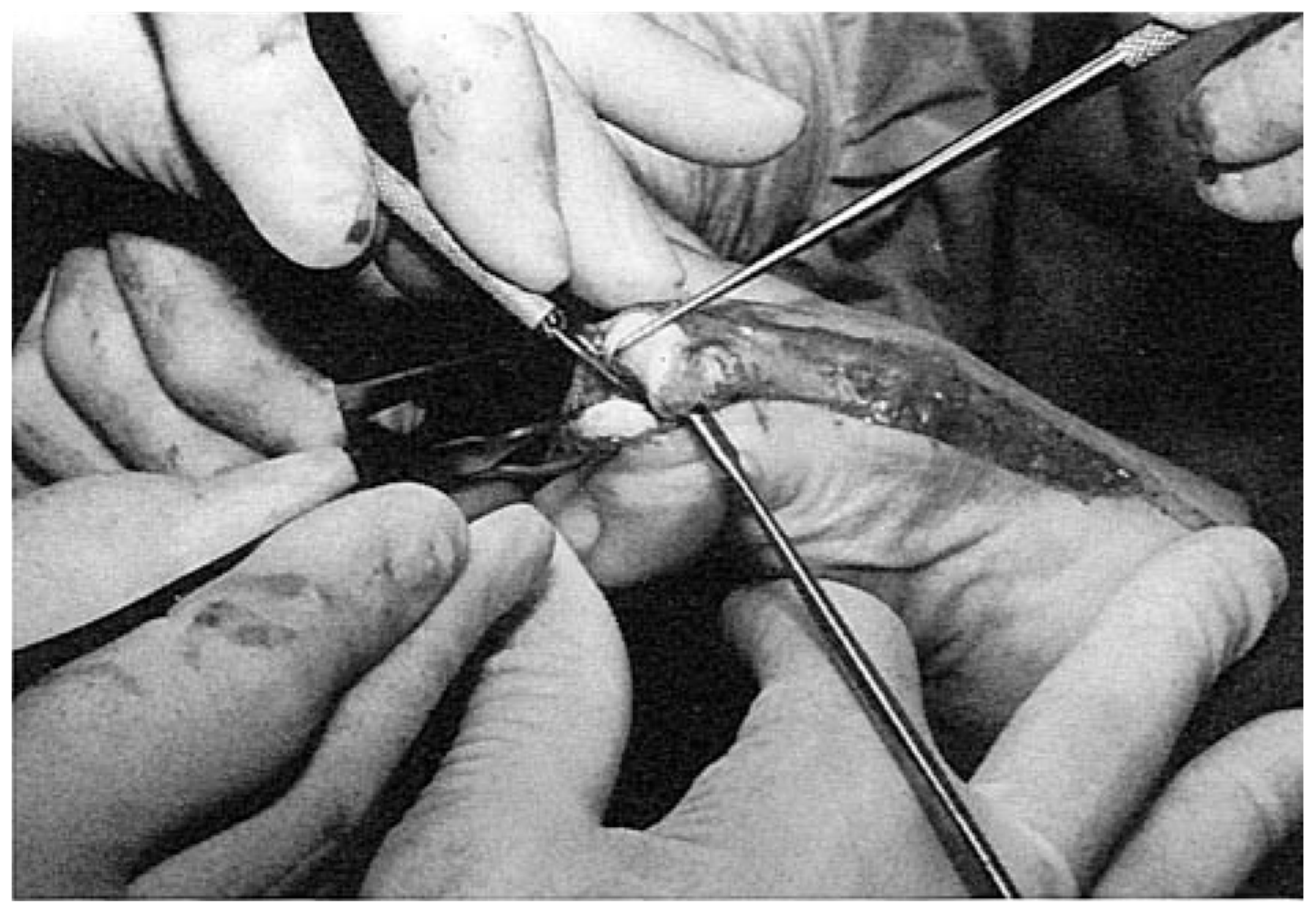
Dorsolinear approach, retraction of the head of the proximal phalanx with a skin hook and excision of the interphalangeal sesamoid with a #64 blade. Also performed is a first metatarsophalangeal joint arthrodesis for painful hallux limitus or rigidus.
Figure 9.
Dorsolinear approach, retraction of the head of the proximal phalanx with a skin hook and excision of the interphalangeal sesamoid with a #64 blade. Also performed is a first metatarsophalangeal joint arthrodesis for painful hallux limitus or rigidus.
The sesamoid bone is excised using a small blade (#64 or #67 Beaver blade). When “shelling out” the sesamoid bone, it is important to preserve integrity to the long flexor tendon. A set of small bone hooks helps pull the distal phalanx plantarly and proximal phalanx dorsally.
The wound is irrigated with normal sterile saline. The condyles of the proximal and distal phalanges are inspected. Any hypertrophic or bony prominence may be removed and the remaining surfaces smoothed with a small power burr. The wound is once again irrigated with normal sterile saline and inspected. The long extensor tendon is then reapproximated using 3-0 synthetic absorbable suture by simple interrupted stitches or a horizontal mattress stitch. The subcutaneous tissues and the skin are then reapproximated with sutures and methods of choice. Most commonly, simple interrupted sutures are used.
Discussion
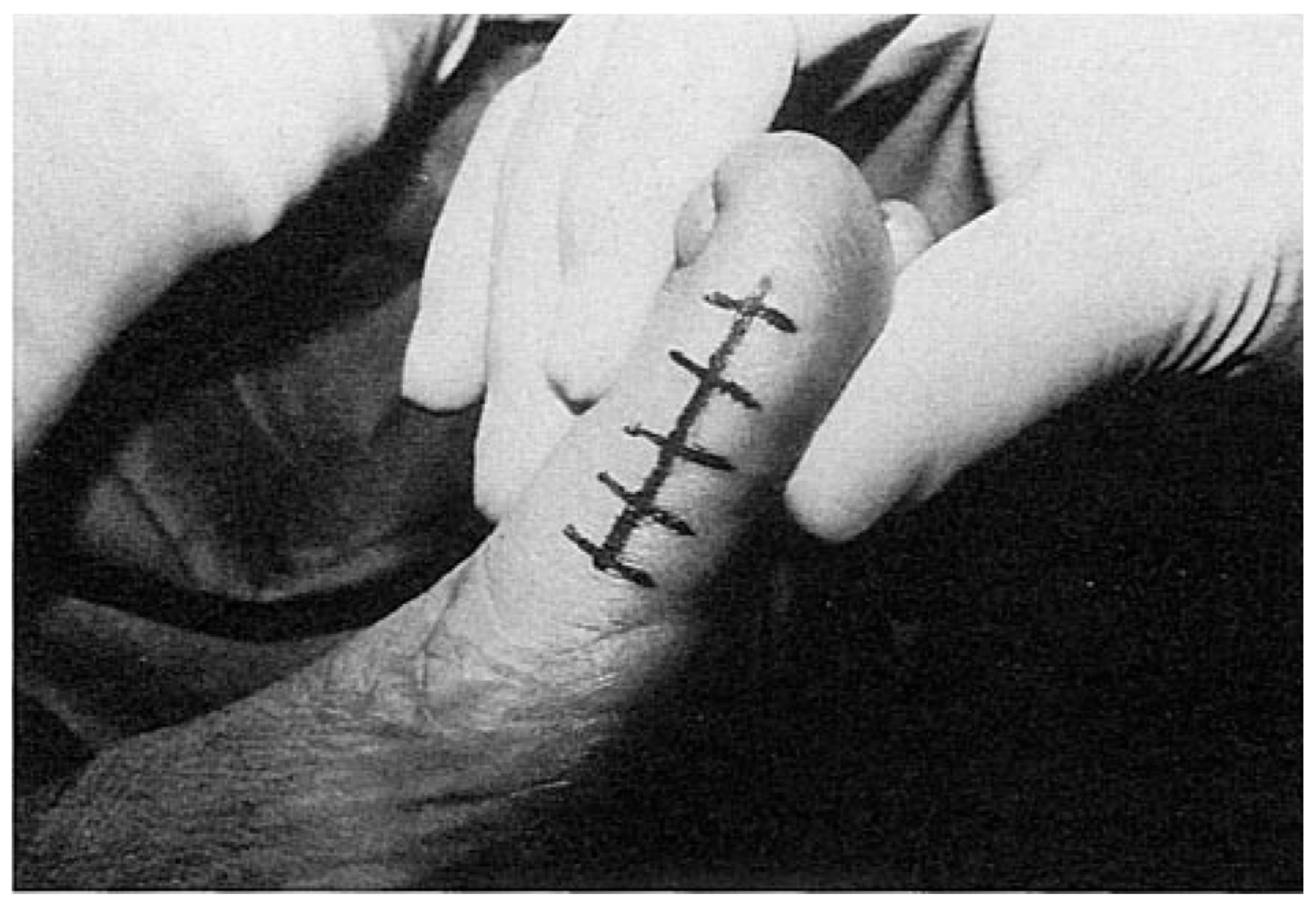
Each of the approaches mentioned above has advantages and disadvantages. Both the medial and plantar approaches are more cosmetically acceptable to patients since the scars are generally not visible from a dorsal view (Fig. 10). The plantar approach provides the opportunity to excise any nucleated lesions. It also may help to correct for an extension deformity of the interphalangeal joint by removal of a semielliptical portion of skin. Because the skin on the plantar aspect of the great toe is thick, the incision heals predictably well with minimal scar formation.
Figure 10.
Postsurgical scar, with the medial incisional approach.
Figure 10.
Postsurgical scar, with the medial incisional approach.
The dorsal incisional approaches (transverse, curvilinear, or longitudinal) have proven to be the most challenging of all incisional approaches. It requires complete transection of the dorsal, medial, and lateral capsular tissues and ligaments in order to displace the distal phalanx plantarly and adequately expose the sesamoid bone. In cases with a significant extension deformity at the interphalangeal joint, the extensor tendon is sutured in a lengthened position in order to counteract hyperextension postoperatively. The dorsal approach is the most beneficial when additional procedures involving the proximal phalanx, the metatarsophalangeal joint, or first metatarsal need to be performed along with an interphalangeal sesamoidectomy. This approach is also superior when simultaneous interphalangeal joint fusion is being performed.
If there is concern over stability of the interphalangeal joint following excision of the sesamoid bone or condylectomy, the joint may be stabilized temporarily with a 0.045, 0.054, or 0.062 Kirschner wire. Insertion of the Kirschner wire is done by standard retrograde techniques. Stabil-ization of the great toe is also important when the long flexor tendon has been transected.
Summary
Painful lesions on the plantar aspect of the interphalangeal joint of the great toe are common. They respond well to surgical excision of the accessory bone found lying superior to or within the flexor hallucis longus tendon. Several incisional approaches are available, each with potential advantages and disadvantages. Careful consideration should be given to these advantages and disadvantages and also to any additional procedures necessary to correct other deformities in the first ray (ie, hallux extensus or hallux limitus).