Results
General Practice Information
Information was requested from members of the APMA on their current practice arrangements, practice ownership status, practice location, and years of practice experience. The extent to which members currently serve on PPO and HMO panels was also determined.
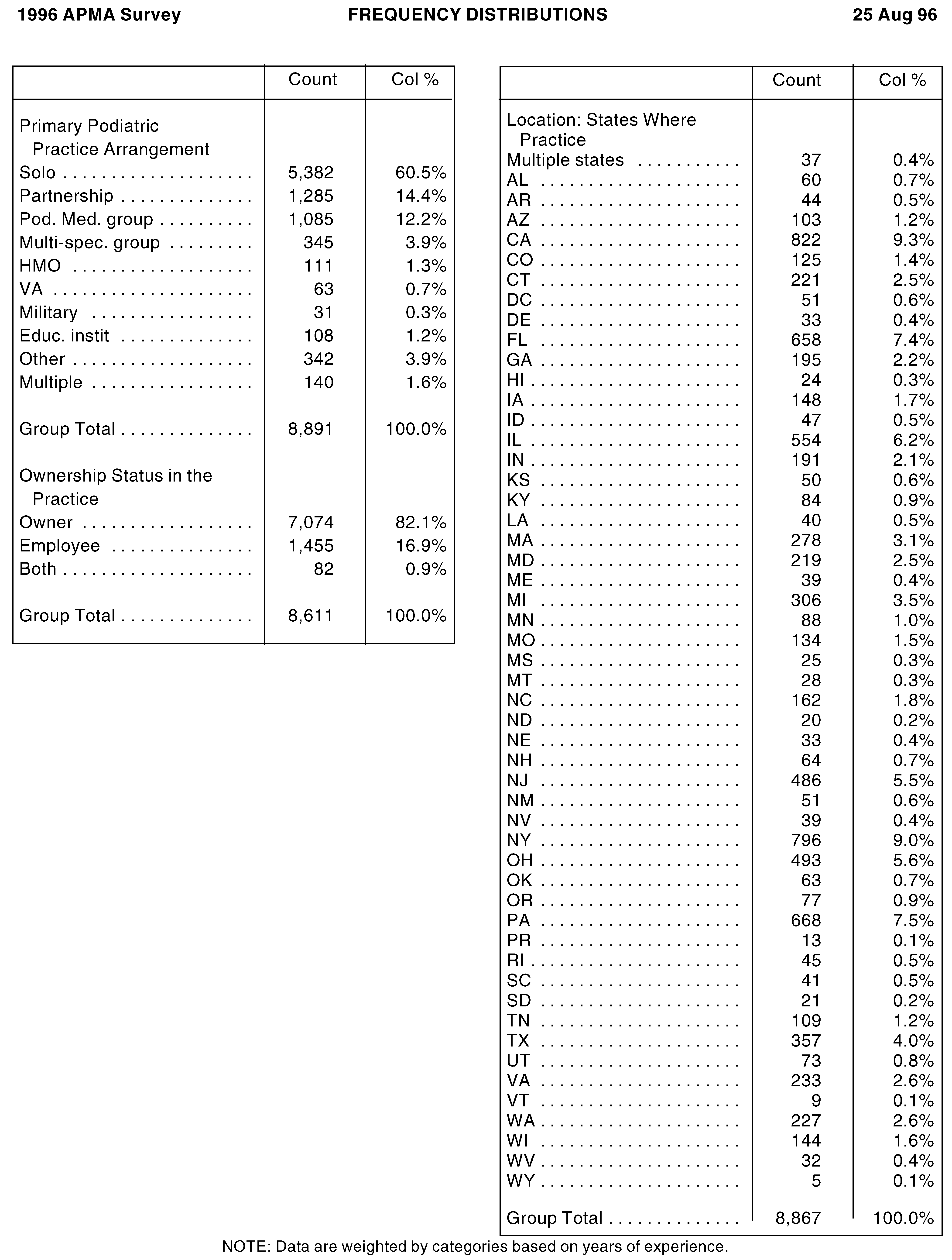
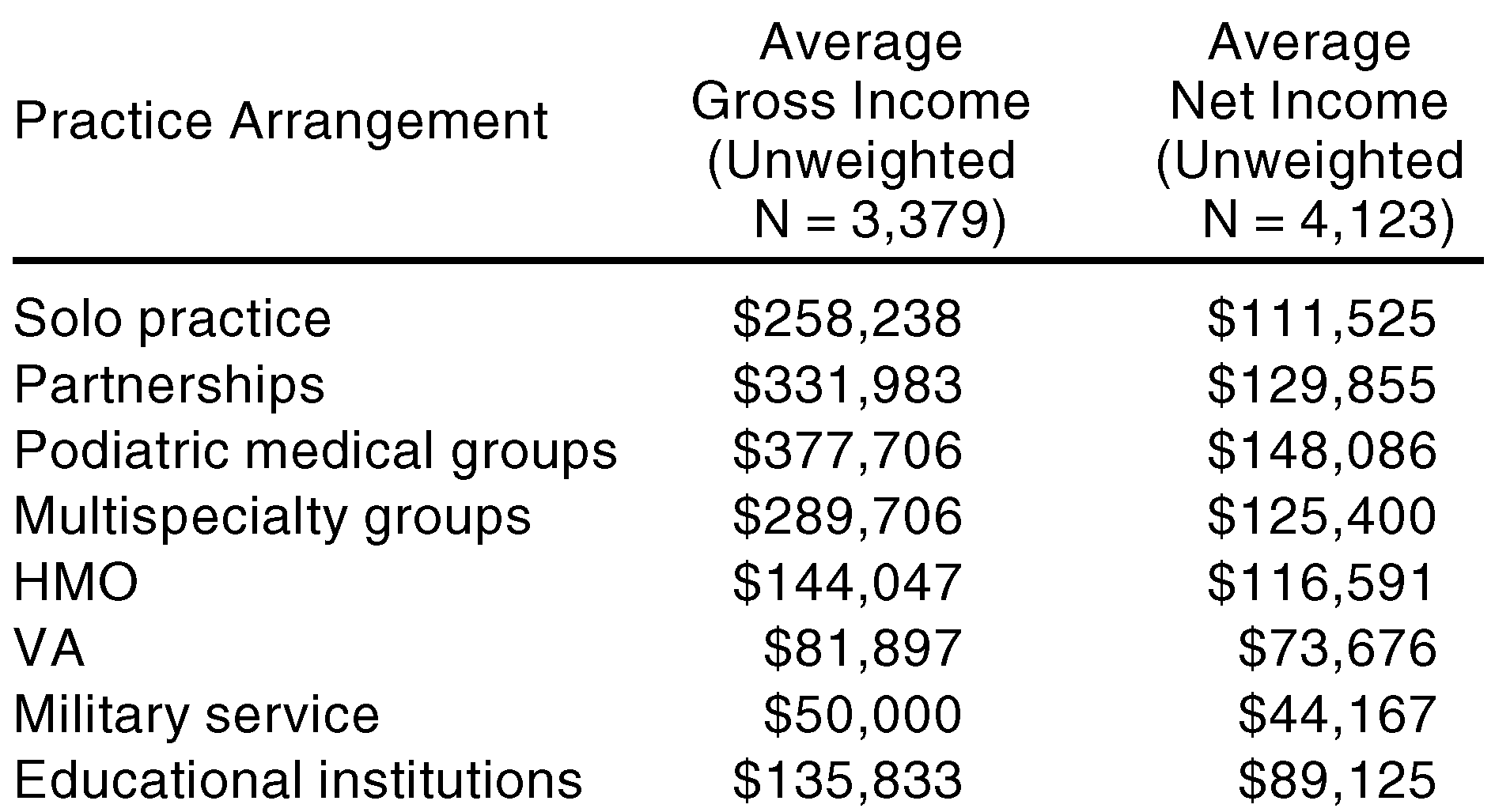
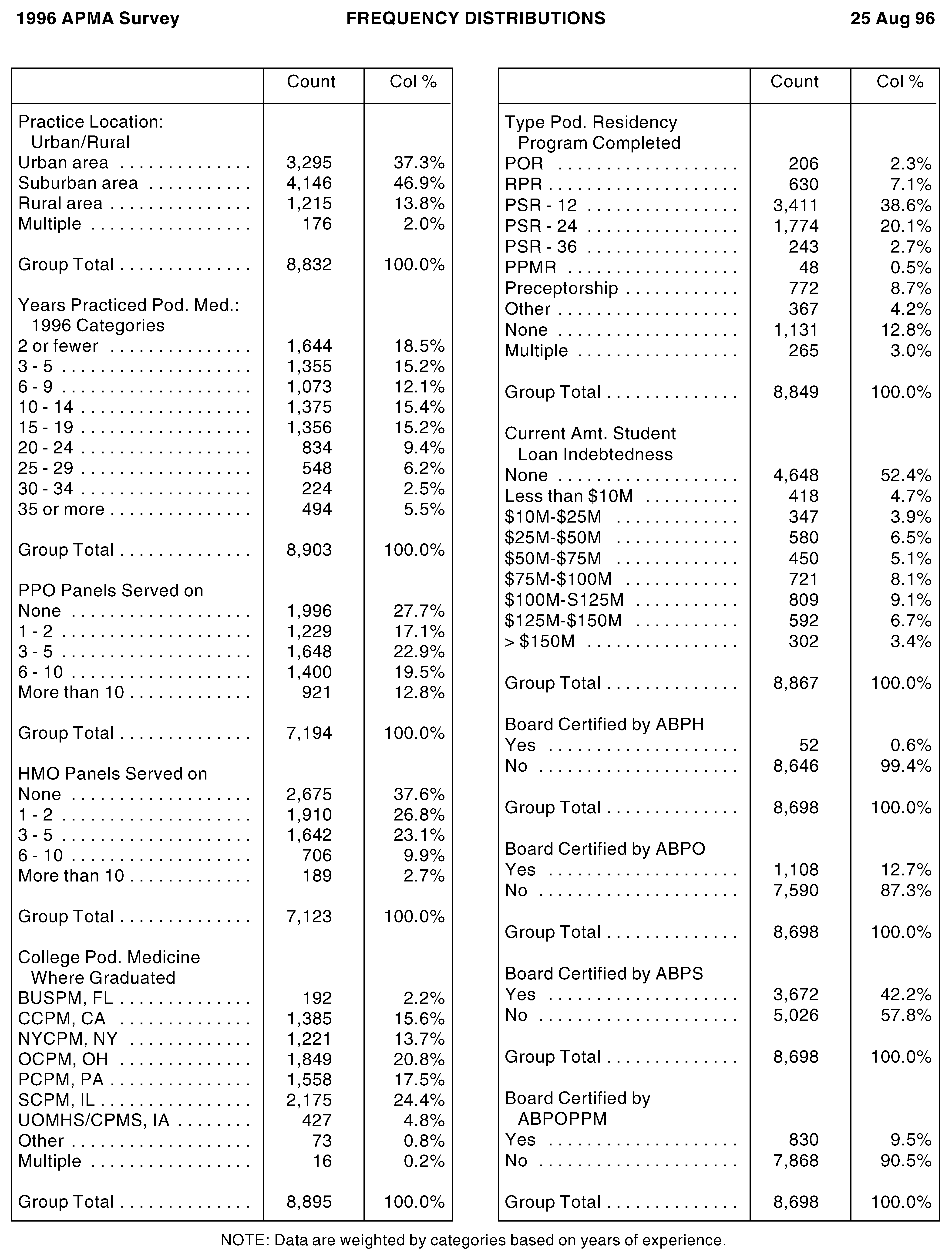
Primary Practice Arrangement. Most respondents had a solo practice as their primary arrangement (60.5%). A total of 30.5% of respondents practiced primarily in some type of group setting. Thus, 14.4% practiced in a partnership, 12.2% in a podiatric medical group, and 3.9% in a multispecialty group. Another 1.2% said that an educational institution was their primary practice setting, and 1.3% practiced primarily in an HMO.
Small percentages of respondents practiced primarily in the military service (0.3%) and the Department of Veterans Affairs (VA) (0.7%). Arrangements other than those listed were specified by 3.9% of respondents, and 1.6% indicated multiple arrangements for a total of 5.5%. Only 14 respondents were retired (0.3% of the unweighted cases), and they were excluded from this analysis. The base for this analysis was 8,891 weighted cases.
The following data are based on active members of the APMA. Retired respondents were excluded from subsequent questions about practice experience and practice income. However, information was requested on their demographic characteristics, as it was on all the other survey participants.
Age was related to member practice arrangements. Only 48% of members younger than 35 years of age were in solo practice, compared with 72% of members 65 years of age or older. Solo practitioners tended to be older (average age: 43.9 years), while the oldest members practiced for the VA (46.7 years).
Younger members were more likely to be in group practice. Thus, 16% of members under the age of 35 years were in a podiatric medical group, compared with 4.8% of members aged 65 years or older. Also, 18.6% of members younger than 35 years of age were in a partnership, compared with 12.7% of members aged 65 years. Finally, 5.3% of members younger than 35 years were in a multispecialty group, compared with 0.5% of members age 65 years and older. These trends were reflected in the average age of members in these practice settings. On average, younger members practiced primarily in a partnership (average age: 41.6 years), podiatric medical group (average age: 41.8 years), or multispecialty group (average age: 39.6 years). Members in the military service were 38.3 years of age, on average. Members of the APMA in educational institutions averaged 41.5 years of age.
Practice Ownership Status. Most respondents in private practice are owners (82.2%) rather than employees (16.9%). A few said “Both” (1%). The base for this analysis was active members who practiced primarily in a solo practice, partnership, podiatric medical group, multispecialty group, or HMO (8,611 weighted cases). Members whose primary practice arrangement was with the military, VA, or an educational institution were excluded from this analysis.
Almost all of the solo practitioners considered themselves to be owners (98.6%), as did most respondents in partnership arrangements (80.5%) and in podiatric medical groups (67.2%). However, only 37.1% in multispecialty groups were owners, while most were employees (62.9%).
Age was related to ownership status. Approximately 90% of members older than 35 years of age were owners. In contrast, only 66.6% of younger members were owners and one third were employees.
Practice Location: State. Respondents practiced in all 50 states, Puerto Rico, and the District of Columbia. Seventy-five percent practiced in 15 states. States with the larger percentages of respondents were the following: CA, NY, PA, FL, IL, NJ, OH, TX, MI, MA, MD, CT, WA, VA, and IN.
Practice Location: Urban, Rural, or Suburban. Most respondents currently practice in either an urban or suburban area, as opposed to a rural area. Thus, 37.3% practiced in an urban area and 46.9% practiced in the suburbs. Only 13.8% practiced in a rural area. Some 2% practiced in more than one setting. The base for this analysis was all active respondents (8,832 weighted cases).
Age was a factor in the practice location of APMA members. Older members were more likely to practice in urban areas, while younger members practiced in the suburbs. Thus, 48.7% of members under the age of 35 years practiced in a suburban area, compared with 31.7% who practiced in an urban area.
An urban area was the major location for members 65 years of age and older (54.4%), while 37.9% practiced in the suburbs.
An influx of younger members into rural areas may have occurred. Thus, 17.7% of members under the age of 35 practiced in a rural area, compared with 6.6% of members older than 64 years of age.
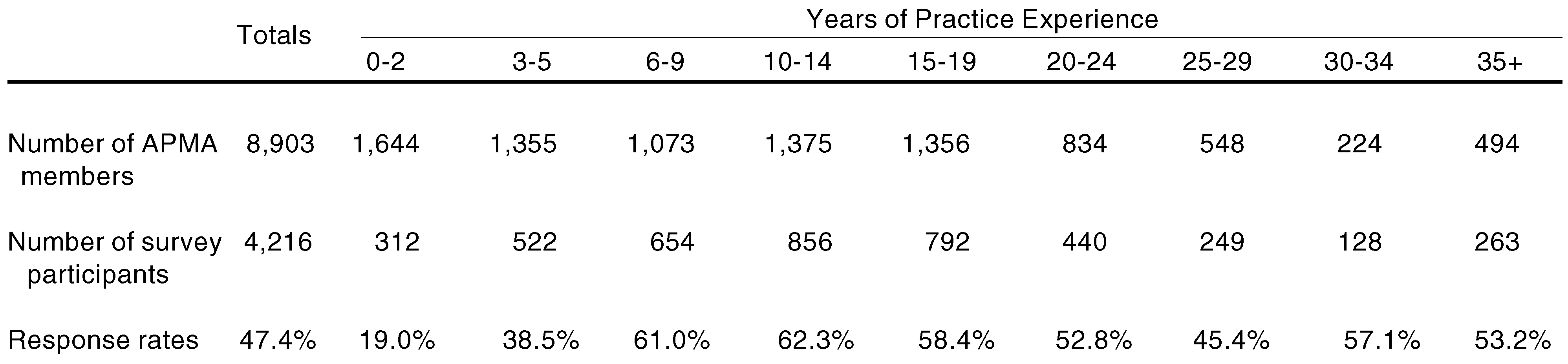
Years of Practice Experience. Most respondents had between 3 and 19 years of experience practicing podiatric medicine (57.9%). Some 18.5% had fewer than 3 years of experience. Another 23.6% had 20 or more years of experience. The base for this analysis was active members (8,903 weighted cases). The distribution reflects the actual experience distribution of APMA members, as of the date at which mailing labels were created from the master database. The survey data were weighted to resemble that distribution.
Members averaged 12.9 years of experience. The median amount of experience was 10 years. There was a significant relationship between the practice arrangement and experience. Members in solo practice had more experience (average: 15.4 years of experience) than members who practiced primarily in a partnership (average: 13.4 years of experience), a podiatric medical group (average: 14 years of experience), or a multispecialty group (average: 10.6 years of experience). Members in HMOs averaged 13.2 years of experience.
Podiatric physicians in the VA had the most experience (average: 18.2 years of experience), consistent with their older average age. Members in military service were younger and averaged 10.6 years of experience. Members in educational institutions had 13.8 years of experience, on average.
Practice experience was strongly related to the gender of the respondent. Female members averaged only 7.9 years of experience, compared with 15.4 years of experience for males.
Service on PPO and HMO Panels. Most respondents served on PPO and HMO panels. Thus, 72.3% served on one or more PPO panels, while 27.7% did not. Furthermore, 62.4% served on one or more HMO panels, while 37.6% did not. The weighted cases for these analyses were approximately 7,100-7,200 out of the 8,903 possible cases.
Approximately 20% of respondents left these questions blank, and a few wrote answers that could not be converted into numbers, eg, “Many” panels, and “Too many to count.”
Members who served on PPO panels served on 5.5 panels, on average (median number: three PPO panels). The reported range was from one to 200 PPO panels. In contrast, members who served on HMO panels served on 2.6 panels, on average (median number: one HMO panel). The reported range was from one to 50 HMO panels.
Of the active respondents, 74.7% served on one or more PPO and HMO panels. Only 25.3% served on neither. However, blanks are excluded from this analysis, which was based on unweighted (actual) data.
Service of PPO and HMO panels was related to the age of the respondent. Younger members of the APMA (younger than 35 years of age) and older members (65 years of age and older) served on fewer PPO and HMO panels than members in the range of 35-64 years of age. The base for this analysis was the actual number of respondents (unweighted data), and not the weighted data used for the summary frequency distributions.
Service of PPO and HMO panels was also related to the gender of the respondent. Female members of the APMA served on fewer PPO and HMO panels than male members.
Educational Background
Information was obtained about the colleges of podiatric medicine from which members of the APMA graduated and the podiatric medicine residency programs that they completed. The current amounts of their student loan indebtedness were determined. Board certification information was also requested.
Colleges of Podiatric Medicine. Most respondents graduated from the following five colleges of podiatric medicine: Dr. William M. Scholl College of Podiatric Medicine (24.4%), Ohio College of Podiatric Medicine (20.8%), Pennsylvania College of Podiatric Medicine (17.5%), California College of Podiatric Medicine (15.6%), and New York College of Podiatric Medicine (13.7%). Graduates of the College of Podiatric Medicine and Surgery at the University of Osteopathic Medicine and Health Sciences were included with graduates of the Scholl College of Podiatric Medicine in this analysis.
Fewer graduated from the newer colleges: Barry University School of Podiatric Medicine (2.2%) and the College of Podiatric Medicine and Surgery at the University of Osteopathic Medicine and Health Sciences (4.8%). Another 0.8% graduated from a college other than those listed in the survey, and 0.2% listed multiple schools, for a combined total of 1%. The base for this analysis was 8,895 weighted cases.
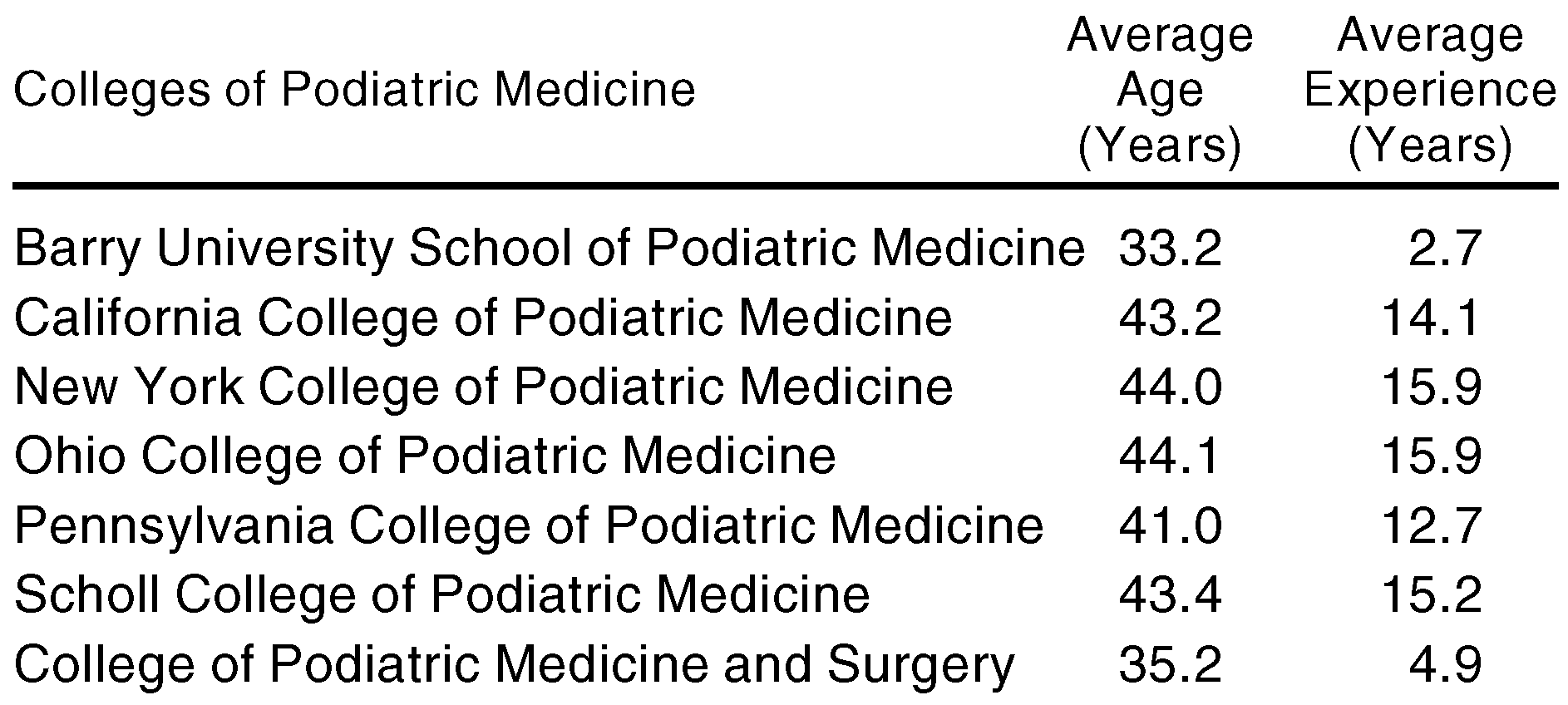
The length of time that the various colleges have been in operation was reflected in the average age of their graduates. Graduates of the Barry University School of Podiatric Medicine and the College of Podiatric Medicine and Surgery at the University of Osteopathic Medicine and Health Sciences were much younger than graduates of the five other more established colleges. (This explains the differences in current student loan debts among the colleges, as discussed later in this section) (
Table 2.)
Podiatric Residency Programs. Most respondents completed residency programs (87.2%). In total, 61.4% completed residency programs in surgery, ie, podiatric surgery residency (PSR) programs. Thus, respondents completed the following podiatric medicine residency programs in surgery: PSR-12 (38.6%), PSR-24 (20.1%), and PSR-36 (2.7%).
Some 8.7% completed a preceptorship. Fewer respondents completed the following programs: rotating podiatric residency (RPR) (7.1%), podiatric orthopedic residency (POR) (2.3%), and primary podiatric medical residency (PPMR) (0.5%). Another 4.2% completed a residency program other than those listed in the survey, eg, a program in the military service. Some 3% completed multiple programs, for a combined total of 7.2%.
If respondents completed both an RPR and a PSR program, they were credited with completing the PSR program and appear in those counts. Such respondents do not appear in the data as having completed “other/multiple” programs. Also note that 12.8% indicated that they have not completed any podiatric residency program. Some were older members who began practice before these programs existed. A few indicated that they did not recognize or understand the abbreviations used for the programs. The base for this analysis was 8,849 weighted cases.
Practice experience was strongly related to completion of a residency program in podiatric medicine. Most members with more than 35 years of practice experience did not complete a residency program (76.1%), but the majority of members with fewer than 35 years of experience have done so. For example, 100% of members with 0-2 years of experience have completed residency, as have 99.6% of members with 3-5 years experience. Rates of completion of surgical residency programs also varied with experience, and were much higher among members with fewer than 25 years of experience, especially those with fewer than 15 years of experience (71%-81%).
Current Amounts of Student Loan Indebtedness. In total, 47.6% of respondents reported some amount of current student loan indebtedness as of the survey date of July 1996. Most respondents had no student loan indebtedness (52.4%). The base for this analysis was all of the active respondents (8,867 weighted cases). For respondents reporting any student loan indebtedness, amounts ranged from less than $10,000 to more than $150,000. The majority had a current total amount of student loan indebtedness of less than $10,000 (57.1%). Another 23.7% had outstanding student loans of between $10,000 and $100,000. However, 19.2% had a total student loan indebtedness in excess of $100,000. The average current student loan debt was $38,735, but the median amount was $0 since most members had no debt.
Correlates of the Current Amount of Student Loan Indebtedness
A series of analyses was performed to identify factors related to the amount of current student loan indebtedness for members of the APMA with any indebtedness in 1996. This analysis included examination of demographic factors and educational and practice characteristics. The criterion used in this analysis was total current student debt of more than $75,000 or less ($0-$75,000). This analysis included members with no current student loan debts. This section of the report describes relationships that were statistically significant (p < 0.05) when tested using chisquare analysis.
Practice Factors
In 1996, current amounts of student loan indebtedness were related to the following practice characteristics:
- 1)
practice arrangements: Practicing in a multispecialty group (26.8% had debts of more than $75,000), podiatric medical group (23.5%), partnership (23.7%), HMO (25%), or the military service (31.3%) as opposed to an educational institution (19.6%), solo practice (15.7%), or the VA (11.8%);
- 2)
practice ownership status: Being the employee in a private practice arrangement (41.4% had debts in excess of $75,000) instead of being the owner (15.5%);
- 3)
geographical location: Practicing in the following states: AL, CO, ID, KS, MN, MS, MT, NE, NM, TN, WI, or WY (more than 30% in each state had student debts of more than $75,000);
- 4)
practice location; urban or rural: Practicing in a rural area (26.7% had debts over $75,000) as opposed to an urban area (18%) or suburban area (17%);
- 5)
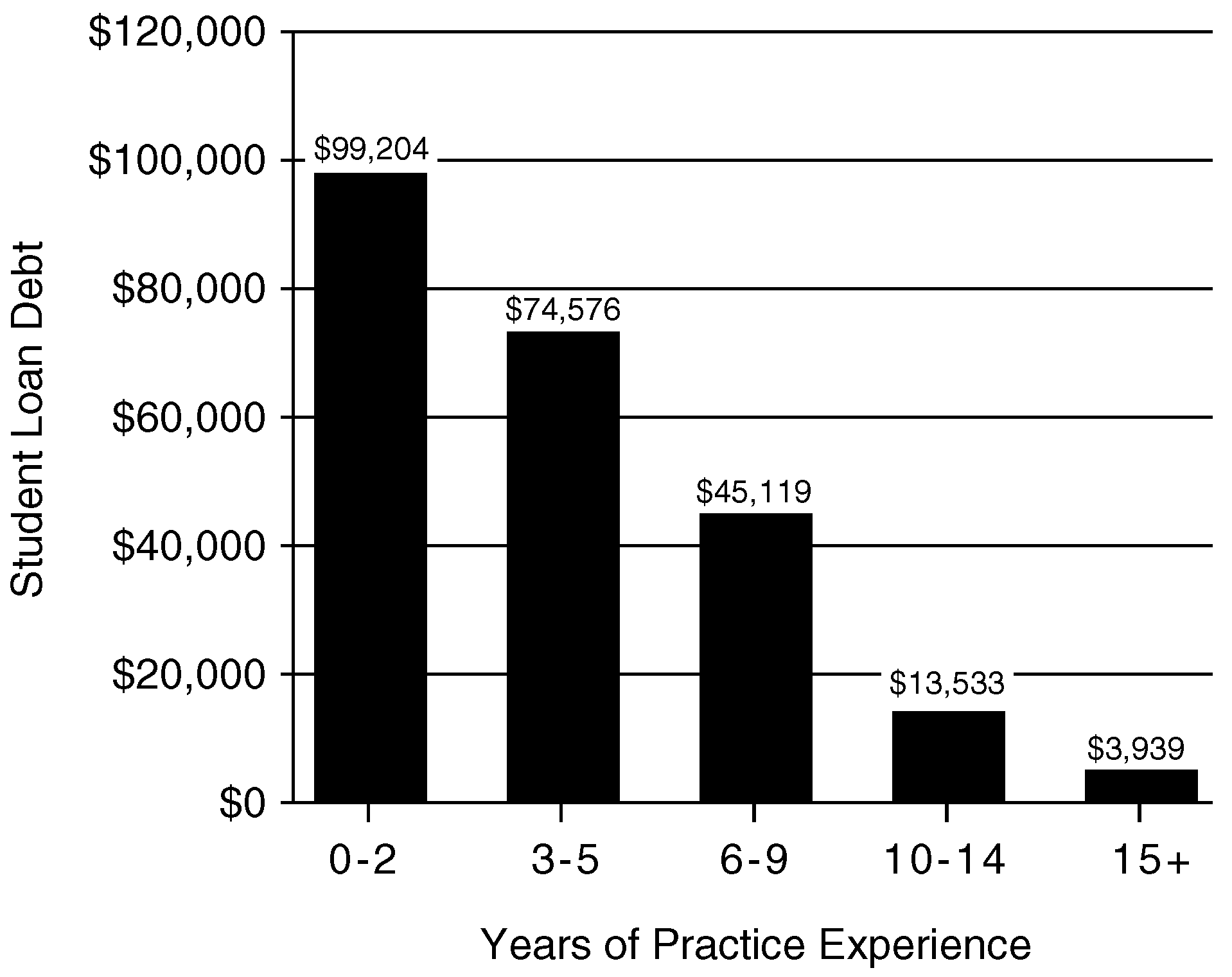
experience: Having fewer than 15 years of practice experience was related to higher amounts of student loan indebtedness (Among members with 0-2 years experience, 77.8% had debts greater than $75,000). Only 2%-3% had debts after 15 years;
- 6)
service on HMO or PPO panels: The more HMO and PPO panels on which members served, the lower their student loan indebtedness;
- 7)
months practicing podiatric medicine in 1995: Members who practiced 10-12 months of 1995 had much lower rates of student loan indebtedness than members who practiced 1-9 months (Among these members, 68.2% had debts of over $75,000);
- 8)
number of hours worked per week in 1995: The more hours the members worked per week, the lower their student loan indebtedness. However, the relationship was weak and nonlinear;
- 9)
typical number of patient visits per week in 1995: The fewer patient visits per week, the higher the amounts of student loan indebtedness (36.6% had debts more than $75,000 among those who saw fewer than 40 patients a week);
- 10)
the percentage of the day spent seeing patients in 1995: The smaller the percentage of the day that members spent seeing patients, the higher their amounts of student loan indebtedness (25.3% had debts over $75,000 among those who spent less than half time seeing patients); and
- 11)
volume of bone surgeries performed in 1995: The highest rate of debt was reported by members who did 15-49 surgeries in 1995 (24.3%). Members who did more than 50 surgeries or fewer than 15 had lower rates of debt in excess of $75,000.
Educational Background Factors
Current amounts of student loan indebtedness were related to the following educational background characteristics of APMA members:
- 1)
graduates of the newer colleges of podiatric medicine reported higher amounts of current student loan indebtedness (64.7% of Barry University School of Podiatric Medicine graduates had student debts over $75,000, as did 69.2% of graduates of the College of Podiatric Medicine and Surgery. Rates of 15%-19% were reported by graduates of the other five colleges);
- 2)
completion of the following types of podiatric residency programs was related to higher amounts of student loan indebtedness: RPR (32.3% had debts over $75,000), PSR-24 (31.2%), or PSR-36 (37.7%); and
- 3)
board certification in the following organizations was related to lower amounts of student loan indebtedness: American Board of Podiatric Orthopedics (ABPO), American Board of Podiatric Surgery (ABPS), and American Board of Podiatric Orthopedics and Primary Podiatric Medicine (ABPOPPM) or other organizations.
Student loan indebtedness was not related to certification by American Board of Public Health (ABPH), but few respondents were so certified.
Demographic Factors
Current amounts of student loan indebtedness were related to the following demographic characteristics of APMA members:
- 1)
age: Higher amounts of student loan indebtedness were reported by members aged 35 years or younger (52.5% had debts of $75,000 or more). Older members reported lower amounts of student loan indebtedness;
- 2)
gender: Fewer male podiatric physicians reported student loan indebtedness in excess of $75,000 (16.3%) than female podiatric physicians (39.9%); and
- 3)
ethnic background: Lower amounts of student loan indebtedness were reported by white (non-Hispanic) members (17.5% had debts greater than $75,000) and by Native American members (10%). Higher rates were found for Asian and Pacific island members (32.3%), blacks (65.4%), and Hispanics (46.2%). The number of respondents in the latter categories is quite small, so results for these groups may be unreliable.
Best Predictors of Current Amounts of Student Loan Indebtedness in 1996
An additional analysis was performed to determine which factors in combination best predicted total amounts of student loan indebtedness for members of the APMA in 1996. Stepwise linear multiple regression was used to identify the factors in the order that best predicted current student loan debt for members.
The factors that best predicted the amounts of current student loan indebtedness in 1996 were, in order of selection:
- 1)
years of practice experience (multiple R = 0.555);
- 2)
board certification by podiatric medical organizations (multiple R = 0.599); and
- 3)
graduation from the newer podiatric medical colleges (multiple R = 0.617).
The first factor selected by the computer (years of practice experience) was highly correlated with student loan indebtedness (r = 0.555) and explained 31% of the variance in reported student debt. The relationship was negative, ie, the more experience, the lower the debt, as members retired their student debt obligations.
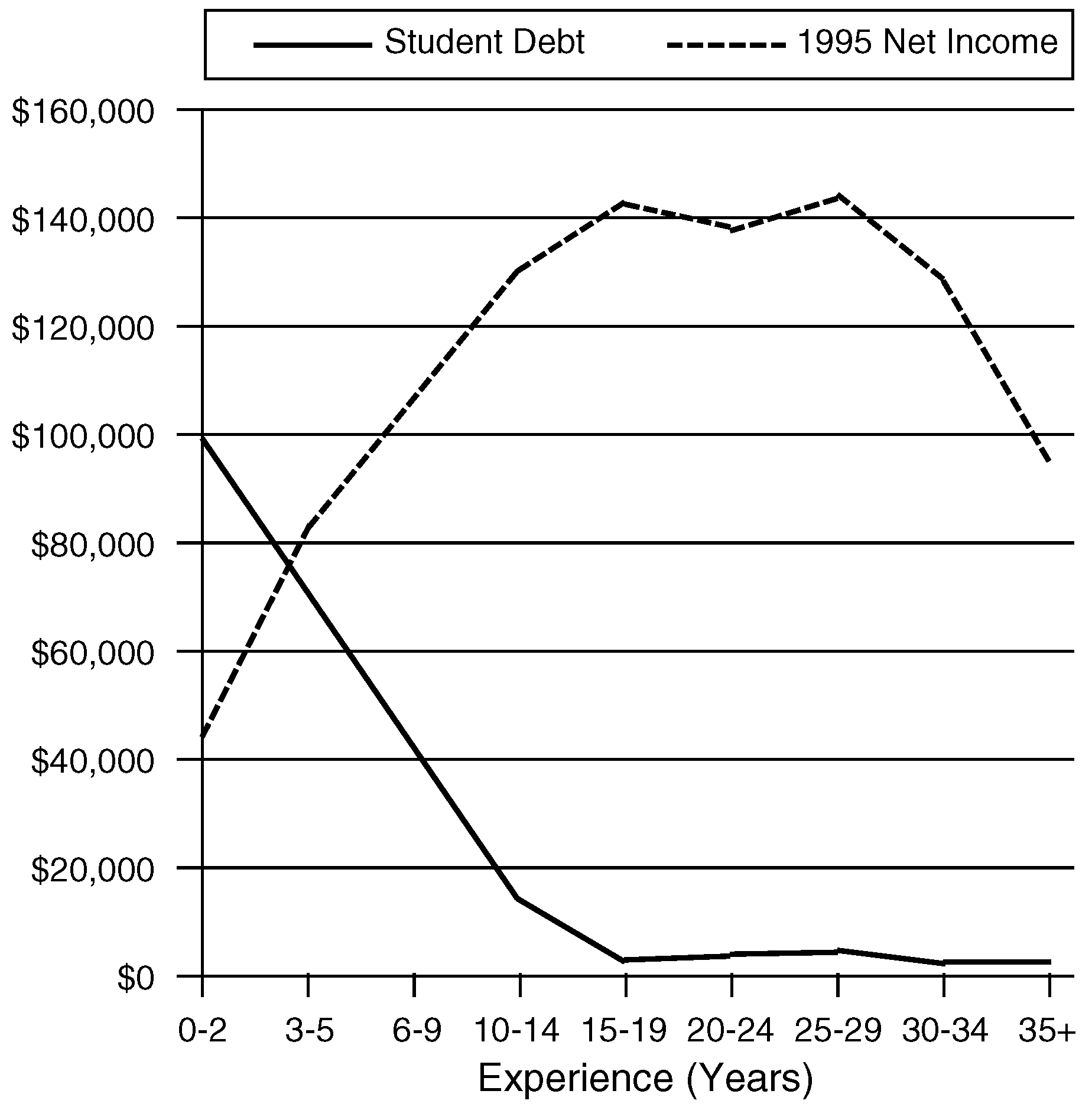
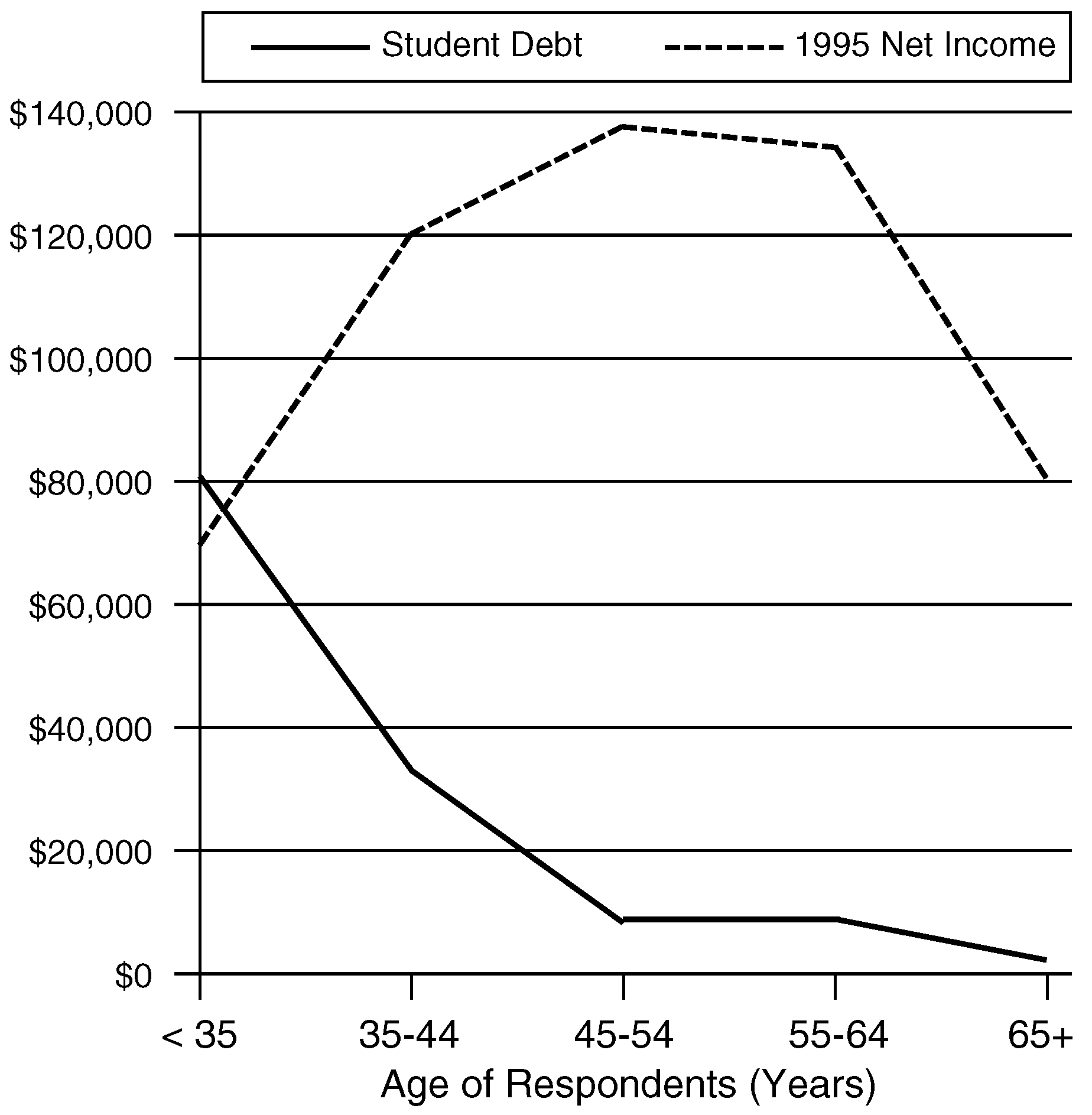
Figure 1 illustrates the relationship of practice experience to the amounts of student loan indebtedness in 1996. Debt averaged almost
$100,000 for members with fewer than 3 years of experience, but then decreased for members as they gained additional experience. After 15 years of experience, average debt was less than
$4,000, and even that figure may be inflated by the confusion of some older members as to the type of debt being reported.
Additional Predictors of Current Student Loan Debt
Certification by a podiatric board was also related to student loan indebtedness in a negative manner. Members certified by ABPS, ABPO, ABPH, or ABPOPPM had much lower debts (average debt: $19,208) than did members not certified (average debt: $42,371). This finding may reflect the fact that older members were certified at higher rates than younger members. Addition of this second factor to the prediction equation resulted in a multiple R = 0.599 that increased the percentage of variance explained to 36%.
Graduates of the two newer colleges reported much higher average current student loan debts than graduates of the other five colleges. Graduates of Barry University had average debts of $90,686 and graduates of the College of Podiatric Medicine and Surgery had average debts of $93,887. In contrast, graduates of the other colleges had debts in the range of $23,000-$29,000. Adding this factor to the prediction equation resulted in a multiple R = 0.617 that increased the percentage of variance explained to 38%.
The complexity of predicting student debt was indicated by the fact that the computer selected 14 of the 23 possible predictors. However, inclusion of the subsequent factors did not increase the prediction of current student loan indebtedness much beyond the level of prediction achieved using only the first three factors. After adding 11 more factors, the final equation still explained only 42% of the variance.
Ratio Analyses: Student Loan Debt Versus Net Income in 1995
The relationship between current (1996) student loan debt and net incomes in 1995 was evaluated. An analysis was done to compare student debt with net incomes for members who reported data on both measures so that comparisons could be made on an individual basis. The base for this analysis was the 4,177 respondents who provided data on both their current student debt and their 1995 net income.
Methodologic Note
In this survey, both student loan indebtedness and net income were reported as ranges, not as specific dollar amounts. To compare debt with net incomes required conversion of the range values into specific dollar amounts for both measures that could then be compared using division. In each case, the midpoints of each range were used to represent the specific dollar amounts for each respondent. Then the inferred amount of debt value was divided by the inferred net income value to generate an estimated debt-to-net income ratio for each respondent. Values over 1.00 mean that outstanding debt in 1996 exceeded total 1995 net income. At the other extreme, values near 0.00 imply that current debt was a small percentage of annual net income.
For respondents in total, the average ratio of debt-to-net income was 0.0 for 1995, indicative of the fact that most members had no debt. The median ratio of debt-to-net income was also 0.0 for 1995. The range of debt-to-net income ratios found in this analysis was from 0.0 to 22. Stepwise linear regression analysis was done to identify which members enjoyed higher debt-to-net income ratios, ie, have higher debt obligations relative to their net incomes. The analysis was only moderately successful.
The following variables were significantly related to current debt-to-net income ratios: 1) years of practice experience (multiple R = 0.316); 2) months worked in 1995 (multiple R = 0.422); and 3) patient visits per week in 1995 (multiple R = 0.465).
Best Predictor Analysis of Student Debt-to-net Income Ratios
Current student debt amounted to approximately 350% of the net income of members with 0-2 years experience. Experience accounted for 10% of the variance in student debt.
Additional Factors in Debt-to-net Income Ratios
Members who worked only 1-9 months in 1995 were likely to have much higher debt-to-net income ratios in 1995 (5.23) than were their colleagues who worked 10 or more months (0.54 –0.55). Addition of this second factor to the prediction equation resulted in a multiple R = 0.422 that increased the percentage of variance explained to 18%.
Patient visits per week were also negatively related to current debt-to-net income ratios. Members with fewer than 40 patient visits a week in 1995 had much higher ratios (3.07) than colleagues who saw more than 170 patients per week (0.25). Addition of this third factor to the prediction equation resulted in a multiple R = 0.465 that increased the percentage of variance explained to 22%.
Addition of other factors only marginally improved prediction. When all nine of 23 factors selected by computer were included, they only increased the percentage of variance explained to 25%. However, two other factors merit mention. Gender was related to debt-to-net income ratios found in this study. Male podiatric physicians had a ratio of 0.56 compared with 1.92 for female podiatric physicians. Age was also related to the debt-to-net income ratios. Members younger than 35 years had an average ratio of 2.24, compared with 0.54 for members ages 35-44 years, 0.15 for members ages 45-64 years, and 0.06 for members aged 65 years or older.
However, age and gender were not as strongly correlated to the ratios of debt-to-net income as the other factors in this study. Age and gender were not selected among the best three variables.
Because the debt and income data used in this analysis were interpolated, the ratios may not correspond to the values that would be obtained if members were asked for the specific dollar amounts of their outstanding loans and 1995 net income. The tradeoff was made between asking for less precise information on debt and particularly income in an attempt to increase member participation in the survey. Access to specific dollar amounts of debt and net income from members is preferable, if it does not jeopardize member participation.
Implications of Student Loan Debt
These findings imply that it takes members many years to pay off the balance of their student loans, ie, up to 15 years. The initial debt burden on younger members with fewer than 3 years of experience was notable. As members age and gain more practice experience, their net incomes increase, resulting in smaller percentages of net income necessary to repay their loans.
Fortunately, members with the most debt enjoyed recent increases in their net income, improving their ability to repay debt. Indeed, 68.3% of the members with student loan indebtedness in excess of $75,000 reported an increase in their net income from 1994 to 1995. In contrast, only 15% reported a decrease in their net income over this period (16.7% said that their incomes were approximately the same).
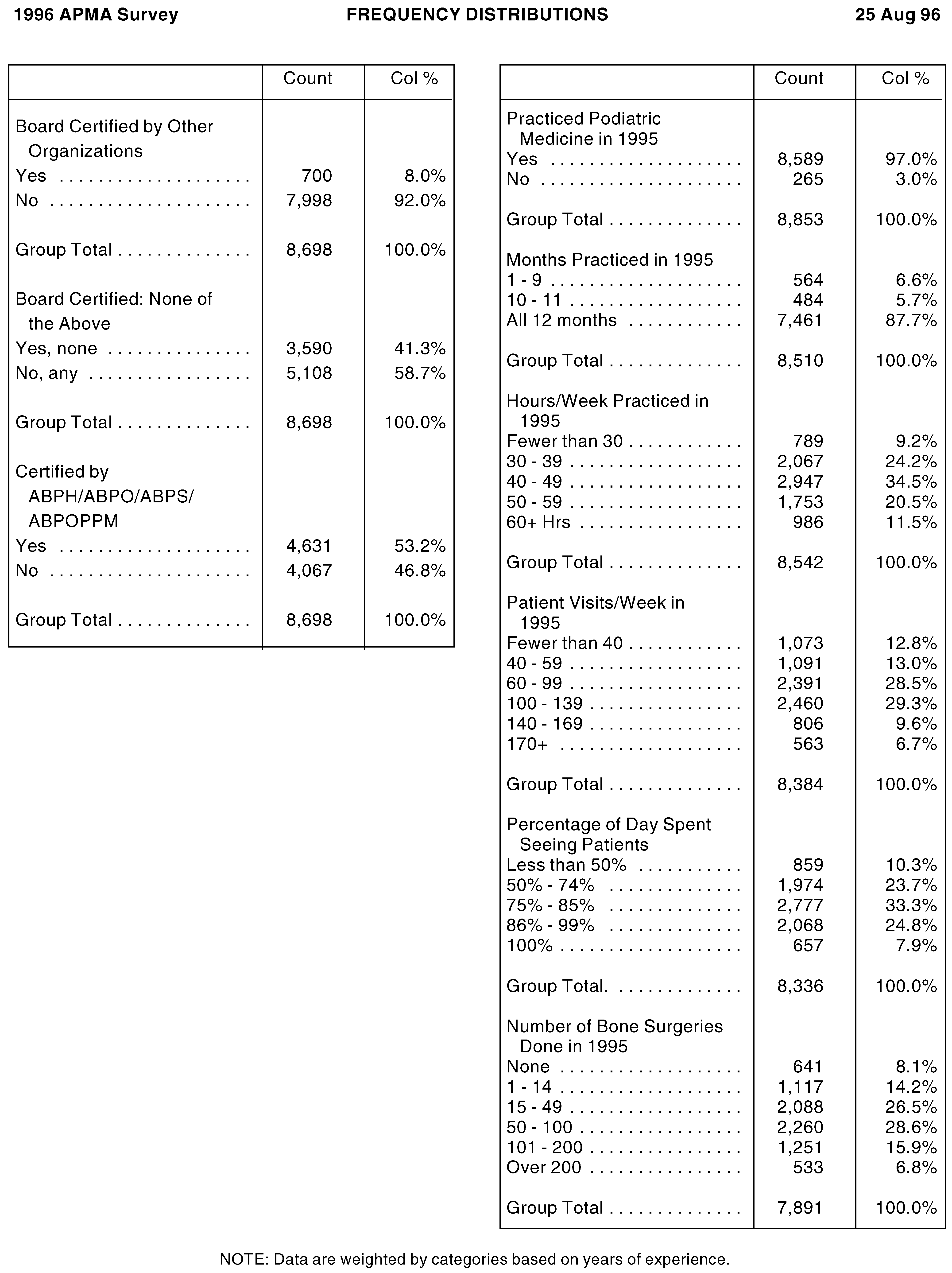
Board Certification. Most respondents are board certified by one or more of the following four organizations: ABPH, ABPO, ABPS, or ABPOPPM (53.2%). Only 46.8% were not certified by any of these organizations. The base for this analysis was all active respondents (8,698 weighted cases).
In total, 42.2% of respondents were board certified by ABPS, 12.7% by ABPO, and 9.5% were board certified by ABPOPPM. Few respondents were board certified by ABPH (0.6%). Only 8% were board certified by an organization other than those listed, eg, American Council of Certified Podiatric Physicians and Surgeons.
Female members of the APMA were less likely to be board certified by one of the four podiatric medical organizations (42.9%) than were their male counterparts (62.6%). In particular, female members were much less likely to be board certified by ABPS (24.7%) than were male members (50.9%). Female members were also less likely to be board certified by ABPO (11.7%) than were male members (15.1%).
In contrast, female members were more likely to be board certified by ABPOPPM (13.6%) than were male members (10.5%), although the difference in rates is small. Only a small difference in board certification rates by gender was found for ABPH. The difference for ABPH was not large enough to be statistically significant. Certification by the podiatric medicine boards was related to the extent of practice experience of members of the APMA. Few of the members with fewer than 3 years of experience (0-2 years) were certified by any of the four podiatric medical organizations (13.1%), perhaps because of the considerable length of time required for certification.
In contrast, more than 70% of members with 6-19 years of experience were certified. Certification rates declined for members with 20 or more years of experience. Only 28.3% of members with more than 35 years of experience were certified. Age was also related to certification by boards of podiatric medicine. Higher board certification rates were reported by members between the ages of 35-64 years (68.3%) than by members younger than 35 years (37.7%) or older than 64 years (27.1%).
1995. Practice Experience
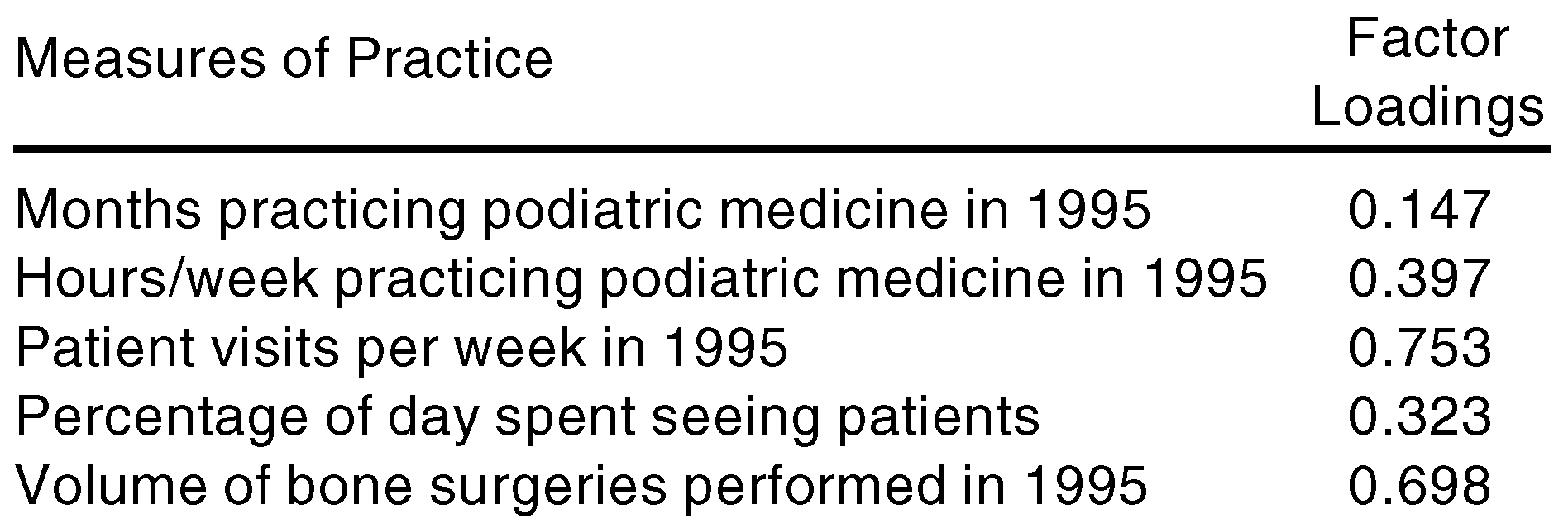
The practice of podiatric medicine in 1995 was examined in detail. Members of the APMA were queried as to the number of months worked in 1995, and the average number of hours worked each week. Patient visits per week were ascertained, as was the percentage of time which members spent seeing patients each day. The volume of bone surgeries performed in 1995 was also determined.
Practice of Podiatric Medicine in 1995. Most active respondents indicated that they practiced podiatric medicine in 1995 (97%). Only 3% did not practice podiatric medicine in 1995. The base for this analysis was 8,853 weighted cases.
Members who indicated that they practiced podiatric medicine in 1995 were eligible to answer subsequent questions about their practice experience. The base for these detailed analyses was the 8,589 weighted cases representing active respondents who practiced podiatric medicine in 1995.
Months Practicing Podiatric Medicine in 1995. Most respondents who practiced podiatric medicine in 1995 worked all 12 months of the year (87.7%). Another 5.7% worked 10 or 11 months in 1995. Only 6.6% practiced podiatric medicine less than 10 months in 1995. Members worked an average of 11.5 months in 1995. The base for this analysis was 8,510 weighted cases.
Practice arrangement was related to the number of months that members spent practicing podiatric medicine in 1995, although the differences by practice setting were modest. Members in educational institutions practiced 11.3 months on average, compared to 11.8 months for members in solo practice, and 11.7 months in podiatric medical groups and multispecialty groups. Members in the VA and military averaged 11.9 months. This compares with 11.6 months for members in partnerships, and 11.7 months for members in HMOs.
Age was also a factor in the number of months worked in 1995. Members older than 35 years of age worked 11.9 months on average, compared with 11.2 months for members younger than 35 years of age.
Gender was a significant factor in months worked. In 1995, female members worked 11.3 months on average, compared with 11.8 months for male members.
Ownership of the practice was also related to months worked in 1995. Owners averaged 11.8 months compared with 11.1 months for employees.
However, urban versus rural practice location was not a factor in the number of months that members practiced podiatric medicine in 1995. Members in urban areas averaged 11.7 months, compared with 11.8 months in suburban areas, and 11.7 months in rural settings. These differences were not statistically significant.
Average Hours per Week Spent Practicing Podiatric Medicine in 1995. Most respondents who practiced podiatric medicine in 1995 practiced between 30 and 59 hours per week, on average (79.1%). Another 11.5% worked more than 60 hours a week. Only 9.2% practiced fewer than 30 hours per week. The base for this analysis was 8,542 weighted cases.
The average number of hours per week spent practicing podiatric medicine in 1995 was 42.2 hours. The median number of hours was 40 hours (half spent less; half spent more). The range was from 3 hours to 110 hours per week. Several demographic factors were related to the number of hours per week that APMA members devoted to practicing podiatric medicine.
Gender was related to hours worked per week in 1995. Female members worked 39.9 hours per week on average. Male members averaged 42.5 hours per week. Age was a major factor in the number of hours worked per week by APMA members. The longest hours worked per week were reported by members aged 35-44 years (44 hours), followed by members younger than 35 years (43.7 hours).
Hours worked per week declined for members after the age of 44 years. Members 64 years and older averaged 29.4 hours per week in 1995. Practice arrangement was related to the number of hours worked per week by members in 1995. Members in educational institutions practiced 41.0 hours a week on average, comparable to the 41.7 hours a week averaged by members in solo practice. Longer hours were reported by members who practiced in group settings. This finding included 43 hours a week for members in partnerships, 43.7 hours a week for members in podiatric medical groups, and 44.4 hours a week for members in multispecialty groups.
Members in HMOs practiced 45.3 hours a week on average, the longest hours reported.
Members in the military averaged 41.9 hours a week, while members who practiced in the VA averaged 40.7 hours a week.
Urban versus rural practice location was not a factor in the number of hours a week that members practiced podiatric medicine in 1995. Members in urban areas averaged 42 hours a week, compared with 42.4 hours a week in suburban areas, and 42.2 hours a week in rural settings.
Practice ownership was also not a factor in the number of hours a week that members practiced podiatric medicine in 1995. Members who owned their practices averaged 42.2 hours a week, approximately the same as the 42.6 hours a week averaged by employees.
Patient Visits per Week in 1995. Most respondents who practiced podiatric medicine in 1995 had a caseload of 60 to 139 patient visits per week (57.8%). Another 25.8% had fewer than 60 patient visits a week, while 16.3% saw 140 or more patients each week in 1995. The base for this analysis was 8,384 weighted cases.
The average number of patient visits a week was 92, similar to the median number of patient visits a week (90 visits). The range in reported patient visits per week was from as few as one per week to as many as 600 a week.
The gender of the respondent was strongly related to patient visits per week, with male podiatric physicians seeing far more patients than female podiatric physicians. In 1995, female members averaged 78.5 patient visits per week, compared with 99.2 patient visits per week for male members.
Practice arrangement was related to the number of patient visits per week reported by members in 1995. Thus, members in educational institutions reported only 68.5 visits a week on average, compared with 91.4 visits a week for members in solo practice.
Members in the military averaged only 78.7 patient visits a week, while members who practiced in the VA averaged 99.8 visits a week.
Larger caseloads were reported by members who practiced in group settings. Members in partnerships averaged 108.1 patient visits a week, compared with 115.6 visits a week for members in podiatric medical groups, and 100.3 visits a week for members in multispecialty groups. Members in HMOs averaged 105.3 patient visits per week.
The age of the member was also related to the number of patient visits per week. The relationship was curvilinear. Members aged 35-64 years had the most patient visits per week (averaging more than 100). In contrast, members younger than 35 years reported 78.9 patients visits per week, while members older than 65 years averaged 72.4 patient visits per week. Practice ownership was also a factor in patient visits: Owners averaged 98.2 patient visits a week, compared to 91.7 visits for employees.
Practice location (urban versus rural) was not a factor in the number of patient visits per week for members who practiced podiatric medicine in 1995. Members in urban areas averaged 95.4 visits a week, compared with 97.8 visits a week in suburban areas, and 97.7 visits a week in rural settings.
Percentage of the Day Spent Seeing Patients. In 1995, most respondents spent between 50% and 99% of their day seeing patients (81.8%). Another 10.3% spent less than half of their time seeing patients. However, 7.9% spent 100% of their time seeing patients. The base for this analysis was 8,336 weighted cases.
The average percentage of the day spent seeing patients in 1995 was 74%, and the median percentage of the day spent seeing patients was 80%. The range in time spent seeing patients was from 0% to 100% of the time. This question proved ambiguous to respondents and extreme caution should be exercised in the use of these results. Thus, some respondents interpreted this question as the percentage of time spent in a 24-hour day, instead of the percentage spent in a typical working day of approximately 8 hours.
Gender was related to the percentage of time spent seeing patients. In 1995, female members spent 71.3% of their time seeing patients on average, compared with male members who spent 76.2% of their time seeing patients.
Age was also related to time spent seeing patients. Members aged 35-64 years spent more time seeing patients (76% to 79% of their day) than did younger members (69.7% of the day for members under 35 years) and older members (71% of the day for members 65 years of age and older).
Practice arrangement was strongly related to the percentage of time devoted to seeing patients in 1995. Thus, members in educational institutions spent only 57.8% of their time seeing patients on average, compared with members in solo practice who spent 75.2% of their time seeing patients.
Members in the military spent 78.9% of their time seeing patients, while members who practiced in the VA spent 69.5% of their time. Members who practiced in group settings tended to spend more of their time seeing patients. This finding includes 76.9% of their time spent seeing patients by members in partnerships, 77.6% spent seeing patients by members in podiatric medical groups, and 78.5% spent seeing patients by members in multispecialty groups.
On average, members in HMOs spent 84.7% of their time seeing patients. This was the highest average percentage of time spent with patients.
Practice location was a statistically significant albeit minor factor in the percentage of time that members spent seeing patients. Members in rural areas on average spent 78.2% of their time seeing patients, compared with members in suburban areas who spent 75.3% of their time, and urban members who spent 75.4% of their time seeing patients.
Volume of Bone Surgeries Performed in 1995. Most respondents performed between 15 and 100 bone surgery procedures in 1995 (55.1%). Another 22.3% did fewer than 15 bone surgeries. However, 22.6% performed more than 100 bone surgeries in 1995. Some 6.8% reported performing more than 200 bone surgeries. The base for this analysis was 7,891 weighted cases.
The average number of bone surgeries done in 1995 was 78.8, but the median number of bone surgeries was only 50, indicating that a few members reported very high volumes that skewed the average upward. The range in volume of bone surgeries performed was from 0 to 3,000 surgeries.
Gender was highly related to the volume of bone surgeries performed by members in 1995. While female members did 48.6 bone surgeries on average, male members averaged 87.8 of these procedures. Age was also related to procedural volume. The fewest procedures were done by the youngest and oldest members. Members younger than 35 years averaged 58.8 bone surgeries, and members older than 65 years averaged 29.2 such procedures. Higher volumes were reported by members aged 35-44 years (79.7 procedures), aged 45-54 years (108.8 procedures), and aged 55-64 years (114.4 procedures).
Practice location was also a factor in the number of bone surgeries performed. Members in urban areas averaged 90.9 procedures, compared with 78.3 bone surgeries by members in suburban areas, and 79.3 bone surgeries by members in rural areas.
Practice arrangement was significantly related to the volume of bone surgeries performed in 1995. Members in educational institutions averaged 69.1 such procedures, and members in solo practice performed 72.3 bone surgeries on average.
Members in the military averaged 100.7 bone surgeries, almost twice as many as members who practiced in the VA. Members in the VA averaged 51.6 bone surgeries. Members who practiced in group settings, however, tended to perform more bone surgery procedures than members in other private practice arrangements.
On average, 99.1 bone surgeries were done in 1995 by members in partnerships, 114.1 by members in podiatric medical groups, and 100.9 by members in multispecialty groups. On average, members in HMOs performed 145.6 bone surgeries in 1995, the highest average volume reported.
Summary. Findings from this 1996 survey confirmed the following hypotheses. First, members in group practice arrangements and partnerships worked more months of the year and more hours of the week, saw more patients, spent more of their time seeing patients, and performed more bone surgeries than their colleagues in solo practice.
Second, male members worked more months of the year and more hours each week, saw more patients, spent more time seeing patients, and performed far more bone surgeries than their female colleagues.
Third, patient visits per week and percentage of time spent seeing patients (as well as bone surgery volume) were related to member age in a curvilinear manner. The higher numbers were reported by members between the ages of 35 and 64 years. Lower numbers were given by members either younger than 35 years or older than 64 years.
Fourth, practice ownership was a factor in months worked and patient visits, as owners worked harder than employees. But there were no significant differences between owners and employees in hours worked per week, percentage of the day spent seeing patients, or number of bone surgeries performed,
Finally, podiatric physicians in HMOs worked the longest hours, reported the highest average number of bone surgeries, and spent a higher percentage of their day seeing patients than members in any other practice arrangement. The extent to which practice intensity was rewarded by income is indicated in the following section. Also see the Discussion section for trends in podiatric practice over time.
1995. Physician Income
The survey requested information from members of the APMA on both their net incomes and gross incomes for the reference year of 1995. The base for these analyses was active members who practiced podiatric medicine in 1995.
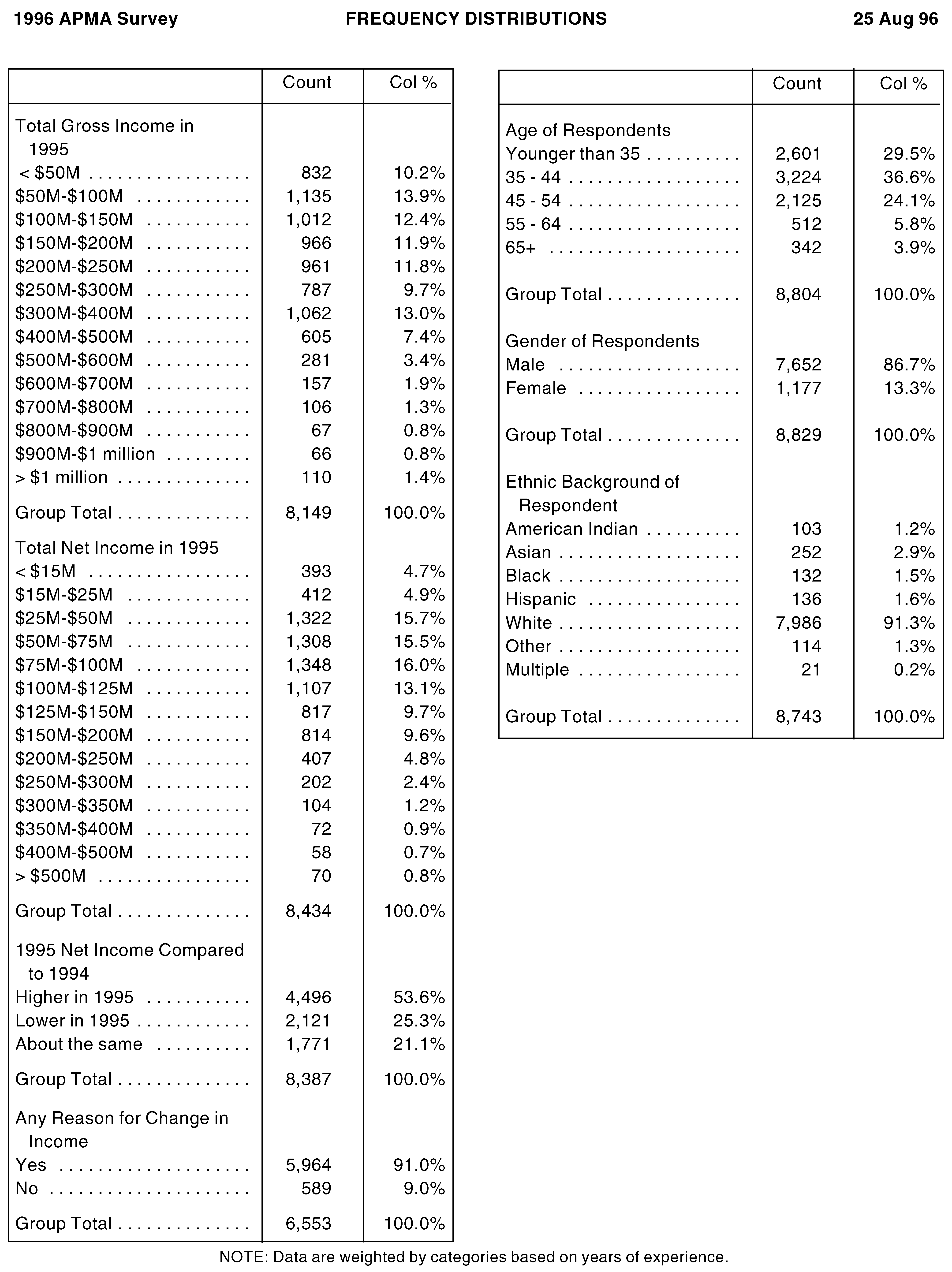
Gross Income in 1995. Each participant was asked, “What was your total gross income in 1995?” A checklist with 14 income ranges was provided for response. Ranges were selected to correspond to the ranges used in a prior survey of physician income. Ranges were provided for respondent convenience, and to encourage responses when exact information might be unavailable or when respondents were reluctant to disclose this sensitive information, even on an anonymous confidential survey.
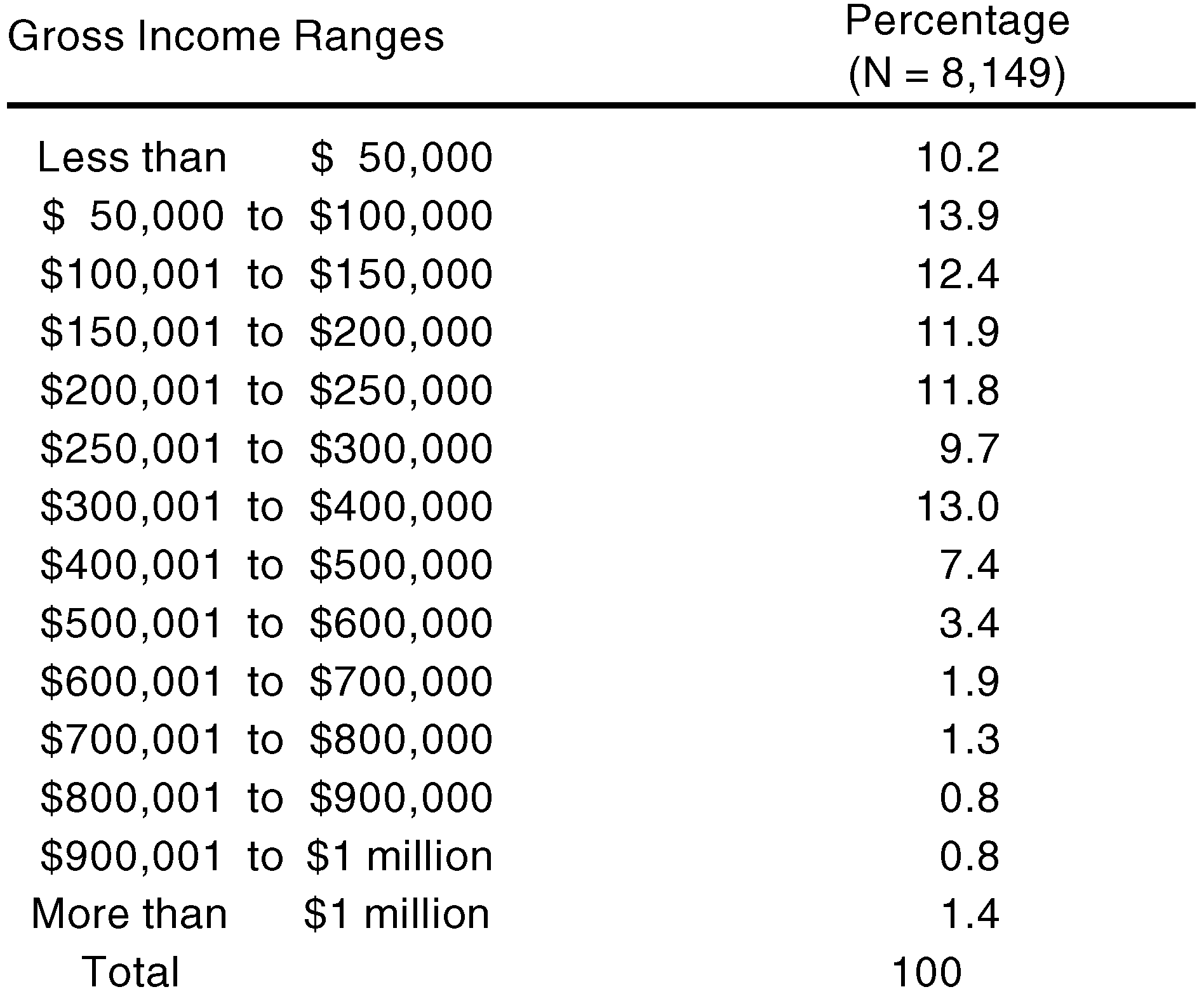
Most eligible respondents answered this question (94.4%), although 5.6% left it blank. The base for this analysis was active members who practiced podiatric medicine in 1995 (8,149 weighted cases). Almost half of the respondents reported total gross incomes for 1995 of between $100,001 and $300,000 (45.8%). Another 24.1% reported lower gross incomes, ie, $100,000 or less. In contrast, 30.1% reported total gross incomes greater than $300,000.
Only 10.2% had 1995 gross incomes of less than $50,000. At the other extreme, 9.7% grossed more than $500,000 and 1.4% enjoyed a total gross income of more than $1,000,000 in 1995. The average gross income for 1995 was $251,570 (median amount: $225,000).
Table 3 provides complete details on the number and percentage of respondents in each category of 1995 total gross income.
The question on total gross income proved ambiguous to members who shared a partnership or group practice. In some cases, the total gross income for the entire group or partnership was reported. In other cases, the individual contribution of the respondent was given. In a few cases, both values were specified. Often the basis for the response was not identified, however, so the answer was indeterminate. Gross income is best interpreted as reported for solo practitioners, where its value can be attributed directly to the respondent. For members in group practices and partnerships, extreme caution is urged in the use of these survey estimates.
Correlates of 1995 Gross Income
Analyses were performed to identify factors related to the gross income of members of the APMA in 1995. This analysis included examination of demographic factors and educational and practice characteristics. The criterion used in this analysis was total gross incomes greater than $200,000 versus lower amounts ($0-$200,000). The percentage in each subgroup who earned over $200,000 is given in parentheses. This section of the report describes relationships that were statistically significant (p < 0.05) when tested using chisquare analysis.
Practice Factors
Higher 1995 gross incomes were related to the following practice characteristics:
- 1)
practice arrangements: Practicing in a partnership (69% had gross incomes in excess of $200,000), or a podiatric medical group (68.4%), or multispecialty group (61.7%), or solo practice (57.2%), as opposed to an educational institution (17.9%), HMO (12.8%), or the VA or military (0%);
- 2)
practice ownership status: Being the owner of a private practice arrangement (62.9% had gross incomes in excess of $200,000) as opposed to an employee (32.6%);
- 3)
geographical location: Practicing in the following states: AL, KS, KY, NC, SC, or ND (more than 70% had gross incomes in excess of $200,000);
- 4)
practice location; urban and rural: Practicing in a rural area (59.5% had gross incomes in excess of $200,000) or suburban area (60.6%), as opposed to an urban area (54.1%);
- 5)
experience: Having 15-29 years of practice experience (73.9% had gross incomes in excess of $200,000), instead of more or less experience (only 8.2% younger than 35 years had incomes greater than $200,000, as did 37.2% of those older than 64 years);
- 6)
service on PPO and HMO panels: The more PPO and HMO panels on which members served, the higher their gross income. For those serving on ten or more PPO panels, 76.5% had incomes in excess of $200,000, as did 80% of those serving on ten or more HMO panels. In contrast, less than half of APMA members who did not serve on panels reported gross incomes over $200,000;
- 7)
months practicing podiatric medicine in 1995: More members who practiced 10-12 months of 1995 had 1995 gross incomes over $200,000 (59.8%) than members who practiced fewer months (only 6.2%);
- 8)
number of hours worked per week in 1995: The more hours the members worked per week, the higher their 1995 gross incomes (66.1% of members who worked 60 or more hours a week grossed more than $200,000, but this rate decreased to 24.3% for those who worked fewer than 30 hours a week);
- 9)
typical number of patient visits per week in 1995: The more patient visits a week, the higher the 1995 gross incomes (89.4% of members who saw 170 or more patients each week grossed over $200,000. This rate decreased to only 9% for those who saw fewer than 40 patients a week);
- 10)
the percentage of the day spent seeing patients in 1995: The higher the percentage of the day that members spent seeing patients, the higher their 1995 gross incomes. Among members who spent 100% of their time seeing patients, the majority had gross incomes in excess of $200,000 (65%), as did 70.3% of those who spent 86% to 99% of their time seeing patients. When members spent less than half of their time seeing patients, fewer had gross incomes over $200,000 (32.6%); and
- 11)
volume of bone surgeries performed in 1995: The more bone surgeries that members performed in 1995, the higher their 1995 gross incomes (86.9% of members who did more than 200 surgeries grossed over $200,000. This rate decreased to only 16.7% for those who did no bone surgeries in 1995).
Educational Background Factors
Higher 1995 gross incomes were related to the following educational background characteristics of members of the APMA.
- 1)
graduates of the original five colleges of podiatric medicine reported higher 1995 gross incomes (more than 54% had gross incomes over $200,000) than did graduates of the two newer colleges (Barry University School of Podiatric Medicine, 11.6%; College of Podiatric Medicine and Surgery, 46.3%);
- 2)
completion of a PSR-12 podiatric residency program was related to higher gross incomes for 1995 (64.9% had gross incomes in excess of $200,000, more than members with any other residency); and
- 3)
ABPS board certification was also related to higher 1995 gross incomes (76.9% had gross incomes over $200,000, compared with only 41.2% of members without certification). Certification by any podiatric medical organization (ABPS, ABPH, ABPO, or ABPOPPM) was more often related to high gross incomes (70.6%) than noncertification (39.5%), but the major factor was ABPS certification.
Total gross income in 1995 was related also to the current student loan indebtedness reported by participants. Most members who were free of debt had gross incomes over $200,000 (66.9%), but the rate dropped to 44.8% for those with current debt.
Demographic Factors
Higher 1995 gross incomes were related to the demographic characteristics of APMA members:
- 1)
age: Higher gross incomes for 1995 were reported by members between the ages of 35 and 64 (66.2% grossed over $200,000). Younger members and older members each reported lower total gross incomes in 1995 (Under the age of 35, 32.6%; older than 64, 27.2%);
- 2)
gender: More male podiatric physicians reported higher 1995 total gross incomes (61.4% grossed over $200,000) than female podiatric physicians (30.7%); and
- 3)
ethnic background: Higher 1995 total gross incomes were reported by white (non-Hispanic) members (59.5% grossed over $200,000) and by Native American members (57.8%) than by Asian or Pacific island members (36.3%), blacks (30.6%), and Hispanics (33.3%). The number of respondents in the latter categories is quite small (50-100), so results for these groups may be unreliable.
Best Predictors of 1995 Total Gross Income
An additional analysis was performed to determine that factors in combination best predicted total gross income for APMA members in 1995. Stepwise linear multiple regression was used to identify those factors in the study which best predicted gross income in 1995.
The factors that best predicted 1995 gross income were, in order of selection: 1) patient visits per week (multiple R = 0.591); 2) number of bone surgeries (multiple R = 0.676); 3) ownership of the practice (multiple R = 0.705); 4) group practice arrangement (multiple R = 0.714); 5) ABPS board certification (multiple R = 0.721); and 6) years of practice experience (multiple R = 0.726). The first factor selected by the computer (number of patient visits per week) was highly correlated with gross income (R = 0.591) and explained 35% of the variance in reported gross income.
Best Predictor Analysis of 1995 Total Gross Income for APMA Members
The typical member of the APMA had approximately 100 patient visits a week in 1995. Members with fewer patient visits had much lower gross incomes than members who saw more patients each week. In 1995, there was a strong positive relationship between patient volume and total gross income.
Additional Factors in 1995 Total Gross Income
Addition of the second factor (number of bone surg-eries performed in 1995) significantly improved the prediction of gross income. The multiple R increased to R = +0.676 and the percent of variance explained increased to 46% from 33%. This finding implies that bone surgery volume was an important factor in gross income, in addition to the number of patients seen by podiatric physicians each week. The typical member of the APMA performed approximately 50 bone surgeries in 1995. However, members with fewer procedures reported much lower gross incomes than members with higher procedural volumes. Above 15 surgeries per year, there was a strong positive relationship between the volume of bone surgeries performed and total gross income.
Twenty-three variables were considered in this attempt to predict gross income, and 15 were selected for a maximum multiple R = +0.738. This analysis explained more than half of the variance in gross income for members of the APMA in 1995 (54.5%). It is rare that so many factors enter a multiple regression equation. This outcome illustrates the complex nature of gross income for podiatric physicians.
However, most of the prediction of gross income (84%) came from the first two factors of patient visits and bone surgeries, which together explained 46% of the variance.
In contrast, inclusion of the next two better predictors (practice ownership and group practice) had only a marginal effect on prediction. Their addition explained only approximately 5% more of the variance in gross income. Inclusion of those factors, as well as ABPS certification and experience, did not increase the prediction of gross incomes much beyond the level of prediction achieved using the two factors selected initially.
Net Income in 1995. Each participant was asked, “In 1995, which of the following best describes your total net income (after practice expenses, but before taxes)?” Another checklist with 14 income ranges was provided for response. Most eligible respondents answered this question (98.1%), and only 1.9% left it blank. The base for this analysis was active respondents who practiced podiatric medicine in 1995 (8,434 weighted cases).
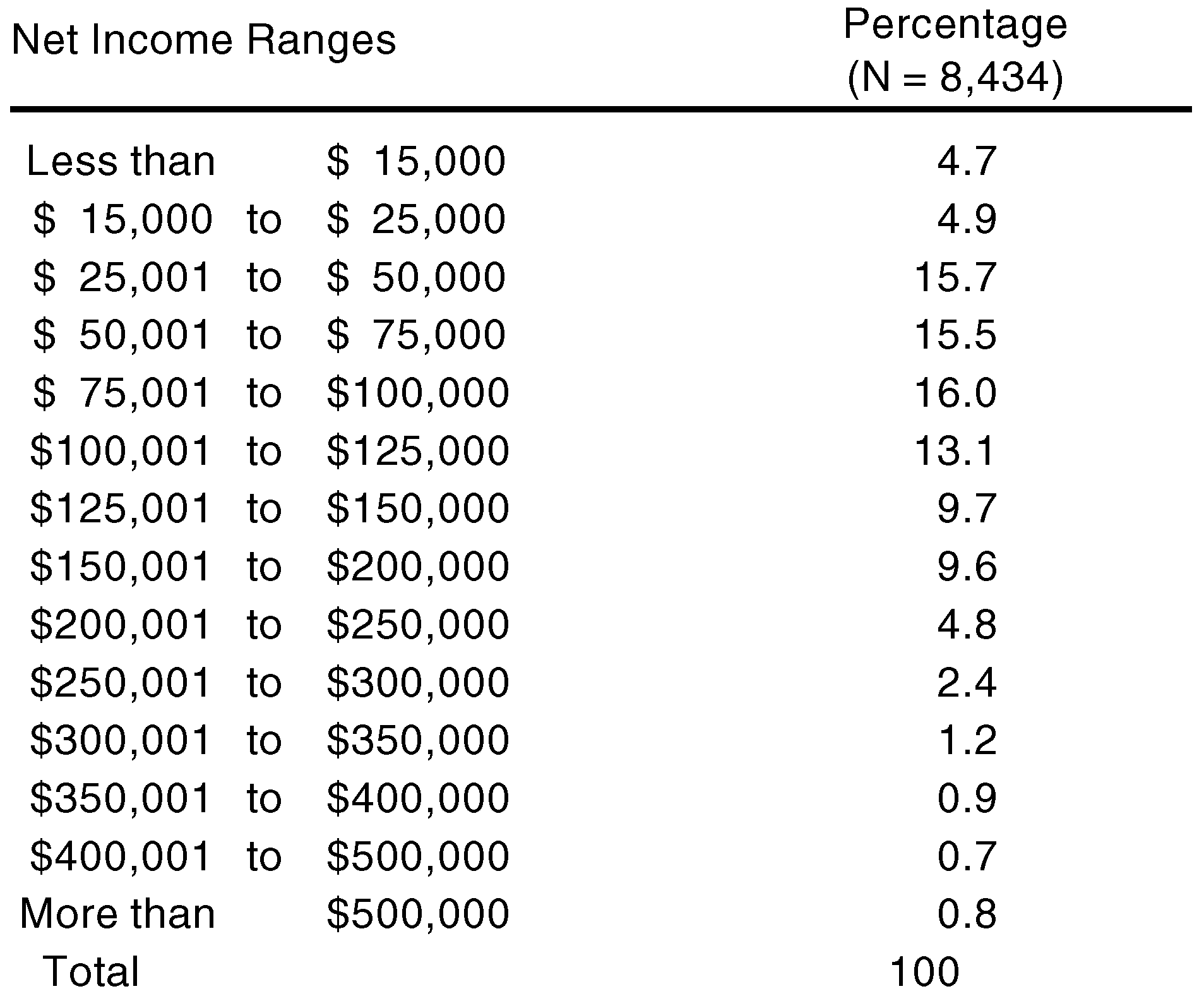
The majority of respondents reported total net incomes for 1995 of $50,001 to $150,000 (54.3%). Another 25.2% reported incomes of $50,000 or less. In contrast, one fifth reported total net incomes in excess of $150,000 (20.5%).
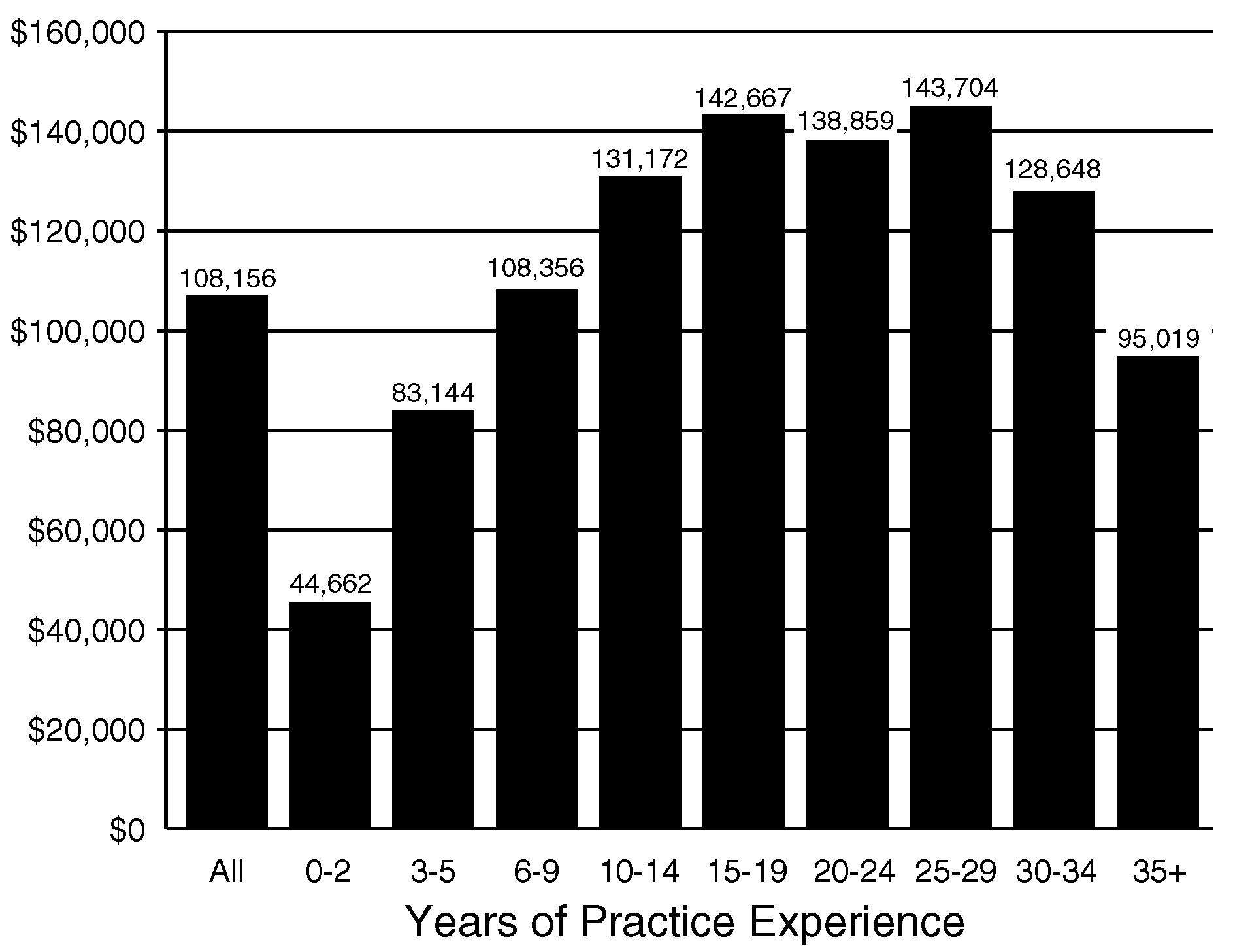
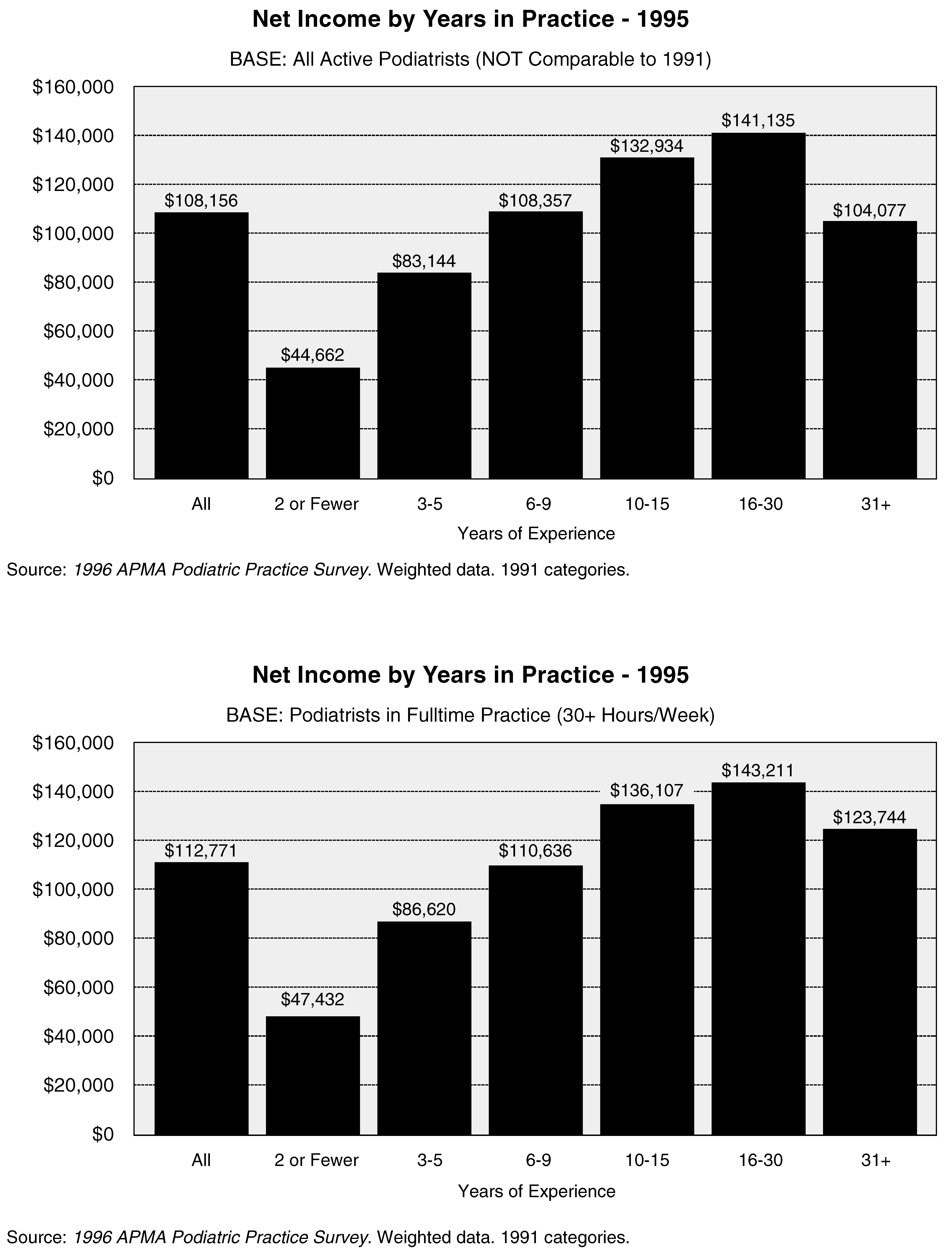
Only 4.7% had 1995 net incomes of less than $15,000, while 4.9% had net incomes of between $15,000 and $25,000. At the other extreme, 10.8% reported a total net income of $200,000 or more in 1995, and 0.8% earned more than $500,000. The average net income for 1995 was $108,156 (median amount: $87,500).
Table 4 provides complete details on the number and percentage of respondents in each category of
1995 total net income.
In the 1992 AACPM survey, the upper-income category provided to respondents was “$240,000 or more” (McNevin, 1993). A relatively large percentage chose that category (6.3%), complicating the interpretation of earnings. In the present survey, 6% had earnings in excess of $250,000 in 1995, and another 4.8% had incomes falling between $200,000 and $250,000. To compensate for the problem observed in the AACPM survey, the present survey used a top category of “more than $500,000.” Even though this value was twice as large as the AACPM value, this category was still selected by approximately 1% of respondents as representing their net incomes in 1995 (0.8%).
Correlates of 1995 Net Income
Analyses were performed to identify factors related to the net income of members of the APMA in 1995 using the same methods used to analyze gross income. The criterion for this analysis was net income for 1995 of over $100,000 or less ($0-$100,000). The percentage in each group who earned more than $100,000 in 1995 is shown in parentheses. Relationships described below were statistically significant (p < 0.05) when tested using chisquare analysis.
Practice Factors
Higher 1995 net incomes were related to the following practice characteristics:
- 1)
practice arrangements: Practicing in a partnership (55.5% earned over $100,000), podiatric medical group (60.8%), or multispecialty group (61%), as opposed to a solo practice (46.1%), an educational institution (30%), the VA (20.6%), or military service (0%). Note: 65.5% of members who practiced in HMOs earned over $100,000, but their average earnings were less than those of their colleagues in partnerships and group practices;
- 2)
practice ownership status: Being the owner in a private practice arrangement resulted in higher income (51.9% earned more than $100,000) as opposed to being an employee (34.1%);
- 3)
geographical location: Practicing in the following states: AL (68%), LA (63.2%), or TX (66.7%);
- 4)
practice location; urban and rural: Practicing in either a rural area (49.9%) or suburban area (50.4%), as opposed to an urban area (46.8);
- 5)
experience: Having between 15-29 years of practice experience (63% earned in excess of $100,000), instead of either 35 or more years of experience (37.5%) or fewer than 5 years of experience (19.8%);
- 6)
service on PPO or HMO panels: The more PPO and HMO panels on which the members served, the higher their net income. The majority who served on ten or more PPO panels (65.1%) or HMO panels (72%) earned more than $100,000. By comparison, only approximately 39% of those who did not serve on these panels earned that much;
- 7)
months practicing podiatric medicine in 1995: More of the members who practiced 10 or more months earned 1995 net incomes in excess of $100,000 (50.5%) than did those few members who practiced fewer months (only 4.6% earned over $100,000);
- 8)
number of hours worked per week in 1995: The more hours the members worked each week, the higher their net incomes (Among members who worked 60 or more hours a week, 53.3% earned over $100,000; 50-59 hours, 59%). Members who worked fewer hours had much smaller incomes. Only 20.3% of those who worked fewer than 30 hours per week earned $100,000 or more;
- 9)
typical number of patient visits per week in 1995: The more patient visits a week, the higher the 1995 net incomes. Very few members who saw fewer than 40 patients a week earned over $100,000 (8.8%), but this rate increased almost tenfold for members who saw 170 or more patients per week (87.2%);
- 10)
the percentage of the day spent seeing patients in 1995: The higher the percentage of the day that members spent seeing patients, the higher their 1995 net incomes. Only 30% of members who spent less than half of their time seeing patients earned over $100,000, but the rate almost doubled for members who devoted 100% of their time to seeing patients (58.2%); and,
- 11)
volume of bone surgeries performed in 1995: The more bone surgeries that members performed in 1995, the higher their 1995 net incomes (Among members who did fewer than 15 bone surgeries in 1995, 17.8% earned in excess of $100,000. But among those who performed more than 200 surgeries, 85.7% earned more than $100,000).
Educational Background Factors
Higher 1995 net incomes were related to the following educational background characteristics of APMA members:
- 1)
graduates of Ohio College of Podiatric Medicine reported the highest 1995 net incomes (54.2% earned over $100,000), followed by Scholl College graduates (51%). The smallest percentage reporting higher earnings graduated from the two newer colleges. (Among the Barry University graduates, only 6.7% earned more than $100,000; for the College of Podiatric Medicine and Surgery graduates, 37% earned in excess of $100,000);
- 2)
completion of a PSR-12 podiatric residency program was related to higher 1995 net income (55% of those completing this residency earned in excess of $100,000); and
- 3)
board certification by ABPS was related to higher 1995 net incomes (Among members certified by ABPS, 67.1% earned over $100,000 versus 32.4% if not certified). Many of the members certified by one of the podiatric medical organizations earned in excess of $100,000 (60.9%), approximately twice the rate reported by those members of the APMA who are not certified by ABPS, ABPO, ABPH, and ABPOPPM (31%).
Total net income in 1995 was also related to the current total amount of student loan indebtedness reported by participants. Members without debt were much more likely to report incomes in excess of $100,000 (58.2%) than were members with any current student loan debts (34.9%).
Demographic Factors
Higher 1995 net incomes were related to the demographic characteristics of APMA members.
- 1)
age: Higher 1995 net incomes were reported by members between the ages of 35 and 64 years (56.4% earned over $100,000). Younger members and older members each reported lower total net incomes in 1995. (Among members under 35 years of age, only 24% earned over $100,000. For members over the age of 64, 28.9% earned more than $100,000);
- 2)
gender: More male podiatric physicians reported 1995 total net incomes in excess of $100,000 (52.3%) than female podiatric physicians (21.4%); and
- 3)
ethnic background: Higher 1995 total net incomes were reported by white (non-Hispanic) members (50.1%) and Native American members (50%), than by Asian or Pacific island members (34.4%), blacks (32%), and Hispanics (25%). The number of respondents in the latter categories is quite small, however, so results for these groups may be unreliable. Nonwhite members also tended to be younger and less experienced.
Best Predictors of 1995 Total Net Income
An additional analysis was performed to determine which factors in combination best predicted total net income for members of the APMA in 1995. Stepwise linear multiple regression was used to identify factors that best predicted net income in 1995. The factors that best predicted 1995 net income were, in order of selection: 1) patient visits per week in 1995 (multiple R = 0.571); 2) bone surgeries in 1995 (multiple R = 0.650); 3) board certification by ABPS (multiple R = 0.662); 4) years of practice experience (multiple R = 0.671); 5) ownership of the practice (multiple R = 0.675); and 6) number of PPO panels served on (multiple R = 0.679).
The first factor selected by the computer (patient visits a week) was highly correlated with net income (r = 0.571) and explained 33% of the variance in reported net income for 1995.
Best Predictor Analysis of 1995 Total Net Income
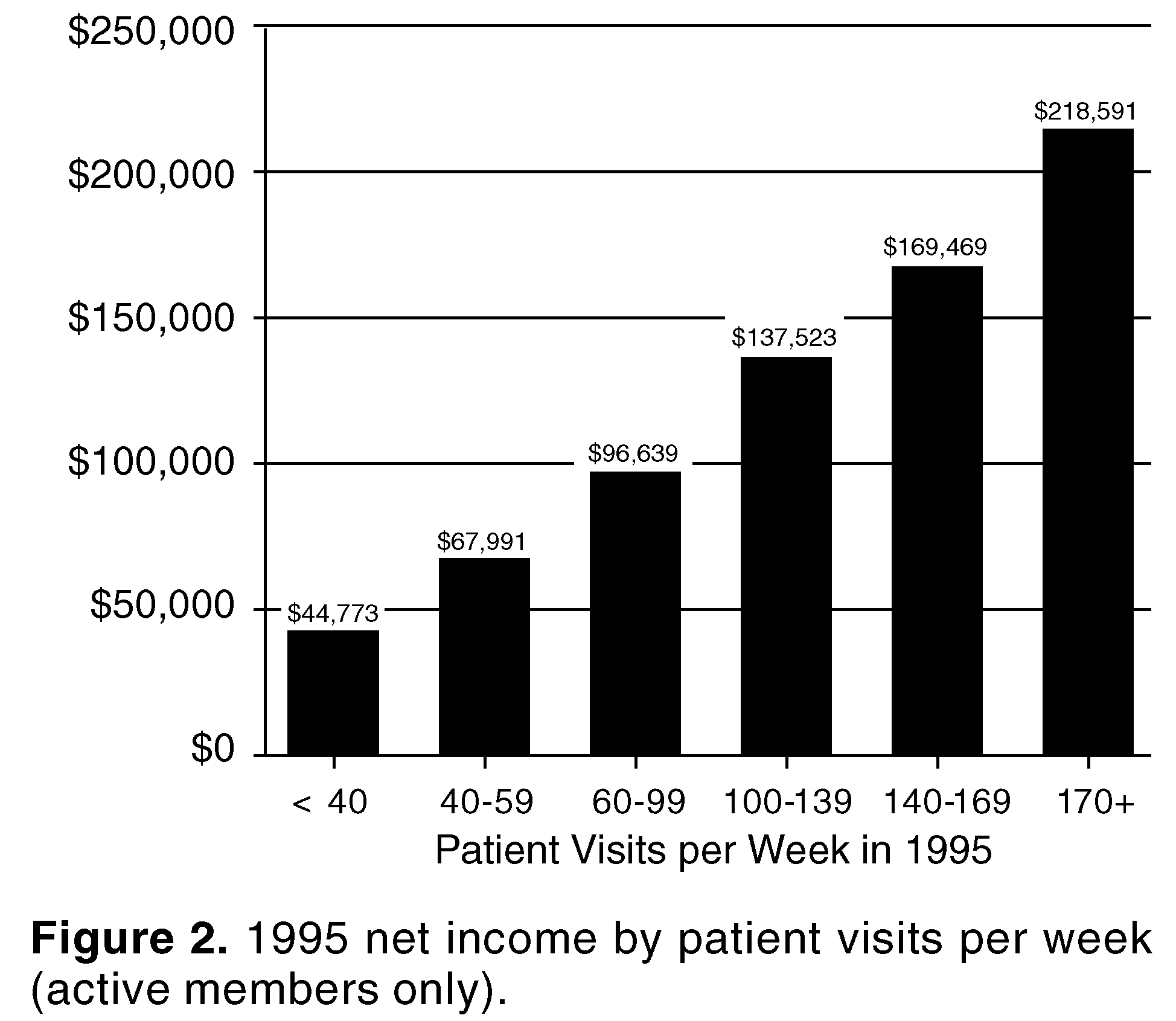
The direct relationship of patient visits a week to total net income in 1995 is shown in
Figure 2.
The typical member of the APMA had approximately 100 patient visits a week in 1995. The graph illustrates that members with fewer patient visits earned far less than members who saw more patients each week. There was a strong positive relationship between patient volume and earned net income.
Additional Factors in 1995 Total Net Income
Addition of the second factor (number of bone surgeries performed in 1995) significantly improved the prediction of net earnings. The multiple R increased to R = +0.650 and the percentage of variance explained increased from 33% to 42%. This finding implies that bone surgery volume was an important factor in earned income, in addition to the number of patients seen by podiatrists each week.
The typical member of the APMA performed approximately 50 bone surgeries in 1995. However, members who did fewer procedures earned much less than members with higher procedural volumes. With more than 15 surgeries a year, there was a strong positive relationship between the volume of bone surgeries performed and earned net income.
The interaction of patient visits and bone surgeries was noteworthy. In 1995, members who saw fewer than 100 patients a week and did fewer than 50 surgeries averaged $87,982 in total net income. Most respondents were in this category (63%). But at the other extreme, 64 respondents (1.5% of the total) saw more than 170 patients a week and did more than 200 procedures. They averaged $309,395 in total net income. Members in the intermediate range saw 100 to 169 patients a week and did 50 to 200 bone surgeries (35.3%), and averaged $165,090.
Twenty-three variables were considered in this prediction of net income, with 11 selected for a maximum multiple R = +0.687. This outcome explained 47% of the variance in earned income for members of the APMA in 1995. However, most of the prediction came from the first two factors of patient visits and bone surgeries.
Inclusion of the subsequent factors had only a marginal impact on prediction, ie, they did not increase the prediction of net income much beyond the level of prediction achieved using the first several factors.
Additional Findings
Some of the study variables that correlated highly with net income were not selected by the computer as being among the better predictors of net income. Notable by omission were factors such as gender and race. Although male podiatrists earned much higher net incomes than female podiatrists and whites earned more than nonwhites, these factors were not as important in determining net income as the other factors that represented practice intensity, ie, patient volume and bone surgery volume. The same conclusion applies to the factors of age and experience, although to a lesser extent. Thus, experience was only the fourth factor selected for inclusion in the prediction equation. (Age of the member was not a factor at all, presumably because of its duplication with years of practice experience as a measure). Experience has a nonlinear relationship to income that can reduce its inclusion in a linear regression analysis. Thus, lower incomes are always found among the youngest and oldest members, while members of intermediate age have higher incomes. Details of these relationships in the present and previous studies are given in the Discussion section.
Hours worked per week was also not a factor in net income, beyond patient volume and procedural volume. It appears that the billable factors of patient visits and surgeries are more important determinants of income than the number of hours devoted to practice by members of the APMA.
Certification by the ABPS was the third factor selected in predicting net income. This factor may represent other measures such as gender (more male podiatrists are certified by ABPS) and experience (younger members earned less income and were much less likely to be certified). See the section on demographic data for details of these relationships. Also, certification by ABPH, ABPO, or ABPOPPM, individually was not related to net income, although certification by ABPS was so related.
The fifth factor selected by the computer was ownership of the practice. Members who own their practice enjoyed higher net incomes, apart from practice intensity and certification. Owners were also more likely to be older than employees, and to have the benefit of additional experience that relates to higher incomes.
The more PPO panels on which members served, the higher their net incomes. This was the sixth factor selected by this analysis. This finding may represent yet another aspect of practice intensity and experience.
Many of the same factors selected as better predictors of gross income were also selected as better predictors of net income. This resulted from the fact that the two measures of income were highly inter-correlated (r = +0.81).
Changes in Net Income: 1994 to 1995. Respondents who practiced podiatric medicine in 1995 were asked whether their net income had changed from 1994 to 1995. Results were mixed, but more positive than negative. More than half reported higher net incomes in 1995 than 1994 (53.6%), compared with 25.3% who reported that their net incomes decreased from 1994 to 1995. Another 21.1% described their 1994 and 1995 net incomes as “about the same.” The base for this analysis was active respondents who practiced podiatric medicine in 1995 (8,387 weighted cases).
Why Did Net Income Change?
Two different methods were used to determine possible reasons for the observed changes in net income from 1994 to 1995. First, each member was asked, “Why did your income change from 1994 to 1995?” Second, practice and demographic variables in the survey were cross-tabulated against changes in income to identify factors related to the reported changes. Verbatim comments were extracted from the first 200 respondents and content analyzed to identify the more frequent reported reasons for changes in income as given by members of the APMA.
Reasons for Increased Income
The following reasons were cited most often to explain why net income increased from 1994 to 1995, for members who enjoyed an increase in total net income: 1) increase in patient volume (20%); 2) change in status (13%); 3) “busier” (13%); 4) more practice experience (9%); 5) increase in salary or got a raise (6%); and 6) lower overhead, better practice management, better collections (6%).
Many different reasons were cited to explain increases in net income. The six previous categories accounted for 67% of the total reasons described, with many other unique reasons cited. In addition, 16% of the members who experienced an increase failed to explain the reason for this outcome or could not explain the increase.
Reasons for Decreased Income
Members who experienced a decrease in total net income from 1994 to 1995 were more in agreement as to the reasons for their condition. They most often attributed this decrease to the following few factors: 1) HMO/PPO/managed care (53%); 2) fee reductions (17%); 3) change in status (13%); and 4) decrease in patient volume (4%). More than half of these respondents cited managed care or HMOs or PPOs as at least one reason why their incomes decreased from 1994 to 1995. The four categories listed accounted for most of the reasons described (87%).
Correlates of Changes in the Net Income of APMA Members
Analyses were performed to identify factors related to changes from 1994 to 1995 in the net income of members of the APMA. The same methodology used to analyze correlates of net and gross income was used. The percentage of members who reported an increase in net income is given in parentheses in each case. Relationships described below were statistically significant (p < 0.05) when tested using chi-square analysis.
Practice Factors
Increases in net income from 1994 to 1995 were related to the following practice characteristics:
- 1)
practice arrangements: Practicing in the military service (80% reported an increase in net income) or in the VA (70.6%), an educational institution (68.3%), a multispecialty group (58.3%), or podiatric medical group (52.5%), as opposed to solo practice (47.2%) or an HMO (41.1%);
- 2)
practice ownership status: Being an employee in private practice (63.3% had an increase) as opposed to being the owner (47.6%);
- 3)
geographical location: Practicing in the following states: AL, KY, MN, NH, TN, VA, WV, VT, and WY (Greater than 60% in each of these states reported an increase in net income from 1994 to 1995);
- 4)
practice location; urban and rural: Practicing in a rural area (60.3% reported an increase), as opposed to the suburbs (49.7%) or an urban area (46.2%);
- 5)
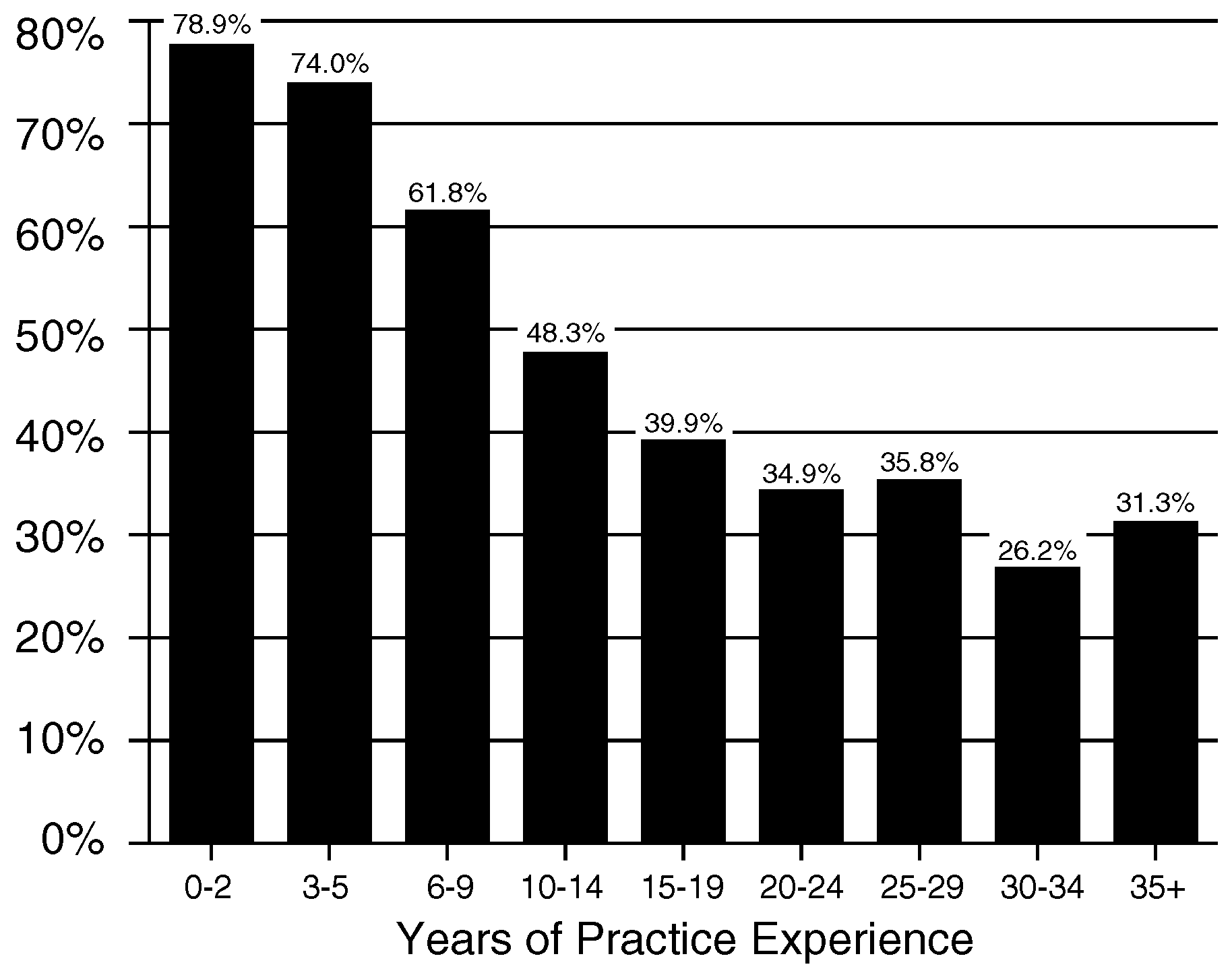
experience: Having the least amount of practice experience, eg, 0-2 years (78.9% reported an increase) or 3-5 years (74%), decreasing thereafter (31.3% for members with 35 or more years of experience);
- 6)
months practicing podiatric medicine in 1995: More of the members who practiced fewer than 10 months in 1995 had increased net incomes (59.8%) than did members who practiced 10 or more months;
- 7)
number of hours worked per week in 1995: The more hours the members worked each week, the more likely their 1995 net incomes were to have increased from 1994 (56.3% of those who worked 60 or more hours each week reported an increase in net income);
- 8)
typical number of patient visits per week in 1995: The more patient visits a week that members reported, the more likely their 1995 net incomes were to have increased from 1994. (Among members with 170 or more patient visits a week, 54.1% reported an increase); and
- 9)
the percentage of the day spent seeing patients in 1995: The percentage of the day that members spent seeing patients was significantly related to changes in 1995 net incomes, but the relationship was complex, perhaps because of the ambiguous nature of the question.
Changes in net income from 1994 to 1995 were not related to service on PPO or HMO panels, nor to the volume of bone surgeries performed in 1995. (For members who did one to 14 surgeries, 52.3% reported an increase; 53.7% of those who did 15 to 49 surgeries had an increase. Fewer members experienced an increase among those who did 50 or more bone surgeries in 1995, or did none in 1995).
Educational Background Factors
Changes in net income from 1994 to 1995 were related to the following educational background characteristics of APMA members:
- 1)
graduates of the two newer colleges of podiatric medicine reported higher 1995 than 1994 net incomes: Barry University School of Podiatric Medicine (87.8%) and College of Podiatric Medicine and Surgery (77.5%) as opposed to the original five colleges of podiatric medicine (42% to 52%);
- 2)
completion of the following types of podiatric residency programs was related to increased 1995 net incomes: RPR (59.6% reported an increase), PSR-24 (57.5%), PSR-36 (58.5%), or PPMR (78.6%) but with few cases;
- 3)
board certification by ABPOPPM was related to higher 1995 than 1994 net incomes (55%), and not being certified by ABPS was related to an increase (52.7%). There was no relationship of ABPH or ABPO certification to income changes from 1994 to 1995; and
- 4)
change in total net income from 1994 to 1995 was related to the current total amount of student loan indebtedness reported by participants. The higher the debt, the more likely the member was to report an increase in net income.
Demographic Factors
Increases in 1995 net incomes over 1994 were related to the demographic characteristics of APMA members:
- 1)
age: Increased 1995 net incomes were reported the most by the youngest members (75.6% of those under the age of 35 reported an increase) and by members between the ages of 35 and 44 years (51.3%). Fewer members age 45 or older reported increased net incomes from 1994 to 1995 (36.2%). Indeed, 40.1% of members older than age 64 reported a decrease in net income from 1994 to 1995; and
- 2)
gender: More female podiatric physicians reported increased net incomes from 1994 to 1995 (60%) than male podiatric physicians (48.8%). Ethnic background was not related to changes in total net incomes.
Best Predictors of Changes in Total Net Income From 1994 to 1995
An additional analysis was performed to determine which factors in combination best predicted the observed changes in net income for APMA members from 1994 to 1995. Stepwise linear multiple regression was used to identify the factors that best predicted changes in net income. This attempt met with limited success.
The factors that best predicted a change in net income from 1994 to 1995 were, in order of selection:
- 1)
years of practice experience (multiple R = 0.262);
- 2)
patient visits per week (multiple R = 0.284); and 3) percentage of time spent seeing patients each day (multiple R = 0.292). Only the first predictor had a clear relationship to changes in net income, and even its correlation was low.
None of the 23 factors in the equation was highly correlated with changes in net income. Even when the best nine variables were used, they resulted in a multiple R = 0.322 that explained only 10% of the variance in changes in net income from 1994 to 1995. Inclusion of the additional factors failed to improve the prediction of changes in net income much beyond the level of prediction achieved using only the first factor, years of practice experience.
Best Predictor Analysis of Changes in Net Income From 1994 to 1995
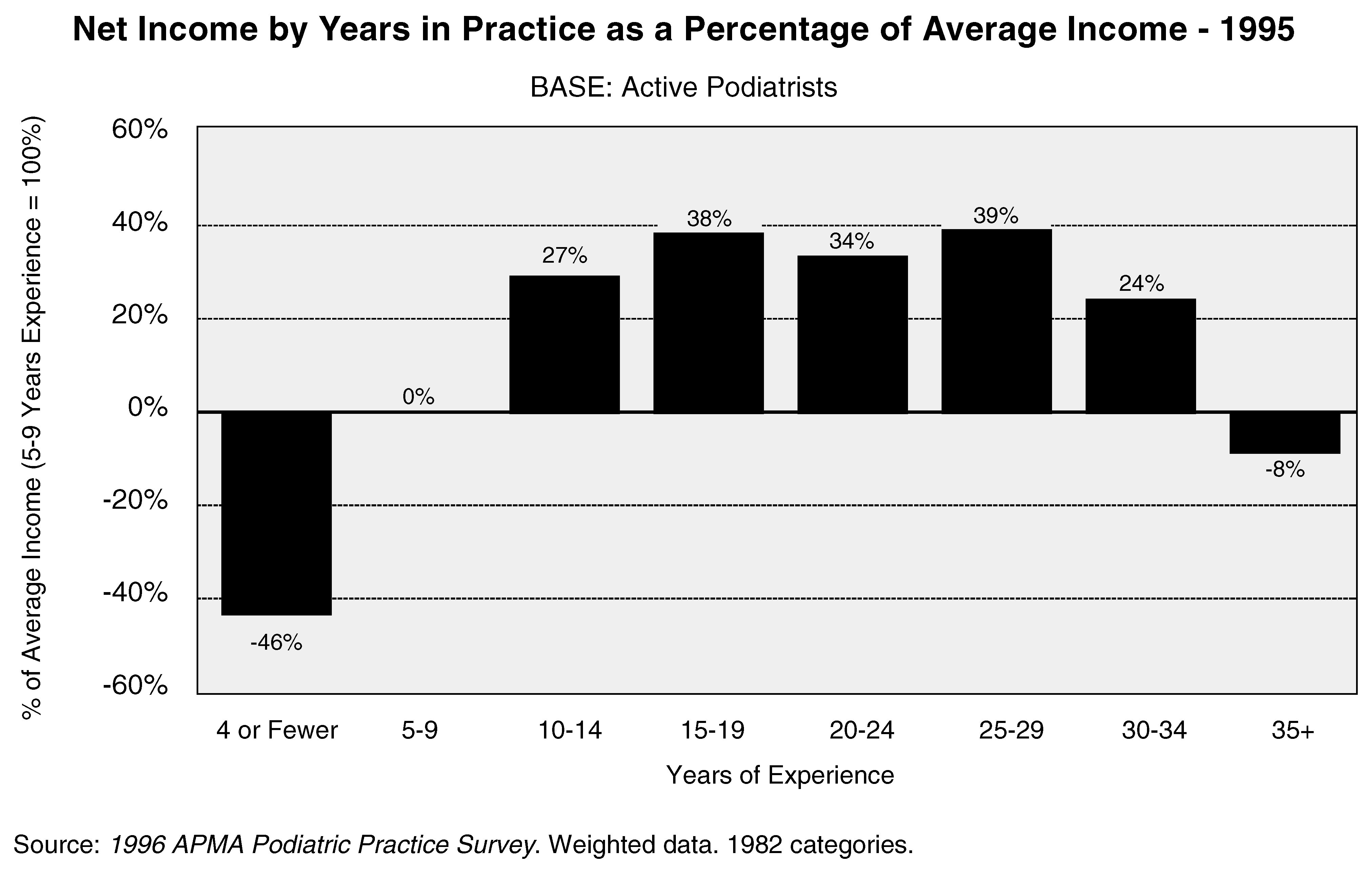
Figure 3 illustrates the relationship of years of practice experience to the reported increase in net income from 1994 to 1995. The relationship is negative, implying that younger, less experienced members were more likely to experience an increase in income on a year-to-year basis than were members who were older, more experienced, and established.
Summary
Changes in net income from year to year necessarily reflect short-time changes in practice status such as those experienced by younger members who begin practice after residency and still carry large student loan debts. Younger members are more likely to be employees rather than owners of their practice, and to receive pay increases or raises. Younger members were more likely to be graduates of the newer colleges of podiatric medicine and to have completed PSR programs of longer duration, and to report increases in net income from 1994 to 1995. Also, younger members are less likely to be certified by ABPS or other organizations. Hence, increases in net income were reported more frequently by members who were not as yet board certified.
Increased net income from 1994 to 1995 also reflected higher productivity, eg, more hours worked each week and more patient visits a week, but these relationships were complex.
The fact that income increased more for members in rural areas than it did for members who practiced in urban and suburban settings may reflect the increased competition experienced by members in more populous areas, as well as the fact that members in urban areas were older, while some younger members were practicing in rural areas.
The verbatim comments from some members who reported experiencing increases (and decreases) in net income without apparent reason are also noteworthy. If short-term increases in net income occurred by chance or because of unrecognized factors, that situation may be reflected in the limited success that was achieved in these attempts to predict changes in income. Factors other than those included in this survey may operate to effect changes in the net income of members of the APMA on a year-to-year basis. These short-term changes may be inherently unreliable and unpredictable, except in those cases where an obvious change in status has occurred.
Ratio Analyses: Net Income Versus Gross Income in 1995. The extent to which members of the APMA translated gross incomes into net incomes in 1995 was estimated. An analysis was done to compare net and gross incomes for members who reported data on both measures so that comparisons could be made on an individual basis.
The traditional finding in physician earnings analyses is that net income is approximately half that of gross income, ie, that the expected ratio is approximately 0.50. For example, podiatrists had an average net income of 48% of total income in 1989 (Caro and Kilczewski, 1995). The present analysis was done to verify this finding in 1995 for podiatrists who are members of the APMA. The base for this analysis was active members of the APMA who reported both net and gross incomes in 1995 (8,072 weighted cases).
Methodologic Note
In this survey, both net income and gross income were reported as ranges, not as specific dollar amounts. To compare net and gross incomes required conversion of the range values into specific dollar amounts that could then be compared using division. The following convention was used to convert responses in the dollar ranges into specific dollar amounts: the midpoints of each range were used to represent the specific dollar amounts for each respondent. In addition, $7,500 was used to represent net income under $15,000 and $25,000 was used to estimate gross income under $50,000. Dollar amounts at the upper extremes of each measure were extrapolated as follows: $550,000 was used for net incomes over $500,000, and $1,050,000 was used for amounts of gross income in excess of $1 million. Then this inferred net income value was divided by the inferred gross income value to generate an estimated net-to-gross ratio for each respondent.
Findings
For respondents in total, the average ratio of net-to-gross income for 1995 was 0.511. The median ratio of net-to-gross income for 1995 was 0.500. Half of the values fell between 0.318 and 0.500. These values correspond to the expected value of approximately 0.50 found in prior studies.
Stepwise linear regression was used to identify factors that best predicted 1995 net-to-gross income ratios. The objective was to identify practices and membership characteristics that translated into receiving larger amounts of gross income as net income. These analyses did not prove very successful. Only six of 23 variables considered in the analysis were selected as predictors, and the resulting multiple R = 0.283 explained only 8% of the variance in net-to-gross incomes.
The following variables were significantly related to the net-to-gross income ratios: 1) ownership of the practice (R = 0.248); 2) months worked in 1995 (R = 0.262); and 3) bone surgeries in 1995 (R = 0.272).
Members who owned their practice had an average net-to-gross income ratio of 0.45, indicative of the effect of overhead on their net income. In contrast, employees (nonowners) had a much higher average ratio (0.69) and reported gross income amounts much closer to their net incomes. Members who worked only 1-9 months in 1995 (N = 126) were likely to transfer more of their gross incomes into net incomes in 1995 (average ratio: 0.71) than were their colleagues who worked 10-12 months (average ratios: 0.48-0.52), but few cases were reported where members worked fewer than 10 months.
Members who did no bone surgery procedures in 1995 (N = 283) had an average ratio of net-to-gross income of 0.59, compared with ratios of 0.50 or less for members who performed these procedures. However, few cases of zero procedures were reported.
Age was a significant factor in the 1995 net-to-gross income ratios found in this study. Members younger than 35 had an average ratio of 0.59 compared with 0.47 for members ages 35-44, 0.45 for members ages 45-54, and 0.46 for members between 55 and 64 years of age. The ratio of net-to-gross income increased to 0.56 for members ages 65 years and over. Gender was not a significant factor in the 1995 net-to-gross income ratios found in this study. Male podiatric physicians had a ratio of 0.53 compared to 0.48 for female podiatric physicians.
The following ratios of net-to-gross income were found by type of practice arrangement: solo practices (0.46), partnerships (0.47), podiatric medical groups (0.51), and multispecialty groups (0.54). Much higher ratios were found for members employed by organizations, as expected.
Because the income data used in this analysis were interpolated, the ratios may not correspond to the values that would be obtained if members were asked for the specific dollar amounts earned as net and gross income. The tradeoff was made between asking for less precise information on income in an attempt to increase member participation in the survey. Access to specific dollar amounts of net and gross income from members is clearly preferable, insofar as it does not jeopardize survey participation.
Demographic Data
Data on the age, gender, and ethnic background of members of the APMA were collected in this survey. Data were requested from all respondents, including retired and active members, but very few retirees participated in the survey (N = 14). Retiree data are presented separately. The data below apply to active members of the APMA.
Age. Most respondents were between 35 and 54 years of age (60.7%). Another 29.5% were younger, ie, under 35 years. Only 9.7% were age 55 years or older. The base for this analysis was 8,804 weighted cases.
The average age of these active members was 41.6 years. Their median age was 40 years, ie, half were older than 40 and half were younger. Although most active members were young, they ranged in age from 24 to 85 years.
Gender. Most respondents were male (86.7%). Female members comprised only 13.3% of respondents. The base for this analysis was 8,829 weighted cases. Age was a major factor in the gender of respondents. Younger members were much more likely to be female than older members. Among members younger than 35, 23% were women. In contrast, women comprised only 3.7% of members age 65 years or older.
Table 5 indicates the gender of respondents by age group. The actual number of respondents in each group is shown, ie, unweighted numbers.
Gender was related to the years of practice experience of respondents, with female members more prevalent among members with fewer than 5 years’ experience (
Table 6). This finding is anticipated, given the high correlation between age and experience among the podiatric physicians participating in this survey (r = +0.94).
Virtually all of the respondents with more than 20 years of experience were men. There were very few female members in the more experienced cohort groups.
Ethnic Background. Most respondents were white (non-Hispanic), ie, 91.3%. Another 2.9% were Asian or Pacific islanders, and 1.5% were black (non-Hispanics). Hispanic respondents comprised 1.6% of total respondents, and 1.2% were Native Americans. The base for this analysis was 8,743 weighted cases. Another 1.3% considered themselves as having an ethnic background other than the categories listed and a few had multiple ethnic backgrounds (0.2%).
Age was a factor in the ethnicity of respondents. Most older members of the APMA are white (non-Hispanic), ie, 93.5% of the members older than 35 years.
In contrast, the ethnic background of younger APMA members was more diverse. Among members under the age of 35 years, Asian members (4.7%), black members (1.4%), and Hispanic members (2.4%) were more prevalent (combined total: 8.5%) than they were among members older than 64 years (combined total: 2.7%).
Table 7 provides complete details on age and ethnic background.
Ethnic background was also related to the years of practice experience of the respondents (
Table 8). Members with more experience were more likely to be white. Members with the least experience were more likely to be nonwhite. Whites comprised 94% of the respondents with 6 or more years of practice experience.
Retiree Data. Only 14 retirees provided any demographic data. Their average age was 61 years (median age: 64 years). Retirees ranged in age from 39 to 91 years. Most retirees were male (76.9%) and white (non-Hispanic), ie, 92.3%.
Summary. In 1996, most members of the APMA were young, male, and white (non-Hispanic). However, the historic trend is toward a more diverse membership in terms of gender and ethnic background.
Discussion
Trends in the Practice of Podiatric Medicine
The practice of podiatric medicine has evolved over time from primarily solo practice arrangements to a mix of solo practice and other practice arrangements. In 1970, 86.5% of podiatrists were in solo practice (DHHS, 1986). Data from various sources were compiled by the APMA that indicate the decrease in the percentage of podiatric physicians engaged in solo practice from 80.7% in 1974 to 71.7% in 1984 and 68.9% in 1992 (Caro and Kilczewski, 1995).
The 1996 survey found that 60.5% of respondents were primarily engaged in solo practice, which indicates the continuing downward trend in solo practice arrangements for podiatrists.
Most members of the APMA are still engaged in solo practice, but the increase in alternative practice arrangements is noteworthy. In 1996, 14.4% practiced primarily in a partnership, while 16.1% were involved in some type of group practice (12.2% in a podiatric medical group and 3.9% in a multispecialty group). The remaining 9% practiced in other types of practice arrangements.
The percentage of podiatrists employed in group practice arrangements is increasing. Only 2.4% were in group practices in 1974, but this increased to 5.4% by 1984 (Skipper and Pippert, 1985) and reached 11.8% in 1992 (McNevin, 1993). By 1996, 16.1% were in group practices.
The percentage of podiatrists in partnerships has changed only slightly over time, with no obvious trend. While 13.4% were in partnerships in 1974, this value decreased 12.7% by 1984 (Skipper and Pippert, 1985) but reached 14.5% by 1992 (McNevin, 1993). In 1996, 14.4% were in partnership arrangements.
The percentage of podiatrists in other practice arrangements such as HMOs, educational institutions, and the federal government has been relatively small and stable over time. Approximately 1% of podiatrists have been employed in HMOs and in educational institutions since 1974, and approximately 2% have been employed by the military service or VA during this period.
In 1996, 1.2% practiced primarily in an educational institution, and 1.3% practiced in an HMO. Another 0.3% practiced in the military service, and 0.7% in the VA for a combined total of 1%.
The fact that approximately 40% of APMA members now practice in a group or organizational setting other than solo practice may have implications for future APMA member services and activities.
To the extent that members “take turns” attending meetings and CME programs and “share or swap” journals to reduce expenses, demand for these services may decrease. If younger members continue to opt for group practice arrangements or organizational affiliations, attempts to market services to members on an individual basis may prove increasingly ineffective. It may be desirable for APMA to plan for a new member database that indicates any partnership, group practice, or organizational affiliation, so that member communications are directed to the unit instead of the individual member in those instances where this approach is appropriate.
Completion of Podiatric Residency Programs
In addition to changes in practice arrangements, far more members of the APMA completed residency programs in 1996 (87.2%) than was the case in 1992 (76.3%) and 1984 (44.6%).
Changes in College Graduation Statistics
Changes were also found in the percentage of members who graduated from the various colleges of podiatric medicine during the last 12 years. Graduates of the newer schools (Barry University School of Podiatric Medicine and College of Podiatric Medicine and Surgery) accounted for 7% of respondents in 1996, compared with 1.9% in 1992 (McNevin, 1993). These schools were not represented in the 1984 survey.
The largest percentage of graduates was from Ohio College of Podiatric Medicine and the Scholl College of Podiatric Medicine in each survey from 1984 to 1996. More than 20% of respondents graduated from one of these two colleges in each survey.
Productivity of Podiatric Physicians in 1995
A high level of practice activity was reported retrospectively by active respondents for 1995: 1) 87.7% practiced all 12 months of the year; 2) 66.4% averaged 40 or more hours per week practicing podiatric medicine in 1995; 3) 74.1% averaged 60 or more patient visits per week; and 4) 66% spent more than 75% of their day seeing patients in 1995. In addition, over half performed more than 50 bone surgeries in 1995 (51.3%). These figures are important, because net income and gross income were highly correlated to measures of practice intensity such as patient visits and bone surgeries.
Trends in Hours Worked per Week
Podiatrists worked far more hours in 1996 than they did in 1984. In 1984, only 7.4% worked more than 50 hours per week (Skipper and Pippert, 1985). By 1996, this percentage had increased to 16.1%. In 1984, 57% worked 35-50 hours a week, but 63% did so in 1996.
Conversely, the percentage who worked fewer hours declined substantially. Thus, 30.4% worked 20-34 hours each week in 1984, but only 18.4% did so in 1996. Average hours worked increased from 38.2 hours a week in 1970 to 42.2 hours a week in the present study (DHEW, 1978). This amounts to a 10.5% increase in hours worked from 1970 to 1996.
Trends in Patient Visits per Week
A major change also occurred since 1984 in the number of patient visits a week reported by podiatrists. In 1984, only 7.9% reported more than 150 patient visits a week (Skipper and Pippert, 1985), while 8.4% did so in 1996. In contrast, 30% had fewer than 50 patient visits a week in 1984. This was the case for only 24.1% of podiatrists in 1996. In 1984, 19.6% saw between 100-150 patients a week, compared with 24% in 1996.
The substantial increase in patient visits over time is also illustrated by comparing the median number of visits per week in 1970 (71 visits a week) and 1974 (77 visits a week), as reported in DHEW (1978) to the median number of visits in the present study (90 visits a week). The increase in patient visits per week from 1970 to 1996 was 26.8%.
Factor Structure of Podiatric Medical Practice
A statistical analysis was performed on the 1995 practice data to determine if the same members were reporting high (or low) levels of activity across the previous five practice measures. Surprisingly small intercorrelations were found between pairs of measures. Values of r >+0.33 were obtained for only three of the ten possible pairs of correlations. Examples of the higher intercorrelations include r = +0.34 between number of patient visits a week and number of hours worked per week, and r = +0.37 between the number of bone surgeries and the number of patient visits a week.
Each of the intercorrelations was entered into a factor analysis routine that identified one general (“G”) factor to which several specific measures was highly correlated.
Table 9 indicates the factor loadings of each of the five measures, ie, the correlation of each measure with the hypothetical general factor derived from the statistical analysis. The two best measures of productivity were patient visits and bone surgeries, as reflected in the higher factor loadings.
The modest correlations imply that the APMA should use more than one measure of member productivity when surveying the membership. Moreover, the fact that most members practice all 12 months of the year limits the value of this measure in the analysis of income or any other factors, because of its small variance.
The present survey also indicated that patient visits a week and number of bone surgeries performed should be included in any practice survey, because each one is an important predictor of net and gross income.
Net Income for APMA Members in the Future
What are the long-term earning prospects for members of the APMA? Member income is governed by several factors in addition to practice intensity. One major determinant of income potential is practice arrangement.
Table 10 provides average 1995 net and gross income estimates for selected practice arrangements, based on an unweighted analysis.
The present survey indicated that younger and less experienced members were more likely to practice in group practices than older members. Conversely, older and more experienced members were more likely to be in solo practice. These practice arrangements could presage higher incomes in the future for the younger members of today because of the earnings patterns in various practice settings. Indeed, much higher earnings were found for members in group practices and partnerships than for members in solo practice, regardless of experience.
Members in solo and group practice settings were more likely to report higher net incomes in 1995, as their experience increased. Members in solo practice with fewer than 3 years of experience averaged only $35,698, but members with 10-14 years of experience averaged $121,182.
Members in group practice with fewer than 3 years of experience averaged $60,278, while members with 10-14 years of experience averaged $170,714.
Members in partnerships with fewer than 3 years of experience averaged $52,549, while members with 10-14 years of experience averaged $149,310.
Additional analyses revealed that net income was lower for members who practiced in organization settings such as the military service, the VA, and in educational institutions, although these findings are based on very small numbers of respondents and may be unreliable. Only approximately 40-60 cases are available in each practice category, so the results are unstable.
The major increases in income with experience as seen in solo and group practice are not evident here.
Experience was not as highly rewarded in these settings as it was in private practice.
Figure 4 indicates the relationship between experience and net income in 1995, as a function of these other practice arrangements. These findings represent net earnings for only 1995. Income may well increase for members in each group as they age, given the effects of inflation and increased productivity. But the present analysis suggests that the opportunities for income growth are much better for members who choose to practice in private practice settings such as solo practice, group practice, and partnerships, than they are in organizations such as HMOs, educational institutions, the military services, and the VA.
Changes in Net Income from 1994 to 1995
An analysis of changes in income from 1994 to 1995 provided an alternative view of earning potential, since it focused on short-term changes instead of experience over a career. In the short-term, more of the members who practiced in HMOs and other organizational settings reported an increase in net income from 1994 to 1995 than did members in private practice settings. Thus, 74% of members in the military service and VA reported an increase in income from 1994 to 1995, as did 68% of those in educational institutions. In contrast, only 47% in solo practice and 54% in group practice reported increases from 1994 to 1995.
Indeed, 30% of members in solo practice actually reported a decrease in income from 1994 to 1995, as did 25% of those in partnerships and 22% of those in group practice. The widespread increase in net income in the military service and VA was attributed to a pay raise. The fact that approximately half of the podiatrists in HMOs experienced no change is interesting, given the high volume of work that they performed in 1995.
Trends in Net Income
The present survey estimated 1995 average net income as $108,155 for respondents in total. However, the median net income in 1995 for all active respondents was $87,500. Half of the respondents earned more and half earned less.
Net Income by Years of Experience: 1991-1995
Previous surveys indicated that earnings were related to years of practice experience. In 1991, net income averaged $35,578 for podiatric physicians with fewer than 3 years of experience but increased to $119,674 for podiatric physicians with 10-15 years of experience (McNevin, 1993). The average net income for all podiatric physicians in that survey was $100,287.
The 1991 and 1995 estimates are different. This may result from the computational methods used and changes in income that occurred between 1991 and 1995. Also, the 1992 AACPM survey obtained net income data only from podiatric physicians employed full-time (working more than 30 hours per week in the 1991 reference year). This approach does not provide estimates of income for the total membership.
Net income data from the present survey were based on all respondents who practiced in 1995, the reference year. For a direct comparison to the 1992 AACPM survey, the data from the 1996 survey were percentaged to exclude APMA members who worked fewer than 30 hours a week, since their net income data were not collected in 1991.
In the present survey, the average 1995 net income only for respondents who worked more than 30 hours per week was $112,771. This figure is much higher than the 1991 figure of $100,287 reported by McNevin (1993).
In the present survey, net income peaked at an average of $143,211 for members of the APMA with between 16-30 years of experience. This compares to peak earnings of $119,674 for podiatric physicians with 10-15 years experience in 1991 as found in the AACPM survey (McNevin, 1993).
In both surveys, net income was lowest among respondents with fewer than 3 years of experience (0-2 years) who worked 30 or more hours a week. In 1992, these podiatric physicians averaged $35,578. In 1995, APMA members with 0-2 years of experience averaged $47,432 in net income. In each study, net income increased rapidly with added experience until podiatrists achieved 10 or more years of experience. At that point, average net income peaked and slowly decreased with additional experience thereafter.
Net Income by Years of Experience: 1982-1995
A more historic assessment of net income and experience was provided by replication of analyses using 1982 income data from the 1984 APMA survey. A major change in net income has occurred since the 1984 survey of all APMA members (Skipper and Pippert, 1985). In the 1984 survey, only 4.2% of members earned in excess of $150,000 for the reference year of 1982. In the present survey, 20.5% earned more than $150,000 in the reference year of 1995. At the other extreme, 54.5% reported net incomes of less than $50,000 in 1982. In the present survey, only 25.2% earned less than $50,000 in 1995.
In the 1984 survey and the present survey, average net income was computed using the net income of APMA members with 5-9 years of experience as the base. In the present survey, the average 1995 net income for members with 5-9 years of experience was $103,448.
In each survey, members with fewer than 5 years of experience (the 0-4 years of experience category) earned substantially less than members with 5-9 years of experience. At the other extreme, members with more than 35 years of experience also earned less than their younger colleagues, but the difference was less pronounced for 1995 than 1982.
Net income averaged higher for members with 10-30 years of experience, the peak earnings period for podiatric physicians. However, the data suggest that members with more than 24 years of experience earned more in 1995 than their colleagues did in 1982, when a rapid decline in earnings was noted for members with more than 24 years of experience.
Current Student Loan Indebtedness
Student loan indebtedness declined with age and experience, as former students reduced their debts. At the same time, net incomes generally increased with age and experience.
Figure 5 indicates these findings for total respondents.
The total amount of current student loan indebtedness in 1996 exceeded annual (1995) net income for respondents under the age of 35 years. But annual net income increased markedly thereafter, and most members retired their student loans by 45 years of age.
This same general relationship between student debt and net income also held for years of experience. Indeed, the results are more dramatic and may offer hope and encouragement to recent graduates and to those current and prospective students faced with the prospect of incurring large debts to complete their schooling in podiatric medicine.
Most respondents had little outstanding student loan debt after 14 years of practice. (Some of the debt reported by the more experienced members may have resulted from only a few of these respondents misunderstanding the question about current debt.)
There is a break-even point where debt in 1996 and net income in 1995 are approximately the same: this occurs as early as 3-5 years after members begin their practices. Net income rapidly increases thereafter, while outstanding student loan balances decline (
Figure 6).
Respondents in solo practice tended to be older than respondents in other settings, with fewer in debt from student loans (35.8%). The average age of solo practitioners with outstanding student loans was 37.1 years and they averaged 7.5 years of experience.
A different pattern was found for respondents who practiced in group settings such as partnerships and podiatric medical groups. Respondents in partnerships tended to be younger than solo practitioners, and 46.9% were in debt from student loans. The average age of podiatric physicians in partnerships with outstanding student loans was 35.8 years and they had 6.6 years of experience on average. Respondents in podiatric medical group practice also tended to be younger than solo practitioners, and 42.1% were in debt from student loans. The average age of podiatric group practitioners with outstanding student loans was 35.2 years and they had 6.6 years of experience on average. Respondents in multispecialty group practice tended to be much younger than solo practitioners and 54.9% were in debt from student loans. Their average age was 35.7 years and they averaged 6.3 years of experience.
Members in the military service were young, and this category had the highest percentage with current student debt (56.3%). In contrast, members at the VA tended to be older and fewer were in debt (38.2%). Members in the VA with student debt were much older and had more practice experience than members in the military.
Trends in the Demographic Characteristics of APMA Members
Age. Respondents to the present (1996) survey averaged 41.6 years of age, based on the weighted data. Data were weighted to conform to the distribution of years of experience in the total population of members of the APMA.
In 1992, US podiatric physicians were 42 years of age on average (Caro and Kilczewski, 1995). Podiatric physicians averaged 43 years of age in 1984 (Skipper and Pippert, 1985), but had been much older in 1974. Podiatric physicians had a median age of 51 years in both the 1970 and 1974 surveys (DHEW, 1978). Skipper and Pippert (1985) attributed the decline in average age to the large influx of younger members that occurred between 1974 and 1984.
Experience. In this 1996 survey, respondents averaged 12.9 years of experience, based on the weighted data. Since survey data were weighted to conform to the distribution of years of experience in the total population of APMA members at the time of the survey, this survey estimate should approximate the average experience of current members.
In 1992, US podiatric physicians averaged 13 years of experience (Caro and Kilczewski, 1995). Average experience was not reported for APMA members in 1984 (Skipper and Pippert, 1985) but was estimated to be approximately 15 years.
Gender. Males were 86.7% of the respondents to this 1996 survey. However, female enrollment in medical schools has increased in recent years, and the APMA has observed a concomitant increase in female membership as younger members join the association. In this survey, members younger than 45 years of age were much more likely to be female (16%) than were members aged 45 years or older (3.4%).
The recent increase in female members is notable. In 1992, it was estimated that 8% of all podiatric physicians were female (Caro and Kilczewski, 1995). Approximately 4% were female in 1984 (Skipper and Pippert, 1985) and in 1974 (DHEW, 1978). The 1996 estimate of 13.3% female members was higher than the earlier estimates, and the differences were statistically significant.
Ethnic Background. Most respondents to the 1996 survey were white (non-Hispanic), ie, 91.3%. However, nonwhites were more prevalent among younger members than older members. Thus, 8.8% of members younger than 45 years of age were nonwhite, while only 5.2% of the older members were nonwhite.
Although there are more younger members than older members, whites still comprise the vast majority of the total membership. The percentage of white members was 96.3% in 1974 (DHEW, 1978), 96.6% in 1984 (Skipper and Pippert, 1985), and 95.3% in 1992 (McNevin, 1993). However, the 1996 value of 91.3% whites was significantly less than the 1992 value.
The present findings imply that a gradual shift will occur in the demographic composition of the APMA over time, as older members who are much more likely to be white males retire, and the association becomes more diverse in gender and ethnicity.
It behooves the APMA to anticipate these trends in member composition. Steps should be taken to ensure proper representation of the needs and interests of newer members in planning the future services and activities of the association.
Response Rate and Survey Accuracy
A total of 4,328 of the 8,903 members surveyed participated in this survey (48.6% response rate). This response rate, while modest, is gratifying considering that only one mailing of the two-page survey was made with a single reminder postcard. This 48.6% response compares to a response rate of 50% to a much longer survey conducted in 1984 (Skipper and Pippert, 1985). A 36.6% response rate was obtained to the two-page 1992 AACPM survey (McNevin, 1993). The higher response to the APMA surveys may indicate the goodwill that the association enjoys among its members.
While response rates of approximately 50% are minimally adequate, they fall far short of the higher response rates obtained from members in earlier years. Skipper and Pippert (1985) reported that an 87.8% response rate was obtained in a 1974 survey of podiatric physicians in which extensive follow-up activities were used (telephone calls, letters). A 70% response rate is the historic standard for federal government surveys.
There are several possible reasons for the 1996 response rate. In general, physicians seem busier today than they were 10 to 15 years ago, and response rates have declined accordingly. For example, the American College of Gastroenterology surveyed all of its members in 1986 and again in 1994 using the same methodology (two mailings of a four-page survey form). A 71% response rate was obtained by the American College of Gastroenterology in 1986, but only a 62% response rate in 1994. The first mailing in 1986 obtained a 58% response, while the first mailing in 1994 got only 47% (Fisher, 1994). The American College of Cardiology surveyed all 19,724 US members for a membership directory update in 1995 and 10,885 responded to two mailings (55%). But as recently as 1992, response rates as high as 70% with 14,890 respondents were obtained (ACC, 1996). Note: The higher (70%) rates were found when questions were asked on the back page of a membership update form that accompanied dues collection. That approach may have legitimized the survey and increased the response. In contrast, the noticeably lower (55%) response rate came when a separate survey was performed.
It is reasonable to assume that podiatric physicians are as busy as other physicians and their survey participation rates are adversely affected as a result. The high level of productivity reported by many participants in this survey supports this contention.
The present survey also included sensitive questions about earnings that always depress response rates. Some members may be reluctant to admit to high earnings on paper. Others may have experienced embarrassing decreases in income in today’s competitive environment that they are hesitant to report.
The survey results are quite accurate, assuming no bias caused by nonresponse. The error rate for the survey is ±1.01%, based on all 4,328 respondents. An analysis of selected data by date of receipt failed to indicate trends in income results attributable to when the members responded. However, this test did suggest some bias caused by late response, ie, later respondents were younger and less experienced, and reported more student debt. However, the actual results for nonrespondents are unknown, so the extent of bias is indeterminate. The results of the present survey should be interpreted with caution because of low response rate.
Representativeness of Respondents
Current data on the practice experience of the entire membership of the APMA were used to evaluate the representativeness of respondents. These analyses indicated that survey participants were not representative of the total membership.
Thus, survey respondents tended to be older and
more experienced than the membership population.
Younger, less experienced members were poorly represented
among survey participants. Only 19.8% of the
survey participants had fewer than 6 years of experience,
but the percentage with comparable experience
in the entire membership was 33.7%. This outcome
was to be expected, since members with less experience
(including residents) tend to respond to surveys
at lower rates than more experienced members.
However, these findings lend further emphasis to the suggestion that the APMA exercise caution in extrapolating the results of the present survey to the entire membership. Since females and nonwhites are more prevalent among younger, less experienced members, assigning relatively high weights to this group as was required in this survey markedly increased estimates of the percentage of females and nonwhites in the total membership.