Article

Measuring the Forefoot-to-Rearfoot Relationship in the Sagittal Plane—A Novel Measurement for Evaluating Pseudoequinus in the Lower Extremity

by
Joseph C. D’Amico
and
Samantha Landau
*
Orthopedics and Pediatrics Department, New York College of Podiatric Medicine, Touro University, New York, NY 10045, USA
*
Author to whom correspondence should be addressed.
J. Am. Podiatr. Med. Assoc. 2026, 116(3), 28; https://doi.org/10.3390/japma116030028
Submission received: 16 January 2023 / Revised: 3 March 2024 / Accepted: 11 April 2025 / Published: 25 April 2026

Abstract

Evaluation of the static angle of the forefoot-to-rearfoot relationship in the sagittal plane is essential in determining the degree of pseudoequinus in the lower extremity. The concept of an increased sagittal plane forefoot-to-rearfoot relationship is generally referred to as anterior equinus, which may result in a pseudoequinus syndrome. As its name implies, pseudoequinus is not a true lack of ankle joint dorsiflexion but rather a condition wherein the ankle joint functions as if it were restricted. Currently, the literature lacks specifications on how to obtain this measurement. Qualitative methods exist to identify an increased sagittal plane forefoot-to-rearfoot relationship whereby the clinician observes whether the patient has an anterior equinus or pseudoequinus present. However, no method has been reported that is suitable for structured evaluation determining the degree of pseudoequinus present. Evaluation of this measurement is important in understanding the overall magnitude of equinus influence present and its concomitant effects on the superstructure. This article describes a new method for measuring the static angle for the sagittal plane forefoot-to-rearfoot relationship using an orthopedic evaluation device. The results of this study indicated that this measurement yielded high interrater and intrarater reliabilities. In effect, this is a simple-to-perform analytics assessment that, as part of comprehensive biomechanical examination, will provide the astute clinician with additional insights into the cause and effect of pathomechanical foot and limb function.

1. Introduction

An increase in the forefoot-to-rearfoot relationship in the sagittal plane has historically been associated with the anterior cavus foot type in the medical literature [1,2,3,4,5]. The first description of the forefoot flexed on the rearfoot was in 1927 by Otto F. Schuster [2], in which he noted an increased need for available ankle dorsiflexion along with its effect on the superstructure. In the presence of an increased forefoot-to-rearfoot sagittal plane relationship, additional ankle joint dorsiflexion is required to bring the heel to the supporting surface. This situation results in compensatory pathology such as early heel rise, ankle impingement, plantar fasciitis, Achilles tendinitis, etc. Failure to identify and remediate this deficiency may eventually lead to an osseous blockage impeding free forward passage of the body over the supporting foot [2,3,4,5,6]. Many years later, in 1973, McGlamry and Kitting [4] described forefoot equinus in which the forefoot is flexed on the rearfoot at either the midtarsal or tarsometatarsal articulation and referred to it as “forefoot equinus” and “metatarsal equinus,” respectively. They further noted that a combination of the different types of equinus is often present, and they called this condition “pes equinus.” [4].
Shortly thereafter, in 1982, Whitney and Green [5] discussed the sagittal plane plantarward deviation of the forefoot on the rearfoot and referred to it as “pseudoequinus.” They were the first to describe the pathomechanical significance of this condition, indicating that it is not a true limitation of ankle dorsiflexion but when present creates an increased need for ankle joint dorsiflexion. As a result, pathologic compensation occurs not only in the foot and ankle but also in its contingent structures [5]. The present article describes a reliable method to quantitate the forefoot-to-rearfoot relationship in the sagittal plane statically in an office setting.

2. Methods

The institutional review board of the New York College of Podiatric Medicine (New York, NY, USA) approved this study. The purpose of this study was to discern whether the experience of the examiner affects the interrater and intrarater reliability for measuring the forefoot-to-rearfoot relationship in the sagittal plane. Five asymptomatic individuals (three men and two women) with a mean age of 27 years (range, 20–40 years) were enrolled in this study. Five patients were selected randomly by one practitioner (S.L.). Two examiners (S.L. and J.D.) participated in the study: one with 5 years’ experience and one with more than 40 years’ experience. A standard free-swinging orthopedic evaluation device, or goniometer (Titan Biomechanics; New York, NY, USA), was used for bilateral measurements on each individual of the forefoot-to-rearfoot relationship in the sagittal plane. Examiners obtained each measurement during each of the two sessions, with each session spaced at least 1 week apart. The inclusion criterion was age older than 18 years. The exclusion criteria were age younger than 18 years and a history of type 1 or 2 diabetes, surgery, or neurologic conditions.
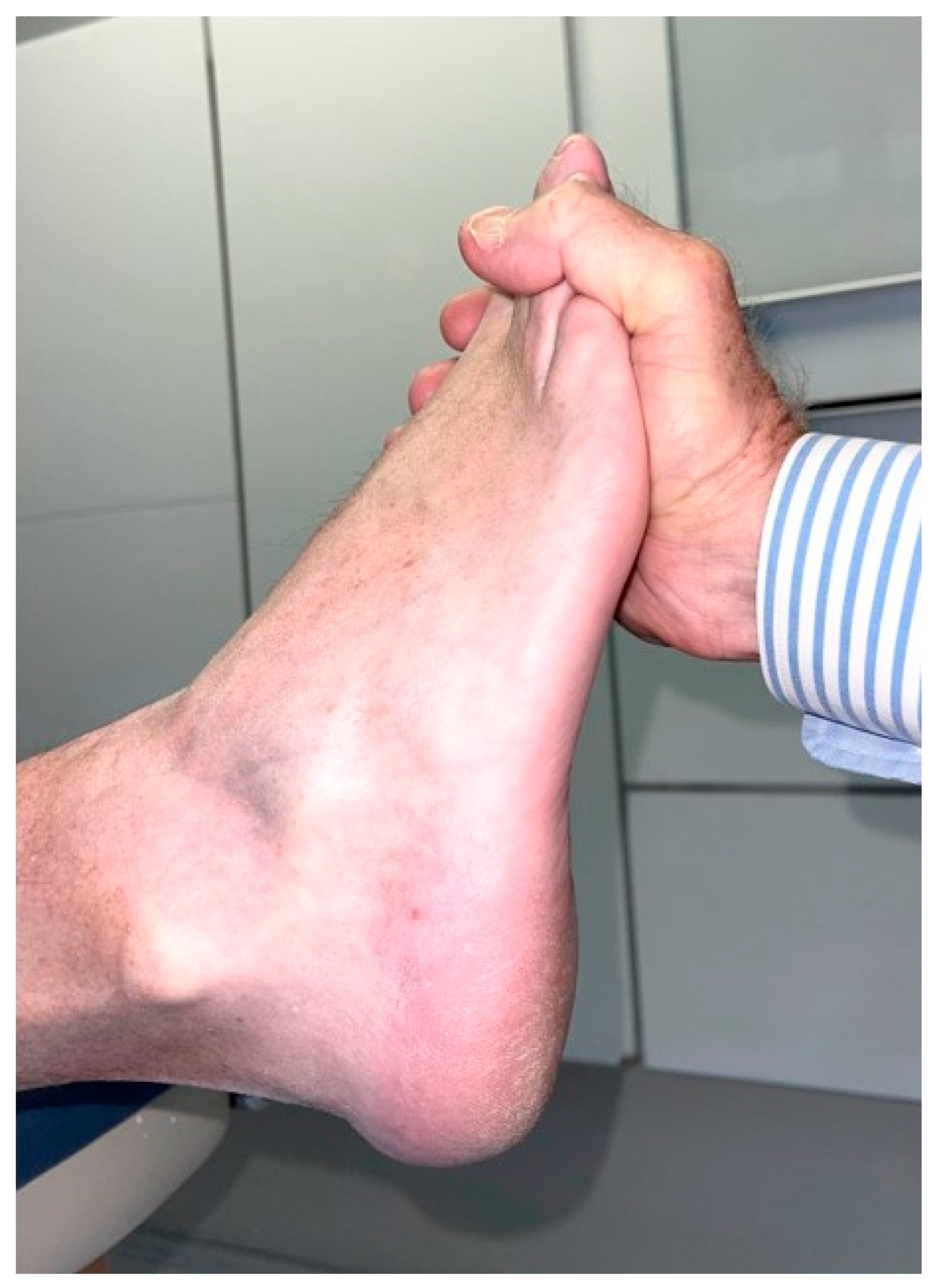
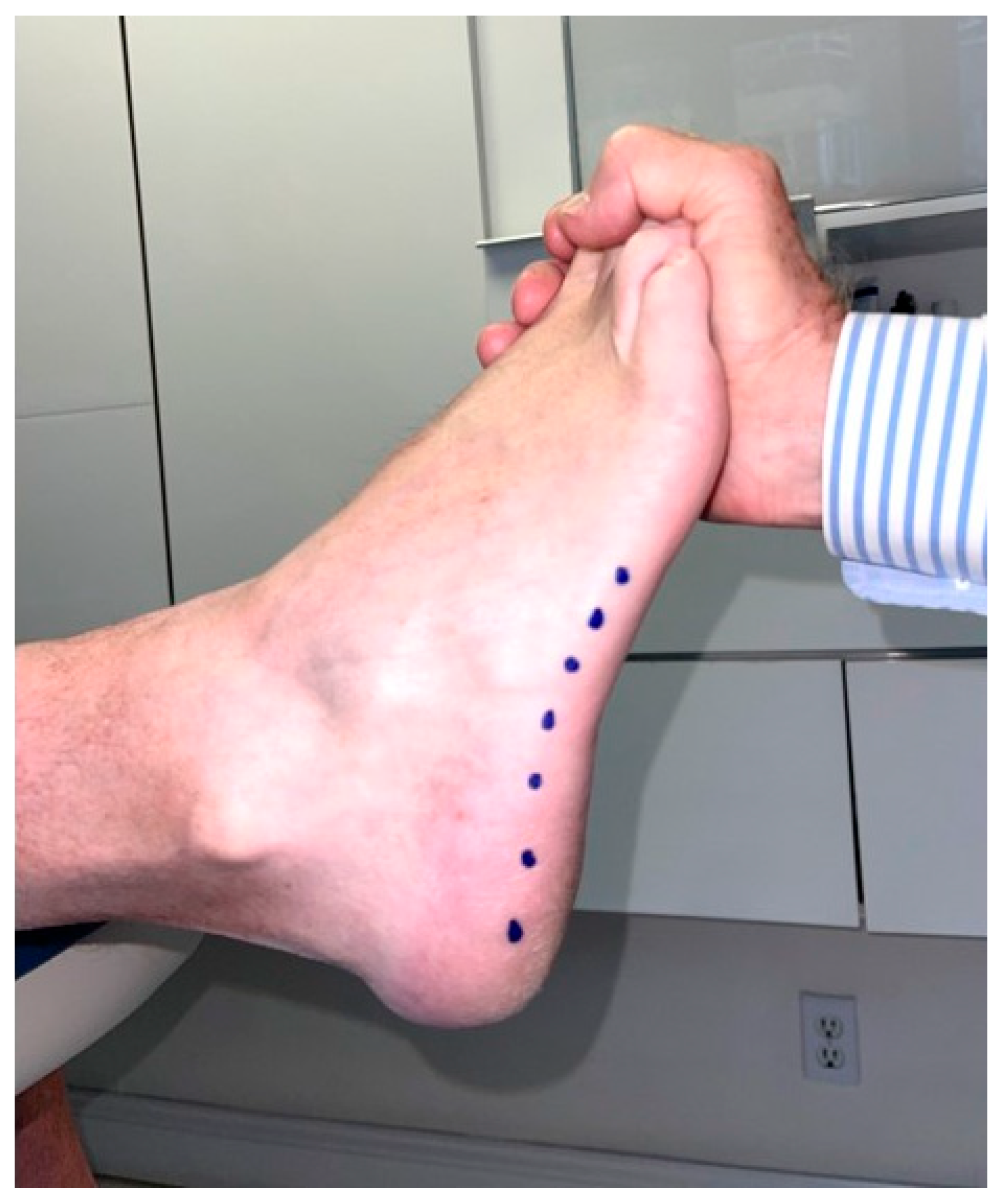
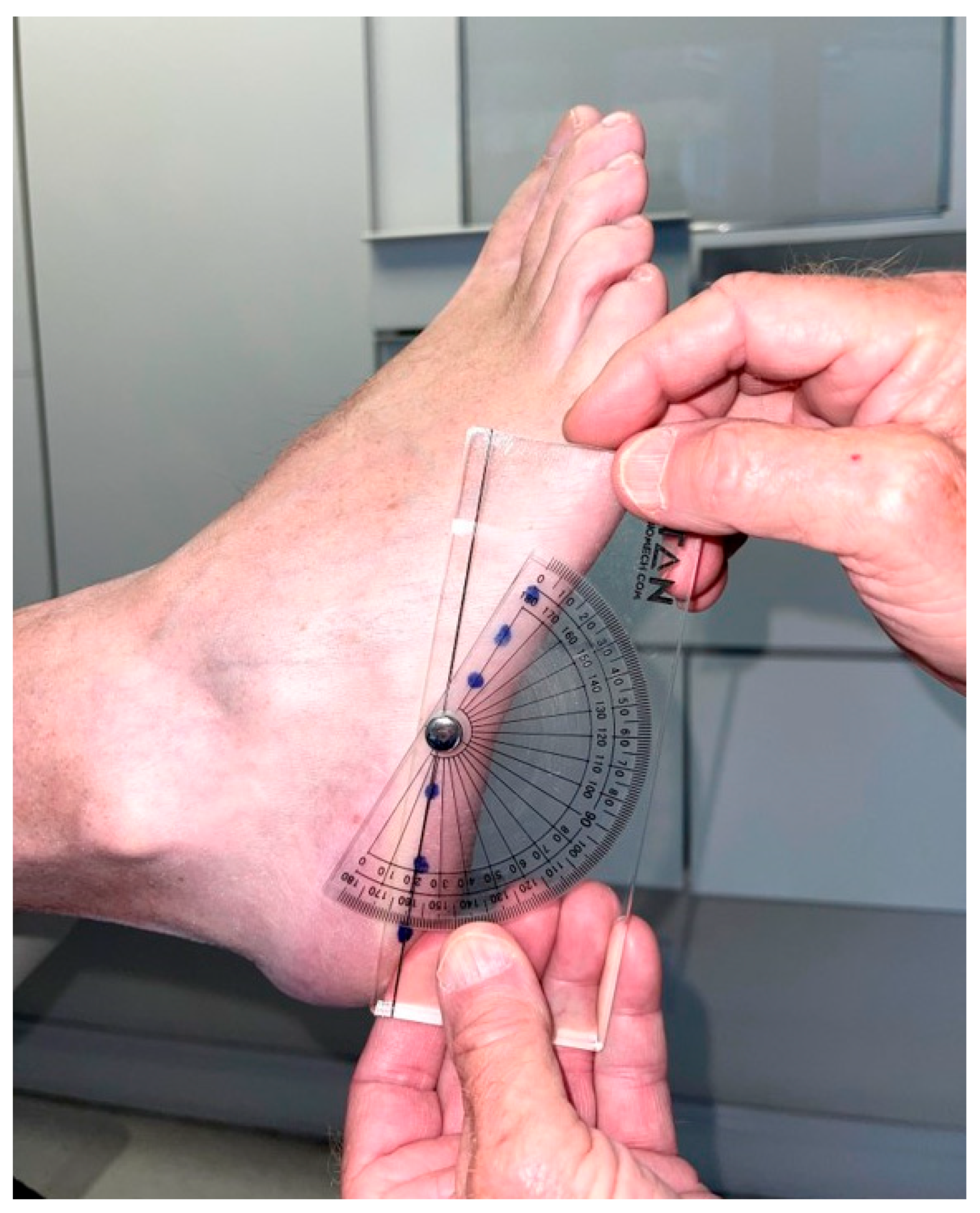
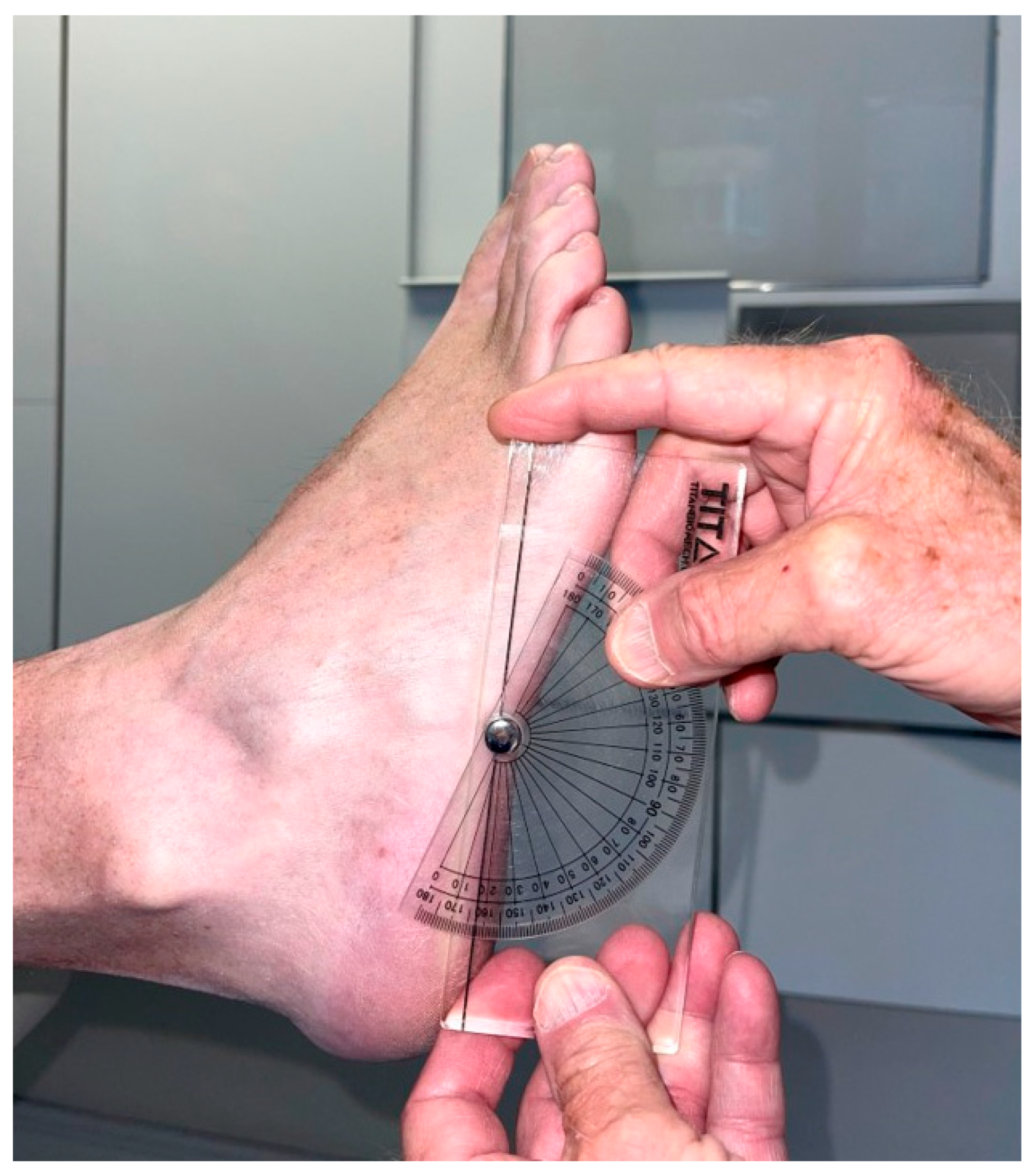
The patient was seated in the supine position with the hip in flexion. The leg was positioned by placing the foot and ankle joint at 90° ankle joint dorsiflexion to resistance and in subtalar joint neutral to slight supination. (Figure 1). The lateral portion of the calcaneus and the fifth metatarsal were marked at the glabrous junction. (Figure 2). A free-swinging orthopedic evaluation device, or goniometer (Titan Biomechanics), was used; the central pin was placed at the peak of the calcaneocuboid–fifth metatarsal articulation centrally. (Figure 3 and Figure 4). One arm was aligned with the black line at the calcaneus marking and the other arm at the plantar surface of the fifth metatarsal marking; however, consistency is key at both points. The resulting angulation was recorded (Figure 3 and Figure 4).

3. Results

3.1. Intrarater Reliability

To assess intrarater reliability for measurements of the right and left feet, a Pearson product moment correlation between two measurements of the right and left feet was performed separately for rater 1 and rater 2. The Pearson product moment correlation between the two measurements made by rater 1 of the right foot was found to be r (df = 3) = 1.00 (p < 0.001). The Pearson product moment correlation between the two measurements of the right foot by rater 2 was found to be r (df = 3) = 1.00 (p < 0.001), and between measurements of the left foot for both raters 1 and 2 was found to be r (df = 3) = 0.97 (p = 0.006). Therefore, intrarater reliability was very high for measurements of the right and left feet for these two raters.

3.2. Interrater Reliability

To assess interrater reliability for measurements of the right and left foot, a Pearson product moment correlation between raters 1 and 2 was performed separately between the measurements made by rater 1 and those made by rater 2. The Pearson product correlation between raters 1 and 2 for measurements of the right foot was found to be r (df = 3) = 1.00 (p < 0.001), and that for measurements of the left foot was found to be r (df = 3) = 0.970 (p = 0.006). Therefore, interrater reliability was very high for these two raters.

4. Discussion

The quantitative pseudoequinus measurement is essential when evaluating a patient for equinus, especially in the setting of normal ankle joint dorsiflexion. The deficit can be calculated by subtracting the forefoot-to-rearfoot measurement from the ankle joint range of dorsiflexion measurement, yielding the presence or absence of a dorsiflexory deficit.
Note that Schuster was prescient in alluding to the fact that a surgical lengthening of the Achilles tendon regardless of what procedure was selected could not adequately lengthen the tendon to achieve 40° of ankle joint dorsiflexion [2]. McGlamry discussed a midfoot wedge osteotomy and fusion or a triple arthrodesis to directly address the forefoot-to-rearfoot deformity. Furthermore, McGlamry [4,7] warned that when performing a calcaneal osteotomy during reconstructive surgery, one must avoid displacing the capital fragment in the sagittal plane because this could create an increased need for ankle joint dorsiflexion, creating, in essence, a pseudoequinus-like state. He further noted that neutralization of pseudoequinus deficiency may be managed successfully by conservatively using a heel lift, thereby placing the forefoot and calcaneus at the patient’s anatomical level in the sagittal plane, obviating the need for additional dorsiflexion [4,7]. Similarly, Whitney and Green [5] suggest that higher-heeled shoes and appositional cavus mold orthoses would be conservative treatment options. They further warned that lengthening the Achilles tendon may actually increase the anterior equinus deformity. The surgical recommendation was to address the osseous sagittal plane deformity via midfoot osteotomies or fusions, hindfoot osteotomies or fusions, or an ankle arthroplasty [5,6].
In the presence of pseudoequinus or anterior equinus, the forefoot is forced dorsalward in the same plane as the rearfoot during weightbearing, thereby using up all available dorsiflexion. The joints distal and proximal will compensate. The most vulnerable joints distal and proximal will be forced to compensate. Subtalar and oblique midtarsal axis pronation ensues, resulting in lowering of the medial longitudinal arch. When no additional dorsiflexion can be obtained, pathologic forces are then directed to the navicular cuneiform articulation, the plantar fascia, and the Achilles tendon at its insertion, leading to eventual anterior ankle impingement.
Pseudoequinus has been named and described in the literature for more than 100 years, yet very little has been written about it, and regarding articles on measuring the degree of this deformity, nothing can be found [7,8,9,10,11,12,13,14,15,16,17,18,19,20,21,22,23,24,25,26,27].
This study had remarkably high interrater and intrarater reliabilities for obtaining this measurement. Other documented studies evaluated lower interrater and intrarater reliabilities for other biomechanical examination measurements using the calcaneus. Elveru et al. [23], when evaluating for the subtalar joint range of motion, did not mark the calcaneus with a bisection line, which resulted in lower reliabilities. Although skin does move, instructions on the parameters and planes with marking of the calcaneus could have yielded higher values when conducting measurements [23].
Furthermore, how the observer and patient are both positioned when recording the subtalar joint range of motion could also decrease interrater and intrarater reliabilities. A potential remedy for this is to have explicitly detailed and refined instructions for palpation of the borders of the measurement. The more detailed and refined the instructions for measurement, the better the potential for yielding higher interrater and intrarater reliabilities [23,24,25,26,27]. Charles [27] obtained very high values of interrater and intrarater reliabilities using a digital inclinometer for sagittal plane ankle joint dorsiflexion. In contrast, the present study was performed using a free-swinging protractor orthopedic evaluation device [27].
Overall, technique is important, and the need for explicit instructions, well-defined planes and borders, patient positioning, and good instruments for evaluating the range of motion in biomechanical examination measurements could increase intrarater and interrater reliabilities. Furthermore, it is important to limit the proximal and distal joints, which can also affect the intrarater and interrater reliabilities.
A limitation of the study is that the amount of force applied could not be controlled because a free-swinging orthopedic evaluation device was used. Furthermore, it was discussed that measuring from the lateral aspect of the foot was optimal because the medial aspect would obfuscate forefoot equinus versus influence a plantarflexed first ray. This is something to evaluate in future studies. An additional limitation is that this study was performed on five individuals. A higher sample size could garner different results, although the interrater and intrarater reliabilities were quite high in this study. In another study performed by us, the forefoot-to-rearfoot relationship in the sagittal plane and ankle joint dorsiflexion in 100 adult patients were measured and analyzed, thereby revealing the degree of pseudoequinus present.

5. Conclusions

This study demonstrated that measuring the forefoot-to-rearfoot relationship in the sagittal plane yielded reliable interrater and intrarater reliabilities. The instructions for the measurement are explicit, from marking and evaluating the planes, marking the borders, and positioning the patient to also giving instructions on the use and placement of the free-swinging orthopedic evaluation device. The implications of this measurement are widespread, and awareness of this fact will enable the practitioner to gain a clearer perspective from which to assess and conservatively or surgically address sagittal plane pathomechanical pathology or syndromes. It is hoped that implementation of this measurement will encourage future studies to be undertaken in this regard.

Author Contributions

Conceptualization, J.C.D. and S.L.; methodology, J.C.D. and S.L.; software, J.C.D. and S.L.; validation, J.C.D. and S.L.;formal analysis, J.C.D. and S.L.; investigation, J.C.D. and S.L.; resources, J.C.D. and S.L.; data curation, J.C.D. and S.L.; writing—original draft preparation, J.C.D. and S.L.; writing—review and editing, J.C.D. and S.L.; visualization, J.C.D. and S.L.; supervision, J.C.D. and S.L.; project administration, J.C.D. and S.L. All authors have read and agreed to the published version of the manuscript.

Funding

This research received no external funding.

Institutional Review Board Statement

The study was conducted in accordance with the Declaration of Helsinki and approved by the Institutional Review Board (or Ethics Committee) of New York College of Podiatric Medicine on 2 October 2022.

Informed Consent Statement

Informed consent was obtained from all subjects involved in the study.

Data Availability Statement

All data supporting the findings of this study are contained within the article.

Conflicts of Interest

The authors declare no conflicts of interest.

References

  1. Shaffer, N.M. Non-deforming clubfoot. Med. Rec. 1885, 27, 561. [Google Scholar]
  2. Schuster, O.F. Foot Orthopaedics; First Institute of Podiatry: New York, NY, USA, 1927. [Google Scholar]
  3. D’Amico, J.C. Equinus: Identification and clinical significance. Arch. Podiatr. Med. Surg. 1976, 4, 7. [Google Scholar]
  4. McGlamry, E.D.; Kitting, R.W. Aquinus foot: An analysis of the etiology, pathology and treatment techniques. J. Am. Podiatr. Med. Assoc. 1973, 63, 165. [Google Scholar] [CrossRef]
  5. Whitney, A.K.; Green, D.R. Pseudoequinus. J. Am. Podiatr. Med. Assoc. 1982, 72, 365. [Google Scholar] [CrossRef]
  6. D’Amico, J.C. Emerging insights on the collapsible cavus. Podiatry Today 2017, 30, 30–37. [Google Scholar]
  7. McGlamry, E.D. Comprehensive Textbook of Foot Surgery, 1st ed.; Williams & Wilkins: Philadelphia, PA, USA, 1987. [Google Scholar]
  8. Jordan, R.P.; Cooper, M.; Schuster, R.O. Ankle dorsiflexion at the heel-off phase of gait. J. Am. Podiatr. Med. Assoc. 1979, 69, 40. [Google Scholar] [CrossRef] [PubMed]
  9. Eberhardt, H.; Inman, V.T.; Bressler, B. The Principal Elements in Human Locomotion. In Human Limbs and Their Substitutes; Klopsteg, P.E., Wilson, P.D., Eds.; McGraw-Hill International Book Co.: New York, NY, USA, 1954. [Google Scholar]
  10. Berry, F.R. Angle Variation Patterns of Normal Hip, Knee and Ankle in Different Operations; University of California Institute Prosthetic Devices Research Project: Berkley, CA, USA, 1952. [Google Scholar]
  11. Morton, D.J.; Fuller, D.D. Human Locomotion and Body Form: A Study of Gravity and Man; Williams & Wilkins: New York, NY, USA, 1952. [Google Scholar]
  12. Murray, M.; Drought, A.; Kory, A. Walking patterns of normal men. J. Bone Jt. Surg. 1964, 46, 335. [Google Scholar] [CrossRef]
  13. Wright, D.G.; Desai, S.M.; Henderson, W.H. Action of the subtalar and ankle joint complex during the stance phase of walking. J. Bone Jt. Surg. 1964, 46, 361. [Google Scholar] [CrossRef]
  14. Root, M.; Orien, B.; Weed, J. Normal and Abnormal Function of the Foot; Clinical Biomechanics Corp: Los Angeles, CA, USA, 1977. [Google Scholar]
  15. Sutherland, D.H.; Hagy, J.L. Measurement of gait movements from motion picture film. J. Bone Jt. Surg. 1972, 54, 787. [Google Scholar] [CrossRef]
  16. Sobel, E.; Caselli, M.A.; Velez, Z. Effect of persistent toe walking on ankle equinus: Analysis of 60 idiopathic toe walkers. J. Am. Podiatr. Med. Assoc. 1997, 87, 17. [Google Scholar] [CrossRef]
  17. Orendurff, M.S.; Rohr, E.S.; Sangeorzan, B.J.; Weaver, K.; Czerniecki, J.M. An equinus deformity of the ankle accounts for only a small amount of increased forefoot plantar pressure in patients with diabetes. J. Bone Jt. Surg. Br. 2006, 88, 65. [Google Scholar] [CrossRef]
  18. DiGiovanni, C.W.; Kuo, R.; Tejwani, N.; Price, R.; Hansen, S.T.; Cziernecki, J.; Sangeorzan, B.J. Isolated gastrocnemius tightness. J. Bone Jt. Surg. Am. 2002, 84, 962. [Google Scholar] [CrossRef]
  19. Meyer, D.C.; Werner, C.M.; Wyss, T.; Vienne, P. A mechanical equinometer to measure the range of motion of the ankle joint: Interobserver and intraobserver reliability. Foot Ankle Int. 2006, 27, 202. [Google Scholar] [CrossRef]
  20. Charles, J.; Scutter, S.D.; Buckley, J. Static ankle joint equinus: Toward a standard definition and diagnosis. J. Am. Podiatr. Med. Assoc. 2010, 100, 195. [Google Scholar] [CrossRef]
  21. DiGiovanni, C.W.; Holt, S.; Czerniecki, J.M.; Ledoux, W.R.; Sangeorzan, B.J. Can the presence of equinus contracture be established by physical exam alone? J. Rehabil. Res. Dev. 2001, 38, 335–340. [Google Scholar]
  22. Hill, R.S. Ankle equinus: Prevalence and linkage to common foot pathology. J. Am. Podiatr. Med. Assoc. 1995, 85, 295. [Google Scholar] [CrossRef]
  23. Elveru, R.A.; Rothstein, J.M.; Lamb, R.L. Goniometric reliability in a clinical setting: Subtalar and ankle joint measurements. Phys. Ther. 1988, 68, 672. [Google Scholar] [CrossRef]
  24. Diamond, J.E.; Mueller, M.J.; Delitto, A.; Sinacore, D.R. Reliability of a diabetic foot evaluation. Phys. Ther. 1989, 69, 797. [Google Scholar] [CrossRef] [PubMed]
  25. Ball, P.; Johnson, G.R. Technique for the measurement of hindfoot inversion and eversion and its use to study a normal population. Clin. Biomech. 1996, 11, 165. [Google Scholar] [CrossRef] [PubMed]
  26. LaPointe, S.J.; Peebles, C.; Nakra, A.; Hillstrom, H. The reliability of clinical and caliper based calcaneal bisection measurements. J. Am. Podiatr. Med. Assoc. 2001, 91, 121. [Google Scholar] [CrossRef] [PubMed]
  27. Charles, J. The design, development, and reliability testing of a new innovative device to measure ankle joint dorsiflexion. J. Am. Podiatr. Med. Assoc. 2016, 106, 338. [Google Scholar] [CrossRef] [PubMed]
Figure 1. Evaluation of Pseudoequinus. The foot is placed along the supinatory side of subtalar joint neutral and the ankle joint dorsiflexed to resistance. The sagittal plane plantarward deviation of the forefoot to the rearfoot is noted.
Japma 116 00028 g001
Figure 2. Optional reference line placement along the plantar lateral aspect of the calcaneus and juncture of plantarward sagittal plane deviation.
Japma 116 00028 g002
Figure 3. Orthopedic evaluation device angular measurement obtained with the pin placed at the apex of the deformity.
Japma 116 00028 g003
Figure 4. Once examiner measurement proficiency has been achieved reference lines are no longer required.
Japma 116 00028 g004
Disclaimer/Publisher’s Note: The statements, opinions and data contained in all publications are solely those of the individual author(s) and contributor(s) and not of MDPI and/or the editor(s). MDPI and/or the editor(s) disclaim responsibility for any injury to people or property resulting from any ideas, methods, instructions or products referred to in the content.