Article

Outcomes of Lapidus Procedure Without Focused Frontal Plane Rotation of the First Metatarsal
1
Emory Decatur Hospital, Decatur, GA 30033, USA
2
Penn Presbyterian Medical Center, Philadelphia, PA 19104, USA
3
The Podiatry Institute, Decatur, GA 30033, USA
*
Author to whom correspondence should be addressed.
J. Am. Podiatr. Med. Assoc. 2026, 116(3), 22; https://doi.org/10.3390/japma116030022
Submission received: 14 January 2025 / Revised: 16 March 2025 / Accepted: 24 April 2025 / Published: 23 April 2026

Abstract

Background: We present a retrospective radiographic analysis showcasing the ability to correct hallux valgus using the Lapidus arthrodesis without focused frontal plane rotation of the first metatarsal. Methods: A total of 33 feet in 30 patients who had undergone Lapidus arthrodesis for the treatment of hallux abducto valgus deformity from 1 August 2015 to 31 December 2020 were identified. The median age of the cohort was 55.4 years (range, 33–78 years), 23 were female (76.7%), three (10%) underwent bilateral Lapidus arthrodesis, and the median duration of follow-up was 15.9 months (range, 5–72 months). Results: The median (minimum, maximum) preoperative first intermetatarsal angle was 16° (13°, 28°), and at final follow-up it was 5° (0°, 6°) (p < 0.001). The median (minimum, maximum) preoperative hallux abductus angle was 37° (26°, 51°), and at final follow-up it was 8.5° (0°, 22.5°) (p < 0.001). The median (minimum, maximum) preoperative tibial sesamoid position was 6 (4, 7), and at final follow-up it was 3 (2, 5) (p = 0.001). Conclusions: We found the radiographic first metatarsal lateral round sign to be ambiguous. Qualitative comparison of the results of this investigation with prior studies describing outcomes following Lapidus arthrodesis with focused frontal plane rotation of the first metatarsal suggests that similar outcomes can be achieved without employment of a decisive frontal plane rotation of the first metatarsal. Our findings lead us to believe that correction of substantial hallux abducto valgus deformities can be accomplished using the Lapidus procedure combined with lateral release of the first metatarsophalangeal joint without focused derotation of the first metatarsal.

1. Introduction

In recent years, the traditional manner by which hallux abducto valgus (HAV) deformity has been evaluated and repaired has been reconsidered, and a strong influence has been placed on frontal plane rotation, specifically supination of the first metatarsal, to decrease first metatarsal pronation [1,2,3,4,5]. Historically, evaluation of HAV deformity has primarily focused on assessing transverse and sagittal plane bone alignment without emphasizing that attention be focused on frontal plane manipulation of the first metatarsal. Recently, however, greater attention has been directed to the frontal plane orientation of the first metatarsal and how this component of the deformity may affect HAV surgical outcomes.
Dayton et al. [1,2,3,4,5] have advocated placing emphasis on the triplane nature of HAV deformity, and they undertook benchtop and clinical research that focused on the influence frontal plane manipulation of the first metatarsal had on alignment of the first metatarsophalangeal joint (MTPJ). As a result of their findings, the authors emphasized that surgeons should focus specific attention on reduction in frontal plane pronation of the first metatarsal when correcting a bunion using the Lapidus arthrodesis.
Interestingly, the principal investigator of this study (A Banks) has observed satisfactory outcomes in patients following repair of HAV using surgical techniques that did not involve a decisive (focused, purposeful, critical, and key) frontal plane manipulation of the first metatarsal. Instead, frontal plane realignment of deformity was achieved with a combination of osseous and soft-tissue maneuvers. In this report, we present the results of a group of patients who underwent Lapidus arthrodesis in combination with lateral soft-tissue release of the first MTPJ in an effort to determine how the results of this investigation compare with prior published results of studies wherein a decisive frontal plane rotation of the first metatarsal was employed in conjunction with Lapidus arthrodesis [1,2,3,4].

2. Materials and Methods

A review of the principal investigator’s Emory Decatur Hospital electronic medical records for surgical patients who had undergone Lapidus bunionectomy (Current Procedural Terminology code 28297) during the period from 1 August 2015 to 31 December 2020 was undertaken. To be included in the analysis, the patient had to have undergone the Lapidus procedure on one or both feet for correction of HAV. Patients who had undergone revision Lapidus arthrodesis and patients who had undergone Lapidus arthrodesis in conjunction with concomitant or prior sesamoidectomy, arthrodesis that required an interpositional bone graft, arthrodesis of the first metatarsocuneiform joint purely for the treatment of degenerative joint disease, or any additional concomitant medial column stabilization procedure as well as patients who had undergone fusion of other midfoot joints were excluded.
Anteroposterior (AP) and lateral weightbearing radiographs for the included patients were procured and reviewed by two of the authors of this investigation (C Ligas and S Robinson). On the AP foot images, the first intermetatarsal angle (IMA), hallux abductus angle (HAA), and tibial sesamoid position (TSP) [6] as well as lateral round sign (LRS) [7] were measured. The LRS is defined as the rounded appearance of the lateral first metatarsal head on the AP radiograph. We categorized the LRS as present, absent, or indeterminate. In some of the feet the lateral position of the sesamoids resulted in radiographic superimposition of the metatarsal head and the sesamoids, which prevented adequate visualization of the shape of the lateral aspect of the first metatarsal head, and we categorized the LRS as indeterminate in these feet. All of the radiographic measurements were ascertained preoperatively, immediately postoperatively, at 8 weeks postoperatively, and at final follow-up postoperatively.
During the postoperative observation period, we also aimed to record any adverse events, such as delayed or nonunion of the arthrodesis, or a return to the operating room to address any complication related to the surgery. Furthermore, we aimed to qualitatively compare the results of this investigation with those reported in prior studies describing the results of the Lapidus arthrodesis wherein a focused, decisive frontal plane rotation of the first metatarsal was employed as a key maneuver of the surgical procedure.
All study data were stored in a password-protected Excel 2019 spreadsheet file (Microsoft Corporation, Redmond, WA, USA). Descriptive statistical analyses as well as tests of the null hypothesis were conducted by one of the authors of this investigation (DS Malay) using Stata 15.1 MP parallel edition (StataCorp LLC, College Station, TX, USA). Statistical significance was defined at the 5% level (p ≤ 0.05). The Emory University Institutional Review Board determined that this project was suitable for expedited review because the design was retrospective and protected health information was securely maintained.

Surgical Technique

With the patient supine on the operating table and following administration of intravenous sedation, local anesthetic with dilute epinephrine was infiltrated in a Mayo block fashion to locally anesthetize the target foot. The foot was then prepped and draped using sterile technique from the toes to the tibial tuberosity. A curvilinear incision was made overlying the dorsal aspect of the first MTPJ and carried proximally over the first metatarsocuneiform joint. Attention was then directed to the first intermetatarsal space, where the adductor hallucis tendon was dissected from its insertion into the base of the proximal phalanx and the fibular sesamoid suspensory ligament was transected with a No. 15 blade scalpel. Reduction in the contracted soft-tissue structures was then assessed by putting the medial rim of the base of the proximal phalanx of the hallux into the medial sagittal groove of the first metatarsal head and inspecting the sagittal plane range of motion of the first MTPJ. If no transverse plane lateral deviation of the hallux was observed with the first MTPJ in its full dorsiflexed position, it was determined that there was no need for further lateral soft-tissue release. If lateral deviation of the hallux was observed with the first MTPJ in its full dorsiflexed position, additional release of the flexor hallucis brevis tendon was performed between the fibular sesamoid and the base of the proximal phalanx.
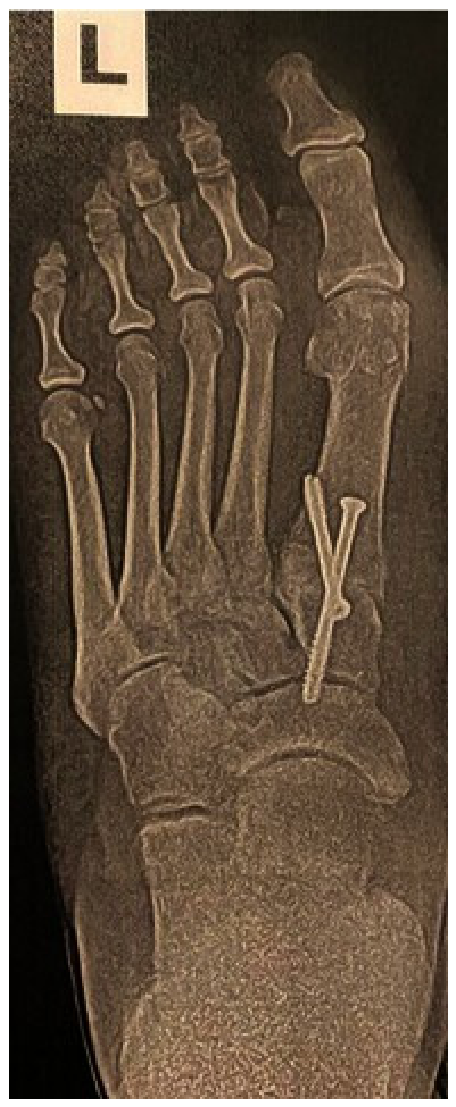
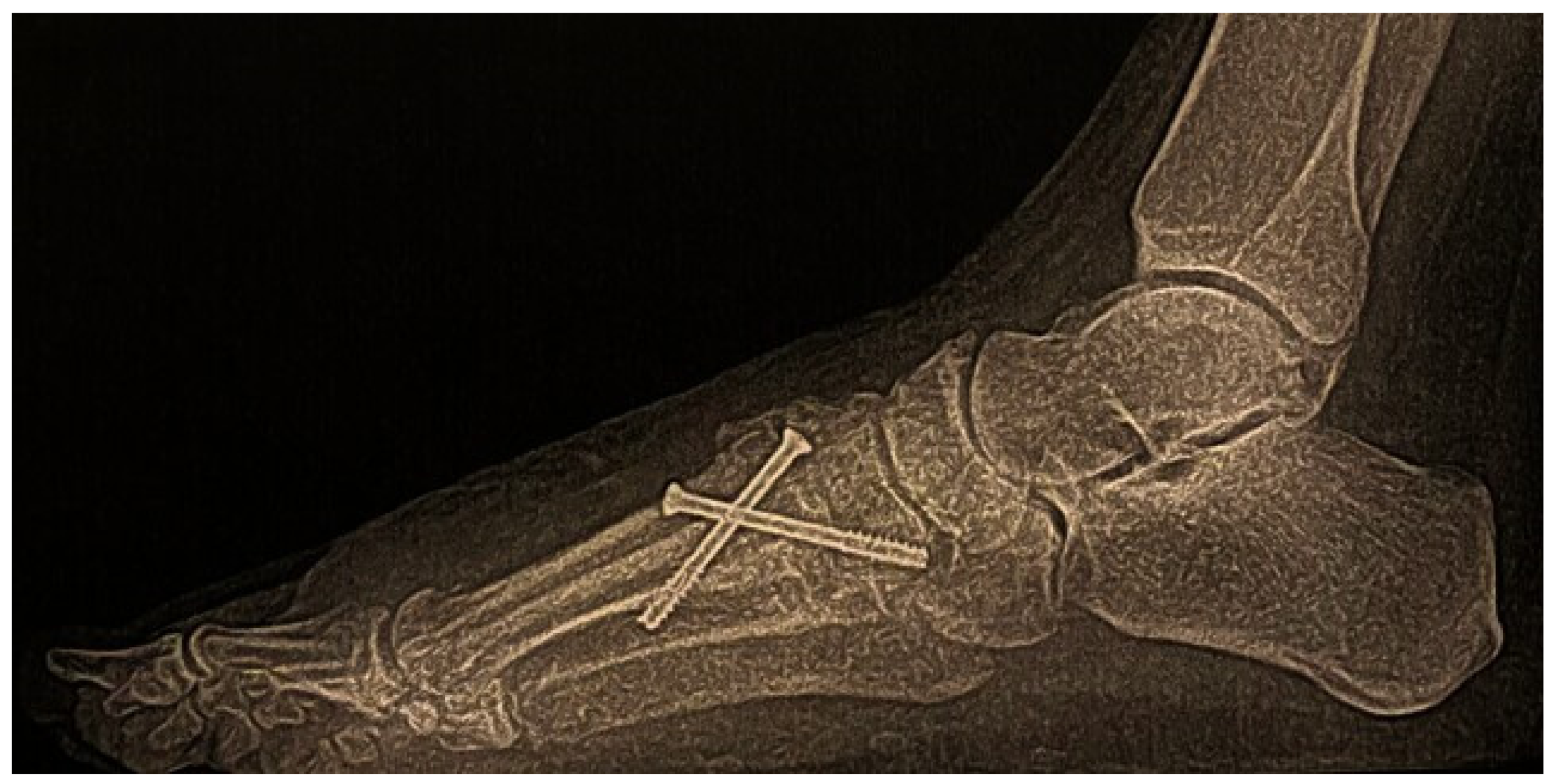
Thereafter, an L-shaped capsular and periosteal incision was made just medial to the extensor hallucis longus tendon. All capsular and periosteal structures were reflected from the medial aspect of the first metatarsal head and the bony medial eminence was resected using power instrumentation. The incision was extended proximally to just beyond the first metatarsocuneiform joint and dissection carried through deep fascia, after which the periosteum was reflected over the metatarsocuneiform joint using a cruciate capsular and periosteal incision. A tarsal distractor was used for visualization of the joint and the cartilaginous surfaces were resected using a combination of hand and power instrumentation until the subchondral plate was eliminated and homogeneous bleeding bone was noted. The first metatarsal was repositioned into a rectus alignment, after which kerfs were made with the reciprocating saw until confluent bony apposition and satisfactory reduction in intermetatarsal splay were achieved. In none of the cases was a specific, focused frontal plane rotational maneuver (supination of the pronated metatarsal) employed. Intraoperative fluoroscopy was used to confirm the position of the fusion and the alignment of the first metatarsal and MTPJ and crossed 4.0 mm diameter cannulated lag screws were used for stabilization (Figure 1 and Figure 2). Standard anatomical closure was performed; the patient’s foot, ankle, and leg were bandaged; a below-the-knee cast was applied; and nonweightbearing was employed for the first 6 weeks postoperatively.

3. Results

A total of 33 feet in 30 patients were included in the analysis, and a statistical description of the cohort is depicted in Table 1. Twenty-three of the patients were female (76.7%), accounting for 79% of the feet. With regard to anatomical side, 22 left feet (66.7%) were included and three of the patients (10%) had both of their feet included in the analyses. The median age at the time of surgery was 55.4 years (range, 33–78 years) and the overall median duration of follow-up was 15.9 months (range, 5–72 months). Thirteen of the feet (39.4%) were followed for ≥1 year, with the longest duration of follow-up being just over 6 years in one patient (3.3%).
We computed the Spearman rank correlation coefficient [8] in order to measure the strength of the linear dependence between five different surgeons’ interpretations—including those of two of the authors (A.B. and C.L.)—of the LRS as viewed on 20 different patient radiographs (interrater reliability) (Table 2) and between each rater’s assessment of the same 20 radiographs on two separate occasions separated by a 3-week interval (intrarater reliability) (Table 3). The LRS was categorized as absent, present, or indeterminate, and the raters had been instructed in identification of the LRS as described by Dayton and Feilmeier [3]. For five raters interpreting the LRS on 20 radiographs, the median interrater correlation coefficient was 0.11985 (range, −0.3343 to 0.4346), whereas the median intrarater correlation coefficient was 0.3025 (range, 0.0624–0.4708).
The results of the statistical comparisons of the radiographic outcomes of interest are depicted in Table 4. Preoperatively, the median (minimum, maximum) first IMA was 16° (13°, 28°), and it decreased to 5° (0°, 7.5°) immediately postoperatively, 5° (0°, 7.5°) at 8 weeks postoperatively, and 5° (0°, 7.5°) at final follow-up. The reduction between the preoperative and first postoperative measurements was statistically significant (p < 0.001), whereas the changes between the various postoperative measurements never varied in a statistically significant manner (p = 0.1153 between the immediate and 8-week postoperative visits; p > 0.99 between the 8-week and final follow-up measurements). Preoperatively, the median (minimum, maximum) HAA was 37° (26°, 51°), and it reduced to 10° (0°, 20°) immediately postoperatively, 10° (0°, 17.5°) at 8 weeks postoperatively, and 8.5° (0°, 22.5°) at final follow-up. The reduction between the preoperative and first postoperative measurements was statistically significant (p < 0.001), whereas the changes between the various postoperative measurements never varied in a statistically significant manner (p > 0.99 between the immediate and 8-week postoperative visits; p = 0.2266 between the 8-week and final follow-up measurements). Preoperatively, the median (minimum, maximum) TSP was 6 (4, 7), and it reduced to 2 (2, 4) immediately postoperatively, 2 (1, 4) at 8 weeks postoperatively, and 3 (2, 5) at final follow-up. The reduction between the preoperative and first postoperative measurements was statistically significant (p < 0.001), whereas the changes between the various postoperative measurements never varied in a statistically significant manner (p = 0.6072 between the immediate and 8-week postoperative visits; p = 0.125 between the 8-week and final follow-up measurements). Preoperatively, the LRS was present in 21 feet (63.6%), indeterminate in three (9.1%), and absent in nine (27.3%). At the immediate, 8-week, and final postoperative follow-up visits, the LRS was present in three feet (9.1%), indeterminate in seven (21.2%), and absent in 23 (69.7%). The change in the frequency counts for the LRS was statistically significant (p = 0.0329) between the preoperative and postoperative follow-up visits, whereas it did not change in a statistically significant manner between the postoperative follow-up visits. The postoperative measurements held steady over the follow-up observation period (Table 4). Furthermore, during the postoperative observation period, there were no instances of nonunion or reoperation in any of the patients in the cohort.
Table 5 depicts the qualitative comparison of the outcomes observed in this cohort with those achieved by other investigators who performed the Lapidus procedure employing what we interpreted to be a focused, decisive frontal plane derotation of the first metatarsal as a key intraoperative maneuver [1,2,3,4]. With regard to these comparisons, it should be noted that a lateral first MTPJ release was performed in the patients described in the first study by Dayton et al. [1] but not in the patients described in subsequent studies [2,3,4]. Comparison of the results we observed in our cohort with those described in the previous studies revealed the results to be similar regardless of whether or not the focused, decisive frontal plane derotation of the first metatarsal was undertaken.

4. Discussion

Based on radiographic analyses, patients in the current study demonstrated satisfactory surgical outcomes in the repair of HAV deformity using a Lapidus arthrodesis with lateral release of the first MTPJ without a focused, decisive frontal plane rotational manipulation of the first metatarsal. We believe the outcomes we observed in this series of patients compare favorably with those about which we have read in prior publications that describe radiographic outcomes observed following repair of HAV using a Lapidus arthrodesis with and without lateral release of the first MTPJ with a focused, decisive frontal plane rotational manipulation of the first metatarsal [1,2,3,4]. Moreover, correction of the deformity, as measured radiographically, appeared to hold up over time, even in the patients who were followed ≥1 year. Interestingly, patients in the series of Lapidus procedures described in this study were generally older and had larger HAA, first IMA, and TSP values, indicative of more advanced deformity, in comparison with these same measurements in the prior studies. Based on our understanding of the results of this investigation and our appreciation of the published literature related to radiographic changes associated with Lapidus arthrodesis, it is our belief that a focused, decisive frontal plane derotation of the first metatarsal is not necessary to achieve satisfactory repair of HAV deformity.
Several observations can be made relative to the issue of frontal plane rotational deformity, specifically pronation, of the first metatarsal in patients with HAV. A full understanding of the presence and amount of metatarsal pronation in patients with HAV is confounded by inconsistencies in study models and means of assessment [9,10,11,12,13,14,15,16,17,18,19,20,21,22,23,24,25,26]. One study employing three different techniques to assess first metatarsal pronation in patients with weightbearing computed tomography (CT) noted that there was significant variability between all three study models [24]. Additionally, CT imaging has been used to assess whether there is an actual structural torsion in the first metatarsal [14,16,17]. Although the studies we cited [1,2,3,4], with which we compared our results, support the theory that there is a rotational (torsional) component of the first metatarsal involved in HAV deformity, control patients without HAV also demonstrate rotation (torsion) in the first metatarsal [12,13,15,17,18,19,24,26], and the quantitative difference in first metatarsal torsion between those with and without HAV is low. In fact, when weightbearing CT scans were used to measure first metatarsal pronation, the difference between the two groups was <10° [12,17,18,24,26]. Mahmoud et al. [18] concluded that the measured difference in first metatarsal pronation between HAV and control patients was not sufficient to predict who would and who would not have HAV deformity; hence, the measurement was of poor prognostic utility. Moreover, progressive increases in the severity of HAV have not been shown to correlate with similar increases in metatarsal pronation [13,18,19,20,22], and it has also been shown that the first IMA and HAA are poorly correlated with metatarsal pronation [20,25].
Nonetheless, focused, decisive frontal plane rotation of the metatarsal has been proposed as a necessary component of the repair of HAV in order to relocate the sesamoids beneath the metatarsal head [1,3,4,13,27]. Furthermore, it has been suggested that failure to decisively derotate the first metatarsal as a key component of the surgical correction of HAV will insufficiently relocate the sesamoids, rendering the patient more susceptible to a rapid recurrence of deformity [1,3]. This premise, however, is not supported by the results of the patients observed in the current study, wherein a focused, decisive maneuver to reduce pronation in the first metatarsal was not employed to correct HAV. Scheele et al. [25] and Conti et al. [21] performed preoperative and postoperative weightbearing CT scans in patients undergoing the Lapidus procedure, yet without focused frontal plane rotation, and both studies found that first metatarsal rotation was reduced to normal levels postoperatively.
Based on our experience with the patients described in this study, we believe that there are additional factors that influence the relationship between the sesamoids and the first MTPJ when a Lapidus arthrodesis combined with plantar lateral soft-tissue release of the first MTPJ is undertaken. First, we believe that first metatarsal pronation is primarily a dynamic entity as opposed to a fixed structural defect. Although two prior studies have demonstrated apparent structural deformity in the first metatarsal with CT imaging [14,17], the evidence seems to support the concept that the condition is predominantly dynamic in nature. Mortier et al. [10] proposed this initially, and differences in first metatarsal pronation have been noted on CT images with weightbearing versus nonweightbearing in patients without HAV [15]. Patients with HAV have also been shown to demonstrate increased mobility of the first metatarsocuneiform joint [28], and others have argued that the first ray complex involves more than just the metatarsocuneiform joint and therefore pronation in other segments could influence the perception of first metatarsal pronation [13,22,25,29]. Weightbearing CT has also demonstrated that the alignment of the rearfoot at the time of imaging influences measurements of first metatarsal pronation [29]. In patients who demonstrate rearfoot pronation on weightbearing CT, the first metatarsal is similarly pronated; conversely, when the rearfoot is supinated, the first metatarsal is supinated.
Based on the premise that frontal plane involvement is a dynamic process, reduction in the HAV deformity and sufficient closure of the IMA should provide for a reduction in frontal plane rotation of the first metatarsal. In HAV deformity, it has been shown that the sesamoids do not displace into the first interspace but remain fixed as the first metatarsal deviates medially [30]. As such, in HAV the proximal phalanx is pulled laterally and rotated into valgus following the fixed position of the sesamoids, which transfer the forces of plantar intrinsic musculature to the base of the proximal phalanx of the hallux. Although the precise interrelationship between lateral deviation of the hallux and intermetatarsal splay, in terms of the sequence of events and the effects on first MTPJ alignment, remains debatable, the end result—namely, the HAV deformity—is the same. With this in mind, we think it is important to consider how manipulation of the hallux into a corrected position also relocates the sesamoids and reduces intermetatarsal splay. This can be simulated by manually positioning the hallux squarely on the metatarsal head and inspecting the joint in the preoperative setting or in the postoperative setting following surgical repair of the deformity. This relationship has, in fact, been demonstrated in the operating room following lateral joint release and proximal first metatarsal osteotomy and also in cadaver specimens, in which reduction in the first IMA and TSP was observed upon manipulation of the hallux [2,11]. This we liken to the concept of “reverse buckling,” whereby realignment of the first MTPJ results in a reduction in the first IMA in patients with flexible HAV because of changes in the vectors of forces at the first MTPJ [31,32,33,34]. Interestingly, a similar, albeit pathologic, response of the joint is seen in cases of hallux varus [35].
Accordingly, successful correction of HAV deformity requires a combination of methods to reduce the first IMA and reorient the vectors of forces at the plantar aspect of the first MTPJ. Given the fact that no focused frontal plane rotation of the first metatarsal was performed in the patients described in the current study, the observed radiographic results demonstrate that reduction in the first IMA and realignment of the first MTPJ are the primary factors required for successful correction of HAV, including relocation of the sesamoids to a suitable alignment beneath the first metatarsal head. Scheele et al. [25] used weightbearing CT scans both preoperatively and postoperatively in patients undergoing Lapidus procedures and showed that the sesamoids were suitably relocated without focused, decisive metatarsal rotation and that the sagittal plane alignment of the fibular sesamoid was also restored. Similarly, Conti et al. [20], in their group of patients undergoing Lapidus procedures with no focused or purposeful metatarsal rotation, found the mean reduction in pronation on weightbearing CT of 8.8° between preoperative and postoperative imaging sufficient to reduce metatarsal pronation to a normal range.
Because persistent or recurrent HAV deformity is more likely to occur in response to a less than optimal reduction in the first IMA and restoration of first MTPJ balance, we routinely employ a lateral release of the first MTPJ to facilitate the capacity of the hallux to relocate into a rectus, balanced position on the first metatarsal head. We feel that sufficient lateral joint release is crucial to restoration of a balanced first MTPJ alignment, as lateral capsular and myotendinous structures develop adaptive contracture over time, limiting the capacity to realign the hallux to a rectus position on the metatarsal head in cases of advanced HAV.
The validity of radiographic measurement of the HAA and the first IMA has been shown to be excellent [36,37,38,39], whereas that of the TSP has been shown to be good [39], as determined by intrarater and interrater reliability coefficients for multiple observers. Moreover, the LRS of the first metatarsal head has been described by Okuda et al. [7] as evidence of first metatarsal pronation on standard radiographs, and frontal plane derotation (supination) of first metatarsal pronation reduces the LRS and, according to the authors, reduces the likelihood of the development of recurrent HAV deformity. Lateral rounding of the first metatarsal head has been evaluated with CT scans and has been confirmed by Steadman et al. [19] but refuted by Mansur et al. [26], who claimed that the LRS could not be predictably determined on standard radiographs and that the observed rounding was actually related to the location of the sesamoids (greater rounding noted with TSP ≥ 4) and the presence of arthritis, which altered the shape and diameter of the first metatarsal head.
Furthermore, arthritic change noted on weightbearing CT that is not evident on standard radiographs may affect the shape of the metatarsal head [12,22]. Del Vecchio et al. [40] noted that the interobserver assessment of the LRS was subjective and unreliable, such that in their opinion the measurement in and of itself was not a useful method of determining the degree of first metatarsal rotation. Poor interobserver agreement for this evaluation was similarly described by Ramachandran et al. [39]. In our series of patients, we found it difficult to render a determination of the LRS owing to superimposition of the fibular sesamoid, and for this reason we categorized the LRS as indeterminate when the sesamoid obscured the measurement and led to ambiguity.
The TSP has previously been employed as one of the criteria for success following bunionectomy using rotation of the first metatarsal in conjunction with a Lapidus arthrodesis [1,2,3,4]. Results between the current study and those performed previously are comparable even though the level of deformity in the patients in the current study was qualitatively greater and the mean patient age was notably older by more than 20 years. It has been suggested that failure to apply focused frontal plane rotation in association with Lapidus arthrodesis results in joint subluxation because the sesamoids remain laterally displaced and, over time, HAV deformity recurs [3]. Using weightbearing CT images both preoperatively and postoperatively in patients without first metatarsal rotation, Scheele et al. [25] noted significant improvement in the alignment of the sesamoids postoperatively. Conti et al. [20] also found that postoperative sesamoid alignment was improved, but this change did not correlate with a reduction in first metatarsal rotation. For this reason, the authors suggested that sesamoid position should not be used to assess first metatarsal rotation and that sesamoid subluxation may be more related to correction in the IMA and soft-tissue attachments, sentiments with which we are inclined to agree.
Like many prior studies, we did not measure patient satisfaction following Lapidus bunionectomy in the patients we have described in this study. However, Conti et al. [21] evaluated patient satisfaction using the Patient-Reported Outcome Measurement Information System [41,42], with specific attention paid to physical function, pain interference, and pain intensity at the 2-year postoperative visit, following hallux valgus repair using the Lapidus procedure without a focused, purposeful frontal plane supination maneuver of the first metatarsal. In the study by Conti et al. [21], patients were divided into the following two groups: those who exhibited no improvement or some increased first metatarsal pronation postoperatively and those who sustained a reduction in first metatarsal pronation (2°–8°). Patients with a reduction in first metatarsal pronation scored better on the physical function scale, but there was no difference between the groups with regard to pain interference and pain intensity. However, many of the patients described by the authors underwent surgical procedures in addition to the HAV repair, yet there was no discussion as to whether complications with other interventions had a confounding effect on the scoring. Furthermore, the authors did not describe postoperative IMAs in either group, a shortcoming we feel limits the meaning of their report. Interestingly, and despite not employing a focused, decisive frontal plane derotation of first metatarsal pronation in the patients we describe in this study, we did not observe substantial loss of correction in any of the measured values in the patients who were followed for >1 year postoperatively.
Several methodological shortcomings threaten the validity of our conclusions. Like many retrospective studies of surgical patients, the limited number of patients overall and the small number of patients with follow-up imaging ≥ 1 year postoperatively limit our ability to identify exposures that predict the outcomes. The same problem is also noted in the four prior studies involving a Lapidus with focused derotation of the first metatarsal; specifically, the respective average duration of follow-up in each study was not described [1], 5 months [2], 5.2 months [3], and 17.4 months [4] compared with the median of 15.9 months in the current study. Nonetheless, of the patients we followed for >1 year postoperatively, the radiographic outcomes of interest appeared to remain stable with maintenance of correction of the first IMA, HAA, TSP, and LRS (Table 4). Moreover, sesamoid axial views were not available for inspection, as they are not typically obtained by the principal investigator for routine evaluation of patients with HAV, so no comparison could be made with earlier studies that examined sesamoid axial radiographic images.
By the same token, we did not evaluate advanced imaging, such as CT scans, to more precisely detail the alignment of the osseous structures before and after surgery. Although we feel that analysis of CT scans could increase the internal validity of a study of the alignment of the first metatarsal and the first MTPJ by increasing the precision of the radiographic measurements, in particular those made in the frontal plane, we believe that the use of CT scans would detract from the generalizability of the results, as the usual and customary approach to assessment of HAV deformity employs standard weightbearing AP and lateral radiographs. In addition, although the interrater and intrarater reliability of the radiographic parameters we measured has not been specified, it is routinely used by surgeons evaluating and treating patients with HAV.
Furthermore, we did not assess subjective outcomes related to foot function and patient satisfaction and instead directed our attention to radiographic measurements that in our experience generally correspond to deformity correction and satisfactory outcomes. Moreover, several statistical issues permeate our analyses and could compromise our conclusions. For instance, the data were linked by patients by virtue of repeated radiographic measurements made over time and also by the fact that three of the patients had undergone bilateral Lapidus arthrodesis; hence, the assumption of data independence was not strictly adhered to.
Finally, we realize that comparison with historical controls (prior studies) is fraught with uncertainty because known and unknown exposures and measurement biases might not be similar between our group of patients and those described by other investigators. Despite our appreciation of this potential and likely probable lack of homogeneity between the different groups of patients (as we described with regard to average age and IMA measurement) and despite our recognition of the other limitations we have described, we still feel that it is beneficial to point out these crude comparisons and the results of this investigation, as they could be used by future investigators to design more rigorous prospective cohort studies and randomized controlled trials that aim to determine whether patients do better when Lapidus arthrodesis is executed with or without a focused, decisive frontal plane manipulation of the first metatarsal.

5. Conclusions

We have demonstrated successful radiographic repair of HAV deformity using a Lapidus arthrodesis and lateral release of the first MTPJ. The radiographic results of this study are comparable to similar studies in which focused frontal plane rotation of the first metatarsal was incorporated with a Lapidus arthrodesis. We believe that a focused, decisive frontal plane rotation of the first metatarsal is not necessary to achieve satisfactory correction and successful repair of HAV deformity, and this premise is supported by the outcomes described in this study. Instead of a focused, decisive frontal plane rotation of the first metatarsal, lateral release of the first MTPJ appears to work just as well with regard to restoring the balance of the first MTPJ when combined with Lapidus arthrodesis. We believe that there is a very small difference in first metatarsal pronation between patients with HAV and normal patients and that this is a dynamic entity that reduces with repair of HAV. Furthermore, it is felt that reduction in the IMA and restoration of alignment at the first MTPJ are the key components of successful surgical outcomes.
Of course, to show whether one approach is better than the other, a clinical trial would have to be undertaken wherein participants are randomly assigned to undergo Lapidus arthrodesis with a focused, decisive frontal plane rotation to reduce first metatarsal pronation or Lapidus arthrodesis with lateral release of the first MTPJ. Moreover, to be truly meaningful, such a study would best serve patients and surgeons alike if patient-related outcome scores that focus on satisfaction and function were to be measured along with the radiographic outcomes of interest. We hope that the results of this investigation can be used in the development of future studies that focus on the treatment of HAV deformity.

Author Contributions

Conceptualization, A.B. and C.L.; methodology, A.B. and C.L.; software, D.S.M.; validation D.S.M. formal analysis, D.S.M.; investigation, C.L. and S.R.; resources, A.B.; data curation, C.L. and S.R.; writing—original draft preparation, A.B. and C.L.; writing—review and editing, D.S.M. All authors have read and agreed to the published version of the manuscript.

Funding

This research received no external funding.

Institutional Review Board Statement

The Emory University School of Medicine IRB determined this study was exempt from review given the retrospective radiographic review. No number was assigned and no further process was needed.

Informed Consent Statement

The requirement for informed consent was waived by the Emory University Institutional Review Board due to the retrospective nature of the study.

Data Availability Statement

The data supporting the findings of this study are available from the corresponding author upon reasonable request. The data are not publicly available due to patient privacy and institutional restrictions.

Conflicts of Interest

The authors declare no conflicts of interest.

References

  1. Dayton, P.; Feilmeier, M.; Kauwe, M.; Hirschi, J. Relationship of frontal plane rotation of first metatarsal to proximal articular set angle and hallux alignment in patients undergoing tarsometatarsal arthrodesis for hallux abducto valgus: A case series and critical review of the literature. J. Foot Ankle Surg. 2013, 52, 348–354. [Google Scholar] [CrossRef] [PubMed]
  2. Dayton, P.; Kauwe, M.; DiDomenico, L.; Feilmeier, M.; Reimer, R. Quantitative analysis of the degree of frontal rotation required to anatomically align the first metatarsal phalangeal joint during modified tarsal-metatarsal arthrodesis without capsular balancing. J. Foot Ankle Surg. 2016, 55, 220–225. [Google Scholar] [CrossRef]
  3. Dayton, P.; Feilmeier, M. Comparison of tibial sesamoid position on the anteroposterior and axial radiographs before and after triplane tarsal metatarsal joint arthrodesis. J. Foot Ankle Surg. 2017, 56, 1041–1046. [Google Scholar] [CrossRef] [PubMed]
  4. Dayton, P.; Carvalho, S.; Egdorf, R.; Dayton, M. Comparison of radiographic measurements before and after triplane tarsometatarsal arthrodesis for hallux valgus. J. Foot Ankle Surg. 2020, 59, 291–297. [Google Scholar] [CrossRef] [PubMed]
  5. Dayton, P.; Kauwe, M.; Feilmeier, M. Is our current paradigm for evaluation and management of the bunion deformity flawed? A discussion of procedure philosophy relative to anatomy. J. Foot Ankle Surg. 2015, 54, 102–111. [Google Scholar] [CrossRef]
  6. Sanner, W.H.; Whitney, K.A. Foot segmental relationships and bone morphology. In Foot and Ankle Radiology, 2nd ed.; Christman, R.A., Ed.; Wolters Kluwer: Philadelphia, PA, USA, 2014; p. 209. [Google Scholar]
  7. Okuda, R.; Kinoshita, M.; Yasuda, T.; Jotoku, T.; Kitano, N.; Shima, H. The shape of the lateral edge of the first metatarsal head as a risk factor for recurrence of hallux valgus. J. Bone Jt. Surg. Am. 2007, 89, 2163–2172. [Google Scholar] [CrossRef]
  8. Spearman, C. The proof and measurement of association between two things. Am. J. Psychol. 1904, 15, 72–101. [Google Scholar] [CrossRef]
  9. Talbot, K.D.; Saltzman, C.L. Hallucal rotation: A method of measurement and relationship to bunion deformity. Foot Ankle Int. 1997, 18, 550–556. [Google Scholar] [CrossRef]
  10. Mortier, J.P.; Bernard, J.L.; Maestro, M. Axial rotation of the first metatarsal head in a normal population and hallux valgus patients. Orthop. Traumatol. Surg. Res. 2012, 98, 677–683. [Google Scholar] [CrossRef]
  11. Okuda, R.; Yasuda, T.; Jotoku, T.; Shima, H. Supination stress of the great toe for assessing intraoperative correction of hallux valgus. J. Orthop. Sci. 2012, 17, 129–135. [Google Scholar] [CrossRef]
  12. Collan, L.; Kankare, J.A.; Mattila, K. The biomechanics of the first metatarsal bone in hallux valgus: A preliminary study utilizing a weight bearing extremity CT. Foot Ankle Surg. 2013, 19, 155–161. [Google Scholar] [CrossRef]
  13. Kim, Y.; Kim, J.S.; Young, K.W.; Naraghi, R.; Cho, H.K.; Lee, S.Y. A new measure of tibial sesamoid position in hallux valgus in relation to the coronal rotation of the first metatarsal in CT scans. Foot Ankle Int. 2015, 36, 944–952. [Google Scholar] [CrossRef] [PubMed]
  14. Cruz, E.P.; Wagner, F.V.; Henning, C.; Sanhudo, J.A.V.; Pagnussato, F.; Galia, C.R. Comparison between simple radiographic and computed tomographic three-dimensional reconstruction for evaluation of the distal metatarsal articular angle. J. Foot Ankle Surg. 2017, 56, 505–509. [Google Scholar] [CrossRef] [PubMed]
  15. Ota, T.; Nagura, T.; Yamada, Y.; Yamada, M.; Yokoyama, Y.; Ogihara, N.; Matsumoto, M.; Nakamura, M.; Jinzaki, M. Effect of natural full weight-bearing during standing on the rotation of the first metatarsal bone. Clin. Anat. 2019, 32, 715–721. [Google Scholar] [CrossRef] [PubMed]
  16. Ota, T.; Nagura, T.; Kokubo, T.; Kitashiro, M.; Ogihara, N.; Takeshima, K.; Seki, H.; Suda, Y.; Matsumoto, M.; Nakamura, M. Etiological factors in hallux valgus, a three-dimensional analysis of the first metatarsal. J. Foot Ankle Res. 2017, 10, 43. [Google Scholar] [CrossRef]
  17. Randich, J.R.; John, K.J.; Gomez, K.; Bush, W.J. Frontal plane rotation of the first ray in hallux valgus using standing computerized tomography (CT). J. Foot Ankle Surg. 2021, 60, 489–493. [Google Scholar] [CrossRef]
  18. Mahmoud, K.; Metikala, S.; Mehta, S.D.; Fryhofer, G.W.; Farber, D.C.; Prat, D. The role of weightbearing computed tomography scan in hallux valgus. Foot Ankle Int. 2021, 42, 287–293. [Google Scholar] [CrossRef]
  19. Steadman, J.; Bakshi, N.; Arena, C.; Leake, R.; Barg, A.; Saltzman, C.L. Normative distribution of first metatarsal axial rotation. Foot Ankle Int. 2021, 42, 1040–1048. [Google Scholar] [CrossRef]
  20. Conti, M.S.; Willett, J.F.; Garfinkel, J.H.; Miller, M.C.; Costigliola, S.V.; Elliott, A.J.; Conti, S.F.; Ellis, S.J. Effect of the modified Lapidus procedure on pronation of the first ray in hallux valgus. Foot Ankle Int. 2020, 41, 125–132. [Google Scholar] [CrossRef]
  21. Conti, M.S.; Patel, T.J.; Zhu, J.; Elliott, A.J.; Conti, S.F.; Ellis, S.J. Association of first metatarsal pronation correction with patient-reported outcomes and recurrence rates in hallux valgus. Foot Ankle Int. 2022, 43, 309–320. [Google Scholar] [CrossRef]
  22. Najefi, A.A.; Katmeh, R.; Zaveri, A.K.; Alsafi, M.K.; Garrick, F.; Malhotra, K.; Patel, S.; Cullen, N.; Welck, M. Imaging findings and first metatarsal rotation in hallux valgus. Foot Ankle Int. 2022, 43, 665–675. [Google Scholar] [CrossRef] [PubMed]
  23. Soares, S.; Gomes, T.M.; Garibaldi, R.; Monteverde, A.G.; Oliva, X.M. Radiological and anatomical evaluation of first metatarsal pronation in hallux valgus deformity: A comparison between three different methods. J. Foot Ankle Surg. 2023, 62, 448–454. [Google Scholar] [CrossRef] [PubMed]
  24. Conti, M.S.; Patel, T.J.; Caolo, K.C.; Amadio, J.M.; Miller, M.C.; Costigliola, S.V.; Ellis, S.J. Correlation of different methods of measuring pronation of the first metatarsal on weightbearing CT scans. Foot Ankle Int. 2021, 42, 1049–1059. [Google Scholar] [CrossRef] [PubMed]
  25. Scheele, C.B.; Christel, S.T.; Frohlich, I.; Mehlhorn, A.; Walther, M.; Hörterer, H.; Harrasser, N.; Kinast, C. A cone beam CT based 3D-assessment of bony forefoot geometry after modified Lapidus arthrodesis. Foot Ankle Surg. 2020, 26, 883–889. [Google Scholar] [CrossRef]
  26. Mansur, N.S.B.; Lalevee, M.; Schmidt, E.; Dibbern, K.; Wagner, P.; Wagner, E.; de Souza Nery, C.A.; de Cesar Netto, C. Correlation between indirect radiographic parameters of first metatarsal rotation in hallux valgus and values on weight-bearing computed tomography. Int. Orthop. 2021, 45, 3111–3118. [Google Scholar] [CrossRef]
  27. Kim, J.S.; Young, K.W. Sesamoid position in hallux valgus in relation to the coronal rotation of the first metatarsal. Foot Ankle Clin. 2018, 23, 219–230. [Google Scholar] [CrossRef]
  28. Lee, H.Y.; Lalevee, M.; Mansur, N.S.B.; Vandelune, C.A.; Dibbern, K.N.; Barg, A.; Femino, J.E.; de Cesar Netto, C. Multiplanar instability of the first tarsometatarsal joint in hallux valgus and hallux rigidus patients: A case-control study. Int. Orthop. 2022, 46, 255–263. [Google Scholar] [CrossRef]
  29. Bakshi, N.; Steadman, J.; Philippi, M.; Arena, C.; Leake, R.; Saltzman, C.L.; Barg, A. Association between hindfoot alignment and first metatarsal rotation. Foot Ankle Int. 2022, 43, 105–112. [Google Scholar] [CrossRef]
  30. Boberg, J.S.; Judge, M.S. Follow-up of the isolated medial approach to hallux abducto valgus correction without interspace release. J. Am. Podiatr. Med. Assoc. 2002, 92, 555–562. [Google Scholar] [CrossRef]
  31. McGlamry, E.D.; Feldman, M.H. A treatise on the McBride procedure. A review of the McBride publications on hallux valgus correction with observations on rationale of the original procedure and the current modifications. J. Am. Podiatry Assoc. 1971, 61, 161–173. [Google Scholar]
  32. Butlin, W.E. Modifications of the McBride procedure for correction of hallux abducto valgus. J. Am. Podiatr. Med. Assoc. 1974, 64, 585–602. [Google Scholar] [CrossRef]
  33. Kempe, S.A.; Singer, R.H. The modified McBride bunionectomy utilizing the adductor tendon transfer. J. Foot Surg. 1985, 24, 24–29. [Google Scholar]
  34. Pressman, M.M.; Stano, G.W.; Krantz, M.K.; Novicki, D.C. Correction of hallux valgus with positionally increased intermetatarsal angle. J. Am. Podiatr. Med. Assoc. 1986, 76, 611–616. [Google Scholar] [CrossRef] [PubMed]
  35. Fenton, C.F., III; McGlamry, E.D. Reverse buckling to reduce metatarsus primus varus: A preliminary investigation. J. Am. Podiatr. Med. Assoc. 1982, 72, 342–346. [Google Scholar] [CrossRef] [PubMed]
  36. Srivastava, S.; Chockalingam, N.; El Fakhri, T. Radiographic angles in hallux valgus: Comparison between manual and computer-assisted measurements. J. Foot Ankle Surg. 2010, 49, 523–528. [Google Scholar] [CrossRef] [PubMed]
  37. Lee, K.M.; Ahn, S.; Chung, C.Y.; Sung, K.H.; Park, M.S. Reliability and relationship of radiographic measurements in hallux valgus. Clin. Orthop. Relat. Res. 2012, 470, 2613–2621. [Google Scholar] [CrossRef]
  38. Heineman, N.; Xi, Y.; Zhang, L.; Dessouky, R.; Hummel, J.; Skweres, J.; Wukich, D.; Chhabra, A. Hallux valgus evaluation on MRI: Can measurements validated on radiographs be used? J. Foot Ankle Surg. 2018, 57, 305–308. [Google Scholar] [CrossRef]
  39. Ramachandran, S.S.; Reine, S.; Archer, H.; Koay, J.; Wukich, D.K.; Chhabra, A. Interreader reliability assessment of hallux valgus evaluation on dorsoplantar weightbearing radiographs from a prospective multi-center trial and correlation with patient-reported outcome measures. Skelet. Radiol. 2023, 52, 2419–2425. [Google Scholar] [CrossRef]
  40. Del Vecchio, J.J.; Dealbera, E.D.; Brue, J.; Ghioldi, M.E.; Chemes, L.N.; Abdelatif, N.M.; Chan, D. Intra- and interobserver reliability of Yamaguchi’s method for the assessment of first metatarsal pronation in hallux valgus deformity. J. Foot Ankle Surg. 2023, 62, 432–436. [Google Scholar] [CrossRef]
  41. Fries, J.F.; Bruce, B.; Cella, D. The promise of PROMIS: Using item response theory to improve assessment of patient-reported outcomes. Clin. Exp. Rheumatol. 2005, 23, S53–S57. [Google Scholar]
  42. Reeve, B.B.; Hays, R.D.; Bjorner, J.B.; Cook, K.F.; Crane, P.K.; Teresi, J.A.; Thissen, D.; Revicki, D.A.; Weiss, D.J.; Hambleton, R.K.; et al. Psychometric evaluation and calibration of health-related quality of life item banks: Plans for the Patient-Reported Outcomes Measurement Information System (PROMIS). Med. Care 2007, 45, S22–S31. [Google Scholar] [CrossRef]
Figure 1. Anteroposterior radiographic view of two crossing 4.0 mm partially threaded cannulated lag screws.
Japma 116 00022 g001
Figure 2. Lateral radiographic view of two crossing 4.0 mm partially threaded cannulated lag screws.
Japma 116 00022 g002
Table 1. Statistical description of the cohort.
VariableValue
Age (median [range] [years])55.4 (33–78)
Sex (No. [%])
Female23 (76.7)
Male7 (23.3)
Side (No. [%])
Left22 (66.7)
Right11 (33.3)
Bilateral3 (10)
Overall duration of follow-up (median [range] [months])15.9 (5–72)
Note: N = 33 feet in 30 patients.
Table 2. Interrater Spearman rank correlation coefficient for interpretation of lateral round sign.
Rater1234
20.11985
30.20590.2076
40.43460.12460.1209
5−0.2694−0.1854−0.3343−0.3343
Note: data from five raters, 20 radiographs.
Table 3. Intrarater Spearman rank correlation coefficient for interpretation of lateral round sign.
RaterCoefficient
10.1336
20.3025
30.4144
40.4708
50.0624
Note: data from five raters, 20 radiographs.
Table 4. Comparison of radiographic measurements at selected time points.
Radiographic MeasurementTime Period When Measurement Was Made
PreoperativeImmediate Postoperative8-Week PostoperativeFollow-up ≥ 1 Year a
First intermetatarsal angle (median [minimum, maximum] [°])16 (13, 28)5 (0, 7.5)5 (0, 6)5 (0, 6)
p value b<0.001
0.1153
>0.99
<0.001
Hallux abductus angle (median [minimum, maximum] [°])37 (26, 51)10 (0, 20)10 (0, 17.5)8.5 (0, 22.5)
p value b<0.001
>0.99
0.2266
0.0005
Tibial sesamoid position (median [minimum, maximum])6 (4, 7)2 (2, 4)2 (1, 4)3 (2, 5)
p value b<0.001
0.6072
0.125
0.001
Lateral round sign (No. [%])
Present21 (63.6)3 (9.1)3 (9.1)3 (9.1)
Indeterminate3 (9.1)7 (21.2)7 (21.2)7 (21.2)
Absent 9 (27.3)23 (69.7)23 (69.7)23 (69.7)
p value c0.0329
>0.05
>0.05
0.0329
Note: N = 33 feet in 30 patients. a median 7 months (range, 3–13 months). b nonparametric sign test. c nonparametric test for trend of exposure across ordered groups.
Table 5. Comparison of prior published results with those of the current investigation.
VariableDayton et al. [1]Dayton et al. [2]Dayton and Feilmeier [3]Dayton et al. [4]Current Study
No. of procedures25362110933
Average age (years)32.4233.955.4
Duration of follow-up (months)55.217.415.9
Hallux abductus angle (°)Preoperative30.322.4619.322.937
Immediate postoperative17.89.087.3810
Final follow-up8.5
First intermetatarsal angle (°)Preoperative14.913.3613.213.316
Immediate postoperative4.76.395.55.75
Final follow-up5
Tibial sesamoid positionPreoperative5.65.114.84.66
Immediate postoperative1.71.771.822
Final follow-up3
Lateral round sign (No. [%])PreoperativePresent17 (81)93 (85.3)21 (63.6)
Indeterminate3 (9.1)
Absent4 (19)16 (14.7)9 (27.3)
Immediate postoperativePresent3 (9.1)
Indeterminate 7 (21.2)
Absent23 (69.7)
Final follow-upPresent1 (4.8)3 (9.1)
Indeterminate 7 (21.2)
Absent21 (95.2)109 (100)23 (69.7)
Disclaimer/Publisher’s Note: The statements, opinions and data contained in all publications are solely those of the individual author(s) and contributor(s) and not of MDPI and/or the editor(s). MDPI and/or the editor(s) disclaim responsibility for any injury to people or property resulting from any ideas, methods, instructions or products referred to in the content.