Systematic Review

Morphological Characteristics of the Intrinsic Foot Muscles in Individuals with Flat Foot: A Systematic Review and Meta-Analysis


by
Serkan Taş
1,*,
Ece Ekici
1,
Ümit Yüzbaşıoğlu
2 and
Asena Ayça Özdemir
3
1
Department of Physical Therapy and Rehabilitation, Faculty of Health Sciences, Toros University, 33140 Mersin, Turkey
2
Department of Therapy and Rehabilitation, Vocational School of Health Services, Toros University, 33140 Mersin, Turkey
3
Department of Medical Education, Faculty of Medicine, Mersin University, 33343 Mersin, Turkey
*
Author to whom correspondence should be addressed.
J. Am. Podiatr. Med. Assoc. 2026, 116(2), 24094; https://doi.org/10.7547/24-094
Submission received: 27 May 2024 / Revised: 21 October 2024 / Accepted: 14 January 2025 / Published: 21 April 2026

Abstract

Background: The purpose of this meta-analysis was to discern the changes in morphological characteristics of the intrinsic foot muscles, including changes in the cross-sectional area (CSA) and thickness of the abductor hallucis (AbH), flexor hallucis brevis (FHB), flexor digitorum brevis (FDB), and abductor digiti minimi (AbDM) in individuals with flat foot (FF). Methods: We conducted our literature search in the PubMed, Web of Science, and Scopus electronic databases. We included English-language case–control and cross-sectional studies comparing the morphological features of the intrinsic foot muscles in adults with and without FF. The methodological quality of the five studies that met the inclusion criteria was assessed with an adapted version of the Newcastle-Ottawa Scale for cross-sectional studies. The mean difference (MD) with corresponding 95% confidence intervals (CIs) was used to quantify the effects between adults with and without FF. Results: The study included five studies, one of which was classified as high quality, while the remaining studies were classified as moderate quality. The CSA of the FHB (MD = −0.41, 95% CI = −0.61, −0.22; p < 0.001, I2: 59%) and AbDM (MD = −0.21, 95% CI = −0.32, −0.11; p < 0.001; I2 = 1%) and the thickness of the AbDM (MD = −1.43, 95% CI = −1.81, −1.05; p < 0.001; I2 = 1%) were lower in individuals with FF than in the control group. However, the CSA of the AbH and FDB, and the thickness of the AbH, FHB, and FDB, exhibited no significant differences between the FF and control groups. Conclusions: The results of our study indicate that individuals with FF exhibited significant atrophy of the FHB and AbDM muscles. However, the morphology of the AbH and FDB muscles did not appear to influence foot posture, based on the five studies that were considered.

1. Introduction

Flat foot (FF), also known as pes planus, is one of the most common foot postural deformities whose prevalence has been reported as approximately 25% of the overall population in previous studies [1,2]. The description of FF is as follows: a decreased medial longitudinal arch (MLA), accompanied by an abducted and dorsiflexed forefoot and an everted rearfoot [3]. FF results in notable impairments to foot functionality, including alterations in force distribution and an inability to adequately support body weight [4,5]. Furthermore, FF is associated with numerous pathological conditions such as Achilles tendinopathy [6], plantar fasciitis [7], metatarsalgia [8], patellofemoral pain syndrome [9], and back pain [10].
The MLA is supported by both passive and dynamic structures. The primary passive structures that support the MLA are the joint capsules, plantar ligament, deep transverse metatarsal ligaments, plantar fascia, spring ligament, and foot bones [11]. Moreover, the passive length–tension curve of the intrinsic foot muscles (IFMs) can contribute to the stability of the MLA [12]. The degree of passive support provided by the length–tension curve of the muscles is influenced by muscle mass [13]. An increase in muscle mass results in an enhanced force production capacity through the passive length–tension curve of the IFMs, which may contribute to the stability of the MLA [14]. On the other hand, the intrinsic and extrinsic foot muscles provide dynamic support for the MLA by contraction [15]. The extrinsic foot muscles originate in the lower leg, traverse the ankle, and insert onto the foot bones. The extrinsic foot muscles serve as the primary mover of the foot because of their high force-generating capacity [15]. On the other hand, the IFMs originate in the foot and insert on the foot bones. They cannot produce much force because of their small cross-sectional area (CSA) and moment arm [15]. It is postulated that the function of the IFMs is to provide sensory input, and thus it is also hypothesized that this muscle group may influence foot posture through sensory input [15,16]. A number of studies have been conducted to examine the modifications in IFMs observed in individuals with FF. The findings of these studies exhibit discrepancies. Some studies have reported an increase in the thickness of the abductor hallucis muscle (AbH) [12,17]; however, other studies have indicated a decrease in AbH thickness in individuals with FF [18]. Furthermore, some studies have found a decrease in the CSA of the flexor hallucis brevis muscle (FHB) [18,19]; however, others have reported that FHB thickness was similar in individuals with and without FF [17,20]. To gain a deeper comprehension of the underlying pathophysiology of FF, it is imperative to ascertain the impact of IFMs on individuals with FF. To our knowledge, a comprehensive systematic review and meta-analysis on alterations in IFMs in individuals with FF remains absent. Consequently, we aimed to investigate the morphological characteristics of IFMs in individuals with FF in our meta-analysis.

2. Material and Methods

2.1. Protocol and Registration

Our systematic review was prepared following the recommendations of the preferred reporting items for systematic review and meta-analysis reporting (PRISMA) [21]. The protocol of this systematic review and meta-analysis was registered to PROSPERO with the registration number CRD 42023486206. The PRISMA checklist is in the Supplementary Materials.

2.2. Eligibility Criteria

The eligibility criteria were planned according to components such as population, intervention, control, outcome, and study design (PICOS) [22]. According to the PICOS framework, the population of the study consists of individuals with FF, while the control group consists of individuals without FF. The outcome measures of the study are thickness and CSA parameters. Muscle thickness is defined as the distance between the two fasciae of the muscle in the longitudinal axis of the muscle. The CSA of the muscle is the total surface area of a muscle when viewed perpendicular to the direction of the muscle fibers [23].

2.3. Inclusion Criteria

The following criteria were used to determine eligibility for inclusion:
  • Studies comparing adults with and without FF regardless of gender or upper age limit;
  • Case–control or cross-sectional studies published in English;
  • Studies evaluating the morphological features of IFMs using ultrasonography, magnetic resonance, or tomography imaging techniques;
  • Studies including thickness and cross-sectional area parameters as outcome measures.

2.4. Exclusion Criteria

The following criteria were used to exclude studies:
  • Studies without a control group;
  • Studies containing unsuitable data;
  • Abstracts, conference books, congress proceedings, longitudinal studies, articles published in non-peer-reviewed journals, reviews, and meta-analyses;
  • Articles whose full text is not available.

2.5. Information Sources and Selection Process

The literature search consisted of articles published in English in peer-reviewed journals in three databases: Scopus, Web of Science, and PubMed. The search was performed on articles published between November 1993 and November 2023.
Before the literature search, keywords were divided into four groups. These keywords were used together with the Boolean indicators “AND” and “OR”:
Group 1 keywords: “Pes planus”, “Flat foot”, “Flat feet”;
Group 2 keywords: “Intrinsic foot muscle”, “Foot muscle”, “Muscle”;
Group 3 keywords: “Thickness”, “Cross-sectional area”, “Mass”;
Group 4 keywords: “Ultrasound”, “Magnetic resonance imaging”, “Tomography”.
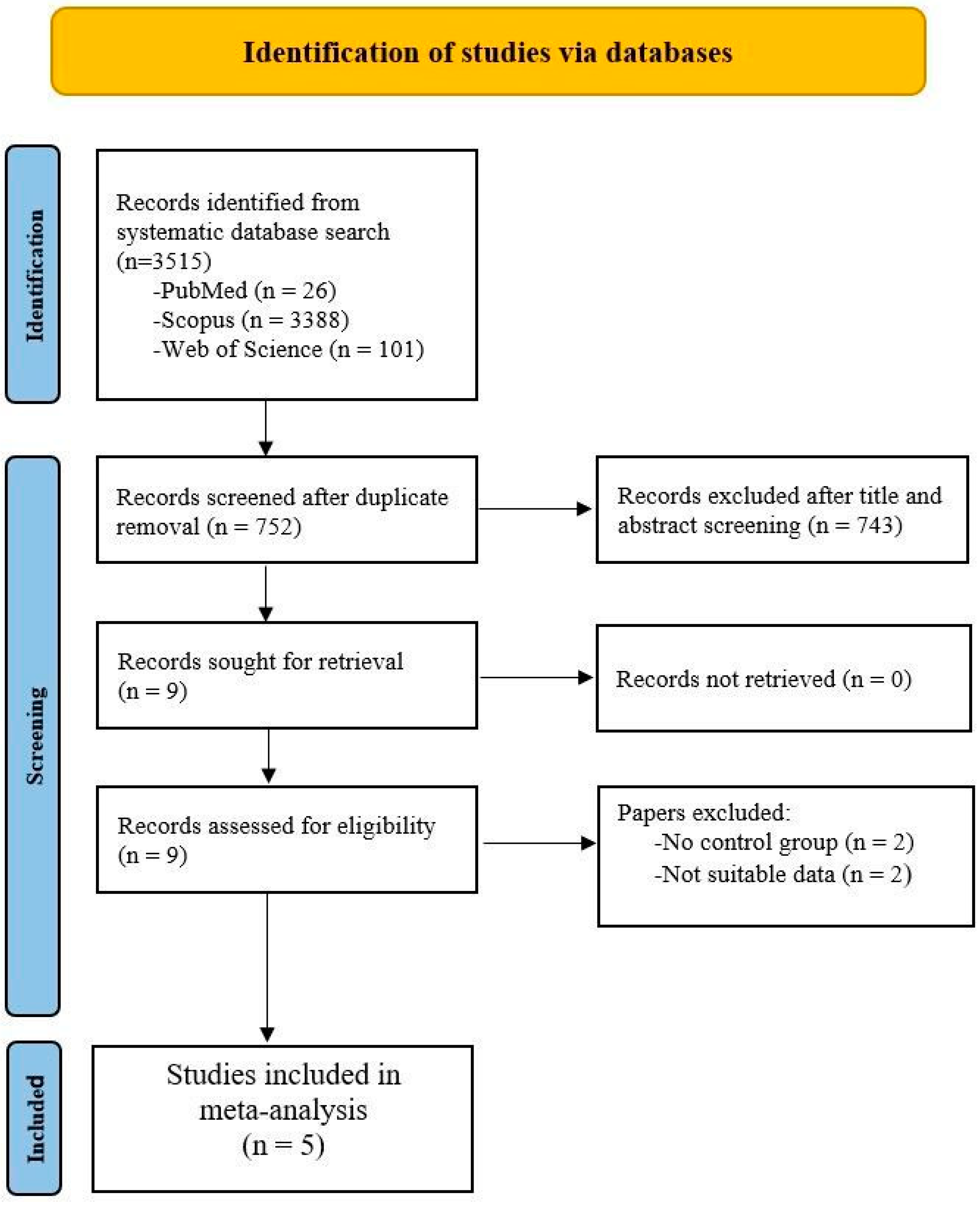
All articles obtained as a result of the literature search using relevant keywords in the databases were uploaded to the Rayyan website (Rayyan, Qatar Computing Research Institute, Qatar Foundation). Following a literature review, two researchers (EE, ÜY) independently evaluated the titles and abstracts of the studies, taking into account the specified inclusion and exclusion criteria. Then, the full text of the articles that met the inclusion criteria was read in detail. In case of disagreement or indecision among the researchers, the third researcher (ST) made the decision after discussing it with the other researchers. The Preferred Reporting Items for Systematic Reviews and Meta-Analysis (PRISMA) flowchart of the literature search is presented in Figure 1.

2.6. Data Extraction

Two researchers independently conducted data extraction from studies that met the inclusion criteria. This process involved utilizing a standardized table categorized based on specific criteria. Criteria available in the standard table include the primary author, population, number of participants, age groups, methods used for foot posture assessment, muscle morphological characteristics, assessors who performed the measurements, evaluated muscles, and outcome measures.

2.7. Assessment of Risk of Bias (Methodological Quality)

The Newcastle-Ottawa Scale, which was adapted for cross-sectional studies by Moskalewicz et al. [24], was used to analyze the methodological quality of the selected studies. The scale was previously validated and deemed reliable [24,25,26]. According to previous studies, we decided to remove the “non-respondents” part in the “selection section” and the second item in the “comparability” section because this item was not suitable for the studies included. The Newcastle-Ottawa Scale consists of a total of three sections and six items: selection (3 items), comparability (1 item), and outcome (2 items). The scale classifies studies as high quality (6 points), medium quality (4–5 points), low quality (2–3 points), and poor quality (0–1 points) [27]. In our study, each item of the scale was scored by two independent researchers (EE, ÜY). Disagreements were resolved through the third researcher (ST).

2.8. Synthesis Method and Analysis

Review Manager Version 5.4 was used to perform the meta-analysis (Copenhagen: The Nordic Cochrane Center, The Cochrane Collaboration, London, UK). The analyses were performed when there were 2 or more studies for each muscle. A random-effects model with an inverse-variance method was used to examine the pooled difference between individuals with FF and controls. The mean difference (MD) with a 95% confidence interval (CI) is used to express the effect size, because measurement units are consistent across studies. The I2 statistics were used to determine statistical heterogeneity. According to the Cochrane guidelines, the I2 statistics are classified as follows: considerable heterogeneity (90–100%), substantial heterogeneity (60–90%), moderate heterogeneity (30–60%), and not-important heterogeneity (0–30%). For the analyses with a heterogeneity level above 30%, meta regression was applied to the patient/control age ratio, patient/control foot posture ratio, and population type (sedentary or runner) in the studies to determine the source of heterogeneity. Because of the homogeneity of the sex ratio across the included studies, this parameter was not included in the meta-regression analysis. Due to the limited number of studies, meta-regression was applied as univariate. Comprehensive Meta-Analysis software (Version 4) was used for meta-regression analysis. The significance level for p value was set at 0.05.

3. Results

3.1. Study Selection

After all duplicate records were excluded, 752 records were subjected to screening. After abstract and title screening, 743 records were discarded. Of the remaining nine records, two were excluded because appropriate data were not present, and two records were excluded because there was no control group. As a result, five records were included in the study. The flow diagram of the literature search is presented in Figure 1.

3.2. Study Characteristics

Study characteristics are presented in Table 1. All included studies were conducted with adult participants. In addition, all studies included both females and males. Foot posture in all studies was evaluated using the Foot Posture Index (FPI). Those with a score of 6 and above according to the FPI were accepted as individuals with FF in all studies. In all studies, participants with an FPI between 0 and 5 were considered to have normal foot posture. FPI score ranged from 6.6 ± 1.0 to 8.1 ± 1.7 in participants with FF, and it ranged from 1.2 ± 0.8 to 1.41 ± 1.44 in controls. In all studies, the foot intrinsic muscles were assessed using an ultrasonography device with a linear probe. Probe position and ultrasonography measurement positions were similar in all studies. All participants were asymptomatic in all studies.

3.3. Quality Assessment

An evaluation of the quality of the included studies is presented in Table 2. One study was categorized as high quality [17], and the others were categorized as moderate quality [18,19,20]. A notable deficiency in the medium-quality studies is the lack of a sample size calculation, with the exception of only one study.

3.4. Differences in Foot Intrinsic Muscle Between FF and Control Group

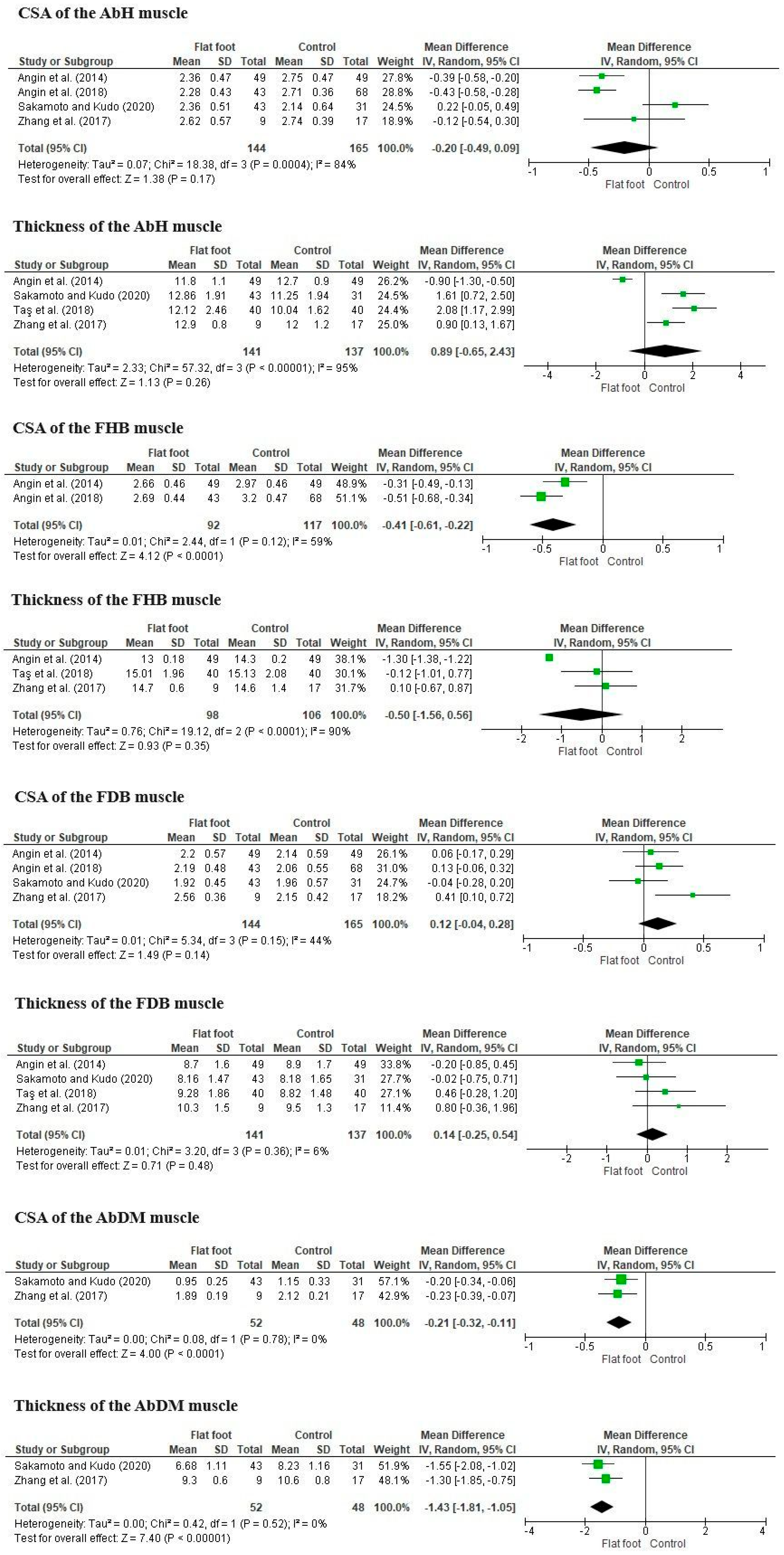
Meta-analysis results are given in Figure 2. The CSA of the AbH muscle was assessed in four studies involving 144 individuals with FF and 165 controls [12,18,19,20]. The pooled difference in meta-analysis showed that the CSA of the AbH was similar in individuals with FF and controls (MD = −0.20, 95% CI = −0.49, −0.09; p = 0.17). The heterogeneity between the studies was substantial (I2: 84%). In the meta regression results, age ratio (p = 0.690) and the included population (p = 0.783) had no effect on heterogeneity, while the FPI ratio had a negative effect on the meta-analysis results (p = 0.044) (Table 3). Furthermore, the thickness of the AbH muscle was assessed in four studies involving 141 individuals with FF and 137 controls [19,20]. There were no differences in the thickness of the AbH between individuals with FF and controls (MD = 0.89; CI = −0.65, 2.43); p = 0.26). There was a significant heterogeneity among the studies (I2: 95%). In the meta-regression results, no effect of age ratio (p = 0.735), population type (p = 0.691), or FPI ratio (p = 0.805) on heterogeneity was found.
There were only two studies investigating the CSA of the FHB in 92 individuals with FF and 117 controls [18,19]. The obtained pooled effect indicated that the CSA of the FHB was higher in individuals with FF than in controls (MD = −0.41, 95% CI = −0.61, −0.22; p < 0.001), with a moderate heterogeneity (I2: 59%). On the other hand, three studies have investigated the thickness of the FHB in 98 individuals with FF and 106 controls [17,18,19] and found no significant differences regarding the thickness of the FHB between the groups (MD = −0.50, 95% CI = −1.56, 0.56; p = 0.35; I2: 90%).
The CSA of the FDB was investigated by four studies in 144 individuals with FF and 165 controls [18,19,20]. Similarly, four studies investigated the thickness of the FDB in individuals with FF [19,20]. Meta-analyses indicated that there were no differences in the CSA (MD = 0.12, 95% CI = −0.04, 0.28; p = 0.014; I2 = 44%) and thickness of the FDB (MD = 0.14, 95% CI = −0.25, 0.54; p = 0.48; I2 = 6%) between groups. The meta-regression results show that the age ratio had a negative effect on the CSA of the FDB muscle (p = 0.037), while “being a runner” in the sampled population had a positive effect on effect size (p = 0.043).
The CSA and thickness of the AbDM were investigated in only two studies involving 52 individuals with FF and 48 controls [12,20]. The obtained pooled effect indicated that the CSA (MD = −0.21, 95% CI = −0.32, −0.11; p < 0.001; I2 = 1%) and thickness (MD = −1.43, 95% CI = −1.81, −1.05; p < 0.001; I2 = 1%) of the AbDM were lower in individuals with FF than in controls.

3.5. Sensitivity Analyses

Sensitivity analyses were performed for the CSA and thickness of the AbH and the thickness of the FHB muscle with meta-analyses. Based on study design, sensitivity analyses were conducted by removal of studies from the meta-analysis. The pooled difference and significance within the CSA and thickness of the AbH and the thickness of the FHB muscle did not change significantly when respective studies were removed from the meta-analyses. For example, there was no significant change in the significance and direction of the pooled MD when lower quality studies investigating the CSA of the AbH were excluded from the meta-analyses (n = 3, MD = −0.10 [95%CI = −0.57, 0.31], p = 0.62, I2 = 85%, vs. n = 2, SMD = −0.09 [95%CI = −0,69, 0.50], p = 0.76, I2 = 92%, respectively).
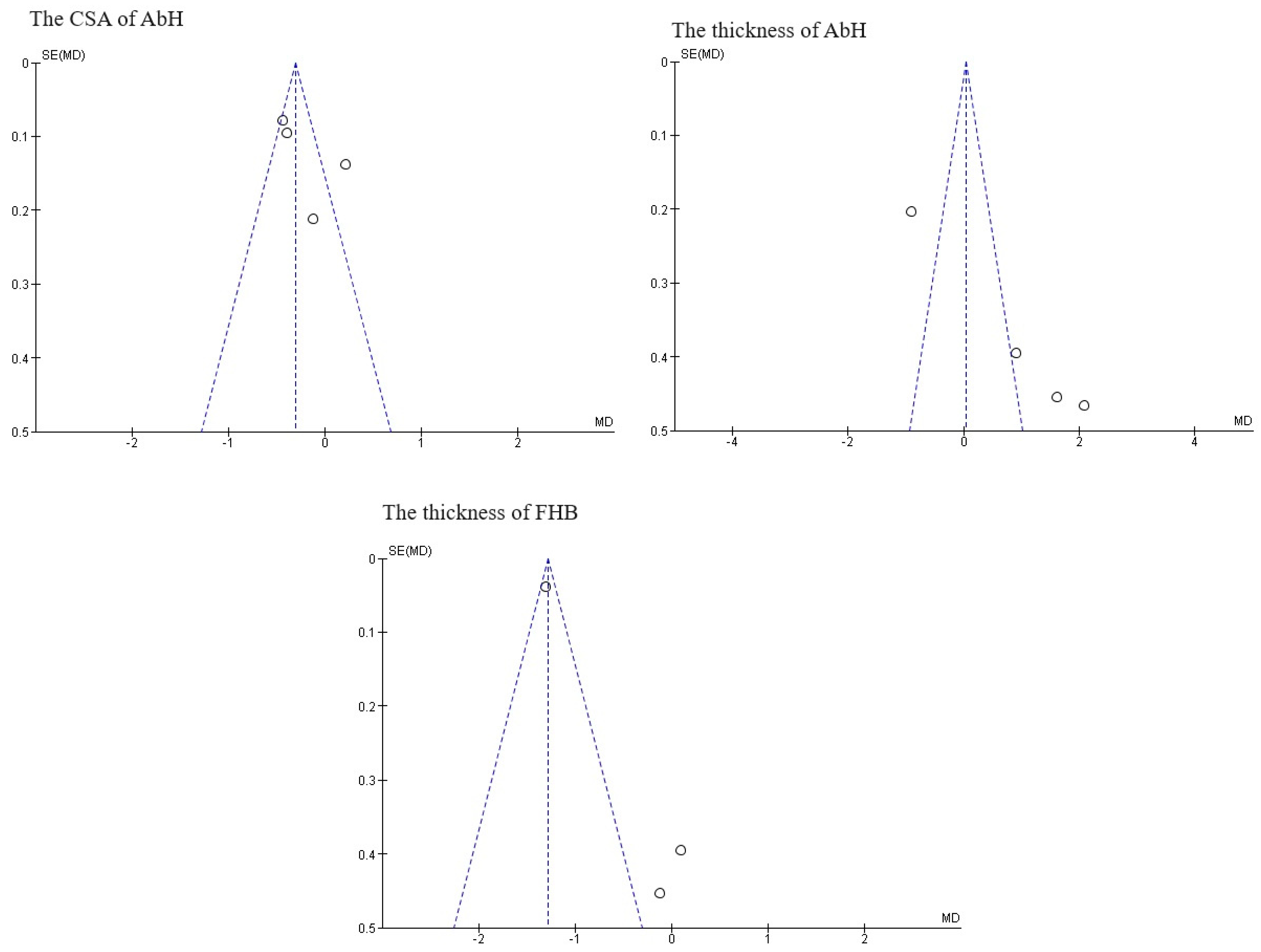
The funnel plots for the CSA and thickness of the AbH and the thickness of the FHB muscle were asymmetrical, considering a possible risk of publication bias (Figure 3). A possible reason for the asymmetry in funnel plots may be related to the high heterogeneity obtained. On the other hand, the Egger test was not employed to determine the magnitude of the publication bias, as it is not typically utilized in meta-analyses comprising fewer than 10 studies [28].

4. Discussion

The purpose of our systematic review and meta-analysis was to investigate potential changes in the morphological characteristics of the IFMs between individuals with and without FF. In this meta-analysis, only case–control studies comparing individuals with FF and controls were included. All five studies that met our inclusion criteria utilized ultrasound methodology for the assessment of the CSA and/or thickness of the IFMs. Our meta-analysis results show a decrease in the CSA of the FHB muscle in individuals with FF, while no significant difference was observed in FHB thickness. The characteristics of the FDB and AbH muscles were comparable among individuals with and without FF; however, the CSA and thickness of the AbDM were statistically significantly decreased in individuals with FF.

4.1. Abductor Hallucis Muscle

Our meta-analysis results suggest no statistically significant change in the thickness and the CSA of the AbH between individuals with FF and healthy controls. Among studies examining the thickness of the AbH, three studies have reported an increase in AbH thickness in individuals with FF [20]; however, Angin et al. [19] indicated a decrease in AbH muscle thickness in this group. On the other hand, among the four studies examining the CSA of the AbH muscle, diverse results are observed, similar to the variations in thickness. Some of them have reported that the CSA of the AbH was similar in both groups [12]; however, others have found a decrease in the CSA of the AbH in individuals with FF [19]. In addition, Angin et al. [18] investigated the effects of foot intrinsic muscles on foot posture with multiple regression analysis. They reported that the FPI score exhibited a negative correlation with the CSA of the AbH (r = −0.42, p < 0.001) [18]. On the other hand, the meta-regression results obtained show that individuals with FF had a higher mean FPI score compared to controls, resulting in a shift in the effect size value calculated for the CSA of the AbH towards the FF group; however, this result was not statistically significant. The results suggest that including individuals with FF with high FPI scores will facilitate the identification of potential differences in AbH properties in future studies.
The AbH originates from the medial tubercle of the calcaneus and inserts into the medial surface of the proximal phalanx of the first toe and its sesamoid bones. The AbH functions to adduct the forefoot and abduct the great toe [29]. The discrepancy in AbH morphology has been attributed to a number of factors. Studies that have reported an increase in the thickness and/or CSA of the AbH have suggested that the enhanced loading within the AbH, resulting from the reduction in the MLA, may contribute to its hypertrophy [11,12,17,20]. There are some studies supporting this hypothesis. Huang et al. [30] reported a decrease in the H-reflex (which indicates alpha-motor neuron excitability) of the AbH and an increase in AbH activity during the double-leg and single-leg stance. On the other hand, a reduction in CSA or the thickness of the AbH may cause a decrease in MLA height, considering its location and function. It was reported that the anesthesia and fatigue of the AbH muscle cause a decrease in MLA height [16]. There is evidence showing the AbH has important contributions on MLA stabilization [31]. Our results suggest that the contribution of the AbH to MLA stabilization is independent of its force-generating potential, because muscle morphology is one of the primary indicators for its force-generating potential. McKeon et al. [15] indicated that the primary function of intrinsic foot muscles on foot arch stabilization is to provide immediate sensory information instead of generating force to maintain the height of the MLA. Results of the present meta-analysis support this outcome.

4.2. Flexor Hallucis Brevis

In two studies conducted by the same authors, a statistically significant decrease in the CSA of the FHB muscle in the FF group was demonstrated [18,19]. Conversely, in studies conducted by different authors, no significant difference was found in the thickness of the FHB muscle [12,17,20]. The localization of the FHB muscle just below the phalanges of the great toe, around the medial metatarsals and cuneiforms, contributes significantly to the elevation of the MLA [32]. In the study by Fukumoto et al. [33], the correlation between the thicknesses of the FHB, FDB, and AbH muscles and the height of the MLA was examined. They indicated that among these muscles, only the FHB had a significant effect on navicular drop, suggesting its important role in supporting the MLA [33]. As a result of our meta-analysis, it has been demonstrated that the CSA of the FHB muscle in the FF group significantly decreases while the thickness remains unchanged. From a different perspective, CSA measurements are more sensitive in assessing the morphological characteristics of the muscle [34,35]. Because CSA measurements provide a three-dimensional view, they offer more precise information about changes in muscle morphology. The small magnitude of these changes may explain the inability to demonstrate these changes in thickness measurements.

4.3. Flexor Digitorum Brevis

Four studies examining the CSA of the FDB muscle were included. Among these studies, three have found no statistically significant difference in the CSA between individuals with FF and controls [12,18,19]. However, Zhang et al. [20] reported that the CSA in individuals with FF was statistically significantly higher. In this study, the significantly increased CSA of the FDB in individuals with FF was attributed to the enhancement of the muscle’s function to control the decreased MLA and facilitate the normal function of the foot. All studies examining the thickness of the FDB have found similar results between the two groups. According to our meta-analysis, the FDB muscle is not affected in terms of morphological characteristics in individuals with FF. The resilient nature of the FDB muscle due to its lateral and deep anatomical position, along with its non-primary involvement, may have contributed to this outcome.

4.4. Abductor Digiti Minimi

There were two studies assessing the CSA and thickness of the AbDM muscle [12,20]. According to the results of our meta-analysis, both AbDM muscle thickness and CSA show a statistically significant decrease in individuals with FF. The AbDM originates at the medial and lateral tubercles of the calcaneus, runs from the proximal to the distal region along the lateral side of the foot, and attaches at the distal end of the base of the fifth proximal phalanx. The AbDM muscle is considered as the forefoot abductor. The flattening of the MLA, along with the abduction of the forefoot, may result in an inactivity in the AbDM muscle. This could potentially contribute to the observed decrease in both CSA and thickness with the atrophy of the muscle.

4.5. Clinical Implications

The results of our meta-analyses have significant clinical implications. According to the results of the meta-analysis, the morphological characteristics of the IFMs have a limited impact on foot posture. Obtained results support the hypothesis that these muscles primarily contribute to stability by providing sensory feedback [15]. However, there are numerous studies in the literature showing that strengthening exercises, such as short foot exercise and proprioceptive neuromuscular facilitation exercises targeting the IFMs, increased MLA height and improved foot posture [36,37,38]. The findings of our study appear to be inconsistent with the information presented in the existing literature. An increase in the mass of the IFMs resulting from strengthening exercises targeting the IFMs could lead to an enhancement in the passive tension provided by the IFMs. This may consequently contribute to the MLA and foot posture, rather than providing dynamic support for the MLA. On the other hand, strengthening exercises targeting the IFMs may enhance the proprioception and sensory input provided by the IFMs, which may, in turn, improve the MLA and foot posture. Given these considerations, in addition to strengthening exercises, proprioception exercises may prove more efficacious in improving foot posture.

4.6. Limitations

Our study has several limitations. First, the conclusions of our study are collected only from case–control studies; therefore, we are unable to draw any direct cause-and-effect correlations. Second, the sample sizes of the included studies are relatively small, and power calculation was performed in only one study. Third, only studies with full English texts were included, which increases the likelihood of a potential language bias. In addition, the participants in the studies consist of young individuals; therefore, generalizing the results to all age groups may not be accurate. Fourth, our meta-analysis found a high degree of heterogeneity between studies for some outcome measures. The factors affecting the high heterogeneity values obtained were analyzed with a meta-regression model. The meta-regression results indicate that the small number of variables obtained from the included studies and the small sample size are the limitations of the study. Fifth, in all studies included in this meta-analysis, the thickness and CSA of the IFMs were assessed by ultrasonography. However, magnetic resonance imaging (MRI) can provide more detailed information about soft tissue morphological characteristics compared to ultrasound [39]. Therefore, studies investigating the morphological characteristics of IFMs with MRI are needed. Lastly, our examination of the literature was limited to three databases, which may have resulted in the omission of pertinent studies.

5. Conclusions

The results of our meta-analysis indicate that the FHB and AbDM muscles exhibited significant atrophy in individuals with FF. However, the morphology of the AbH and FDB muscles did not appear to influence foot posture, based on the five studies included in the analysis. The findings of our study lend support to the hypothesis that the IFMs influence foot posture by providing sensory input rather than generating power. However, further research is required to elucidate the impact of the proprioception and sensory input conveyed by the IFMs on foot posture.

Supplementary Materials

The following supporting information can be downloaded at https://www.mdpi.com/1930-8264/116/2/24094/s1: Supplementary File S1: The PRISMA checklist.

Author Contributions

Conceptualization, S.T.; methodology, S.T. and A.A.Ö.; software, S.T. and A.A.Ö.; validation S.T. and A.A.Ö.; formal analysis, S.T. and A.A.Ö.; investigation, E.E. and Ü.Y.; resources, E.E. and Ü.Y.; data curation, E.E. and Ü.Y.; writing—original draft preparation, S.T., E.E. and Ü.Y; writing—review and editing, S.T., E.E. and Ü.Y.; visualization, E.E. and Ü.Y.; supervision, S.T.; project administration, S.T. All authors have read and agreed to the published version of the manuscript.

Funding

This study was conducted without receiving any financial support.

Institutional Review Board Statement

Not applicable.

Informed Consent Statement

Not applicable.

Data Availability Statement

The datasets produced or scrutinized in the present study can be obtained upon a reasonable request from the corresponding author.

Conflicts of Interest

No declaration of conflicts of interest.

References

  1. Pfeiffer, M.; Kotz, R.; Ledl, T.; Hauser, G.; Sluga, M. Prevalence of flat foot in preschool-aged children. Pediatrics 2006, 118, 634–639. [Google Scholar] [CrossRef]
  2. Pita-Fernandez, S.; Gonzalez-Martin, C.; Alonso-Tajes, F.; Seoane-Pillado, T.; Pertega-Diaz, S.; Perez-Garcia, S.; Seijo-Bestilleiro, R.; Balboa-Barreiro, V. Flat Foot in a Random Population and its Impact on Quality of Life and Functionality. J. Clin. Diagn. Res. 2017, 11, Lc22–Lc27. [Google Scholar] [CrossRef]
  3. Mosca, V.S. Flexible flatfoot in children and adolescents. J. Child. Orthop. 2010, 4, 107–121. [Google Scholar] [CrossRef]
  4. Cobb, S.C.; Bazett-Jones, D.M.; Joshi, M.N.; Earl-Boehm, J.E.; James, C.R. The relationship among foot posture, core and lower extremity muscle function, and postural stability. J. Athl. Train. 2014, 49, 173–180. [Google Scholar] [CrossRef] [PubMed]
  5. Cobb, S.C.; Tis, L.L.; Johnson, B.F.; Higbie, E.J. The effect of forefoot varus on postural stability. J. Orthop. Sports Phys. Ther. 2004, 34, 79–85. [Google Scholar] [CrossRef] [PubMed]
  6. Wnuk, A.; Mizia, E.; Rutowicz, B.; A Walocha, J.A. Is there a relationship between functional at foot and prevalence of non-insertional achilles tendinopathy in joggers?—A pilot study. Folia Med. Cracov. 2017, 57, 77–86. [Google Scholar]
  7. Huang, Y.C.; Wang, L.Y.; Wang, H.C.; Chang, K.L.; Leong, C.P. The relationship between the flexible flatfoot and plantar fasciitis: Ultrasonographic evaluation. Chang Gung Med. J. 2004, 27, 443–448. [Google Scholar] [PubMed]
  8. Bardelli, M.; Turelli, L.; Scoccianti, G. Definition and classification of metatarsalgia. Foot Ankle Surg. 2003, 9, 79–85. [Google Scholar] [CrossRef]
  9. Barton, C.J.; Bonanno, D.; Levinger, P.; Menz, H.B. Foot and ankle characteristics in patellofemoral pain syndrome: A case control and reliability study. J. Orthop. Sports Phys. Ther. 2010, 40, 286–296. [Google Scholar] [CrossRef]
  10. Li, Y.; Yu, J.; Zhang, J.; Zhang, Z.; Wang, X. Quantifying the stiffness of lumbar erector spinae during different positions among participants with chronic low back pain. PLoS ONE 2022, 17, e0270286. [Google Scholar] [CrossRef]
  11. Franco, A.H. Pes cavus and pes planus. Analyses and treatment. Phys. Ther. 1987, 67, 688–694. [Google Scholar] [CrossRef]
  12. Sakamoto, K.; Kudo, S. Morphological characteristics of intrinsic foot muscles among flat foot and normal foot using ultrasonography. Acta Bioeng. Biomech. 2020, 22, 161–166. [Google Scholar] [CrossRef]
  13. Taş, S.; Yılmaz, S.; Onur, M.R.; Soylu, A.R.; Altuntaş, O.; Korkusuz, F. Patellar tendon mechanical properties change with gender, body mass index and quadriceps femoris muscle strength. Acta Orthop. Et Traumatol. Turc. 2017, 51, 54–59. [Google Scholar] [CrossRef]
  14. Reed, R.L.; Pearlmutter, L.; Yochum, K.; Meredith, K.E.; Mooradian, A.D. The relationship between muscle mass and muscle strength in the elderly. J. Am. Geriatr. Soc. 1991, 39, 555–561. [Google Scholar] [CrossRef] [PubMed]
  15. McKeon, P.O.; Hertel, J.; Bramble, D.; Davis, I. The foot core system: A new paradigm for understanding intrinsic foot muscle function. Br. J. Sports Med. 2015, 49, 290. [Google Scholar] [CrossRef] [PubMed]
  16. Headlee, D.L.; Leonard, J.L.; Hart, J.M.; Ingersoll, C.D.; Hertel, J. Fatigue of the plantar intrinsic foot muscles increases navicular drop. J. Electromyogr. Kinesiol. 2008, 18, 420–425. [Google Scholar] [CrossRef]
  17. Taş, S.; Ünlüer, N.; Korkusuz, F. Morphological and mechanical properties of plantar fascia and intrinsic foot muscles in individuals with and without flat foot. J. Orthop. Surg. 2018, 26, 2309499018802482. [Google Scholar] [CrossRef]
  18. Angin, S.; Mickle, K.J.; Nester, C.J. Contributions of foot muscles and plantar fascia morphology to foot posture. Gait Posture 2018, 61, 238–242. [Google Scholar] [CrossRef]
  19. Angin, S.; Crofts, G.; Mickle, K.J.; Nester, C.J. Ultrasound evaluation of foot muscles and plantar fascia in pes planus. Gait Posture 2014, 40, 48–52. [Google Scholar] [CrossRef] [PubMed]
  20. Zhang, X.; Aeles, J.; Vanwanseele, B. Comparison of foot muscle morphology and foot kinematics between recreational runners with normal feet and with asymptomatic over-pronated feet. Gait Posture 2017, 54, 290–294. [Google Scholar] [CrossRef]
  21. Page, M.J.; McKenzie, J.E.; Bossuyt, P.M.; Boutron, I.; Hoffmann, T.C.; Mulrow, C.D.; Shamseer, L.; Tetzlaff, J.M.; Akl, E.A.; Brennan, S.E.; et al. The PRISMA 2020 statement: An updated guideline for reporting systematic reviews. BMJ 2021, 372, n71. [Google Scholar] [CrossRef]
  22. de Almeida Barbosa, R.T.; de Oliveira, A.S.; de Lima Antão, J.Y.; Crocetta, T.B.; Guarnieri, R.; Antunes, T.P.; Arab, C.; Massetti, T.; Bezerra, I.M.; de Mello Monteiro, C.B.; et al. Augmentative and alternative communication in children with Down’s syndrome: A systematic review. BMC Pediatr. 2018, 18, 160. [Google Scholar] [CrossRef] [PubMed]
  23. Lexell, J.; Downham, D. What determines the muscle cross-sectional area? J. Neurol. Sci. 1992, 111, 113–114. [Google Scholar] [CrossRef]
  24. Moskalewicz, A.; Oremus, M. No clear choice between Newcastle-Ottawa Scale and Appraisal Tool for Cross-Sectional Studies to assess methodological quality in cross-sectional studies of health-related quality of life and breast cancer. J. Clin. Epidemiol. 2020, 120, 94–103. [Google Scholar] [CrossRef]
  25. Navarro-López, V.; Fernández-Vázquez, D.; Molina-Rueda, F.; Cuesta-Gómez, A.; García-Prados, P.; Del-Valle-Gratacós, M.; Carratalá-Tejada, M. Arm-swing kinematics in Parkinson’s disease: A systematic review and meta-analysis. Gait Posture 2022, 98, 85–95. [Google Scholar] [CrossRef] [PubMed]
  26. Ho, P.J.; Gernaat, S.A.M.; Hartman, M.; Verkooijen, H.M. Health-related quality of life in Asian patients with breast cancer: A systematic review. BMJ Open 2018, 8, e020512. [Google Scholar] [CrossRef] [PubMed]
  27. Opara, M.; Kozinc, Ž. Which muscles exhibit increased stiffness in people with chronic neck pain? A systematic review with meta-analysis. Front. Sports Act. Living 2023, 5, 1172514. [Google Scholar] [CrossRef]
  28. Sterne, J.A.C.; Sutton, A.J.; Ioannidis, J.P.A.; Terrin, N.; Jones, D.R.; Lau, J.; Carpenter, J.; Rücker, G.; Harbord, R.M.; Schmid, C.H.; et al. Recommendations for examining and interpreting funnel plot asymmetry in meta-analyses of randomised controlled trials. BMJ 2011, 343, d4002. [Google Scholar] [CrossRef]
  29. Wong, Y.S. Influence of the abductor hallucis muscle on the medial arch of the foot: A kinematic and anatomical cadaver study. Foot Ankle Int. 2007, 28, 617–620. [Google Scholar] [CrossRef]
  30. Huang, T.H.; Chou, L.W.; Huang, C.Y.; Wei, S.W.; Tsai, Y.J.; Chen, Y.J. H-reflex in abductor hallucis and postural performance between flexible flatfoot and normal foot. Phys. Ther. Sport. 2019, 37, 27–33. [Google Scholar] [CrossRef]
  31. Fiolkowski, P.; Brunt, D.; Bishop, M.; Woo, R.; Horodyski, M. Intrinsic pedal musculature support of the medial longitudinal arch: An electromyography study. J. Foot Ankle Surg. 2003, 42, 327–333. [Google Scholar] [CrossRef] [PubMed]
  32. Neuman, D.A. Neumann’s Kinesiology of the Musculoskeletal System, 4th ed.; Elsevier: Amsterdam, The Netherlands; St. Louis, MO, USA, 2024; Section IV: Lower Extremity. [Google Scholar]
  33. Fukumoto, Y.; Asai, T.; Ichikawa, M.; Kusumi, H.; Kubo, H.; Oka, T.; Kasuya, A. Navicular drop is negatively associated with flexor hallucis brevis thickness in community-dwelling older adults. Gait Posture 2020, 78, 30–34. [Google Scholar] [CrossRef]
  34. Brand, R.A.; Pedersen, D.R.; Friederich, J.A. The sensitivity of muscle force predictions to changes in physiologic cross-sectional area. J. Biomech. 1986, 19, 589–596. [Google Scholar] [CrossRef]
  35. Latey, P.J.; Burns, J.; Nightingale, E.J.; Clarke, J.L.; Hiller, C.E. Reliability and correlates of cross-sectional area of abductor hallucis and the medial belly of the flexor hallucis brevis measured by ultrasound. J. Foot Ankle Res. 2018, 11, 28. [Google Scholar] [CrossRef] [PubMed]
  36. Wei, Z.; Zeng, Z.; Liu, M.; Wang, L. Effect of intrinsic foot muscles training on foot function and dynamic postural balance: A systematic review and meta-analysis. PLoS ONE 2022, 17, e0266525. [Google Scholar] [CrossRef] [PubMed]
  37. Unver, B.; Erdem, E.U.; Akbas, E. Effects of short-foot exercises on foot posture, pain, disability, and plantar pressure in pes planus. J. Sport Rehabil. 2019, 29, 436–440. [Google Scholar] [CrossRef]
  38. Park, D.-J.; Lee, K.-S.; Park, S.-Y. Effects of two foot-ankle interventions on foot structure, function, and balance ability in obese people with pes planus. Healthcare 2021, 9, 667. [Google Scholar] [CrossRef]
  39. Stenroth, L.; Sefa, S.; Arokoski, J.; Töyräs, J. Does magnetic resonance imaging provide superior reliability for achilles and patellar tendon cross-sectional area measurements compared with ultrasound imaging? Ultrasound Med. Biol. 2019, 45, 3186–3198. [Google Scholar] [CrossRef]
Figure 1. Flow chart of study selection.
Japma 116 24094 g001
Figure 2. Meta-analysis of the cross-sectional area and thickness of intrinsic foot muscles in flat foot and control groups [12,17,18,19,20].
Japma 116 24094 g002
Figure 3. Risk of publication bias for the cross-sectional area and thickness of the abductor hallucis and the thickness of the flexor hallucis brevis muscle.
Japma 116 24094 g003
Table 1. Characteristics of the studies included in the meta-analysis.
AuthorsParticipantAssessment Tool of Foot PostureAssessment Tool for Muscle MorphologyOperatorAssessed MusclesOutcomes Measures
PopulationNumerusAge in Years
[Mean ± SD or Median (IQR)]
Angin et al. (2014) [19]Asymptomatic participants from university communitiesn = 98
FF = 49
C = 49
FF = 24.10 ± 5.58
C = 23.41 ± 4.26
FPI
(FF = 8.1 ± 1.7
C = 1.3 ± 1.2)
Venue 40 Musculoskeletal Ultrasound System with a 5–13 MHz linear probeNot givenAbH, FDB and FHBThickness and CSA
Angin et al. (2018) [18]Asymptomatic participants from university communitiesn = 111
FF = 43
C = 68
FF = 23.74 ± 4.87
C = 24.79 ± 6.38
FPI
(FF = 7.86 ± 1.58
C = 1.41 ± 1.44)
Venue 40 Musculoskeletal Ultrasound System with a 5–13 MHz linear probeThe operator with extensive training on foot and ankle musculoskeletal ultrasound scanningFHB, FDB and AbHCSA
Sakamoto and Kudo [12]Asymptomatic participantsn = 77
FF = 43
C = 34
FF = 21.7 ± 3.2
C = 20.9 ± 0.4
FPI
(FF:8.0 ± 1.7
C:1.9 ± 2.6)
B-Mode Ultrasound Imaging System Apolio300, Canon, with an 18 MHz linear probeNot givenAbH, AbDM and FDBThickness and CSA
Taş et al. [17]Asymptomatic and sedentary participantsn = 80
FF = 40
C = 40
FF = 26 (21–33) C = 27 (22–37)FPI
(FF = 7(6–9)
C:1 (0–2))
ACUSON S3000 Ultrasound System with a linear 4–9 MHz probeNot givenFHB, FDB and AbHThickness
Zhang et al. [20]Young recreational runnern = 26
FF = 9
C = 17
FF = 22.6 ± 1.9
C = 25.9 ± 6.4
FPI
(FF = 6.6 ± 1.0
C: 1.2 ± 0.8)
Telemed Echoblaster 128 CEXT System at 10 MHz a linear probeNot givenAbDM, FHB, FDB and AbHThickness and CSA
Abbreviations: FF, flat-foot group; C, control group; CSA, Cross-Sectional Area; FPI, foot posture index; FHB, flexor hallucis brevis; FDB, flexor digitorum brevis; AbH, abductor hallucis; AbDM, abductor digiti minimi.
Table 2. The quality assessment of the studies included in the meta-analysis.
StudySelectionComparabilityOutcomeTotal Score
Representativeness of the SampleSample SizeAscertainment of ExposureAssessment of OutcomeStatistical Test
Angin et al. (2014) [19]1011115
Angin et al. (2018) [18]1011115
Sakamoto et al. [12]1011115
Taş et al. [17]1111116
Zhang et al. [20]1011115
Table 3. Meta regression results.
CoefficientSE95% Lower95% UpperZp
Thickness of the AbH muscle
Age ratio (P/C)1.173.46−5.627.960.340.735
Population type 0.521.31−2.053.100.400.691
Foot posture ratio (P/C)−0.150.631.381.07−0.250.805
CSA of the AbH muscle
Age ratio (P/C)1.966.10−9.9913.920.320.690
Population type 0.260.95−1.602.120.280.783
Foot posture ratio (P/C)−0.660.33−1.30−0.02−2.020.044
CSA of the FDB muscle
Age ratio (P/C)−4.882.35−9.49−0.28−2.080.037
Population type 0.910.450.031.802.020.043
Foot posture ratio (P/C)0.130.25−0.360.630.530.598
Covariate variables
Age ratio (P/C)Foot posture ratio (P/C)Population type
Angin et al. (2014) [19]1.036.23Sedentary
Angin et al. (2018) [18]0.965.57Sedentary
Sakamoto and Kudo [12]1.044.21Sedentary
Taş et al. [17]1.337.00Sedentary
Zhang et al. [20]0.875.50Runnels
Disclaimer/Publisher’s Note: The statements, opinions and data contained in all publications are solely those of the individual author(s) and contributor(s) and not of MDPI and/or the editor(s). MDPI and/or the editor(s) disclaim responsibility for any injury to people or property resulting from any ideas, methods, instructions or products referred to in the content.