Article

Good Clinical Outcomes Following Minor Foot Amputations in People with Diabetes: A Retrospective Clinical Audit of Associated Factors

Faculty of Health and Medicine, School of Health Sciences, University of Newcastle, Brush Road, Ourimbah, NSW 2258, Australia
*
Author to whom correspondence should be addressed.
J. Am. Podiatr. Med. Assoc. 2026, 116(2), 21117; https://doi.org/10.7547/21-117
Submission received: 3 May 2021 / Revised: 25 July 2021 / Accepted: 20 August 2021 / Published: 21 April 2026

Abstract

Background: The purpose of this retrospective audit was to compare patient-based clinical outcomes to amputation healing outcomes twelve months after a minor foot amputation in people with diabetes. Methods: Hospital admission and community outpatient data were extracted for all minor foot amputations in people with diabetes in 2017 in the Central Coast Local Health District. Results: A total of 85 minor foot amputations involving 74 people were identified. At the twelve-month follow-up 74% (n = 56) of the minor foot amputations healed, 63% (n = 41) of the participants achieved a good clinical outcome (healed, no more proximal amputations, or death within the 12-month follow-up period), and the mortality rate was 18%. Poor clinical outcomes were associated with those aged greater than 60 (RR 5.75, 95% CI: 0.85 to 38.7, p = 0.013), those undergoing a further surgical debridement procedure during their hospital stay (RR 2.42, 95% CI: 1.3 to 4.4, p = 0.005) and those who did not attend CCLHD Podiatry clinics post-amputation (RR 2.3, 95% CI: 1.2 to 4.1, p = 0.010). Conclusions: To improve patient-based clinical outcomes post-minor foot amputation, targeted follow-up in a high-risk foot clinic, and tailored discharge treatment plans for people aged over 60 or those undergoing a debridement procedure may be considered.

1. Introduction

Diabetes is one of the fastest-growing chronic diseases worldwide [1]. In 2019, the International Diabetes Federation (IDF) Diabetes Atlas estimated that “one in every eleven adults had diabetes” and a further “one in two people were yet to be diagnosed” [1]. Complications from diabetes include blindness, heart disease, kidney disease and diabetes-related foot disease (DFD) including foot ulceration and amputation [1,2]. Amputation occurs in people with diabetes following tissue loss, deep infection, osteomyelitis, chronic ulceration and ischaemia [3]. In Australia an estimated 4400 amputations occur every year with health care costs associated with DFD estimated to be in excess of $AUD1.6 billion [4].
Amputations of the lower limb can be classed as major, including above the knee and below the knee (BKA), or minor/partial which includes toe and partial foot amputations [5]. The current literature suggests that minor amputations are less disabling than major amputations as they allow preservation of the hindfoot which improves weight-bearing capacity and the resultant mobility and maintains proprioceptive feedback [6]. However, minor foot amputations are also reported to have high rates of post-surgical delayed healing, infection, and risk of subsequent, more proximal amputation [7].
Given the increasing rates of diabetes-related minor foot amputations [8], it is important to understand the true morbidity and mortality associated with these types of amputations. It has been suggested that diabetes-related foot ulcer healing outcomes may not be the best measure of the effectiveness of clinical practice, and that they underestimate the burden of disease compared to more patient-centric outcomes [9]. It may also be the case that the reporting of minor amputation healing rates, which is common in clinical trials assessing the efficacy of surgical interventions [10,11], may also underestimate the burden of disease. Therefore, the aim of this study was to compare rates of amputation healing and good clinical outcomes (healing, no additional amputations, and no death within a 12-month period) post-minor foot amputation, and to identify factors associated with good clinical outcomes. Secondarily, the study investigated factors associated with good and poor (non-healing of the amputation site and further amputation or surgical procedures, or death in the twelve-month follow-up period) clinical outcomes. Factors identified as being associated with both good and poor clinical outcomes will be used to inform the development of effective post-minor foot amputation podiatry treatment plans, ongoing patient education, and the provision of orthotic offloading and medical-grade footwear.

2. Methods

Data for this review were collected as part of a larger quality improvement programme at the Central Coast Local Health District (CCLHD) to improve services to people with diabetes and an at-risk foot. Investigations already undertaken as part of the programme include assessing patient compliance with podiatry attendance guidelines and CCLHD compliance with podiatry service benchmarks for people with an at-risk foot [12], and appraisal of vascular bedside tests, which may help predict healing post diabetes-related minor foot amputations [13]. This subsequent review will examine the data to determine diabetes- related minor foot amputation healing and clinical outcomes, and to identify factors associated with good clinical outcomes.

2.1. Design

Ethics approval for this project was provided by the Hunter New England Research Ethics & Governance Office (2019/ETH10678, approval date 17 July 2019) and the CCLHD Site Specific Assessment (SSA) approval (2019/STE13574). All minor foot amputations in people with diabetes in the CCLHD within the calendar year of 2017 were identified. Hospital inpatient data were collected on 13.11.2019 via access to the electronic medical record system (eMR). Specific point-of-care data for the stay of hospitalisation and any further amputation (minor or major) and mortality in the 12 months following the amputation were also recorded. Demographic data and medical history including diabetes type, oral hypoglycaemic/insulin usage, history of foot ulceration, history of tobacco use, cardiovascular disease, renal disease, lower limb infection, and peripheral ischaemia with and without gangrene were extracted. Surgical-related data retrieved included level of minor amputation, type of wound closure, hospital site, length of stay, and time to heal.

2.2. Participants

The CCLHD is located on the east coast of NSW between Sydney and Newcastle. It has a population of around 300,000 and is divided into Gosford and Wyong shires with Wyong displaying a higher than average population growth [14]. In 2017, the CCLHD had the second highest number of people with diabetes in New South Wales (NSW), and the numbers are slowly rising [15]. In addition to high rates of diabetes, the CCLHD has high rates of diabetes-related amputation, and between 2012 and 2016, minor amputations were 16% higher than the state average [16]. The area is serviced by two acute hospitals, Gosford and Wyong, which had, in 2017, an acute inpatient bed capacity of 368 and 182, respectively [14].

2.3. Criteria

Inclusion criteria for this study were limited to people with diabetes who underwent minor foot amputation, within either Gosford or Wyong hospitals, during the period of 1 January 2017 until 31 December 2017. Minor amputations resulting from a cancer-related illness or a major trauma, such as motor vehicle accidents, were excluded. Minor amputations were classified as an amputation distal to the ankle joint as specified by Nather et al. [5]. Amputations were counted as initial if no previous history of amputation had been recorded.
All statistical tests were conducted using SPSS Release 24 for Windows (SPSS Inc., Chicago, IL, USA). Differences in healing times between open and closed surgical groups, and differences in demographic and clinical factors between good and poor clinical outcome groups were evaluated by Chi-square test for categorical variables and independent samples t-test for continuous variables [17]. Healing was determined by full epithelialisation of the wound and recorded as healed in the client progress notes. Good and poor clinical outcomes were defined to allow for determination of factors affecting participant outcomes following minor amputation. A good clinical outcome was defined as healing within the twelve-month follow-up period where no further or proximal amputation or further surgical procedures were required [18]. A poor clinical outcome was noted if non-healing of the amputation site and further amputation or surgical procedures, or death occurred in the twelve-month follow-up period [18]. To determine univariate relative risk (RR) and 95% confidence intervals (95% CI) of a poor clinical outcome, participants were grouped by age greater than 60 years, hospital-recorded comorbidities (detailed in Table 1), history of previous amputations, additional surgical procedures (including concomitant revascularisation) and attendance at the CCLHD podiatry clinic post amputation. Age greater than 60 years was chosen as most amputations are reported to occur in this age group, and the majority of our cohort fell into this age group [19]. Statistical significance was delimited at p < 0.05. Crude minor amputation incidence rates, calculated to allow comparison with other Australian populations, were determined by the number of people with diabetes undergoing minor foot amputations in the CCLHD (numerator) over the number of population in person years (denominator) for the 2017 calendar year [20]. As recommended, two different CCLHD populations were used as denominators to determine the incidence rates, the general population by 100,000 person years, and the diabetes population by 1000 person years [21]. The CCLHD general population figure (339, 196) was obtained from the Australian Bureau of Statistics [22]. The CCLHD diabetes population figure was calculated using the general population figure and the 2017 Central Coast Local Government area diabetes prevalence figure (5.1%) obtained from the Australian National Diabetes Services Scheme (NDSS) register [23].

3. Results

We identified 74 people with diabetes who underwent 85 minor foot amputations in the calendar year 2017 in the CCLHD. Fifty-seven participants were male (76%), the majority were aged between 60 and 85 years (78%) and presented with an existing diabetes-related foot ulcer (85%). Over one third of participants (39%) had a current foot infection at the time of admission, and one third (34%) had a history of previous foot amputations (Table 1). A majority of the participants (70%) presented with three or more comorbidities. Crude minor amputation incidence was 21.8 per 100,000 person years in the general population and 4.2 per 1000 person years in the diabetes population.
Fifty-three of the amputations (62%) were conducted at Gosford hospital, the larger of the two hospitals in the region. Fifty-one of the amputations (60%) were digital amputations, with 30 (35%) of those being single lesser toe amputations, 14 (16%) hallux only amputations, and the final 7 (8%) multi-toe amputations (Figure 1). Another 33 operations were toe plus metatarsal amputations (39%), and there was a single midtarsal amputation (Figure 1). The most common method of surgical closure used was to leave the area open to heal by secondary intention, with 71% (n = 60), with the remaining being closed to heal by primary intention. In addition to the amputations, a further 42 procedures, including debridement and wound management, were recorded within this hospital stay. Three of the participants underwent concomitant revascularisation at the time of the amputation. The average hospital stay was 13 days.
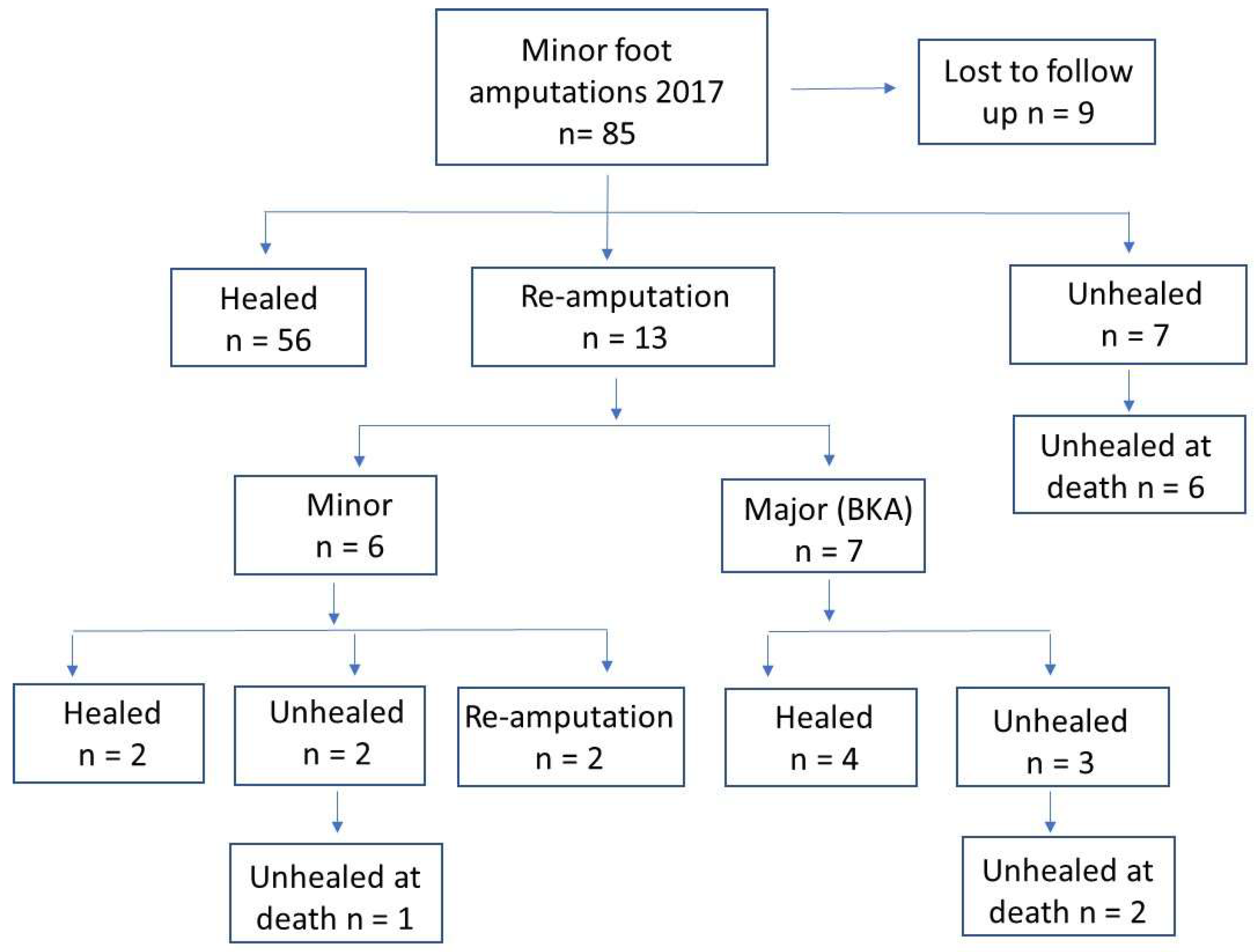
The outcomes of nine participants involving nine amputations were lost to follow-up. Of the remaining 76 amputations, 74% (n = 56) healed within twelve months, 17% (n = 13) required further amputation, and 9% (n = 7) remained unhealed (Figure 2). Of the 12 (18%) participants who died in the 12-month follow-up period, seven had never attended the CCLHD outpatient podiatry clinics, and the remaining five had attended between 0 and 4 times each in the 12-month period following their amputation.
Of the 13 re-amputations, six resulted in a second more proximal minor amputation, and seven progressed to a BKA. Nine amputation sites remained unhealed at the participants’ time of death (Figure 2). Healing times ranged from one week to 84 weeks with an average of 22 weeks (Table 2).
When participants were grouped into those with good (n = 41) versus poor (n = 24) clinical outcomes, significant differences between groups were noted for age greater than 60 years, those undergoing a further debridement procedure during their hospital stay, and for non-attendance at a CCLHD podiatry clinic post-amputation (Table 3). The results for the other variables were not significant. Those people aged greater than 60 years old were almost 6 times as likely to experience a poor clinical outcome compared to those younger than 60 years (RR 5.75, 95% CI: 0.85 to 38.7, p = 0.013), while those undergoing a debridement procedure during the hospital stay were over twice as likely to experience a poor clinical outcome (RR 2.42, 95% CI: 1.3 to 4.4, p = 0.005) as those who had no additional procedures. Participants who did not attend the podiatry clinic post-amputation were also more likely to experience poor clinical outcomes. Non-attendees were over twice as likely to experience a poor outcome (RR 2.3, 95% CI: 1.2 to 4.1, p = 0.010) than clinic attendees. Two other variables, peripheral artery disease (PAD) and history of previous foot amputations, also revealed results that were approaching significance (Table 3). People with PAD (RR 1.9, 95% CI: 1.0 to 3.9, p = 0.05) and a history of previous foot amputations (RR 1.8, 95% CI: 1.0 to 3.5, p = 0.069) were almost twice as likely to experience a poor clinical outcome as those without these comorbidities.

4. Discussion

Our retrospective audit identified 74 people who had a combined 85 minor foot amputations. At the twelve-month follow-up point, the outcomes of nine participants who underwent nine amputations were lost to follow-up. In the remaining participants, 74% (n = 56) of the minor foot amputations healed, 63% (n = 41) of the participants achieved a good clinical outcome, and the mortality rate was 18% (n = 12). When compared to larger Australian populations also experiencing minor diabetes-related amputations, our cohort was comparable, being comprised mostly of males, with type 2 diabetes, who were >60 years of age [6,19]. The cohort also exhibited risk factors, identified by a meta-analysis, associated with lower extremity amputation in people with diabetes-related foot ulcer (male gender (76%), smoking history (23%) and gangrene (32%) [24], in addition to factors associated with non-healing of foot ulcer such as infection (39%) and PAD (47%) [25]. The minor amputation incidence rate of 4.2 per 1000 person years in the diabetes population that we report is within the range found in a recent systematic review examining Australian populations (3.5–4.8 per 1000 years) and higher than figures found in a global review (0.9–3.6 per 1000 person years) [26,27]. However, our reported minor amputation rate of 21.8 per 100,000 person years in the general population is not as consistent with other studies, being higher than that reported in a Queensland population (12) [19], but lower than rates reported in a Darwin (24) [28] and in a Western Australian non-Indigenous population > 50 years (28.9) [29]. Comparisons between communities are generally regarded as more meaningful if the data are expressed in terms of the diabetes population [21].
Amputation healing rates of 74% at twelve months were also comparable with three recent studies that found healing rates in similar cohorts of 43.6% [30], 64% [31], and 80.2% [32], with our results within the upper parameters of these. When comparing the study groups, variations in healing rates could be explained by the differing complexities in patient histories, including previous amputation, level of amputation, and repeat surgical debridement and amputation. The study with the highest healing rate of 80.2% restricted their group to nil prior amputations, which makes them a lower risk cohort than our study group, where more than one- third (39%) had a history of prior amputations. Similarly, the lower healing rate of 43.6% reported by Chan et al. [30] may be reflective of their higher-risk cohort. They report a greater number of study participants with comorbidities related to PAD (79%) and more proximal amputation levels (4.7% trans metatarsal, 48% ray, and 0.7% tarsometatarsal). The significant time period (more than 10 years) over which surgical outcomes were recorded may also have contributed to the reported healing rate. Many aspects of surgery, as well as diabetes and wound management treatments, improved over this period, and the low rates reported may reflect some of the earlier surgical outcomes.
While healing rates have been used in the literature to determine and compare the success rates of different types of amputations, they do not provide a full clinical picture of post-amputation sequalae. Wong et al. [18] divided their participants into those with good (healed and no further intervention) or poor (further operations, non-healing or death) outcomes after a 6-month follow-up. This type of classification provides further detail regarding the burden of disease borne by the participant, as well as information regarding medical resource utilisation associated with the original amputation. When our participants are grouped similarly, but after a 12-month follow-up period, less than two-thirds (63%) of the cohort meet the criteria for a good clinical outcome. In this present study, a poor clinical outcome was significantly associated with age greater than 60 years, undergoing a further debridement procedure during their hospital stay, and non-attendance at the CCLHD podiatry clinics. Additionally, while a history of previous foot amputations and PAD were also associated with a poor clinical outcome, these results were only approaching significance and may have been adversely affected by the relatively small group in this review. Many of these factors have previously been noted by researchers as factors associated with poor post-amputation outcomes. Older age has previously been demonstrated to be associated with amputation, re-amputation, mortality, and impairment of activities of daily living in people with diabetes [33,34]. Similarly, presence of PAD has been identified in 71% of people who required a major lower extremity amputation following a minor foot amputation [5], and a recent systematic review identified a previous lower extremity amputation as an important, independent risk factor for further amputations in people with diabetes [35].
Considering the increasing rates of minor amputations, the appropriate allocation of resources is important to minimise complications and increase good clinical outcomes. Current guidelines for care of the high-risk foot include recommendations for a three-to-six-month review period at a multidisciplinary clinic, provision of custom orthoses and medical-grade footwear, and access to wound care products [36,37]. While these are obviously necessary and important post-amputation interventions, our outcomes, and the findings of prior studies, suggest that clinicians may want to further differentiate those people at higher risk for poor outcomes for more extensive observation and treatment. This may involve up to a 12-month period of close monitoring for those experiencing a diabetes-related minor foot amputation, with increased focus on those aged greater than 60 years, with a history of surgical debridement, PAD, or previous minor foot amputation. However, perhaps the most critical factor, as identified by our study, is to ensure referral to and attendance at a multidisciplinary clinic post-amputation, as the outcomes between attendees and non-attendees at the CCHLD clinic were stark, with 73% of the attendees experiencing a good clinical outcome compared to only 40% of the non-attendees.
The conclusions in this review must be considered in light of certain limitations. Our study was limited to a review of public podiatry services, and we have no data regarding people attending private podiatrists, or private hospitals prior to, or after, their minor foot amputation. The findings in this study were largely reliant on data collection from hospital medical records, which may have been affected by misclassification bias [38]. This also limited the variables that could be investigated in this research and highlights the need for collections of standardised data sets to better evaluate factors associated with specific patient outcomes following intervention, such as minor amputations [39]. These should be used in addition to the collection of existing monitoring data from local hospital discharge data sets. Additionally, standardised definitions for the recording of patient comorbidities, such as PAD, were not available from the hospital medical records. Data regarding revascularisation subsequent to the initial amputation were not available, and any occurrence of this may have affected healing outcomes. While our findings indicate that older people and those not attending CCLHD podiatry clinics post-surgery were more likely to have a poor clinical outcome, due to the retrospective nature of this audit, causality cannot be determined. The large 95% CI reported for age greater than 60 years, when associated with a poor clinical outcome, may reflect a sparse data bias [40], as the majority of deaths (a factor used for calculation of a poor clinical outcome) occurred in this group. The variables found to be associated with poor clinical outcomes should be investigated via prospective analysis in future research. Data used to calculate minor amputation incidence rate was not age and sex standardised, which can affect comparison with other studies.

5. Conclusions

This study revealed a high rate of healing (74%) at a twelve-month follow-up in people with diabetes undergoing minor foot amputations despite a high rate of multiple comorbidities (70%) and a history of previous foot amputations (33%). However, a lower percentage of participants (63%) achieved a good clinical outcome, showing the importance of also considering patient-centric outcome measures following minor foot amputation. Poor clinical outcomes were almost 6 times more likely in those aged greater than 60 years, and twice as likely in those who had a debridement procedure during the hospital stay, and who did not attend the CCLHD podiatry clinics post-amputation. Our results underscore the importance of early identification of those at higher risk of poor outcomes and highlight the need for a multidisciplinary team to be involved for follow-up for a minimum of 12 months post-minor foot amputation. Follow-up is not only required for orthotic offloading and medical-grade footwear, but also to ensure this group of high-risk people is carefully monitored to reduce the risk of further amputations and interventions.

Author Contributions

Conceptualisation, C.L., V.C. and A.S.; methodology, C.L., V.C. and A.S. software, A.S.; validation, C.L., V.C. and A.S.; formal analysis, V.C. and A.S.; investigation, C.L., V.C. and A.S.; resources, C.L., V.C. and A.S.; data curation, C.L., V.C. and A.S.; writing—original draft preparation, C.L.; writing—review and editing, C.L., V.C. and A.S.; visualisation, C.L., V.C. and A.S., supervision, V.C. and A.S.; project administration, C.L. and V.C.; funding acquisition, not applicable. All authors have read and agreed to the published version of the manuscript.

Funding

This research received no external funding.

Institutional Review Board Statement

I The study was conducted in accordance with the Declaration of Helsinki, and approved by the Hunter New England Ethics Committee (protocol 2019/ETH10678, date of approval 17 July 2019).

Informed Consent Statement

Patient consent was waived due to it being unfeasible to carry out without the waiver due to use of a historical data set and likelihood of individuals having passed away or been lost to follow-up, the research having important social value, and the research being deemed as of minimal risks to participants.

Data Availability Statement

The raw data supporting the conclusions of this article will be made available by the authors on request.

Acknowledgments

The CCLHD and Tim Maclean, manager of the HRFS, provided support and time to accomplish the project and the UON provided essential guidance and technical support throughout.

Conflicts of Interest

The authors declare no conflicts of interest.

References

  1. Saeedi, P.; Petersohn, I.; Salpea, P.; Malanda, B.; Karuranga, S.; Unwin, N.; Colagiuri, S.; Guariguata, L.; Motala, A.A.; Ogurtsova, K.; et al. Global and regional diabetes prevalence estimates for 2019 and projections for 2030 and 2045: Results from the International Diabetes Federation Diabetes Atlas, 9(th) edition. Diabetes Res. Clin. Pract. 2019, 157, 107843. [Google Scholar] [CrossRef]
  2. Diabetes Australia: Diabetes in Australia 2018. Available online: https://www.diabetesaustralia.com.au/diabetes-in-australia (accessed on 19 October 2020).
  3. Apelqvist, J.; Agardh, C.D. The association between clinical risk factors and outcome of diabetic foot ulcers. Diabetes Res. Clin. Pract. 1992, 18, 43–53. [Google Scholar] [CrossRef]
  4. Van Netten, J.; Lazzarini, P.; Fitridge, R.; Kinnear, E.; Griffiths, I.; Malone, M.; Perrin, B.; Prentice, J.; Sethi, S.; Wraight, P. Australian Diabetes-Related Foot Disease Strategy 2018–2022: The First Step Towards Ending Avoidable Amputations Within a Generation; Diabetic Foot Australia Wound Management CRC: Sydney, Australia, 2017. [Google Scholar]
  5. Nather, A.; Wong, K.L. Distal amputations for the diabetic foot. Diabet. Foot Ankle 2013, 4, 21288. [Google Scholar] [CrossRef]
  6. Kurowski, J.R.; Nedkoff, L.; Schoen, D.E.; Knuiman, M.; Norman, P.E.; Briffa, T.G. Temporal trends in initial and recurrent lower extremity amputations in people with and without diabetes in Western Australia from 2000 to 2010. Diabetes Res. Clin. Pract. 2015, 108, 280–287. [Google Scholar] [CrossRef]
  7. Bowker, J.H. Minor and Major Lower Limb Amputations and Disarticulations in patients with Diabetes mellitus. In Levin & O’Neals the Diabetic Foot, 7th ed.; Bowker, J.P., Pfeifer, M.A., Eds.; Elsevier: Philadelphia, PA, USA, 2008; p. 403. [Google Scholar]
  8. Dillon, M.P.; Kohler, F.; Peeva, V. Incidence of lower limb amputation in Australian hospitals from 2000 to 2010. Prosthet Orthot. Int. 2014, 38, 122–132. [Google Scholar] [CrossRef]
  9. Jeffcoate, W.J.; Chipchase, S.Y.; Ince, P.; Game, F.L. Assessing the Outcome of the Management of Diabetic Foot Ulcers Using Ulcer-Related and Person-Related Measures. Diabetes Care 2006, 29, 1784–1787. [Google Scholar] [CrossRef]
  10. Stone, P.A.; Back, M.R.; Armstrong, P.A.; Flaherty, S.K.; Keeling, W.B.; Johnson, B.L.; Shames, M.L.; Bandyk, D.F. Midfoot amputations expand limb salvage rates for diabetic foot infections. Ann. Vasc. Surg. 2005, 19, 805–811. [Google Scholar] [CrossRef]
  11. Mwipatayi, B.; Naidoo, N.; Jeffery, P.; Maraspini, C.; Adams, M.; Cloete, N. Transmetatarsal Amputation: Three Year Experience at Groote Schuur hospital. World J. Surg. 2005, 29, 245–248. [Google Scholar] [CrossRef]
  12. Linton, C.; Searle, A.; Hawke, F.; Tehan, P.E.; Chuter, V. Nature and extent of outpatient podiatry service utilisation in people with diabetes undergoing minor foot amputations: A retrospective clinical audit. J. Foot Ankle Res. 2021, 14, 6. [Google Scholar] [CrossRef]
  13. Linton, C.; Searle, A.; Hawke, F.; Tehan, P.E.; Sebastian, M.; Chuter, V. Do toe blood pressures predict healing after minor lower limb amputation in people with diabetes? A systematic review and meta-analysis. Diab. Vasc. Dis. Res. 2020, 17, 1479164120928868. [Google Scholar] [CrossRef]
  14. NSW Health Central Coast Local Area Health District: Central Coast Local Health District 2017–2022 Clinical Services Plan 2017. Available online: https://www.cclhd.health.nsw.gov.au/wp-content/uploads/CCLHDClinicalServicesPlan2017-2022.pdf (accessed on 19 October 2020).
  15. NSW Government: Diabetes Prevalence in Adults 2018. Available online: http://www.healthstats.nsw.gov.au/Indicator/dia_prev_age/dia_prev_age (accessed on 19 October 2020).
  16. NSW Health Central Coast Local Area Health District (Diabetes Advisory Group). Diabetes Care on the Central Coast 2017–2021; NSW Government: Gosford, NSW, Australia, 2017. Available online: https://www.cclhd.health.nsw.gov.au/publications/ (accessed on 25 July 2021).
  17. Portney, L.; Watkins, M. Foundations of Clinical Research. Applications to Practice; Pearson/Prentice Hall: Upper Saddle River, NJ, USA, 2009. [Google Scholar]
  18. Wong, K.L.; Nather, A.; Chanyarungrojn, A.P.; Shen, L.; EL Ong, T.; Elangovan, R.D.; Lim, C.T. Clinical outcomes of ray amputation in diabetic foot patients. Ann. Acad. Med. Singap. 2014, 43, 428–432. [Google Scholar] [CrossRef]
  19. Lazzarini, P.A.; O’Rourke, S.R.; Russell, A.W.; Derhy, P.H.; Kamp, M.C. Reduced Incidence of Foot-Related Hospitalisation and Amputation amongst Persons with Diabetes in Queensland, Australia. PLoS ONE 2015, 10, e0130609. [Google Scholar] [CrossRef]
  20. Spronk, I.; Korevaar, J.C.; Poos, R.; Davids, R.; Hilderink, H.; Schellevis, F.G.; Verheij, R.A.; Nielen, M.M.J. Calculating incidence rates and prevalence proportions: Not as simple as it seems. BMC Public Health 2019, 19, 512. [Google Scholar] [CrossRef]
  21. Jeffcoate, W.J.; van Houtum, W.H. Amputation as a marker of the quality of foot care in diabetes. Diabetologia 2004, 47, 2051. [Google Scholar] [CrossRef] [PubMed]
  22. Estimated Resident Population by Local Government Areas 2001 to 2017 Canberra: Australian Bureau of Statistics. Available online: https://stat.data.abs.gov.au/ (accessed on 27 July 2021).
  23. The National Diabetes Services Scheme Australian Diabetes Map. Canberra, Australia, Australian Government: Diabetes Australia. Available online: https://www.ndss.com.au/about-the-ndss/diabetes-facts-and-figures/australian-diabetes-map/ (accessed on 27 July 2021).
  24. Lin, C.; Liu, J.; Sun, H. Risk factors for lower extremity amputation in patients with diabetic foot ulcers: A meta-analysis. PLoS ONE 2020, 15, e0239236. [Google Scholar] [CrossRef]
  25. Prompers, L.; Schaper, N.; Apelqvist, J.; Edmonds, M.; Jude, E.; Mauricio, D.; Uccioli, L.; Urbancic, V.; Bakker, K.; Holstein, P.; et al. Prediction of outcome in individuals with diabetic foot ulcers: Focus on the differences between individuals with and without peripheral arterial disease. The EURODIALE Study. Diabetologia 2008, 51, 747–755. [Google Scholar] [CrossRef]
  26. Zhang, Y.; van Netten, J.J.; Baba, M.; Cheng, Q.; Pacella, R.; McPhail, S.M.; Cramb, S.; Lazzarini, P.A. Diabetes-related foot disease in Australia: A systematic review of the prevalence and incidence of risk factors, disease and amputation in Australian populations. J. Foot Ankle Res. 2021, 14, 8. [Google Scholar] [PubMed]
  27. Narres, M.; Kvitkina, T.; Claessen, H.; Droste, S.; Schuster, B.; Morbach, S. Incidence of lower extremity amputations in the diabetic compared with the non-diabetic population: A systematic review. PLoS ONE 2017, 12, e0182081. [Google Scholar]
  28. Commons, R.J.; Robinson, C.H.; Gawler, D.; Davis, J.S.; Price, R.N. High burden of diabetic foot infections in the top end of Australia: An emerging health crisis (DEFINE study). Diabetes Res. Clin. Pract. 2015, 110, 147–157. [Google Scholar]
  29. Norman, P.E.; Schoen, D.E.; Gurr, J.M.; Kolybaba, M.L. High rates of amputation among Indigenous people in Western Australia. Med. J. Aust. 2010, 192, 421. [Google Scholar]
  30. Chan, A.S.; Montbriand, J.; Eisenberg, N.; Roche-Nagle, G. Outcomes of minor amputations in patients with peripheral vascular disease over a 10-year period at a tertiary care institution. Vascular 2019, 27, 8–18. [Google Scholar] [CrossRef] [PubMed]
  31. Svensson, H.; Apelqvist, J.; Larsson, J.; Lindholm, E.; Eneroth, M. Minor amputation in patients with diabetes mellitus and severe foot ulcers achieves good outcomes. J. Wound Care 2020, 20, 261–274. [Google Scholar] [CrossRef]
  32. Vassallo, I.M.; Gatt, A.; Cassar, K.; Papanas, N.; Formosa, C. Healing and Mortality Rates Following Toe Amputation in Type 2 Diabetes Mellitus. Exp. Clin. Endocrinol. Diabetes 2019, 129, 438–442. [Google Scholar] [CrossRef] [PubMed]
  33. Aziz, Z.; Lin, W.K.; Nather, A.; Huak, C.Y. Predictive factors for lower extremity amputations in diabetic foot infections. Diabet. Foot Ankle 2011, 2, 7463. [Google Scholar] [CrossRef]
  34. Chu, Y.; Li, X.; Wang, P.; Xu, J.; Sun, H.; Ding, M.; Jiao, J.; Ji, X.; Feng, S. Clinical outcomes of toe amputation in patients with type 2 diabetes in Tianjin, China. Int. Wound J. 2016, 13, 175. [Google Scholar] [CrossRef]
  35. Rathnayake, A.; Saboo, A.; Malabu, U.H.; Falhammar, H. Lower extremity amputations and long-term outcomes in diabetic foot ulcers: A systematic review. World J. Diabetes 2020, 11, 391. [Google Scholar] [CrossRef] [PubMed]
  36. Armstrong, D.G.; Lavery, L.A.; Harkless, L.B. Treatment-based classification system for assessment and care of diabetic feet. J. Am. Podiatr. Med. Assoc. 1996, 86, 311–316. [Google Scholar] [CrossRef]
  37. Schaper, N.C.; Van Netten, J.J.; Apelqvist, J.; Bus, S.A.; Hinchliffe, R.J.; Lipsky, B.A.; IWGDF Editorial Board. Practical Guidelines on the prevention and management of diabetic foot disease (IWGDF 2019 update). Diabetes Metab. Res. Rev. 2020, 36, e3266. [Google Scholar] [CrossRef]
  38. Pham, A.; Cummings, M.; Lindeman, C.; Drummond, N.; Williamson, T. Recognizing misclassification bias in research and medical practice. Fam. Pract. 2019, 36, 804–807. [Google Scholar] [CrossRef]
  39. National Association of Diabetes Centres. NADC Collaborative Interdisciplinary Diabetes High Risk Foot Services (HRFS) Standards. 2018. Available online: https://nadc.net.au/hrfs-standards/ (accessed on 27 July 2021).
  40. Greenland, S.; Mansournia, M.A.; Altman, D.G. Sparse data bias: A problem hiding in plain sight. BMJ 2016, 352, i1981. [Google Scholar] [CrossRef]
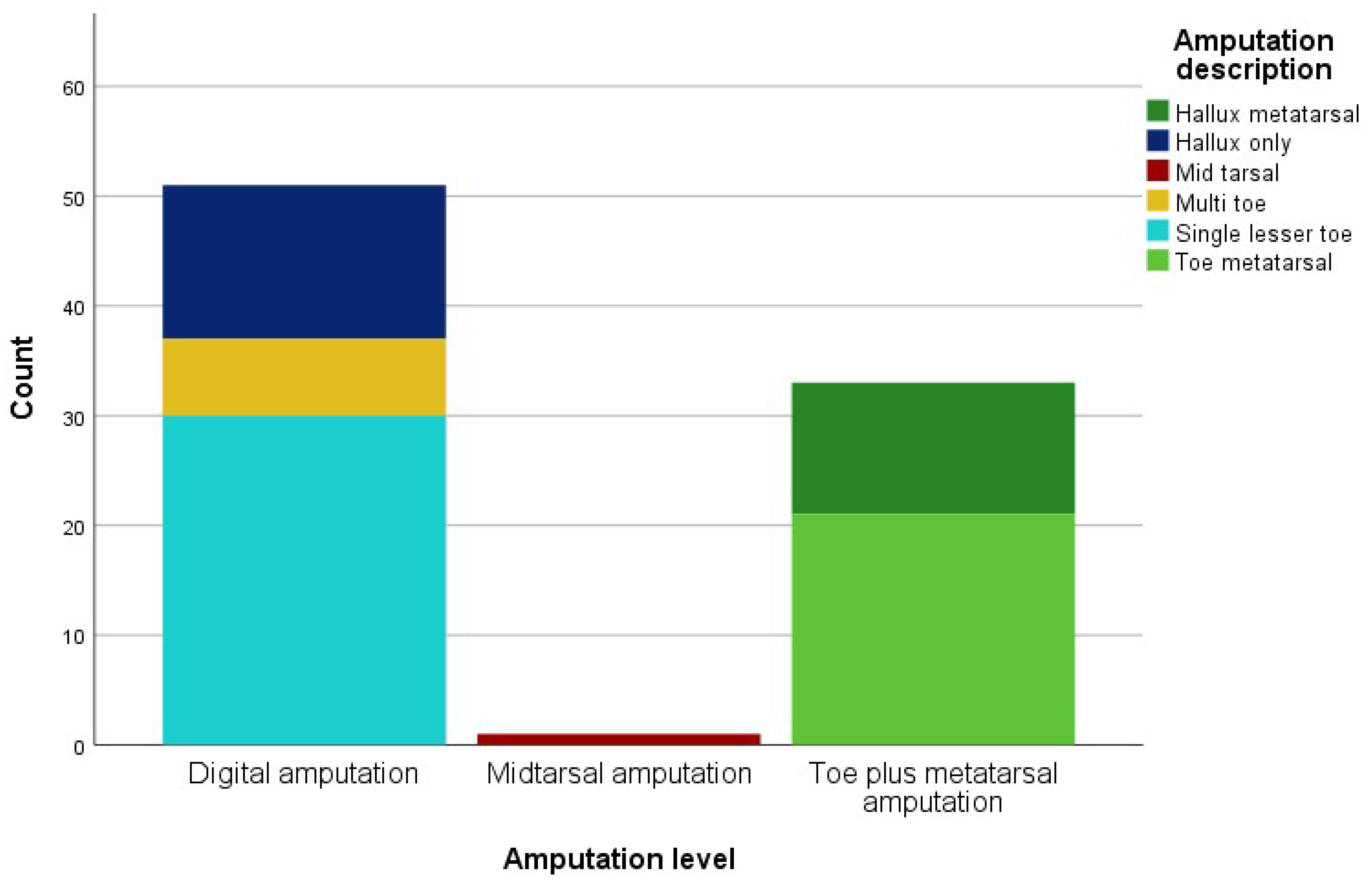
Figure 1. Amputation level and description.
Japma 116 21117 g001
Figure 2. Flowchart of amputation outcomes.
Japma 116 21117 g002
Table 1. Characteristics of the study population.
CharacteristicTotal (N = 74)
Male gender 57 (77%)
Age groups35–394 (5%)
40–493 (4%)
50–599 (12%)
60–6919 (26%)
70–7921 (28%)
80+18 (24%)
Type 2 diabetes 66 (89%)
Diabetes treatmentInsulin controlled42 (56%)
Medication controlled31 (41%)
Diet controlled2 (3%)
Previous minor foot amputation25 (33%)
ComorbiditiesCardiovascular disease43(58%)
Renal disease24 (32%)
Dialysis5 (7%)
History tobacco use17 (23%)
Foot ulceration63 (85%)
Infection at admission29 (39%)
Peripheral arterial disease35 (47%)
Gangrene24 (32%)
Mental disorders6 (8%)
Amputations healed at 12 months (n = 76) 56 (74%)
Values are number (percentage) unless stated otherwise.
Table 2. Surgical and Healing Data Relating to Minor Foot Amputations. Values and Number (%) Unless Stated Otherwise.
Other Procedures and ComplicationsDebridement Soft Tissue20 (23%)
Debridement soft tissue, bone, cartilage11 (13%)
Wound management11 (13%)
Abscess2 (2%)
Heal time (weeks) n = 66Average (minimum–maximum)22.4 (1–84)
1–59 (11%)
6–1010 (12%)
11–158 (9%)
16–203 (4%)
21–308 (9%)
31–406 (7%)
41+8 (9%)
Duration of hospital stay (days) n = 84Average (minimum–maximum)13 (0–64)
0–739 (46%)
8–1420 (24%)
15–2111 (13%)
22–283 (3%)
>2811 (13%)
Table 3. Comparison of significant factors associated with poor versus good clinical outcomes.
Clinical OutcomeTotalp Value
GoodPoor
Age
<60 years12 (30%)1 (4%)13 (20%)0.015
>=60 years29 (71%)23 (96%)52 (80%)
Total41 (100%)24 (100%)65 (100%)
Debridement procedure
Yes7 (17%)12 (50%)19 (30%)0.005
No34 (83%)12 (50%)46 (71%)
Total41 (100%)24 (100%)65 (100%)
Podiatry client post-amputation
Yes33 (80%)12 (50%)45 (70%)0.01
No8 (20%)12 (50%)20 (31%)
Total41 (100%)24 (100%)65 (100%)
Peripheral arterial disease
Yes17 (41.5)16 (66.7)33 (51%)0.05
No24 (58.5)8 (33.3)32 (50%)
Total41 (100)24 (100)65 (100%)
History of previous foot amputations
Yes12 (30%)12 (52%)24 (38%)0.07
No29 (71%)11 (48%)40 (62%)
Total41 (100%)23 (100%)64 (100%)
Disclaimer/Publisher’s Note: The statements, opinions and data contained in all publications are solely those of the individual author(s) and contributor(s) and not of MDPI and/or the editor(s). MDPI and/or the editor(s) disclaim responsibility for any injury to people or property resulting from any ideas, methods, instructions or products referred to in the content.