Article

Dry Needling of the Abductor Hallucis Muscle in Management of Hallux Valgus: Effects on Pain, Function, and Angle

1
Physical Medicine and Rehabilitation Clinic, Prof. Dr. Cemil Taşçıoğlu City Hospital, Istanbul 34000, Türkiye
2
Physical Medicine and Rehabilitation Clinic, Istanbul Training and Research Hospital, Istanbul 34000, Türkiye
3
Physical Medicine and Rehabilitation Clinic, Çam and Sakura City Hospital, Istanbul 34000, Türkiye
4
Physical Medicine and Rehabilitation Clinic, Konya City Hospital, Konya 42000, Türkiye
*
Author to whom correspondence should be addressed.
J. Am. Podiatr. Med. Assoc. 2026, 116(2), 18; https://doi.org/10.3390/japma116020018
Submission received: 4 June 2024 / Revised: 13 November 2024 / Accepted: 20 November 2024 / Published: 16 April 2026

Abstract

Background: The aim of this study was to investigate the effect of dry needling (DN) applied to the abductor hallucis (ABH) muscle on pain function and angle in patients with hallux valgus (HV). Methods: The study included 31 HV patients. Patients were randomly divided into two groups. The first group received toe-spread-out (TSO) exercise. The second group received three sessions of DN for myofascial trigger points in the ABH muscle in addition to TSO exercise. Visual analog scale (VAS) (rest, activity) and foot function index (FFI) (pain, disability, activity) were used for clinical evaluation. Hallux valgus angle (HVA) and intermetatarsal angle (HVA) were measured. The evaluations were performed at baseline and at the first and fourth weeks following treatment. Results: VAS-rest baseline–fourth week and baseline–first week changes were significantly superior in the TSO-plus-DN group compared to the TSO group (p = 0.023, p = 0.039, respectively). FFI-disability baseline–fourth week change was significantly superior in the TSO-plus-DN group compared to the TSO group (p = 0.040). HVA and IMA baseline–fourth week changes were significantly superior in the TSO-plus-DN group compared to the TSO group (p = 0.001, p = 0.045, respectively). Conclusions: According to our findings, the combination of DN for the ABH muscle with TSO exercise may be recommended for the treatment of patients with mild-to-moderate HV.

1. Introduction

Hallux valgus is a forefoot deformity that causes a medial protrusion in the metatarsophalangeal joint that develops as a result of progressive lateral deviation of the hallux and medial deviation of the first metatarsal. It causes disruptions in the gait pattern and worsens quality of life [1,2,3]. The risk increases with age and female gender, with HV affecting approximately 23% of adults [4]. It has been reported that shoes with high heels or narrow toes can cause abnormal deviations in the proximal phalanx of the hallux and metatarsal bones [5]. HV can be easily recognized clinically. Its severity can be classified by measuring the HV angle with radiology imaging. Normal HV angle (HVA) is defined as <15°, mild as 15–20°, moderate as 20–40° and severe as >40° [6]. Another measurement used in the radiologic evaluation of HV is the intermetatarsal angle (IMA). IMA is considered to be <9° in healthy individuals [5].
It has been suggested that conservative treatments should be tried before surgical treatment when treating patients with HV. Surgical treatment may be considered for patients with severe pain and dysfunction who do not respond to conservative treatment. Shoe modifications, orthoses, and splints are commonly employed conservative therapy modalities. However, high-quality evidence for conservative treatments is limited [5].
The first MTF joint is stabilized, and abnormal movement laterally is prevented by the abductor hallucis (ABH) muscle, which inserts into the proximal phalanx and medial sesamoid after originating from the calcaneal tuberosity. ABH is effective during the toe-off and late-stance phases of walking. Research has demonstrated that individuals with HV have diminished abductor strength in the ABH muscle [7,8]. The hallux deviates laterally due to an unmet adductor force. In such cases, it may be crucial to strengthen the ABH muscle. In order to strengthen the ABH muscle, toe-spread-out (TSO) exercises are used in treatment [9,10].
Myofascial pain syndrome (MPS) is a common condition in musculoskeletal diseases in which myofascial trigger points (MTrPs) are present. MTrPs are hyperirritable points within a taut band [11]. Previous research suggests that MTrPs can cause muscle dysfunction and weakness, resulting in various symptoms and findings [12,13,14]. Dry needling (DN) has emerged as a popular treatment for MTrPs in recent years. Reports indicate that DN is effective in reducing pain, improving range of motion, and increasing muscle strength [12,13,14,15].
There are few studies in the literature examining the effectiveness of DN in individuals with HV [16]. To our knowledge, no study in the literature has applied DN to the ABH muscle. In this study, our goal was to ascertain if DN administered to the ABH muscle alongside TSO exercises for patients with HV yielded supplementary contributions to clinical and radiological findings, compared to TSO exercises alone.

2. Patients and Methods

This was a randomized controlled prospective clinical trial (clinical trials registration number: NCT06023823). The delayed registration of this clinical trial was attributable to an institutional transition process experienced by the research team during the relevant period. Uncertainty regarding continuation of the study during this time led to a delay in trial registration. Following the decision to proceed with the study, the trial was registered at the earliest opportunity. The study protocol was approved by the Istanbul Training and Research Hospital Ethics Committee (approval no: 2011-KAEK-50, decision no:88, date of approval: 7 April 2023). Written informed consent was obtained from each patient. The study was conducted in accordance with the principles of the Declaration of Helsinki.

2.1. Study Populatıon

Patients with HV who presented to the Physical Medicine and Rehabilitation clinic with big toe pain between 1 May 2023 and 15 September 2023 were included in the study.
Inclusion criteria: patients aged 25–65 years, agreement not to receive anti-inflammatory treatment during the study, visual analogue scale (VAS) ≥ 4 at activity, and HV angle 16 to 40°.
Exclusion criteria: history of rheumatologic disease, diabetes mellitus (DM), chronic liver and kidney failure, treatment for HV in the previous 3 months, history of lower-extremity surgery, foot deformity, central or peripheral nerve damage, cognitive impairment, unassisted mobilization, bleeding disorder, skin lesion/infection, acute systemic infection, pregnant women.
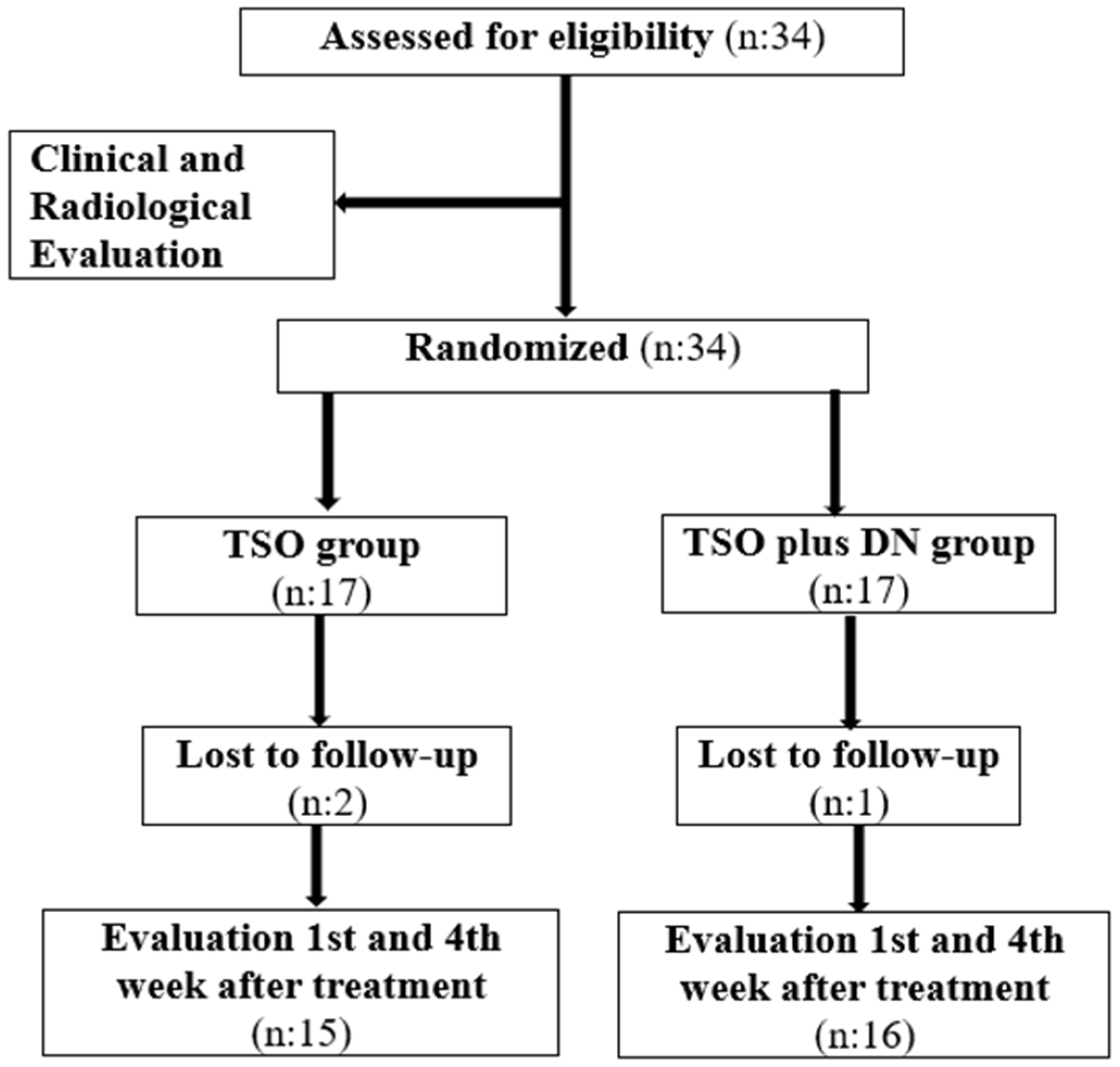
All participants signed an informed-consent form prior to their participation in the study. Three patients were lost to follow-up (Figure 1).

2.2. Clinical Examination

Demographic data (age, gender, body mass index) were recorded at the beginning of the study.
The patients’ pain levels were assessed using the VAS (0–10), both at rest and during activity. The foot function index (FFI) was used to evaluate the functional state of patients. FFI is a method that quantifies the influence of foot pathology on pain, disability, and activity limitation. It provides a way to assess a range of foot and ankle issues, including congenital, acute, and chronic illnesses and injuries, across all ages. The FFI questionnaire comprises three subcategories: pain, disability, and activity limitation. In total, there are twenty-three items, with nine items in both the pain and disability subcategories and five items in the activity limitation subcategory. Groups were analyzed independently for each subcategory [17]. The Turkish version of the FFI was examined for validity and reliability by Yalıman et al. [18]. The assessments were conducted at the baseline (0w) and at the first week (1w), and fourth week (4w) after treatment.
HVA and intermetatarsal angles (IMAs) were measured. HVA was measured by two methods. Firstly, the lateral deviation of the 1st MTF joint was measured with a goniometer (goniometer-HVA) using bone landmarks while the patient was supine on the examination table, with the hip and knee flexed 90° and the plantar foot positioned on the examination table. Goniometer measurements were performed at baseline and at the 1st and 4th weeks after treatment. Secondly, both HVA and IMA were measured with standard weight-bearing anteroposterior radiographic images [16]. HVA (X-ray HVA) was defined as the angle obtained by the intersection of the lines drawn on the first metatarsal bone and the first proximal phalanx. IMA is the angle obtained by intersecting the lines drawn on the first and second metatarsals [19]. Radiographic measurements were performed by the same observer blinded to the clinical condition and treatment groups. Radiographic measurements were performed at baseline and at 4 weeks after treatment.

2.3. Study Groups and Interventions

Patients were randomly divided into 2 equal groups according to the list randomization method. The flowchart of this study is shown in Figure 1.

2.3.1. TSO Group

The TSO exercise involved instructing patients to elevate all toes while seated, ensuring that the metatarsal heads and heel maintained contact with the ground. Subsequently, patients were directed to laterally depress the little toe and then medially depress the big toe. Participants worked with the observer for 1 week. TSO exercises were conducted as a 15-min program per day [9].

2.3.2. TSO-Plus-DN Group

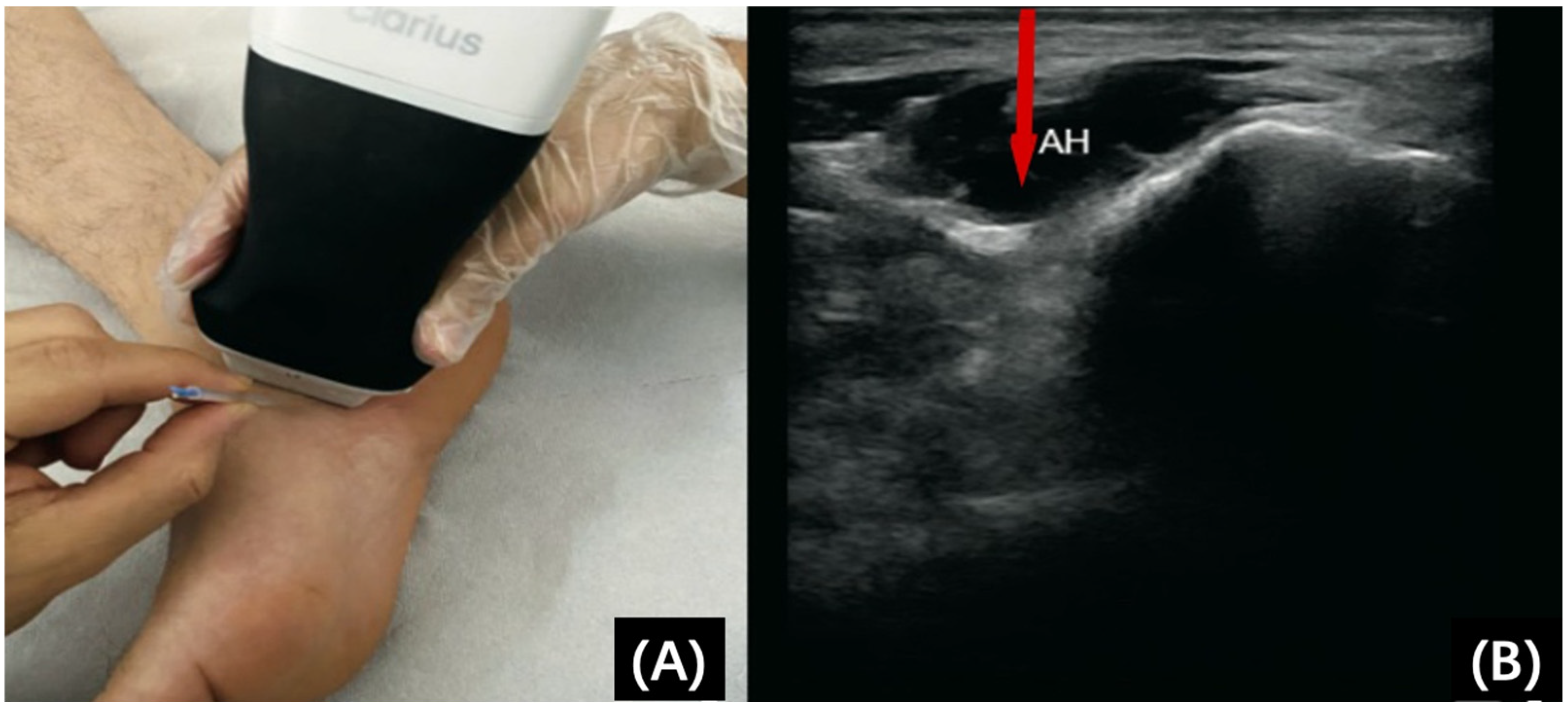
In this group, DN was performed in addition to TSO exercises. For MTrPs in the ABH muscle, DN was performed in three sessions, one week apart. Needling was performed under ultrasound guidance (Clarius L7 HD3 model; Clarius Mobile Health Inc., Vancouver, BC, Canada). The probe was positioned transversely to the long axis of the muscle with the patient in a supine position, the hip in external rotation, and the knee and ankle in a neutral position. The needle was guided to the muscle with an out-of-plane technique (Figure 2). The aim of the DN was to trigger an appropriate response, specifically the local twitch response (LTR) which is the rapid contraction of taut band muscle fibers.

2.4. Statistical Analysis

Statistical analysis was carried out using IBM SPSS 22.0 (IBM Corp., Armonk, NY, USA). The Kolmogorov–Smirnov/Shapiro–Wilk test, kurtosis-skewness values, and histogram graphics were used to assess normal distribution. While descriptive analyses are presented, mean ± standard deviation and/or 95% confidence interval median (1Q–3Q) values are given for quantitative variables. The analysis of categorical variables was performed using a chi-square test. Independent variables were compared using Student’s t-test and Mann–Whitney U tests. Changes over time in groups were analyzed through Wilcoxon signed-rank tests/Friedman’s two-way analysis or repeated-measures ANOVA/paired t-tests. Significance was determined by a p-value of less than 0.05.

3. Results

In total, 31 patients completed the study: one patient in the TSO-plus-DN group and two patients in the TSO group were lost to follow-up. Sixteen patients in the TSO-plus-DN group and 15 patients in the TSO group completed the study.
The mean ages of the patients in the TSO-plus-DN and TSO groups were 55.9 ± 13.7 and 54.5 ± 10.4 years, respectively. There was no significant difference between the groups in terms of age, sex, or BMI (p > 0.05). Demographic data on the participants is shown in Table 1.
VAS (rest and activity) and FFI scores were compared in the TSO-plus-DN and TSO groups. In both groups, there was a significant improvement in VAS-1w and VAS-4w scores compared to VAS-0w (p < 0.01). In both groups, there was also a significant improvement in FFI-1w and FFI-4w scores compared to FFI-0w scores (p < 0.001). Only the FFI-1w disability score was superior in the TSO-plus-DN group compared to the TSO group (p = 0.033). Other comparisons are given in Table 2.
HVA (goniometer and X-ray) and IMA measurements in the TSO-plus-DN and TSO groups were compared. Goniometer-HVA was significantly lower in both groups compared to baseline at the first and fourth weeks after treatment (p < 0.001). X-ray-HVA was significantly lower in both groups compared to baseline in both groups at the fourth week after treatment (for TSO-plus-DN, p = 0.001; for TSO, p = 0.007). IMA was significantly lower in both groups compared to the baseline in both groups at the fourth week after treatment (for TSO-plus-DN, p = 0.001; for TSO, p = 0.005). However, no significant difference was found between the groups in terms of goniometer HVA, X-ray-HVA, and IMA (p > 0.05). Other comparisons are given in Table 3.
Treatment-related changes in VAS, FFI, HVA, and IMA were compared. VAS-rest baseline–fourth week and baseline–first week changes were significantly superior in the TSO-plus-DN group compared to the TSO group (p = 0.023, p = 0.039, respectively). FFI-disability baseline–fourth week changes were significantly superior in the TSO-plus-DN group compared to the TSO group (p = 0.040). Goniometer HVA baseline–fourth week and baseline–first week changes were significantly superior in the TSO-plus-DN group compared to the TSO group (p = 0.001, p = 0.001, respectively). X-ray-HVA and IMA baseline-fourth week changes were significantly superior in the TSO-plus-DN group compared to the TSO group (p = 0.001, p = 0.045, respectively). Other comparisons are given in Table 4.
In our study, no complications or side effects were observed after the administration of DN.

4. Discussion

During the early stages of HV, it is possible to observe morphological and pathological alterations in the ABH muscle. Previous studies utilizing ultrasound have demonstrated decreases in mediolateral length, dorsoplantar length, and the cross-sectional area of the ABH muscle in patients with HV, in comparison to individuals without HV [20,21]. Electroneuromyographic investigations conducted on patients with HV have revealed that ABH has significantly less muscle activity than adductor hallucis [8]. Hoffmeyer et al. [22] performed histological examinations with muscle biopsy on patients with HV, and correlated these with gait analysis. In that study, enlarged mitochondria including paracrystalline inclusions and neurogenic myogenic findings were found in the biopsy. The authors associated these findings with chronic ischemia. At this point, restoring the muscle imbalance that disrupts alignment may be the most important step in the treatment of patients with HV.
The ABH muscle also aids hallux flexion by sending fibers to the flexor digitorum brevis muscle. As a result, exercises to develop the ABH muscle should include diagonal movements, such as thumb abduction and flexion [23]. TSO exercise stimulates the ABH muscle by allowing abduction and flexion of the thumb. In their study, Kim et al. [9] discovered that TSO exercise promoted ABH muscle activation more than short foot exercise in patients with HV. In another study, individuals with HV were separated into two groups: those who received orthosis alone, and those who received orthosis and TSO exercise. The TSO exercise group showed a substantial decrease in HVA and an increase in the cross-sectional area of the ABH muscle, as evaluated by ultrasound in the 8th week following treatment. However, no significant change was found in the orthosis group compared to baseline [23]. This investigation was similar to ours. This is because, similarly to that study, we addressed the same muscle in HV treatment to restore muscular imbalance.
In the literature, there is only one study evaluating the efficacy of DN in HV patients [16]. In this study, HV patients were divided into two groups. One group received real DN and the other received sham DN, with both groups receiving TSO exercise and self-mobilization. Both groups showed significant improvements in pain and function scores after treatment, and there was no difference between them. However, although there was a significant decrease in HVA in the real-DN group at the 4th week after treatment, there was not a decrease in HVA in the sham-DN group. In this study, DN was applied to the extensor hallucis longus, flexor hallucis longus, flexor hallucis brevis, adductor hallucis, and tibialis anterior muscles. MTrP in these muscles was thought to contribute to the progression of the pathology by causing pain and tension in the muscle, and needling was carried out to reduce discomfort and tension. Our study differed at this point. In this study, we aimed to increase the strength of this muscle by needling the most important muscle (ABH muscle); this is effective in the late-stance and toe-off phases of gait, and applies abductor force to the hallux. We were able to reduce the number of needle insertions, and this was likely to be more comfortable for the patient.
MTrPs have previously been reported in the literature to produce a decrease in motor output due to muscle fatigue as well as loss of muscular strength, with a variety of symptoms and findings being described [13,14]. It has been shown that DN, which is commonly used to treat MTrP, may enhance oxygenation, reduce pain, and increase muscle strength [11,14,24]. It was reported that DN delivered to the infraspinatus muscle generated an increase in muscle mass evaluated by ultrasonography in a case with weakness in the infraspinatus muscle following shoulder surgery [13]. In this study, we performed needling of the ABH muscle in HV patients with poor morphology and decreased muscular activation for this reason. There is no study on DN of the ABH muscle in HV treatment that we are aware of in the literature. As far as we know, this is the first such study in the literature.
In conclusion, the findings of our study were consistent with our hypothesis. In this study, we observed significant improvement in VAS and FFI scores in the first and fourth weeks after treatment in both treatment groups. There was also a significant decrease in HVA and IMA in both groups. In the TSO-plus-DN group, besides the improvement in VAS-rest and FFI disability scores, the improvement in HVA and IMA was significantly higher than in the TSO group. The combination of these two treatment modalities facilitates a return to activities of daily living by providing improvement in both the short and medium term (first week and first month after treatment). These two effective and practical methods can be recommended in cases resistant to conservative treatments.
The limitations of our study were that the patients had only mild and moderate HV, long-term follow-up was not performed, and there was no sham DN group. Future studies may investigate the efficacy and long-term results of needling the ABH muscle in patients with severe HV. They may also investigate changes in muscle morphology by ultrasound or changes in muscle activation by electroneuromyography after needling.

Author Contributions

Conceptualization, B.T.D., A.A., B.B. and E.A.; methodology, B.T.D., M.O., F.B. and M.T.Y.; validation, B.T.D., B.B. and E.A.; formal analysis, B.T.D. and B.B.; investigation, B.T.D., B.B. and E.A.; resources, B.T.D., F.B. and M.T.Y.; data curation, B.T.D., A.A., M.O. and E.A.; writing—original draft preparation, B.T.D., M.O., A.A., B.B. and M.T.Y.; writing—review and editing, B.T.D., F.B., M.T.Y. and E.A.; visualization, B.T.D., F.B., M.T.Y. and E.A.; supervision, B.T.D., F.B., M.T.Y. and E.A.; project administration, B.T.D. and E.A. All authors have read and agreed to the published version of the manuscript.

Funding

This research received no external funding.

Institutional Review Board Statement

The study was conducted in accordance with the Declaration of Helsinki, and approved by the Ethics Committee of Istanbul Training and Research Hospital (protocol code: 88; date of approval: 7 April 2023).

Informed Consent Statement

Informed consent was obtained from all subjects involved in the study.

Data Availability Statement

The raw data supporting the conclusions of this article will be made available by the authors on request.

Conflicts of Interest

The authors declare no conflict of interest.

References

  1. Menz, H.B.; Lord, S.R. Gait instability in older people with hallux valgus. Foot Ankle Int. 2005, 26, 483–489. [Google Scholar] [CrossRef]
  2. Abhishek, A.; Roddy, E.; Zhang, W.; Doherty, M. Are hallux valgus and big toe pain associated with impaired quality of life? A cross-sectional study. Osteoarthr. Cartil. 2010, 18, 923–926. [Google Scholar] [CrossRef]
  3. Mazzotti, A.; Arceri, A.; Martini, B.; Bonelli, S.; Zielli, S.; Artioli, E.; Brognara, L.; Faldini, C. Hallux Valgus Plantar Pressure Distribution Before and After Surgery. J. Am. Podiatr. Med. Assoc. 2023, 113, 22–177. [Google Scholar] [CrossRef]
  4. Nix, S.; Smith, M.; Vicenzino, B. Prevalence of hallux valgus in the general population: A systematic review and meta-analysis. J. Foot Ankle Res. 2010, 3, 21. [Google Scholar] [CrossRef] [PubMed]
  5. Ying, J.; Xu, Y.; István, B.; Ren, F. Adjusted Indirect and Mixed Comparisons of Conservative Treatments for Hallux Valgus: A Systematic Review and Network Meta-Analysis. Int. J. Environ. Res. Public Health 2021, 18, 3841. [Google Scholar] [CrossRef]
  6. Coughlin, M.J.; Jones, C.P. Hallux valgus: Demographics, etiology, and radiographic assessment. Foot Ankle Int. 2007, 28, 759–777. [Google Scholar] [CrossRef] [PubMed]
  7. Reeser, L.A.; Susman, R.L.; Stern, J.T., Jr. Electromyographic studies of the human foot: Experimental approaches to hominid evolution. Foot Ankle 1983, 3, 391–407. [Google Scholar] [CrossRef] [PubMed]
  8. Incel, N.A.; Genc, H.; Erdem, H.R.; Yorgancioglu, Z.R. Muscle imbalance in hallux valgus: An electromyographic study. Am. J. Phys. Med. Rehabil. 2003, 82, 345–349. [Google Scholar] [CrossRef]
  9. Kim, M.H.; Kwon, O.Y.; Kim, S.H.; Jung, D.Y. Comparison of muscle activities of abductor hallucis and adductor hallucis between the short foot and toe-spread-out exercises in subjects with mild hallux valgus. J. Back. Musculoskelet. Rehabil. 2013, 26, 163–168. [Google Scholar] [CrossRef]
  10. Abdalbary, S.A. Foot Mobilization and Exercise Program Combined with Toe Separator Improves Outcomes in Women with Moderate Hallux Valgus at 1-Year Follow-up A Randomized Clinical Trial. J. Am. Podiatr. Med. Assoc. 2018, 108, 478–486. [Google Scholar] [CrossRef]
  11. Cagnie, B.; Dewitte, V.; Barbe, T.; Timmermans, F.; Delrue, N.; Meeus, M. Physiologic effects of dry needling. Curr. Pain Headache Rep. 2013, 17, 348. [Google Scholar] [CrossRef] [PubMed]
  12. Celik, D.; Yeldan, I. The relationship between latent trigger point and muscle strength in healthy subjects: A double-blind study. J. Back Musculoskelet. Rehabil. 2011, 24, 251–256. [Google Scholar] [CrossRef]
  13. Cross, K.M.; McMurray, M. Dry Needling Increases Muscle Thickness in a Subject with Persistent Muscle Dysfunction: A Case Report. Int. J. Sports Phys. Ther. 2017, 12, 468–475. [Google Scholar] [PubMed]
  14. Navarro-Santana, M.J.; Sanchez-Infante, J.; Gómez-Chiguano, G.F.; Cleland, J.A.; López-De-Uralde-Villanueva, I.; Fernández-De-Las-Peñas, C.; Plaza-Manzano, G. Effects of trigger point dry needling on lateral epicondylalgia of musculoskeletal origin: A systematic review and meta-analysis. Clin. Rehabil. 2020, 34, 1327–1340. [Google Scholar] [CrossRef]
  15. Lucas, K.R.; Rich, P.A.; Polus, B.I. Muscle activation patterns in the scapular positioning muscles during loaded scapular plane elevation: The effects of Latent Myofascial Trigger Points. Clin. Biomech. 2010, 25, 765–770. [Google Scholar] [CrossRef]
  16. Kharazmi, A.S.; Okhovatian, F.; Baghban, A.A.; Mosallanezhad, Z.; Kojidi, M.M.; Azimi, H. Effects of dry needling on symptomatic hallux valgus: A randomized single blind clinical trial. J. Bodyw. Mov. Ther. 2020, 24, 246–251. [Google Scholar] [CrossRef]
  17. Trevethan, R. Evaluation of two self-referent foot health instruments. Foot 2010, 20, 101–108. [Google Scholar] [CrossRef]
  18. Yalıman, A.; Şen, E.İ.; Eskiyurt, N.; Mak, E.B. Turkish translation and adaptation of foot function index in patients with plantar fasciitis. Turk. J. Phys. Med. Rehabil. 2014, 60, 212–223. [Google Scholar] [CrossRef]
  19. Coughlin, M.J.; Saltzman, C.L.; Nunley, J.A., 2nd. Angular measurements in the evaluation of hallux valgus deformities: A report of the ad hoc committee of the American Orthopaedic Foot & Ankle Society on angular measurements. Foot Ankle Int. 2002, 23, 68–74. [Google Scholar] [CrossRef]
  20. Stewart, S.; Ellis, R.; Heath, M.; Rome, K. Ultrasonic evaluation of the abductor hallucis muscle in hallux valgus: A cross-sectional observational study. BMC Musculoskelet. Disord. 2013, 14, 45. [Google Scholar] [CrossRef] [PubMed]
  21. Lobo, C.C.; Marín, A.G.; Sanz, D.R.; López, D.L.; López, P.P.; Morales, C.R.; Corbalán, I.S. Ultrasound evaluation of intrinsic plantar muscles and fascia in hallux valgus: A case-control study. Medicine 2016, 95, e5243. [Google Scholar] [CrossRef] [PubMed]
  22. Hoffmeyer, P.; Cox, J.N.; Blanc, Y.; Meyer, J.M.; Taillard, W. Muscle in hallux valgus. Clin. Orthop. Relat. Res. 1988, 232, 112–118. [Google Scholar] [CrossRef]
  23. Kim, M.H.; Yi, C.H.; Weon, J.H.; Cynn, H.S.; Jung, D.Y.; Kwon, O.Y. Effect of toe-spread-out exercise on hallux valgus angle and cross-sectional area of abductor hallucis muscle in subjects with hallux valgus. J. Phys. Ther. Sci. 2015, 27, 1019–1022. [Google Scholar] [CrossRef] [PubMed]
  24. Osborne, N.J.; Gatt, I.T. Management of shoulder injuries using dry needling in elite volleyball players. Acupunct. Med. 2010, 28, 42–45. [Google Scholar] [CrossRef]
Figure 1. Study flowchart.
Japma 116 00018 g001
Figure 2. Needling of the abductor hallucis muscle. (A) Positioning of the foot and ultrasound probe. (B) Visualization of the abductor hallucis (AH) muscle and guidance of the needle (red arrow) to the muscle with out-of-plane technique.
Japma 116 00018 g002
Table 1. Comparison of demographic data between the needling groups.
TSO-Plus-DN Group
(n:16)
TSO Group
(n:15)
p
Sex
Male (n/%)3/18.7%2/13.3%0.937
Female (n/%)13/81.2%13/86.6%
Age (years)
Mean ± SD55.9 ± 13.754.5 ± 10.40.892
BMI
Mean ± SD30.0 ± 4.328.1 ± 2.10.281
Table 2. Within-group and between-group comparisons of VAS and FFI scores.
TSO-Plus-DN GroupTSO Groupp
Mean ± SDMedian (1Q–3Q)Mean ± SDMedian (1Q–3Q)
VAS-0w (Rest)4.8 ± 1.5 +*5.0 (3.2–6.0)3.9 ± 1.2 +*4.0 (3.0–5.0)0.119
VAS-1w (Rest)1.5 ± 1.1 ^1.0 (1.0–3.0)1.7 ± 1.3 ^2.0 (1.0–3.0)0.770
VAS-4w (Rest)1.0 ± 0.81.0 (0.0–2.0)1.3 ± 1.11.0 (0.0–2.0)0.470
p<0.001<0.001
VAS-0w (Activity)8.0 ± 1.5 +*8.5 (7.0–9.0)8.0 ± 2.1 +*9.0 (6.0–10.0)0.770
VAS-1w (Activity)4.3 ± 2.14.0 (3.0–6.0)5.2 ± 2.3 ^5.0 (3.0–7.0)0.338
VAS-4w (Activity)3.6 ± 2.34.0 (1.2–5.0)4.4 ± 2.55.0 (2.0–7.0)0.379
p<0.001<0.001
FFI-0w (Pain)47.7 ± 20.4 +*49.5 (31.5–62.2)43.8 ± 14.5 +*44.0 (35.0–49.0)0.572
FFI-1w (Pain)24.8 ± 14.021.5 (16.0–34.7)29.2 ± 14.1 ^30.0 (20.0–40.0)0.338
FFI-4w (Pain)17.7 ± 10.818.0 (10.2–22.0)23.4 ± 14.925.0 (12.0–37.0)0.281
p<0.001<0.001
FFI-0w (Disability)55.6 ± 22.2 +*59.0 (36.2–75.0)53.6 ± 23.0 +*55.0 (39.0–75.0)0.770
FFI-1w (Disability)20.6 ± 17.1 ^14.5 (8.0–31.7)33.4 ± 20.230.9 (15.2–50.3)0.033
FFI-4w (Disability)16.0 ± 16.810.0 (5.5–20.0)27.4 ± 21.924.1 (9.8–50.0)0.140
p<0.001<0.001
FFI-0w (Activity)15.6 ± 10.1 +*20.0 (5.2–23.0)12.2 ± 7.5 +*14.0 (5.0–17.0)0.232
FFI-1w (Activity)5.8 ± 7.6 ^3.0 (0.2–7.0)4.5 ± 4.3 ^4.0 (2.0–5.0)0.922
FFI-4w (Activity)3.7 ± 7.30.0 (0.0–3.0)2.8 ± 3.02.0 (0.0–5.0)0.358
p<0.001<0.001
DN—dry needling; TSO—toe spread out; FFI—foot functıon index; 0w—baseline; 1w—1 week post treatment; 4w—4 weeks post treatment. + Significant improvement between 0w and 1w. * Significant improvement between 0w and 4w. ^ Significant improvement between 1w and 4w.
Table 3. Within-group and between-group comparisons of HVA and IMA results.
TSO-Plus-DN GroupTSO Groupp
Mean ± SDMedian (1Q–3Q)Mean ± SDMedian (1Q–3Q)
Goniometer HVA 0w26.1 ± 5.7 +*25.5 (22.0–30.0)23.6 ± 21.8 +*24.0 (20.0–27.5)0.248
Goniometer HVA 1w21.2 ± 5.121.0 (16.2–25.0)21.8 ± 4.421.0 (18.5–27.0)0.736
Goniometer HVA 4w20.9 ± 4.921.5 (15.6–24.7)21.9 ± 4.521.0 (18.0–27.0)0.735
p<0.001<0.001
X-ray HVA 0w25.2 ± 7.6 *23.8 (19.2–33.8)26.0 ± 6.8 *24.8 (20.2–30.2)0.649
X-ray HVA 4w22.0 ± 7.021.5 (15.2–29.7)25.5 ± 6.825.0 (20.0–29.3)0.199
p0.0010.007
X-ray IMA 0w11.9 ± 2.4 *11.2 (10.6–12.1)12.3 ± 3.0 *11.3 (10.0–14.8)0.812
X-ray IMA 4w10.0 ± 2.49.1 (8.4–10.7)11.2 ± 3.410.8 (8.8–14.2)0.277
p0.0010.005
DN—dry needling; TSO—toe spread out; HVA—hallux valgus angle; IMA—intermetatarsal angle; 0w, baseline; 1w—1 week post treatment; 4w—4 weeks post treatment. + Significant improvement between 0w and 1w. * Significant improvement between 0w and 4w.
Table 4. Comparison of clinical and radiologic changes between groups before and after treatment.
TSO-Plus-DN GroupTSO Groupp
Mean ± SD(95% CI)Mean ± SD(95% CI)
VAS-Rest
Change baseline–1st week−3.3 ± 1.0(−3.8, −2.7)−2.2 ± 1.8(−3.2, −1.1)0.023
Change baseline–4th week−3.8 ± 1.7(−4.7, −2.9)−2.6 ± 1.8(−3.5, −1.6)0.039
VAS-Activity
Change baseline–1st week−3.7 ± 2.2(−4.9, −2.4)−2.8 ± 2.9(−4.4, −1.1)0.237
Change baseline–4th week−4.4 ± 2.9(−6.0, −2.7)−3.6 ± 3.0(−5.2, −1.9)0.231
FFI-Pain
Change baseline–1st week−22.8 ± 18.2(−32.5, −13.1)−14.5 ± 20.9(−26.1, −2.9)0.243
Change baseline–4th week−30.0 ± 23.4(−42.4, −17.5)−20.4 ± 21.3(−32.2, −8.5)0.166
FFI-Disability
Change baseline–1st week−35.0 ± 25.7(−48.7, −21.2)−20.1 ± 27.1(−35.1, −5.0)0.055
Change baseline–4th week−39.5 ± 23.2(−51.9, −27.1)−26.2 ± 27.6(−41.5, −10.8)0.040
FFI-Activity
Change baseline–1st week−9.8 ± 9.8(−15.1, −4.6)−7.7 ± 7.8(−12.0, −3.3)0.736
Change baseline–4th week−11.9 ± 10.0(−17.2, −6.5)−9.4 ± 7.3(−13.4, −5.3)0.663
Goniometer HVA
Change baseline–1st week−4.8 ± 2.6(−6.2, −3.4)−1.8 ± 1.7(−2.8, −0.8)0.001
Change baseline–4th week−5.2 ± 2.6(−6.6, −3.7)−1.8 ± 1.8(−2.8, −0.7)0.001
X-ray HVA
Change baseline–4th week−3.2 ± 2.3(−4.4, −2.0)−0.4 ± 0.5(−0.7, −0.1)0.001
X-ray IMA
Change baseline–4th week−1.8 ± 1.4(−2.6, −1.1)−1.5 ± 1.4(−1.9, −0.1)0.045
DN—dry needling; TSO—toe spread out; VAS—visual analog scale; FFI—foot functıon index; HVA—hallux valgus angle; IMA—intermetatarsal angle.
Disclaimer/Publisher’s Note: The statements, opinions and data contained in all publications are solely those of the individual author(s) and contributor(s) and not of MDPI and/or the editor(s). MDPI and/or the editor(s) disclaim responsibility for any injury to people or property resulting from any ideas, methods, instructions or products referred to in the content.