Article

Three-Cortex Syndesmotic Fixation for Weber Type B/C Lateral Malleolus Fractures with Syndesmotic Disruption: Clinical and Radiologic Results

by
Kemal Gökkuş
1,*,
Mehmet Baris Sargin
1,
Bahtiyar Haberal
2,
Abdullah Şükün
3 and
Mehmet Sukru Sahin
1
1
Department of Orthopedics and Traumatology, Baskent University Alanya Practice and Research Center, 07400 Antalya, Türkiye
2
Department of Orthopedics and Traumatology, Faculty of Medicine, Baskent University Ankara Hospital, 06490 Ankara, Türkiye
3
Department of Radiology, Baskent University Alanya Research and Application Center, 07400 Antalya, Türkiye
*
Author to whom correspondence should be addressed.
J. Am. Podiatr. Med. Assoc. 2026, 116(2), 17; https://doi.org/10.3390/japma116020017
Submission received: 19 April 2025 / Revised: 24 June 2025 / Accepted: 1 July 2025 / Published: 16 April 2026

Abstract

Background: Despite the frequent occurrence of ankle injuries, there is no consensus among orthopedic surgeons regarding the diagnosis and treatment of syndesmotic injuries. This study evaluates the clinical and radiological outcomes of three-cortex syndesmotic fixation in Weber type B/C lateral malleolus fractures (with or without medial malleolus involvement) associated with syndesmotic injury. Material and Method: This study analyzed thirty-six (36) patients with Weber type B/C lateral malleolus fractures treated between 2011 and 2022. All underwent open reduction and fixation with plates and screws for malleolar fractures, along with a 3.5 mm cortical syndesmosis fixation using three cortical engagements. Preoperative and postoperative radiological findings and final functional ankle assessments were reviewed. Intraclass correlation coefficients (ICC) were used to assess inter- and intra-observer agreement for tibiofibular clear space (TFCS), tibiofibular overlap (TFO), medial clear space (MCS), and anterior tibiofibular ratio (ATFR) measurements. The functional status of the ankle has been assessed using the American Orthopedic Foot and Ankle Society (AOFAS) scale. Results: The mean age of the patients was 50.56 ± 16.23 years, and the mean follow-up duration was 20.89 ± 24.93 months. Postoperative AOFAS scores averaged 91.08 ± 9.90. The inter-observer agreement for preoperative assessments was excellent across all parameters (ICC > 0.9). However, in the postoperative period, inter-observer agreement for ATFR measurement was poor (ICC < 0.5), while agreement for all other parameters remained excellent (ICC > 0.9). Intra-observer comparisons of preoperative (pre-op) and postoperative (post-op) measurements were poor across all parameters (ICC < 0.5); this can be attributed to the success of reduction, reflecting the positive directional change on all parameters. After an average follow-up of 20 months, four radiological parameters showed significant differences, indicating enhanced stability and reduced diastasis. Conclusions: Three-cortex syndesmotic screw fixation in Weber type B/C lateral malleolus fractures with syndesmotic injuries yielded excellent mid-term radiological and functional outcomes.

1. Introduction

The tibiofibular syndesmosis consists of the anterior tibiofibular ligament, posterior tibiofibular ligament, transverse tibiofibular ligament, interosseous ligament, and interosseous membrane [1]. These structures provide stability to the mortise, along with resistance to rotational and axial translation forces [2].
Danis and Weber [3] demonstrated that infra-syndesmotic fractures do not result in syndesmosis damage. Trans-syndesmotic fractures exhibit syndesmosis damage in 50% of cases, whereas suprasyndesmal injuries result in complete syndesmosis damage in all cases [3]. All Weber type C fractures involve syndesmosis rupture, irrespective of observable radiographic alterations [4].
Numerous studies have addressed ankle fractures associated with syndesmotic injuries and their treatment. However, the lack of consensus among orthopedic surgeons regarding treatment methods persists. Restoration of syndesmotic separation is essential, yet no standardized method has been universally adopted, despite the wealth of literature on this subject.
Computed tomography (CT) has demonstrated superiority over standard radiographs in detecting subtle mal-reductions in the syndesmosis, particularly posterior translation or malrotation of the fibula [5]. However, routine use of CT in the postoperative setting is limited by concerns regarding cost, radiation exposure, and metal artifact interference. As a result, conventional anteroposterior and lateral radiographs remain the standard method for postoperative radiological evaluation in most clinical settings.
Three-cortex syndesmotic fixation has been proposed as a biomechanically sound technique that provides adequate rotational stability while minimizing the risk of over-compression and hardware failure. Nevertheless, the literature describing the clinical and radiological outcomes of this technique remains scarce.
The primary goal of the study was to evaluate the clinical and radiologic outcomes, along with the reliability of the radiographic parameters, in 36 patients who underwent open reduction and fixation with plates and screws for malleolar fractures, in conjunction with syndesmosis fixation utilizing a 3.5 mm cortical screw engaging three cortices.

2. Material and Method

This retrospective study was approved by the ethics committee of our institution and was registered under protocol.
The present study was conducted in accordance with the Declaration of Helsinki and other applicable international ethical guidelines for human research.
A total of 112 cases of Weber type B/C lateral malleolus and bimalleolar fractures with syndesmotic injury were included in this study. Cases involving patients we could not contact (mostly tourists), distal tibial fractures (pilon fractures), calcaneal and open fractures associated with lateral malleolus fractures, and pediatric patients were excluded from the study. After exclusions, 36 patients underwent open reduction and fixation with plates and screws for malleolar fractures, along with a 3.5 mm cortical syndesmosis fixation engaging three cortices from October 2012 to December 2021 were included.

2.1. Surgical Technique

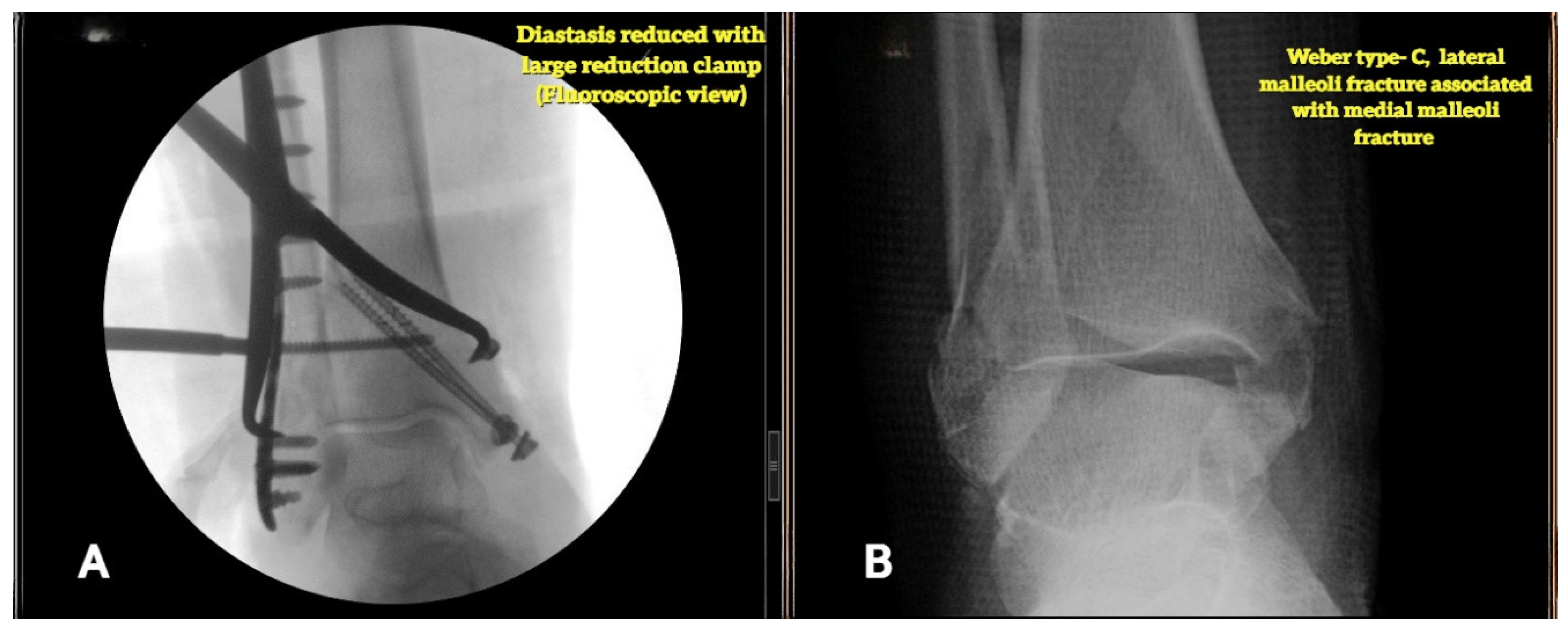
The standard lateral approach was used for lateral malleolus fractures. Dissection was performed anteriorly between the peroneus tertius and posteriorly between the peroneus longus and brevis. In cases of uncertainty, an intraoperative hook test was used to confirm syndesmotic disruption. The fracture site was exposed, and after achieving satisfactory reduction, fixation was performed using distal fibula anatomical plate and screws specifically designed for the lateral malleolus. The syndesmotic diastasis was reduced using a large reduction clamp under fluoroscopic guidance (See Figure 1—case sample with weber type c lateral malleoli fracture associated with medial malleoli fracture). A syndesmotic screw was inserted through the plate hole located approximately 2–3 cm above the plafond. For any associated medial malleolus fractures, a conventional medial incision was made, followed by the stabilization of the fracture using a lag screw(s).
Preoperative, postoperative, and final follow-up standard AP and lateral radiographs of the ankle were obtained.
The postoperative follow-up protocol included dressing changes within the first three days following surgery, and suture removal at approximately 15 days. Patients were maintained as non-weight-bearing for 6 to 8 weeks, using a range-of-motion (ROM) walker. In the absence of symptoms, routine removal of the syndesmotic screw was not performed. Polyclinic follow-up visits were scheduled within the first three months postoperatively and continued throughout the first year. Thereafter, a yearly follow-up protocol was implemented.
Radiographs were obtained using a UT 2000 X-ray machine (Konica Minolta, 2018, Tokyo, Japan) with a source-to-image distance of ~100 cm and the patient positioned in both supine and lateral positions. The radiological measurements were performed by two independent radiologists, and functional evaluations were conducted using the AOFAS scoring system at the last follow-up.
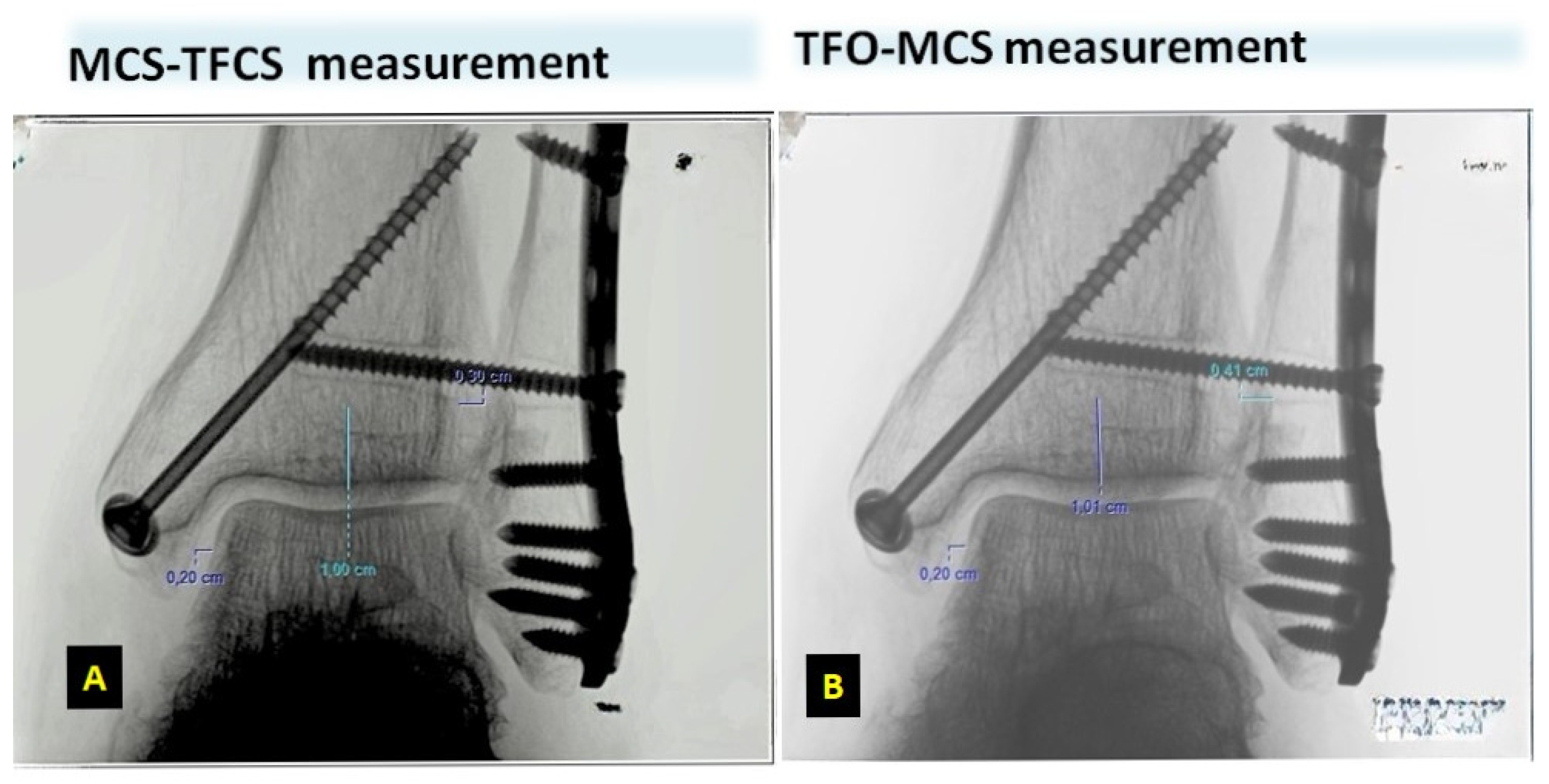
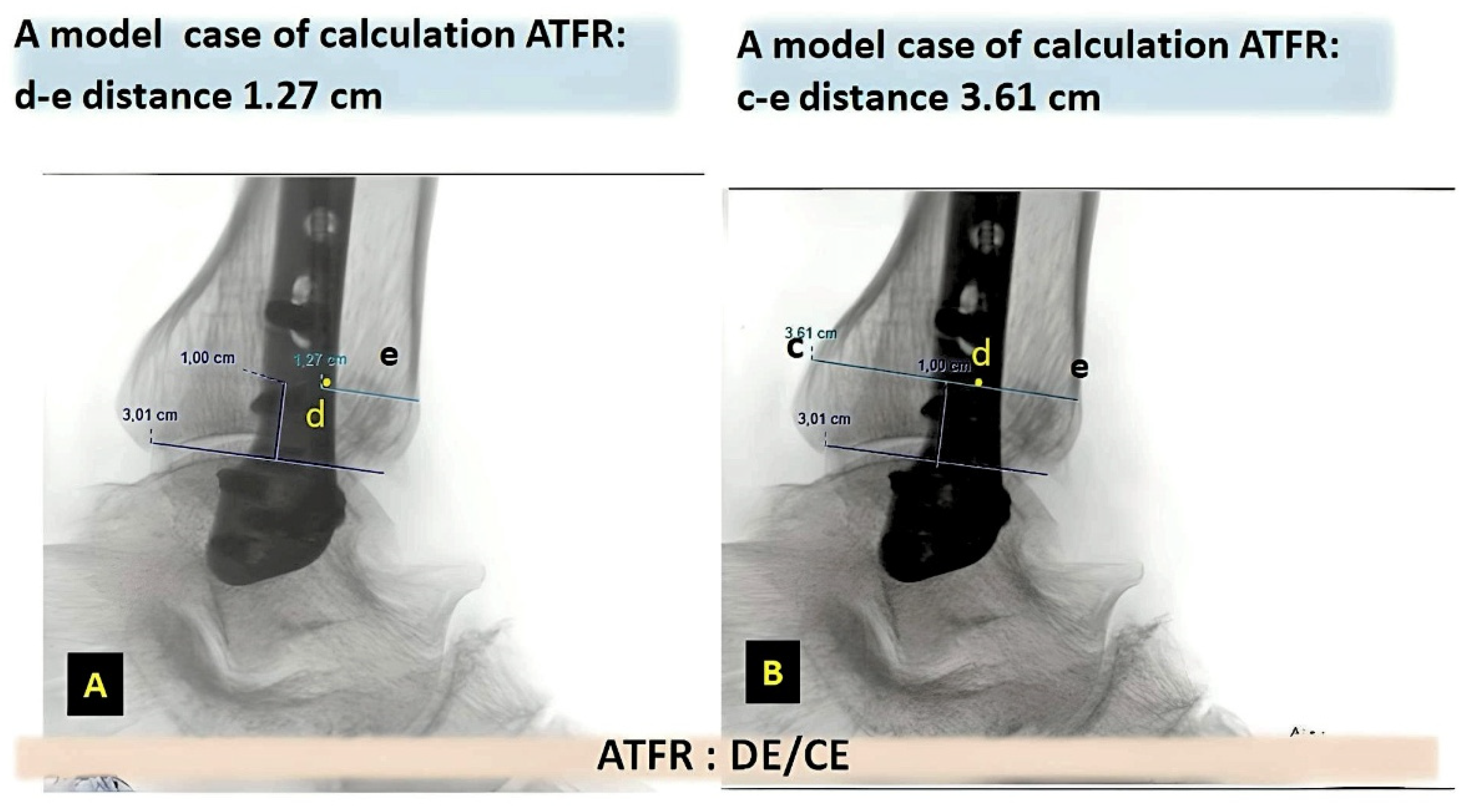
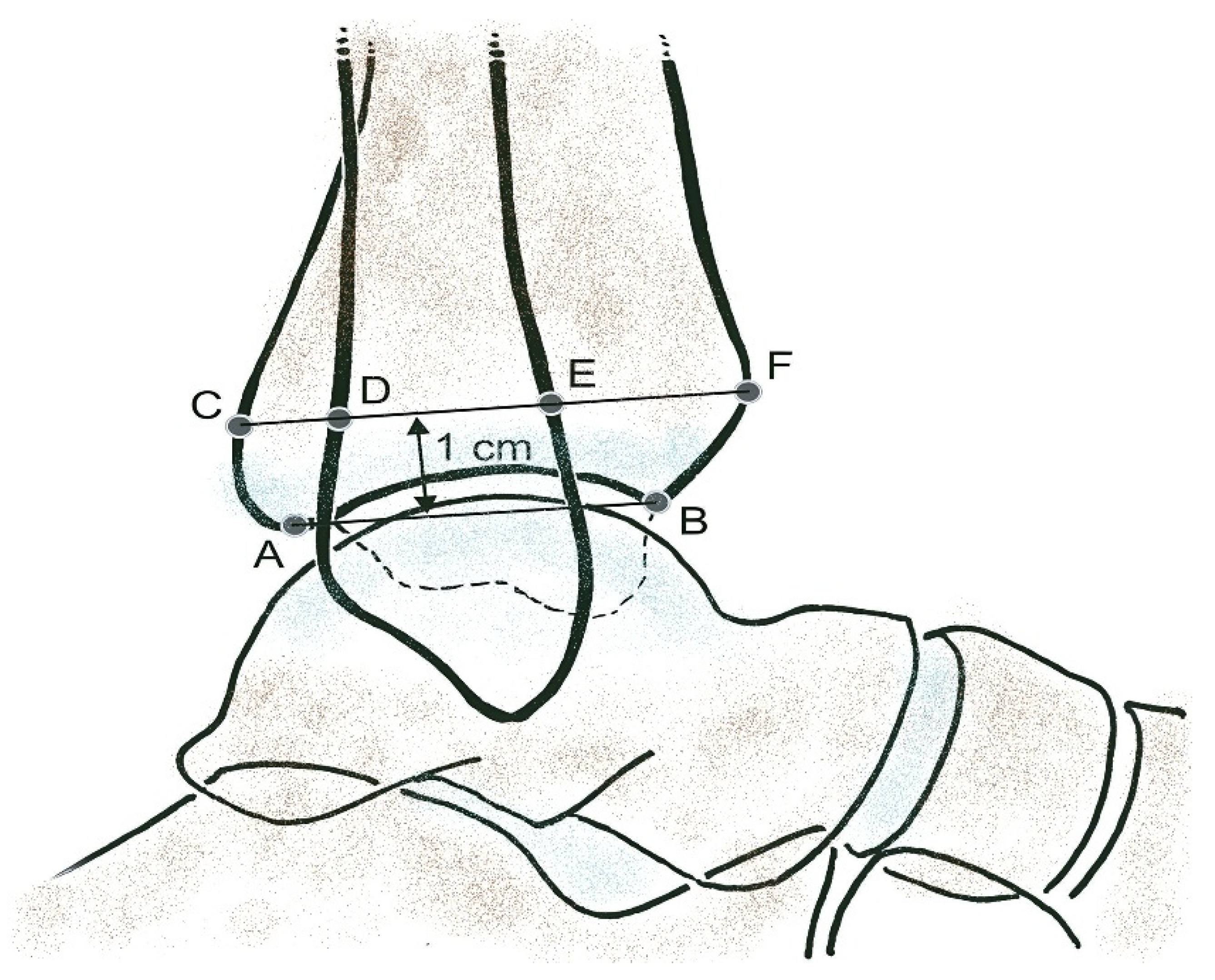
Tibiofibular clear space (TFCS), tibiofibular overlap (TFO), medial clear space (MCS), and anterior tibiofibular ratio (ATR) measurements were performed preoperatively and postoperatively at the latest follow-up. Measurements were conducted 1 cm above the tibia plafond, as described by Harper and Keller (Figure 2A,B) [6]. MCS was defined as the widest distance between the medial border of the talus and the lateral border of the medial malleolus on the AP views (Figure 2A,B) [7]. The ATFR was calculated as the ratio of the distance between the anterior tibial cortex and the anterior fibular cortex to the distance between the anterior tibial cortex and the posterior tibial cortex, as described by Croft et al. (Figure 3A,B and Figure 4) [8].
Statistical analyses were performed using SPSS version 25.0. Variables were assessed for normal distribution using the Shapiro–Wilk test. The descriptive statistics included the mean, standard deviation, median, minimum, and maximum values for quantitative variables and frequency and percentage for categorical variables. The Wilcoxon sign rank test was used to evaluate inter-observer and intra-observer differences for dependent variables that did not show a normal distribution. Intraclass correlation coefficient (ICC) statistics were used to assess the intra-observer and interobserver agreement for the TFCS, TFO, MCS, and ATFR measurements.
The intraclass correlation is an index comparing the variability within a group to the variability across groups. In this study, ICC was used for assessing the consistency or reproducibility of quantitative measurements made by different observers measuring the same quantity. ICC values range from 0 and 1, with values below 0.5 indicating poor reliability, values between 0.5 and 0.75 indicating moderate reliability, values between 0.75 and 0.9 indicating good reliability, and values above 0.9 indicating excellent reliability.

2.2. Sample Size and Power Analysis

To address the concern regarding sample size adequacy, a priori power analysis was conducted using G*Power software (version 3.1.9.7). For quantitative variables, assuming a medium effect size (Cohen’s d = 0.5), two-tailed t-test, α = 0.05, and power (1 − β) = 0.80, the required sample size was determined to be 34. For categorical variables, with an effect size (g) of 0.3, α = 0.05, and a desired power of 0.95, the required sample size was calculated as 35. Our final sample of 36 patients satisfied both conditions, confirming adequate statistical power for the study.

3. Results

Data from 36 patients (13 females, 36.11%; 23 males, 63.89%) were analyzed (Table 1). The fracture type distribution was as follows: Weber type B, 23 patients (63.88%); Weber type B/C, 2 patients (5.56%); and Weber type C, 11 patients (30.56%) (Table 2). The mean follow-up period was 21.81 ± 24.51 months, with a median of9 months (range: 2.00–84.00). The mean AOFAS score was 91.08 ± 9.90, with a median score of 90.00 (range: 47.00–100.00) (Table 3).
Intra-observer and inter-observer agreement for TFCS, TFO, MCS, and ATFR were assessed using ICC values. Descriptive statistics, including mean ± standard deviation (SD), median (minimum–maximum), and ICC values were calculated for both Observer 1 and Observer 2.
Significant differences were observed for TFCS, TFO and MCS preoperatively between observers (p < 0.001). However, ATFR showed no significant difference (p = 0.132). ICC values ranged from0.983 to 0.999, indicating excellent inter-observer agreement across all preoperative parameters (Table 4).

Postoperative Measurements

Most postoperative comparisons showed no significant inter-observer differences (p > 0.05). The ICC values remained high for TFCS, TFO and MCS. However, the inter-observer agreement for ATFR in the postoperative period was poor (ICC = 0.473) (Table 4). The findings indicate that inter-observer agreement was consistently high across both preoperative and postoperative measurements, with statistically significant differences in some preoperative parameters. Despite this, ATFR showed poor inter-observer reliability postoperatively.
Significant differences in TFCS, TFO, MCS, and ATFR were noted between preoperative and postoperative measurements for both observers (Table 5). However, the ICC values for TFCS were negative, and those for TFO, MCS, and ATFR were poor. While preoperative and postoperative measurements exhibited statistically significant differences across most parameters, the ICC values indicate varying degrees of intra-observer reliability, ranging from poor to moderate. In particular, TFCS and MCS had negative or near-zero ICC values (Table 5).
It is important to note that ICC values comparing pre- and postoperative measurements may inherently appear low due to the expected directional changes resulting from successful syndesmotic reduction.
Across all observers and outcome measures—TFCS, tibiofibular overlap, MCS, ATFR, and AOFAS score—there were no statistically significant differences between Weber Type B and Type C fractures.
There is no statistically significant difference in AOFAS scores between Weber Type B and Weber Type C fractures (p = 0.780) (See Table 6).
This suggests that despite radiographic differences, functional outcomes (AOFAS) were comparable between the two fracture types in our patient cohort.
The table presents a comprehensive statistical evaluation of postoperative changes in key radiologic measurements (TFCS, tibiofibular overlap, MCS, ATFR) and the AOFAS functional outcome score stratified by fracture patterns (Weber Type B vs. C). Observer-specific changes are analyzed independently. Statistical significance was assessed using the Mann–Whitney U test or an independent T-test where appropriate (α = 0.05).

4. Discussion

This study assessed the mid-term radiological and clinical outcomes of surgical treatment for Weber type B/C lateral malleolar fractures (with or without medial malleolar involvement) with syndesmotic disruption. Diagnosing syndesmotic injuries, evaluating reduction and mal-reduction, and radiologically assessing adequate reduction remain significant challenges for orthopedic surgeons, due to the lack of a gold standard and inconsistent results across radiologic measurements [4,9,10,11].
The effectiveness of weight-bearing X-rays compared to non-weight-bearing X-rays in accurately detecting syndesmotic injuries has been highlighted in the literature [12]. Weight bearing transmits up to 17% of stress on the distal fibula [13,14], which subsequently transfers strain to the syndesmosis. This suggests that weight-bearing radiographs may offer more physiologically accurate assessments of syndesmotic ligament integrity by better demonstrating tibiofibular widening than a non-weight-bearing position [12,15,16].
However, in the case of a fractured ankle, obtaining weight-bearing radiographs appears impractical due to intolerable pain throughout the preoperative and early postoperative phases.
However, some studies present conflicting findings, asserting that weight bearing has a minimal effect on the distal tibiofibular syndesmosis. Experimental studies have suggested that weight bearing has little effect on the three-dimensional(3D) properties of the distal tibiofibular joint (DTFJ) when syndesmotic ligaments are intact [17]. In another investigation, the anatomy and rotational dynamics of the DTFJ were analyzed under physiological weight-bearing conditions, using weight-bearing cone beam computed tomography (WBCT) in 32 healthy subjects. The results showed that, in the neutral loaded ankle, the fibula was anteriorly positioned in the tibial incisura in 88% of cases. The mean antero-posterior motion was 1.5 mm, with a mean fibular rotation of 3 degrees during ankle rotation. No significant changes in tibiofibular clear space were observed between internal and external rotation [18].
Other research supporting non-weight-bearing radiographs has shown that the TFCS is a reliable indicator, as it remains consistent regardless of rotational changes [19,20,21,22,23]. Classical parameters such as TFCS, TFO, and MCS, as described by Harper and Keller, were employed in this study [6].
Proportional measurements obtained from lateral radiographs have also been proposed as being more informative for identifying syndesmotic separation than traditional AP/mortise radiographs [8,23,24,25,26,27]. Consequently, the ATFR was incorporated into this study to provide additional diagnostic precision. This study examined classical parameters (TFCS, TFO, MCS) and the sagittal plane parameter (ATFR) to evaluate three cortical syndesmotic screw fixation methods for syndesmotic injuries involving the lateral malleolus (with or without medial malleolar involvement) during midterm follow-up, which yielded successful clinical and radiologic outcomes.
A contentious issue in syndesmotic fixation is whether involving three or four cortices yields superior outcomes. No statistically significant clinical or radiological differences between the two methods are reported in the majority of cadaverbiomechanical and clinical studies [28,29,30,31,32,33]. However, three studies favored three cortices [34,35,36], while two favored four cortices [37,38]. Based on these findings, the three-cortex fixation method was considered effective and feasible for this study.
Karapınar et al. [35] demonstrated that four-cortex syndesmotic screw fixation is significantly associated with a higher incidence of tibiofibular syndesmosis obliteration, a finding that may adversely affect physiological joint mobility. In contrast, three-cortex fixation was shown to better preserve the syndesmotic space, thereby permitting natural micromotion of the distal tibiofibular joint. This approach is considered more anatomical and biomechanically favorable. These results support the selective use of three-cortex fixation as a means to prevent long-term syndesmotic fusion and to maintain the functional kinematics of the ankle joint.
The literature presents a nuanced perspective regarding the use of syndesmotic screw (SS) fixation compared to suture endo-button (SB) systems [39,40,41,42,43,44,45,46,47,48,49,50,51,52,53,54,55,56,57,58]. Several randomized controlled trials and meta-analyses suggest that SB fixation may offer certain clinical advantages, including earlier return to weight bearing, reduced reoperation rates, and improved functional scores in some cohorts [39,40,44,45,55]. For example, Xie et al. and Laflamme et al. reported significantly higher AOFAS scores and reduced complication rates with SB fixation [40,43], while Gan et al. and Migliorini et al. demonstrated better functional outcomes and fewer postoperative complications in favor of dynamic fixation methods [53,55].
Despite these findings, multiple studies have reported no significant differences in functional or radiological outcomes between SB and SS fixation methods [41,42,44,46,48,51]. Ræder et al. and Lehtola et al., in randomized trials with two-year and six-year follow-ups, respectively, concluded that both methods were comparable in maintaining syndesmotic reduction and achieving satisfactory long-term function [41,46].
Syndesmotic screw fixation remains a widely utilized and cost-effective technique, particularly in settings where implant removal is not considered burdensome. When anatomical reduction is properly achieved, SS fixation has been shown to provide radiographically stable and functionally effective outcomes across mid- to long-term follow-up periods [41,46]. Furthermore, biomechanical studies such as that by Gräff et al. highlighted the superior joint surface contact area and mechanical strength of screw fixation constructs compared to suture-button systems [54].
However, growing clinical experience underscores certain limitations of syndesmotic screw fixation, including risks of mal-reduction, hardware breakage, and the requirement for secondary surgery. These limitations have contributed to the rising popularity of flexible fixation methods, particularly for athletic or high-demand patients [44,51,52].
Therefore, while suture endo-button systems are increasingly favored for their capacity to allow physiological micromotion and avoid hardware removal, syndesmotic screw fixation remains a valid and effective option. The optimal choice between dynamic and static fixation should be individualized based on patient characteristics, fracture complexity, functional expectations, economic considerations, and surgeon expertise.
Although extensive research has been conducted on Weber type B/C lateral malleolus fractures with or without medial malleolar involvement (associated with syndesmosis rupture), relatively few studies have specifically addressed the clinical and radiographic outcomes of three-cortex syndesmotic screw fixation for these injuries. Moreover, many existing studies lack rigorous radiological assessment criteria, particularly sagittal plane parameters, and fail to account for inter- and intra-observer reliability [59,60].
This study addressed these gaps by incorporating sagittal plane parameters and assessing inter-and intra-observer reliability. Postoperative evaluations revealed low inter-observer agreement for ATFR, which was likely due to variations in measuring the plate’s shadow on lateral radiographs. In contrast, preoperative inter-observer agreement for TFCS, TFO, MCS, and ATFR was strong, indicating exceptional consistency across the observers for all parameters.
Intra-observer comparisons of preoperative and postoperative measurements across all parameters yielded low or negative ICC values. This finding should not be interpreted as an indication of measurement inconsistency or error. Rather, it reflects the expected and intended directional shift in radiological parameters following successful surgical reduction in the syndesmosis. The marked postoperative changes in TFCS, TFO, MCS, and ATFR are indicative of restored alignment and ligamentous stability, which inherently limits the intra-subject reproducibility of measurements taken across distinct pre- and postoperative conditions.
Statistical analysis identified significant differences in TFCS, TFO, MCS, and ATFR between preoperative and postoperative measurements, suggesting the effective reduction and stabilization of the distal fibula in the fibular incisura, as well as ligamentous healing at final follow-up.
Gardner et al. conducted a study to assess the accuracy of standard postoperative radiographic assessments in detecting syndesmotic mal-reduction in ankle fractures, using computed tomography (CT) as the reference standard. In a cohort of 25 operatively treated patients, CT imaging identified syndesmotic mal-reduction in 52% of cases, whereas plain radiographs detected abnormalities in only 24%, corresponding to a sensitivity of just 31%. Notably, the majority of mal-reductions involved posterior translation of the fibula, which was not reliably visualized on standard radiographs. These findings underscore the limitations of conventional imaging in accurately evaluating syndesmotic reduction and highlight the value of intraoperative precision and, when appropriate, advanced imaging modalities. While we concur with the authors regarding the diagnostic superiority of CT, routine use is not adopted in our practice due to the considerations of cost, radiation exposure, and resource availability. Instead, postoperative CT is reserved for cases with clinical concern or questionable reduction on follow-up radiographs [5].
Despite the advantages of advanced imaging modalities like computed tomography (CT) and magnetic resonance imaging (MRI) [61,62,63,64], their clinical application during the postoperative routine follow-up is limited by implant artifacts, radiation exposure, and high costs, making standard AP/lateral radiographs a practical alternative.

5. Conclusions

This study demonstrates that standard AP/lateral radiographs, which are widely used in clinical practice, provide reliable and reproducible parameters for evaluating syndesmotic reduction, stabilization, and healing. Three-cortex fixation for syndesmotic separation in Weber type B/C lateral malleolus fractures (with or without medial malleolar involvement) yielded excellent mid-term radiological and functional results.

6. Limitations

This study has several limitations that should be acknowledged. First, the absence of postoperative comparative measurements with the contralateral (uninjured) ankle may slightly limit the precision of side-to-side radiographic evaluation. Second, the lack of a comparative surgical treatment group prevents a more comprehensive analysis of the relative efficacy of different fixation techniques. Third, the retrospective and observational nature of the study may introduce inherent selection and measurement biases; however, efforts were made to standardize radiographic assessment protocols and minimize variability.

Author Contributions

Conceptualization, K.G. and M.B.S.; methodology K.G., M.B.S. and B.H.; formal analysis A.Ş.; investigation and performing surgeries M.S.S., K.G., B.H. and M.B.S.; data curation, M.B.S.; writing—original draft preparation, K.G., A.Ş. and B.H.; writing—review and editing, K.G. and A.Ş.; supervision, M.S.S.; visualization, K.G.; funding acquisition, not applicable. All authors have read and agreed to the published version of the manuscript.

Funding

No funding was received for the support of this study. No benefits in any form have been or will be received from a commercial party related directly or indirectly to the subject of this manuscript.

Institutional Review Board Statement

This study was approved by the Baskent University Institutional Review Board and EthicsCommittee (Project no: KA23/78 and 23/30 approval number) on 23 June 2023. The present study was conducted in accordance with the Declaration of Helsinki and other applicable international ethical guidelines for human research.

Informed Consent Statement

Informed consent was obtained from all subjects involved in the study prior to surgical intervention. As this is a retrospective study, specific study participation consent was waived by the Ethics Committee.

Data Availability Statement

All measurements, including TFCS, TFO, MCS, and ATFR (for observers 1 and 2), AOFAS scores, patient demographics, and follow-up duration, have been recorded in an Excel datasheet, which can be obtained from the corresponding author upon reasonable request.

Conflicts of Interest

The authors declare no conflicts of interest. No benefits in any form have been or will be received from any commercial entity that is directly or indirectly related to this work.

Abbreviations

ICCIntraclass correlation coefficients
TFCSTibiofibular clear space
TFOTibiofibular overlap
MCSMedial clear space
ATFRAnterior tibiofibular ratio
AOFASAmerican Orthopedic Foot and Ankle Society
CTComputed tomography
MRIMagnetic resonance imaging
SDStandard deviation
DTFJDistal tibiofibular joint
WBCTWeight-bearing cone beam computed tomography
3DThree-dimensional

References

  1. Close, J.R. Some applications of the functional anatomy of the ankle joint. J. Bone Jt. Surg. Am. 1956, 38-A, 761–781. [Google Scholar] [CrossRef]
  2. Dattani, R.; Patnaik, S.; Kantak, A.; Srikanth, B.; Selvan, T.P. Injuries to the tibiofibular syndesmosis. J. Bone Jt. Surg. Br. 2008, 90, 405–410. [Google Scholar] [CrossRef] [PubMed]
  3. Weber, B.G. Die Verletzungen des Oberen Sprunggelenkes. Zweite, Überarbeitete und Ergänzte Auflage; Hans Huber Bern Stuttgart: Vienna, Austria, 1972; p. 241. [Google Scholar]
  4. Hermans, J.J.; Wentink, N.; Beumer, A.; Hop, W.C.J.; Heijboer, M.P.; Moonen, A.F.C.M.; Ginai, A.Z. Correlation between radiological assessment of acute ankle fractures and syndesmotic injury on MRI. Skelet. Radiol. 2012, 41, 787–801. [Google Scholar] [CrossRef]
  5. Gardner, M.J.; Demetrakopoulos, D.; Briggs, S.M.; Helfet, D.L.; Lorich, D.G. Malreduction of the tibiofibular syndesmosis in ankle fractures. Foot Ankle Int. 2006, 27, 788–792. [Google Scholar] [CrossRef]
  6. Harper, M.C.; Keller, T.S. A radiographic evaluation of the tibiofibular syndesmosis. Foot Ankle 1989, 10, 156–160. [Google Scholar] [CrossRef]
  7. Kellett, J.J.; Lovell, G.A.; Eriksen, D.A.; Sampson, M.J. Diagnostic imaging of ankle syndesmosis injuries: A general review. J. Med. Imaging Radiat. Oncol. 2018, 62, 159–168. [Google Scholar] [CrossRef]
  8. Croft, S.; Furey, A.; Stone, C.; Moores, C.; Wilson, R. Radiographic evaluation of the ankle syndesmosis. Can. J. Surg. 2015, 58, 58–62. [Google Scholar] [CrossRef]
  9. Beumer, A.; van Hemert, W.L.; Niesing, R.; Entius, C.A.; Ginai, A.Z.; Mulder, P.G.; Swierstra, B.A. Radiographic measurement of the distal tibiofibular syndesmosis has limited use. Clin. Orthop. Relat. Res. 2004, 423, 227–234. [Google Scholar] [CrossRef] [PubMed]
  10. Molinari, A.; Stolley, M.; Amendola, A. High ankle sprains (syndesmotic) in athletes: Diagnostic challenges and review of the literature. Iowa Orthop. J. 2009, 29, 130. [Google Scholar] [PubMed]
  11. Nielson, J.H.; Gardner, M.J.; Peterson, M.G.; Sallis, J.G.; Potter, H.G.; Helfet, D.L.; Lorich, D.G. Radiographic measurements do not predict syndesmotic injury in ankle fractures: An MRI study. Clin. Orthop. Relat. Res. 2005, 436, 216–221. [Google Scholar] [CrossRef]
  12. Malhotra, K.; Welck, M.; Cullen, N.; Singh, D.; Goldberg, A.J. The effects of weight bearing on the distal tibiofibular syndesmosis: A study comparing weight bearing-CT with conventional CT. Foot Ankle Surg. 2019, 25, 511–516. [Google Scholar] [CrossRef]
  13. Lambert, K.L. The weight-bearing function of the fibula. A strain gauge study. J. Bone Jt. Surg. Am. 1971, 53, 507–513. [Google Scholar] [CrossRef]
  14. Goh, J.C.; Mech, A.M.; Lee, E.H.; Ang, E.J.; Bayon, P.; Pho, R.W. Biomechanical study on the load-bearing characteristics of the fibula and the effects of fibular resection. Clin. Orthop. Relat. Res. 1992, 279, 223–228. [Google Scholar] [CrossRef]
  15. Espinosa, N.; Smerek, J.P.; Myerson, M.S. Acute and chronic syndesmosis injuries: Patho-mechanisms, diagnosis and management. Foot Ankle Clin. 2006, 11, 639–657. [Google Scholar] [CrossRef]
  16. Amin, A.; Janney, C.; Sheu, C.; Jupiter, D.C.; Panchbhavi, V.K. Weight-Bearing Radiographic Analysis of the Tibiofibular Syndesmosis. Foot Ankle Spec. 2019, 12, 211–217. [Google Scholar] [CrossRef]
  17. Souleiman, F.; Heilemann, M.; Hennings, R.; Hepp, P.; Gueorguiev, B.; Richards, G.; Osterhoff, G.; Gehweiler, D. Effect of weightbearing and foot positioning on 3D distal tibiofibular joint parameters. Sci. Rep. 2022, 12, 9357. [Google Scholar] [CrossRef] [PubMed]
  18. Lepojärvi, S.; Niinimäki, J.; Pakarinen, H.; Leskelä, H.V. Rotational Dynamics of the Normal Distal Tibiofibular Joint with Weight-Bearing Computed Tomography. Foot Ankle Int. 2016, 37, 627–635. [Google Scholar] [CrossRef] [PubMed]
  19. Mei-Dan, O.; Carmont, M.; Laver, L.; Nyska, M.; Kammar, H.; Mann, G.; Clarck, B.; Kots, E. Standardization of the functional syndesmosis widening by dynamic US examination. BMC Sports Sci. Med. Rehabil. 2013, 5, 9. [Google Scholar] [CrossRef]
  20. Dikos, G.D.; Heisler, J.; Choplin, R.H.; Weber, T.G. Normal tibiofibular relationships at the syndesmosis on axial CT imaging. J. Orthop. Trauma 2012, 26, 433–438. [Google Scholar] [CrossRef]
  21. Pneumaticos, S.G.; Noble, P.C.; Chatziioannou, S.N.; Trevino, S.G. The effects of rotation on radiographic evaluation of the tibiofibular syndesmosis. Foot Ankle Int. 2002, 23, 107–111. [Google Scholar] [CrossRef] [PubMed]
  22. Shah, A.S.; Kadakia, A.R.; Tan, G.J.; Karadsheh, M.S.; Wolter, T.D.; Sabb, B. Radiographic evaluation of the normal distal tibiofibular syndesmosis. Foot Ankle Int. 2012, 33, 870–876. [Google Scholar] [CrossRef]
  23. Anand Prakash, A. Syndesmotic stability: Is there a radiological normal? A systematic review. Foot Ankle Surg. 2018, 24, 174–184. [Google Scholar] [CrossRef]
  24. Grenier, S.; Benoit, B.; Rouleau, D.M.; Leduc, S.; Laflamme, G.Y.; Liew, A. APTF: Anteroposterior tibiofibular ratio, a new reliable measure to assess syndesmotic reduction. J. Orthop. Trauma 2013, 27, 207–211. [Google Scholar] [CrossRef]
  25. Yaradılmış, Y.U.; Polat, Y.; Uslu, M.B.; Ateş, A.; Demirkale, İ.; Altay, M. The evaluation of radiological measurements used in diagnosis and treatment of syndesmosis injury: A regional study in Turkey. Jt. Dis. Relat. Surg. 2020, 31, 123–129. [Google Scholar] [CrossRef]
  26. Bai, L.; Zhou, W.; Cheng, Z.; Liu, J.; Liu, P.; Zhang, W. A Radiological Study for Assessing Syndesmosis Mal-reduction: Its Validity and Limitation. J. Foot Ankle Surg. 2020, 59, 1181–1185. [Google Scholar] [CrossRef] [PubMed]
  27. Xenos, J.S.; Hopkinson, W.J.; Mulligan, M.E.; Olson, E.J.; Popovic, N.A. Tibiofibular syndesmosis. Evaluation of the ligamentous structures, methods of fixation, and radiographic assessment. J. Bone Jt. Surg. Am. 1995, 77, 847–856. [Google Scholar] [CrossRef] [PubMed]
  28. Moore, J.A., Jr.; Shank, J.R.; Morgan, S.J.; Smith, W.R. Syndesmosis fixation: A comparison of three and four cortices of screw fixation without hardware removal. Foot Ankle Int. 2006, 27, 567–572. [Google Scholar] [CrossRef]
  29. Wikerøy, A.K.; Høiness, P.R.; Andreassen, G.S.; Hellund, J.C.; Madsen, J.E. No difference in functional and radiographic results 8.4 years after quadri cortical compared with tricortical syndesmosis fixation in ankle fractures. J. Orthop. Trauma 2010, 24, 17–23. [Google Scholar] [CrossRef] [PubMed]
  30. Beumer, A.; Campo, M.M.; Niesing, R.; Day, J.; Kleinrensink, G.J.; Swierstra, B.A. Screw fixation of the syndesmosis: A cadaver model comparing stainless steel and titanium screws and three and four cortical fixation. Injury 2005, 36, 60–64. [Google Scholar] [CrossRef]
  31. Høiness, P.; Strømsøe, K. Tricortical versus quadricortical syndesmosis fixation in ankle fractures: A prospective, randomized study comparing two methods of syndesmosis fixation. J. Orthop. Trauma 2004, 18, 331–337. [Google Scholar] [CrossRef]
  32. Markolf, K.L.; Jackson, S.R.; McAllister, D.R. Syndesmosis fixation using dual 3.5 mm and 4.5 mm screws with tricortical and quadricortical purchase: A biomechanical study. Foot Ankle Int. 2013, 34, 734–739. [Google Scholar] [CrossRef]
  33. Schepers, T.; van der Linden, H.; van Lieshout, E.M.; Niesten, D.D.; van der Elst, M. Technical aspects of the syndesmotic screw and their effect on functional outcome following acute distal tibiofibular syndesmosis injury. Injury 2014, 45, 775–779. [Google Scholar] [CrossRef]
  34. Klepacki, K.; Kowal, I.; Konieczny, G.; Tomczyk, Ł.; Miękisiak, G.; Kochańska-Bieri, J.; Morasiewicz, P. Post-treatment Functional Outcomes of Distal Tibiofibular Syndesmosis Injuries with Varying Duration and Method of Stabilization. J. Foot Ankle Surg. 2024, 63, 735–741. [Google Scholar] [CrossRef]
  35. Karapinar, H.; Kalenderer, O.; Karapinar, L.; Altay, T.; Manisali, M.; Gunal, I. Effects of three- or four-cortex syndesmotic fixation in ankle fractures. J. Am. Podiatr. Med. Assoc. 2007, 97, 457–459. [Google Scholar] [CrossRef] [PubMed]
  36. Er, M.S.; Verim, O.; Altinel, L.; Tasgetiren, S. Three-dimensional finite element analysis used to compare six different methods of syndesmosis fixation with 3.5- or 4.5-mm titanium screws: Biomechanical study. J. Am. Podiatr. Med. Assoc. 2013, 103, 174–180. [Google Scholar] [CrossRef]
  37. Mousavi, M.; Egkher, A.; Pichl, W.; Kubiena, H.; Kolonja, A.; Egkher, E.; Vécsei, V. Dynamics of Tibiofibular Syndesmosis in Correlation with the Level of the Syndesmotic Screw in Maisonneuve Fractures of the Ankle—A Cadaver Study. Eur. J. Trauma 2001, 27, 87–91. [Google Scholar] [CrossRef]
  38. Hofbauer, M.H.; Babu, S.S. Syndesmotic Injuries. Clin. Podiatr. Med. Surg. 2024, 41, 491–502. [Google Scholar] [CrossRef]
  39. Zhang, P.; Liang, Y.; He, J.; Fang, Y.; Chen, P.; Wang, J. A systematic review of suture-button versus syndesmotic screw in the treatment of distal tibiofibular syndesmosis injury. BMC Musculoskelet. Disord. 2017, 18, 286. [Google Scholar] [CrossRef] [PubMed]
  40. Xie, L.; Xie, H.; Wang, J.; Chen, C.; Zhang, C.; Chen, H.; Zheng, W. Comparison of suture button fixation and syndesmotic screw fixation in the treatment of distal tibiofibular syndesmosis injury: A systematic review and meta-analysis. Int. J. Surg. 2018, 60, 120–131. [Google Scholar] [CrossRef]
  41. Ræder, B.W.; Stake, I.K.; Madsen, J.E.; Frihagen, F.; Jacobsen, S.B.; Andersen, M.R.; Figved, W. Randomized trial comparing suture button with single 3.5 mm syndesmotic screw for ankle syndesmosis injury: Similar results at 2 years. Acta Orthop. 2020, 91, 770–775. [Google Scholar] [CrossRef] [PubMed]
  42. Kortekangas, T.; Savola, O.; Flinkkilä, T.; Lepojärvi, S.; Nortunen, S.; Ohtonen, P.; Katisko, J.; Pakarinen, H. A prospective randomized study comparing Tightrope and syndesmotic screw fixation for accuracy and maintenance of syndesmotic reduction assessed with bilateral computed tomography. Injury 2015, 46, 1119–1126. [Google Scholar] [CrossRef] [PubMed]
  43. Laflamme, M.; Belzile, E.L.; Bédard, L.; van den Bekerom, M.P.; Glazebrook, M.; Pelet, S. A prospective randomized multicenter trial comparing clinical outcomes of patients treated surgically with a static or dynamic implant for acute ankle syndesmosis rupture. J. Orthop. Trauma 2015, 29, 216–223. [Google Scholar] [CrossRef] [PubMed]
  44. Kurtoglu, A.; Kochai, A.; Inanmaz, M.E.; Sukur, E.; Keskin, D.; Türker, M.; Uysal, M.; Sen, Z.; Daldal, I. A comparison of double single suture-button fixation, suture-button fixation, and screw fixation for ankle syndesmosis injury: A retrospective cohort study. Medicine 2021, 100, e25328. [Google Scholar] [CrossRef]
  45. Naqvi, G.A.; Cunningham, P.; Lynch, B.; Galvin, R.; Awan, N. Fixation of ankle syndesmotic injuries: Comparison of tightrope fixation and syndesmotic screw fixation for accuracy of syndesmotic reduction. Am. J. Sports Med. 2012, 40, 2828–2835. [Google Scholar] [CrossRef]
  46. Lehtola, R.; Leskelä, H.V.; Flinkkilä, T.; Pakarinen, H.; Niinimäki, J.; Savola, O.; Ohtonen, P.; Kortekangas, T. Suture button versus syndesmosis screw fixation in pronation-external rotation ankle fractures: A minimum 6-year follow-up of a randomized controlled trial. Injury 2021, 52, 3143–3149. [Google Scholar] [CrossRef]
  47. Society, C.O.T.; Sanders, D.; Schneider, P.; Taylor, M.; Tieszer, C.; Lawendy, A.-R. Improved Reduction of the Tibiofibular Syndesmosis with Tightrope Compared with Screw Fixation: Results of a Randomized Controlled Study. J. Orthop. Trauma 2019, 33, 531–537. [Google Scholar] [CrossRef]
  48. Seyhan, M.; Donmez, F.; Mahirogullari, M.; Cakmak, S.; Mutlu, S.; Guler, O. Comparison of screw fixation with elastic fixation methods in the treatment of syndesmosis injuries in ankle fractures. Injury 2015, 46, S19–S23. [Google Scholar] [CrossRef]
  49. Solan, M.C.; Davies, M.S.; Sakellariou, A. Syndesmosis Stabilization: Screws Versus Flexible Fixation. Foot Ankle Clin. 2017, 22, 35–63. [Google Scholar] [CrossRef]
  50. Tsai, J.; Pivec, R.; Jauregui, J.J.; Hayes, W.T.; McLeold, M.; Naziri, Q.; Kapadia, B.H.; Saha, S.; Uribe, J.A. Strength of Syndesmosis Fixation: Two Tightrope versus One Tightrope with Plate-and-Screw Construct. J. Long-Term Eff. Med. Implant. 2016, 26, 161–165. [Google Scholar] [CrossRef] [PubMed]
  51. Altmeppen, J.N.; Colcuc, C.; Balser, C.; Gramlich, Y.; Klug, A.; Neun, O.; Manegold, S.; Hoffmann, R.; Fischer, S. A 10-Year Follow-Up of Ankle Syndesmotic Injuries: Prospective Comparison of Knotless Suture-Button Fixation and Syndesmotic Screw Fixation. J. Clin. Med. 2022, 11, 2524. [Google Scholar] [CrossRef]
  52. Shevate, I.; Salunkhe, R.; Pervez, F.; Pawar, P. A Prospective Study on Fixation of Syndesmotic Ankle Injury: Tight Rope Versus Screw Fixation. Cureus 2024, 16, e67172. [Google Scholar] [CrossRef]
  53. Gan, K.; Xu, D.; Hu, K.; Wu, W.; Shen, Y. Dynamic fixation is superior in terms of clinical outcomes to static fixation in managing distal tibiofibular syndesmosis injury. Knee Surg. Sports Traumatol. Arthrosc. 2020, 28, 270–280. [Google Scholar] [CrossRef]
  54. Gräff, P.; Alanazi, S.; Alazzawi, S.; Weber-Spickschen, S.; Krettek, C.; Dratzidis, A.; Fleischer-Lueck, B.; Hawi, N.; Liodakis, E. Screw fixation for syndesmotic injury is stronger and provides more contact area of the joint surface than TightRope®: A biomechanical study. Technol. Health Care 2020, 28, 533–539. [Google Scholar] [CrossRef]
  55. Migliorini, F.; Maffulli, N.; Cocconi, F.; Schäfer, L.; Bell, A.; Katusic, D.; Vaishya, R. Better outcomes using suture button compared to screw fixation in talofibular syndesmotic injuries of the ankle: A level I evidence-based meta-analysis. Arch. Orthop. Trauma Surg. 2024, 144, 2641–2653. [Google Scholar] [CrossRef]
  56. Murphy, S.C.; Murphy, B.; O’Loughlin, P. Syndesmotic injury with ankle fracture: A systematic review of screw vs. dynamic fixation. Ir. J. Med. Sci. 2024, 193, 1323–1330. [Google Scholar] [CrossRef]
  57. Onggo, J.R.; Nambiar, M.; Phan, K.; Hickey, B.; Ambikaipalan, A.; Hau, R.; Bedi, H. Suture button versus syndesmosis screw constructs for acute ankle diastasis injuries: A meta-analysis and systematic review of randomised controlled trials. Foot Ankle Surg. 2020, 26, 54–60. [Google Scholar] [CrossRef]
  58. Stiene, A.; Renner, C.E.; Chen, T.; Liu, J.; Ebraheim, N.A. Distal Tibiofibular Syndesmosis Dysfunction: A Systematic Literature Review of Dynamic Versus Static Fixation over the Last 10 Years. J. Foot Ankle Surg. 2019, 58, 320–327. [Google Scholar] [CrossRef] [PubMed]
  59. Sipahioglu, S.; Zehir, S.; Isikan, U.E. Syndesmotic screw fixation in tibiofibular diastasis. Niger J. Clin. Pract. 2018, 21, 692–697. [Google Scholar] [CrossRef] [PubMed]
  60. Jasqui-Remba, S.; Torres-Gómez, A.; Salas-Morales, G.A.; Hernández-Martínez, A. Changes in the radiological measurements of the tibiofibular syndesmal area in patients with Weber C ankle fractures who were treated with open reduction, internal fixation, and transyndesmal screw. Acta Ortop. Mex. 2015, 29, 303–308. [Google Scholar] [PubMed]
  61. Ebraheim, N.A.; Lu, J.; Yang, H.; Mekhail, A.O.; Yeasting, R.A. Radiographic and CT evaluation of tibiofibular syndesmotic diastasis: A cadaver study. Foot Ankle Int. 1997, 18, 693–698. [Google Scholar] [CrossRef]
  62. Vogl, T.J.; Hochmuth, K.; Diebold, T.; Lubrich, J.; Hofmann, R.; Stöckle, U.; Söllner, O.; Bisson, S.; Südkamp, N.; Maeurer, J.; et al. Magnetic resonance imaging in the diagnosis of acute injured distal tibiofibular syndesmosis. Investig. Radiol. 1997, 32, 401–409. [Google Scholar] [CrossRef] [PubMed]
  63. Oae, K.; Takao, M.; Naito, K.; Uchio, Y.; Kono, T.; Ishida, J.; Ochi, M. Injury of the tibiofibular syndesmosis: Value of MR imaging for diagnosis. Radiology 2003, 227, 155–161. [Google Scholar] [CrossRef] [PubMed]
  64. Han, S.H.; Lee, J.W.; Kim, S.; Suh, J.S.; Choi, Y.R. Chronic tibiofibular syndesmosis injury: The diagnostic efficiency of magnetic resonance imaging and comparative analysis of operative treatment. Foot Ankle Int. 2007, 28, 336–342. [Google Scholar] [CrossRef] [PubMed]
Figure 1. (A) Fluoroscopic view of syndesmotic reduction and three-cortex fixation through the distal fibula anatomic plate. (B) AP (Antero-posterior) radiographic view of a case with Weber type (Antero-posterior) radiographic malleoli fracture associated with medial malleoli fracture.
Japma 116 00017 g001
Figure 2. (A) The figure illustrates the measurement of MCS (medial clear space) and TFCS (tibio-fibular clear space). (B) The figure illustrates the measurement of MCS (medial clear space) and TFO (tibio-fibular overlap).
Japma 116 00017 g002
Figure 3. (A): A representative case of ATFR computation. Distance measurement D-E (1.27 cm); (B): a representative case of ATFR computation. Distance measurement from C to E is 3.61 cm.
Japma 116 00017 g003
Figure 4. The figure illustrates the Croft [7] method for calculating ATFR. Line AB connects the distal plafond joint line, while another line is positioned 1 cm above it, between points C and E. ATFR is defined as the ratio of CD to CE.
Japma 116 00017 g004
Table 1. Age and gender demographics.
Mean ± SDMedian (Min–Max)
Age50.56 ± 16.2350.50 (23.00–82.00)
N%
GenderFemale1336.11%
Male2363.89%
Total 36100%
Table 2. Distribution of fracture pattern.
n%
Fracture pattern as per the Dennis Weber classificationB2363.88
B-C25.56
C1130.56
Total36100%
Table 3. The mean and median postoperative follow-up time and AOFAS score.
Mean ± SDMedian (Min–Max)
Postoperative follow-up (month)20.89 ± 24.938.50 (1.00–84.00)
Day1757.42 ± 7104.58229.00 (0.00–42,917)
AOFAS score91.08 ± 9.9090.00 (47.00–100.00)
Table 4. Comparison of inter-rate agreement pre-operative and post-operative measurements.
ObserverMean ± SDMedian (Min–Max)p *ICC **
İnter Rater Agreement
Pre-opTF_CS10.61 ± 0.310.60 (0.00–1.19)<0.0010.998
20.59 ± 0.300.58 (0.00–1.17)
Pre-opTF- OVELP10.40 ± 0.210.41 (0.02–0.88)<0.0010.996
20.39 ± 0.240.40 (0.00–0.96)
Pre-opMCS10.79 ± 0.580.59 (0.44–2.75)0.0140.999
20.78 ± 0.610.57 (0.39–2.88)
Pre-opATFR10.31 ± 0.180.31 (0.00–0.67)0.1320.999
20.35 ± 0.140.34 (0.11–0.65)
Post-opTF_CS10.41 ± 0.120.38 (0.18–0.70)0.7920.983
20.40 ± 0.120.38 (0.19–0.64)
Post-opTF- OVELP10.68 ± 0.220.68 (0.09–1.24)0.9930.993
20.68 ± 0.220.68 (0.10–1.10)
Post-opMCS10.31 ± 0.100.32 (0.00–0.56)0.5840.918
20.33 ± 0.080.31 (0.19–0.55)
Post-opATFR10.39 ± 0.070.39 (0.24–0.57)0.4940.473
20.41 ± 0.100.41 (0.26–0.65)
*: p < 0.05 significant, Wilcoxon Sign Rank test and **: ICC; intraclass correlation coefficient, interrater agreement.
Table 5. Comparison of intra-observer pre-operative and postoperative measurements.
ObserverMean ± SDMedian (Min–Max)p *ICC **
Intra-Observer
Pre-opTF_CS10.61 ± 0.310.60 (0.00–1.19)0.003−0.051 a
Post-op0.41 ± 0.120.38 (0.18–0.70)
Pre-opTF- OVELP10.40 ± 0.210.41 (0.02–0.88)<0.0010.355
Post-op0.68 ± 0.220.68 (0.09–1.24)
Pre-opMCS10.79 ± 0.580.59 (0.44–2.75)<0.0010.07
Post-op0.31 ± 0.100.32 (0.00–0.56)
Pre-opATFR10.31 ± 0.180.31 (0.00–0.67)0.0170.142
Post-op0.39 ± 0.070.39 (0.24–0.57)
Pre-opTF_CS20.59 ± 0.300.58 (0.00–1.17)0.004−0.178
Post-op0.40 ± 0.120.38 (0.19–0.64)
Pre-opTF- OVELP20.39 ± 0.240.40 (0.00–0.96)<0.0010.482
Post-op0.68 ± 0.220.68 (0.10–1.10)
Pre-opMCS20.78 ± 0.610.57 (0.39–2.88)<0.0010.048
Post-op0.33 ± 0.080.31 (0.19–0.55)
Pre-opATFR20.35 ± 0.140.34 (0.11–0.65)0.0350.389
Post-op0.41 ± 0.100.41 (0.26–0.65)
*: p <0.05 significant, Wilcoxon Sign Rank test; **: ICC; intraclass correlation coefficient, intra-observer A. ICC can become negative when the within-groups variance exceeds the between-groups variance; it can be accepted as poor reliability.
Table 6. Postoperative changes in key radiologic measurements.
ParameterTest Usedp-Value
AOFAS_ScoreMann–Whitney U0.7802
ΔTFCS_1Mann–Whitney U0.5531
ΔTFCS_2Mann–Whitney U0.6466
ΔTbFO_1Mann–Whitney U0.8329
ΔTbFO_2Mann–Whitney U0.7516
ΔMCS_1Mann–Whitney U0.4358
ΔMCS_2Mann–Whitney U0.456
ΔATFR_1T-test0.1822
ΔATFR_2T-test0.6022
ΔMCS_1Mann–Whitney U0.4358
ΔMCS_2Mann–Whitney U0.456
ΔATFR_1T-test0.1822
ΔATFR_2T-test0.6022
TFCS: Tibiofibular clear space, TbFO: tibiofibular overlap, MCS: medial clear space, ATFR: anteroposterior tibiofibular ratio. Statistical significance was assessed using the Mann–Whitney U test or independent T-test where appropriate (α = 0.05).
Disclaimer/Publisher’s Note: The statements, opinions and data contained in all publications are solely those of the individual author(s) and contributor(s) and not of MDPI and/or the editor(s). MDPI and/or the editor(s) disclaim responsibility for any injury to people or property resulting from any ideas, methods, instructions or products referred to in the content.