1. Introduction
Venothromboembolic (VTE) disorders include both pulmonary embolism (PE) and deep vein thrombosis (DVT). The German physician, Rudolf Virchow, first reported the pathophysiologic understanding for thrombosis formation, and now in modern medicine, the concept has been termed Virchow’s Triad [
1]. The three main mechanisms include damage to a vessel wall, circulatory stasis, and hypercoagulability [
2]. Foot and ankle surgical patients are therefore at increased risk for the development of VTE secondary to the surgical insult itself, tourniquet use, and prolonged immobilization [
2].
According to the literature, VTE events are rarely reported following foot and ankle surgery. Shibuya et al. reported an incidence of DVT and PE of 0.28% and 0.21%, respectively, following foot and ankle trauma [
3]. Compared to the orthopedic literature, rates of DVT in foot and ankle surgery is relatively low [
4]. Jameson et al. retrospectively reviewed nearly 90,000 patients and reported the rate of symptomatic VTE after foot and ankle surgery was less than 0.3% [
4,
5,
6,
7]. On the contrary, Solis et al. reported a noticeably higher rate of postoperative DVT at 3.5% [
4,
6,
7]. However, routine venous duplex ultrasound (US) exams were completed on each patient at their first postoperative visit. This study captures the true rate of DVT incidence, although it should be noted that many cases were asymptomatic.
The decision to prophylactically anticoagulate patients following foot and ankle surgery is based on individualized risk/benefit stratification. Fleisher et al. published the clinical consensus statement of the American College of Foot and Ankle Surgeons, which guides surgeons to address modifiable risk factors, including the use of mechanical prophylaxis, early weight bearing, and consideration of chemical prophylaxis [
7]. The consensus also advises prompt evaluation for DVT if clinical suspicion exists [
7]. If there is any concern for DVT in the postoperative period, prompt work-up and appropriate referral are key to safely managing these patients.
The purpose of this case report is to highlight the importance of VTE prophylaxis following foot and ankle surgery. Additionally, this report emphasizes the importance of promptly working up a VTE, even if the patient is currently on prophylactic anticoagulation. Herein, we present a case report of a 40-year-old male who developed both DVT and life-threatening PE approximately one month after foot and ankle surgery while on prophylactic Lovenox.
2. Case Report
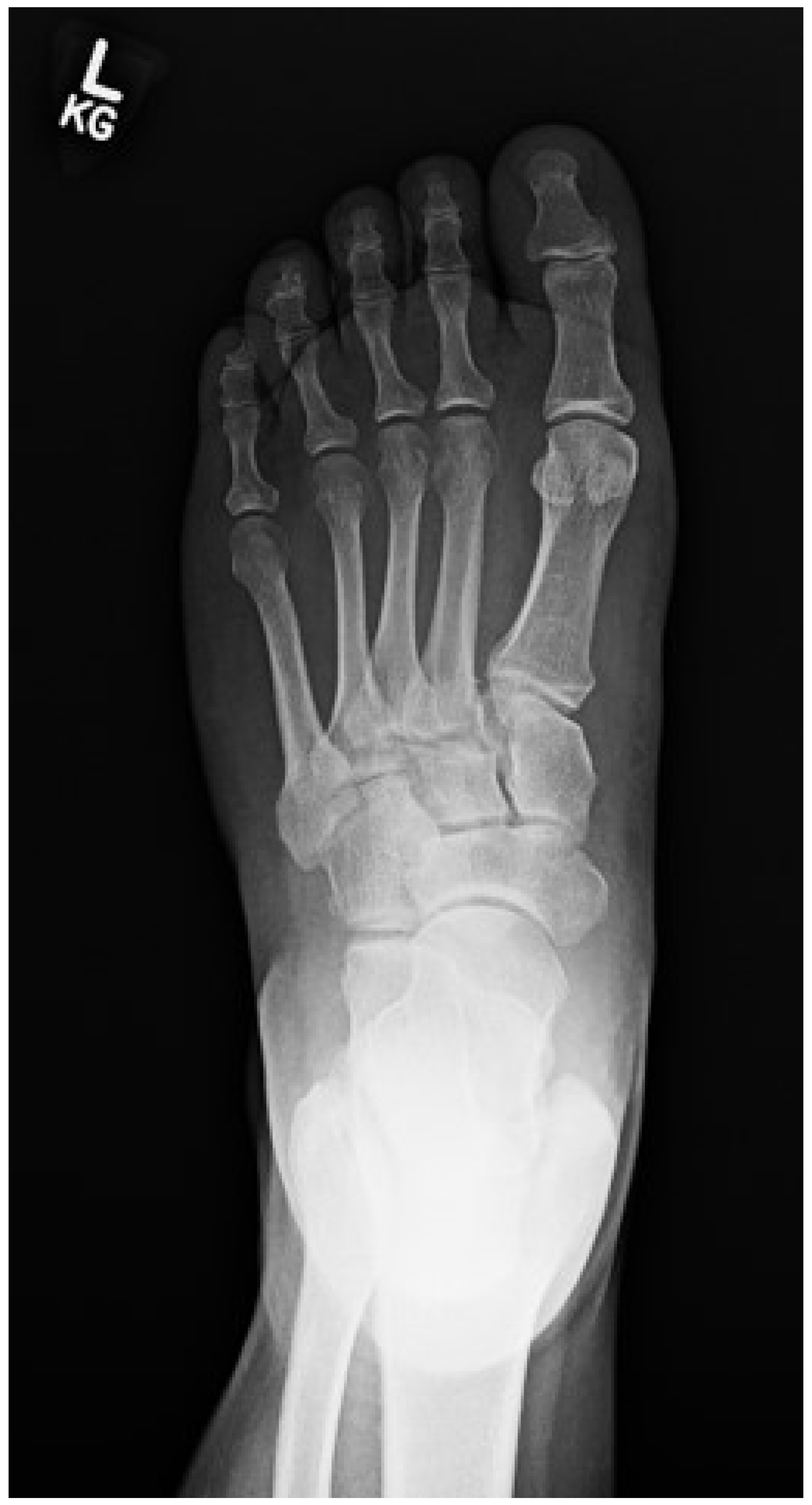
A 40-year-old male patient presented to our clinic complaining of left foot pain after a ground-level fall. Initial radiographs were concerning for possible Lisfranc injury. Bilateral weight-bearing radiographs were obtained (
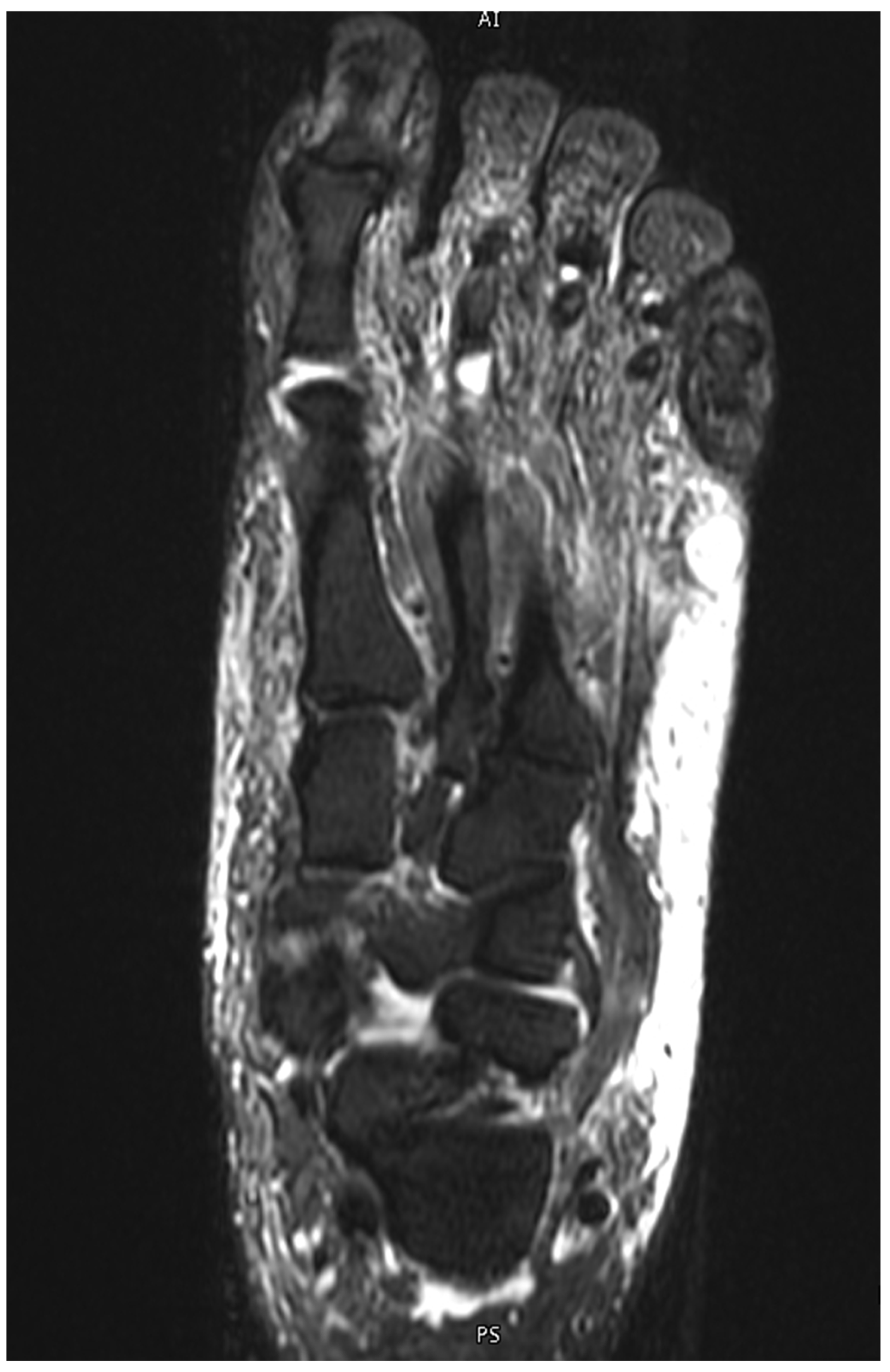
Figure 1). The left foot radiograph demonstrated diastasis within the Lisfranc complex compared to the contralateral film. Physical examination revealed tenderness to the midfoot region and pain with manipulation of the tarsometatarsal region. Magnetic resonance imaging (MRI) revealed an acute full-thickness tear of the Lisfranc ligament (
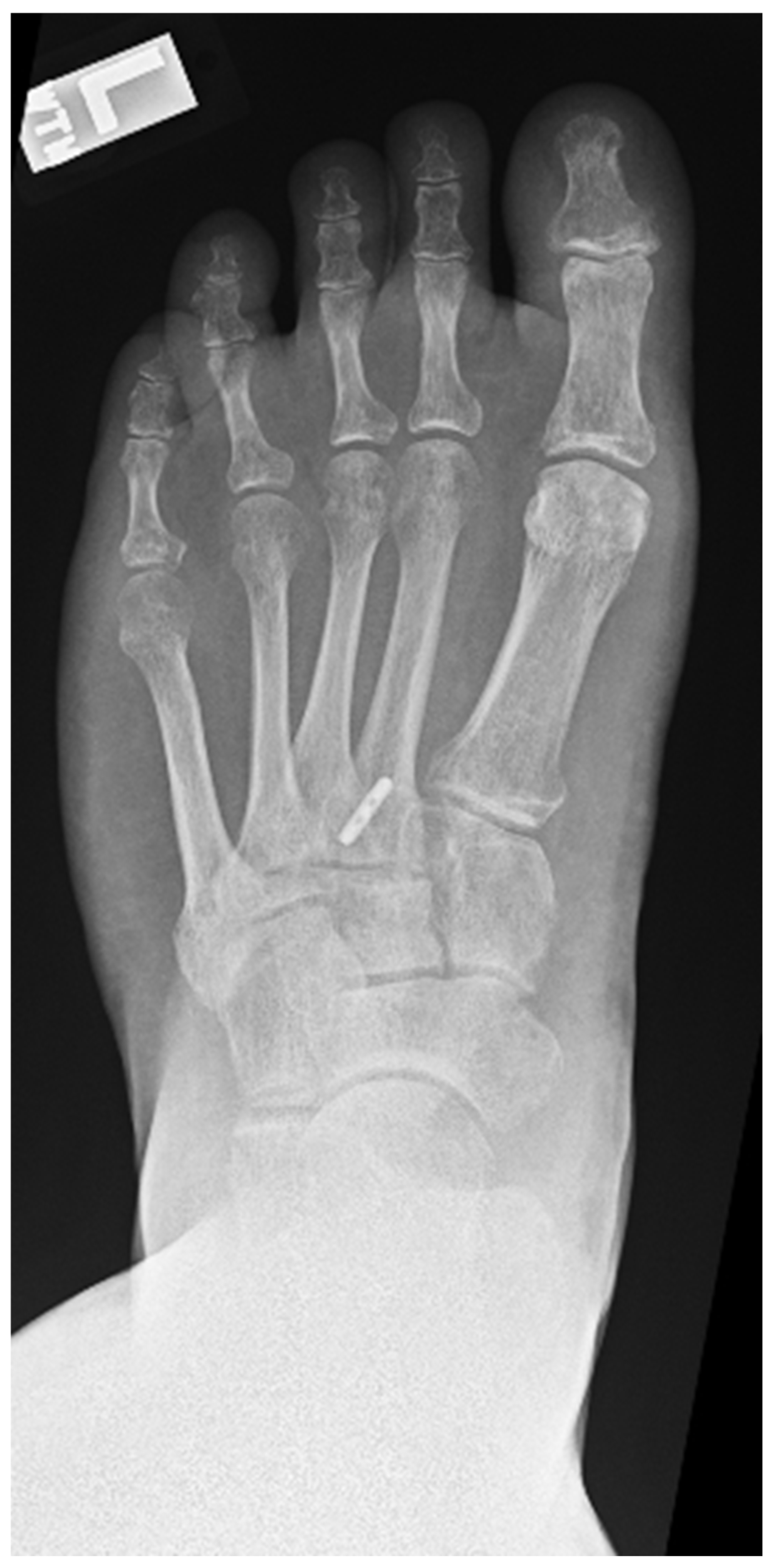
Figure 2). The patient was consented for open reduction, internal fixation of Lisfranc ligament disruption (
Figure 3).
During the preoperative assessment, the patient’s pertinent past medical history included obesity and male infertility, for which he was being treated with a hormonal medication, Serophene (Clomiphene), a selective estrogen receptor modulator. After individualized risk/benefit discussion, the patient was to be placed on prophylactic Lovenox postoperatively to minimize risk of DVT.
Postoperatively, the patient was to remain non-weight bearing for 4 weeks. The patient was discharged with analgesics and prophylactic Lovenox, provided with anti-embolic stockings for the contralateral limb, and was allowed to resume his home medications. At his first postoperative visit, the patient was transitioned into a CAM boot and was instructed to complete passive ankle range of motion exercises several times a day. At the subsequent visit, the patient’s pain was well-controlled and the operative extremity did not exhibit any signs of calf tenderness, edema, or erythema.
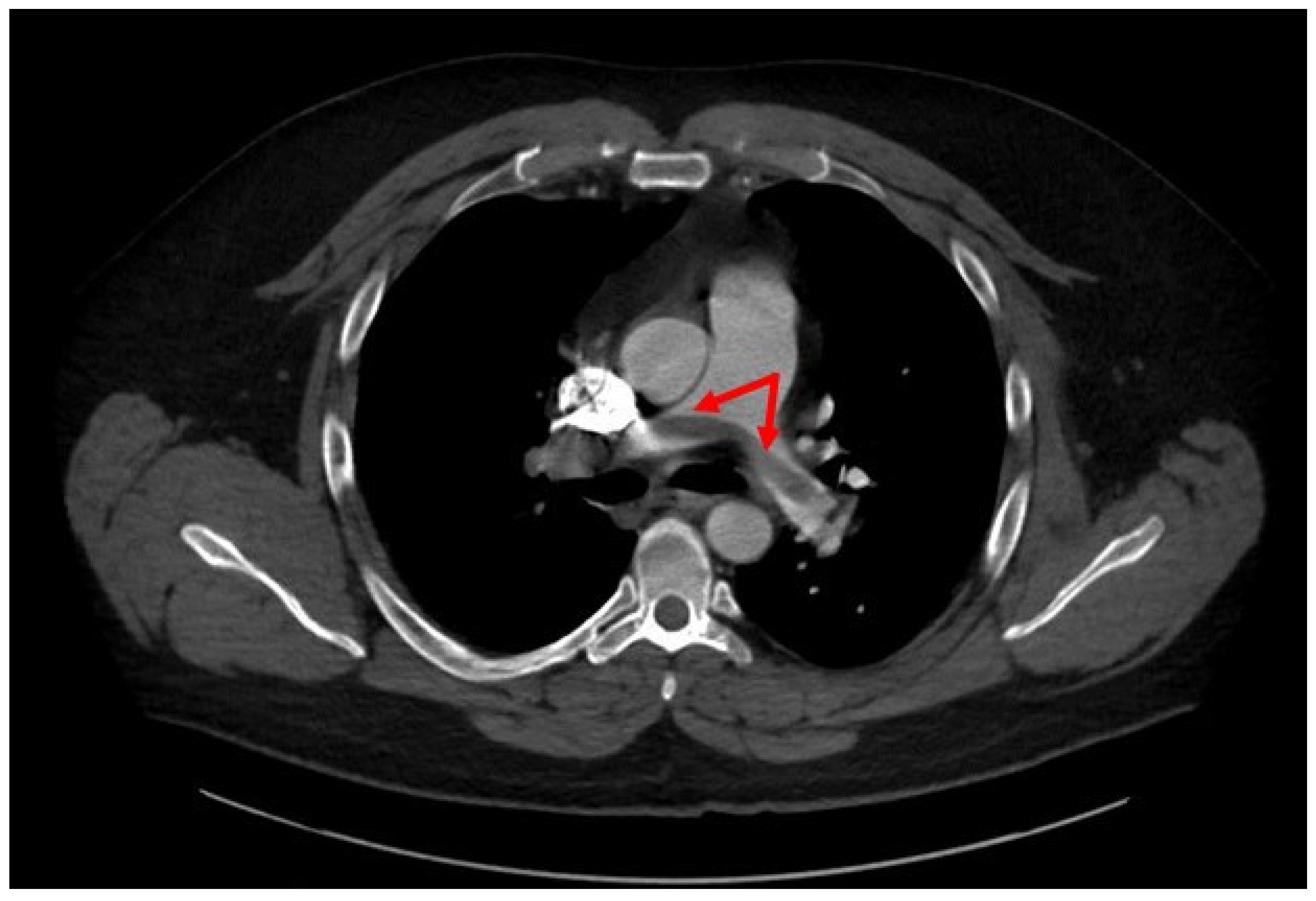
Approximately 1 month postoperatively, the patient developed shortness of breath and went to the local emergency department. On arrival the patients’ vitals showed tachycardia, elevated respiratory rate, and decreased oxygen saturation of 90% on room air. Laboratory findings were unremarkable aside from elevated venous blood gas values. D-dimer was not obtained given the acuity of the patient’s condition. The patient then underwent a stat chest computed tomography (CT). The CT revealed a large saddle pulmonary embolism that straddled the bifurcation of the pulmonary trunk extending into both left and right pulmonary arteries (
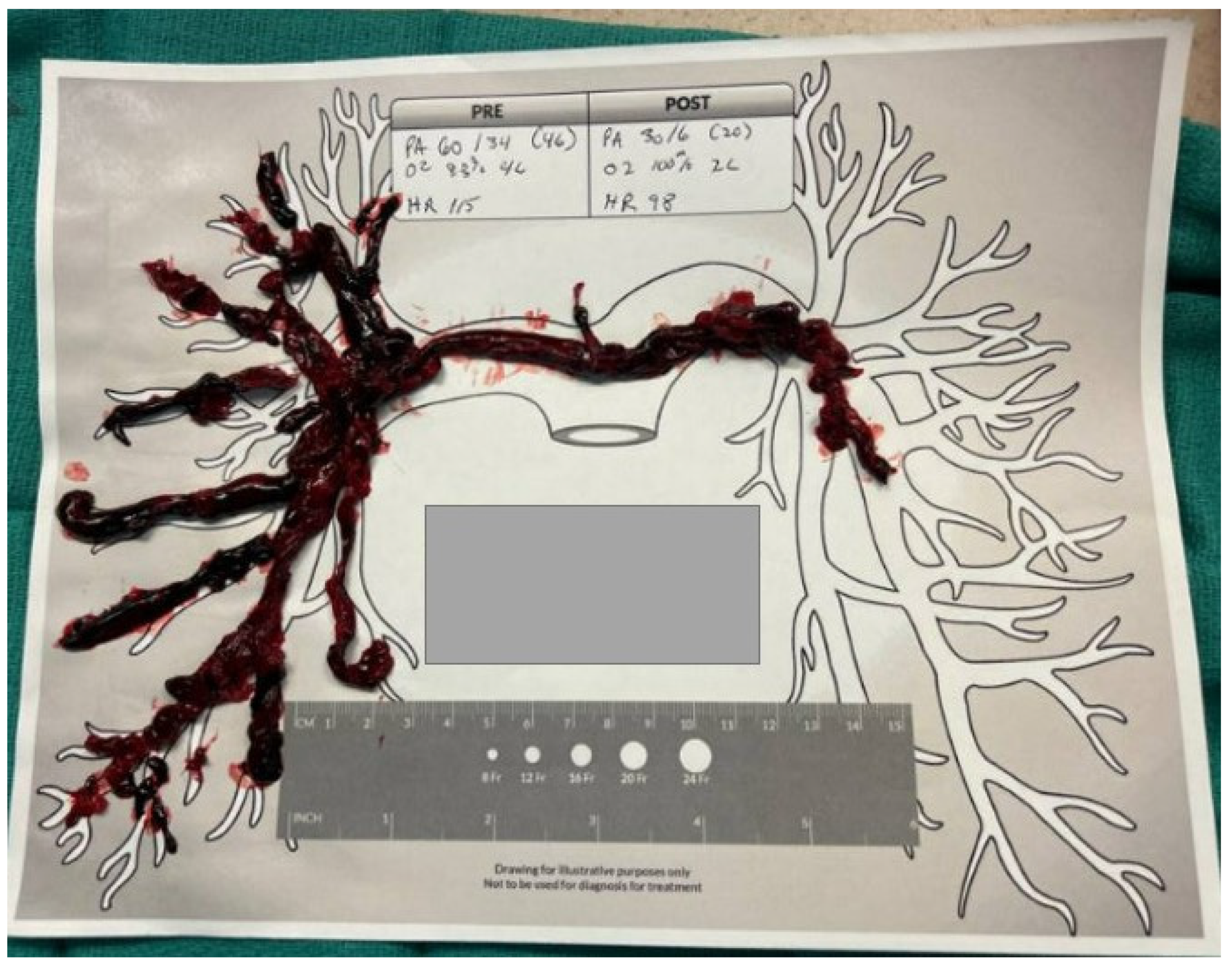
Figure 4). Duplex US was obtained and revealed multiple venous thrombi within the deep veins of the operative extremity. The patient was placed on a heparin drip and taken to the operating room for emergent thrombectomy. The large gross pulmonary thrombus was obtained intraoperatively (
Figure 5). Following thrombectomy and resolution of symptoms, the patient was discharged on therapeutic Eliquis for a 6-month duration and was instructed to hold his Clomiphene.
At the 5-week post-op visit, the patient transitioned to partial weight bearing, and at 6 weeks, he made a full return to shoe gear. At one-year follow-up, the patient was doing well, without recurrence of VTE, and made a complete return to activity without limitations.
3. Discussion
Although VTE is considered rare in foot and ankle surgery, special considerations should be made for each patient to minimize the risk of VTE. The literature currently lacks a consensus for prophylactic treatment of VTE following foot and ankle surgery [
7]. Therefore, evaluation of risk factors, type of procedure, and duration of immobilization must be discussed to determine the utility of chemical prophylaxis.
Our patient developed both DVT and PE postoperatively while on chemical and mechanical prophylaxis. Fortunately, he quickly sought medical attention, and the appropriate workup was completed. Pre- and postoperatively, this patient was at an increased risk of DVT. The patient was obese with a BMI of 39 at the time of his surgery. Obesity is associated with higher risk of VTE [
3,
6,
7,
8]. Additionally, the patient was on Clomiphene for the treatment of male infertility. This combination of risk factors, including obesity, hormone therapy, surgery, and a period of immobilization, may have been contributory to the development of VTE. Kavoussi et al. reported that the risk of DVT while on Clomiphene or testosterone replacement therapy is 0.8% [
9]. Based on our experience, we suggest stopping this medication, if possible, for a period of time postoperatively to potentially help reduce risk of VTE. Despite Lovenox, anti-embolic stockings, and early range of motion, this patient still experienced both DVT and PE.
At our institution, we believe the incidence of VTE is higher than reported in the literature. Although peer-reviewed literature may provide statistics on VTE rates after foot and ankle surgery, the true rate is likely significantly higher. Several cases of VTE end up in hospitals or anticoagulation clinics, and the diagnosis of foot and ankle injury or surgery is frequently not listed as a secondary diagnosis. Therefore, incidence of VTE associated with foot and ankle surgery is likely under-reported. With this in mind, we stress the importance of completing a comprehensive evaluation to assess the need for VTE prophylaxis. We also highlight the importance of educating patients on the risks, signs, and symptoms of VTE to increase compliance and prevent complications.
4. Conclusions
Venothromboembolic events are rare, albeit potentially life-threatening, complications following foot and ankle surgery. Several perioperative and postoperative DVT prophylactic treatment options exist. However, based on our report, prophylaxis alone does not guarantee that a patient will not develop a VTE and if there is any suspicion, it is paramount to assess and refer your patient when necessary for appropriate care. Expedient work up of VTE may be the difference between the life and death of a patient.
Author Contributions
S.J.J. contributed to this article by providing data collection, writing—original draft preparation, editing, and reviewing. J.R.B. contributed to this article by writing—editing and reviewing. R.W.M. contributed to this article by writing—editing and reviewing, supervising, and conceptualization. All authors have read and agreed to the published version of the manuscript.
Funding
This research received no external funding.
Institutional Review Board Statement
The article is a case report and does not meet qualifications necessary to require IRB approval. Therefore, the ethics committee was not involved in the research process and approval was waived.
Informed Consent Statement
Patient consent was waived since no data allowing patient recognition are shown in the present work.
Data Availability Statement
The original contributions presented in this study are included in the article. Further inquiries can be directed to the corresponding author.
Conflicts of Interest
The authors declare no conflicts of interest.
References
- Kushner, A.; West, W.P.; Khan Suheb, M.Z.; Pillarisetty, L.S. Virchow Triad; StatPearls: Treasure Island, FL, USA, 2022. Available online: https://www.ncbi.nlm.nih.gov/books/NBK539697/ (accessed on 18 August 2023).
- McLendon, K.; Goyal, A.; Attia, M. Deep Venous Thrombosis Risk Factors; StatPearls: Treasure Island, FL, USA, 2023. Available online: https://www.ncbi.nlm.nih.gov/books/NBK470215/ (accessed on 18 August 2023).
- Shibuya, N.; Frost, C.H.; Campbell, J.D.; Davis, M.L.; Jupiter, D.C. Incidence of acute deep vein thrombosis and pulmonary embolism in foot and ankle trauma: Analysis of the National Trauma Data Bank. J. Foot Ankle Surg. 2012, 51, 63. [Google Scholar] [CrossRef] [PubMed]
- Griffiths, J.T.; Matthews, L.; Pearce, C.J.; Calder, J.D. Incidence of venous thromboembolism in elective foot and ankle surgery with and without aspirin prophylaxis. J. Bone Joint Surg. Br. 2012, 94, 210. [Google Scholar] [CrossRef] [PubMed]
- Jameson, S.S.; Augustine, A.; James, P.; Serrano-Pedraza, I.; Oliver, K.; Townshend, D.; Reed, M.R. Venous thromboembolic events following foot and ankle surgery in the English National Health Service. J. Bone Jt. Surg. Br. 2011, 93, 490. [Google Scholar] [CrossRef] [PubMed]
- Solis, G.; Saxby, T. Incidence of DVT following surgery of the foot and ankle. Foot Ankle Int. 2002, 23, 411. [Google Scholar] [CrossRef] [PubMed]
- Fleischer, A.E.; Abicht, B.P.; Baker, J.R.; Boffeli, T.J.; Jupiter, D.C.; Schade, V.L. American College of Foot and Ankle Surgeons’ clinical consensus statement: Risk, prevention, and diagnosis of venous thromboembolism disease in foot and ankle surgery and injuries requiring immobilization. J. Foot Ankle Surg. 2015, 54, 497. [Google Scholar] [CrossRef] [PubMed]
- Freeman, A.L.; Pendleton, R.C.; Rondina, M.T. Prevention of venous thromboembolism in obesity. Expert. Rev. Cardiovasc. Ther. 2010, 8, 1711. [Google Scholar] [CrossRef] [PubMed]
- Kavoussi, P.K.; Machen, G.L.; Wenzel, J.L.; Ellis, A.M.; Kavoussi, M.; Kavoussi, K.M.; Kavoussi, S.K. Medical Treatments for Hypogonadism do not Significantly Increase the Risk of Deep Vein Thrombosis Over General Population Risk. Urology 2019, 124, 127. [Google Scholar] [CrossRef] [PubMed]
| Disclaimer/Publisher’s Note: The statements, opinions and data contained in all publications are solely those of the individual author(s) and contributor(s) and not of MDPI and/or the editor(s). MDPI and/or the editor(s) disclaim responsibility for any injury to people or property resulting from any ideas, methods, instructions or products referred to in the content. |
© 2026 by the authors. Published by MDPI on behalf of the American Podiatric Medical Association (APMA). Licensee MDPI, Basel, Switzerland. This article is an open access article distributed under the terms and conditions of the Creative Commons Attribution (CC BY) license.