The accessory anterolateral talar facet (AATF) was initially identified as an anatomical variation by Sewell in 1904.[
1] Subsequently, Jones[
2] reported peroneal spastic flatfoot in 1905. Martus et al[
3] were the first to link the accessory anterolateral talar facet impingement syndrome (AATFIS) to peroneal spasm, though the precise pathologic mechanism remains a subject of debate. In advanced stages, accessory anterolateral talar facet impingement (AATFI) and peroneal spasm can perpetuate a detrimental cycle, resulting in challenges for treating patients with AATFIS and peroneal spasm.[
4]
Whereas peroneal spasm is commonly attributed to tarsal coalition, AATFIS is an emerging cause.[
5] Other known causes include rheumatoid arthritis, talar tuberculosis, talar cartilage injury, and subtalar joint tumor. However, the exact mechanism remains unclear.[
2] Harris et al[
6] proposed the theory of “adaptive shortening” as the underlying mechanism for peroneal spasm. Their explanation states that peroneal spasm involves a stretch reflex. The act of varus and adduction of the foot stimulates the peroneal tendons, activating muscle spindle receptors and initiating the
g loop, resulting in peroneal spasm.[
6] Some scholars have suggested that any stimulation around the talus can induce muscle spasm.[
2] In 2007, Shurmas et al[
7] proposed that peroneal muscle spasm functions as a protective response to pain.
Previous research has highlighted the presence of various mechanical sensors, such as Ruffini endings, Pacinian corpuscles, Golgi tendon organs, and pain receptors/free nerve endings, surrounding the subtalar joint. These sensors provide proprioception and nociception. Additionally, there exist distinct reflex arcs and conduction pathways between these mechanical sensors and the central nervous system. These pathways and arcs are vital in regulating body posture and balance,[
8] reinforcing the notion that abnormal proprioceptive and nociceptive excitation may be linked to peroneal spasm. Moreover, other studies suggest that peroneal spasm in patients may be associated with cerebral issues, mental and psychological disorders,[
9] as well as alterations in the internal microstructure of the muscle.[
10]
Currently, there is no unified and standardized treatment for peroneal spastic rigid flatfoot, and the reported methods are as follows: local anesthetic agent injection and series casting,[
11] botulinum toxin and casting,[
12] AATF resection,[
13] calcaneal osteotomy, and subtalar joint fusion[
14] were used. Furthermore, there have been no reports regarding the use of subtalar arthroereisis in the treatment of adolescents with peroneal spastic rigid flatfoot.
Case Report
The patient was an 11-year-old boy who experienced rapid growth in the previous year (2019). His body mass index (BMI) was 23 kg/m2. Six months ago, following a minor sprain, he began experiencing pain while standing and walking on both feet. Additionally, he developed foot deformity, which would subside with rest. He sought treatment from multiple physicians, who attempted local anesthetic agent injection in sinus tarsi and casting.
Unfortunately, these interventions yielded unsatisfactory results and his symptoms recurred. Consequently, he was referred to our department in April 2020. The patient had no prior history of birth hypoxia, encephalitis, or similar conditions.
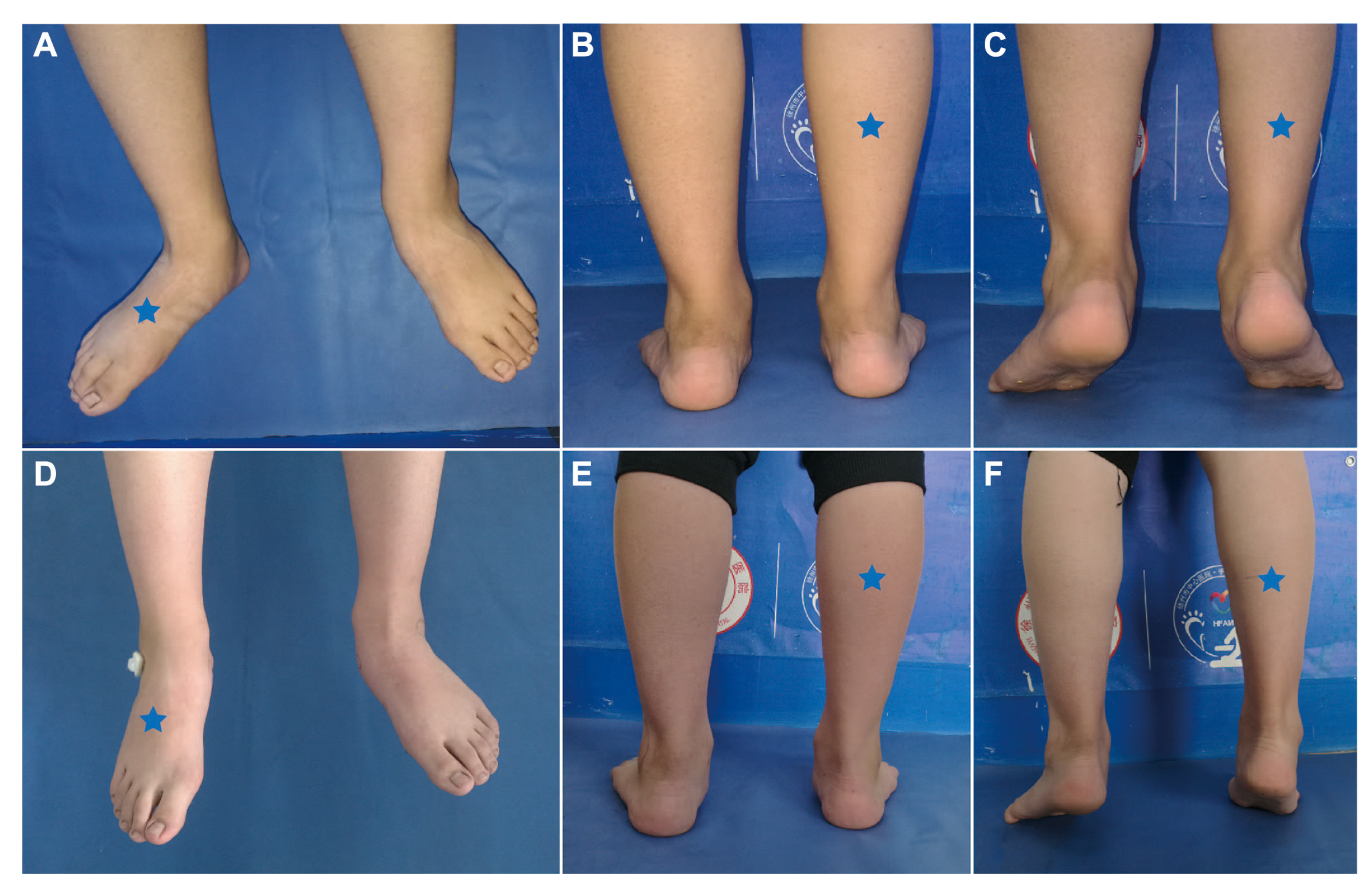
The physical examination revealed bilateral everted feet in their natural state, with limited active inversion. Inverting the foot elicited severe pain and peroneal spasm. Tenderness was noted at the navicular tubercle and sinus tarsi. Both feet exhibited bilateral hallux valgus, midfoot abduction, hindfoot valgus, a positive polytoe sign, inability to perform heel raising with hindfoot varus, and reduced arch (
Figure 1). The Silverskiold Test confirmed the presence of gastrocnemius contracture. No ankle clonus or pathologic signs were observed.
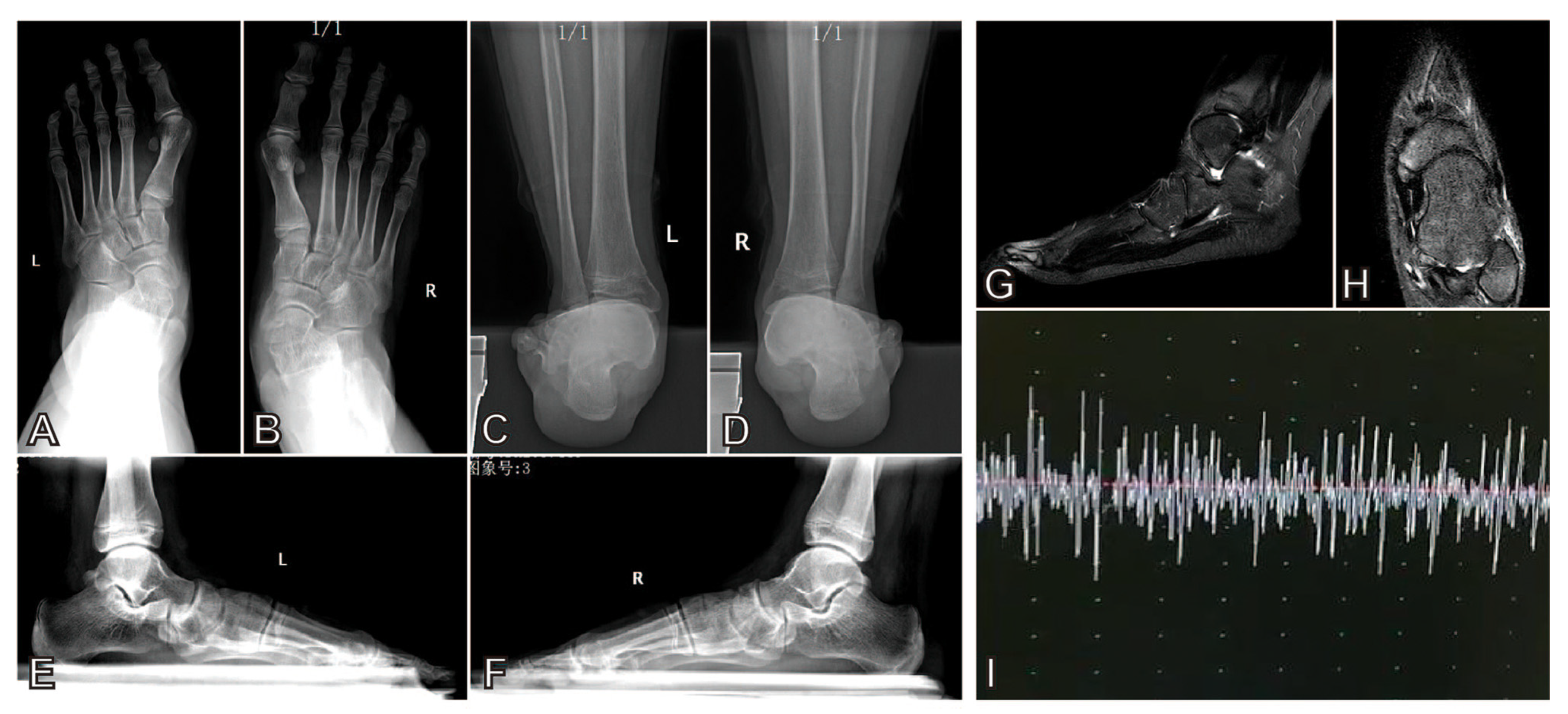
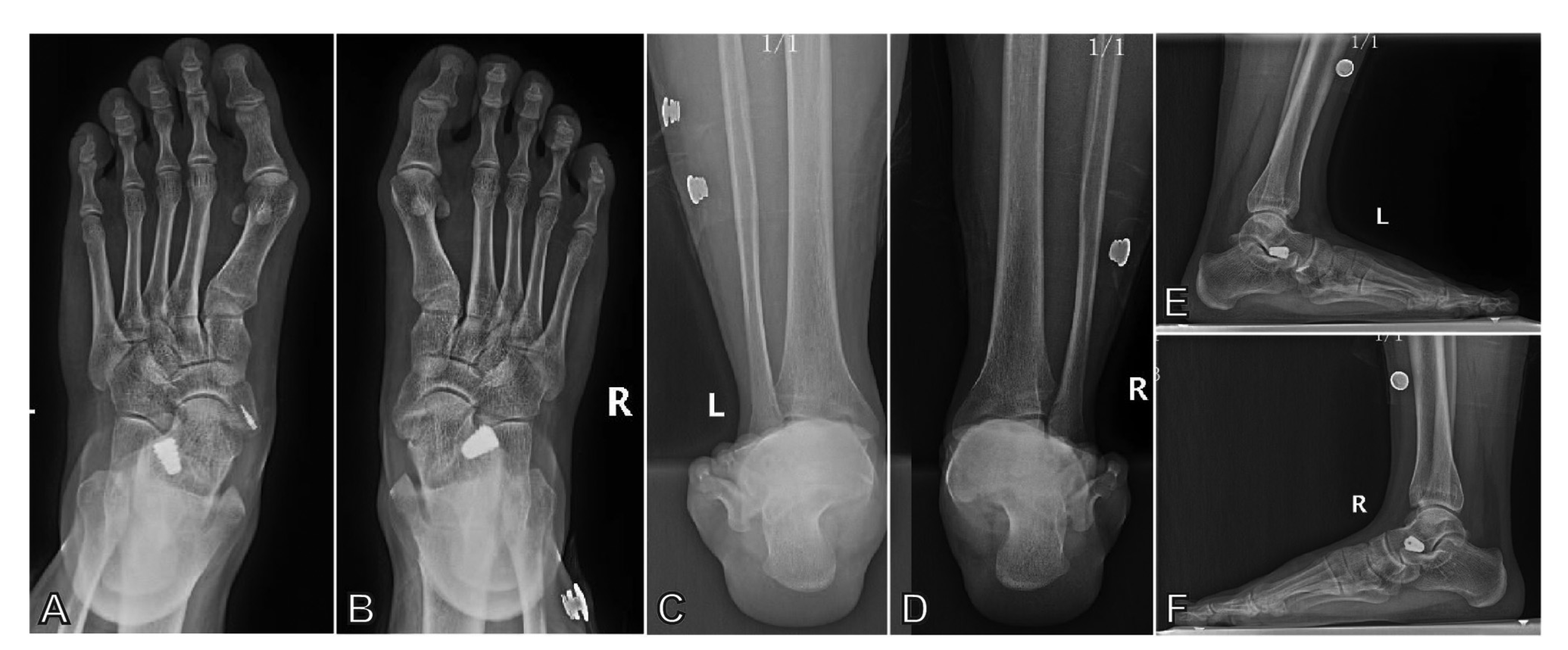
Radiographic findings included hallux valgus, an accessory navicular bone, midfoot abduction, hindfoot valgus, reduced arch, and impingement of the anterolateral accessory talar facet. Computed tomography scans revealed the presence of the anterolateral accessory talar facet and sclerosis of the calcaneal neck. Magnetic resonance imaging (MRI) detected focal bone marrow edema around the anterolateral accessory talar facet and edema of the navicular-accessory navicular of the left foot. Electromyogram recordings demonstrated peroneal spasm potentials, particularly during attempts to invert the foot, which induced intense peroneal spasm (
Figure 2).
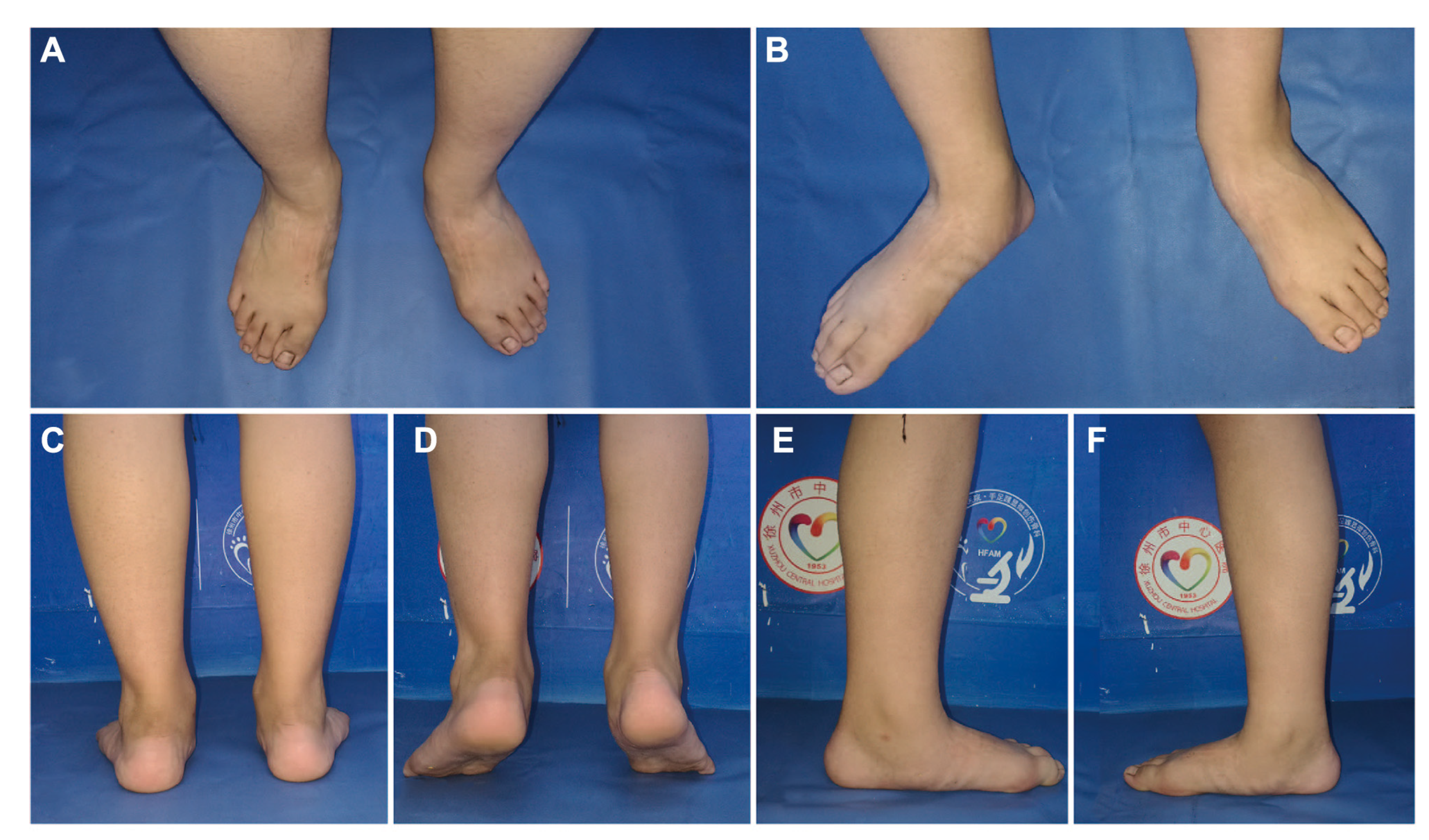
The lidocaine injection test was employed in the sinus tarsi region to aid in the diagnostic process. Following the injection, the foot deformity and peroneal spasm were alleviated completely (
Figure 3).
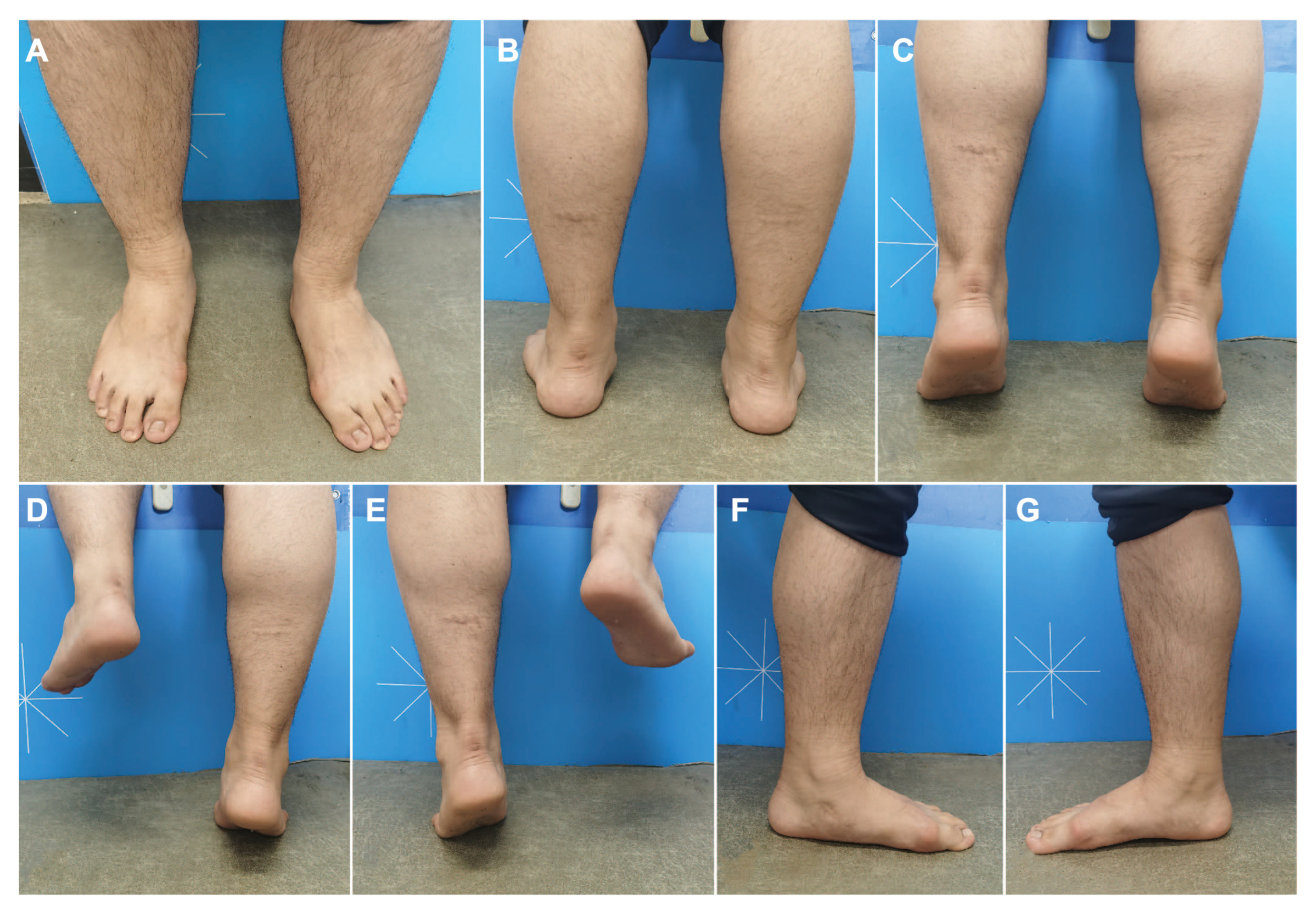
Gastrocnemius muscle contracture was observed bilaterally, leading to the performance of gastrocnemius muscle aponeurosis (Stryer procedure) on both sides. Additionally, subtalar arthroereisis was executed on both sides. The tenderness at the left navicular tubercle was evident, and MRI imaging revealed edema around the navicular and accessory navicular. Therefore, left accessory navicular resection and tibialis posterior tendon reconstruction were undertaken. The left foot remained immobilized in a plaster cast for 4 weeks, while the right foot required 3 weeks of immobilization. Following plaster removal, there was notable improvement in the foot deformity, and the peroneal spasm subsided. Follow-up evaluations were conducted at 41 months, which demonstrated satisfactory correction of the flatfeet and relief of the peroneal spasm. Nonetheless, the left foot still exhibited asymptomatic hallux valgus (
Figure 4 and
Figure 5).
Discussion
In this case, we did not identify any coalitions (cartilaginous or fibrous), or other known causes including inflammatory, degenerative arthritides, neoplastic, or neurologic processes, and osteochondral fractures. Physical examination demonstrated a painful, rigid flatfoot deformity and tenderness in the sinus tarsi; radiographic studies confirmed the presence of an AATFI. Martus[
3] and Niki[
13] have confirmed that AATFI is an etiology of peroneal spastic flatfoot. The foot deformity and peroneal spasm were completely alleviated after a lidocaine injection in the sinus tarsi. Therefore, we think the peroneal spasm was induced by the flatfoot (AATFIS) according to the history, although the exact mechanism is unknown. In the case of Hadano et al,[
11] they considered that the flat-foot was induced by the peroneal spasm. We hypothesize that peroneal spasm may arise from various reflexes, including pain-induced flexion reflexes,[
7] peroneal contracture-induced stretch reflexes,[
6] and reflexes originating from proprioceptive abnormalities.[
8] In the specific case discussed, excessive pronation of the subtalar joint occurred, resulting in flatfoot and AATFI. This condition caused pain and abnormal excitation of proprioceptors located in the sinus tarsi, subsequently leading to reflexive spasms of the peroneus muscles. These spasms further exacerbated AATFI, establishing a detrimental cycle.
Niki et al[
13] suggested that AATF resection alone was sufficient if sinus tarsi pain and rigid flatfoot were resolved by injecting anesthetics or general anesthetics with no need for osseous realignment or reconstruction procedures to correct the flatfoot deformity. However, the limitations of this study included small patient numbers and unclear long-term results after AATF resection due to short postoperative follow-up periods. Martus et al[
3] reported that facet resection with subtalar joint-sparing flatfoot reconstruction provided good results with symptomatic and functional improvement in the majority of patients with peroneal spastic flatfoot. In patients with contractures, a gastrocnemius recession and/or peroneal Z-lengthening above the superior peroneal retinaculum was performed. The remaining planovalgus deformity was corrected with a medial displacement calcaneus osteotomy and/or lateral column lengthening with calcaneocuboid distraction arthrodesis. Uc¸ an et al[
14] treated the peroneal spastic flatfoot with peroneal tendon lengthening in all cases. The Evans procedure, grafting with tricortical iliac crest bone graft in five patients, and subtalar arthrodesis in two patients were performed. Fadle et al[
15] found that combining joint-preserving bony osteotomies with selective soft-tissue procedures resulted in acceptable functional and radiologic outcomes in this young age group.
However, in this case, we did not find any peroneal tendons contracture after the lidocaine injection in the sinus tarsi. Therefore, peroneal lengthening was not performed. AATF resection alone cannot correct the flatfoot deformity, and abnormal proprioceptive and nociceptive excitation may cause peroneal spasm to recur. The patient was only 11 years old and the epiphyseal line had not yet closed; thus, calcaneal osteotomy or arthrodesis could potentially affect bony growth and development. Moreover, the lateral column lengthening may cause the peroneal tendon to be relatively short, which may cause the stretch reflex. We considered subtalar arthroereisis as a less invasive procedure. To effectively treat this condition, it is necessary to interrupt this cycle; therefore, we opted for subtalar arthroereisis. By employing this procedure, the implant not only hinders the progression of AATFI, but also corrects the deformity associated with flatfoot, serving as a preventive measure for the vicious cycle. After flatfoot correction, proprioceptive or nociceptive receptors receive normal stimuli, transmit normal proprioceptive signals, and eliminate abnormal reflexes. Although the literature reports successful clinical outcomes with simple resection of AATF, we argue that such an approach may not fully address the correction of flat-foot deformity, as peroneal spasm is typically preceded by flatfoot and subsequent AATFI.
Conclusions
In summary, we present a case of peroneal spastic flatfoot in a teenager caused by accessory anterolateral talar facet impingement. The primary treatment approach involved subtalar arthroereisis, wherein an implant was used to prevent AATFI and correct the associated flatfoot deformity. This intervention effectively disrupts the cycle of peroneal muscle spasm and AATFI at its source. After a 41-month follow-up period, the clinical outcomes were excellent.