Next Article in Journal
Does a Relationship Exist Between Plantar Heel Pain and Stress, Anxiety, and Depression A Systematic Review of the Literature
Previous Article in Journal
Static and Dynamic Foot Pressure Analysis in Asymptomatic Adults A Cross-Sectional Analysis
 
 
Journal of the American Podiatric Medical Association is published by MDPI from Volume 116 Issue 1 (2026). Previous articles were published by another publisher in Open Access under a CC-BY (or CC-BY-NC-ND) licence, and they are hosted by MDPI on mdpi.com as a courtesy and upon agreement with American Podiatric Medical Association.
Article

Patient Knowledge and Habits as Predictors of Foot Complications in Diabetes A Cross-Sectional Study

by
Khalid M. Edrees
1,
Alanood I. Alqahtani
1 and
Mansoor Radwi
2
1
Dr. Khalid Edrees Specialized Medical Center, PO Box 6704, Jeddah 21452, Saudi Arabia
2
Department of Hematology, College of Medicine, University of Jeddah, Jeddah, Saudi Arabia
J. Am. Podiatr. Med. Assoc. 2025, 115(1), 23069; https://doi.org/10.7547/23-069
Published: 1 January 2025

Abstract

Background: This cross-sectional study aimed to identify patients’ awareness of predictors of diabetic foot complications (DFCs) based on 1) knowledge of hemoglobin A1c (HbA1c), 2) performance of fasting blood glucose (FBG) at home, and 3) type of footwear used and relationship with DFCs. Methods: A total of 4,652 diabetic patients were seen between 2006 and 2021 at Dr. Khalid Edrees Specialized Medical Center. A questionnaire was completed by trained nurses at the patients’ initial visit, collecting patients’ knowledge of the HbA1c test, monitoring of FBG at home, and type of footwear used at the time of the visit. History of foot ulcers, current foot ulceration (CU), and history of lower limb amputation (LLA) were obtained. Results: The majority of our cohort were male (60%), and the mean age was 60 years (SD, 17.5 years). Ninety-six percent had type 2 diabetes, and 39% were diagnosed with diabetes for at least 11 years. More than half did not know what HbA1c was, 32% were not doing home FBG, and 62% were using inappropriate footwear. Fifty-two percent had a CU, 35% had a history of foot ulcers, and 13% had an LLA. We found a significant association between CU and knowledge of HbA1c and type of footwear (P < .001). Similarly, LLA was significantly associated with all of the aforementioned variables (P < .001). A history of foot ulcers was significantly associated with knowledge of HbA1c and type of footwear (P = .001) but not with home FBG. Conclusions: A high proportion of patients in our cohort had never heard of HbA1c and were using traditional footwear. This highlights the importance of patient education regarding the basics of diabetes and the use of appropriate footwear in preventing DFCs.

Diabetes mellitus is a worldwide health concern and is listed as the sixth leading cause of death in upper- and middle-income countries. [1] The global prevalence of diabetes was estimated at 9.3% in 2019. [2] Diabetes contributes to 24% of deaths in the Middle East and 12% of deaths in the Kingdom of Saudi Arabia. [3]
Diabetic foot ulcers (DFUs) are a common complication of diabetes. [2] Patients with diabetes have a 25% chance of developing DFUs in their lifetime. [4] The economic cost of diabetes in Saudi Arabia was projected to be $6.5 billion by 2020, [5] and the cost of treatment for DFUs was estimated at $1,780 per person. [6]
Many predictors of diabetic foot complications (DFCs) have been well established throughout the years. High hemoglobin A1c (HbA1c) and fasting blood glucose (FBG) are significant indicators of diabetes progression and complications. [7] High blood glucose levels in the body lead to improper functioning of cellular organelles if untreated. This, in turn, can lead to further serious health issues and complications. [8] Hence, controlling blood sugar helps to prevent diabetes complications. [9,10] Moreover, controlling HbA1c lowers the chance of developing DFCs, [11] and elevated FBG can predispose an individual with diabetes to the development of ulcerations. [12] In fact, patients with FBG levels above 7.2 mmol/L are more likely to develop ulcers than those with levels below 7.2 mmol/L. [13]
The type of footwear used, particularly traditional slippers and sandals, can potentially predict and contribute to DFCs. [14] This study aimed to assess patients’ knowledge of HbA1c, performance of FBG at home, and type of footwear used and how these are related to ulcer development and amputations.

Materials and Methods

Study Design, Setting, and Data Collection

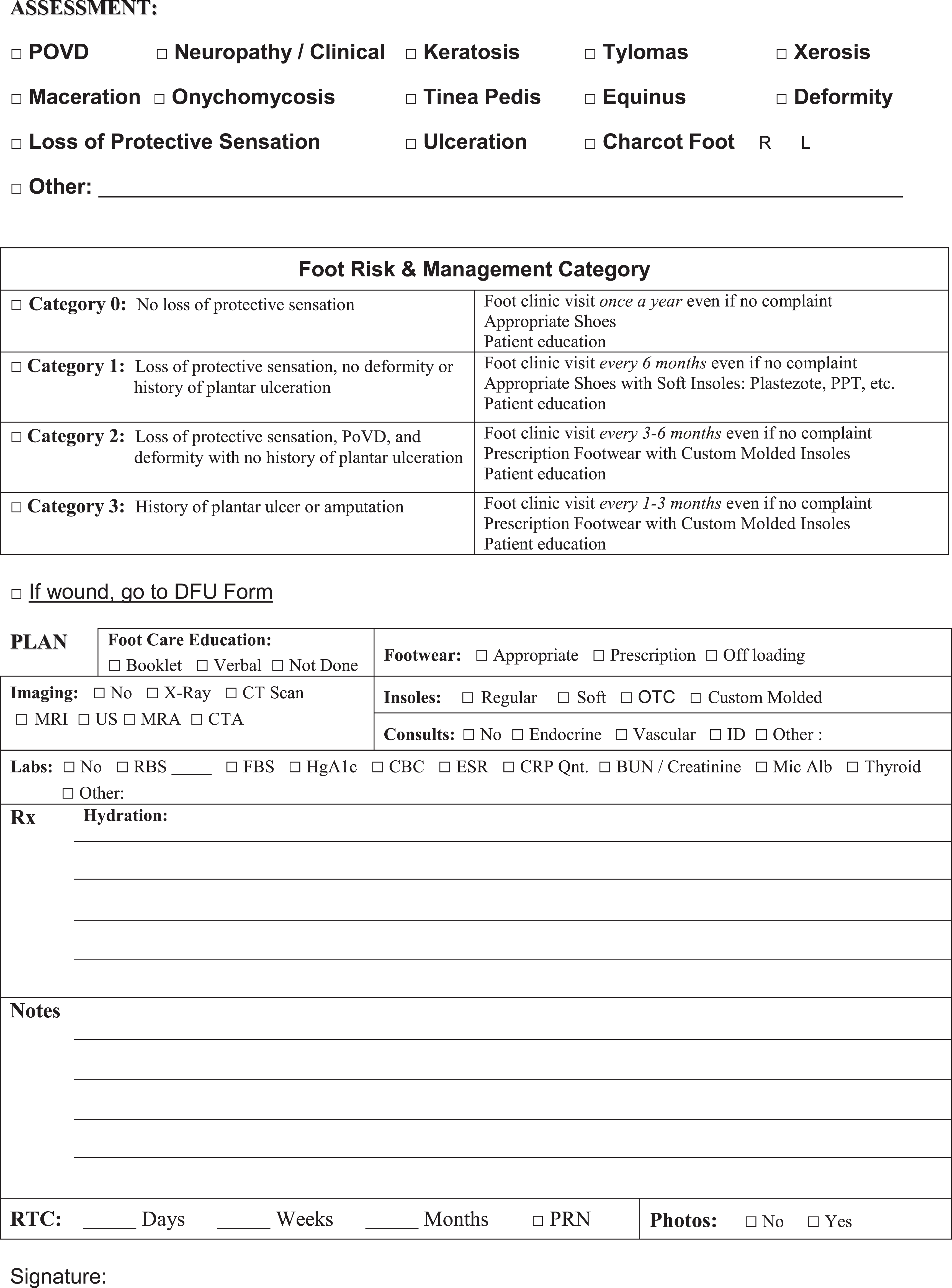
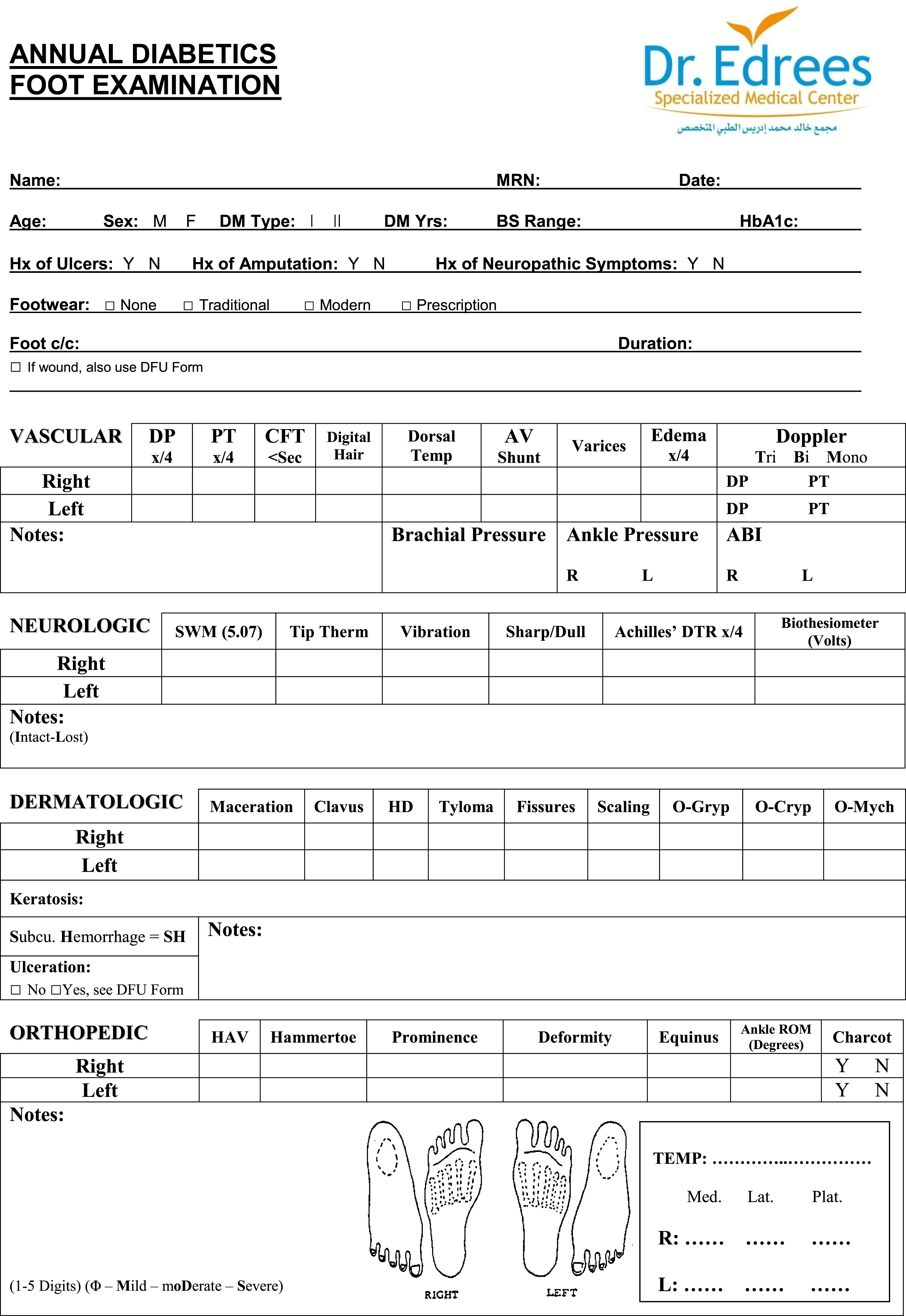
A cross-sectional study was conducted between 2006 and 2021 at Dr. Khalid Edrees Specialized Medical Center. The medical center houses board-certified podiatric foot and ankle surgeons who diagnose and treat diabetic and nondiabetic leg and foot conditions. During initial contact, medical practitioners routinely interviewed patients to collect sociodemographic data and basic foot history using a predesigned questionnaire (Fig. 1). In addition, patients’ HbA1c knowledge and whether they checked their FBG at home were recorded. To ensure accuracy of answers and as a result of HbA1c having different colloquial names, we used all linguistic forms known to us, English and Arabic, and various local dialects used in the region to ask about patients’ knowledge of HbA1c. Consent was impractical in this study because of the retrospective data collection beginning in 2006, and patient identities were not disclosed or compromised. The study protocol was approved by the institutional review board of Saudi German Hospital (reference number SGHJ-IRB-027).
Figure 1. Questionnaire used in the study. (continued on next page)
Japma 115 23069 g001aJapma 115 23069 g001b

Participant Eligibility Criteria

In this study, all new diabetic patients presenting to the clinic, including those with type 1 or type 2 diabetes mellitus, had past or current foot ulceration (CU). Patients with ulcers above the malleoli or leg ulcers were excluded. Patients who were observed walking barefoot were excluded from the study. Other clinical factors were not considered exclusion criteria in this study.

Measurements

The following variables were collected: age, gender, type of diabetes, duration of diabetes, knowledge or awareness of HbA1c, knowledge of the recommended HbA1c testing frequency, recall of last HbA1c level (if tested), performance of FBG at home, and range of FBG (if performed). Participants were asked about any history of foot ulcers, CU, or history of lower-limb amputation (LLA). Type of footwear was recorded during the visit. Some of the variables used are presented in Figure 1.
Traditional footwear in our study was defined as any open toe, open heel, or open toe/heel footwear, whether handmade or manufactured, such as sandals or slippers. Modern footwear was any closed type of footwear, such as casual shoes or sport footwear. Prescription footwear was any custom-made or ready-made wound-healing footwear or prescription diabetic shoes.

Statistical Analysis

SPSS Statistics 28 (IBM, Armonk, New York) was used to analyze the data set. Percentage, frequency, mean, range, bar chart, and SD were obtained from descriptive statistics. The one-sample t test was used to test mean differences in age. We used the Pearson χ2 test/Fisher exact test to test if the patients’ knowledge of DFC predictors was associated with history of ulcers, CU, or history of LLA and footwear. We used a cut-off point of P < .05 when testing for statistical significance.

Results

Demographic and Clinical Characteristics of Participants

The study included 4,652 patients, 60% of whom were male (n = 2,782). The mean age of the cohort was 60 years (SD, 17.5 years) Almost all patients had type 2 diabetes mellitus (n = 4,484 [96%]). The majority of participants (39%) had been diabetic for 11 to 20 years (Table 1).
Table 1. Demographic Characteristics
Japma 115 23069 i001
More than half of the cohort (56%) had complete lack of knowledge about HbA1c, 32% were not performing FBG at home, and only 33% declared that their FBG ranged under 100 mg/dL. Further, we found that 35% of all participants had a history of ulcers, 51.5% had CU, 13% had a history of LLA, and 61% wore traditional footwear.

Outcome Measures

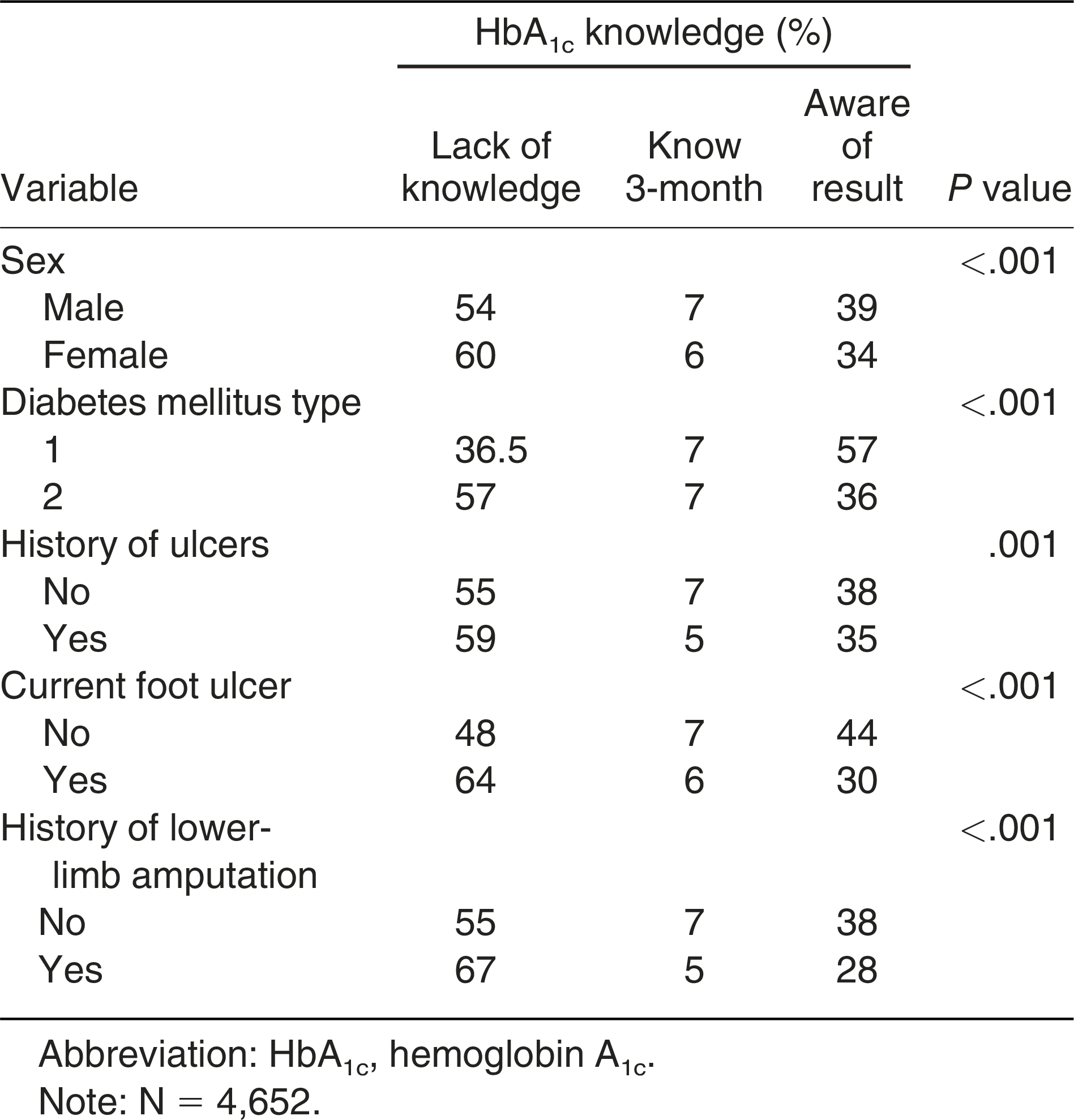
A higher proportion of patients who lacked awareness of HbA1c reported a history of ulcers compared with patients who knew their HbA1c test result (59% versus 35%; P = .001). Similar findings were noted for CU (64% versus 30%; P < .001) and history of LLA (67% versus 28%; P < .001) (Table 2). Not testing FBG at home showed no statistically significant relationship with ulcer history (P = .74). By contrast, not testing FBG at home showed a statistically significant relationship with CU and LLA (P = .001 and .016, respectively) (Table 3).
Table 2. Predictor: Knowledge of Hemoglobin A1c Test
Japma 115 23069 i002
Table 3. Predictor: Performing Fasting Blood Glucose at Home
Japma 115 23069 i003
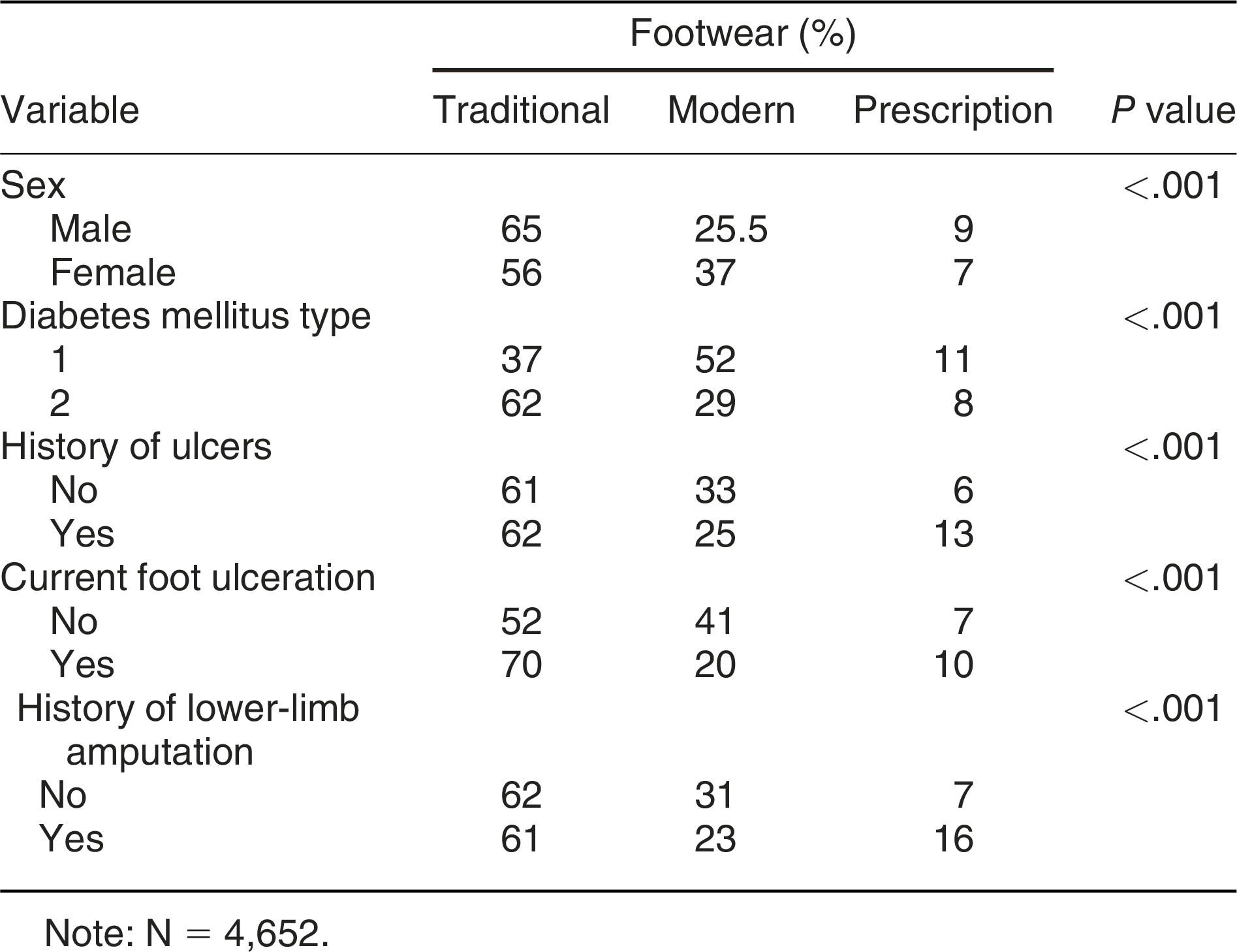
Patients presenting to the clinic with traditional footwear had a greater history of ulcers compared with those who wore modern and prescription footwear (62%, 25%, and 13%, respectively; P < .001). Similar findings were noted for CU (70%, 20%, and 10%, respectively; P < .001) and history of LLA (61%, 23%, and 16%, respectively; P < .001) (Table 4).
Table 4. Predictor: Observed Footwear
Japma 115 23069 i004

Discussion

Our study revealed interesting findings related to patients with DFCs. Regardless of the number of diabetic years, more than half of the patients were not familiar with or aware of the HbA1c test. A European study looked at the percentage of patients who knew their actual HbA1c level and found that 50% of type 2 diabetes mellitus patients did not know their HbA1c level. [15] However, the study did not explore if patients were familiar with the existence of the test itself. Other researchers obtained results similar to our study. For example, Almutairi et al [16] found that nearly 50% of participants were not aware of their HbA1c level, whereas 48% of the target population appeared to have heard of the HbA1c test. Two previous studies also reported similar results, indicating that the majority of patients were unaware of the HbA1c test. [17,18] In this study, we tested the association of patients’ awareness of HbA1c with history of ulcers, CU, and LLA. Our findings lend credence to the concept that increasing HbA1c awareness among diabetic patients may help to reduce the risk of long-term DFCs as well as the rate of amputations.
Although every standard of care for diabetes requires FBG testing, it is uncertain whether FBG level contributes to diabetes complications. [1923] However, it has been demonstrated that a high FBG level is linked to an increased risk of DFUs [24] and is associated with a higher risk of peripheral neuropathy. [25] Overall, these findings are consistent with ours, as we discovered that the failure of a patient to conduct an FBG test at home is associated with both CU and LLA. In our study, there were no statistically significant differences between groups regarding FBG and history of ulcers.
Many previous studies have discussed the effects of custom-made footwear on foot ulcers, [26,27,28] but to our knowledge, no study has considered the effect of traditional footwear on DFCs. This is a very important factor because traditional footwear is ubiquitous in Middle Eastern and North African countries. The results of this study revealed that more than 60% of patients who were observed wearing traditional footwear had a history of ulcers. Similarly, CU and history of LLA were higher in patients who presented with traditional footwear than those observed with modern or prescription footwear.
Such findings can influence the economic burden of diabetes complications on a regional and international level. As stated earlier, $1,780 per person or higher is spent on foot ulcers alone. Therefore, this study may guide the decision making of cost-effective interventions to prevent diabetes-related complications and help with planning and evaluations in the future.

Strengths and Limitations

The large sample size in this study supports the validity of our data. The larger the sample size the more reliable and accurate output we can obtain. The sample was obtained from a single podiatric medical center specializing in diabetic foot and ankle care. Although this is a strength, it can also be a limitation, as this could have led to the presentation of more complicated cases. Therefore, selection bias may be present in this study because our sample does not represent the general diabetic population. Moreover, selecting participants from a podiatry clinic ensures that all participants share a common characteristic related to both exposure and outcome (eg, foot-related conditions). In addition, a temporal relationship can often be challenging to evaluate in studies employing a retrospective approach. Another limitation is that this study investigated the possible relationship, not the causation, between the different predictors and DFCs. Although not knowing about HbA1c, not performing FBG at home, and using traditional footwear are not direct causes of DFCs, they were statistically related to having ulcerations and amputations. Finally, the fact that some data were collected verbally by a podiatric physician or nurse might have led to reporting bias, information bias, and measurement errors.

Conclusions

This study revealed the lack of knowledge in the diabetic population of basic information, such as knowing about the existence of the HbA1c test and testing FBG at home. It is imperative that health-care providers encountering diabetic patients make them aware of and to define what HbA1c is and encourage them to do the test as required. A bigger challenge will be convincing patients to abandon traditional footwear and instead use more modern and healthy alternatives, which might help avoid ulcer development. Simple awareness of basic information and paying more attention to educating patients may reduce the risk of diabetes comorbidities in general and certainly will reduce complications in the feet of diabetics.

Acknowledgment:

The nursing and administrative staff for their assistance in data collection.

Financial Disclosure:

None reported.

Conflict of Interest:

None reported.

References

  1. World Health Organization: The top 10 causes of death. Available at: https://www.who.int/news-room/fact-sheets/detail/the-top-10-causes-of-death. Accessed December 9, 2020.
  2. Saeedi P, Petersohn I, Salpea P, et al: Global and regional diabetes prevalence estimates for 2019 and projections for 2030 and 2045: results from the International Diabetes Federation Diabetes Atlas, 9th edition. Diabetes Res Clin Pract 157: 107843, 2019.
  3. International Diabetes Federation: IDF Diabetes Atlas, 10th Ed, 2021 Available at: https://diabetesatlas.org/idfawp/resource-files/2021/07/IDF_Atlas_10th_Edition_2021.pdf. Accessed August 1, 2021.
  4. Singh N, Armstrong DG, Lipsky BA: Preventing foot ulcers in patients with diabetes. JAMA 293: 217, 2005.
  5. Alhowaish A: Economic costs of diabetes in Saudi Arabia. J Family Community Med 20: 1, 2013.
  6. Alshammary S, Othman SA, Alshammari E, et al: Economic impact of diabetic foot ulcers on healthcare in Saudi Arabia: a retrospective study. Ann Saudi Med 40: 425, 2020.
  7. Zhao D, Cho J, Kim MH, et al: Diabetes, fasting glucose, and the risk of glaucoma: a meta-analysis. Ophthalmology 122: 72, 2015.
  8. Mathew TK, Zubair M, Tadi P: Blood Glucose Monitoring, StatPearls Publishing, Treasure Island, FL, 2023.
  9. Flegel K: Controlling the complications of diabetes: it’s about the sugar. CMAJ 181: 357, 2009.
  10. Saudi National Diabetes Center: Saudi Diabetes Clinical Practice Guidelines (SDCPG). Available at: https://shc.gov.sa/arabic/documents/sdcp%20guidelines.pdf. Accessed August 1, 2021.
  11. Dogan M, Onar LC, Aydin B, et al: Is high level of hemoglobin A1C an indicator for extended period of antibiotherapy in diabetic foot ulcers? North Clin Istanb 6: 21, 2019.
  12. Abuhay HW, Yenit MK, Wolde HF: Incidence and predictor of diabetic foot ulcer and its association with change in fasting blood sugar among diabetes mellitus patients at referral hospitals in Northwest Ethiopia, 2021. PLoS One 17: e0274754, 2022.
  13. Salawu AI, Ajani GO, Soje MO, et al: Diabetes mellitus foot ulcer and associated factors among type 2 diabetes patients in a tertiary institution in Southwest Nigeria. Ann Afr Med 21: 339, 2022.
  14. Premkumar R, Rajan P, Rima J, et al: Footwear in the causation and prevention of foot ulcers in diabetes mellitus. Natl Med J India 30: 255, 2017.
  15. Trivedi H, Gray LJ, Seidu S, et al: Self-knowledge of HbA1c in people with type 2 diabetes mellitus and its association with glycaemic control. Prim Care Diabetes 11: 414, 2017.
  16. Almutairi JS, Almigbal TH, Alruhaim HY, et al: Self-awareness of HbA1c and its association with glycemic control among patients with type 2 diabetes: a multicenter study. Saudi Med J 43: 291, 2022.
  17. Ali M, Khan MNA, Patel MJ: Pattern and knowledge of HbA1c testing among diabetic patients at The Indus Hospital (TIH), Karachi. Liaquat Natl J Prim Care 5: 207, 2022.
  18. Heisler M, Piette JD, Spencer M, et al: The relationship between knowledge of recent HbA1c values and diabetes care understanding and self-management. Available at: http://diabetesjournals.org/care/article-pdf/28/4/816/566330/zdc00405000816.pdf. Accessed April 1, 2005.
  19. Vieira MB, Neves JS, Leitão L, et al: Impaired fasting glucose and chronic kidney disease, albuminuria, or worsening kidney function: a secondary analysis of SPRINT. J Clin Endocrinol Metab 104: 4024, 2019.
  20. Sorkin JD, Muller DC, Fleg JL, et al: The relation of fasting and 2-h postchallenge plasma glucose concentrations to mortality: data from the Baltimore Longitudinal Study of Aging with a critical review of the literature. Diabetes Care 28: 2626, 2005.
  21. Unwin N, Shaw J, Zimmet P, et al: Impaired glucose tolerance and impaired fasting glycaemia: the current status on definition and intervention. Diabet Med 19: 708, 2002.
  22. Wong TY, Liew G, Tapp RJ, et al: Relation between fasting glucose and retinopathy for diagnosis of diabetes: three population-based cross-sectional studies. Lancet 371: 736, 2008.
  23. Shaye K, Amir T, Shlomo S, et al: Fasting glucose levels within the high normal range predict cardiovascular outcome. Am Heart J 164: 111, 2012.
  24. Almaramhy H, Mahabbat NA, Fallatah KY, et al: The correlation of fasting blood glucose levels with the severity of diabetic foot ulcers and the outcome of treatment strategies. Biomed Res 29: 1961, 2018.
  25. Nang EEK, Khoo CM, Tai ES, et al: Is there a clear threshold for fasting plasma glucose that differentiates between those with and without neuropathy and chronic kidney disease? The Singapore Prospective Study Program. Am J Epidemiol 169: 1454, 2009.
  26. Waaijman R, Keukenkamp R, de Haart M, et al: Adherence to wearing prescription custom-made footwear in patients with diabetes at high risk for plantar foot ulceration. Diabetes Care 36: 1613, 2013.
  27. Zwaferink JBJ, Custers W, Paardekooper I, et al: Optimizing footwear for the diabetic foot: data-driven custom-made footwear concepts and their effect on pressure relief to prevent diabetic foot ulceration. PLoS One 15: e0224010, 2020.
  28. Bus SA, Waaijman R, Arts M, et al: Effect of custom-made footwear on foot ulcer recurrence in diabetes: a multicenter randomized controlled trial. Diabetes Care 36: 4109, 2013.