Onychocryptosis, commonly referred to as ingrown toenail, is a common painful nail disorder that accounts for 20% of foot disorders and usually affects young adults [
1]. This nail disorder is characterized by pain on either one or both sides of the nail, generally involving the first toe. The risk factors are improper nail trimming, repetitive toe trauma, constrictive footwear, and reduced nail care. Onychocryptosis occurs as a result of traumatization of the periungual skin of the lateral or medial nail fold by the adjacent nail plate. This trauma results in an inflammatory reaction and hypertrophy of the nail fold, which may develop into an infection. Thickening of the nail bed caused by tinea infection may also contribute to this condition.
The Heifetz classification system, the most commonly used classification for onychocryptosis, describes four stages [
2]. In stage 1, inflammatory symptoms are present alongside the lateral nail fold. Stage 2 is characterized by an abscess. In stage 3, granulation tissue develops, and stage 4 is characterized by deformity on the nail plate and both nail folds. In the early stages, patients may benefit from conservative treatment such as proper footwear, treating underlying onychomycosis, soaking in soapy warm water for 10 min, and using corticosteroids daily for 2 weeks. Placing cotton wisps under the nail edge or applying a gutter splint has also been effective [
3]. Late stages require surgical intervention.
According to the findings from a systematic review, surgical interventions are more successful than conservative methods [
4]. Surgical procedures aim at excision of the traumatizing nail plate and nail matrix. Several surgical procedures were described. The most common procedure is the excision of the lateral edge of the nail plate followed by matrixectomy. After the procedure, any inflammation or infection resolves. After surgery, the foot should be elevated for the first 12 to 24 hours [
1]. Nonsteroidal anti-inflammatory drugs may be used for pain, and the dressing should be changed within 24 hours. Normal ambulation can be resumed. Surgical intervention should be performed in a sterile manner. Chronic osteomyelitis may develop after chronic onychocryptosis and after surgical procedures performed under poor aseptic conditions [
5,
6]. Radiography should be undertaken when drainage has been present for 4 weeks [
6].
The Internet has been widely used for gathering information about various health issues. YouTube (Google, Mountain View, California) is one of the most widely used Internet sources for sharing information. Many patients watch YouTube videos for more information about various health issues. This study aimed to investigate the informative capabilities of YouTube videos about ingrown toenails. We hypothesize that most of the shared information is of low quality (insufficient informative capability) independent of source and that the attraction effect of videos (views and interactions) is unrelated to quality. We aimed to investigate this hypothesis with quality scoring systems.
Methods
The present study followed the PRISMA (Preferred Reporting Items for Systematic reviews and Meta‐Analyses) guidelines (
https://www.prisma-statement.org/), illustrating the outcomes of the video searches and the selection process (
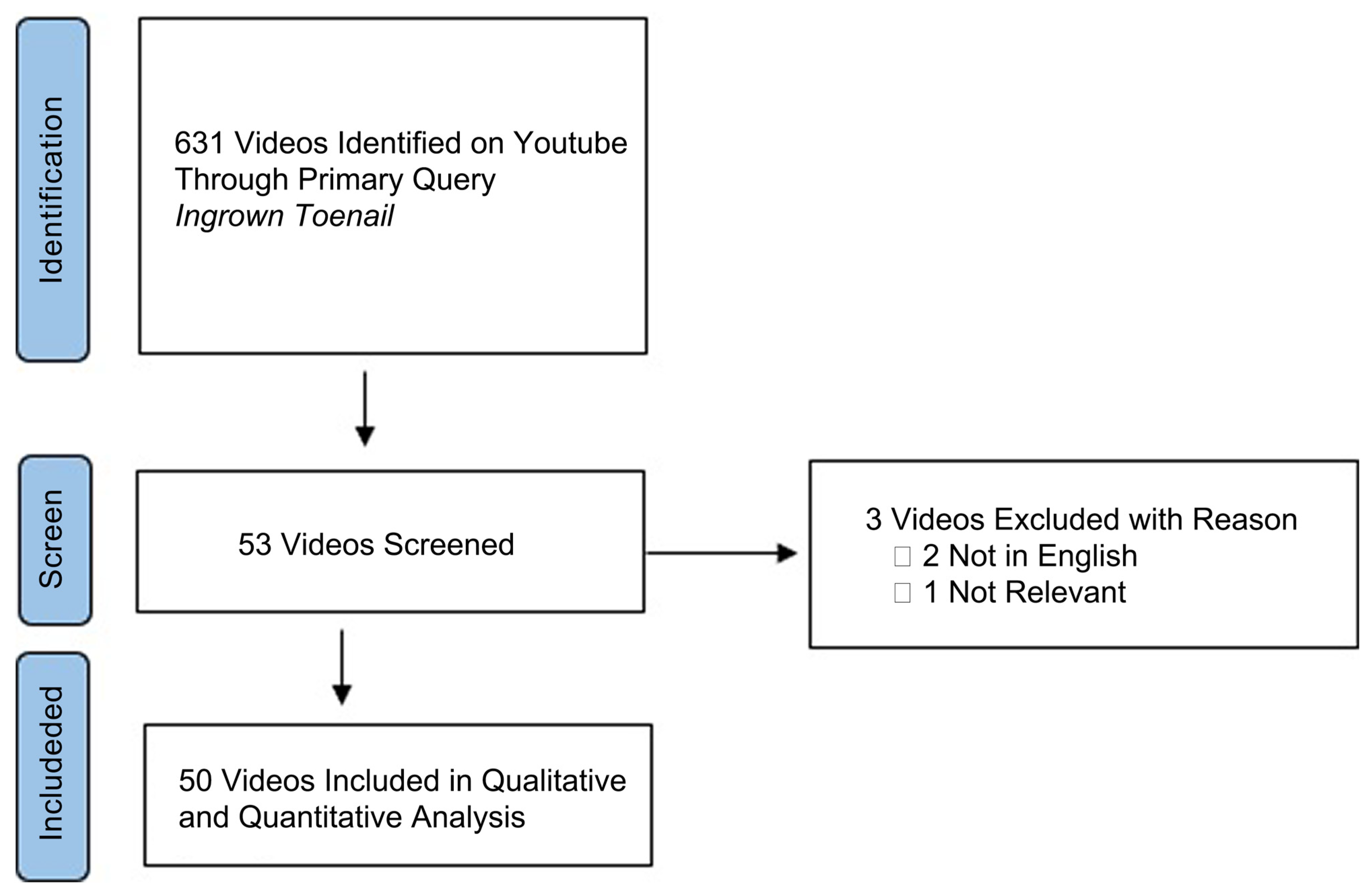
Fig. 1). A search was conducted on the YouTube Web site on December 14, 2021, using the keyword
ingrown toenail. The first 50 videos in English that were accessed as a result of the research were examined. As software for viewing, the Chrome Web browser was used in incognito mode so that it did not affect the number of views, and the Return YouTube Dislike extension was used to see the dislike numbers. The standard filter when YouTube is queried uses “Relevance” as the sorting key. This setting was kept to mimic a typical user’s search as previously described in the literature [
7]. The term
ingrown toenail was used instead of
onychocryptosis or other technical terms as a means to simulate a common user’s search. Note that most Internet users do not go beyond the first two pages of search results they find online [
7]. This method has been previously used and shown to be a feasible method for video selection in the literature [
7,
8,
9]. This study included the following: videos in the English language only and videos reporting any aspect of ingrown toenails, including, but not limited to, definition, classification, etiopathogenesis, epidemiology, clinical features, diagnosis, and management. Videos in English that were repeated, and those that comprised only product advertisements, nonrelevant videos, non-English videos, or audio-only soundtracks were excluded. The investigator (E.I.) independently viewed the remaining videos, verified possible duplicates, and scored the quality of each of the remaining videos. The raw data were then reconfigured to accommodate statistical analysis.
Figure 1.
PRISMA (Preferred Reporting Items for Systematic reviews and Meta‐Analyses) flow diagram of the identification and screening process of the included videos.
Figure 1.
PRISMA (Preferred Reporting Items for Systematic reviews and Meta‐Analyses) flow diagram of the identification and screening process of the included videos.
Eleven video characteristics were recorded for each video: title, number of views, video duration, video source/uploader, days since upload, view ratio (VR; views per day), number of likes, number of dislikes, like ratio (LR; Likes × 100/[Likes + Dislikes]), interaction index ([Number of Likes – Number of Dislikes] × 100/Number of Views) and, video power index (VPI). The VPI was first used by Erdem and Karaca [
8] to evaluate the popularity of the videos. An investigator (E.I.), who screened the videos initially, determined the video source. Source categories include professional (health-care provider), personal (nonprofessional individual), educational (video uploaded to provide information about ingrown toenails), and mixed (≥1 of the three previously mentioned categories) as previously described in the literature [
10].
Journal of the American Medical Association (JAMA) benchmark criteria were used to assess video reliability and accuracy using four distinct criteria (authorship, attribution, disclosure, and currency) (
Table 1) [
11]. Scores range from 0 to 4, with a score of 4 indicating a high source of accuracy and reliability and a score of 0 indicating a poor source of accuracy and reliability. Two different scoring systems were used to assess the educational value of ingrown toenail videos. The Global Quality Score (GQS), a nonvalidated but commonly used score, gives a nonspecific assessment of educational content value through five criteria (
Table 2) [
7]. One point was awarded for each criterion, with a maximum total score of 5 indicating the highest quality of education [
12].
Table 1.
Journal of the American Medical Association Benchmark Criteria
Table 1.
Journal of the American Medical Association Benchmark Criteria
Table 2.
The Global Quality Score
Table 2.
The Global Quality Score
A toenail specific score (TSS) was generated for this quality assessment to better assess the educational content (
Table 3). We modified the meniscus specific score usd by Kunze et al [
9] for the evaluation of information. One point is assigned for each item presented orally or written in the video, conferring a maximum possible score of 17, with a higher score indicating better quality.
Table 3.
Toenail Specific Score for Video Content
Table 3.
Toenail Specific Score for Video Content
Descriptive statistics were used to quantify video reliability and video quality scores as well as to quantify video characteristics. One-way analysis of variance tests (for normally distributed data) and Kruskal-Wallis tests (for nonnormally distributed data) were used to determine whether video quality, video reliability, and VPI differed based on video content and video source. Multivariate linear regression analyses were used to determine the influence of specific video characteristics on video quality and reliability. All of the statistical tests were performed with a statistical software program (IBM SPSS Statistics for Windows, Version 26.0; IBM Corp, Armonk, New York). A P < .05 was considered statistically significance.
Results
Of 631 YouTube videos, 50 were evaluated: 41 (82%) were from health-care professionals, seven (14%) were educational, and two (4%) were personal videos. The median number of views was 333,585 (interquartile range [IQR] = 1,164,690), with a total number of 71,842,230. The median video duration was 499 sec (IQR = 462 sec). The median number of likes and dislikes was 4,150 (IQR = 13,575) and 269 (IQR = 1,117), respectively. The median number of days since upload was 386 (IQR = 871 days). The median number of comments was 383 (IQR = 879). The median TSS was 5.5 (IQR = 4.0). The median GQS and JAMA scores were 3 (IQR = 2) and 2 (IQR = 1), respectively. All of the results are presented in
Table 4.
Table 4.
Results of Video Characteristics
Table 4.
Results of Video Characteristics
The videos were divided into two groups according to the number of views: 300,000 and less and more than 300,000. The view number of 300,000 was selected because it was close to the median value. Twenty-three videos were in the 300,000 and less group and 27 were in the greater than 300,000 group When these two groups were compared, there was no significant difference in JAMA and GQS scores. There was no difference in the sources between the two groups. There were significant differences between the two groups in terms of dislikes, likes, days since upload, VPI, VR, LR, and video duration. All of the values were significantly higher in the group with more than 300,000 views. All of the results are presented in
Table 5.
Table 5.
Results According to the View Threshold of 300,000
Table 5.
Results According to the View Threshold of 300,000
The videos were divided into two groups according to the number of likes: 10,000 and less and greater than 10,000. There was no significant difference in JAMA and GQS scores between these two groups. There was no difference in the sources between the two groups. The number of views, number of dislikes, number of comments, VPI, VR, LR, and video duration were statistically significantly different between the two groups. All of the values were significantly higher in the greater than 10,000 likes group. All of the results are presented in
Table 6.
Table 6.
Results According to the Like the Threshold of 10,000
Table 6.
Results According to the Like the Threshold of 10,000
Number of views positively correlated with the number of dislikes, number of likes, number of days since upload, number of comments, VPI, VR, LR, and video duration and negatively correlated with the interaction index. Number of dislikes significantly correlated with number of likes, number of comments, VPI, VR, and video duration. Number of likes significantly correlated with number of views, TSS, number of comments, VPI, VR, LR, and video duration. Number of days since upload positively correlated with VR and negatively correlated with JAMA score, TSS, and interaction index. The GQS positively correlated with JAMA score, TSS, and video duration. The JAMA score positively correlated with TSS and interaction index. The TSS significantly correlated with VR and video duration. The number of comments correlated with VPI, VR, LR, and video duration. The VPI correlated with number of views, VR, LR, and video duration. The VR correlated with LR, interaction index, and video duration. A significant correlation was found between video duration and LR and interaction index.
Number of days since upload was found to be a significant predictor of the JAMA score as a result of the regression analysis (P < .001; β = –0.552). It was observed that the JAMA score increased as the publication time decreased. Video duration was found to be a significant predictor of GQS as a result of regression analysis (P = .002; β = 0.425).
Significant results were found in the linear regression analysis between TSS and video duration (P = .014), but video duration did not predict the TSS in the multiple analysis (β = 0.263).
Discussion
YouTube is a free Web site that helps people find and share videos on any subject, with the option of restricting those younger than 18 years. Since its establishment in 2005, it has been a popular social platform with growing attention. Every member has the chance to share experience and knowledge about any certain issue. This makes YouTube a popular information-sharing platform. In this study, it was revealed that ingrown toenail is a popular health issue, with a total number of views of 71,842,230. This view count was more than that of other popular issues, such as cervical fusion, meniscus, shoulder instability, or anterior cruciate ligament, and popular foot issues, such as hallux valgus and diabetic foot care [
7,
9,
13,
14,
15,
16]. The total number of views in this study was nearly five times that of meniscus videos, although the mean number of days since upload of meniscus videos was three times less. Also, the number of likes and dislikes were three times more and less than in the meniscus study, respectively. Patients are increasingly using YouTube as a source of information owing to its easy access to content and visual illustrations [
17]. Although meniscal injury prevalence is more than ingrown toenail prevalence, ingrown toenails took more attention [
18,
19,
20,
21]. This result suggests that the topic of ingrown toenails is gaining a proportionally larger online audience and underscores YouTube as an important source of information.
Despite the higher number of views and likes compared with other studies in the literature, the JAMA score showed poor reliability, and the GQS and TSS revealed low educational properties. The present results were similar to those of other studies in the orthopedic literature [
7,
9,
13,
14]. Although the median TSS (5.5 of 17) in this study was a better result compared with the literature, the educational property was still assessed as low. This result highlights the fact that higher popularity is unrelated to video quality. Although ingrown toenail is a popular search query among health topics on YouTube, videos were found to be unreliable and insufficient for patient information. Most of the video uploaders (82%) were health-care professionals. These results indicate that health-care professionals are interested in this issue, but the intention of uploading videos is not much related to the education of the patients, as the scores indicated. The most probable explanation was thought to be the concern of gaining popularity among the patients.
In this study, a specific score was used to assess this specific issue, similar to other studies in the orthopedic literature. The TSS was prepared by modifying the meniscus specific score [
9]. This study was the first to use that kind of a scoring system for assessing ingrown toenail videos. The highest point in this scoring system (17 points) was lower than that of the other scoring systems (20 points). The reason for this difference is that 2 points in the other studies were for roentgen and magnetic resonance imaging assessments and 1 point was for weightbearing information, which is not necessary for routine evaluation of ingrown toenail management but is valuable for diagnosing severe infectious complications.
When video groups were divided by the number of views (>300,000 and ≤300,000), significant differences were found between groups in the number of likes, dislikes, and comments and in VR, LR, and video duration. This result was evaluated as expected because more views lead to more likes, dislikes, comments, and ratios associated with those. When two groups formed regarding the number of likes (≤10,000 versus >10,000), significant differences were found between groups in the number of views, dislikes, and comments and in VRl, LR, and video duration. More likes came with more views and vice versa. Video duration was significantly higher in the groups with more than 3000,00 views and more than 10,000 likes.
Longer video length correlated with higher quality scores. Longer video length also correlated with more views and likes. Longer video duration means more informative and higher-quality videos. For longer videos, enrichment of video content was considered to be expected given that most content providers were health-care professionals. However, scores and view/like counts were found to be independent. This was considered to be related to the fact that visual content quality and attractive presentation were more effective than content quality in the number of views and likes. At last, Youtube is a popular video site but not a professional health-care information site, and the expectation of most of the audience is entertainment.
The median VR for this topic (1,340) was found to be higher compared with that of other topics [
7,
9,
15]. This difference can be explained by the fact that patients are more inclined to solve their nail disorders by themselves. At the same time, the short duration of nail surgeries, the technically easier procedures, and the less bleeding time make it easier to watch and increase the interest. The median LR for this topic (369.5) was also found to be higher compared with that of other topics, and this situation could be attributed to the same reasons.
Number of days since upload was found to be an independent predictor of the JAMA score. According to this result, it has been interpreted that new videos come with increased video quality and reliability. There is growing attention to Youtube videos and social media in the health science literature [
22,
23,
24,
25,
26]. It is considered to be the result of this growing attention. Longer duration allows for more content, which allows for more of the criteria to be satisfied. Those results were different from the literature, as dislikes were found to be an independent predictor of the JAMA score and disease-specific content was found to be an independent predictor of the GQS. However, in the present study, dislikes were not correlated with the JAMA score.
There were some limitations in this study. The first 50 relevant videos in the English language of 631 total videos were evaluated. A total of 581 videos were excluded. In this method, results cannot reflect overall quality. Also, because these data are collected in a single day, it provides only a snapshot of the information available at a given time. All of the data were gathered and evaluated by a single researcher, and this makes the assessment of interobserver reliability impossible. Moreover, intraobserver reliability was not investigated. Consequently interobserver and intraobserver reliability are unknown. It is possible that higher-quality ingrown toenail videos were overlooked, but it is also possible that the consistently low scores among analyzed videos represent most ingrown toenail videos available on YouTube. In addition, JAMA and GQS scores are notable but unvalidated quality assessment methods. The TSS is a more descriptive but unvalidated and modified system. Although they are unvalidated methods, those systems were used by most YouTube-related studies and provided many reproducible results. These scoring methods need to be validated for more reliable results in future studies.
YouTube is an attractive data source for patients. Due to the high view counts, ingrown toenail is one of the most popular health issues on YouTube. Although being a popular issue and mostly uploaded by health-care professionals, content quality was found to be poor, and videos were found to be unreliable and insufficient for informing patients. However, even if the information provided is incomplete and insufficient for health professionals, it may be sufficient for those who receive health-care services to learn the qualities of the health care they will receive and to create their expectations. Nonetheless, health-care professionals should be aware of the generally low-quality data available on YouTube regarding ingrown toenails.