


Abstract
Background: Evidence is limited exploring the beliefs and application of forefoot lateral wedges (FLWs) in clinical practice by podiatric physicians. We aimed to understand rationale and beliefs that guide the use of FLWs among podiatrists. Methods: A cross-sectional study of New Zealand (NZ) podiatrists was conducted between May 31 and July 26, 2021. Data were collected anonymously using a Web-based survey platform. The 30-item survey included questions to elicit participant characteristics, why and when podiatrists used orthosis modifications, what biomechanical assumptions influenced clinical decision-making, and how podiatrists fabricated and placed FLWs. Results: Of 65 survey completers, most were trained in NZ (90.8%), had more than 10 years’ experience (70.8%), and worked with a mixed case load (60.0%); 77.3% prescribed zero to ten foot orthoses per week, with FLWs used in 44% of prescriptions. Peroneal tendon injuries and chronic ankle instability were most likely to be treated with FLWs. The most common belief was that FLWs increase first metatarsophalangeal joint range of motion (86.2%). The FLWs were regularly manufactured from 3-mm (73.8%), medium-density ethyl vinyl acetate (92.9%) and positioned from the calcaneocuboid joint (54.8%) to the sulcus (78.6%). Conclusions: Podiatrists in NZ frequently use FLWs. These were generally manufactured from 3-mm, medium-density ethyl vinyl acetate and positioned from the calcaneocuboid joint to the sulcus. The most common rationales for use were to increase first metatarsophalangeal joint range of motion, shift the center of pressure medially, and balance the foot. A discordance was found between the theories of foot function on which clinicians placed the greatest importance and the biomechanical outcomes they thought were being achieved. Survey data also highlighted inconsistency in the nomenclature used to describe FLW thickness and inclination.
Lateral wedging can be defined as material sloped uniformly to be thicker on the lateral side than on the medial side [1]. These wedges are commonly added to foot orthoses or shoe insoles in the management of several lower-limb pathologies [2,3]. Lateral wedging has most commonly been investigated in relation to the biomechanical effects on knee motion, particularly for their role in the management of medial knee osteoarthritis [4]. In cohorts with medial knee osteoarthritis, lateral wedging of the foot has been shown to reduce knee adduction moments [2]; however, this effect is the subject of controversy [5]. With respect to lower-limb kinetics and kinematics, lateral wedges have been shown to shift the center of pressure (COP) laterally [6,7,8] and increase the external eversion moment of the subtalar joint [9,10]. However, current evidence investigating the effect is limited to a small number of observational studies [1]. Beyond this, limited evidence exists to inform how lateral wedges impact variables such as kinematics of the forefoot or how the wedge design may affect function.
There are numerous theories of foot function proposed, many of which provide a theoretical link that can be extrapolated to suggest how lateral wedging may function. Four of the most widely cited theories are Root theory [11,12], sagittal plane facilitation theory [13], rotational equilibrium theory [14], and tissue stress theory [15]. Root theory has the most direct link to explain the functional effects of forefoot lateral wedging (FLW) [11]. Focusing on the concept of subtalar joint neutral, and the importance of maintaining this position, Root theory highlights several abnormalities that are said to result in compensation and movement away from the desired position. Under this theory, forefoot position is important. Any deviation forefoot position is measured and subsequently balanced by a wedge of equal size placed under the appropriate part of the foot using a firm or rigid material [11,16]. Sagittal plane facilitation theory also focuses on kinematics and proposes that lateral stability of the foot, along with two other key functions, is essential for efficient transfer of weight [13]. Evidence linking the sagittal plane facilitation theory and lateral wedging proposes that lateral wedging increases lateral stability of the foot [17]. Rotational equilibrium theory attempts to predict function of the foot according to the balance of forces around the subtalar joint [14], something that lateral wedging is known to influence [1]. Finally, the tissue stress theory is not proposed to be a model to understand foot function but rather how to manage it. According to this theory, the focus is to reduce stress on injured tissues to allow healing [15]. There is currently no evidence linking lateral wedging to alteration in tissue stress in the foot [1].
The extent to which lateral wedges affect foot function is linked to the steepness (gradient) of the slope [18], a variable that is interchangeably described in millimeters (thickness) or degrees (inclination angle) of the wedge. For example, Telfer et al. [19] demonstrated that for every 2° increase in lateral wedge inclination, peak plantar pressure in the lateral forefoot decreased by 0.74%. Considering the effect of this variable on biomechanical outcomes, clear terminology is important to ensure that suitable design decisions are made. Also of relevance to design is the length of wedge. There is limited evidence linking the length of a lateral wedge to a biomechanical influence on foot function [8,17]. For the purposes of this study, the following terminology is applied. A full-length wedge is defined as a wedge beginning from the most proximal aspect of the insole, under the calcaneus, extending to the distal end of the insole, past the apex of the digits. A forefoot lateral wedge (FLW) is defined as a wedge beginning from the calcaneocuboid joint and extending distally to the sulcus of the foot.
Previous research highlighted a difference in the prescription habits of New Zealand (NZ) podiatric physicians compared with those from Australia and the United Kingdom [20]. Chapman et al. [20] reported that NZ podiatric physicians prescribe prefabricated orthoses more frequently than both their Australian and British colleagues, and conversely prescribe fewer custom orthoses than both groups. However, these data did not explore the application of full-length lateral wedges or FLWs among NZ podiatric physicians.
There is currently limited evidence exploring the beliefs that guide the clinical application of FLWs among podiatric physicians practicing in NZ. Therefore, the current study aimed to understand the rationale of NZ podiatrists when they use FLWs and to identify how lateral wedges are manufactured and applied in clinical practice. Data from this survey will be influential in the design of future laboratory-based work analyzing the kinetic and kinematic effects of FLWs as they are used in practice by NZ podiatric physicians.
Methods
This study used a cross-sectional observational design. Data collection was completed anonymously using the Web-based survey platform Qualtrics XM (Qualtrics, Provo, Utah). The survey was implemented over an 8-week period between May 31 and July 26, 2021. Participants were recruited via an email invitation sent to all members of the national society (Podiatry New Zealand) and a research flyer distributed to delegates at the 2021 New Zealand Podiatry Conference. Incentivization to participate was offered in the form of five prizes of $100 shopping vouchers. Consent to participate was obtained through participants completing a yes or no question on the landing page of the survey. If participants did not consent to participate, they were unable to proceed to the survey questions. Ethical approval was obtained from the Auckland University of Technology Ethics Committee (Auckland, NZ) before commencing data collection.
The survey was piloted through a two-stage process. First, six NZ registered podiatric physicians with a mean ± SD of 17 ± 5.3 years’ experience and expertise in biomechanical management and orthoses completed the survey online and provided written feedback. Following suggested amendments, a focus group with the same practitioners was held to finalize the survey questions. The focus group was facilitated by one of us (M.C.) with previous experience in survey development. The final survey (available at URL) comprised 30 questions divided into three sections. Participants could review responses to previous questions by using the back button at any stage until the survey was completed. The first section related to demographic characteristics and asked respondents about their experience, age, geographic region, qualification, type of work, and frequency of orthosis prescription. Section 2 posed questions relating to when and why they used certain modifications, and what biomechanical hypotheses influenced their decisions. Section 3 contained questions about lateral wedge fabrication and placement. Twenty-three of the survey questions garnered categorical responses (questions 3–10, 13, 14, 17–19, 22–27, 29–32). Questions 11, 12, 20, and 28 used percentage sliders, and questions 15 and 16 were Likert scales. Question 21 asked respondents to indicate what percentage of their FLWs were placed on the sock liner, on an orthotic device, or on the midsole of the shoe. Participants were required to assign a percentage of their total modifications to each category while the online platform created a sum that was required to equal 100.
The first question of section 3 screened respondents to identify those who made their own FLWs. To ensure that those responding to the questions had some experience in wedge fabrication, the final section of the survey was shown only to respondents who reported manufacturing their own FLWs. Any respondents who indicated using prefabricated FLWs bypassed the fabrication questions and were taken to the end of the survey. All of the survey data were reported in accordance with the Checklist for Reporting Results of Internet E-Surveys (Available at URL) [21].
All of the categorical data are described as number (percentage). Likert scale data from question 15 were combined for final analysis: “very unlikely” and “unlikely” responses were recorded as “unlikely,” and “likely” and “very likely” responses were recorded as “likely.” Percentage sliders are represented as mean (of 100) ± SD.
Results
Participant Characteristics
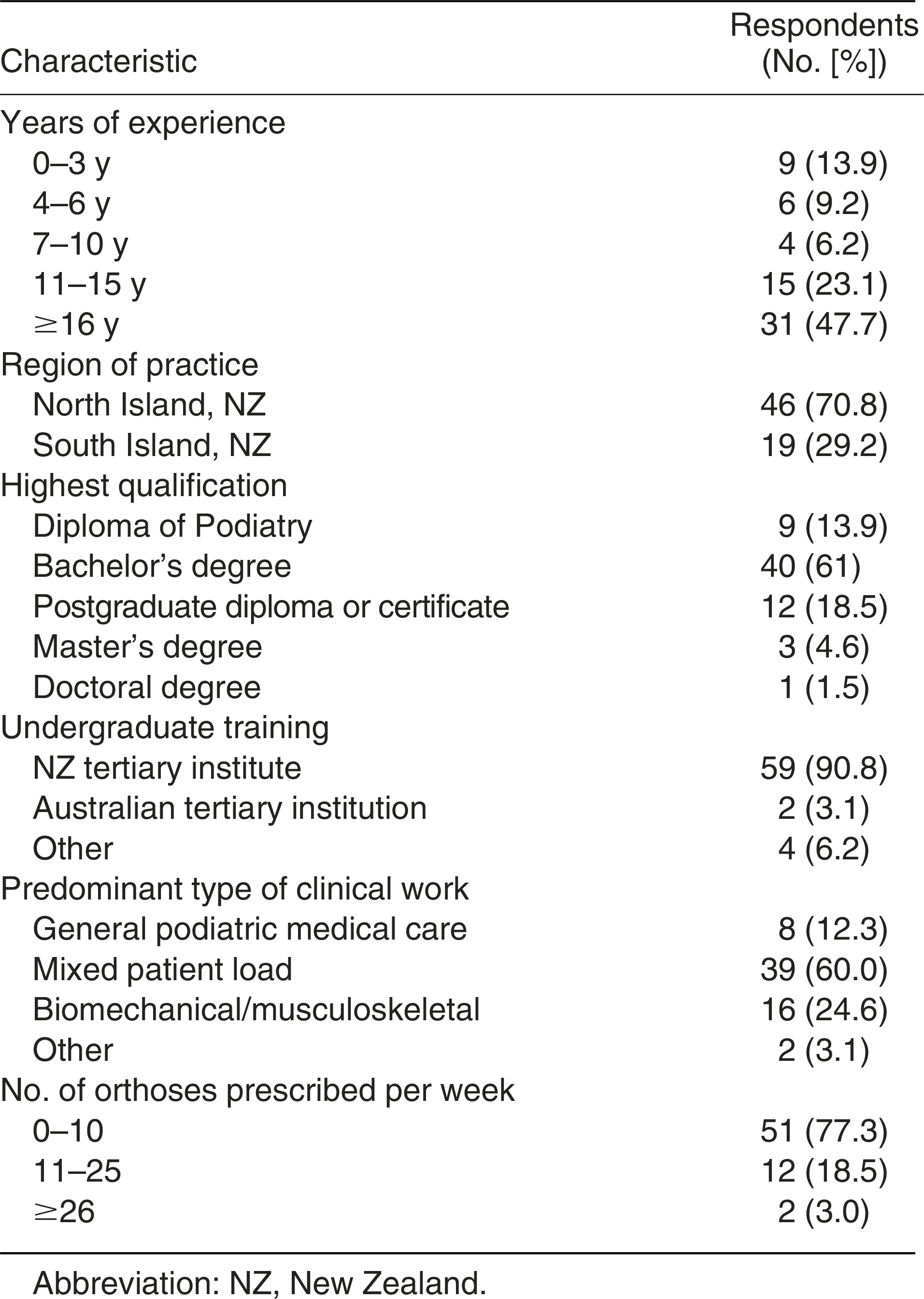
In total, 88 survey responses were received, representing 25% of Podiatry New Zealand members and 18% of registered podiatric physicians in NZ (based on 481 podiatrists who hold annual practicing certificates). Twenty-three surveys were incomplete and therefore excluded (a 74% completion rate), leaving 65 that were included for final analysis. Characteristics of the respondents are detailed in Table 1. Most respondents had greater than 10 years’ experience (70.8%, n = 46), were trained in NZ (90.8%, n = 59), reported working with a variety of clinical presentations (60.0%, n = 39), and prescribed between zero and ten orthoses per week (77.3%, n = 51). Almost three-quarters (70.7%, n = 46) of the respondents practiced in the more populated North Island of NZ, and one-quarter (24.6%, n = 16) held a postgraduate qualification.

Table 1.
Demographic Data of the 65 Participants
The Use of FLWs
In relation to the total number of orthotic devices prescribed, participants reported including an FLW in a mean ± SD of 44% ± 26.76% of cases. When asked what modifications they routinely used, 80.0% (n = 52) reported using FLWs. Only metatarsal domes (81.5%, n = 53) were more widely used.
Respondents were asked about their likelihood of using an FLW in the management of various lower-limb conditions (Fig. 1). The four conditions for which FLWs were most frequently used included peroneal tendon issues, chronic ankle instability, plantar heel pain, and medial knee osteoarthritis. Conversely, of the list presented to participants, first metatarsophalangeal joint sprain was the diagnosis that least often led to the use of FLWs.
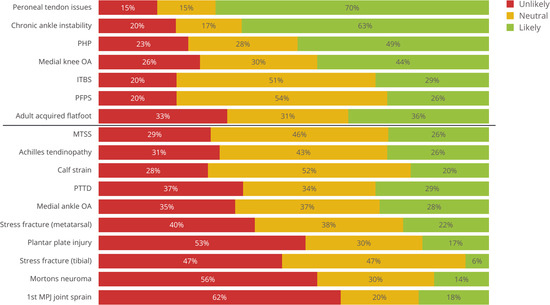
Figure 1.
Likelihood of forefoot lateral wedge (FLW) prescription based on common lower-limb diagnoses. Data above the horizontal line indicate conditions in which FLWs were more likely to be used. Data below the line indicate conditions in which FLWs were more unlikely to be used. ITBS indicates iliotibial band syndrome; MPJ, metatarsophalangeal joint; MTSS, medial tibial stress syndrome; OA, osteoarthritis; PFPS, patellofemoral pain syndrome; PHP, plantar heel pain; PTTD, posterior tibial tendon deficiency.
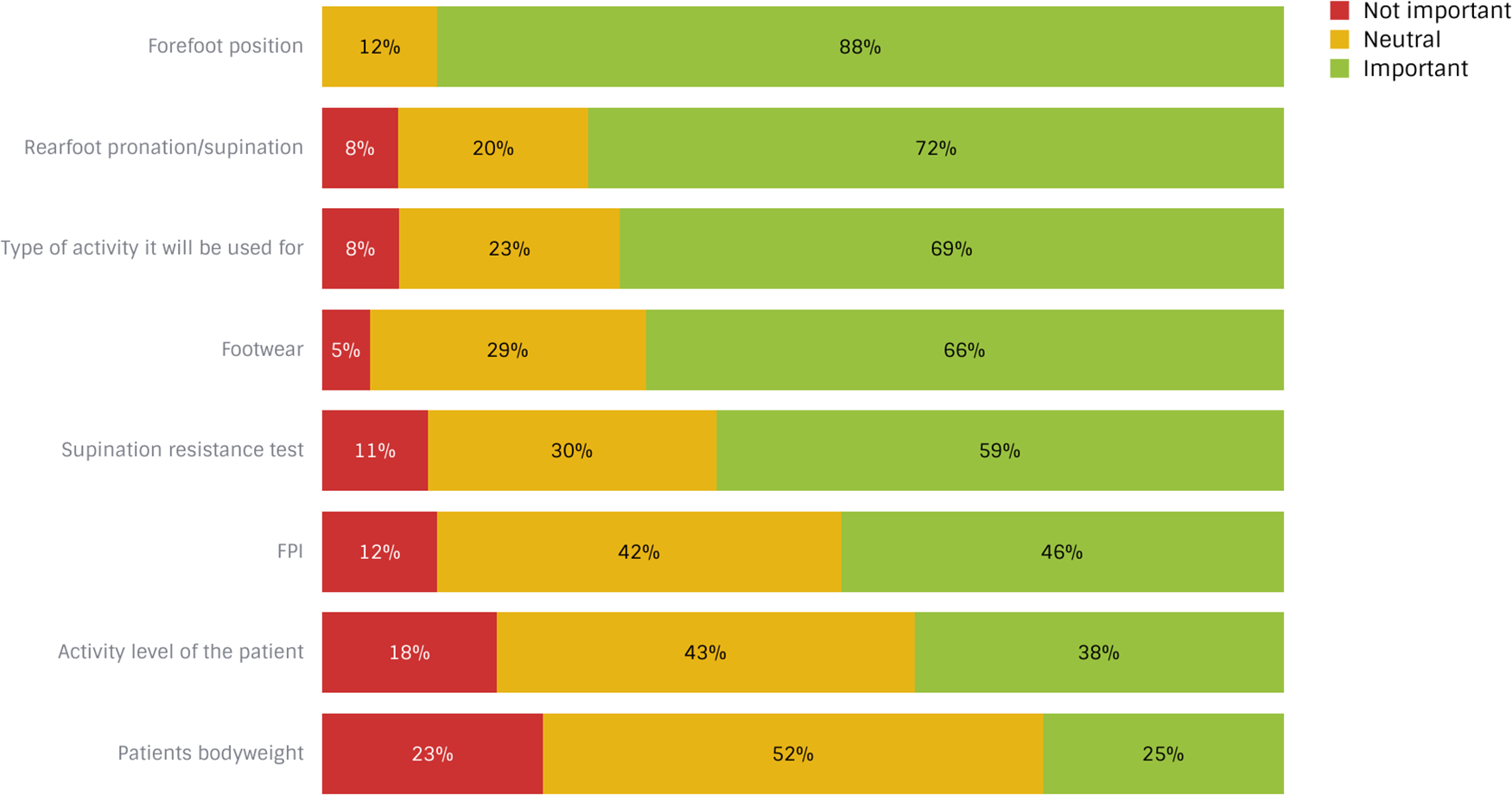
Figure 2 presents data from the question, “How important do you think it is to consider the following, when using a lateral forefoot wedge?” The most important factors for consideration when prescribing FLWs were forefoot alignment and rearfoot pronation/supination. These were deemed important by 89.2% (n = 58) and 73.9% (n = 48) of participants, respectively.
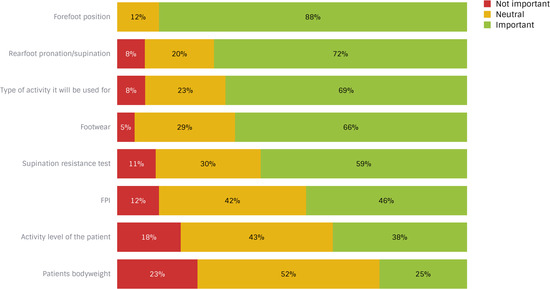
Figure 2.
Importance of various considerations when prescribing forefoot lateral wedging. FPI indicates Foot Posture Index.
The Biomechanical Function of FLW
Respondents answered the question, “How influential do you think each of the following podiatric theories/paradigms are in your orthotic prescription?” The tissue stress theory (mean ± SD, 81.2 ± 20.4) was reported to be the paradigm that most significantly affects orthosis prescription. This was followed by sagittal plane facilitation theory (mean ± SD, 69.0 ± 21.1), rotational equilibrium theory (mean ± SD, 55.4 ± 28.6), and, last, Root theory (mean ± SD, 50.2 ± 28.4).
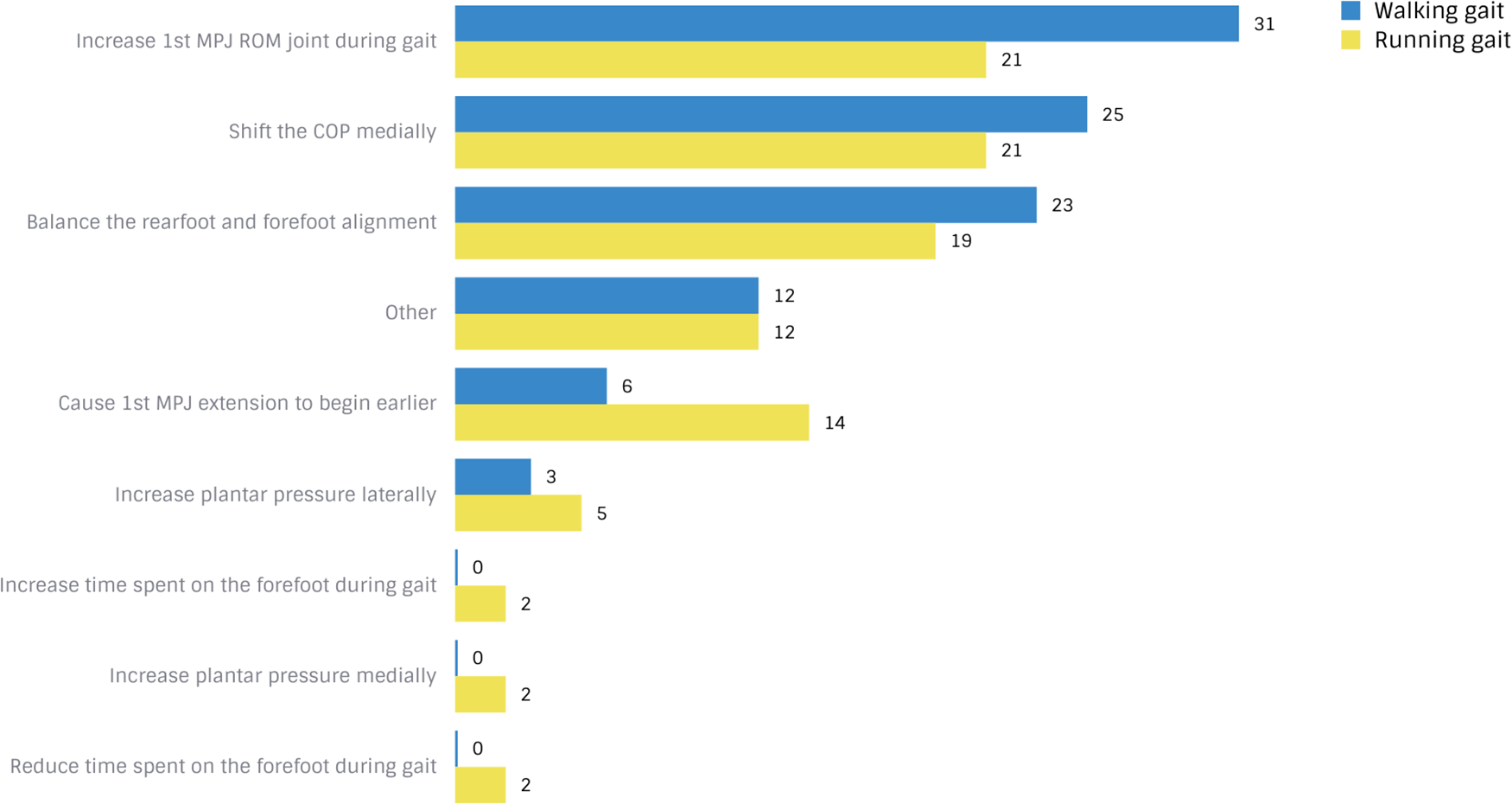
The primary reason that NZ podiatric physicians prescribed FLWs for both running and walking gait was to increase first metatarsophalangeal joint range of motion. Whether selected as their main reason for use or not, most participants (86.2%, n = 56) agreed that this is an expected biomechanical function of FLW. Figure 3 contrasts the reasons that FLWs are prescribed for both running and walking gait. Most respondents (69.2%, n = 45) indicated that the biomechanical effect of FLW is different in running gait compared with walking gait. However, the three most common reasons for the use of FLWs were the same for both walking and running gait.
Figure 3.
The most common reasons respondents would prescribe forefoot lateral wedges for both running and walking gait.
Fabrication of FLWs
A total of 64.6% of the respondents (n = 42) in this survey choose to construct their own FLWs. The 23 respondents who reported using prefabricated FLWs most often used wedges manufactured by FootBionics Ltd (Christchurch, NZ) (52.2%, n = 12) and Formthotics Foot Science Ltd (Christchurch) (21.7%, n = 5).
Wedge Placement.
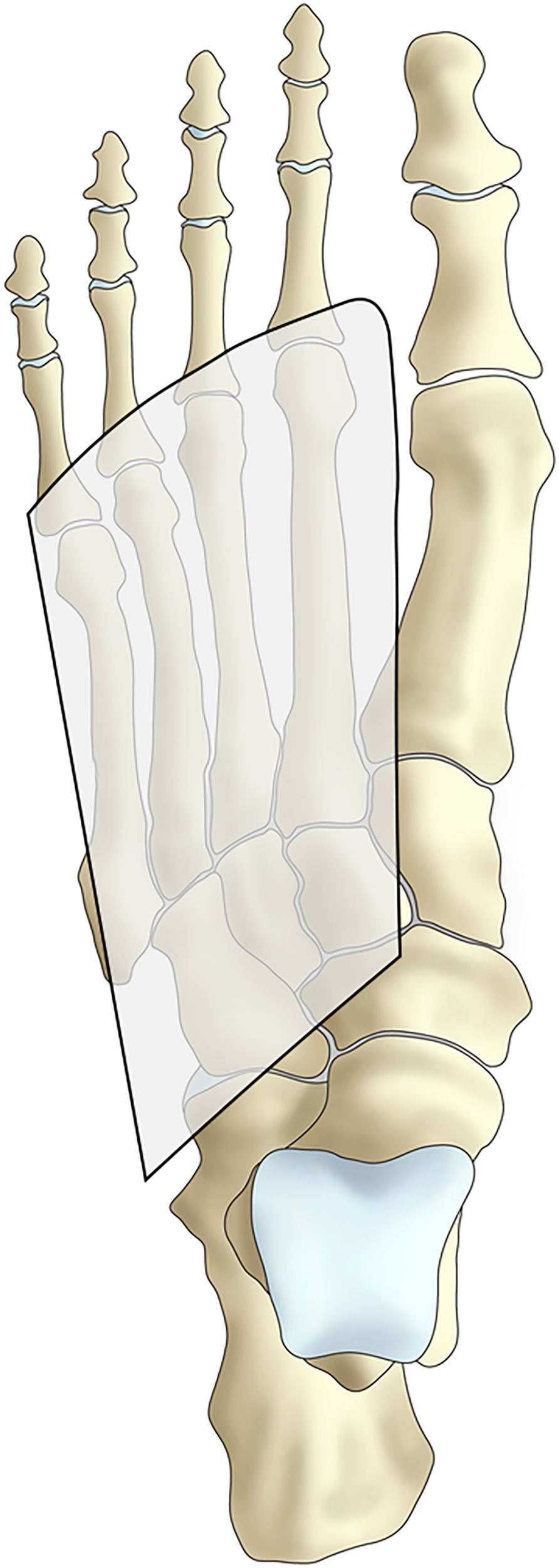
Placement of FLWs was considered to have a large effect (mean ± SD, 81 ± 15.9) on their outcome. A total of 78.6% of respondents (n = 33) reported not always using the same design of FLWs, with patient symptoms highlighted as the most common reason for adjusting design. The most common FLW design reported began at the calcaneocuboid joint and finished at the sulcus of the foot (Fig. 4). Beginning this modification at the calcaneocuboid joint was standard for 54.8% of participants (n = 23), and 40.5% (n = 17) used the styloid process as their landmark. Less variation was reported regarding the distal border, with 78.6% (n = 33) agreeing on ending the FLW in the sulcus of the foot. A small number of respondents reported finishing the FLW proximal to the metatarsal heads (19.1%, n = 8) or at the end of the insole (4.8%, n = 2).
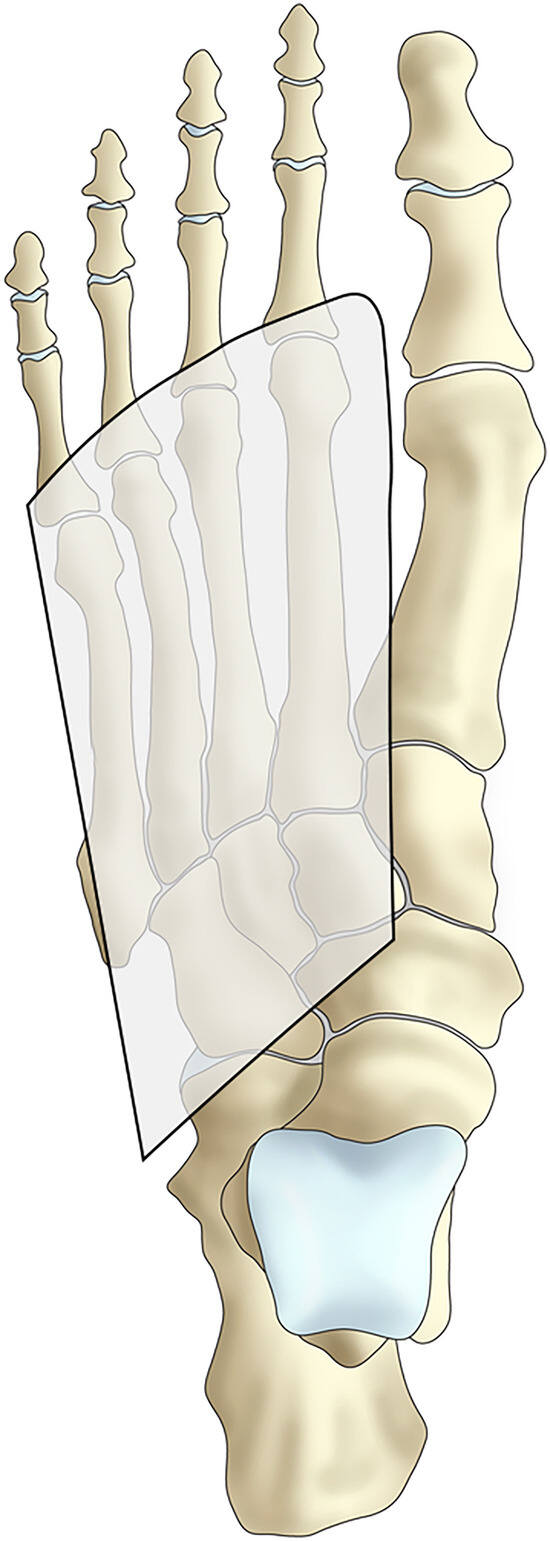
Figure 4.
Approximate forefoot lateral wedge shape when placed from the calcaneocuboid joint to the sulcus of the foot.
Wedge Material.
Respondents considered that material density (mean ± SD, 82 ± 12.4) and thickness (mean ± SD, 82 ± 13.7) were important when constructing FLWs. When asked what materials they have used in the past 12 months, 91% (n = 39) reported using medium-density ethyl vinyl acetate (EVA), while low-density EVA (51%, n = 22) and felt (51%, n = 22) were also widely used. The most commonly used FLW material thickness was 3-mm EVA, 73.8% of respondents (n = 31) reported having used this in the past 12-month period. A total of 52.4% (n = 22) used 4-mm EVA, 33.3% (n = 14) used 5-mm EVA, and 21.4% (n = 9) used 6-mm EVA in this period. Eight-millimeter EVA was used by four respondents (9.5%) and 10-mm EVA by three (7.1%). However, no respondents reported using 6-, 8-, or 10-mm EVA as their primary choice of thickness.
Discussion
This is the first study to investigate the frequency of application for a range of forefoot orthosis modifications among NZ podiatric physicians. These findings highlight the regular use of FLW in this cohort, with FLWs reportedly included in almost half of all orthosis prescriptions. This makes them the second most widely applied orthosis modification. This survey identified that most of the respondents prescribed zero to ten orthotic devices or modified insoles per week. A similar frequency of prescription was reported by Chapman et al. [20], who found that NZ podiatrists on average prescribed 12 orthoses per week.
Peroneal tendinopathy and chronic ankle instability were the diagnoses that most frequently lead to FLW prescription. Both diagnoses have been linked to patients whose COP is laterally deviated [22,23]. Therefore, if the widely held assumption revealed in this survey is true, and FLWs do shift the COP medially, this is likely to have a positive effect on these clinical presentations. However, this assumption contrasts current research that suggests that lateral wedges shift the COP laterally [1,6]. There is currently limited evidence investigating this function of FLWs or any positive outcome effect when managing peroneal tendinopathy. It has been postulated that orthoses have a positive effect on chronic ankle instability due to heightened input to mechanoreceptors, although limited work has been completed exploring the role of FLWs in this scenario [24]. Kakihana et al. [3] compared full-length lateral wedges in people with and without ankle instability and concluded that in those with unstable ankles, the change in subtalar joint moments is the same as that in age-matched controls. Plantar heel pain was the third most likely diagnosis to be managed with FLWs. The in vitro study by Kogler et al. [17] provides the only evidence regarding lateral wedging configurations and their effect on the plantar fascia, with data indicating that FLWs reduced plantar fascial strain. The limitation of this work was the use of cadaveric limbs.
The tissue stress theory was found to be the most influential paradigm that guided orthosis modification and prescription. The tissue stress theory works on the premise that orthoses are used to reduce stress being placed on a tissue to a tolerable level [15]. Therefore, based on the study data, the assumption made when using FLWs under the guidance of the tissue stress theory is that FLWs will positively impact tissue stresses.
This survey has revealed incongruity between the surmised function of FLW and the inferred explanations of podiatric medical theories of foot function. This is highlighted in two examples related to the application of the Root and sagittal plane facilitation theories. Regarding the Root theory, almost one-quarter of respondents primarily use FLW to balance the foot, and most respondents identified the patient’s forefoot position and rearfoot pronation/supination as important when prescribing FLWs. These concepts are key pillars of the Root theory [11,12], despite the Root theory being rated as the least influential paradigm by respondents. Regarding the sagittal plane facilitation theory, almost all of the respondents believed that FLWs increased the range of motion in the first metatarsophalangeal joint, and this was reported as the most common reason for FLW use in both walking and running gait. A recent scoping review, however, found no evidence relating to the effect of lateral wedging on first metatarsophalangeal joint kinematics [1]. The sagittal plane facilitation theory, ranked by participants as the second most influential paradigm, places a great deal of importance on first metatarsophalangeal joint range of motion [13]. This theory suggests that first metatarsophalangeal joint movement to engage the windlass mechanism is essential for efficient forward transfer of weight. The windlass mechanism was first discussed by Hicks [25] and relates to the association between metatarsophalangeal joint position and the plantar fascia. This is said to cause the medial arch to rise and the forefoot to supinate. The contradiction in this case is that Hicks [25] described the irresistible supination of the forefoot as the windlass mechanism is engaged, yet more than half of our respondents believe that FLWs both shift the COP medially and increase first metatarsophalangeal joint range of motion. Extrapolation of the original windlass mechanism description would suggest that first metatarsophalangeal joint range of motion cannot increase at the same time as the COP shifts medially. However, recent data have shown the plantar fascia to be extensible [26], something that was not considered in the original explanations of the windlass mechanism. What was previously thought to be a direct link between first metatarsophalangeal joint kinematics and medial arch height seems to be an oversimplification of a complex interaction between the plantar fascia and the intrinsic muscles of the foot [26,27]. If extensibility of the plantar fascia also impacts the associated forefoot supination, then this could create the possibility of a concurrent medial shift in COP alongside an increase in first metatarsophalangeal joint range of motion, as participants in the current survey believe is true. However, there is limited evidence to support this supposition, and further investigation is required.
Data indicated that the respondents believed that FLW functioned differently in walking gait versus running gait. Respondents also indicated that the biomechanical objectives for FLW prescription were entirely different when managing runners and that running gait enhances the effect of an FLW. Although research has indicated that biomechanical outcomes derived from orthoses differ between walking and running gait [28], there are limited data supporting functional differences from FLW use between walking and running gait [1]. Given the differing use and the beliefs of clinicians that there are functional differences when using FLW in running versus walking gait, further investigation is warranted.
Full-length lateral wedges have been the dominant design examined in research, notably for their biomechanical effect in the management of medial knee osteoarthritis [1,4]. However, as indicated by the survey, full-length wedges made up a small percentage of lateral wedges prescribed by respondents. Evidence contrasting the effect of varying wedge length (full length versus FLW) is limited [1]. Van Gheluwe and Dananberg [8] compared the effect of lateral wedge length on plantar pressure and found that FLWs increased peak plantar pressure in the lateral forefoot, whereas rearfoot lateral wedges had no effect on forefoot plantar pressure. Further supporting the biomechanical impact of FLWs, Kogler et al. [17] demonstrated that wedging under the lateral aspect of the forefoot provides the most significant reduction in strain in the plantar fascia.
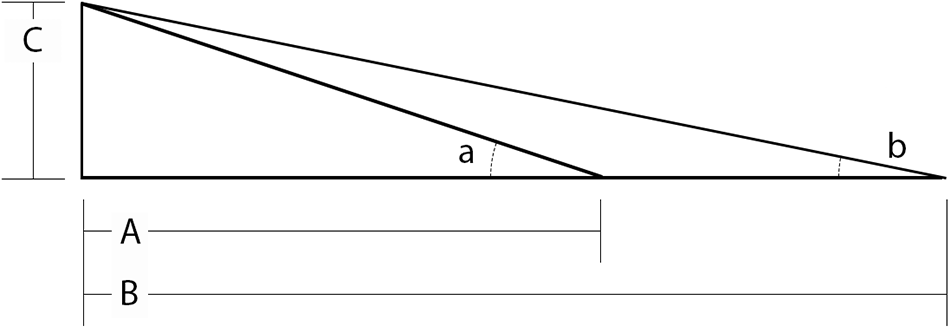
The most common material thickness used to manufacture FLWs was 3 mm. However, it is important that the difference between inclination angle and material thickness (in the case of wedges, referring to the thickest part) is clearly understood. Three-millimeter material does not produce a consistent angle, as this depends on the width of the modification. Figure 5 displays the relationship between thickness and width, in which the width of a wedge entirely changes the inclination angle if the thickness remains constant. For example, 3-mm material beveled to 0 mm over a width of 60 mm (a relatively small FLW) produces an inclination angle of 2.9°, whereas that same material beveled over 100 mm (a large FLW) produces an angle of 1.7°. This difference means that if the same material thickness is used regardless of modification width, patients with larger feet receive wedges with lower inclination angles. This is an important distinction as research has previously indicated that for a range of biomechanical outcomes, a larger inclination angle elicits a larger response [19].
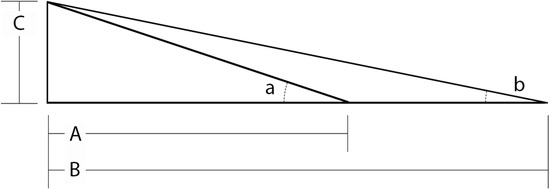
Figure 5.
The relationship between material thickness and width means that at a consistent material thickness (C) the inclination angle (b) will be smaller than (a) due to the modification being wider (B > A).
The survey data must be considered in the context of its limitations. First, despite efforts to maximize recruitment, the sample size was lower than anticipated, which may limit the generalizability of the data. Although the response rate was low, recent NZ podiatric medicine workforce data indicated that only 19% of NZ podiatric physicians worked in the area of sports medicine [29]. Consequently, the survey may have been of interest only to a relatively small percentage of the NZ podiatric medicine workforce. However, the study was the first to examine practice habits related to FLWs. The responses allowed participants to select a range of common presentations, modifications, and beliefs that underpin the prescription of FLWs. This allowed space for reflection on their practice habits and established a benchmark for current clinical practice in NZ.
Conclusions
Podiatrists in NZ frequently use FLWs. These were generally manufactured from 3-mm, medium-density EVA and positioned from the calcaneocuboid joint to the sulcus. The most common rationales for use were to increase first metatarsophalangeal joint range of motion, shift the COP medially, and balance the foot. A discordance was found between the theories of foot function on which clinicians placed the greatest importance and the biomechanical outcomes that they thought were being achieved. Survey data also highlighted inconsistency in the nomenclature used to describe FLW thickness and inclination.
Acknowledgments
The podiatric physicians who aided in the piloting of the survey and all of the New Zealand podiatric physicians who participated in the study.
Financial Disclosure: Faculty-based research funding supported the purchase of gift vouchers used to incentivize participation.
Conflict of Interest: None reported.
Note: Request for further details of the data set and queries relating to data-sharing arrangements may be submitted to Aaron Jackson (aaron.jackson@aut.ac.nz). The survey did not obtain consent for participant data to be shared, although the present data are anonymized, with all personal identifiers not linked to individual responses.
References
- Jackson A, Sheerin K, Reid D, et al: Lateral wedging of the foot: a scoping review. JAPMA 113: 21, 2023.
- Arnold JB, Wong DX, Jones RK, et al: Lateral wedge insoles for reducing biomechanical risk factors for medial knee osteoarthritis progression: a systematic review and meta-analysis. Arthritis Care Res 68: 936, 2016.
- Kakihana W, Torii S, Akai M, et al: Effect of a lateral wedge on joint moments during gait in subjects with recurrent ankle sprain. Am J Phys Med Rehabil 84: 858, 2005.
- Zafar AQ, Zamani R, Akrami M: The effectiveness of foot orthoses in the treatment of medial knee osteoarthritis: a systematic review. Gait Posture 76: 238, 2020.
- Arnold JB: Lateral wedge insoles for people with medial knee osteoarthritis: one size fits all, some or none? Osteoarthritis Cartilage 24: 193, 2016.
- Fukuchi CA, Lewinson RT, Worobets JT, et al: Effects of lateral and medial wedged insoles on knee and ankle internal joint moments during walking in healthy men. JAPMA 106: 411, 2016
- Jones RK, Zhang M, Laxton P, et al: The biomechanical effects of a new design of lateral wedge insole on the knee and ankle during walking. Hum Mov Sci 32: 596, 2013.
- Van Gheluwe B, Dananberg HJ: Changes in plantar foot pressure with in-shoe varus or valgus wedging. JAPMA 94: 1, 2004.
- Tse CTF, Ryan MB, Hunt MA: Influence of foot posture on immediate biomechanical responses during walking to variable-stiffness supported lateral wedge insole designs. Gait Posture 81: 21, 2020.
- Erhart JC, Mündermann A, Mündermann L, et al: Predicting changes in knee adduction moment due to load-altering interventions from pressure distribution at the foot in healthy subjects. J Biomech 41: 2989, 2008.
- Root ML, Orien WP, Weed JH: Normal and Abnormal Function of the Foot, Clinical Biomechanics Corp, Los Angeles, 1977.
- Root ML, Orien WP, Weed JH, et al: Biomechanical Examination of the Foot. Clinical Biomechanics Corp, Los Angeles, 1971.
- Dananberg HJ: Functional hallux limitus and its relationship to gait efficiency. JAPMA 76: 648, 1986.
- Kirby KA: Methods for determination of positional variations in the subtalar joint axis. JAPMA 77: 228, 1987.
- McPoil TG, Hunt GC: Evaluation and management of foot and ankle disorders: Present problems and future directions. J Orthop Sports Phys Ther 21: 381, 1995.
- Philps JW: The Functional Foot Orthosis, Churchill Livingstone, Melbourne, 1990.
- Kogler GF, Veer FB, Solomonidis SE, et al: The influence of medial and lateral placement of orthotic wedges on loading of the plantar aponeurosis: an in vitro study. J Bone Joint Surg Am 81: 1403, 1999.
- Butler RJ, Barrios JA, Royer T, et al: Effect of laterally wedged foot orthoses on rearfoot and hip mechanics in patients with medial knee osteoarthritis. Prosthet Orthot Int 33: 107, 2009.
- Telfer S, Abbott M, Steultjens M, et al: Dose-response effects of customised foot orthoses on lower limb muscle activity and plantar pressures in pronated foot type. Gait Posture 38: 443, 2013.
- Chapman LS, Redmond AC, Landorf KB, et al: A survey of foot orthoses prescription habits amongst podiatrists in the UK, Australia and New Zealand. J Foot Ankle Res 11: 64, 2018.
- Eysenbach G: Improving the quality of Web surveys: the Checklist for Reporting Results of Internet E-Surveys (CHERRIES). J Med Internet Res 6: e34, 2004.
- Moisan G, Descarreaux M, Cantin V: Effects of chronic ankle instability on kinetics, kinematics and muscle activity during walking and running: a systematic review. Gait Posture 52: 381, 2017.
- Bavdek R, Zdolsek A, Strojnik V, et al: Peroneal muscle activity during different types of walking. J Foot Ankle Res 11: 50, 2018.
- Richie DH Jr: Effects of foot orthoses on patients with chronic ankle instability. JAPMA 97: 19, 2007.
- Hicks JH: The mechanics of the foot: part II. The plantar aponeurosis and the arch. J Anat 88: 25, 1954.
- Welte L, Kelly LA, Kessler SE, et al: The extensibility of the plantar fascia influences the windlass mechanism during human running. Proc Biol Sci 288: 20202095, 2021.
- Sichting F, Ebrecht F: The rise of the longitudinal arch when sitting, standing, and walking: contributions of the windlass mechanism. PLoS One 16: e0249965, 2021.
- Eng JJ, Pierrynowski MR: The effect of soft foot orthotics on three-dimensional lower-limb kinematics during walking and running. Phys Ther 74: 836, 1994.
- Carroll M, Jepson H, Molyneux P, et al: The New Zealand podiatry profession: a workforce in crisis? J Foot Ankle Res 13: 62, 2020.
© 2025 American Podiatric Medical Association