Supernumerary muscles are common anatomical variations in the lower extremities. Additional muscles are often observed during dissection, imaging, and surgical procedures, particularly in the lateral and posterior compartments of the leg. We aimed to discuss the most commonly encountered supernumerary muscles, including the peroneus quartus (PQ), peroneus digiti quinti (PDQ), and low-lying peroneus brevis muscle belly (LLPBM) in the lateral compartment, as well as the peroneocalcaneus internus (PCI), soleus accessorius, flexor digitorum accessorius longus (FDAL), and tibiocalcaneus internus (TCI) in the posterior compartment.
Supernumerary muscles are not often considered when making a clinical diagnosis. However, they are known to cause pain, compressive syndromes, and gait disorders [
1,
2]. For physicians, they can be important in performing surgery and carrying out a treatment plan [
3]. Early detection of these muscles through various imaging modalities may also benefit the patient because they may be a cause of symptoms in some instances [
1].
Supernumerary muscles often get overlooked, when in reality they can have much clinical potential. Supernumerary muscles can provide an important role in the clinical field by being considered for grafting material or even being used as a substitute for the function of a muscle that was weakened or destroyed by trauma or disease. Detecting supernumerary muscles can also help clinicians better diagnose other conditions that the patient may have. Further research on the supernumerary muscles can help better provide progress to the field of health care.
This review attempts to create a “field guide” to the most commonly encountered supernumerary muscles of the leg and foot as a tool for physicians to reference when making a clinical diagnosis.
Materials and Methods
A PubMed search was conducted on relevant research pertaining to the anatomical prevalence and treatment of supernumerary muscles in the foot and ankle. Twenty-six texts and studies ranging from 1974 to 2015 were included in this review. Some phrases used for the search were accessory muscles, lower extremity, foot and ankle, and treatment. Studies that discussed supernumerary muscles in the lower extremity but not in the foot and ankle were not included. Anatomical texts were included, with the intent to portray the prevalence of these muscles.
Results
Lateral Compartment
Peroneus Quartus.
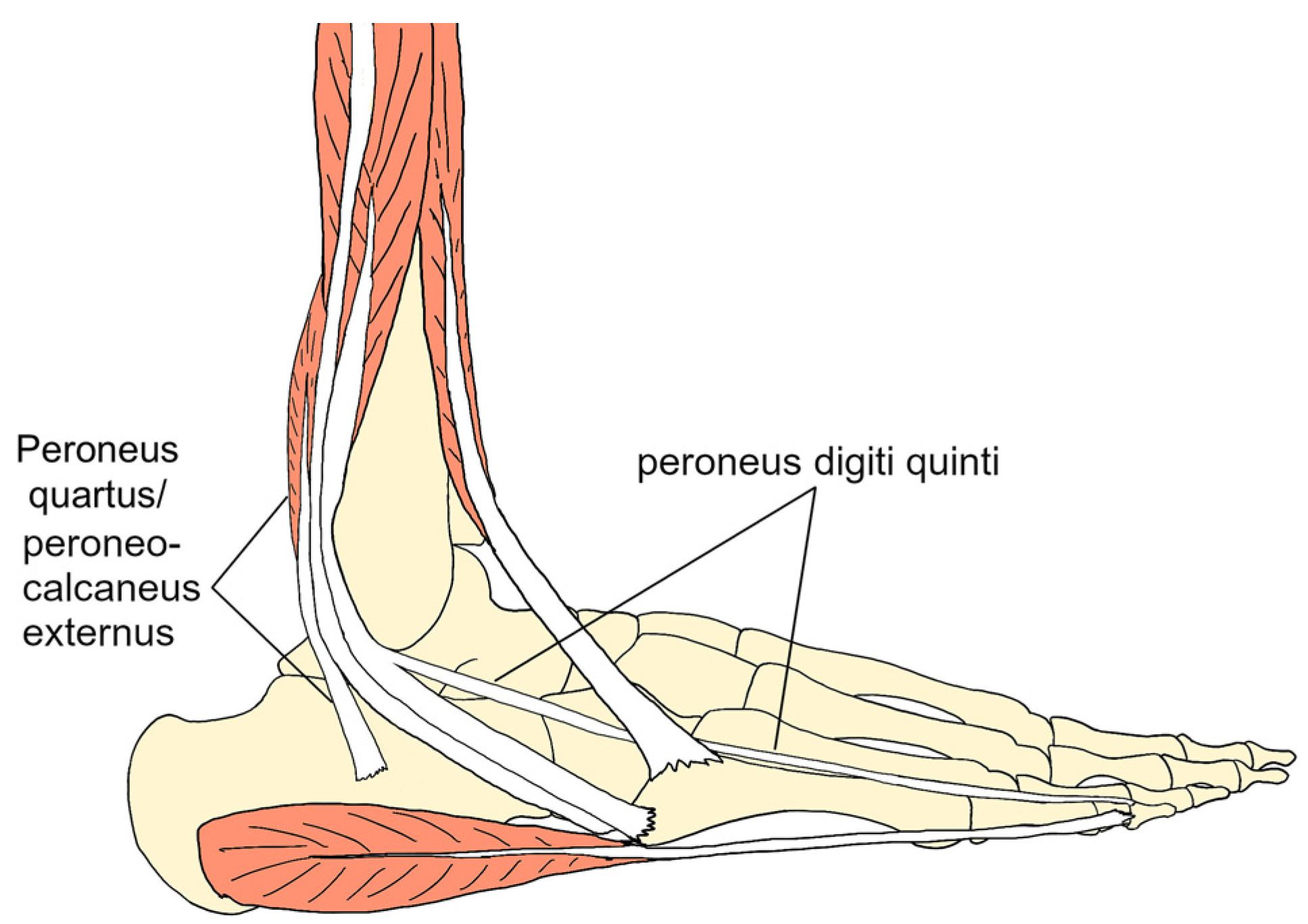
The PQ, also known as the peroneocalcaneus externus, is one of the most common variant muscles in the lateral compartment of the leg. It is found in approximately 21% of the cadavers dissected [
4,
5]. It was present in 3% of 269 limbs in another study [
3]. It is suggested to be an evolutionary modification that is proposed to help in the eversion of the foot during bipedal gait [
4]. In 63% of the cases, the origin is on the lower one-third of the muscular portion of the peroneus brevis, with insertion on the retrocalcaneal eminence [
1,
4]. Although the PQ often originates from the distal part of the peroneus brevis, it has also been shown to originate from the proximal part of the peroneus brevis on rare occasions (
Fig. 1). The PQ can have various insertion points: along the distal end of the retromalleolar groove (3.7%), distal to the fibular groove (3.7%), as well as onto the base and head of the fifth metatarsal (7.4%) [
6]. The muscle originates from the peroneus longus and inserts back into the longus muscle itself, or originates from the peroneus brevis muscle and inserts into the peroneus longus [
6]. When the PQ muscle originates from the peroneus brevis and inserts into the cuboid, it is known as the peroneus cuboidus as well as the peroneus accessorius [
3].
Figure 1.
The location of the peroneus quartus/peroneocalcaneus externus in relation to the peroneus digiti quinti.
Figure 1.
The location of the peroneus quartus/peroneocalcaneus externus in relation to the peroneus digiti quinti.
The PQ has been shown to be the cause of lateral ankle pain associated with swelling, ankle instability, tenosynovitis, and, occasionally, a popping sound when the PQ tendon inserts into the retrotrochlear groove [
7–
9]. Weightbearing casts and other nonoperative treatments typically do not relieve the symptoms [
7–
9]. The symptoms are only relieved when the accessory muscle is excised or sutured onto itself [
7–
9].
Case Report of Lateral Ankle Pain Caused by the PQ.
The case report described by White et al. [
7] mentions a 40-year-old white woman with a yearlong history of lateral ankle pain originally diagnosed as tenosynovitis. Corticosteroids and a weightbearing cast did not relieve the symptoms. However, exploratory surgery revealed the accessory PQ and led to excision of the muscle. After excision of the PQ and months of physical therapy, the patient reported complete symptoms relief [
7].
Peroneus Digiti Quinti.
The PDQ is a triangular accessory muscle that originates from the base of the fibula [
6]. It is also found on the lateral compartment of the leg. Most commonly, the PDQ inserts on the fifth phalanx, sometimes fusing with the peroneus brevis muscle (
Fig. 1) [
6]. There are also four types of incomplete insertions: type 1, the peroneometatarsal muscle inserting on the fifth metatarsal shaft; type 2, the peroneocuboidal muscle inserting on the cuboid; type 3, the external peroneocalcaneal muscle inserting on the calcaneus; and type 4, the peroneomalleolar muscle inserting on the lateral malleolus [
6]. The most common variation of the PDQ is the extension of the tendon from the peroneus brevis inserting on the fifth ray [
6]. This extension was present in approximately 15.5%to 36% of 100 to 102 feet [
6].
Due to the origin of the muscle, the PDQ plays a minor role in the gait cycle, particularly the beginning of heel-off to toe-off, providing stability to the midtarsal joints during propulsion [
2]. However, it usually exists as an asymptomatic, supernumerary muscle [
10]. The PDQ has also been shown to increase the abduction of the fifth metatarsal, increasing irritation along the lateral dorsal cutaneous nerve [
2]. In zoological studies, a shortened PDQ tendon has been hypothesized to lead to overeversion of the foot, also known as talipes valgus [
2]. It can also be the valgus segment of talipes equinovalgus, which causes plantarflexion along with a valgus foot type [
2].
In the findings of this literature review, it was concluded that there are only cadaveric case reports. This is an area that has yet to be explored, and further research needs to be conducted.
Low-Lying Peroneus Brevis Muscle Belly.
The peroneus brevis, a muscle in the lateral compartment of the lower leg, originates on the lateral aspect of the fibula [
6]. The tendon of this muscle runs through the retromalleolar groove, posterior to the lateral malleolus, crosses the calcaneofibular ligament superficially, and passes above the calcaneal peroneal trochlea [
6]. It weaves through the inferior peroneal retinaculum to insert on the styloid process of the fifth metatarsal [
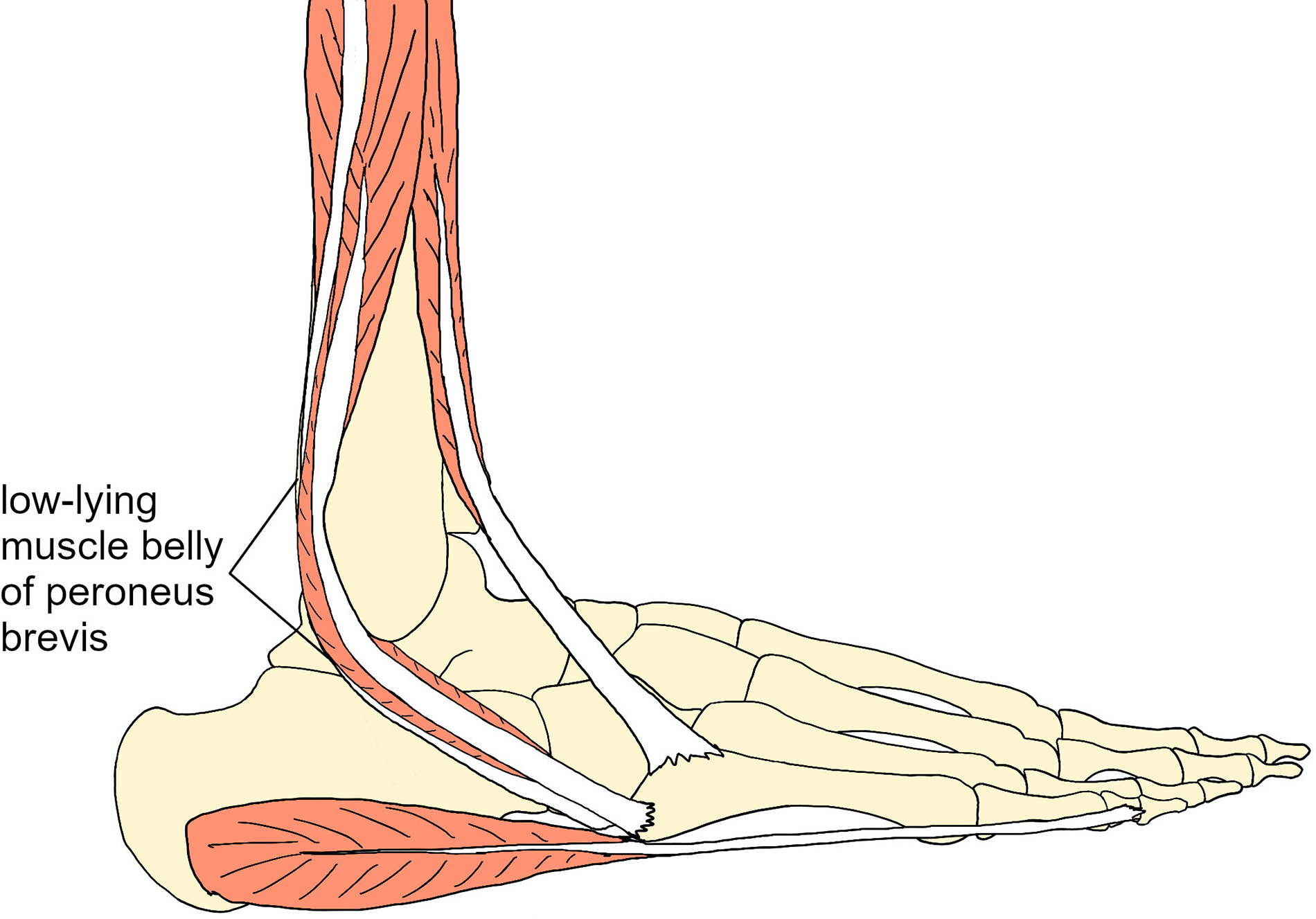
6]. However, variations such as an LLPBM can be present (
Fig. 2).
Figure 2.
The low-lying muscle belly of the peroneus brevis in relation to the peroneus tertius (unlabeled) and flexor digiti minimi (unlabeled).
Figure 2.
The low-lying muscle belly of the peroneus brevis in relation to the peroneus tertius (unlabeled) and flexor digiti minimi (unlabeled).
A low-lying muscle belly is a muscle that stretches farther distally than its normal length [
11]. A low-lying muscle belly can cause muscular tears, tenosynovitis, and in some cases, a subluxation [
11]. The most common complaint of patients is lateral ankle pain [
11]. The LLPBM of the peroneus brevis is usually seen with magnetic resonance imaging (MRI) [
11]. The prevalence of an LLPBM is 62% [
11].
Different foot movements can alter the position of the LLPBM [
12]. During plantarflexion, the muscle was below the fibular groove in five of the 12 cases studied [
12]. However, during dorsiflexion, the muscle was below the fibular groove in 11 of the 12 cases studied [
12]. This can lead to overcrowding in the fibular groove, which can lead to symptoms such as peroneal muscle tears and tenosynovitis [
12]. It may also lead to subluxation [
11]. Through imaging and intraoperative studies in 50 cases, it was demonstrated that a peroneal tear was seen in 80% of patients with an LLPBM [
11]. A buildup of fluid is often seen around a longitudinal tear of the peroneus brevis tendon [
13]. Most patients with a peroneal muscle tear experience lateral ankle pain and instability [
13]. Peroneal tenosynovitis in patients with an LLPBM was the second-most prevalent issue, in approximately 76% of the 50 cases studied [
11]. Subluxation was seen in 20% of the 50 cases studied [
11].
Conservative treatment of LLPBM tears includes the use of nonsteroidal anti-inflammatory drugs (NSAIDs), physical therapy, rest, use of orthoses, and use of an immobilizing cast [
13]. However, depending on the severity of the tear, a surgical option may be necessary [
13]. Surgical options include an end-to-end anastomosis of the muscle or a tenodesis with the adjacent peroneus longus tendon [
13]. Sometimes, a tendinous graft may also be beneficial [
13].
Case Report of Chronic Lateral Ankle Pain Caused by an LLPBM.
A case by Sobel et al. [
5] discusses a 30-year-old female athlete with a 4-year history of pain along the lateral aspect of her right ankle. The patient stated that there was some initial twisting of the right ankle while playing tennis. During physical examination testing for active dorsiflexion and plantarflexion, the physician noted that the peroneal tendon subluxed from behind the lateral malleolus, eliciting pain [
5]. A notable swelling was also present around the tendon sheath. The patient had normal radiographic findings [
5].
On surgical exploration, an LLPBM was discovered to be filling the fibular groove [
5]. There was also a partial-thickness 1-cm tear in the tendon for the LLPBM [
5]. Synovectomy and resection of the muscle belly 3 cm proximal to the fibular groove were performed to allow the muscle to return to its anatomical position. This allowed decompression of the area and prevented subluxation [
5]. Two months postoperatively, the patient was able to return to full activity [
5]. One year postoperatively, the patient reported no pain, ankle instability, or dislocation [
5].
Posterior Compartment
Flexor Digitorum Accessorius Longus.
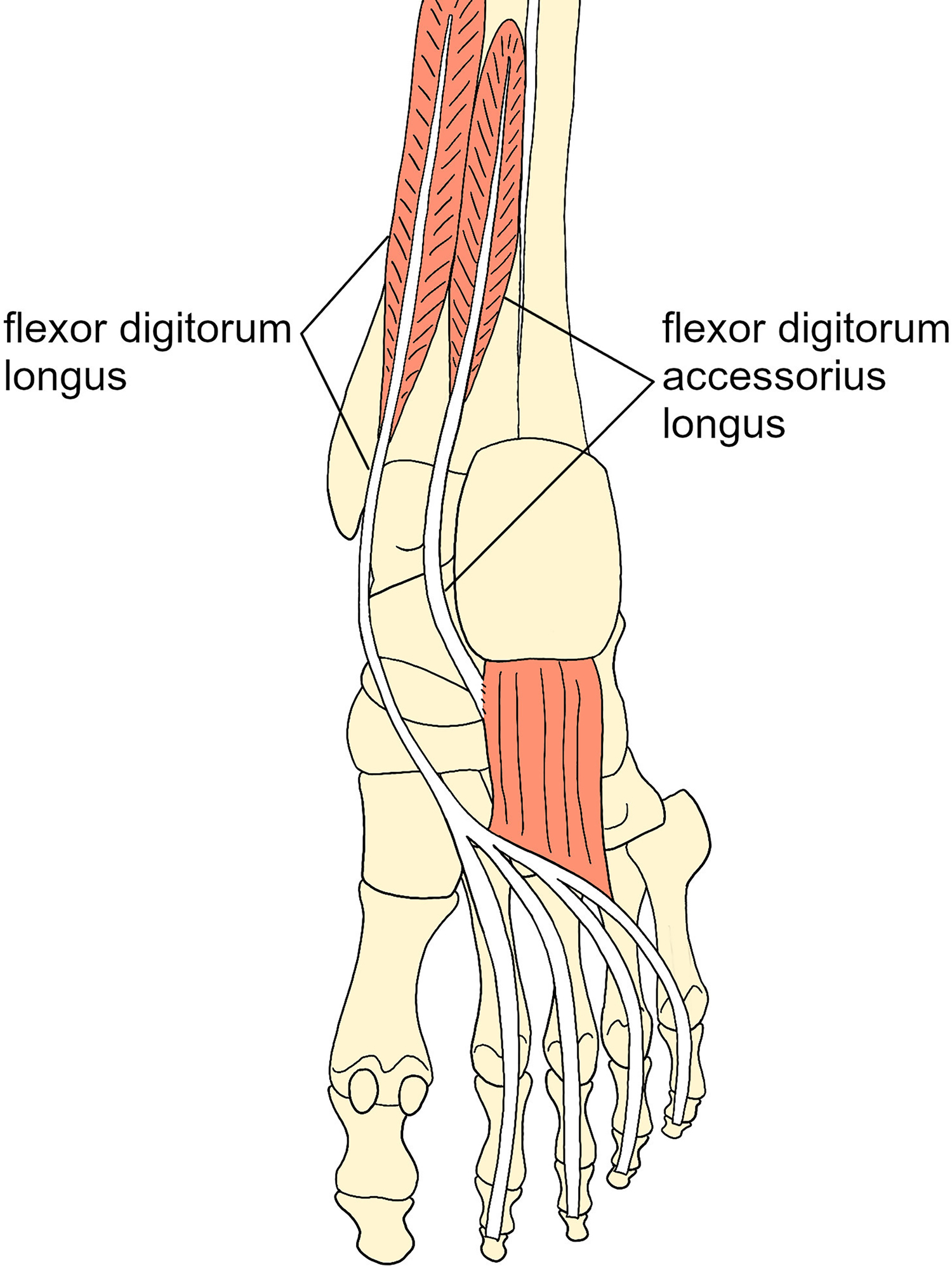
The FDAL is a muscle that is found in the posteromedial compartment along with the soleus accessorius, PCI, TCI, and low-lying muscle belly of the flexor hallucis longus (FHL) [
14]. Among these, the FDAL is the most common supernumerary muscle in the medial compartment of the leg (
Fig. 3) [
14]. The frequency of FDAL is 2% to 13% [
14]. The muscle originates from the medial aspect of the tibia and fascia of the deep posterior compartment of the leg, as well as from the lateral, distal aspect of the fibula, the FHL, and any deep posterior compartment muscles [
14]. It can be either single-headed or double-headed [
14]. It runs along superficially and posteriorly with the tibial nerve, eventually descending below the flexor retinaculum and through the tarsal tunnel, a fibro-osseous structure [
14]. It courses through the porta pedis and inserts on either the flexor digitorum longus (FDL) or the quadratus plante [
15].
Figure 3.
Flexor digitorum accessorius longus variant with flexor digitorum longus.
Figure 3.
Flexor digitorum accessorius longus variant with flexor digitorum longus.
The FDAL has been shown to be a cause of tarsal tunnel syndrome (TTS), which is described as an impingement of the posterior tibial nerve, in 12.2% of the cases [
14]. In TTS caused by FDAL, the muscle courses anteriorly to the FHL tendon, between the FDL and the FHL tendons [
14]. Clinically, patients with TTS associated with FDAL present with a Tinel sign as well as tenderness around the medial malleolus [
14]. Electroneurodiagnosis and MRI are common tools to assist in diagnosing TTS due to an FDAL [
14].
Conservative treatment options include shoe modifications, custom orthoses, supportive taping, and administration of NSAIDs [
14]. However, success is present in 30% of the cases [
14]. If conservative treatment is unsuccessful, surgical treatment may be an option. Because the muscle has various insertion points, surgery is difficult without further dissection [
14]. Further dissection has shown that the nerve can be compressed by either the tendon wrapping around the nerve or possibly the muscle impinging the nerve during contraction [
14]. In addition, there are further effects, such as plantarflexion of the lesser digits 2 to 5, as proximal tension is applied [
14,
15]. Due to this, although there has been some success, surgical excision of the muscle is not always successful in treating TTS [
14]. Postoperative studies conducted by Lau and Daniels [
16] reveal that approximately 79% to 95% of patients are satisfied with their surgical outcomes [
15]. An earlier study by Pfeiffer et al. [
17] demonstrates a satisfaction rate of 44% based on a pool of 30 patients, comparing the results of electodiagnostic studies and level of satisfaction.
Case Report of Ambiguous Medial Ankle Pain.
A case report highlighted by Saar and Bell [
18] chronicled a 47-year-old African American woman who presented with a yearlong history of medial ankle pain and swelling. The pain was worse while weightbearing and was aching in quality. She had no previous trauma or injury to the area. On physical examination, the patient showed ambiguous Tinel and Valleix signs, mild nonpitting edema, and resistance to inversion and plantarflexion. Pain on palpation was also noted around the area, extending to the area of the navicular. Weightbearing examination revealed abduction of the forefoot, also known as the “too many toes” sign, as well as the inability of the patient to perform the single-limb heel-rise test. This led physicians to consider posterior tibial tendon dysfunction. The MRI revealed the presence of FDAL. The patient opted to have it surgically excised. Surgery revealed an accessory muscle as well as inflammatory tissue, which may have been compressing the posteromedial area. After surgical excision, the patient was given strict nonweightbearing instructions for the extremity until 4 weeks postoperatively, when she was given a pneumatic boot. At the end of 16 weeks postoperatively, the patient revealed negative Tinel and Valleix signs, as well as no pain around the area. She was in a supportive boot for 8 weeks and returned to normal activity [
18].
Soleus Accessorius.
The soleus accessorius, or accessory soleus muscle, is a separate muscle belly related to the soleus, inserting posterior to the medial malleolus (
Fig. 4) [
19]. It is located between the Achilles tendon and the tibia, is sometimes quite large, and can be the cause of numerous pathologies [
19]. The soleus accessorius muscle can originate from three points: the oblique line of the tibia, the deep fascia of the leg, or the deep surface of the soleus muscle [
6]. It inserts medially on the os calcis and is typically posterior to the posterior tibial artery and vein/tibial nerve neurovascular bundle [
6]. The prevalence of the soleus accessorius muscle varies from 0.7% to 5.5% and may depend on the sex of the individual [
19]. The soleus accessorius was present in 2.4% of males and 2.1% of females [
19]. One study demonstrated that females were twice as likely as males to have a bilateral presentation of the soleus accessorius [
19].
Figure 4.
Soleus accessorius in relation to the triceps surae (the soleus and gastrocnemius muscles).
Figure 4.
Soleus accessorius in relation to the triceps surae (the soleus and gastrocnemius muscles).
Most patients who have the soleus accessorius muscle are asymptomatic; however, it may appear as a protruding mass that may be misidentified as a tumor [
19,
20]. Although uncommon, it usually becomes more apparent in the late teens, when higher amounts of activity lead to hypertrophy of the muscles [
20]. The soleus accessorius muscle can cause impingement of the posterior tibial artery or can cause enormous pressure on the tibial nerve, eliciting pain. Conservative treatment, including NSAIDs, rest, elevation, braces, and physical therapy, is the first step for pain management [
19]. Patients may also benefit from avoiding pain-producing activities, massage therapy of the calf, and exercises that stretch and strengthen the gastrocnemius, soleus, and Achilles tendon [
19]. Failure of conservative treatment prompts surgical treatment.
Case Report of Posteromedial Ankle Pain Due to a Soleus Accessorius.
Christodoulou et al. [
20] discussed a 17-year-old male athlete who also presented with a soft-tissue mass posteromedially on the left ankle. The patient reported increased pain while running and jumping, and relief with rest. Physical examination showed a mass lying posterior to the medial malleolus, between the flexor tendons and the calcaneal tendon, stated to be a nonfluctuating and painless mass. Exploratory surgery revealed a well-defined muscular structure that lies posterior to the medial malleolus. Surgical excision of the muscle was performed. Postoperatively, the patient was able to return to full activity 8 weeks later. He reported no symptoms even 16 years postoperatively [
20].
Low-Lying FHL Muscle Belly.
The FHL originates on the posterodistal two-thirds of the fibula and passes through the posterior talar groove as well as the inferior surface of the sustentaculum tali [
6,
21]. It then proceeds to penetrate the medial intermuscular septum, along with the FDL, and enter the medial compartment of the foot. There is a brief anastomosis over the anterior segment of the os calcis of the FHL and the FDL noted as the master knot of Henry [
6]. The tendon of the FHL proceeds to pass through the intersesamoid interval of the hallux and inserts onto the distal phalanx [
6].
Anatomical variations, such as the low-lying muscle belly, may lead to tenosynovitis and functional hallux limitus [
21]. The FHL belly typically lies just proximal to the fibro-osseous tunnel posterior to the talus of the medial aspect of the foot [
21]. The abnormal position of the FHL belly causes the muscle to get wedged into this tunnel during times of extreme tension, such as when the foot is in full plantarflexion, as when ballet dancers are dancing en pointe, causing inflammation and fluid collection around the tendon [
21]. The incidence of functional hallux limitus is increased in patients with a low-lying muscle belly because the distal part of the muscle belly is extended further and jammed into the retrotalar pulley during dorsiflexion of the hallux [
22].
Of note, however, an anomalous FHL belly may make hindfoot scope insertion safer because the distance between the neurovascular bundle and the FHL tendon is larger when the variant is present [
23].
Case Report of Posteromedial Ankle Pain in an Athlete.
Theodore et al. [
24] described a case report of a 23-year-old long-distance runner with a 6-month history of posteromedial ankle pain. The patient reported no significant improvement with conservative measures such as limitation of running, anti-inflammatory medications, and orthotic devices [
24]. On physical examination, pain was increased with active and passive motion of the great toe interphalangeal joint. Her clinical examination demonstrated moderate swelling and tenderness of the FHL, and the MRI showed a well-defined fluid collection around the tendon. The patient then underwent further conservative therapy with a short course of immbobilization in a short-leg cast as well as physical therapy and strengthening exercises. However, as her pain persisted, surgical treatment with operative exploration was considered. Operative exploration of the FHL tendon sheath revealed an abnormal extension of the muscle belly below the flexor retinaculum along with several milliliters of clear fluid that was drained. The belly was excised and the tendon sheath was released. After a course of physical therapy, the patient returned to her previous running program without discomfort [
24].
Peroneocalcaneus Internus.
The PCI is a rare accessory muscle found on the medial aspect of the ankle.
25-26 The origin of the PCI is on the fibula, just distal to the origin of the FHL muscle [
25-
26]. The PCI is often mistaken for the FDAL muscle. However, there are a few important differentiating factors. Compared with the FDAL, the PCI is more laterally located. In addition, the PCI inserts on the calcaneal tubercle, whereas the FDAL has an insertion on the quadratus plantae [
25]. The PCI has been shown to be present in children with a trisomy of the distal four-fifths of chromosome 13 [
27].
Case Report of Posterior Ankle Pain.
A 2005 case report describes a 14-year-old boy who presented with posterior ankle pain. After evaluation of the MRI results, the surgeons decided to remove the PCI muscle, and after recovery, the patient’s pain subsided [
28]. The PCI has also been shown to be involved in impingement and TTS [
29]. The PCI for the most part is asymptomatic, but there have been cases in which ankle pain and limited range of motion are present [
25].
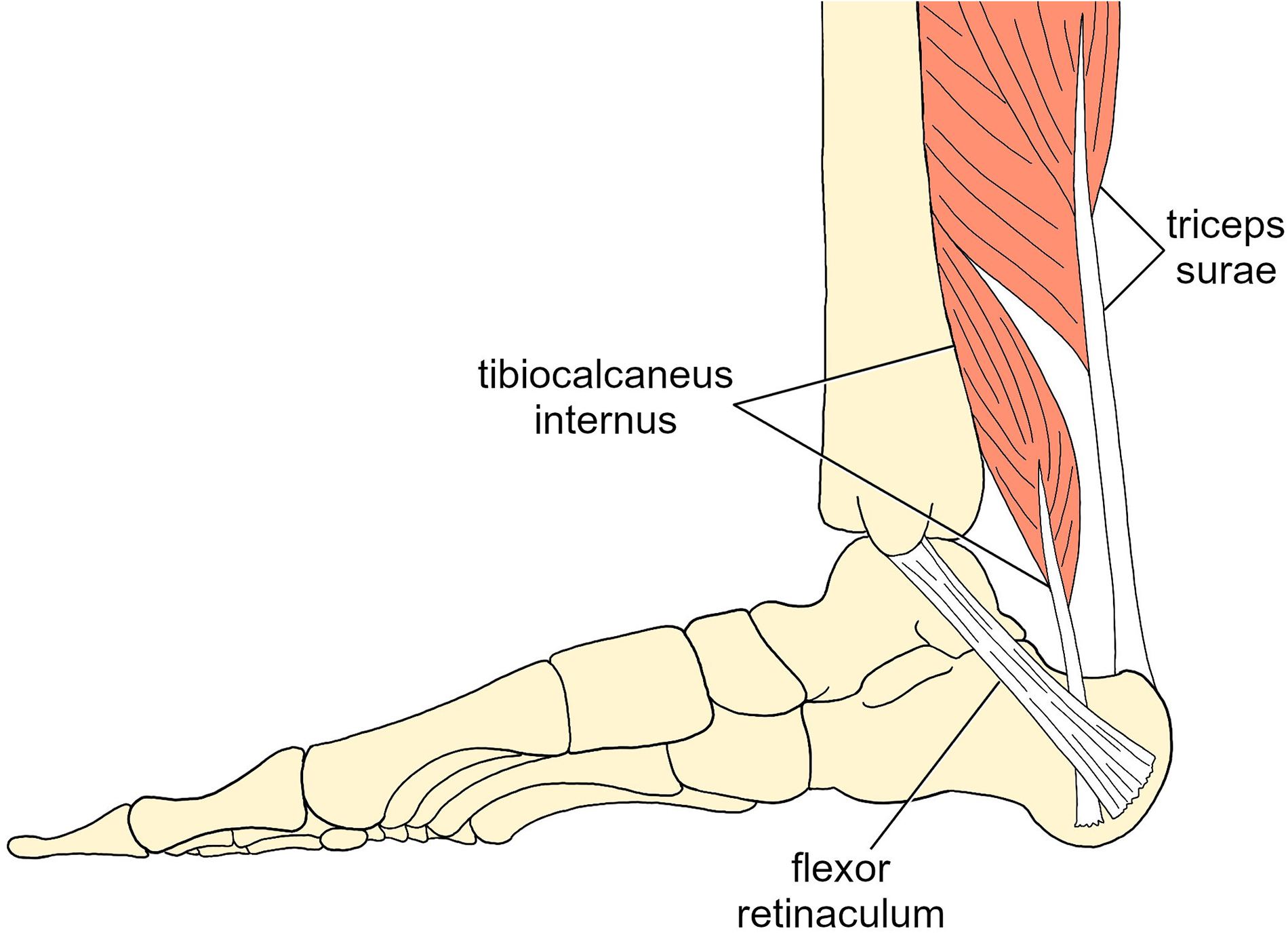
Tibiocalcaneus Internus.
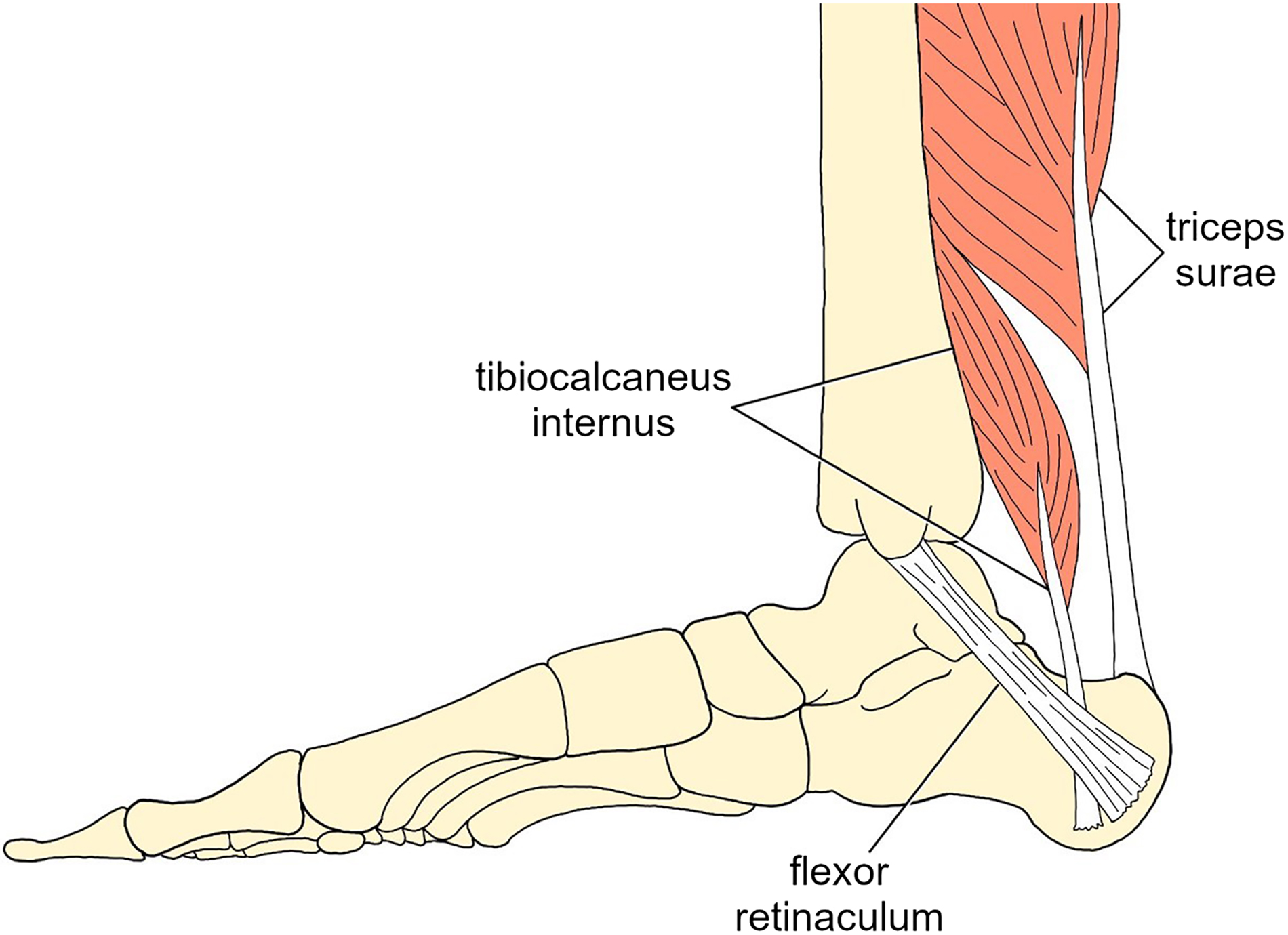
The TCI is an accessory muscle on the posteromedial compartment that originates from the medial crest of the tibia and inserts on the os calcis, anterior to the Achilles tendon (
Fig. 5) [
6]. It can be large, including a muscular portion up to 17 cm with a 4-cm tendinous portion [
6]. It is always located posterior to the posterior tibial neurovascular bundle [
6]. The differentiating factor for the TCI from the soleus accessorius is that the TCI passes under the flexor retinaculum to attach farther down on the calcaneus than the latter [
30].
Figure 5.
Tibiocalcaneus internus inserting further down on the calcaneus than the soleus.
Figure 5.
Tibiocalcaneus internus inserting further down on the calcaneus than the soleus.
Given the position of the muscle and the closeness to the FDAL, it is a possible cause of TTS [
29]. Because the TCI is adjacent to the FDAL, being nearly indistinguishable at times, dynamic ultrasonography or MRI may be performed to better visualize the position of the muscle [
1]. In a case series that evaluated seven patients with TTS due to an anomalous muscle, six had TTS due to the FDAL and one had TTS due to the TCI [
31]. Surgical treatment leads to partial, and in some cases complete, relief of the symptoms [
31]. However, due to its infrequency, the TCI has a lack of associated complications and is often not considered as a cause of TTS [
29].
In the present findings, we concluded that there are only cadaveric case reports. This is an area that has yet to be explored and warrants further research to make more robust conclusions.
Tables 1 and
2 highlight the supernumerary muscles in the lateral and posterior compartments, respectively; their frequency; and, if any, symptomatic etiologies along with both conservative and surgical treatments.
Table 1.
Supernumerary Muscles of the Lateral Compartment
Table 1.
Supernumerary Muscles of the Lateral Compartment
Table 2.
Supernumerary Muscles of the Posterior Compartment
Table 2.
Supernumerary Muscles of the Posterior Compartment
Discussion
Supernumerary muscles of the leg and foot often present as space-filling masses similar to tumors, and they can cause conditions such as neuropathy, tenosynovitis, TTS, and overeversion of the foot, among many other possible lower-extremity pathologies. However, they are often not considered when making a diagnosis. Often, patients complain of ankle pain. Many supernumerary muscles are difficult to detect on a physical examination.
Identification methods for these muscles differ, but MRI seems to be the most common tool. In the example of a case report of the PQ muscle, the muscle is initially identified through the use of MRI and is then confirmed via exploratory surgery [
8]. Also, MRI is useful when a PDQ is suspected, with exploratory surgery being another common tool used to help identify the muscle [
2,
32]. In identifying a longitudinal tear of a low-lying peroneus brevis tendon, T2-weighted MRI is useful in revealing the pathologic splits in the tendon as well as tears caused by other pathologic conditions and muscles [
13]. The LLPBM and low-lying FHL can be seen with MRI, and the FDAL can be seen with MRI and electrodiagnosis [
11,
14,
22]. The soleus accessorius is also identified with MRI and is seen as a soft-tissue mass [
33]. Although the PCI and TCI are usually seen by MRI, the TCI can also be seen by a dynamic ultrasound because it is adjacent to the FDAL [
1,
28].
Most research concerning the PDQ has been based on cadaveric studies, so there are not many clinical studies to propose treatment plans for symptoms related to the PDQ. Because it is superficial, we propose a possible surgical excision of the muscle if any symptoms caused by the muscle were to be identified. However, this muscle warrants further research from the clinical perspective, especially in terms of treatment.
Although supernumerary muscles are usually asymptomatic, they can cause ankle pain, instability, tenosynovitis, and many other issues. Physicians should consider further exploration of the surgical site for any possible muscle variants that could be contributing to or are the direct cause of the problem. Although conservative treatment has been shown to benefit patients to some extent, surgical treatment, including excision of the muscle, has resolved the symptoms for many patients.
Conclusions
Although typically asymptomatic, supernumerary muscles have been shown to cause pain, tenosynovitis, TTS, subluxation, and other symptoms. Knowledge of these accessory muscles is imperative to preventing further pain and unnecessary treatment. The presence of these muscles is useful to anatomists, radiologists, clinicians, and surgeons in guiding their diagnosis and treatment plan.