Fractures of the ankle are common injuries that represent 17% of all hospitalized fractures.[
1] The medial malleolus is a key element in ankle stability. However, the optimal fixation method for these injuries still remains controversial, ranging from Kirschner wire, tension band, or screw-only methods to various plate applications.[
2] The controversy becomes even more prominent in vertical shear fractures, which occur due to a supination adduction force over the medial malleolus articular surface.[
3] Neutralization plate fixation of these vertical fractures have been found to be biomechanically superior to screw fixations.[
2] On the other hand, compression achieved by screws passing the fracture line perpendicularly creates an important benefit in screw fixation methods.[
4,
5] To combine these advantages of both methods, we developed a novel medial malleolus plate comprising two holes for cannulated compression screws and a sliding compression mechanism.
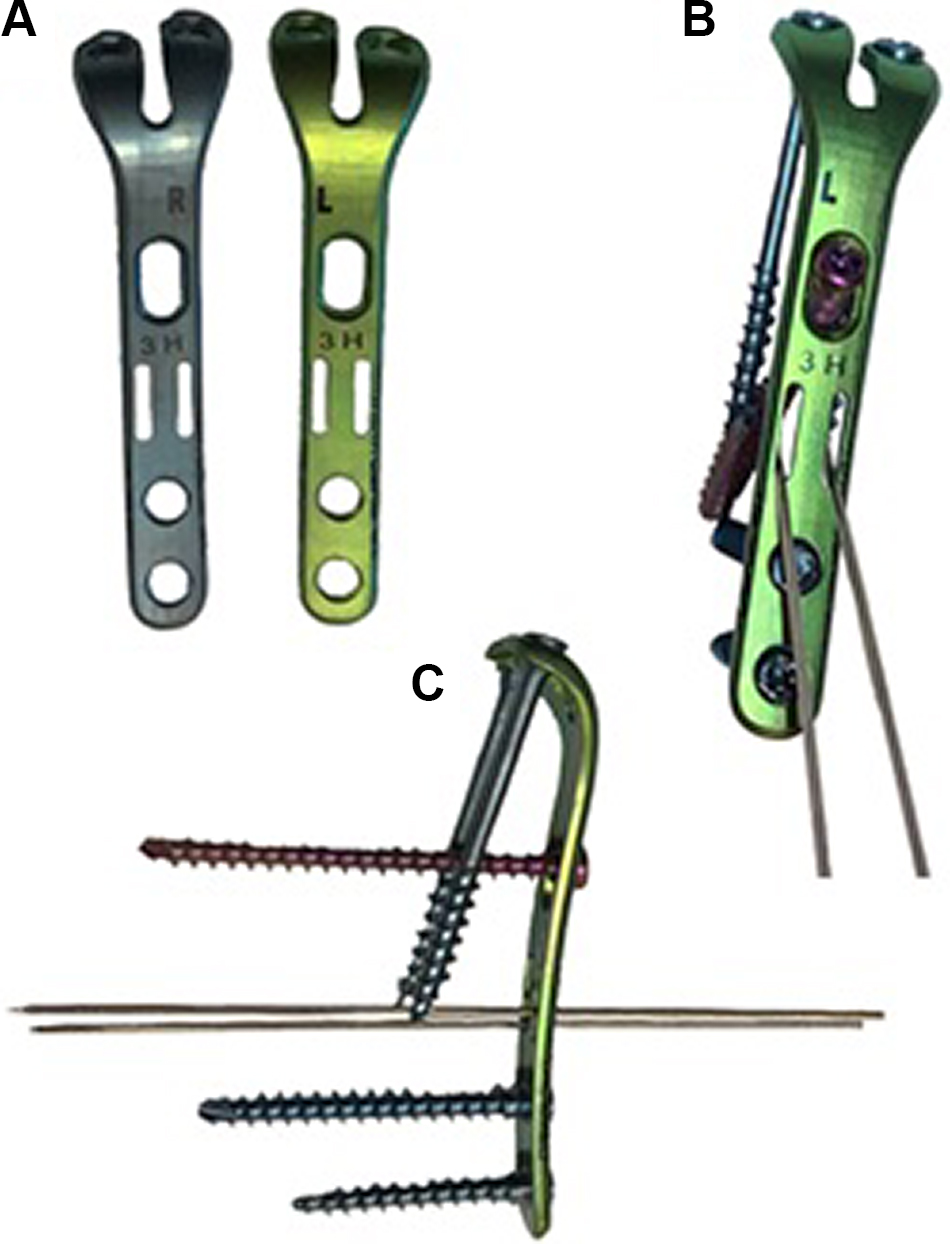
In this biomechanical study, we aimed to compare the stiffness and load to failure values of a novel medial malleolus 3.5-mm compression plate (MP) and a 3.5-mm one-third tubular plate (TP) (
Fig. 1). We hypothesized that the MP would achieve higher load to failure values and a stiffer fixation construct compared with the TP.
Figure 1.
Anteroposterior (A and B) and lateral (C) views of the novel medial malleolus compression plate. This plate can be used anatomically to the left and right sides.
Figure 1.
Anteroposterior (A and B) and lateral (C) views of the novel medial malleolus compression plate. This plate can be used anatomically to the left and right sides.
Materials and Methods
This study was conducted in the Biomechanics Laboratory at Katip Çelebi University, Izmir, Turkey, between June 1 and August 31, 2021. Approval was obtained from the Biomechanics Department before the start of the study.
Fourteen identical synthetic third-generation composite polyurethane bone models of the right distal tibia were randomly separated into two groups. Fracture models were created with a custom-made osteotomy guide to provide the same fracture characteristics in every sample (AO/OTA type 44A2). Fractures were reduced and a novel MP (patent application No. TR 2019/17934) was applied to bone models in the MP group and a TP was applied to the TP group. All five of the holes of both constructs were filled with one 3.5-mm nonlocking cortical screw, two 3.5-mm locking cortical screws, and two 4.0-mm partially threaded cancellous screws.
Fixation Technique
For the MP group, the medial malleolus was reduced anatomically using a bone clamp. After that, the novel MP was placed. The distal two holes allow the use of Kirschner wires; over the Kirschner wires, the bone was drilled using a sleeve. Also, a Kirschner wire was placed in the middle part of the plate. After the placing of the distal two 4.0-mm partially threaded cancellous screws, the plate was slid proximally and compression was maintained by a 3.5-mm nonlocking cortical screw. Two proximal 3.5-mm locking cortical screws were placed to complete the fixation.
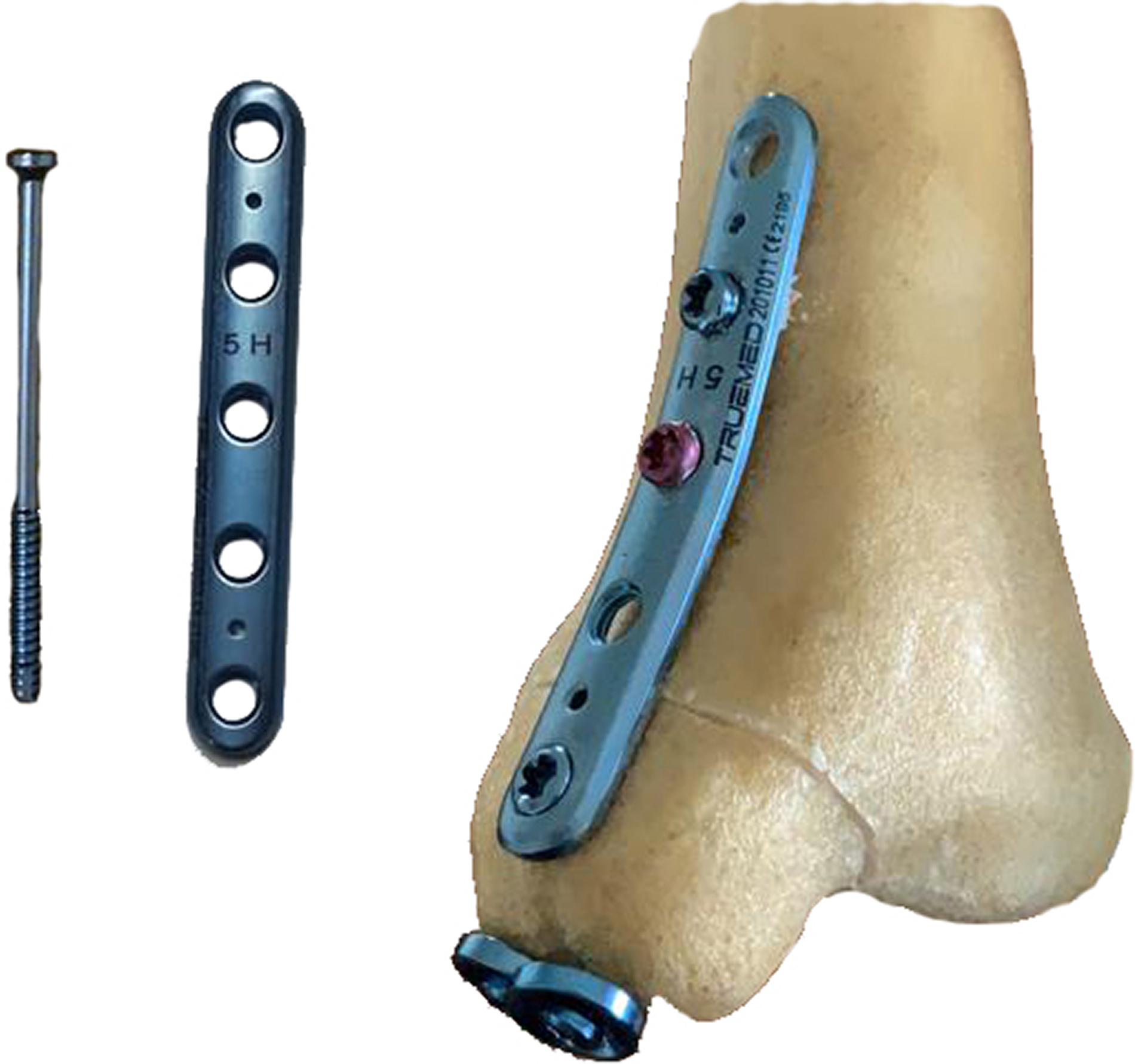
In the TP group, after reduction and using a Kirschner wire as a guide, the medial malleolus was drilled and two screws were placed. To obtain the buttress effect, a TP was used and fixation was completed (
Fig. 2).
Figure 2.
A 3.5-mm one-third tubular plate and fixation on a synthetic bone model with two 4.0-mm partially threaded cancellous screws.
Figure 2.
A 3.5-mm one-third tubular plate and fixation on a synthetic bone model with two 4.0-mm partially threaded cancellous screws.
Biomechanical Testing
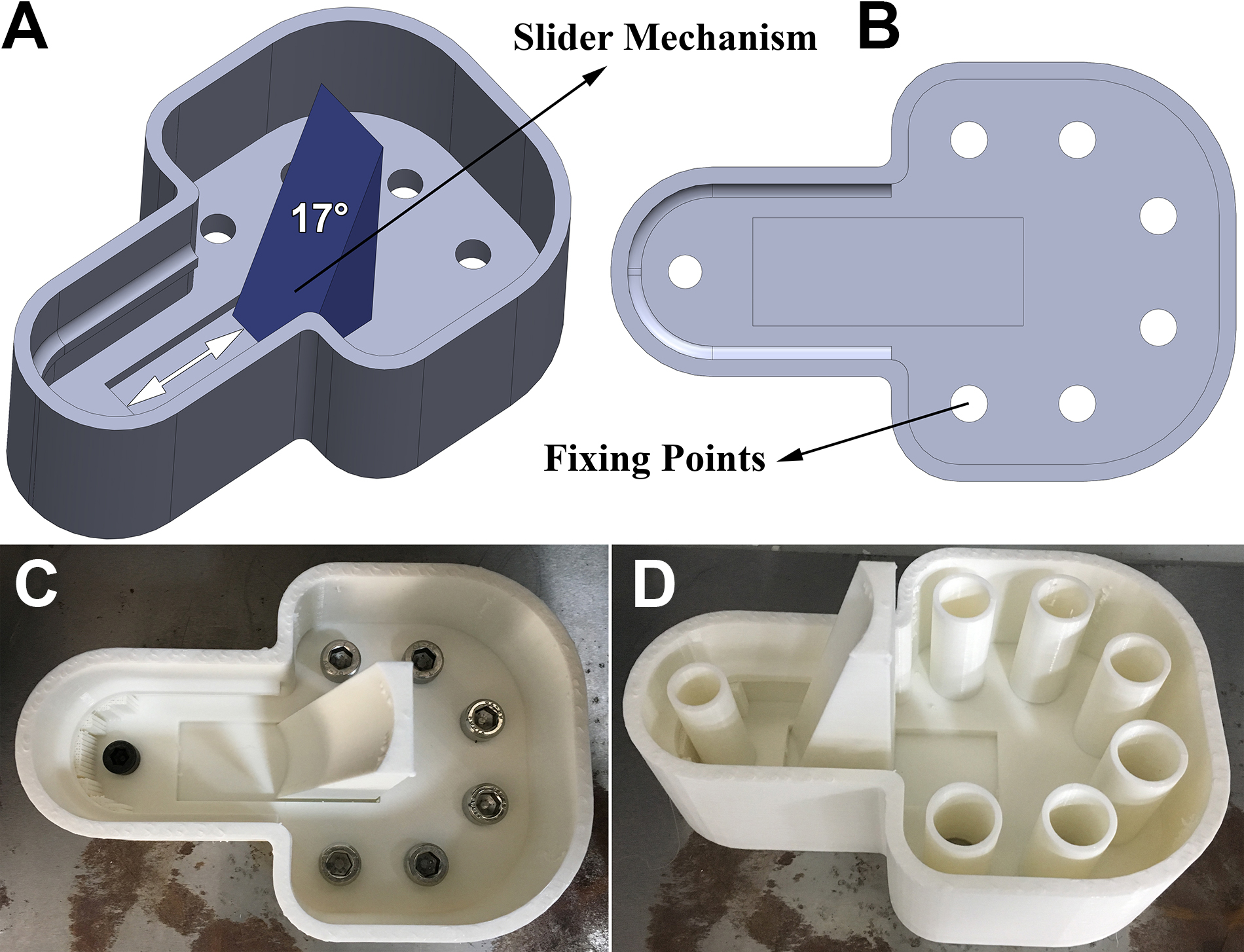
The biomechanical testing was performed using a static tester (Shimadzu AG-IC; Shimadzu Corp, Kyoto, Japan). A fixing gripper compatible with the tester was designed to apply force to specimens at angulation of 17° using CAD software (SolidWorks, Version 2016; SolidWorks Corp, Waltham, Massachusetts). This apparatus consists of fixing points, cementing, and a slider mechanism (
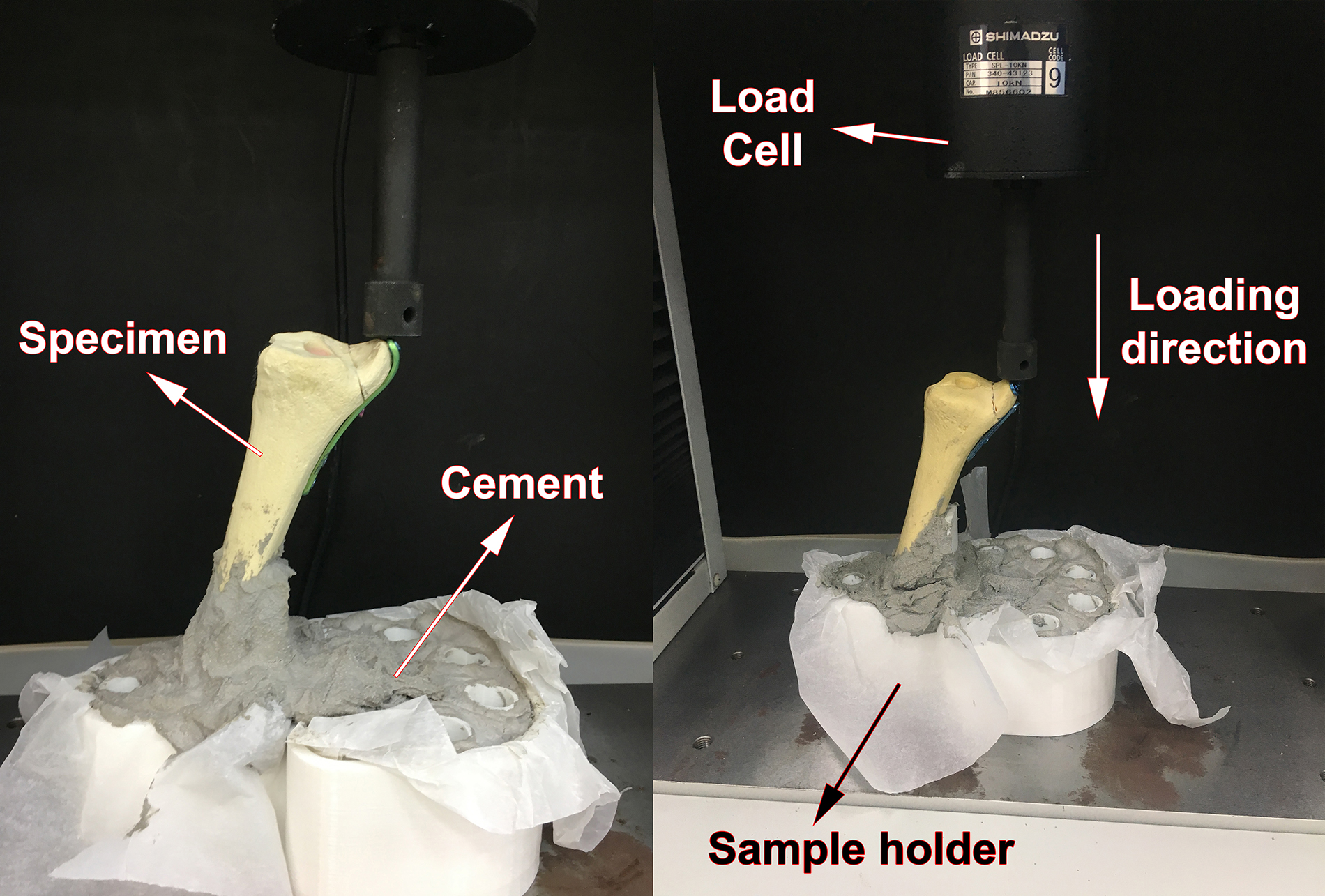
Fig. 3). Bone specimens are placed in the gripper, and horizontal movement is provided so that the load with the slider mechanism is precisely on the head of the bone. Parts of the gripper were transferred to three-dimensional (3-D) printing software (Simplify3D, Version 4.0; Simplify3D, Cincinnati, Ohio) as an STL file. They were formed with polylactic acid material at 80% infill using a 3-D printer (Grand Pharaoh XD 40; Mass Portal SIA, Riga, Latvia). The prepared specimens were fixed in a rigid way using tile adhesive (C1TE), with approximately 36 hours of waiting time. A specimen of the tibia bone placed in the tester is shown in
Fig. 4. Force/displacement and the load to failure values were recorded. The load value at the failure point is known as the load to failure. It may be described as the location where there is a sudden decrease in load after the deformation. In this study, we accepted the failure point as a 2-mm displacement from the starting point of the test because during the experiments, sudden decreases in force values were observed after 2 mm.
Figure 3.
A, Three-dimensional drawing of the sample holder that provides an angle of 17°. B, Top view of the fixing points of the apparatus to the static tester. C, Three-dimensional printing of the holder and its placement on the testing device. D, Adjusting the slider mechanism for aligning the head of the bone precisely with the clamping mechanism.
Figure 3.
A, Three-dimensional drawing of the sample holder that provides an angle of 17°. B, Top view of the fixing points of the apparatus to the static tester. C, Three-dimensional printing of the holder and its placement on the testing device. D, Adjusting the slider mechanism for aligning the head of the bone precisely with the clamping mechanism.
Figure 4.
Fixing the tibia bone specimens firmly with cement and aligning them to the compression apparatus for testing.
Figure 4.
Fixing the tibia bone specimens firmly with cement and aligning them to the compression apparatus for testing.
Pretesting was performed to prevent potential changes between anatomical bone models. The pretest was applied as a 10-N preload for calculating the elastic modulus of bones. Testing was performed at a 1-mm/min speed until 2-mm displacement in the fracture line.
Statistical Analysis
Test results were analyzed to investigate whether there is a significant difference between groups with a statistical software program (IBM SPSS Statistics for Windows, Version 25.0; IBM Corp, Armonk, New York) for forces at four different displacements. The P value was calculated using the independent t test. If P < .05, it can be deduced that there is a significant difference between these two groups for loading.
Results
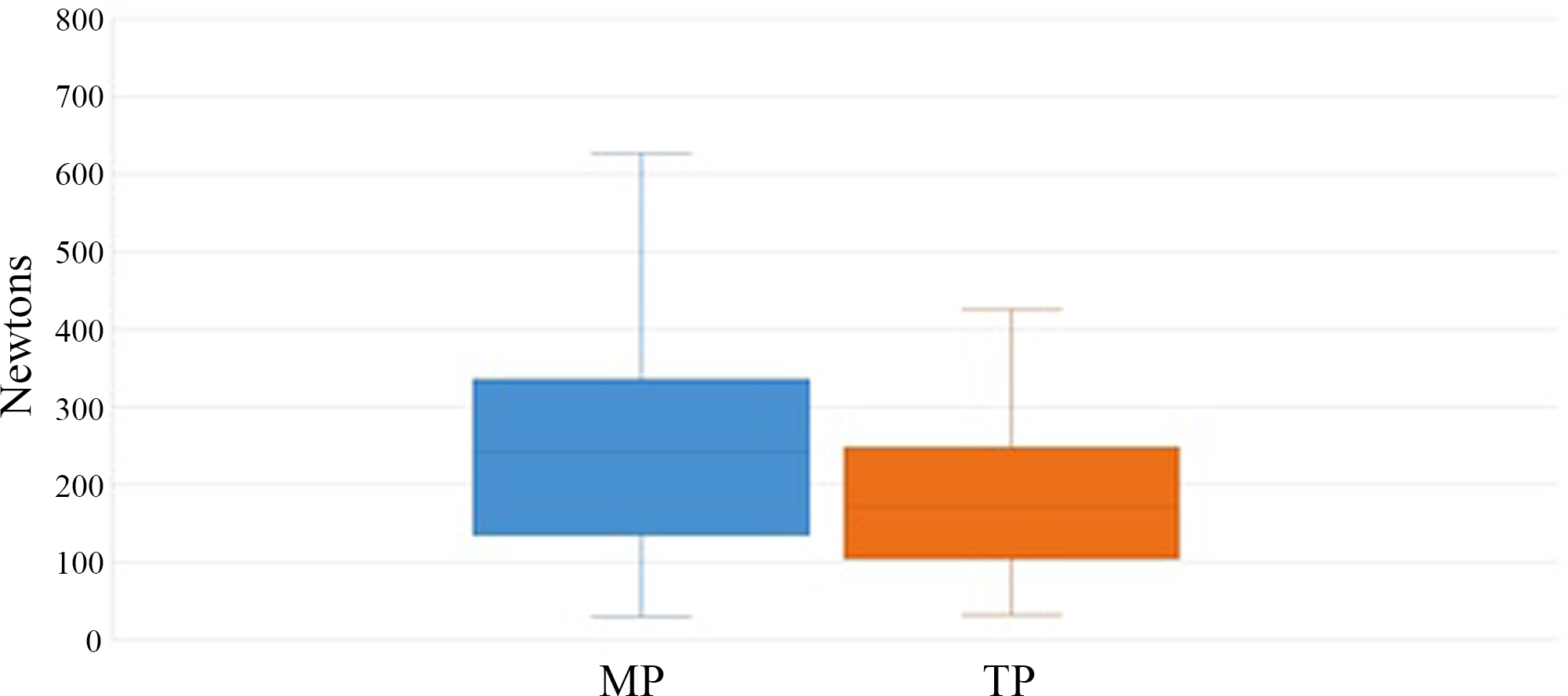
Force displacement values at 0.5, 1.0, 1.5, and 2.0 mm were analyzed separately. The force required to create displacement in the MP group was twice that in the TP group. There was a significant difference between the two groups in all of the displacement amounts (
P = .006,
P = .005,
P = .007, and
P = .015 for 0.5, 1.0, 1.5, and 2.0 mm, respectively) (
Table 1). The load to failure of the two plates is shown in
Fig. 5.
Table 1.
Biomechanical Comparison of the Novel Medial Malleolus Compression Plate (MP) and the 3.5-mm One-third Tubular Plate (TP)
Table 1.
Biomechanical Comparison of the Novel Medial Malleolus Compression Plate (MP) and the 3.5-mm One-third Tubular Plate (TP)
Figure 5.
Load to failure of the novel medial malleolus compression plate (MP) and the 3.5-mm one-third tubular plate (TP). The horizontal bar inside the boxes indicate the median; the upper whiskers indicate the highest failure load values in the data set; the lower whiskers show the minimum value in the same data set.
Figure 5.
Load to failure of the novel medial malleolus compression plate (MP) and the 3.5-mm one-third tubular plate (TP). The horizontal bar inside the boxes indicate the median; the upper whiskers indicate the highest failure load values in the data set; the lower whiskers show the minimum value in the same data set.
Discussion
The main finding of this study is that the novel MP provided higher load to failure values compared with the TP on osteotomized synthetic bone models to create AO/OTA type 44A2 fractures.
The medial malleolus has a key role in providing ankle stability. In treatment of medial malleolar fractures, various types of implants have been tried. The optimal fixation method remains controversial. Kirschner wire, tension band, and screw are the methods that are most preferred by orthopedic surgeons.[
2] Parallel screw fixation is the most popular method owing to the excellent compression achieved with this implant.[
5,
6]
The controversy becomes even more prominent in vertical shear fractures, which occur due to a supination adduction force over the medial malleolus articular surface.[
3] Neutralization plate fixation of these vertical fractures have been found to be biomechanically superior to screw fixations.[
2] Some authors suggest the hook plate technique in fixation of medial malleolar fracture.[
7,
8]
Jones et al[
8] compared three different constructs for fixation of medial malleolar fracture. The results of their study showed that the antiglide plating technique is biomechanically superior to the hook plate. In this study, only 3.5-mm nonlocking cortical screws were used in all of the models. Considering that the fracture site is the metaphyseal region and that these fractures can develop in osteoporotic bone, the use of locking screws becomes essential. The novel medial malleolus model has a design that allows the use of both locking and nonlocking cortical screws. Vajapey et al[
7] also stated that the hook plate they used in their studies allowed cortical, cancellous, and locking screw options as an advantage. Unlike the hook plate’s design, in the present plate design there are two distal holes that allow the fixation of the medial malleolus.
A study in a cadaveric model by Pollard et al[
9] demonstrated that 3.5-mm bicortical screws have greater pullout strength compared with 4.0-mm partially threaded cancellous screws. In the present study, we used 4.0-mm partially threaded cancellous screws in both groups. The novel plate allows the use of both bicortical and cancellous screws.
Anatomical reduction and rigid fixation are essential for a better outcome and satisfactory results. However, the anatomical reduction is difficult in medial malleolar fractures with small fragments and bone loss. Therefore, instead of screw-only fixation, the hook plate is recommended by some authors.[
7,
8] Also, for a vertical shear fracture of the medial malleolus, the TPs are used for a buttress effect.[
10] The novel plate provides a buttress effect and allows placing two screws for the medial malleolus. This study presented a rigid fixation with the novel MP.
Toolan et al[
11] concluded that an antiglide plate, with or without a distal lag screw, does not offer any advantage over lag screw fixation for the clinical treatment of vertical shear fractures of the medial malleolus. On the contrary, this study showed that the load to failure value of the novel plate was higher than that of the one-third semi-TP with distal lag screws.
Although various fixation methods have been described, two 3.5-mm partially threaded cancellous screws or tension band wire is recommended for fixation of medial malleolar fractures.[
12] Although these methods are sufficient in transverse fractures of the medial malleolar tip, plating seems to be superior in terms of union and stability in AO/OTA type 44A2 fractures.[
7]
The morphology of medial malleolar fractures varies in a wide range of fracture types, and accurate determination requires a 3-D computed tomography evaluation.[
13] Because different treatment strategies are essential for different fracture morphologies, a recent classification proposed by Liu et al[
13] also emphasized the unique characteristics of vertical fractures under a specific fracture type. The present findings may help in developing a surgical strategy for these vertical fractures, and the novel medial malleolus plate may constitute an important intervention modality. Different techniques and implants have been tried in the fixation of vertical shear fractures of medial malleolus by some authors.[
14,
15] Zheng et al[
14] concluded that distal radius T-plates have advantages in the treatment of vertical shear fractures of the medial malleolus. They thought that this plate has less soft-tissue stimulation and could achieve early function exercise. Blake et al[
15] reported a case with a vertical shear medial malleolar fracture. They preferred to use a locked fibular plate for fixation. Good fracture healing was obtained, and the study demonstrated the potential for an alternative implant to use as a neutralization plate in the fixation of this type of fracture.
The advantages of the novel medial malleolar compression plate include 1) the ability to provide compression at the vertical fracture site due to its unique slider mechanism, 2) early ankle movements and weightbearing due to strong fixation, and 3) multiple screw options.
This study has several limitations. This novel plate is not compared with a hook plate. Jones et al[
8] compared the hook plate with the one-third TP, and the one-third TP showed superior results. We preferred to compare the stronger fixation method with this novel plate. The novel MP has been evaluated only biomechanically, and it would be appropriate to evaluate the effect of clinical applications on radiologic outcomes and ankle scores.
Conclusions
Regarding load to failure and stiffness, the novel medial malleolar compression plate has superiority to the traditional one-third semi-TP with lag screws in AO/OTA type 44A2 malleolar fractures. Clinical trials are essential to support the findings and determine the superiority regarding bone healing and outcomes.