Heterotopic ossification (HO) is a known sequela of osteotomy and bony injury and is defined as an abnormal formation of mature lamellar bone in soft tissue. [
1] This process can be further divided into two groups: acquired and inherited HO. The acquired form is usually associated with either musculoskeletal or neurogenic trauma. This trauma can be related to an acute injury or to surgical procedures involving bony resection. It is well known that HO may develop after orthopedic procedures such as hip, knee, shoulder, or elbow arthroplasty. More uncommon are hereditary forms of HO, such as myositis ossificans progressiva, which produces bony growth in extraskeletal sites. [
2] The incidence of HO development after partial foot amputations has been recorded to be as high as 75%, and HO can develop as early as 3 weeks after a surgical procedure. [
2,
3] Risk factors for HO development are believed to include performing bony resection with hand instrumentation versus power instrumentation, failure to irrigate after resection has been performed, resection made through metaphyseal bone, and a history of HO. [
3,
4,
5] Chalmers et al [
6] proposed that osteogenic precursor cells, inducing agents (such as prostaglandin E
2 or bone morphogenetic protein), and a permissive environment are all required for the formation of HO. [
7] The process is caused by an inflammatory response after bony resection, which results in the amplification of biochemical mediators and growth factors. These signals recruit mesenchymal stem cells to differentiate into cartilage and bone in the soft tissue. [
8] It is believed that these inflammatory cytokines play a key role in directing progenitor cells to transform into osteogenic cells. [
9]
On plain film radiographs, HO appears as circumferential ossification with a radiolucent center, with a detectable radiologic density present only 4 to 6 weeks after bone resection. [
2] It is defined radiographically as more than 3 mm of bony regrowth on repeated radiographs. [
3,
4] Whereas radiographs are the most commonly used diagnostic tool, technetium-99 bone scan is the most sensitive imaging modality. The initial blood pooling phase will detect an increase in signal uptake to the affected area just 2.5 weeks after injury, whereas typical radiographs can take up to 6 weeks to show ossification. [
2] Currently, there is no universal consensus on classification of HO in the foot and ankle based on imaging results. However, Boffeli et al [
10] developed a classification scheme for proposed radiographic staging criteria. Grade I describes observance of an HO island in the soft tissues adjacent to bone. Grade II exhibits bone formation less than 1 cm in length. Grade III demonstrates more expansive bony formation, measuring greater than 1 cm in length. The distinction of “a” or “b” after each grade indicates HO with or without an associated ulcer, respectively. [
10]
Formation of HO can be divided into three stages—early, intermediate, and mature—each with their own distinct histologic, radiographic, and clinical presentations. In the early stage, immature heterotopic bone is made up of well-organized collagen fibers with occasional fibroblasts and early calcification. These fibroblasts are induced to begin forming heterotopic bone some distance from normal bone. Bone scan findings are positive for early bone formation with increased uptake, but there are no plain film radiographic abnormalities observed. This presents clinically with erythema, edema, warmth, loss of range of motion, and possible pain during the process of formation. [
2] During the intermediate phase, an inflammatory process follows initial calcification, with invasion of vascular channels and eventual bone formation. Disorganization of collagen fibers occurs, and large aggregates of calcium deposits become visible. Both bone scan and radiographs are positive for changes, with radiographs showing immature periarticular bone formation with a poorly defined cortex. In the mature stage of HO development, lamellar bone has formed. Bone scans will continue to show increased uptake, and radiographs demonstrate bone formation with a well-delineated cortex. [
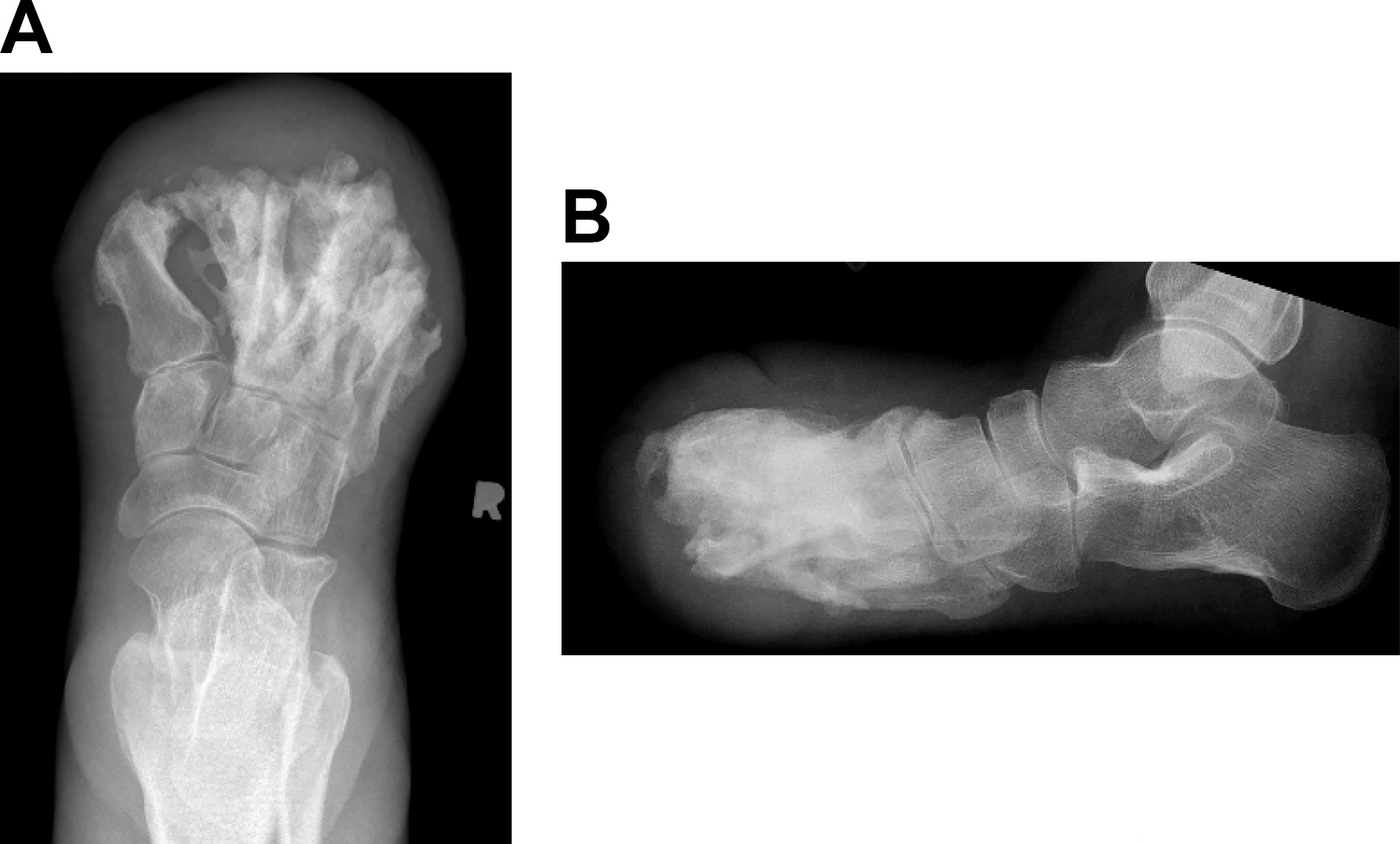
11] An example of mature HO formation in the foot can be observed in
Figure 1.
Figure 1.
Anteroposterior (A) and lateral (B) views of the foot with severe heterotopic ossification.
Figure 1.
Anteroposterior (A) and lateral (B) views of the foot with severe heterotopic ossification.
The development of HO can lead to a myriad of complications, such as pathologic fractures, pressure ulcerations in weightbearing areas, increased pain leading to reduced ambulatory status, and neurovascular impingement resulting in neuropathy or limb ischemia. Complications such as these can be limb threatening for patients who acquire HO after undergoing a partial foot amputation. [
12] Current conservative treatment modalities for HO include the use of off-loading pads or orthoses at bony prominences. If unsuccessful, surgical resection of the abnormal bone is often required. [
13] In patients who are at high risk for developing HO, particularly those with a history of HO formation, prophylactic management is recommended in the immediate postoperative course to prevent recurrence. This is aimed at disrupting the inductive signaling pathway, altering the osteoprogenitor cells in the target tissue, and modifying the environment, which is conducive to osteogenesis. [
14] Prophylactic treatment can be given to patients undergoing amputation who are believed to be at high risk for developing HO, or to those with current HO who are undergoing revisional bony resection. [
7] Medications, including nonsteroidal anti-inflammatory drugs (NSAIDs) and bisphosphonates, have shown some success in preventing HO; however, they are not without systemic complications and can be used only in select patients. [
15] Bisphosphonates prevent HO by inhibiting the formation of calcium phosphate, which leads to pathologic calcification. [
16] The only medication approved for the treatment or prevention of HO by the Food and Drug Administration is the first-generation bisphosphonate etidronate disodium, which may alter both the early and later phases of this bone formation. [
17] However, the efficacy of bisphosphonates has proved to be questionable because their use may simply delay HO mineralization as opposed to preventing it altogether. [
7] The NSAIDs are thought to affect HO formation through the systemic inhibition of prostaglandins, which, in turn, regulate mesenchymal cell differentiation into osteoblastic cells that contribute to the new bone. [
18] The standard medication used is indomethacin, which should be initiated within 2 months of bone resection and continued for 4 to 6 weeks. The use of NSAIDs for this prevention has demonstrated good results. [
19] This group of medications does have several possible adverse effects with increased dosages and prolonged use, including gastrointestinal complications, cardiovascular events, renal toxicity, and hypertension exacerbation. [
15] Patients undergoing foot amputations with multiple comorbidities are at higher risk for these complications; therefore, NSAIDs are not always a safe choice.
Radiation therapy is another historically successful method for prophylactic prevention of HO to various areas of the body, most commonly performed after total hip arthroplasty. [
5,
20,
21] It inhibits the differentiation of mesenchymal progenitor cells into osteoblasts, thereby preventing HO development. [
21] Most commonly, HO prophylaxis via radiation therapy is performed with single-dose radiation and has been shown to be sufficient in preventing bony growth. [
10] The radiation is delivered using either a linear accelerator or a Cobalt-60 unit with anteroposterior and posteroanterior opposed fields. [
22] It is given at a low dose, between 700 and 800 cGy, with the beam directed at the specific area of concern. The treatment can be given either before or after the surgery regarding timing surrounding bony resection; however, within 48 hours for each is key for the best result. Although studies have shown similar results in preventing HO formation, it is more common for radiation to be dosed postoperatively. [
23] In a study by Ruo Redda et al, [
24] a single fraction of 7 Gy was administered in high-risk patients to prevent HO and provided excellent results as 76% of patients experienced a complete response. Another study by Blount et al [
25] compared a single dose of 7 Gy with a conventional 2-Gy fractionation scheme, and it was found to be as efficacious, with no increase in adverse effects.
The primary aim of the present study was to analyze the outcomes in patients who underwent radiation therapy after bony resection to prevent the recurrence of HO formation. The measured outcomes included HO recurrence, postoperative ambulatory status, wound recurrence, postoperative pain level, and need for subsequent proximal amputation. We believe that this technique is successful in preventing HO in patients who are at high risk and have a history of heterotopic bone formation.
Patients and Methods
This study was supported by institutional review board guidance from MedStar Georgetown University Hospital, Washington, DC. A comprehensive medical record review of patients who received radiation therapy for HO prophylaxis during foot and ankle surgery at a single hospital was performed from January 1, 2010, to May 1, 2020. All of the patients had an initial transosseous partial foot amputation that resulted in HO formation that required revisional bone excision. This secondary procedure involved resection of heterotopic bone in all of the patients. Mean follow-up was 41.5 months (range, 5.9–135.9 months). Ten patients were included in the cohort.
Demographic data collection included sex, age, body mass index (BMI; calculated as the weight in kilograms divided by the square of the height in meters), history of hypertension, smoking (current or former), diabetes mellitus, peripheral artery disease, chronic kidney disease, and coronary artery disease. Preoperative factors that were evaluated included ambulatory status, presence of ulcer, type of surgical procedure performed, and preoperative pain level. The following postoperative outcomes were evaluated: ambulatory status, recurrence of HO, surgical site healing, pain level, and subsequent proximal amputation. Postoperative pain relief was defined as the absence of pain described by the patient at the final postoperative visit.
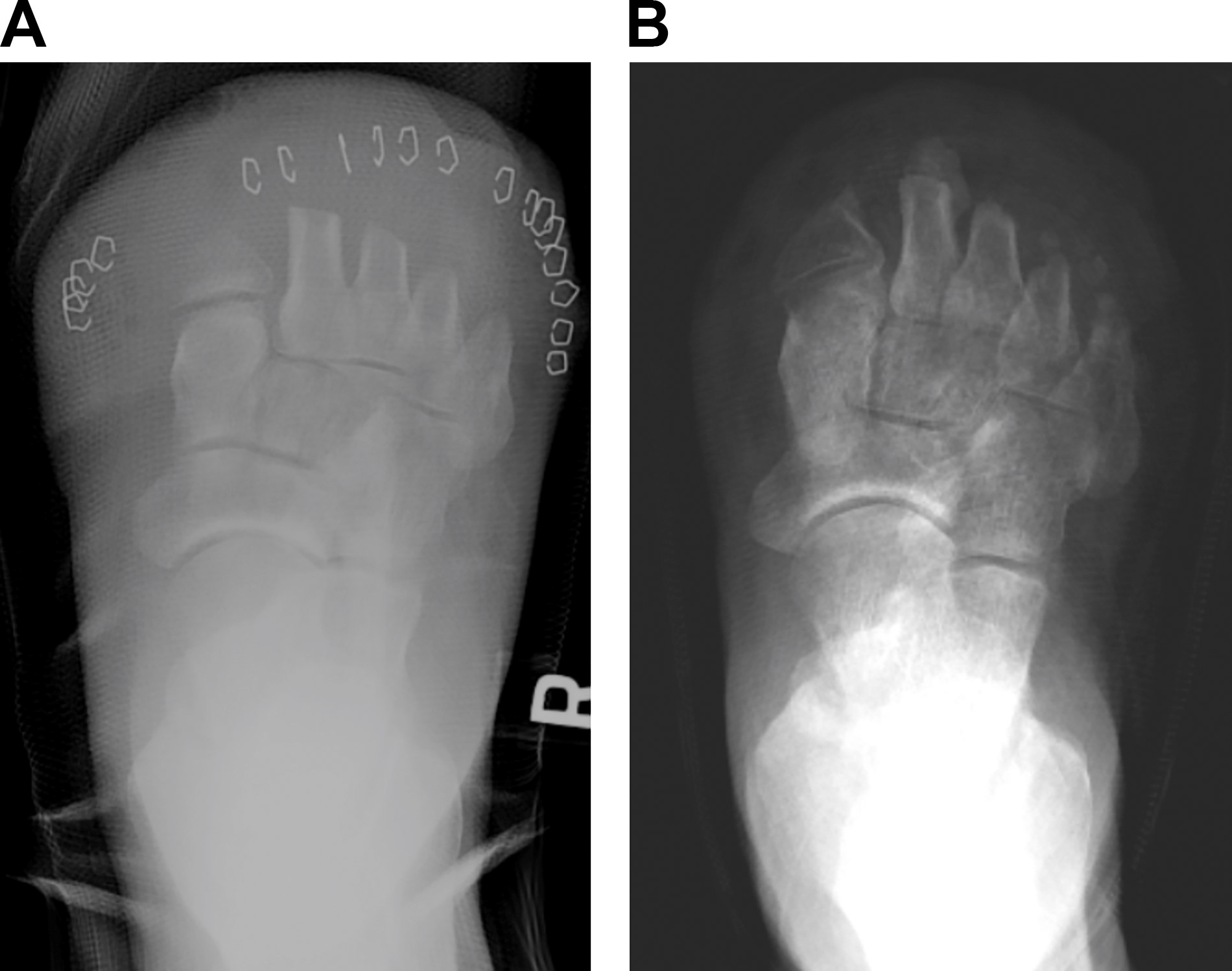
Figure 2 demonstrates radiographs of a patient in the cohort who underwent transmetatarsal amputation and developed HO postoperatively, therefore requiring revisional surgery. For statistical analysis, descriptive statistics are used to describe study patients. Continuous variables are described by mean (range).
Figure 2.
A, Radiograph directly after transmetatarsal amputation. B, Radiograph 3 months status post transmetatarsal amputation with heterotopic ossification exhibited to metatarsals 1 through 5.
Figure 2.
A, Radiograph directly after transmetatarsal amputation. B, Radiograph 3 months status post transmetatarsal amputation with heterotopic ossification exhibited to metatarsals 1 through 5.
All of the patients were treated with the same radiation protocol consisting of single, low-dose radiation treatment between 700 and 800 cGy and 6 MV photons with the beam directed at the area of concern. This was delivered using a two-field system of both anteroposterior and posteroanterior opposed fields. This treatment was given within 48 hours of the surgical bony resection. The specific location of bony resection varied per patient; therefore, radiation was targeted at the area of known HO bone.
Results
Overall patient demographic data and comorbidities are presented in
Table 1. Of the ten patients in the cohort, eight were men and two were women. Their mean age at the time of irradiation and bone resection was 50.8 years (range, 25–65 years). Diabetes mellitus was the most frequent comorbidity.
Table 1.
Demographic Characteristics of Ten Patients Who Underwent Ray Amputation with Radiation Therapy
Table 1.
Demographic Characteristics of Ten Patients Who Underwent Ray Amputation with Radiation Therapy
Preoperatively, 80% of patients were fully weightbearing and 20% were partial weightbearing, 60% had a wound present, and 40% had preoperative pain present. Of the surgical procedures for bony resection performed, 80% were revisional transmetatarsal amputations, 10% were partial fifth-ray amputations, and 10% were partial first-ray amputations.
Postoperatively, of the ten patients included in the cohort, only one (10%) had recurrence of HO after bony resection and irradiation. In addition, 80% of the patients remained fully ambulatory postoperatively and 20% remained partial weightbearing, 80% had pain relief, and 90% had healed surgical incisions. The one patient who had delayed surgical incision healing required revisional wound excision and closure but remained healed at follow-up. No patients required bony revisional surgery to their amputation sites. Unfortunately, 30% of patients went on to more proximal amputation, with below-the-knee amputation (BKA) being the definitive procedure in these cases. In these three patients, two BKAs were secondary to chronic nerve pain with a nonfunctional foot, and one had an infectious etiology. Of the two patients with nerve complications, one had a crush injury that left him with severe pain and deformity; therefore, a transmetatarsal amputation was performed, which did not resolve the pain, so he went on to BKA. The other patient had neuroma pain with the transmetatarsal amputation that failed treatment and required BKA as well for pain relief. The patient with the infectious cause for BKA was the only patient in the study who had recurrence of HO on follow-up. The HO that had recurred in this case was the cause for the wound formation and dehiscence that lead to this infection.
Discussion
The formation of HO is a relatively common complication that can be a cause of repeated ulceration after transosseous partial foot amputation. Given a high rate of development reported to be up to 75%, there is limited research to describe and expand on the significance of radiation therapy after transosseous bone resection in the foot. [
2] Although there are several possible causative factors for this heterotopic bone formation, including increased prostaglandin activity, hypercalcemia, tissue hypoxia, prolonged immobilization, imbalances between parathyroid hormone and calcitonin, bony resection with hand tools, and failure to irrigate after resection, a history of HO is thought to be the single most significant risk factor. [
3,
12] Some studies have also linked ankylosing spondylitis, diffuse idiopathic skeletal hyperostosis, Paget disease, and a lack of peripheral artery disease to the development of HO. [
3,
5] Furthermore, for those with a history of HO, the severity of previous bone formation is indicative of whether they will go on to develop clinical symptoms of associated pain or wound formation. [
3,
5,
7,
26] Serial radiographs remain the optimal choice for monitoring this abnormal bone formation; however, alkaline phosphatase has been recommended as another possible screening tool for assessing for HO. These levels in the blood become abnormal approximately 2 weeks after bone resection, which can help with diagnosing before its appearance on radiographs. [
2]
In the present study, heterotopic bone resection followed by prophylactic irradiation was successful at preventing HO recurrence in the cohort of ten patients. A 10% recurrence rate was reported in this case series, which is comparable with the literature. Ruo Redda et al [
24] found that a single fraction of 7 Gy was administered to prevent HO with 76% of patients experiencing a complete response with no recurrence, similar to the results of a 90% success rate in the present study. A study by Kölbl et al [
27] compared outcomes of different prophylactic treatment options for HO (irradiation versus NSAIDs) and found HO recurrence of 11.1% for the 7-Gy radiation group compared with 16% for the NSAID group. This is also similar to the findings from the present cohort that demonstrated a 10% recurrence rate after single-dose radiation therapy. Pakos et al [
22] also evaluated the efficacy of radiation therapy versus NSAIDs in the prevention of HO after major hip procedures. They concluded that although absolute differences were small, postoperative irradiation is on average more effective than NSAID treatment in preventing HO after major hip procedures; however, this efficacy is dose dependent. [
22] Sell and colleagues, [
28] in a prospective randomized study, compared the effect of postoperative irradiation and NSAID therapy on the prevention of HO after the implantation of a total hip endoprostheses. Both postoperative irradiation and NSAID therapy proved to be effective prophylactic methods, but in direct comparison, radiation prophylaxis with three administrations of 3.3 Gy proved to be slightly more successful than NSAID prophylaxis. [
28]
This study also found that 20% of patients had pain associated with nerve complications after midfoot amputation and went on to subsequent BKA. This is also similar to what is described in the literature. It has been stated that approximately 25% of all major limb amputees will develop chronic pain due to symptomatic neuromas in their residual limbs. [
29] Although most of the present patient population had some degree of neuropathy, this negative effect is still a possible outcome in amputation procedures.
Radiation therapy is a relatively safe option for the prophylactic treatment of HO formation in the foot and ankle. Higher and more repetitive doses of radiation therapy have been shown to disrupt wound healing, causing the tissue to be in an inflammatory state, which can be deleterious after surgical HO resection and wound closure. [
30] Other examples of complications after higher radiation doses include secondary malignancies, delayed bone healing, joint swelling, and infertility. [
20,
24] There have been few adverse effects reported with the use of low-dose radiation for the prophylactic treatment of HO, as seen in the present study. There was only one incidence of wound-healing issues to the surgical site due to maceration and tension on the incision. We had 90% of patients (nine of ten) go on to heal primarily from their procedures after radiation therapy was provided. Unfortunately, three patients in the cohort went on to BKA due to chronic nerve pain with a nonfunctional foot or infection despite remaining overall HO free after treatment.
Owing to the successful outcomes in the present small cohort, the authors recommend using a single radiation dose of 700 to 800 cGy directed at the area of concern to prevent HO formation. The radiation treatment is provided by the department of radiation medicine in the hospital. A radiation oncologist is the medical professional who is licensed to provide and properly dose this treatment protocol. It is important to schedule this therapy in advance to coordinate with surgical intervention as it has been well documented to be most effective between 24 hours preoperatively and 72 hours postoperatively. [
3,
10]
We recognize several shortcomings of the present study. Namely, this study was a retrospective case review with a small sample size. There is also a lack of a comparative group, such as one that received no radiation therapy with bone resection alone or a separate cohort that used medical management for prophylaxis as opposed to radiation therapy. Further research would be insightful in evaluating the rate of heterotopic bone formation after surgical resection in patients undergoing partial transosseous foot amputations, as most of the literature surrounds other orthopedic locations, most commonly the hip. It would also be beneficial to compare the use of NSAIDs versus radiation therapy for prophylactic prevention of HO specifically in the foot because there are no known studies in the literature concerning the foot.
In conclusion, the technique of single low-dose prophylactic radiation immediately after surgical heterotopic bone resection was useful in preventing recurrence of further heterotopic bone. HO formation may be a significant complication after transosseous partial foot amputation. It is important to perform a full work-up with imaging preoperatively to understand whether a patient has a history of HO because this is the most salient risk factor for its re-formation. Where possible, single low-dose radiation therapy may be used as prophylactic treatment. Based on several comparative studies, radiation therapy is the most successful at prevention compared with other prophylactic options. As demonstrated, it is easy and safe to administer and has few adverse effects. Single low-dose radiation is a viable treatment option that should be considered when faced with the challenge of prophylaxing against HO after transosseous partial foot amputation.