Ankle sprains are among the most common injuries in orthopedics and traumatology practice, and involve the lateral ligament complex in approximately 85% of cases. Most injuries are caused by an inversion force applied to the plantarflexed foot [
1].
Trauma findings such as pain, tenderness, bruising, and swelling can often be seen after an ankle sprain. Depending on the severity of the sprain, fracture or ligament rupture can also be observed. A detailed history and physical examination are important in diagnosis. According to the examination findings, radiography for fracture and magnetic resonance imaging (MRI) for ligament rupture may be ordered. Magnetic resonance imaging is not indicated in most cases of ankle sprains. However, because a plain radiograph has a limited place in the diagnosis of lateral ligament ruptures, MRI should be performed when ligament rupture or an accompanying lesion is suspected. Magnetic resonance imaging can be used to differentiate ligament, peroneal tendon, and chondral lesion abnormalities; it can also detect osteochondral lesions, peroneal tendon problems, and joint mice accompanying sprains [
2].
The interosseous membrane between the external and internal collateral ligaments and the tibia and fibula is provided by syndesmosis, which forms a strong structure with the anterior, posterior, and transverse tibia-fibular ligaments. The stability of the ankle on the inner side is provided by the deltoid ligament, which has deep and superficial fibers. The lateral ligament complex of the ankle, which forms external ankle stability, consists of the anterior talofibular ligament, the calcaneofibular ligament, and the posterior talofibular ligament. Mechanical ankle instability occurs because of the tear in the lateral ligament complex that develops after an ankle sprain. Functional ankle instability develops because of proprioceptive and muscle deficits that develop after an ankle sprain [
3].
The condition of mechanical or functional ankle instability lasting longer than 6 months after an ankle sprain is called chronic ankle instability. People who have had at least one sprain are more likely to develop chronic ankle instability if they do not receive appropriate treatment [
4,
5].
Trauma findings such as edema, pain, tenderness, redness, ecchymosis, and ankle joint effusion can be seen in ankle sprains. Ankle effusion is an intraarticular extracellular fluid collection in the tibiotalar joint, often associated with ankle sprain [
6,
7]. The presence of tibiotalar effusions accompanying ankle sprain may be an indication of serious structural injury accompanying ankle sprain. The presence of effusion in the tibiotalar joint is associated with an increased risk of serious ligament tears, such as anterior talofibular ligament and syndesmotic ligament rupture, and an increased risk of severe talar osteochondral damage [
7].
For edema, ecchymosis, and swelling, which are symptoms of trauma seen in ankle sprains, protection, rest, ice, compression, and elevation treatment in the early period is followed by the use of nonsteroidal anti-inflammatory drug therapy, a walking boot or short-term plaster/splint, and the use of crutches. During follow-up, patients may benefit from proprioceptive exercise and strengthening. Optimal recovery in the rehabilitation of ligament injuries is achieved by following the inflammation, repair, and restructuring process of the healing ligament and applying appropriate exercises and functional activities to these processes. Controlled stress on the injured ligament or ligaments with the exercises and functional activities applied in rehabilitation accelerates the healing of the injured tissue and provides a stronger repair [
8].
Several studies focus on the etiopathogenesis of ankle sprain [
9,
10,
11,
12,
13,
14,
15,
16,
17,
18,
19]. According to a study examining the relationship between balance and ankle sprain, prophylactic balance training has been shown to significantly reduce the risk of ankle sprain in patients with a previous sprain [
9]. The study also emphasizes that completing at least 6 weeks of balance training after an ankle sprain significantly reduces the risk of recurrent ankle sprains. Balance training can be used prophylactically after an ankle sprain to reduce future ankle sprains [
9].
Another study showing the relationship between ankle sprain and balance highlights the loss of balance or the development of a balance disorder in patients with a history of ankle sprain [
10,
11]. There is a deficit in postural sway, which is the demonstration of the adaptation of body posture to different postural tasks that become increasingly difficult [
12]. Postural sway increases in those with functional ankle instability [
12,
13,
14]. A study by Hale et al [
15] revealed that patients with chronic ankle instability have severe deficits in postural control and lower extremity functions. In addition, other studies show the importance of proprioception and balance in ankle instability [
16,
17,
18]. According to a systematic review, proprioceptive/neuromuscular training is an effective practice in reducing the incidence of all lower extremity injuries, including the ankle, in adolescent and adult athletes. Proprioception training alone significantly reduces the risk of ankle sprains. For this reason, neuromuscular control and proprioceptive training should be given a special place in the rehabilitation of patients with ankle injuries [
19].
As reported in separate studies, ankle proprioception and plantar foot sense, which are investigated in the etiopathogenesis of ankle sprain, are the main sensory components in balance and gait control [
20,
21]. The central and peripheral nervous systems play an important role in balance [
22,
23]. The somatosensory system and plantar foot sensation perform various functions within the peripheral nervous system [
24,
25,
26,
27,
28,
29]. The sensory nerves in the somatosensory system of the lower extremities enable the perception of physical sensations by means of the central nervous system [
30]. The effect of plantar sensation (evaluated in the peripheral nervous system of the lower extremity) on balance, fall, and gait physiology has been demonstrated in several studies [
25,
26,
27,
28,
29].
Age and neurodegenerative diseases related to changes in the somatosensory system can result in postural sway and changes in gait. Postural instability and falls are frequently encountered because of changes in the somatosensory system [
31,
32].
There are many studies on the effect of plantar foot sense on balance, postural sway, and ankle sprain [
20,
26,
27,
31,
32,
33,
34,
35,
36,
37,
38,
39,
40,
41,
42,
43,
44,
45,
46,
47,
48,
49,
50]. Plantar foot sense is important for fall and gait physiology and balance, and has been shown to be related to ankle sprains; it consists of vibration, light touch pressure, and two-point discrimination [
20,
33]. When the plantar foot components of these senses are reduced [
27,
34,
35,
36,
37] or decreased, [
28] it is interpreted as loss or impairment [
38] in plantar foot sensation [
20].
There is strong evidence that plantar foot sense is associated with issues such as balance and postural control among patients with type 2 diabetes, multiple sclerosis, and patients undergoing hemodialysis [
20,
26,
39].
Another study highlighted that plantar foot sensory impairment causes an increase in postural sway [
40] during standing and changes in pressure distribution during walking [
31,
32]. Plantar foot sensory impairment leads to significant changes in gait patterns [
41].
Some studies emphasize that decreased plantar foot sensation causes people to lose balance and increases the risk of falling [
27,
42]. Plantar foot sensation has been shown to be impaired in diabetic patients with balance disorders. In addition, emphasis is placed on the importance of light touch and sense of pressure for balance [
25].
The proprioceptive sense in the somatosensory system is the ability to perceive the position of movable body parts relative to each other and to their location. Therefore, proprioceptive sense is important for balance [
30]. An important component of plantar foot sensation, which affects balance [
20,
26,
33,
39] and ankle sprain, [
43,
44,
45] is the cutaneous mechanoreceptors detected by the two-point discrimination test.
Various studies show that balance, [
43] walking, [
46] and plantar foot sensation are the factors that cause ankle sprains [
20,
47,
48,
49,
50]. There are also several studies that show the importance of ankle proprioception and plantar foot sense in ankle sprains [
21,
51,
52]. There are various studies on the somatosensory system receptors of vibration, light touch, and pressure sensations for the etiopathogenesis of ankle sprains [
43,
44,
45]. However, we could not find a study emphasizing the importance of two-point discrimination and its value in feet with ankle sprains [
53].
Considering the studies emphasizing the importance of two-point discrimination in the literature, Menz et al [
28] found that individuals with decreased plantar tactile sensitivity were more likely to fall. They reported that elderly subjects with restricted plantar foot sensation fell more frequently than elderly subjects with normal plantar foot sensation. Menz et al[
28] blamed two-point discrimination threshold and its associated poorer postural control as the cause of increased rate of falls in the elderly.
Hafström et al [
29] found that patients with a high two-point discrimination threshold had a slower walking speed. They also found that plantar foot sensation is important for functional balance [
20,
29,
54,
55].
The two-point discrimination test is a quantitative assessment of touch acuity [
56]. The two-point discrimination threshold was first defined by Weber in 1835 [
56,
57] as “the distance between the compass measurement points required to feel two touches.” The instruments used to measure two-point discrimination are commonly called esthesiometers. Hand tools such as discriminators, paper clips, calipers, or compasses are used for measurements [
56,
58]. The caliper (esthesiometer) is a hand tool used to measure the distance between stimuli in the two-point discrimination test. The two-point discrimination test [
3] measures the conscious interpretation of two different tactile stimuli on the skin of a person’s body while their eyes are closed. First, the body area on which the test is to be performed is determined. The patient is asked to close his or her eyes. The evaluation is performed with the aid of an esthesiometer. This is done by starting with the maximum distance between the two stimuli and gradually decreasing the distance until the two stimuli can no longer be distinguished. The distance at which a person perceives two points as one point is recorded in millimeters as the two-point discrimination threshold. A high two-point discrimination value is interpreted as a person’s decreased tactile sensory sensitivity. The two-point discrimination test has gained clinical acceptance and is widely used to assess and monitor the recovery of patients after peripheral nerve injuries and polyneuropathies [
58].
Two-point discrimination is thought to depend on the intensity of peripheral innervation, intact neural pathways, and response profiles of central somatosensory function [
56]. Two-point discrimination sense, which is part of plantar foot sense, [
53] differs in distinct parts of the body, [
58] varies from person to person, [
59] and has different values depending on age [
41].
This study aimed to investigate the change in two-point discrimination in feet with ankle sprains. Furthermore, this study aimed to show the importance of two-point discrimination in the cause and treatment of ankle sprains.
Methods
This prospective study was approved by the institutional review board of our university (resolution no. 2017-KAEK-189_2022.07.21_01). All procedures involving human participants were conducted in accordance with the 1964 Declaration of Helsinki and its subsequent amendments.
Persons aged between 18 and 40 years who visited the Medical Faculty of Yozgat Bozok University between July and September of 2022 were included in the study. Persons with central and peripheral nervous system diseases, arterial/venous circulatory disorders, neuromuscular diseases and/or neurologic deficits, vertigo, diabetes mellitus, hearing/vision problems, and lower extremity bone structure disorders were excluded from the study.
Group 1 included 57 subjects with no ankle problems who presented to the Medical Faculty of Yozgat Bozok University between July and September of 2022 for reasons other than ankle sprain and the exclusion criteria. The age, height, and weight of each subject were recorded. There were 114 feet without ankle problems in this group.
Subjects who had ankle sprains with traumatic findings (eg, pain, tenderness, bruising, and swelling) were examined by the emergency service. Ankle sprains with no fracture in examination and radiography were called for a follow-up examination after early treatment (protection, rest, ice, compression, and elevation) and nonsteroidal anti-inflammatory drug therapy. Patients who recovered with the given treatment, and who did not have ankle tenderness, effusion, and ligament rupture in the orthopedics and traumatology outpatient control examination and imaging, were included in the study.
Subjects who had sustained a previous ankle sprain with no traumatic findings (eg, pain, tenderness, bruising, and swelling of the ankle) and went to the orthopedics and traumatology outpatient clinic were evaluated for inclusion in the study. The subjects who did not have a fracture, tenderness, effusion, and ligament rupture in the examination and imaging were included in the study.
Magnetic resonance imaging was requested as part of the follow-up examination of subjects with suspected ankle ligament ruptures. Subjects with ankle ligament rupture found by means of MRI were excluded from the study.
Failure to regress in foot trauma symptoms despite treatment given in the emergency department, tenderness in the foot and joint effusion, and a foot with fractures or ligament ruptures on imaging were excluded from the study and were evaluated for surgical treatment.
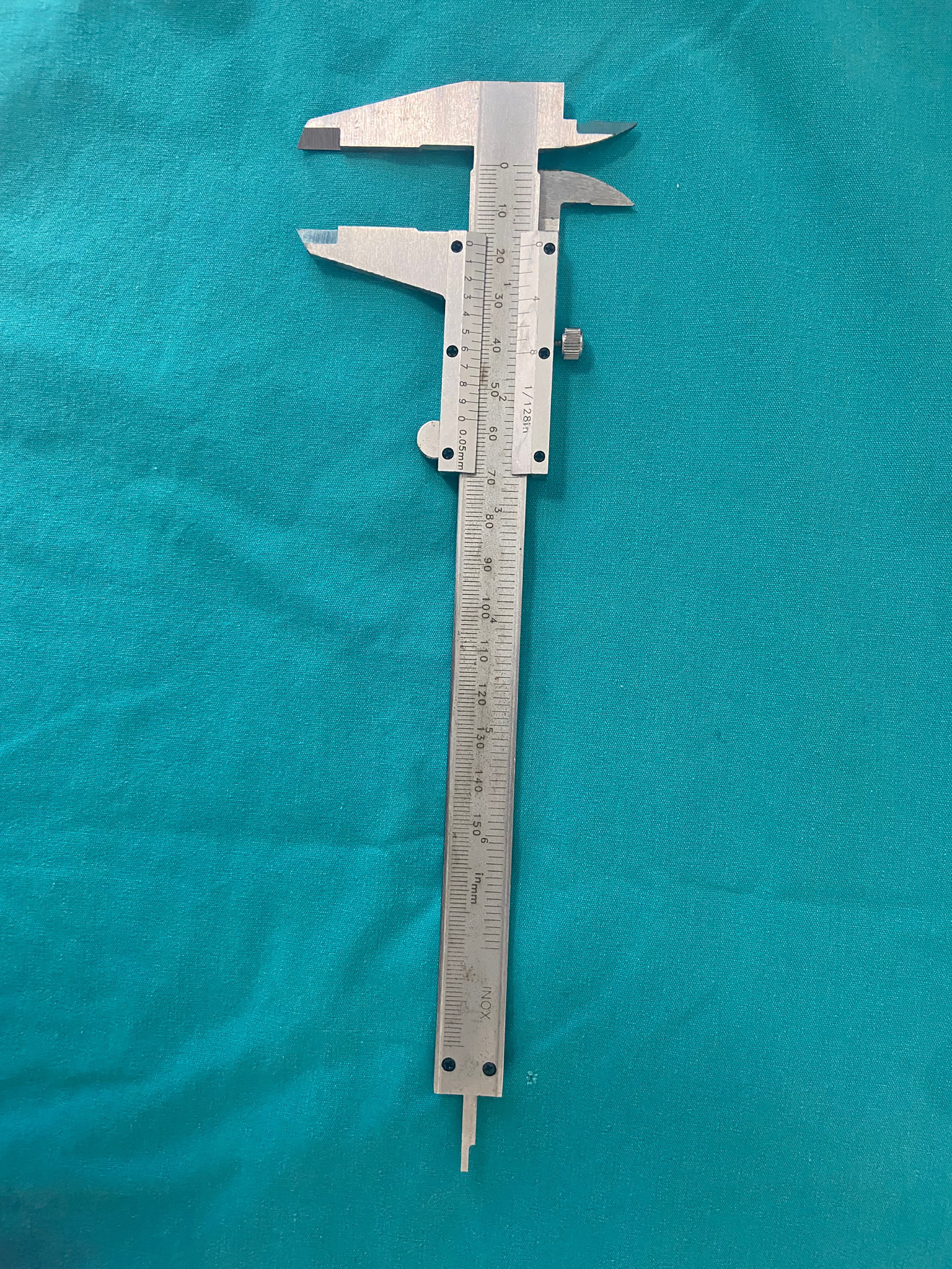
The two-point discrimination test was applied to both feet of subjects with no ankle problems and subjects with ankle sprains. A two-point discrimination test was evaluated using an esthesiometer (caliper) [
33] (
Fig. 1). While the subjects’ eyes were closed, measurements were taken at six regions: the tip of the first toe, the third dorsal metatarsal head, the heel, the third plantar metatarsal head, the medial malleolus, and the lateral malleolus. The evaluation started with the maximum distance and gradually decreased until the patient could no longer distinguish between the two points. The distance (threshold) at which the subject perceived the two points as one was recorded in millimeters [
25] in two of three trials. The two-point discrimination test was measured by the pressure force formed by the weight of the 11-g instrument. An attempt to standardize the test was made by having a single physician determine the two-point discrimination threshold value [
57,
60,
61].
Figure 1.
Esthesiometer (caliper) used in the study.
Figure 1.
Esthesiometer (caliper) used in the study.
Group 2 included 51 subjects who had ankle sprains. Forty-nine of the subjects had previous unilateral ankle sprains and two had previous bilateral ankle sprains. These 51 subjects had 53 feet with ankle sprains (group 2a) and 49 feet without ankle problems (group 2b). Of the 53 feet with ankle sprains, 39 were the right foot and 14 were the left foot.
Initially, two groups were formed from a total of 108 subjects included in the study. Group 1 consisted of 57 subjects who did not have ankle problems; 114 feet of these subjects were called “feet without ankle problems.” Group 2 consisted of 51 subjects who had ankle sprains. Feet of these subjects were called “group 2a: feet with an ankle sprain” and “group 2b: feet without ankle problems” (
Table 1).
Table 1.
The Groups and the Distribution of Feet in the Groups
Table 1.
The Groups and the Distribution of Feet in the Groups
Later, the results of the two-point discrimination measurement of all the groups were divided into subgroups according to the values in the right and left feet. The two-point discrimination value of the right feet of 39 subjects with right ankle sprains and the left feet of 14 subjects with left ankle sprains were compared with the two-point discrimination value of the right and left feet of subjects with no ankle problems. Thus, the effect of the right or left foot on the two-point discrimination threshold test was examined. The obtained results are discussed.
The two-point discrimination thresholds of the feet in the two groups were compared between groups and within each group. Thus, whether there is a difference in the two-point discrimination threshold between right or left feet and in feet with ankle sprains or without ankle problems was evaluated.
Results
The demographic characteristics of the two groups are summarized in
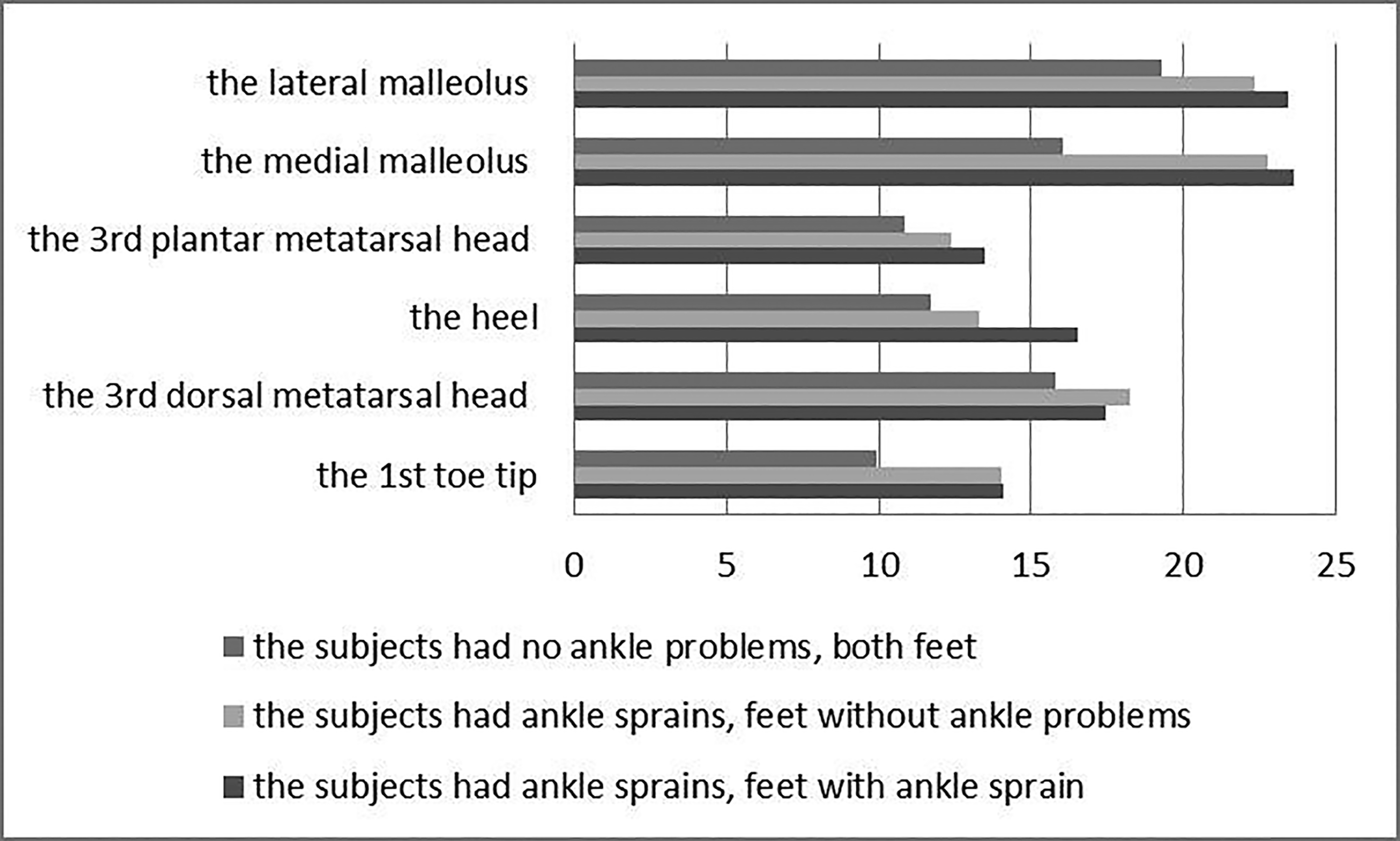
Table 2. The mean thresholds of the two-point discrimination test were measured in six regions of the foot. Fifty-one subjects had 53 feet with ankle sprains (group 2a); these same subjects had 49 feet without ankle problems (group 2b). In addition, 114 feet of the 57 subjects without ankle problems (group 1) are shown in
Figure 2.
Table 2.
Demographic and Clinical Characteristics of the Subjects
Table 2.
Demographic and Clinical Characteristics of the Subjects
Figure 2.
Two-point discrimination values of the feet (group 2a) with ankle sprain and the feet (group 2b) without ankle problems of the subjects in group 1.
Figure 2.
Two-point discrimination values of the feet (group 2a) with ankle sprain and the feet (group 2b) without ankle problems of the subjects in group 1.
Tables 3 and
4 shows the results of the analysis of variance test performed with the two-point discrimination values of the three groups consisting of the subjects with ankle sprain and without ankle problems. Significant results were obtained from the two-point discrimination test of the subjects (group 1) who had no ankle problems in both feet compared to the other subjects (groups 2a and 2b).
Table 3.
Analysis of the Feet of Subjects with an Ankle Sprain and the Feet of Subjects with No Ankle Problems
Table 3.
Analysis of the Feet of Subjects with an Ankle Sprain and the Feet of Subjects with No Ankle Problems
Table 4.
Statistical Analysis Between Feet of Subjects Without Ankle Problems (Group 1), Feet with Ankle Sprains (Group 2a), Feet Without Ankle Problems (Group 2b)
Table 4.
Statistical Analysis Between Feet of Subjects Without Ankle Problems (Group 1), Feet with Ankle Sprains (Group 2a), Feet Without Ankle Problems (Group 2b)
When the feet of group 2a (subjects with an ankle sprain) and the feet of group 1 (subjects without ankle problems) were compared in terms of the two-point discrimination threshold, there was a significant difference in the two-point discrimination test in all regions except the third dorsal metatarsal head (
P = .192) (
Tables 3 and
4).
When the feet without ankle problems of the subjects in group 2b (subjects who had an ankle sprain) and the feet without ankle problems of the subjects in group 1 were compared in terms of two-point discrimination threshold, a significant difference was found in all regions except for the heel (
P = .295) and the plantar region of the third metatarsal head (
P = .13) (
Tables 3 and
4).
When the feet with ankle sprain in the subjects of group 2a and the feet without ankle problems in the subjects of group 2b were compared in terms of two-point discrimination threshold, a significant difference was found at the heel (
P = .038). No significant results were observed in the other five regions between the feet with ankle sprain and the feet without ankle problems of the subjects with an ankle sprain (
Tables 3 and
4).
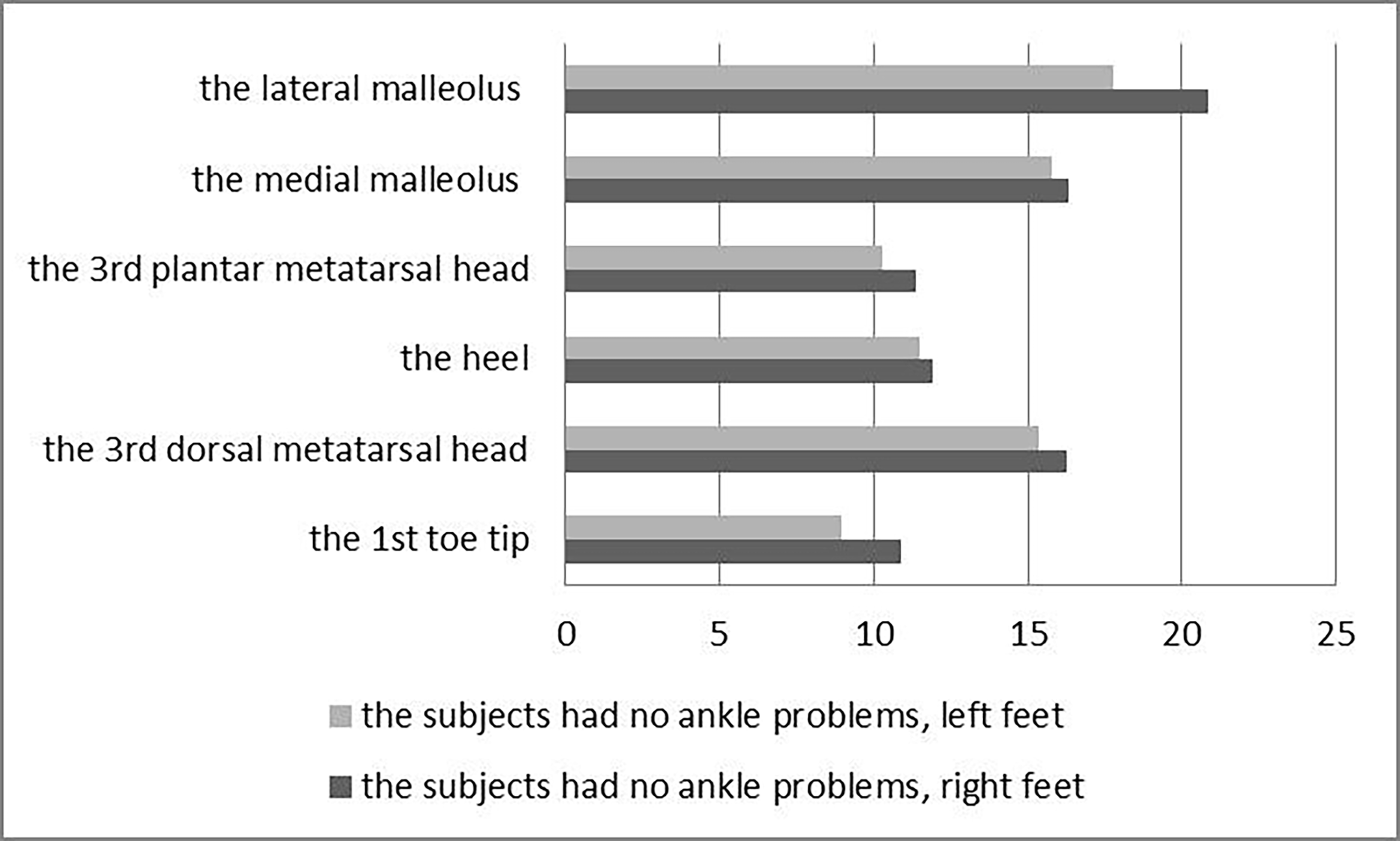
Two-point discrimination test measurements in the 114 feet without ankle problems of the group 1 subjects were separated and interpreted as values for the right and left extremities. The mean threshold values of the two-point discrimination test measured in six regions of the right and left feet of the subjects with no ankle problems are shown in
Figure 3.
Figure 3.
Figurative representation of the mean values of the two-point discrimination test in the right and left feet of subjects with no ankle problems.
Figure 3.
Figurative representation of the mean values of the two-point discrimination test in the right and left feet of subjects with no ankle problems.
A significant difference was found in the two-point discrimination at the lateral malleolus (
P = .012) and the first fingertip (
P = .029) when comparing the two-point discrimination threshold of the right and left feet of the subjects with no ankle problems. No significant difference was found in the other four regions (
Table 5).
Table 5.
Comparison of the Feet of Subjects with No Ankle Problems and the Feet of the Subjects with a Right Foot Ankle Spraina
Table 5.
Comparison of the Feet of Subjects with No Ankle Problems and the Feet of the Subjects with a Right Foot Ankle Spraina
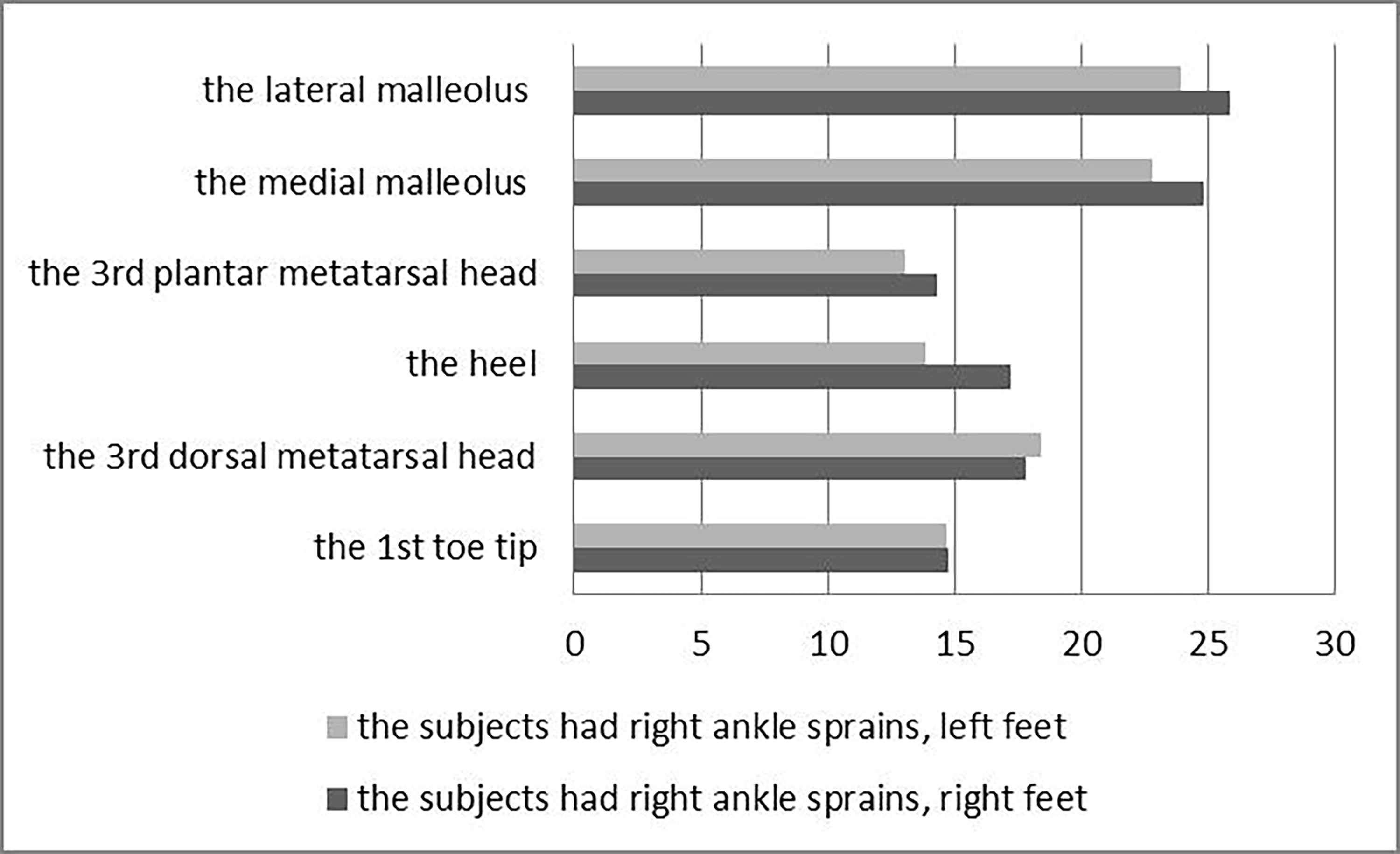
The mean thresholds of the two-point discrimination measured in the right feet with an ankle sprain and left feet without ankle problems of subjects with a right ankle sprain are shown in
Figure 4. A significant difference (
P = .042) was found in the values measured at the heel when comparing the two-point discrimination values measured in the right feet with ankle sprain and left feet without ankle problems of the 39 subjects with right ankle sprains. No significant results were observed in the other five regions (
Tables 3 and
4).
Figure 4.
Figurative representation of the mean values of the two-point discrimination test in the right and left feet of subjects with a right ankle sprain.
Figure 4.
Figurative representation of the mean values of the two-point discrimination test in the right and left feet of subjects with a right ankle sprain.
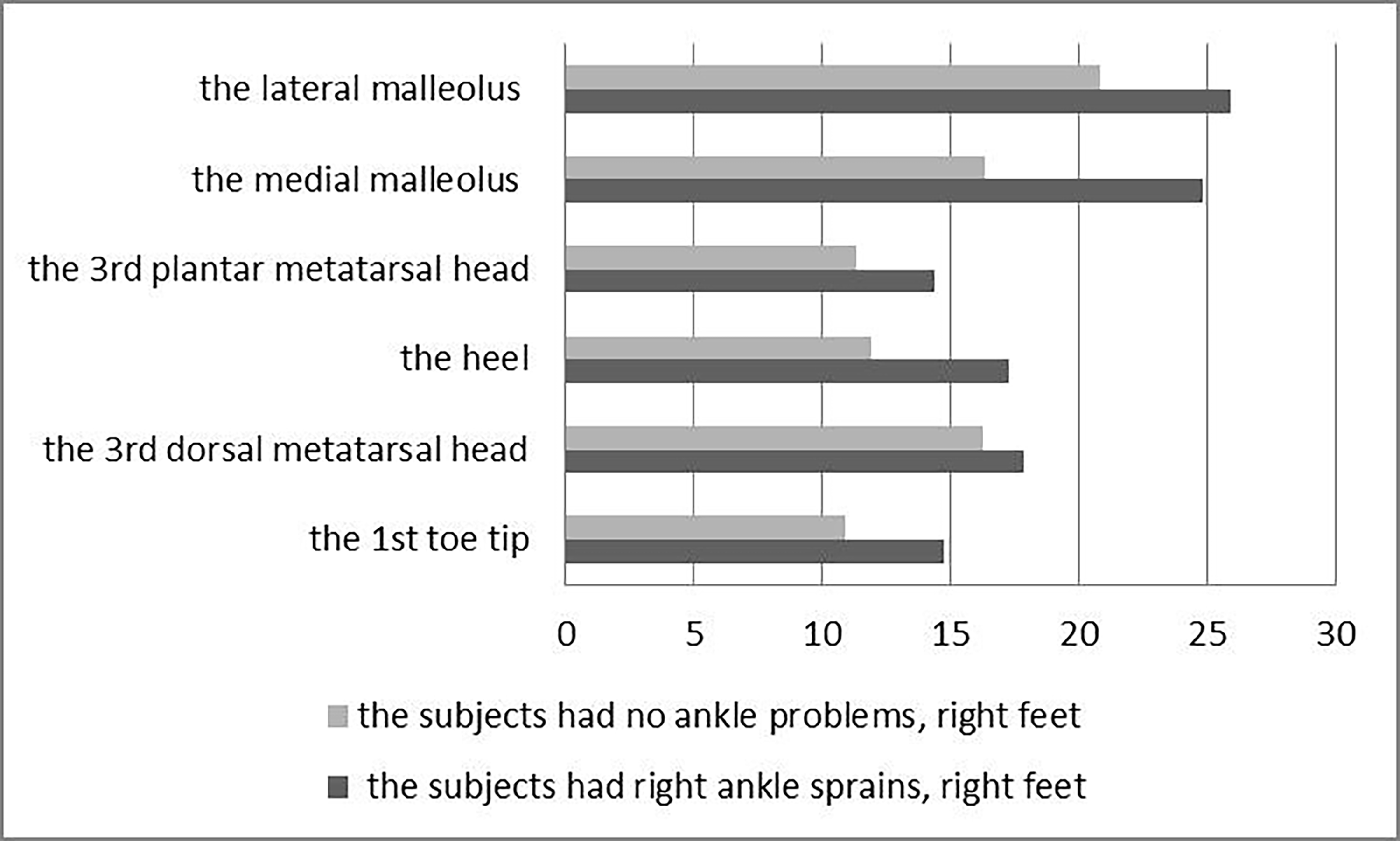
Figure 5 shows the mean thresholds for two-point discrimination in six regions measured on the right feet of 39 subjects with a right ankle sprain and the mean thresholds for two-point discrimination in six regions measured on the right feet of subjects with no ankle problems.
Figure 5.
Comparison of the right feet of subjects with a right ankle sprain and the right feet of subjects with no ankle problems.
Figure 5.
Comparison of the right feet of subjects with a right ankle sprain and the right feet of subjects with no ankle problems.
Significant differences were found in five regions when the two-point discrimination threshold value measured in the right feet of 39 subjects with a right ankle sprain were compared with the two-point discrimination threshold measured on the right feet of subjects with no ankle problems (
Table 6). There was no significant difference in the third dorsal metatarsal head (
P = .148).
Table 6.
Comparison of the Subjects with an Ankle Sprain and the Subjects with No Ankle Problemsa
Table 6.
Comparison of the Subjects with an Ankle Sprain and the Subjects with No Ankle Problemsa
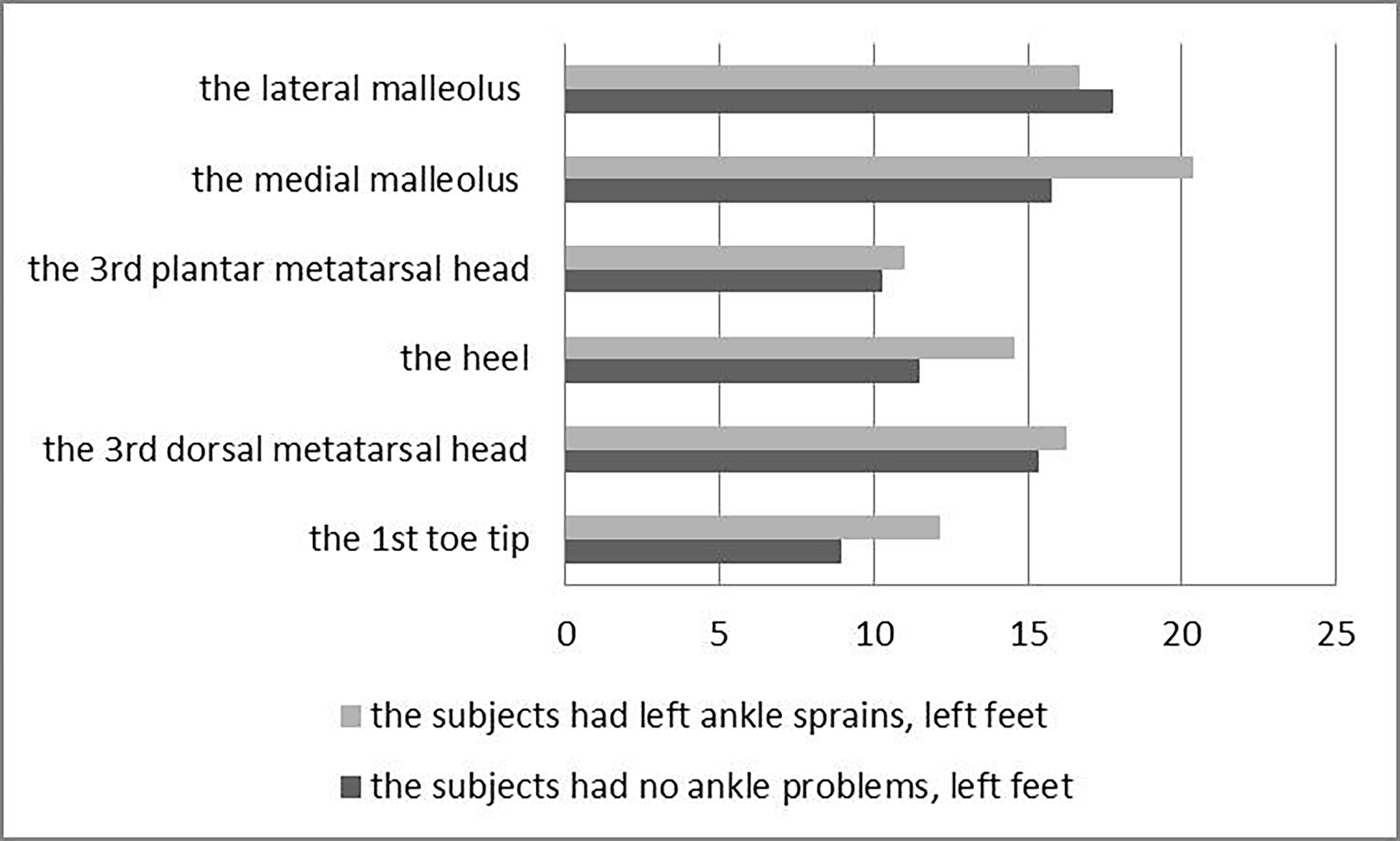
Figure 6 shows the two-point discrimination threshold measured on the left feet of 14 subjects with a left ankle sprain and the two-point discrimination threshold measured in the left feet of subjects with no ankle problems. When the two-point discrimination values in the left feet of subjects with a left ankle sprain were compared with the two-point discrimination values in the left feet of subjects with no ankle problems, a significant difference was observed in the two-point discrimination thresholds measured at the heel (
P = .036), medial malleolus (
P = .009), and first toe (
P = .003) (
Table 6).
Figure 6.
Comparison of the left feet of subjects with a left ankle sprain and the left feet of subjects with no ankle problems.
Figure 6.
Comparison of the left feet of subjects with a left ankle sprain and the left feet of subjects with no ankle problems.
Discussion
The two-point discrimination sense is involved in the somatosensory system (an important part of balance) and in plantar foot sense functions [
34]. There has, however, been a lack of adequate research on the relationship between ankle sprains and the two-point discrimination threshold. This study showed that the two-point discrimination threshold of the feet was high in patients with ankle sprains.
Various instruments have been described for two-point discrimination measurements [
56,
58,
62,
63]. Calipers have been suggested as a suitable instrument for measuring two-point discrimination in the evaluation of regions of tactile acuity [
56]. Our study used a caliper device to evaluate the two-point discrimination threshold.
It has been stated that the two-point discrimination threshold is negatively affected by age [
41,
64]. In our opinion, this may be caused by the slowdown of peripheral nervous system functions that comes with the aging process. In our study, we tried to keep the effect of age on two-point discrimination values at a minimal level by keeping the age range between 18 and 40 years.
Our study concluded that the two-point discrimination threshold in both feet of subjects with an ankle sprain was higher than in subjects with no ankle problems. This finding suggests that the effect of the plantar foot sense of a foot with an ankle sprain may be attributable to two-point discrimination senses.
The importance of the heel region is mentioned in many aspects of gait physiology [
65,
66]. Our study observed that the values of the two-point discrimination threshold in the heel region of the feet with ankle sprains was higher than the two-point discrimination threshold in the heel region of all the feet without ankle problems. These results indicate that the two-point discrimination threshold may be an important finding for the cause of a sprain, as is the importance of the heel area, which plays an active role in many phases of walking.
Previous studies have shown that gender does not make a significant difference in the two-point discrimination threshold [
59]. Another finding from the same study is the variation in the two-point discrimination threshold between individuals. In our study, we observed this variation between individuals and between two feet of the same individual and reported it in our values.
Various studies have shown the importance of balance, proprioceptive depth sense, and plantar foot sense in the treatment of ankle sprains [
67,
68,
69]. Balance and proprioceptive neuromuscular facilitation programs are recommended in clinical practice to improve ankle range of motion and functional performance and to relieve pain in individuals with sprains [
67].
In a study of the effects of exercise, an accelerated exercise protocol improved ankle function in the first week after an ankle sprain. The group that received an accelerated exercise protocol was more active than the group that received standard exercise [
44].
Another study emphasized that proprioceptive training programs were effective in reducing the incidence of ankle sprains in the athletic population, in individuals both with and without a history of ankle sprains [
68]. Bleakley et al [
69] stated that neuromuscular and proprioceptive training programs should be applied as soon as they are tolerated after an ankle sprain and can be safely incorporated into ankle rehabilitation programs.
Another study emphasized that metatarsal joint mobilizations and stretching, strengthening, and balance exercises caused pain reduction and improvement. In addition, a comprehensive rehabilitation program after lateral ankle sprain was recommended [
70].
A study on light touch thresholds in plantar foot sense showed that light touch thresholds increase when socks are worn [
71]. This study also showed that the material worn on the foot affects the foot sense.
Recent studies have emphasized the importance of wearable technology in gait, balance, and plantar foot sense disorders shown in the cause of ankle sprains [
72,
73,
74,
75,
76]. These studies state that a wearable technology that corrects gait, balance, and plantar foot sensory problems may also benefit ankle sprains.
A study by Kahya et al [
72] stated that wearable technologies using peripheral neuromodulation could improve mobility and walking functions in patients. In addition, wearable technologies have been proposed to improve patient performance in mobility and walking function in older adults.
Another study emphasized that sensory peripheral neuropathy is associated with walking, balance problems, and a high risk of falling. A wearable sensory prosthesis (Walkasins; RxFunction Inc, Eden Prairie, Minnesota) offers a new way to prevent gait difficulties, balance problems, and falls in patients with peripheral neuropathy. This device partially replaces the lost nerve function related to sensation that provides plantar tactile information during standing and walking [
73].
A recent study reported that 10 weeks of use of Walkasins (a wearable lower extremity sensory prosthesis that provides mechanical tactile stimuli) improves gait and balance function in patients with impaired plantar sense and sensory peripheral neuropathy (PN). In addition, a wearable sensory prosthesis can improve outcomes of gait and balance function and significantly reduce the incidence of falls during long-term use [
74].
Furthermore, in a study on the long-term use of Walkasins in patients with PN, Walkasins were shown to provide afferent information about pressure distributions on the sole of the foot through mechanical tactile stimulation of the lower leg. Thus, the study showed improvement in the walking and mobility of people with PN. These findings indicate that 26-week use of the Walkasins device provides improvements in gait through neural modulatory changes in the elderly with PN [
75].
Another study emphasized that sensory neuroprosthesis can improve gait and balance function for lost plantar pressure sensation in patients with PN who have balance problems [
76]. We think that these sensory neuroprostheses may also be effective in ankle sprains associated with loss of plantar foot sensation, and new studies are needed in this direction.
Wearable sensory prostheses can be used in the treatment of ankle sprains with walking and balance problems. New studies are needed for the effect of wearable technologies on ankle sprains.
There are several limitations to our study. A handpiece was used for two-point discrimination measurement. The sensory examination was subjective in nature. Data could not be collected from patients before the sprain. The examinations and findings were based on the experience of the physician. Ankle sprain trauma could not be standardized in patients. Magnetic resonance imaging could not be performed on all patients. Variation was seen in the two-point discrimination. Furthermore, the relatively broad exclusion criteria resulted in a relatively low number of patients being included in the study, so the number of participants may also be considered a limitation.
Conclusions
The two-point discrimination value in the sprained feet of the subjects with ankle sprain was observed to be higher in the tip of the first toe, heel, and plantar surface of the third metatarsal head, medial malleolus, and lateral malleolus than the two-point discrimination value of the subjects without ankle problems. It was observed that the two-point discrimination values in the heel of the feet (group 2a) with ankle sprain were higher than in the heel of the feet (group 2b) without ankle problems in the subjects of group 2.
Significant results were obtained from the two-point discrimination values in feet with ankle sprains. The two-point discrimination threshold measured in subjects with an ankle sprain is higher than in subjects with no ankle problems. This result suggests that people with a high two-point discrimination threshold of the foot may be more susceptible to ankle sprain. Further studies on the two-point discrimination threshold in ankle sprains are needed.