Ankle fractures, specifically fractures to the medial malleolus, are common lower-extremity injuries.[
1]
In both the Lauge-Hansen and Weber classifications, all types of fractures can involve combined or simple medial malleolus fractures.[
2]
The common treatment of medial malleolus fracture is open reduction and tension band or cannulated screw fixation to restore the congruity of the joint surface and stable fixation.[
3]
However, this procedure does not allow direct observation of the joint surface. Evaluations of good reduction are based on the anterior and posterior margins of the medial malleolus and the surface of bone cortex. This method requires an incision of at least 3 cm at the medial malleolus region to expose the fracture site, which may pose a risk of greater saphenous vein injury, local painful scarring, and incisional infection.[
4]
Furthermore, open surgery leads to a higher risk of soft-tissue problems and longer hospital stays compared with arthroscopyassisted closed reduction and internal fixation surgery.[
5]
Base on the concerns noted previously herein, we applied a practical, minimally invasive method of performing arthroscopy-assisted closed reduction and percutaneous screw fixation technique. In this study, we retrospectively analyzed clinical outcome data from 78 patients with medial malleolus fractures treated with arthroscopyassisted closed reduction and percutaneous screw fixation technique. The objectives of the study were to report the key points of all aspects in this arthroscopy-assisted treatment for medial malleolus fractures and to assess the quality and functional outcomes of this treatment.
Patients and Methods
This study was conducted between July 1, 2018, and October 31, 2020, in a single center by a group of well-experienced surgeons. This retrospective study was approved by the institutional review board of the First Affiliated Hospital of Shenzhen University and conforms to the principles of the Declaration of Helsinki. All of the patients provided written informed consent for the use and publication of data for research purposes. Patients were included if they had a closed medial malleolus fracture requiring treatment with arthroscopy-assisted closed reduction and percutaneous screw fixation. Patients were excluded if they had an open ankle injury or poor local soft-tissue condition.
Patient Data
A total of 78 patients with combined closed medial malleolus fractures (47 men and 31 women) were included in this study. Their mean ± SD age was 39.42 ± 2.21 years (range, 17–72 years) and injured time was 5.36 ± 1.63 days (range, 2–14 days) before surgery. Thirty-eight patients had sports-related injuries, 13 had vehicle crash–related injuries, and 27 had injuries resulting from a fall from a height. According to the Danis-Weber classification, five patients had type A fractures, 48 had type B fractures, and 25 had type C fractures. The medial malleolus fractures were divided into 34 simple anterior thalamic fractures and 44 anterior thalamic involvement and posterior thalamic fractures.
Outcome Measures
The outcome variables of interest were fracture healing, joint mobility, and functional scores; also, time of operation and wound healing, fracture healing time, and visual analog scale (VAS) score and American Orthopaedic Foot and Ankle Society (AOFAS) ankle and hindfoot score at the last follow-up were examined. All of the patients were assessed by the same group of surgeons (Z.Z., J.Q.L., L.W.C.) who performed the surgeries.
Surgical Technique
Anesthesia and Body Position. After the injury, the external plaster is fixed and the swelling is reduced with an ice compress. If there is a dislocation of the tibial joint, the external plaster is restored by manipulation, and the ankle joint can be treated by surgery after the appearance of skin wrinkles. If the patient does not have a posterior ankle fracture, he or she should be placed in the supine position, and if the posterior ankle fracture is combined, he or she should be placed in the floating position. First, the patient is placed in the lateral prone position to complete open reduction and internal fixation of the lateral and posterior malleolus fracture.[
6,
7]
Then the patient is switched to the supine position for the arthroscopic exploration and medial malleolus fracture fixation. A tourniquet is tied to the upper middle thigh with pressure set at 280 mm Hg. Time is set for 90 minutes. Surgical Procedures. In case of combined external or posterior ankle fractures, we establish a conventional posterior lateral ankle approach according to the location of the fracture line. After exposing the fracture line, we clean the blood clot and debris of the fracture site. If the fibula fracture line is oblique or spiral, we perform a lag screw first and then fix the fracture with a neutralization plate (AO, Davos, Switzerland).[
8] After completion of the lateral malleolus fixation, access from the posterior aspect of the peroneal long and short muscles, pull the flexor hallucis longus tendon, expose the posterior ankle fracture block, and fix with a 4.0-mm-diameter cannulated screw (AO).[
9] Intraoperative fluoroscopy is performed to confirm that the fractures of the lateral and posterior ankles are well fixed, and then the patient is transferred to the supine position for arthroscopy and medial malleolus fracture surgery. If only the medial malleolus is involved, the operation is performed directly in the supine position.
A medial arthroscopy portal is then made, and the scope is introduced (2.5 mm, 30˚ lens; ConMed Linvatec, Largo, Florida), paying attention not to injure the superficial peroneal nerve.[
10]
First, the blood clots and floating pieces of cartilage/bone in the joint are removed. Microfracture treatment should be performed if the subchondral bone is exposed.[
11]
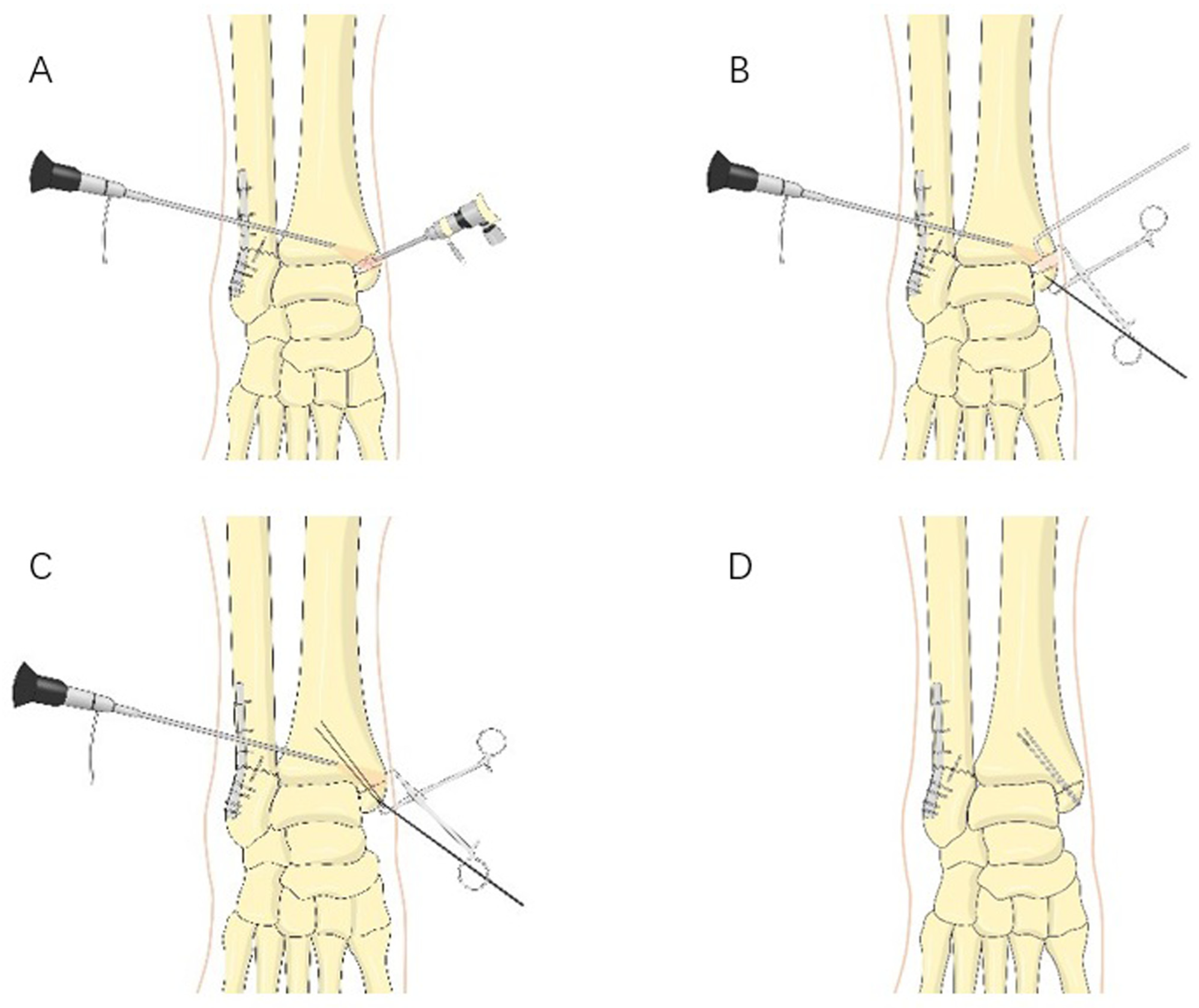
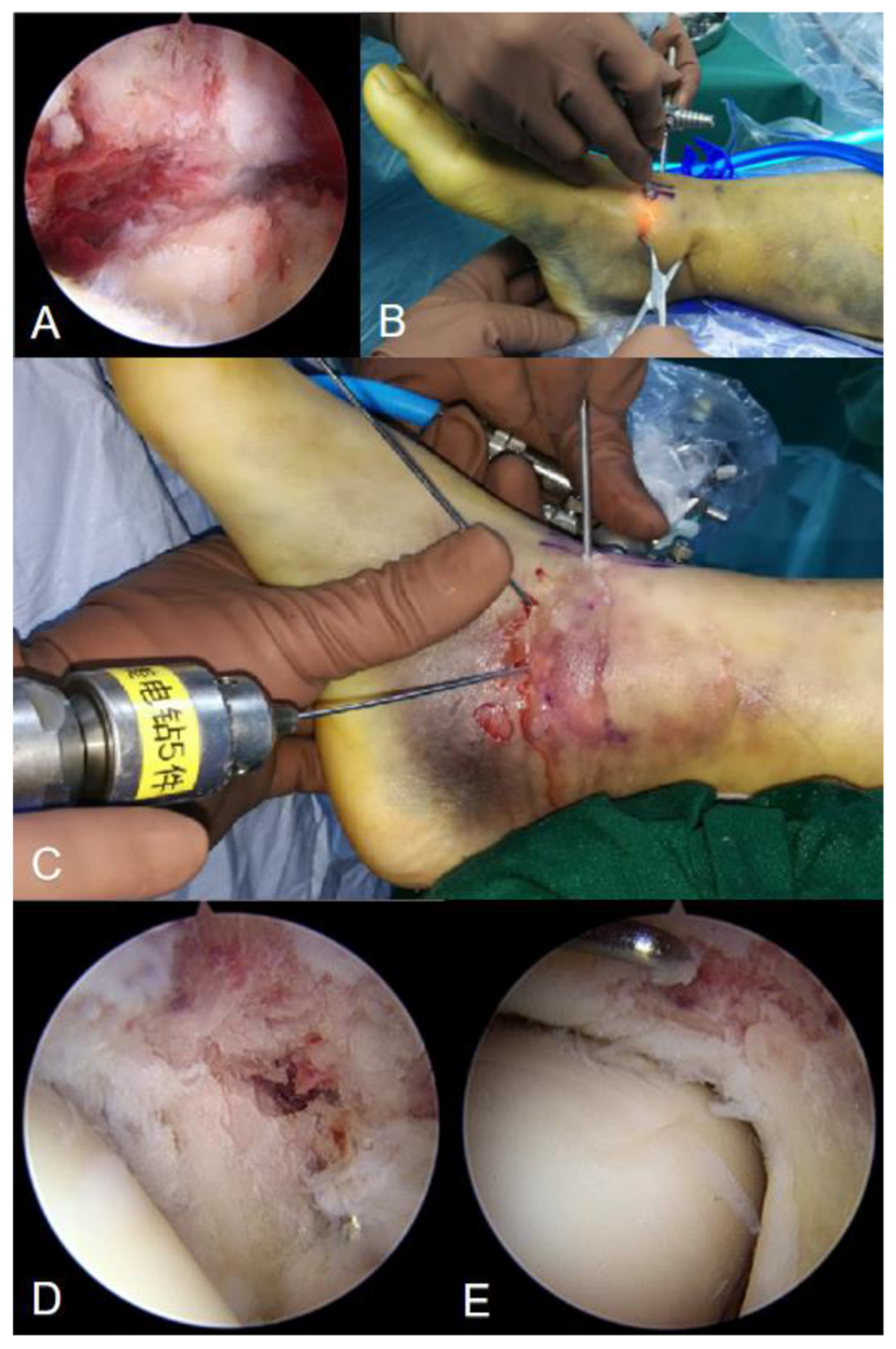
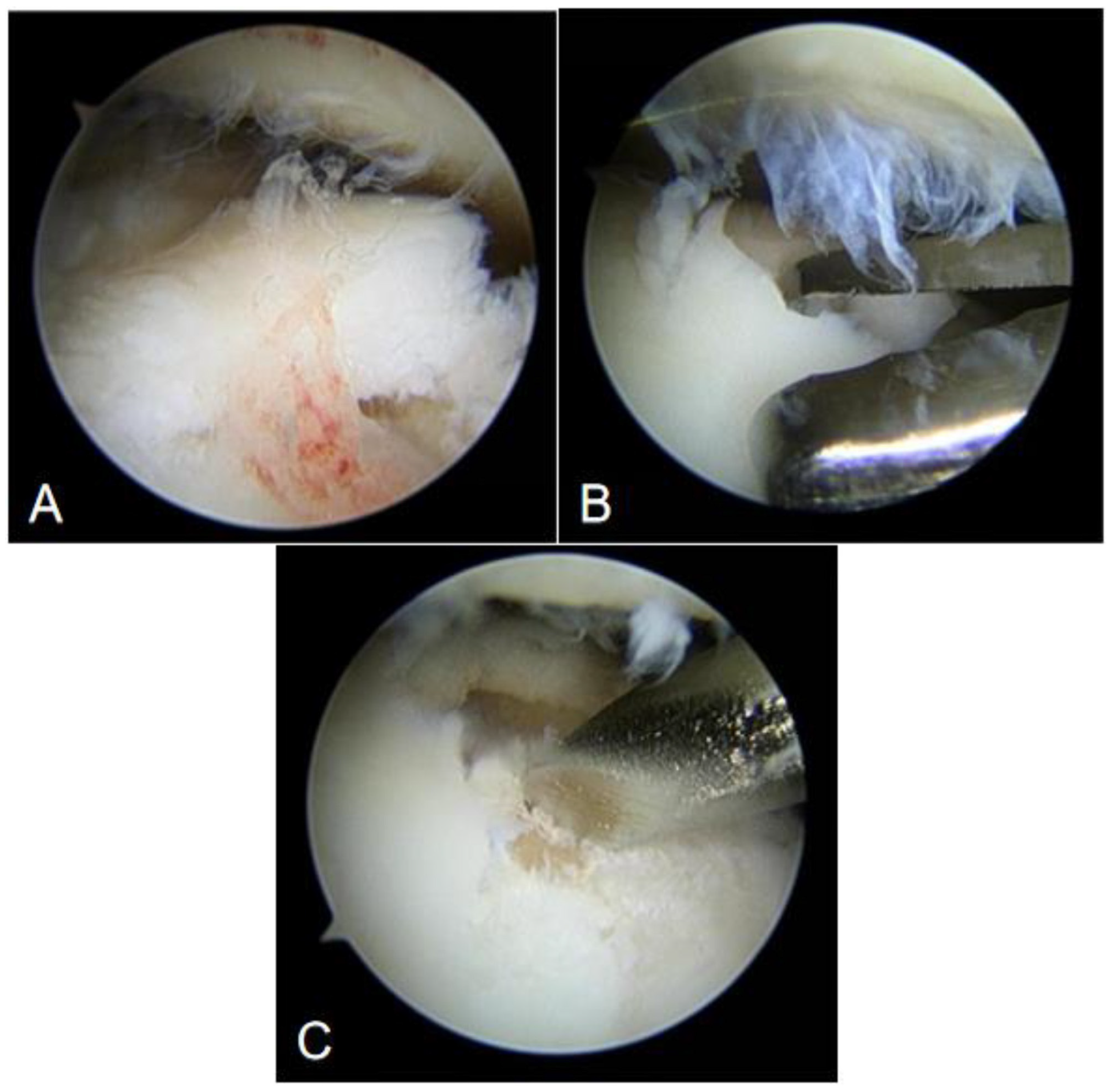
The inferior tibial peroneal joint and the anterior peroneal ligament should be explored. The lens is replaced with an anterolateral approach to observe the fracture line of the medial malleolus (Figure 1A). The anterior medial approach is used to insert a shaver to clean the blood clot or the periosteum at the fracture end to fully reveal the fracture site. When the preoperative images show a significant displacement of the medial malleolus fracture, it is necessary to be alert of the entrapped periosteum in the fracture site. During the operation, forceps could be inserted from the anteromedial approach to stretch the fracture site. Then the fracture site can be observed directly under the arthroscope. If there are foreign bodies such as entrapped periosteum or crushed joint cartilage, they can be taken out directly with the forceps. The medial malleolus fracture is temporarily reduced with Kirschner wires as a joystick, and then the reduction is checked both radiographically and arthroscopically (Figure 1 B and C) until the fracture line is closed. Bone reduction forceps were used to maintain fracture reduction, percutaneously insert two 1.2-mm guide wires into the proximal edge of the fracture fragments at the proximal edge of the medial malleolus, and temporarily remove the lens and check the stability of the fracture site under a C-arm. Once an anatomical reduction is confirmed under both fluoroscopy and arthroscopy, two 4.0-mm cannulated screws are inserted and the guide wires are sequentially removed. Finally, the medial malleolus fracture is firmly fixed. Under the microscope, the fracture end is flattened and compressed firmly, and the ankle points are well matched (Figure 1 D and E and Figure 2). When the fracture reduction and internal fixation are completed, an external rotation stress test is performed under fluoroscopy to ensure the stability of the syndesmosis. If the gap is significantly widened, a 3.5-mm cortical screw is inserted from the outside through the plate. Postoperative Treatment
After the operation, the affected limb is elevated and ice compresses are applied to reduce swelling. The second day after the operation, full-range ankle metatarsal flexion and dorsal extension exercises are started to avoid joint stiffness. The time to start weightbearing is determined according to the healing of the fracture. If the syndesmosis screw is applied, full weightbearing walking will not start until the screw is removed 12 weeks after surgery.[
12]
Statistical Analysis
The statistical analysis was performed using IBM SPSS Statistics for Windows, Version 20.0 (IBM Corp, Armonk, New York). Surgery time, fracture healing time, and VAS and AOFAS scores at the last follow-up are expressed as median and interquartile range. The t test of paired design information was used, and P < .05 was considered statistically significant.
Results
Eighteen of the 78 patients (one with type A, eight with type B, and nine with type C fractures) had an injury to talar cartilage and floated cartilage flap. After clearing the injured cartilage, the subchondral bone was exposed and microfracture treatment was performed (Figure 3). In this study, the mean ±
SD operative time, defined as the duration of arthroscopic exploration and cleaning and medial malleolus operation, was 20.68 ±
10.81 minutes (range, 15–35 minutes). After surgery, all of the patients’ medial malleolus nail wounds and arthroscopic incisions healed without any complications; two patients with type B fracture and one with type C fracture showed erythema at the lateral incision, and the wound healed after antibiotic treatment; one patient with type B fracture showed early signs of infection and healed after debridement.[
13]
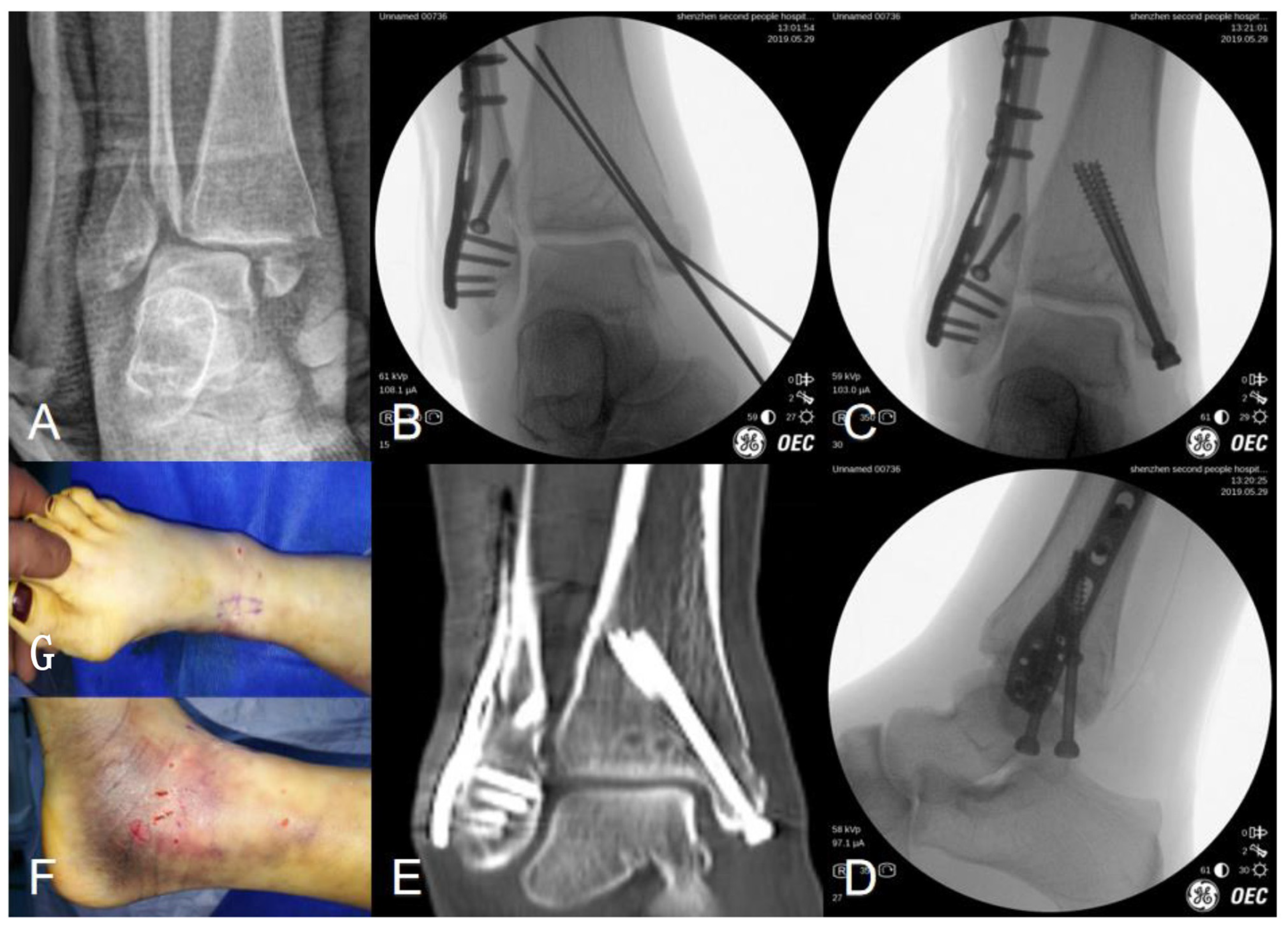
No internal fixation failure occurred. All of the fractures healed without any nonunion. The healing time of medial malleolus fractures was 6 weeks for 59 patients (three type A, 39 type B, and 17 type C fractures) and 8 weeks for 19 patients (two type A, nine type B, 8 type C fractures) (Figure 4). All of the patients were followed up for 12 to 29 months (mean ±
SD, 18.49 ±
3.61 months), and at the last follow-up all of the patients had returned to their preinjury walking level without significant pain and ankle instability. The VAS score decreased to 0 to 3 (mean ±
SD, 1.76 ±
0.52; t =
30.26; P <
.05), and the AOFAS ankle and hindfoot score[
14]
increased to 75 to 95 (mean ±
SD, 86.22 ±
3.51; t =
21.26; P <
.05). No significant complications were seen in any of the patients except for the partial wound erythema described previously herein. Discussion
The common treatment for medial malleolus fractures is open reduction and internal fixation. After the medial malleolus is cut open, the fractured end is directly exposed. The anterior edge of the medial malleolus is usually used as a sign of good fracture reduction. If there are fragments in the anterior edge, the posterior edge can also be used as a reference.[
15]
The main difficulty is to avoid damage to the great saphenous vein during the operation and to restore anatomical reduction.[
16]
Closed reduction of the medial malleolus under arthroscopy can avoid incision complications and achieve maximum anatomical reduction of the articular surface. Through arthroscopy we can directly observe the articular surface from the inside of the joint during the reduction process without having to make the long medial incision. Using closed reduction and internal fixation with prying and clamping of the fragments, we can restore the alignment by directly observing the articular surface with percutaneous cannulated screw fixation, which can avoid soft-tissue complications associated with incision and shorten the perioperative time. The ankle arthroscopy approach is a conventional anterior medial and anterolateral approach, with only two small incisions of 3 mm. For percutaneous cannulated screws, it needs only two small incisions of 3 mm at the tip of the medial malleolus. It can avoid damage to the great saphenous vein. Moreover, the soft tissue at the medial malleolus is less covered so that smaller dissection will not cause further damage to the soft tissue, which may decrease the risk of wound infection. Because the incision is small and scattered, there is no need to wait for the swollen soft tissue to be fully decreased at the medial malleolus before surgery, and the time from injury to operation can be shortened. At the same time, no large scars will form after surgery. Especially for football players, avoiding a long incision at the medial malleolus can greatly reduce the pain of scar impact when the medial arch touches the ball. Endoscopic reduction also avoids the dissection of the periosteum at the fracture end, protects the blood flow at the fracture site to the greatest extent, and promotes healing of the fracture. Therefore, none of the patients in this study experienced complications of their medial malleolus wounds. The fracture healing speed was fast, and most patients achieved bone healing within 6 weeks.
During the process of open reduction, the bony cortex and the anterior and posterior edges of the medial malleolus surface are used as reference for reduction. The fracture site of the medial malleolus is irregular, and the articular surface cannot be seen directly due to the anatomical characteristics, which is more likely to cause unsatisfactory reduction.[
16]
When the fracture involving the joint is anatomically reduced, the tibia and the talus are completely fitted to form a stable mortise and tenon deconstruction.[
17]
Arthroscopy-assisted reduction can directly reveal the articular cartilage and observe the location of the mortise to make the reduction more accurate. The medial malleolus fractures caused by torsion violence are often avulsion fractures formed by the traction of the triangular ligament. Mostly, the articular cartilage surface will not collapse. Under arthroscopic reduction, the detail of the articular cartilage can be observed directly and the position of the ankle acupoints can be observed. When the lateral and posterior malleolus are anatomically reduced and the tibiotalar joint is well matched, it is easy to draw the displaced medial malleolus fracture inward to the talus and pull it proximally to restore the congruity of the joint surface. There is also no need to observe whether the cortex is well aligned to avoid the illusion of poor reduction due to the partial cortical bone defects or small bone fragments existing, which will simplify the reduction procedure.
Fractures involving the articular surface may cause articular cartilage damage. Due to impact or shear force, floating or free cartilage flaps and fragments are formed. These free fragments in the joint may further wear off the surrounding cartilage. These may cause chronic pain in patients.[
18]
With conventional incision surgery, it is difficult to reveal and explore the cartilage at the talus cartilage or tibial fornix, and it is impossible to determine whether the articular cartilage is damaged or there are free bodies, which may cause uncertainty in the treatment. When arthroscopic techniques are used to treat joint fractures, especially when a 2.5-mm lens and a small probing hook are used, a full exploration of the cartilage condition of the talus crest and tibial fornix can be easily reached, and unstable cartilage tissue and free bodies can be removed. At the same time, the anterior ligament of the lower tibiofibular ligament, anterior fibular ligament, and triangular ligament can be detected. For loose ligaments, radiofrequency thermal shrinkage is feasible. Under arthroscopy, it can also be confirmed whether the syndesmosis is separated and whether the notch matches after reduction.[
19]
Only when the bones, cartilages, and ligaments are clearly explored and handled can the ankle joint injuries be treated comprehensively. While performing arthroscopic surgery for patients with ankle fractures, attention must be given to fluid leakage. Arthroscopy water injection may leak into the subcutaneous soft tissue with ligaments, joint capsules, and fracture sites, and more blood is accumulated in the joint cavity after the fracture. It is necessary to have more patience when cleaning blood clots and to avoid the use of pressurized water pumps to prevent extremity severe swelling and compartment syndrome due to fluid leakage into the subcutaneous or muscle spaces.[
19]
We recommend fixing the fracture of the lateral and posterior malleolus first to restore alignment of the ankle joint. After that, the medial malleolus displacement can be roughly reduced, and the fracture gap will be significantly reduced, which will reduce the difficulty of closed reduction. At the same time, it can reduce the extravasation of flushing fluid. When performing reduction of the medial malleolus under an arthroscope, the author’s experience is that the larger the fracture fragments, the easier it is to reduce. If the fragment is only the anterior mound, it is not easy to control with the reduction forceps percutaneously. The fragment can be reduced only by inserting a 2.0-mm Kirschner wire as a joystick and prying with the intra-articular probing hook. If the fragment involves the posterior mound, it is easier to reduce. Five patients failed to be reduced repeatedly under the arthroscope; it turned out that more periosteum was stuck between the fractured sites, and only after cleaning the soft tissue of the fractured sites could the fragments be dissected and reduced. Whereas before and during the operation, it is more difficult to tell whether there is soft tissue stuck in the fracture sites. Therefore, for ankle fractures with dislocation, if intraoperative restoration is difficult, it is necessary to take this into consideration and switch to open reduction and internal fixation in time to avoid the fracture fragment splitting due to repeated use of reduction clamps or forceps. The technique still needs to be continuously improved to make the operation simpler and less time-consuming and become a routine treatment for medial malleolus fractures in the future. We assume that with the improvement of making a cavity at the fracture site to remove the stuck soft tissue that all medial malleolus fractures can be reduced and fixed under arthroscopy. When reducing the medial malleolus fracture under the arthroscopy, our experience is that the larger the fracture, the easier it is to reach the closed reduction. If only the anterior tubercle or part of the posterior tubercle is involved in the fracture, it will not be easy to control the fragments with reduction forceps. We often insert a 2.0-mm Kirschner wire into the fragment and use it as a joystick to manipulate the piece into the proper position.
If the reduction process fails, it is necessary to consider whether there is periosteum entrapped in the fracture site. A forceps could be inserted from the anteromedial approach to stretch the fracture site. Then the fracture site can be observed directly under the arthroscope. If there are foreign bodies such as entrapped periosteum or crushed joint cartilage, they can be taken out directly with the forceps. Five patients in this study were unable to restore close reduction under the arthroscope. After careful inspection of the fractured ends, it was found that the fractured ends were blocked in the entrapped periosteum; after removal, the fracture was successfully anatomically reduced. These five patients were all accompanied by tubercular joint dislocation at the time of injury, and the medial malleolus shifted greatly. Therefore, it is necessary to examine the fracture site by arthroscopy when the closed reduction process is unable to reach. This technique needs good cooperation between the surgeon and the assistant during the reduction and the whole operation. It will take some time for the assistant to master the arthroscopic skills and then to make the reduction procedure faster.
The limitations of this study include that the sample size is relatively small and the experience results from a single medical center. A further multicenter study may offer more powerful evidence and experience.
Conclusions
In summary, this study aimed to explore a practical method of using arthroscopy as a supplement to management of medial malleolus reduction to minimize complications. This method makes the closed reduction and percutaneous internal fixation of medial malleolus fractures less invasive compared with traditional surgical methods and allows simultaneous exploration and management of the articular surface.