Historically, distal fifth metatarsal shaft fractures have been treated with conservative management. The general consensus is that these types of fractures have extremely high healing rates as well as satisfactory outcomes with conservative treatment, in part due to the thick periosteum of the fifth metatarsal, the long and often spiral nature of the fractures, and the increased mobility of the fifth tarsometatarsal joint [
1,
2]. There is limited published research regarding conservative treatment of distal fifth metatarsal diaphyseal fractures and even less evaluating surgical treatment of these fractures. Most published literature regarding fifth metatarsal fractures pertains to Jones fractures and proximal fifth metatarsal fractures. Many articles support surgical treatment in Jones fractures as a method to decrease healing time and complications [
3]. Published literature on the topic of distal fifth metatarsal shaft fractures does show that conservative treatment can be successful but often requires a prolonged period of healing, leading to a prolonged time to return to full activity (RTA) [
4,
5,
6]. One recent study evaluated surgical treatment of distal fifth metatarsal shaft fractures and found good healing rates with a low complication rate, although a comparison with nonoperative treatment was not performed [
7]. By treating many of these fractures conservatively in our clinic, we and our patients became increasingly dissatisfied with long healing times and delayed unions. This experience prompted us to perform this study to compare surgical and conservative treatments of fifth metatarsal diaphyseal fractures.
Materials and Methods
A retrospective review of patients with isolated fifth metatarsal shaft fractures was performed using electronic medical records over a 5-year period. Fifty-three patients with either surgical or conservative treatment of isolated fifth metatarsal shaft fractures were included. Exclusion criteria consisted of less than 10 months of follow-up from date of injury or date of surgery, fifth metatarsal stress fractures, Jones fractures, fifth metatarsal avulsion/base fractures, additional foot or ankle fractures, and pediatric patients who were not skeletally mature. Data recorded included age, sex, tobacco use, diagnosis of diabetes mellitus, time to clinical union (CU), time to radiographic union (RU), athletic versus nonathletic status, RTA, surgical fixation method, and complications. Athletic patients were defined as patients who fit into one or more of the following categories: active-duty military personnel or high school, college, or professional athletes. Radiographic and clinical union definitions were used as reported in previous literature [
3]. Radiographic union was defined as the presence of new bone formation with bridging trabeculae across the entire fracture site. Clinical union was defined as a non-tender fracture site, the absence of pain with ambulation without assistive devices, and radio-graphic evidence of healing. Return to full activity was defined as return to all activities that the patient was doing before the injury. Nonunion was defined as fracture present for more than 9 months and no healing present on radiographs for 3 consecutive months. Conservative treatment consisted of immobilization with any combination of nonweightbearing or weightbearing short-leg cast, cast boot, or postoperative surgical shoe as dictated by the attending physician. Surgical treatment consisted of open reduction and internal fixation with the use of any combination of screws, plates, cerclage wires, and Kirschner wires. Choice of fixation method was determined at the time of surgery by the attending physician. Both groups of patients were followed until full clinical and radiographic union was achieved and the patients were able to return to full activity. Patients who achieved radiographic union before 10 months were contacted and had a follow-up visit at 10 months or later. At the time of injury, the attending physician had a discussion with the patient outlining conservative treatment versus surgical options. Severity of the fracture, comorbidities, risks, benefits, expected timeframe of healing, and RTA based on the provider’s previous experience for these injury patterns were discussed. Each patient chose which treatment method (surgical or conservative) to pursue after being given a recommendation from the surgeon. Institutional review board approval was obtained for this study. The results are summarized as counts and percentages for categorical data and as means for numerical data. Differences in data were compared by calculating
t tests,
x2 tests of independence, or Fisher exact tests. A
P # .05 (2-tailed) was considered statistically significant.
Results
The study included 53 patients: 19 males (35.8%) and 34 females (64.2%) (20 athletic [37.7%] and 33 nonathletic [62.3%]) with a mean age of 43.6 years (range, 19–73 years). The mean age of athletes was 28.5 years (range, 19–47 years) and of nonathletes was 52.9 years (range, 21–73 years). Of all of the patients, 16 (30.2%) were treated surgically and 37 (69.8%) were treated conservatively. Seven of the 53 patients (13.2%) were using tobacco at the time of injury and during the healing process. In the surgical group, three of 16 patients (18.8%) were tobacco users, and four of 37 patients (10.8%) in the conservatively treated group used tobacco. A diagnosis of diabetes mellitus was present in four of 53 patients (7.5%); all of these patients were in the conservative treatment group (
Table 1).
Mean ± SD outcomes for all patients treated surgically versus conservatively were as follows: CU, 8.2 ± 2.0 weeks versus 16.3 ± 8.8 weeks (
P < .001); RU, 13.5 ± 5.6 weeks versus 25.2 ± 11.9 weeks (
P < .001); and RTA, 12.9 ± 2.6 weeks versus 20.7 ± 10.7 (
P < .01) (
Table 2). In the athletic population, mean ± SD outcomes for the surgical versus conservative treatment groups were as follows: CU, 8.5 ± 1.7 weeks versus 18.8 ± 11.7 weeks (
P = .005); RU, 13.5 ± 6.1 weeks versus 27.4 ± 15.8 weeks (
P = .013); and RTA, 13.0 ± 2.6 weeks versus 21.9 ± 11.4 weeks (
P = .022) (
Table 3). In the nonathletic population, mean outcomes in the surgical versus conservative groups were as follows: CU, 8.3 weeks versus 15.6 weeks; RU, 10.0 weeks versus 24.9 weeks; and RTA, 11.8 weeks versus 20.2 weeks (
Table 4).
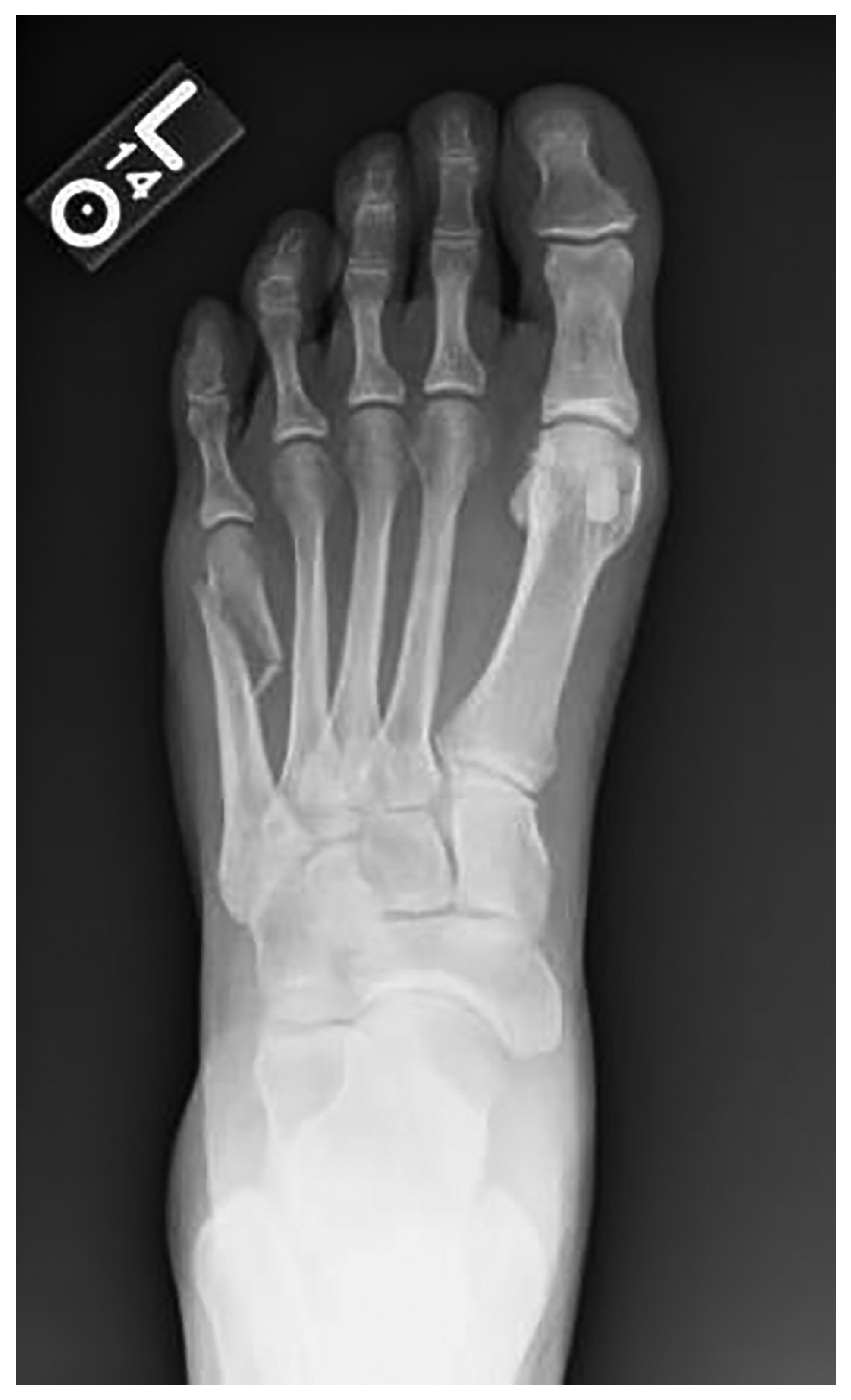
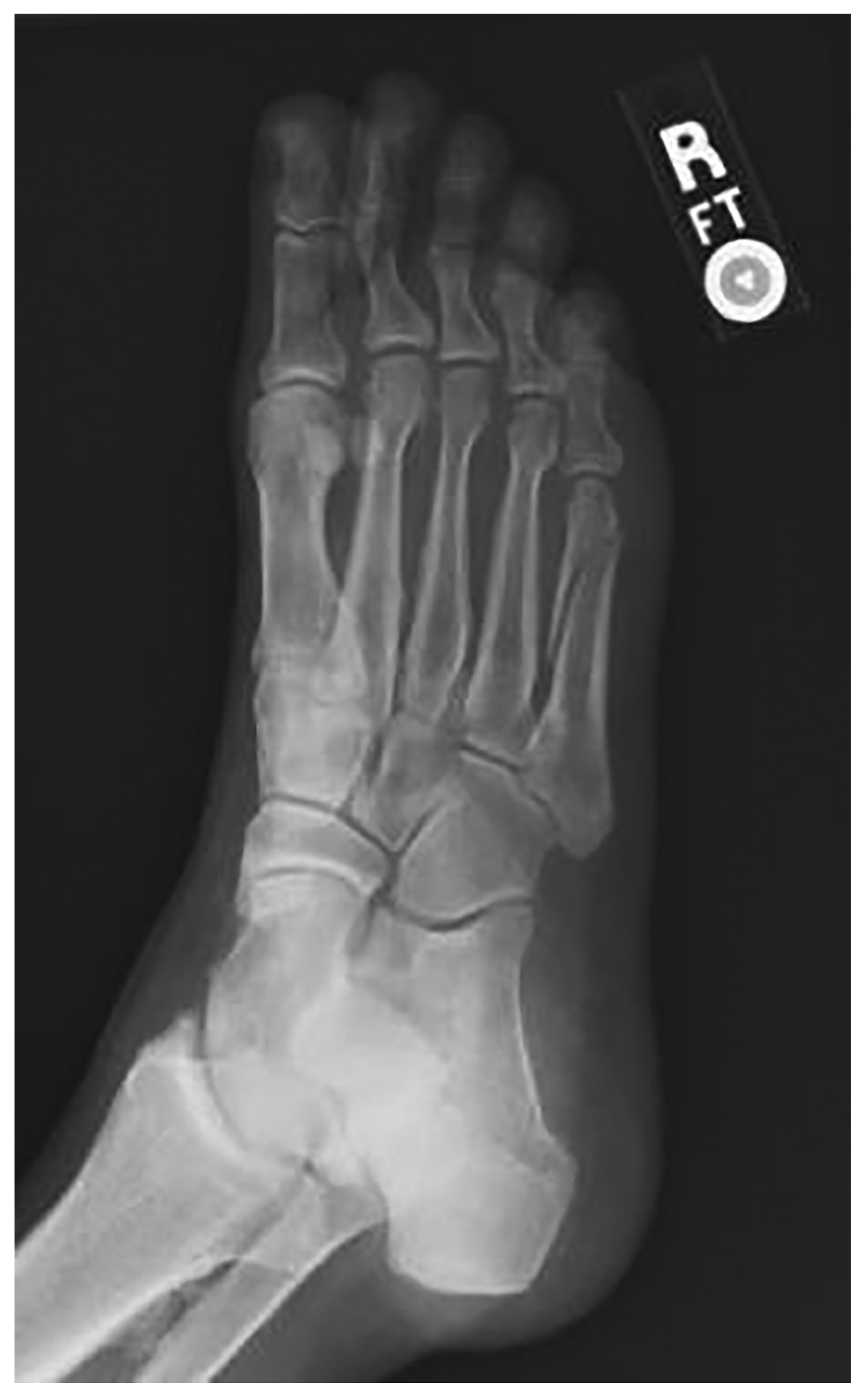
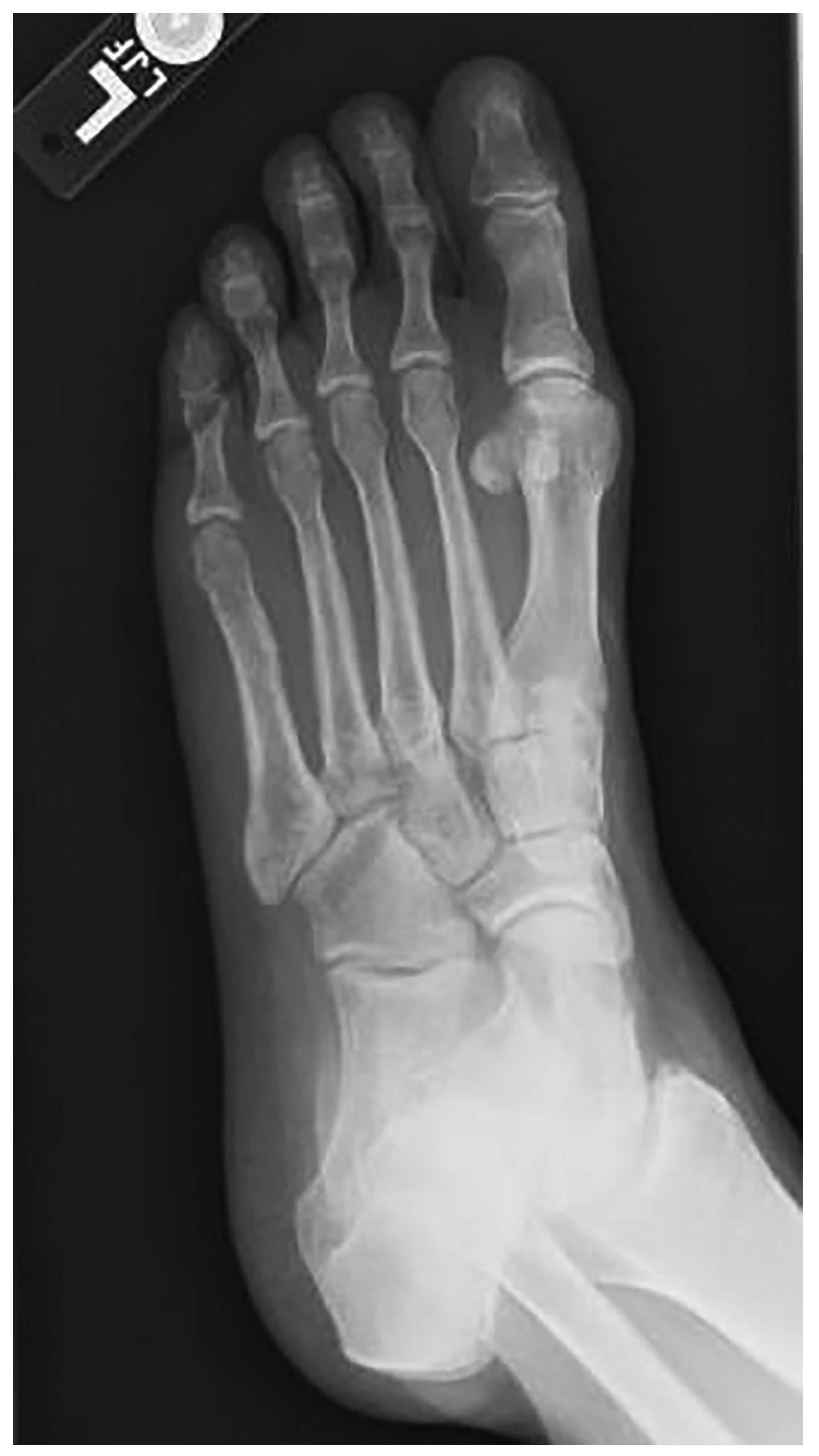
Complications occurred in three of 16 surgical patients (18.8%). The complications included one minor complication (skin dehiscence) and two major complications requiring surgical intervention (a repeated fracture that occurred 3 months after the patient returned to all regular activities and a painful hardware removal). In the conservative group there were minor complications in 11 of 37 patients (29.7%), including nine delayed unions treated with bone stimulators, one reflex sympathetic dystrophy, one nonunion (
Figure 1 and
Figure 2), and one case of long-term metatarsalgia. None of these patients underwent surgical treatment to address complications. The patient with the nonunion was asymptomatic and did not desire surgical correction. There were no delayed unions or nonunions in the surgical group.
Tobacco use was also recorded for all of the patients. Overall, seven of 53 patients (13.2%) were using tobacco when the injury occurred and during the healing process. Three of 16 patients (18.8%) in the surgical group were tobacco users; only one complication occurred in this group (refracture). Among these three patients, the RU averaged 15 weeks. In the conservative treatment group, four of 37 patients (10.8%) were tobacco users, and two of the four patients had delayed unions. The patient with the nonunion was not a tobacco user. Previously published data show that smoking contributes to impaired bone healing [
8].
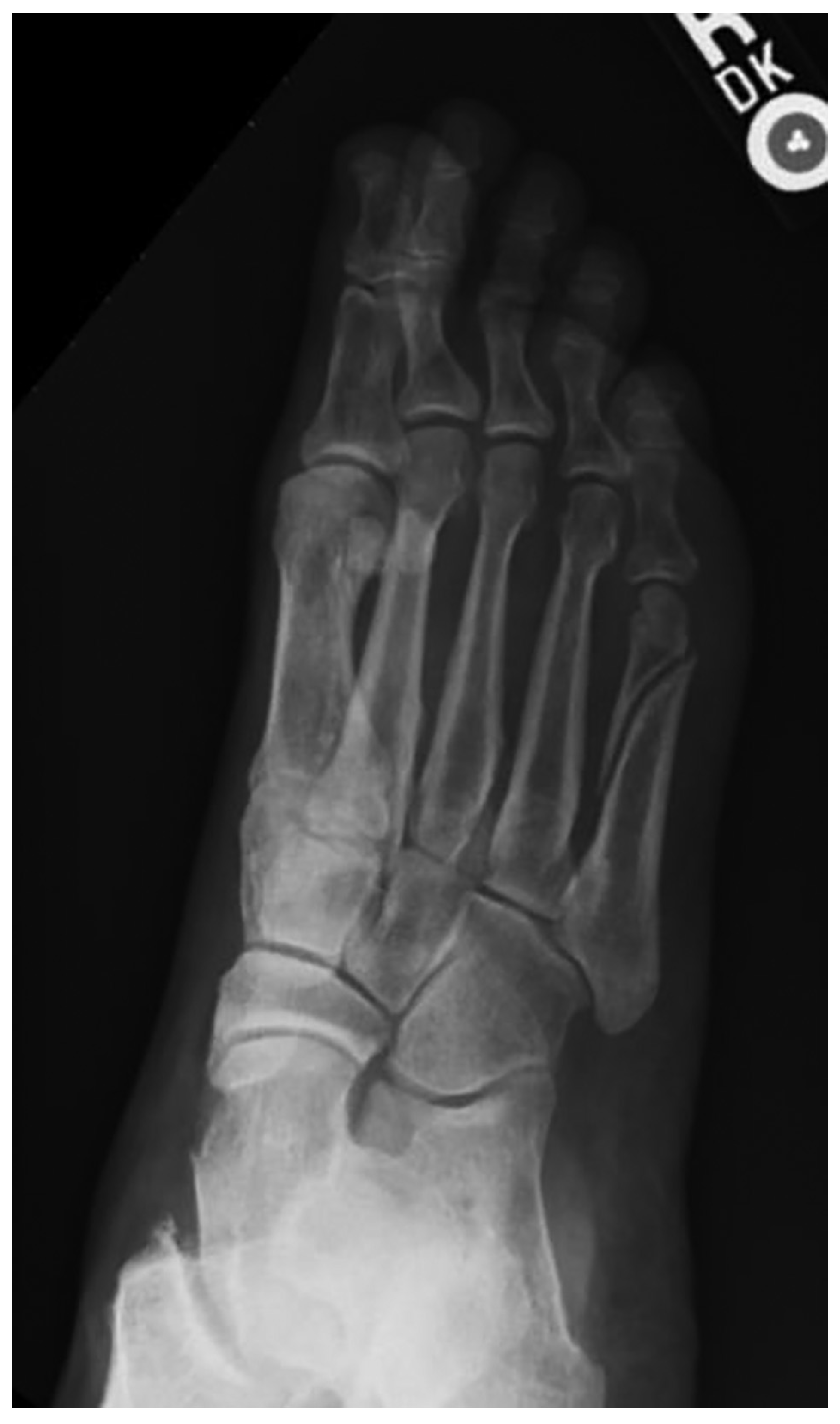
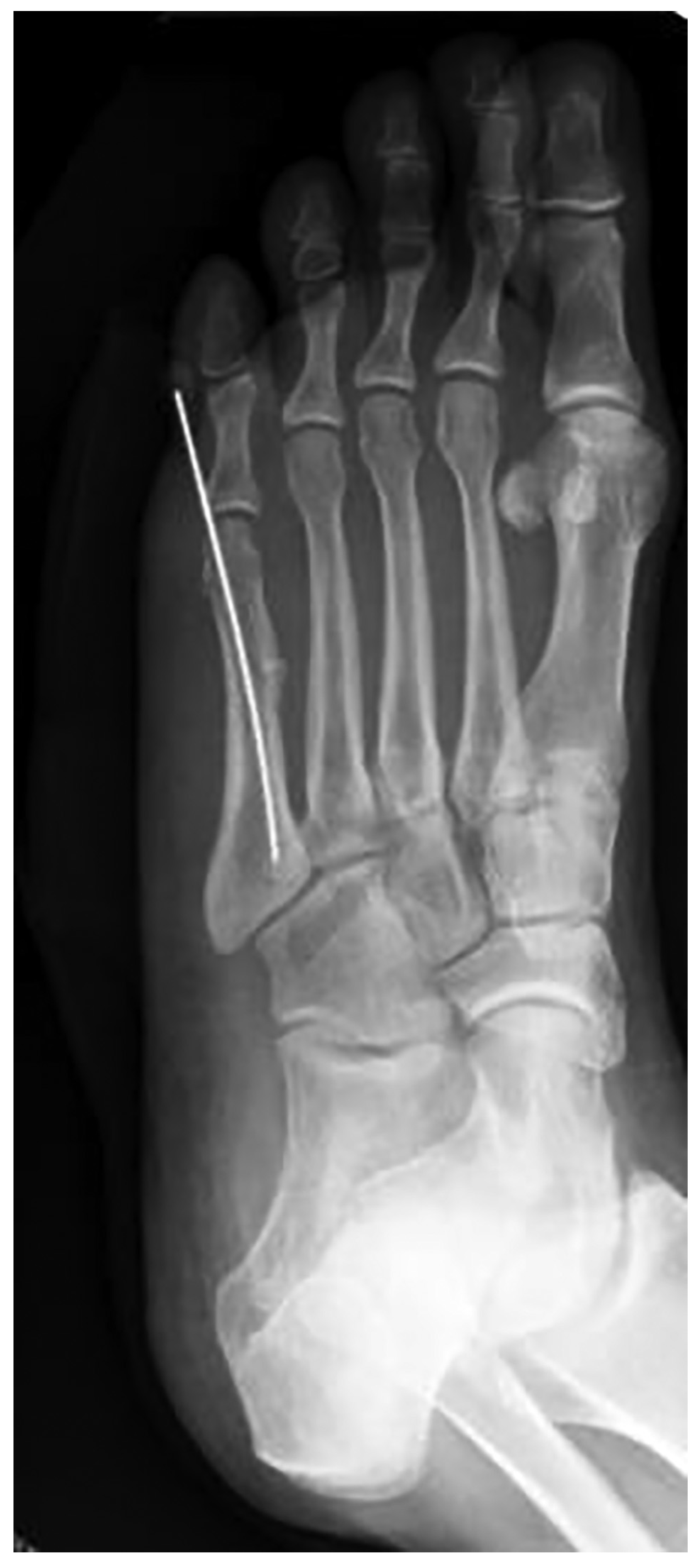
Surgical fixation of the fracture site varied among patients. Screw fixation was used in seven patients, Kirschner wire fixation in five patients (
Figure 3,
Figure 4 and
Figure 5), a single plate and screws in three patients, and a combination of Kirschner wire and cerclage wire fixation in one patient. The patient with cerclage wire experienced pain from the wire and had it surgically removed. All of the Kirschner wires were removed in the clinic 5 to 7 weeks after surgery.
Discussion
Nearly all of the literature published on distal isolated fifth metatarsal shaft fractures has evaluated the results of conservative treatment. A large prospective cohort study by Aynardi et al [
4] reviewed long-term outcomes of 142 displaced oblique spiral fractures of the fifth metatarsal shaft. The study reported three nonunions (2.1%) and two delayed unions (1.4%), with two of the nonunions requiring surgical treatment. The patients were then contacted at least 2 years after the injury (average follow-up, 3.5 years) and took a survey regarding activities of daily living (the Foot and Ankle Ability Measure). Outcome scores averaged 95.5 of 100. Although the outcome scores were high in all of the patients, the authors did not report on RTA, CU, or RU in their patients. They did state that “clinical healing typically occurred by 6 weeks.” [
4]. The rate of delayed unions in conservatively treated patients in the present study was higher (24.3%) than reported by Aynardi et al (1.4%); this is possibly due to a difference in methods. Aynardi et al had a short clinic follow-up and then a phone survey follow-up several years after the injury with no radiographic evaluation at that time. Delayed unions can be asymptomatic and seen only on radiographs. Comparing nonunions, we had a similar rate (2.7%) as did Aynardi et al (2.1%).
Konkel et al [
5] in 2005 reported on RTA and complications of fifth metatarsal fractures treated conservatively. Sixteen patients in their study had oblique distal shaft fractures, and of these patients, four (25%) had a delayed union and none progressed to a nonunion. These patients also had a return to full duty time of 3.4 months. In the present study, we found a higher mean RTA of 20.7 weeks, but a similar rate of delayed union 24.3% (nine of 37) in all of the patients treated conservatively.
O’Malley et al [
6] in 1996 evaluated surgical and conservative treatment of fifth metatarsal fractures. Their study was a retrospective study of 35 ballet dancers with distal shaft fractures of the fifth metatarsal. Four patients were treated surgically with Kirschner wires and 31 patients were treated conservatively. All of the patients had a mean return time to full ballet performance of 19 weeks. Comparison of RTA between the surgical and conservative groups was not reported, but the authors did support conservative treatment as an effective treatment. It is hard to compare outcomes because O’Malley et al combined outcomes between groups and had fewer overall surgically treated patients. Overall, our combined rate was 16.5 weeks for RTA, shorter than O’Malley et al’s 19 weeks.
Regarding distal fifth metatarsal shaft fractures, Solan and Davies [
9] stated, “Surgical treatment of these injuries may occasionally be required but offers no advantage over nonoperative treatment, even for active patients.” Nearly all of the older published research echoes this sentiment.
Morgan and Abbasian [
10] recently published a case series of 33 patients who were treated conservatively for fifth metatarsal diaphyseal fractures. They compared patients treated with a boot or a surgical shoe. They had an average time to bony union of 8.3 weeks but did have three patients who went on to delayed unions. They treated all of the patients with conservative treatment regardless of the degree of displacement [
10].
Another recent study by Soave et al [
11] proposed a new classification method for fifth metatarsal diaphyseal fractures. The study did not discuss the role of the classification system in guiding treatment but rather it was a radiographic classification [
11]. Other recent literature evaluating the prevalence of fifth metatarsal fractures found that 84% of dancer’s fractures occur in women, with prevalence increasing with age [
12]. In the present study, most factures occurred in women, with 64.2% of the patients being female.
New research is beginning to support surgical treatment of these fractures. A recent study by Thompson et al [
7] is the first large study to evaluate surgical treatment of fifth metatarsal diaphyseal fractures. Sixty-four patients were reviewed retrospectively for healing rates of surgically treated fifth metatarsal diaphyseal fractures. They reported a mean healing time of 7.73 weeks, a nonunion rate of 1.56%, and an overall complication rate of 6.25%. Their healing time is similar to our clinic union rate of 8.2 weeks, and their nonunion rate is close to our nonunion rate of 0%. They concluded that “Surgical management resulted in excellent healing times with a relatively low complication rate,” [
7] which is also supported by the literature. As was noted in their paper, they lacked a control group or nonoperative patients. The present paper builds on their research by including a comparison with nonoperative treatment.
In the present study, patients, whether athletic or nonathletic, who underwent surgery had a significantly shorter CU, RU, and RTA. In surgical patients, CU was 8 weeks faster, RU was 12 weeks quicker, and RTA was 8 weeks sooner. Also, there was a high rate (27.0%) of delayed unions and non-unions with those treated conservatively.
The present study evaluated not only surgical and conservative treatment of these fractures but also two different populations consisting of patients who were either athletic or nonathletic. Athletic patients, to return to full activity, need to be able to run, jump, and, in the case of active-duty soldiers, carry heavy loads (up to 100 lb) on uneven terrain long distances, whereas in the nonathletes group, return to full activity can mean being a community ambulator without assistive devices. For athletes, being able to return to activity 8 weeks sooner by undergoing surgical rather than conservative treatment can be a huge advantage. Athletes or military personnel being unable to perform required activities and duties for prolonged periods can potentially impact their careers or athletic course. Although some patients in the nonathletic group were retired community ambulators, many patients in this group needed to get back to full-time work or recreational activities and exercise. Prolonged recovery times can threaten careers, increase loss of income from the inability to work, and be a significant challenge mentally and physically. The activities that each patient returns to is different, but being able to return to previous activities and full-duty work nearly 2 months earlier and have a decreased risk of complications by having surgical treatment can be a great advantage for many patients.
In the present study, age was significantly different between the surgical and conservative treatment groups (29.4 years versus 49.7 years; P
<
.001), which could play a role in increased healing and RTA in the conservative treatment group. When evaluating the athletic population alone, there was no significant difference in age between the two groups (25.9 years versus 32.2 years; P = .108), and RTA was 8 weeks longer in the conservative treatment group. As with any elective surgery, not all patients with distal fifth metatarsal shaft fractures are candidates for surgical treatment merely because it has been shown to significantly decrease healing time. Comorbidities and social factors play a role in determining whether a patient is able and willing to undergo surgery.
Limitations of the present study include a small sample size and the retrospective nature of the study. As a retrospective study it was prone to selection bias, with the surgeons picking those who would receive surgery. Also, the conservative and surgical groups did not have similar demographics in terms of sex, number, age, and comorbidities. This could have affected our outcomes, with the conservative group being older on average. Due to the small sample size of the surgically treated non-athletes (n = 4), we were unable to perform a statistical analysis between surgical and conservative treatments. Larger prospective studies are needed to confirm these findings and adequately have matched pair groups.
As previous studies have shown, conservative treatment does eventually heal most distal fifth metatarsal shaft fractures [
4,
5,
6,
10]. Although this has historically been the mainstay of treatment, healing times are prolonged and can have a high rate of delayed union [
5,
10]. The present study shows that surgical treatment in athletes and nonathletes may significantly decrease RU, CU, and RTA by an average of 8 weeks compared with conservative treatment. We suggest that surgical treatment of distal fifth metatarsal fractures is a viable treatment option that may significantly decrease the patient’s CU, RU, and RTA.