Next Article in Journal
Conservative versus Surgical Management of Fifth Metatarsal Diaphyseal Fractures: A Retrospective Review
Previous Article in Journal
Cost of Treatment of Neuroischemic Ulcers of the Lower Extremity in Patients with Peripheral Artery Disease in the United States
 
 
Journal of the American Podiatric Medical Association is published by MDPI from Volume 116 Issue 1 (2026). Previous articles were published by another publisher in Open Access under a CC-BY (or CC-BY-NC-ND) licence, and they are hosted by MDPI on mdpi.com as a courtesy and upon agreement with American Podiatric Medical Association.
Article

High-Risk Patients with Infected Puncture Wounds and Appropriate Tetanus Prophylaxis

by
David H. Truong
1,2,*,
Matthew Malone
3,4,
Javier La Fontaine
2,5,
Dane K. Wukich
2,
Orhan K. Oz
6 and
Lawrence A. Lavery
2,5
1
Surgical Service, Veterans Affairs North Texas Health Care System, 4500 S Lancaster Rd, M.C. 112, Dallas, TX
2
Department of Orthopaedic Surgery, University of Texas Southwestern Medical Center, Dallas, TX
3
South West Sydney Limb Preservation and Wound Research Academic Unit, Liverpool Hospital, South West Sydney Local Health District, Sydney, Australia
4
Infectious Diseases and Microbiology, School of Medicine, Western Sydney University, Campbelltown Campus, Sydney, Australia
5
Department of Plastic Surgery, University of Texas Southwestern Medical Center, Dallas, TX
6
Department of Radiology, University of Texas Southwestern Medical Center, Dallas, TX
*
Author to whom correspondence should be addressed.
J. Am. Podiatr. Med. Assoc. 2023, 113(1), 20146; https://doi.org/10.7547/20-146
Published: 1 January 2023

Abstract

Background: We sought to evaluate clinicians’ compliance with national guidelines for tetanus vaccination prophylaxis in patients with high-risk feet. Methods: We retrospectively evaluated 114 consecutive patients between June 1, 2011, and March 31, 2019, who presented to the emergency department with a foot infection resulting from a puncture injury. Eighty-three patients had diabetes mellitus and 31 patients did not have diabetes mellitus. Electronic medical records were used to collect a broad range of study data on patient demographics, medical history, tetanus immunization history and tetanus status on presentation to the emergency department, peripheral arterial disease, sensory neuropathy, laboratory values, and clinical/surgical outcomes. Results: Of the 114 patients who presented to the emergency department with a puncture wound, 53 (46.5%) did not have up-to-date tetanus immunization. Of those patients, 79.2% received a tetanus-containing vaccine booster, 3.8% received intramuscular tetanus immunoglobulin, 3.8% received both a tetanus-containing vaccine booster and tetanus immunoglobulins, and 20.8% received no form of tetanus prophylaxis. Comparing data between patients with and without diabetes mellitus, there were no statistically significant differences in tetanus prophylaxis. Conclusions: Guidelines for tetanus prophylaxis among high-risk podiatric medical patients in this study center are not followed in all patients. Patients with diabetes mellitus are at high risk for exposure to tetanus; therefore, we recommend that physicians take a detailed tetanus immunization history and vaccinate patients if the tetanus history is unclear.

Tetanus can be a life-threatening disease caused by a toxin produced by Clostridium tetani, an anaerobic gram-positive, spore-forming bacillus found predominantly in soil and animal excrement. The potent neurotoxin has profound effects on skeletal muscle function [1]. In the United States, tetanus is an increasingly rare diagnosis, with the incidence of tetanus declining dramatically due to widespread use of the tetanus vaccine [2]. Despite this success, there remain populations at high risk for tetanus, including the elderly, individuals with diabetes mellitus (DM), intravenous drug users, and unvaccinated individuals [3].
Tetanus occurs when spores of C tetani enter the body through breaks in the protective barrier of the skin. C tetani spores germinate under anaerobic conditions such as those provided by deep, devitalized tissue, which likely explains the presenting mechanism of injuries. Therefore, patients who sustain wounds via mechanisms of traumatic foreign body breaches to the skin should be assessed for tetanus risk and screened for tetanus vaccine status. The Centers for Disease Control and Prevention (CDC), the Infectious Diseases Society of America (IDSA), and the World Health Organization consider patients with puncture wounds to be at high risk for tetanus [3,4,5]. Furthermore, studies have shown that puncture wound injuries are associated with high risk of infection, multiple surgeries, osteomyelitis, and amputation [6,7,8,9,10][. Tetanus prevention guidelines from the IDSA [4] and the CDC [11] recommend the following management for patients with tetanus-prone wounds: 1) patients with an unknown status or no previous vaccination should be given both tetanus-containing vaccine and intramuscular tetanus immunoglobulin; 2) if the last tetanus-containing vaccine dose was more than 5 year earlier, patients should receive only the tetanus-containing vaccine booster, and no tetanus immunoglobulin is needed; 3) if the last tetanus-containing vaccination was within the past 5 years, no additional tetanus immunization is needed.
Despite clear recommendations from the CDC and the IDSA, there seem to be gaps in the delivery of care in ensuring that patients who require tetanus prophylaxis receive appropriate therapy. Abbate and colleagues [12] evaluated 502 patients who presented to emergency departments (EDs) across Italy with tetanus-prone wounds. Of the 502 patients, 210 were undertreated for tetanus, with only 1.5% of treating physicians correctly adhering to tetanus prophylaxis and immunization practices based on Italian recommendations [12]. Talan and colleagues [13] evaluated information from 1,988 patients with tetanus-prone wounds from five university-based EDs and found that 60.9% of patients required tetanus-containing vaccination but that only 42.4% of patients received it [14]. Most of the described studies include mixed populations of low- and high-risk individuals with tetanus-prone wounds in varying anatomical locations. However, there are limited studies that evaluate high-risk patients with a focus on tetanus-prone wounds occurring on the foot [15]. In the present study, we compared the recommended practices outlined by the CDC and IDSA guidelines on tetanus prophylaxis in high-risk patients attending a level I trauma ED with an infected puncture wound to the foot.

Methods

This study was approved by the institutional review boards at the two institutions where the study was conducted. A retrospective review of individuals presenting to a university-based ED with a puncture wound to the foot (tetanus-prone wound) was conducted between June 1, 2011, and March 31, 2019. All of the patients included in this retrospective review required in-patient admission for management of their puncture wounds, primarily (but not exclusively) due to bacterial infections (non–tetanus-related). Individuals younger than 18 years or older than 90 years were excluded. Electronic medical records were used to collect a broad range of study data on patient demographics, medical history, tetanus immunization history and tetanus status on presentation to the ED, peripheral sensory neuropathy, foot ulceration, peripheral arterial disease, and clinical/surgical outcomes, including lower-extremity amputation [16,17].
The diagnosis of DM was based on American Diabetes Association criteria [18]. Peripheral sensory neuropathy was defined as abnormal vibration sensation (.25 V) or abnormal sensation with a 10-g Semmes-Weinstein monofilament [19,20]. We defined peripheral arterial disease as an ankle-to-arm systolic blood pressure ratio of less than 0.90. Leukocytosis was defined as a white blood cell count greater than 11.0×10⁹/L.
Data were compiled using a spreadsheet program (Microsoft Excel; Microsoft Corp, Redmond, Washington). Continuous data are given as mean 6 SD, median, and 95% confidence intervals (CIs). A x 2 test was used to compare dichotomous variables. A one-way analysis of variance test was used to evaluate continuous variables, and the Mann-Whitney U test was used for nonparametric data. For all of the comparisons and modeling, the level of significance was set at P < .05. Data were analyzed using calculators available at the Social Science Statistics Web site (http://www.socscistatistics.com).

Results

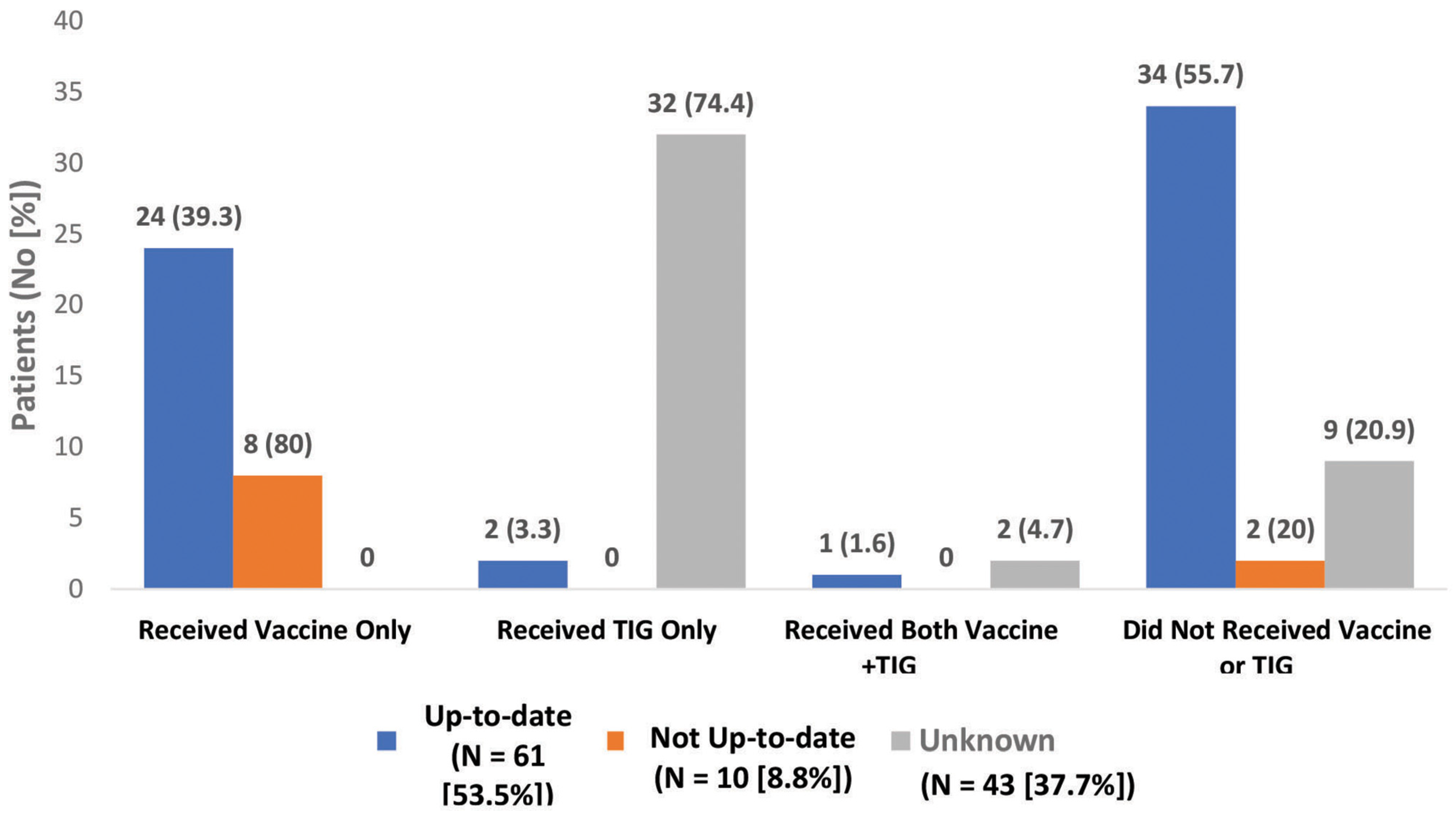
In this retrospective review, 114 eligible patients were included for analysis. There were no differences in patient demographics or comorbidities (Table 1). Tetanus immunization history was documented in 71 of 114 (62.3%) individuals; 61 individuals (53.5%) had a tetanus-containing vaccination within the past 5 years. Ten patients (8.8%) presented with a tetanus-containing vaccination history in the past 5 years, of which 80% (n = 8) received a tetanus-containing vaccination booster; two patients (20%) did not receive any vaccination.
Forty-three individuals (37.7%) were identified with an unknown tetanus immunization status or no immunization history. In this group, only two individuals (4.7%) were treated appropriately, that is, were given both tetanus-containing vaccine and intramuscular tetanus immunoglobulin. Thirty-two of these 43 individuals (76.1%) were “undervaccinated” and were treated with only the tetanus-containing vaccine; nine individuals (20.9%) received no tetanus vaccination (Figure 1).
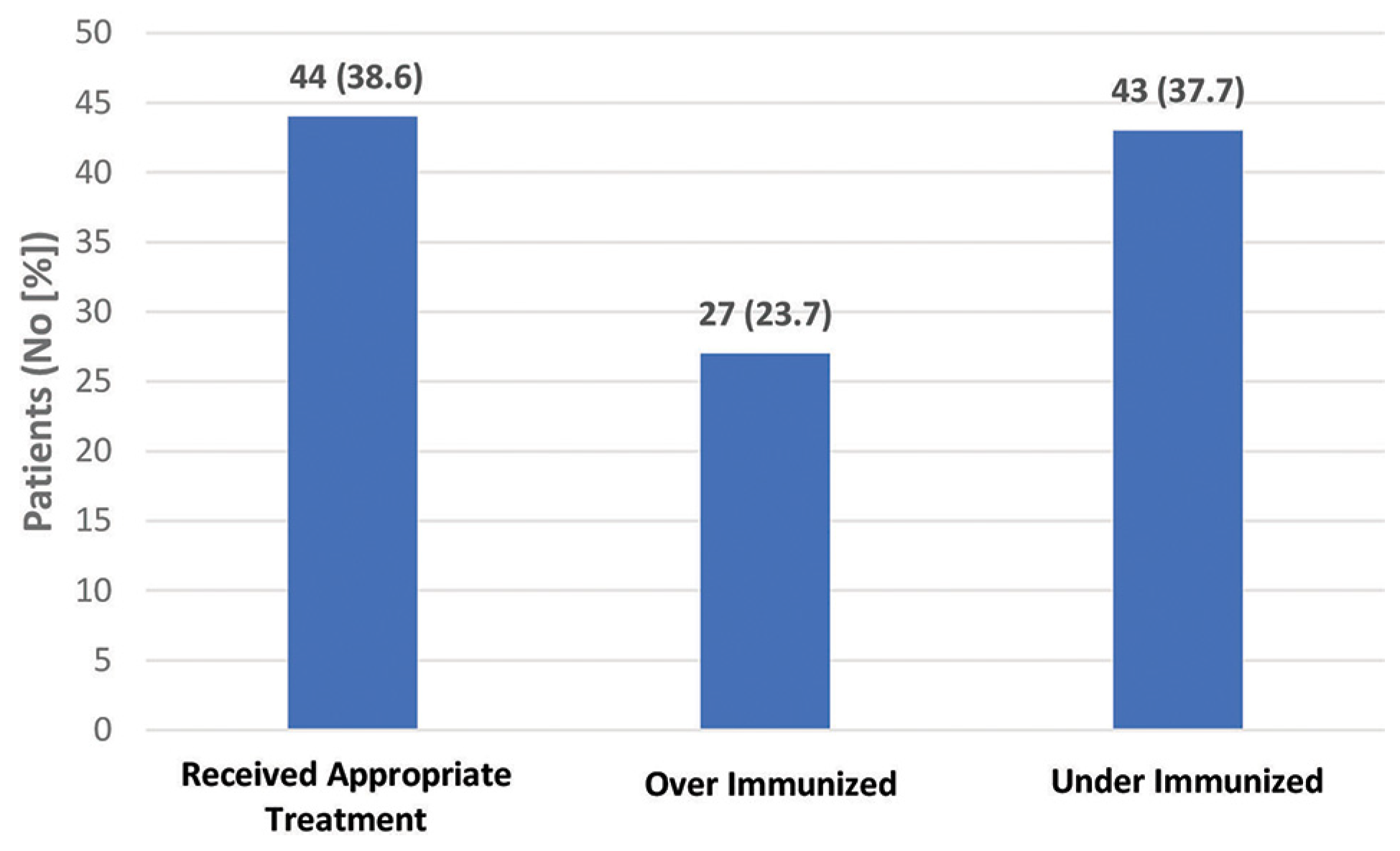
In this study population, 53 individuals (46.5%) required vaccination. Of these, eight individuals (15.1%) received a tetanus-containing vaccine booster, 32 (60.4%) received intramuscular tetanus immunoglobulin, two (3.8%) received both, and 11 (20.8%) received no tetanus prophylaxis. Overall, only 38.6% of individuals (n = 44) were treated appropriately, 23.7% (n = 27) were overvaccinated, and 37.7% (n = 43) were undervaccinated (Figure 2).
Individuals with DM and associated comorbidities composed most patients in this cohort. This is not surprising given the increased risk of puncture wounds reported in this population owing to the loss of protective sensation, among other variables. Despite this, there were no statistically significant differences between those with and without DM (Table 2), except for tetanus-containing vaccine booster. Individuals with DM were 2.3 times more likely to receive a tetanus-containing vaccine booster even if their tetanus vaccination status was up-to-date (DM versus no DM, 46.5% versus 27.8%; P = .17; odds ratio [OR], 2.26 [95% CI, 0.69–7.45]).
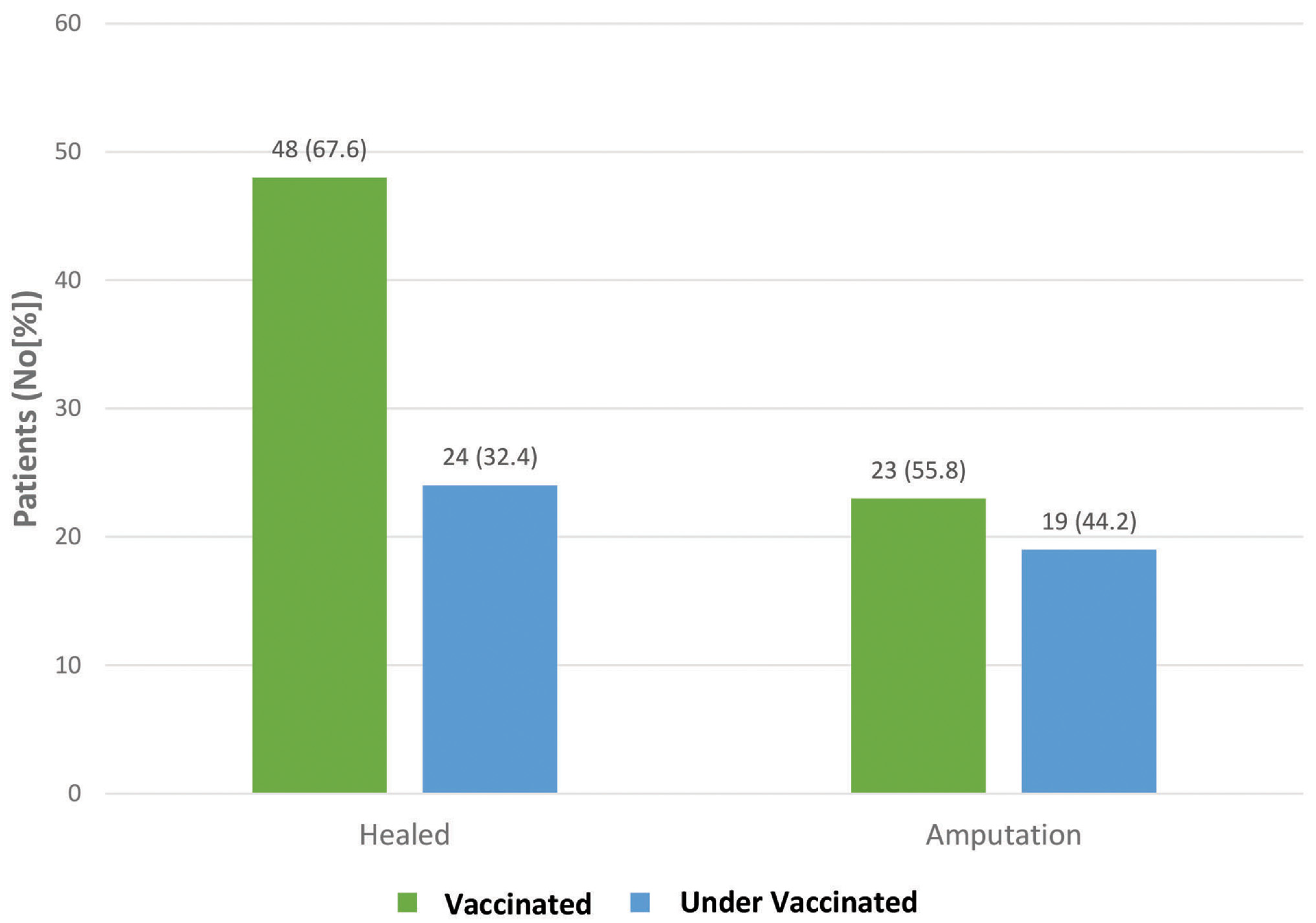
Individuals with DM were also poor historians, being 1.7 times more likely to not know the status of their tetanus immunization history (DM versus no DM, 41.0% versus 29.0%; P = .24; OR, 1.70 [95% CI, 0.7–4.13]) (Table 2). There was no significant difference in clinical outcomes in correlation to tetanus prophylaxis (healed versus amputation; P =.21; OR, 1.65; 95% CI, 0.76–3.61) (Figure 3).

Discussion

The results of this study demonstrate the lack of adherence to CDC and IDSA tetanus prophylaxis guidelines for tetanus-prone wounds by physicians consulting in the ED. These results demonstrate a 38.6% physician adherence rate to tetanus prophylaxis recommendations, with similar findings noted by several other studies [12,13]. One reason most physicians may not be concerned with tetanus immunization in patients presenting with puncture wounds could be because tetanus is increasingly uncommon. The CDC reports that from 2001 through 2008, there were only 233 cases of tetanus in the United States [2]. The incidence of tetanus was 1 per 10 million people per year, or approximately 29 cases per year. However, among patients who develop tetanus infections, the overall mortality rate was 13.2%, or approximately four people per year. Of the reported cases, 72% presented with acute wounds, and 96% of patients did not receive appropriate tetanus prophylaxis [2]. Given that there are fewer than 30 cases per year in the United States, tetanus may not be at the forefront of a physician’s evaluation when they are examining high-risk/complex patients with puncture wounds and any associated skin, soft-tissue, bone, and systemic manifestations of illness.
The incidence of tetanus in the United States is fairly low, but most epidemiologists believe that the number of cases is underreported [21]. National tetanus surveillance is a passive system that depends on physicians self-reporting the cases to the health departments. Because of this, some epidemiologists believe that only approximately 40% of the cases are actually being reported, leading to underrepresentation of the disease [21].
The findings of this study have some clinical relevance and ramifications to the largest subset of patients evaluated in this study. Although we evaluated individuals without DM, these were outnumbered by those with DM, the latter being a high-risk population. Patients with DM innately have a high risk of contracting tetanus [22]. Patients with DM have macrovascular and microvascular disease that causes them to have lower perfusion to the foot, which is favorable to anaerobic conditions [22]. Due to this, they are more likely to develop gangrene, which is considered a tetanus-prone wound. Furthermore, patients with DM are considered to be immunocompromised with abnormalities in B lymphocytes, which are responsible for maintaining antibody response in vaccination [23,24]. In a seroprevalence of tetanus antitoxin, Kilic and colleagues [25] found that 26% of immunized patients with DM had antitoxin titers that were too low to actually offer immunity. Collectively, these all suggest that diabetic foot ulcers are innately at higher risk for contracting tetanus. We agree with Rogers and Frykberg [22] that diabetic foot ulcers should be considered a tetanus-prone wound and receive prophylaxis as such.
Adverse events associated with tetanus prophylaxis are distinctly uncommon. Severe reactions to tetanus vaccine (such as serious allergic reaction, long-term seizure, coma, and brain damage) are exceedingly rare and occur in fewer than one in 1 million [26]. Moderate reactions (such as high fever and seizure) are uncommon and occur in approximately one in 16,000. Mild reactions (ie, low-grade fever, redness, and soreness at site of injection) are common and occur approximately 25% of the time [26]. The chance of developing a severe tetanus reaction to the vaccine is ten times higher than the chance of contracting tetanus, given the rarity of the disease. There has been no reported death from the vaccine.
The main prevention against tetanus is immunization. Overall, patients generally have poor recall of their tetanus immunity status. McVicar evaluated 200 patients in a single-center ED and found that 68% tested positive for tetanus immunity [27]. Of 151 patients (75.5%) who did not know their status, 101 (66.9%) tested positive and 50 (33.1%) were negative. Forty-nine patients (24.5%) stated that they knew their status; however, 38.8% of them were wrong. According to McVicar, the cost of testing and treating all 200 patients appropriately would save $1,194.84, or $5.97 per patient. So if we treated patients based on their recall ability, then we would treat 38.8% of patients inappropriately.
On the other hand, Rhee et al [28] did a retrospective review of the literature on tetanus and concluded that it is not possible to identify which wounds are tetanus prone, and thus, they did not recommend routine prophylaxis. They recommend that tetanus vaccine be reserved for patients who never received primary immunization. However, the CDC attributes the decline in tetanus infection to the introduction of tetanus prophylaxis in wound management and continues to urge the practice of tetanus prophylaxis because there has been a 99% reduction in the disease since the 1940s [29].
There are several limitations to this study. First is the retrospective nature of the study and relying on the accuracy of patient medical records. Measurement bias is possible because clinicians often use different operation definitions for disease states. Because this study was conducted in a teaching hospital, a variety of junior and senior physicians were routinely involved in patient care. Selection bias may also present due to the hospital serving a low socioeconomic community with a disproportionate number of ethnic minorities; the present study was conducted at a level I trauma center and teaching hospital, so our patient population and practice may not be generalizable outside this context. The retrospective design of the study did not rely on a sample size and power calculation, meaning that it may have been underpowered to evaluate factors that might have been associated with patients not receiving tetanus prophylaxis.

Conclusions

In summary, the CDC and IDSA provide a framework for tetanus prophylaxis, but it was not consistently followed at our institution. The present results probably reflect treatment at other hospitals as well. Infected puncture wounds to the foot in individuals with and without DM are a common presentation to the hospital ED, yet clinicians generally do not provide prophylaxis against tetanus even in very high-risk patients, and in most cases national guidelines are not followed.

Financial Disclosure

None reported.

Conflicts of Interest

None reported.

References

  1. HASSEL, B. Tetanus: pathophysiology, treatment, and the possibility of using botulinum toxin against tetanus-induced rigidity and spasms. Toxins (Basel) 2013, 5, 73. [Google Scholar]
  2. Centers for Disease Control and Prevention (CDC). Tetanus surveillance—United States, 2001-2008. MMWR Morb Mortal Wkly Rep 2011, 60, 365. [Google Scholar]
  3. Centers for Disease Control and Prevention. Tetanus: for clinicians. Available online: https://www.cdc.gov/tetanus/clinicians.html (accessed on 25 January 2020).
  4. Infectious Diseases Society of America. Tetanus in areas affected by a hurricane: risk, prevention, and management guidance for clinician. Available online: https://www.idsociety.org/news–publications-new/cdc-alerts/ tetanus-in-areas-affected-by-a-hurricane-risk-prevention-and-management-guidance-for-clinicians (accessed on 7 December 2019).
  5. World Health Organization. Prevention and management of wound infection. Available online: https://www.who.int/publications/i/item/prevention-and-management-of-wound-infection (accessed on 22 February 2020).
  6. LAVERY, LA; HARKLESS, LB; ASHRY, HR. ET AL: Infected puncture wounds in adults with diabetes: risk factors for osteomyelitis. J Foot Ankle Surg 1994, 33, 561. [Google Scholar]
  7. LAVERY, LA; WALKER, SC; HARKLESS, LB. ET AL: Infectedpuncture wounds in diabetic and nondiabetic adults. Diabetes Care 1995, 18, 1588. [Google Scholar] [CrossRef] [Scilit]
  8. ARMSTRONG, DG; LAVERY, LA; QUEBEDEAUX, TL. ET AL: Surgical morbidity and the risk of amputation due to infected puncture wounds in diabetic versus nondiabetic adults. South Med J 1997, 90, 384. [Google Scholar] [CrossRef] [Scilit] [PubMed]
  9. HOLLANDER, JE; SINGER, AJ; VALENTINE, SM. ET AL: Risk factors for infection in patients with traumatic lacerations. Acad Emerg Med 2001, 8, 716. [Google Scholar] [CrossRef] [Scilit]
  10. TRUONG, DH; JOHNSON, MJ; CRISOLOGO, PA. ET AL: Outcomes of foot infections secondary to puncture injuries in patients with and without diabetes. J Foot Ankle Surg 2019, 58, 1064. [Google Scholar] [CrossRef] [Scilit] [PubMed]
  11. Centers for Disease Control and Prevention. Tetanus: wound management for tetanus prevention. Available online: https://www.cdc.gov/tetanus/clinicians.html (accessed on 10 February 2020).
  12. ABBATE, R; DI GIUSEPPE, G; MARINELLI, P. ET AL: Appropriate tetanus prophylaxis practices in patients attending emergency departments in Italy. Vaccine 2008, 26, 3634. [Google Scholar] [CrossRef] [Scilit]
  13. TALAN, DA; ABRAHAMIAN, FM; MORAN, GJ. ET AL: Tetanus immunity and physician compliance with tetanus prophylaxis practices among emergency department patients presenting with wounds. Ann Emerg Med 2004, 43, 305. [Google Scholar] [CrossRef] [Scilit] [PubMed]
  14. Centers for Disease Control and Prevention. Tetanus Surveillance–United States. Available online: https://www.cdc.gov/mmwr/preview/mmwrhtml/mm6012a1.htm (accessed on 22 Dec 2022).
  15. KUSCU, F; KURTARAN, B; ULU, A. ET AL: Diabetic foot wounds: which patients are more prone to tetanus? Open Forum Infect Dis 2017, 4 (suppl 1), S113. [Google Scholar]
  16. ARMSTRONG, DG; LAVERY, LA; HARKLESS, LB. Validation of a diabetic wound classification system: the contribution of depth, infection, and ischemia to risk of amputation. Diabetes Care 1998, 21, 855. [Google Scholar] [CrossRef] [Scilit]
  17. ARMSTRONG, DG; LAVERY, LA; VELA, SA; et al. Choosing a practical screening instrument to identify patients at risk for diabetic foot ulceration. Arch Intern Med 1998, 158, 289. [Google Scholar] [CrossRef] [Scilit] [PubMed]
  18. American Diabetes Association. 2. classification and diagnosis of diabetes: standards of medical care in diabetes-2019. Diabetes Care 2019, 42 (suppl 1), S28. [Google Scholar]
  19. FENG, Y; SCHLO¨ SSER, FJ. SUMPIO BE: The Semmes Weinstein monofilament examination as a screening tool for diabetic peripheral neuropathy. J Vasc Surg 2009, 50, 675. [Google Scholar] [CrossRef] [Scilit]
  20. OLAIYA, MT; HANSON, RL; KAVENA, KG; et al. Use of graded Semmes Weinstein monofilament testing for ascertaining peripheral neuropathy in people with and without di-abetes. Diabetes Res Clin Pract 2019, 151, 1. [Google Scholar] [CrossRef] [Scilit]
  21. SUTTER, RW; COCHI, SL; BRINK, EW; et al. Assessment of vital statistics and surveillance data for monitoring tetanus mortality, United States, 1979–1984. Am J Epidemiol 1990, 131, 132. [Google Scholar] [CrossRef] [Scilit]
  22. ROGERS, LC; FRYKBERG, RG. Tetanus prophylaxis for diabetic foot ulcers. Clin Podiatr Med Surg 2006, 23, 769. [Google Scholar] [CrossRef] [Scilit]
  23. MCMAHON, MM; BISTRIAN, BR. Host defenses and susceptibility to infection in patients with diabetes mellitus. Infect Dis Clin North Am 1995, 9, 1. [Google Scholar] [CrossRef] [Scilit]
  24. ALEXIEQICZ, JM; KUMAR, D; SMORGORZEWSKI, M; et al. Elevated cytosolic calcium and impaired proliferation of B lymphocytes in type II diabetes mellitus. Am J Kidney Dis 1997, 30, 98. [Google Scholar] [CrossRef] [Scilit] [PubMed]
  25. KILIC, D; KAYGUSUZ, S; SAYGUN, M; et al. Seroprevalence of tetanus immunity among noninsulin-dependent diabetes mellitus. J Diabetes Complications 2003, 17, 258. [Google Scholar] [CrossRef] [Scilit] [PubMed]
  26. US Department of Health; Human Services. Diphtheria tetanus & pertussis vaccine: what you need to know. Available online: http://dhhs.ne.gov/Behavioral%20Health%20Documents/TDaP_Vaccine_Information.pdf (accessed on 25 January 2020).
  27. MCVICAR J: Should we test for tetanus immunity in all emergency department patients with wounds? Emerg Med J 2013, 30, 177. [CrossRef] [Scilit] [PubMed]
  28. RHEE, P; NUNLEY, M; DEMETRIADES, D. ET AL: Tetanus and trauma: a review and recommendations. J Trauma Acute Care Surg 2005, 58, 1082. [Google Scholar] [CrossRef] [Scilit] [PubMed]
  29. Centers for Disease Control and Prevention. Tetanus: surveillance. Available online: https://www.cdc.gov/tetanus/surveillance.html (accessed on 8 February 2020).
Figure 1. Vaccinations received by patients in each group. TIG indicates tetanus immunoglobulin.
Japma 113 20146 g001
Figure 2. Tetanus status of all 114 study patients.
Japma 113 20146 g002
Figure 3. Clinical outcome of patients based on their vaccination status.
Japma 113 20146 g003
Table 1. Demographic, Clinical, and Laboratory Features of the 114 Study Patients.
Japma 113 20146 i001
Table 2. Tetanus Status and Vaccination Received by Patients with and Without Diabetes.
Japma 113 20146 i002