A fibrolipoma is an atypical lipomatous tumor in which adipocyte proliferation is accompanied by extensive fibrous proliferation [
1]. Lipomatous lesions account for between 3% and 4% of tumors arising in the foot [
2,
3], with only 9% of these presenting on the plantar aspect [
4]. There have been very few accounts of the fibrolipoma variant within the foot. Documented occurrences have been within the medial longitudinal arch [
5,
6], the heel [
7], and the forefoot [
8,
9]. Each of these occurrences arose from superficial soft tissues. Superficial lipomatous tumors are typically less than 5 cm in diameter and are generally painless [
1]. Some suggest that fibrolipomas arise more frequently in labor-intensive occupations [
10,
11], citing a proposed etiology of inflammation generated by chronic trauma caused by manual labor [
11].
Presented here is the case of a large plantar fibrolipoma in a 30-year-old man working in the hospitality industry that required operative excision. This case is notable because of the size of the fibrolipoma and because occupational conditions and delay of treatment likely contributed to the necessity for surgery. Earlier intervention could have been useful in limiting the size of this fibrolipoma and limiting the ultimate aggressiveness of the excisional surgery. Informed consent for this case report was obtained through discussion with the patient, and the patient was assured that all materials would be used anonymously.
Case Report
A 30-year-old man presented with a chief complaint of a painful mass on the bottom of his left foot impairing his ability to ambulate and work as a waiter. He first noticed the mass 3 years before seeking medical attention. He reported that, initially, it was small and only occasionally painful. The mass grew over time, causing the patient to toe walk with an antalgic gait. The patient presented once footwear modifications were unable to accommodate for the painful mass and change in his foot type. He denied constitutional symptoms, including fevers, chills, night sweats, and unexpected weight loss.
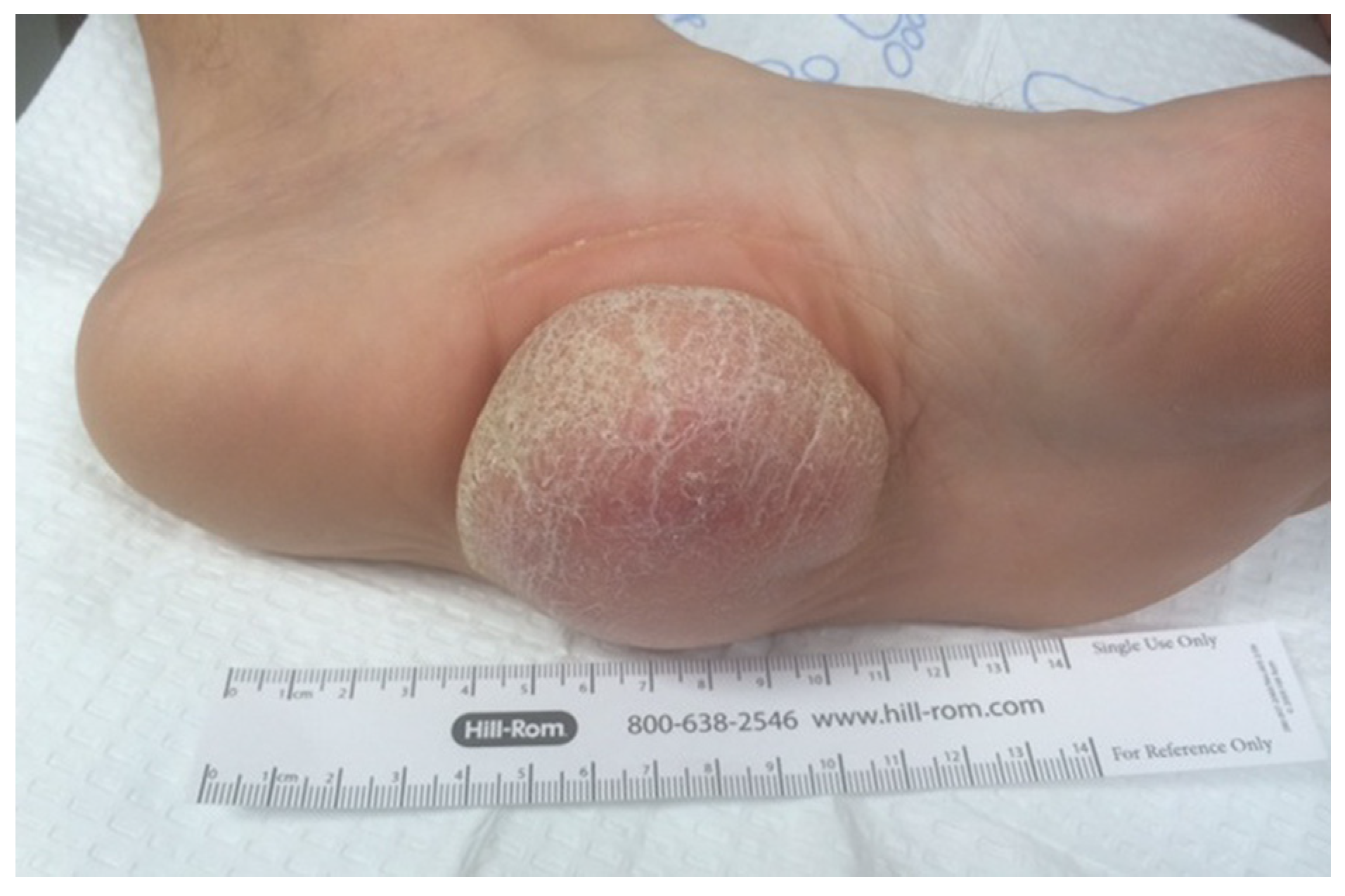
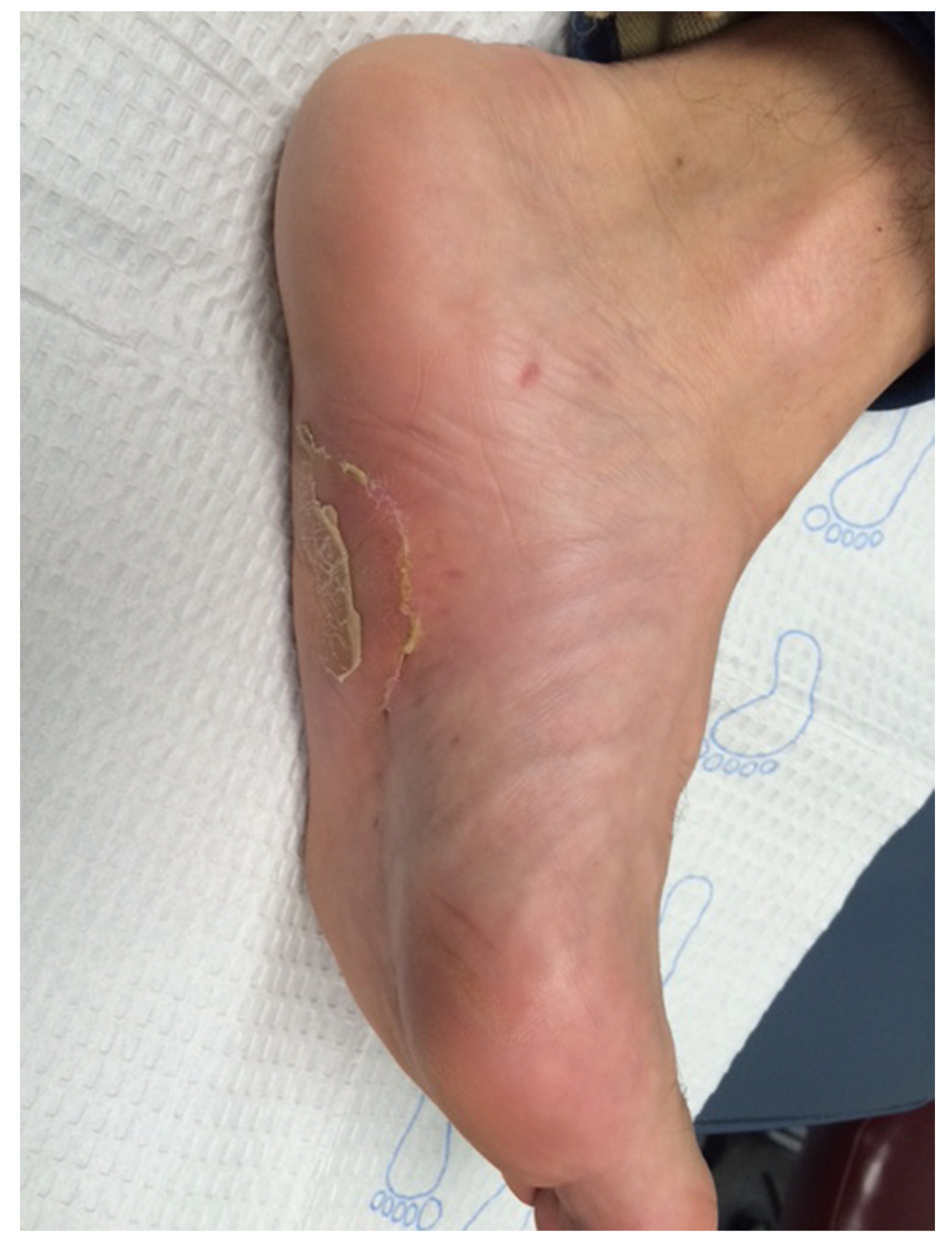
On evaluation, a large soft-tissue mass with well-demarcated boundaries was observed on the plantar medial surface of the left foot within the medial longitudinal arch, measuring roughly 7.5 × 7.5 × 3.5 cm (
Fig. 1). The skin on the mass was xerotic but negative for signs of edema, erythema, or open lesions. The surrounding tissue was normal in appearance. The patient was otherwise grossly neurovascularly intact, with a forefoot-driven cavovarus foot deformity. Inguinal and popliteal nodes were clinically negative. Magnetic resonance imaging scans were obtained to better evaluate the mass.
Figure 1.
Clinical image of the fibrolipoma showing well-demarcated boundaries and xerotic skin but no signs of edema, erythema, or open lesions.
Figure 1.
Clinical image of the fibrolipoma showing well-demarcated boundaries and xerotic skin but no signs of edema, erythema, or open lesions.
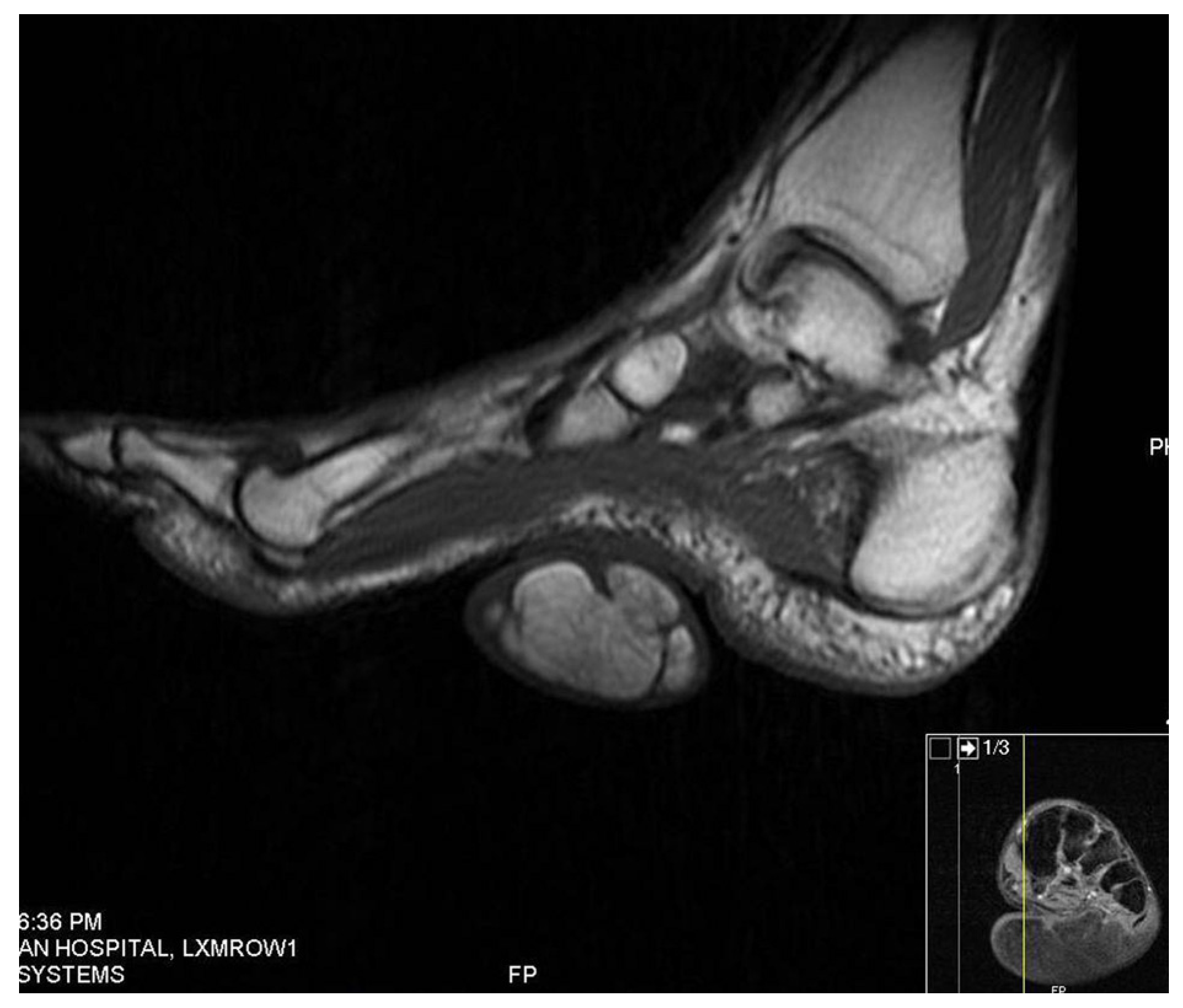
T1-weighted magnetic resonance imaging confirmed the presence of a soft-tissue neoplasm arising from the plantar aponeurosis (
Fig. 2). A large portion of the mass exhibited hyperintensity, which indicated the involvement of water-dense adipose tissue. This was surrounded by hypointense regions, indicating fibrous tissue. Biopsy with frozen section was subsequently recommended to rule out malignancy.
Figure 2.
T1-weighted magnetic resonance imaging scan of the fibrolipoma showing water-dense adipose tissue and hypointense fibrous tissue arising from the plantar aponeurosis.
Figure 2.
T1-weighted magnetic resonance imaging scan of the fibrolipoma showing water-dense adipose tissue and hypointense fibrous tissue arising from the plantar aponeurosis.
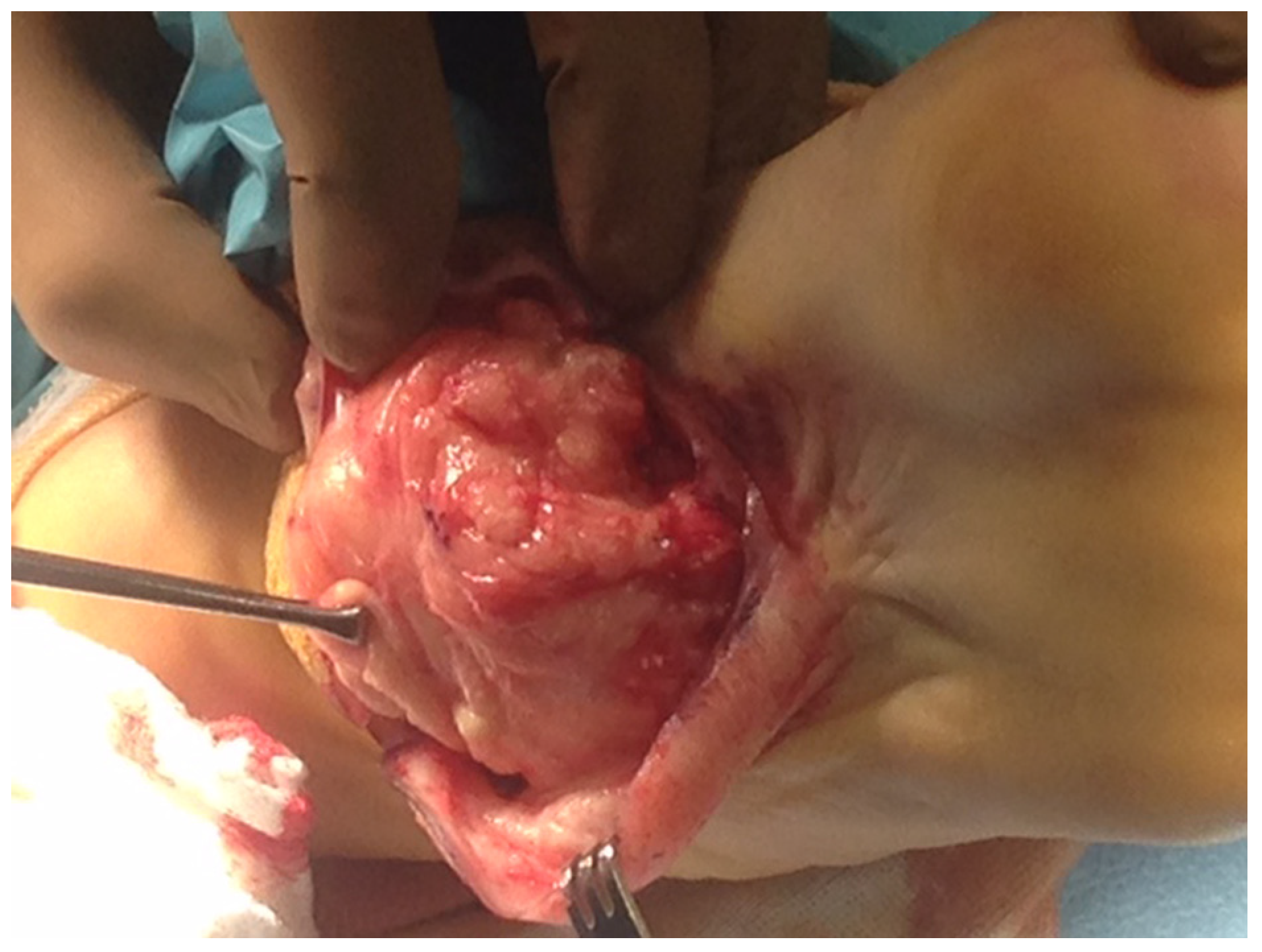
A triangle-shaped incision was made on the medial plantar aspect of the foot originating at the distal aspect of the soft-tissue mass, with the apex facing proximally toward the heel (
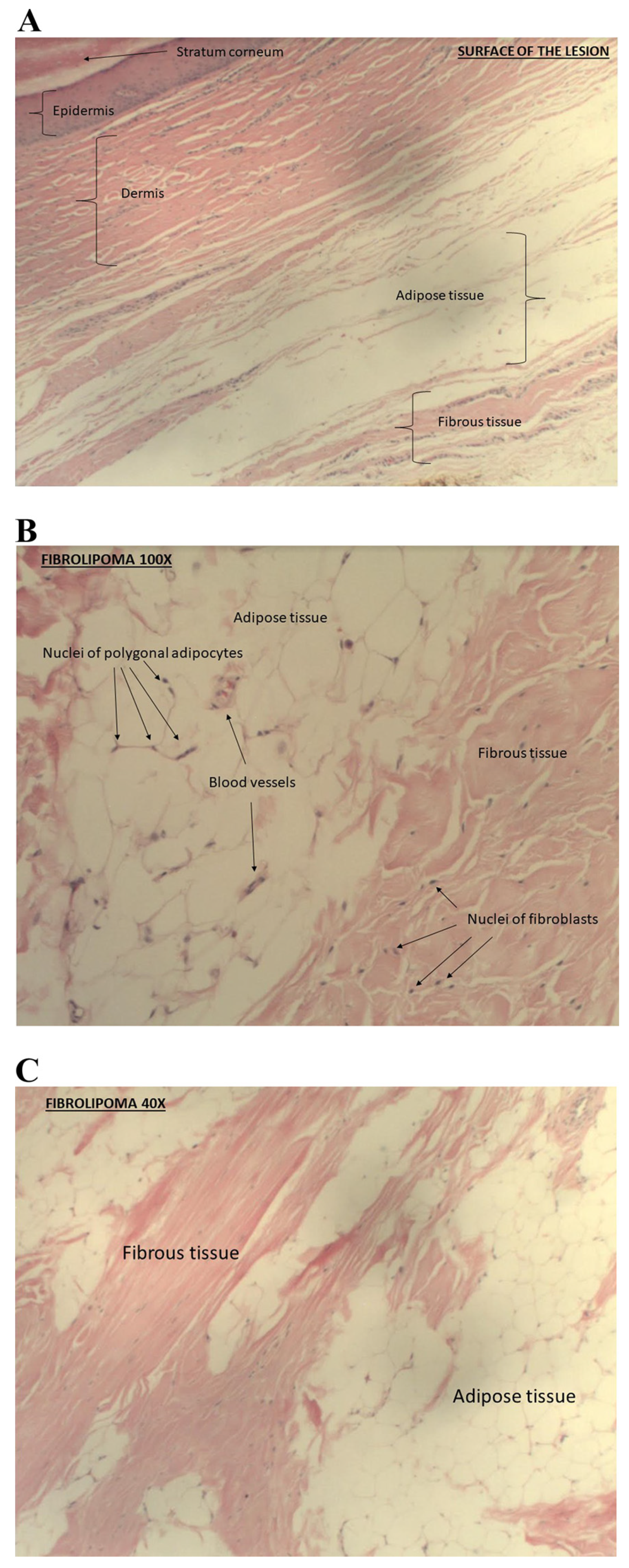
Fig. 3). A biopsy with frozen section was performed, and the specimen was sent for intraoperative pathologic analysis, which confirmed a benign lesion. Excision of the mass was then performed. The incision was then closed, along with placement of a Jackson-Pratt drain. The pathologic findings were consistent with a fibrolipoma (
Fig. 4).
Figure 3.
Intraoperative image of the fibrolipoma in which the high proportion of adipose tissue can be appreciated.
Figure 3.
Intraoperative image of the fibrolipoma in which the high proportion of adipose tissue can be appreciated.
Figure 4.
Histologic slides revealed the lesion to be primarily composed of adipose tissue, with fibrous tissue strands extending throughout the mass. A, Cross-section of the lesion’s surface along the plantar aspect of the foot. B, Cross-section of the lesion magnified at 40×. C, Cross-section of the lesion magnified at 100×.
Figure 4.
Histologic slides revealed the lesion to be primarily composed of adipose tissue, with fibrous tissue strands extending throughout the mass. A, Cross-section of the lesion’s surface along the plantar aspect of the foot. B, Cross-section of the lesion magnified at 40×. C, Cross-section of the lesion magnified at 100×.
The patient progressed well in his postoperative course, with no complications (
Fig. 5). At his 1-year follow-up visit, he was asymptomatic, had returned to all activities, including work as a waiter, and was wearing his regular footwear again.
Figure 5.
Image obtained 8 weeks postoperatively shows complete recession of the mass, with no signs of recurrence, and proper healing of the incision site.
Figure 5.
Image obtained 8 weeks postoperatively shows complete recession of the mass, with no signs of recurrence, and proper healing of the incision site.
Discussion
A fibrolipoma is an atypical lipomatous tumor in which adipocyte proliferation is accompanied by extensive fibrous proliferation. Lipoma and its variants are responsible for 3% to 4% of all soft-tissue neoplasms arising in the foot [
2,
3,
11]. To our knowledge, this case is the largest documented occurrence of a fibrolipoma in this location. We believe the size of this fibrolipoma can be attributed to the patient’s occupation and the delay between the time at which the mass was first recognized and when he sought treatment. The significant delay between the onset of symptoms and the time at which this patient presented to the clinic posed two potentially significant problems. First, it is fortunate that the lesion turned out to be benign. Had it been otherwise, there may have been a much more severe adverse outcome. Second, the size to which the lesion grew necessitated a much more extensive surgical approach with increased risk to the surrounding soft tissue and neurovascular structures. Had this patient presented earlier for evaluation, the benign nature of the lesion would have been confirmed and a less aggressive operation required. Although nonsurgical management of plantar neoplasms involving fibrosis have been described, given the progressive enlargement of this lesion, it is highly unlikely that any nonsurgical management would have been effective. Such treatments include accommodative orthotics and modalities such as extracorporeal shockwave therapy. Such interventions can be effective, as they help to dissipate the inflammatory process that leads to mass enlargement and therefore influence the surgical approach but would not alleviate the ultimate necessity for surgery.
Plantar neoplasms are a frequently undiagnosed source of recalcitrant heel pain [
12–14]. Hafner et al [
14] studied 100 pathologic specimens following fasciectomy and found that, in 25% of cases, the origin of heel pain was neoplastic in nature. Taweel and Raikin [
7] also recently described a plantar lipoma within the heel mimicking plantar fasciitis. In addition, Argerakis et al [
13] retrospectively examined medical records and ultrasound reports from 143 people with heel pain and found that plantar fibromas were documented in 51% of cases. Thirty-six percent of these cases showed concomitant plantar fascia thickening and fibroma, whereas 15% showed only fibroma. The authors also highlighted the value of diagnostic ultrasound for evaluation of heel pain, as it is a cost-effective modality with high spatial resolution and the added value of real-time, dynamic evaluation focusing on the site of pain. In the present case, diagnostic ultrasound could have been valuable in discerning the origin of the patient’s occasional heel pain, had he presented at the onset of his symptoms.
Early diagnosis of the neoplasm is particularly important in this case because of the patient’s occupation within the hospitality industry. Waiters’ feet are subject to high levels of chronic stress because of the many hours they spend on their feet per day. It is known that inflammation plays a key role in both fibrosis and adipogenesis [
3,
11,
15–18]. Therefore, chronic inflammation around the plantar fascia from the patient’s occupation may have encouraged hyperproliferation of fibrous and adipose tissue. In addition, research has demonstrated that a mechanical stimulus influences cellular proliferation by altering cell-matrix and cell-cell interactions [
11,
18–20]. Once fibrosis has begun, mechanical changes to the plantar fascia while walking may become more pronounced because of the added matrix perturbation from the mass, further accelerating proliferation. Finally, fibrosis is affected by a process known as durotaxis, in which cellular migration is influenced by matrix stiffness. Cells are encouraged to migrate to stiffer regions of a given medium [
18,
21–24]. Therefore, once fibrosis begins, the stiff collagen matrix surrounding the fibroblasts may encourage cellular migration toward the fibrous region, exacerbating its size. By allowing the fibrolipoma to remain untreated for 3 years while working in the hospitality industry, it was given an optimal environment of chronic inflammation and frequent mechanical stress that allowed it to grow to its ultimate size.
Extracorporeal shockwave therapy has received attention recently as a potentially effective treatment option for fibrous abnormalities [
25–28]. The mechanism behind this treatment involves delivering targeted shockwaves to the hyperproliferated region to disrupt the extracellular matrix and prevent further tissue proliferation. Recently, extracorporeal shockwave therapy has shown promising preliminary results in softening nodules from plantar fibromatosis and reducing pain [
26]. Extracorporeal shockwave therapy may have been useful in breaking down the fibrous strands within the lesion, thereby softening it and limiting further enlargement. In addition, custom foot orthoses may be useful in reducing mechanical strain on the soft-tissue structures of the medial longitudinal arch during ambulation. The use of an extrinsic heel modification has been shown quantitatively through ultrasound to alter plantar soft-tissue responses to loading, therefore indicating a change in the transmission of force on plantar soft-tissue structures during ambulation [
29]. In addition, orthotic support for the medial longitudinal arch may reduce stretching of the plantar fascia during ambulation, therefore reducing the shearing forces between the plantar soft-tissue structures. Each of these modifications would likely reduce chronic inflammation and mechanical stress generated from prolonged walking, therefore hindering proliferation and helping with management of the existing lesion.