Osteonecrosis is created by the devitalization of bone and marrow tissues that results from infection-free ischemic insult. Osteonecrosis typically occurs in the same clinical situations as avascular necrosis; the term is also used academically to designate bone’s ischemic cell death in the epiphyseal, subchondral bone due to vascular supply reduction or obliteration [
1]. Meanwhile, osteonecrosis located at the metaphysis and diaphysis is conventionally known as bone infarction. Although there are no clearly defined bone infarction stages, this necrotic compromise induces pain, edema, and inflammation in adjacent bone tissues during early progression, whereas during the later stages the bone marrow is heavily affected [
2]. The two leading risk factors for the development of bone infarctions are corticosteroid use and alcohol abuse [
3]. There have also been reports of bone infarctions during the progressions of sickle cell disease, Gaucher disease, trauma, renal transplant, collagen vascular disease, pancreatitis, hyperlipidemia, and human immunodeficiency virus (HIV) infection [
1,
4].
Venoarterial extracorporeal membrane oxygenation (VA-ECMO), an increasingly popular temporary mechanical circulatory support technique, is currently used in the management of refractory cardiac or cardiopulmonary failure, with recent widening of its indication to septic shock [
5]. However, femoral arterial cannulation in peripheral VA-ECMO (pVA-ECMO) can result in ipsilateral limb ischemia due to diminished blood flow, causing restricted oxygen and nutrient delivery to the distal lower extremities below the insertion point of the cannula. Limb ischemia in the femoral cannulation of pVA-ECMO is mostly transitory and completely reversible. Prolonged ischemia can cause irreversible compromise with refractory muscle damage, eventually leading to leg amputation (up to 14% of cases) or negatively affecting patient mortality [
6]. Another possible severe clinical complication is acute compartment syndrome, resulting in insufficient blood supply to tissues, permanent muscle damage, and severe functional impairment. Acute compartment syndrome occurred in 12% of patients undergoing VA-ECMO and required fasciotomy, despite the presence of an inserted distal perfusion cannula in some cases [
6].
Nonetheless, to our knowledge, no case reports have been published on osteonecrosis in multiple bones after pVA-ECMO; therefore, no related treatment guidelines have been recommended. To that end, the purpose of this study was to report the first unique case of multifocual osteonecrosis in the foot and ankle and recovery using conservative treatment.
Case Report
A 67-year-old woman visited our department due to right foot and ankle pain causing a limping gait 1 week after recovering from septic shock. Physical examination revealed mild swelling and mottled skin discoloration of her right foot and ankle. Other physical findings revealed nothing remarkable. In the patient’s history, 1 ½ months before her visit to our clinic, she was hospitalized for septic shock due to a urinary tract infection caused by Escherichia coli and was placed on pVA-ECMO for 5 days. The day after pVA-ECMO removal, the patient felt pain along with concomitant subcutaneous edema in the right foot and ankle; the left leg showed no similar symptoms. Because of the patient’s severe conditions, she was treated with pain relief and had the involved extremities held elevated. Over the course of 7 days in the intensive care unit, the patient gradually overcame sepsis, with actual serum laboratory test results returning to normal; she was discharged after 39 days of hospitalization.
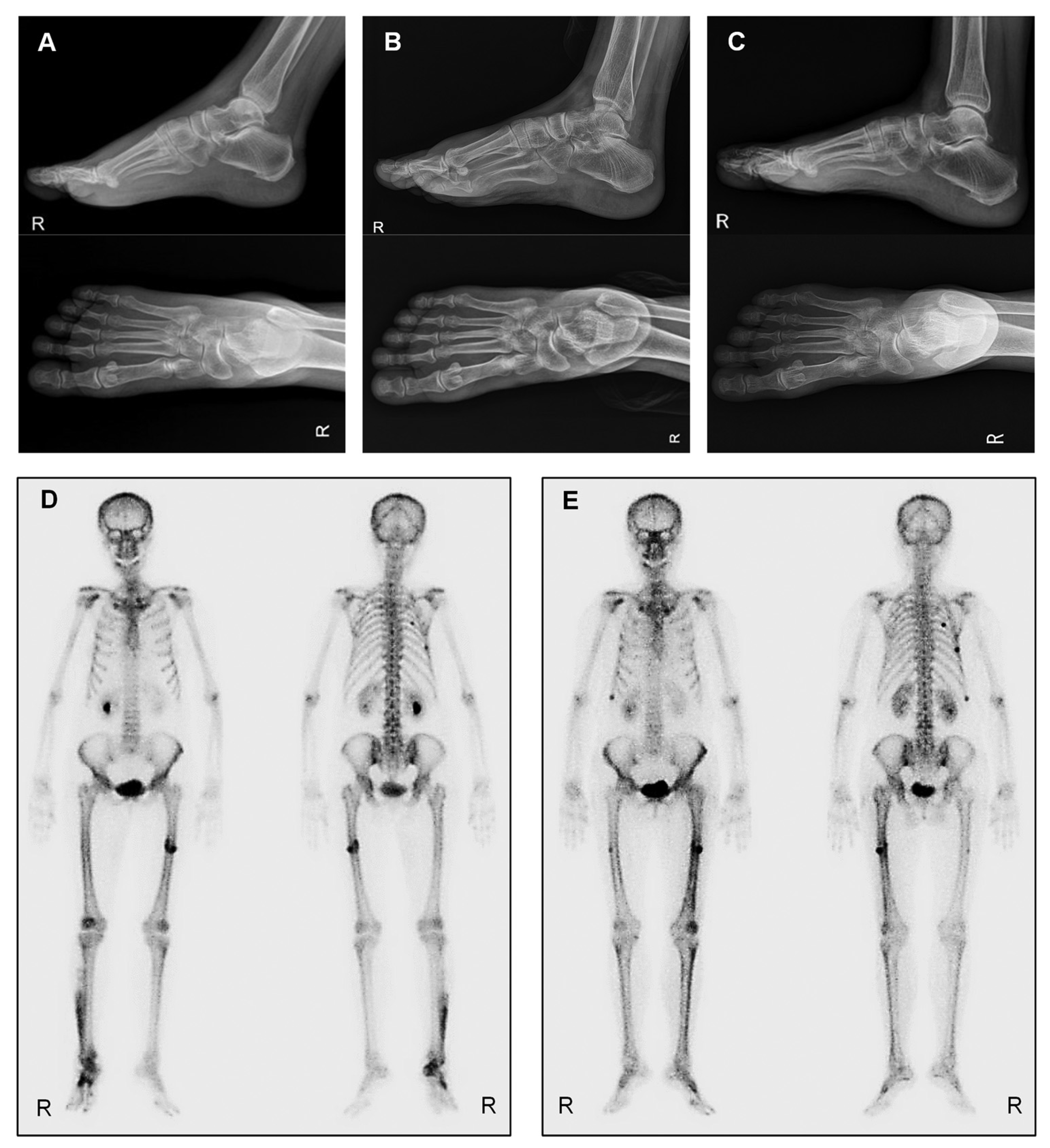
The conventional radiographic findings were insignificant, but a technetium-99m bone scan showed increased uptake in the right foot (
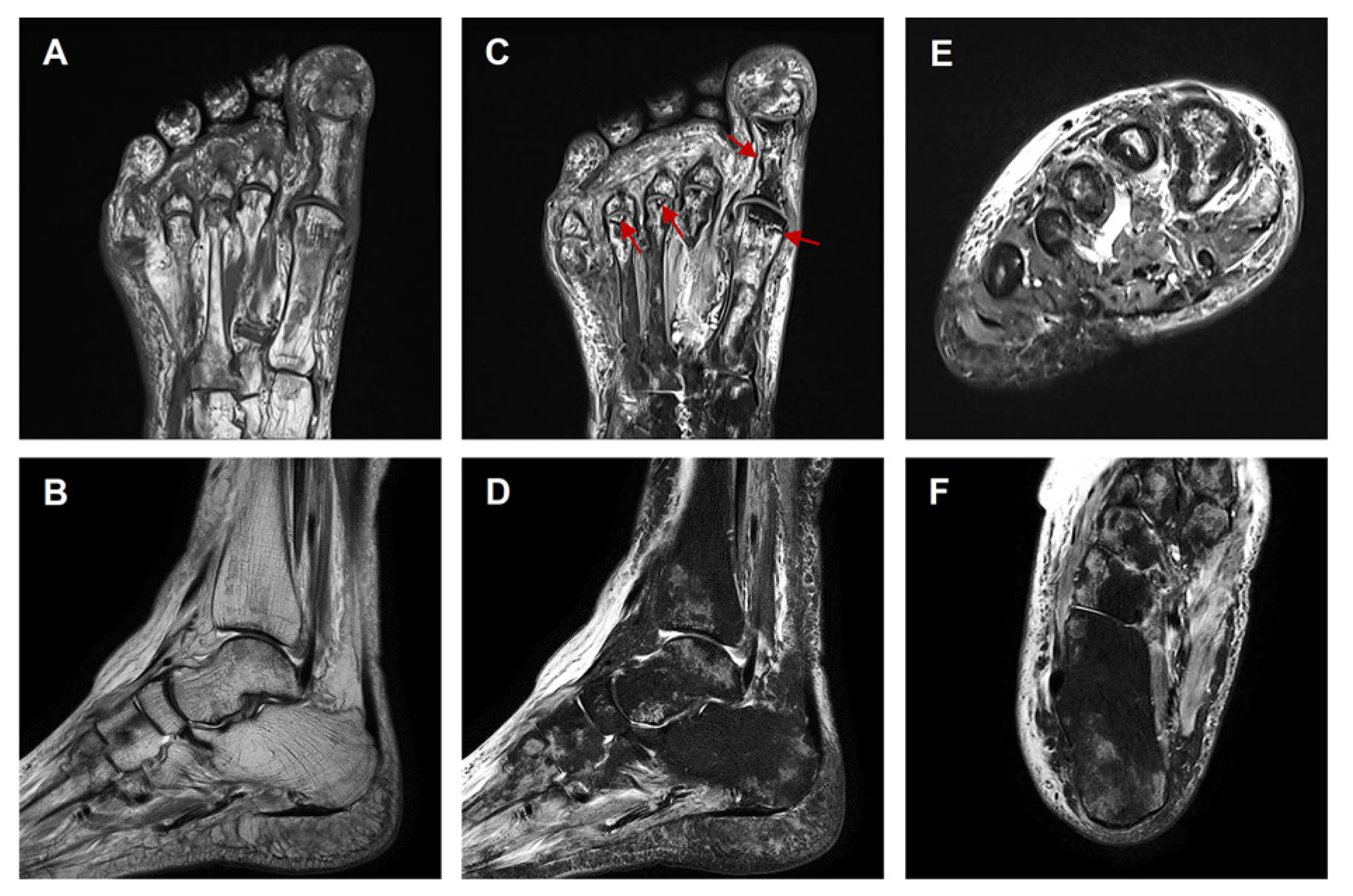
Fig. 1). Magnetic resonance imaging (MRI) showed multifocal osteonecrosis presenting with low serpiginous peripheral signal on T1-weighted images and a double-line sign (hyperintense inner ring and hypointense outer ring) on the turbo spin-echo T2-weighted Dixon sequences of various sites on the right foot and ankle, including the metatarsals, phalanges, navicular, cuneiforms, cuboid, talus, and calcaneus. Fat-suppressed T2-weighted (Dixon water-only) imaging showed compromises with hyperintensity signal in the bone marrow, implying bone marrow edema and an inflammatory response to osteonecrosis. The MRI results also revealed diffuse edema in the subcutaneous tissue (
Fig. 2).
Figure 1.
Right foot and ankle anteroposterior and lateral radiographs show no significant abnormalities 2 weeks (A), 6 months (B), and 1 year (C) after peripheral venoarterial extracorporeal membrane oxygenation (pVA-ECMO). Bone scintigraphy shows increased uptake in the right distal limb 2 weeks after pVA-ECMO (D), which was not present before pVA-ECMO (E).
Figure 1.
Right foot and ankle anteroposterior and lateral radiographs show no significant abnormalities 2 weeks (A), 6 months (B), and 1 year (C) after peripheral venoarterial extracorporeal membrane oxygenation (pVA-ECMO). Bone scintigraphy shows increased uptake in the right distal limb 2 weeks after pVA-ECMO (D), which was not present before pVA-ECMO (E).
Figure 2.
Magnetic resonance images show osteonecrosis in multiple bones: the distal tibia, talus, calcaneus, navicular, cuneiforms, cuboid, metatarsals, and phalanges. T1-weighted images reveal multifocal sites of low signal intensity (A); T2-weighted Dixon in-phase (B) and fat-suppressed (C–F) images show a double-line sign (arrow), the high signal intensity of bone marrow edema, multiple serpiginous margins in the bones corresponding to interfaces between ischemic and nonischemic bony areas, and diffuse edema of subcutaneous tissue.
Figure 2.
Magnetic resonance images show osteonecrosis in multiple bones: the distal tibia, talus, calcaneus, navicular, cuneiforms, cuboid, metatarsals, and phalanges. T1-weighted images reveal multifocal sites of low signal intensity (A); T2-weighted Dixon in-phase (B) and fat-suppressed (C–F) images show a double-line sign (arrow), the high signal intensity of bone marrow edema, multiple serpiginous margins in the bones corresponding to interfaces between ischemic and nonischemic bony areas, and diffuse edema of subcutaneous tissue.
The patient’s recent laboratory tests showed a normal complete blood cell count (white blood cell count, 5,910/µL; hemoglobin level, 130 g/L; mean corpuscular volume, 93.3 fL). The remaining laboratory test results were normal, including a serum lipid profile; a coagulation profile; calcium, phosphate, and parathyroid hormone levels; myeloma screening; and tumor markers. She had a history of fractures in both femoral shafts with intramedullary nailing 1 year earlier. The remainder of the patient’s and her family’s medical history was unremarkable, with no records of diabetes, peripheral vascular disease, smoking, or alcohol abuse. Antinuclear antibody, antiphospholipid antibody, thrombophilia screen, HIV, and Gaucher disease screening tests were also negative.
The patient received conservative treatment with observation and pain control. Beraprost 20
μg (prostacyclin), a vasodilator and antiplatelet agent, was given twice a day as was also advised. The clinical symptoms and signs of inflammation in the right foot gradually showed considerable improvement; as of this writing, she can walk without pain and has returned to normal daily activities. Follow-up plain radiographs consistently showed no noteworthy abnormalities (
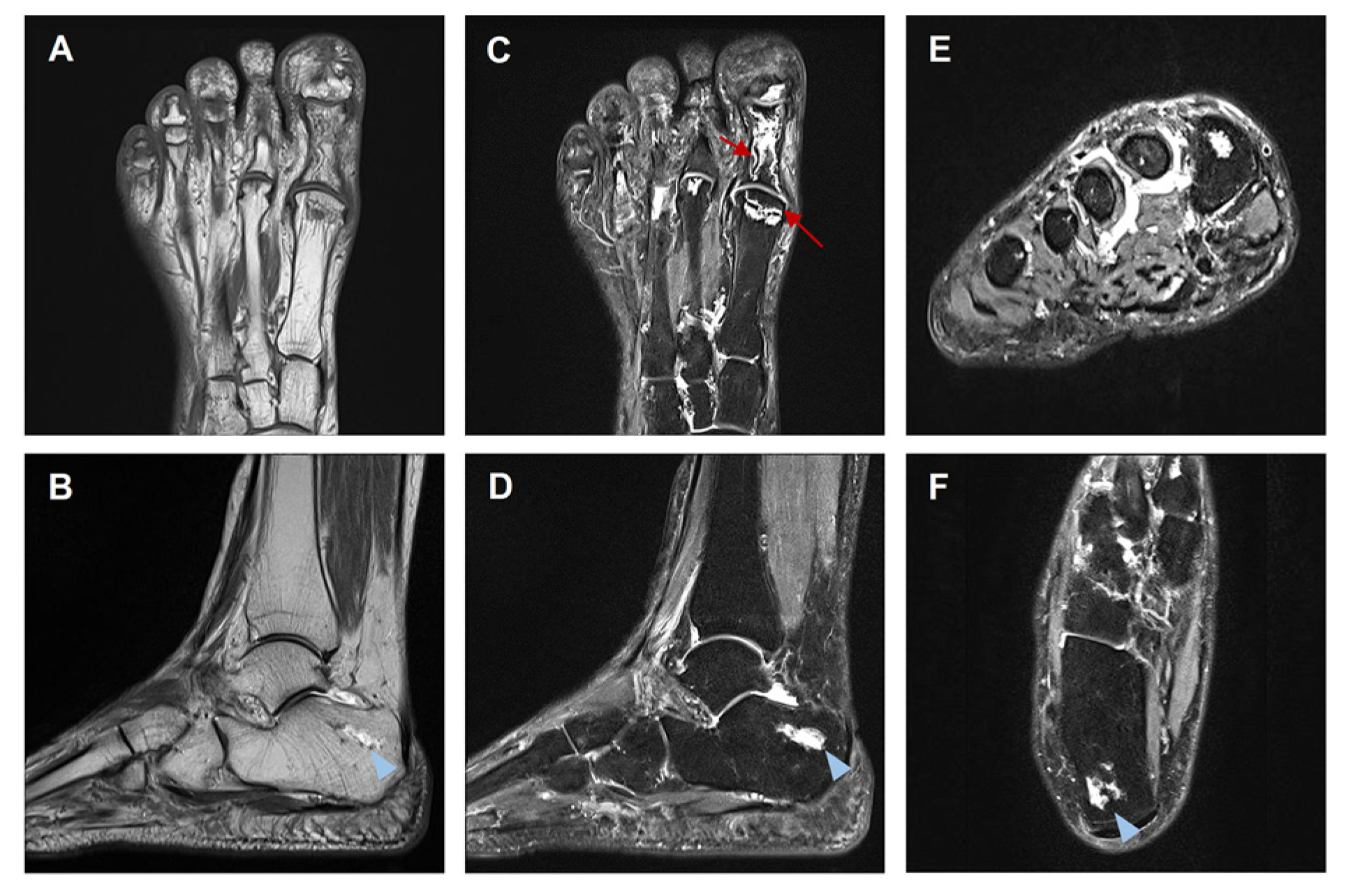
Fig. 1 B and C). The 6-month follow-up MRI revealed significant changes in the infarction parts and a considerable decrease in the subcutaneous and surrounding edemas (
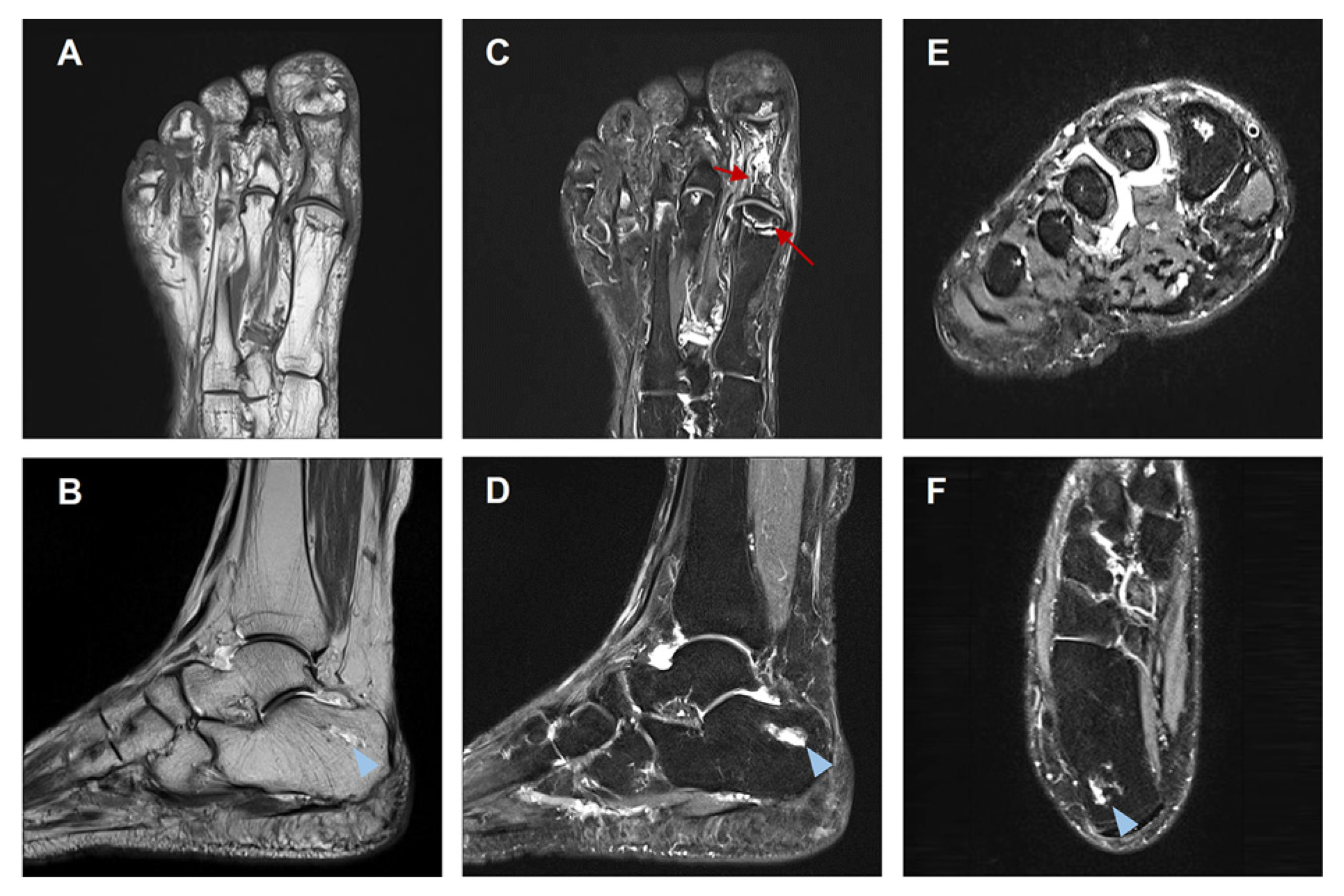
Fig. 3). The 1-year follow-up MRI (
Fig. 4) revealed no significant difference from the 6-month MRI.
Figure 3.
Six-month follow-up magnetic resonance images show significant improvement of bone marrow edema surrounding the osteonecrosis in multiple foot and ankle bones on T1-weighted (A), T2-weighted Dixon in-phase (B), and fat-suppressed (C–F) sequences. Note the cystic degeneration in the bone marrow of the right calcaneus (arrowhead) and the double-line sign (arrow).
Figure 3.
Six-month follow-up magnetic resonance images show significant improvement of bone marrow edema surrounding the osteonecrosis in multiple foot and ankle bones on T1-weighted (A), T2-weighted Dixon in-phase (B), and fat-suppressed (C–F) sequences. Note the cystic degeneration in the bone marrow of the right calcaneus (arrowhead) and the double-line sign (arrow).
Figure 4.
One-year follow-up magnetic resonance images reveal mild improvement of known osteonecrosis and bone marrow edema, no significant change compared with the 6-month MRI on T1-weighted (A), T2-weighted Dixon in-phase (B), and fat-suppressed (C–F) sequences. The double-line sign (arrow) is seen at the first metatarsal bone and proximal phalanx. Calcaneal cystic signal is indicated by the arrowhead.
Figure 4.
One-year follow-up magnetic resonance images reveal mild improvement of known osteonecrosis and bone marrow edema, no significant change compared with the 6-month MRI on T1-weighted (A), T2-weighted Dixon in-phase (B), and fat-suppressed (C–F) sequences. The double-line sign (arrow) is seen at the first metatarsal bone and proximal phalanx. Calcaneal cystic signal is indicated by the arrowhead.
Discussion
The sites that most frequently develop osteonecrosis are the epiphyseal or metaphyseal-diaphyseal regions around the knee (proximal tibia, fibula, and distal femur), which comprise 85% of all bone infarcts [
1]. Although uncommon, osteonecrosis may also appear in the foot and ankle, especially around certain anatomical sites due to their vascular supply and stress-bearing, including the talus, navicular (Müller-Weiss disease), first metatarsal, second metatarsal head (Freiberg infraction), and sesamoids (Renander disease) [
7]. Multifocal osteonecrosis, or osteonecrosis in multiple sites, is defined as the presence of osteonecrotic lesions in three or more separate anatomical sites and is reported in only 3.3% of patients with osteonecrosis [
8]. Osteonecrosis confined to numerous bones in the foot and ankle is exceedingly rare, making this the only known case report to examine osteonecrosis in multiple bones after ECMO.
Well-known predisposing factors or diseases of osteonecrosis or bone infarction include trauma, corticosteroid use, smoking, alcohol abuse, systemic lupus erythematosus, pancreatitis, hyperlipidemia, and HIV infection, as well as Caisson, sickle cell, and Gaucher disease. To our knowledge, this is the first report of a patient with osteonecrosis after pVA-ECMO. Spaargaren and Rutten [
4] described a case of multiple bone infarcts in the left femur and tibia as a result of corticosteroid use. Another report discussed acute bone infarction in both tibias as a rare complication in thalassemia [
2]. Multiple bone infarcts were also observed in both distal femurs and proximal tibias of patients with pancreatitis panniculitis polyarthritis syndrome [
9]. In the present case, the patient had no history of corticosteroid use, alcohol abuse, hematologic disorders, or any other notable risk factors. Nevertheless, the patient had evidence of mild limb ischemia after undergoing pVA-ECMO. We believe that the patient experienced an ischemic insult to her right foot due to a relative deficit of arterial blood flow and the related decrease in oxygen supply to distal tissues. In pVA-ECMO, the arterial cannula generally ranges from 15 to 23 Fr for cannulation and flow support. Using a small-sized cannula in the present patient (15 Fr diameter), a ratio of arterial cannula size to body surface area no greater than 11 was demonstrated to reduce the limb ischemia complications [
6]. Consequently, the patient’s limb ischemia was not severe and showed no typical signs of acute compartment syndrome, indicating that she needed only conservative treatment before being discharged. Unfortunately, even this mild ischemic compromise may lead to osteonecrosis in the present patient in the future. Infarctions begin when the blood supply to a section of bone is interrupted. Once the infarct is established, a central necrotic core develops, surrounded by a hyperemic ischemic zone that can be identified by a serpiginous border around the medullary lesion, which generates low signals on T1-weighted images and high signal, or a double-line sign, on T2-weighted or fat-suppressed images. Various mechanisms have been suggested to account for the blood supply impairment to the affected bones; this may be caused by traumatic embolism [
3], fat embolization [
4,
9], vasculitis, hyperviscosity of blood [
4], microvascular occlusions by nitrogen bubbles (Caisson disease) [
1], nondeformable red blood cells (sickle cell disease), a hypercoagulable state in thalassemia [
2], or accumulation of Gaucher cells in the bone marrow [
10]. In the present unique case, osteonecrosis occurred in a lower limb unilaterally, so the most plausible cause was the relative deficit of arterial blood flow to distal tissues due to placement of the femoral arterial cannula used for pVA-ECMO. Because of the inadequate peripheral blood supply related to pVA-ECMO, any involved tissue is susceptible to avascular necrosis. Despite the controversial nature of osteonecrosis pathogenesis, many authors do concede that the osseous vasculature deficit ultimately results in bone infarction [
11].
The treatment algorithm for osteonecrosis aims at preserving involved joints and is dictated by clinical symptoms. Nonoperative therapy (limited weightbearing, activity modification) remains the mainstay of initial treatment, which is often sufficient for ameliorating symptoms. Surgery is recommended only when nonoperative management is unsuccessful. However, there is no standard guideline for managing osteonecrosis in the foot and ankle because of the changeable incidence, presentation, and various sequelae [
12]. Treatment options are determined on a case-by-case basis, and the follow-up period after treatment for multifocal osteonecrosis in the foot and ankle is not currently defined. As the present case demonstrates, a patient treated conservatively can nearly fully recover after 6 months, with MRIs demonstrating a significant reduction in bone marrow edema. We believe that nonoperative treatment was the best choice in this patient and highly recommend follow-up of 6 months after treatment.
In conclusion, this is a case of symptomatic multifocal osteonecrosis in the foot and ankle secondary to ipsilateral femoral arterial cannulation of pVA-ECMO. Given these results, we believe that it is necessary to consider this complication when a patient with a history of pVA-ECMO treatment reports joint pain in distal limbs. We demonstrated that MRIs can effectively provide early valuable diagnostic information, and initial conservative treatment for 6 months may preclude the need for surgical intervention.