The accessory navicular bone (ANB) is one of the most common accessory bones of the body and is found in the foot. It may be found on the medial aspect of the foot, proximal to the navicular, and continuous with the tibialis posterior tendon [
1]. It may be incidentally found adjacent to the navicular bone, or it may appear somewhat distinct from the navicular, to be possibly confused with an avulsion fracture [
2]. Shape, size, and anatomical site relative to the navicular bone can be used to classify ANBs based on Geist classification types 1 through 3 [
1]. Type 1 is a 2- to 3-mm sesamoid bone in the posterior tibial tendon. Type 2 exists from the secondary ossification center of the navicular bone, which is seen as triangular or heart-shaped, approximately 9 × 12 mm in size, with its base situated 1 to 2 mm from the medial and posterior aspects of the navicular bone. Type 3 ANBs are characterized by a bony ridged cornuate navicular connected to the medial aspect of the main navicular bone, often associated with remarkable tuberosities in bursa or flatfoot deformity [
3–5].
There is still no consensus on the relationship between ANBs and clinical or radiographic parameters of the foot [
6,
7]. Kanatli et al[
6] investigated the medial longitudinal arch by evaluating the average arch index in patients with and without ANBs. In that study, no statistically significant difference was found between the groups, and ANB was not associated with flatfoot. The relationship between symptomatic ANB and flatfoot has been investigated, and it has been found no correlation was found between the presence of ANB, pain and degree of flatfoot [
8,
9].
In the present study, we investigated the relationship between the type of ANB and radiographic parameters of the foot in patients with bilateral ANBs of different types (one side type 1 and the other type 2).
Materials and Methods
This prospective, descriptive, cross-sectional research was performed using clinical symptoms and radiographic parameters of the foot from May 2019 to April 2020 at the orthopedic department of a single center. Patients with bilateral ANBs of different types (one side type 1 and one side type 2) were evaluated for participation and authorized their informed consent after the procedure was explained to them in detail. The presence and type of ANB were confirmed radiographically, including bilateral weightbearing lateral, oblique, and anteroposterior views of each foot. All of the patients’ foot radiographs were classified for type of ANB separately by each author and then were compared. The classifications showed perfect agreement, with no discrepancy between the classifications of the authors. This prospective cross-sectional study was performed after we received the approval of the ethics committee of Siverek State Hospital (Siverek, Turkey).
The inclusion criteria for this study were age older than 18 years and a diagnosis of bilateral ANBs of different types (one side type 1 and the other type 2) established by radiographic examination. We compared the following parameters of both feet: calcaneal pitch angle (CPA), talocalcaneal angle (TLCA), tibiocalcaneal angle (TCA), naviculocuboid overlap (NCO), lateral talo–first metatarsal angle (LTFA), talonavicular coverage angle (TNCA), and anterior talo–first metatarsal angle (ATFA) to evaluate any differences and assess the effect of the type of ANB on the foot angles. These radiographic parameters predicate the alignment of each segment of the foot [
10]. The CPA, TLCA, and TCA were selected to describe hindfoot alignment. The NCO and TNCA were used to describe the alignment of the midfoot. The LTFA and ATFA were measured to describe forefoot alignment.
The main exclusion criteria were a history of foot surgery, a history of fractures in both lower extremities, being older than 65 years (may have acquired pes planus or arthrosic joint of the foot), body mass index (BMI) (calculated as the weight in kilograms divided by the square of the height in meters) higher than 35 (may have acquired pes planus), type 3 ANB (this type, with an enlarged navicular tuberosity, usually causes flatfoot deformity or symptoms on the medial side of the foot), and neuromuscular disease.
Patient data, including age, sex, side, body weight, body height, BMI, and presence of symptoms, were obtained. Asymptomatic patients were incidentally diagnosed as having bilateral ANBs of different types when they consulted the clinic for a foot-related complaint, such as tendinopathy of foot. In this study patients were diagnosed as asymtomatic when they with no symptoms and tenderness on the medial side of either foot during activity or rest.
Radiographic Evaluation
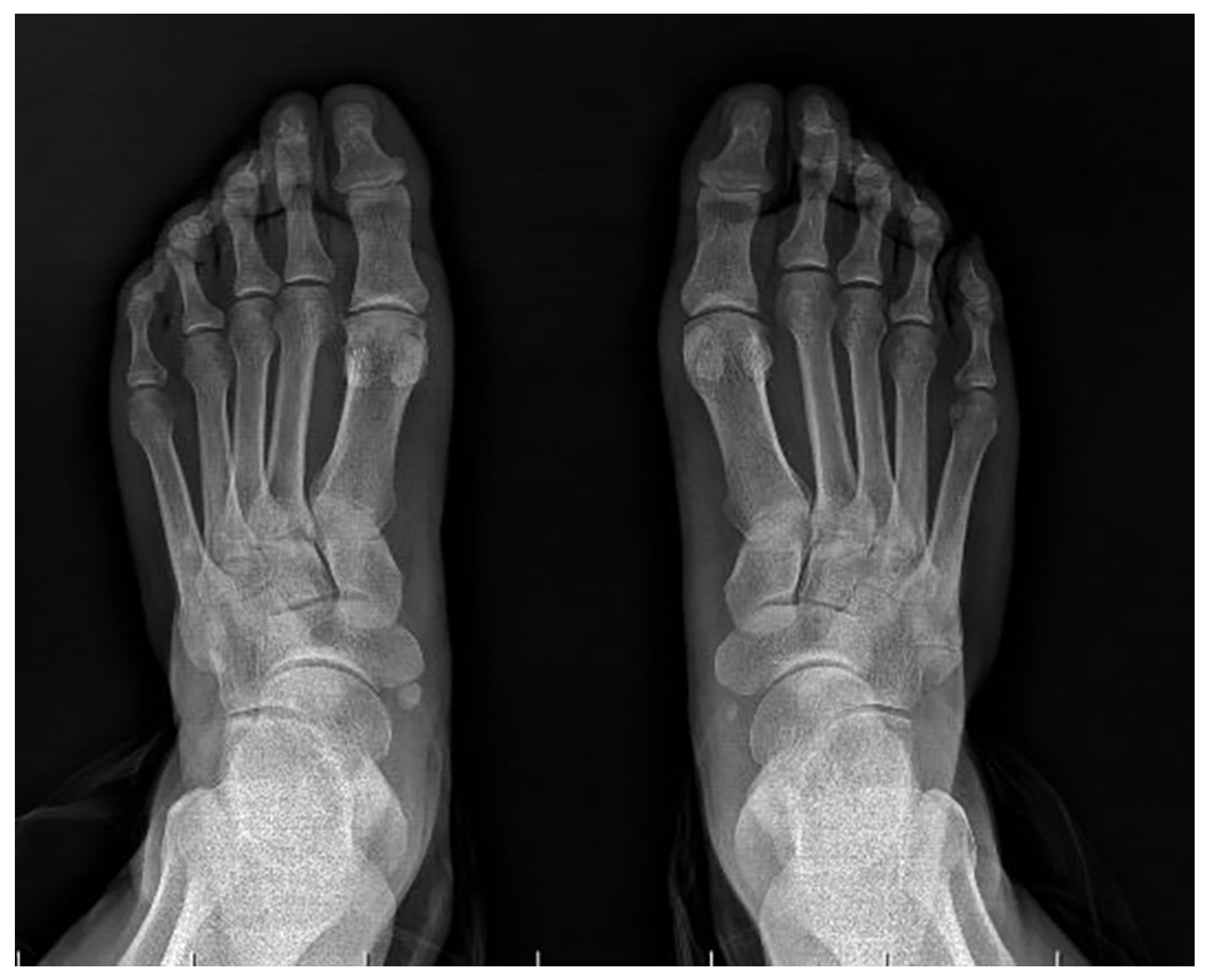
All of the radiographic measurements were performed using picture archiving and communication system software (FONET PACS; Fonet Information Technologies Inc, Ankara, Turkey). Initial radiographic evaluation included weightbearing anteroposterior, lateral, and oblique radiographs of both feet using the same radiography device at our center (
Fig. 1). All of the radiography was performed with patients in an upright position in a single designated radiography unit. All of the measurements were taken one time by two of us (S.B and M.K) independently to decrease interobserver errors and were found to have an interclass correlation coefficient of 0.993 (95% confidence interval, 0.990–0.996).
Figure 1.
The patient had bilateral accessory navicular bones that were type 2 on the right side and type 1 on the left side.
Figure 1.
The patient had bilateral accessory navicular bones that were type 2 on the right side and type 1 on the left side.
The radiographic evaluation was performed by two of us (M.K. and S.B.), who independently evaluated seven radiographic parameters measured for the evaluation of hindfoot, forefoot, and midfoot alignment of foot. Five of seven parameters were measured on the lateral radiograph, and the others were measured on the anteroposterior radiograph.
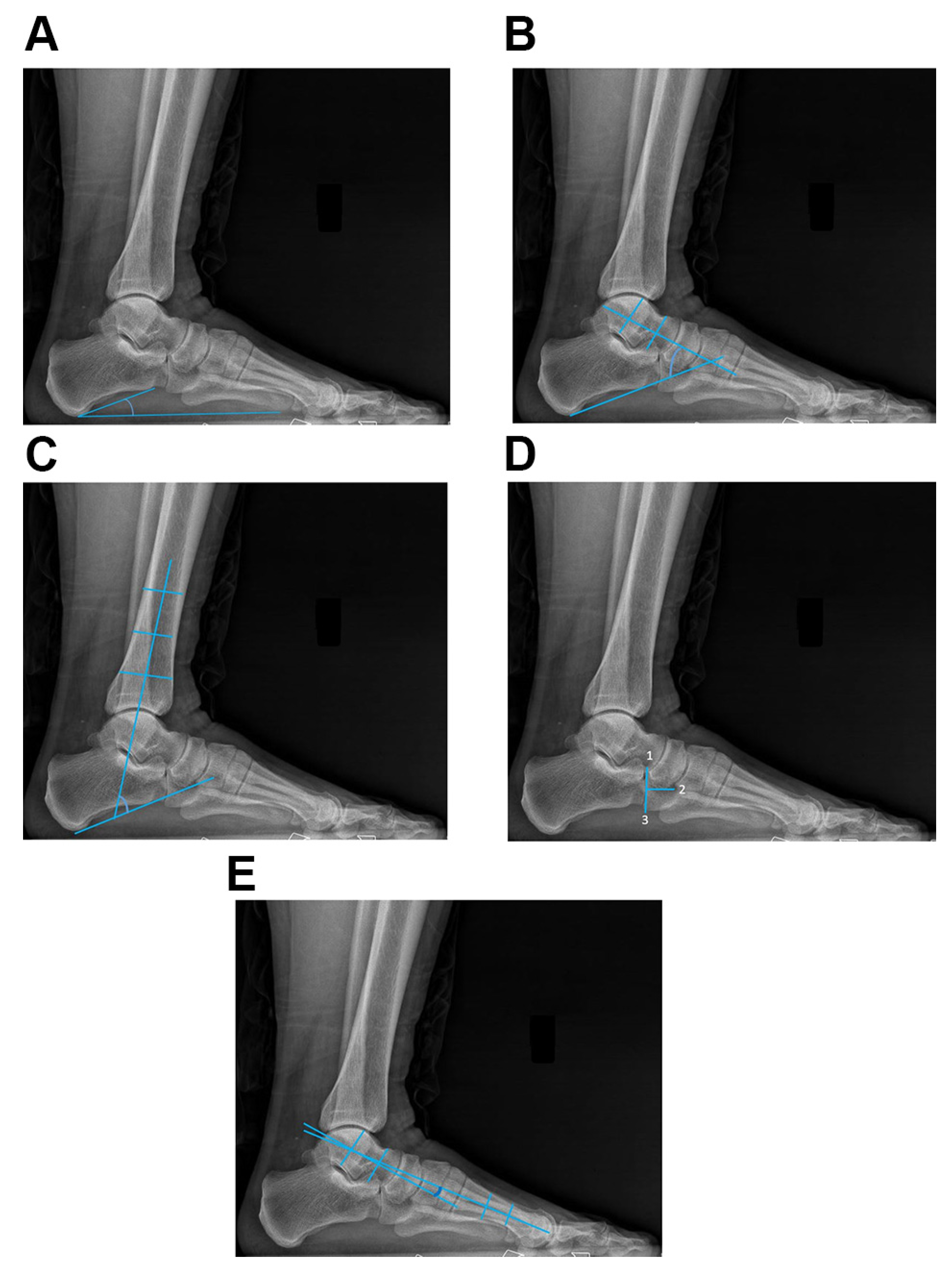
The parameters measured on the lateral view were the CPA, which is the angle between a line drawn along the edge of the plantar aspect of the soft-tissue shadow and a line drawn along the lower margin of the calcaneus; the TLCA, which is the angle between the long axis of the talus and a line drawn along the lower margin of the calcaneus; the TCA, which is the angle between the long axis of the tibia and a line drawn along the lower margin of the calcaneus; the NCO, which evaluates hindfoot valgus and abduction (the greater the percentage) the greater the degree of hindfoot abduction and valgus); and the LTFA, which is the angle between the long axis of the talar head and the long axis of the first metatarsal (
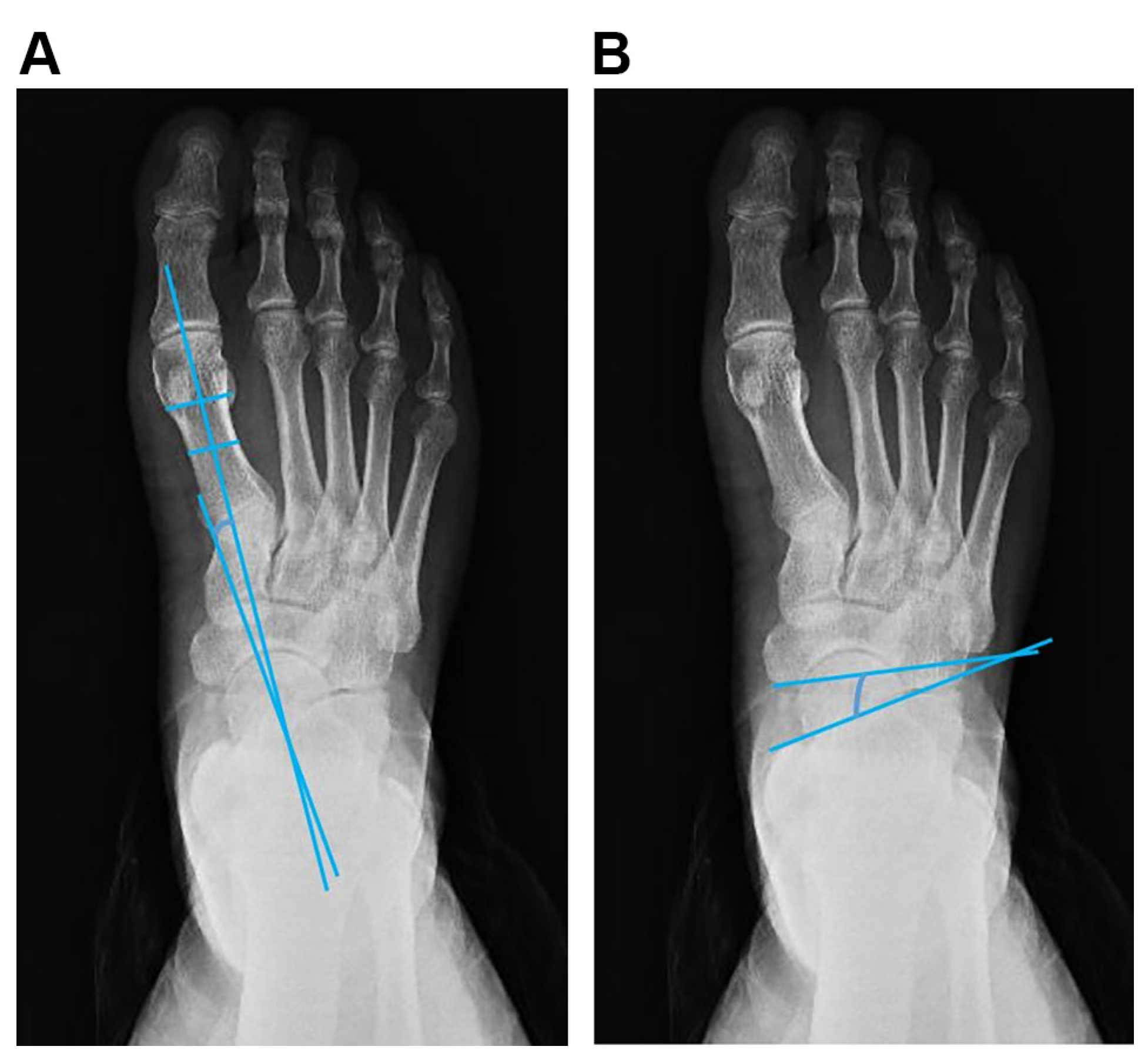
Figure 2). The remaining two parameters were measured on the anteroposterior view: the TNCA, which is the angle between a line bisecting the anterior articular surface of the talus and a line bisecting the proximal articular surface of the navicular, and the ATFA, which is the angle between a line bisecting the anterior surface of the talus and the long axis of the first metatarsal bone (
Figure 3).
Figure 2.
Parameters measured on the lateral radiograph. A, The calcaneal pitch angle is the angle between a line drawn along the edge of the plantar aspect of the soft-tissue shadow and a line drawn along the lower margin of the calcaneus. B, The talocalcaneal angle is the angle between the long axis of the talus and a line drawn along the lower margin of the calcaneus. C, The tibiocalcaneal angle is the angle between the long axis of the tibia and a line drawn along the lower margin of the calcaneus. D, In naviculocuboid overlap, 1-2 indicates the superior and inferior margins of the cuboid and 3 indicates the inferior margin of the navicular, 1-3/1-2 (%100). E, The lateral talo–first metatarsal angle is the angle between the long axis of the talar head and the long axis of the first metatarsal bone.
Figure 2.
Parameters measured on the lateral radiograph. A, The calcaneal pitch angle is the angle between a line drawn along the edge of the plantar aspect of the soft-tissue shadow and a line drawn along the lower margin of the calcaneus. B, The talocalcaneal angle is the angle between the long axis of the talus and a line drawn along the lower margin of the calcaneus. C, The tibiocalcaneal angle is the angle between the long axis of the tibia and a line drawn along the lower margin of the calcaneus. D, In naviculocuboid overlap, 1-2 indicates the superior and inferior margins of the cuboid and 3 indicates the inferior margin of the navicular, 1-3/1-2 (%100). E, The lateral talo–first metatarsal angle is the angle between the long axis of the talar head and the long axis of the first metatarsal bone.
Figure 3.
Parameters measured on the anteroposterior radiograph. A, The talonavicular coverage angle is the angle between a line bisecting the anterior articular surface of the talus and a line bisecting the proximal articular surface of the navicular. B, The anterior talo–first metatarsal angle is the angle between a line bisecting the anterior surface of the talus and the long axis of the first metatarsal bone.
Figure 3.
Parameters measured on the anteroposterior radiograph. A, The talonavicular coverage angle is the angle between a line bisecting the anterior articular surface of the talus and a line bisecting the proximal articular surface of the navicular. B, The anterior talo–first metatarsal angle is the angle between a line bisecting the anterior surface of the talus and the long axis of the first metatarsal bone.
Statistical Analyses
All of the statistical analyses were performed using IBM SPSS Statistics for Windows, version 24.0 (IBM Corp, Armonk, New York). Descriptive statistical methods were used to evaluate the demographic data. Normality of distribution was assessed with the Shapiro-Wilk test. The Student t test was used to compare quantitative, normally distributed variables of descriptive statistics (mean, standard deviation, and range), whereas the Mann-Whitney U test was used to compare nonnormally distributed variables. A P value of less than 0.05 was accepted as statistically significant. Pearson correlation analysis was used to identify relationships between variables with normal distribution, and Spearman correlation was used for variables that did not exhibit normal distribution.
Results
Twenty patients (13 women and seven men) with a mean ± SD age of 38.5 ± 12.3 years (range, 18–57 years) were included in the study. In this study patients were diagnosed as asymtomatic when they with no symptoms and tenderness on the medial side of either foot during activity or rest. Baseline demographic data of patients were presented in
Table 1.
Table 1.
Demographic Characteristics of the 20 Study Patients
Table 1.
Demographic Characteristics of the 20 Study Patients
There were no statistically significant differences between type 1 and type 2 ANBs for all radiographic parameters (
Table 2). Eight patients had symptoms on the medial side of their foot. Five of the eight symptomatic patients had symptoms on the type 2 side, two patients on the type 1 side, and the other on both feet. There were also no significant correlations between radiographic parameters and age, BMI, or symptoms.
Table 2.
Comparison of Radiographic Parameters in Type 1 and 2 ANBs
Table 2.
Comparison of Radiographic Parameters in Type 1 and 2 ANBs
Discussion
The effect of ANB on the arc of the foot has been investigated in many studies but is still uncertain [
5–12]. In present study, we intended to compare the radiographic parameters of both feet in all of the patients to evaluate the differences from one another in patients with bilateral ANBs of different types (one side type 1 and one side type 2) because the foot angles may differ in each person. We found that there were no significant differences between type 1 and type 2 ANBs for all of the radiographic parameters. The type of ANB had no effect on the radiographic parameters of the foot.
Many studies exist regarding radiographic measurement methods that have been used to evaluate the existence of pes planus with ANB feet [
7,
11] Sullivan and Miller[
7]. reported on 208 patients with nontraumatic foot complaints to determine the incidence of ANB and its association with flatfoot; no relationship between flatfoot and ANBs was found. Park et al[
11] reported that the hindfoot was more in equinus posture (lower CPA), the midfoot was more pronated and abducted (higher NCO and TNCA), and the forefoot was more abducted and pronated (higher LTFA and ATFA) in patients with ANBs than in the control group.
Type 1 accounts for 30% of ANBs, type 2 is the most common (60% of ANBs), and type 3 composes 10% of ANBs [
2]. A review of the literature shows that type 2 ANB most often interferes with the function of the tibialis posterior tendon [
13,
14]. Kanatli et al[
6] reported on 92 patients with ANBs, investigating the medial longitudinal arch by using an “arch index” calculated from the pressure picture obtained from a pressure distribution measurement system. In that study, it was found that there was no relationship between arch height and ANB types. In the present study, where each patient's own measurements were compared with their contralateral side, we found that the type of ANB had no effect on the radiographic measurements of the foot.
The presence of ANB may be a cause of pain and sensitivity with palpation, especially at the medial side of the foot, considered symptomatic ANB [
14,
15]. Some authors emphasized that abnormal insertion of the tibialis posterior into the ANB alters the leverage of this tendon, interfering with normal tarsal mechanics and producing weakness of the longitudinal arch and resulting painful flatfoot [
16,
17]. However, other studies found that pain was thought to be the result of local mechanical factors associated with the ANB itself [
6,
11,
16]. In their large series, Park et al[
11] found that no significant radiographic differences were seen between patients with symptomatic and asymptomatic ANBs. In the present study, we also found no significant correlations between radiographic parameters and the presence of symptoms in either type 1 or type 2 ANBs.
Pita-Fernández et al[
18] performed a cross-sectional study that included 1,002 patients 40 years and older and found that age, BMI, and sex were related to flatfoot. A study by Yousefi Azarfam et al[
19] examined the association between BMI and static footprint parameters in the elderly population. They reported that BMI and footprint parameters determine flatfoot in elderly patients. In the present study, there were no significant correlations between radiographic parameters and BMI.
Some limitations of the present study are worth considering. First, there was a small number of patients in this study. However, patients with bilateral ANBs of different types are extremely rare. Second, there was no control group of patients without ANBs to compare with our group. Third, patients were not evaluated for flatfoot deformity. Fourth, confounding factors, such as genetics, may affect the radiographic measurements.
Conclusions
We found that the type of ANB had no effect on the radiographic measurements of the foot in patients with bilateral ANBs of different types. In addition, age, BMI, and the presence of symptoms demonstrated no correlations with the radiographic parameters of the foot.