Next Article in Journal
Desmoplastic Fibroblastoma: A Case of a Rapidly Growing Mass in the Foot
Previous Article in Journal
Patient-Reported Outcomes of Minimally Invasive Distal Linear Metatarsal Osteotomy for Hallux Valgus
 
 
Journal of the American Podiatric Medical Association is published by MDPI from Volume 116 Issue 1 (2026). Previous articles were published by another publisher in Open Access under a CC-BY (or CC-BY-NC-ND) licence, and they are hosted by MDPI on mdpi.com as a courtesy and upon agreement with American Podiatric Medical Association.
Article

The March Against Onychomycosis: A Systematic Review of the Sanitization Methods for Shoes, Socks, and Textiles

by
Aditya K. Gupta
1,2,*,
Aaron J. Simkovich
1 and
Deanna C. Hall
1
1
Mediprobe Research Inc, 645 Windermere Rd, London, Ontario N5X 2P1, Canada
2
Department of Medicine, Division of Dermatology, University of Toronto School of Medicine, Toronto, Ontario, Canada
*
Author to whom correspondence should be addressed.
J. Am. Podiatr. Med. Assoc. 2022, 112(4), 21223; https://doi.org/10.7547/21-223
Published: 1 July 2022

Abstract

Drug-based treatment of superficial fungal infections, such as onychomycosis, is not the only defense. Sanitization of footwear such as shoes, socks/stockings, and other textiles is integral to the prevention of recurrence and reduction of spread for superficial fungal mycoses. The goal of this review was to examine the available methods of sanitization for footwear and textiles against superficial fungal infections. A systematic literature search of various sanitization devices and methods that could be applied to footwear and textiles using PubMed, Scopus, and MEDLINE was performed. Fifty-four studies were found relevant to the different methodologies, devices, and techniques of sanitization as they pertain to superficial fungal infections of the feet. These included topics of basic sanitization, antifungal and antimicrobial materials, sanitization chemicals and powder, laundering, ultraviolet, ozone, nonthermal plasma, microwave radiation, essential oils, and natural plant extracts. In the management of onychomycosis, it is necessary to think beyond treatment of the nail, as infections enter through the skin. Those prone to onychomycosis should examine their environment, including surfaces, shoes, and socks, and ensure that proper sanitization is implemented.

Superficial mycoses are one of the most common infections across the globe [1,2]. The feet provide an optimal environment for fungal growth: warmth and moisture (because of sweat), and they are often enclosed by shoes and socks. As such, superficial fungal infections affecting the feet or nails are prevalent. There are a number of available treatment methods for onychomycosis, with topical (eg, efinaconazole, tavaborole, ciclopirox), oral (eg, terbinafine, itraconazole, fluconazole), or a combination of both being the most popular [2]. However, treatment of onychomycosis alone should not be the sole line of defense. Sanitization of shoes, socks/stockings, and other textiles (and the feet themselves through proper hygiene) is integral to the reduction of spread and recurrence of superficial fungal infections [3]. The goal of the present review was to examine the currently available methods of sanitization for footwear and textiles against superficial fungal infections, and assessing which are effective or not.

Materials and Methods

A protocol for this study was registered with the International Platform of Registered Systematic Review and Meta-analysis Protocols (protocol identification number 2021110070), following guidelines outlined by the Preferred Reporting Items for Systematic Reviews and Meta-Analyses [4]. A literature search of various sanitization devices and methods that could be applied to footwear and textiles using PubMed, Scopus, and MEDLINE was performed. Only primary research articles that were written in English were retained, and the only date restriction was the date on which the searches were executed (November 10, 2021). To increase the comprehensiveness of this review, bibliographies of prominent review articles on this topic were manually searched [2,5–14]. For both search methods, the selection of articles for inclusion was performed independently by two authors (D.C.H and A.J.S.). Disagreements were resolved with the first author (A.K.G).

Results

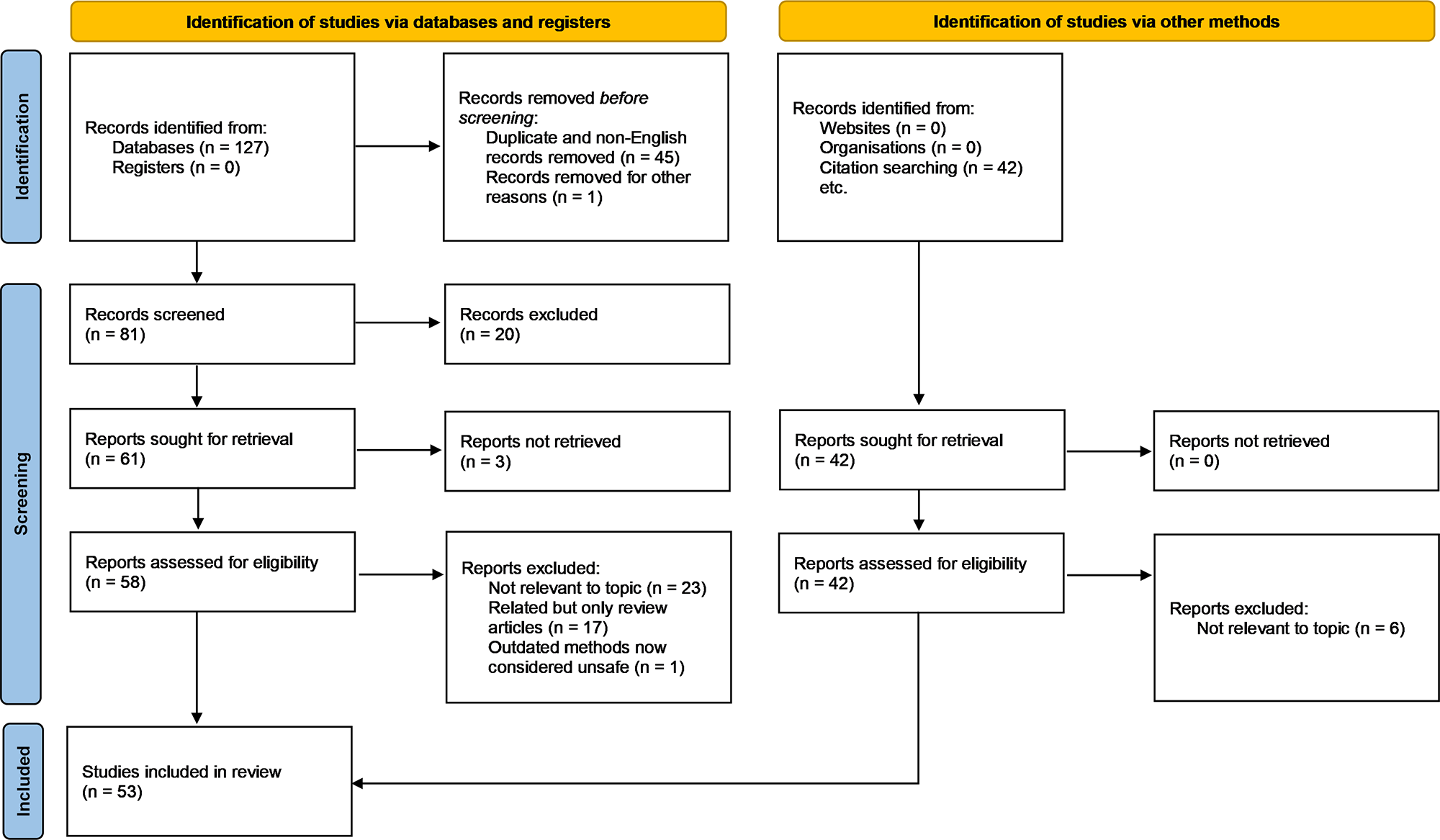
The systematic search results are illustrated in Figure 1. The initial search yielded a total of 127 studies. A total of 46 studies were removed before screening because of reasons such as duplications and being published in languages other than English. After screening article titles, 81 articles were considered for screening of abstracts. After a complementary bibliography search of prominent review articles, 42 articles were considered for eligibility. Of those, six were removed for being irrelevant to the topic, leaving 36. Together, these searches resulted in a total of 53 studies that pertained to the different methodologies, devices, and techniques of sanitization in relation to superficial fungal infections of the feet, including basic sanitization, [15–24]. antifungal and antimicrobial materials, [25–35]. sanitization chemicals and powder, [15,16,36–38]. laundering, [39–52]. sanitization putty, [53]. ultraviolet, [54–58]. ozone, [59–62]. nonthermal plasma, [63]. microwave radiation, [64]. essential oils, [65,66]. and natural plant extracts [67]. (Table 1).
Figure 1. Flow diagram of the search and elimination process used in this review, based on the Preferred Reporting Items for Systematic Reviews and Meta-Analyses guidelines [4].
Japma 112 21223 g001
Table 1. Sanitization Techniques Covered in the Currently Available Literature
Japma 112 21223 i001

Basic Sanitization Methods

Sanitization is a key factor in the prevention of fungal infection, spread, and recurrence. In general, discarding old, infected shoes or socks is recommended to help prevent the spread or recurrence of superficial fungal infections [15,16]. Basic personal hygiene should be maintained by daily and thorough washing and drying of feet [17–21]. and changing socks regularly [22].; the cleaning of any presumed modes of transmission (clothing, fomites, and surrounding environment) is also strongly encouraged [21,23].
In diabetic individuals, washing the feet daily may reduce the risk of onychomycosis [18]. There was a significantly lower chance of having onychomycosis in those who reported washing their feet every day, as compared to those who reported not washing their feet daily [18].
A number of studies examined the impact of cleanliness and sanitization of the carpets and washing areas in public locations [20,21,23]. Regular vacuuming, carpet shampooing, washing of floors, [21,23]. proper foot hygiene, and complete drying of feet [20]. helps to significantly reduce the presence of fungi and decrease fungal spread.
Swimming facilities are often sites of fungal growth and spread. The key to reduction of dermatophyte load is to clean the floors as often as possible [24].

Antifungal and Antimicrobial Materials

A number of antifungal and antimicrobial materials exist that can be effective for the sanitization and prevention of superficial fungal mycoses [25–32,34]. Copper has potent biocidal effects [68]. It was introduced into textiles for odor and microbial control [25–28]. When its effectiveness against Candida albicans was tested by exposing the fungus to a control fabric or 20% copper fabric for 0 to 60 minutes, the copper led to a significantly reduced number of viable fungi, with reduction increasing with time, as compared to the control fabric [25]. When provided to miners trapped in a cave of high temperature and humidity, they reported that wearing copper-impregnated socks led to a significant reduction in discomfort, irritation, dry skin, and scaling, and a marked decrease in foot odor, even after having been trapped for 36 days before receiving the socks [26].
In a study that examined the use of copper-impregnated socks of soldiers, who often wear occlusive footwear for long periods, providing optimal conditions for fungal foot growth, a reduction in symptoms of superficial mycoses occurred after wearing the socks for 3 weeks [27]. Fifty-three soldiers were provided with 20% polyester yarn socks impregnated with 1% copper oxide to be worn daily. After 3 weeks, a questionnaire about the effectiveness of the socks indicated reduction in skin irritation, itching, dryness, and foot and sock odor, showcasing the effectiveness of the copper ions contained in the socks to act as a biocide [27]. Another study found that even when worn daily and laundered up to 30 times, socks with 12% copper oxide–impregnated polyester fibers (with a weight/weight of copper oxide content per fiber of 1%) retained their biocidal efficacy against Trichophyton mentagrophytes, T rubrum, and C albicans. [28].
There have been numerous studies to evaluate the efficacy of chemical treatments of textiles against fungal growth. Shirakawa [29–31]. showed that shoes assembled using an adhesive containing sodium pentachlorophenate and calcium pentachlorophenate inhibited growth of T rubrum, T interdigitale, and T gypseum. This chemical treatment was found to inhibit fungal growth, even after the shoe sole had undergone continuous washing for 24 hours. Hammer et al [32]. examined the effects of fabric finished with copper against T mentagrophytes, T rubrum, and C albicans, along with didecyldimethylammonium chloride, polyhexamethylene biguanide (PHMB), and two silver chloride (AgCl) concentrations (low and high) [32]. All tested compounds showed inhibition of C albicans growth, but low-concentration AgCl was found to be the most effective. Trichophyton mentagrophytes was unaffected by didecyldimethylammonium chloride, whereas T rubrum showed complete inhibition. Trichophyton rubrum was also more susceptible to PHMB than T mentagrophytes, but was less susceptible to low-concentration AgCl [32]. These findings show that, although inhibiting effects of antimicrobial materials are seen, it does not indicate a universal suitability for the efficient control of dermatophytes.
Another study examined the potential antifungal effects of nonwoven textiles containing PHMB when mixed with sophorolipid [33]. Four volunteers who showed no signs of tinea pedis (as confirmed through visible examination and culture method) and had no immunosuppression placed their feet on paper soaked with 60 mL of normal saline that had one streak of T mentagrophytes cultured in an agar plate. This process was repeated four times per individual. Feet were washed immediately after either with soap, using a nonwoven textile impregnated with PHMB and 0.1% sophorolipid, or using a nonwoven textile soaked in tap water (in the control condition, feet were not washed) [33]. Washing with the PHMB textile was found to significantly reduce the number of colony-forming units of fungi to a level equivalent to that achieved by washing with soap [33].
In a double-blind, randomized, placebo-controlled study, the treatment of tinea pedis using hygienic socks loaded with antifungal microcapsules was assessed [34]. Special hygienic socks with a five-toe design were sprayed inside with prepared 1.55-g, clotrimazole-loaded microcapsules. Forty-two patients randomly received 14 pairs of the clotrimazole-loaded socks or control socks. Clinical and mycologic assessments were performed at 0 and 2 weeks, and then after a 2-week maintenance phase without treatment [34]. At 2 weeks, the clotrimazole-loaded socks had a significant antifungal effect, with 77% of the active group being clinically and mycologically cured versus 36% of the control group. After 2 weeks of maintenance following treatment, improvement was sustained in those that were cured. Overall, cure rate was also sustained during a final follow up at 4 weeks [34].
In 2015, a study was performed to determine whether diabetic foot infection could be prevented through the use of modified cotton socks [35]. Four sets of socks were made on a single knitting machine. Socks made from pure cotton (control) yarn were compared to socks made from cotton yarn blended with either crushed volcanic materials, activated carbon, or tribomechanical activated zeolite. All modified socks showed significant antimicrobial activity against C albicans. After wearing the socks for 10 hours, diabetic patients also reported no sweating or odor for all modified socks, as compared to the pure yarn socks [35].

Sanitization Chemicals and Powders

Gupta et al [36]. found that a powdered 250-mg terbinafine tablet (prepared to create a 0.1% stock solution in 80% ethanol) led to a complete elimination of T mentagrophytes, T raubitschekii, and T tonsurans after only 15 min of exposure. Other research has found that povidone iodine, PHMB betaine (B), and octenidine dihydrochloride are fungicidal against C albicans; povidone iodine and octenidine dihydrochloride are similarly fungicidal against both T interdigitale and T rubrum; but PHMB-B is fungicidal against only T interdigitale (and not T rubrum) [17].
Sanitization (antifungal) powder has been recommended for the removal of infectious fungal elements from shoes [15,16,37]. Antifungal powders that contain miconazole, clotrimazole, or tolnaftate, when applied to either the shoes or directly to the feet, are reported to reduce the chances of recurrence of onychomycosis [16]. A study examined the use of a 1% terbinafine powder or spray to treat the insoles of shoes that had been colonized by skin scales infected with T rubrum [37]. Felt, latex, and leather insoles were all examined, with cultures being taken 48 or 96 hours after the powder or spray was applied. It was found that the dermatophyte could no longer be cultured 48 hours after a single application and the surface remained sterile for 6 weeks [37].
However, not all results have shown antifungal powders to be an effective method of preventing onychomycosis. Warshaw and St Clair [38]. tested a miconazole powder 2% in a double-blind, placebo-controlled, randomized study that took place over 2 years, including 48 patients with clinical and mycologic cure of onychomycosis for at least 1 year, but no longer than 36 months. Patients used the miconazole powder on their feet and in their shoes biweekly throughout the study, and were evaluated in person at the start of the study, at 1 year, and at 2 years (and were contacted by phone at 6 and 18 months to evaluate compliance or possible side effects) [38]. No significant differences were found between the active and the control groups in terms of reinfection, time to reinfection, patient assessment of “worse” condition at any point throughout, or percentage with athlete’s foot [38].

Laundering

Bacteria and fungi that survive the laundering process are the main source of malodors that occur because of the continually moist environment. Bacteria can grow both in the washing machine itself and on the textiles laundered within [39]. Fungal pathogens (including Candida and Fusarium species) can also be found in washing machines, particularly within the drawers for detergents and rubber door seals [40]. A number of factors influence the presence of fungi and its colonization, including the use of mild detergents and softeners, washing temperature, [40]. and washing time [41,42]. Regularly cleaning the washing machine and its components, as recommended by the manufacturers, is key to helping prevent the further spreading of superficial mycoses. Machine washing is superior to hand washing, as the physical actions of the washing cycle (eg, drum agitation) assist in reduction of many bacterial and fungal organisms [43].
Another study that examined the impact of the actual laundry machine on the washing outcome tested a silver laundry machine that electrically generated silver ions [45]. As compared to a regular laundry machine, the silver machine was found to be effective against most fungi regardless of detergent use; however, when detergent was used, almost all fungi were eliminated. The cleaning action of the silver laundry machine with detergent was found to be higher than that of a regular laundry machine, with a significant reduction in T rubrum, C albicans, Microsporum canis, and Aspergillus flavus after the final spin cycle. In the absence of detergent, an equivalent reduction of fungi was seen, with the exception of A flavus. In comparison, without detergent, the regular laundry machine resulted in reductions only in T rubrum and C albicans [45].
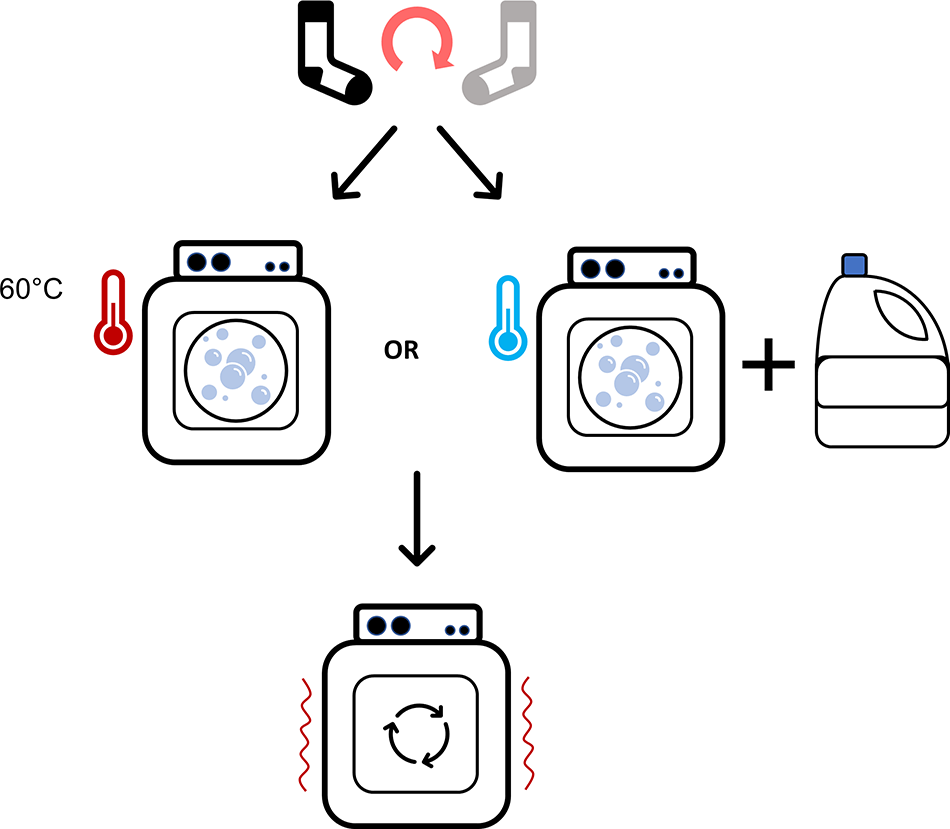
Past research had shown that laundering alone was not enough to eliminate fungus [44].; however, recent research has shown that it can significantly reduce fungal load. Basic methods of washing socks can impact dermatophyte load. It has been found that turning socks inside-out to wash them can lead to better removal of dermatophytes [46]. It is also important to wash infected textiles separate from uninfected laundry, as up to 16.1% of a T rubrum spore load from infected laundry can be found in the rinsing water of the last rinse cycle, indicating the potential for cross-contamination between textiles [41]. Using appropriately high water temperatures (at least 60°C) for laundering is also integral, and is a common agreement across the literature [40–42,47,48]. Laundering textiles and footwear at 60°C can significantly decrease, or eliminate entirely, dermatophyte colonies and other causal organisms within the materials [40–42,47,48]. As laundering temperature decreases, antibacterial and antimicrobial effectiveness decreases, and longer washing cycles are required for the removal of microbials, including C albicans (but with the exception of T mentagrophytes, which can be counteracted with the addition of activated oxygen bleach) [42]. It has been found that after washing for only 10 min at 30°C, C albicans can no longer be detected in clothing; however, washing for 45 min at 60°C fully eradicates both C albicans and T rubrum [41]. A minimum wash time of 45 min at 46.7°C can significantly reduce T mentagrophytes, a higher temperature required than for similar reductions of Staphylococcus aureus, Enterococcus hirae, or C albicans [42]. Lower laundering temperatures may reduce the fungal load (and even eradicate Candida species [41,47,49]. and M canis [50].); however, the eradication of most dermatophyte pathogens requires higher temperatures. Lower temperatures can be aided in antifungal action by the process of tumble drying, [49]. ironing, [51]. sun exposure, [52]. or the use of bleach [43]. or activated oxygen bleach [42,48]. (Fig. 2).
Figure 2. Suggested laundering cycle: turn socks inside-out before washing. Launder textiles at a minimum temperature of 60°C, if possible for 60 min, or with bleach or activated oxygen bleach if using lower temperatures. Tumble dry wet laundry.
Japma 112 21223 g002

Sanitization Putty

There has been one study where the efficacy of a sanitization putty at reducing bacterial and fungal contamination of footwear was assessed [53]. It was concluded that the sanitization putty was effective as an antibacterial but not as an antifungal [53].

Ultraviolet

A number of studies have evaluated the effects of ultraviolet (UV) radiation as a sanitization method for fungi [54–58]. In a study that examined the inactivation of dermatophytes by ultraviolet C (UV-C), it was found that Epidermophyton floccosum was the least susceptible to UV-C irradiation, followed by T mentagrophytes and T rubrum; M canis was the most susceptible [54].
When directly examining the use of a commercial UV shoe sanitizer for the decontamination of cultured dermatophytes in footwear, leather and athletic shoes were inoculated with either T mentagrophytes or T rubrum [55]. They were then stored at 35°C for 4 to 5 days and irradiated with one to three cycles of radiation; then, specimens were obtained from the inner surfaces of the shoes and cultured [55]. For T mentagrophytes, the reduction percentages for one, two, and three cycles were 83.9%, 77.6%, and 85.4%, respectively. For T rubrum, the reduction percentages for one, two, and three cycles were 88.8%, 75.6%, and 68.43%, respectively. Overall, UV-C treatment of shoes was found to be effective for sanitization and reduction of fungal colonies [55].
Cronin et al [56]. investigated which wavelengths within the UV spectrum inhibited the growth of T rubrum. Wavelengths between 280 and 400 nm (UV-C to UV-A) were investigated. It was found that exposure at 280 nm was inhibitory, and no growth of T rubrum was seen following a 2-week incubation. However, exposure to wavelengths longer than 280 nm was not inhibitory. These findings indicate that UV-C light could be an effective method of decontamination of T rubrum from reservoirs, such as shoes [56].

Ozone

Gupta and Brintnell [59]. first examined the efficacy of ozone gas as a sanitization technique on footwear contaminated with fungal material in 2013. Swabs taken from footwear of onychomycosis patients were cultured. In 80% of test cases, at least one piece of footwear per patient cultured dermatophyte fungi, nondermatophyte molds, yeasts, or a combination of organisms. Footwear was exposed to a cycle of ozone gas through either passive or directed means in the absence or presence of concurrent heating, respectively [59]. In 87.5% of experiments, there was a reduction of viable organisms after exposure to ozone gas. Overall, ozone gas was found to be effective for sanitizing contaminated footwear from onychomycosis patients [59].
In subsequent work, Gupta and Brintnell further assessed the fungicidal capacity of ozone gas on T rubrum and T mentagrophytes specifically [60]. Three types of cultures were used: actively growing agar cultures, agar cultures freshly inoculated with defined numbers of fungal conidia, and sterile gauze inoculated with agar and liquid cultures. The culture/seeded gauze was placed inside a commercial ozone gas sanitization device and exposed to a cycle of ambient air evacuation and replacement by ozone gas to an amount maintained throughout the cycle, followed by defined periods of exposure to ozone and ozone neutralization [60]. Trichophyton rubrum cultures were no longer viable following a standard cycle, regardless of culture concentration. Trichophyton mentagrophytes retained limited viability following one cycle, but this was dependent on the concentration of the culture. Overall, the standard cycle of ozone exposure in the commercial device was greater than 99% fungicidal to T rubrum and T mentagrophytes [60].
Both gaseous ozone and ozonized oil were evaluated as germicidal agents against M canis, M gypseum, T rubrum, T mentagrophytes, and T interdigitales [61]. It was found that, overall, ozonized oil contained a higher toxicity level than gaseous ozone. The minimum inhibitory concentration, the lowest ozonized oil concentration that reduced growth or spore germination by 80%, was determined for each fungus. When the minimum inhibitory concentration of ozonized oil was applied, there was a steady reduction in sporulation of M gypseum and M canis (98.7% and 97.1%, respectively). Trichophyton rubrum showed the least reduction in sporulation (72.6%) [61].
In a more recent study, it was found that ozone gas was effective at eradicating C albicans in yeast form and inhibiting germ tube formation [62]. As ozone exposure time increased, biofilm production decreased significantly. These findings show implications for using gaseous ozone in disinfecting footwear, as it will contain Candida species, but may require up to 60 min of exposure for efficacy [62].

Other Methods

The efficacy of using nonthermal plasma (NTP), by means of a low-temperature atmospheric-pressure plasma jet (APPJ), as a sanitization device against T interdigitale in shoes was examined [63]. Shoes from a patient with chronic tinea pedis (one sport pair and two leather pairs) were swabbed for T interdigitale, and confirmed by culture. The inside of each shoe was then irradiated by the APPJ by moving the jet over the entire inner surface of the shoe for 3 min. Afterward, all insoles were swabbed again and the swabs were streaked onto agar and incubated over 6 weeks at 30°C [63]. After 6 weeks, it was found that all insoles treated with the APPJ showed no fungal or bacterial growth, indicating that NTP irradiation can eradicate fungal contamination in shoes [63].
The effects of microwave radiation on T rubrum, T rubrum variety nigricans, T interdigitale, and M canis in infected polyethylene sponge and cork shoe insoles were examined [64]. It was found that both insole types showed a significant effect by the microwave radiation, with complete growth inhibition of all four dermatophytes after 30 seconds of exposure at 560 W (maximum temperature, 60°C), without causing damage to the insoles themselves [64].
The efficacy of thyme oil (from Thymus vulgaris L) on textiles with phase change materials (which provide a thermoregulation system) against T rubrum and C albicans was examined [65]. Materials treated with 20 µL/mL of thyme oil showed antifungal activity against both T rubrum and C albicans, [65]. indicating that thermoregulating materials treated with thyme oil may help prevent superficial mycoses. In addition, thyme oil applied as an 8% concentration in methanol to linen-cotton blended fabric has a strong antifungal and antibacterial effect [66].
Another method that has been examined was the use of natural fungicide extracted from neem (Azadirachta indica) leaves and mahagony (Swietenia mahagoni) fruit bark [67]. Fungus was taken from a shoe, cultured in a Sabouraud dextrose agar plate, and then used to test the antifungal efficacy of the extracts. The fungicidal extracts were mixed with shoe polish, and then compared to shoe polish only (nonfungicidal) [67]. The fungicide–shoe polish mixtures inhibited the growth of fungus, and did not show fungal growth for 1 month (versus the plain shoe polish, which showed fungal growth within 3 days) [67].

Discussion

Limitations of Previous Studies

There are numerous methods of sanitization of footwear or textiles from dermatophytes. However, there are limitations (Table 2). Copper oxide–impregnated socks seem like an optimal suggestion, particularly for those that may have difficulty with regular, proper hygiene, but randomized controlled trials have not been performed [26–28].
Table 2. Limitations of the Sanitization Techniques in the Currently Available Literature
Japma 112 21223 i002
The regular application of antifungal powder in shoes is a common suggestion throughout the literature. Only two studies have evaluated the use in shoes, [37,38]. both of which examined different antifungal compounds, resulting in one seeing a significant effect of the powder (1% terbinafine) [37]. and one of which no significant results were found (2% miconazole) [38]. Most recommendations of antifungal foot powder in shoes are based on treatment of similar compounds applied directly to feet. An effective antifungal compound for the feet would also need to demonstrate efficacy against shoes; controlled studies are required to demonstrate efficacy in disinfecting shoes.
The recommended temperature for laundering clothes for complete dermatophyte eradication is a minimum of 60°C [40–42,47,48]. However, the current trend of laundering is to use cold water to save energy and remain environmentally friendly. In addition, some clothing items are not supposed to be washed in high temperatures, as it may cause shrinkage. An alternative could be to wash socks, stockings, or other washable footwear in a separate laundry load, but often this would not be enough clothing for a full load. As discussed, certain factors can be implemented to mitigate the lessened antimicrobial effect of lowered washing temperatures. However, not all of these are optimal options either. Bleach is recommended when lowered washing temperatures are used to help eliminate dermatophytes, but bleach can be dangerous if not used appropriately and with the proper safety precautions. In addition, many textiles can be irreparably damaged by the use of bleach. Whenever possible, tumble drying can also help by adding heat to the laundering process. Again, this is not always available.
Proposed sanitization devices such as ozone sanitizers, microwaves, and plasma jets have been found to effectively decontaminate infected footwear of dermatophytes [59,60,63,64]. However, such machines are not often publicly available, and when they are, the price can be out of range for the average individual. There has been a recent increase in ozone sanitization devices on the market; however, these are mostly presented for use on smaller items (such as cell phones). In the case of microwaves, which are often found in the average kitchen, it is unlikely that patients would wish to put their contaminated footwear into a device used for food preparation.

Future Directions

Research has been performed on ketoconazole (KZ) on cotton wound dressings for fungal skin treatment [69]. Cotton wound dressings were impregnated with the KZ, and then tested against C albicans, Aspergillus niger, Escherichia coli, and S aureus. It was found that KZ-impregnated cotton wound dressings were good antifungal materials [69]. This method has not yet been tested on any textiles used for regular wear, such as socks; however, there is potential for KZ-impregnated materials to help prevent superficial mycoses.
Ozone as a sanitization option for footwear may be expanded to sanitizing larger areas [70]. It was found that with 60 min of ozone exposure, inactivation of fungi occurred (whereas bacteria and viruses needed only 20 min, and molds less than 2 min) [70].
Microwave radiation has been shown to be effective for sanitization of dermatophytes within shoes, [64]. but further study is required. More research on the impact of microwave radiation on socks and textiles, and more studies on shoes, would build on the current promising findings. In addition, testing microwave sanitization effects using standard microwave devices available to the public could help bring this method to more households.
Studies of NTP have performed in vitro tests on T rubrum, M canis, C albicans, C glabrata, and C krusei, although not on shoes [63,71,72]. Nonthermal plasma was found the be an effective antimicrobial against T rubrum, M canis, and C albicans [63,71]. It has also been shown to have a fungistatic effect against Candida biofilms (C albicans, C glabrata, C krusei) in vitro [72]. More research into the use of NTP on textiles would help determine the effectiveness of this technology in sanitizing footwear and textiles.

Conclusions

To properly manage onychomycosis, it is necessary to think beyond treatment of the nail, as fungal infections entering the nail unit enter through the skin. Subjects with onychomycosis invariably have tinea pedis, whether or not it is symptomatic or has clinical manifestations. Looking for tinea pedis, and treating it early, is key to prevention. However, those prone to or at risk for onychomycosis (eg, diabetics and those with peripheral vascular disease) need to look at their environment as well, including shoes, socks, floors that individuals walk on, shower stalls, and close family contacts. Subjects that live in group homes or use communal facilities are particularly at risk. For optimal management of onychomycosis, proper sanitization measures must be implemented.

Financial Disclosure

None reported.

Conflict of Interest

None reported.

References

  1. HazarikaD, JahanN, SharmaA: Changing trend of superficial mycoses with increasing nondermatophyte mold infection: a clinicomycological study at a tertiary referral center in Assam. Indian J Dermatol64: 261, 2019.
  2. GuptaAK, VenkataramanM, RenaudHJ, et al: A paradigm shift in the treatment and management of onychomycosis. Skin Appendage Disord7: 351, 2021.
  3. GuptaAK, VersteegSG, ShearNH, et al: A practical guide to curing onychomycosis: how to maximize cure at the patient, organism, treatment, and environmental level. Am J Clin Dermatol20: 123, 2019.
  4. PageMJ, McKenzieJE, BossuytPM, et al: The PRISMA 2020 statement: an updated guideline for reporting systematic reviews. BMJ372: n71, 2021.
  5. HsuAR, HsuJW: Topical review: skin infections in the foot and ankle patient. Foot Ankle Int33: 612, 2012.
  6. GuptaAK, StudholmeC: Novel investigational therapies for onychomycosis: an update. Expert Opin Investig Drugs25: 297, 2016.
  7. TostiA, ElewskiBE: Onychomycosis: practical approaches to minimize relapse and recurrence. Skin Appendage Disord2: 83, 2016.
  8. DaviesHD, JacksonMA, RiceSG, et al: Infectious diseases associated with organized sports and outbreak control. Pediatrics140: e20172477, 2017.
  9. GuptaAK, VersteegSG, ShearNH: Onychomycosis in the 21st century: an update on diagnosis, epidemiology, and treatment. J Cutan Med Surg21: 525, 2017.
  10. GuptaAK, FoleyKA, VersteegSG: New antifungal agents and new formulations against dermatophytes. Mycopathologia182: 127, 2017.
  11. DaggettC, BrodellRT, DanielCR, et al: Onychomycosis in athletes. Am J Clin Dermatol20: 691, 2019.
  12. GuptaAK, VersteegSG: The role of shoe and sock sanitization in the management of superficial fungal infections of the feet. JAPMA109: 141, 2019.
  13. GuptaAK, StecN, SummerbellRC, et al: Onychomycosis: a review. J Eur Acad Dermatol Venereol34: 1972, 2020.
  14. NowickaD, NawrotU: Tinea pedis—an embarrassing problem for health and beauty—a narrative review. Mycoses64: 1140, 2021.
  15. DixonHA: The study of fungi in diseases of the skin. Can Med Assoc J14: 1097, 1924.
  16. AmeenM, LearJT, MadanV, et al: British Association of Dermatologists’ guidelines for the management of onychomycosis 2014. Br J Dermatol171: 937, 2014.
  17. Silva-NevesV, HugoV, AlvesP, et al: Quality of life and therapeutic regimen management in onychomycosis patients and in vitro study of antiseptic solutions. Sci Rep11: 12789, 2021.
  18. TakeharaK, OeM, TsunemiY, et al: Factors associated with presence and severity of toenail onychomycosis in patients with diabetes: a cross-sectional study. Int J Nurs Stud48: 1101, 2011.
  19. MillesCL, RileyPA, KessenichCR: Onychomycosis: diagnosis and systemic treatment. Nurse Pract23: 40, 1998.
  20. IlkitM, TanırF, HazarS, et al: Epidemiology of tinea pedis and toenail tinea unguium in worshippers in the mosques in Adana, Turkey. J Dermatol32: 698, 2005.
  21. RaboobeeN, AboobakerJ, PeerAK, et al: Tinea pedis et unguium in the Muslim community of Durban, South Africa. Int J Dermatol37: 759, 1998.
  22. CohenAD, WolakA, AlkanM, et al: Prevalence and risk factors for tinea pedis in Israeli soldiers. Int J Dermatol44: 1002, 2005.
  23. AlsaifF, SomilyA, BalbeesiA, et al: Are mosque carpets’ reservoirs for fungi causing superficial foot mycosis? A cross-sectional study in Riyadh, Saudi Arabia. Environ Sci Pollut Res Int27: 38695, 2020.
  24. HilmarsdottirI, HaraldssonH, SigurdardottirA, et al: Dermatophytes in a swimming pool facility: difference in dermatophyte load in men’s and women’s dressing rooms. Acta Derm Venereol85: 267, 2005.
  25. BorkowG, GabbayJ: Putting copper into action: copper-impregnated products with potent biocidal activities. FASEB J18: 1728, 2004.
  26. BorkowG, MellibovskyJC: Resolution of skin maladies of the trapped Chilean miners: the unplanned underground copper-impregnated antifungal socks “trial.”Arch Dermatol148: 134, 2012.
  27. BorkowG: Protection of soldiers’ feet by copper oxide impregnated socks. Adv Mil Technol8: 101, 2013.
  28. ZatcoffRC, SmithMS, BorkowG: Treatment of tinea pedis with socks containing copper-oxide impregnated fibers. Foot (Edinb)18: 136, 2008.
  29. ShirakawaM: Experimental studies on the application of some bactericides and fungicides from the viewpoint of clothes sanitation. Kurume Med J6: 41, 1959.
  30. ShirakawaM: Experimental studies on the application of some bactericides and fungicides from the viewpoint of clothes sanitation II. On the residual effects of the pentachlorophenol mixed in the insoles of canvas shoes after washing. Kurume Med J6: 51, 1959.
  31. ShirakawaM: Experimental studies on the application of some bactericides and fungicides from the viewpoint of clothes sanitation III. On the effects of pentachlorophenol mixed in the insoles of canvas shoes to various bacteria and eumycetes. Kurume Med J6: 111, 1959.
  32. HammerTR, MuchaH, HoeferD: Dermatophyte susceptibility varies towards antimicrobial textiles. Mycoses55: 344, 2012.
  33. SanadaH, NakagamiG, TakeharaK, et al: Antifungal effect of non-woven textiles containing polyhexamethylene biguanide with sophorolipid: a potential method for tinea pedis prevention. Healthcare (Basel)2: 183, 2014.
  34. YuenCWM, YipJ, CheungHC, et al: Treatment of interdigital-type tinea pedis with a 2-week regimen of wearing hygienic socks loaded with antifungal microcapsules: a randomized, double-blind, placebo-controlled study. J Am Acad Dermatol69: 495, 2013.
  35. TarbukA, GrancarićAM, MagašS: Modified cotton socks—possibility to protect from diabetic foot infection. Coll Antropol39: 177, 2015.
  36. GuptaAK, AhmadI, SummerbellRC: Comparative efficacies of commonly used disinfectants and antifungal pharmaceutical spray preparations against dermatophytic fungi. Med Mycol39: 321, 2001.
  37. Feuilhade de ChauvinM: A study on the decontamination of insoles colonized by Trichophyton rubrum: effect of terbinafine spray powder 1% and terbinafine spray solution 1%. J Eur Acad Dermatol Venereol26: 875, 2012.
  38. WarshawEM, St ClairKR: Prevention of onychomycosis reinfection for patients with complete cure of all 10 toenails: results of a double-blind, placebo-controlled, pilot study of prophylactic miconazole powder 2%. J Am Acad Dermatol53: 717, 2005.
  39. StapletonK, HillK, DayK, et al: The potential impact of washing machines on laundry malodour generation. Lett Appl Microbiol56: 299, 2013.
  40. BabičMN, ZalarP, ŽenkoB, et al: Candida and Fusarium species known as opportunistic human pathogens from customer-accessible parts of residential washing machines. Fungal Biol119: 95, 2015.
  41. HammerTR, MuchaH, HoeferD: Infection risk by dermatophytes during storage and after domestic laundry and their temperature-dependent inactivation. Mycopathologia171: 43, 2011.
  42. HonischM, StammingerR, BockmühlDP: Impact of wash cycle time, temperature and detergent formulation on the hygiene effectiveness of domestic laundering. J Appl Microbiol117: 1787, 2014.
  43. BrandsB, BrinkmannA, BloomfieldS, et al: Microbicidal action of heat, detergents and active oxygen bleach as components of laundry hygiene. Tenside Surfactants Deterg53: 495, 2016.
  44. EnglishMP, WetheredRR, DuncanEH: Studies in the epidemiology of tinea pedis. 8. Fungal infection in a long-stay hospital. Br Med J3: 136, 1967.
  45. JungWK, KimSH, KooHC, et al: Antifungal activity of the silver ion against contaminated fabric. Mycoses50: 265, 2007.
  46. TanakaK, KatohT, IrimajiriJ, et al: Preventive effects of various types of footwear and cleaning methods on dermatophyte adhesion. J Dermatol33: 528, 2006.
  47. AmichaiB, GrunwaldMH, DavidoviciB, et al: The effect of domestic laundry processes on fungal contamination of socks. Int J Dermatol52: 1392, 2013.
  48. SchagesJ, StammingerR, BockmühlDP: A new method to evaluate the antimicrobial efficacy of domestic laundry detergents. J Surfactants Deterg23: 629, 2020.
  49. BlaserMJ, SmithPF, CodyHJ, et al: Killing of fabric-associated bacteria in hospital laundry by low-temperature washing. J Infect Dis149: 48, 1984.
  50. MorielloKA: Decontamination of laundry exposed to Microsporum canis hairs and spores. J Feline Med Surg18: 457, 2016.
  51. JamiesonRC, McCreaA: Shoes: a source of reinfection in ringworm of the feet. Arch Dermatol Syph35: 203, 1937.
  52. AmichaiB, GrunwaldMH, DavidoviciB, et al: “Sunlight is said to be the best of disinfectants”*: the efficacy of sun exposure for reducing fungal contamination in used clothes. Isr Med Assoc J16: 431, 2014.
  53. MessinaG, BurgassiS, RussoC, et al: Is it possible to sanitize athletes’ shoes?J Athl Train50: 126, 2015.
  54. DaiT, TegosGP, Rolz-CruzG, et al: Ultraviolet C inactivation of dermatophytes: implications for treatment of onychomycosis. Br J Dermatol158: 1239, 2008.
  55. GhannoumMA, IshamN, LongL: Optimization of an infected shoe model for the evaluation of an ultraviolet shoe sanitizer device. JAPMA102: 309, 2012.
  56. CroninLJ, MildrenRP, MoffittM, et al: An investigation into the inhibitory effect of ultraviolet radiation on Trichophyton rubrum. Lasers Med Sci29: 157, 2013.
  57. NematollahiAR, BadieeP, NourniaE: The efficacy of ultraviolet irradiation on Trichophyton species isolated from nails. Jundishapur J Microbiol8: e18158, 2015.
  58. CadnumJL, ShaikhAA, PiedrahitaCT, et al: Relative resistance of the emerging fungal pathogen Candida auris and other Candida species to killing by ultraviolet light. Infect Control Hosp Epidemiol39: 94, 2018.
  59. GuptaAK, BrintnellWC: Sanitization of contaminated footwear from onychomycosis patients using ozone gas: a novel adjunct therapy for treating onychomycosis and tinea pedis?J Cutan Med Surg17: 243, 2013.
  60. GuptaAK, BrintnellWC: Ozone gas effectively kills laboratory strains of Trichophyton rubrum and Trichophyton mentagrophytes using an in vitro test system. J Dermatol Treat25: 251, 2014.
  61. OufSA, MoussaTA, Abd-ElmegeedAM, et al: Anti-fungal potential of ozone against some dermatophytes. Braz J Microbiol47: 697, 2016.
  62. ZargaranM, FatahiniaM, Zarei MahmoudabadiA: The efficacy of gaseous ozone against different forms of Candida albicans. Curr Med Mycol3: 26, 2017.
  63. DaeschleinG, ScholzS, von WoedtkeT, et al: In vitro killing of clinical fungal strains by low-temperature atmospheric-pressure plasma jet. IEEE Trans Plasma Sci39: 815, 2011.
  64. BudihardjaD, MayserP: The effect of microwave irradiation on the vitality of various dermatophytes. Mycoses57: 209, 2014.
  65. ScacchettiFAP, PintoE, SoaresG: Functionalization and characterization of cotton with phase change materials and thyme oil encapsulated in beta-cyclodextrins. Prog Org Coat107: 64, 2017.
  66. WalentowskaJ, Foksowicz-FlaczykJ: Thyme essential oil for antimicrobial protection of natural textiles. Int Biodeterior Biodegrad84: 407, 2013.
  67. MamunAA, HasanR, AhmedR, et al: Antifungal efficacy of neem leaves (Azadirachta indica) and mahagony fruit bark (Swietenia mahagoni) extracts on leather shoes. Bangladesh J Sci Ind Res54: 257, 2019.
  68. BorkowG: Using copper to improve the well-being of the skin. Curr Chem Biol8: 89, 2014.
  69. HedayatiN, MontazerM, MahmoudiradM, et al: Ketoconazole and ketoconazole/β-cyclodextrin performance on cotton wound dressing as fungal skin treatment. Carbohydr Polym240: 116267, 2020.
  70. MoscaR, MoscaM, RevetriaR, et al: Sanitizing of confined spaces using gaseous ozone produced by 4.0 machines. In: Proceedings of the World Congress on Engineering 2021. Available at: http://www.iaeng.org/publication/WCE2021/WCE2021_pp340-345.pdf. Accessed November 12, 2021.
  71. ScholtzV, JulákJ, KříhaV: The microbicidal effect of low-temperature plasma generated by corona discharge: comparison of various microorganisms on an agar surface or in aqueous suspension. Plasma Process Polym7: 237, 2010.
  72. SunY, YuS, SunP, . Inactivation of Candida biofilms by non-thermal plasma and its enhancement for fungistatic effect of antifungal drugs. PLoS One7: e40629, 2012.