Ankle fractures are common fractures in elderly people. The mechanism of a rotational ankle fracture can lead to rupture of the posterior tibiofibular ligament or avulsion fracture of the posterior edge of the tibia, which is also known as a posterior malleolar fracture or a Volkmann fracture [
1,
2]. Fractures of the posterior malleolus are relatively common, occurring in 7% to 44% of rotational ankle fractures [
3]. The ideal surgical treatment for posterior malleolar fractures is still under debate, but most scholars prefer surgical fixation when the fracture involves more than 25% to 30% of the articular surface or posterior dislocation of the talus [
4].
The third most common site of fragility fractures in elderly people is the ankle, following the hip and wrist [
1]. Elderly people are at an increased risk of ankle fractures, not only because of their poor bone quality but also because of their increased tendency to fall [
5]. Generally, posterior malleolar fragments are fixed either with percutaneous anteroposterior (AP) screws or through a posterolateral (PL) approach using screws and/or a buttress plate. Fixation with AP screws relies on reduction of the posterior malleolus through the ligamentotaxis of the posterior inferior tibiofibular ligament and reduction of the fibula [
6]. The PL approach is generally performed in the prone position, and it can be used for the reduction and internal fixation of posterior malleolar fractures under direct vision, but fractures involving the posterior malleolus are often associated with medial and lateral malleolar fractures.
This treatment for ankle fractures has the following advantages: first, trimalleolar fractures can be exposed and fixed with the patient in the supine position only, which is comfortable for elderly patients. Second, posterior and lateral malleolar fractures can be reduced and fixed with one incision, which minimizes damage to the skin, nerves, and tendons. Third, reduction and fixation of the fracture block of the posterior ankle can be completed under direct vision, and it is convenient to deal with the fragments at the fracture site. Fourth, the Kirschner wire tension band fixation procedure for the treatment of posterior malleolar fractures is reliable and economical for patients. Fifth, according to our experience, compared with AP screw fixation for posterior malleolar fractures in elderly people, internal fixation with Kirschner wire tension band fixation has a lower risk of failure because of the low holding force. Finally, removal of the internal fixation instrumentation after fracture healing does not require blood vessels and nerves to be separated and exposed; only a small incision is needed.
Between February of 2016 and July of 2017, nine elderly patients with posterior malleolar fractures were treated with Kirschner wire tension band fixation using a transfibular approach. In this operation, trimalleolar fractures can be fixed while the patient is in the supine position, and posterior malleolar fractures can be reduced and fixed under direct vision. The internal fixation outcomes are reliable, and it is simple to remove the internal fixation instrumentation after fracture healing.
Patients and Methods
There were nine patients, including three men and six women, aged 67.22 ± 1.9 years (range, 65–71 years). All the injuries were caused by rotational ankle injury. All fractures were closed fractures and were considered supination-external rotation fractures according to the Lauge-Hansen classification system; the posterior malleolar fractures involved more than 25% of the articular surface. All patients underwent surgical treatment for trimalleolar fractures within 10 days after injury.
Surgical Technique
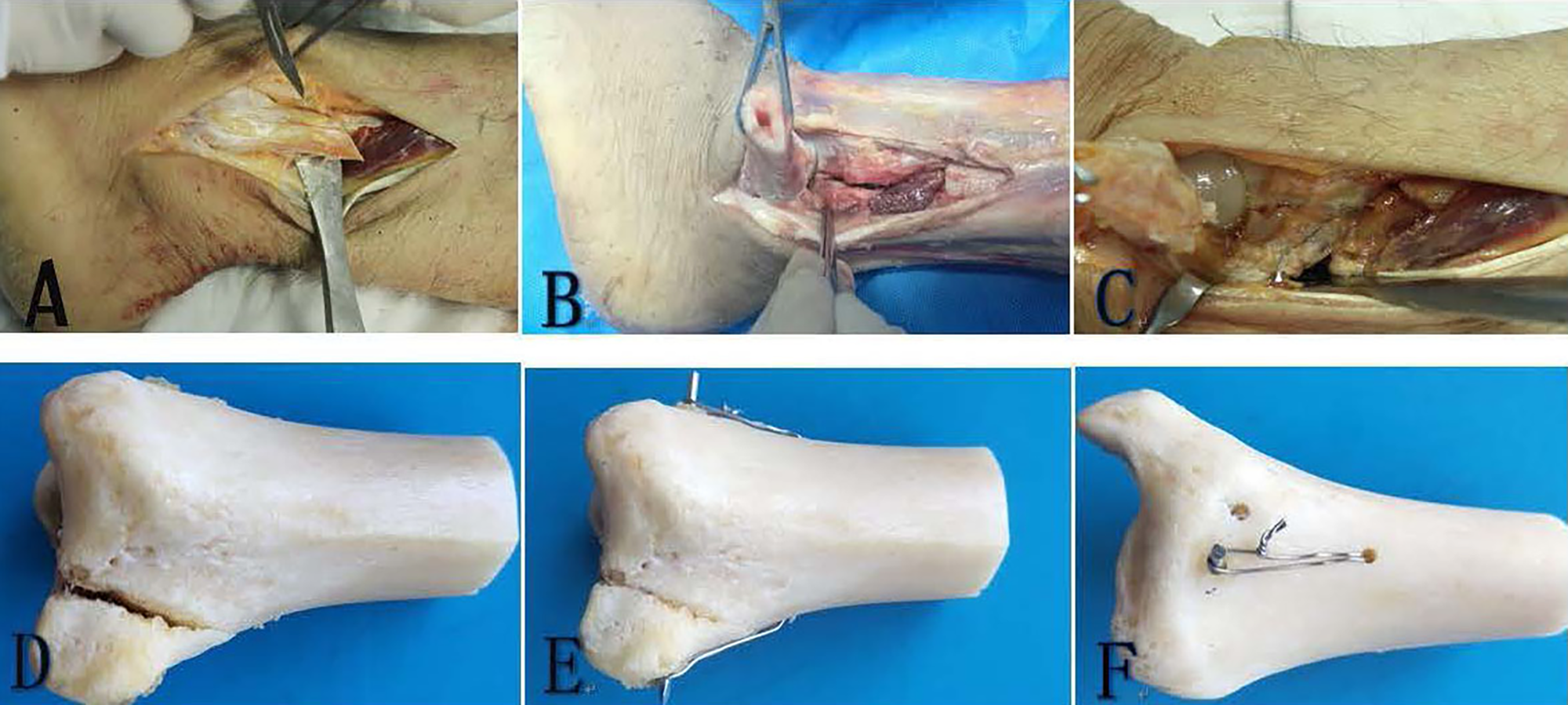
With the patient in the supine position, general or epidural anesthesia was induced, and a tourniquet was applied. Lateral malleolar fractures were exposed by a lateral incision (
Fig. 1); then, the distal fragment was lifted and turned distally. Thus, fractures of the posterior malleolus could be exposed and reduced under direct vision. After reduction of the posterior malleolar fracture, a limited incision was made in front of the ankle joint, the tendon was separated to expose the distal tibia, and the posterior malleolus was fixed from the front to the back with a 2.5-mm Kirschner wire. The steel wire band tunnel was predrilled by a 4-mm Kirschner wire proximal to the first Kirschner wire. The tunnel was located on the tibia and as close as possible to the proximal end of the fragment. The steel wire was folded in half through the tunnel in front of the ankle and inserted into the Kirschner wire tip, and the end of the wire was tightened. After the posterior malleolar fracture was fixed, the lateral and medial malleolar fractures were reduced and fixed in a routine manner.
Figure 1.
Anatomical study of surgical methods. A, Lateral approach for lateral malleolar fracture exposure; B, lifting of the lateral malleolar fracture fragment distally to expose the posterior malleolar fracture; C, Kirschner wire tension band fixation of a posterior malleolar fracture; D, posterior malleolar fracture model diagram; E, Kirschner wire tension band fixation from the lateral view; F, Kirschner wire tension band fixation from the anterior view.
Figure 1.
Anatomical study of surgical methods. A, Lateral approach for lateral malleolar fracture exposure; B, lifting of the lateral malleolar fracture fragment distally to expose the posterior malleolar fracture; C, Kirschner wire tension band fixation of a posterior malleolar fracture; D, posterior malleolar fracture model diagram; E, Kirschner wire tension band fixation from the lateral view; F, Kirschner wire tension band fixation from the anterior view.
Postoperative Management
All patients were immobilized with plaster for 2 weeks, and the dressings were changed regularly. Isometric contractions of the tibialis anterior and gastrocnemius muscles and extension and flexion of the toes were started on the second day after the operation to prevent joint stiffness and muscle atrophy. After 2 weeks, the plaster was removed, and rehabilitation training was carried out under the guidance of professional rehabilitation personnel. Partial weightbearing training was allowed within 6 to 8 weeks after the operation, and complete weightbearing training was allowed 12 weeks after the operation.
Results
The operative duration was recorded, and the wound healing outcome was observed. At 1, 2, 3, 6, 12, and 24 months after the operation, anterior and lateral radiographic images of the ankle joint were obtained to monitor the state of fracture healing, the stability of internal fixation, the incidence of complications, and the recovery of ankle function, and the fracture healing time was recorded. All nine patients underwent successful operations. The operative duration was 66.22 ± 6.3 minutes (range, 55–75 minutes). All patients were followed up for 25 ± 1.1 months (range, 24–27 months). Anatomical reduction was achieved in all nine patients, and there were no cases of skin necrosis, wound infection, cutaneous sensory impairment, or other complications. One patient exhibited delayed wound healing (because of fat liquefaction), and the wound healed after a dressing change.
During the follow-up period, there were no cases of fixator loosening and fracture displacement. The fracture healing time was 10.22 ± 1.6 weeks (range, 8–12 weeks). There were no complications, such as delayed union or osteomyelitis. Six patients underwent removal of the internal fixation instrumentation; complete removal was achieved in all of these cases.
The overall patient outcomes are summarized based on the American Orthopaedic Foot and Ankle Society (AOFAS) ankle-hindfoot score, with excellent defined as 90 to 100 points, good defined as 75 to 89 points, fair defined as 50 to 74 points, and poor defined as less than 50 points. The AOFAS score was excellent in four patients, good in four patients, fair in one patient, and poor in zero patients. The rate of excellent and good results was 88.89% (eight of nine), with an average score of 78.78 points.
Discussion
The management of an ankle fracture is particularly challenging in frail elderly patients. Soft tissues are frequently in poor condition, even before injury. Comorbidities, such as diabetes, peripheral vascular disease, and the prolonged use of corticosteroids, are not uncommon and increase the risk of postoperative sepsis, fragment nonunion, malunion, and delayed wound healing [
7,
8]. The high prevalence of osteoporosis [
9]. renders commonly used methods of internal fixation technically demanding and prone to failure. The fracture block of the posterior malleolus is relatively thin and often can hold only one screw, and the bone of elderly individuals is very weak, so bone fragmentation, screw strength reduction, or even fixation failure during tension screw fixation can easily occur, leading to failure of the operation [
10]. These characteristics of elderly people require that they assume a relatively comfortable position during surgery; that the surgical incision, range of soft-tissue dissection, and operative duration are minimized; and that the internal fixation procedure is simple and reliable.
After partial release of the posteroinferior tibiofibular ligament, the distal malleolar fragment was turned down through a lateral incision; thus, the posterior malleolar fracture can be clearly exposed, allowing treatment of the posterior malleolar fracture with this approach. We conducted an anatomical study (
Fig. 1) and created a model of lateral and posterior malleolar fractures. The lateral approach was used to expose the distal end of the lateral malleolar fracture and lift and flip the distal fibula, clearly exposing the posterior malleolar fracture. Through this approach, the reduction of a posterior malleolar fracture can be completed under direct vision, and the small bone fragments embedded in the fracture end can be easily treated. After reduction of the posterior malleolar fracture, we used a Kirschner wire to fix the fracture from the front to the back of the distal tibia and then drilled a hole in the proximal region of the fracture line to form a channel, in which a steel wire was placed for Kirschner wire tension band fixation. The steel wire is best located at the proximal edge of the fracture block; this wire can not only be fixed with a Kirschner wire to form a tension band but can also play a role in limiting proximal displacement of the fracture block. After posterior malleolar fixation was completed, fractures of the lateral and medial malleolus were reduced and fixed. Nine elderly patients with supination-external rotation ankle fractures were treated with this method (
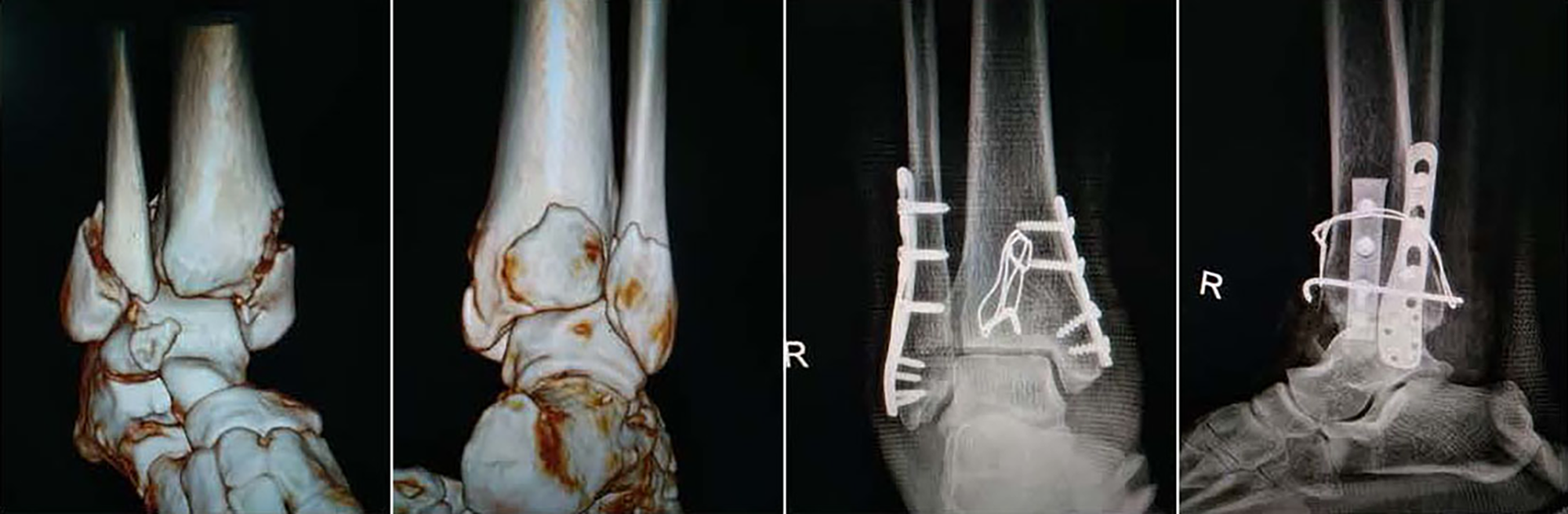
Fig. 2). Fixation of the posterior and lateral malleolar fractures was successfully completed by means of this approach. The Kirschner wire tension band fixation procedure for posterior malleolar fractures was simple and reliable, and there were no postoperative complications, such as internal instrumentation loosening or fracture block displacement. The rate of excellent and good results according to the AOFAS score was 88.89%, which is similar to that of our previous treatment strategy with AP screws or plates [
11]. When the internal instrumentation in the posterior malleolus is removed after fracture healing, the posterior malleolus does not need to be exposed; only a small incision is made in front of the ankle joint, and the Kirschner wire is pulled out. After the Kirschner wire is removed, the steel wire can be easily pulled out.
Figure 2.
A case of a posterior malleolar fracture in which the posterior tibial fragment involved 37% of the articular surface. Postoperative images of the anatomical reduction of the fracture. Radiographs were obtained at the 12-month follow-up. The clinical outcome in this case was excellent, with an American Orthopaedic Foot and Ankle Society ankle-hindfoot score of 90 points.
Figure 2.
A case of a posterior malleolar fracture in which the posterior tibial fragment involved 37% of the articular surface. Postoperative images of the anatomical reduction of the fracture. Radiographs were obtained at the 12-month follow-up. The clinical outcome in this case was excellent, with an American Orthopaedic Foot and Ankle Society ankle-hindfoot score of 90 points.
Generally, posterior malleolar fragments are fixed either with percutaneous AP screws or through a PL approach using screws and/or a buttress plate. Percutaneous AP screw fixation leads to indirect posterior malleolar fracture reduction; the posterior ligament of the lateral malleolar fracture is placed in traction, and percutaneous fixation is achieved with one AP screw. The advantages of this method are that trimalleolar fractures can be fixed with the patient in the supine position and that posterior malleolar fractures are fixed in a minimally invasive manner. The possible disadvantage is that indirect reduction may be difficult; because the fracture is not directly exposed, hematoma or fracture fragments at the fracture site cannot be completely removed, so poor fracture reduction may occur. In 2005, Talbot et al [
10]. reported their experience in the treatment of trimalleolar fractures with the PL approach, and since then, the PL approach has become increasingly popular [
11,
12]. The PL approach has the advantages of allowing the operation to be performed under direct vision, enabling anatomical reduction and rigid fixation, and enabling hematoma or fracture fragment removal from the fracture site. However, the disadvantage of this approach is that the patients need to lie prone or, in some cases, in a lateral recumbent position, which is not favorable for the state of the trimalleolar fracture that needs surgical fixation. With these less favorable approaches, the surgical incisions are large, the range of soft-tissue dissection is large, and tendon adhesion easily occurs. Furthermore, it is difficult to remove the internal fixation instrumentation after fracture healing.
Conclusions
Of course, this method also has some limitations and shortcomings. This exposure method is mainly suitable for cases of supination-external rotation fractures according to the Lauge-Hansen classification system. There should be a certain gap in fixation strength between the Kirschner wire tension band and plate approaches, and comparison of the fixation strength between the Kirschner wire tension band and AP screw approaches still needs to be further verified by biomechanical experiments.