Phaeohyphomycosis defines a group of subcutaneous and systemic diseases caused by a variety of dematiaceous fungi featured as darkly or brown pigmented yeast-like cells, hyphae, and pseudohyphae in infected tissues [
1–3]. More than 130 species and 70 genera of dematiaceous fungi are associated with the pathogenesis of phaeohyphomycosis [
4], with the most prevalent genera being
Exophiala and
Alternaria [
2]. These fungi grow widespread and have been isolated from soil, wood, plants, and decaying organic tissues [
4,
5]. However, the fungal species are not evenly distributed globally. Some species are more commonly recovered in tropical and subtropical regions, including Central and South America [
4]. The patients often acquire the fungal elements through traumatic inoculation (eg, nail penetration, thorn prick, wood splinter, or accidental laceration) [
2]. The infections can occur in any part of the body, but the majority are located in the lower extremities [
4]. The fungal elements, once inoculated, proliferate in the cutaneous and subcutaneous tissues, forming clinically visible nodular lesions [
2]. Cutaneous plaques or nodules present as necrotizing granulomas and microabscesses in the dermis. Subcutaneous lesions manifest as either singular or multilocular cyst(s) with necrotic tissue and neutrophilic infiltrate in the centers, granulomatous tissues, and heavily proliferated fibroblasts in the outer layers [
5–7]. Fungal elements including hyphae, pseudohyphae, or yeast-like cells in necrotic and granulomatous tissues can be visualized with the periodic acid-Schiff (PAS) or Gomori methenamine silver stain. The dematiaceous nature of the fungus can be demonstrated with the Fontana-Masson stain. Neither sclerotic bodies nor grains in infected tissues are observed in phaeohyphomycosis, which differentiates this entity from chromoblastomycosis and eumycetoma, respectively. Both of them are also caused by dematiaceous fungi [
4]. Fungal culture and/or nucleic acid sequencing are necessary to further identify the fungal species.
Case Report
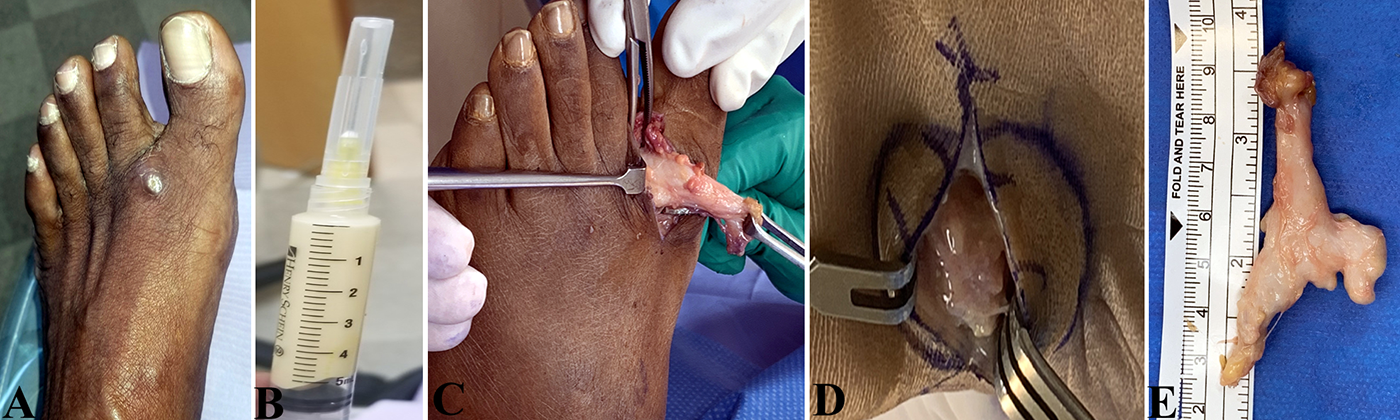
A 57-year-old man presented with a painless nodule in the first intermetatarsal space of his left foot, which had been present for many years, but was gradually increasing in size. He was an immigrant from Panama who traveled back to his home country every July to coach a local soccer team. System reviews did not reveal any complaints, including fatigue, fever, chills, foot or bone pain, general muscle aches and pains, joint swelling, morning stiffness, and any gait change. Physical examination revealed an 8 × 3-cm, cystic lesion in the first left intermetatarsal space, which seemed to communicate from the dorsal to plantar aspect of the foot (
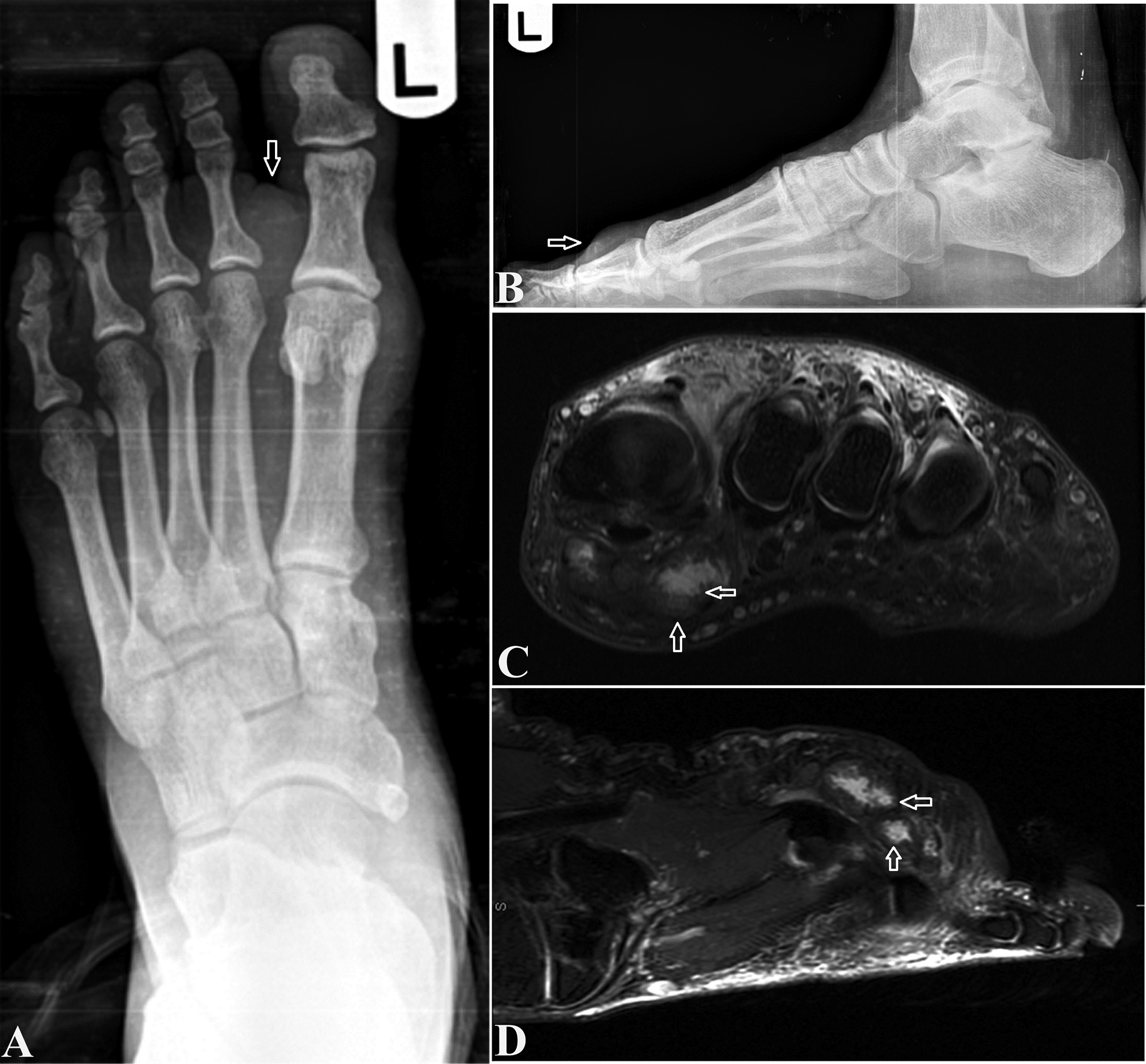
Fig. 1A). No heat, wound/sinus, discharge, erythema, or other acute signs of infection around or from the lump were observed. A dorsal to plantar radiographic view of his left foot showed the shadow of an increased soft-tissue density in the first intermetatarsal space. The surrounding bone density and structures were unaffected (
Fig. 2A), whereas the lateral view radiograph revealed a raised lesion on the dorsal surface of the proximal hallux (
Fig. 2B). Magnetic resonance imaging disclosed a thick-rimmed, cystic, nodular soft-tissue mass with central fluid signal in the first dorsal interspace, decompressing throughout the subcutaneous soft tissue, down to the plantar surface, and further pocketing into the area of the second metatarsal head, suggesting a reactive, inflammatory lesion or a synovial bursitis. Further review of the coronal and sagittal views of the T2-weighted magnetic resonance imaging scans of the left foot showed discrete small, round, hyperintense circles with central hypointense dots in the hypointense matrix of this mass, the so-called dot-in-circle sign (
Fig. 2 C and D). No significant abnormalities, including intra-articular arthropathy, gout, rheumatoid arthritis, or significant osteoarthritis in the left foot were observed.
Figure 1.
Clinical and surgical images of phaeohyphomycotic cyst on the left foot. A, A raised mass on the dorsal surface of the first left intermetatarsal space. B, One of the syringes containing cloudy, yellow, thick and gelatinous fluid drained from the cystic mass. C, An incision into the subcutaneous tissue on the dorsal surface over the first intermetatarsal space tracked the mass all the way down to the plantar aspect of the foot with a curved hemostat. D, A C-shaped incision on the plantar surface revealed the mass just underneath the plantar aspect of the first metatarsal head. E, The Y-shaped mass surgically excised.
Figure 1.
Clinical and surgical images of phaeohyphomycotic cyst on the left foot. A, A raised mass on the dorsal surface of the first left intermetatarsal space. B, One of the syringes containing cloudy, yellow, thick and gelatinous fluid drained from the cystic mass. C, An incision into the subcutaneous tissue on the dorsal surface over the first intermetatarsal space tracked the mass all the way down to the plantar aspect of the foot with a curved hemostat. D, A C-shaped incision on the plantar surface revealed the mass just underneath the plantar aspect of the first metatarsal head. E, The Y-shaped mass surgically excised.
Figure 2.
Radiographs and magnetic resonance imaging (MRI) scans of a phaeohyphomycotic cyst on the left foot. A, A dorsal to plantar view radiograph shows a shadow of the mass in the first digital space and normal bone density and structure of the left foot, B, A lateral view radiograph demonstrates a raised nodule on the dorsal surface above the proximal phalanx. C, A coronal view T2-weighted MRI scan of the left foot exhibits a mass from the dorsal surface down to the plantar aspect with discrete small round hyperintense circles with central hypointense dots in the hypointense matrix of the mass (dot-in-circle sign) (arrows). D, A sagittal T2-weighted MRI scan of the left foot reveals a mass on the dorsal surface with dot-in-circle signs (arrows).
Figure 2.
Radiographs and magnetic resonance imaging (MRI) scans of a phaeohyphomycotic cyst on the left foot. A, A dorsal to plantar view radiograph shows a shadow of the mass in the first digital space and normal bone density and structure of the left foot, B, A lateral view radiograph demonstrates a raised nodule on the dorsal surface above the proximal phalanx. C, A coronal view T2-weighted MRI scan of the left foot exhibits a mass from the dorsal surface down to the plantar aspect with discrete small round hyperintense circles with central hypointense dots in the hypointense matrix of the mass (dot-in-circle sign) (arrows). D, A sagittal T2-weighted MRI scan of the left foot reveals a mass on the dorsal surface with dot-in-circle signs (arrows).
An aspiration was performed to try to achieve a definitive diagnosis. Fifteen milliliters of cloudy, yellow, thick, odorless, gelatinous fluid were drained from the cyst (
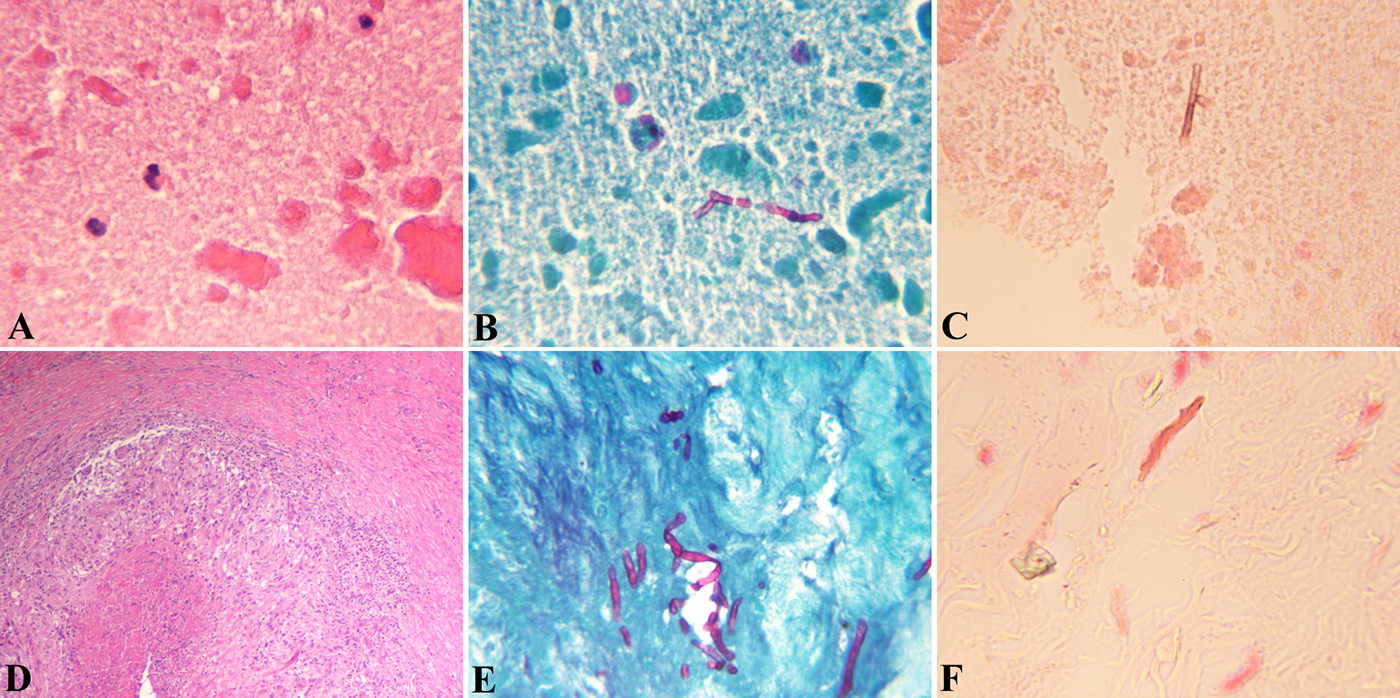
Fig. 1B) and the aspiration was submitted for pathologic analysis. The aspiration was centrifuged and processed into cell blocks. The hematoxylin and eosin–stained slides showed predominant fibrin mixed with coagulated blood, and a small number of scattered monocytes and neutrophils (
Fig. 3A). The differential diagnosis, treatment options, and prognosis were further discussed with the patient, who opted for surgical excision of the mass.
Figure 3.
Histopathology of the aspiration and excisional phaeohyphomycotic cyst. A, The hematoxylin and eosin (H&E) slide from the aspiration shows fibrin and coagulated blood with mixed neutrophils and monocytes (H&E, ×400). B, Rare fragments of fungal hyphae presents in the cell block slide from the initial aspiration (periodic acid-Schiff, ×400). C, Fontana-Masson stain demonstrates melanin and melanin-like pigments in the fungal cell walls from the hyphae in the aspirated material (Fontana-Masson, ×400). D, Necrotizing granulomas with central necrosis admixed with neutrophils and neutrophilic debris. Lymphocytes, macrophages, occasional eosinophils, and circumferentially located proliferating fibroblasts were also present in the excised mass (H&E, ×40). E, Hyphae, pseudohyphae, and yeast-like cells were present in the granulomas (periodic acid-Schiff, ×400). F, Melanin pigments in fungal cell walls in the granulomas (Fontana-Masson, ×400).
Figure 3.
Histopathology of the aspiration and excisional phaeohyphomycotic cyst. A, The hematoxylin and eosin (H&E) slide from the aspiration shows fibrin and coagulated blood with mixed neutrophils and monocytes (H&E, ×400). B, Rare fragments of fungal hyphae presents in the cell block slide from the initial aspiration (periodic acid-Schiff, ×400). C, Fontana-Masson stain demonstrates melanin and melanin-like pigments in the fungal cell walls from the hyphae in the aspirated material (Fontana-Masson, ×400). D, Necrotizing granulomas with central necrosis admixed with neutrophils and neutrophilic debris. Lymphocytes, macrophages, occasional eosinophils, and circumferentially located proliferating fibroblasts were also present in the excised mass (H&E, ×40). E, Hyphae, pseudohyphae, and yeast-like cells were present in the granulomas (periodic acid-Schiff, ×400). F, Melanin pigments in fungal cell walls in the granulomas (Fontana-Masson, ×400).
During surgery, a Y-shaped mass with two branches was completely dissected from the foot as photographed (
Fig. 1 C, D, and E). The mass was immediately fixed in 10% neutral buffered formalin and submitted for pathologic processing. Pathologic examination showed a cystic lesion that consisted of necrotizing granulomas with central necrosis that contained some neutrophils and neutrophilic debris (
Fig. 3D). These areas were surrounded by peripheral fibroblasts admixed with plasma cells, macrophages, lymphocytes, and occasional eosinophils. Edema and angiogenesis were noted in the cystic walls. Although the diagnosis of a rheumatoid nodule was initially considered, the clinical presentation and a serum rheumatoid factor that was within normal limits called this diagnosis into question. The PAS stains performed on both the aspirate and surgically excised tissues demonstrated rare hyphal fragments, pseudohyphae, and yeast-like forms (
Fig. 3 B and E). The Fontana-Masson stain showed melanin pigments within these hyphae, indicating the dematiaceous nature of the infecting fungus (
Fig. 3 C and F). The Ziehl-Neelsen stain and Gram’s stain, on both the aspirated and surgically excised tissue, were negative for mycobacteria and bacteria, respectively. Based on the histology and special staining results, the cystic mass was diagnosed as a phaeohyphomycotic cyst. Multiple repeated polymerase chain reaction–based sequencing did not identify specific fungal species because of the rare fungal elements from both aspirated cell and excisional tissue paraffin blocks.
No antifungal agents were prescribed for the patient because he had only one single, isolated, well-encapsulated cyst, which was completely excised. The patient recovered uneventfully and returned to normal activity, without any complications at a follow-up of 3 months, and without recurrences at a follow-up of 2 years.
Discussion
This case was originally considered to represent a rheumatoid nodule based on the histologic findings. The absence of rheumatologic symptoms, and normal levels of his serum rheumatoid factor prompted further investigation. The PAS and Fontana-Masson stains on slides from both aspiration and surgically excised tissue revealed melanin and melanin-like pigments present in the rare, scattered fungal cell walls, confirming the dematiaceous nature of the fungus. The patient was ultimately diagnosed with a phaeohyphomycotic cyst. The most important lesson learned from our case is to differentiate this from other infectious and noninfectious lesions based on the histopathologic and clinical features. The infectious lesions include cutaneous eumycetoma, chromoblastomycosis, tuberculosis, coccidioidomycosis, and botryomycosis. The noninfectious lesions include cutaneous rheumatoid nodule, lipoma, fibroma, leiomyoma, dermatofibrosarcoma protuberans, and others.
Phaeohyphomycotic cysts are frequently caused by a variety of fungi including
Exophiala species, such as
Exophiala dermatitidis, which was formerly characterized as
Wangiella dermatitidis [
13–17],
Pyrenochaeta [
18,
19], and
Alternaria [
2]. Although multiple attempts were made with broad-range fungal polymerase chain reaction targeting both the internal transcribed spacer region and the D2 region to amplify the fungal DNA, subsequent sequencing did not identify the fungal species in the paraffin-embedded tissues from both aspirated cells and excised tissues, which is likely caused by the rare fungal elements in the granulomatous tissues.
The patient was treated with surgical excision because it was a single, isolated cystic lesion. Surgical excision is recommended not only for optimal treatment but also for histologic diagnosis. The patient did not receive antifungal treatment because of a complete surgical ablation and the patient was immunocompetent. The patient had no recurrence, or relapse, at a follow-up visit 2 years after excision.
An increased incidence of phaeohyphomycosis has been reported in immunocompromised patients [
5,
6,
9–12]. Our case is a giant phaeohyphomycotic cyst in an immunocompetent adult male immigrant from Panama. Our report of this rare entity may possibly raise awareness of its slow-growing clinical presentation, modalities for differential diagnosis, and treatment options available to clinicians.