Next Article in Journal
The Management of Metatarsalgia in Rheumatoid Arthritis Using Simple Insoles: An Effective Concurrent Treatment to Drug Therapy
Previous Article in Journal
Total Dystrophic Onychomycosis Successfully Treated with Efinaconazole Topical Solution in Times of Coronavirus Disease of 2019. A Case Study
 
 
Journal of the American Podiatric Medical Association is published by MDPI from Volume 116 Issue 1 (2026). Previous articles were published by another publisher in Open Access under a CC-BY (or CC-BY-NC-ND) licence, and they are hosted by MDPI on mdpi.com as a courtesy and upon agreement with American Podiatric Medical Association.
Article

A Technical Review of Foot Temperature Measurement Systems

1
Faculty of Health Sciences, University of Malta, MSD2080 Msida, Malta
2
Centre of Biomedical Cybernetics, University of Malta, Msida, Malta
3
Faculty of Engineering, University of Malta, Msida, Malta
*
Author to whom correspondence should be addressed.
J. Am. Podiatr. Med. Assoc. 2022, 112(2), 21065; https://doi.org/10.7547/21-065
Published: 1 March 2022

Abstract

People suffering from diabetes are at risk of developing foot ulcerations which, if left untreated, could also lead to amputation. Monitoring of the foot temperature can help in the prevention of these foot complications, and various studies have shown that elevated temperatures may be indicative of ulceration. Over the years, there have been various devices that were designed for foot temperature monitoring, for both clinical and home use. The technologies used included infrared thermometry, liquid crystal thermography, infrared thermography, and a vast range of analogue and digital temperature sensors incorporated into different measurement platforms. All these systems are able to collect thermal data from the foot, with some being able to acquire data only when the foot is stationary and others being able to acquire data from the foot in motion, which can give more in-depth insight into any emerging problems. The aim of this review is to evaluate the available literature related to the technologies used in these systems, outlining the benefits of each and what further developments may be required to make the foot temperature analysis more effective.

Elevated skin temperature has been associated with pressure ulcer development in several studies [1–4]. Any condition that increases skin temperature is suggested to increase the susceptibility to tissue breakdown [5]. Monitoring of the skin foot temperature has been shown to be an effective approach in determining the health status of the foot [6]. In recent years, this has triggered interest among various researchers to investigate different ways on how best to measure skin foot temperature in a noninvasive approach while the foot is static and when the foot is in motion, using various microsensors and wireless sensors. Various skin temperature monitoring systems that have been suggested are used by researchers themselves solely as research tools [7–9], whereas others have been made commercially available as clinical tools and consumer products [10–12]. The aim of this review is to analyze these systems, highlighting their strengths and shortcomings and identifying any gaps in the present technology. An in-depth assessment of the design and technology used in foot temperature monitoring systems is conducted, with a particular interest in the engineering aspect of the devices. Although some other reviews have been carried out, these have either been limited to very specific geographic regions [13], or focused primarily on the clinical relevance of the systems and only provided a general overview of the technical characteristics of the system [14,15]. The desirable characteristics of ideal foot temperature measurement systems are also discussed.

Review Methodology

For this review, a search was conducted for articles published up to the year 2020 in the following four databases: Google Scholar, PubMed, Science Direct, and Scopus, using the terms “in-shoe temperature measurement” and “foot temperature measurement,” with the addition of other words including “diabetic,” “system,” “portable,” and “wearable.” All the retrieved articles were reviewed, and those that focused on foot temperature monitoring systems were considered further and included in this review. Of the 22 articles identified through the initial search, two were omitted because the investigation did not focus on monitoring the health status of the foot or because the technology used could not be used for monitoring the temperature of the foot. For example, in the article by García-Hernández et al [16], a foot model was reproduced with three-dimensionally–printed bones and sensors placed in between the bones, a method that cannot be used with living subjects. From the remaining 20 articles, a total of 15 unique systems were identified and reviewed in this article.

Foot Temperature Measurement Methods

Over the years, a range of foot temperature recording modalities have been investigated. In this review, these will be broadly categorized as static or dynamic measurement modalities. Static systems are those systems where temperature data can be recorded at only a single point in time while the foot is stationary. These include systems such as single-spot infrared (IR) thermometry and liquid crystal thermography (LCT). In contrast, dynamic systems enable continuous temperature recording while the foot is in motion, and these are generally composed of temperature sensors embedded in socks, insoles, or shoes. Even though IR cameras can be used to record continuous video data, the technology cannot be used while the subject is in motion. For this reason, thermal imagery has been categorized as a static modality for the purpose of this review.

Static Measurement Systems

A static measurement system can vary from a single-point measurement modality such as an IR thermometer to one producing a dense temperature map of the surface being analyzed as in the case of LCT plates. In the following subsections, the principles of operation and salient characteristics for the different systems are presented. A list summarizing the main characteristics of the different static measurement systems is presented in Table 1.
Table 1. Static Temperature Measuring Systems: Technical Specifications
Japma 112 21065 i001

Infrared Thermometry.

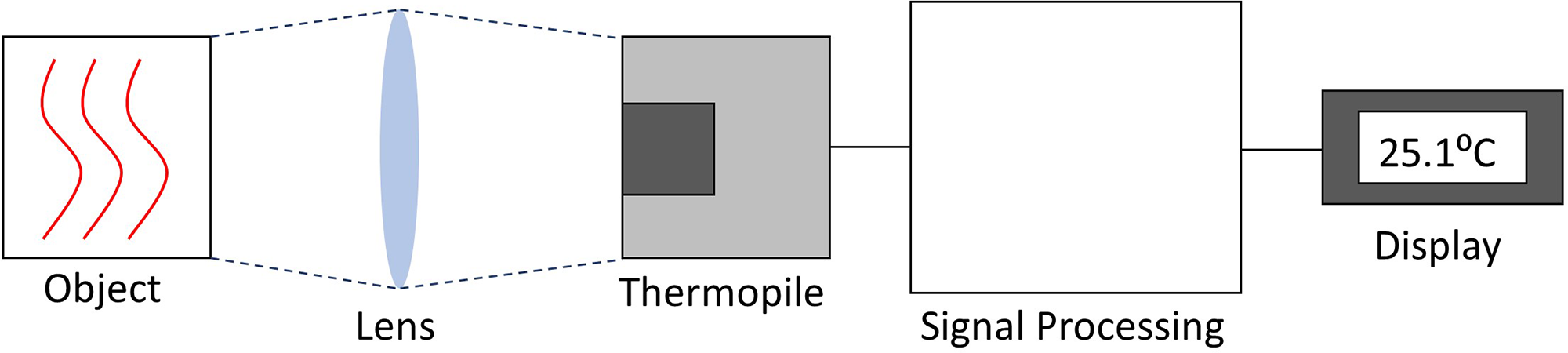
Radiation is one of the means of transfer of heat energy, and any object with a temperature greater than 5°K will emit some degree of infrared radiation [17]. In an IR thermometer, a lens is used to focus the irradiated IR waves from a specific area onto a detector. This detector, also known as a thermopile, converts this heat energy into electricity, which can then be measured and translated into a quantifiable unit of heat [18], as illustrated in Figure 1. One such device is the Xilas Medical (San Antonio, Texas) TempTouch Dermal Thermometer. It has been used in various studies [10,19] to determine its effectiveness in detecting possible diabetic foot ulceration (DFU) when used as a home-monitoring tool. The TempTouch houses an IR sensor to measure the temperature of the skin, displaying the reading on a single-line monochrome liquid crystal display screen. Thermal cameras can be used to capture images based on the IR emission of objects. Similar to IR thermometers, thermal imagers focus the IR energy onto a detector that creates a complete thermal image rather than acquiring a single temperature point.
Figure 1. The principle of operation of an infrared thermometer.
Japma 112 21065 g001
Such a system provides the patient with an affordable means of analyzing the temperature of their feet in the comfort of their own home. However, a prominent limitation of this IR thermometer is the fact that readings can be taken only one at a time, with several separate readings required to acquire temperature data from different parts of the sole of the foot. Furthermore, with the system being static, it is thus not possible to monitor the temperature variation in continuous time.

LCT.

A different kind of technology that does not require separate multiple readings to acquire a full thermal snapshot of the foot is LCT. Systems using this thermographic technology are generally composed of plates filled with thermochromic liquid crystals. This material changes color in response to temperature, producing components of red, green, and blue to represent the current temperature of the crystals. In the case of LCT foot monitoring systems, users are instructed to place their feet on the plates for 1 min to give the thermochromic crystals time to reach the same temperatures of the feet’s plantar surface. A thermal image is obtained on the plates and fades away in a few minutes once the liquid crystals start acclimating to the surrounding temperatures. Two variants of these systems are the Spectrasole Pro 1000 (Linköping, Sweden) and the Tempstat (Visual Footcare Technologies, LLC, South Salem, New York). The Spectrasole Pro 1000 [20] system is made up of two separate liquid crystal plates, whereas the Tempstat [21] has both plates incorporated in a single unit, similar to a bathroom scales, with a convex mirror in between to assist the user in visually assessing the plantar aspect of the foot. A limitation of these systems is that they do not provide absolute temperature measurements that can be stored digitally; instead, they provide only a thermal image that fades in a few minutes.
Because temperature evaluation is based on subjective color interpretation by the user or clinician, there is a possible margin of error based on various factors ranging from the perception of colors from one person to another, and ambient light conditions. Although in studies evaluating the LCT technology [20,21] it was demonstrated that temperature hot spots and ulcerations were correctly highlighted by both systems, it was not possible to obtain accurate temperature readings from the thermographic images. Therefore, an IR thermometer was still required to measure hot spots that could have possibly required attention after using the LCT systems.

Temperature Sensor Array Systems.

With the aim of acquiring precise digital readings while still using the concept of sensory weighing scales similar to the Tempstat, there have been various electronic foot temperature measuring devices developed in this form factor. These systems have arrays of sensors mounted below a plane onto which users can place their feet and obtain feedback on the thermal properties of the soles of the feet. Both Koven Technology (Winnipeg, Manitoba, Canada) and Manichand Healthcare (Taiwan) have designed smart weighing scales able to acquire temperature readings from the plantar aspect of the foot [11]. The Koven foot temperature measuring device incorporated two stainless steel sheets with 63 thermistor sensors on each sheet. The analog sensor readings are converted using a 24-bit analog-to-digital convertor and sent to the microcontroller for processing. These signals are then checked for any temperature differences between contralateral spots on the foot, and these hot spots are highlighted on the device LCD. It was determined that the performance of the system is highly sensitive to foot placement. Specifically, the lack of contact between the skin surface and the sensor can lead to the false detection of hot spots. In cases of foot deformities, where there is a considerable change in foot morphology, this issue is of greater concern because there may be a larger region of the skin surface that is not in contact with the sensors. Furthermore, because the plantar distribution is more likely to differ between the two feet, proper identification of hot spots using the system can be even more challenging.
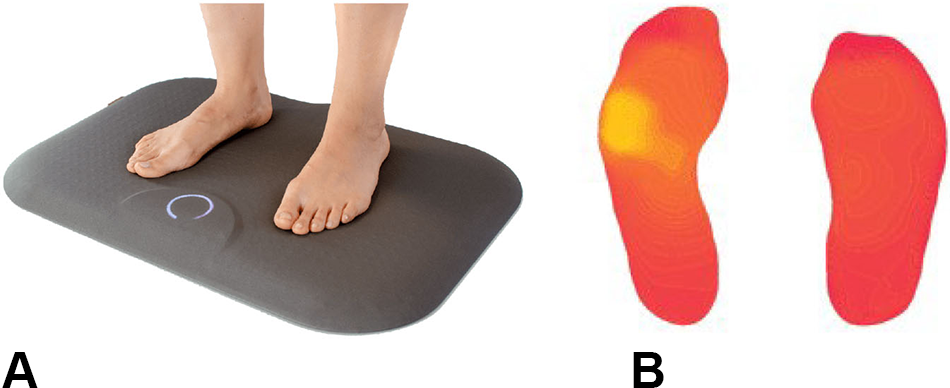
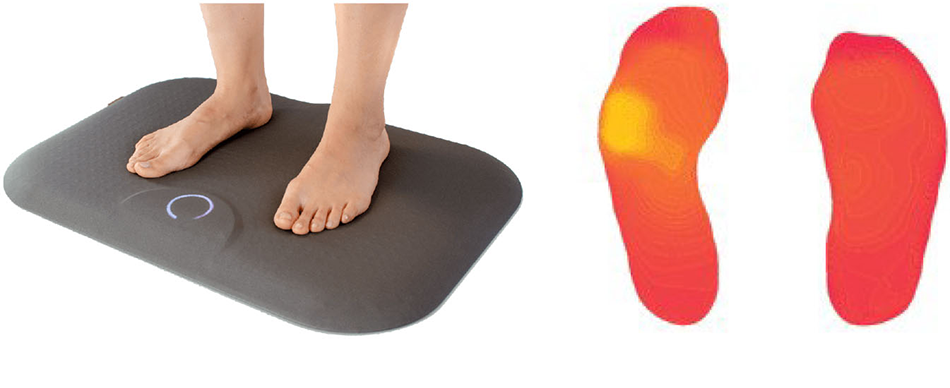
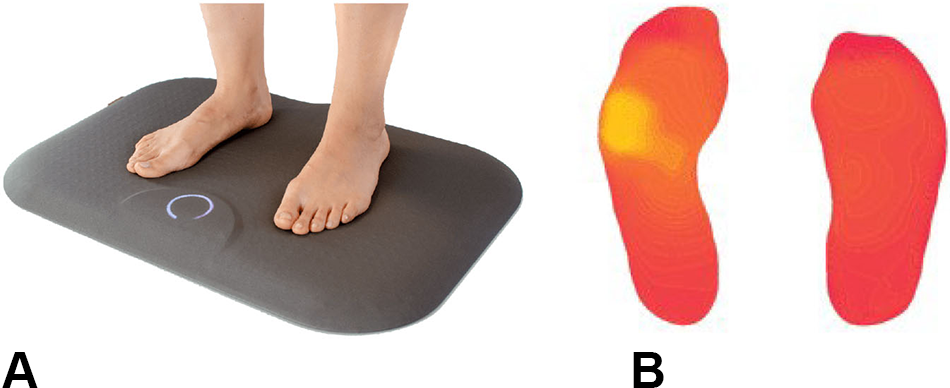
The issue of sensor distribution is avoided altogether in the Remote Temperature Monitoring System Podimetrics Mat (Podimetrics Inc, Somerville, Massachusetts) shown in Figure 2A. This system was used in a clinical trial using patients with a history of DFUs [22]. The system aims to highlight any asymmetry in the temperature distribution along the soles of both feet by making use of an array of 2,000 thermistor sensors. Unlike the previous system, where the sensor quantity and distribution constrains foot placement and size, the Podimetrics Mat is able to analyze temperatures throughout the device’s area (approximately 30 × 43 cm). Besides the distribution of the sensors, a further improvement is the material used below the sensors; a soft foam is used that ensures good contact between the foot soles and the sensors, avoiding noncontact issues as previously mentioned for other systems. Readings are initiated by stepping onto the device and standing stationary for approximately 20 seconds, after which the temperature data are wirelessly sent to the manufacturer’s database for analysis. The data are then accessible by the health-care professional, and any required intervention is communicated to the patient. Throughout the study, it was found that 97% of nontraumatic DFUs were properly detected approximately 5 weeks before any visual signs were presented to the patient or clinician [22], based on a 2.2°C threshold used in previous studies [19,23]
Figure 2. Remote temperature monitoring system Podimetrics Mat. A, The sensory mat on which the user stands to get his or her foot temperatures measured. B, Foot temperature maps extracted from the data collected by the system. (Images provided by Podimetrics Inc.)
Japma 112 21065 g002
The systems reviewed in this section are all intended to provide patients with a tool to monitor temperatures along the sole of the foot in a reliable manner, without the need for frequent visits to a clinic to acquire such reliable measurements. When considering the digital systems, there was a constant increase in the number of sensors used, with the Podimetrics Mat being the most high-resolution system with the added benefit of communicating the results to the clinician instantly. The high-resolution temperature maps presented in the study using the Podimetrics Mat are replicated in Figure 2B.

IR Thermography.

Thermography is widely used in various medical applications, including fever screening, thermoregulation analysis, breast cancer screening, and diagnosis of vascular disorders in the diabetic foot [24]. Similar to the IR thermometer, thermal cameras also work on the principle of detecting the thermal radiation emitted by an object, using a lens to focus the IR energy onto a detector. The major improvement from IR thermometers is that the detector in the IR camera does not have a single sensing point, but contains a dense grid of sensory pixels that convert the heat energy into an electronic thermal image [25]. These devices have been reported to be able to collect reliable thermal data in medical applications, given that the standard procedures for thermal imaging are adhered to [26]. There have been various studies using thermal imagery to investigate the relation between plantar foot temperature and the diabetic foot [27–29]
There are various benefits in using a noncontact method of temperature measurement in such studies, because it does not pose any risk to the patient, regardless of the state of health of their feet, and the equipment does not require decontamination between patients. Unfortunately, even though thermal cameras are becoming more common and their cost is going down, they are still quite expensive when compared to other technologies. In addition, the lack of ease of operation of an IR camera makes it less suitable to be used by the patients as a home monitoring device for day-to-day checks.
The devices reviewed up to now are limited to analyzing the barefoot skin temperature at rest, and no information can be collected during ambulation, which would be vital when trying to localize areas along the sole of the foot prone to tissue damage. With the aim of being able to collect data during ambulation, various studies in the literature have developed and evaluated the use of in-shoe temperature monitoring systems. These devices range from single sensors placed in contact with the skin to sensory insoles analyzing the temperature at various points along the sole of the foot.

Dynamic Measurement Systems

Dynamic measurement systems can be categorized into three main groups, namely:
  • Direct contact sensor systems, where the individual temperature sensors are placed in direct contact with the skin of the foot.
  • Sensory insoles, where a number of sensors are typically integrated in a semirigid material worn in the shoe as an insole.
  • Sensory socks, where temperature sensors are integrated in the fabric of a sock.
Direct contact systems were mostly developed and used within controlled laboratory conditions for research purposes. In contrast, because of their convenience of use, a number of sensory insole and sensory sock systems are already commercially available for home use. The technical specifications of the systems described in this section are summarized and listed in Table 2, including the types of microcontrollers used, and information about the sensor type and precision are outlined.
Table 2. Multisensor In-Shoe Temperature Measuring Systems: Technical Specifications
Japma 112 21065 i002

Direct Contact Sensor Systems.

Two advantages of placing sensors in direct contact with the skin include the precise sensor placement at the area of interest and the continuous contact between the sensors and the skin, even during ambulation. In Kang et al [29], a thermocouple-based temperature logger set up with a T-type thermocouple was used. The thermocouple was placed on either the dorsal area of the foot or in between the big and second toe. In addition, the temperature logger also has an internal temperature sensor that was used to monitor the ambient temperature, to better understand the effect of the surrounding ambient conditions on the temperature within the shoe. The system was used to obtain one temperature reading per minute, targeting recording periods of between 24 and 36 hours, well within the memory capabilities of the system. During the study, some technical issues with the system were reported, with the main issue being breakages of thermocouples because of excessive torsion and pressure when placed within the shoe.
Wiring is a very important aspect to consider when designing such in-shoe systems. Wires need to be as thin as possible to avoid causing irritation or damage to the skin, but at the same time they must be robust enough to withstand the tough conditions of the environment within the shoe. With the aim of avoiding the use of any wiring within the shoe, in Rutkove et al [31] and Mizzi [32], more compact single-sensor solutions were proposed. Specifically, the internal temperature sensors of a microcontroller chip were used, enabling the entire system to be packaged within the size of a button and placing it within the shoe. In the collaborative study between Digilog Inc (Perg, Austria) and the Centre of Biomedical Technology at Danube University (Krems, Austria) [31], an ultra-low-power microcontoller encapsulated in an epoxy resin was used and placed on the talus bone. Being a single sensor system, the amount of data that could be captured is limited, and the chosen sensor placement can provide temperature data from only that particular location of the foot, meaning that concurrent temperature data from other areas of interest are unavailable. The placement of the sensor close to the shoe collar also meant that the recorded temperature values were more likely to be affected by ambient temperature. Because no ambient data are collected with this system, there may be situations where it is difficult to deduce whether variations in temperature are a cause for concern or simply a fluctuation in the ambient temperature.
In the other study involving a single-sensor system [32], these issues were avoided by placing the sensor within the shoe, on the web space between the big toe and the second digit, and by using a secondary sensor to monitor ambient conditions. The iButton from Maxim Integrated Inc. (San Jose, California) used by Rutkove et al [31] consists of a readily encapsulated microcontroller chip that uses an internal sensor to measure the temperature of the surface it is in contact with. The temperature of the surroundings was being monitored by an ambient probe placed on a key ring that can be attached to the user’s clothing. The system was set to take readings every 2 minutes, with a target recording time of 48 hours per subject. In addition to temperature probes, this study used an activity monitor (Actiwatch 16; Mini Mitter Company Inc, Bend, Oregon) attached to the user’s ankle whereby, using an accelerometer, the type and degree of physical activity (ie, sitting, walking, running, or sleeping) could also be recorded. The inclusion of such measurements is key to be able to understand better the temperature trends recorded from such devices. Variation in temperature trends are expected to be different when walking and running, and not being aware of a change in activity could lead to an incorrect diagnosis. However, monitoring a single temperature point on the foot can be very limiting, and the only way around the issue is to increase the number of sensors used.
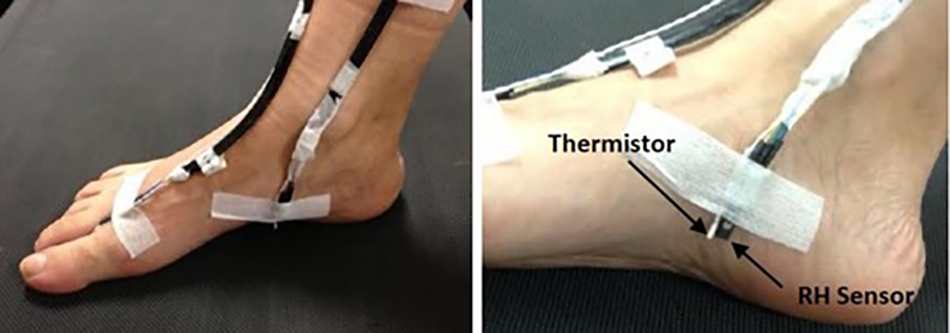
Various studies have considered systems with multiple temperature sensors placed at specific anatomical landmark points along the sole of the foot, typically including the big toe, the metatarsal heads, the medial longitudinal arch, and the heel. In a study by Mizzi [32], two areas in the foot were investigated: the medial longitudinal arch (navicular bone) and on the dorsal aspect between the hallux and second toe. Focusing solely on temperature and relative humidity, Mizzi[32] used a combination of sensors to monitor the microclimate within the shoe during ambulation. Two sets of sensors (temperature sensor and relative humidity sensor) were used, taped directly to the foot to minimize movement when placed on the skin as shown in Figure 3.
Figure 3. Relative humidity (RH) and temperature sensor locations on the foot for Mizzi’s study. (Images provided by Mizzi S: The Influence of Seasonal Variation on In-Shoe Temperature and Relative Humidity during Moderate Exercise in a Maltese Population: Implications for Diabetic Foot Ulceration [dissertation]. Canterbury Christ Church University, Canterbury, United Kindgom, 2016.)
Japma 112 21065 g003
A number of other multisensor systems have also been reported in the literature. A study by Shimazaki and Murata [33] using a multisensor system investigated various parameters including skin foot temperature (plantar and dorsal) using J-type thermocouples, plantar pressure, and motion. Moreover, ambient temperature, metabolic rate, and body weight were also recorded, to establish a relationship between the pressures exerted at various walking speeds and foot temperatures. Coates et al [9] reported a similar multisensory system, designed to record temperature, humidity, pressure, rate of acceleration and rotation, galvanic skin response, and skin inflammation by means of a bioimpedance sensor. Having multiple types of sensors in a single system provides a wide range of data from the foot, but when considering its capacity to analyze foot temperature, it is somewhat limited to three temperature sensors. The negative temperature coefficient flexible thermistors were placed at the same positions as the pressure sensors: at the big toe, the first metatarsal head, and the calcaneus. The data were sampled by an Arduino Nano microprocessor and transmitted to the Raspberry Pi microcontroller by means of Bluetooth (Bluetooth Special Interest Group, Kirkland, Washington) for processing.

Sensory Insoles.

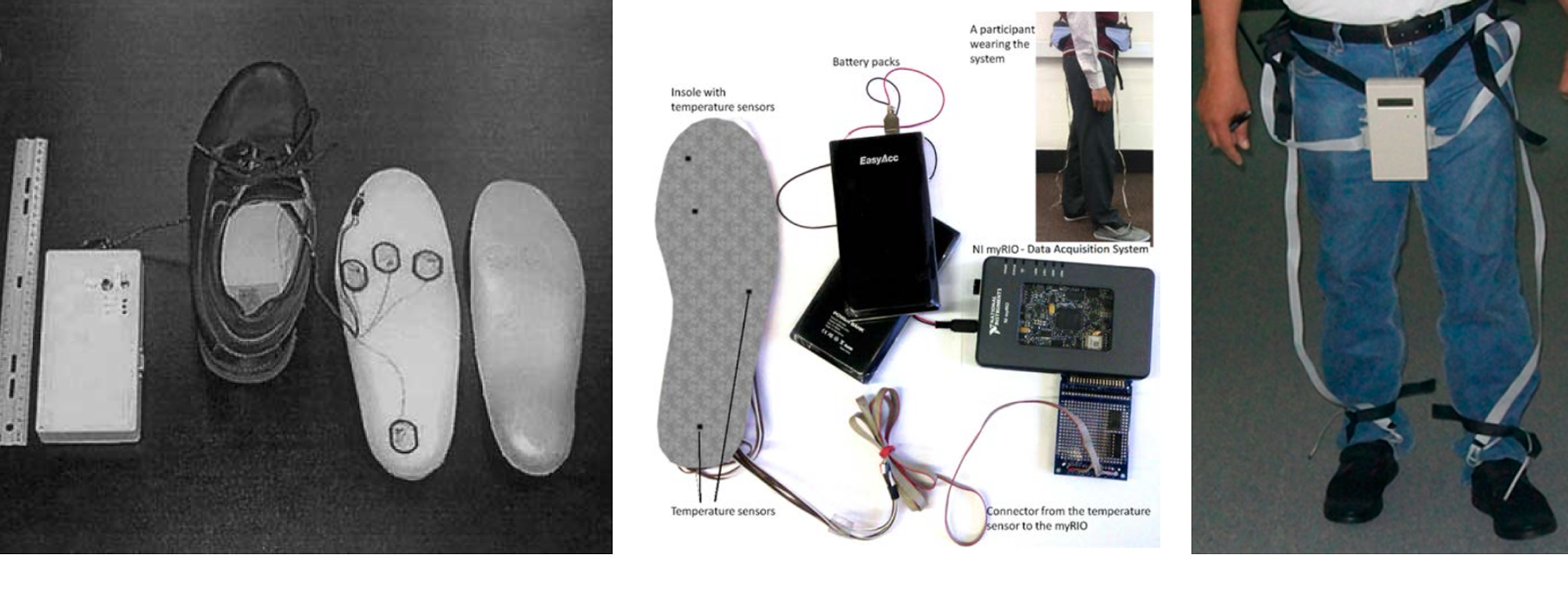
The alternative to having the sensors directly attached to the foot is to have a complete sensory surface placed under the foot. The study by Morley et al [34] was one of the first to adapt sensory insoles to temperature analysis. Their system, illustrated in Figure 4A, consisted of an insole with four combined temperature and pressure sensors, and a humidity sensor. Other similar systems have been designed, including that by Reddy et al [7], where four temperature sensors were embedded into a 5-mm hard foam insole. The microcontroller used in this setup had a built-in accelerometer, which was useful for collecting information on the type of activity being carried out by the user during temperature recording.
Figure 4. Insole based multisensor temperature monitoring systems. A, Processing unit and insole housing four sensors used in the study by Morley et al. (Reproduced with permission from Morley RE Jr, Richter ER, Klaesner JW, et al: In-shoe multisensory data acquisition system. IEEE Trans Biomed Eng 48: 815, 2017.) B, System components used in the study by Reddy et al and participant wearing the system. (Reproduced with permission from Reddy PN, Cooper G, Weightman A, et al: Walking cadence affects rate of plantar foot temperature change but not final temperature in younger and older adults. Gait Posture 52: 272, 2017.) C, Subject wearing the measurement system during the study by Sandoval-Palomares et al. (Reproduced with permission from Sandoval-Palomares JJ, Yánẽz-Mendiola J, Gómez-Espinosa A, et al: Portable system for monitoring the microclimate in the footwear-foot interface. Sensors 16: 1059, 2016.)
Japma 112 21065 g004
Ideally, the sensory insoles should have sensors as close as possible to the skin’s surface to ensure that the recorded temperature fluctuations are attributable to elevations in skin temperature and not the surrounding environment. However, at the same time, the sensors and any associated wiring should not be of discomfort to the user. In an evaluation study of the sensory insole system developed by Reddy et al [7], it was determined that the encapsulation of the sensors between the two layers of Plastazote forming the insole could lead to deviations in the foot temperatures measured with respect to the actual skin temperature values. Furthermore, insufficient contact between the foot and the sensor areas on the insole, and the horizontal and vertical movements of the foot in the shoe, also led to inconsistencies in the collected temperature readings.
Such issues were reported by Sandoval-Palomares et al [8], where a similar insole system was used to monitor the microclimate within the shoe. In this case, foot movement was causing a cooling effect on the temperature transducers embedded in the insole, increasing the ventilation and leading to temperature dips.
The above issues highlight how inconsistent contact of the foot with the insoles can limit the suitability of sensory insoles for the purpose of continuous and reliable foot temperature sensing. The use of direct contact sensors attached to the foot or the integration of sensors in a sock can help overcome this limitation by providing better contact and placement of the sensors with the foot even during ambulation.

Sensory Socks.

One such smart sock prototype is that designed and developed by Novinoor LLC [37], called SmartSox. It is embedded with fiber Bragg gratings (FBG) sensors, which consist of single-core fibers that are laterally exposed to intense ultraviolet light patterns to alter the refractive index (grating) of parts of the fiber core [38] With this process, the fibre core reflects light at a particular wavelength defined by the period of the gratings, but dependent also on the strain and temperature of the core. The response to changes in strain and temperature makes the FBGs useful as sensors to be able to measure these parameters, and to calculate plantar pressure readings.
In this system, each FBG sensor was connected to an optical filter and IR detector, with a microcontroller processing the raw data and storing the angular strain and temperature fluctuations of the foot. Testing of the system was done in various stages, starting out with in vitro testing of the system characteristics, then in vivo testing on subjects with type 2 diabetes with a high risk of DFU, and finally testing on a more generic population of diabetic subjects with a range of foot deformities.
One significant limitation of the setup is that the fiberoptics were too fragile and easily damaged when pulled, stepped on, or twisted during walking. Eventually, the prototype was improved, incorporating a thread latch lock for a more robust connection to the sock and eventually omitting the need for a cable altogether by having the system transfer data wirelessly to a computer. Alterations were also required for the actual sock design, as the fibers were being damaged with excessive weight and uneven distribution of weight along the plantar surface for subjects with severe foot deformities. The addition of a thin layer of soft padding on the bottom side of the sock helped to preserve the integrity of the fiber cores and increase the comfort of the socks themselves. This improved prototype was then used for testing under less controlled conditions.
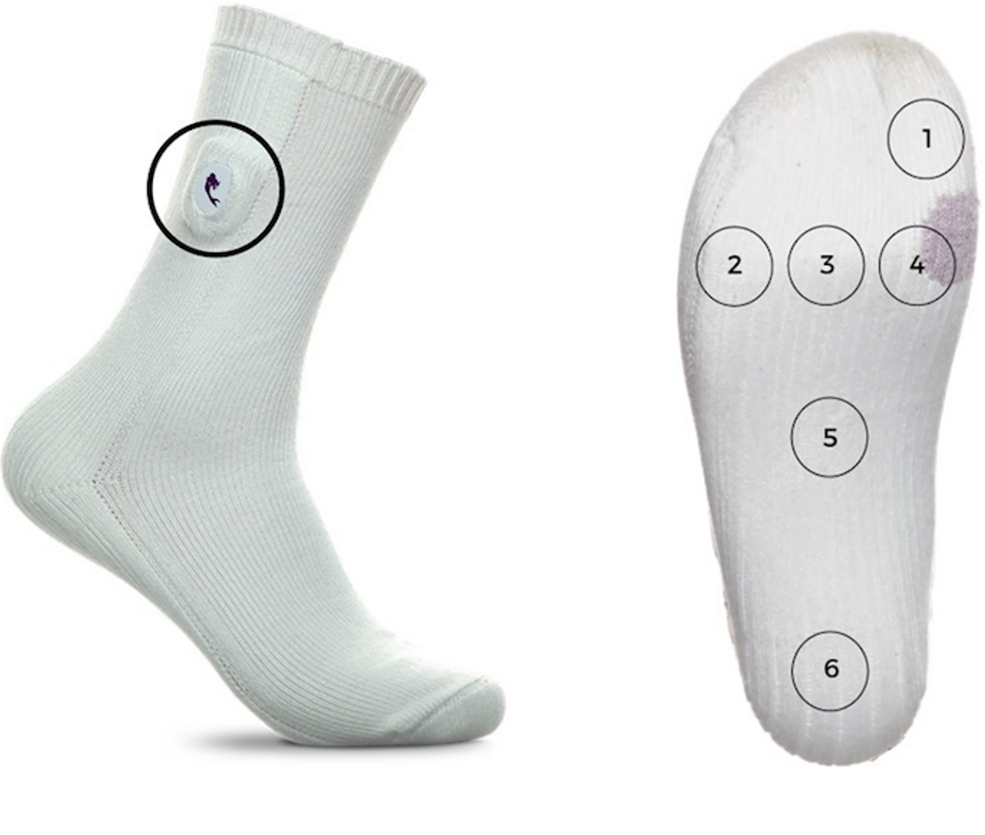
The Siren Diabetic Socks [39] (Siren Care Inc, San Francisco, California) is another sensory sock system, with six temperature sensors. Microsensors are woven directly into the fabric of these socks and connected to a small processing unit integrated in the sock located above the ankle (Fig. 5). The unit consisted of a microcontroller and Bluetooth communication chip, along with the battery powering the sock. Temperature readings from the sensors are taken at 10-second intervals, with the data stored in the processing unit and sent to a smart-phone paired with each pair of socks. The software application offered with the system has the option to set up alerts to detect potential ulcerations. A pilot study involving 35 diabetic patients was conducted to assess the comfort of the socks and the integrity of the collected data [12]. Separate testing on the sensors was also conducted, showing that the socks could yield precise temperature readings within a 10-sec window. The temperature sensors were shown to provide temperature readings with a precision of 0.01°C and users reported no noticeable differences in terms of comfort with respect to ordinary socks. In addition, even though the socks are washable, they need to be replaced every 6 months because of possible wear to the fabric that could compromise the fit of the sock [40]. In this way, the user never needs to replace the batteries because the button cell batteries that are fitted with the processor tag should last the whole 6-month period [41]
Figure 5. Siren diabetic socks. A, Image of socks showing (circled) processing unit location. B, Image of the bottom of the sock showing sensor locations. (Reproduced with permission from Reyzelman AM, Koelewyn K, Murphy M, et al: Continuous temperature-monitoring socks for home use in patients with diabetes: observational study. J Med Internet Res 20: e12460, 2018.)
Japma 112 21065 g005

Discussion

Skin temperature monitoring can help detect variations in temperature associated with peripheral arterial disease and dermal inflammatory changes, thereby helping reduce the risk of foot complications in people living with diabetes mellitus [41]. Although several tools have been developed to measure plantar foot temperatures using static single measurements, such as the TempTouch Dermal Thermometer [10], which is an IR thermometer for self-inspection of the feet, others developed wearable systems that are able to continuously monitor skin foot temperature, such as the SmartSox [37]. Such systems gave the possibility for continuous dynamic temperature monitoring, aimed at acquiring information in relation to the health status of the foot from within the shoe even when the user is in motion. As shown in Table 3, the number of temperature sensors used varies across the range of wearable systems reviewed, but never exceeds eight sensors. The benefits of acquiring a denser representation of temperature data from the foot has been investigated in diabetes-related foot complications with the use of thermal cameras [41]. The dense temperature data thermal cameras can provide can allow clinicians to obtain a clearer picture of peripheral circulatory perfusion or other pathologic vascular changes their patients might experience over time. These changes, especially at an early stage, are unlikely to be detectable with systems having a single sensor or just a few sensors. Setups with a limited number of sensors are generally used for a simple comparative analysis of skin temperature changes with respect to the corresponding contralateral site of the foot.
Table 3. Dynamic In-Shoe Temperature Measuring Systems: Technical Specifications
Japma 112 21065 i003
Although dense temperature images obtained by thermography have the potential to detect early-stage peripheral arterial disease through the use of lower limb temperature measurement [24], this technology is restricted to static foot temperature measurements outside the shoe. On the other end of the spectrum, in-shoe measurement temperature systems can provide in-shoe temperature readings but lack the density of thermal images and are limited to a few locations on the foot. This limits the information that can be obtained in relation to temperature dynamics and variations across the entire foot during ambulation, that would be useful for detecting relevant changes in spatial patterns in diabetic patients [42]. Therefore, in-shoe temperature measurement systems with a dense array of temperature sensors can combine the benefits of both approaches, providing a better representation of in-shoe foot temperature dynamics during ambulation and everyday activities. Dynamic in-shoe temperature monitoring would provide timely detection of areas in the foot that are at risk of tissue breakdown, and this can in turn lead to improved prevention and treatment plans. Specifically, dense in-shoe temperature maps from the foot during normal daily activities and over extended periods can, for instance, allow for the detection of foot regions prone to ulceration and the assessment of the suitability of footwear and footwear material in individuals living with diabetes. The use of a dense temperature array can also facilitate issues related to sensor placement and/or reconfigurability for different foot sizes and shapes, often reported as a major challenge with single-sensor systems. Systems with a large number of sensors go beyond the need to place sensors at standard landmark points along the sole of the foot, offering instead a temperature map that is sufficiently dense and that can be used to compensate for foot movement within the shoe.
This concept was clearly demonstrated with the Podimetrics Mat [22], where a large enough number of sensors was used to provide coverage over the entire area of the mat used for static measurements. The sensor coverage of this systems allows for the acquisition of dense temperature data from the plantar section of the foot irrespective of the specific foot placement. Clearly, when adapting such a concept to an in-shoe based system, restrictions linked to space and comfort limit the number of sensors and associated wiring that may be used. Furthermore, the larger the number of sensors used, the larger the accompanying circuitry required to process the signals from the sensors.
One other issue that emerged from a number of reviewed studies is the loss of contact between the sensors and the plantar aspect of the foot, which can lead to inconsistencies in the recorded temperatures and which may lead to erroneous diagnosis if unnoticed. This was particularly the case in systems where the foot is placed on top of a plane of sensors, as in insole-based systems, where parts of the foot can move away from the sensors during ambulation. The best approach to avoid such situations is to have the sensors directly attached to the foot, such as the ones used in the study by Mizzi [32]. Although, such systems are ideal for research and clinical purposes, it is less feasible for use in at-home monitoring. The alternative is to have the sensors embedded in a sock, as in the case of the SmartSox [37] and Siren [12] systems. In this way, the sensors are kept in close proximity to the skin, with a system that is easy to put on, making it more user-friendly and ideal for home use by the patients. With such a thin and flexible platform for the sensors, the choice of cable and sensors is even more critical, and various factors need to be taken into consideration, with the most important being the preservation of the health of the foot. As vital as it is to build a robust system to be able to monitor the foot’s temperature reliably, the sensors and wiring must be as thin and discreet as possible. This helps to avoid any irritation or damage to the foot’s skin caused by high pressure points originating from the cables and/or the sensors. This issue was also highlighted in Martin-Vaquero et al [13], where the authors had to reduce the number of sensors originally planned to strike a balance between an ideal design and what is actually feasible for actual implementation of such a design.

Conclusions

This review article presented systems reported in the literature that have been used to monitor foot temperatures, including details on the technological and usability needs for these static and dynamic measurement systems. Static measurement systems were found to be commonly used to identify areas of increased skin temperature in the foot, associated with inflammation, or with neuropathic foot ulceration in people living with diabetes. In contrast, in addition to this, dynamic systems are also able to acquire continuous skin temperature during ambulation, thereby providing for enhanced patient monitoring, and also allowing for timely detection of areas in the foot at risk of tissue breakdown.
Although this article presented a number of factors crucial in designing an improved system for home monitoring of foot temperature, it also highlighted other aspects that need to be taken into consideration to make such systems easy to wear and carry around, without making the user feel uncomfortable or self-conscious when using such systems. These include the use of a lightweight and small processing unit, connected to the sensory platform, with minimal wiring. With all these characteristics, and the ease of use of accompanying software on mobile platforms, such systems should provide a means of continuous foot temperature monitoring for the people who need it, which in turn will help to reduce the occurrence of foot complication, including ulcerations in people living with diabetes.

Funding

None reported.

Conflicts of Interest

None reported. The views expressed in the submitted article are those of all authors and not an official position of the institution or funder.

References

  1. 1 Kokate JY, Leland KJ, Held AM, et al.: Temperature-modulated pressure ulcers: a porcine model. Arch Phys Med Rehabil 76: 666, 1995.
  2. 2 Posada-Moreno P, Losa Iglesias ME, De Bengoa Vallejo RB, et al.: Influence of different bed support surface covers on skin temperature. Contemp Nurse 39: 206, 2011.
  3. 3 Rapp MP, Bergstrom N, Padhye NS: Contribution of skin temperature regularity to the risk of developing pressure ulcers in nursing facility residents. Adv Skin Wound Care 22: 506, 2009.
  4. 4 Sae-Sia W, Wipke-Tevis DD, Williams DA: Elevated sacral skin temperature (T(s)): A risk factor for pressure ulcer development in hospitalized neurologically impaired Thai patients. Appl Nurs Res 18: 29, 2005.
  5. 5 Knox DM: Core body temperature, skin temperature, and interface pressure: relationship to skin integrity in nursing home residents. Adv Wound Care 12: 246, 1999.
  6. 6  American Diabetes Association: Clinical practice recommendations. Diabetes Care 32: 1, 2009.
  7. 7 Reddy PN, Cooper G, Weightman A, et al.: An in-shoe temperature measurement system for studying diabetic foot ulceration etiology: preliminary results with healthy participants. Procedia CIRP 49: 153, 2016.
  8. 8 Sandoval-Palomares JJ, Yáñez-Mendiola J, Gómez-Espinosa A, et al.: Portable system for monitoring the microclimate in the footwear-foot interface. Sensors 16: 1059, 2016.
  9. 9 Coates J, Chipperfield A, Clough G: Wearable multimodal skin sensing for the diabetic foot. Electronics 5: 45, 2016.
  10. 10 Lavery LA, Higgins KR, Lanctot DR, et al.: Preventing diabetic foot ulcer recurrence in high-risk patients: use of temperature monitoring as a self-assessment tool. Diabetes Care 30: 14, 2007.
  11. 11 Morovati R, Maclean I. Development of foot temperature measuring device for diabetes. J Med Devices 10: 020919, 2016.
  12. 12 Reyzelman AM, Koelewyn K, Murphy M, et al.: Continuous temperature-monitoring socks for home use in patients with diabetes: observational study. J Med Internet Res 20: e12460, 2018.
  13. 13 Martin-Vaquero J, Encinas AH, Queiruga-Dios A, et al.: Review on wearables to monitor foot temperature in diabetic patients. Sensors (Basel) 19: 776, 2019.
  14. 14 Roback K: An overview of temperature monitoring devices for early detection of diabetic foot disorders. Expert Rev Med Devices 7: 711, 2010.
  15. 15 Sousa P, Felizardo V, Oliveira D, et al.: A review of thermal methods and technologies for diabetic foot assessment. Expert Rev Med Devices 12: 439, 2015.
  16. 16 García-Hernández C, Sánchez-Álvarez EJ, Huertas-Talón JL: Foot model for tracking temperature of safety boot insoles: application to different insole materials in firefighter boots. Int J Occup Saf Ergon 22: 12, 2016.
  17. 17  Live Science. What is infrared? Available at: https://www.livescience.com/50260-infrared-radiation.html. Accessed June 23, 2019.
  18. 18  Omega. Infrared thermometer. Available at: https://www.omega.com/en-us/resources/infrared-thermometer. Accessed June 23, 2019.
  19. 19 Armstrong DG, Holtz-Neiderer K, Wendel C, et al.: Skin temperature monitoring reduces the risk for diabetic foot ulceration in high-risk patients. Am J Med 120: 1042, 2007.
  20. 20 Roback K, Johansson M, Starkhammar A: Feasibility of a thermographic method for early detection of foot disorders in diabetes. Diabetes Technol Ther 11: 663, 2009.
  21. 21 Frykberg RG, Tallis A, Tierney E: Diabetic foot self examination with the tempstat as an integral component of a comprehensive prevention program. J Diabetic Foot Complications 1: 13, 2009.
  22. 22 Frykberg RG, Gordon IL, Reyzelman AM, et al.: Feasibility and efficacy of a smart mat technology to predict development of diabetic plantar ulcers. Diabetes Care 40: 973, 2017.
  23. 23 Lavery LA, Higgins KR, Lanctot DR, et al.: Home monitoring of foot skin temperatures to prevent ulceration. Diabetes Care 27: 2642, 2004.
  24. 24 Lahiri BB, Bagavathiappan S, Jayakumar T, et al.: Medical applications of infrared thermography: a review. Infrared Phys Technol 55: 221, 2012.
  25. 25 Ring EFJ, Ammer K: The technique of infra-red imaging in medicine. Thermol Int 7: 7, 2000.
  26. 26 Ring F: Thermal imaging today and its relevance to diabetes. J Diabetes Sci Technol 4: 857, 2010.
  27. 27 van Netten JJ, van Baal JG, Liu C, et al.: Infrared thermal imaging for automated detection of diabetic foot complications, J Diabetes Sci Technol 7: 1122, 2013.
  28. 28 Bagavathiappan S, Philip J, Jayakumar T, et al.: Correlation between plantar foot temperature and diabetic neuropathy: a case study by using an infrared thermal imaging technique. J Diabetes Sci Technol 4: 1386, 2010.
  29. 29 Kang PB, Hoffman SN, Krimitsos E, et al.: Ambulatory foot temperature measurement: a new technique in polyneuropathy evaluation. Muscle Nerve 27: 737, 2003.
  30. 30 Foltynski P, Ladyzynski PL, Wojcicki JM, et al.: Continuous monitoring of feet temperature using a data logger with wireless communication. Biocybernet Biomed Eng 32: 59, 2012.
  31. 31 Rutkove SB, Nie R, Mitsa T, et al.: A methodology for the real-time measurement of distal extremity temperature. Physiol Meas 28: 1421, 2007.
  32. 32 Mizzi S: The Influence of Seasonal Variation on In-Shoe Temperature and Relative Humidity during Moderate Exercise in a Maltese Population: Implications for Diabetic Foot Ulceration [dissertation]. Canterbury Christ Church University, Canterbury, United Kindgom, 2016.
  33. 33 Shimazaki Y, Murata M: Effect of gait on formation of thermal environment inside footwear. Appl Ergon 49: 55, 2015.
  34. 34 Morley RE Jr., Richter ER, Klaesner JW, et al.: In-shoe multisensory data acquisition system. IEEE Trans Biomed Eng 48: 815, 2001.
  35. 35 Maluf KS, Morley RE Jr., Richter EJ, et al.: Monitoring in-shoe plantar pressures, temperature, and humidity: reliability and validity of measures from a portable device. Arch Phys Med Rehabil 82: 1119, 2001.
  36. 36 Reddy PN, Cooper G, Weightman A, et al.: Walking cadence affects rate of plantar foot temperature change but not final temperature in younger and older adults. Gait Posture 52: 272, 2017.
  37. 37 Najafi B, Mohseni H, Grewal GS, et al.: An optical-fiber-based smart textile (Smart Socks) to manage biomechanical risk factors associated with diabetic foot amputation. J Diabetes Sci Technol 11: 668, 2017.
  38. 38  FBGS Technologies: FBG principle. Available at: https://www.fbgs.com/technology/fbg-principle. Accessed December 12, 2018.
  39. 39  Siren. Available at: https://siren.care. Accessed December 24, 2018.
  40. 40  Diabetes Daily. Siren diabetic smart socks to protect your feet. Available at: https://www.diabetesdaily.com/blog/siren-diabetic-smart-socks-to-protect-your-feet-536891/. Accessed December 26, 2018.
  41. 41 Gatt A, Falzon O, Cassar K, et al.: Establishing differences in thermographic patterns between the various complications in diabetic foot disease. Int J Endocrinol 2018: 9808295, 2018.
  42. 42 Nagase T, Sanada H, Takehara K, et al.: Variations of plantar thermographic patterns in normal controls and non-ulcer diabetic patients: novel classification using angiosome concept. J Plast Reconstr Aesthet Surg 64: 860, 2011.