Next Article in Journal
Posterior Tibial Tendon Transfer for the Correction of Drop Foot
Previous Article in Journal
Eumycetoma, A Neglected Tropical Disease in the United States
 
 
Journal of the American Podiatric Medical Association is published by MDPI from Volume 116 Issue 1 (2026). Previous articles were published by another publisher in Open Access under a CC-BY (or CC-BY-NC-ND) licence, and they are hosted by MDPI on mdpi.com as a courtesy and upon agreement with American Podiatric Medical Association.
Article

Effectiveness of Lower-Extremity Electrical Stimulation to Improve Skin Perfusion

by
Alejandro Zulbaran-Rojas
,
Catherine Park
,
Brian Lepow
and
Bijan Najafi
*
iCAMP, Division of Vascular Surgery and Endovascular Therapy, Michael E. DeBakey Department of Surgery, Baylor College of Medicine, 7200 Cambridge St, Houston, TX 77030
*
Author to whom correspondence should be addressed.
J. Am. Podiatr. Med. Assoc. 2021, 111(6), 20172; https://doi.org/10.7547/20-172
Published: 1 November 2021

Abstract

Background: Although numerous studies suggest the benefit of electrical stimulation (E-Stim) therapy to accelerate wound healing, the underlying mechanism of action is still debated. In this pilot study, we examined the potential effectiveness of lower-extremity E-Stim therapy to improve tissue perfusion in patients with diabetic foot ulcers. Methods: Thirty-eight patients with diabetic foot ulcers underwent 60 min of active E-Stim therapy on acupuncture points above the level of the ankle joint using a bioelectric stimulation technology platform. Perfusion changes in response to E-Stim were assessed by measuring skin perfusion pressure (SPP) at baseline and during 30 and 60 min of therapy; retention was assessed 10 min after therapy. Tissue oxygen saturation (SatO2) was measured using a noninvasive near-infrared camera. Results: Skin perfusion pressure increased in response to E-Stim therapy (P = .02), with maximum improvement observed at 60 min (11%; P = .007) compared with baseline; SPP reduced 10 min after therapy but remained higher than baseline (9%; P = .1). Magnitude of improvement at 60 min was negatively correlated with baseline SPP values (r = –0.45; P = .01), suggesting that those with lower perfusion could benefit more from E-Stim therapy. Similar trends were observed for SatO2, with statistically significant improvement for a subsample (n = 16) with moderate-to-severe peripheral artery disease. Conclusions: This study provides early results on the feasibility and effectiveness of E-Stim therapy to improve skin perfusion and SatO2. The magnitude of benefit is higher in those with poorer skin perfusion. Also, the effects of E-Stim could be washed out after stopping therapy, and regular daily application might be required for effective benefit in wound healing.

Diabetic foot ulcers (DFUs) underlie 85% of all nontraumatic lower-extremity amputations [1]. Due to the high rate of recurrence (65% in 5 years), direct costs for DFU care are comparable with those for cancer [2]. Diabetic foot ulcers rely on the repetitive stress over an area that is subject to high vertical or shear stress [3,4]. It begins with callus formation, followed by a subcutaneous hemorrhage, and ending in tissue loss [5]. Once an ulcer is present, an inability to self-repair in a timely and orderly manner accompanies [6]. Therefore, there is a great effort on behalf of the health-care community to address these lesions [7], which requires constant monitoring from patients, caregivers, and providers [8,9].
Standard management for DFUs, such as medications (eg, topical antiseptics and systemic antibiotics), pressure off-loading tools (eg, forefoot off-loading shoes, short-leg walkers, felted foam dressings), negative pressure wound therapy, and vascular (eg, angioplasty) and podiatric (eg, debridement, acellular graft, amniotic tissue placement) procedures [10,11,12] are the most common available treatments. Lately, novel therapies for plantar pressure and temperature monitoring have arisen to prevent the progression and severity of DFUs [3,8,9]. However, none of these approaches alone is sufficient to avoid nonhealing wound complications, and there is a need for an alternative and/or additional adjunctive treatment for DFUs that could help reduce the recurrence of lesions.
Technologies such as electrical stimulation (E-Stim) have been introduced as an adjunctive therapy for the management of complicated wounds [13,14,15] E-Stim consists of a current through electrodes that runs through the skin that, in the presence of a wound, generates an electrical leak that produces short-circuit impulses to flow out the moisture [16]. In prospective studies, this approach has been shown to promote microcirculation as well as healing of ischemic wounds [17], and it provides a considerable benefit in patients with diabetes [15,18]. However, there is still a controversial understanding of the potential mechanism of this technology [15], thus still not widely used in the clinical setting.
A functional sympathetic nervous system plays a crucial role in the normal hemodynamic autoregulation of the microcirculation. However, patients with diabetes are at risk of early amputation of the foot when their sympathetic nervous system is found to be dysfunctional [19] Therefore, stimulation of this system (eg, electrical fields) might play an important role in not only vascular but also neuropathic recovery (eg, improving vessel tone) [20,21]. For instance, during the wound-healing process, the injury to the epithelial layer creates an electrical field that attracts cell migration, such as lymphocytes, macrophages, vascular endothelial cells, fibroblasts, and keratinocytes [22,23,24]. The gradient effect generates an increase in local perfusion that accelerates cutaneous healing [25]. Hence, the contribution of both cell migration and stimulation of the autologous damaged vascular nerves might play an important role in the reperfusion of tissue loss. Despite this, the mechanism of action of E-Stim and wound perfusion still relies in different theories.
In vitro studies have evidenced the association between angiogenesis and E-Stim after exposing muscle cells to prolonged therapies [26]. Other studies support early wound reepithelialization after E-Stim currents due to the migration of epidermal and remodeling cells [27]. In addition to improved vessel and dermal function, animal studies have shown that repeated E-Stim therapy gradually increases muscle blood flow by moving the wound border distally and increasing blood flow velocity [28,29]. However, the immediate-perfusion E-Stim mechanism has not been assessed in humans.
While numerous randomized controlled trials [30] and meta analyses [31] have suggested the benefit of E-Stim therapy to accelerate wound healing in diabetic patients, the underlying mechanism of action is still debated. The purpose of this proof-of-concept study was to examine the potential effectiveness of lower-extremity E-Stim therapy to improve tissue perfusion and tissue oxygen saturation (SatO2) in patients with DFUs. We hypothesized that E-Stim could improve both tissue perfusion and SatO2, particularly in patients with lower perfusion. As an exploratory hypothesis, we assumed that the benefit of E-Stim depends on duration and frequency of application.

Methods

Participants

A pilot study of patients diagnosed as having diabetes mellitus type 2 with chronic nonhealing wounds was performed. This study was approved by the local institutional review boards. All of the participants read and signed the institutional review board–approved informed consent form before initiation of any assessment or data collection. The protocol of the study was registered in clinicaltrials.gov (Identifier: NCT03821675). The inclusion criteria were age 18 to 85 years, clinically confirmed diabetes mellitus type 2 (American Diabetes Association criteria), peripheral neuropathy, one or more active nonhealing DFUs, and willing to maintain E-Stim application. Participants meeting any of the following criteria were excluded: demand-type cardiac pacemaker, implanted defibrillator, or any other implanted electronic device; pregnant or actively lactating; end-stage renal disease; active wound infection; active Charcot's foot; nonambulatory status (unable to walk 40 feet with or without an assistive device); bilateral above- or below-the-knee major amputation; active drug/alcohol abuse; dementia or impaired cognitive function; excessive lymphedema; osteomyelitis and/or gangrene; unable to comply with research appointments (eg, long travel); widespread malignancy; systemically immunocompromising disease; and history of or any other current illnesses or conditions that could compromise the safety of the participant according to the judgment of a qualified wound specialist.

Clinical Measurements

The demographic and comorbidity information included age, sex, body mass index (calculated as weight in kilograms divided by height in meters squared), diabetes mellitus, chronic kidney disease, hypertension, dyslipidemia, coronary artery disease, anemia, history of diabetic shoe use, previous ulcerations or minor amputations, hemoglobin A1c level, ankle-brachial index (ABI), skin perfusion pressure (SPP), SatO2, diabetic foot wound size, vibration perception threshold (VPT) test [32], white blood cell count obtained from wound culture, and daily number of prescribed medications. All of the participants underwent clinical assessments such as the Falls Efficacy Scale–International [33], the Center for Epidemiologic Studies Depression Scale [34], the Montreal Cognitive Assessment [35], and the Pittsburgh Sleep Quality Index [36].

Study Design, Endpoints, and Timeline

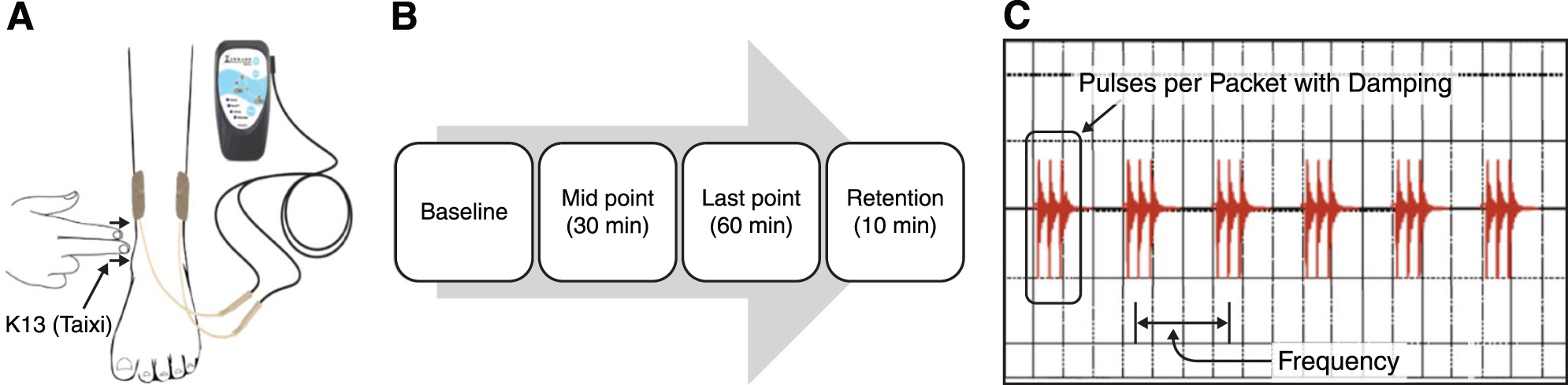
Figure 1 illustrates the study design. Participants visited the outpatient clinic a single time and were asked to receive continuous 60-min therapy with an active E-Stim device (Fig. 1A) using a bioelectric stimulation technology (BEST) microcurrent platform (Tennant Biomodulator; Avazzia Inc, Dallas, Texas). To deliver E-Stim, we placed electrode adhesive pads above the level of the ankle at acupuncture points (KI3, Taixi) of the affected foot as described in the study by Lei et al. [37] Figure 1B illustrates the study time points. Primary and secondary outcomes were measured at baseline (before applying E-Stim), immediately after 30 min (midpoint) and 60 min (endpoint) of therapy, and 10 min after therapy (retention point).
Figure 1. Experimental design and system. A, Electrode adhesive pads were placed above the level of the ankle at acupuncture points (KI3, Taixi) on the affected foot. B, Diagram showing the test timeline (ie, baseline, 30 min, 60 min, and retention). C, Infinity waveform showing an interactive high-voltage alternate current (or biphasic) asymmetrical damped sinusoidal shape that changes with changes in tissue characteristics (eg, skin impedance).
Japma 111 20172 f01
To describe the underlying mechanisms of action for E-Stim adjunctive therapy to accelerate wound healing, particularly in those with poorer skin perfusion, the effectiveness of E-Stim to improve tissue perfusion and SatO2 was tested. The SPP, defined as the minimum blood pressure required for the restoration of capillary flow after applying controlled occlusion [38], was considered the primary outcome. The SPP has been suggested as a strong predictor of wound healing, particularly in those with limb ischemia in a previous meta-analysis [39]. To evaluate SPP changes, we used a Food and Drug Administration (FDA)–approved SensiLase Pad-IQ SPP device (CorVascular Diagnostics LLC, Wayzata, Minnesota). Cuffs were placed around the proximal gastrocnemius muscle to obtain lower-extremity SPP values at each time point. As a secondary outcome, SatO2 was measured given the fact that several studies have emphasized wound oxygen level as a potential parameter for wound-healing acceleration, particularly in patients with chronic wounds [40,41,42,43]. For SatO2, we used a validated noninvasive near-infrared camera (SnapshotNIR; KENT Imaging Inc, Calgary, AB, Canada) that detects an approximate SatO2 level in superficial tissue by tracing the wound perimeter in real-time. To reduce the bias of SatO2 reading in response to E-Stim therapy, each wound was traced in its internal border, leaving out skin layers and using an identical tracing technique for all of the participants at each time point (baseline, 30 min, 60 min, and 10-min retention).

Adjustment of E-Stim Parameters

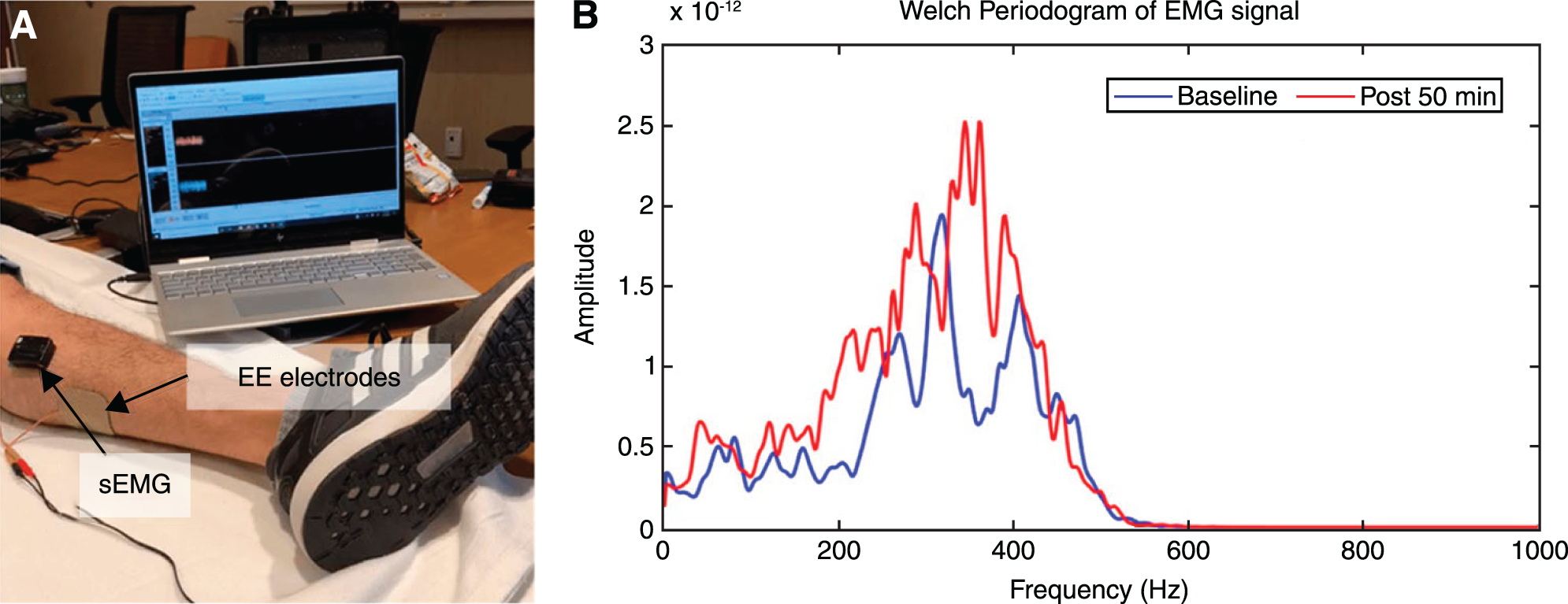
E-Stim current was delivered as described in the study design. BEST generates varieties of E-Stim waveforms as described in the product manual [44]. After reviewing different E-Stim waveforms in a laboratory test, the Infinity mode was selected. This setting consists of an interactive high-voltage pulsed alternative current in the shape of an asymmetrical damped sinusoidal waveform (Fig. 1C). The interactive current means that the waveform's electrical characteristics change relative to tissue response (eg, change in skin impedance in response to E-Stim) until the tissue conductivity stops changing (closed-loop E-Stim). Damping waveform means the magnitude of the sinusoidal waveform gradually reduces to zero to form an asymmetrical biphasic pulsed current. The damping setting used in this waveform can allow muscle relaxation and avoid muscle fatigue during E-Stim application, as confirmed in our laboratory testing using surface electromyography (Fig. 2). Table 1 compares the technical characteristics of the Infinity waveform with other well-established waveforms, including low-voltage direct current, low-voltage alternating current, and high-voltage pulsed direct current [31].
Figure 2. In a laboratory test, muscle fatigue in response to 60 min of electrical stimulation (E-Stim) using the Infinity mode in two volunteers was examined. A, Electrode pads were placed on the proximal and middle gastrocnemius muscle while applying E-Stim at the maximum tolerable intensity. During E-Stim, muscle activation was continuously monitored using surface electromyography (sEMG). B, No noticeable decline in muscle activation energy was observed at 50 min compared with the onset of E-Stim (baseline), suggesting no signs of muscle fatigue. Participants did not self-report any discomfort and/or fatigue during the test.
Japma 111 20172 f02
Table 1. Electrophysical Description of Different Electrical Stimulation Modalities [31,44]
Japma 111 20172 t01
Although the waveform type was fixed for all of the treatments, the voltage magnitude of the device was adapted according to the patient level of tolerance from an intensity setting of 150 V (minimum) to 250 V (maximum). The maximum of current intensity is unknown because it depends on skin conductivity, defined as tissue impedance. Factors affecting tissue impedance may be skin dryness, epidermis thickness, quality of electrode adhesive pads, and other physicochemical characteristics that could vary depending on the individual's health condition, such as neuropathy, vascular disease, or aging [4,45,46]. The level of intensity has been previously FDA-cleared to cause no harm to the patients for transcutaneous electrical nerve stimulation for pain relief. A previous prospective cohort (N = 100) demonstrated the safety and feasibility of this E-stim device for patients with open wounds [47].

Sample Size Justification

The sample size was estimated based on a previous double-blind randomized study in which the effectiveness of 6 weeks of plantar E-Stim therapy was examined in 28 volunteers with diabetic peripheral neuropathy [21]. In this sample population (Cohen effect size, d = 0.99), vascular health was measured by ABI, resulting in significant improvement in patients with an ABI greater than 1.2. The present study assumes a more conservative effect size (d = 0.50). By estimating statistical power of 80%, alpha of 5%, and paired t test, the minimum sample size required to observe change in skin perfusion in response to E-Stim is 34 (38 participants were recruited for this study).

Data Analysis

Statistical analysis was performed with a statistical software program (IBM SPSS Statistics for Windows, Version 26.0; IBM Corp, Armonk, New York) for SPP and SatO2 data for all of the participants. A subanalysis of patients with moderate-to-severe peripheral artery disease (PAD) (ABI < 0.8 or > 1.4 at baseline) [48] was also performed. To assess the normal distribution of SPP and SatO2 data, initially the Shapiro-Wilk test was conducted. Because both SPP and SatO2 data were not normally distributed, generalized estimating equation analysis was used to evaluate the effects of the E-Stim therapy as a function of the test (ie, baseline, 30 min, 60 min, and retention) for SPP and SatO2. Multiple pairwise comparisons were conducted using a least significant difference method. Significance was defined as 2-sided P < .05. Pearson correlation analysis was performed to assess the relationship between baseline and changes at 30 min, 60 min, and retention with respect to baseline for SPP and SatO2.

Results

Demographic Information

Thirty-eight participants (mean ± SD age, 62.8 ± 12.3 years; 63.1% male; mean ± SD body mass index, 30.5 ± 7.1) were included and completed the continuous 60-min therapy followed by a 10-min retention without self-reporting any discomfort. The participants' demographics and the results of clinical measurements are depicted in Table 2. No adverse events related to the E-Stim therapy were reported.
Table 2. Overall Baseline Demographic and Clinical Characteristics of the 38 Study Participants
Japma 111 20172 t02

Changes in SPP and SatO2 in Response to 60 min of E-Stim Therapy

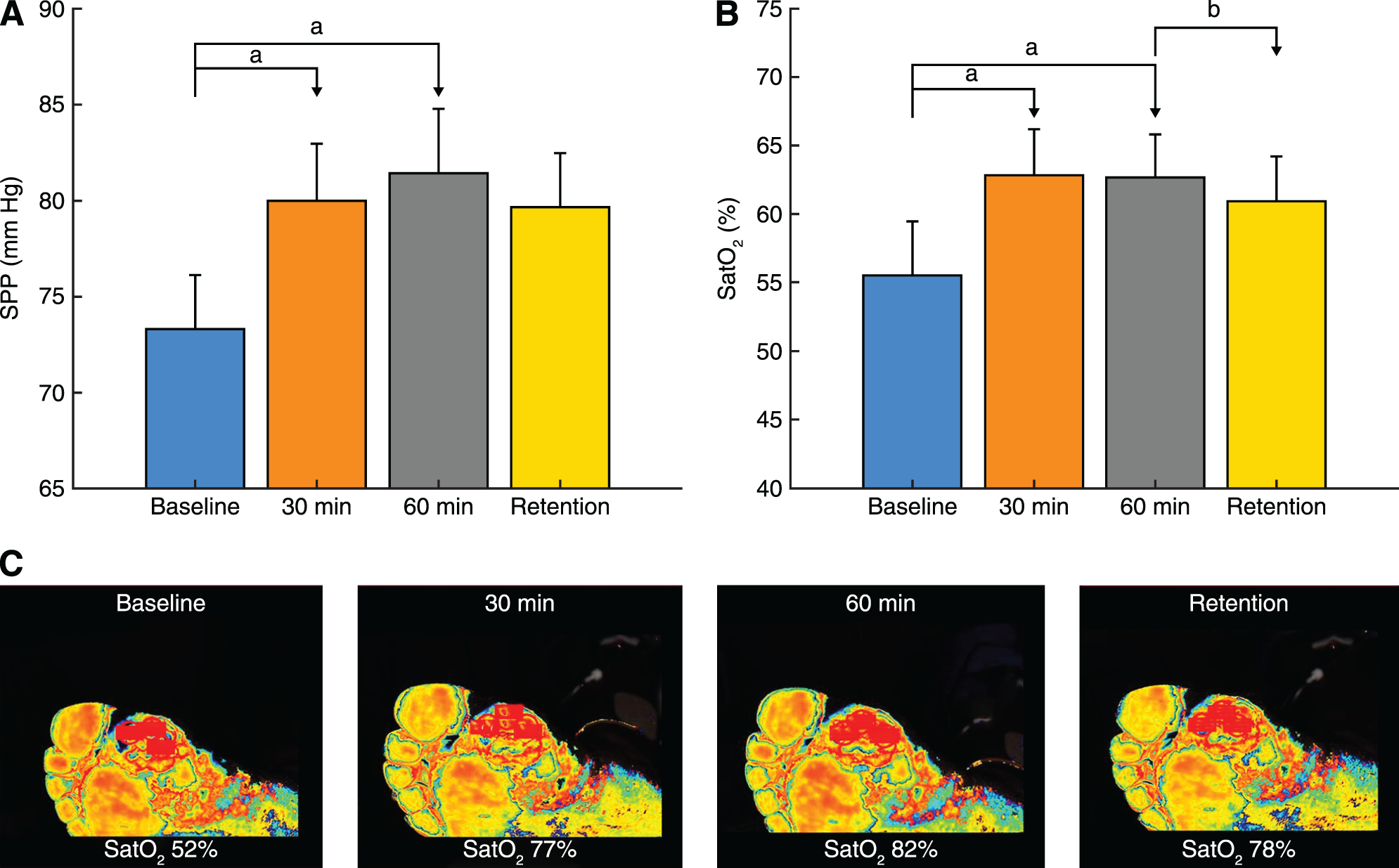
Figure 3 shows the mean and standard error range of SPP (Fig. 3A) and SatO2 (Fig. 3B) values. Figure 3C illustrates the near-infrared images and changes in the magnitude of SatO2 in response to E-Stim in a typical patient. Overall, SPP and SatO2 increased with therapy. Mean ± SD SPP was greater at 30 min (80.0 ± 3.0 mm Hg; P = .04) and 60 min (81.4 ± 3.4 mm Hg; P = .03) than at baseline (73.3 ± 2.8 mm Hg). Although a similar trend was observed for SatO2, the magnitude of change compared with baseline did not achieve a significant level for any time points in this sample (P > .05). However, mean SatO2 was greater at 30 min (73.6% ± 2.7%) than at 60 min (72.7% ± 2.0%; P = .04) and retention (72.1% ± 2.1%; P < .0001) and was greater at 60 min than at retention (P = .03). When including only participants with moderate-to-severe PAD, this subgroup showed a baseline SatO2 below 75% for all of the patients, which increased after 30 min (62.8% ± 3.4%; P = .03) and 60 min (62.7% ± 3.1%; P = .02) compared with baseline (55.5% ± 3.9%). Greater SatO2 was also seen at 60 min versus retention (P = .003) (Fig. 3B).
Figure 3. A, Mean ± SE overall skin perfusion pressure (SPP) before and during therapy shows a significant increase with therapy. B, Mean ± SE tissue oxygen saturation (SatO2) in a subgroup of patients with moderate-to-severe peripheral artery disease before and during therapy shows a significant increase with therapy. C, Percentage of SatO2 before and after therapy in one of the participants. aP < .05. bP < .01.
Japma 111 20172 f03

Relationship Between Change Across Tests and Baseline for SPP and SatO2
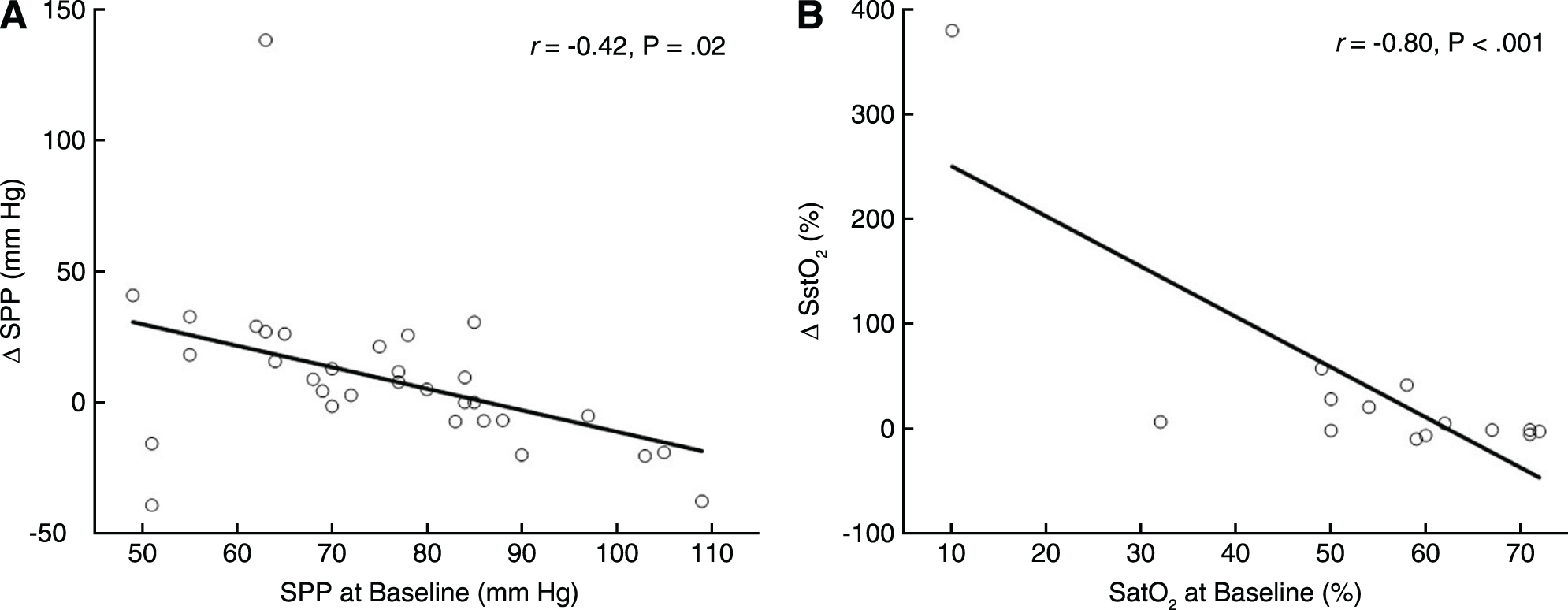
The degree to which participants improved in SPP and SatO2 directly related to the baseline values. The mean initial SPP showed a significant negative correlation with the mean change in SPP between baseline and 30 min (r = –0.45; P = .01), baseline and 60 min (r = –0.42; P = 0.02), and baseline and retention (r = -0.60; P < .001) (Fig. 4A). Similarly, the initial SatO2 showed a significant negative correlation with the mean change in SatO2 between baseline and 30 min (r = –0.69; P < .001), baseline and 60 min (r = –0.70; P < .001), and baseline and retention (r = –0.67; P < .001). When assessing only participants with moderate-to-severe PAD (ie, SatO2 <75% at baseline), the initial SatO2 showed a significant negative correlation with change in SatO2 between baseline and 30 min (r = –0.79; P < .001), baseline and 60 min (r = –0.80; P < 0.001), and baseline and retention (r = –0.79; P < .001) (Fig. 4B).
Figure 4. Relationship between baseline and change in outcome between baseline and the 60-min test. A, Linear relationship was significant between initial skin perfusion pressure (SPP) and mean change in SPP (ΔSPP) in overall patients. B, Linear relationship was significant between initial tissue oxygen saturation (SatO2) and mean change in SatO2 (ΔSatO2) in patients with moderate-to-severe peripheral artery disease.
Japma 111 20172 f04

Discussion

E-Stim for the management of nonhealing pressure ulcers and chronic wounds of the lower extremities was introduced as part of medical coverage starting in the early 2000s [49]. Since then, this adjunctive therapy has been known to have enormous potential to make diabetes treatment more clinically effective and more cost-effective [50]. Today, numerous hypothetical mechanisms of action have been suggested, from cell migration attracted by the polarity of electrical fields [51]. to elevated velocity blood flow that surrounds tissue loss [52]. However, the perfusion mechanism of E-Stim therapy is still undefined in real time, making its use controversial. We aimed to report the changes in tissue perfusion and SatO2, especially in ulcers with marked ischemia (moderate-to-severe PAD), during a 1-hour live session of E-Stim.
The understanding of E-stim for wound healing has been challenged for the lack of well-designed clinical trials. In a recent review including 48 clinical studies (eg, randomized controlled, retrospective, and case series studies) [25], modality of E-Stim, optimal dosing, and timing were provided, but there was no evaluation of acute changes in skin perfusion depending on dosage or modality in real time. This could lead to a complex understanding of wound outcome. In the present study, standard dosages in a simple 1-hour task were delivered through an interactive high-voltage biphasic waveform with amplitudes ranging from 150 to 250 V. This E-stim Infinity mode showed a significant increase in skin perfusion after only 30 min of E-Stim, suggesting that deep and intermittent currents may gradually increase tissue perfusion with time. However, the effect of E-Stim could be washed out after stopping therapy, and thus regular daily application may be required for the effective benefit of wound healing. This might be an accurate approach to anticipate an optimal and standardized E-Stim treatment for chronic ulcers.
Another important topic to explore the characteristics of perfusion improvement is the effect of walking. In claudicants, walking causes favorable changes in the distribution of arterial perfusion and improves endothelial function to the legs [53]. Jungmann et al [54] found an increase in blood flow toward the lower extremity after a walking test. By using magnetic resonance microvascular perfusion, they were able to demonstrate that local blood flow in the foot muscles is redistributed after constant stepping. This suggests that frequency of walking might be beneficial for blood redistribution to the leg; however, direct tissue perfusion has not yet been confirmed [55]. Unlike claudicants, patients with DFUs can barely walk, and when they do, the rate of wound healing worsens [8]. Therefore, today there are no clinical studies that demonstrate the effect of walking on tissue perfusion for patients with chronic wounds 56]. The present study design evaluates direct tissue perfusion throughout a particular time with E-Stim in patients with DFUs, which could provide close physiologic evidence comparable with walking tests. We demonstrated that real-time tissue perfusion significantly improved in response to E-Stim when increasing time of therapy. In addition, after stopping E-Stim, tissue perfusion reduced immediately but still remained 9% higher than at baseline. Moreover, magnitude of improvement negatively correlated baseline SPP with time frequency. These findings suggest that E-Stim can influence the immediate effect of perfusion similar to walking, meaning that frequency is a key factor to improve blood perfusion. In the same way, a recent prospective study (n = 40) demonstrated that long-term E-Stim significantly improves arterial inflow and walking capacity in claudicants with diabetes [57], suggesting that prolonged E-Stim may have similar effects as frequent walking in patients with DFUs. Nonetheless, a long-term follow-up study is needed to confirm the correlation between frequency of E-Stim and walking to improve wound healing.
A similar pilot study evaluated the effect of E-Stim on skin perfusion in 132 patients with diabetes [50]. Of the entire cohort, only 27% showed an increase in transcutaneous oxygen levels. This percentage of responders had high-risk wound-healing problems (eg, elderly, greater neuropathy, toe blood pressure >70 mm Hg, high glucose levels), suggesting that E-stim might be more beneficial to increase cutaneous blood flow in patients at high risk for morbi-mortality. In the present study, we performed a subanalysis of patients with moderate-to-severe PAD (ie, ABI < 0.8 or > 1.4 and SatO2 <75%) (n = 16). Age and neuropathy were also higher (20% [P = .18] and 3.1% [P = .9], respectively) compared with the remainder of the cohort. After 30 and 60 min of treatment, tissue perfusion showed a significant improvement compared with baseline (SatO2, 13.1% [P = .03] and 12.9% [P = .02], respectively). Likewise, a significant reduction was noted after stopping therapy for 10 min, but the level was still higher compared with baseline (P = .003) (Fig. 3B). Magnitude of improvement was negatively correlated with baseline SatO2 after 60 min of E-Stim (P < .001) (Fig. 3B), suggesting that patients with lower blood perfusion could benefit more from E-stim therapy.
It is also important to note the placement sites of electrical pads. Sun [58] tested five different models of electrode placement for E-Stim in a chronic wound simulation model. It seems that different electrode configurations resulted in diverse magnitudes and distributions of the current. According to the author, the polarity of electrodes is crucial for the optimal arrangement of therapy, placing one positive electrode in the intact skin and another one covering the wounded area. However, electrodes were related to DC, where polarity does not change. The E-stim used in the present study was AC (biphasic), where polarity does change; thus, placement of electrodes around the wound is not necessarily needed. Moreover, we also considered that electrical pads might not be practical to be placed around and/or over the wound because the margins are usually undermined or macerated, the surrounding skin is often calloused, or the edges can be infected [59]. Besides, DFUs are a result of a series of vascular pathologies [60], and a specific site of disease is not reflecting the origin of the lesion. Indeed, below-the-knee reperfusion (eg, anterior or posterior tibial arteries) has been shown to improve microcirculation and wound healing of the dorsal and plantar foot regardless of the site of the lesion [61], Therefore, the present study had a positive outcome when placing pads above the ankle level, supporting that the proximal anatomical site of perfusion might be an important factor for wound healing. To our knowledge, this is the first study evaluating wound perfusion by E-Stim with electrodes placed above the level of the ankle. Differences in electrode pad colocation were not evaluated in this study, and further studies are needed to support this statement.
The concept of E-Stim for DFUs has also been explored in patients with sensory neuropathy [62]. Although this noninvasive route has been proved to increase microvessel density and tissue perfusion [63], it might also play an important role in the neuropathic pathway [64]. Forst et al [65] prospectively investigated neurovascular function in diabetic patients (n = 57) under E-Stim therapy and found that diminished neurovascular response is independent of vascular alterations in diabetes mellitus. In the present cohort, 48% of patients had peripheral neuropathy and 50% reported an increase in sensation at the end of the 1-hour session. The increase in foot sensation might be associated with neuropathic changes while being exposed to electrical fields. However, an objective sensitive (VPT) comparison in longer follow-up is needed to confirm this statement.
The assessment of SatO2 has been increasing recently. A recent study demonstrated an increase in muscle blood volume and deoxygenated hemoglobin concentration with the use of E-Stim by assessing SatO2 in the lower extremities of healthy individiuals [66]. Other authors have associated SatO2 measurement as a foot ulcer predictor in patients with diabetes [67]. However, to our knowledge, this is the first study examining the potential benefit of E-Stim by assessing SatO2 in patients with diabetes. This method of assessment showed promising results as an innovative measurement tool for limb severe ischemia. In the same way, previous studies have suggested that increasing SatO2 has been linked to the improved wound healing [68]. Therefore, the present study suggests that E-Stim may improve tissue perfusion and SatO2, both known to be beneficial for wound healing [69].

Limitations

This is the first part of a larger ongoing study. The present population sample size was 38 patients. Parameters such as ABI and VPT were not able to be collected from the complete cohort owing to the high levels of vessel calcification and peripheral neuropathy. A larger sample is needed to confirm the effect of direct tissue perfusion in patients with DFUs. This series was not designed to predict speed of wound healing. However, the findings from this study might correlate with healing rates. Future long-term studies are warranted to confirm this statement.

Conclusions

This study provides early results on the feasibility and effectiveness of this type of E-Stim therapy to improve skin perfusion in patients with DFUs. The evidence of tissue perfusion effect with E-Stim in patients with DFUs was demonstrated in real-time. E-Stim therapy significantly increases direct tissue perfusion in patients with DFUs and might be even more beneficial in patients with moderate-to-severe PAD or poor skin perfusion. A long-term follow-up study of daily E-Stim use is needed to confirm the effectiveness of size reduction of nonhealing wounds in patients with diabetes.

Acknowledgments

Naima Rodriguez, Hector Elizondo, Anmol Momin, and Sogol Golafshan for assisting with data collection and coordination of this research study between involved key investigators.

Financial Disclosure

This study was supported in part by a grant from Avazzia Inc (Dallas, Texas).

Conflicts of Interest

None reported.

References

  1. MillerJDNajafiBArmstrongDG:Current standards and advances in diabetic ulcer prevention and elderly fall prevention using wearable technology. Curr Geriatr Rep4: 249, 2015.
  2. ArmstrongDGSwerdlowMAArmstrongAA: Five year mortality and direct costs of care for people with diabetic foot complications are comparable to cancer. J Foot Ankle Res13: 16, 2020.
  3. LazzariniPACrewsRTvan NettenJJ: Measuring plantar tissue stress in people with diabetic peripheral neuropathy: a critical concept in diabetic foot management. J Diabetes Sci Technol13: 869, 2019.
  4. WrobelJSNajafiB:Diabetic foot biomechanics and gait dysfunction. J Diabetes Sci Technol4: 833, 2010.
  5. ArmstrongDGBoultonAJMBusSA:Diabetic foot ulcers and their recurrence. N Engl J Med376: 2367, 2017.
  6. LazarusGKnightonDRMargolisD: Definitions and guidelines for assessment of wound and evaluation of healing. Arch Dermatol130: 489, 1994.
  7. ApelqvistJBakkerKvan HoutumWH: Practical guidelines on the management and prevention of the diabetic foot: based upon the International Consensus on the Diabetic Foot (2007) prepared by the International Working Group on the Diabetic Foot. Diabetes Metab Res Rev24(suppl 1): S181, 2008.
  8. NajafiBReevesNDArmstrongDG:Leveraging smart technologies to improve the management of diabetic foot ulcers and extend ulcer-free days in remission. Diabetes Metab Res Rev36(suppl 1): e3239, 2020.
  9. GolledgeJFernandoMLazzariniP: The potential role of sensors, wearables and telehealth in the remote management of diabetes-related foot disease. Sensors (Basel)20: 4527, 2020.
  10. ParksVEBanksJJohnsonL: 601-P: a meta-analysis of clinical effectiveness of amnion tissue products in the management of diabetic foot ulcers. Diabetes69(suppl 1): 601– P, 2020.
  11. TecilazichFDinhTLVevesA:Emerging drugs for the treatment of diabetic ulcers. Expert Opin Emerg Drugs18: 207, 2013.
  12. MargolisDJKantorJBerlinJA:Healing of diabetic neuropathic foot ulcers receiving standard treatment: a meta-analysis. Diabetes Care22: 692, 1999.
  13. KlothLC:Electrical stimulation technologies for wound healing. Adv Wound Care3: 81, 2014.
  14. ThakralGLa FontaineJKimP: Treatment options for venous leg ulcers: effectiveness of vascular surgery, bioengineered tissue, and electrical stimulation. Adv Skin Wound Care28: 164, 2015.
  15. ThakralGLafontaineJNajafiB: Electrical stimulation to accelerate wound healing. Diabet Foot Ankle(Sep): 4, 2013.
  16. IsseroffRRDahleSE:Electrical stimulation therapy and wound healing: where are we now?Adv Wound Care1: 238, 2012.
  17. GoldmanRRosenMBrewleyB: Electrotherapy promotes healing and microcirculation of infrapopliteal ischemic wounds: a prospective pilot study. Adv Skin Wound Care17: 284, 2004.
  18. PetersEJArmstrongDGWunderlichRP: The benefit of electrical stimulation to enhance perfusion in persons with diabetes mellitus. J Foot Ankle Surg37: 396, 1998.
  19. SchreuderSMNieuwdorpMKoelemayMJW: Testing the sympathetic nervous system of the foot has a high predictive value for early amputation in patients with diabetes with a neuroischemic ulcer. BMJ Open Diabetes Res Care6: e000592, 2018.
  20. ThakralGKimPJLaFontaineJ: Electrical stimulation as an adjunctive treatment of painful and sensory diabetic neuropathy. J Diabetes Sci Technol7: 1202, 2013.
  21. NajafiBTalalTKGrewalGS: Using plantar electrical stimulation to improve postural balance and plantar sensation among patients with diabetic peripheral neuropathy: a randomized double blinded study. J Diabetes Sci Technol11: 693, 2017.
  22. BaiHMcCaigCDForresterJV: DC electric fields induce distinct preangiogenic responses in microvascular and macrovascular cells. Arterioscler Thromb Vasc Biol24: 1234, 2004.
  23. RouabhiaMParkHMengS: Electrical stimulation promotes wound healing by enhancing dermal fibroblast activity and promoting myofibroblast transdifferentiation. PLoS One8: e71660, 2013.
  24. ReidBZhaoM:The electrical response to injury: molecular mechanisms and wound healing. Adv Wound Care (New Rochelle)3: 184, 2014.
  25. Ud-DinSBayatA:Electrical stimulation and cutaneous wound healing: a review of clinical evidence. Healthcare (Basel)2: 445, 2014.
  26. KannoSOdaNAbeM: Establishment of a simple and practical procedure applicable to therapeutic angiogenesis. Circulation99: 2682, 1999.
  27. KlothLC:Electrical stimulation for wound healing: a review of evidence from in vitro studies, animal experiments, and clinical trials. Int J Low Extrem Wounds4: 23, 2005.
  28. MohrTAkersTKWessmanHC:Effect of high voltage stimulation on blood flow in the rat hind limb. Phys Ther67: 526, 1987.
  29. KjartanssonJLundebergTSamuelsonUE: Calcitonin gene-related peptide (CGRP) and transcutaneous electrical nerve stimulation (TENS) increase cutaneous blood flow in a musculocutanous flat in the rat. Acta Physiol Scand134: 89, 1988.
  30. KwanRLCheingGLVongSK: Electrophysical therapy for managing diabetic foot ulcers: a systematic review. Int Wound J10: 121, 2013.
  31. BADER DL, BOUTEN C, COLIN D, et al, eds: Pressure Ulcer Research: Current and Future Perspectives, 1st Ed, Springer-Verlag, Berlin, 2005
  32. MaffeiLPremrouVRoldanP: Vibration perception threshold in the screening of sensorimotor distal symmetric polyneuropathy: the need of more accurate age-specific reference values. J Diabetes Sci Technol8: 621, 2014.
  33. YardleyLBeyerNHauerK: Development and initial validation of the Falls Efficacy Scale-International (FES-I). Age Ageing34: 614, 2005.
  34. RadloffLS:The CES-D Scale: a self-report depression Scale for research in the general population. Appl Psychol Meas1: 385, 1977.
  35. NasreddineZSPhillipsNABedirianV: The Montreal Cognitive Assessment, MoCA: a brief screening tool for mild cognitive impairment. J Am Geriatr Soc53: 695, 2005.
  36. BuysseDJReynoldsCFMonkTH: The Pittsburgh Sleep Quality Index a new instrument for phsychiatric practice and research. Psychiatry Res28: 193, 1989.
  37. LeiHToosizadehNSchwenkM: A pilot clinical trial to objectively assess the efficacy of electroacupuncture on gait in patients with parkinson's disease using body worn sensors. PLoS One11: e0155613, 2016.
  38. PanXChenGWuP: Skin perfusion pressure as a predictor of ischemic wound healing potential. Biomed Rep8: 330, 2018.
  39. PanXYouCChenG: Skin perfusion pressure for the prediction of wound healing in critical limb ischemia: a meta-analysis. Arch Med Sci14: 481, 2018.
  40. SenCK:Wound healing essentials: let there be oxygen. Wound Repair Regen17: 1, 2009.
  41. DriverVRReyzelmanAKawalecJ: A prospective, randomized, blinded, controlled trial comparing transdermal continuous oxygen delivery to moist wound therapy for the treatment of diabetic foot ulcers. Ostomy Wound Manage63: 12, 2017.
  42. NiederauerMQMichalekJELiuQ: Continuous diffusion of oxygen improves diabetic foot ulcer healing when compared with a placebo control: a randomised, double-blind, multicentre study. J Wound Care27(suppl 9): S30, 2018.
  43. NiederauerMQMichalekJEArmstrongDG:A prospective, randomized, double-blind multicenter study comparing continuous diffusion of oxygen therapy to sham therapy in the treatment of diabetic foot ulcers. J Diabetes Sci Technol11: 883, 2017.
  44. Senergy Medical Group LLC: Tennant Biomodulator-Pro Owner's Manual, Senergy Medical Group LLC, Irving, TX, 2017.
  45. NevilleCNguyenHRossK: Lower-limb factors associated with balance and falls in older adults: a systematic review and clinical synthesis. JAPMA 110: Article_4,2020.
  46. CambraiMClarEJGrosshansE: Skin impedance and phoreographic index in psoriasis: relationship with action kinetics of three treatments. Arch Dermatol Res264: 197, 1979.
  47. NairHKR:Microcurrent as an adjunct therapy to accelerate chronic wound healing and reduce patient pain. J Wound Care27: 296, 2018.
  48. Stanford Medicine: Measuring and understanding the ankle brachial index (ABI).Available at: https://stanfordmedicine25.stanford.edu/the25/ankle-brachial-index.html. Accessed July 17,2020.
  49. CMS.gov. National coverage determination (NCD) for electrical stimulation for the treatment of wounds (35-102).Available at: https://www.cms.gov/medicare-coverage-database/view/ncd.aspx?NCDId=131&ncdver=2&SearchType=Advanced&CoverageSelection=Both&NCSelection=NCA%7CCAL%7CNCD%7CMEDCAC%7CTA%7CMCD&ArticleType=SAD%7CEd&PolicyType=Both&s=-&AdvSearchName=5&KeyWord=wound&KeyWordLookUp=Doc&KeyWordSearchType=And&kq=true&bc=IAAAADgAAQAA&.
  50. GilcreastDMStottsNAFroelicherES: Effect of electrical stimulation on foot skin perfusion in persons with or at risk for diabetic foot ulcers. Wound Rep Reg6: 434, 1998.
  51. ZhaoM:Electrical fields in wound healing-an overriding signal that directs cell migration. Semin Cell Dev Biol20: 674, 2009.
  52. AshrafiMAlonso-RasgadoTBaguneidM: The efficacy of electrical stimulation in lower extremity cutaneous wound healing: a systematic review. Exp Dermatol26: 171, 2017.
  53. HaasTLLloydPGYangH-T: Exercise training and peripheral arterial disease. Compr Physiol2: 2933, 2012.
  54. JungmannPMPfirrmannCFederauC:Characterization of lower limb muscle activation patterns during walking and running with Intravoxel Incoherent Motion (IVIM) MR perfusion imaging. Magn Reson Imag63: 12, 2019.
  55. WhitneyJDParkmanS:The effect of early postoperative physical activity on tissue oxygen and wound healing. Biol Res Nurs6: 79, 2004.
  56. RODRIGUEZ HE, PEARCE WH, YAO JST: Modern Trends in Vascular Surgery: The Ischemic Extremity: New Findings and Treatment, 1st Ed, People’s Medical Publishing House–USA, Shelton, CT, 2010
  57. EllulCFormosaCGattA: The effectiveness of calf muscle electrostimulation on vascular perfusion and walking capacity in patients living with type 2 diabetes mellitus and peripheral artery disease. Int J Low Extrem Wounds16: 122, 2017.
  58. SunY-S:Electrical stimulation for wound-healing: simulation on the effect of electrode configurations. Biomed Res Int2017: 5289041, 2017.
  59. McGuireJed: Diabetic neuropathic foot ulcers. Wound Source Web site. Available at: https://www.woundsource.com/patientcondition/diabetic-foot-ulcers-neuropathic. Accessed July 17,2020.
  60. AminNDoupisJ:Diabetic foot disease: From the evaluation of the “foot at risk” to the novel diabetic ulcer treatment modalities. World J Diabetes7: 153, 2016.
  61. KawaradaOYasudaSNishimuraK: Effect of single tibial artery revascularization on microcirculation in the setting of critical limb ischemia. Circ Cardiovasc Interv7: 684, 2014.
  62. PetersEJLaveryLAArmstrongDG: Electric stimulation as an adjunct to heal diabetic foot ulcers: a randomized clinical trial. Arch Phys Med Rehabil82: 721, 2001.
  63. CloverAJMcCarthyMJHodgkinsonK: Noninvasive augmentation of microvessel number in patients with peripheral vascular disease. J Vasc Surg38: 1309, 2003.
  64. SongBZhaoMForresterJ: Nerve regeneration and wound healing are stimulated and directed by an endogenous electrical field in vivo. J Cell Sci117: 4681, 2004.
  65. ForstTPfutznerABauersachsR: Comparison of the microvascular response to transcutaneous electrical nerve stimulation and postocclusive ischemia in the diabetic foot. J Diabetes Complications11: 291, 1997.
  66. ZhangQStyfJEkstromL: Effects of electrical nerve stimulation on force generation, oxygenation and blood volume in muscles of the immobilized human leg. Scand J Clin Lab Invest74: 369, 2014.
  67. LeeSMeyLSzymanskaAF: SFDI biomarkers provide a quantitative ulcer risk metric and can be used to predict diabetic foot ulcer onset. J Diabetes Complications34: 107624, 2020.
  68. ERCENGIZ A, MUTLUOGLU M: Hyperbaric Transcutaneous Oximetry, StatPearls Publishing, Treasure Island, FL, 2020
  69. WhitneyJD:The influence of tissue oxygen and perfusion on wound healing. AACN Clin Issues Crit Care Nurs1: 578, 1990.