Missed fractures account for 80% of emergency department diagnostic errors and are one of the most common reasons for malpractice lawsuits [
1,
2]. Most missed fractures occur in the extremities, with the highest rate (7.6%) occurring in the foot [
3]. Specifically, Lisfranc fractures are rare but notoriously difficult to diagnose. The Lisfranc joint refers to the tarsometatarsal articulations. Briefly, the first through third metatarsal bases articulate with the medial, middle, and lateral cuneiforms, and the fourth and fifth metatarsal bases articulate with the cuboid [
4,
5,
6]. The Lisfranc ligament connects the medial cuneiform to the second metatarsal base and is the primary stabilizer of the Lisfranc joint [
4,
5,
6]. Lisfranc fractures represent 0.1% to 0.9% of all fractures, yet up to 33% are missed on the initial diagnosis [
3,
4,
5,
6]. Unfortunately, patients who are misdiagnosed or inadequately treated may suffer from severe posttraumatic osteoarthritis and foot deformities; thus, it is paramount that Lisfranc fractures are diagnosed accurately [
4].
The advent of magnetic resonance imaging (MRI) has improved diagnostic detection of occult and subtle fractures and offers the distinct advantage of directly evaluating bone marrow edema [
6,
7,
8]. The typical appearance of posttraumatic bone marrow edema is best seen on fluid-sensitive sequences and demonstrates an ill-defined zone of increased signal [
7,
8,
9,
10]. The MRI appearance of bone marrow edema is consistent despite its widespread differential diagnoses, and is typically homogenous with poorly defined margins and no respect for anatomical boundaries [
9,
10]. Useful MRI sequences include T1 (hypointense or intermediate signal), T2 (high signal), short-tau inversion recovery (high signal), fat-suppressed (high signal), and contrast-enhanced imaging (high signal) [
9,
10]. This feature often helps determine the mechanism of the underlying trauma and affects prognosis, treatment, and prevention of more serious sequelae. However, the incidence of bone marrow edema in acute trauma is variable, ranging from 27% to 72% [
7,
8,
11]. This raises the question of whether we can confidently rely on bone marrow edema for accurate diagnosis of fractures.
Previous studies have shown that there are numerous pathophysiologic processes that can affect bone marrow edema manifestation. One such example is pregnancy and the transient bone marrow edema phenomenon. Transient bone marrow edema syndrome typically affects women in the third trimester of pregnancy and middle-aged men, and is characterized by self-limited extremity pain of unknown etiology, affecting the hips, knees, ankles, and foot, in order of decreasing frequency [
12,
13,
14]. There is bone marrow edema on MRI corresponding to these classic areas of pain [
13]. However, the exact etiology and mechanism of this process is unknown.
Even less is known about preeclampsia, a potentially life-threatening pregnancy-related complication where the normal hemodynamic adaptations of pregnancy go awry [
15,
16]. The diagnostic criteria for preeclampsia includes de novo maternal hypertension (>140/90 mm Hg) and proteinuria (0.3 g/24 hours), with severe preeclampsia denoting additional multiorgan involvement [
15,
16,
17]. However, the exact etiology of preeclampsia is unknown. Furthermore, no reports have clearly elucidated how preeclampsia affects bone marrow edema.
Case Report
A 30-year-old woman at 35 weeks gestation presented to an outside emergency department after a fall where she twisted her ankle and had difficulty ambulating. Radiographs were obtained and the patient was diagnosed with a left ankle fracture. She was discharged after immobilization of the fracture and instructed to return for monitoring.
She presented to the University of Massachusetts Memorial Medical Center the following day. At admission, her blood pressure was 159/98 mm Hg and creatinine value was 1.48 mg/dL (elevated from her baseline of 1.36 mg/dL), but vital signs and laboratory values were otherwise normal. Physical examination was notable for dorsal foot swelling, point tenderness at the first through fourth metatarsal bases, and limited motion of the extensor hallucis longus and flexor hallucis longus, but there was no neurovascular compromise.
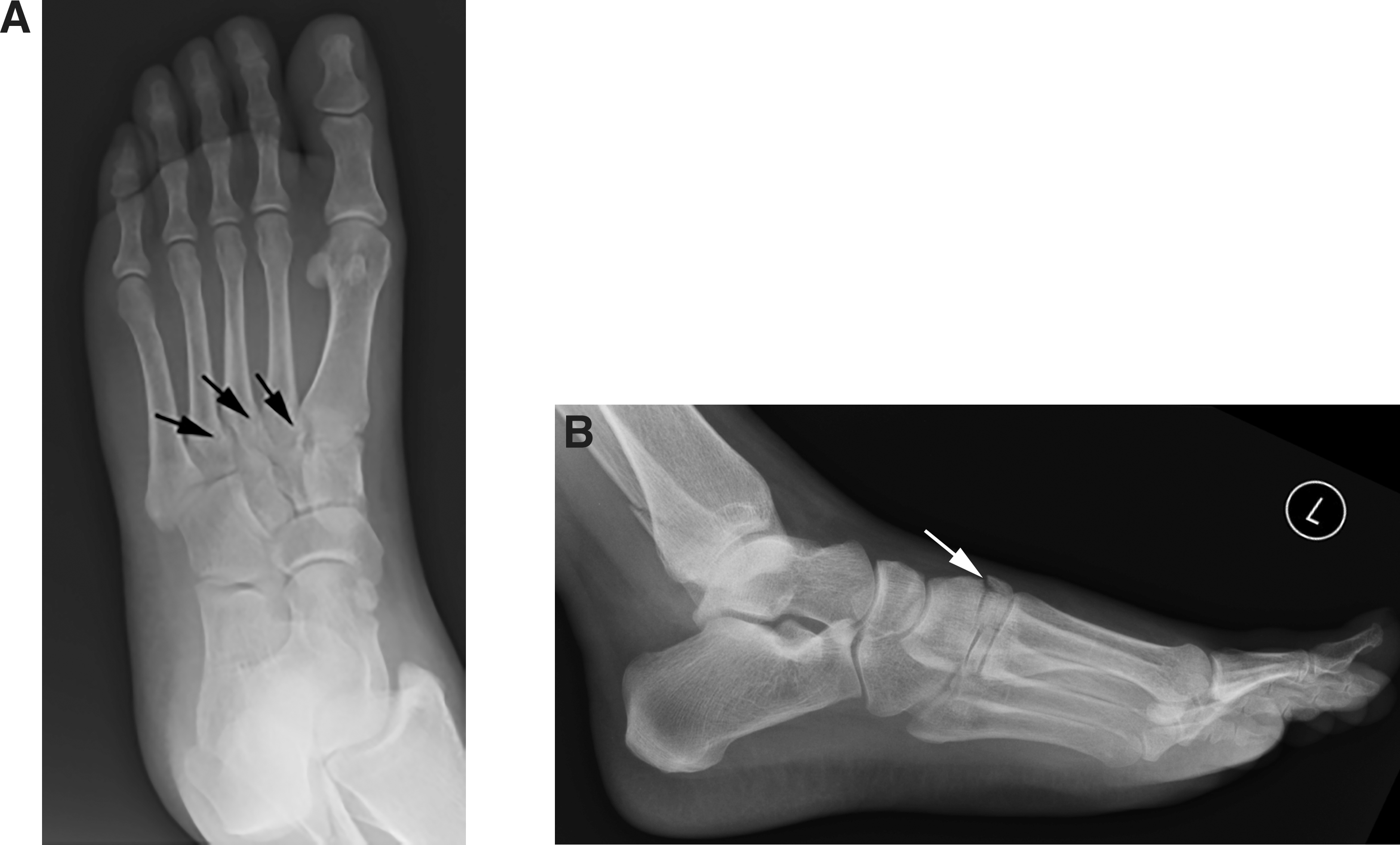
New radiographs demonstrated the known Weber type B left fibula fracture and additional second through fourth metatarsal base fractures without widening of the Lisfranc interval or subluxation at the tarsometatarsal joints on nonweightbearing views (
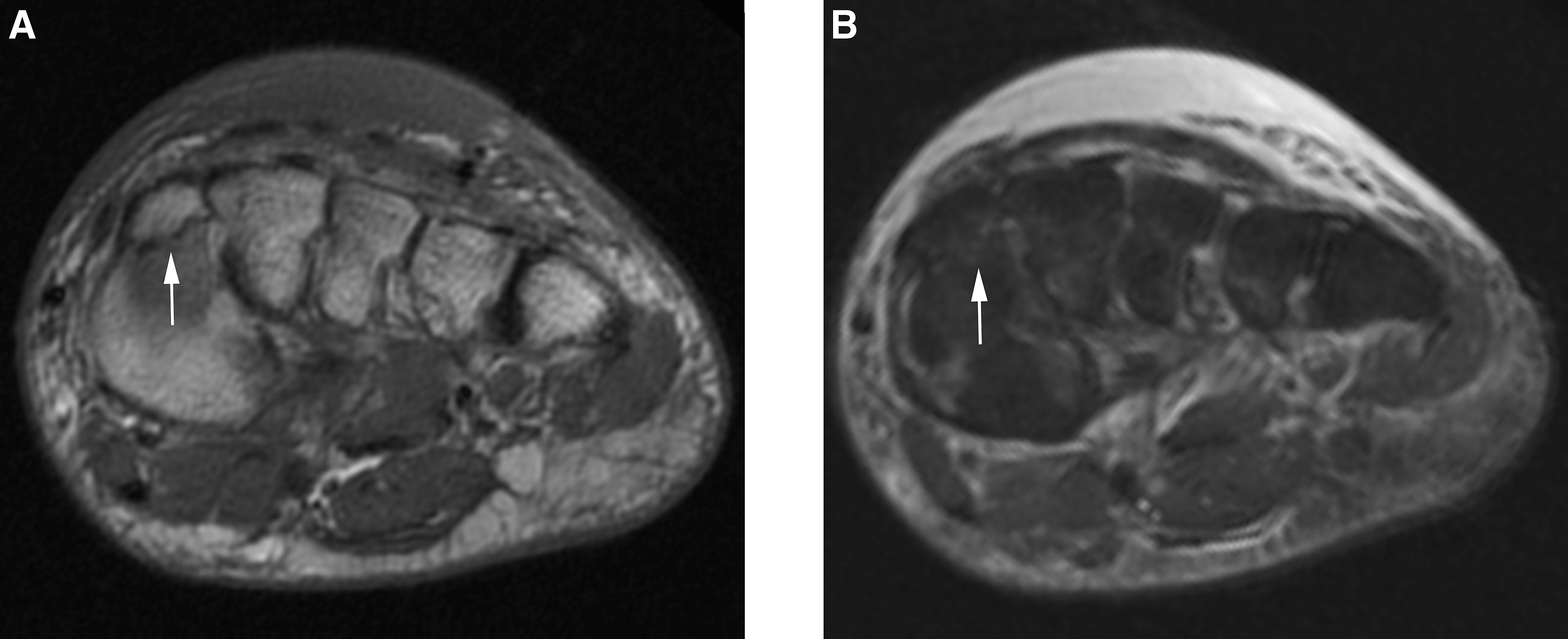
Fig. 1). Because of her pregnancy, MRI was performed to evaluate the findings highly suspicious for Lisfranc injury. Magnetic resonance imaging confirmed the mildly displaced fracture of the medial cuneiform at the dorsal Lisfranc ligament attachment (
Fig. 2) and nondisplaced fracture of the second metatarsal base at the interosseous Lisfranc ligament attachment (
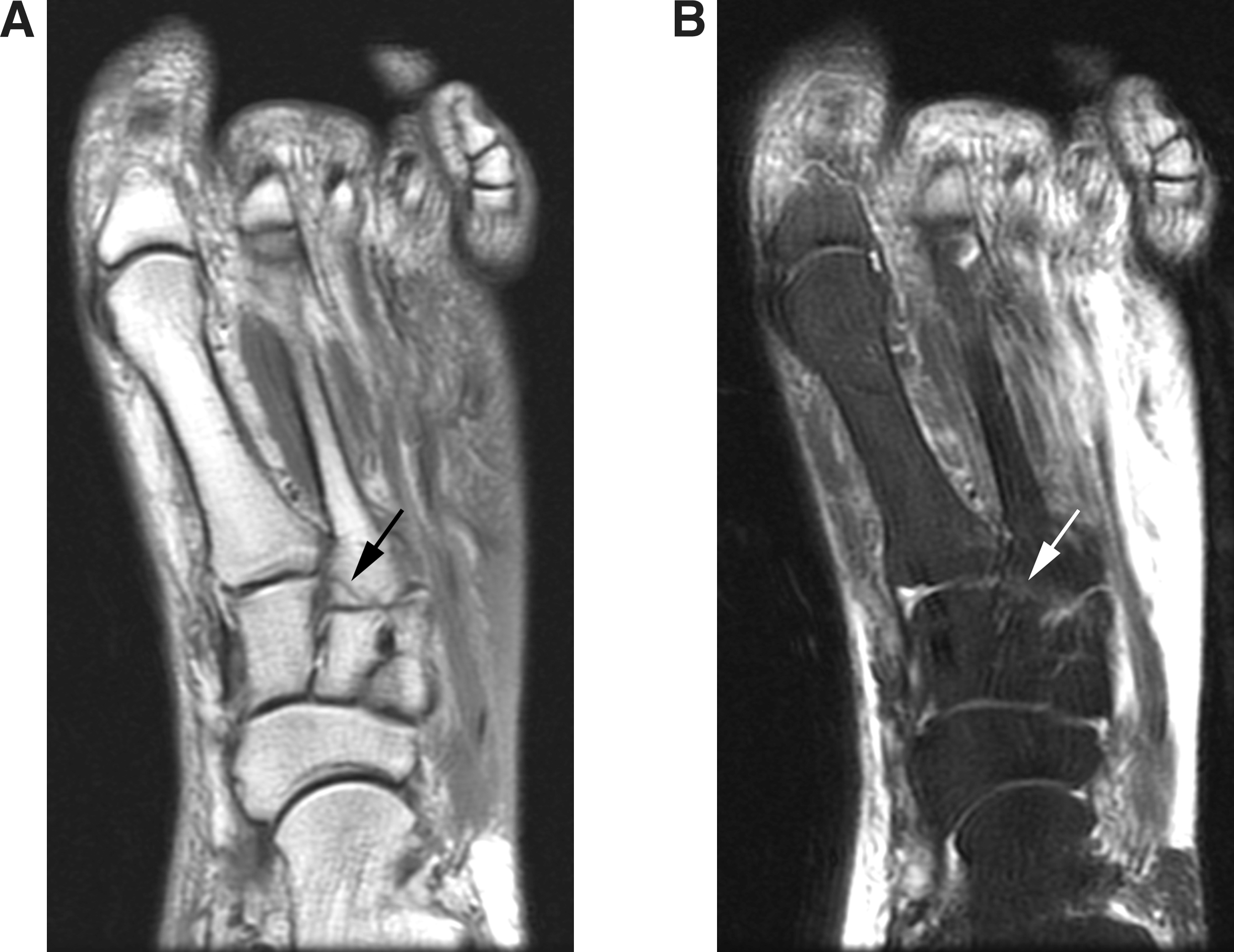
Fig. 3). Nondisplaced fractures of the first, third, and fourth metatarsal bases were also identified. Despite the acuity of the injury, there was minimal associated bone marrow edema. Further evaluation with computed tomography (CT) or nuclear medicine bone scan studies was deferred to limit additional radiation during pregnancy.
Figure 1.
(A) Frontal radiograph of the left foot demonstrates oblique intraarticular fractures of the second, third, and fourth metatarsal bases (arrows). (B) Lateral radiograph of the left foot demonstrates a mild dorsally displaced intraarticular fracture of the medial cuneiform (arrow).
Figure 1.
(A) Frontal radiograph of the left foot demonstrates oblique intraarticular fractures of the second, third, and fourth metatarsal bases (arrows). (B) Lateral radiograph of the left foot demonstrates a mild dorsally displaced intraarticular fracture of the medial cuneiform (arrow).
Figure 2.
Axial (A) T1 and (B) proton density fat-saturated MRI images of the left foot at the level of the first metatarsal demonstrates a fracture (arrows) at the dorsal aspect of the medial cuneiform, at the insertion of the dorsal ligament of the Lisfranc ligament complex. Notice that there is no associated bone marrow edema.
Figure 2.
Axial (A) T1 and (B) proton density fat-saturated MRI images of the left foot at the level of the first metatarsal demonstrates a fracture (arrows) at the dorsal aspect of the medial cuneiform, at the insertion of the dorsal ligament of the Lisfranc ligament complex. Notice that there is no associated bone marrow edema.
Figure 3.
Coronal (A) T1 and (B) proton density fat-saturated MRI images of the left foot demonstrates a nondisplaced fracture (arrows) at the medial aspect of the second metatarsal base, at the insertion of the interosseous ligament of the Lisfranc ligament complex. Notice that there is no associated bone marrow edema.
Figure 3.
Coronal (A) T1 and (B) proton density fat-saturated MRI images of the left foot demonstrates a nondisplaced fracture (arrows) at the medial aspect of the second metatarsal base, at the insertion of the interosseous ligament of the Lisfranc ligament complex. Notice that there is no associated bone marrow edema.
Concurrently, she was monitored for preeclampsia during the hospitalization because of her increased risk from chronic hypertension and end-stage renal disease from membranous glomerulonephritis following renal transplantation. In the setting of worsening disease and progression to preeclampsia with severe features (elevated creatinine value reaching a high of 1.77 mg/dL and elevated blood pressure reaching a high of 179/98 mm Hg), she underwent induction of labor with improvement of disease after an uncomplicated delivery.
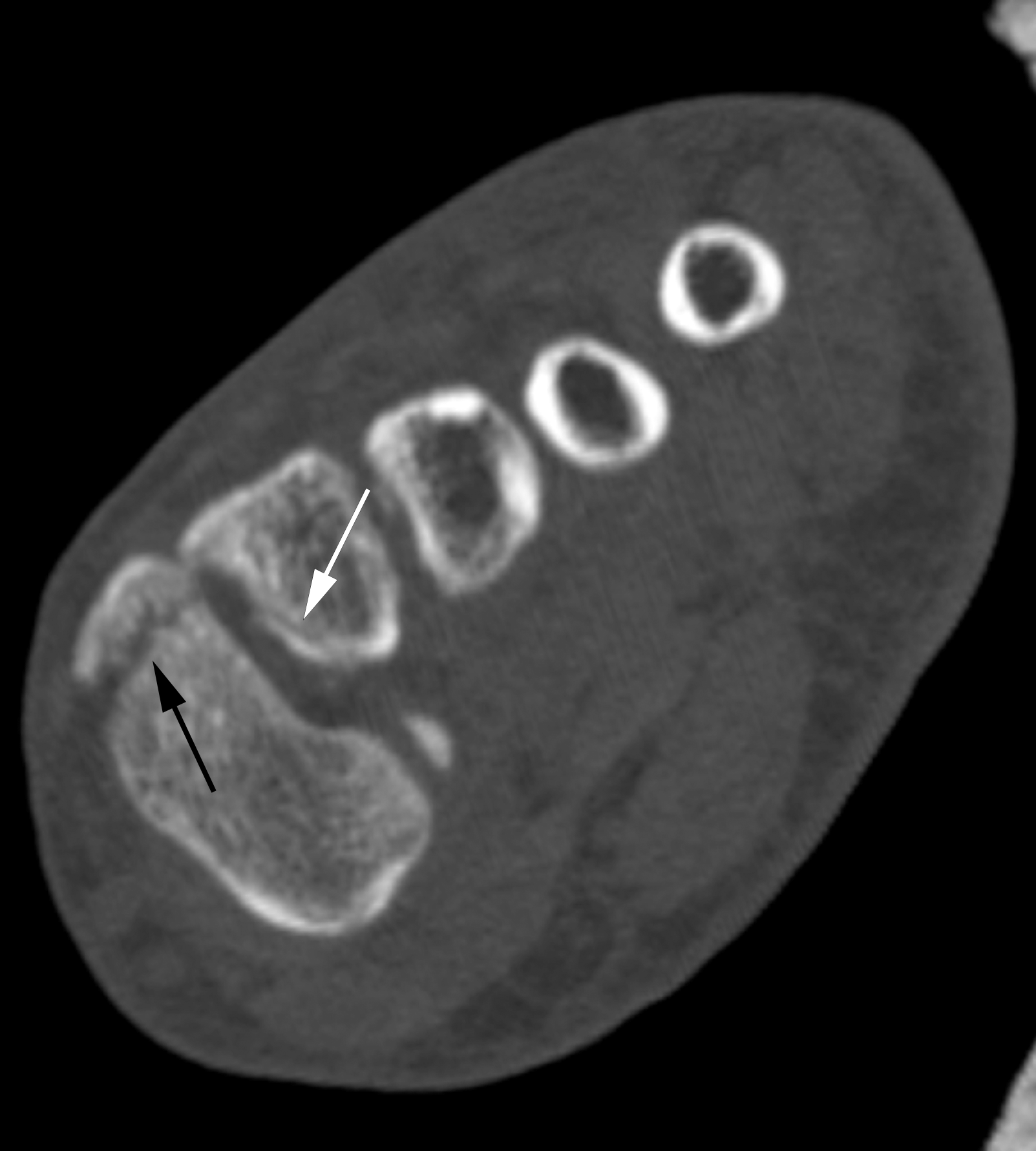
Before discharge, CT was ordered, which confirmed the fractures seen on MRI (
Fig. 4). Follow-up radiographs in subsequent weeks confirmed healing in anatomical alignment, and the decision was made to pursue nonsurgical management.
Figure 4.
Axial CT image of the left foot at the level of the tarsometatarsal joints demonstrates a minimally dorsally displaced fracture of the medial cuneiform (black arrow) and nondisplaced fracture at the medial aspect of the second metatarsal base.
Figure 4.
Axial CT image of the left foot at the level of the tarsometatarsal joints demonstrates a minimally dorsally displaced fracture of the medial cuneiform (black arrow) and nondisplaced fracture at the medial aspect of the second metatarsal base.
Discussion
We presented a subtle case of Lisfranc fracture in a pregnant patient with preeclampsia, whose MRI scans demonstrated minimal posttraumatic bone marrow edema. To our knowledge, there are some reported cases of variability in the presence or degree of bone marrow edema in the posttraumatic setting with proven acute fracture [
7,
8,
11], and we propose that certain circumstances may affect the reliable manifestation of bone marrow edema.
Although Lisfranc injuries are often challenging to diagnose and frequently missed on radiographs, MRI with its superior detection of soft-tissue and bone marrow abnormalities can often be helpful [
6,
18]. Posttraumatic bone marrow edema is thought to precede clinically apparent fracture and can serve as a telling clue for detecting areas of abnormality when radiographic and CT imaging fail to reveal an obvious fracture line [
4,
5,
6,
18]. The location and distribution of bone marrow edema can provide clues about the etiology and mechanism of injury [
7,
8,
10,
19]. For Lisfranc fractures, depending on the direction of dislocation (homolateral, divergent, or isolated), patterns of bone marrow edema may vary [
4]. However, our case demonstrates that fracture and bone marrow edema do not necessarily coexist.
Bone marrow edema is thought to be caused by increased bone marrow water content from capillary leakage, hyperemia, and impaired marrow venous drainage [
10,
20,
21]. Pregnancy is well known to be associated with significant physiologic and hemodynamic changes, including increased cardiac output, increased vascular volume, and decreased vascular resistance through systemic vasodilation and vascular remodeling [
15,
16,
22]. Thus, we speculated that pregnancy and pregnancy-related abnormalities could affect bone marrow presentations.
Briefly, in normal pregnancy, postmating inflammatory reactions trigger the process of placentation and a transient hypoxic environment for embryogenesis [
15,
16,
23,
24]. As the fetus grows, this initial state of placental hypoxia triggers angiogenic factors and growth factors and subsequently endothelial activation, leading to spiral artery remodeling [
15,
16,
17,
23,
24]. This remodeling promotes a low-resistance and high-capacitance uteroplacental circulation required to support a healthy pregnancy [
15,
16,
17,
23,
24]. Perhaps the decreased vascular resistance of pregnancy can explain the presence of transient bone marrow edema in some women reported in previous studies.
In preeclampsia, leading theories suggest a combination of ischemia-reperfusion and immune maladaptation, leading to augmented maternal systemic inflammation [
16,
17,
23,
24]. There is incomplete spiral artery remodeling leading to chronic placental ischemia and oxidative stress [
15,
16,
17,
23,
24]. These reactive oxidative species incite apoptosis and an exaggerated proinflammatory response that leads to syncytial damage and release of antiangiogenic factors [
16,
17,
23,
24]. Together, this complex cascade of reactions results in maternal endothelial dysfunction, increased endothelial cell permeability, and reduced production of vasodilatory prostaglandins such as nitric oxide and prostacyclin [
15,
16,
17,
23,
24]. The overall effect is increased peripheral vascular resistance, and we propose that this mechanism could explain the lack of bone marrow edema in our patient after injury.