Next Article in Journal
Absence of Posttraumatic Bone Marrow Edema in the Setting of Preeclampsia
Previous Article in Journal
Postoperative Outcomes for Plate-Screw Fixation in Adolescent Patients with Ankle Fracture
 
 
Journal of the American Podiatric Medical Association is published by MDPI from Volume 116 Issue 1 (2026). Previous articles were published by another publisher in Open Access under a CC-BY (or CC-BY-NC-ND) licence, and they are hosted by MDPI on mdpi.com as a courtesy and upon agreement with American Podiatric Medical Association.
Article

Does the Application of a Semiocclusive Dressing Alter the Microflora of Healthy Intact Skin on the Foot?

by
Rachel Forss
1,2,*,
Zoe Hugman
1,
Kelly Ridlington
1,
Marissa Radley
1,
Emma Henry-Toledo
1 and
Bill O'Neill
3
1
Department of Podiatry, University of Brighton, 49 Darley Rd, Eastbourne, East Sussex, BN20 7UR England
2
Centre of Regenerative Medicine and Devices, University of Brighton, Eastbourne, England
3
Senior Biomedical Scientist Microbiology, East Sussex Healthcare NHS Trust, Eastbourne, England
*
Author to whom correspondence should be addressed.
J. Am. Podiatr. Med. Assoc. 2021, 111(1), 18141; https://doi.org/10.7547/18-141
Published: 1 February 2021

Abstract

Background: The skin on human feet presents unique environments for the proliferation of potentially pathogenic commensals. This study examined microflora changes on healthy intact skin under a semiocclusive dressing on the medial longitudinal arch of the foot to determine changes in growth, distribution, and frequency of microflora under the dressing. Methods: Nine human participants wore a low-adherent, absorbent, semiocclusive dressing on the medial longitudinal arch of the left foot for 2 weeks. An identical location on the right foot was swabbed and used as a control. Each foot was swabbed at baseline, week 1, and week 2. The swabs were cultured for 48 hours. Visual identification, Gram staining, DNase test agar, and a latex slide agglutination test were used to identify genera and species. Results: Microflora growth was categorized as scant (0–10 colony-forming units [CFU]), light (11–50 CFU), moderate (51–100 CFU), or heavy (>100 CFU). Scant and light growth decreased and moderate and heavy growth increased under the dressing compared with the control. Seven different genera of bacteria were identified. Coagulase-negative Staphylococcus spp appeared most frequently, followed by Corynebacterium spp. Conclusions: Changes in microflora distribution, frequency, and growth were found under the dressing, supporting historical studies. Microflora changes were identified as an increase in bioburden and reduction in diversity. The application of similar methods, using more sophisticated identification and analysis techniques and a variety of dressings, could lead to a better understanding of bacterial and fungal growth under dressings, informing better dressing selection to assist the healing process of wounds and prevent infection.

Health-care professionals, such as doctors, nurses, and podiatric physicians, regularly encounter and treat wounds [1]. For example, approximately 10% of the diabetic population will develop a foot ulcer at some point in their lives [2,3], and it is thought that 50% of these will not heal without surgery within 6 months [4]. A plethora of factors affect timely wound healing, many of which are associated with increasing age, including peripheral arterial disease, venous insufficiency, diabetes, and nutritional deficiency [5]. However, the fundamental commonality with all wounds is the loss of the physical barrier, offered by the skin, to the external environment. This physical loss is associated with bacterial contamination, and bacterial colony-forming units (CFUs) greater than 106. is associated with delayed healing [6].
Human skin also acts as an ecosystem for a variety of resident commensals. In symbiosis, commensals protect their host from opportunistic attack by pathogenic bacteria, fungi, and viruses, in addition to providing background stimulation of the host immune system [7,8]. The skin on the medial longitudinal arch (MLA) of human feet has been poorly characterized; however, the plantar aspect of the foot, particularly the heel and toe web space, has been described as a moist environment rich in eccrine sweat glands [8,9,10]. Studies have shown that the plantar heel, toenail, and toe web space have richly diverse microflora, predominantly belonging to the Staphylococcaceae and Corynebacteriaceae families and the Proteobacteria phylum [7,8,10].
Environmental factors affect the distribution of different types of skin commensals [8,9,11,12,13,14,15]. Early studies deliberately changing the environment, for example, occlusion with plastic film or nonocclusive wound dressings, revealed increased commensal population density [16,17,18,19,20,21,22], alongside increases in pH, transepidermal water loss, and hydration levels [16,17,18]. Coagulase-negative Staphylococcus spp, Micrococcus spp, Corynebacterium spp, and Bacillus spp were the most common genera identified, and proliferation of coagulase-negative Staphylococcus spp and Corynebacterium spp was a common feature [16,17,18,19]. For example, coagulase-negative Staphylococcus epidermidis composed 50% of all staphylococci isolates found in 454 samples taken from 433 patients with chronic diabetic foot ulcers, with a high proportion showing multidrug resistance, including antibiotic resistance [23]. Similarly, blood cultures and wound aspirates, from two different studies, identified two novel, multidrug-resistant Corynebacterium spp, one of which came from a suspected gout wound of the ankle, Corynebacterium pilbarense, and another from a patient with cellulitis in the thigh region, Corynebacterium resistens. Corynebacterium resistens demonstrates the evolutionary capacity for divergence of these organisms by the fact that five strains of the same species were identified during the study. The multidrug-resistant nature of these organisms raises particular concern because diabetes, gout, and cellulitis are common conditions affecting feet, and ulceration very often features a heavy bioburden [24,25].
These, and other nonhealing chronic wounds, such as venous leg ulcers and pressure ulcers, are challenging not only in terms of patient outcomes but also in the economic burden they place on health-care resources. Guest et al. [26] suggest that in 2013 and 2014 the UK National Health Service treated 0.9 million nonhealing wounds at an estimated cost of £3.2 billion, of which £557 million was spent on dressings. Dressings form a crucial part in wound management [27,28,29], principally to assist wound healing by limiting bacterial colonization to critical or infected levels [7]. However, commensal changes could be a critical factor in propagating wound infection and recalcitrant healing, where the proliferation of commensals on periwound skin exposes the wound to fresh colonies of bacteria.
Considering the huge social and economic cost of chronic wound management, the impending antimicrobial crisis, and the evidence from historic literature, it is necessary to revisit the effect of wound dressings on resident skin commensals. This study focuses on whether the application of a wound dressing causes changes in commensal microflora of healthy skin. It is hypothesized that the application of a dressing on the skin of the MLA of human feet will lead to changes in commensal populations under the dressing compared with a control of nonoccluded skin in the same area on the contralateral limb. It is hoped that this pilot study will stimulate further research into the response of healthy skin and its commensals to the application of wound dressings and increase our understanding of whether this factor could adversely affect bacterial colonization of wounds, leading to pathogenicity and prolonged healing.

Materials and Methods

Participants

The University of Brighton School of Health Sciences Research Ethics and Governance Committee (Eastbourne, England) gave ethical approval for the use of human participants. Participant recruitment was sought through e-mail and poster media, targeting the student population of the University of Brighton School of Health Sciences, Eastbourne Campus.
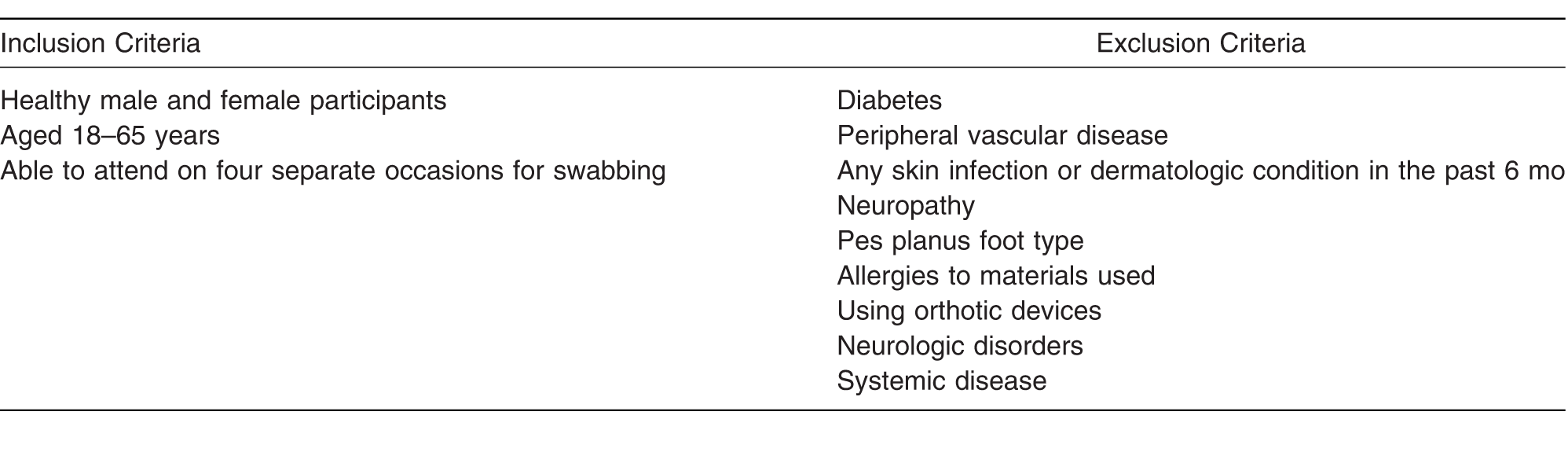
The inclusion and exclusion used to screen potential participants are given in Table 1. Eleven participants were enrolled in the study. Two were lost to follow-up (participants 4 and 8), leaving nine participants with viable data (eight women and one man). The age range of the participants was 21 to 51 years, with a mean ± SD age of 35 ± 14.6 years. Successful applicants were taken through the informed consent procedure explaining why the research was being undertaken, participation timescales, and requested measures for the participant to adhere to in accordance with the experimental design. Informed consent consisted of a verbal discussion with each participant about the research and their potential involvement, allowing for any questions. To ensure full understanding, further questions were answered at the time that informed consent was given in writing [30]. Participant confidentiality was maintained throughout the study in accordance with the Data Protection Act 1998.
Table 1. Inclusion and Exclusion Criteria
Japma 111 18141 t01

Test Material

The test product was a low-adherent, absorbent, semiocclusive dressing with dimensions of 50 × 50 mm. The dressing consisted of three layers: a polyester film designed to contact the wound, an absorbent cotton pad, and a hydrophobic backing [31].

Dressing Protocols

The dressing site was chosen to be the MLA because this is known to be an area that ulcerates in diabetic Charcot's foot populations [32] and is adjacent to the plantar surface of the first metatarsophalangeal joint, which, according to Van Schie [33], is the most common weightbearing ulceration site for persons with diabetes. To maintain personal hygiene during the study, participants were supplied with proprietary waterproof bags, designed for purpose, to place over their dressed foot. Participants were given written and verbal instructions on how to replace dressings that became loose or uncomfortable during the study. Supplementary sterile dressings and adhesive tape were supplied to each participant at each contact point during the study. Participants were asked to secure loose dressings by adding more tape and to replace wet or dislodged dressings without touching, but aligned with, the area marked with surgical pen and to secure with tape. If the area under or around the dressing caused an adverse reaction, participants were asked to remove the dressing.

Experimental Design

Participants were asked to attend the University of Brighton, Leaf Hospital, Eastbourne, on four separate occasions at weekly intervals.

Occasion 1.

Participants were screened using the inclusion and exclusion criteria. The process of informed consent was initiated. Each participant was given an information pack detailing the reasoning behind the experiment, their role, and a consent form.

Occasion 2.

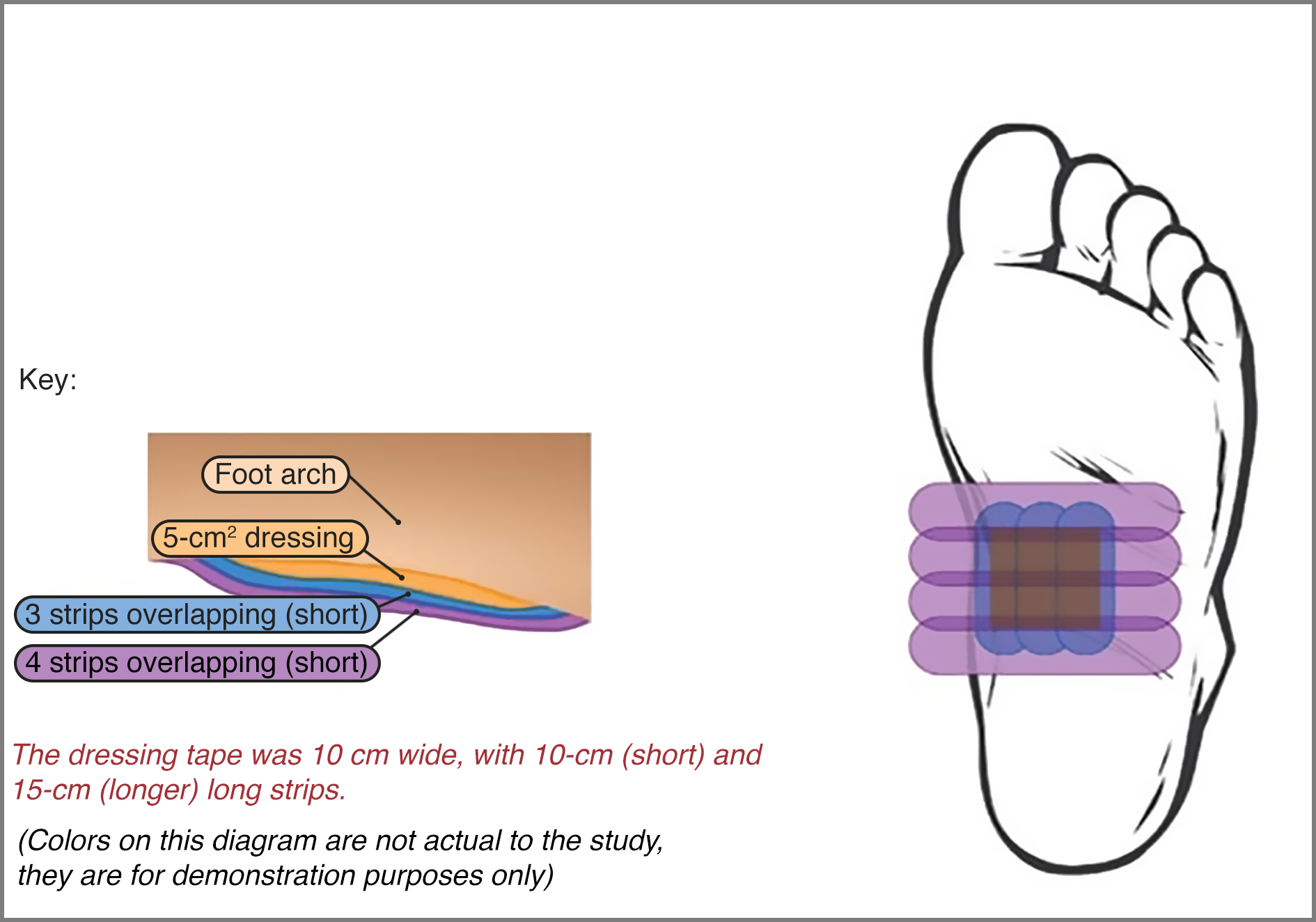
Participants returned with a signed consent form and were asked whether they had any further questions. Experimental sites on both feet were delineated using a sterile surgical pen. Swabs of the MLA of both feet were taken using two M40 Transystem Sterilin clinical swabs [Copan Diagnostics, Murrieta, California]. The sterile cotton bud end of the swab was moistened using sterile saline before samples from each foot were collected using a zigzag technique from the top to the bottom of the marked area. Each area was swabbed for 30 sec. A low-adherent, absorbent, semiocclusive dressing was then applied to the left foot using the aseptic nontouch technique, with the contralateral (right) control limb left uncovered (Fig. 1).
Figure 1. Pictorial description of the protocol for dressing application on the experimental side of the medial longitudinal arch of the foot.
Japma 111 18141 f01

Occasion 3.

The previous dressing and tape were removed and a second set of swabs was taken within the previously marked area, following the same technique described previously herein for each participant. The dressings were replaced and taped using the aseptic nontouch technique. A follow-up questionnaire was completed with each participant to ascertain whether the dressing had become wet or been changed during the study so far and what footwear they had worn during the week.

Occasion 4.

The previous dressing and tape were removed, and a third set of swabs was taken in the previously marked area, following the same technique described for occasion 3, and the same follow-up questionnaire was completed with each participant. This marked the end of participant involvement.

Culturing and Identification

Six swabs were taken from each participant over 2 weeks, three from the experimental foot and three from the control foot. Each swab was labeled with a participant code, date, time, and site swabbed. Laboratory staff cultured the swabs, identifying bacterial genera and giving a semiquantitative estimate of CFUs present, and the researchers were then informed of the results.
Culturing methods involved initial swab inoculation and subsequent sterile loop inoculation using the streaking method [34], repeating the procedure for each swab and each plate. Three different growth media were used to culture the samples. Columbia horse blood agar was used as a general bacterial growth nutrient media for all of the samples. Columbia colistin-nalidixic acid agar was used as a growth media for all of the samples to isolate gram-positive bacteria [35]. Brilliance UTI Clarity agar (Oxoid, Basingstoke, England) was used as a growth media for all swabs to identify gram-positive Enterobacteria spp and Enterococcus spp. Once plated, all of the samples were cultured at 37°C in an aerobic incubator for 48 hours.
Visual morphological identification and Gram staining were used to isolate Gram-negative and Gram-positive species; DNase test agar was used to distinguish between coagulase-negative and coagulase-positive Staphylococcus spp. [36]; and a latex slide agglutination test was used to positively identify isolates containing Staphylococcus aureus.

Results

Microflora Diversity and Distribution
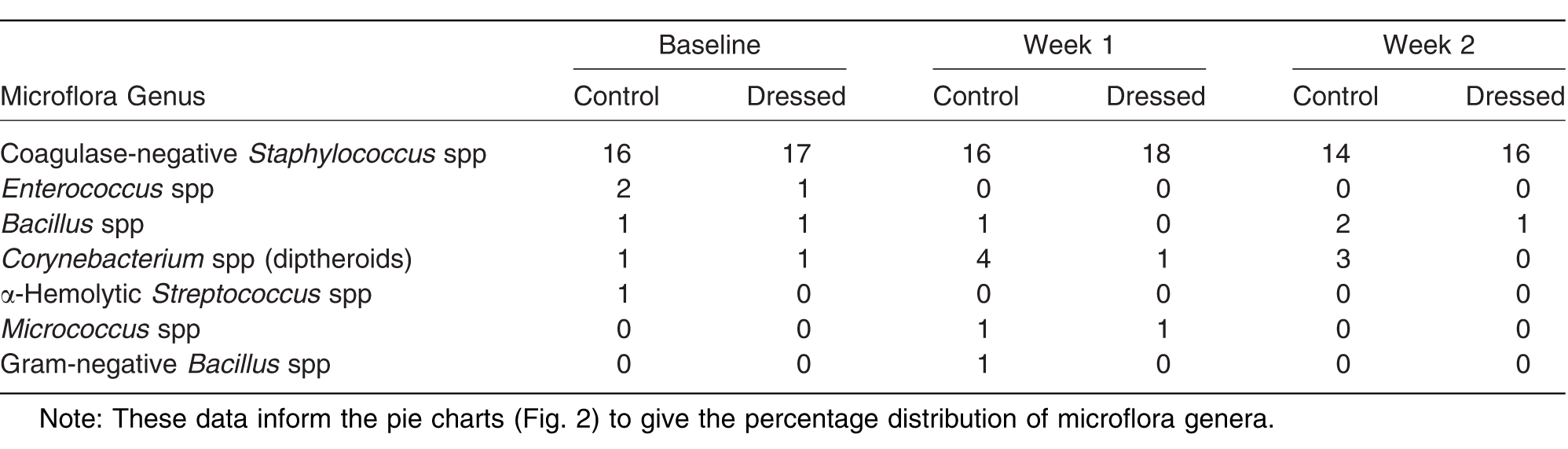
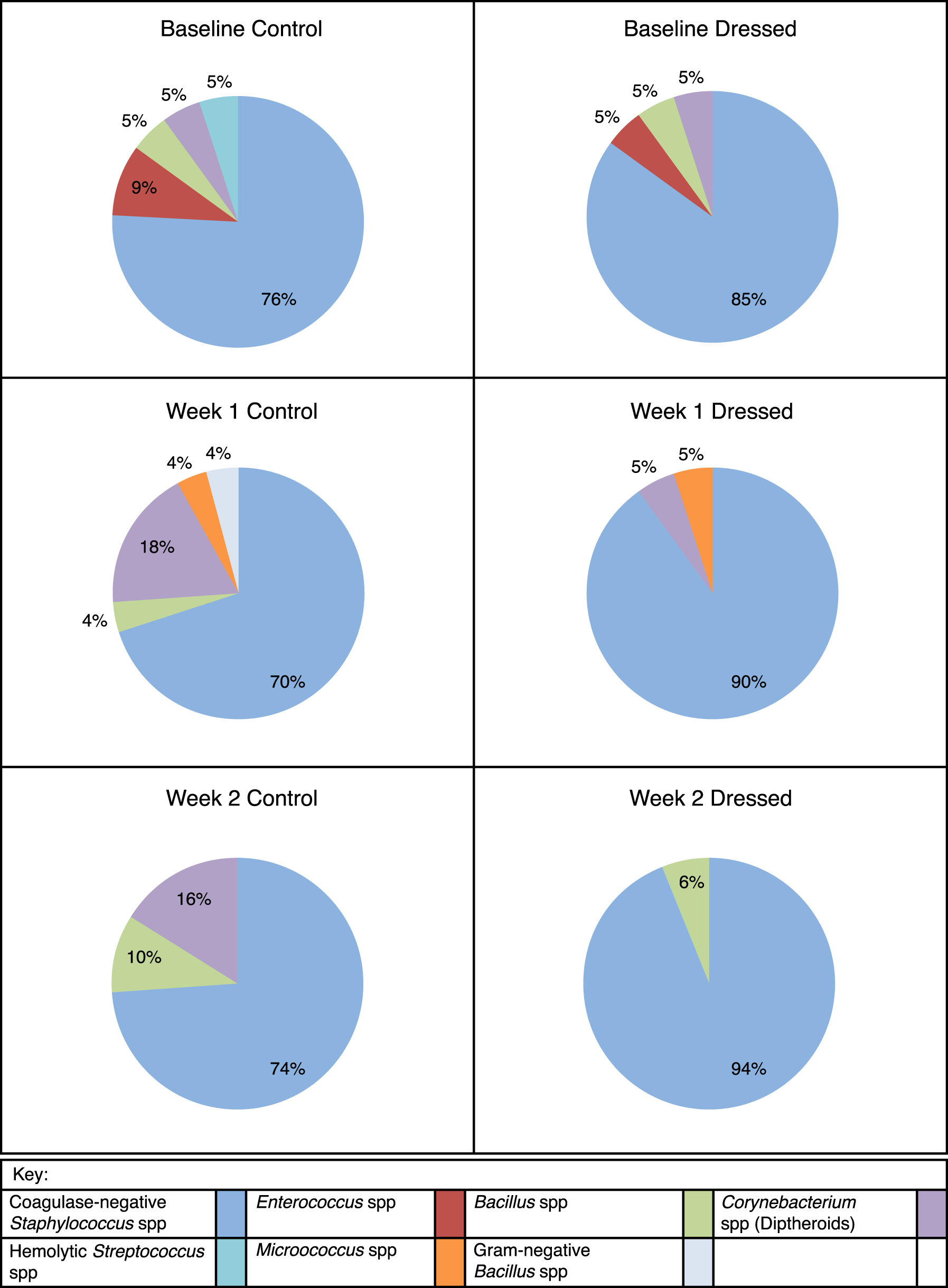
Seven different genera of bacteria were identified: coagulase-negative Staphylococcus spp, Enterococcus spp, Bacillus spp, α-hemolytic Streptococcus spp, environmental gram-negative Bacillus spp, Corynebacterium spp, and Micrococcus spp. Table 2 describes the frequency that each genus appears at baseline, week 1, and week 2. Of those, coagulase-negative Staphylococcus spp appeared with the highest frequency, followed by Corynebacterium spp. The tabulated data informed the percentage distribution pie charts (Fig. 2). The first set of swab results, labeled baseline, shows that the distribution of microflora was approximately equal in frequency and diversity on both feet. Coagulase-negative Staphylococcus spp were dominant on both feet across all of the participants, with the rest of the genera distributed evenly throughout the samples except for α-hemolytic Streptococcus spp, which appears only in the baseline control foot sample. At the end of week 1 there was an increase of 5% in coagulase-negative Staphylococcus spp on the dressed foot compared with the baseline result for the same foot. Bacteria diversity deceased under the dressing with the disappearance of Enterococcus spp, Bacillus spp, and α-hemolytic Streptococcus spp. By the end of the study period, the diversity on the control foot was similar to baseline results except for an increase in Corynebacterium spp and the appearance of Micrococcus spp and environmental gram-negative Bacillus spp. At the end of week 2 there was a further 4% increase in coagulase-negative Staphylococcus spp under the dressing, with diversity decreasing to two genera. In comparison, diversity remained higher on the control foot, although this had decreased compared with the baseline and week 1 control foot.
Table 2. Frequency Distribution of Bacterial Genera Over Time Across All of the Participants
Japma 111 18141 t02
Figure 2. Microflora percentage distribution over two weeks comparing control feet with dressed feet.
Japma 111 18141 f02

Growth

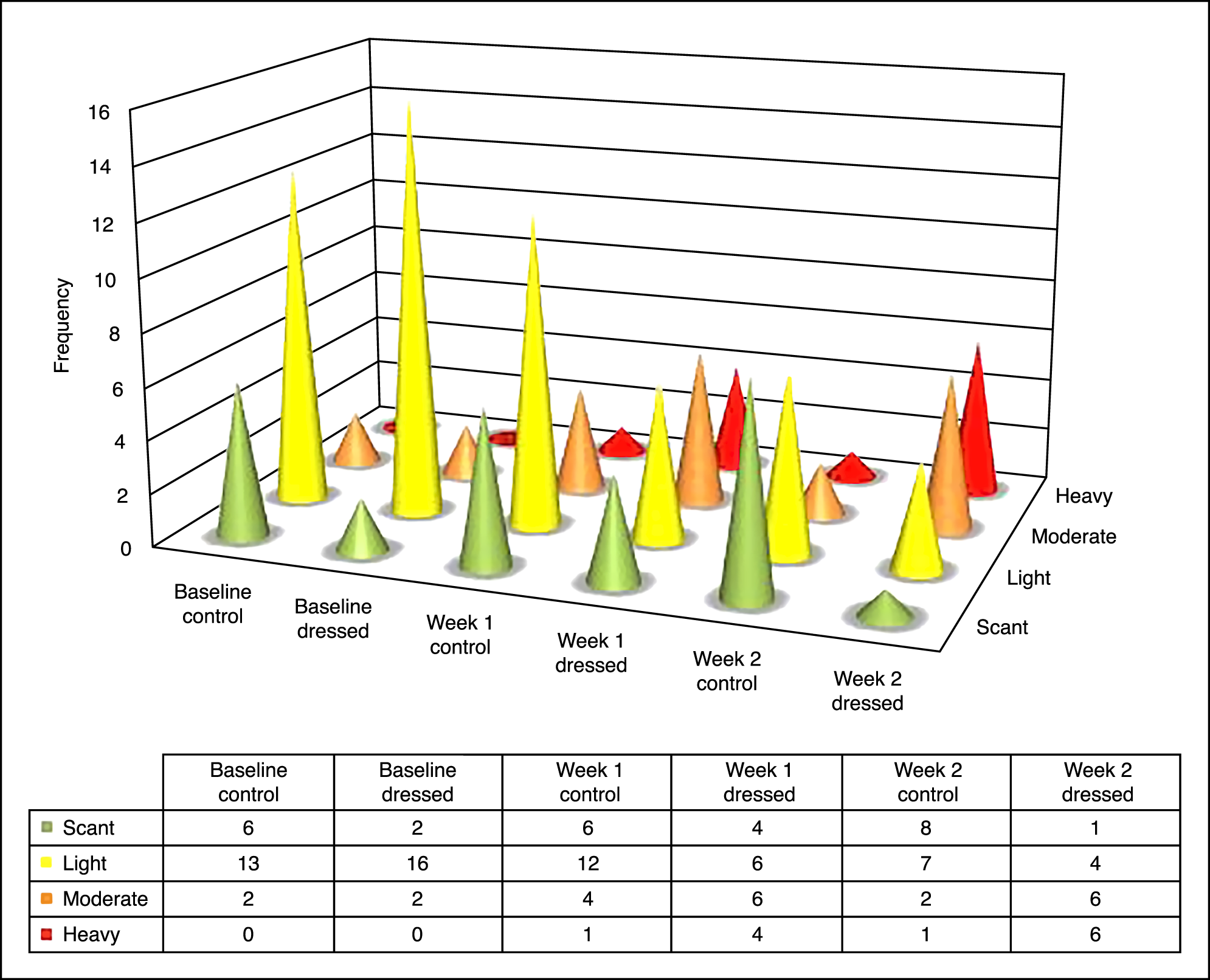
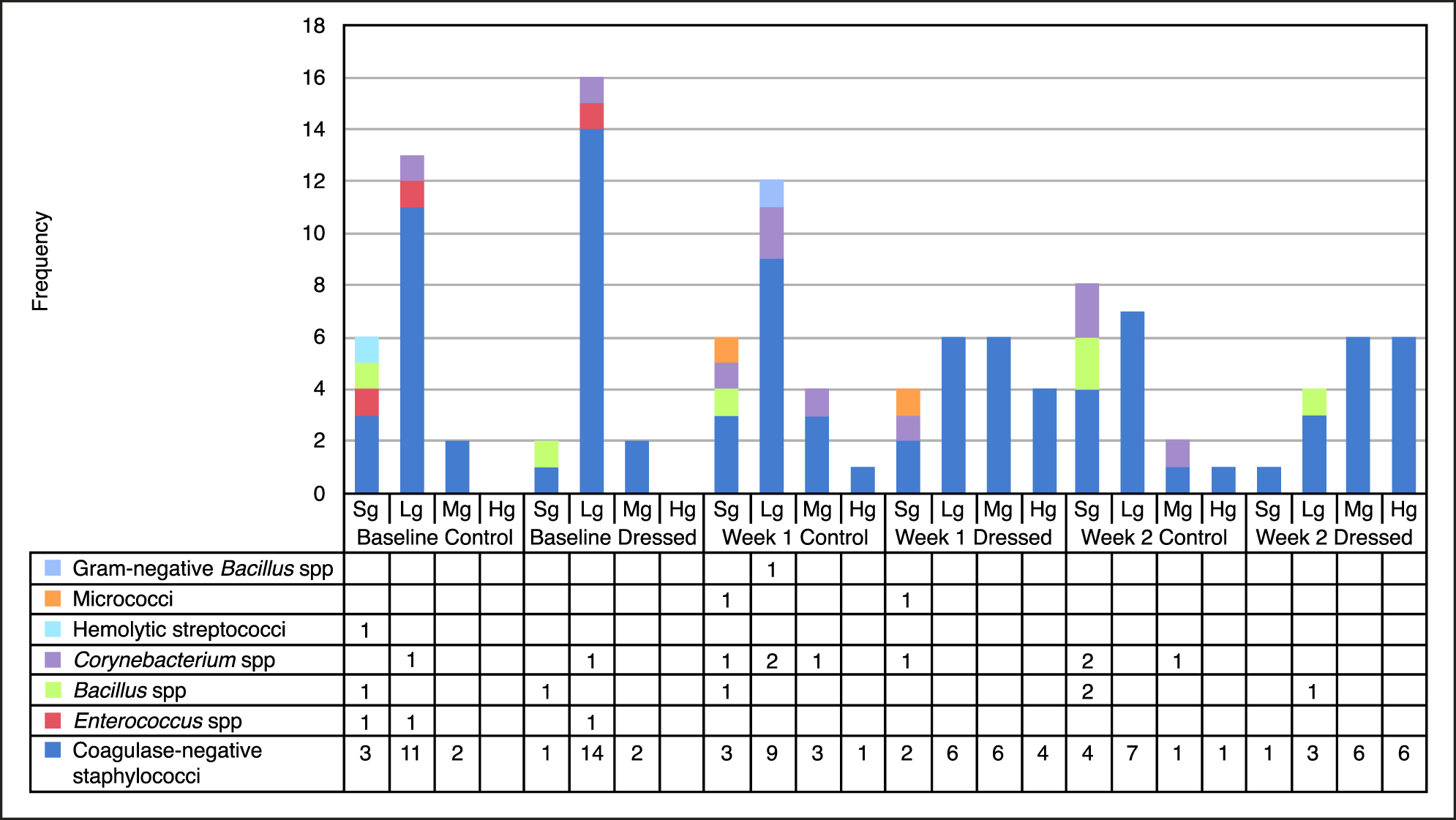
Microflora growth was categorized as scant, light, moderate, or heavy, and an approximation of CFU was given. Scant growth was estimated to be 1 to 10 CFU; light growth, 11 to 50 CFU; moderate growth, 51 to 100 CFU; and heavy growth, more than 100 CFU. Figure 3 illustrates the distribution of growth categories across the study, comparing controls with dressed feet. Growth at baseline between controls and dressed appeared similar, with light growth of bacteria being the most dominant feature. At week 1, light growth decreased overall but remained higher on the control foot than on the dressed foot; moderate and heavy growth started to emerge, particularly under the dressing. At week 2, most of the growth was moderate and heavy under the dressing, whereas growth remained scant and light on the control.
Figure 3. Distribution and frequency of growth over time comparing control feet with dressed feet.
Japma 111 18141 f03
The combined frequency, distribution, and growth categories over time pertaining to the seven genera found are seen in Figure 4.
Figure 4. Frequency distribution of microflora and growth categories over time comparing dressed feet and control feet. Sg indicates scant growth; Lg, light growth; Mg, moderate growth; Hg, heavy growth.
Japma 111 18141 f04

Participant Data

The microflora data for each participant were compiled alongside demographic information, footwear type, walking barefoot, number of wet dressings, and total number of times the participant changed his or her own dressing during the study period. Comparing the control with the dressed foot, genus diversity decreased for each participant except participants 3 and 9, which increased, and participant 11, which remained the same. Under the dressing, coagulase-negative Staphylococcus spp diversity remained the same over time for seven of the participants; however, participants 7 and 9 showed a decrease. Microflora growth increased over 2 weeks for participants 1, 2, 6, 9, 10, and 11 under the dressing; however, participants 3, 5, and 7 remained the same.

Discussion

This study was able to culture seven different bacterial genera, which were isolated from the MLA of the foot. The microorganisms found in the study were similar to those found in other studies that investigated the presence of microflora of the foot [9,37,38,39]. Both culture-based and molecular technique studies have revealed that most of the bacterial organisms that populate the skin of the foot descend from four bacterial phyla: Actinobacteria, Proteobacteria, Bacteroidetes, and Firmicutes [37,38]. Interestingly, all of the bacterial genera cultured in this study belonged to two of the bacterial phylum, Firmicutes and Actinobacteria.
To date, there does not seem to be a study that has investigated the microbiome changes in the MLA of the foot over time. One previous study sampled the soles of 60 feet and the other ten plantar heels [37,38]. Every anatomical region of the human body has its own microbiome [9,39]. Like any other ecological biome, the skin's microbiome results from the formation of different factors, such as topography, interpersonal and environmental factors, hair follicles, pH, sweat glands, and humidity [9,38,40,41]. Various anatomical regions can be grouped into similar microenvironments, consequently causing comparable microenvironments to be populated by a similar microbiome [9,39]. There has been no identification of what microenvironment the MLA might fall into. However, one would assume that it be similar to the microenvironment of the plantar heel because it is not an occluded area and has a similar skin topography. Molecular technique studies have highlighted Staphylococcus as the most abundant genus on the plantar heel [9,10,12]. This complements the present findings of coagulase-negative Staphylococcus spp flourishing under the dressings and remaining the dominant genus throughout.
Staphylococcus spp dominated the growth and also increased from light growth to moderate and high growth during week 1 and week 2. Although no hydration levels or transepidermal water loss were measured, species within this genus are known to inhabit moist areas of the body, and prolonged semiocclusion may have affected these factors, aiding proliferation and burgeoning growth [40]. In contrast, proliferation was not seen in Corynebacterium spp. Corynebacterium spp are more sensitive to environmental conditions such as pH, the high concentrations of sodium chloride found in sweat and lysozymes [42]. The application of a dressing will change environmental conditions, and occlusion of the skin has been found to increase skin moisture and alter the pH [17]. Therefore, it is possible that the Corynebacterium spp were more affected by the change in conditions compared with the Staphylococcus spp, and by week 2, Corynebacterium spp were absent under the dressing yet composed 17% of the growth on the control foot.
Coagulase-negative Staphylococcus spp were not the only bacteria present. Some species of Micrococcus, Bacillus, and gram-negative environmental Bacillus inhabit the soil [15,43]. Considering the single appearance of gram-negative environmental Bacillus on the control foot of a participant, it would be reasonable to suggest that some level of contamination from soil products could have occurred during the second week. No restrictions in footwear or lack thereof were placed on the participants; indeed, some participants reported walking barefoot with the dressing on during the second week of the study. Furthermore, some species of gram-positive Bacillus are implicated in serious infections. For example, Bacillus anthracis and Bacillus cereus, both soil dwellers, cause anthrax and food poisoning, respectively [44]. Many Enterococcus spp are part of the normal mammal gut microflora, and second only to Staphylococcus, Enterococcus is a major causative organism in health-care–associated infections [45,46]. This species appeared only at the baseline of participants 1 and 7. Likewise α-hemolytic Streptococcus spp, part of the resident oral microflora [47], appeared only once in the baseline control sample for participant 7. It is possible that these isolates could have been washed down to the feet during the course of showering or bathing.
Previous research involving dressings and microbial changes are present in the scientific community [7,19,48,49,50,51,52,53,54]. These studies have used either in vivo or in vitro techniques to investigate microbial change under a dressing. The study by Motta et al. [7] used an in vivo technique, and their results show that microbial growth increases under a dressing. They too found a reduction in biodiversity of microflora after 1 week. However, on closer inspection, this 5-week study concluded with an increase in diversity overall. The results of this study oppose results reported in three previous in vivo studies that reported a decrease in microbial growth and CFUs [19,48,49]. In addition, these studies used different dressings and different anatomical locations, and one involved wounds on pigs and different experimental methods. These differences make comparisons between results in this study and previous in vivo studies difficult because of the different variables and the potential effects on the results.
One participant had no growth of the baseline swab, and several participants were identified as having only one microorganism present during the subsequent visits. It could be speculated that this is due to the sampling method used, with only the most abundant species being identified. However, it also could be due to the project investigating only healthy, intact skin, which is known to have a different microbiome to ulcerated tissue [9,10,14]. This does not detract from the results indicating increases in bioburden levels occurring underneath the dressing used, but it does indicate a necessity for further investigation with more advanced analysis and culture techniques.
There are several limitations associated with this study. Due to laboratory constraints and limited to only culture-based techniques, only the genus could be identified, leaving it to speculation as to what species were found. This is particularly pertinent because different species within the same genus have varying virulence [55]. A further limitation of the culturing and identification techniques provided the study with only an estimate of the CFUs. For example, heavy growth was equal to at least 100 CFUs, and it is entirely possible that the true figure was much higher, and with microbial contamination greater than 106. reported as affecting wound healing [17]. This leaves the significance of coagulase-negative Staphylococcus spp and the estimated number of CFUs identified as slightly limited when drawing conclusions on not only virulence but also wound healing. In addition, it is possible that culturing methods favored proliferation of Staphylococcus spp to the detriment of the more fastidious Corynebacterium spp. [37], indeed hiding the true frequency and diversity of genera present.
This study used intact skin; however, dressings are not applied to intact skin, and changes found in this study might not apply to wounds. The microbiome of a wound would be different than that of intact skin, and one study found reduced diversity and a higher incidence of Corynebacterium, Streptococcus, and Pseudomonas species in a diabetic foot ulcer compared with intact skin [56]. In addition, anaerobes are also present in chronic diabetic foot ulcers and play a role in infection [57]. Due to laboratory restraints, only aerobic bacteria could be identified, and any potential anaerobes present under the dressing were undetected. It has been found that occlusive and semiocclusive dressings can cause the proliferation of anaerobic bacteria [58]. Therefore, highlighting a limitation as identifying the presence of anaerobes would have allowed us to draw conclusions on the effect of the dressing on the skin and its implications in wound healing.
Although this study proved successful in demonstrating that microbial changes did occur under a low-adherent dressing, notably, changes in bacterial organism diversity and quantity and improvements to the methods may benefit future studies. Future recommendations would include a larger sample size to determine a more precise estimate of the bacterial biodiversity on the MLA. A focus on species identification using molecular techniques gives a more accurate representation of the skin's microflora because these techniques sequence the 16S ribosomal RNA subunit, which is found in all of the bacteria and archaea and contains species-specific hypervariable regions [9,39]. 16S ribosomal RNA subunit sequencing overcomes culture-based limitations because it eliminates the need for sample culturing [9,39]. Molecular techniques allow microorganisms to be identified that might not have been able to strive in laboratory conditions [9,39]. In addition, a quantitative colony count, rather than a semiquantitative colony count, can allow for statistical testing, such as the Shannon Diversity Index, to determine whether the results from the research are statistically significant. Finally, future studies should have the control on the same foot as the dressing and should explore the microflora changes under a dressing on wounds as opposed to on intact skin.

Conclusions

This study aimed to investigate whether there were changes to the microflora of the skin under a semiocclusive dressing. The application of a low-adhesive absorbent dressing seemed to alter healthy skin's microflora by decreasing general biodiversity and increasing bacterial abundance. Few studies have explored the relationship between biodiversity under various dressing types. If future studies use similar methods to this study and use molecular techniques or more accurate culture-based species identification, a better understanding of bacteria biodiversity, growth, and competition under dressings will occur. Currently, advancement in our understanding of the microbiome of different wound types, such as diabetic foot ulcers, is occurring [59,60]. Further investigation into different dressing types and their effect on the normal microflora/microbiome of the underlying skin could provide a better understanding of reducing pathogenic bacteria development, leading to fewer infections, quicker healing, and potentially fewer amputations, as well as a reduction in the annual cost of chronic wound management.
Financial Disclosure: None reported.
Conflict of Interest: None reported.

References

  1. BellDPJr:The role of podiatry in wound management. J Am Col Certif Wound Spec1: 78, 2009.
  2. MouraLIFDiasAMACarvalhoE: Recent advances on the development of wound dressings for diabetic foot ulcer treatment: a review. Acta Biomater9: 7093, 2013.
  3. National Institute for Health and Care Excellence:Diabetic Foot Problems: Prevention and Management,  National Institute for Health and Care Excellence, London, 2015. NICE guideline NG19.
  4. GameFLJeffcoateWJ:Dressing and diabetic foot ulcers: a current review of the evidence. Plast Reconstr Surg138: 158S, 2016.
  5. GouldLAbadirPBremH: Chronic wound repair and healing in older adults: current status and future research. Wound Repair Regen23: 1, 2015.
  6. MottaGJMilneCTCorbettLQ:Impact of antimicrobial gauze on bacterial colonies in wounds that require packing. Ostomy Wound Manage50: 48, 2004.
  7. FindleyKOhJYangJ: Topographic diversity of fungal and bacterial communities in human skin. Nature498: 367, 2013.
  8. GriceEASegreJA:The skin microbiome. Nat Rev Microbiol9: 244, 2011.
  9. GriceEAKongHHConlanS: Topographical and temporal diversity of the human skin microbiome. Science324: 1190, 2009.
  10. KongHH:Skin microbiome: genomics-based insights into the diversity and role of skin microbes. Trends Mol Med17: 320, 2011.
  11. CostelloEKLauberCLHamadyM.: Bacterial community variation in human body habitats across space and time. Science326: 1694, 2009.
  12. CohenADWolakAAlkanM: Prevalence and risk factors for tinea pedis in Israeli soldiers. Int J Dermatol44: 1002, 2005.
  13. HanniganGDGriceEA:Microbial ecology of the skin in the era of metagenomics and molecular microbiology. Cold Spring Harb Perspect Med3: a015362, 2013.
  14. FredricksDN:Microbial ecology of human skin health and disease. J Invest Dermatol Symp Proc6: 167, 2001.
  15. BojarRAHollandKT:Review: the human cutaneous microflora and factors controlling colonisation. World J Microbiol Biotechnol18: 8892002.
  16. AlyRShirleyCCunicoB: Effect of prolonged occlusion on the microbial flora, pH, carbon dioxide and trans-epidermal water loss on human skin. J Invest Dermatol71: 378, 1978.
  17. HartmannAA:Effect of occlusion on resident flora, skin-moisture and skin pH. Arch Dermatol Res275: 251, 1983.
  18. FaergemannJAlyRWilsonDR: Skin occlusion: effect on Pityrosporum orbiculare, skin P CO2, pH, transepidermal water loss and water content. Arch Dermatol Res275: 383, 1983.
  19. WaxmanBPEasmonCSFDudleyHAF:Skin bacteria and OpSite® dressings. Clin Nutr4: 29, 1985.
  20. MarplesRRKligmanAM:Methods of evaluating topical antibacterial agents on human skin. Antimicrob Agents Chemother5: 323, 1974.
  21. BashirMHOlsonLKMWaltersS-A:Suppression of regrowth of normal skin flora under chlorhexidine gluconate dressings applied to chlorhexidine gluconate prepped skin. Am J Infect Control40: 344, 2012.
  22. CartyNWibauxAWardC: Antimicrobial activity of a novel adhesive containing chlorhexidine gluconate (CHG) against resident microflora in human volunteers. J Antimicrob Chemother69: 2224, 2014.
  23. CitronDMGoldsteinEJMerriamCV: Bacteriology of moderate-to-severe diabetic foot infections and in vitro activity of antimicrobial agents. J Clin Microbiol45: 2819, 2007.
  24. Aravena-RomanMSpröerCSträublerB: Corynebacterium pilbarense sp. nov., a non-lipophilic Corynebacterium isolated from a human ankle aspirate. Int J Syst Evol Microbiol60: 1484, 2010.
  25. OtsukaYKawamuraYKoyamaT: Corynebacterium resistens sp.: a new multidrug-resistant Coryneform bacterium isolated from human infections. J Clin Microbiol43: 3713, 2005.
  26. GuestJFAyoubNMcIlwraithT: Health economic burden that different wound types impose on the UK's National Health Service. Int Wound J14: 322, 2016.
  27. O'MearaSMCullumNAMajidM: Systematic review of antimicrobial agents used for chronic wounds. Br J Surg88: 4, 2001.
  28. CullumNNelsonEAFlemmingK: Systematic reviews of wound care management: (5) beds; (6) compression; (7) laser therapy, therapeutic ultrasound, electrotherapy and electromagnetic therapy. Health Technol Assess5: 1, 2001.
  29. BradleyMCullumNNelsonEA: Systematic reviews of wound care management: (2). dressings and topical agents used in the healing of chronic wounds. Health Technol Assess3: 1, 1999.
  30. UCI Office of Research.How to consent.Available at: https://www.research.uci.edu/compliance/human-research-protections/researchers/how-to-consent.html. Accessed December 8,2020.
  31. Royal Pharmaceutical Society of Great Britain, British Medical Association:British National Formulary, Pharmaceutical Press, Wallingford, England, 2013.
  32. CapobiancoCMZgonisT:Abductor hallucis muscle flap and staged medial column arthrodesis for the chronic ulcerated Charcot foot with concomitant osteomyelitis. Foot Ankle Spec3: 269, 2010.
  33. Van SchieCHM.A review of the biomechanics of the diabetic foot. Int J Low Extrem Wounds4: 160, 2005.
  34. Public Health England:UK Standards for Microbiology Investigations: Inoculation of Culture Media for Bacteriology, Crown, London, 2013.
  35. EllnerPDStoesselCJDrakefordE: A new culture medium for medical bacteriology. Am J Clin Pathol45: 502, 1966.
  36. JeffriesCDHoltmanDFGuseDG:Rapid method for determining the activity of microorganisms on nucleic acid. J Bacteriol73: 590, 1957.
  37. MarshallJLeemingJPHollandKT:The cutaneous microbiology of normal feet. J Appl Bacteriol62: 139, 1987.
  38. McBrideMEDuncanWCKnoxJM:The environment and the microbial ecology of human skin. Appl Environ Microbiol33: 603, 1977.
  39. KongHHSegreJA:Skin microbiome: looking back to move forward. J Invest Dermatol132: 933, 2012.
  40. GriceEA:The skin microbiome: potential for novel diagnostic and therapeutic approaches to cutaneous disease. Semin Cutan Med Surg33: 98, 2014.
  41. RothRRJamesWD:Microbial ecology of the skin. Annu Rev Microbiol42: 441, 1988.
  42. KwaszewskaASobis-GlinkowskaMSzewczykEM:Cohabitation: relationships of corynebacteria and staphylococci on human skin. Folia Microbiol59: 495, 2014.
  43. ChillerKSelkinBAMurakawaGJ:Skin microflora and bacterial infections of the skin. J Invest Dermatol Symp Proc6: 170, 2001.
  44. MishraSKAgrawalD:Gram-Positive Bacilli: A Concise Manual of Pathogenic Microbiology,John Wiley & Sons, Hoboken, NJ, 2012.
  45. ByappanahalliMNNeversMBKorajkicA: Enterococci in the environment. Microbiol Mol Biol Rev76: 8685, 2012.
  46. PatelGSnydmanDR:Vancomycin-resistant Entercococcus infections in solid organ transplantation. Am J Transplant13: 59, 2013.
  47. CoykendallAL:Classification and identification of the viridans streptococci. Clin Microbiol Rev2: 315, 1989.
  48. CazzanigaASerraltaVDavisS: The effect of an antimicrobial gauze dressing impregnated with 0.2 percent polyhexamethylene biguanide as a barrier to prevent Pseudomonas aeruginosa wound invasion. Wounds14: 169, 2002.
  49. ConlyJMGrievesKPetersB:A prospective, randomized study comparing transparent and dry gauze for central venous catheters. J Infect Dis159: 310, 1989.
  50. TachiMHirabayashiSYoneharaY: Comparison of bacteria retaining ability of absorbent wound dressings. Int Wound J1: 177, 2004.
  51. LippCKirkerKAgostinhoA: Testing wound dressings using an in vitro wound model. J Wound Care19: 220, 2010.
  52. WiegandCAbelMRuthP: In vitro assessment of the antimicrobial activity of wound dressings: influence of the test method selected and impact of the pH. J Mater Sci Mater Med26: 5343, 2015.
  53. HollandKTDavisWInghamE: A comparison of the in-vitro antibacterial and complement activating effect of ‘OpSite' and ‘Tegaderm' dressings. J Hosp Infect5: 323, 1984.
  54. LeeWRTobiasKMBemisDA: In vitro efficacy of a polyhexamethylene biguanide–impregnated gauze dressing against bacteria found in veterinary patients. Vet Surg33: 404, 2004.
  55. BeceiroATomásMBouG:Antimicrobial resistance and virulence: a successful or deleterious association in the bacterial world?Clin Microbiol Rev26: 185, 2013.
  56. GontacharovaVYounESunY: A comparison of bacterial composition in diabetic ulcers and contralateral intact skin. Open Microbiol J4: 8, 2010.
  57. ZubairMMalikAAhmadJ:Microbiology of diabetic foot ulcer with special reference to ESBL infections. Am J Clin Exp Med3: 6, 2015.
  58. NayeriF:Occlusive bandaging of wounds with decreased circulation promotes growth of anaerobic bacteria and necrosis: case report. BMC Res Notes9: 394, 2016.
  59. DowdSESunYSecorPR: Survey of bacterial diversity in chronic wound using pyrosequencing, DGGE, and full ribosome shotgun sequencing. BMC Microbiol8: 43, 2008.
  60. SmithKCollierATownsendEM: One step closer to understanding the role of bacteria in diabetic foot ulcers: characterising the microbiome of ulcers. BMC Microbiol16: 54, 2016.