Next Article in Journal
Atypical Presentation of a Glomus Tumor in the Rearfoot: A Case Report
Previous Article in Journal
The Effect of Wound pH on Healing Rates in Chronic Wounds: A Literature Review
 
 
Journal of the American Podiatric Medical Association is published by MDPI from Volume 116 Issue 1 (2026). Previous articles were published by another publisher in Open Access under a CC-BY (or CC-BY-NC-ND) licence, and they are hosted by MDPI on mdpi.com as a courtesy and upon agreement with American Podiatric Medical Association.
Article

Desmoid Tumors of the Foot: A Retrospective Study of Four Patients

by
Hans R. Dürr
1,*,
Laura Wirth
1,
Andrea Baur-Melnyk
2,
Thomas Knösel
3,
Falk Roeder
4,
Volkmar Jansson
1 and
Alexander Klein
1
1
Musculoskeletal Oncology, Department of Orthopaedic Surgery, Physical Medicine, and Rehabilitation, University Hospital LMU Munich, Marchioninistr. 15, Munich, Bavaria 81377, Germany
2
Institute of Radiology, University Hospital, Ludwig-Maximilians-University Munich, Munich, Germany
3
Institute of Pathology, University Hospital, Ludwig-Maximilians-University Munich, Munich, Germany
4
Department of Radiation Oncology, University Hospital, Ludwig-Maximilians-University Munich, Munich, Germany
*
Author to whom correspondence should be addressed.
J. Am. Podiatr. Med. Assoc. 2020, 110(6), 19042; https://doi.org/10.7547/19-042
Published: 1 November 2020

Abstract

Background: Desmoid-type fibromatosis (DF) is an aggressive (myo)fibroblastic neoplasm with an infiltrative growth pattern and a tendency for local recurrence. It is rarely seen at the foot. The aim of this retrospective study was to analyze clinical presentation, therapy, and outcomes in a consecutive series of four patients with DF at the foot. Methods: From 1994 to 2014, four patients had been surgically treated. The resection margin was marginal or even intralesional in all. One patient already had local recurrence at first presentation. The end point was either local recurrence or progression of residual disease. Results: The mean patient age was 27 years. In one patient, marginal excision healed the disease. In another patient, local recurrence after marginal resection necessitated distal phalanx amputation. Two other patients showed stable disease after either adjuvant radiotherapy or treatment with nonsteroidal anti-inflammatory drugs and tamoxifen. Conclusions: If surgery is necessary, operative margins are less important than keeping function for the patient. Radiotherapy might be an option to avoid major amputation. The role of adjuvant radiotherapy is controversially discussed. A watchful wait-and-see policy seems to be justified by the published data but may be difficult for DF at the foot.

Desmoid-type fibromatosis (DF) is an aggressive (myo)fibroblastic neoplasm arising usually in deep soft tissues with an infiltrative growth pattern and a tendency for local recurrence.[1] First described by MacFarlane in 1832,[2] the name desmoid tumor was coined by Müller[3] in 1838 based on the Greek word desmos for tendinous tissue. The incidence is estimated to be 2.1 to 5.4 per million people per year.[4,5] Some patients experience DF associated with the autosomal dominant familial adenomatous polyposis syndrome. This is characterized by a mutation of the adenomatous polyposis coli gene, and patients have a 30% risk of developing DF.[6] Desmoid-type fibromatosis has been described to be possibly associated with trauma, surgery, or high estrogen exposure.[7]
Most often, DFs are seen between ages 16 and 60 years and are twice as common in females than in males.[8] Extra-abdominal DFs can affect any anatomical region but are most common in the limb or the limb girdle (50%), the trunk (43%), or the head and neck region (7%).[9] Ten percent of cases have been described as multifocal.[10] The foot is an exceedingly rare location.
In recent years, resection of the tumor and/or radiotherapy were proposed as principal treatments.[11] Systemic medical treatment, including nonsteroidal anti-inflammatory drugs (NSAIDs), anti-estrogens, cytotoxic chemotherapy, interferon α, or tyrosine kinase inhibitors, showed conflicting results.[12] With active surveillance alone, a spontaneous regression of 28% to 50% of cases in extra-abdominal DF is observed, thus interfering with outcome data of any treatment studies.[8]
The aim of this retrospective study was to analyze outcomes in a consecutive single-institution series of surgically treated patients with DF at the foot from 1994 to 2014.

Methods

Of 44 treated patients with DF described in detail in a recent study, four showed a rare location at the foot.[13] This study was approved by the ethics committee of the Medical Faculty, University of Munich (Munich, Germany). Written consent was obtained from all of the patients included in this study.

Case 1

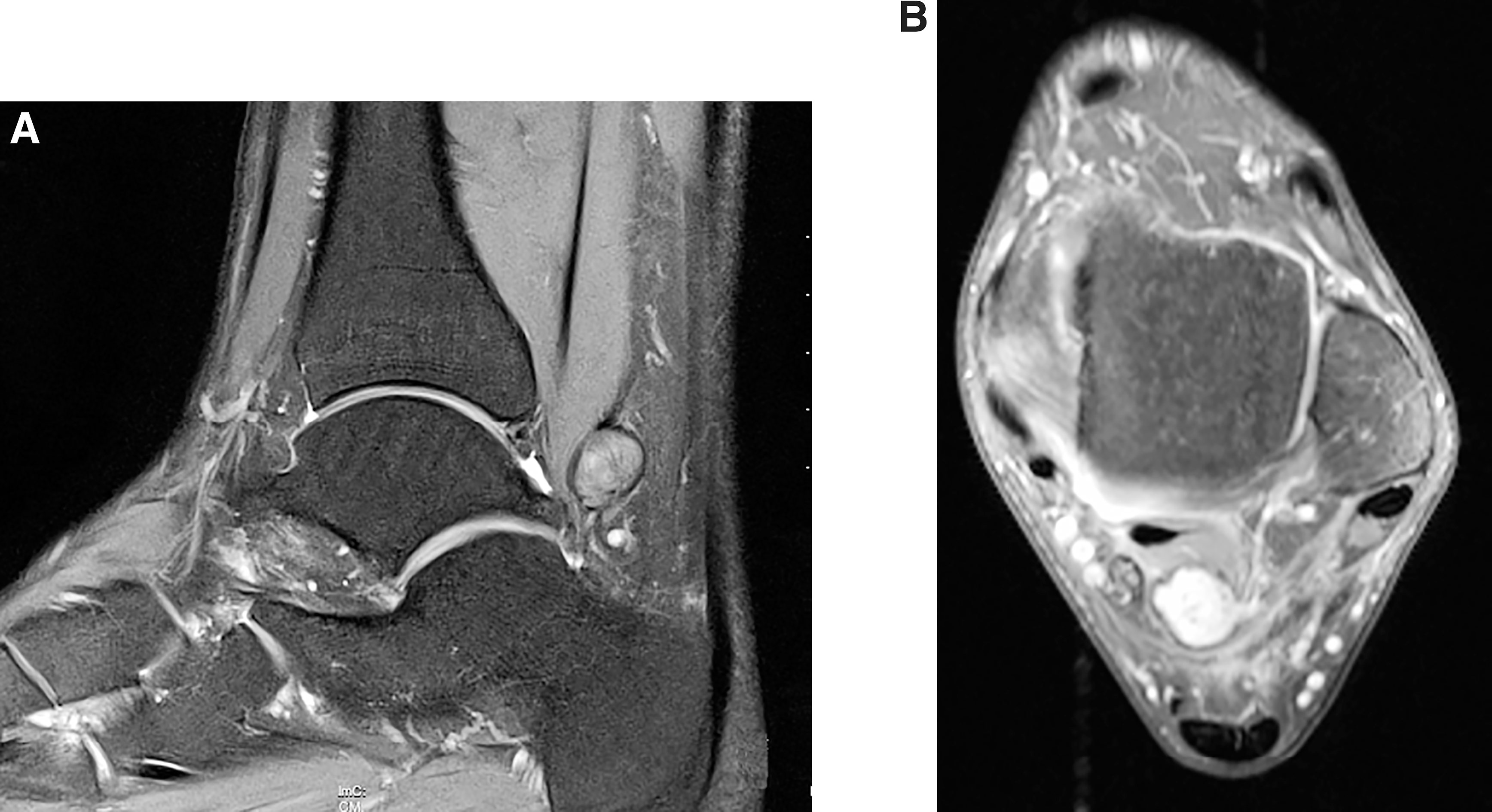
A 23-year-old man presented with pain at the left hindfoot of 6 months‘ duration. His medical history was unremarkable. Physical examination showed a firm, deep tumor located dorsal to the lateral malleolus. Magnetic resonance imaging (MRI) showed a well-circumscribed lesion with high uptake of contrast medium (Fig. 1). A true-cut biopsy revealed no tumor but a putrid infection. Laboratory results, including C-reactive protein level and white blood cell count, were normal. Microbiological analysis of the true-cut sample proved Staphylococcus aureus.
Figure 1. A, Sagittal proton-weighted magnetic resonance image (MRI) shows a round, well-encapsulated, slightly hyperintense lesion measuring 1.1 × 1.4 cm. The tumor is located in the pre-Achilles fat pad. The lesion was hypointense on T1-weighted spin-echo images (not shown here). B, Axial T1-weighted fatsaturated MRI with contrast shows considerable enhancement in the lesion, indicating a solid tumor.
Japma 110 19042 g001
A marginal resection of the lesion was indicated. Intraoperatively, the 1.5-cm lesion showed contact with the ankle joint and infiltration of the surrounding soft tissues. In histologic analysis, a DF without any signs of infection was diagnosed, microbiology was kept sterile, and wound healing was uneventful. No further therapy was indicated, and 6.5 years after surgery the patients is free of tumor.

Case 2

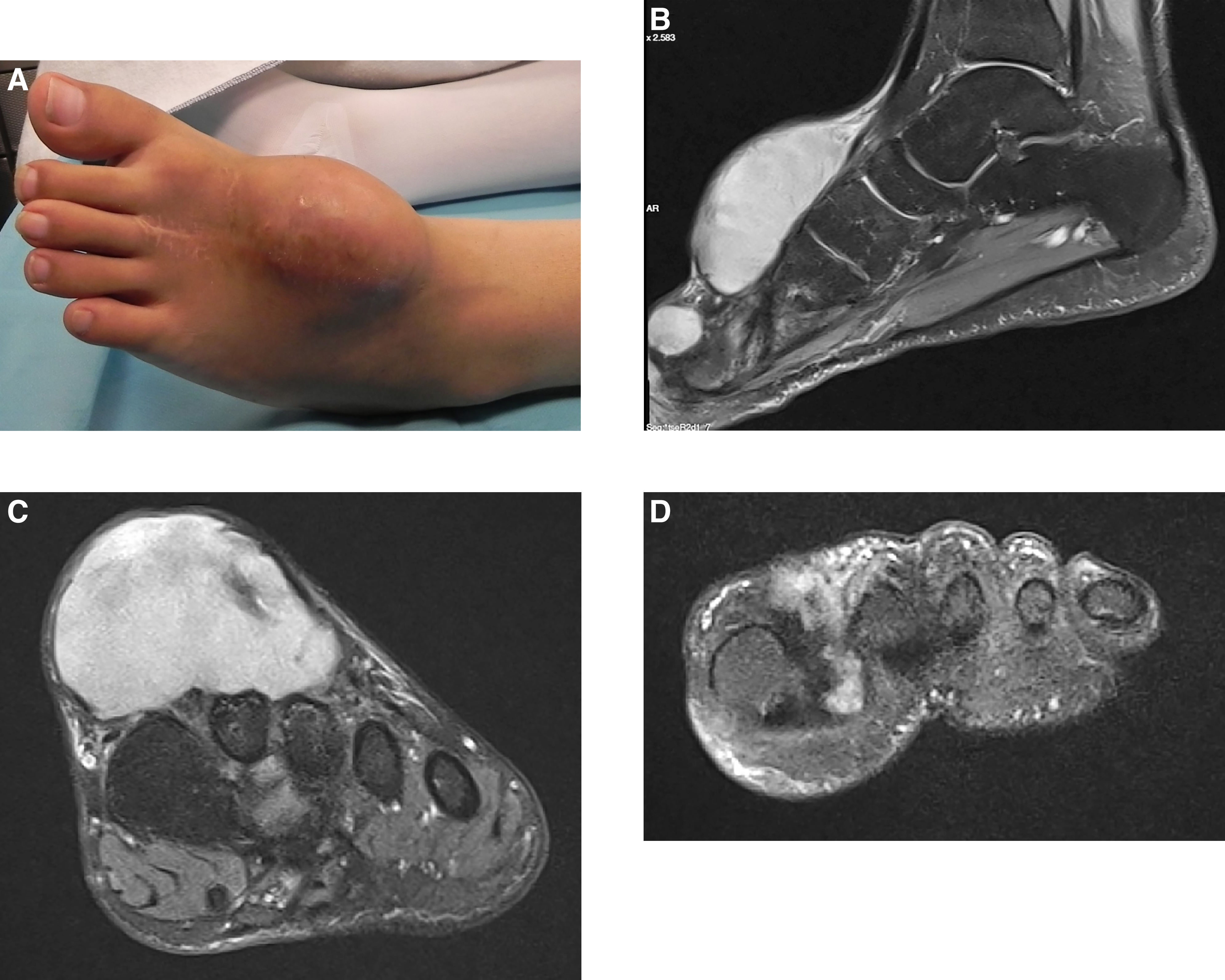
A 28-year-old man experienced swelling of the left dorsal foot for 6 years. Three months after the first symptoms a partial resection had been performed elsewhere. Since then the tumor had slowly progressed. Neither the specimen nor reports of the first surgery could be obtained. On MRI, multiple lesions of the dorsal and plantar aspect of the foot with an infiltrative growth pattern in the surrounding soft tissues were obvious (Fig. 2). A true-cut biopsy confirmed the diagnosis of DF. The two lesions at the dorsum of the foot were marginally excised; the lesion between D1 and D2 involved the arterial arc and was due to the total marginal resection intention not being resected. The patient underwent adjuvant radiotherapy with 50 Gy at the R1 region and a boost to 60 Gy at the residual tumor site. Six months after the end of radiotherapy there is stable residual disease. The patient can walk in normal shoes.
Figure 2. A, Left foot at presentation. B, Sagittal proton-weighted magnetic resonance image (MRI) shows a large soft-tissue lesion in the dorsum of the midfoot and a smaller satellite lesion more distally. C and D, Axial proton-weighted MRIs show the left-right extent of the tumor as well as growth between the first and second metatarsal bones into the plantar soft tissue.
Japma 110 19042 g002

Case 3

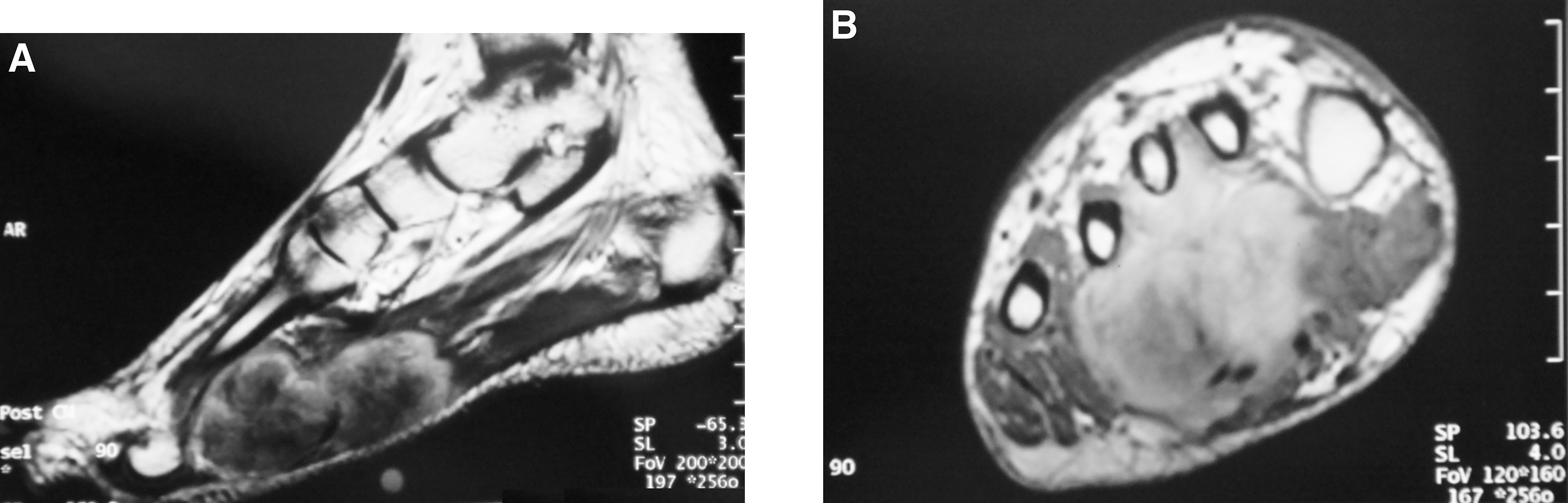
A 29-year-old woman had swelling of the right upper calf for several weeks. An incisional biopsy confirmed DF, and a marginal resection was performed. Seven months later a local recurrence was resected. Again 12 months later a local recurrence and a second tumor at the distal upper calf developed, and both were resected. Both locations were then treated with radiotherapy and additionally with NSAIDs and tamoxifen. Seven months after the last resection at the upper calf, a growing swelling at the plantar aspect of the right foot was seen. After MRI (Fig. 3), a marginal resection was performed. Three months later there was a further but very small local recurrence at the original site at the upper calf. Five months after surgery at the foot the patient again felt a local swelling, and MRI confirmed a 1-cm local recurrence. The patient continued and intensified the hormone therapy and had MRI-proven stable disease 4 years later. Eighteen years after surgery of the foot, the patient still has no progression and feels just a faint hypoesthesia at the plantar aspect of the foot and a very mild restriction of movement.
Figure 3. A, T1-weighted spin-echo magnetic resonance image (MRI) with contrast shows a bilobulated, mild, enhancing tumor in the plantar soft tissue. B, Axial T1-weighted MRI with contrast indicating the tumor growth between and plantar to D2 to D4.
Japma 110 19042 g003

Case 4

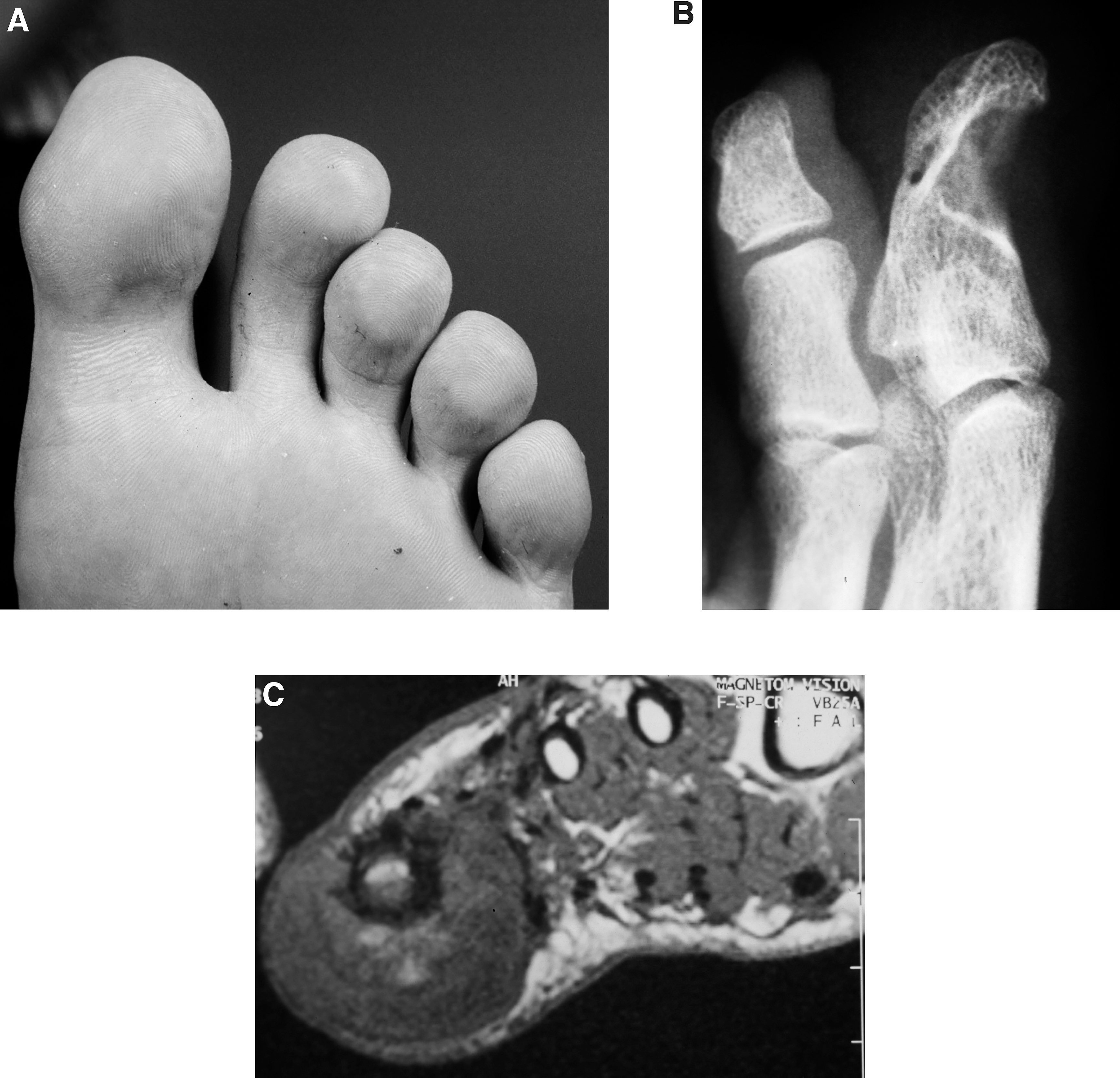
A 28-year-old man experienced pain in his left greater toe for 8 years. Radiography and MRI revealed a fibrotic tumor of unknown dignity (Fig. 4). A diagnostic curettage confirmed the histology of DF. One year later the pain recurred, and incisional biopsy confirmed local recurrence. Due to the extension of the lesion and the patient‘s desire for a definite solution, amputation of the distal phalanx was performed. Nineteen years later, the patient is free of tumor and complaints.
Figure 4. A, A 28-year old male patient presents with significant swelling of the great toe. B, Radiograph shows an osteolysis of the end phalanx of D1. The sclerotic border indicates a Lodwick grade I lesion that is growing slowly. C, On the T1-weighted axial magnetic resonance image, the large soft-tissue extension of the tumor can clearly be seen.
Japma 110 19042 g004

Discussion

The rarity of DF in the foot is underlined by the few published case reports.[14,15,16,17] Diagnosis and imaging in DF is well described.[8,18] There are no clear prognostic factors.[19] Most cases of DF are sporadic. There is a second entity, desmoplastic fibroma of the bone, which has to be considered if the lesion is of primary bone origin, as described in two cases of the toe.[20,21] As in our fourth case, a periosteal lesion is more likely to be a periosteal DF than a desmoplastic fibroma.[17] In opposition to DF, aggressive fibromatosis of the plantar fascia, another lesion in the differential diagnosis, is a nonneoplastic lesion linked to the region of the plantar fascia with no infiltrative growth in adjacent soft tissues.[22]
Despite being considered benign, DF bears a considerable risk of local recurrence and functional impairment. Younger age seems to deteriorate the results, as also shown in this study. In a study of 60 patients, Shin et al[23] found local recurrence in 40% of those younger than 38 years versus 16% of those older than 38 years.[Q2]
Operative resection, which has been the mainstay of therapy for a long time, is associated with local recurrence rates as high as 19% to 75%, but in most of the studies the rates were less than 50%.[11,24,25,26,27,28] Regarding the margins that should be obtained, there are contradictory recommendations. In a major review of the literature in 2004, Leithner et al[29] included 12 studies with 412 primary and 127 recurrent cases. In the primary cases, wide or radical resections showed a recurrence rate of 27%, and 72% of marginal or intralesional cases developed local recurrences (P<.001). In recurrent cases, the numbers were 49% and 88%, respectively (P < .001). Four years later a second meta-analysis with the same focus was published.[30] Of 17 studies, a significant effect of margin on recurrence was seen in seven, a trend in five, and in five studies marginal status did not affect the local recurrence rate ( eg, 23% for R0 versus 26% for R1 in primary resections).[31] In addition, in some of the reviewed studies margins lost significance in multivariate analysis. The authors conclude that functionally disabling operations to obtain negative margins should be avoided. This is extremely important at the foot, where clear compartmental structures do not exist and many resections would be mutilating.
Radiotherapy has a major role in the treatment of soft-tissue sarcomas. In DF, Ballo et al[32] showed a 10-year recurrence rate of 23% with a combination of surgery and radiotherapy and 31% with radiotherapy alone (not significant). A dose of 50 Gy was associated with a 60% relapse rate, whereas higher doses yielded a 23% relapse rate (P < .05). This effect was also seen in a larger retrospective multicenter review.[33] In a second publication, Ballo et al[34] showed 10-year recurrence rates of 54% in R1-resected patients and 27% in R0-resected patients with surgery alone, 25% with a combination of surgery and radiotherapy, and 24% with radiotherapy alone. Spear et al[35] reported an overall recurrence rate of 31% in patients treated with surgery alone versus 28% in those treated with surgery combined with radiotherapy (not significant). Other authors failed, as in the present series, to demonstrate any significant benefit of adjuvant radiotherapy, even accounting for margin status.[25,30,31,36] The impact of radiotherapy on the treatment of desmoid tumors hence remains unclear. Considering adjuvant radiotherapy, the data are even less clear.
Systemic therapy with a variety of pharmacologic substances has long been applied in patients with DF. In a recently published prospective study including 134 patients taking sulindac, an NSAID, and high-dose selective estrogen receptor modulators, an 85% local control rate was achieved.[37] Imatinib, a tyrosin kinase inhibitor, shows a high rate of stabilization of approximately 60% to 80% despite a rather low response rate (5%–15%).[38] Chemotherapy might be advisable in selected progressive cases.
In the past years, a watchful wait-and-see policy has been advocated by many authors. In a retrospective survey of 55 patients, Briand et al[39] described 85% spontaneous growth arrest. Half of the tumors were stabilized at 1 year, one case increased continuously beyond 3 years, and two patients showed regrowth. In 20 patients treated with surveillance only, after a median of 35 months, one complete and five partial regressions and 13 stable diseases were seen. Only one patient progressed to needing surgery.[40] This is also our own impression as seen in case 3. So a more conservative approach seems to be justified and is at the moment part of prospective trials[41] or current treatment guidance.[8,18]

Conclusion

In summary DF, if treated surgically, has a high rate of recurrence. Spontaneous growth arrest or even regression of the tumor are in numbers comparable with the effect of operative resections. If surgery is necessary, operative margins are less important than keeping function for the patient. Definitive radiotherapy might be an option in unresectable progressive lesions, but the role of adjuvant radiotherapy is controversially discussed. Younger age and recurrent disease seem to increase the risk of (further) local recurrence. A watchful wait-andsee policy in primary lesions seems to be justified by the published data. At the foot, local factors such as pain or the need for fitting into normal shoes might necessitate a surgical approach.
Financial Disclosure: None reported.
Conflict of Interest: None reported.

References

  1. GoldblumJRFletcherJA:“Desmoid-Type Fibromatosis,“ inWHO Classification of Tumours of Soft Tissue and Bone, Vol 4, ed byFletcherCDMHogendoornPCWMertensFet al, p 72, International Agency for Research on Cancer, Lyon,2013.
  2. MacFarlaneJ: Clinical Reports of the Surgical Practice of Glasgow Royal Infirmary, p63, Robertson, Glasgow, 1832.
  3. MüllerJ:“Von der sehnigen Fasergeschwulst, Tumor fibrosus s. Desmoides,“ inÜber den feinern Bau und die Formen der krankhaften Geschwülste, Volume Erste Lieferung, p 60, G. Reimer, Berlin,1838.
  4. ReitamoJJHayryPNykyriE: The desmoid tumor: I. Incidence, sex-, age- and anatomical distribution in the Finnish population. Am J Clin Pathol77: 66, 1982.
  5. van BroekhovenDLGrunhagenDJden BakkerMA: Time trends in the incidence and treatment of extra-abdominal and abdominal aggressive fibromatosis: a population-based study. Ann Surg Oncol22: 2817, 2015.
  6. SinhaATekkisPPGibbonsDC: Risk factors predicting desmoid occurrence in patients with familial adenomatous polyposis: a meta-analysis. Colorectal Dis13: 1222, 2011.
  7. KulaylatMNKarakousisCPKeaneyCM: Desmoid tumour: a pleomorphic lesion. Eur J Surg Oncol25: 487, 1999.
  8. EastleyNMcCullochTEslerC: Extra-abdominal desmoid fibromatosis: a review of management, current guidance and unanswered questions. Eur J Surg Oncol42: 1071, 2016.
  9. MerchantNBLewisJJWoodruffJM: Extremity and trunk desmoid tumors: a multifactorial analysis of outcome. Cancer86: 2045, 1999.
  10. WagstaffMJRaurellAPerksAG:Multicentric extra-abdominal desmoid tumours. Br J Plast Surg57: 362, 2004.
  11. MankinHJHornicekFJSpringfieldDS:Extra-abdominal desmoid tumors: a report of 234 cases. J Surg Oncol102: 380, 2010.
  12. JaninisJPatrikiMViniL: The pharmacological treatment of aggressive fibromatosis: a systematic review. Ann Oncol14: 181, 2003.
  13. WirthLKleinABaur-MelnykA: Desmoid tumours of the extremity and trunk: a retrospective study of 44 patients. BMC Musculoskelet Disord19: 2, 2018.
  14. AlexanderIJJohnsonKAShivesTC: Aggressive fibromatosis of the plantar aspect of the foot: a case report. Bull Hosp Jt Dis Orthop Inst47: 103, 1987.
  15. BarbellaRFoxIM:Recurring desmoid tumor of the foot: a case study. Foot Ankle Int17: 221, 1996.
  16. MacgillAAMilioneVRSullivanLG:Extra-abdominal desmoid fibromatosis in the foot: a case study. JAPMA101: 70, 2011.
  17. SaleemOSayresSO'MalleyM:Extra-abdominal periosteal desmoid tumor of the third toe. Orthopedics36: e1209, 2013.
  18. KasperBBaumgartenCBonvalotS; Desmoid Working Group: Management of sporadic desmoid-type fibromatosis: a European consensus approach based on patients' and professionals' expertise: a sarcoma patients EuroNet and European Organisation for Research and Treatment of Cancer/Soft Tissue and Bone Sarcoma Group initiative. Eur J Cancer51: 127, 2015.
  19. KamaliFWangWLGuadagnoloBA: MRI may be used as a prognostic indicator in patients with extra-abdominal desmoid tumours. Br J Radiol89: 20150308, 2016.
  20. KobaTSusaMNakayamaR: Desmoplastic fibroma arising in the distal phalanx of the great toe: a case report. J Foot Ankle Surg53: 71, 2014.
  21. KimOHKimSJKimJY: Desmoplastic fibroma of bone in a toe: radiographic and MRI findings. Korean J Radiol14: 963, 2013.
  22. DürrHRKrödelATrouillierH: Fibromatosis of the plantar fascia: diagnosis and indications for surgical treatment. Foot Ankle Int20: 13, 1999.
  23. ShinSHKoKRChoSK: Surgical outcome of desmoid tumors: adjuvant radiotherapy delayed the recurrence, but did not affect long-term outcomes. J Surg Oncol108: 28, 2013.
  24. ChewCReidRO'DwyerPJ:Evaluation of the long term outcome of patients with extremity desmoids. Eur J Surg Oncol30: 428, 2004.
  25. PengPDHyderOMavrosMN: Management and recurrence patterns of desmoids tumors: a multi-institutional analysis of 211 patients. Ann Surg Oncol19: 4036, 2012.
  26. EastleyNAujlaRSilkR: Extra-abdominal desmoid fibromatosis: a sarcoma unit review of practice, long term recurrence rates and survival. Eur J Surg Oncol40: 1125, 2014.
  27. ShidoYNishidaYNakashimaH: Surgical treatment for local control of extremity and trunk desmoid tumors. Arch Orthop Trauma Surg129: 929, 2009.
  28. PritchardDJNascimentoAGPetersenIA:Local control of extra-abdominal desmoid tumors. J Bone Joint Surg Am78: 848, 1996.
  29. LeithnerAGappMLeithnerK: Margins in extra-abdominal desmoid tumors: a comparative analysis. J Surg Oncol86: 152, 2004.
  30. MelisMZagerJSSondakVK:Multimodality management of desmoid tumors: how important is a negative surgical margin?J Surg Oncol98: 594, 2008.
  31. GronchiACasaliPGMarianiL: Quality of surgery and outcome in extra-abdominal aggressive fibromatosis: a series of patients surgically treated at a single institution. J Clin Oncol21: 1390, 2003.
  32. BalloMTZagarsGKPollackA:Radiation therapy in the management of desmoid tumors. Int J Radiat Oncol Biol Phys42: 1007, 1998.
  33. BaumertBGSpahrMOVon HochstetterA: The impact of radiotherapy in the treatment of desmoid tumours: an international survey of 110 patients: a study of the Rare Cancer Network. Radiat Oncol2: 12, 2007.
  34. BalloMTZagarsGKPollackA: Desmoid tumor: prognostic factors and outcome after surgery, radiation therapy, or combined surgery and radiation therapy. J Clin Oncol17: 158, 1999.
  35. SpearMAJenningsLCMankinHJ: Individualizing management of aggressive fibromatoses. Int J Radiat Oncol Biol Phys40: 637, 1998.
  36. LevDKotilingamDWeiC: Optimizing treatment of desmoid tumors. J Clin Oncol25: 1785, 2007.
  37. QuastDRSchneiderRBurdzikE: Long-term outcome of sporadic and FAP-associated desmoid tumors treated with high-dose selective estrogen receptor modulators and sulindac: a single-center long-term observational study in 134 patients. Fam Cancer15: 31, 2016.
  38. PenelNLe CesneABuiBN: Imatinib for progressive and recurrent aggressive fibromatosis (desmoid tumors): an FNCLCC/French Sarcoma Group phase II trial with a long-term follow-up. Ann Oncol22: 452, 2011.
  39. BriandSBarbierOBiauD: Wait-and-see policy as a first-line management for extra-abdominal desmoid tumors. J Bone Joint Surg Am96: 631, 2014.
  40. ParkJSNakacheYPKatzJ: Conservative management of desmoid tumors is safe and effective. J Surg Res205: 115, 2016.
  41. van BroekhovenDLGrunhagenlDJvan DalenT: Tailored beta-catenin mutational approach in extra-abdominal sporadic desmoid tumor patients without therapeutic intervention. BMC Cancer16: 686, 2016.