There is no general consensus on which measure of foot arch type or arch index (AI) should be routinely used in clinical practice. The current methods can be grouped into visual inspection, anthropometric, footprint-based, and radiographic AI methods [
1,
2,
3,
4,
5,
6]. Calculations of the AI from footprint images is the current gold standard to establish foot arch height (AH). The most common method is that of Cavanagh and Rodgers [
1], which is time-consuming and not often routinely used by physicians in daily practice. The Cavanagh and Rodgers method, however, has been shown to correlate with radiographic determination of foot AH and other measures, including visual inspection by clinicians [
7]. A more user-friendly method for clinicians that is less time-consuming to use and has similar accuracy is important in foot health assessment and would be a useful addition to clinical practice.
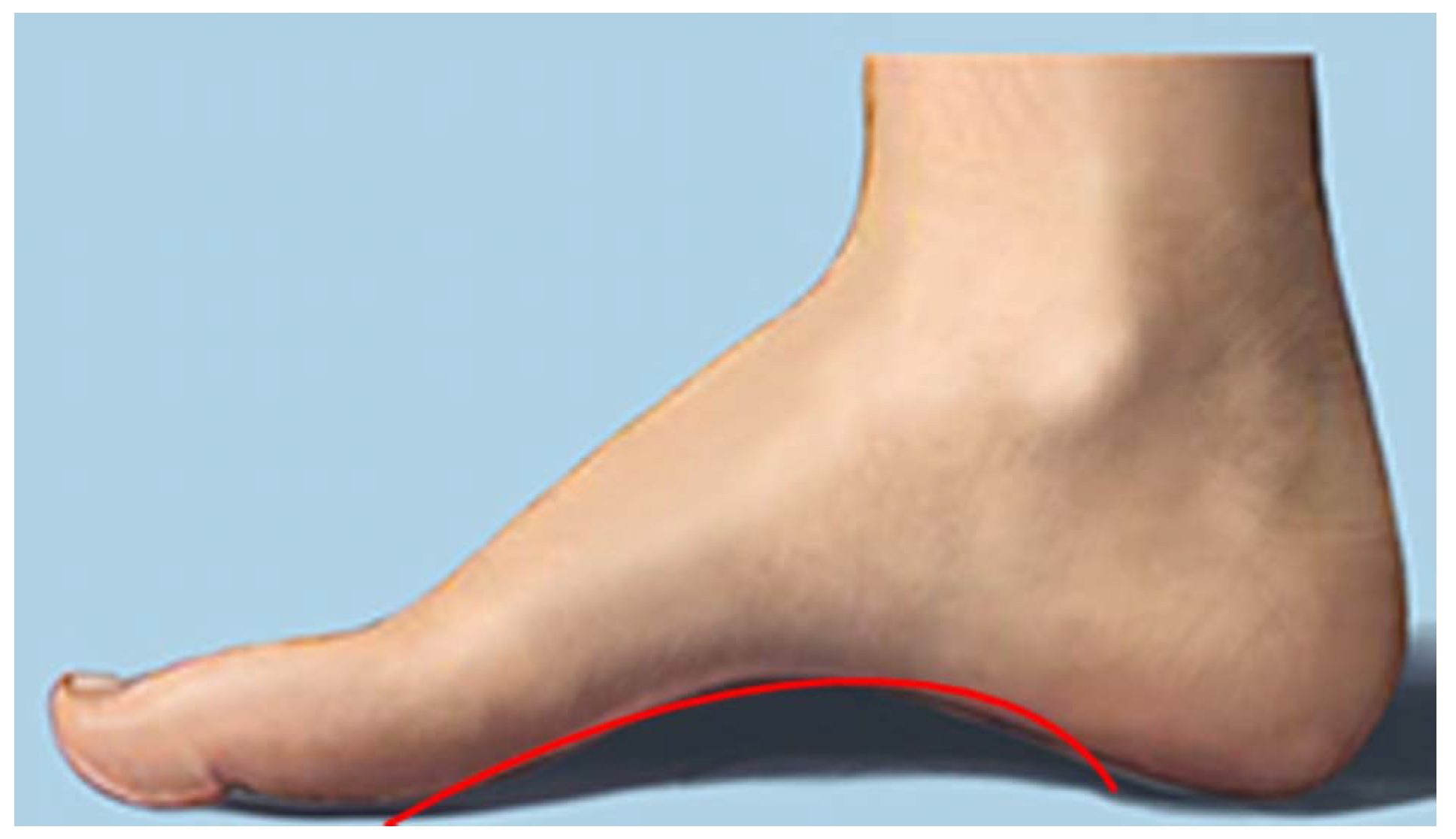
The foot is a complex structure consisting of 26 bones with 16 joints and more than 100 muscles, tendons, and ligaments that allow movement. The foot subdivides into the forefoot, the midfoot, and the hindfoot. The five bones of the midfoot form the arches of the foot, which makes the plantar surface relatively hollow, with lower concavity. The arch is a part of the foot skeleton consisting of longitudinal, medial, lateral, and transverse arches [
8]. The arch of most interest to clinicians, and the focus of this article, is the medial longitudinal arch (MLA), which provides elasticity to the foot and stabilizes posture (
Figure 1) [
9].
The highest point of the MLA is the base of the navicular bone, and a ruler or calipers are sufficient to measure the distance between this point and the ground surface, although the reliability is questionable [
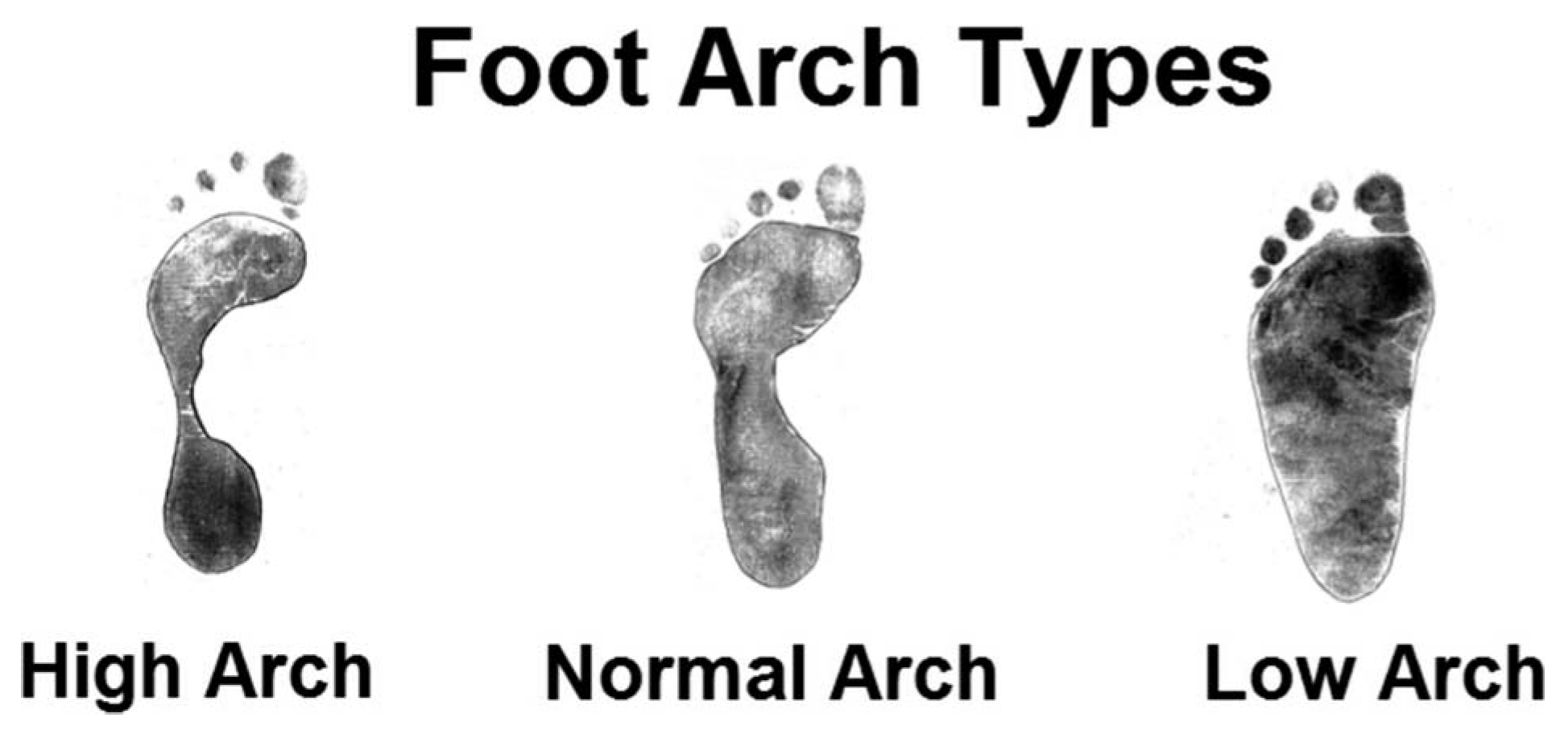
10]. The MLA height may be higher or lower than the normal range for a specific population [
11]. Generally, a hollow foot corresponds to a high MLA, and a flat foot is seen when the MLA is low (
Figure 2).
Measures of Arch Height
The height of the MLA can be measured and categorized with the AI, and it is an important indicator of functional capacity and pathology [
8]. One of the first methods proposed was the arc angle [
12]. This method, however, encountered problems with arc angles of the foot greater than 408. Currently there are several methods to determine AH and AI [
13,
14].
Progress in image analysis such as magnetic resonance imaging has allowed the characterization of the three-dimensional morphology of the bones of the foot and has shown comparable results in determining AH with those provided by experts [
15]. Further research compared electronic and ink footprints to determine whether the contact area, the AI, and the long plantar angle are equivalent [
16]. These studies obtained electronic footprints with a ‘‘Skin-like Sensor Arrays’’ (Interdepartmental Research Center ‘‘E. Piaggio,’’University of Pisa, Pisa, Italy) and recorded the electronic and ink footprints at the same time. The authors concluded that the electronic footprints were less accurate than the ink footprints and recommended that electronic footprints should not be used for clinical diagnostics [
16]. An alternative method is to use a mirror image that reflects the height of the foot edge. The method is easy to use but is not accurate because it depends on visual assessment of height and can classify images into only two different categories [
17].
Arch Index
Although AH can be measured with magnetic resonance imaging, radiography, or computed tomography, which classify foot form with the aid of a predetermined classification tree [
18], using this technology is time-consuming, exposes participants to radiation, is not portable, and is expensive. In addition, most clinicians would not have these modalities available. Several clinical research projects have compared the AI with features obtained from radiographic images and concluded that the AI provided a useful indirect measurement of MLA height [
13,
19].
Determining AH from footprints is a noninvasive method that is easy to use, requires minimal equipment, and provides a permanent record of the plantar surface of the foot for later comparisons after treatment. Arch height determined from footprints is a sensitive and accurate measure of foot function and pathology, with the method of Cavanagh and Rodgers being the most widely used [
1]. However, contradictory results about the accuracy of the method have been reported. In a follow-up study of Cavanagh and Rogers’ method, Hawes et al [
2] concluded that the determination of the AI by the Cavanagh and Rodgers method was not valid as a measure of the AH, predominantly because the parameters of the footprint are not a measurement representative of the MLA. However, Menz et al [
11] compared the results of the computer-based method of Cavanagh and Rodgers with visual inspection of AH by experts and found a highly significant correlation between the observed AH and that calculated by the Cavanagh and Rodgers method. A method similar to that of Cavanagh and Rodgers for determining the AI was developed by Staheli and has been evaluated by Hernandez and colleagues [
20], who found that the Staheli method was easy to use and useful for the identification of flatfoot [
4]. The AI proposed by Staheli differs from the method developed by Cavanagh and Rodgers in that it does not require calculation of the area of the foot. An automated footprint detection approach from digital pressure mapping has also been proposed [
21]. This method provides a more precise plantar foot area for calculation of the AI. However, the plantar foot impression on the pressure mat must be very accurate, which is not always the case in clinical practice. These methods present alternatives to the Cavanagh and Rodgers method, but there is a need to develop an easier-to-use, less time-consuming, clinically relevant, and reliable method that retains the same range for the AI to indicate low, normal, and high AH. Five innovative permutations of calculating the AI were investigated to obtain the AH, with the aim to determine the most reliable and accurate option compared with the current clinical standard.
Methods
Ethical approval was granted from the Human Research Ethics Committee at the University of Newcastle (Protocol 2012-0385), and all of the participants signed a consent form.
Footprints for analysis were collected from 143 volunteers as part of a foot health screening program. The MLA height index was determined using a pedograph footprint system [
22]. The foot ink prints where taken with a standard Ruckgaber Orthopadie ink plate (Ruckgaber Bruggemann, Rottenburg-Seebronn, Germany).
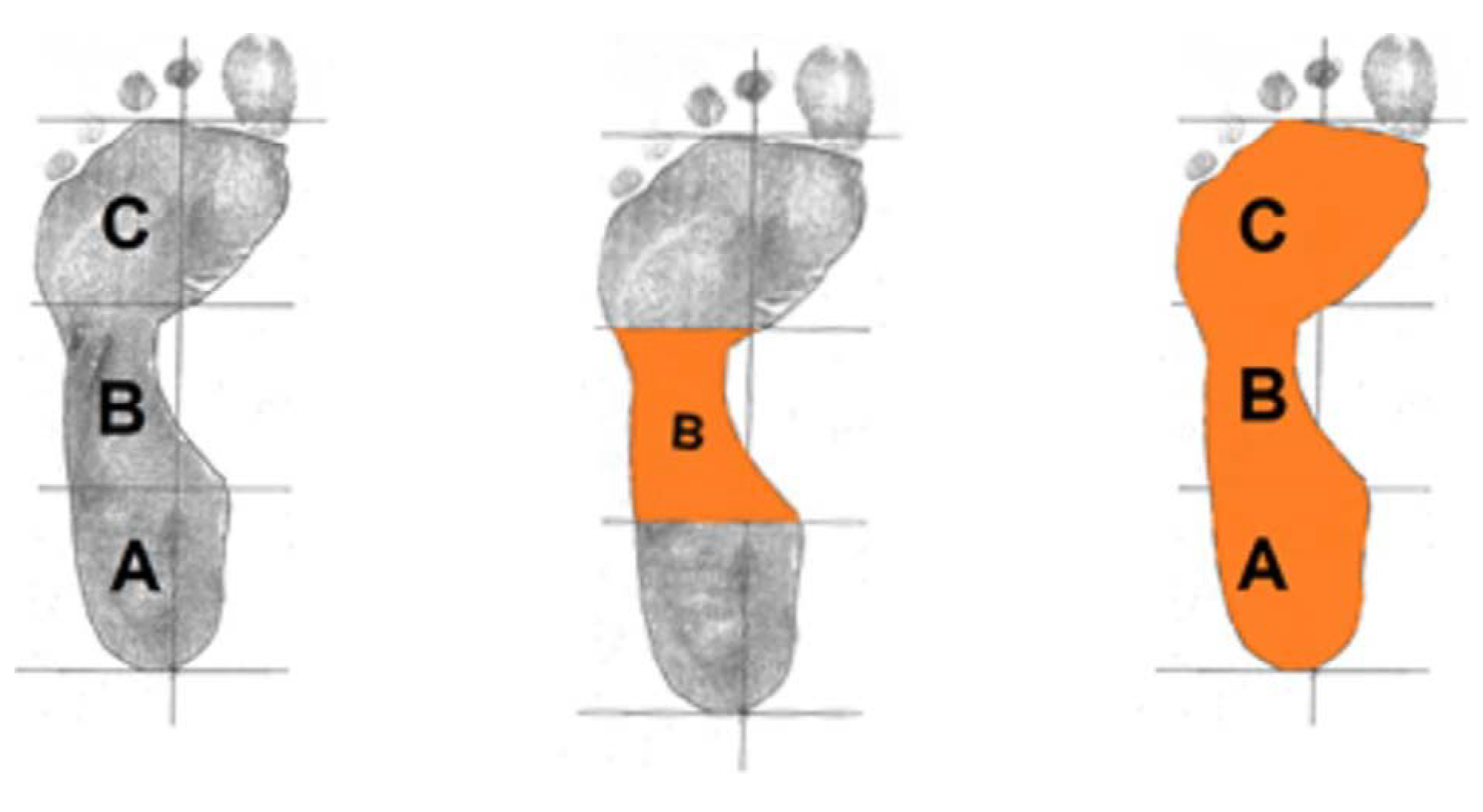
The Cavanagh and Rodgers method requires the footprints to be preprocessed before uploading to the Analyzing Digital Images program. Before uploading the footprint, a line from the second toe to the center of the heel is drawn and is then divided between the tip of the forefoot and the heel. The footprint was then divided into three equal parts: forefoot, midfoot, and rearfoot (
Figure 3). The outline of the toeless foot is traced once the image is uploaded into the Analyzing Digital Images computer program. The AI is then determined by calculating the area of the middle segment (section B) and dividing by the area of the whole foot (sections A, B and C), ie, B/A+B+C (
Figure 3) [
1].
The cutoff values for high, normal, and low arch proposed by Cavanagh and Rodgers were based on the first and third quartiles of the test population. When using the AI, a value lower than 0.21 indicates a high arch, 0.21 to 0.26 a normal arch, and greater than 0.26 a low arch [
1].
The new diagonals AI (AI
d) method requires an ink footprint with a line drawn from the second toe to the center of the heel and is divided into three equal parts, similar to the Cavanagh and Rodgers method. However, the AI
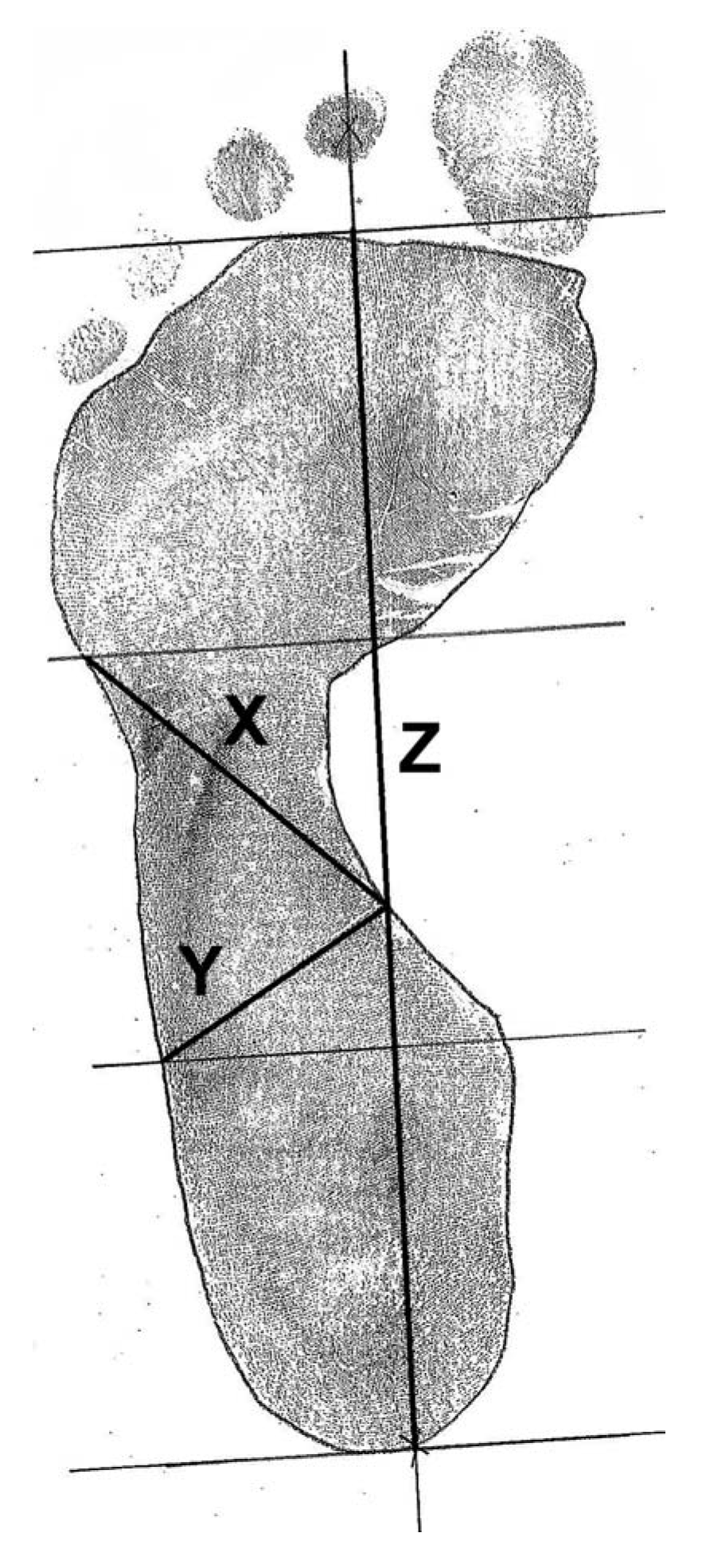
d method does not require use of the Analyzing Digital Images computer program (or other software), the time-consuming tracing of the outline of the foot, or calculation of the area of any section of the plantar foot surface. The new AI
d method simply uses the ratio of two diagonal lines in the midfoot section, and the toeless foot length to obtain the diagonals, to calculate the AI
d (
Figure 4). The AI
d is then applied to classify the footprint into high, normal, and low AH, ie, the same categories as the method developed by Cavanagh and Rodgers [
1].
Five alternatives using the three lines described previously herein (X, Y, and Z measures of the footprint) were trialed to determine a new AI
d and were compared with the results of the Cavanagh and Rodgers AI (
Table 1). Then, a linear analysis model (R statistical package) was used to identify the best alternative of the five possible AI
d models with respect to group membership (high, normal, low AI) determined by the Cavanagh and Rodgers method. The corrected Akaike information criterion (AICc) was used to compare the relative quality of the statistical models, with the lowest score indicating the best model. Results of the linear model are presented as
R2, which provides information on the quality of the prediction of a linear regression. The Wi variable indicates the weighting or percentage likelihood of a correct result that the predicted model has. An analysis of variance (IBM SPSS Statistics for Windows, Version 22.0, IBM Corp, Armonk, NY) combined with the Tukey post hoc test was applied to determine whether the three AI groups were significantly different. Significance was set at
P < .05 for type I error, and a power analysis indicated that for a power of 0.8, a medium effect size of 31 footprints was required.
Results
The present sample consisted of 34 images with high arch, 118 with normal arch, and 42 with low arch following the Cavanagh and Rodgers classification. The best AH measure, ie, that with the lowest AICc value, is shown in the following
equation:

This model was followed by the Y+Z and Y length models. Results for the three best models are shown in
Table 1.
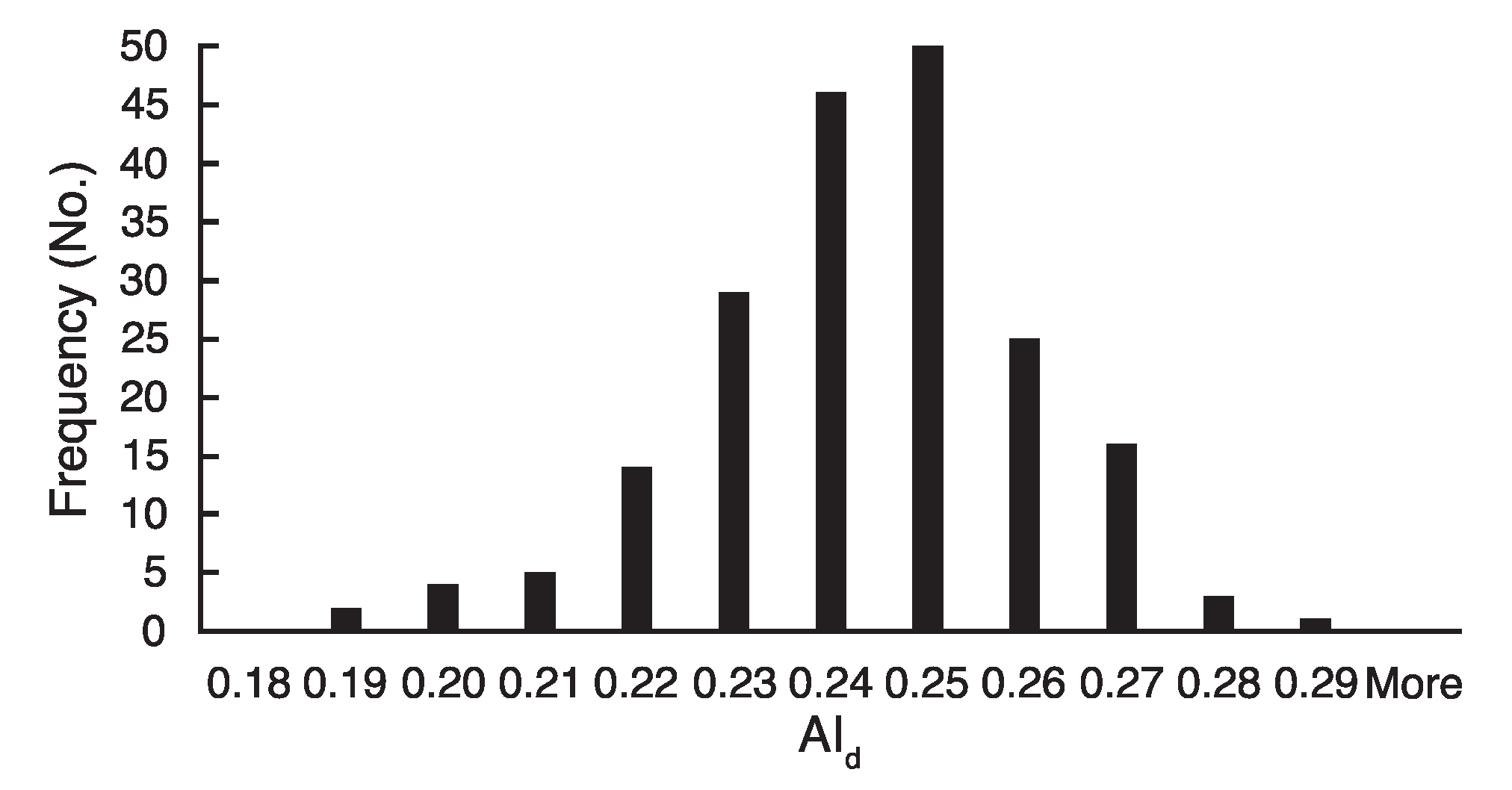
Figure 5 shows the distribution of the best AI
d values corrected for the Cavanagh and Rodgers cutoff values. The first and third quartile (Q) cutoff values for the new AI
d method (Q1: 0.23 and Q3: 0.25) vary slightly compared with the Cavanagh and Rodgers values (Q1: 0.21 and Q3: 0.26) for the current footprint set, reflecting the different sensitivities of the methods. Mean ± SD values for the high, normal, and low AI
d are 7.04 ± 1.09, 6.13 ± 0.85, and 5.38 ± 0.78, respectively. The analysis of variance indicated significant differences among the three groups for the proposed three best models (
F1,194 = 94.49;
P < .0001), and the Tukey post hoc tests indicated significant differences for pairwise comparisons (
P < .001). The new AI
d method, which takes the ratio of X/Y and multiplies this by Z with respect to X, as shown in the previous equation, was compared with the Cavanagh and Rodgers AI using a linear model.
The AICc of the best model has a Wi of 0.87, which is an acceptable outcome for the probability of predicting the correct model with respect to the three AI groups of Cavanagh and Rodgers.
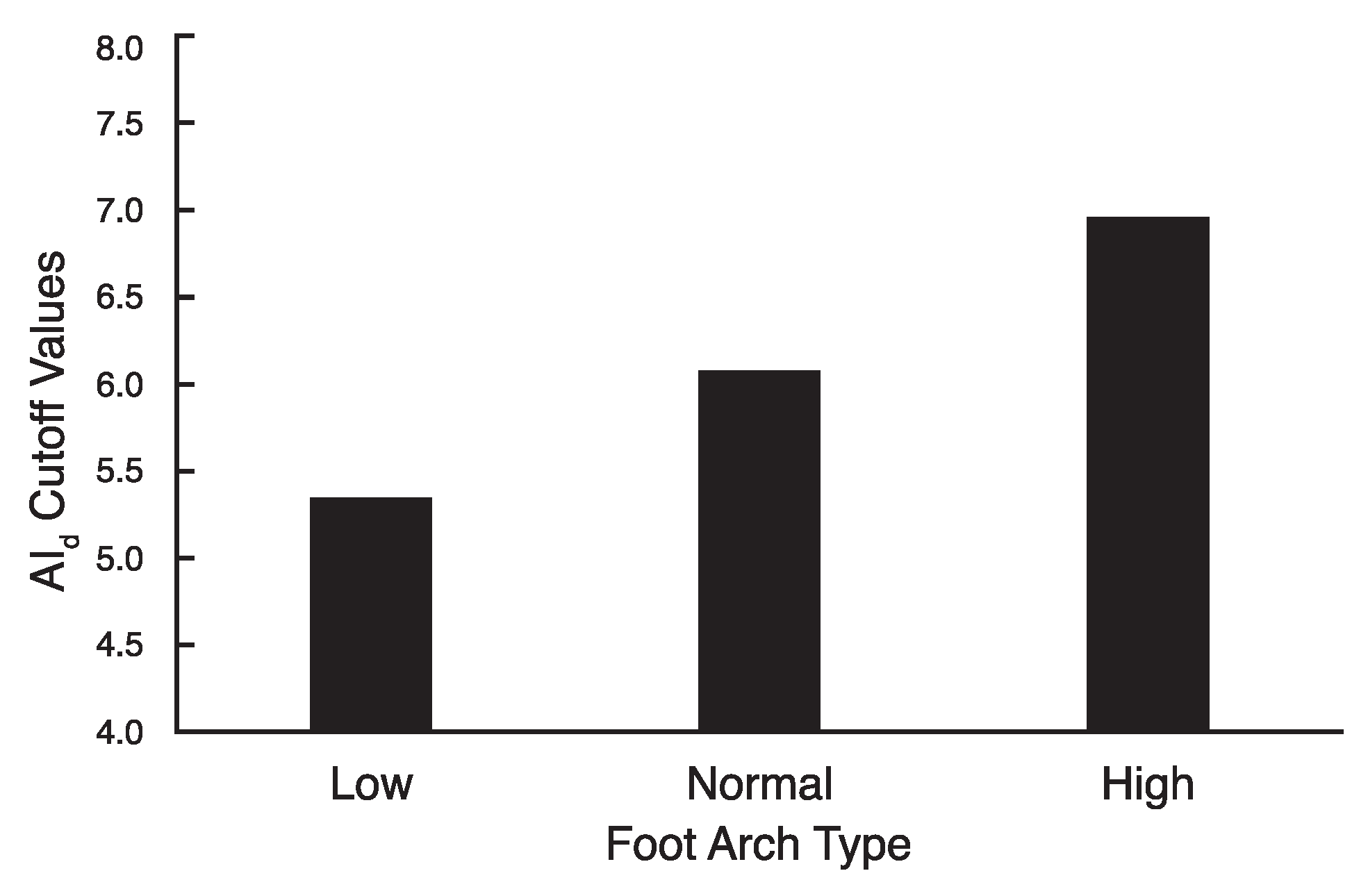
The means and 95% confidence intervals were then calculated for high, normal, and low AH based on the AI
d method (
Figure 6).
The range for the low, normal, and high AI
d based on the means and 95% confidence intervals indicated good separation among the three groups, with no overlap.
Table 2 shows the cutoff values for the proposed method (AI
d) compared with the Cavanagh and Rodgers cutoff values for high and low AI.
Intrarater and interrater comparisons indicated kappa values of 0.98 and 0.96, respectively, for the classification based on the new AI
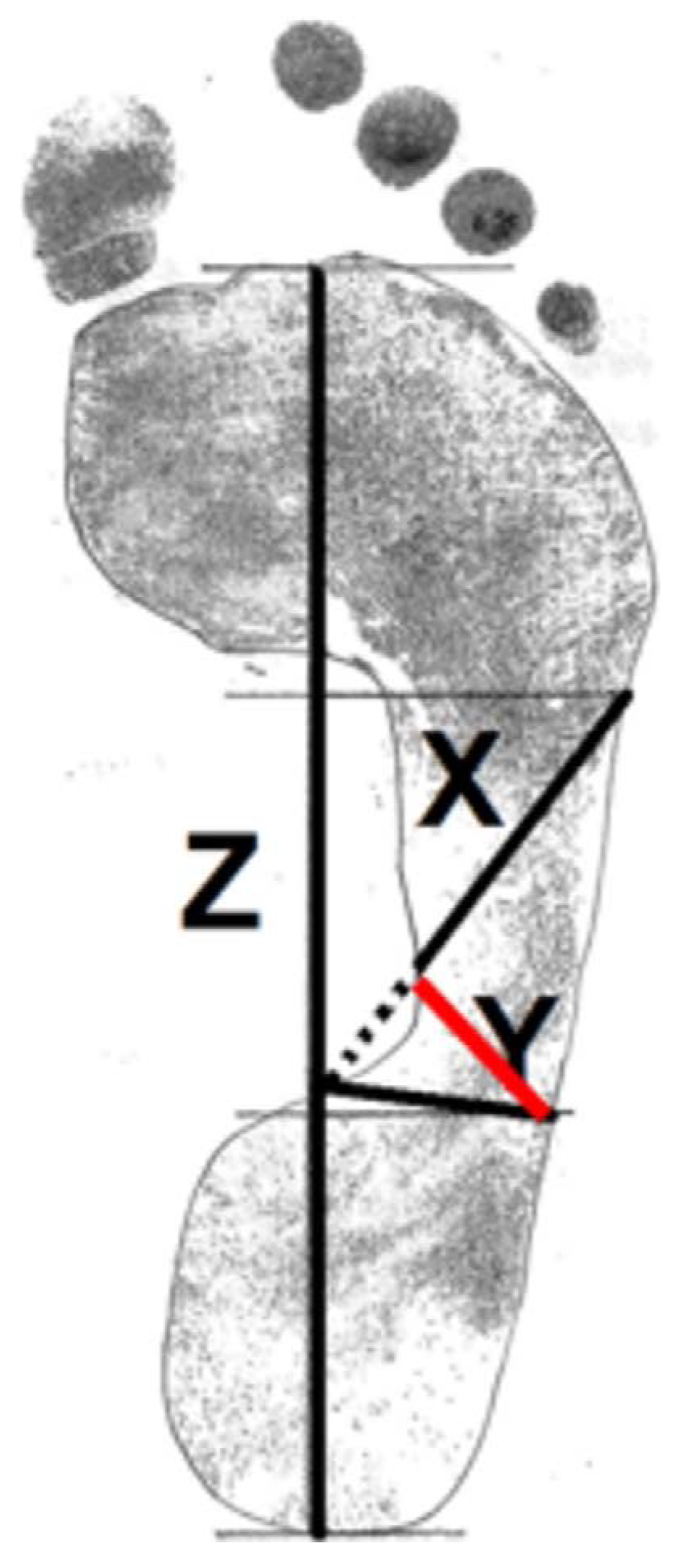
d method. After a clinical review of the footprints according to the Cavanagh and Rodgers groups of high, normal, and low, only one foot shape could not be classified by the AI
d method, requiring a modified AI
d to allow for the vertical foot measure line falling outside of the midfoot area, which is indicated by the dotted line in
Figure 7. A new line needed to be drawn from the point before the X line leaves the arch (the red line in
Figure 7).
The remainder of the images were classified using the proposed AId method. Of these, 11 were classified as normal compared with high by Cavanagh and Rodgers, 19 were classified as low but were in the normal group according to Cavanagh and Rodgers, and 26 were classified as high compared with the Cavanagh and Rodgers cutoffs as normal. These were reviewed by two experts who judged nine to have a high arch type and seven to remain in the low group. For the final comparison, the experts judged all 26 footprints to be more appropriately in the high arch group as determined by the AId. Therefore, with respect to classification of foot type, the current AId method obtained 89% correspondence with the Cavanagh and Rodgers AI.
Discussion
No consensus on a gold standard for determining AH from footprints has been established. The present study investigated an alternative to the AI proposed by Cavanagh and Rodgers [
1] with the aim to simplify the process required to determine the Cavanagh and Rodgers AI and reduce the variability reported for the Staheli index, which is one of the methods reviewed recently, together with the footprint index, the Chippaux-Smirak Index, the AI, the truncated AI, and the arch length index [
4]. Our best AI
d method simplified the approach by requiring only three lines to be drawn across the footprint, with good accuracy and reliability compared with the AI proposed by Cavanagh and Rodgers.
There are several different methods for calculating the AH, but many are complicated and timeconsuming to use and require software or other modalities, eg, radiography, and, therefore, are rarely used by clinicians. However, results from previous research suggest that using a footprint approach provides consistency and allows clinical results to be easily determined [
4,
23,
24,
25,
26]. For the AI to be a useful clinical tool, a simpler, less timeconsuming, noncomputer-based tool is required that can be used by clinicians and researchers. The simplest, although not the best, model that was compared with the Cavanagh and Rodgers results required only the length of the diagonal Y (
Figure 7), with better results obtained when the foot length was included in the equation. This is in agreement with previous research indicating that measures of AH based on navicular height measures improve when the length of the foot is included [
27]. Reliability and repeatability are important in clinical practice and for research. The new AI method (AI
d), compared with several other footprint measures, resulted in the least misclassifications [
28]. The results of this investigation reflect this, with the intrarater and interrater values being greater than 95%.
Conclusions
The new AId method based on the geometry of the midfoot has proved to be clinically relevant, with good accuracy and reliability compared with the present gold standard. This study showed that the proposed AId method is faster and easier to use, which is a robust alternative to the calculation of the AH as reported by Cavanagh and Rogers. However, future work will be needed to investigate whether the AId method can be used for dynamic modeling of AH during gait.