Next Article in Journal
Publication Rates for Oral and Poster Abstracts from the American Podiatric Medical Association: 2010–2014
Previous Article in Journal
Reliability of a New Method to Determine Foot Arch Height for Clinicians
 
 
Journal of the American Podiatric Medical Association is published by MDPI from Volume 116 Issue 1 (2026). Previous articles were published by another publisher in Open Access under a CC-BY (or CC-BY-NC-ND) licence, and they are hosted by MDPI on mdpi.com as a courtesy and upon agreement with American Podiatric Medical Association.
Article

Distal Fibular Osteochondroma Resulting in Tarsal Tunnel Syndrome: Case Report and Literature Review

by
Patrick A. DeHeer
* and
Nicholas Thompson
Johnson Memorial Hospital, Franklin, IN, USA
*
Author to whom correspondence should be addressed.
J. Am. Podiatr. Med. Assoc. 2019, 109(3), 259-263; https://doi.org/10.7547/18-013
Published: 1 May 2019

Abstract

Background: Osteochondromas are benign osseous tumors encountered most routinely by physicians responsible for diagnosing musculoskeletal disorders. Often, these osseous lesions are identified following symptoms related to their impingement on adjacent soft tissue or bone. Methods: This article presents a unique case of an asymptomatic osteochondroma of the distal fibula in a 29-year-old Caucasian woman that manifested clinically as an impingement on the tibial nerve. Results: After resection of the osteochondroma, the patient’s tarsal tunnel syndrome symptoms resolved. Conclusions: This case report demonstrates a never-before-described osteochondroma of the distal fibula traversing posterior to the ankle joint and impinging on the tibial nerve. After resection, the patient’s symptoms resolved.

Osteochondromas represent 10% to 15% of all bone tumors and subsequently constitute 20% to 50% of all benign osseous tumors diagnosed [1,2,3,4,5,6]. The most commonly involved locations are the distal femur, the proximal humerus, and the proximal tibia, all of which happen to possess sizable epiphyseal growth plates [3,7,8,9]. The occurrence of an osteochondroma arising in the distal fibula is exceedingly rare. In a 2006 study reported by Saglik et al, only six of the 382 included patients had osteochondromas that were found to occur in the fibula (1.6%), all of which originated in the proximal end [2]. A similar 16-year review of one Chinese hospital reported 431 patients possessing a total of 1,049 osteochondromas, with 92 occurring in the proximal third of the fibula (8.8%) and none presenting in the distal fibula [10]. In a 2012 case series review of nine distal fibular tumors, Perisano et al noted the vast rarity of these tumors occurring in the literature, and also related the positive functional outcomes seen following their excision in all patients involved [11].
Pedunculated osteochondromas, consisting of a protruding osseous stem with a cartilaginous cap, are capable of generating considerable pain and symptoms secondary to the location and magnitude of their expansive growth. Although quite rare, this benign osseous tumor has been documented in all three bones constituting the ankle, resulting in distinguishable pathology (eg, ankle joint impingement, syndesmotic diastasis, peroneal subluxation) [8,9,12,13,14,15,16,17,18].
Despite numerous documented reports of nerve entrapment secondary to osteochondroma impingement, the presenting symptoms that lead to this diagnosis often relate to the loss of anatomical function secondary to the progressive nerve compression [2,15,19,20,21,22,23,24]. After diagnosing an osteochondroma, the physician and patient must weigh the decision of whether or not to pursue surgery. As is the case of most chronic nerve impingements, there is no guarantee regarding resolution of symptoms or a complete return of both function and sensation following surgical decompression of the nerve. The surgeon should consider excision of symptomatic osteochondromas, resulting in discomfort or potential long-term disability to the patient, and discourage the prophylactic removal of nonpainful osteochondromas. The following case highlights the unique symptoms generated by a previously undetected osteochondroma, along with the diagnosis and subsequent course of treatment.

Case Report

A 29-year-old Caucasian female patient returned to the clinic after initial diagnosis and subsequent treatment for a bilateral predislocation syndrome. While describing the nature of her now-resolved forefoot pains, the patient noted that over the past several months she had been experiencing an inexplicable strain to the medial side of her right ankle along with a mild tingling sensation into the bottom of only her right foot. She related that it paled in comparison to the forefoot pain for which she had initially presented but that, following the resolution of the forefoot pain, it was now her primary concern.
During the physical examination, percussion to the right tarsal tunnel immediately posterior to the medial malleolus elicited a positive Tinel’s sign. While gripping the ankle to perform the examination, a firm, nonpainful prominence was noted posterior to the distal aspect of the right lateral malleolus superior to the level of the ankle. There were no significant findings of limitation to either dorsal or plantar flexion of the ankle joint on range-of-motion assessment. Maximum dorsiflexion of the patient’s ipsilateral hallux elicited no pain. She could not recall any prior trauma to her right ankle and had previously been unaware of any physical differences between her two lower extremities. After discussing the unique findings with the patient, the decision was made to further investigate the origin of her clinically diagnosed tarsal tunnel syndrome.
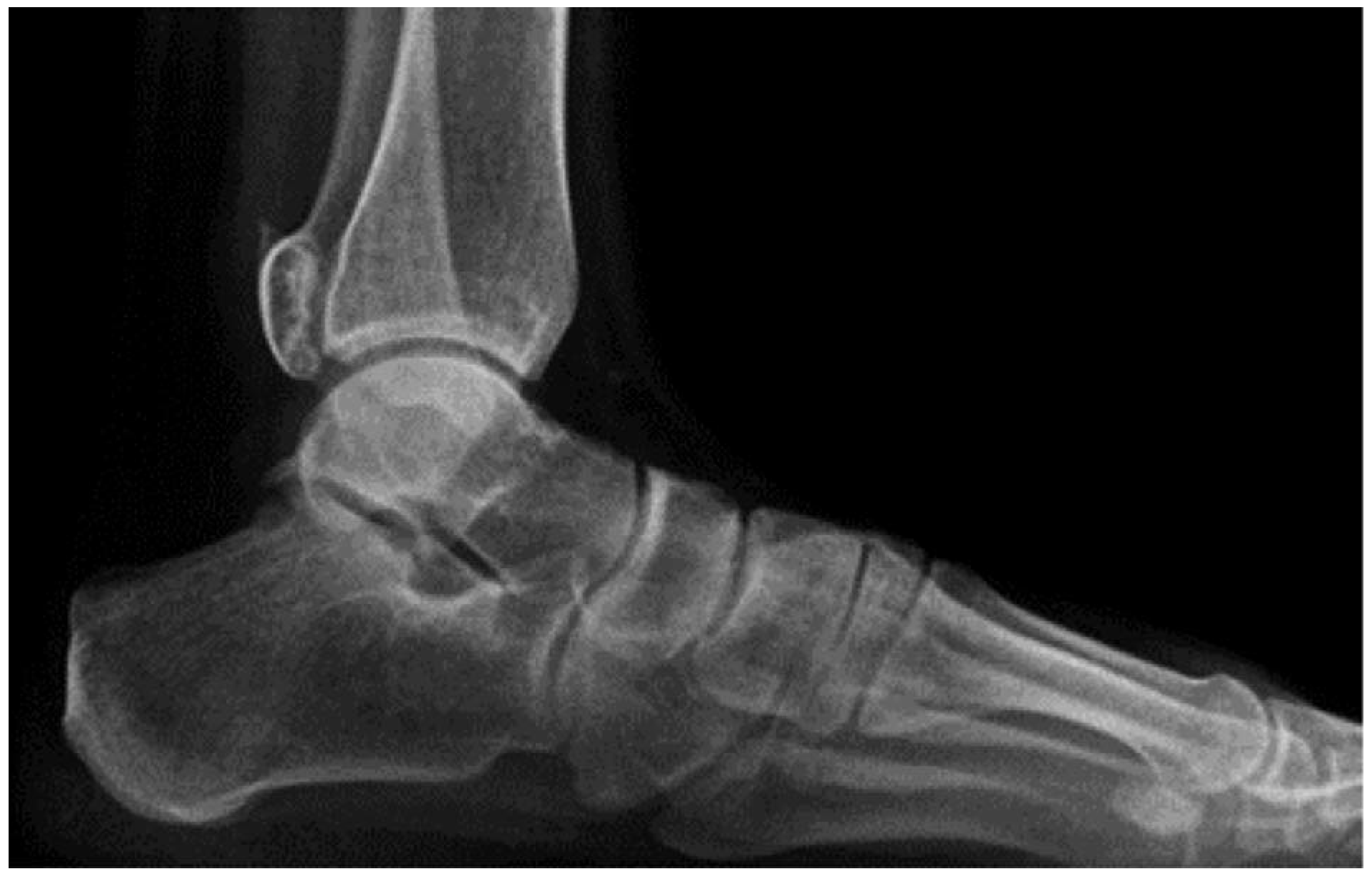
Radiographs of the right ankle taken in the office revealed a subtle osseous overlap extending horizontally posterior to the distal tibia on the anteroposterior view. Isolating the extent of this hard mass was limited because of the overlap of the adjacent nonpathologic bone. The lateral image confirmed the presence of a calcified mass originating from the distal fibula, as was suspected during the clinical assessment (Figure 1). The patient then received orders for a magnetic resonance imaging (MRI) study to be performed on her right ankle.
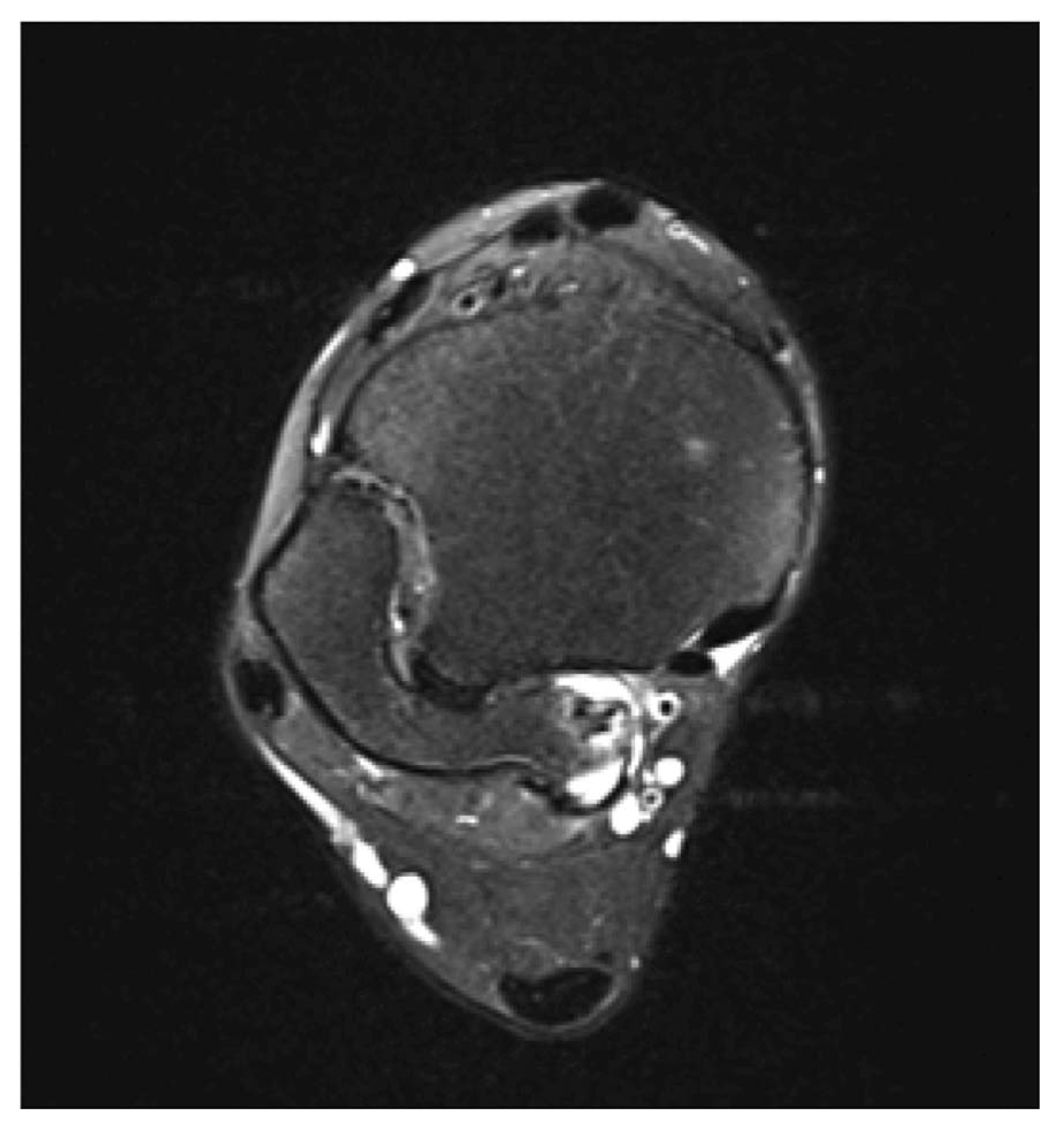
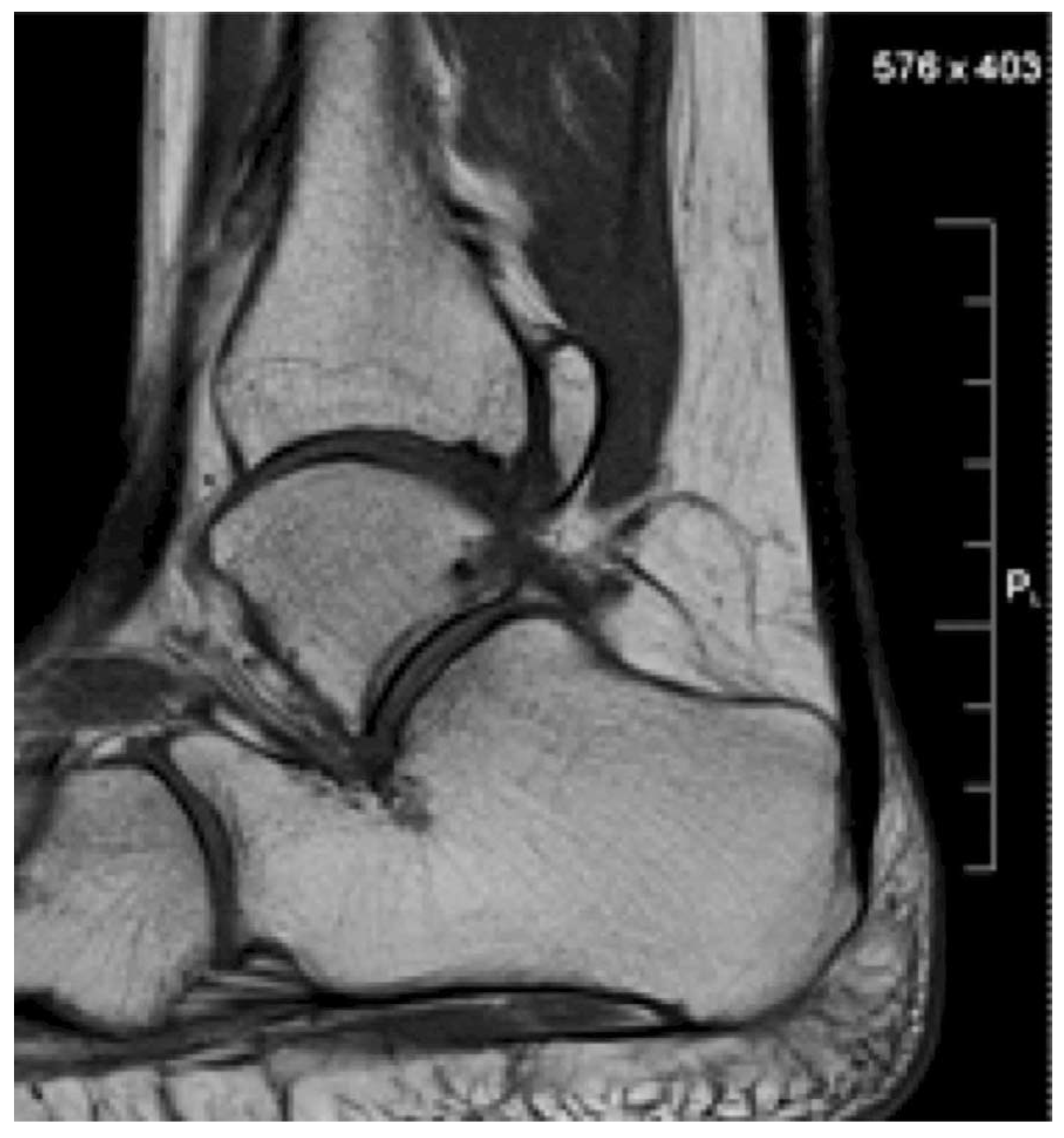
The results of MRI (Figure 2) confirmed the initial clinical suspicion of a fibular osteochondroma as diagnosed by the radiologist with the following dimensions: transverse, 33 mm; anteroposterior, 14 mm; and superoinferior, 23 mm. The report noted that the osteochondroma originated approximately at the level of the intact posterior tibiofibular ligament and the small cartilaginous cap encroached on the lateral tarsal canal. The ankle joint displayed no impingement; however, posterior displacement of the distal flexor hallucis longus (FHL) muscle belly was readily appreciated (Figure 3). Despite these interpretations, the radiologist’s report concluded that the osteochondroma did not display characteristics consistent with those of a malignant tumor. The patient consented to proceed with surgical excision of the mass because of the recent worsening of her symptoms.
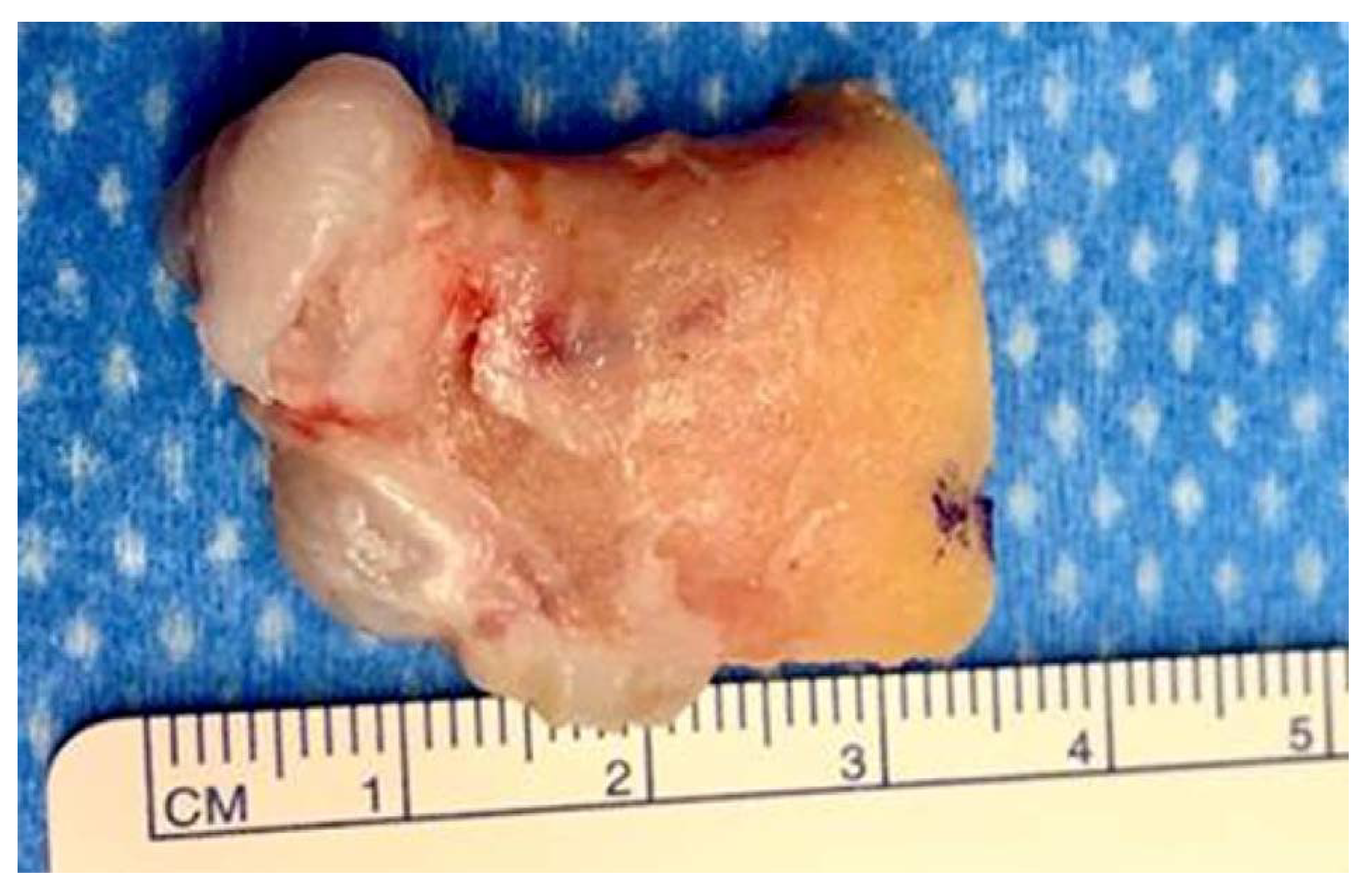
Intraoperatively, the incision was directed longitudinal posterior to the fibula, with care taken to avoid the course of the sural nerve. The peroneal retinaculum and tendon sheaths were incised to allow for retraction. Resection of the osteochondroma at its base performed with a sagittal saw provided an appropriate anatomical curve of the distal posterior fibula. Removal of the osteochondroma occurred in toto by means of blunt dissection. Bone wax was applied to the osseous resection site to aid in hemostasis and prevent subsequent regrowth. The removed bone was inspected and noted to possess three cartilaginous caps consistent in size as described in the preoperative MRI report (Figure 4). The pathologist later confirmed the benign nature of this specimen as an osteochondroma.
The patient tolerated the procedure well and experienced complete resolution of symptoms related to her tarsal tunnel syndrome following the operation. The patient was permitted to begin full weightbearing in a controlled ankle movement boot following the operation for a total of 6 weeks and then transitioned to an athletic shoe. No instability was noted with evaluation of the right ankle postoperatively. The patient’s ankle range of motion was observed to be unrestricted and within reasonable limits at 6 weeks postoperatively.

Discussion

The considerable course of this benign and previously undetected tumor coupled with the subtleness and location of the patient’s presenting symptoms make this case genuinely unique. The impressive retrotibial growth of this osteochondroma managed to remain undiscovered by the patient until impinging on the lateral border of the tarsal tunnel. The diagnosis was determined clinically by the positive Tinel’s sign in the office. Adjacent muscle and tendon positioning was displaced by the course of the tumor, as appreciated by the posterior deflection of the distal FHL muscle seen in this case. The clinical examination failed to contribute evidence suggestive of an FHL tendinitis, with no pain elicited following dorsiflexion of the ipsilateral hallux.
Traditional radiographs may be capable of generating adequate diagnostic evidence to guide surgical excision of blatantly benign and symptomatic tumors. The majority of osteochondromas present in younger patients, which would suggest that this lesion may have continued growing after closure of the adjacent distal fibular growth plate. Chondrocyte proliferation followed by endochondral ossification occurs for the growth of these tumors, and osteochondromas in adults with cartilage caps larger than 2 cm are on average associated with an increased likelihood of malignancy [4,5,25,26,27,28,29]. A three-dimensional computed tomographic interpretation may have proven beneficial in illustrating the extent of the osseous growth in this report; however, MRI was the advanced imaging modality of choice to gauge the proximity of the neurovascular bundle and to assess the cartilaginous cap of this suspected osteochondroma. The MRI report obtained in this case did not include a measurement of cartilage cap thickness, but the radiologist indicated no concern for carcinogenic potential. Although a radiologist’s MRI interpretation will determine the benign versus malignant status of the lesion, a benign osteochondroma with a thick cartilaginous cap should also raise the suspicion of the ordering physician and influence the routine of follow-up appointments for monitoring. If it is determined that the patient has a malignant lesion, an oncology consultation is mandatory before surgical resection is attempted. Regardless of preoperative diagnosis, all excised tumors should be sent for pathologic evaluation after excision to confirm the diagnosis and rule out malignant potential.
Similar to any operation, will the potential for symptom resolution outweigh the risk of complications? Before resection of an osteochondroma in the lower extremity, it is essential to consider the postoperative stability of the remaining structures and to maintain proper closure of the incision following the operation. As the MRI report included an intact posterior tibiofibular ligament, there was little concern for sacrificing the integrity of the patient’s ankle following the resection. Iatrogenic injury to the sural nerve is a regularly encountered complication of lateral ankle and foot operations, with reduced potential following thoughtful dissection. The developing influence of this tumor on the tibial nerve guided the decision to pursue surgical excision in this case.

Conclusions

The clinical workup of a patient’s subjective symptoms may on occasion leave a physician confronted with a diagnosis for which no precedent for treatment exists. As this case highlights, comprehension of the perioperative protocol for osteochondroma resection may provide successful relief of its painful secondary impingement symptoms.

Financial Disclosure

None reported.

Conflicts of Interest

None reported.

References

  1. MURPHEY, M.D.; CHOI, J.J.; KRANSDORF, M.J.; et al. Imaging of osteochondroma: variants and complications with radiologic-pathologic correlation. Radiographics 2000, 20, 1407. [Google Scholar] [CrossRef]
  2. SAGLIK, Y.; ALTAY, M.; UNAL, V.S.; et al. Manifestations and management of osteochondromas: a retrospective analysis of 382 patients. Acta Orthop Belg 2006, 72, 748. [Google Scholar] [PubMed]
  3. UNNI, K.K. Cartilaginous lesions of bone. J Orthop Sci 2001, 6, 457. [Google Scholar] [CrossRef] [PubMed]
  4. ISMAIL, B.E.; KISSEL, C.G.; HUSAIN, Z.S.; et al. Osteochondroma of the distal tibia in an adolescent: a case report. J Foot Ankle Surg 2008, 47, 554. [Google Scholar] [CrossRef]
  5. DERK, F.F.; NARDOZZA, A.J. Osteochondroma of the subtalar joint. J Foot Ankle Surg 1994, 33, 448. [Google Scholar] [PubMed]
  6. DE SOUZA, A.M. BISPO JU´ NIOR RZ: Osteochondroma: ignore or investigate? Rev Bras Ortop 2017, 49, 555. [Google Scholar] [CrossRef]
  7. VERMA, A.; GUPTA, A.; VIJAY, R.K. Unusual presentation of an osteochondroma. Eur J Orthop Surg Traumatol 2010, 20, 479. [Google Scholar] [CrossRef]
  8. TSANG, J.Y.; BHOSALE, A.; PILLAI., A. Retrofibular osteochondroma with peroneal tendon subluxation. Foot (Edinb) 2015, 25, 41. [Google Scholar] [CrossRef]
  9. DURAK, K.; BILGEN, O.; KALELI, T.; et al. Distal fibula resection in osteochondroma. J Int Med Res 1996, 24, 381. [Google Scholar] [CrossRef]
  10. TONG, K.; LIU, H.; WANG, X.; et al. Osteochondroma: review of 431 patients from one medical institution in South China. J Bone Oncol 2017, 8, 23. [Google Scholar] [CrossRef]
  11. PERISANO, C.; MARZETTI, F.; SPINELLI, M.S.; et al. Clinical management and surgical treatment of distal fibular tumours: a case series and review of the literature. Int Orthop 2012, 36, 1907. [Google Scholar] [CrossRef][Green Version]
  12. RIBBANS, W.J.; CHADWICK, J.; NATARAJAN, R. Bilateral arthrodesis of the distal tibiofibular joint for deforming osteochondromatas. JRSM Open 2017, 8, 1. [Google Scholar] [CrossRef] [PubMed]
  13. SØRENSEN, B.W.; MIKKELSEN, P. Arthrodesis of the distal tibiofibular joint for an osteochondroma in the fibula encroaching on the distal tibia and involving the talocrural joint: a case report. J Foot Ankle Surg 2012, 51, 664. [Google Scholar] [CrossRef]
  14. CIAMPOLINI, J.; GARGAN, M.F.; NEWMAN, J.H. Arthrodesis of the distal tibiofibular joint for a large osteochondroma in an adult. Foot Ankle Int 1999, 20, 657. [Google Scholar] [CrossRef]
  15. Herrera-Perez, M.; Aciego De Mendoza, M.; De Bergua-DOMINGO, J.M.; et al. Osteochondromas around the ankle: report of a case and literature review. Int J Surg Case Rep 2013, 4, 1025. [Google Scholar] [CrossRef] [PubMed]
  16. ERCIN, E.; BILGILI, M.G.; GAMSIZKAN, M.; et al. Talar osteo-chondroma fracture presenting as posterior ankle impingement. JAPMA 2016, 106, 225. [Google Scholar] [CrossRef]
  17. JOSHI, D.; KUMAR, N.; SINGH, D.; et al. Osteochondroma of the talus in a male adolescent. JAPMA 2005, 95, 494. [Google Scholar] [CrossRef] [PubMed]
  18. SOUTHERLAND, J.T. Osteochondroma of the distal tibia: a case study. JAPMA 1995, 85, 542. [Google Scholar] [CrossRef]
  19. BOTTNER, F.; RODL, R.; KORDISH, I.; et al. Surgical treatment of symptomatic osteochondroma: a three- to eight-year follow-up study. J Bone Joint Surg Br 2003, 85, 1161. [Google Scholar] [CrossRef]
  20. MONTGOMERY, P.Q.; GODDARD, N.J. KEMP HB: Solitary osteo-chondroma causing sural nerve entrapment neuropathy. J R Soc Med 1989, 82, 761. [Google Scholar] [CrossRef] [PubMed]
  21. YOO, J.H.; MIN, K.D.; KIM, C.K.; et al. A case of extension loss of great toe due to peroneal nerve compression by an osteochondroma of the proximal fibula. Arch Orthop Trauma Surg 2010, 130, 1071. [Google Scholar] [CrossRef]
  22. PAPROTTKA, F.J.; MACHENS, H.G.; LOHMEYER, J.A. Partially irreversible paresis of the deep peroneal nerve caused by osteocartilaginous exostosis of the fibula without affecting the tibialis anterior muscle. J Plast Reconstr Aesthet Surg 2012, 65, e223. [Google Scholar] [CrossRef]
  23. MONTELLA, B.J.; O’FARRELL, D.A.; FURR, W.S.; et al. Fibular osteochondroma presenting as chronic ankle sprain. Foot Ankle Int 1995, 16, 207. [Google Scholar] [CrossRef]
  24. WATSON, L.W.; TORCH, M.A. Peroneal nerve palsy secondary to compression from an osteochondroma. Orthopedics 1993, 16, 706. [Google Scholar] [CrossRef]
  25. DOUIS, H.; SAIFUDDIN, A. The imaging of cartilaginous bone tumours: I. Benign lesions. Skeletal Radiol 2012, 41, 1196. [Google Scholar] [CrossRef] [PubMed]
  26. STIEBER, J.R.; DORMANS, J.P. Manifestations of hereditary multiple exostoses. J Am Acad Orthop Surg 2005, 13, 110. [Google Scholar] [CrossRef] [PubMed]
  27. MALGHEM, J.; VANDE BERG, B.; NOEL, H.; et al. Benign osteochondromas and exostotic chondrosarcomas: evaluation of cartilage cap thickness by ultrasound. Skeletal Radiol 1992, 21, 33. [Google Scholar] [CrossRef]
  28. HUDSON, T.M.; SPRINGFIELD, D.S.; SPANIER, S.S.; et al. Benign exostoses and exostotic chondrosarcomas: evaluation of cartilage thickness by CT. Radiology 1984, 152, 595. [Google Scholar] [CrossRef]
  29. DOUIS, H.; SAIFUDDIN, A. The imaging of cartilaginous bone tumours: II. Chondrosarcoma. Skeletal Radiol 2013, 42, 611. [Google Scholar] [CrossRef] [PubMed]
Figure 1. Lateral projection of the right foot illustrates the osseous projection that originated from the posterior aspect of the fibula.
Japma 109 00259 g001
Figure 2. T2-weighted axial section of the ankle at the level of the posterior tibiofibular ligament, demonstrating the fibular osteochondroma invasion into the soft-tissue space posterior to the tibia and abutting the lateral aspect of the tarsal canal.
Japma 109 00259 g002
Figure 3. T1-weighted sagittal section of the ankle with medial projection of the fibular osteochondroma displacing the muscle belly of the flexor hallucis longus posteriorly.
Japma 109 00259 g003
Figure 4. Postoperative measurements were consistent with those obtained by the radiologist on magnetic resonance imaging.
Japma 109 00259 g004
Disclaimer/Publisher’s Note: The statements, opinions and data contained in all publications are solely those of the individual author(s) and contributor(s) and not of MDPI and/or the editor(s). MDPI and/or the editor(s) disclaim responsibility for any injury to people or property resulting from any ideas, methods, instructions or products referred to in the content.