Next Article in Journal
A Rare Cause of Heel Pain: A Calcaneal Spur Fracture
Previous Article in Journal
Ciprofloxacin-Induced Bullae of the Lower Extremity: A Case of a Fixed Drug Reaction
 
 
Journal of the American Podiatric Medical Association is published by MDPI from Volume 116 Issue 1 (2026). Previous articles were published by another publisher in Open Access under a CC-BY (or CC-BY-NC-ND) licence, and they are hosted by MDPI on mdpi.com as a courtesy and upon agreement with American Podiatric Medical Association.
Article

Crystal-Induced Arthritis After Total Ankle Arthroplasty

by
Le Hoang Nam Dang
1,
Jong-Kil Kim
2 and
Kwang-Bok Lee
1,*
1
Department of Orthopedic Surgery, Chonbuk National University Medical School, Research Institute of Clinical Medicine of Chonbuk National University-Biomedical Research Hospital, Jeonju, Republic of Korea
2
Department of Orthopedic Surgery, Presbyterian Medical Center, Jeonju, Republic of Korea
*
Author to whom correspondence should be addressed.
J. Am. Podiatr. Med. Assoc. 2019, 109(2), 159-161; https://doi.org/10.7547/17-097
Published: 1 March 2019

Abstract

The causes of late-onset pain after total ankle replacement (TAR) are various, and include infection, subsidence, polyethylene spacer failure, osteolysis, and wear. There are few reports of late-onset pain caused by gouty attacks after total knee and hip arthroplasty. In addition, no research has reported gouty attacks after total ankle arthroplasty. Therefore, we report a case of a gouty attack after total ankle replacement. A 43-year-old man presented with pain after total ankle arthroplasty performed 5 years previously. We found a white-yellow crystalline deposit within the synovial tissue during ankle arthroscopy, confirmed by histologic examination.

Total ankle replacement (TAR) has become an increasingly popular treatment option for degenerative arthritis, posttraumatic arthritis, and rheumatoid arthritis of the ankle. The causes of late-onset pain after TAR are various and include infection, subsidence, polyethylene spacer failure, osteolysis, and wear. Reports of late-onset pain induced by gouty attacks after total knee[1-8] and hip[9,10] arthroplasty are few. Moreover, there exists no research that reports on gouty attacks after total ankle arthroplasty. We thus provide the first case study of a gouty attack after TAR.

Case Report

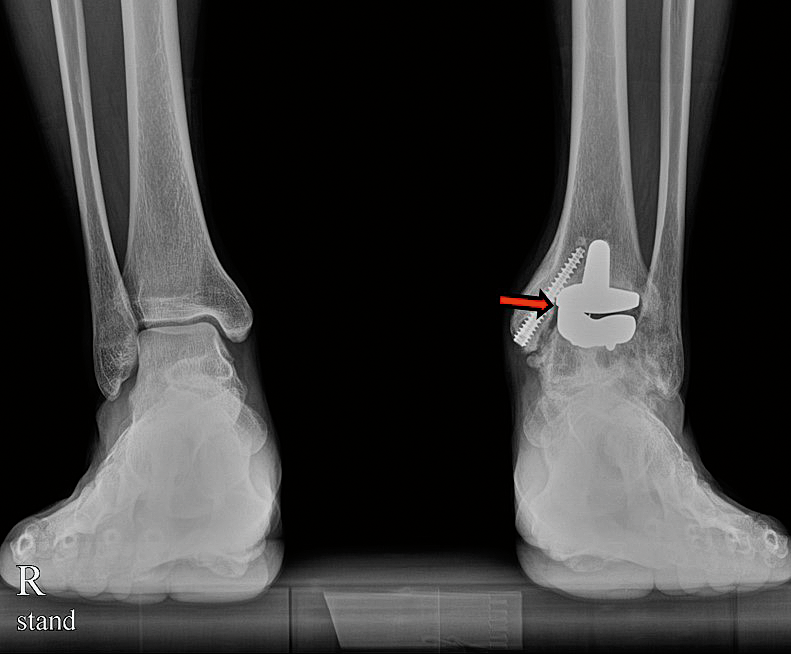
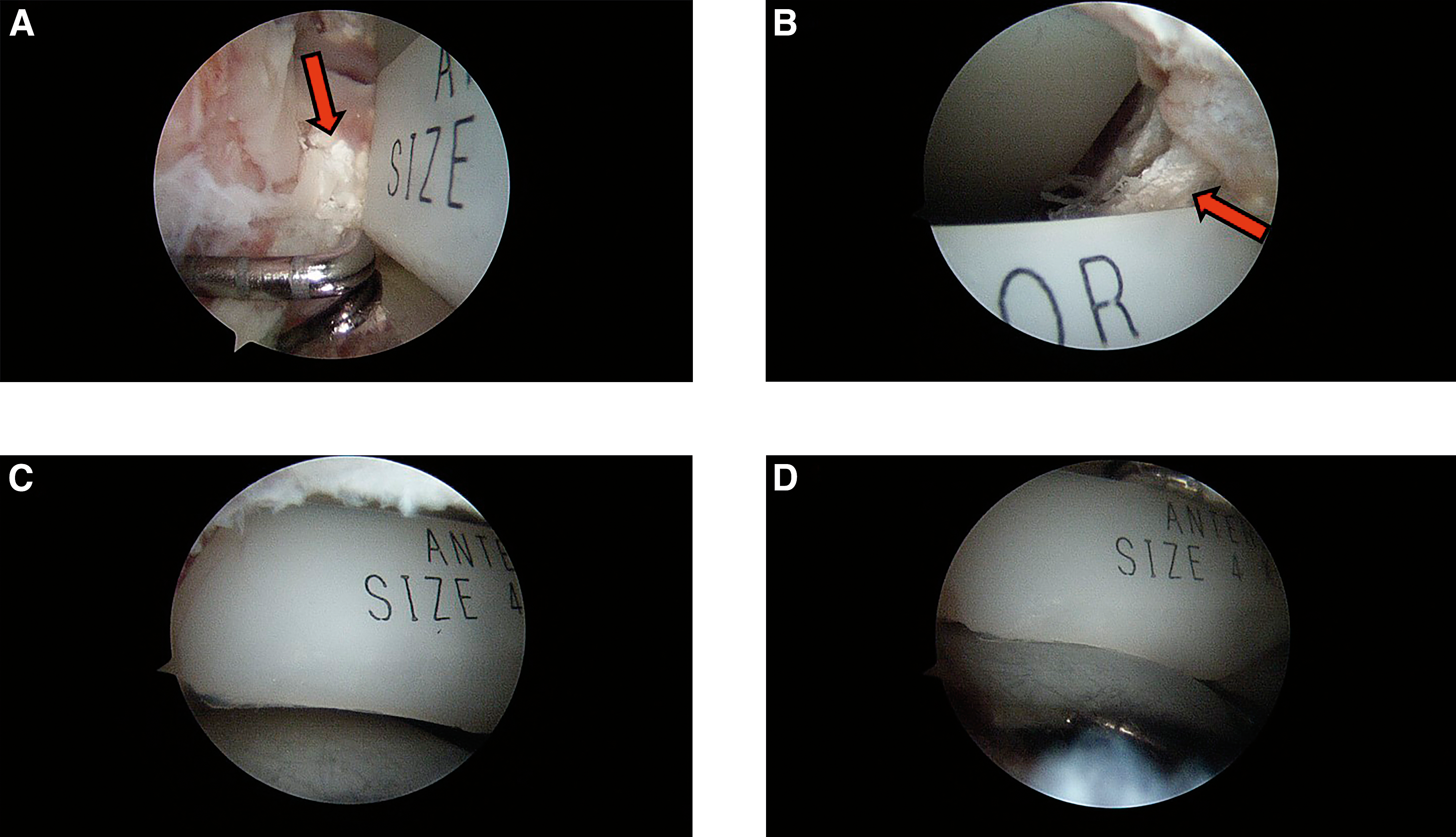
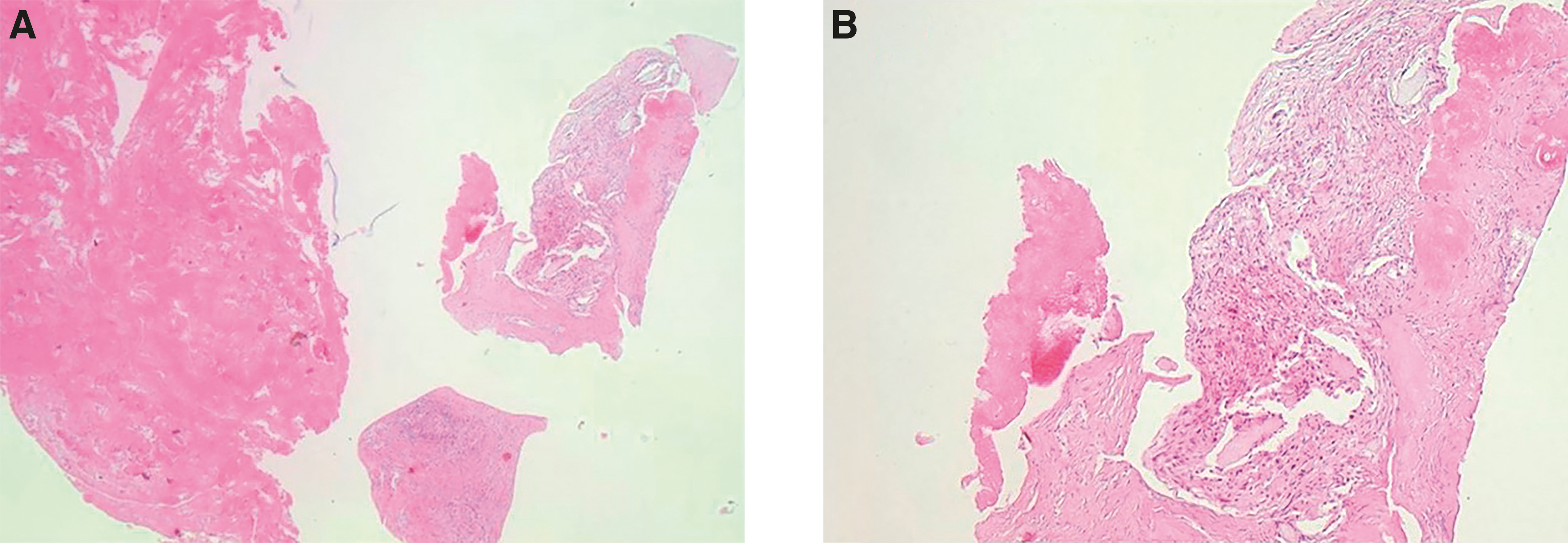
A 43-year-old man who had undergone total ankle arthroplasty 5 years previously presented with pain in the left ankle (visual analog scale score of 8). The patient had complained about continuous ankle pain (visual analog scale score of 2) for the past 2 years, but reported that the pain had worsened within the past 2 weeks. Physical examination revealed mild swelling and a range of motion of 0° to 40°; however, signs of inflammation (eg, erythema, local heat sensation) were not exhibited. Plain radiographs showed no signs of loosening but did demonstrate signs of polyethylene wear, including narrowing of the medial joint space (Fig. 1). Thinking that the pain was caused by polyethylene wear and synovitis caused by wear particles, we performed ankle arthroscopy to evaluate the degree of polyethylene wear and to control the synovitis. However, the arthroscopy process revealed no sign of polyethylene wear but did show a white-yellow crystalline deposit within the synovial tissue (Fig. 2). We collected a sample of the deposit using an arthroscopic shaver and performed histologic analysis after the synovectomy. Histologic examination revealed a reactive bone formation, with eosinophilic amorphous materials (Fig. 3). Laboratory studies provided results within normal ranges: white blood cell count, 8.2 × 10³/μL; erythrocyte sedimentation rate, 1 mm/h (reference range, 0–9 mm/h); C-reactive protein value, 0.20 mg/L (reference range, 0–5 mg/L); and uric acid level, 6.4 mg/dL (reference range, 3.0 to 8.3 mg/dL). The patient felt sufficiently comfortable to move 2 weeks after surgery and taking medication with colchicine and nonsteroidal antiinflammatory drugs.
Figure 1 . Preoperative weight-bearing radiograph showing medial joint space narrowing (red arrow) and varus tilting of talar components that were suspected of having worn polyethylene.
Japma 109 00159 g001
Figure 2 . Intraoperative photographs showing a white-yellow crystalline deposit within the synovial tissue under arthroscopy (A and B), and normal polyethylene (C and D).
Japma 109 00159 g002
Figure 3 . Histologic findings showed a reactive bone formation with eosinophilic amorphous material. A, Low-power magnification; B, high-power magnification.
Japma 109 00159 g003

Discussion

Total ankle replacement has become an increasingly popular treatment option for degenerative arthritis, posttraumatic arthritis, and rheumatoid arthritis of the ankle. Even in recent cases of patients with gouty arthritis, the procedure has been preferred rather than joint arthrodesis. However, several case studies have reported recurrent gouty attacks after arthroplasty, particularly after total knee replacement.[1-8] Several studies have also observed this after hip joint surgery.[9,10] However, there is no research study that reports on gouty attacks after TAR. This is, thus, to the best of our knowledge, the first report on crystal-induced arthritis after TAR.
After arthroplasty, crystal-induced arthritis can be induced by monosodium urate, calcium pyrophosphate dehydrate crystal, and hydroxyapatite crystal. In the case of monosodium urate, accumulation occurs in synovial remnants and neosynovial tissue around the prosthesis after replacement. In the case of calcium pyrophosphate dehydrate crystal, deposition occurs by way of remnants of preoperatively damaged cartilage and postoperative cartilaginous metaplasia around the prosthesis.[7] In most reported cases, arthritis was observed after knee arthroplasty, especially after unicondylar knee arthroplasty. In cases of total ankle arthroplasty, the anatomical features of the ankle account for the lack of reports of arthritis. These features are as follows: 1) a lesser amount of synovium than in the knee, and 2) bony structures that are more stable than those of the knee, which likely prevent the excessive formation of neosynovial tissue. Furthermore, because synovium is more extensively removed in ankle arthroplasties than in knee arthroplasties, there is less tissue available for the development of crystal accumulation, which may be the reason for the scarcity of occurrences in the ankle. Another factor contributing to less arthritis in the ankle than in the knee is that all cartilage is removed during prosthesis implantation in the former, whereas the patellar cartilage is preserved in knee arthroplasties.
Radiography detected polyethylene wear in this patient, and arthroscopy was used to evaluate its extent. No sign of inflammation was found, and the uric acid level was within the normal range. Accordingly, the synovitis caused by the polyethylene wear was originally considered to be the source of pain, rather than gouty arthritis.[11,12] However, a white-yellow crystalline deposit was observed by means of arthroscopy. Unfortunately, this was a limited diagnosis, as our use of polarized light microscopy and saline irrigation during the arthroscopic procedure failed to access joint fluid containing monosodium urate crystal. Nevertheless, this is a significant case study insofar as it is the first report of crystal-induced arthritis after ankle arthroplasty.
Financial Disclosure: This study was supported by a grant from the Biomedical Research Institute of Chonbuk National University Hospital (CNUH-BRI-2012-02-005).
Conflict of Interest: None reported.

References

  1. Crawford L, Kumar A, Shepard GJ: Gouty synovitis after total knee arthroplasty: a case report. J Orthop Surg (Hong Kong)15: 384, 2007.
  2. Hirose CB, Wright RW: Calcium pyrophosphate dihydrate deposition disease (pseudogout) after total knee arthroplasty. J Arthroplasty22: 273, 2007.
  3. Holt G, Vass C, Kumar CS: Acute crystal arthritis mimicking infection after total knee arthroplasty. BMJ331: 1322, 2005.
  4. Kobayashi H, Akizuki S, Takizawa T, et al: Three cases of pseudogout complicated with unicondylar knee arthroplasty. Arch Orthop Trauma Surg122: 469, 2002.
  5. Levi GS, Sadr K, Scuderi GR: Bilateral pseudogout 8 years after bilateral total knee arthroplasty. Orthop Clin North Am43: e59, 2012.
  6. Sonsale PD, Philipson MR: Pseudogout after total knee arthroplasty. J Arthroplasty22: 271, 2007.
  7. Yahia SA, Zeller V, Desplaces N, et al: Crystal-induced arthritis after arthroplasty: 7 cases. Joint Bone Spine83: 559, 2016.
  8. Zadaka A, Gioe T, Gertner E: Acute crystal-induced arthritis following arthroplasty. J Knee Surg23: 17, 2010.
  9. Hahnel J, Ramaswamy R, Grainger A, et al: Gout arthropathy following hip arthroplasty: a need for routine aspiration microscopy? A review of the literature and case report. Geriatr Orthop Surg Rehabil1: 36, 2010.
  10. Yeh WL, Shi CH: Gout with aseptic loosening of cementless total hip arthroplasty: a case report. Changgeng Yi Xue Za Zhi17: 384, 1994.
  11. Lim HA, Song EK, Seon JK, et al: Causes of aseptic persistent pain after total knee arthroplasty. Clin Orthop Surg9: 50, 2017.
  12. Song IS, Sun DH, Chon JG, et al: Results of revision surgery and causes of unstable total knee arthroplasty. Clin Orthop Surg6: 165, 2014.