Lateral ankle instability can originate from trauma, participation in high risk-activities, overuse, abnormal foot biomechanics, or a combination of all of these, which can result in tearing, flattening, and fraying of the peroneal tendons over time and altered ankle kinematics and arthritis.[
1] Repeated inversion of the foot and ankle can cause stretching and tension on both peroneal tendons and lateral ankle ligaments, which in turn may cause injury and instability.[
2] It has been noted that chronic peroneal tendon tears are frequently overlooked or misdiag-nosed.[
3] Depending on the severity of the tendon pathology, various surgical treatment options are recommended.[
3,
4] When less than 50 percent of the cross-sectional area of the tendon is involved, tears are often treated with debridement and tendon retubularization. Involvement of more than half of the cross-sectional area of tissue may necessitate tenodesis to the adjacent intact peroneal tendon or grafting when both tendons are found to be nonfunctional.[
3,
4] Van Dijk et al[
5] stated that, in the case of an acute complete rupture, both ends of the affected tendon may be sutured together, although in chronic cases some form of tenodesis or tendon interposition is required to restore tendon integrity. There has been little focus on the use of cadaveric grafts in the repair of diseased peroneal tendon. One recent study did include the use of peroneal grafts on patients with peroneal tendon tears. In a retrospective review, Mook et al[
6] described satisfactory results using peroneal and semitendinosus muscle allografts on 14 patients with peroneal tendon ruptures, with a mean postoperative decrease in the visual analog scale pain score. Other studies have shown the clinical benefits of using cadaveric tendon interposition grafts on other anatomical locations. Clifford and McCann[
7] reported improved ankle stability using a single cadaver flexor digitorum tendon graft to repair the lateral ankle ligamentous complex in comparison with presectioned anterior talofibular and calcaneofibular ligaments in cadaveric specimens. Success has also been shown previously in anterior talofibular ligament reconstruction using cadaver semitendinosus allograft, which showed strength and stiffness similar to native ligament at time 0 in fresh frozen cadaveric models.[
8] Yang et al[
9] used cadaveric Achilles tendon autograph to augment the Achilles tendon after diffuse-type tenosynovial giant cell tumor resection in a 52-year-old woman. The author reported that the graft shortened recovery time and the patient regained ankle range of motion. Grady et al[
10] showed encouraging results with the use of posterior tibial tendon cadaver graft in a marathon runner sustaining complete flexor hallucis longus rupture.
Case Report
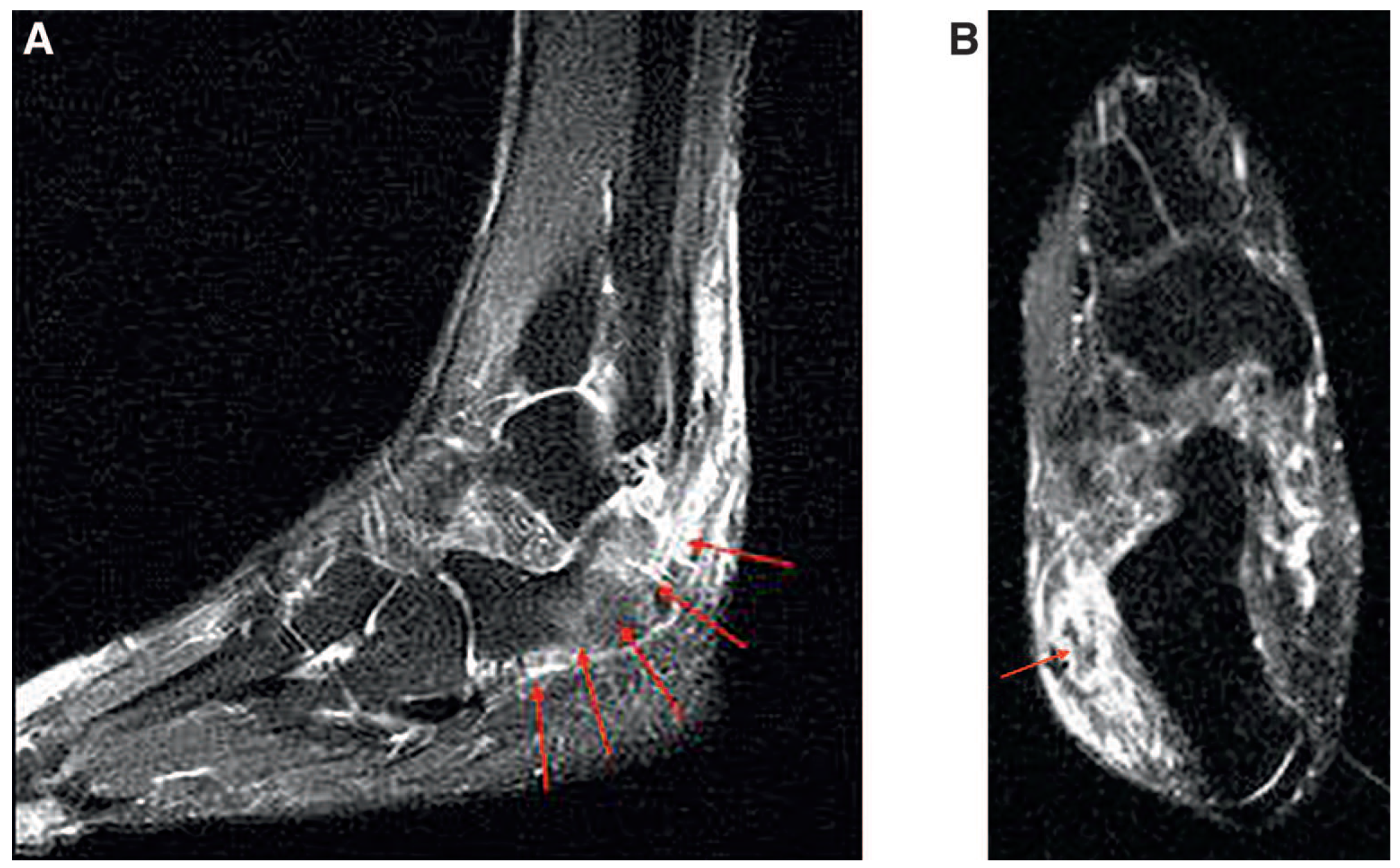
A 58-year-old woman presented with increasing right ankle pain and swelling over a period of a few months. She had a history of recurrent inversion ankle sprains and lateral ankle instability. Previous right ankle surgery was performed the year prior, which included a peroneus brevis tendon repair by means of a retubularization procedure and application of amnion graft overlying the tendon to treat longitudinal split tear. She stated complaints of having ‘‘fallen a couple of times’’ in follow-up visits but stated that she did not hit her foot. She later stated she heard a ‘‘pop’’ while walking a few months after surgery and was unable to walk without the pain. Physical examination revealed palpable pulses, increased and unopposed subtalar inversion on range of motion, swelling of the lateral ankle, and adequate strength of all muscle groups of the foot and ankle except the peroneal tendons. Gait analysis showed gross antalgia to the right foot, avoiding weightbearing to the lateral aspect of the foot, with the heel being perpendicular in resting stance. A positive anterior drawer sign was noted. Pain was elicited on palpation of the peroneal tendons distal to the lateral malleolus to the base of the fifth metatarsal, and there was pain with palpation of the collateral ligaments. She was put in a controlled-ankle-movement boot and crutches without resolution of symptomatology. Right ankle and foot radiographs showed no fractures or dislocations. Magnetic resonance imaging was performed and revealed a high-grade partial tear and possible complete rupture with obliteration of the peroneals coursing from the lateral malleolus to the proximal cuboid measuring approximately 4.5 to 5 cm in length (Fig. 1). Sprain and partial tearing of the anterior and posterior talofibular ligaments were also observed, with the calcaneofibular ligament being poorly defined. The patient underwent subsequent peroneal tendon reconstruction and collateral ankle ligament repair.
Figure 1.
T2-weighted fat-suppressed magnetic resonance imaging sagittal (A) and axial (B) views showing obliteration of the peroneal tendons from the distal fibula to the proximal cuboid.
Figure 1.
T2-weighted fat-suppressed magnetic resonance imaging sagittal (A) and axial (B) views showing obliteration of the peroneal tendons from the distal fibula to the proximal cuboid.
Surgical Technique
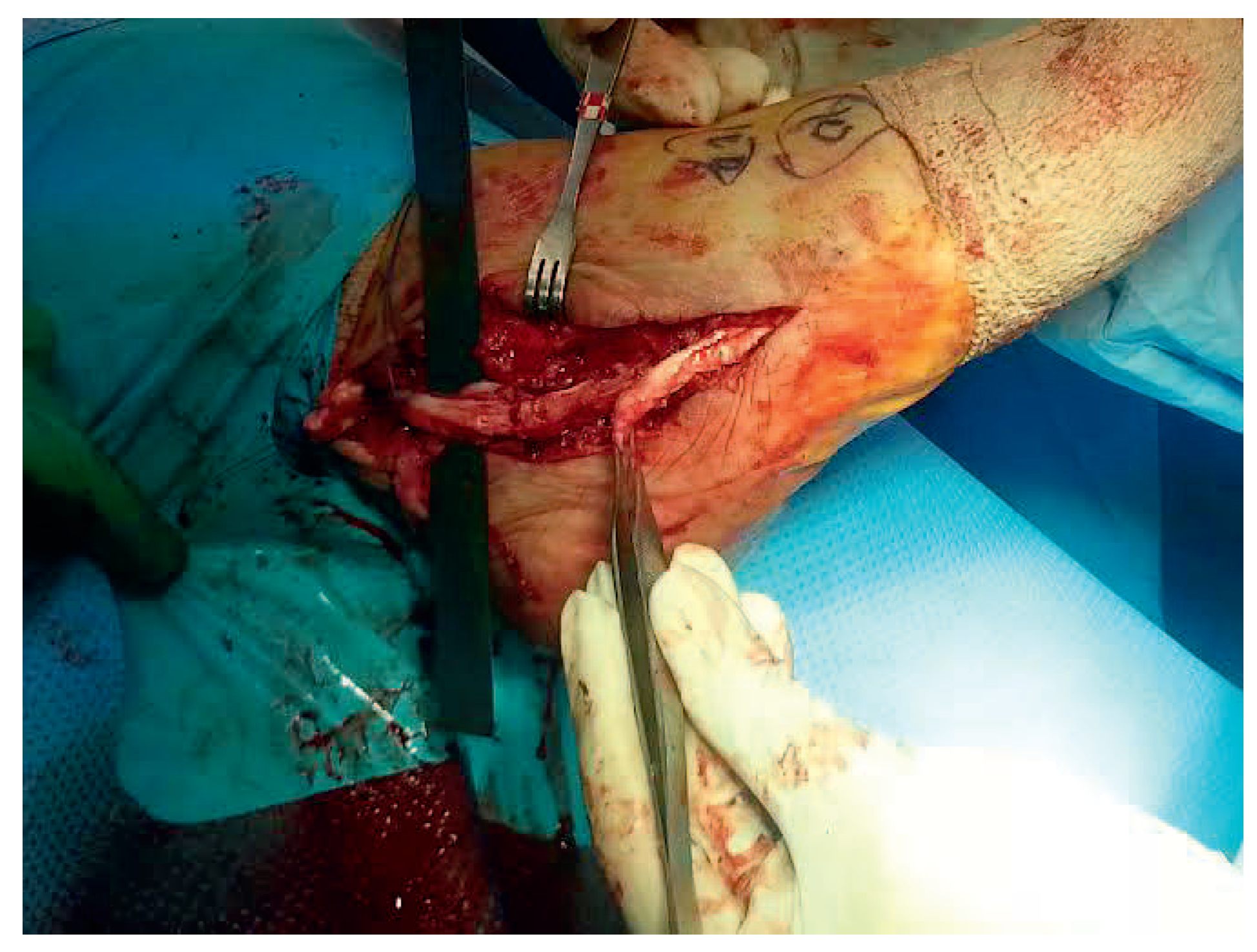
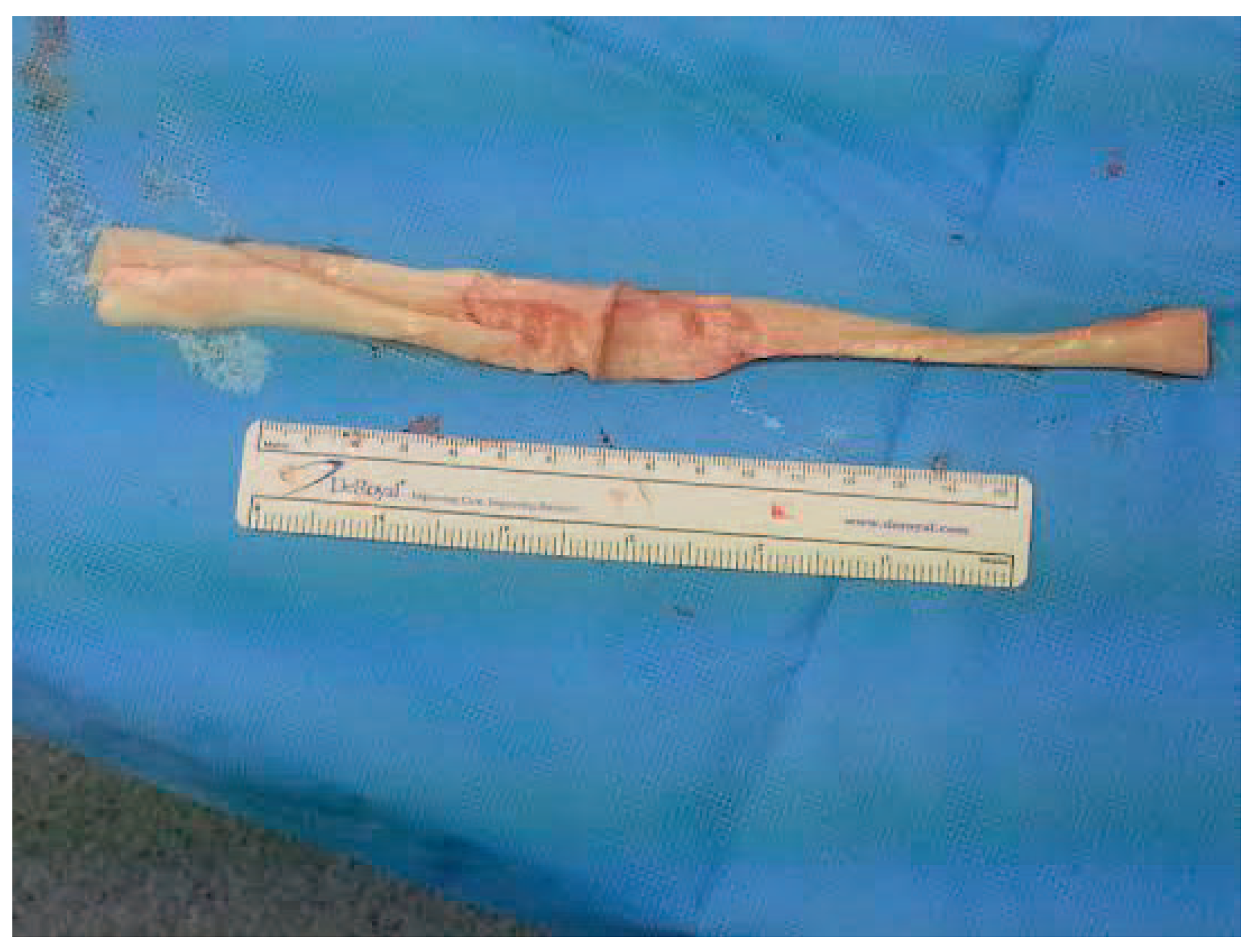
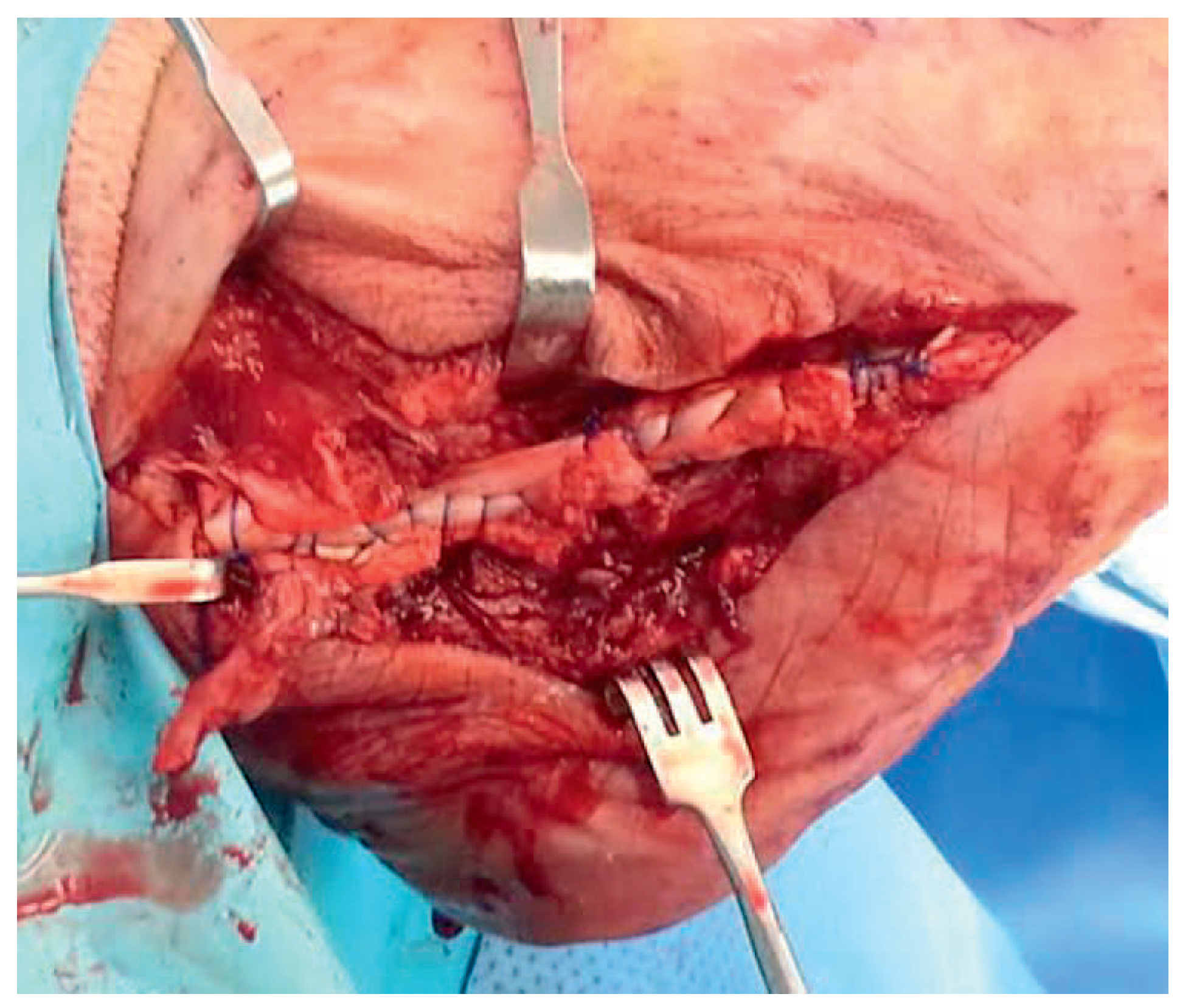
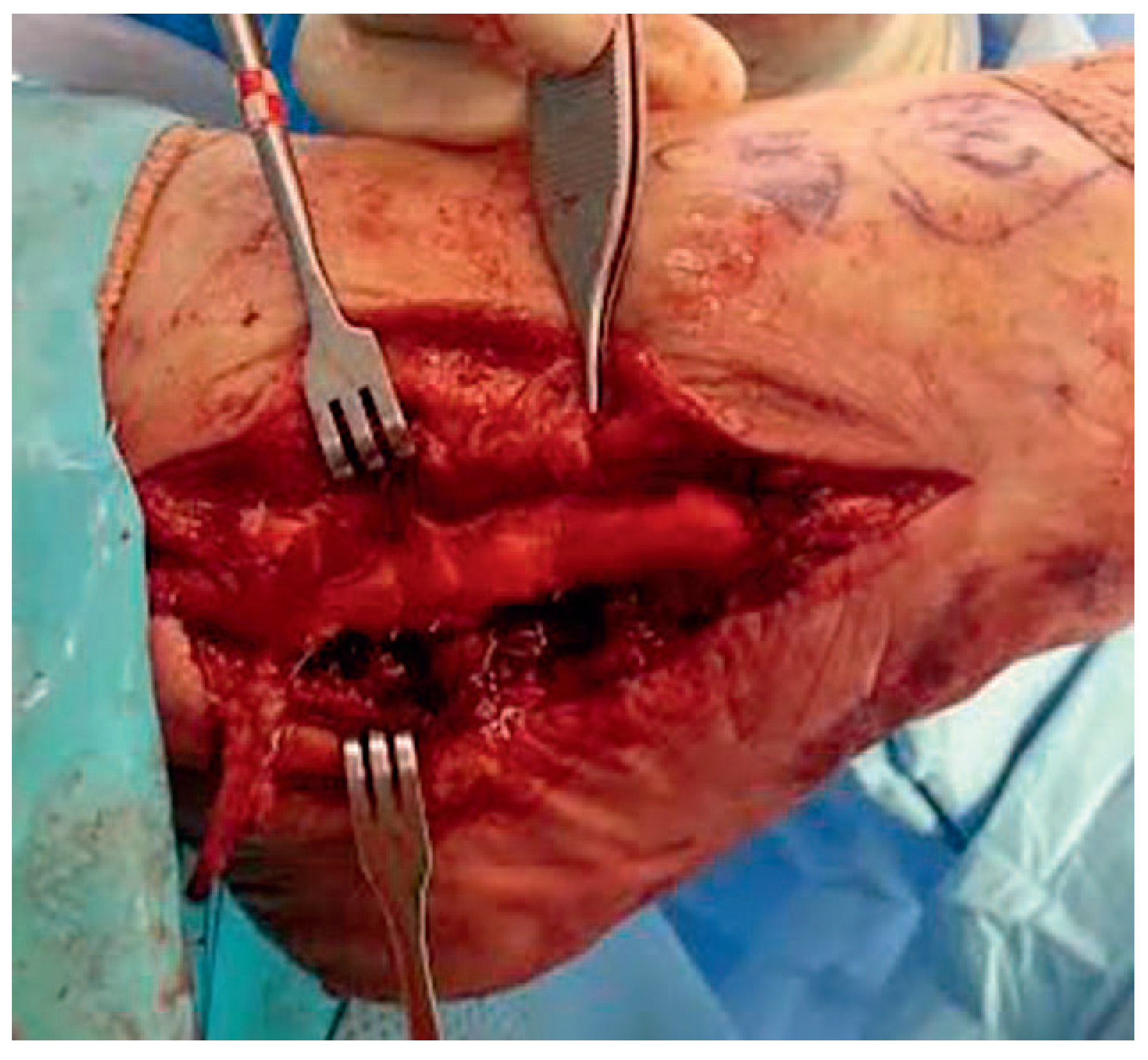
Dissection was made down to the peroneal tendon sheath, and after opening and synovectomy of the sheath, the peroneals were visualized. Intraoperatively, a complete transverse tear of the peroneus brevis was noted, with frayed and flattened ends (Fig. 2). The distal portion of the peroneus longus tendon was noted to be nonviable, frayed, and flattened, with longitudinal tearing throughout. Neither tendon expressed taughtness. The diseased portion of the brevis tendon was fully excised and a cadaver peroneal graft (Stryker Corp, Kalamazoo, Michigan) (Fig. 3) was sutured into place using an end-to-end technique using 2-0 Prolene suture (Ethicon, Somerville, New Jersey) (Fig. 4). The diseased part of the peroneal longus tendon was then sharply excised until viable tendon remained. The proximal viable longus tendon was then anastomosed to the peroneal brevis using 2-0 Prolene. Good anatomical tension and taughtness were observed to both tendons after repair (Fig. 5). A tendon protector sheet (Integra LifeSciences, Plainsboro, New Jersey) was placed on top of both peroneals and sutured down using 2-0 Vicryl (Ethicon) to protect the tendons during the healing process and to reduce scar tissue formation. The collateral ankle ligaments were noted to be slack and flattened as well. The anterior talofibular, calcaneofibular, and posterior talofibular ligaments were overlaid and reinforced in pants-over-vest fashion using 2-0 Vicryl in a taut position. The peroneals were then anatomically repositioned within the retinaculum and the retinacular tissue was sutured closed with 2-0 Vicryl absorbable suture. It was observed that the tendons sat well in the retromalleolar groove without subluxation on dorsiflexion and plantarflexion of the ankle. The remaining soft tissue was then closed in layered closure fashion using Vicryl. A posterior splint was applied in the operating room, and at 1 week postoperatively, the patient was placed in a below-the-knee hard cast for an additional 2 weeks and thereafter transitioned into a controlled-anklemovement boot for an additional 4 weeks while remaining strictly nonweightbearing. After a postoperative course of nonweightbearing, aggressive physical therapy was then initiated for 8 to 12 weeks, as was protective ankle bracing with an AirSport ankle brace (Aircast, Inc, Summit, New Jersey). At 6-month follow-up, the patient was still wearing her protective brace and had regained full muscle strength to the peroneals. At 1-year follow-up, she stated no complaints of ankle instability or pain, and the brace at this time was discontinued but recommended for wear while participating in high-impact activities. She was seen again at 2-year follow-up, having full function without pain or weakness. The patient related to resuming her regular daily activities such as low-impact aerobics, brisk walking, and cycling.
Figure 2.
Complete tearing of the peroneus brevis tendon.
Figure 2.
Complete tearing of the peroneus brevis tendon.
Figure 3.
Cadaveric tendon.
Figure 3.
Cadaveric tendon.
Figure 4.
End-to-end implantation of cadaveric graft to the peroneus brevis.
Figure 4.
End-to-end implantation of cadaveric graft to the peroneus brevis.
Figure 5.
Anatomical tension regained in peroneal tendons.
Figure 5.
Anatomical tension regained in peroneal tendons.
Discussion
The use of cadaver graft is not well documented in end-to-end repair of the peroneal tendons compared with other anatomical repairs in the literature. Cadaver grafts have added benefits, including absence of donor-site morbidity, increased availability, shorter operative time without the need for harvesting, and lower cost. Krause and Brodsky[
3] graded tears to guide treatment, in which grade 1 tears that have less than 50 percent involvement of the cross-sectional area should undergo tenosynovectomy, debridement, and tubularization. Grade 2 tears with more than half of the tendon compromised involve resecting the damaged tendon and anastomosis to adjacent peroneus longus tendon or graft implantation. Our case report highlights a 58-year-old woman with a grade 2 complete peroneus brevis tear caused by recurrent trauma. Overuse, repetitive mechanical stress, high-risk sports and activities, abnormal foot type, biomechanics or a combination of these can cause peroneal tendon tears and ankle instability. Peroneal tendinopathy can also be associated with a varus hindfoot or cavus foot type. A cavus reconstruction could be performed in conjunction when evaluating a patient with this condition. Given our patient’s physical examination findings, this was not performed in addition to repairing the ruptured tendon. Additional etiologies should be considered, including extrinsic factors, intrinsic anatomical factors, and volume of structures in the peroneal tunnel. Chronic lateral ankle instability can be associated with a longitudinal rupture of the peroneus brevis tendon with associated laxity or of the superior peroneal retinaculum.[
11] This lax retinacular tissue allows the anterior portion of the tendon to ride on the sharp posterior fibular edge, causing tearing.[
11]
Although this is a case report involving only one patient, it would be highly beneficial to have a larger pool of patients with long-term follow-up to evaluate the efficacy of cadaveric interpositional grafts in treating peroneal tendon tears and ruptures. Many studies have shown the use of cadaver allografts for surgically managed tendinopathies and ligamentous injuries, but not much focus has been given to deranged peroneal tendons in the literature. A 2013 study by Mook et al[
6] reported positive results using allograft reconstruction of the peroneal tendons in 14 patients. This was the only recent study identified in our literature search that used cadaver grafts to treat complete peroneal tendon ruptures on multiple subjects. Ousema and Nunley[
12] advocated the use of allografts in peroneal deficits greater than 4 cm, proving graft reconstruction to be an effective single-stage treatment option when there is a well-functioning proximal muscle, even in the face of large tendon gapping.
Peroneal tendinopathy is common in patients with chronic ankle instability as confirmed by Park et al[
13] in their study that used magnetic resonance imaging to diagnose peroneal tears in 82 patients with chronic ankle instability. In addition, there is an abundant use of cadaver allografts in the realm of podiatric surgery which, combined with our successful patient outcome, should encourage further investigation and research on these grafts and their benefits in the use of peroneal trauma.
Conclusions
This case report demonstrates the success of end-to-end repair with interpositional cadaver tendon graft in the treatment of a peroneus brevis tendon complete rupture. This surgical technique is an effective one-stage procedure allowing for anatomical reconstruction of the peroneal tendon without violation of another tendon transfer or tenodesis procedure. The use of a cadaveric graft in peroneal reconstruction is a viable surgical option for patients with extensive peroneal tendinopathy, providing anatomical tension, stabilization, and functional restoration. This technique follows the broader application of cadaveric grafting in foot and ankle surgery.