Next Article in Journal
A Review of the Effect of Lower-Extremity Pathology on Automobile Driving Function
Previous Article in Journal
Use of Cadaveric Graft in Reconstruction of Peroneus Brevis Rupture and Lateral Ankle Instability. A Case Report
 
 
Journal of the American Podiatric Medical Association is published by MDPI from Volume 116 Issue 1 (2026). Previous articles were published by another publisher in Open Access under a CC-BY (or CC-BY-NC-ND) licence, and they are hosted by MDPI on mdpi.com as a courtesy and upon agreement with American Podiatric Medical Association.
Article

Trends in the Types of Physicians Performing Partial Foot Amputations

by
Ronald Renzi
1,*,
Rodmehr Ajdari
2 and
Brandon Bosque
2
1
Department of Surgery, Abington Hospital, 2002 Woodland Rd, Abington, PA 19001
2
Department of Surgery, Chestnut Hill Hospital, Philadelphia, PA
*
Author to whom correspondence should be addressed.
J. Am. Podiatr. Med. Assoc. 2019, 109(2), 127-131; https://doi.org/10.7547/15-101
Published: 1 March 2019

Abstract

Background: Partial foot amputations (PFAs) are often indicated for the treatment of severe infection, osteomyelitis, and critical limb ischemia, which consequently leads to irreversible necrosis. Many patients who undergo PFAs have concomitant comorbidities and generally present with a severe acute manifestation of the condition, such as gangrenous changes, systemic infection, or debilitating pain, which would then require emergency amputation on an inpatient basis. Methods: The purpose of this study was to track the recent prevalence of PFAs and to investigate the current demographic trends of the physicians managing and performing PFAs, specifically regarding medical degree and specialty. Doctors of podiatric medicine are striving to achieve parity with their allopathic and osteopathic surgical counterparts and become a more prominent part of the multidisciplinary approach to limb salvage and emergency surgical treatment. This study evaluated 4 years (2009–2012) of PFA data from the Pennsylvania state inpatient database in the two most populated areas of Pennsylvania: Philadelphia and Allegheny counties. Statistics on medical schools were obtained directly from the accrediting bodies of allopathic, osteopathic, and podiatric medical schools. The goal of this study was to evaluate the general trends of patients undergoing a PFA and to quantify the upswing of podiatric surgeons intervening in the surgical care of these patients. Results: The number of partial foot amputations in the United States rose from 2006 to 2012. Podiatric surgeons performed 46% of theses procedures for residents of Philadelphia County from 2009 to 2012. In Allegheny County podiatric physicians performed 42% of these procedures during the same time frame. Conclusions: Partial foot amputations are increasing over time. Podiatric Surgeons perform a significant share of these operations. This share is increasing in the most populated areas of Pennsylvania.

Partial foot amputations (PFAs) are often indicated in the treatment of severe infection, osteomyelitis, and peripheral ischemia, which could then potentially lead to irreversible necrosis.[1,2] Many nontraumatic PFAs are secondary to complications associated with diabetes mellitus, specifically, neuropathy and diabetic foot ulcers.[3] Approximately 15% to 25% of patients with diabetes go on to develop diabetic foot ulcerations.[4] Diabetes mellitus has been relatively well studied, and strides have been made to improve the means of diagnosing and managing the condition; however, the incidence of diabetes mellitus has been rising steadily worldwide.[5,6] According to the Centers for Disease Control and Prevention, 29 million people (9.7%) in the United States have diabetes, with an estimated 1.7 million people newly diagnosed in 2012 alone.[6] Considering the global pandemic of diabetes (affecting an estimated 285 million people worldwide), one could project that the prevalence of common complications associated with diabetes, such as diabetic foot ulcers, infections, and consequent amputations, will continue to rise, concurrently. According to Malhotra et al,[1] 90% of documented osteomyelitis has been noted to occur in the forefoot (distal to the tarsometatarsal joints), making PFAs the most common type of amputation in diabetic patients. Many patients who undergo a PFA have concomitant comorbidities and generally present to a clinical setting with an acutely infected, gangrenous lower extremity, thus requiring emergency amputation on an inpatient basis to mitigate sepsis and poor outcome.[7,8]
Commonly, lower-extremity amputations with a nontraumatic etiology have been performed by general surgeons and vascular surgeons with an allopathic or osteopathic medical degree.[9] However, as surgical training in the field of podiatric medicine has evolved during the past half century, coupled with the multidisciplinary approach of patient care, we hypothesize that PFAs are more frequently performed by doctors of podiatric medicine. The goal of this study was to evaluate hospital inpatient databases in two highly populous counties in Pennsylvania to identify the market share of podiatric surgeons performing PFAs compared with their allopathic and osteopathic counterparts.

Methods

The Pennsylvania Health Care Cost Containment Council administers a state-mandated database containing all of the data on acute care hospital admissions in Pennsylvania. The Pennsylvania state inpatient databases for Philadelphia County and Allegheny County were queried to obtain the total number of PFAs performed and the listed surgeon of record for each procedure. For this study, a PFA was defined by hospital procedure code 8412, any lower-extremity amputation proximal to the phalanges and distal to the ankle (specifically, individual ray resections, transmetatarsal amputations, Lisfranc’s amputations, and Chopart’s amputations).[10] Hospital procedure code 8411, describing lower-extremity phalangeal amputations, were deemed minor amputations of the foot for the purpose of this study and were consequently excluded. Table 1 outlines the procedure codes and their corresponding procedures. This study examines 4-year data collected from 2009 to 2012. The two most populated areas of Pennsylvania, Philadelphia County and Allegheny County, were the areas of study, consisting of 1.5 million and 1.2 million people, respectively in 2013. Statistics on medical schools were obtained directly from the accrediting bodies of allopathic, osteopathic, and podiatric medical schools.

Results

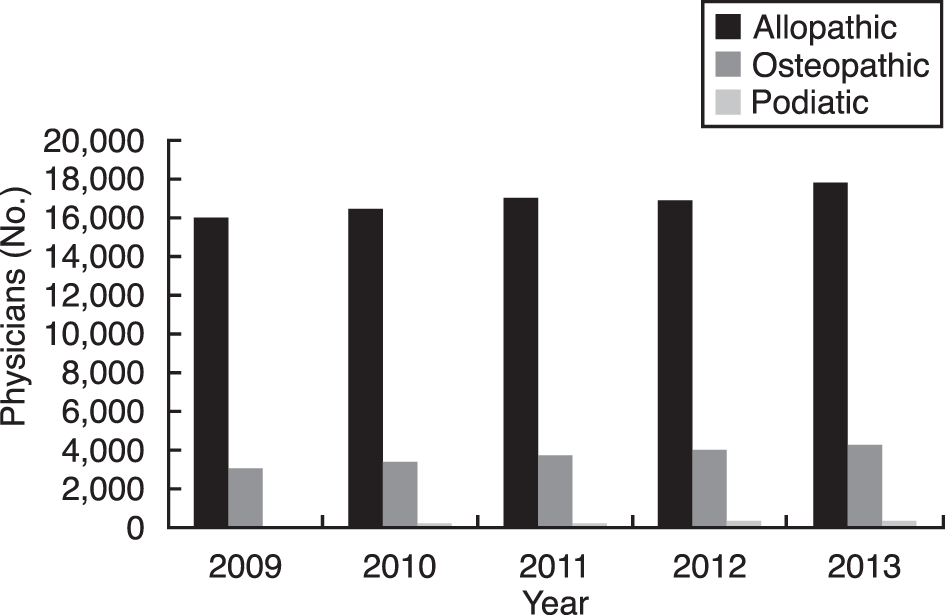
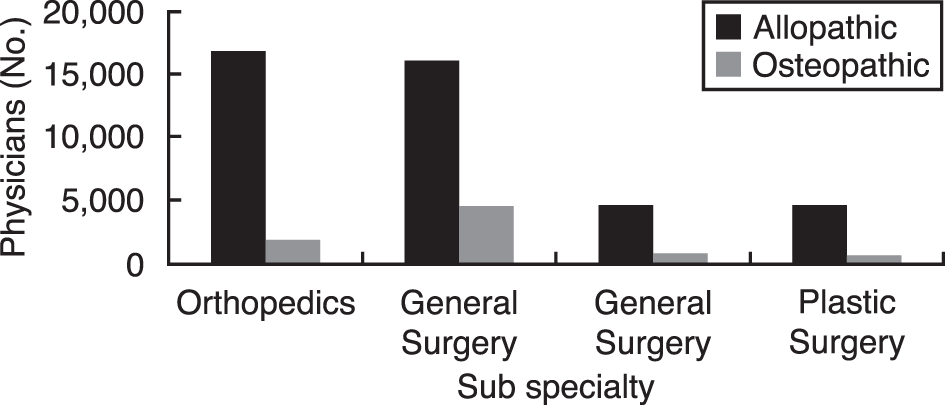
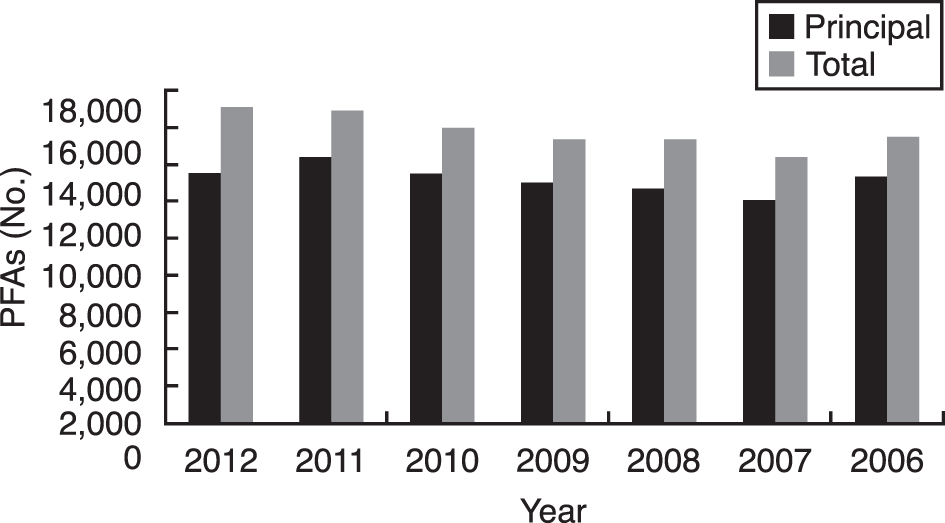
According to the American Medical Association, there are currently 141 accredited and nine preaccredited allopathic medical schools. As of 2010, there are approximately 789,788 active allopathic physicians in the United States.[11] According to the American Association of Colleges of Osteopathic Medicine, there are 30 accredited osteopathic medical schools as of 2015, with an estimated 82,500 practicing osteopathic physicians in the United States.[12,13] Finally, the American Podiatric Medical Association recognizes nine accredited schools of podiatric medicine and reports approximately 13,320 podiatric physicians actively practicing.[14] This constitutes ratios of approximately 80:1 of allopathic physicians to podiatric physicians and 8:1 of osteopathic physicians to podiatric physicians as of 2010. The average numbers of graduating physicians with allopathic, osteopathic, and podiatric medical degrees were 17,232, 4,128, and 525, respectively, per year. Figure 1 represents the number of graduating physicians and their respective degrees from 2009 to 2013. Considering that modern DPMs are all trained to perform PFAs, the allopathic and osteopathic physicians were further organized to reflect the medical specialties found to be most likely to perform PFAs. These specialties include orthopedics, general surgery, general surgery subspecialty (ie, vascular surgery), and plastic surgery (Figure 2). Among the physicians typically found to perform PFAs, MDs ranked highest at 66%, with DOs at 15% and DPMs at 19% nationally. From 2006 to 2012, an average of 16,084 PFAs were performed annually in the United States, with 13,547 performed as the principal procedure (Table 2). The number of PFAs performed in the United States steadily increased from 2006 to 2012 (Figure 3). The raw data represented in Table 3 and Table 4 outline the number of actual procedures performed in Philadelphia and Allegheny counties, respectively, from 2009 to 2012. Podiatric surgeons performed 46% and 42% of all of the PFAs in Philadelphia and Allegany counties, respectively, from 2009 to 2012. Comparatively, allopathic surgeons performed an average of 51% of all of the PFAs in Philadelphia County and 57% in Allegany County from 2009 to 2012. Osteopathic physicians rank among the lowest, performing 3% and 1% of all of the PFAs in Philadelphia and Allegany counties, respectively.

Discussion

Partial foot amputations continue to be performed by surgeons with different medical degrees and training. Overall, there are more allopathic physicians per capita in the nation compared with podiatric and osteopathic physicians.[11] With this fact in mind, coupled with the recent expansion of allopathic medical schools, it is likely that the allopathic specialists will maintain a large share of these procedures.[15,16] Although podiatric surgeons compose a small percentage of total active physicians overall, they should also be able to maintain a large percentage of these procedures considering the steady increase in the number of PFA procedures. According to a literature review by Shahbazian et al,[17] the National Institute for Health and Clinical Excellence strategies advocate a multidisciplinary approach to limb salvage. Furthermore, the increased popularity and legitimization of comprehensive multidisciplinary approaches to wound healing and limb salvage may contribute to the upswing of PFAs performed by podiatric surgeons. Allopathic and osteopathic surgeons who have worked with podiatric surgeons likely have become more aware of the extensive training of a podiatric surgeon in terms of biomechanics, lower-extremity anatomy, and surgical techniques aiming to provide the most functional lower extremity and adequate skin coverage, and determining how aggressive to be with osseous resection. Specialized health-care providers such as vascular surgeons, podiatric surgeons, and wound care nurses have found niches in the care of patients undergoing limb salvage, providing a seamlessly interdisciplinary treatment plan using different perspectives and training to give a patient the best chance to heal and avoid the expensive, time-consuming, and emotionally devastating consequences of amputations. One could further speculate that podiatric surgeons are performing more PFAs because they are seeing more critical patients who have had less than successful previous treatments, or perhaps the podiatric surgeon is quicker to amputate versus other treatment options.
One limitation of this report is use of the principal procedure field to identify PFA, whereas PFA could also be listed as a secondary or tertiary procedure in the data set. Furthermore, admissions where PFA hospital procedure code 8412 was listed as a secondary procedure were excluded. Any PFAs performed on an outpatient basis were also excluded. This was done to facilitate data management. The overall number of procedures listed as secondary procedures would likely be small and consequently negligible statistically. The small geographic area of study limits the usefulness of these data. The experience of the two study areas may not necessarily be indicative of the entire state, specifically in more rural areas where there are relatively fewer physicians available locally and patients may be less likely to have the resources to seek medical care until their condition has become severe and irreversible. With that said, the highly populous and urban nature of the sample area provides relevant insight to extrapolate national trends.
According to a 2012 study by the Centers for Disease Control and Prevention, below- and abovethe-knee amputations have seen a statistically significant decline, citing that the age-adjusted rate of nontraumatic lower-limb amputation was 3.9 per 1,000 people with diagnosed diabetes in 2008 compared with 11.2 per 1,000 in 1996.[18] Although there is evidence to suggest that below- and abovethe-knee amputations have demonstrated a statistically significant decline, one could speculate that PFAs may continue to be prevalent for a myriad of reasons, including the general increase in diabetes in the global population and an aging population in the United States, which are also feeling the effects of the diabetes pandemic. Many studies and texts that explore factors and options surrounding lower-extremity amputations tend to view revascularization procedures as a means of reducing lower-extremity amputation.[19] Further advancements in technology purposed to improve blood flow to the foot may make PFAs a more feasible option as opposed to a major amputation. Note that although successful revascularization procedures may help a patient avoid an amputation, some patients require a revascularization to allow distal amputations to heal and prevent subsequent or more proximal amputations. With that said, revascularization procedures and lower-extremity amputations are not always mutually exclusive options for the treatment of ischemic lower extremities. Although any amputation is not ideal, a more distal amputation can provide a functional lower limb and lower the mortality rate for a patient, which, in turn, raises the likelihood of a better overall outcome.[20]
Overall, the present study aimed to elucidate the concurrent trends in the growth of allopathic, osteopathic, and podiatric physicians. This study highlights the ever-growing role and responsibility attributed to podiatric physician as it pertains to limb salvage and surgical intervention. With the ongoing discrepancies and limitations in the stateby-state scope of practice for podiatric physicians, the present data may provide a solid basis for some of our podiatric medical colleagues in states that do not allow them to perform any type of amputation, such as Arizona or Virginia. Our colleagues in the states or areas where these limitations exist will have a foundation to challenge such restrictions and lay stake to the abilities of the podiatric surgeon. Furthermore, according to the American College of Foot and Ankle Surgeons, there are 17 states in which regulations on podiatric surgeons performing PFAs remain ‘‘silent.’’ This may create a gray area, leaving the door open for those podiatric surgeons to face scrutiny. Only six or seven states specifically address and allow podiatric surgeons to perform PFAs.[21]
Finally, and most importantly, the data and anecdotal trends surrounding wound healing and limb salvage greatly suggest that a multidisciplinary approach entrusting colleagues of various medical backgrounds and training provides patients a comprehensive treatment approach, improves patient outcomes, and reduces the risk of major lower-extremity amputation.

Financial Disclosure

None reported.

Conflicts of Interest

None reported.

References

  1. MALHOTRA, R.; CHAN, C.S. NATHER A: Osteomyelitis in the diabetic foot. Diabet Foot Ankle 2014, 5. [Google Scholar] [CrossRef] [PubMed]
  2. STIEGLER H: Diabetic foot syndrome [in German]. Herz 2004, 29, 104.
  3. NERONE, V.; SPRINGER, K.; ATWAY, S. Re-amputation after minor foot amputation in diabetic patients: risk factors leading to limb loss. J Foot Ankle Surg 2013, 52, 184. [Google Scholar] [CrossRef] [PubMed]
  4. SINGH, N.; ARMSTRONG, D.G.; LIPSKY, B.A. Preventing foot ulcers in patients with diabetes. JAMA 2005, 293, 217. [Google Scholar] [CrossRef] [PubMed]
  5. SHAW, J.E.; SICREE, R.A. ZIMMET PZ: Global estimates of the prevalence of diabetes for 2010 and 2030. Diabetes Res Clin Pract 2010, 87, 4. [Google Scholar] [CrossRef] [PubMed]
  6. CENTERS FOR DISEASE CONTROL AND PREVENTION: CDC data and trends. Available at: https://www.cdc.gov/media/releases/2014/p0610-diabetes-report.html. Accessed June 2015.
  7. YAZDANPANAH, L.; NASIRI, M.; ADARVISHI, S. Literature review on the management of diabetic foot ulcers. World J Diabetes 2015, 6, 37. [Google Scholar] [CrossRef] [PubMed]
  8. Abou-Zamzam AM Jr, Gomez NR, Molkara A, et al: A prospective analysis of critical limb ischemia: factors leading to major primary amputation versus revascularization. Ann Vasc Surg 2007, 21, 458. [CrossRef] [PubMed]
  9. PEMAYUN, T.G.; NAIBAHO, R.M.; NOVITASARI, D.; et al. Risk factors for lower extremity amputations in patient with diabetic foot ulcers: a hospital base case control study. Diabet Foot Ankle 2015, 6, 29629. [Google Scholar] [CrossRef] [PubMed]
  10. [NO AUTHOR LISTED]: Pennsylvania Healthcare Cost Containment Council, state-mandated database [not accessible to public]. Accessed January 2015.
  11. YOUNG, A.; CHAUDHRY, H.; RHYNE, J. A census of actively licensed physicians in the United States, 2010. J Med Regul 2011, 96, 12. [Google Scholar] [CrossRef]
  12. [NO AUTHOR LISTED]: American Association of Colleges of Osteopathic Medicine: U.S. colleges of osteopathic medicine. Available at: http://www.AACOM.org/become-a-doctor/us-coms. Accessed June 21, 2012.
  13. [NO AUTHOR LISTED]: American Association of Colleges of Osteopathic Medicine: Trends in osteopathic medical school applicants, enrollment and graduates. Available at: https://www.aacom.org/docs/default-source/data-and-trends/2012-Trends-COM-AEG-PDF.pdf?sfvrsn¼14. Published March 2015.
  14. NO AUTHOR LISTED]: American Board of Podiatric Medicine APMA. Available online: https://www.apma.org/AboutUs/SpecialtyClinicalRelated.cfm?ItemNumber¼6913 (accessed on 19 March 2015).
  15. [NO AUTHOR LISTED]: Association of American Medical Colleges: 2015 State Physicians Workforce Data Book. Available online: https://aamc.org/state-physician-workforce-data-book-2015.html (accessed on November 2015).
  16. SALSBERG, E.; GROVER, A. Physician workforce shortages: implications and issues for academic health centers and policymakers. Acad Med 2006, 81, 782. [Google Scholar] [CrossRef] [PubMed]
  17. SHAHBAZIAN, H.; YAZDANPANAH, L.; LATIFI, S.M. Risk assessment of patients with diabetes for foot ulcers according to risk classification consensus of International Working Group on Diabetic Foot (IWGDF). Pak J Med Sci 2013, 29, 730. [Google Scholar] [CrossRef] [PubMed]
  18. LI, Y.; BURROWS, N.R.; GREGG, E.W. Declining rates of hospitalization for non-traumatic lower extremity amputation in the diabetic population aged 40 years or older: U.S., 1988-2008. Diabetes Care 2012, 35, 273. [Google Scholar] [CrossRef] [PubMed]
  19. GOODNEY, P.; TRAVIS, L.; BROOKE, B. ET AL: Relationship between regional spending on vascular care and amputation rate. JAMA Surg 2014, 149, 34. [Google Scholar] [CrossRef] [PubMed]
  20. COREY, M.; JULIEN, J.; MILLER, C.; et al. Patient education level affects functionality and long term mortality after major lower extremity amputation. Am J Surg 2012, 204, 626. [Google Scholar] [CrossRef] [PubMed]
  21. AMERICAN COLLEGE OF FOOT AND ANKLE SURGEONS: State scope of practice provisions for podiatric foot and ankle surgeons. Available online: https://www.acfas.org/uploadedFiles/Physicians/Health_Policy_and_Advocacy/Scope_of_Practice/Content/State%20Scope%20of%20Practice.pdf (accessed on 28 February 2016).
Figure 1. Number of graduates from allopathic, osteopathic, and podiatric medical schools from 2009 to 2013.
Japma 109 00127 g001
Figure 2. Number of graduating allopathic and osteopathic specialists more likely to perform partial foot amputations from 2009 to 2013.
Japma 109 00127 g002
Figure 3. Total number of partial foot amputations (PFAs) performed in the United States by year. Principal procedures are listed in the database as the primary procedure; total procedures are listed in any procedure field (primary, secondary, etc).
Japma 109 00127 g003
Table 1. Hospital Procedure Codes.
CodeProcedure
8411Amputation of toe
8412Amputation through foot
8413Disarticulation of ankle
8415Other amputation below knee
8416Disarticulation of knee
8417Amputation above knee
Note: This study specially focused on code 8412: any lower-extremity amputation proximal to the phalanges and distal to the ankle (individual ray resections, transmetatarsal amputations, Lisfranc’s amputations, and Chopart’s amputations).
Table 2. Partial Foot Amputations Performed in the United States by Year.
YearProcedures (No.)Procedures (No.)
201213,80017,520
201114,63917,302
201013,72416,269
200913,43015,562
200813,17915,430
200712,54614,686
200613,51715,822
Average13,54716,084
Table 3. Actual Number of Partial Foot Amputations by Allopathic, Osteopathic, and Podiatric Physicians in Philadelphia County, 2009–2012.
Medical Degree2009201020112012Average
Allopathic100122166115125
Osteopathic0612158
Podiatric76116138133115
Table 4. Actual Number of Partial Foot Amputations by Allopathic, Osteopathic, and Podiatric Physicians in Allegheny County, 2009–2012.
Medical Degree2009201020112012Average
Allopathic4048569459
Osteopathic20021
Podiatric2830447043