Osteoid osteoma (OO) is a benign but painful tumor consisting of a central area (nidus) surrounded by dense sclerotic bone. The typical features of the OO are night pain that is relieved with nonsteroidal anti-inflammatory drugs and nidus formation on radiologic images. [
1] Some cases do not present with typical features, which causes missed or delayed diagnosis. There are many publications in the literature regarding the difficulty of the diagnosis. [
2] The rarity of OO and variability in the signs on plain radiographs cause missed or delayed diagnosis. [
2,
3]
This case report describes a well-documented birth and evolution of an OO at the talus. Although initial radiologic images indicate mild bone marrow edema at first, subsequent magnetic resonance imaging (MRI) and computed tomographic (CT) images reveal pathognomonic nidus at the talus.
Case Report
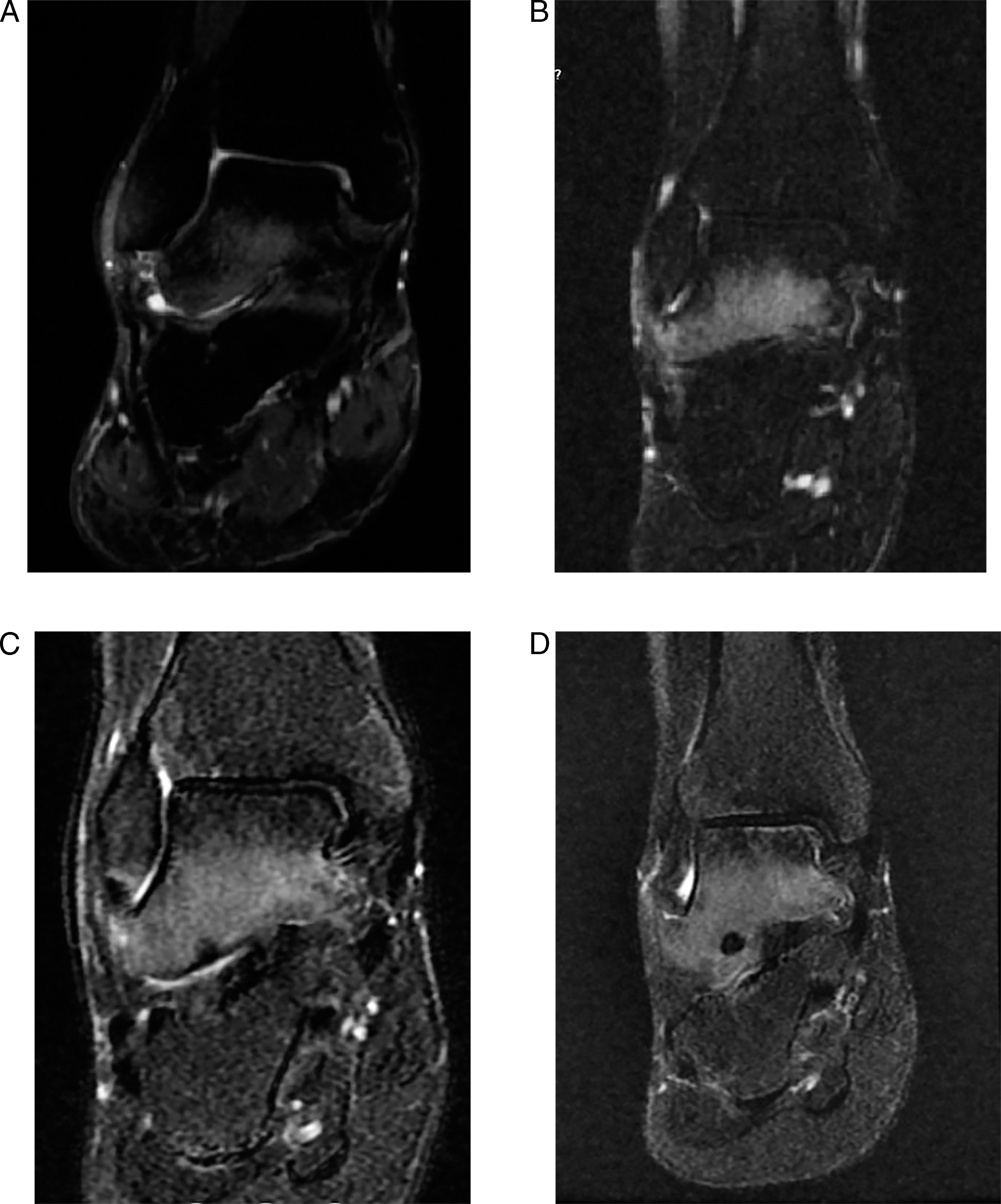
A 27-year-old man presented with mild pain in the right foot of 2 months' duration. Radiographic examination was normal, and an initial MRI scan showed minimal bone marrow edema (
Fig. 1A); thus, an oral analgesic was prescribed for conservative treatment.
Figure 1.
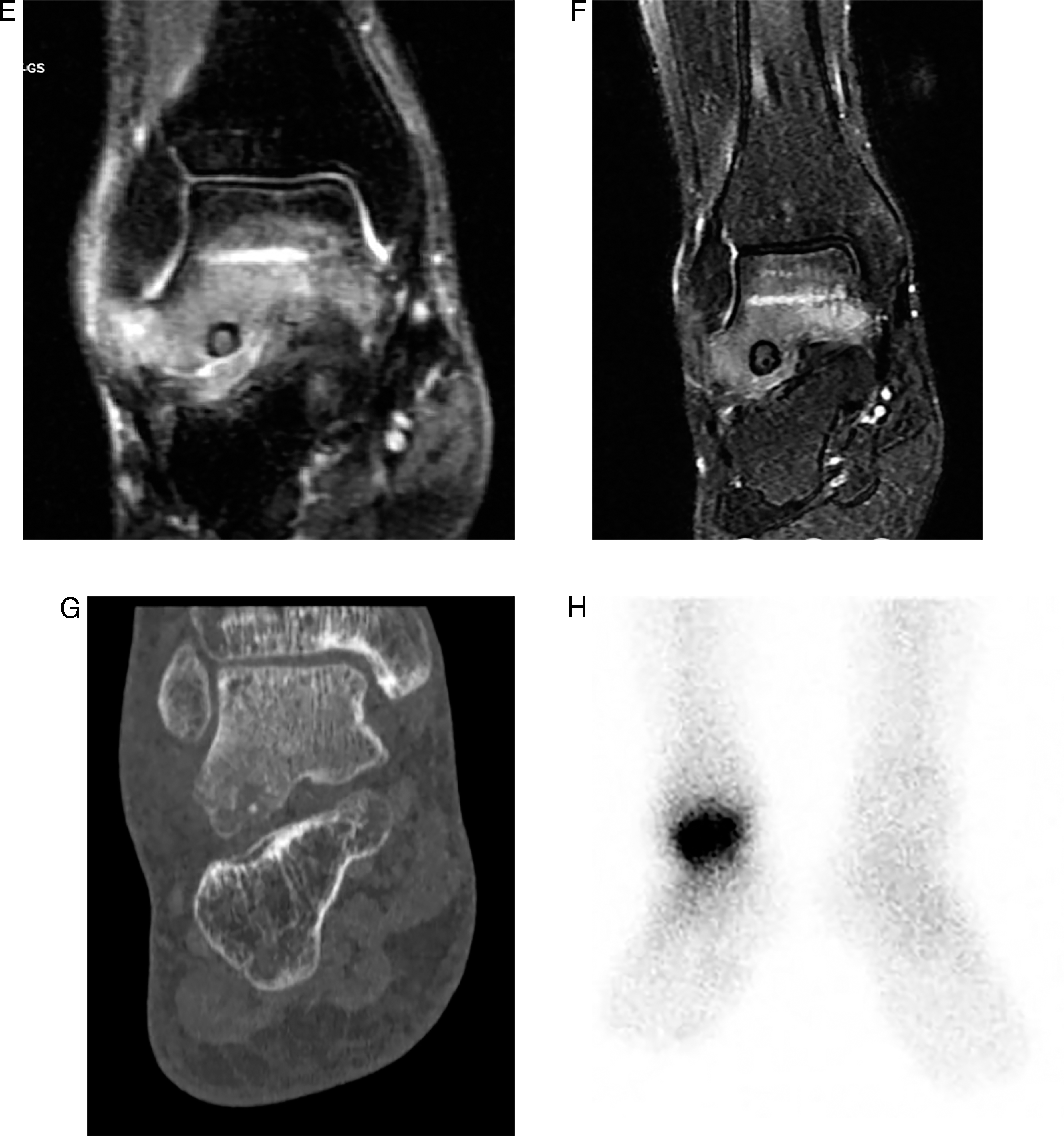
A, Magnetic resonance imaging (MRI) scan of a patient complaining of mild pain in the foot. B, Subsequent MRI scan after 6 months obtained because of the initial complaints not being relieved. The patient received bone marrow edema treatment, as bone marrow edema was evident 8 (C) and 10 (D) months after the first visit. A small lytic lesion next to the subtalar joint was missed while waiting for the bone marrow edema to heal. E, A lytic lesion next to the subtalar joint was still visible during the early postoperative period at 13 months after the first visit, and the patient continued to complain of pain. F, The patient complained of severe night pain at 18 months after the first visit. The nidus was well-developed. G, The diagnosis of osteoid osteoma was made 18 months after the first visit. A computed tomographic scan and (H) scintigraphy depict the nidus lesion at the talus.
Figure 1.
A, Magnetic resonance imaging (MRI) scan of a patient complaining of mild pain in the foot. B, Subsequent MRI scan after 6 months obtained because of the initial complaints not being relieved. The patient received bone marrow edema treatment, as bone marrow edema was evident 8 (C) and 10 (D) months after the first visit. A small lytic lesion next to the subtalar joint was missed while waiting for the bone marrow edema to heal. E, A lytic lesion next to the subtalar joint was still visible during the early postoperative period at 13 months after the first visit, and the patient continued to complain of pain. F, The patient complained of severe night pain at 18 months after the first visit. The nidus was well-developed. G, The diagnosis of osteoid osteoma was made 18 months after the first visit. A computed tomographic scan and (H) scintigraphy depict the nidus lesion at the talus.
The patient presented 6 months later with similar complaints. The erythrocyte sedimentation rate and C-reactive protein level were normal. A second MRI scan indicated more intense bone marrow edema (
Fig. 1B). The patient was advised to not bear weight and to take oral vitamin D and risedronate (75 mg/week). He was admitted to another institution with similar complaints 2 months later (
Fig. 1 C and D) and a surgical decompression was been performed for the continuation of symptoms. The patient was operated on because of his pain, which had persisted for 10 months; the patient underwent a core decompression of the talar body with drilling to address the bone marrow edema, which was not successful.
The patient presented again to our institution 6 months after the operative intervention. An MRI scan demonstrated a lytic lesion within the bone marrow edema, which was adjacent to the subtalar joint at the posterior facet (
Fig. 1E). As a new complaint, the patient described night pain, which was relieved with nonsteroidal anti-inflammatory medications. A typical nidus, characteristic of OO, had formed and was detected on a new MRI scan (
Fig. 1F). A CT scan (
Fig. 1G) and a scintigraph (
Fig. 1H) were obtained to identify the lesion. With a diagnosis of OO, an en bloc resection was planned 18 months after the first visit.
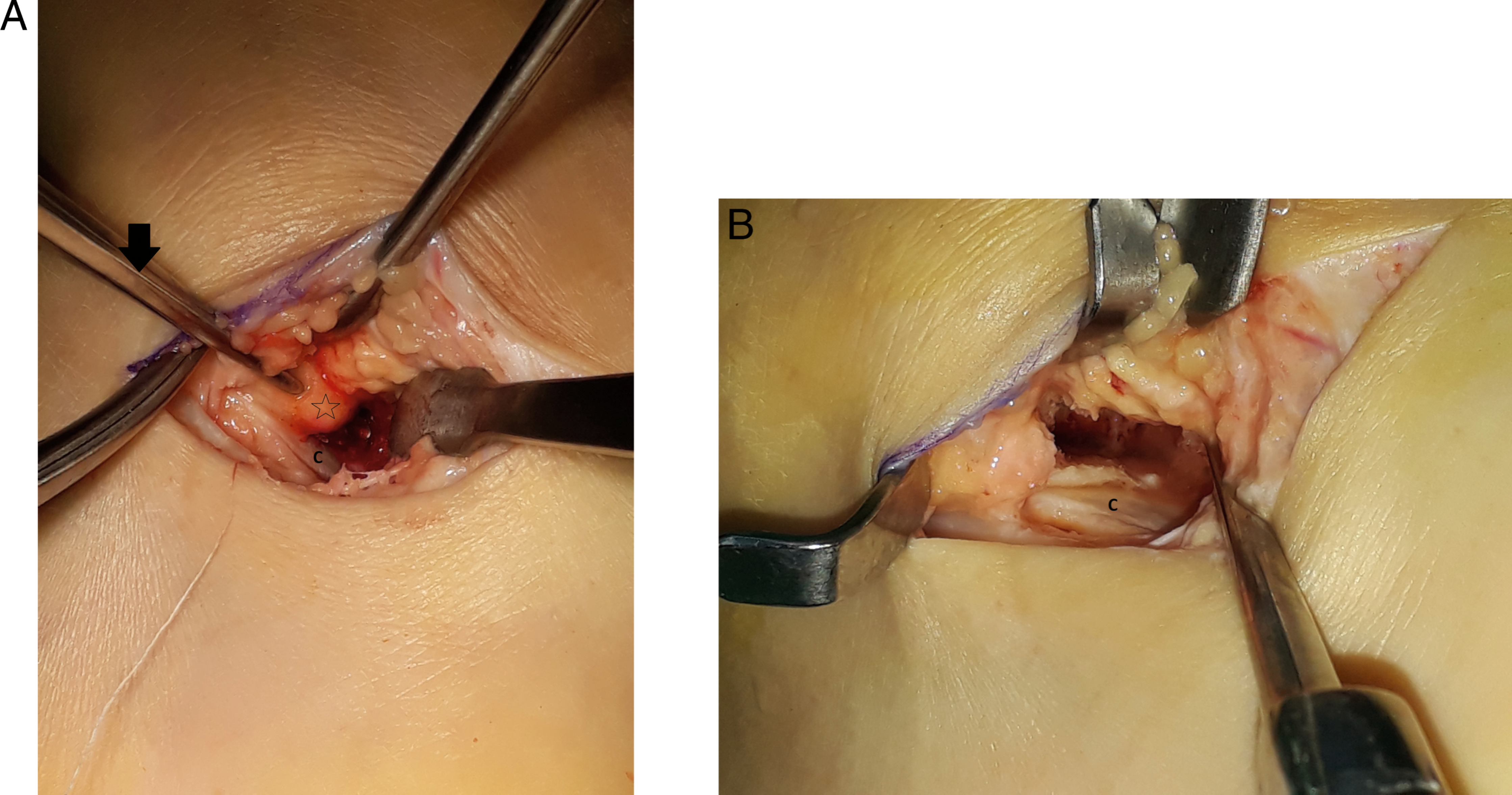
The lesion was reached with a small incision in the sinus tarsi (
Fig. 2A), and the lesion was resected with a curette (
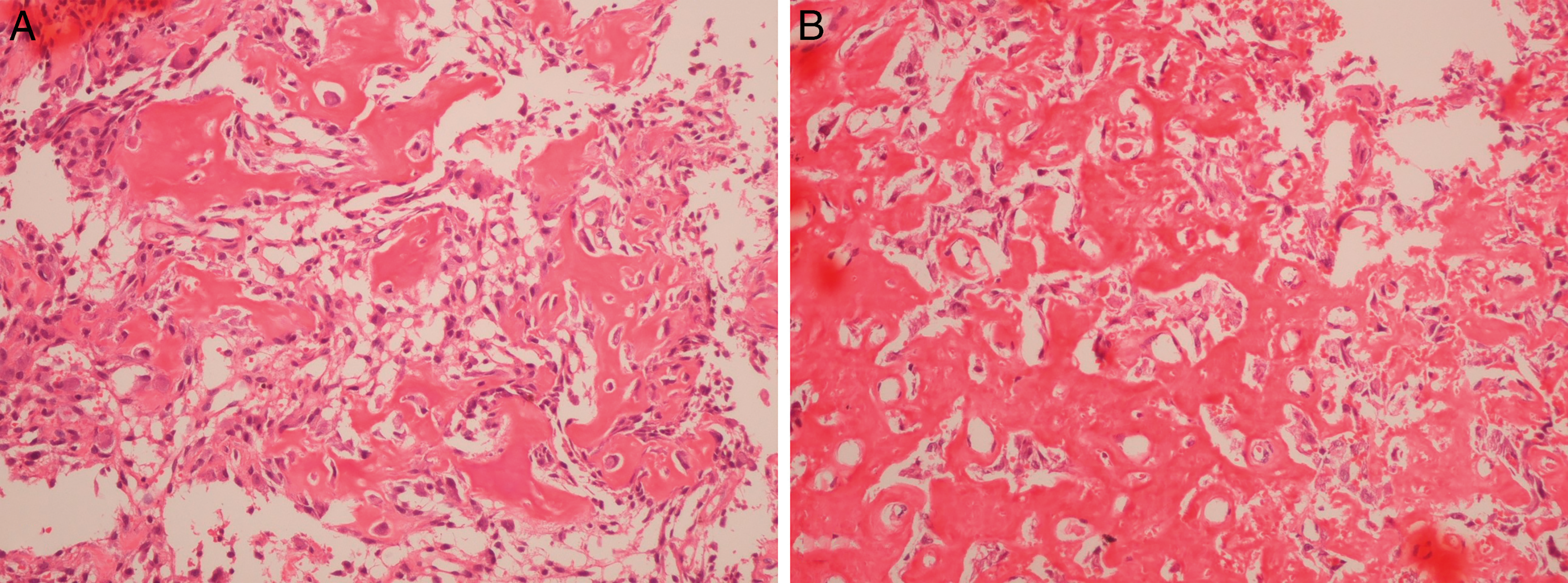
Fig. 2B). The operative site was filled with an iliac bone autograft. The culture from the operative sample was normal, but histopathologic workup indicated that irregular immature woven bone trabeculae were covered by activated osteoblasts and embedded in a vascular fibrous stroma with scattered osteoclasts (
Fig. 3). The patient's night pain was relieved 2 days after surgery. A postoperative CT scan demonstrated removal of the nidus lesion and the autograft. The patient had no complaints at the 1-year follow-up.
Figure 2.
A, The affected bone (star) was sufficiently weak for a curette to be inserted into the lesion. B, The defect area was evident after the lesion was resected. C, calcaneus.
Figure 2.
A, The affected bone (star) was sufficiently weak for a curette to be inserted into the lesion. B, The defect area was evident after the lesion was resected. C, calcaneus.
Figure 3.
Staining (H&E, ×200) indicates (A) trabecular bone formation demonstrating both osteoblastic and osteoclastic activity, which is consistent with nidus; and (B) sclerotic region of the nidus.
Figure 3.
Staining (H&E, ×200) indicates (A) trabecular bone formation demonstrating both osteoblastic and osteoclastic activity, which is consistent with nidus; and (B) sclerotic region of the nidus.
Discussion
This report presents a well-documented birth of an OO at the talus. Intermittently obtained MRI scans indicate the evolution of the lesion in time. Although the initial radiologic images indicated bone marrow edema (without nidus), subsequent MRI and CT images reveal a pathognomonic nidus on the talus.
Patients with OO typically present with local nocturnal pain. In most cases, the pain can be relieved by nonsteroidal anti-inflammatory drugs. Most of the cases are diagnosed at this stage, after typical night pain has formed. In this case, typical night pain was coincident with the occurrence of the nidus, as shown on MRI. This may be interpreted that nidus formation may be related to the night pain.
In this report, the first finding was bone marrow edema. Although our classic knowledge was that the edema follows the lesion, this report makes a difference. The relation between bone marrow edema and OO has not been questioned in the literature before. We speculate that this report brings to mind the question of which comes first, a bone marrow edema or nidus? Another question is: does OO always start with such a dust cloud in the bone as we presented herein? He et al and Hamada et al also reported OO cases that were misdiagnosed as bone marrow edema and stress fracture of the foot. [
2,
4] Davies et al recommend that a high index of suspicion is needed to minimize the risk of misdiagnosis in OO cases. [
5]