A mycetoma is an invasive soft-tissue infection of either bacterial (actinomycetoma) or fungal (eumycetoma) origin, and is historically associated with people living in tropical and subtropical areas. Mycetomas are endemic to tropical and subtropical climates and are a cause of major health problems in countries such as Somalia, Senegal, India, Central and South America, Northern Africa, and Sudan.[
1-
3] However, the increased incidence of immigration from these areas to the United States is also bringing new or uncommon pathologies.[
4]
Mycetomas found in the foot are often referred to as “Madura foot” after the region of Madura in India where it was first described by McGill in 1842. These fungal pathogens are widely distributed in the environment, having been isolated from air, soil, industrial water, and sewage.[
1 ]
Phialemonium species rarely cause human disease, although in immunocompromised people there has been an increased incidence of infection, and it can be fatal.[
2,
5,
6 ]
Phialemonium is considered to be a dematiaceous fungus, and although it lacks conspicuous dark pigmentation and shows pale colonies in vitro, melanin can be demonstrated in its cell walls by Fontana-Masson stain.[
7] The majority of
Phialemonium infections are invasive; the more familiar infections include peritonitis, endocarditis, osteomyelitis, and cutaneous infections of wounds following burns.[
2,
6,
8-
10]
Madura foot is a chronic subcutaneous inflammatory granulomatous infection that typically progresses slowly and can infiltrate muscle, fascia, and bone. Madura foot classically presents with tumefaction and the formation of sinus tracts, which have granular drainage of various colors, depending on the inoculating organism.[
3,
11] The infection often begins as a single, small, painless, subcutaneous nodule that slowly increases in size and becomes fixed to the underlying tissue. At later stages, draining sinus tracts develop; this progression can take weeks, months, or even years.[
12,
13]
Clinically, their initial presentation is most often painless soft-tissue edema of the foot; as the infection progresses, there may be multiple subcutaneous nodules, with purulent drainage exhibiting a grain-like texture. Successful diagnosis of mycetomas can be aided by imaging, such as the dot-in-circle sign seen on ultrasound and magnetic resonance imaging (MRI)[
14-
16]; however, ultimately confirmation by means of histopathologic investigation is needed. Radiographic presentation can help in categorizing the infection and is able to indicate the level of progression of the infection. According to Ching et al,[
12] eumycetoma causes loss of cortical margins, erosion, and adjacent sclerosis not affecting the joints, whereas actinomycetoma displays more destruction in and around the joints.[
17,
18]
There are over 20 species of
Phaeoacremonium. It has been isolated from patients who experience traumatic implantation of fungi from contaminated plant thorns or soil, and it is very rare to have any incidence of Madura foot in an immunocompetent patient.[
5,
6] Mostert et al,[
19] who performed a thorough analysis of the
Phaeoacremonium species, analyzed four cases of
Phaeoacremonium venezuelense infection, two of which were in the foot and ankle, and all were immunocompromised. Recently, cases of phaeohyphomycosis caused by
Phaeoacremonium species have been increasingly reported in humans.[
20,
21] Most reported
Phaeoacremonium cases have involved subcutaneous abscesses or cysts,[
22] caused by dark pigmented molds or black mold, including the species
Phaeoacremonium,
Exophiala,
Alternaria,
Phialophora, and
Pyrenochaeta.[
20,
23] These are uncommon human inoculates, but it can infect the skin, subcutis, paranasal sinuses, or the central nervous system.[
24]
Treatment
Identifying the actual infectious agent is paramount in determining the appropriate treatment protocol for a mycetoma infection. Then, the decision must be made to use conservative and/or surgical treatment to manage the infection. According to Venkatswami et al,[
25] actinomycetoma is amenable to medical treatment with antibiotics and other chemotherapeutic agents.
There is no ideal protocol for medical management of a eumycetoma infection. Eumycetoma treatment usually extends many months if not many years and, depending on the stage of diagnosis, the infection may lead to extensive removal of soft tissue or to amputation. For eumycetoma, antifungal therapy has consisted mainly of ketoconazole, itraconazole, terbinafine, 5-fluorocytosine, or fluconazole combined with surgical excision.[
26,
27] Unfortunately, this therapy is not always curative and recurrence rates range from 20% to 90%.[
28] A recent study conducted at the Mycetoma Research Centre in Khartoum, Sudan, showed that of the 1,242 eumycetoma patients studied, only 321 (25.9%) were cured, 35 (2.8%) had amputations, and 671 (54%) dropped out from the outpatient follow-up for various reasons. Limited prospective trials of itraconazole, ketoconazole, and terbinafine, with and without surgical intervention, found a 70% to 80% response rate, with up to 24 months of continuous therapy and less than 10% relapse.[
29-
33] In two studies by Guarro et al,[
2] in vitro inhibitory activities of six antifungal agents (ie, amphotericin B, itraconazole, ketoconazole, miconazole, flucytosine, and fluconazole) were determined against seven isolates of
Phialemonium; except for flucytosine, all of them were remarkably effective.
In one report, eumycetoma nodules caused by
Phaeoacremonium aleophilum and
Phaeoacremonium rubrigenum were surgically excised and initially treated by itraconazole for 5 months, with the return of nodules, surgically excised once again, treated with terbinafine for 6 months with the recurrence of nodules. Antifungal susceptibility testing was performed and the results for two isolates were similar: lowest minimal inhibitory concentrations were voriconazole and ravuconazole.[
20]
In a prospective study of a coinfection with eumycetoma and
Staphylococcus aureus performed at the Mycetoma Research Centre, Mhmoud et al compared treatment with amoxicillin–clavulanic acid and ketoconazole to that of ciprofloxacin and ketoconazole.[
34] The treatment duration ranged between 3 and 12 months for both groups. In the amoxicillin–clavulanic acid group, the bacterial coinfection was eradicated in 97.2% of the patients. In the ciprofloxacin group, none of the bacterial coinfection was eradicated. Some investigational treatment options include drug groups such as the allylamines and echinocandins, and the drugs isavuconazole and miltefosine; antifungal combinations are also increasingly used in studies for a multitude of fungal infections.[
35-
36]
When considering surgical intervention, eumycetomas are well encapsulated, which allows for good visualization for surgical removal; however, if ruptured, they lead to recurrence by invasion of surrounding soft tissue.[
25] The recurrence rate of surgical excision alone varies from 10% to 90%, depending on the study and severity of the infection.[
37,
38] Combined medical and surgical treatment is the gold standard for management of eumycetomas.
A consistent recommendation for treatment is complete surgical excision and long-term adjunctive antifungal/antibiotic treatment. Unfortunately, concern for toxicity increases with longer term therapy.[
39] Antimicrobial susceptibility testing should be a component of the ultimate treatment plan. However, medical management of a eumycetoma infection is associated with many side effects; a high recurrence rate; and high rates of follow-up dropout, disfigurement, and disabilities.[
26] As foot and ankle experts, we must be aware and educated on clinical presentation and treatment of mycetoma infections, as the vast majority—nearly 70%—of mycetoma infections occur in the foot and ankle.[
40]
Madura Case Study 1
A 66-year-old Laotian man with a history of type 2 diabetes (last hemoglobin A1c level, 6.3%), peripheral neuropathy, gout, hypertension, and chronic kidney disease presented with a fluid-filled mass on the dorsum of his right foot. He stated the mass had been present for 7 months and gradually increased in size from what he originally recalled as the size of a quarter. The patient had had the mass aspirated multiple times; the last time, the fluid returned within 1 hour. The lesion had become painful (6 of 10). The patient's travel history was undocumented. On physical examination, the mass was a hyperpigmented, semisolid, slightly movable mass measuring 6.5 × 5.5 × 1.0 cm with pain on palpation. On the patient's initial visit to this clinic, the mass was aspirated (aspirate was not analyzed), radiographs were taken, and MRI was performed.
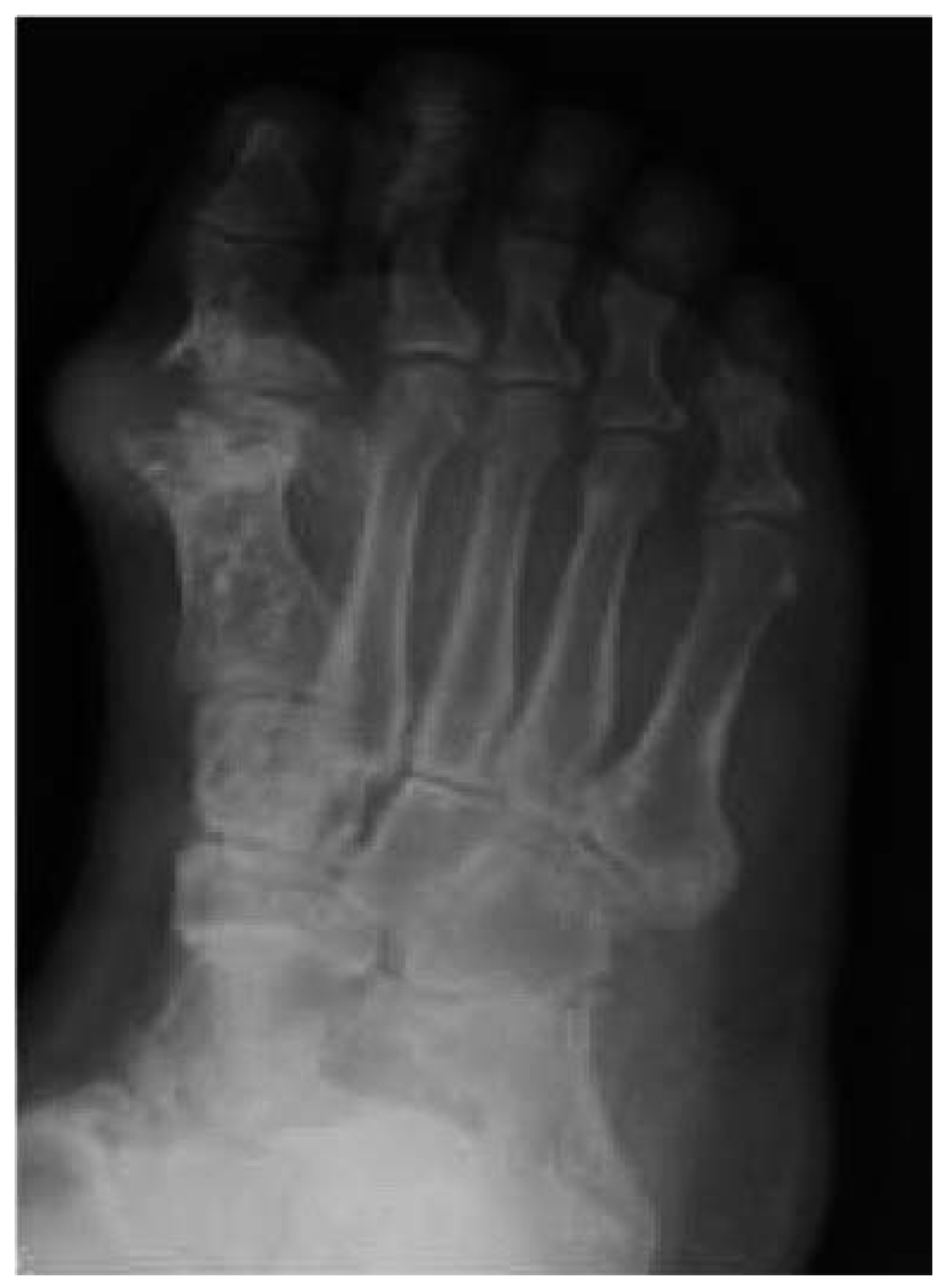
Radiographs showed signs of osseous destruction in the first metatarsophalangeal joint of the right foot, consistent with gouty arthritis, underlying the multilobular mass (
Fig. 1).
Figure 1.
Medial oblique radiograph showing signs of destructive changes in the first metatarsal and the first metatarsophalangeal joint.
Figure 1.
Medial oblique radiograph showing signs of destructive changes in the first metatarsal and the first metatarsophalangeal joint.
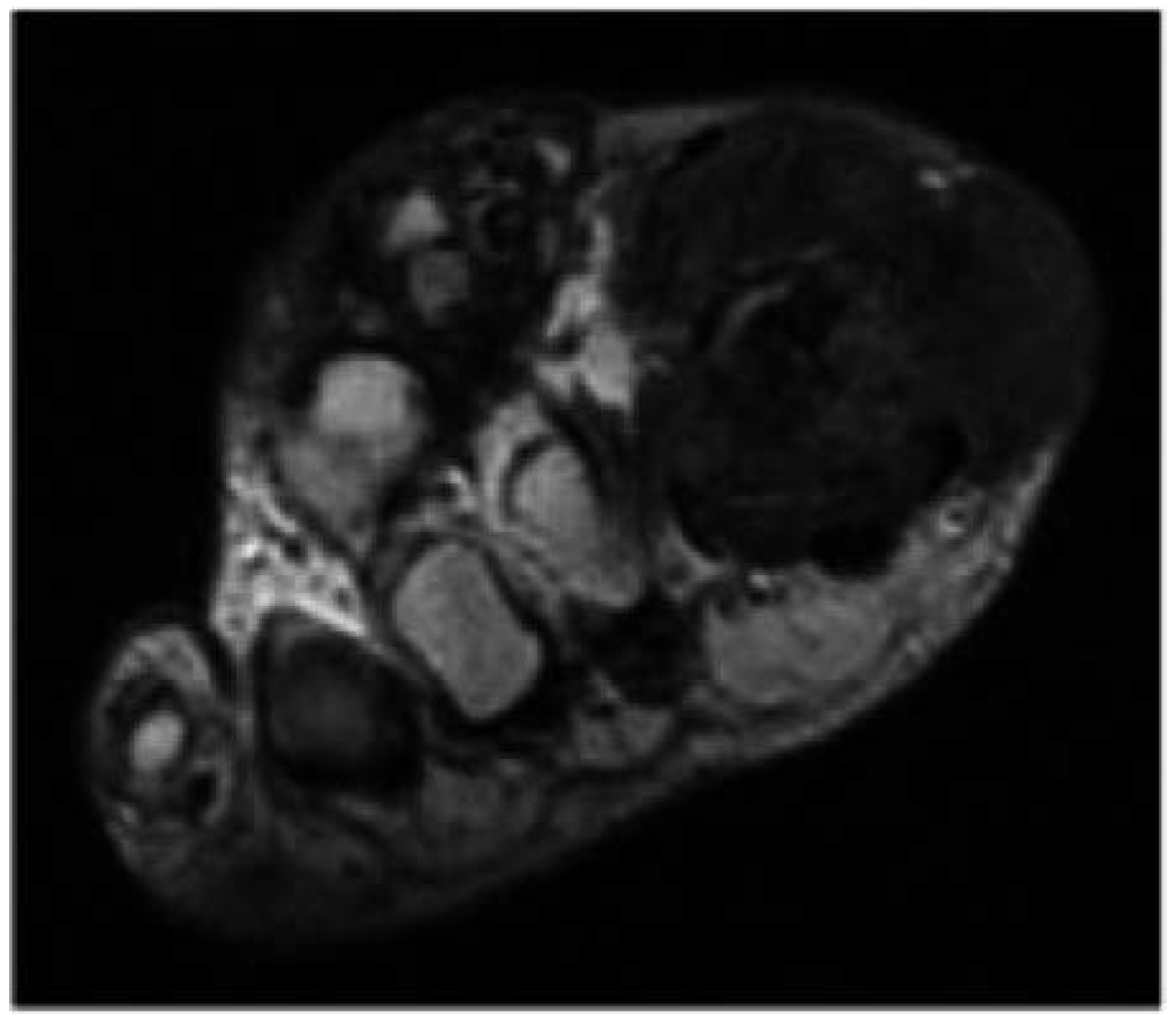
The MRI scan indicated that a large soft-tissue mass was causing erosion of the first metatarsophalangeal joint of the right foot (
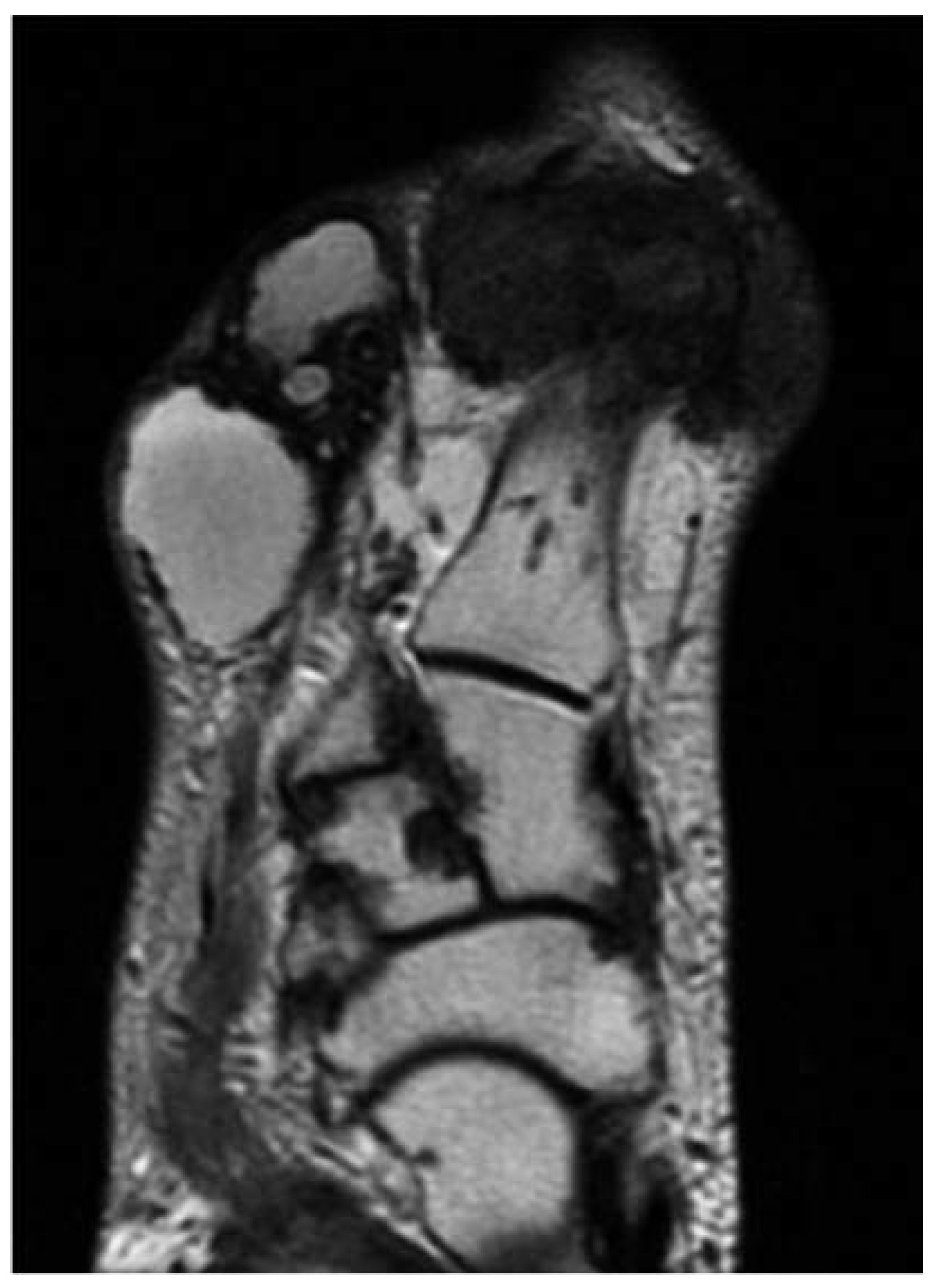
Fig. 2). Multiple other small joints, between the metatarsals and tarsal bones, showed erosion and osseous changes (
Fig. 3).
Figure 2.
Magnetic resonance imaging scan showing a mass on the dorsum of the right foot extending from the first metatarsophalangeal joint across second through fourth metatarsals with no muscle or tendon involvement.
Figure 2.
Magnetic resonance imaging scan showing a mass on the dorsum of the right foot extending from the first metatarsophalangeal joint across second through fourth metatarsals with no muscle or tendon involvement.
Figure 3.
Magnetic resonance imaging scan showing erosion and destruction of tarsal joints.
Figure 3.
Magnetic resonance imaging scan showing erosion and destruction of tarsal joints.
The mass was suspected to be a ganglion cyst, and the patient gave consent for surgical removal. Surgical resection revealed a lobulated brown-yellow mass noted to have purulent drainage from the cavity; specimens were sent for histopathologic analysis. Initial Gomori's methenamine silver results indicated fungal hyphae, but we were unable to completely classify it, and it was therefore sent to the University of Texas Health Science Center in San Antonio, Texas, for further analysis. With histopathology results pending, the patient was prescribed ketoconazole 400 mg orally daily, trimethoprim–sulfamethoxazole 80/400 mg orally twice daily, and doxycycline 100 mg orally daily. In the meantime, the patient's surgical site dehisced and continued to worsen despite wound care. At 8 weeks after mass excision, the laboratory results returned a final pathologic diagnosis of eumycotic mycetoma (Madura foot): multiple foci of acute and chronic inflammation with central necrosis surrounded by fibrosis and a giant cell reaction. The organism was identified as Phialemonium curvatum. The Infectious Disease team recommended voriconazole 200 mg orally twice daily for at least 6 months, with blood tests of voriconazole level peak and troughs to adjust dose to the level of efficacy.
Madura Case Study 2
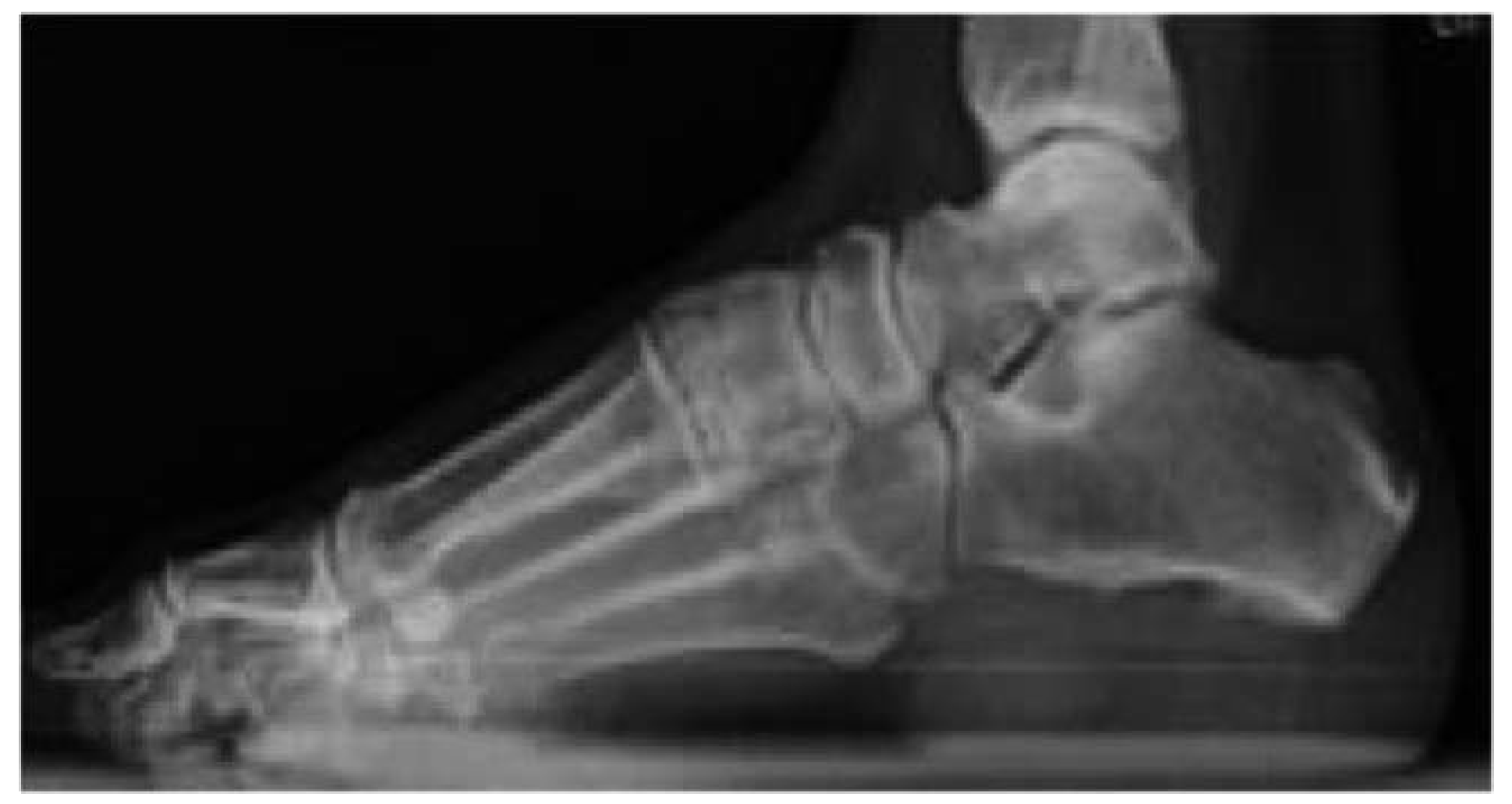
A 57-year-old obese Sri Lankan woman with no history of type 2 diabetes (last hemoglobin A1c level, 6.1%) had migrated to the United States 3 years previously. In Sri Lanka, she was a farm worker, now retired and living with her children. The patient was seen in the clinic complaining of right foot pain secondary to a soft-tissue mass along the plantar medial midfoot measuring 3.0 × 4.0 cm. The patient reported that the mass had been gradually increasing in size and tenderness. On analysis of the right foot mass, it appeared fluid-filled, compressible, and illuminating. Radiographs showed a well-demarcated radiodense lesion superficial to the plantar fascia (
Fig. 4). The cyst was aspirated, and produced 4 mL of a yellow, opaque, cloudy substance. Surgical excision revealed a well-demarcated capsular mass that was mobile and appeared to have a gelatinous texture. When separated, a yellow substance consistent with fungal spores was suspected; portions of the mass were sent for histopathology. Immediately postoperatively, the patient was placed on a 3-month course of trimethoprim–sulfamethoxazole 160/800 mg orally twice daily. Initial Gomori's methenamine silver results indicated fungal hyphae, possibly
Exophiala species, and were sent to the University of Texas for further analysis. Final pathologic diagnosis indicated a eumycotic mycetoma (Madura foot): septated thin fungal hyphae along with granulomatous inflammation with central necrosis. The organism was identified as
Phaeoacremonium venezuelense.
Figure 4.
Radiograph (lateral view) showing a well-demarcated mass invading the subcutaneous space inferior to the plantar fascia.
Figure 4.
Radiograph (lateral view) showing a well-demarcated mass invading the subcutaneous space inferior to the plantar fascia.
Discussion
These two cases in Northern California were eventually given the rare diagnoses of Madura foot. Both patients were initially diagnosed with a suspicious soft-tissue mass that was fluid-filled and well-demarcated, possibly lobulated. Imaging either provided more confusion or no additional guidance to the physician. Each patient was initially misdiagnosed and treated unsuccessfully for what was mainly a suspected bacterial infection, leading to surgical resection and antibiotic treatment. Microbiological evaluation was a challenge as well; the local laboratory was unable to determine the microorganism. Once microbiology results were confirmed, both cases appeared to have similar inflammatory profiles. The first case was caused by Phialemonium curvatum: multiple foci of acute and chronic inflammation with central necrosis surrounded by fibrosis and a giant cell reaction. The second case, which appears to be the first documented case of a pedal infection in the United States, was caused by Phaeoacremonium venezuelense: septated thin fungal hyphae along with granulomatous inflammation with central necrosis.
In terms of patient profile, we had one type 2 diabetic patients with multiple comorbidities who one could argue was immunocompromised, but our second patient was otherwise healthy, which leads us to remember that although research suggests that these microorganisms infect those with compromised immune systems, that is not always the case, and no one can be excluded on those grounds alone.
Conclusions
An opportunity to diagnose and treat Madura foot is uncommon, and treatment options are unproven. Our hope is that these case studies will encourage practitioners to include mycetoma infections on their differential diagnosis. In bringing these two rare cases to light, we want to educate physicians clinically on this pathology both radiographically and microbiologically, to emphasize that it is becoming less rare, and to begin a deeper discussion of how best to treat Madura foot, thus creating awareness and developing a consistent treatment protocol.